



Abstract
Validation of ideas are of paramount importance in STEM fields. Learning and converting ideas into practical application is the main purpose of technical education. Aviation is a highly safety sensitive field where confusion and mistakes are not acceptable. This brings serious challenges for academia that provides higher education in this field. A yearlong observation of the reflective practices was done at an Australian university while teaching aviation students to analyse outcomes of reflection on teaching and learning. Reflection provides a powerful opportunity to a teacher in improving teaching qualities and to identify training needs for enhancing teaching capabilities.
Introduction
Primary purpose of higher education in science technology engineering mathematics (STEM) is to develop and convert evidence-based ideas into practical applications for the benefit of society. Aviation and aerospace engineering in particular, are highly safety critical and sophisticated industries that involve extraordinary operating risks. Therefore, decisions making must be very clear and correct every time without any known error. As a result, the industry workforce requires high degree of communication skills, integrated teamwork, quick and accurate decision-making abilities in addition to substantially developed skills and subject-matter knowledge about the task they perform at the workplace. For example, according to Mrusek (2017), in aircraft maintenance industry, interdisciplinary technical personnel from avionics, airframes and engines fields must work in conjunction with each other in a team to complete an aircraft maintenance task. The team comes together to brainstorm and troubleshoot the aircraft snags as a single problem. This identifies an efficient course of action to meet both organizational and the aircraft maintenance goals in an effective and safe manner. Larsson (1987) introduces a teaching concept that prepare content so that students can learn without much interpretation and another that aims to involve the students in interpretative and structuring work. Students prefer a teaching conception characterized by a strong structuring and interpreting role for a teacher as reflected in most student feedback. Furthermore, students enforce this style despite the will and ideas of the teacher. Similarly, Rossum (1984) also support students’ preference. Unfortunately, an investigation into Chinese higher education system indicated that the quality of higher education had declined after their universities increased enrolment quota (Bo, 2013).
Consequently, the primary focus of academics is to prepare students towards acquiring these skills, so that the students can cope with challenges of the profession. Likewise, there is not much scope for individual opinions and thoughts in safety sensitive sections of this highly regulated industry. Conversely, independent thoughts are essential for development of professionalism and critical views. Being able to form independent ideas to solve problems may serve people well in various work situations. Providing real life examples and situations may also help learners in understanding complex technical systems and theories. For example, relating aircraft operations to a motorcar handling, if an aircraft is not easily accessible in teaching situations at a university. Students studying for aviation engineering are generally familiar with operations of a motorcar. Therefore, these kind of examples provide them an opportunity to relate aircraft topics to their generic knowledge. Similarly, in-class discussions and one-to-one interactions also improve students learning in classroom and laboratory situations. In applied fields, students regularly use theoretical knowledge gained in classrooms to design, build and develop a product. Goals of an academic in higher education should be to encourage students for independent thinking and analytical reasoning to augment their problem-solving skills. Thus, encouraging them not to simply memorize topics. Similarly, prompt them to strictly follow required technical procedures, and respect regulatory structure and professional practices to achieve the highest level of results.
A good sense of humour is an added advantage in teaching and learning situations. The best in a person comes out in a non-stressful situation, it is believed. Students tend to learn more effectively from an approachable teacher who sets up a comfortable atmosphere conducive to learning. For example, narrating some stories about aircraft systems handled by flight attendants and non-technical crew of an airline were found useful while teaching complex technical systems of an aircraft. It is believed that education goes beyond classroom and sometimes students tend to visualize their teachers as role models. They seek advice from their teachers on various topics ranging from personal problems to future careers options. Therefore, role of a teacher is that of a leader who shows a path, motivate, encourage, and lead by examples. Ideally, a teacher's success lies in seeing his or her students succeed and move on successfully to their respective professions.
Reflective practice is an active process of attending to one's own experience of teaching in order to explore it in detail. It can also be viewed as holding up a mirror where a teacher has an opportunity to think about his or her own practice, such as recording their own lecture and listening it when alone. This method of looking at an academic field can make university more interesting and exciting for students (Bean, 1996).
In this paper, various reflective elements and dimensions, such as available subject-matter support, student feedback and response, student participation and behavioural characteristics, assessment methods and impact, peer observation and innovation, and professional development activities are explored. Findings from the study led to a significant improvement in teaching quality and student engagement. Similarly, more effective learning was noticed through the implementation of reflective practices outcome at the university.
Methodology and Data Collection
The methodology of this paper involved a yearlong observation of reflective practices at an Australian university while teaching undergraduate students as a part of this study to investigate results of reflection on teaching and student learning. A questionnaire was prepared. It was broadly based on questions similar to questionnaire used by the National Survey of Student Engagement (NSSE) to examine and validate the student engagement and teaching standards. Consequently, the questionnaire was handed over to students of two consecutive semesters during the year of observation. According to Pike (2006), NSSE scale-let scores provide valid measures of students’ educational experiences, and they can be used for teaching evaluation. The questionnaire was hand-delivered to each student and participation was entirely voluntary and anonymous. There are many methods available for student evaluation of teaching in higher education institution around the world though. Aldridge and Rowley (1998) find that different institutions use different methods. Similarly, Ramsden (1991) also believe that the institutions use various methods and questionnaires for data collection. The questions considered for this study were related to subject matter and course challenges (Figure 1), amount of time the students devote on their study every week (Figure 2), their participation in extracurricular activities at the university (Figure 3), and the time they spent on socializing in the campus or outside (Figure 4). Result of the questionnaire was utilised to get student perspective about academic delivery and their learning difficulties. Consequently, the study population consisted of more than a hundred students from two different cohorts. The questions were designed to improve teaching quality and they were focused on the ability of the offered courses challenging the students, the time spent by students on studies, the level of extra-curricular participation of the students and the time spent by students partaking in social activities.
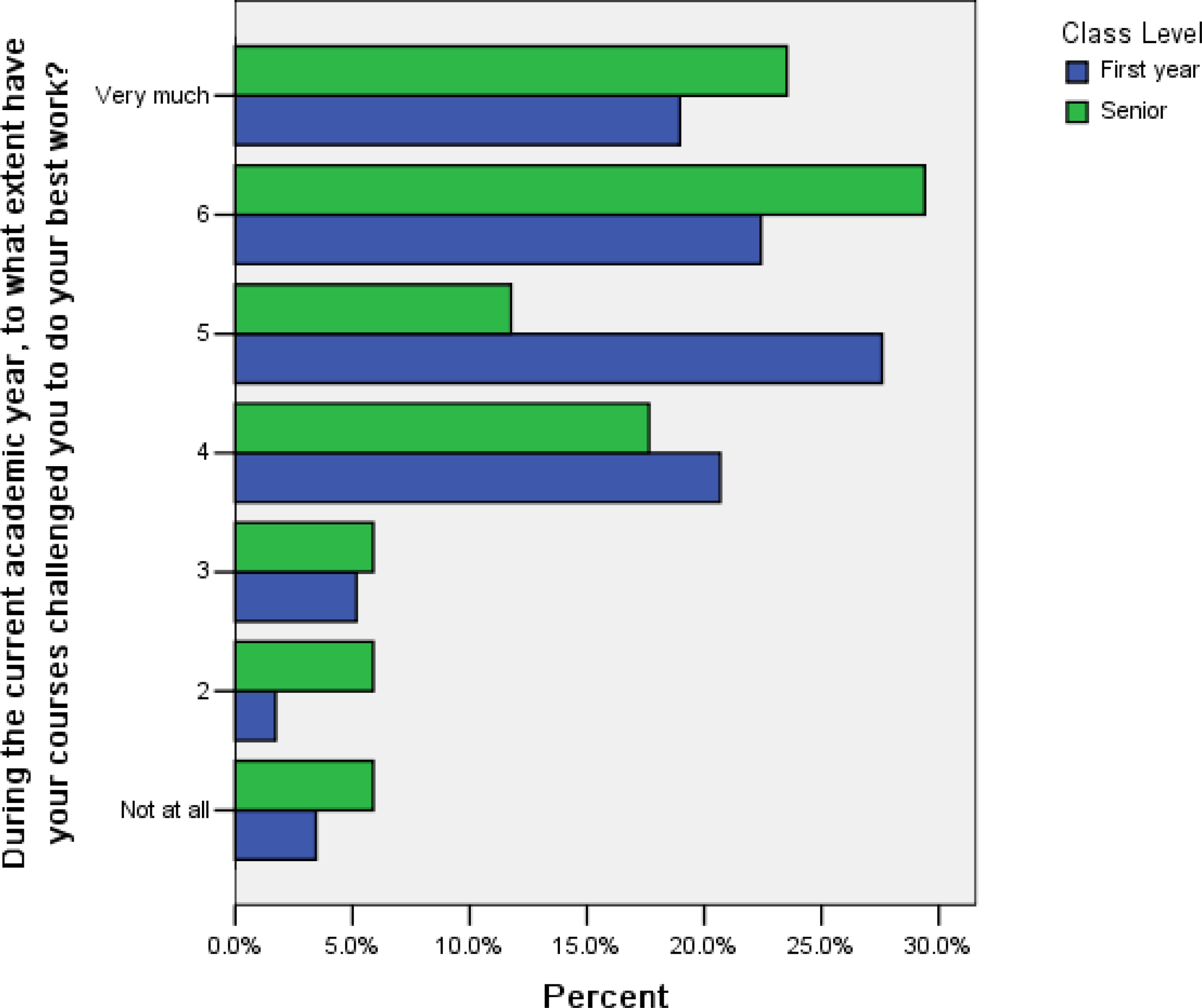
Courses challenges.
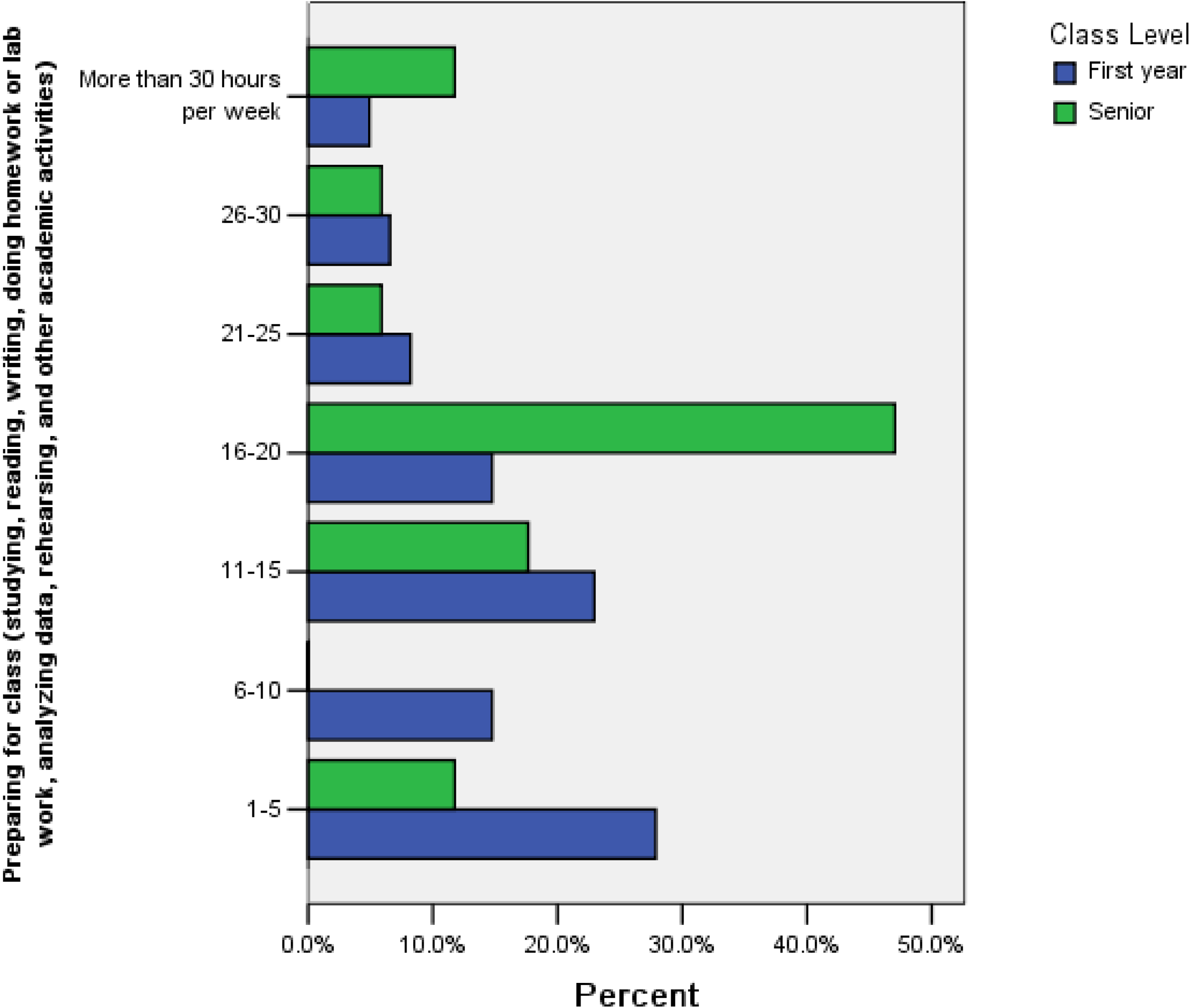
Time spent on study.
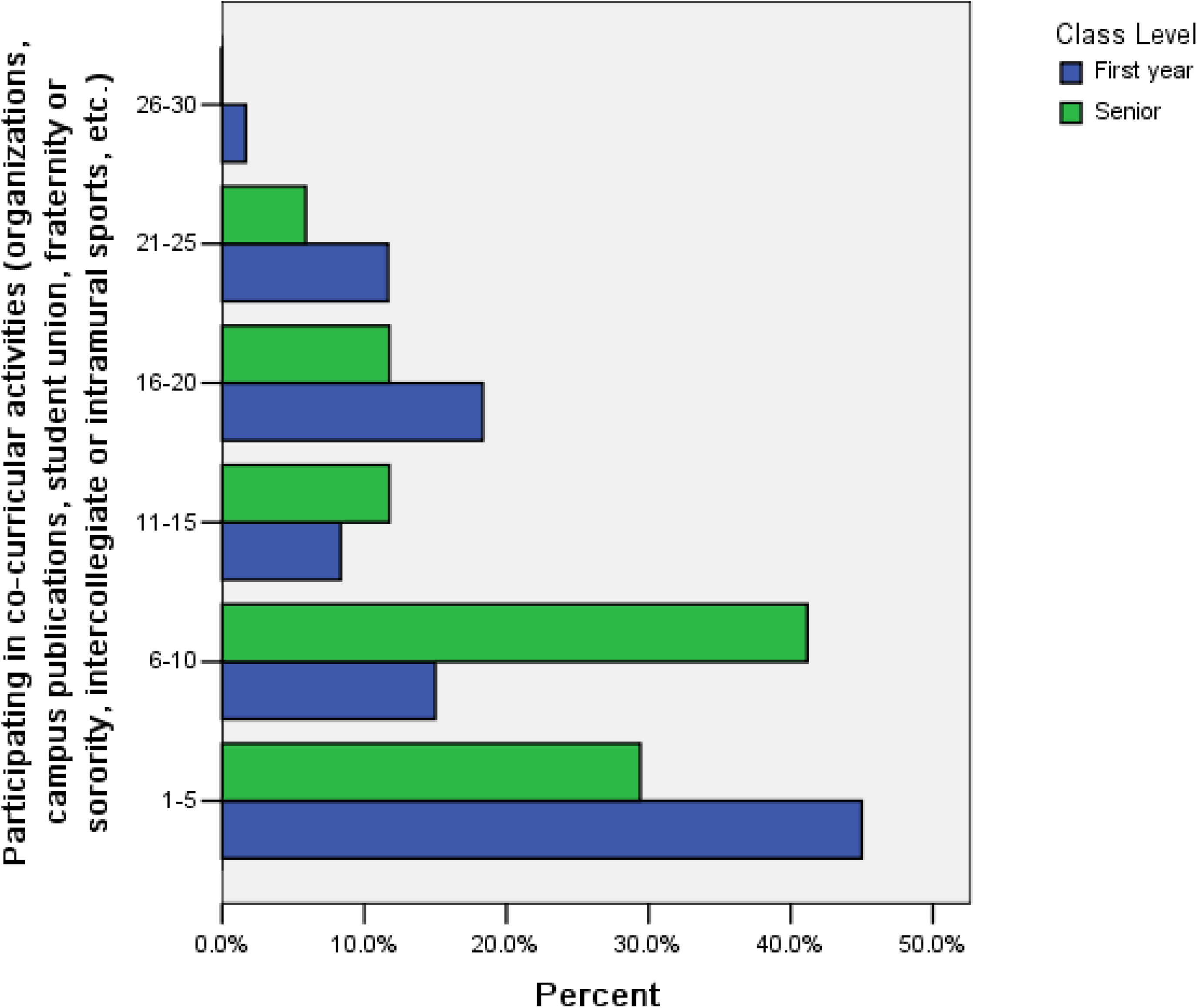
Participating in extracurricular activities.
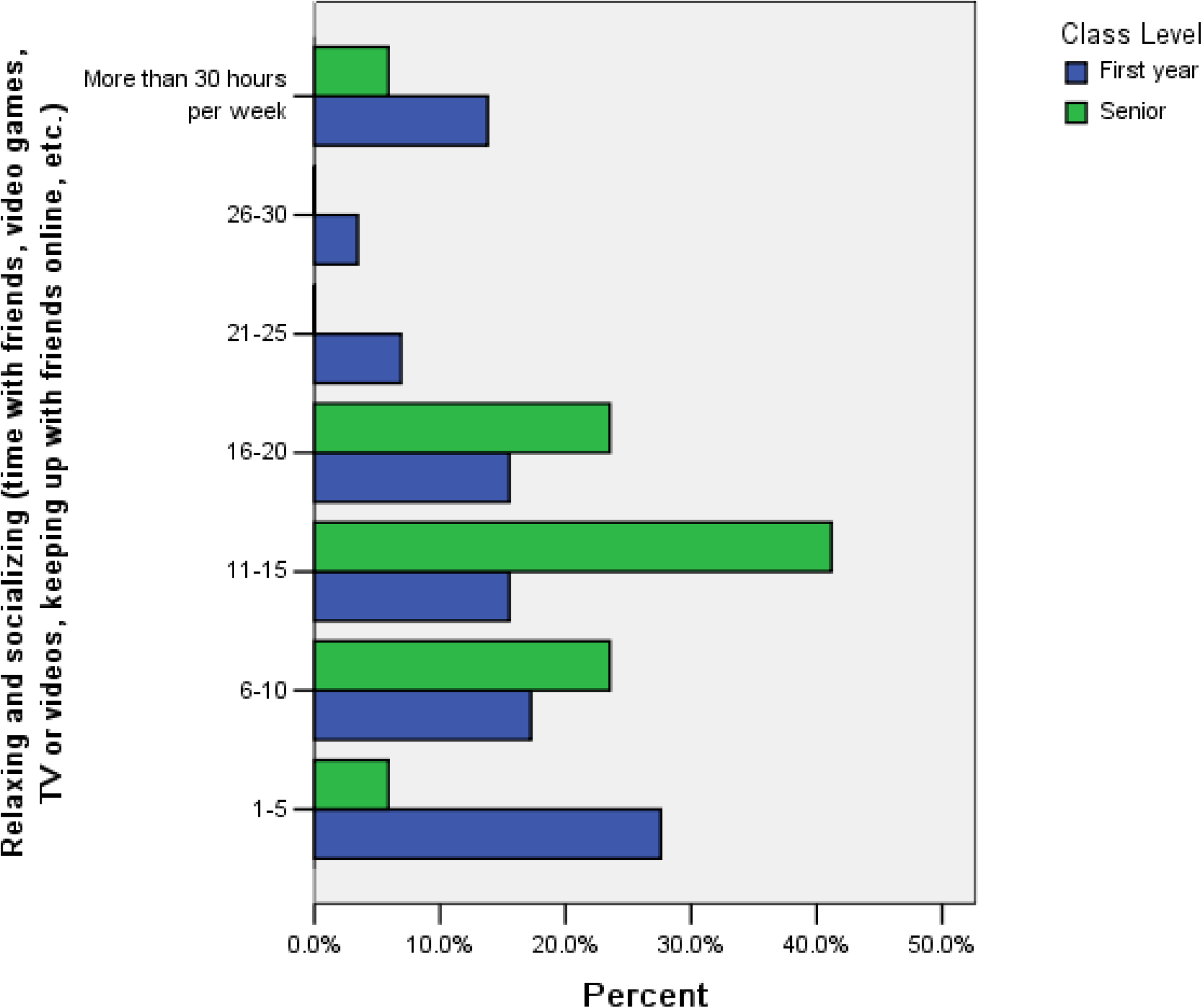
Time spent on socialising.
The result of feedback received from the junior students as a part of this study was found to be beyond expectations. Around 30% of the students were neither satisfied/nor dissatisfied with the teaching style and teaching activities, and this was reflected in their response to the question about being intellectually stimulated by the course (Figure 1). They wanted more practical oriented activities. As a result, the junior students spent lesser time on studies (Figure 2), more time on extra-curricular activities (Figure 3) and socialising (Figure 4). In such situations, classroom management became an issue and some disruption during teaching was noticed. The classroom management refers to all the things an academic do to organise students, learning space, time, and materials to maximise effective teaching and student learning.
Theoretical Framework and Account of Reflective Practices
Teaching was seen as executing and delivering technical skills in the past. Learning was believed to be transpired. if teachers had followed established techniques for good lessons (Grushka et al., 2006). This positivist approach was acceptable with the implicit belief that teaching practices must conform to scientific procedural standards, the researchers argued. Similarly, whoever applied the tried-and-true teaching procedures in the most efficient manner were considered as expert teachers. According to Fry et al. (2003) some academics teach without having a formal knowledge of how students learn. Similarly, many teachers know how they learn, but they do not consider how their students learn. Ramsden (2003) found that teaching as a process of changing students’ understanding generally is not enough to ensure that good teaching has happened. Teaching skills requires developing an ability to deploy a complex theory of teaching in different contexts relevant to teaching and learning of that subject matter. Therefore, reflection of teaching can play an important role in these circumstances. From a temporal perspective, reflection can be classified as anticipatory, contemporaneous, retrospective and mindfulness reflection (Manen, 1995). Reflective practices provides a powerful opportunity to learn. Additionally, the teacher also improves his or her educational experiences and identifies the training needs to further develop their capacity to teach well. A chain of connections exists between reflection and learning and teaching, it is believed.
According to Osterman and Kottkamp (1993), a reflective practitioner needs to be like an actor and a critic at the same time who sits in the audience watching and analyzing the performance. In a perspective, the practitioner must come to an understanding of their own behaviour and develop an awareness of their actions and effects that shape their action strategies. Theories as we see are not easily articulated, the researchers believe. Similarly, professional knowledge surrounds in professional experience and a competent practitioner usually knows more than they can say. Furthermore, practitioners are often unclear about how their own actions can prevent them from being successful (Osterman and Kottkamp, 1993).
How to teach effectively exceeds the ability to transform subject matter into student-friendly information and effective teaching does not resemble a checklist (McConnell et al., 2019). This also requires relevant knowledge, well-practiced skills, and a professional temperament, the researchers argued. Reflection is not an easy task for academics in higher education though. Thus, a support in their development is often necessary to examine relationship between professional knowledge and professional competence. Rather than looking to another body of research knowledge, the practitioners should become more proficient at observing and learning through reflection on artistry of their own profession. Development of reflection of learning and teaching activities has been established as a key aspect of lifelong learning (Fry et al., 2003). Recognising the role of reflection in trawling experience for learning and familiarising with basic elements of reflective practices assist a teacher in ongoing development. There are many methods of incorporating reflective practices, but a useful starting point can be drawn upon few evaluating techniques, such as student feedback, peer observation, and professional development training.
Engagement of students in academic activities is critical to their learning in higher education fields. It simply refers to assisting students to connect with subject material in a way that generates interest and interaction. Evidence suggests that a strong link exists between active engagement and quality of learning experience. Audience participation in an academic activity can be achieved by asking questions, initiating group discussions, devising a quiz, giving problem-solving tasks, and providing a practical demonstration (Bunker, 2002). The researcher also found that interaction and act of explaining assist learning, create interest, provide opportunity to the teacher to observe, and fosters different type of thinking.
In order to examine outcomes of reflective practices, a yearlong observation was carried out at an Australian university while teaching an undergraduate student cohort of aviation sciences. The cohort was comprised of 74 undergraduate students from first year and 45 from second year of the undergraduate degree. Various reflective dimensions of teaching and learning were identified and analysed to establish effects of the reflection on teaching quality and student learning. Primarily, for the first-year students, three key teaching strategies to generate active participation were designed. Firstly, a small tutorial type of problem-solving tasks as a part of engineering project module in the flight simulator laboratory was re-structured. This involved students into solving their individual tasks and it was also used to engage them in group discussions about problem-solving activities. Secondly, a few theoretical questions during the project work were designed and the students were asked to answer them individually. Due to technical nature of the subject, there had always been a definite right or wrong answer though. However, the exercise induced students to think and participate in the questioning session, and it enhanced their individual learning as a result. Behavioural data on students learning habits were also collected and analysed to examine their engagement in learning and extracurricular activities (Figure 1–4).
Finally, some small group activities that involved various aspects of problems related to aircraft systems and flight operations were also tried while flying a model aircraft in the campus. These activities were mostly based on mathematical calculation and physics principles. The students were not very keen in such activities, and they suggested to have more sessions in the flight simulator laboratory instead. Consequently, inclusion of some additional flight simulator sessions in other modules were also done. Students’ engagement and participation in the modules subsequently have been improved within a semester.
Administrative and Subject Matter Support
Effects of educational reforms on institutions where academics work are highly variable (Tatto, 2006). Therefore, changes are conditioned by strongly ingrained institutional patterns and their models of education. The researcher also believes that these are deeply embedded in their culture as well. Likewise, ever expanding administrative positions and shrinking number of academics at universities is increasing the social and organizational distance between administrative leaders and academics (Woessner & Maranto, 2020). This reduces the informal exchange of information across hierarchical levels. Effective induction by academic leadership, ongoing training and administrative support provided by the university to their academics plays a significant role in teaching quality and student learning. It was observed as a part of the reflection exercises. Institution's teaching directions and expected goals, clear explanation about student charter, expected graduate attributes for teaching and learning also have strong influence on student learning at a university. Likewise, subject matter support provided by peers or line managers is also important for new academics, it was noticed. This could be provided by available resources of the university or by academic peers at a department or sectional level. Unfortunately, this kind of support was not being provided at the university, which affected teaching quality and student learning negatively, it was found. This may create difficult situations, especially for academics who move from industry to academia.
Student Feedback and Response
Some students heavily rely on their teacher in developing structure for their learning. They required to be steered to next stages of their learning tasks. These dependent students need to be guided towards gaining their independence in learning strategies. Likewise, confrontational students test boundaries of acceptable behaviour and they must be dealt with calmly and professionally and teachers must never embarrass these students in front of their peers. Similarly, unprepared student category requires a regular quick preview of last taught topic before starting a new lecture. Additionally, diverse students encompass gender, age, disability, linguistic differences, learning abilities, socio-economic status, cultural background, and so on. Inclusive practice including attitudes, approaches, and strategies should be considered to ensure that these students are not excluded or isolated from learning environment due to any of these characteristics. All students therefore should feel welcomed, accepted, safe, listened to, valued, and confident that they can participate in all activities. People often think of diversity in terms of overseas students or non-native language speaking backgrounds, yet there are many other facets noticed during the reflection practices. It is crucial to foster an underlying environment of respect and valuing of this diversity too. Anxiety and nervousness were noticeable in beginning of the reflective practices while handling these different types of students in the cohort, but the practices assisted in identifying the causes of the nervousness and anxiety later. Students were also found in raging mood, occasionally. However, confidence developed as the reflective practices progressed. Students become supportive when they notice enthusiasm in their teacher.
Nevertheless, it could be difficult to engage learners in classroom activities, if topics taught are purely theoretical and require learners to have certain prior knowledge on the topics. Students who lack the prior knowledge would lose interest in learning and get disengaged in the activities. Similarly, a teacher receives negative feedback, if his or her teaching level mismatch with required prior knowledge of learners. It was found out during reflection and developing corrective strategies. Starting teaching with relevant basic topics and proceeding to the main subject progressively indicated some improvement in student engagement in such situations. The students did not lose the learning track, as a result. Conversely, this strategy also had its negative effects, such as a partial loss of interest by some bright students.
Students participated in a large number and provided their feedback once it was made clear to them that the feedback was anonymous. The feedback was focused on module content and its organisation, teaching material, teaching style, approachability, and suggestion for improvement of teaching activities. The result of feedback from first-year students was terrifying. Around 30% of the students were not happy with teaching style, teaching activities and university. They wanted some practical oriented activities. Many students complained about lack of control of the noisy students in classrooms and suggested some solutions to fix this issue. Few students also made ethnic remarks and made irrelevant negative comments about the teacher. However, this is not a strange thing in some countries, especially in comparatively young countries with multi-culture population where majority of the population come from different countries. Instigating students against ethnic minorities by some academics is also not uncommon at some universities around the world. Nevertheless, the feedback from second-year students was generally constructive except few ethnic remarks. It was assumed that the ethnic remarks might have come from the students who overlapped between the first and second year in certain modules. As a part of the reflective exercise, the feedback outcomes were confidentially discussed with other colleagues before providing response to students. Ethnic remarks were not discussed in the response though. Nevertheless, they were informed about certain offensive remarks received in the feedback.
Sometimes, noisy students are instigated by some academics from the university itself to create trouble against certain other academics. Nonetheless, university must be careful before initiating any disciplinary action against these trouble making students because it is difficult to produce documentary evidence to prove the instigation. Instead, alternate strategies, such as forming an informal social group with students should be considered to alleviate the situations. Evidence collected during the reflection indicated that this strategy was partially effective and resulted in a noticeable improvement in student learning and engagement.
Impact of Assessment on Student Learning
Examination and assessment methods are critical to improving teaching and learning, and they are often the most powerful element of a curriculum as far as students are concerned. A well-formulated assessment ensures that students have clear expectations of what is required of them, and it is also an important tool for teachers to stimulate student learning. Often, assessment is a primary vehicle through which students are given an opportunity to develop and demonstrate key generic skills, such as critical thinking and teamwork (Educational testing service, 2003). Similarly, the assessment elements should increase in complexity from the first to later years of a curriculum design. Critically, students should receive regular formative evaluations of their work early in their programme of study to aid their learning and to provide feedback to both students and teacher on student progress (Kift, 2008). A teacher plays an important role in the assessment of students’ work and in ensuring that students receive helpful feedback for their work. However, the extent of this role largely depends upon the nature of the assessment tasks, expectations of examiners and marking schemes. It is important therefore that students must be advised about these elements. Likewise, classroom assessments respond to concerns about better learning and more effective teaching. They encourage teachers to become more systematic and sensitive observers of learning (Thomas et al., 1993). It had been noticed during the reflection that students prefer multiple choice questions and they performed well in that part of a test, but they were not comfortable with short-answer or essay type questions. It seemed that they should have done more practice on memory based short-answer questions. The reflective practices indicated an improvement in student participation in classroom activities and learning once they are clear about the assessment expectations.
Importance of Peer Observation
Peer review capitalises on a valuable resource such as, expertise and experience of academic peers. Drawing as it does on the knowledge and insights of colleagues, peer review can recognise and accommodate diversity in approaches to teaching and learning. While often equated with classroom observation, peer review can cover a full range of teaching activities and academic environments, including assessment and development of teaching and learning resources (Harris et al., 2008). The researches argue that wider uptake of peer review of teaching has potentials to make a valuable contribution to advancement of higher education. Similarly, it can play an important role in assisting individuals to further develop their academic careers. Harris et al. (2008) also found that more widespread and systematic use of peer review of teaching increases opportunities to enhance quality of teaching and learning at universities.
Implementing peer review of teaching within universities is not a simple task though. It touches on sensitive professional issues and people experience some discomfort when having their professional work reviewed or evaluated. Crisp (2009) however discovers that peer review is considered as one of the fundamental pillars for recognition of good teaching and learning.
Various dimensions were reviewed by the peer review exercises while evaluating the reflection outcomes. As a result, an innovative gyroscope operated demonstration tool was built to explain aircraft instruments during regular classroom teaching. Students provided an encouraging and positive feedback, subsequently. The peer observation activities had also identified professional development needs for the teacher. Improving capabilities of teachers improve student learning outcomes. Hence, ongoing professional development for an academic is essential to become an effective educator.
Discussion
It has been observed during this research that academics have significant influences on student learning in higher education settings. According to McIntosh and Bowman (2019), a culturally responsive teaching is an appealing pedagogy for engaging teachers in professional development that fosters intercultural competence. Teachers will be constantly engaged in self-reflection regarding their instructional practices, which will sustain their craft and advance student success. Consequently, ongoing upskilling of academics enhance student engagement and improves the education outcomes. High quality teaching is necessary for student success, but relationship between teacher preparation, teaching effectiveness, and student achievement is central (McConnell et al., 2019). Various professional development endeavours in which academics participate may enhance their learning, but frequent reflection activities clearly contribute to effective teaching, this research indicates. Larrivee (2010) finds that teacher beliefs are self-generating and often unchallenged. Therefore, unless teachers develop the practice of critical reflection, they stay trapped in unexamined judgments, interpretations, assumptions, and expectations. According to the researcher, reflection merges critical inquiry, conscious consideration of the ethical implications and consequences of teaching practice with deep examination of personal beliefs and assumptions about human potential and learning. Hence, reflection in addition to ongoing professional development activities for academics is essential to remain effective educators and academic leaders.
Often classroom management issues can be related to a lack of student engagement because professional relationship between teacher and students is a vital aspect of classroom management. Generally, knowing and remembering names of students help them feel more at ease, and to see themselves as a part of the group and engage them in expected activities. It may also increase their self-esteem because they feel that they are known. However, it may be challenging to remember names of international students, because they come from different cultural backgrounds with diverse nomenclature system. Students need to feel part of the group and to be appreciated as individuals. Furthermore, using the students’ name may assist in establishing a friendly environment in a classroom. Initiating disciplinary actions against disruptive students may not be a good solution to improve the classroom management.
Managing a group of university students is not always an easy task and there are common challenges encountered by academics. While there may not be any fail-safe techniques similar to those incorporated in an aircraft and aviation systems, academics need to introduce some strategies to manage students in classrooms, such as walking throughout frontal part of the classroom during a lecture. A physical proximity to learners may often help in stopping their inappropriate behaviour during teaching activities. Occasionally arranging a consultation meeting for students to discuss about their inappropriate behaviour in a classroom is a good idea. The effectiveness of this practice was indicated through consecutive feedbacks from students during the reflection observations.
Student engagement is critical to learning in higher education. Technology causes a significant impact on teaching styles and the way students learn. Likewise, online learning has received a considerable attention in educational literature. In the past, learning meant using multiple whiteboard marker colours or using photocopy handouts, books, etc. Lectures were about lecturers talking and students listening. The introduction of computer in learning environment has led to the use of PowerPoint slides and online teaching delivery through academic management systems, such as Blackboard, Moodle, Teams, and other similar online platforms. Furthermore, availability of online databases and e-books have reduced library visits of students in recent years. As a result, engaging this category of students in physical classrooms has become an ongoing challenge for academics with no imminent solution that could resolve this issue adequately. Therefore, this reflective study establishes that developing excellence in student-centred teaching and learning is currently a primary focus in higher education sector. This may lead to a total client-focused approach in future, this study suggests.
Conclusions
Aviation and aerospace are highly sophisticated fields and primary objective of scientific education is to convert ideas into practical applications. Therefore, it is a responsibility of academia to train students to tackle challenges of their respective professional fields. Education goes beyond classroom and many students consider their teachers as role models. A teacher's function therefore is very important in student learning and professional success. Reflection of teaching is a process of mirroring to teacher's own teaching activities and performance in classrooms. This study has investigated many reflective elements in real-life workplace situations. The elements examined are organisation support, student feedback and behaviour, assessment, peer observation, teaching innovation, and professional development of teachers. It was noticed that reflective practices of teaching by a teacher made significant impact on student learning and their engagement in classroom activities.
Footnotes
Declaration of Conflicting Interests
The author(s) declared no potential conflicts of interest with respect to the research, authorship, and/or publication of this article.
Funding
The author(s) received no financial support for the research, authorship, and/or publication of this article.

Author Biographies
Research interests: Aeronautical engineering, airport engineering, multidisciplinary engineering, aviation regulations, aviation management, higher education and project management.
Research interests: Aerodynamics with special emphasis on drag reduction and flow control and study of biomimetic inspired novel surface features to delay boundary layer transition and reduce drag.