



Abstract
Being able to use a foreign language to communicate will increase an individual's opportunities of employment and personal growth, which implies the significance of adopting a lifelong learning approach to language learning. This study was conducted to explore language learners’ lifelong learning tendency in general and the key factors affecting this tendency in a humanities and language division in an international college in Thailand. By using stratified random sampling strategies, 383 full-time language learners participated in this study. The survey questionnaire was designed based upon the Lifelong Learning Tendency Scale developed by Coskun and Demirel (2010). The scale contained four dimensions with 27 statements: motivation (6), perseverance (6), self-regulation (6), and curiosity (9) with Cronbach alpha of 0.89 from the pilot study results (n = 50). After performing statistical analyses (T-test, analysis of variance, and multiple linear regression) to the data, it was found that students in the Thai context held a comparatively high level of inclination for lifelong learning. Among the selected demographic variables, only the year of learning at college was found to correlate with the lifelong learning tendency.
Keywords
Introduction
Globalization has radically changed both the economic system and people's personal lives in post-industrial nations. To survive the hyper competitiveness and volatile nature of today's labor market, everyone has to lead a life spent in the never-ending pursuit of learning (Glastra & Hake, 2008) to be able to progressively acquire, fine-tune, and transfer knowledge over long time spans while retaining previously learned experiences, known as lifelong learning (LLL) (Parisi et al., 2019). With the forces emerging from the employment market driven by investment in human capitals, and association with the commodification of learning and skills (Vargas, 2017), LLL could also refer to the opportunities to engage with educational provisions (Poquest & Laat, 2021), in which the university has become the important entity for students to develop graduate qualifications to contribute to their profession and society (Bowden et al., 2000; Cheng et al., 2021)
LLL is an increasingly relevant concept that has been studied by the educational community in recent decades. It has been recognized by educators, governing bodies, employers, and the general public as one of the most important competencies that people must possess. The existing body of literature argues that LLL is an educational paradigm through which education is conceived as an indispensable and continuous element in an individual's lifespan that functions as a means to achieve stable and evolutionary training in competencies, knowledge and attitudes with the multiple benefits of dealing with and managing the rapid changes in society, capitalizing on better job opportunities and obtaining personal enrichment (Arthur, 2009; Glastra & Hake, 2008; Laal, 2012; Rubenson, 2006; Teunissen & Dornan, 2008). From an individual perspective, LLL refers to an individual needs to continue his or her learning by searching for personal and/or professional development with self-motivation (Molina & Schettini, 2021).
However, there are many challenges as regards the need for LLL and what it entails in a language classroom, in which the primary focus is recognized as achieving linguistic proficiency and communicative competence (Legenhausen, 2001). Even though LLL qualities have been emphasized and put in curricular guidelines around the world, the reality is different. Educational stakeholders, such as government, administrators, school boards, teachers, parents, and including students themselves focus on good results of the linguistic competences in all kinds of examinations, which leads to an overall approach of rote and surfacing learning (Amhed & Ahamad, 2017; Hasnoor et al., 2013; Veloo et al., 2015). This is rather common in the local Thai context as well. Students need to take proficiency exams in English to determine their level of English in both state and private universities. Their other course selections are also affected by their language proficiency, which might result in demotivation and love for learning if students perceive foreign language learning as an imposition on them. In addition, there is no motivation for universities to be responsible for promoting lifelong language learning. Moreover, along with students’ graduation, the good quality of the linguistic skills and competences acquired at college might not remain at the same level unless they are actively maintained and consolidated.
The existing challenges require the development of deep learning skills in students to help them to become lifelong learners across disciplines at all level of education (Hasnoor et al., 2013), including the language learning. As argued by Deveci (2015), being able to use a foreign language to communicate will increase an individual's opportunities of employment and cultural growth. In a language classroom, learners are expected to have a better understanding of himself or herself, gain an awareness of the environment and its workings, and to learn how to learn with continuous learning skills (Helyer, 2015). Teachers should take on a more facilitative role and learners take more responsibilities for setting goals, identifying resources for learning, and reflecting on and evaluating their learning (Collins, 2009).
To have a better understanding of the status quo of the teaching and learning in a language classroom in higher education and to determine if today's language classroom environment caters for LLL, this study was conducted to explore students’ LLL tendency in a humanities and language division of an international college, Thailand. The study tends to address the following research questions:
What is the level of students’ lifelong learning tendency in language classrooms, Thailand? What are the differences of students’ lifelong learning tendency according to number of languages being studied besides English, year of learning at college, and gender? To what degree are the key factors impacting on students’ lifelong learning tendency?
It is hoped that all stakeholders, especially learners, understand that good quality of linguistic competences acquired at school might not remain if they are not actively maintained and consolidated. And the languages learnt at school may not suit your need for your job or for other purposes later in life. These mean that language learners cannot stop learning at the end of formal education. They need continuous motivation and guidance to pursue a LLL process before they graduate, which makes this study significant by exploring the language learners’ readiness for LLL in order to benefit their current language development and future career pursuit. This study also aims to increase the awareness of educational administrators and practitioners the importance of incorporating the LLL approach into language teaching and learning. Last but not least, the selected international college in this study is one of the most prestigious international colleges, Thailand. The results therefore could provide meaningful references as regards language teaching and learning situation in Thailand.
Literature Review
LLL in Education
As early as the 1920s, it was argued by Dewey, Lindeman, and Yeaxle that learning was a lifelong process, and that as learning was life itself, it therefore needed to be seen as an intrinsic part of life (Ayhan, 2006). As learning can take place in formal, informal, and non-formal settings throughout life (Coombs & Ahmed, 1974), so LLL was defined as a process of both deliberate and unintentional opportunities influencing learning throughout one's life span (Iqbal, 2009, p. 1).
With the pressure from the forces of globalization and the information and technological revolution, the concept of LLL has been given increased attention. UNESCO's Institutions of Education also attempted to define LLL as a process that should continue throughout life, in which a learner should keep abreast of technical and social change to equip himself or herself for changes in his or her own circumstances (Titmus, 1979, cited in Deveci, 2015), which implies that education is diverse, adapted to the individual and available throughout our lives. Schooling is not only a simple starting point, but to create awareness in pupils, provide the foundations and orientation for continuous LLL, rather than prescription (Knapper & Cropley, 2000). LLL is also considered as one of the characteristics of flexibility, one of the most important soft skills needed in today's workplace. According to Robles (2012), schools should do a better job of teaching students to gain more soft skills, as it is often said that hard skills will get you an interview but you need soft skills to get (and keep) the job.
Lifelong Learners
The purpose of LLL in educational institutions is to create individuals who are capable of learning not only during their time as students, but, more importantly, are able to continue learning beyond their formal schooling environment throughout their lives (Mwaikokesya et al., 2014).
To be lifelong learners, a few attributes must be fulfilled. Knapper and Cropley (2000) portrayed the lifelong learner as the one who:
Is strongly aware of the relationships between learning and real life; Is aware of the need for LLL; Is highly motivated to pursue LLL; Possesses a self-concept conducting to LLL; Has the necessary skills for LLL as follows:
The capacity to set personal objectives in a realistic way; Effectiveness in applying knowledge already possessed; Skills at locating information; Skills in using aids such as libraries or the media; Ability to use and interpret materials from different subject areas (Knapper & Cropley, 2000).
Dimensions of LLL
Coskun and Demirel (2010) developed four dimensions of LLL skills that an LLL learner should possess: motivation, self-regulation, perseverance, and curiosity. Motivation, originated from psychology, is being studied to explain human behavior. It has become an inevitable component of education in general as the aim of education is to change human behavior towards the desired direction (Yilmaz & Kaygin, 2018). Motivation can be intrinsic (doing something because it is inherently interesting or enjoyable) or extrinsic (doing something because it leads to a separable outcome) (Lin et al., 2003; McCombs, 2010), in which intrinsic motivation is important for maintaining LLL (Deveci, 2015). Especially in a language classroom, learners’ intrinsic motivation increases when they are interested in the people whose language they are learning and keen on integrating into their culture (Holt, 2001). Moreover, learners’ motivation exhibits a dynamic attribute over time (Shoaib & Dornyei, 2005).
Self-regulation, in this study, can be used interchangeably with self-instruction, or learner autonomy. It refers to the degree to which individuals are the active participants in their own learning (Dornyei, 2005). Besides, it is similar to the skill of learning-to-learn (Rawson, 2000). To develop such skills in a school setting, students should be encouraged to self-reflect through a conscious examination of their learning processes and build awareness of themselves as learners by identifying their learning needs, developing action plans and evaluating the whole learning process, adapting learning strategies according to new contexts, and making links between knowledge from different disciplines (Grenfell & Harris, 2017; Mizumoto, 2012; Mizumoto & Takeuchi, 2012; Ranalli, 2012).
Perseverance, as defined by Rovai (2003, p. 1), refers to “the behavior of continuing action despite the presence of obstacles.” In terms of learning, the definition suggests that an individual who is persistent can endure when facing difficulties and failure (Deveci, 2015). People who possess this attribute usually have high self-esteem in terms of their learning capacities and therefore tend to become lifelong learners compared with those who are doubtful of being able to achieve their targets (Pajares, 2002). Language learners therefore have stronger desire for persuasion, reinforcement, and positive evaluations by their teachers, peers, and parents to help them to develop a stronger sense of efficacy to reduce the negative impact of experiences of failure (Dornyei, 1994).
Curiosity is inseparable from motivation as an innate attribute of desiring to know, to see, and to experience that motivates exploratory behavior directed towards the acquisition of new information (Litman, 2005). It not only welcomes openness to new experiences, but also needs to be nurtured via both learning and social opportunities and resources (Lamb et al., 2009). Although lifelong learners need to be able to form their own questions, teachers play an important role by arousing students’ curiosity by Socratic questioning to train them to think critically (Deveci, 2015).
Methodology
Context
With a decade long trend of a lower number of newborns and a constant budget cut from the government, the higher educational market in Thailand has experienced a downward trend of new student enrollment. The prevailing situation could lead many universities, public/government-funded and private HEIs alike, to close down as they are not able to operate with a small number of students. Coping with a high pressure to stay attractive, Thai universities are now trying to find ways to differentiate themselves from others. Leading public universities are competing both on a local and a global scale, mainly through the university ranking such as Times Higher Education's. In 2021, 17 Thai universities, including Mahidol University, have been listed in the Times Higher Education World University Rankings (The World University Rankings, 2020). The selected Mahidol University International College is a self-funded college situated in a public/government-funded university, Mahidol University. Since its inception 34 years ago, the college was the first to offer an undergraduate level international program in a public university. Being regarded as one of the top international programs in the country, the college enjoys decades long of an increase in enrollment both locally and internationally.
Participants
The participants involved were all full-time students who were learning at a humanities and language division in the above-mentioned Mahidol University International College in Term 1 of the academic year 2019–2020. The total number of students of the division is 1,047 during the study period. The languages available for students to study included and ranked according to the number of students were Chinese, Spanish, Japanese, French, German, and Thai. Having used stratified random sampling, a total of 400 students were approached collectively in class time by their language teachers, and 384 questionnaires were returned. The response rate was 96%.
Data Collection and Analysis
The survey questionnaire was employed as the tool to collect data in this study. As all of the participants had achieved an intermediate level of English language proficiency, therefore, the questions in the survey questionnaires were in English. The questionnaire consists of two sections. The first section aimed to collect participants’ demographics: gender, number of languages studied besides English, and year of learning at college. The second section was developed based on Coskun and Demirel’s (2010) Lifelong Learning Tendency Scale (LLLTS) with four dimensions: (a) motivation (six statements); (b) perseverance (six statements); (c) self-regulation (six statements), and (d) curiosity (nine statements).
The validity and reliability of the original LLLTS were tested by the developers with the Cronbach alpha internal consistency coefficient of 0.89 (Coskun & Demirel, 2010), which indicates that the instrument is reliable. LLLTS's reliability has been confirmed by other researchers as well (Deveci, 2015; Garipoglu, 2013). The questionnaire was also tested in a pilot study (n = 50) in this research with the values of Cronbach Alpha 0.84 to detect possible shortcomings such as clarity of instructions and questions, time to complete the questionnaire, and the meaningfulness of the study results. SPSS (IBM Statistics 22) was used to analyze the quantitative data. A p-value at .05 was used in determining statistically significant differences. T-test, analysis of variance, multiple liner regression were run to analyze the data.
The statements in the LLLTS are both positive and negative, such as
I can learn any kind of knowledge if I believe it will contribute to my personal development (positive statement). I do not like to spend my time doing research unless I have to because of a project, an exam etc. (negative statement).
The respondents were asked to indicate their level of agreement or disagreement with the given statements on a 6-point Likert scale with response choices ranging from 6 (strongly agree) to 1 (strongly disagree). The negative statements were reversely scored.
Findings
Findings of Background Information
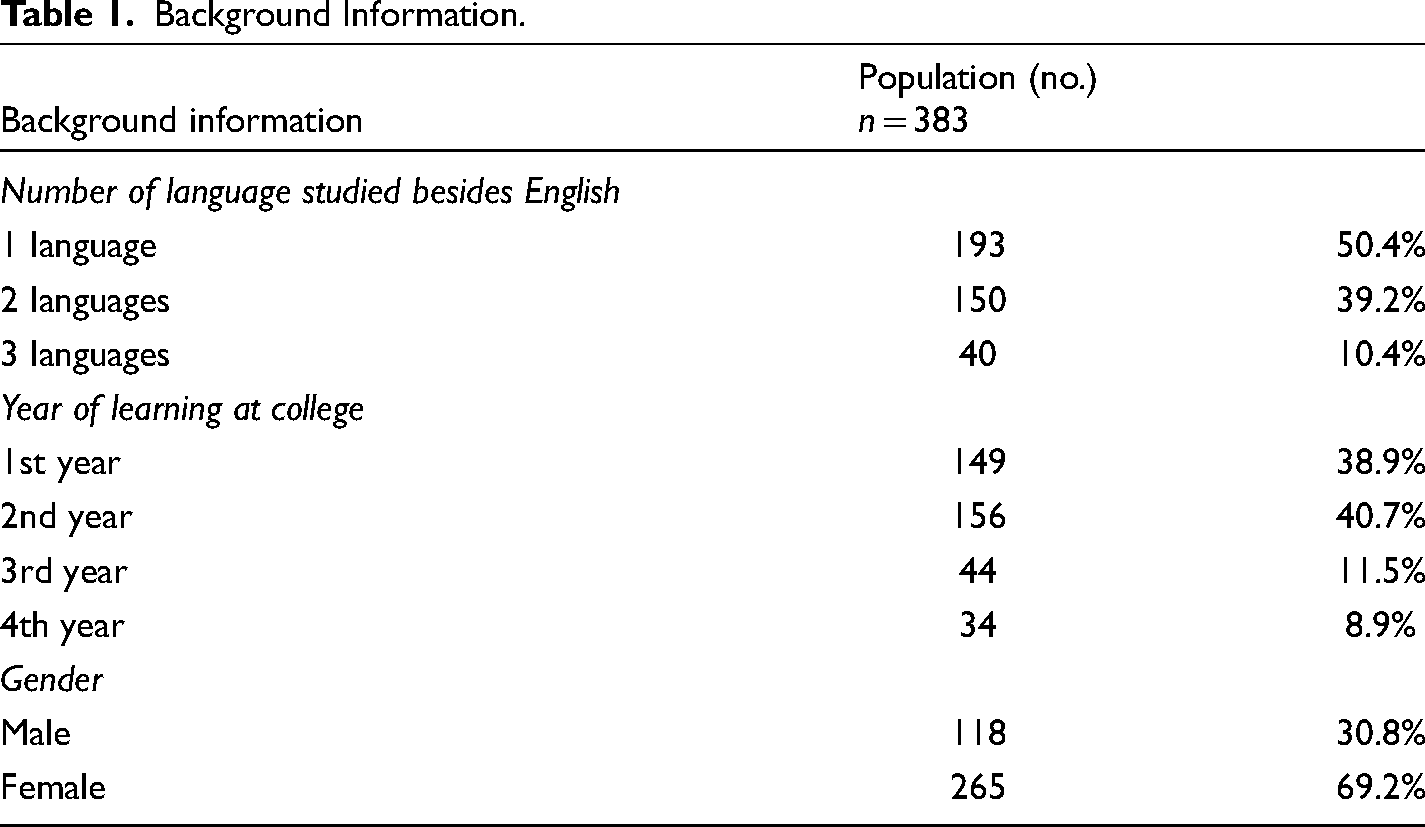
Table 1 presents the respondents’ background information. It shows that 50.4% of respondents were bilingual (English and one of other foreign languages provided by the language division being studied), and another almost half were multilingual (49.6%). The majority of them were first- or second-year students at college (79.6%), and the rest were Junior and seniors (21.4%). More than two-thirds (69.2%) were females.
Background Information.
Results of Research Question 1
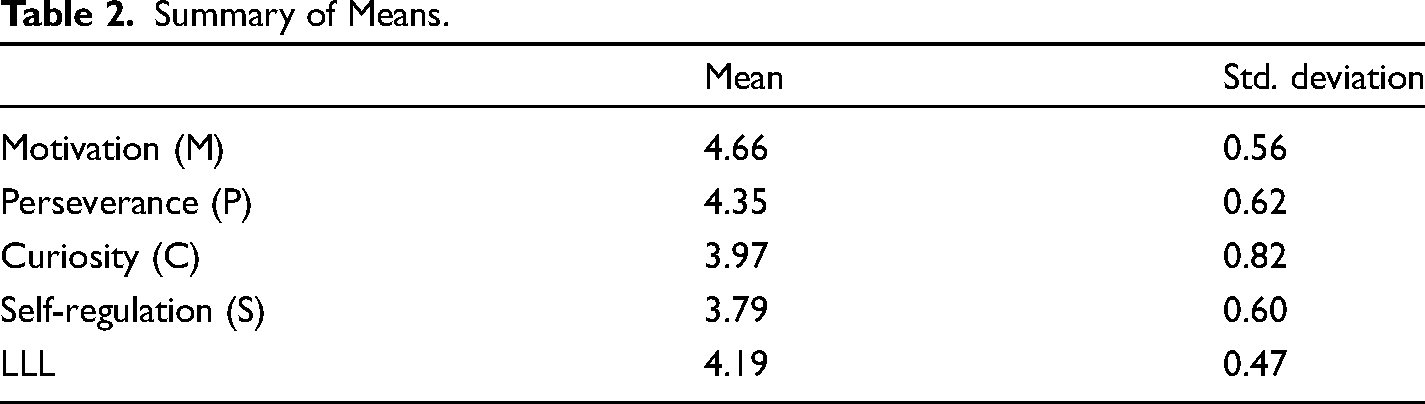
The means of each dimension of LLL and the LLL tendency in general are demonstrated in Table 2. The respondents had rather high levels of the motivation (4.66) and perseverance (4.35) compared with those of curiosity (3.97) and self-regulation (3.79). The LLL frequency level of the respondents was comparatively high at 4.19.
Summary of Means.
Findings of Research Question 2
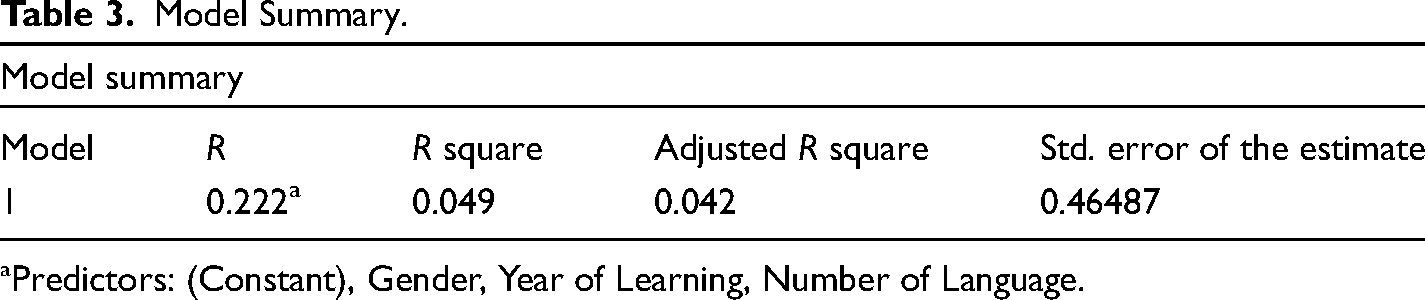
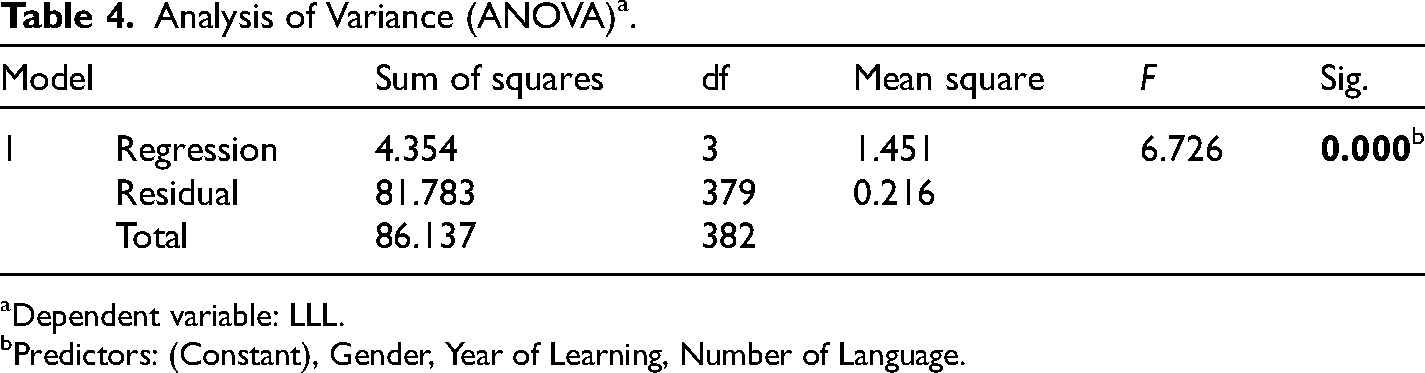
A multiple regression was run to investigate whether number of languages being studied besides English, year of learning at college, and gender could significantly impact LLL. As shown in Tables 3 and 4, the results of the regression indicated that the model explained 49% of the variance and the model was a significant predictor of LLL, F (3, 379) = 6.73, p = .00. However, only the year of learning is significantly related to LLL, as shown Table 5 (p < .05).
Model Summary.
Predictors: (Constant), Gender, Year of Learning, Number of Language.
Analysis of Variance (ANOVA) a .
Dependent variable: LLL.
Predictors: (Constant), Gender, Year of Learning, Number of Language.
Correlations.
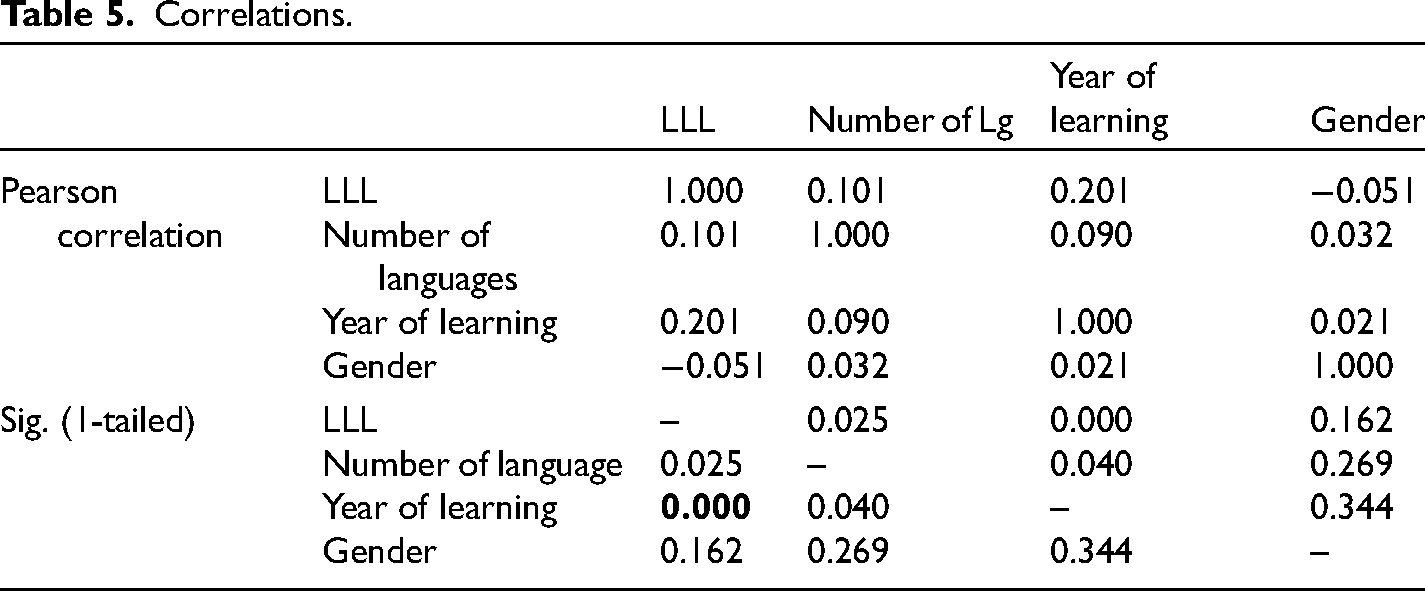
Figure 1 depicts the year of learning's influence on LLL tendency. As shown in Figure 1, the frequency of the LLL dimensions (Motivation, Perseverance, Self-regulation, and Curiosity) increased along with the number of year of learning at college and reached the highest at 4.45 for the third-year students. The frequency tended to decrease a little bit with those respondents who were approaching graduation, finalizing eventually at 4.38. It is worth pointing out that in the fourth year, apart from the perseverance level, the participants’ motivation, self-regulation, and curiosity tended to decline compared with those in the third year.
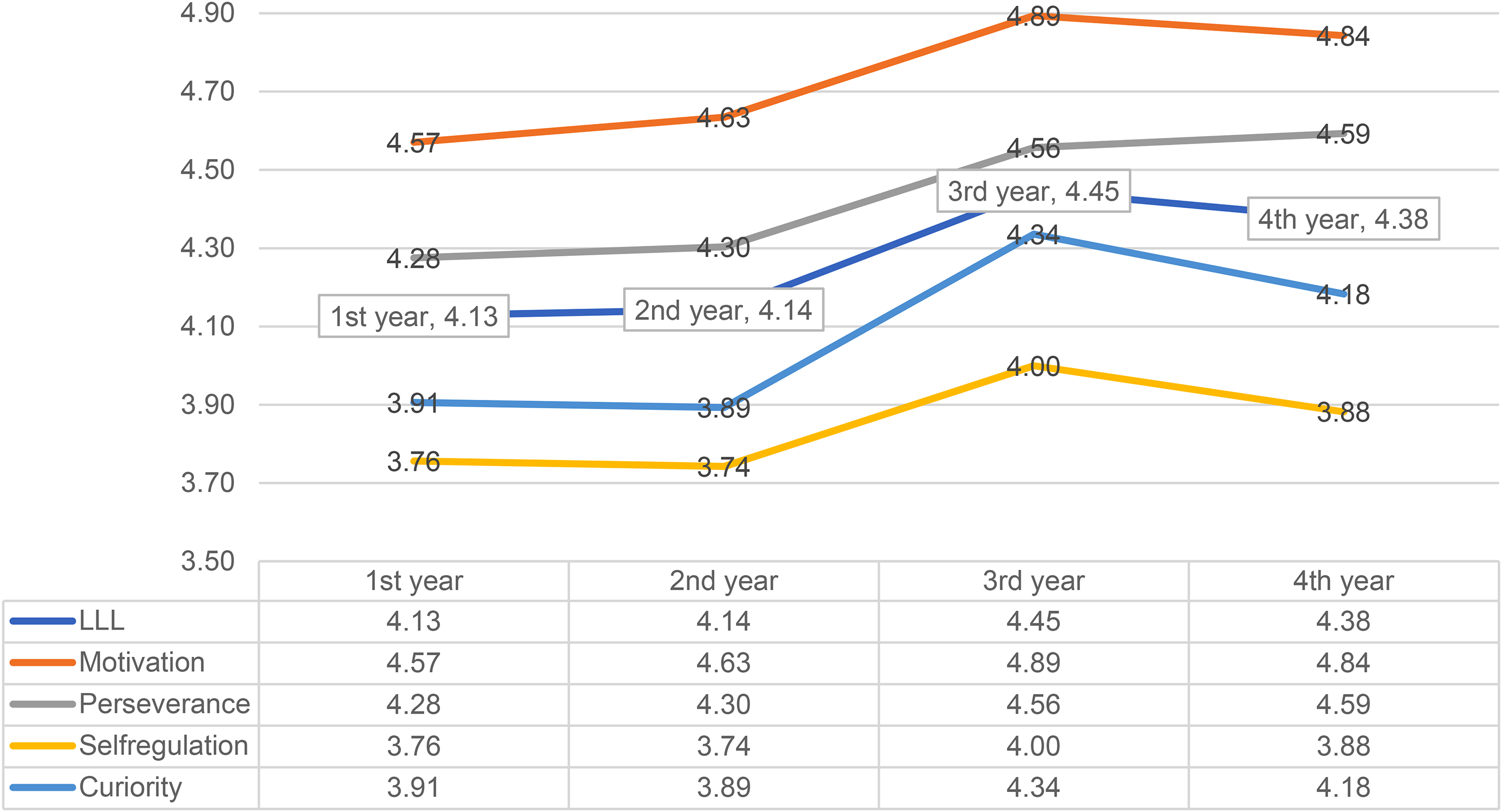
LLL and subcategories by year of learning.
As indicated in Figure 2, the respondents who studied three languages besides English were highly motivated (4.79) and possessed stronger level of curiosity (4.24) compared with other groups. Female respondents were more curious (4.04) than males (3.84), whereas there were no significant differences among other dimensions, as shown in Figure 3.
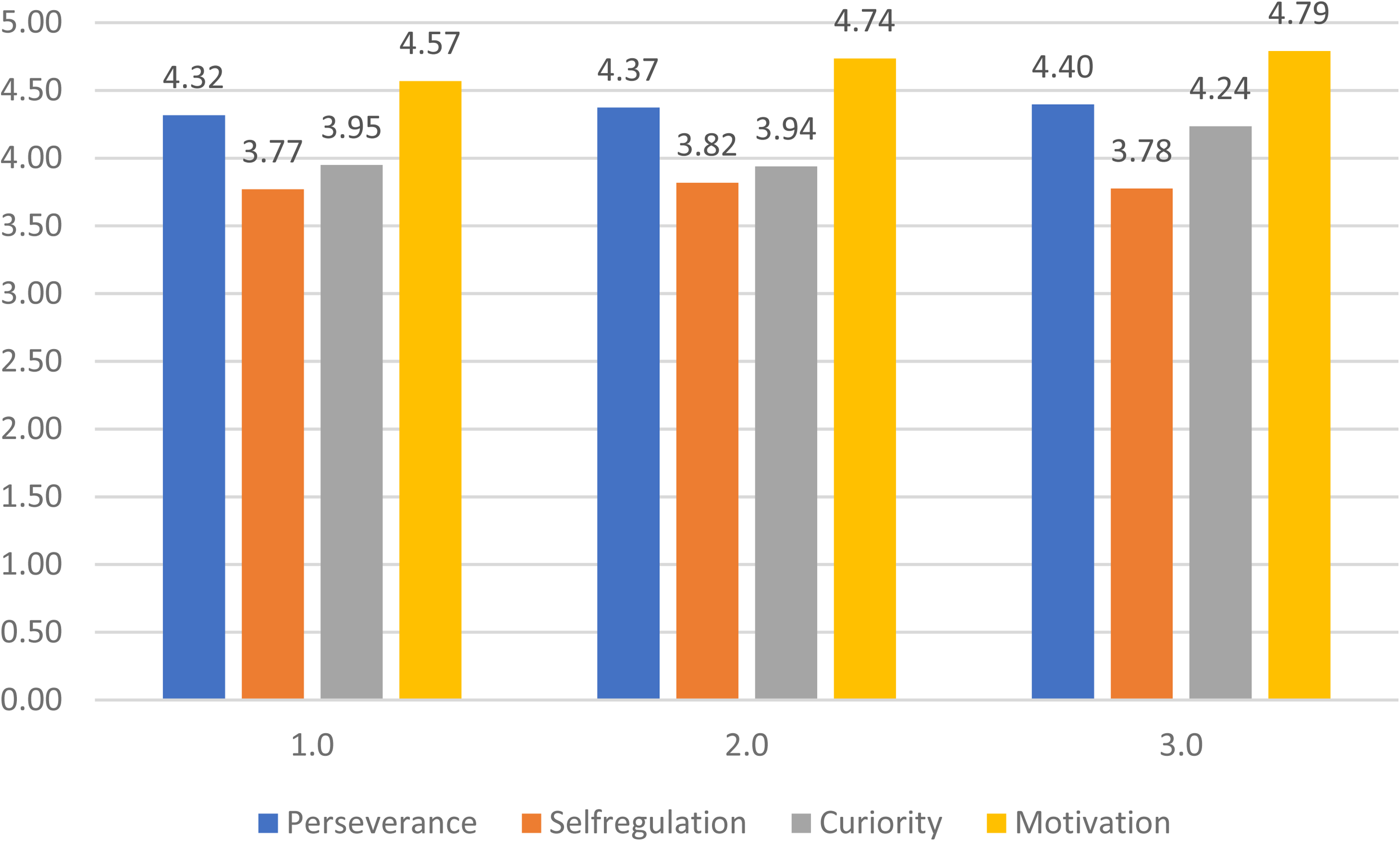
Comparison of subcategories by number of languages.
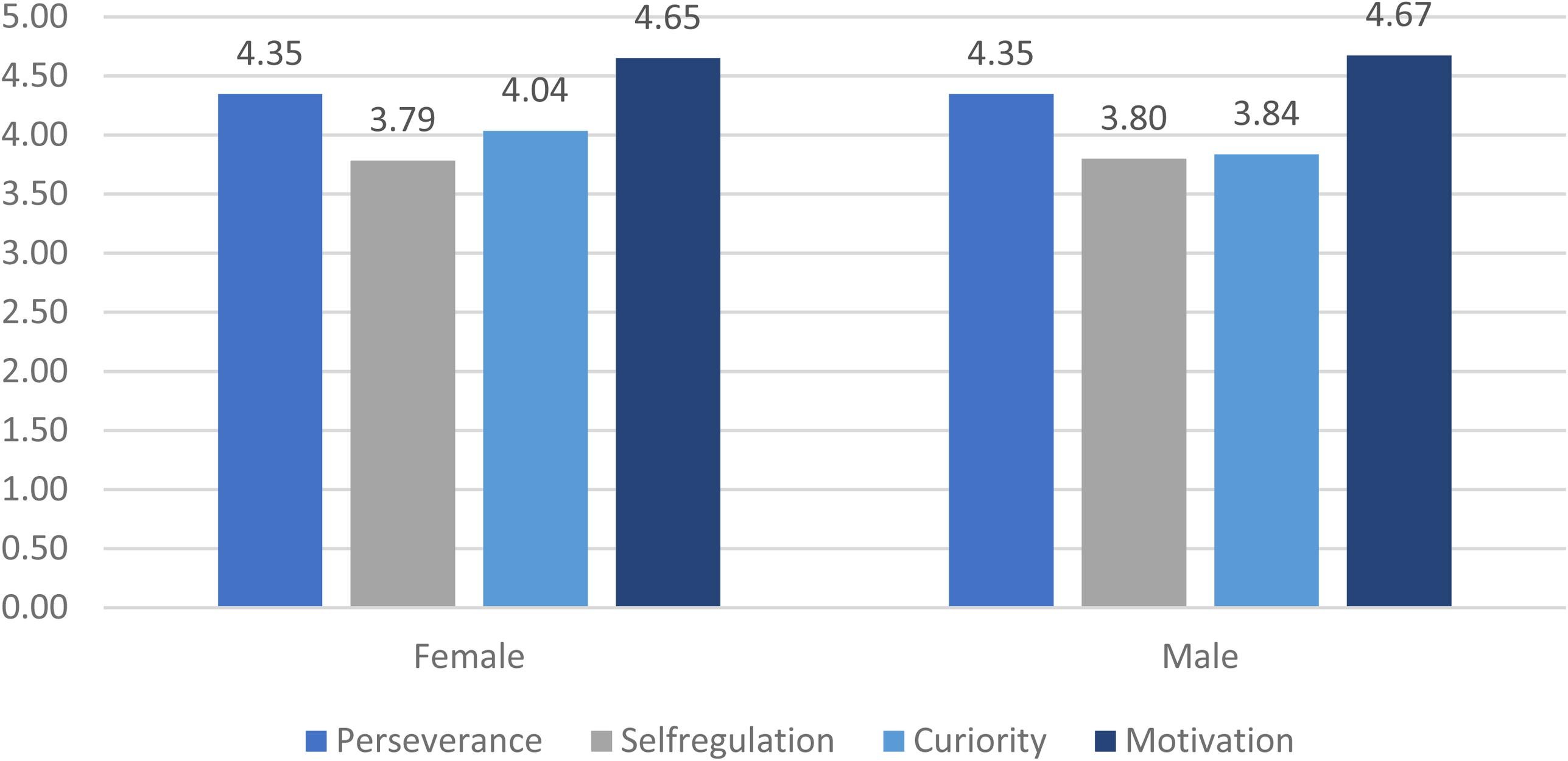
Comparison of subcategories by gender.
Findings of Research Question 3
Tables 6 and 7, and Figure 4 summarize the correlations and contributions of each dimension with and to LLL tendency. All four dimensions had a strong positive correlation with LLL tendency, with curiosity having the strongest correlation with LLL at 0.78, followed by Perseverance (0.73), Motivation (0.71), and Self-regulation (0.67) respectively. Self-regulation had less correlation with LLL compared with other factors. All factors were positively correlated with each other, especially Curiosity and Perseverance (0.47), Motivation and Self-regulation (0.44), and Motivation and Perseverance (0.43). Table 7 shows that the largest beta coefficient is curiosity (0.43), which means that curiosity makes the strongest contribution to explain LLL tendency. It is followed by perseverance (0.33), self-regulation (0.32), and motivation (0.30).
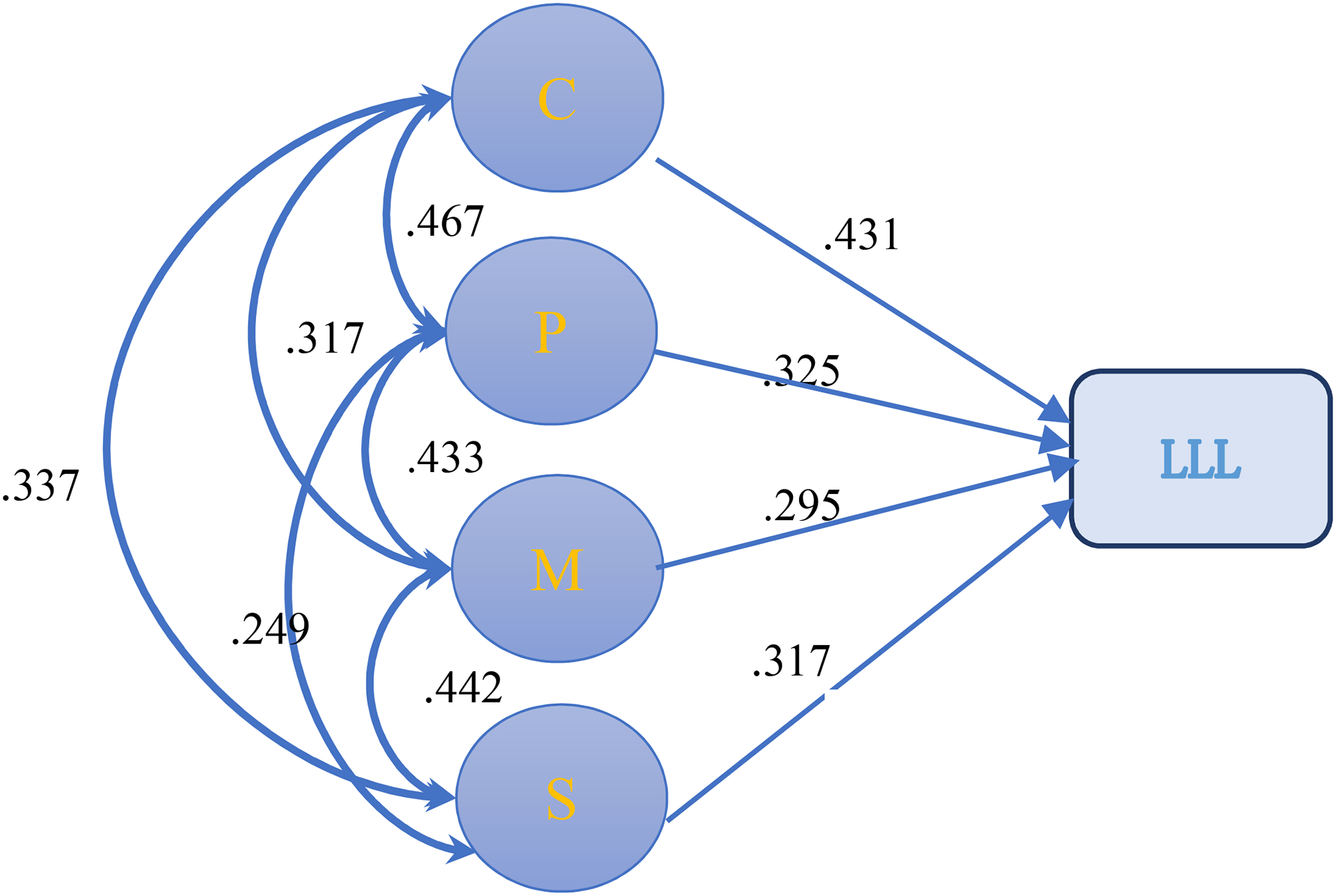
Summary of correlations with LLL.
Summary of Correlation Matrix.
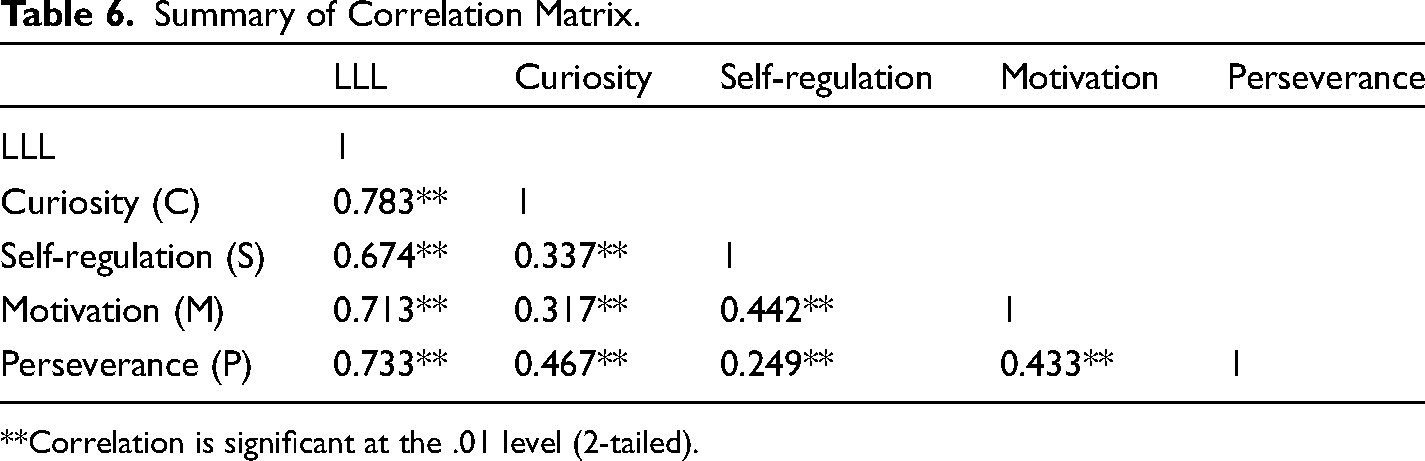
**Correlation is significant at the .01 level (2-tailed).
Coefficientsa.
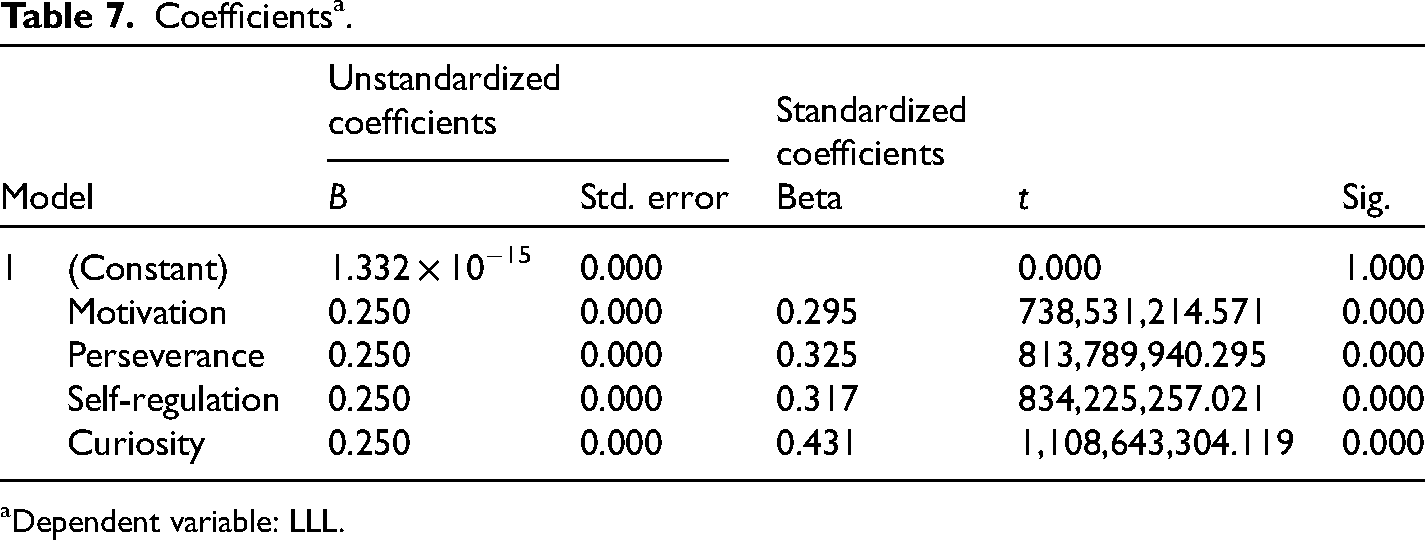
Dependent variable: LLL.
Conclusion and Discussion
This study aims to explore the college students’ LLL tendency in language classrooms in local Thai context. The findings show that college students hold a comparatively high level of inclination for LLL. The similar results were found by Deveci (2015), in which the students being studied showed a moderate level of propensity for LLL as well. These findings are, however, slightly different from Pesen and Epcacan’s (2017) study results that were based upon the high school students. Such a difference may indicate that age is one of the factors that might affect learners’ LLL tendency. Moreover, this study indicates that the year of learning at college affects LLL tendency along with time. Karakus (2013, cited in Pesen & Epcacan, 2017) also conducted a study on college students and concluded that sophomores showed a greater LLL tendency level than that of freshman students. It is worth pointing out that seniors’ LLL tendency level declines compared with that of the juniors. Except for perseverance, students’ motivation, self-regulation, and curiosity also decrease in the fourth year, which might be caused by graduation pressure among seniors. There was no significant correlation between the number of languages studied with LLL tendency. It was found, however, that they influence the subdimensions of LLL tendency. The more languages being studied, the greater level in each dimension. From a LLL perspective, multilingual competency will greatly help learners to gain a better sense of belongingness to their communities and reduce barriers to participate in any LLL activities (Rubenson & Desjardins, 2009).
The research findings also reveal that curiosity has a very strong positive correlation with LLL tendency as a factor that contributes more to the LLL tendency compared with other factors. Curiosity has been discussed over for a long time and it is argued even more important than people's intelligence (Friedman, 2007). As an aspect of intrinsic motivation, curiosity could have great potential to enhance student learning in educational achievement based on the existing literature regarding motivation and achievement (Curwin, 2014; Martin, 2012; Schunk, 2012; Semerci & Duman, 2013; Steinmayr & Spinath, 2009). However, college learners’ level of curiosity is only ranked in the third position in this study. In addition, female learners tend to be more curious towards language studies compared with males, which is consistent with some studies in current literature (Pesen & Epcacan, 2017). Considering the presence of women is quite limited in higher education before 1970, female learners might care more about educational opportunities (Scott-Metcalfe & Slaughter, 2007) in order to close the gaps in basic training and activities related to education. Based upon the findings, it is strongly suggested that language practitioners should adopt effective teaching approaches to help language learners to evoke their curiosity level, especially during the timing when students are approaching graduation. Language teachers could adopt the information gaps, task-based learning, and problem-based learning to invoke learners’ curiosity (Graham & Helen, 2011); besides, language teachers should also encourage learners to be more curious about the culture of the people whose language being studied (Ozturk & Gurbuz, 2013) to maintain their LLL tendency after graduation.
Self-regulation or self-directed learning has been argued as an important educational goal and it has played an important role in learning throughout life (Bolhuis, 2003; Luftenegger et al., 2012). However, this study shows that the college students are very weak at self-regulating themselves in the language learning context, regardless number of languages being studied and gender. In Sad and Gurbuzturk’s (2009) study, students were also found having low self-regulatory orientations due to their motivation being triggered only extrinsic motivation created by external factors, such as all kinds of tests and examinations that need to be taken. The rather strong correlation between self-regulation and motivation in this study could also explain that the language learners’ high motivation in this study is mainly influenced by external factors as well due to the low level of curiosity that is often argued as “almost a prototype of the intrinsic motive” (Bruner, 1968, p. 114) and intrinsic motivation (Ozturk & Gurbuz, 2013). Thai language learners’ low self-regulation skills might be due to its collectivist culture, in which students are encouraged to seek help from each other and be more group-oriented. This can be evidenced by Al-Harthi (2010) study, in which Arabian students with collectivist cultural background were less self-regulated than those from American culture.
The results have brought challenges to language teachers how to cultivate learners to be more self-regulated in order to maintain a LLL spirit in both classroom and outside the classroom as well. Deveci (2015) suggested that language learners’ self-regulation skills could be promoted by increasing learners’ involvement in all stages of instructional design, such as conducting needs analysis in planning stage, and providing assistance in evaluating stage. Germeroth and Day-Hess (2013) also recommended a three-phase process to develop students’ self-regulation skills: in forethought phase, students focus on the expectations and expected outcomes of a new task; in performance phases, students apply their chosen strategy to do the actual work by identifying internal troubleshooting; and during the self-reflection phase, students respond to and reflect on the task and its outcomes.
The findings of this research offer both theoretical and practical implications for language teaching and learning. Theoretically, this study enriches the current literature by incorporating LLL spirit to a language classroom, in which its primary focus is recognized as achieving linguistic proficiency and communicative competence. At practical level, the study has demonstrated the status quo of language learners in terms of their LLL qualities and it is hoped to offer practical suggestions to language teachers how to educate language learners to become lifelong learners.
Limitations and Recommendations for Future Research
This study had several limitations. First, it was limited to the language learning experience. Second, it only focused on language learners in formal studies at one college. Therefore, it is suggested that future research could study learners’ LLL tendency in different disciplines and types of institution. In addition, this current study was primarily descriptive, future studies could also research how to train students to be more curious and self-regulated by involving them in all stages of instructional design in order to develop their LLL spirit. Moreover, this study only examines the motivation factor in general, but it is worthwhile for future researchers exploring how intrinsic and extrinsic motivation influence on LLL tendency. Last but not the least, it is also suggested all the educational practitioners could study the new skills and techniques to become lifelong learners as well. Teachers’ experience in seeking greater knowledge through research would allow students to benefit as well.
Footnotes
Acknowledgments
The authors acknowledge the support of Editing Service, Mahidol University International College, Thailand.
Declaration of Conflicting Interests
The authors declared no potential conflicts of interest with respect to the research, authorship, and/or publication of this article.
Funding
The authors received no financial support for the research, authorship and/or publication of this article.
