




Abstract
This study illuminates reformed literacy expectations via close examination of the recently released 2019 Ontario (Canada), First Nations, Métis, and Inuit Secondary curricular document. A summative latent content analysis of the renewed provincial curriculum found overwhelming support for critical literacy development. The Ontario government uses the term literacy 84 times in the transformed curricula, prompting this study to ask: What are the literacies and how should these be attained in First Nations, Métis, and Inuit secondary level education? This study found required literacies expected in grades nine through 12, included English literacy and skills, media, financial, and critical literacies.
Introduction
At the very least, Secondary students in Ontario should be aware of the recent Truth and Reconciliation Commission of Canada report, the term, treaty rights, and understand who First Nations, Métis, and Inuit people are. Perhaps this is why the Ontario government initiated the development of the 2019, Ministry of Education Secondary curricular document entitled: First Nations, Métis, and Inuit studies. Of the many expectations detailed in this almost 300-page curriculum guide is the goal to teach Secondary students about the diversity of First Nations, Métis, and Inuit “histories, cultures, perspectives, and contributions, and … the critical importance of Indigenous knowledge and ways of knowing in a contemporary global context” (Ontario Ministry of Education, 2019a, p. 6). This is no small undertaking and admittedly will take much longer than the 4 years a student will be in Ontario Secondary schools. Nonetheless, Secondary level educators in Ontario will, it is expected, support students as they make personal connections, think critically and creatively, and build respectful relationships that support all cultures in our communities.
Secondary students will be expected to possess an awareness while being respectful to build reciprocal relationships in classes. Yet to achieve these expectations requires a level of literacy that is enabling and not disabling. The emphasis and expectations for Secondary students provides the key question for this investigation which asked: What are the literacies and how should these be attained in First Nations, Métis, and Inuit secondary level education? The significance of the curricular expectations merits analysis since the Ontario Ministry of Education (2019a) believes all students need to be “equipped with the literacy skills necessary to be critical and creative thinkers, effective meaning makers and communicators, collaborative co-learners, and innovative problem solvers. These are the skills that will enable them to achieve personal, career, and societal goals” (p. 50). This vision for Secondary students is ambitious, yet not unrealistic for all, and the expectations are authentic academic and personal targets for Secondary classroom teachers who are “key educators for a student’s literacy and numeracy development” (Ontario Ministry of Education, 2019a, p. 40).
Method
The recent Ontario Ministry of Education curricular document provided much of the data herein. The content of this document was reviewed word by word and page by page to locate material that both informs and guides this investigation. Key terms and frequencies of words were noted while decoding text, and the resultant data included both key terms and usage frequencies. For example, the Ontario provincial government used the term literacy 84 times within 300 pages. Therefore, literacy became the unit of analysis linked to subthemes involving “keywords or content, followed by the interpretation of the underlying context” (Hsieh & Shannon, 2005). In this case, several literacies detailed within the First Nations, Métis, and Inuit (2019) Secondary level curricula were identified and examined.
Reduction, while both a limitation and a positive trait, combined with sense-making resulted in new meaning and understanding (An & Gower, 2009; Humble, 2009; Kindermann, 2020), which was used to broaden the scale and scope of the review (Mucchielli, 1979). Text was revisited to reassess interpretations (Schreier, 2012), and to advance perceptions, producing a guiding representation (An & Gower, 2009; Kindermann, 2020). This content analysis proved to be a mode that supported the “interpretation of the content of text data”. The interpretation then permitted descriptions and summary perspectives (An & Gower, 2009; Schreier, 2012), while substantiating assumptions (Berelson, 1971; Kindermann, 2020).
Overall, this content analysis was a qualitative reductive process, employing summative latent content analysis, which “undertakes a search for the essential elements of a text, it continues to consider the importance of the text as a whole and its impact” (Rapport, 2010, p. 270). Content analysis (Zhang & Wildemuth, 2009) is a “replicable technique for compressing many words of text into fewer content categories (headings)” (Stemler, 2001). Berelson (1971) believes content analysis can identify intentions, focus, or communication trends of an individual, group, or institution. The institution in this case is the Ontario Ministry of Education curricular document. Content analysis provides valuable cultural insights through the analysis, and offers understanding into complex models of human thought and language use (An & Gower, 2009; Bardin, 2007; de Sola Pool, 1959), when applied correctly.
Background
Curricula
From 2019 onward, there are five levels or types of courses in the Ontario First Nations, Métis, and Inuit studies. This Secondary level program includes university preparation, university/college preparation, college preparation, workplace preparation, and open courses. Each level or type of course is designed to “equip students with the knowledge and skills they need to meet the entrance requirements” (Ontario Ministry of Education, 2019a, p. 15), for university, college, apprenticeship, or training programs. The courses are offered in each grade at the Secondary level, and each requires at least 55 hr of instruction to meet both the overall and specific expectations detailed in the curricular guide. The expectations are arranged into strands labeled A, B, C, and D. The strands are titled: Exploring, Investigating, Processing Information, and Communicating and Reflecting, which help teachers to plan lessons. As well, the Ontario Secondary curricular guide supplies detailed expectations such as C2.4, in grade 11 which suggests students will “identify and describe some First Nations, Métis, and Inuit initiatives to address language loss” (Ontario Ministry of Education, 2019a, p. 15). The expectations are quite challenging given the often-sensitive nature of various topics. There are guiding questions (prompts) to help teachers plan, instruct, and monitor students as they work to meet grade level expectations. These Secondary level tasks require a level of literacy that may be out of reach for some students hence the need to have students of different abilities work together in groups via instructional planning designs.
As a Secondary student moves from grade nine through 12, it is expected that literacy levels will increase. A lack of literacy development can cause a student to be “less responsive to school health activities, less likely to manage chronic diseases successfully, and less likely to use disease prevention services” (Persson, 2016, p. 39). This wellness–literacy relationship presents because “low health literacy exists within developed and wealthy nations and is a large contributor to health inequity” (Churchill, 2019, p. 20). Indeed, many factors, known as determinants of health, “have been shown to affect a person’s overall state of well-being. Some of these are income, education and literacy, gender and culture, physical and social environment, personal health practices and coping, skills, and availability of health services” (Ontario Ministry of Education, 2019a, p. 40). By improving literacy, it can be argued, other aspects of a person’s life can be altered, impacted and developed; hence, the importance of literacy is somewhat exposed (Churchill, 2019).
Literacy today goes beyond reading and understanding text and includes financial, critical, mathematical, arts, inquiry, and digital literacies that enable students to function in society (Cope & Kalantzis, 2009). These multiple literacies can be developed via direct instruction, which can be transformative and trigger multiple student perspectives to emerge within varied contexts (Cazden et al., 1996). Contemporary literacy does not ignore traditional literacy, understood as a set of progressive skills in reading and writing of print-based text (Serafini & Gee, 2017); instead, literacy at present builds upon and extends past practices and theory to include multiple literacies via multiple modes (Figure 1). Literacy in 2021 has moved from individual literacy tasks to a point where current students are now co-creators of pedagogical activities and locate meaning in local contexts that are also arenas of inquiry, as they complete projects and search for problems they can address, solve, and discuss. Educators should understand that
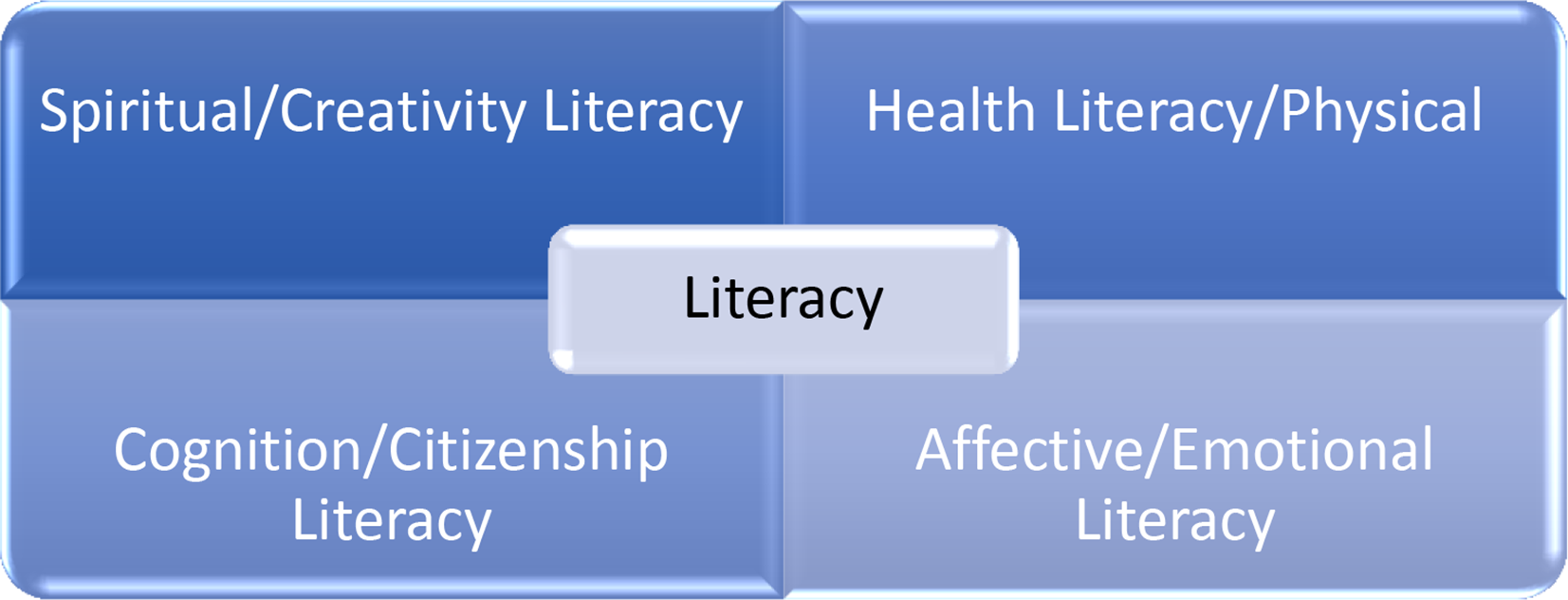
Literacy connections (adapted from Toulouse, 2016).
students thrive in a safe, supportive, and welcoming environment that nurtures their self-confidence while they are receiving focused literacy instruction. When they are ready to participate, in paired, small-group, or whole-class activities, some students will begin by using a single word or phrase to communicate a thought, while others will speak quite fluently. (Ontario Ministry of Education, 2019a, p. 44)
Communication unfolds today often within a digital landscape (Ryan, 2019); subsequently, secondary literacy needs to be technologically infused to be authentic and practical (Gillen & Hall, 2013; Ryan & Neely, 2016). Authentic teaching and instruction require educators at the Secondary level to understand that direct instruction is overt within a constructivist, situated practice that embraces the prior knowledge and experiences of students. Directed by the current curricular document, Secondary educators are prompted to ask students to use critical framing, thinking, and analysis while examining media, finance, and issues in society (Ryan & Sinay, 2017; Walsh, 2013). The new curriculum needs to be offered in such a way as to invite alternative means of communication to express understanding, knowledge, and skills, thereby engaging more First Nations, Métis, and Inuit students as well as others who may not be from an ethnic minority. The Ontario Ministry of Education (2019a) believes, “literacy, critical literacy, and mathematical literacy are essential to students’ success in all subjects of the curriculum, and in all areas of their lives” (p.44); yet all means of literacy needs to be available to involve all students each day.
Ontario Secondary Teachers and Literacy
Ontario Secondary level teachers will “encourage parents to continue to use their own language at home … not only to preserve the language as part of their children’s heritage and identity but also as a foundation for their language and literacy development in English” (Ontario Ministry of Education, 2019a, p. 43). By honoring all languages, educators send a message that students “belong to many communities and that, ultimately, they are all citizens of the global community” (Ontario Ministry of Education, 2019a, p. 10). Language differences are connected to various determinants of health and “affect a person’s overall state of well-being” (Ontario Ministry of Education, 2019a, p. 3). Secondary teachers need to be aware of cultural safety as
some students may experience emotional reactions when learning about issues that have affected their own lives, their family, and/or their community, such as the legacy of the residential school system. Before addressing such topics in the classroom, teachers need to consider how to prepare and debrief students, and they need to ensure that resources are available to support students both inside and outside the classroom. (Ontario Ministry of Education, 2019a, p. 9)
Given the sensitive nature of certain topics and resulting discussions, educators can opt to use an instructional mode that requires innovative class configurations, which supports student interaction, as dissimilar students work with one another. Educators can use a multiliteracy pedagogy to connect students, content, peers, and fellow teachers while producing an engaged class, school, and extended school community. This interconnection via literacies will require working digitally as the medium of technology promotes engagement and learning. For example,
the inclusion of shots of the audience at videoed outdoor Indigenous gatherings encourages viewers to share the enjoyment; the use of cultural symbols and/or images on First Nations, Métis, and Inuit community organization websites emphasizes the cultural identities of the communities; framing, camera angle, lighting, and editing are techniques used in film-making to convey meaning and create mood). (Ontario Ministry of Education, 2019a, p. 185)
This in-class activity is in response to a curricular expectation (E2.2), which asks students to “identify several different conventions and/or techniques used in familiar media forms and explain how they convey meaning and influence their audience in the context of First Nations, Métis, and Inuit cultures” (Ontario Ministry of Education, 2019a, p. 185). In addition, differential types of expression stimulate communication (Kilinc et al., 2016), and the teacher guides and facilitates communication (via dramatic skits, plays and digital modes, short commercials, movies, posters, public announcements). Expectation (E5.2) necessitates that students “identify some ways in which contemporary First Nations, Métis, and Inuit media texts contribute to identities and heritage in Canada” (p.187). A sample question in the curricular text asks: How might a video post of a First Nation, Métis, or Inuk environmental leader sharing an Indigenous perspective on climate change act as a social force in a First Nation community? Prompts such as this engage and stimulate strong student responses that may be observed by and graded by teachers.
Creating opportunities helps students to “discern and identify credible, reliable and valid resources that can affect their well-being. Knowing how to differentiate misleading and false information from reliable claims will allow students to make better decisions for both their classwork and themselves” (Ohara-Borowski, 2018, p. 69). Teachers plan and instruct to “ensure that students make “connections between citizenship education and expectations in the First Nations, Métis, and Inuit studies curriculum – in particular terms such as “truth,” “reciprocity,” and “reconciliation” (Ontario Ministry of Education, 2019a, p. 10). Making efforts to illuminate new knowledge and understanding in these key areas increases the quality of learning (Ryan, 2019). Quality instruction is further heightened by “linking domains such as social/emotional, citizenship, health and creativity as depicted in this holistic model” (Toulouse, 2016, p. 1), while building upon a literacy theme woven throughout the secondary curriculum courses.
It is expected that Secondary educators support students as they cultivate “mental health and well-being, physical and health literacy, and the comprehension, capacity, and commitment they will need to lead healthy, active lives” (Ontario Physical and Health Education Association, 2019). Secondary students need to nurture the capacity to “differentiate misleading and false information from reliable claims … to make better decisions for both their classwork and themselves” (Ohara-Borowski, 2018, p. 69). The ability to decipher information supports well-being and impacts multiple literacies at the secondary level (Ryan & Munn, 2014).
Findings
Literacy
The term literacy is frequently found in the new curricula; specifically, the word literacy is used 84 times on 42 pages. Literacy and related literacy skills include the capacity to think, express, and reflect upon one’s own thoughts and learning in order to develop self-advocacy and self-efficiency while building an enduring interest in lifelong learning (Ontario Ministry of Education, 2019a). All students will develop thinking skills to be able to “access manage, create, and evaluate information as they think imaginatively and critically in order to solve problems and make decisions, including those related to issues of fairness, equity, and social justice” (Ontario Ministry of Education, 2019a, p. 50). Multiple literacies (Figure 1) are required to navigate society in 2021. The literacy extends to images online and digital communications via social media, as much of the schoolwork in contemporary schools unfolds on various personal screens found within phones, tablets, and laptops. School tasks can at times can be enacted in a public forum, such as classroom presentations which can be both are frequent and required.
Whatever the media, “exploring Indigenous world views and knowledge systems, developing a better understanding by learning from the experiences of diverse Indigenous individuals, respectfully listening to knowledge through storytelling, role playing to create meaning through stories” (Ontario Ministry of Education, 2019a, p. 50), is encouraged and applauded by education authorities.
Educators are no longer the single conductor or sage at the front of the class; instead, teachers are facilitators, guides, and “orchestrators of literacy learning environments, where members of a classroom community exchange new literacies that each has discovered” (Leu et al., 2004, p. 1599). Technology has provided digital tools and moved the pedagogy from one-to-many leaders in the classroom. A Secondary student can present online findings via screens of all sizes to peers and educators at the same time. This ability to use multiple modes to communicate literacy (Figure 1) has enabled more students to opt in and become engaged while using “language and images in rich and varied forms as they read, write, listen, speak, view, represent, discuss, and think critically about ideas” (Ontario Ministry of Education, 2019a, p. 50).
This requirement to think deeply about meaning, intention, and communications promotes “metacognitive knowledge and skills to monitor their own thinking and learning, and, in the process, [helps] develop self-advocacy skills, a sense of self-efficacy, and an interest in lifelong learning” (Ontario Ministry of Education, 2019a, p. 50). Being able to reflect upon what is thought, read, viewed, heard, and seen is a useful skill, and can help students determine how the communication should be decoded, processed, and responded to. The revised Ontario Ministry of Education (2019a) document suggests,
students are required to reflect on what they have learned, how their knowledge and understanding have been formed, the perspective or perspectives that influence their interpretation of what they have learned, and what other resources they may need to consult to reach a fully informed conclusion. (p.24)
In the First Nations, Métis, and Inuit studies courses educators are well aware that students need to be able to judge information and use this judgment as a means to guide next steps.
Critical Literacy (CL)
The term Critical Literacy is used 89 times and is located on 26 pages within the curriculum document. This frequent usage may lead the reader to the conclusion that in all “First Nations, Métis, and Inuit studies courses, students are required to use appropriate and correct terminology, and are encouraged to use language with care and precision in order to communicate effectively” (Ontario Ministry of Education, 2019a, p. 51). Indeed, using appropriate terms, words, and phrases in a precise and proper manner is a matter of finding a means to communicate that is respectful. Finding a means to add their voice in discussions through these words, terms, and phrases is at the core of CL (Janks 214) and realizing how communication can position a person as they react to communications (Luke, 2012). Stakeholders need to be reminded that “critical thinking includes skills such as questioning, predicting, analyzing, synthesizing, examining opinions, identifying values and issues, detecting bias, and distinguishing between alternatives” (Ontario Ministry of Education, 2019a, p. 51).
A Secondary teacher may point out that all messages attempt to situate readers (Bourke, 2008; Saunders, 2012), and students may realize they can look at texts from several standpoints, which promotes and enhances understanding and comprehension. CL may become a habitual practice. This allows a person to access a perspective “beyond and beneath texts, investigating issues of power, whose interests are being served by texts, and whose interests are not being served, and why” (Jones, 2006, p. 67). CL “gives us potent ways of reading, seeing, and acting in the world” (Janks, 2014, p. 349). Some students may discover hidden bias and the rationale for communications which is important. CL “involves looking beyond the literal meaning of a text to determine what is present and what is missing, in order to analyze and evaluate the text’s complete meaning and the author’s intent” (Ontario Ministry of Education, 2019a, p. 51).
CL includes a specific characteristic of critical thinking as students use “critical-thinking skills in First Nations, Métis, and Inuit studies when they assess, analyze, and/or evaluate the impact of something and when they form an opinion and support that opinion with a rationale” (Ontario Ministry of Education, 2019a, p. 51). CL “involves looking beyond the literal meaning of a text to determine what is present and what is missing, in order to analyze and evaluate the text’s complete meaning and the author’s intent” (Ontario Ministry of Education, 2019b, p. 81). By questioning communications and bias, hidden meaning may be identified as well as different perspectives, and writer intentions. The location and context of the educator can alter messages (Han et al., 2015), as educators guide the inquiry based on student need, development and awareness of CL.
CL is related in many ways to “equity, and social justice hence the search for meaning is essential” (Ontario Ministry of Education, 2019a, p. 50). Secondary educators want students to embrace a “critical stance, asking what view of the world the text advances and whether they find this view acceptable, who benefits from the text, and how the reader is influenced” (Ontario Ministry of Education, 2019b, p. 81). Secondary educators will rouse thought by asking thought-provoking questions and engage students looking for media message positioning.
Critically literate students understand that “meaning is not found in texts in isolation. People make sense of a text, or determine what a text means, in a variety of ways. Students therefore need to take into account: points of view (e.g., those of people from various cultures)” (Ontario Ministry of Education, 2019b, p. 81). Secondary students need to be prompted and cued to reflect upon what they have watched, read, or heard, and decide for themselves if the messages are accurate. For instance, students may be asked to “identify the perspective of a speaker discussing the impact of proposed government legislation on Indigenous sovereignty or self-governance and predict how people with different perspectives might react” (Ontario Ministry of Education, 2019a, p. 125-126).
CL includes student metacognition, which is the ability to think critically through reflection on their own thought processes (Lesley, 2001). Acquiring and “using metacognitive skills has emerged as a powerful approach for promoting a focus on thinking skills in literacy and across all disciplines” (Ontario Ministry of Education, 2019b, p. 81). CL is a means of “problematizing texts to expose privilege and oppression; it reveals how texts benefit some people and harm others” (Bourke, 2008, p. 304). Secondary students especially need to “develop broader skills in problem solving, inquiry, decision making, critical thinking, and critical literacy” (Ontario Ministry of Education, 2019b, p. 77). Secondary students may be unaware of
intertextuality (e.g., information that a reader or viewer brings to a text from other texts experienced previously); gaps in the text (information that is left out and that the reader or viewer must fill in); and silences in the text (e.g., the absence of the voices of certain people or groups). (Ontario Ministry of Education, 2019b, p. 81)
Being able to critically reflect and think about communications supports “students in their ability to think, express, and reflect in discipline-specific ways. These include researching, participating in discussions” (Ontario Ministry of Education, 2019a, p. 50), and being critically literate as noted in Figure 2.
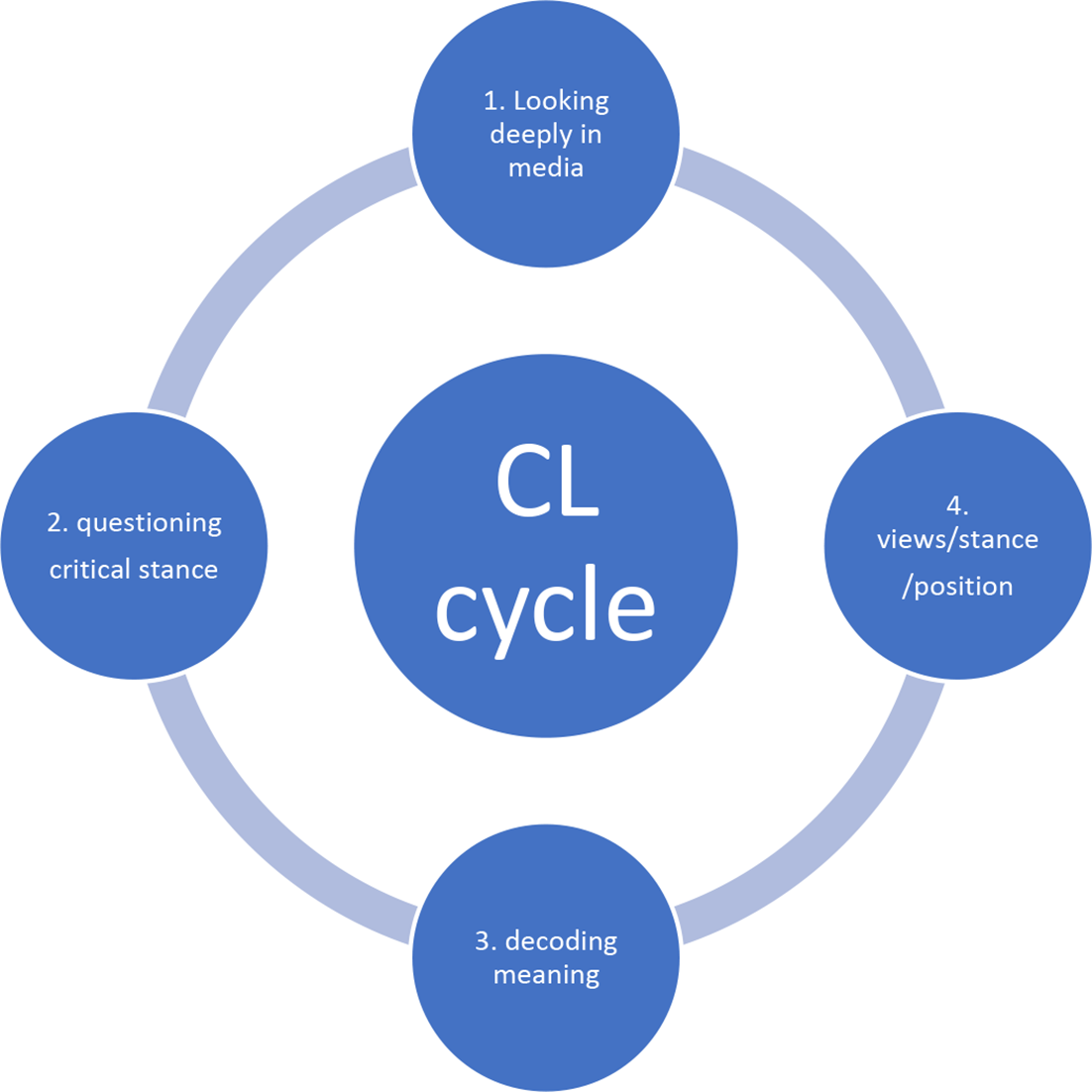
Critical Literacy (CL) cycle (Ryan, 2020, p. 6).
Financial Literacy (FL)
FL has become a significant educational component in curriculum globally as many educational authorities have introduced “financial education into schools, often as part of a national strategy for financial education” (OECD, 2014, p. 28). FL is a life skill that needs to be standardized and taught as an element of literacy in schools (Bosshardt & Walstad, 2014). The goal would be to create a financially literate person: “An individual who has developed sufficient levels of (a) financial knowledge and (b) skill in using financial representations, tools, and models in order to function… in society” (Alhammouri et al., 2015, slide 7).
The term Financial Literacy (FL) is used 53 times and appears on five pages within the recent Ontario First Nations, Métis, and Inuit curriculum document. This recurrent usage of the term FL suggests all First Nations, Métis, and Inuit courses include FL as a core element within the education of Ontario Secondary students (Ontario Ministry of Education, 2019b). The government of Ontario also believes FL education can “provide the preparation Ontario students need to make informed decisions and choices in a complex and fast-changing financial world” (Ontario Ministry of Education, 2019a, p. 49). FL has emerged as “students need to develop broader skills in problem solving, research and inquiry, decision making, critical thinking, and critical literacy related to financial issues, so that they can analyze and manage the risks that accompany various financial choices” (Ontario Ministry of Education, 2019a, p. 49). FL requires
knowledge and understanding of financial concepts and risks, and the skills, motivation and confidence to apply such knowledge and understanding in order to make effective decisions across a range of financial contexts, to improve the financial well-being of individuals and society. (OECD, 2012, p. 144)
FL education can provide the necessary foundation because as students “make wise choices, they will need to understand how such forces affect their own and their families’ economic and financial circumstances” (Ontario Ministry of Education, 2019a, p. 49). The 2019 curricular guide identifies “financial literacy as an essential component of the education of Ontario students in a twenty-first century context – one that can help ensure that Ontarians will continue to prosper in the future” (Ontario Ministry of Education, 2019a, p. 49).
The purpose of financial education is to “prepare students for financial decisions they will face as adults” (Michael Collins & Odders-White, 2015, p. 112). FL lessons allow students to
investigate specific economic issues that Indigenous communities face, as well as the financial strategies that local governing bodies have implemented to enhance community development. They may investigate financial aspects of First Nations, Métis, and Inuit agreements with governments in Canada, or of economic partnerships between Indigenous communities and business organizations. (Ontario Ministry of Education, 2019a, p. 49).
For instance, one guiding teacher prompt encourages teachers to ask students: “What effect does lack of financial support for community-based arts programs have on First Nations communities?” (Ontario Ministry of Education, 2019a, p. 78). This type of question demands students look at broader community based financial implications and sources of funding for culturally linked initiatives (OECD, 2014). The curriculum supports FL on both a personal and community level by drawing attention to
Ontario Arts Council awards and fellowships for emerging and established First Nations, Métis, and Inuit artists; (scholarships, bursaries, and financial literacy resources provided by banking institutions; entrepreneurship programs for Indigenous women), (Ontario Ministry of Education, 2019a, p. 228).
On a personal level, FL can impact decisions related to comparison shopping, budgeting, decision-making (save, spend, give), running a business, wants versus needs, and terminology can easily be introduced into debates, discussions, and projects that are problem based. Secondary teachers are encouraged to ask students “How do your beliefs and values influence the way you make financial decisions?” (Ontario Ministry of Education, 2019a, p. 233). FL, as students will come to understand, impacts all aspects of life in 2021 and beyond.
Media Literacy (ML)
The phrase Media Literacy (ML) appears 71 times on 15 pages within the 2019 Ontario First Nations, Métis, and Inuit curriculum document. ML and media education “expands literacy to include reading and writing through the use of new and emerging communication tools” (Thoman & Jolls, 2004, p. 3), and “multimedia forms of expression and communication” (Hobbs, 2004, p. 47). Students and educators would be well served to learn and understand that “within the domain of media education, the accepted definition of media literacy is the ability to access, analyze, evaluate, and produce media in a variety of forms” (Johnson, 2001, p. 17). Educators need to be reminded that literacy skills involve “speaking and listening; and understanding expands to include symbol systems in audio, visual, and interactive media” (Moore & Redmond, 2014, p. 11). In 2021, it is the digital landscape that seems to be a daily challenge and in conjunction with critically reading both print and nonprint texts, “being able to communicate in a variety of modes and mediums-by creating blogs, podcasts, and videos, for example, is an essential component of 21st century literacies” (Moore & Redmond, 2014, p. 11).
One grade 11 expectation (E5.3) in the Ontario Secondary First Nations, Métis, and Inuit curriculum document has students explaining “the role of media literacy, media access, and technology in supporting contemporary First Nations, Métis, and Inuit media creation and consumption” (Ontario Ministry of Education, 2019a, p. 166). Faced with this task, students may be called upon to “determine what biases might be contained in texts, media, and resource material and why that might be, how the content of these materials might be determined and by whom, and whose perspectives might have been left out and why” (Ontario Ministry of Education (2019b, p. 81). The resultant discussion and debates that could occur in classrooms are the lifeblood of critical literacy and equip students with fresh perspectives that promote growth and stimulate learning.
ML education expands the “concept of ‘text’ to include not just written texts but any message form-verbal, aural, or visual- that is used to create and then pass ideas back and forth between human beings” (Thoman & Jolls, 2004, p. 2). ML as depicted in Figure 3 requires students to,
Media Literacy image (2019). Ontario Teachers Federation (2021).
interpret both simple and complex media texts from First Nations, Métis, and Inuit cultures, and as appropriate, relevant media texts from non-Indigenous sources, identifying and explaining the overt and implied messages they convey learn to ask important questions about all media texts-questions about authorship, purpose, point of view, and key omissions that are all part of the media creation process. (Ontario Ministry of Education, 2019a, p. 184).
By better understanding the “media that surrounds them and making media of their own, students simultaneously develop important critical thinking skills that are essential to communication in the 21st century” (Moore & Bonilla, 2015, p. 11). Indeed, all students need to learn how to “identify some ways in which contemporary First Nations, Métis, and Inuit media texts contribute to identities and heritage in Canada” (Ontario Ministry of Education, 2019a, p. 187). Just knowing how to filter, sort, and sift media content is now a skill that can help one be well, while enjoying our global digital landscape (Ryan, 2020).
Discussion
A Secondary educator reading this recent First Nations, Métis, and Inuit curricula will learn that there are factors or “determinants of health,” which can affect one’s overall state of well-being. Education, literacy, and culture are just a few of these factors, which can be addressed in schools and classrooms (Ryan, 2019) by employing the current First Nations, Métis, and Inuit curricula. Being literate is very important for health and well-being especially at the Secondary level where teachers must acknowledge their responsibility to support and coach all students to become more literate and critical.
What is significant is the understanding of literacy and its various modes that provide a foundation for literacy development. There is a need in 2021 to be critically literate to enhance our understanding and comprehension of all communications whether they be spoken, written, in print, or digital (Ryan, 2020). This critical literacy evolves best in “a safe, supportive, and welcoming environment that nurtures their self-confidence” (Ontario Ministry of Education, 2019a, p. 44).
Literacy extends into the financial realm where students take “responsibility for managing their personal financial well-being with confidence, competence, and a compassionate awareness of the world around them” (Ontario Ministry of Education, 2019a, p. 49). Educators can discuss and debate financial literacy with students in a critical manner to achieve a level of knowledge that informs and guides students, now and in the future (Ryan, 2020). Understanding how finance can impact both the community and the individual in the community can only help students as they move forward beyond secondary school.
As is the case in many new Ontario curricula, the digital landscape is addressed to ensure students are made aware and understand how literacy is required to understand this quickly evolving medium. Secondary teachers need to explain and demonstrate how critically literate people “adopt a critical stance, asking what view of the world the text advances and whether they find this view acceptable, who benefits from the text, and how the reader is influenced” (Ontario Ministry of Education, 2019a, p. 51). This media literacy supports media access while helping to identify and analyze perspectives and/or biases in the communications.
First Nations, Métis, and Inuit can be both media creators and consumers and being critically literate supports efforts to analyze the social and ethno-cultural influences of media. All Secondary students are best served by exploring various “perspectives on the role of humanity within the natural world, as expressed in oral, written, and media texts” (Ontario Ministry of Education, 2019a, p. 46).
Conclusion
From the onset of the investigation, literacy was defined and how multiple literacy may be infused in Ontario schools was given attention. The need for literacies was emphasized while carefully noting several new directives within the 2019 Ontario First Nations, Métis, and Inuit curricular document. This qualitative research effort uncovered an understanding of multiple literacies via content analysis of the current Ontario provincial government positions arising from the recent release of 2019 curricular document. Multiliteracy can be achieved by incorporating multiple literacies such as CL, ML, and FL while embracing and extending a traditional notion of literacy in teacher planning and instruction.
The level of literacy in the Secondary classroom will connect with the needs of the students, as each student is engaged in a constructivist manner while working with others on problems and projects to enhance all literacies (Ryan, 2019). Ontario Secondary educators and students will become aware of the current existing literacy guidelines and orientations via multiple literacies that are utilized to achieve curricular expectations on a daily basis. Literacy remains a priority and is necessary for healthy growth and development of teachers, students, and the wider community. In sum, this study revealed that many required literacies are expected and taught, including media, financial, and critical literacy to create a classroom that encourages the development of multiple perspectives and opportunities to learn. Indeed, it was determined many years ago that we should include texts that: “(1) reflect linguistic and cultural diversity; (2) represent a variety of genres, purposes, and authorial perspectives; and (3) move beyond words and encourage many ways of knowing” (Lee, 2011, p. 261), and in doing so we can better prepare students for the 21st century.
Footnotes
Declaration of Conflicting Interests
The author(s) declared no potential conflicts of interest with respect to the research, authorship, and/or publication of this article.
Funding
The author(s) received no financial support for the esearch, authorship, and/or publication of this article.

Author Biography