




Abstract
Although cultural beliefs and practices have been shown as essential drivers of organizational employment policies and practices, the role of endogenous traits in managing employees in organizations in Africa has received less attention in research. We address this gap by employing an exploratory qualitative study approach to ascertain how Sub-Saharan African cultural norms and values shape the design and implementation of human resource management (HRM) in local and foreign-owned organizations in Cameroon. Data were drawn from key stakeholders, including human resource (HR) managers, trade union officials, staff representatives, and top management performing HR and strategy duties. The evidence delineates four major endogenous (socioculturally anchored) organizational HRM phenomena and their relevance for the organizations, employees, and the local community. This paper argues that the observed endogenous work and employment practices serve as the “glue” between organizational stakeholders, beget immense reverence, enhance employees’ experience and well-being, and are appropriate caryatids of modern organizational HRM in Africa.
Keywords
Introduction
The degree to which culture continues to play a significant role in human resource management (HRM) in organizations is an important one to note, particularly in today's challenging environment for HRM (Warner, 2014; Webster & Wood, 2005). In Africa, HRM research is also increasingly embracing the impact of cultural and institutional features on people management in organizations. However, a substantial body of work has been carried out on institutions and the external context for HRM, and relatively less research has focused on how endogenous traits (norms and values that are produced or synthesized within a system) influence HRM policies and practices in particular countries in the continent (Ayentimi et al., 2019; Kamoche & Wood, 2023). Africa's endogenous management practices had, previously, been viewed as backward and neglected in the management literature (Jackson, 2015; Kiiza & Basheka, 2018; Nkomo, 2011). But in recent times, the contribution of African-specific features in management and international business (IB) research has become a recurrent subject of debate (Oguji & Owusu, 2017), and due to their underrepresentation and being relatively less noticeable in the advancement of management theories within the international HRM and IB domains.
While advocates (Jackson, 2002; Nyiawung, 2021) for the development and adoption of appropriate—to the context—employment policies and practices in organizations in Africa stress that it is a necessity to enhance performance and service delivery, there is still insufficient attention paid to the role of sociocultural norms and values in managing employees (Akwei & Nwachukwu, 2023; Intindola & Stamper, 2023). Although there is a small—in comparison with the West and Asia—corpus of knowledge on particular cases of indigenous management approaches in Africa (Harvey, 2002; Zoogah & Beugré, 2013), the resurgence of work on the challenges and potentials of endogenous traits and locally derived human resource (HR) solutions in Africa have not entirely kept pace with the increasing economic importance of the continent to the world economy (Edwards et al., 2019; Wood & Bischoff, 2022). As Horwitz (2017) notes, there are significant challenges in HR development combined with organizational HRM practices, within the African continent, therefore, further insights into these organizations and their HRM approaches are critical.
Critics of ethnocentric and parochial HR systems argue that the dominant management practices experienced in Africa today primarily reflect Western ideologies and models, which have been unable to address decades-old HRM problems in the continent because they are detached from local realities, and culture, and negate indigenous management practices (Kiiza & Basheka, 2018; Reiche et al., 2016). These weaknesses of “foreign” HRM in Africa have led to a significant and persistently reoccurring issue—a call for more research on applying endogenous norms and values is believed to play a vital role in the business organization (Analoui & Danquah, 2017). And researchers (Akwaowo, 2013; Aloumedjo, 2018; Jackson, 2004) have also stressed that we know less about how societal norms and values transcend the HRM approaches of organizations in Cameroon. Research has also shown that some of the challenges of doing business in Africa may relate to our limited understanding of the specificities of African culture and its impact on organizations in the continent (Mangaroo-Pillay & Coetzee, 2022). In this paper, we address these gaps in the literature by focusing on Cameroon as a good example of nontraditional settings (also see Ayentimi et al., 2019), particularly developing economies in Sub-Saharan Africa, which is an avenue for management research to reevaluate both HRM theories, policy design, and implementation. Also, Cameroon, like many developing economies, is increasingly participating in the global economy through policy options that continue to attract foreign direct investment (FDI) into its natural resources sector (Geary & Nyiawung, 2022). The significance of this intriguing and nontraditional context may complement our understanding of extant management theories and trigger the emergence of new theories (Ayentimi et al., 2018; Kolk & Rivera-Santos, 2018).
This study employed an exploratory qualitative methodology to examine the following empirical questions: How do indigenous traditions shape HRM in local and foreign-owned organizations in Cameroon? How do organizations manage their workforces mindful of these sociocultural traits? The aim was to explore the endogenous work and employment practices, and their relevance, used by a cross-section of organizations in Cameroon. In the extant literature, organizational practices are complicated by the effects of societal and national cultures. Additionally, based on the premise that HRM policies and procedures in each country reflect in some part assumptions about the nature of human relationships vis-à-vis society in general, researchers have argued for a reframing of our understanding of the management of people, organizations, and change in Sub-Saharan Africa (Broodryk, 2005; Kelly, 2018; Lutz, 2009; Mangaroo-Pillay & Coetzee, 2022; Matolino & Kwindingwi, 2013; Mbigi, 1997, 2005). They proposed a management philosophy and theory: Ubuntu, which underscores the community as the cornerstone of the African belief and value system. This is different from the Western, perception of the value of human beings in organizations, which we adopt in this study because its cultural presuppositions and dynamics have gained enormous recognition within the last two decades in the Sub-Saharan African context of HRM analysis (Horwitz & Budhwar, 2016).
This paper contributes to complementing HRM practices literature in several ways. First, it provides empirical evidence, the first of its kind, of endogenous HR practices, their underpinnings, and their relevance to a developing African economy, Cameroon. That is, it offers a new perspective and delineates four major unique socioculturally appropriate organizational HRM phenomena and their merits for the organization, employees, and local communities in Sub-Saharan Africa and Cameroon in particular. Second, the role endogenous work and employment practices play in managerial attitudes to smoothen relations with lesser organizational stakeholders, and enhance employees’ experience are outlined. Third, this paper strengthens the challenges against the long-professed negative assumption of African endogenous work and employment practices and stresses their positive role within and beyond the organization (Lwoga et al., 2016). Fourth, understanding the dimensions of a developing country's cultural impact on organizational HRM through an exploratory qualitative study design provides a new perspective to the comparative and international HRM literature, as many studies have been dominated by quantitative studies (Ayentimi et al., 2019). Finally, for Sub-Saharan Africa, and Cameroon in particular, cultural traits identified in this paper will provide HR managers and researchers with an insight into those country traits likely to be critical in HRM practice development in local and foreign-owned organizations. Overall, these findings are pertinent given the uncertainty regarding the emergence and applicability of Ubuntu in Africa (Jackson et al., 2013; Mohan, 2002).
Literature on the Cultural Basis of HRM and Management in Africa
Existing literature on the cultural basis of HRM points to the dominant dimensions developed by Hofstede (1980, 2001), Trompenaars and Hampden-Turner (2002) and Global Leadership and Organizational Behavior Effectiveness (GLOBE) (especially the works of House et al., 2002; Magnusson et al., 2008). However, these works are mostly focused on non-African countries, and there are several problems with these cultural approaches. One fundamental problem is that they seldom offer a convincing account of the underpinnings of national effects or how they evolve (Edwards et al., 2007, p. 203). Also, various societies have different assumptions regarding the nature of human relationships. The importance of social concerns over tasks, the hierarchy, and the individual versus the group differs not only between Africa and the West but also within Western cultures (Jackson, 2015). The literature also emphasizes the significance of cultural values in organizational life and the concept of HRM being a product of a particular Anglo-American culture (see Jackson, 2002, p. 458). Although some cross-cultural studies have incorporated more sophisticated value constructs such as those of Schwartz (1994) and Munene et al. (2000). They have tried to develop value constructs that incorporate African values. Broodryk (2005), and Mbigi (1997, 2005) offered an alternative approach underpinned by the theory of Ubuntu. It is the African concept of “humanness” or what it means to be human. It is claimed to predate most of the indigenous African knowledge (Mbiti, 1969; Van Heerden, 1998).
As such, the cultural underpinnings of how people are managed in organizations are broadly viewed through two main theoretical lenses: the Western and non-Western approaches that reflect a different balancing of organizational stakeholders’ interests (Jackson, 2002, 2012; Nkomo, 2011). These approaches reflect how people are perceived and valued in workplaces—the so-called “locus of human value.” These loci of human value are the instrumental view (Western) of managing people as a resource and the humanistic view (non-Western) of the intrinsic value of people within the workplace. Jackson (2002, p. 1008) posits that the instrumental view perceives people in organizations as resources used to meet organizational objectives be it in the strategic HRM literature of “hard” organizational perspective (reflecting utilitarian instrumentalism which sees people in the organization as a mere resource to achieve the ends of the organization) or “soft” organizational perspective (a developmental human relations approach which sees people as valued assets capable of development, worthy of trust, and providing inputs through participation and informed choice). The key cultural features underpinning the instrumental view include individualism, egalitarian commitment, control, and achievement orientations. In terms of HRM policies manifestations of the instrumental view in organizational settings, management's key role is to direct the workforce, the employment relationship is contractual, there is more emphasis on tasks and results as well as a focus on the essence of the quality of work–life and democracy (Harvey, 2002; Jackson, 2012; Mariappanadar, 2020). An alternative to this is the humanistic view anchored on Ubuntu, a philosophy and management theory/concept, in Africa.
Ubuntu Philosophy
Originating in central Africa within the earliest societies, the ancient concept of Ubuntu philosophy began to differ slightly over time but seemingly stayed true to the core principles (Mangena, 2016; Nkondo, 2007). Mbigi (2005, p. 75) emphasized that although African cultures display striking diversity in terms of tribal composition, they all show remarkable similarities, and the community is the cornerstone of African thought and life. A marked feature of the cultures of Sub-Saharan Africa is their nonindividualistic character (Kelly, 2018). As such, an African is not a rugged individual, but a person living within a community (Mbiti, 1969). That is, people are not individuals, living in a state of independence, but are part of a community, living in relationships and interdependence (Broodryk, 2005). Broodryk (2007) outlined the fundamentals of Ubuntu core values—underpinned by the notion that “an individual is a person through other people”—as comprising of (1) love—kindness, charity, tolerance and peace; (2) honesty—good versus bad, norms and openhanded-ness; (3) perseverance—strength, commitment and cohesion; (4) compassion—humanness, human rights, humanity, spontaneity, friendliness and helpfulness; (5) forgiveness—understanding and consideration; (6) responsibility—respect, obedience, giving unconditionally and sharing; (7) caring—sympathy, appreciation and empathy, and (8) self-control—order, dignity, informality, redistribution, and spirituality. The communal character of African cultures does not mean that the good of the person is subordinated to that of the group (Lutz, 2009). So, the individual does not pursue the common good instead of his or her good but rather pursues his or her good through pursuing the common good. Bearing in mind that the ethics of a true community does not ask a person to sacrifice his/her good to promote the good of others, but instead invites him/her to recognize that s/he can attain his/her true good only by promoting the good of others (Mangaroo-Pillay & Coetzee, 2022).
Since the core tenets which reflect managerial views on culture are also central to the beliefs and assumptions of HRM (see also Storey, 1995, p. 6), the key values of the humanistic view of people in African culture are (1) sharing—a need for security in the face of hardship which provides a commitment to helping one another; (2) deference to rank—refers to power distance, particularly within the organizational context between employer and employee, but it is probably rather simplistic and also underscores how a senior person shows humility toward a younger person; (3) sanctity of commitment—commitment and mutual obligations stem from group pressures to meet one's promises and to conform to social expectations; (4) regard for compromise and consensus—this not only involves the maintenance of harmony within the social context but also qualifies deference to rank, and (5) social and personal relations—this stems from many of the aspects discussed above, particularly the commitment to social solidarity (Jackson, 2002). However, a key criticism of Ubuntu is that it is vague (Ubuntu & Other Management Tips, 1995). But in line with Lutz (2009), we also argue that there is disagreement concerning how best to interpret every other school and tradition of moral philosophy, and not only Ubuntu.
Ubuntu Management in Africa
Following the formal documentation of the Ubuntu philosophy in the 1990s (Karsten & Illa, 2005), it has been embraced in the management sphere in many African countries with the development of the Ubuntu management philosophy (Mangaroo-Pillay & Coetzee, 2022). While this may be the case, there exists a discrepancy between traditional African cultures and African management education, most of which is similar in theoretical content to Anglo-American business education (Jackson et al., 2013; Mohan, 2002). A key concern lies in the fact that theories that were created within and for individualistic cultures are not compatible with communal cultures. For example, there is a mismatch between Western theory and African culture. This means that many African managers cannot practice what they have been taught. For example, the work of Jackson (2004) showed that African managers found it relatively difficult to sustainably implement Western instrumental HRM practices in Afriland First Bank because of the mismatch with the prevailing culture. Although African institutions of higher learning have remained dedicated to the teaching of courses under the paradigm of Western patterns of economic thought, in practice such academic initiatives have not resulted in the appropriation of Western capitalism in postcolonial Africa (Murove, 2008, p. 86). In attempts to align theory to practice, Broodryk (2005) and Msila (2015) captured and explained, respectively, the essence of the Ubuntu philosophy and showed how to use it as a management philosophy in modern business. Broodryk (2005) and Msila (2015) outlined that Ubuntu is grounded in five levels for management applications—the 5Ps of Ubuntu (people-centeredness, permeable walls, partisanship, progeny, and productivity).
In this regard, Ubuntu provides a strong philosophical base for the community concept of management (Karsten & Illa, 2005), whereby African management philosophy views the corporation as a community and can be summed up in one word—Ubuntu (Harvey, 2002; McFarlin et al., 1999, p. 71). Lutz (2009) noted that when the organization is understood as a community, the purpose of management is neither to benefit one collection of individuals, as owner-value-maximization theories claim, nor to benefit many collections of individuals, following stakeholder theories, but to benefit the community, as well as the larger communities of which it is a part. This non-Western approach perceives people for who they are as part of a collective, and indeed a part of existence. In organizations, this view is underpinned by collectivism and communalistic tendencies, people-oriented approaches with a focus on relationships and loyal commitment (Jackson, 2002). These broad traits have been empirically observed (albeit with striking differences and synergies) in most of Sub-Saharan Africa.
In sum, the humanist view of HRM is characterized by a greater focus on worker participation, people development, emphasis on social welfare, and “stakeholder” orientations through consensus-seeking (Jackson et al., 2013). African management thought is said to emphasize traditionalism, communalism, cooperative teamwork, and mythology (Edoho, 2001). These are the broad endogenous features characterizing people management repertoires in Africa and Cameroon in particular. However, a major limitation of previous HRM studies in Cameroon has been the little attention paid to the cultural underpinnings of HRM practices discernible across different economic sectors in the country. Thus, there is a gap in our knowledge of the nature of endogenous HRM practices in various (a cross-section of) organizations in different sectors of the Cameroonian economy (Fomude et al., 2020; Nyiawung, 2021).
Methods
Apart from being a nontraditional context and attracting massive FDI into its natural resources sector, Cameroon was also chosen because it is a country made up of around 250 ethnic groups (tribes) underpinned by the different cultures of Africa (Agbor & Mbaku, 2012) as well as having diverse ecological domains, climate, and numerous religions peculiar to the four corners of the continent. Cameroon has a complicated history, and its weak formal institutions are founded on both French and British colonial administrative heritage but underpinned by strong informal institutions (Dickerson, 2007; Nyiawung et al., 2023). This makes for an intriguing interplay between the influences of sociocultural features and organizations’ preferences to manage workforces worth investigating. So, the country is an ideal case to probe the role of African endogenous traits on HRM in organizations. To address this study's objective which was to appraise what, how, and why particular endogenous work and employment practices were used by organizations in Cameroon, we employed a qualitative research approach because it is appropriate for exploring underresearched phenomena such as this (Corbin & Strauss, 2008). A qualitative methodology facilitates the identification of culture- and value-based practices within a setting, and their influence on the HRM (McNamara, 2001). We followed the case study design as it enables the study of this historical, contemporary, and novel phenomenon (Yin, 2018). In Cameroon, we studied 21 organizations (see Table 1)—all but six requested to remain anonymous—of Cameroonian, African, Asian, and Western origins. The organizations were selected for this research mainly based on the fact that they have been operating in the country for at least ten years to have adequately immersed themselves in the social–cultural context, had the majority of their workforce as Cameroonians to reduce the likelihood of foreignness in terms of workers’ HRM preferences (on which see Forje, 2008), and can provide a good degree of access to participants and documentation—based on our practical experience of research in the country.
Firms’ & Interviewees’ Characteristics.
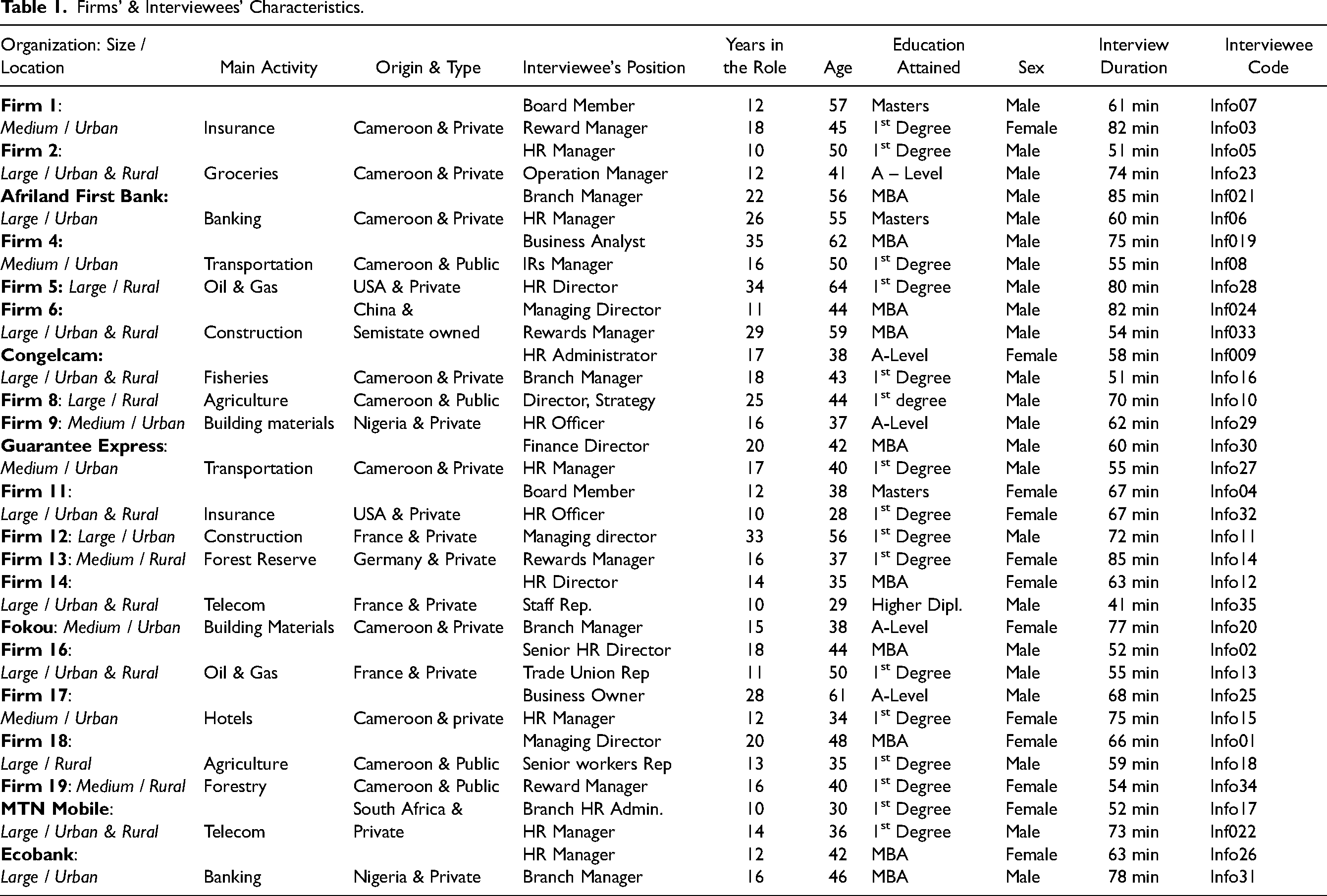
While the case organizations were selected purposively, the recruitment of participants only stopped when data saturation was attained. Our participants with at least ten years (to ensure that they had good knowledge of the embeddedness of Cameroonian norms and values in the organizations’ work and employment routines) of experience included HR professionals, trade union officials where they existed, staff representatives, and top management performing HR and strategy duties. We assured the informants of their anonymity to encourage participation since research involving culture is fraught with issues of sensitivity and often very difficult (Lauth, 2000).
While sacrificing breadth, we focused on recruitment, training, payment systems, and industrial relations (IRs). Research evidence to date across different cultural settings suggests that the incidence and pressure of local norms and values are particularly pronounced concerning these considered work and employment practices (Geary & Aguzzoli, 2016). Also, recruitment, training, payment system, and IRs practices constitute critical areas of the employment relationship which tend to be controversial as other research has shown (Pudelko & Harzing, 2008). They are policy areas often more exposed to a country's sociocultural influences than other domains of HRM (Edwards & Rees, 2016).
Data Collection
Through the researchers’ previous works in the country, medium (at least 100 employees) and large (from 500 employees upwards) size organizations (public and private) were selected and sorted (through networks) the wilful and voluntary participation of informants. In each organization, the research and objectives were introduced, and consent was obtained. Interview dates and times were arranged with the informants in their place of work, with interviews lasting between 51 min (minimum) and 85 min (maximum). We derived the interview protocol from the literature and used semistructured interviews to gather in-depth data. The interview questions centered around personal experiences in terms of involvement with work and employment practices, and strategies and policies on the considered HRM domains. The interview questions also sought insights into cultural norms and values (e.g., perceptions, shared meanings, conceptualizations, practices, and policies), regulations and their influence within and across selected organizations in Cameroon. The same questions were asked of all participants (see Appendix 1 for sample interview questions). We stopped interviewing after the 35th participant as data saturation was reached since no new information was emerging from the last two informants. Yin (2018, p. 124) notes that data saturation is attained during qualitative data collection when no new relevant information is being provided by the data “subjects” following further probing. The organizations also provided us with relevant documents. The interviews were recorded and then transcribed. Cameroon is a bilingual country, all participants fluently expressed themselves in French and English, but English was favored due to the background of the researchers. Two of the researchers are Cameroonians and the other researcher is unfamiliar with Cameroon which provided a significant interrogatory perspective in developing the study's findings. Therefore, our different degrees of embeddedness allowed us to iteratively query taken-for-granted interpretations of cultural traits vis-à-vis the HR practices. It also helped to gain the trust of organization members (for the insiders) and to challenge (for the outsiders) taken-for-granted assumptions. These enabled us to harness the experience of different members of our team through our identity lens: the view of management practices in organizations in Africa from both insider and outsider positions, leading to a more balanced approach to data collection and the interpretation of the findings (on which see Tope et al., 2005, p. 486).
Data Analysis
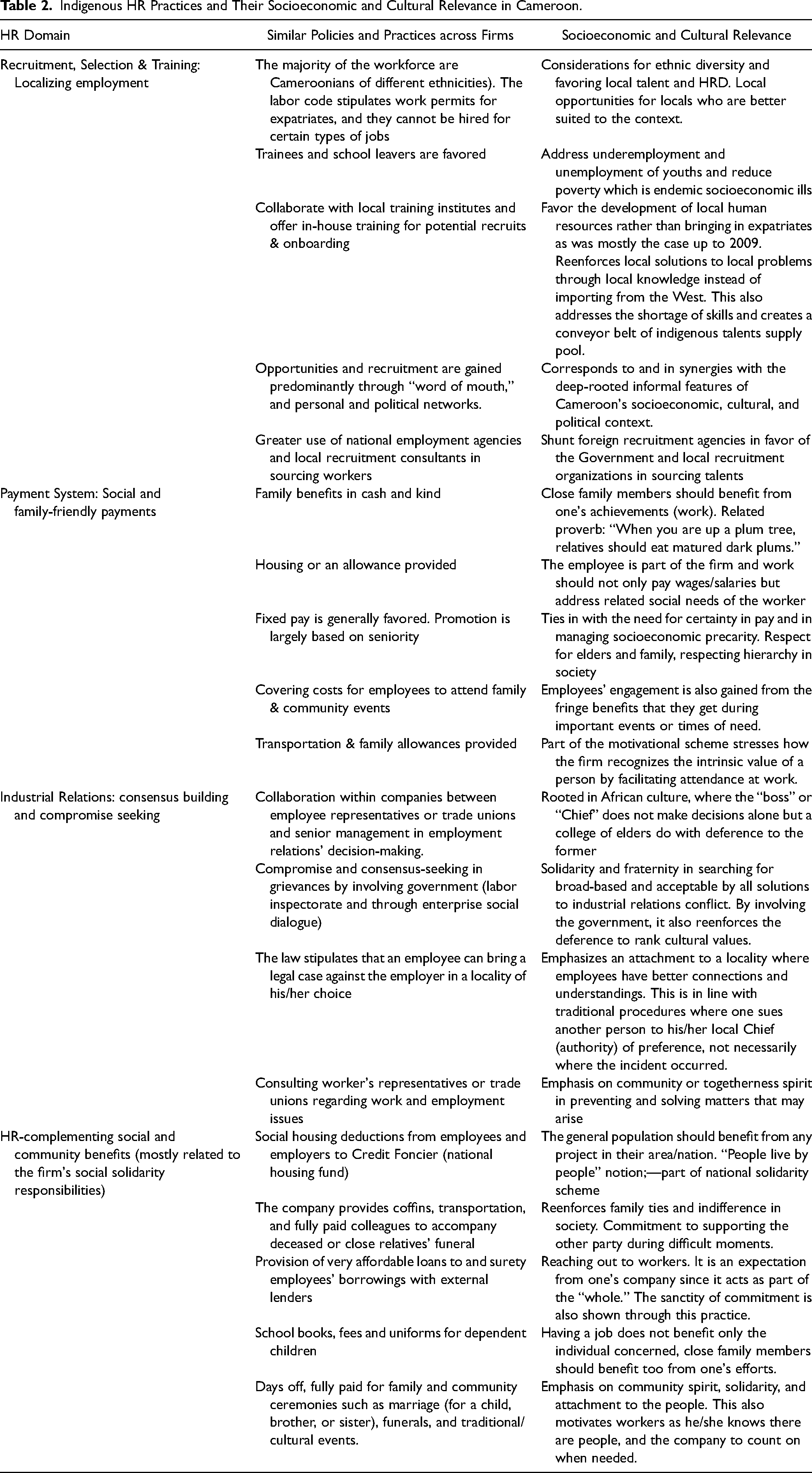
The recorded data were transcribed and thematically analyzed, and team meetings and discussions were held by the authors, to identify the key themes that depicted the nature of HRM practices and their cultural underpinnings. In line with Braun and Clarke (2006), we, first, read the transcripts to familiarize ourselves with the data and identify themes drawn from the literature. Second, we engaged in open coding to locate additional themes. Third, we identified useful utterances, extracted pertinent information, and grouped them according to themes and patterns to reflect the study's aim (Esmaeili et al., 2014). Fourth, we collated the themes within each code by tagging and naming the chunks of text within each data item. Fifth, we identified through axial coding the relationships between the various themes, using NVivo mapping, which was then mapped to the initial themes developed in conjunction with the literature. Sixth, four different overarching themes and 18 subthemes (see Table 2) of the indigenous HR practices and their sociocultural and economic relevance were sorted. We reiterate that the initial overarching four themes were developed from the literature, and the 18 subthemes of endogenous HR practices and their relevance were derived from the data analysis in-vivo codes. Finally, we iteratively revisited the data to confirm the themes and relationships were identified and to ensure coding involved all significant themes.
Indigenous HR Practices and Their Socioeconomic and Cultural Relevance in Cameroon.
Findings
The findings are presented based on the themes which are discussed under the examined work and employment practices in the study. Considering that businesses in Cameroon are immersed in a strong informal institutional context, societal values and norms of the country were almost certainly going to be found to have a unique influence on people management approaches in the studied organizations. Thus, how the organizations managed their workforces as a response to the endogenous traits should be understood with these features of Cameroon in mind.
Localizing Recruitment, Training, and Employment
In most of the organizations (n18 of our sample), active approaches to localize employment opportunities were evident in their recruitment, selection, and training policies and practices. For example, training in an institute or an organization's scheme led to recruitment vice versa, but a small number (n3) did not engage in any form of formal training. There were three recruitment methods in the organizations. First, senior executives were appointed by members of the board of directors in private organizations and by the governing elites in public organizations. As such, executive posts were considered part of the patronage system by the “connected’ in Cameroonian organizations (Che, 2012). Thus, there was a practice of favoring one's friends, especially regarding senior executive roles. Around 86% of senior executives in all the organizations were Cameroon nationals and some, especially in public organizations were also public figures in the ruling party. Second, other managers were either promoted from within the organizations or were poached (by offering higher wages) by other local competitors. This informal approach formed the cornerstone of the hiring process in 85.7% of the case organizations. A bank informant remarked: “…we invest a lot in training our people. ……..when managerial opportunities arise, we use only our own employees to fill the vacancies. If we cannot get the right person in the organization, we offer better terms and conditions to such people from other competitors. We also look at the skills of Cameroonians in the diaspora, even though that can be quite expensive. But we select such candidates based on personality, nationality, and competencies.” (Info21).
All organizations strictly followed the nationality criterion and thus potential recruits were screened based on their Cameroonian nationality and the skills aspects in the first instance. During interviews, participants noted that with operations in the country, they were also expected to uphold the ethos and objectives of government policies which favors the recruitment of locals. The organizations also offered equal opportunities to both sexes in the recruitment process. Third, nonmanagerial positions were filled from the available local labor force, mainly through apprenticeships and training programs conducted internally or by external providers. Thus, young graduates from Cameroonian institutions were mostly used. Some organizations (n12 of our sample) recruited and sent their employees abroad, mostly to other African countries due to the costs involved, for further training. A telecom informant noted: “We prioritize Cameroonians for job opportunities. We also select candidates based on their skill sets, but most often, we first offer them apprenticeships…………… and later on, may send them for more training in other African countries, if need be.” (Info17)
However, some training centers and the collaborations between the organizations and many higher educational institutions in designing curricula allowed workers to be recruited nationally. For relatively low-skilled labor, the organizations used a range of sources depending on the positions and skills needed. The principal sources of these categories of workers were internal and external channels such as the national employment agency and informal methods fondly referred to as “man-know-man” (the national lexicon for personal and political networks). The organizations also advertised on their website and selected national newspapers. However, a trade union informant noted the intricacies of recruitment, selection, and training in Cameroon thus: “Many Cameroonians, including young graduates in the training centers, who are not connected to or know some high-ranking official in, or related to, the organizations find it extremely difficult to get jobs or training in this country due to the high level of corruption and favoritism that surround the recruitment, selection, and training processes in most of the organizations.” (Info13).
It was general knowledge in Cameroon that recruitment into most organizations was highly influenced by “word-of-mouth” and personal and political networks. Furthermore, employees in some grades (middle managers, technical, engineering, and foremen) were promoted upon completing in-house training. As such, existing employees were expected to work up from the lower posts to one of responsibility, undertaking the required training on the way. Thus, the criteria used for the selection of staff from within or externally were most importantly past work experience, academic performance, educational institution (training centers and partner universities were favored), professional training, and Cameroonian nationality.
The main methods used to examine recruits were an interview and written tests. So, potential workers needed, above all, to prove their aptitudes during the tests and through in-service training. All key informants for this research acknowledged that they came to know about a job vacancy through friends and acquaintances. It has often been claimed that the job market in Cameroon works through an informal network (Boutin, 2010). This research would bear this out. In sum, recruitment, selection, and training methods in the organizations varied depending on rank. It was evident that word-of-mouth, favoritism, and patronage played a significant role in these processes, but this informality was of a different kind—not confined only to a political, family, or friend coterie but to the tribe/community too. Training programs and apprenticeships were the main sources of new hires, but the selection process remained informal and corrupt too. However, corruption, favoritism, and informal networks significantly inhibit the recruitment and selection process in Cameroon. Consequently, the ability to hire the best workers to improve competitiveness may have also inadvertently been hampered.
Social and Family-Friendly Approaches to Payment Systems
The 1992 labor code provides that pay can be negotiated between an employer and the employee. However, most employees in Cameroon have no say in how their pay is determined. Employees’ pay and benefits were unilaterally determined by senior executives in the organizations, but they were primarily set to entice, attract, and retain the best talents. A construction informant noted: “We consider all factors in setting our pay and benefits packages. The condition of the labor market, what other our competitors are offering their workers, the laws on pay and social security in Cameroon and any agreements with other stakeholders are the main criteria that we consider in putting in place an attractive package for workers.” (Info33)
The finance department of most organizations constantly monitored payment rates in other local competitors for different staff categories and reported to the executives. The information was used to adjust, mostly upward, pay levels in the organizations. In this way, organizations were also engaged in a “cat and mouse” play of poaching workers from each other by offering higher pay rates. The organizations abided by the social security laws and offered extra benefits to address the lack of safety nets for workers in the labor market and to enhance employees’ financial well-being and experience. A transport informant noted: “Our pay structure includes a basic pay for all employees (except a small cohort of top executives who had a fixed pay and 25% on top of is variable), bonuses based on meeting and exceeding yearly objectives, and extra benefits such as life assurance, housing allowance, a private health plan, a complementary pension plan and life insurance for immediate family members…… and car allowance.” (Info30)
Other organizations (n16 of our sample) included other social security payments such as prenatal, family, schooling and maternity allowances, disability benefits, hospitalization, and indemnification in case of work accidents in their payment system for employees. All these extra benefits came to supplement the ones mandated by Cameroonian laws such as pension, sick leave, and death indemnification. The necessity of a fixed salary is rooted in the exigencies of an unstable socioeconomic environment where employees are burdened by expenditures involved in catering for extended family members in a collectivist society. When asked about the emphasis on a fixed basic salary for most employees in organizations in Cameroon, the rationale was captured by an insurance organization informant thus: “Workers take care of many family members and extended relations and variable pay would not provide the level of certainty that employment is expected to offer in this part of the world. Culturally, and because of the economic situation, the closeness of the Cameroonian family has meant that employers and employees favor fixed pay. In that way, workers are sure of what they are paid thereby bringing much-needed certainty to the employees and allowing them to concentrate more on the job because they know exactly how much they are getting at the end of the month.” (Info32).
As a communal society with few breadwinners in extended families, those who have employment tend to take care of many dependents. Thus, fixed pay arrangements are deeply entrenched in the socioeconomic context of Cameroon. During interviews, informants also acknowledged that pay increases in their organizations were made, mostly, based on the longevity of service. So, the organizations awarded pay raises based on seniority and these were different for the various staff categories such as customer service agents, technicians, marketing agents, foremen, managers, and engineers. Generally, the pay structure in these organizations included three elements: a fixed salary, and individual and family benefits. The payment policy was solely determined by senior executives. It can be said that the evidence showed that local traditions and socioeconomic circumstances largely influenced pay policies in the organizations.
HR-Complementing Benefits
There were other HR-complementing social and community benefits offered to employees that underpinned the organizations’ social solidarity responsibilities. The scope and contents of these extra benefits varied between these organizations but generally included, but were not limited to, social housing, educational support for employees’ children, days off for family commitments, provision of very affordable loans, and surety employees’ borrowings. The rationale for offering these “far-reaching” benefits was echoed by a branch manager of a bank: “In Cameroonian society, it is expected that employers show a commitment to supporting not only the employees but also engage in societal issues that affect workers. A pay package is not complete until the employer shows a genuine engagement in community spirit, and solidarity, and creates a positive employee experience, in so doing.” (Info21).
This feature of the Cameroonian system is underpinned by the humanistic view of people which sees employees in organizations as not only existing for their own sake but also embedded within their communities, as part of a collective (Jackson, 2004). In organizations, this is perceived through these collectivistic and communalistic tendencies, people-oriented approaches with a focus on relationships and community. In Cameroon, this humanistic view of HR-supporting practices is characterized by a greater focus on people development, emphasis on social welfare and stakeholder orientations through consensus-seeking (Edoho, 2001). A worker's representative commented on the underpinnings of social and community rationale thus: “We believe and cherish the idea and practice whereby the organization considers the external factors (community, family, socialization, hobbies, etc) that affect the performance of a worker and commits to including such in the way workers are treated. Many organizations provide these kinds of benefits ………, in addition, to pay to their workers to show their commitment and to keep workers happy and engaged.” (Info18)
These HR-complement schemes (such as fully paid days off for family and community ceremonies, and support to cultural events) aligned with the expectation that the organization is part of the “whole” in employees’ lives and thus should (the former) show that sanctity of commitment through these benefits. The benefits were also seen as part of initiatives to engender employees’ engagement in the organization, and their rationale and nature were affected by Cameroonian policies and culture.
Consensus Building and Compromise Seeking in IRs
We begin by highlighting relevant features of the legal context within which IRs policies and practices operate in Cameroon. In this regard, the 1996 constitution and labor code of Cameroon guarantee the freedom of association and the right to strike. However, the labor code stipulates that employees can only strike after mandatory arbitration. While the labor code does not apply to some members of the public service such as the military, national intelligence, judges, prison administration, and auxiliary administrative personnel, they may form trade unions but must have prior approval of the Ministry for Territorial Administration. It is also illegal to form a trade union that includes both public and private sector workers in Cameroon. The government of Cameroon ratified the core ILO Convention, but according to Aloumedjo (2018) and Nyiawung et al. (2023), the government interferes in trade union activities in several ways. The government has a reputation for favoring workers’ organizations. It sees them as being easier to control and has used union registration requirements to withhold recognition from trade unions that it considers to be too independent and aligned to opposition political parties.
In Cameroon, when an industrial conflict occurs either of rights or interests, trade unions are required by law to collectively bargain with employers. If the bargaining ends in deadlock, then compulsory arbitration must be sought to resolve the conflict. The law provides for collective bargaining between workers and management as well as between trade union federations and employers’ associations but the legal mechanism for applying collective agreements is ineffective (Forje, 2008). At the national level, when industrial disputes arise, the government chooses the trade union with which to negotiate, and only the most representative trade unions, may take part in the national social dialogue. Smaller independent unions are excluded. Hence, while the implementation of rules is generally weak in Cameroon, the guarantees of freedom of association and workers’ rights contained in the 1996 constitution and the 1992 labor code, respectively, allow the functioning of trade unions, but at the behest of the government and management.
There were two categories of organizations in terms of how they dealt with IRs. Those who recognized and worked with trade unions and those who did not recognize trade unions but had an elected employees’ representative who engaged management on behalf of all workers. The latter category of organizations (n12 of our sample) had no trade union activity as they abided by the law relating to the existence/election of an employee representative in organizations employing more than 50 workers coupled with the view of their managers as follows: “Our organization looks after its employees’ interests and provides better working terms and conditions as our priority as a ‘father’ (employer) who has the responsibility to properly look after his ‘children’ (employees).” (Info01)
As a consequence of this paternalistic posture, workers were expected to assume a subordinate role. It is also important to note that most African/Cameroonian employees hold the view that the functioning of the organization and management issues are not their concern (Forje, 2008; Zoogah & Beugré, 2013). They see the organization as belonging to the managers who make all the decisions. This partly contributed to the fact that employees in these groups of organizations did not see the need to organize. A trade union official noted thus: “In some organizations, it is difficult for us to organize workers there because our people still perceive the employer as a father figure and have seldom (historically) interfered with the functioning of the organization. They believe such is the responsibility of the managers and their role is to work. Our people still believe that they gained more respect and benefits by being totally obedient to the hierarchy…but problem discussion forums exist.” (Info13).
So, it was the belief of employees that they stood to gain by submitting to management's authority. An informant also summarized this cultural trait of employees as follows: “The culture here has always been that the task of managing belongs to managers and other employees are handsomely paid to do their work and not engage in challenging, in any way, management's actions. You do not move up the ranks by opposing people. The more obedient you are, the better training programs, travels, and promotions you will get. It pays to show commitment to organizational goals and show everyone that you care more about the organization. In return, the organization will invest more in you because senior managers know you as a trustworthy person and somebody to entrust responsibility and all that comes with great benefits.” (Info25).
This is reminiscent of Cameroon's sociocultural norms whereby challenging and interfering with the work and decisions taken by a superior is to take issue with his/her personality and to undermine his/her wisdom. It was clear that the (authoritative) managers in these organizations still held such views. Nonetheless, decision-making processes in the domain of IRs in these organizations that did not have trade unions were by consensus as largely stressed by an informant in a forestry organization: “While we may not work with trade unions, workers’ representatives and discussion forums are present, and we consult them in all issues that involve terms and conditions. In such instances, the interests of all stakeholders are considered by the directors, and we perceived that the interests of workers were not different to those of the organization.” (Info14).
It is worth emphasizing that decision-making was a slow process and at a more deliberate pace carried out by the top executives and the general/managing directors through consultations and using the different employees’ discussion forums. The directors had the final say in most circumstances, but it was based on the input of their senior managers too. This consensus approach in decision-making within a coterie of elite staff, following consultations with employees, in the organizations is synonymous with the traditional chieftaincy systems whereby the council of elders often make decisions based on the collective agreement of all the elders with deference to the Chief.
In organizations (n9 of our sample) where trade unions were present, management constructively engaged union officials on issues related to terms and conditions of work. However, the historical role of trade unions in Cameroon, unlike in other African countries where trade unions are very strong and at times violent, has been subordinate to the management of organizations, and an instrument of the government to mobilize workers to participate and drive economic development through increased productivity in the workplace (Che, 2012). In these organizations, workers’ interests were represented by an elected trade union representative. This representative acted on paper as a communication channel between management and workers, and a custodian of the collective agreements and national employment laws within the organization. Instead, it was the managers who played a vital role in collaborating and accommodating the trade union presence in these organizations. This was for two reasons. First, managers generally emphasized developing and sustaining a cooperative arrangement with employees, especially related to conflict resolution. An informant in a grocery organization underlined the reason for the cooperative approach: “We cherish consensus building to achieve workable solutions to employment conflict. The way we cooperate with our workers and their trade unions is such that all avenues are explored in resolving workplace disputes. This approach is the way conflict is resolved in our workplace, ……………..you know.” (Info05).
Second, there was the influence of past IRs traditions and practices such as the legal provisions that trade unions and employees can localize conflict resolution by bringing a case against an employer in a locality of choice. And while trade union influence at a national level has always been weak, the government engages with them to push forward its labor policies. While the government was mindful of the need for trade unions in the workplace, it maintains its superior position in addressing (through social dialogue) existing and potential employment relations conflict in the different sectors of the economy. As such management in these organizations is pressured not only by trade unions but more so by the government to engage workers to address work and employment issues in organizations in the country. The provisions of the existing labor code allude to the need to address conflict (through consensus) in workplaces and communities in Cameroon. A trade union official stresses the role of managers in conflict resolution: “Management's role in such situations (conflict resolution through consensus-building) is similar to that of the Chiefs in the community whereby the exercise of authority in conflict resolution rests on the wisdom of these Chiefs.” (Info13)
Thus, consensus-seeking is the norm with the understanding that the manager has the ultimate say in how any conflict is resolved, bearing in mind the interest of all parties. In these circumstances, trade unions and their representatives have learnt to cooperate instead of engaging in full confrontation. These limits to trade union resistance are important in understanding how they might have been unable to significantly influence or oppose HRM practices in organizations.
Discussion
We explored the nature of endogenous traits in the management of employees in organizations in Cameroon. We found that Cameroonian culture meshed in the prevailing socioeconomic environment, with the reenforcing labor laws, greatly shaped the nature of HRM in the studied organizations. The most striking pattern of HR practices found was that they all adopted unique endogenous work and employment features, norms, and values inherent in the Cameroonian socioeconomic and cultural context. The degree to which such endogenous traits were incorporated into organizational HRM varied slightly between organizations but generally pointed to patterns that were underpinned by specific Cameroonian traditions. From the provided organizational documentation, for example, the recruitment and selection policies and practices varied between the organizations according to the workforce categories and origin. More senior and technical roles required potential hires to meet the minimum requirements of the job profiles as opposed to junior and low-skilled roles that could be offered training and apprenticeship for upskilling purposes. Recruitment and selection were more informal in Cameroonian organizations and relatively less so in foreign-owned organizations. The payment system showed differences in structure, levels of pay, and bonuses and benefits accorded to the workforces in the organizations, but they were family-friendly and HR-complementary. Large organizations were more inclined to have more formalized procedures for their HR activities and practices than medium-sized organizations. In developing and implementing the practices, a flatter organizational structure in private organizations was more efficient than the hierarchical layers used in public organizations. However, it is worth noting that the observed differences in approach to developing and implementing endogenous traits in the organizations’ HRM were mainly to achieve broadly similar outcomes. The observed similar endogenous HR practices and their socioeconomic and cultural relevance are summarized in Table 2.
In the domain of recruitment, selection, and training, it was observed that the organizations’ HR practices were geared toward creating opportunities for and favoring locals (localization), and the rationale for these and their exact nature were affected by Cameroonian policies and culture. This approach aligns with the dominant sociocultural traits of Ubuntu in Cameroon whereby communal features in employee resourcing, identity construction, ethnic framing, and career development (Arifeen & Syed, 2020; Geschiere, 2009; Kelly, 2018), and the tendency to look after members of the tribe triumphs, generally, over other considerations (Lutz, 2009; Zoogah & Beugré, 2013) in work. It is worth highlighting that this was reinforced by the labor code.
There were also marked similar patterns in the payment systems of the organizations in that a broader approach to supporting employees, their families, and the community was evident. This supports Intindola and Stamper's (2023) call for organizations to assist communities in which they operate, believing that they must help societal barriers, beyond their organizational boundaries. Organizations were more in tune with respect and reward for elders and the natural position/hierarchy in the Cameroonian communal society whereby the older person garners more respect and benefits than a younger one (Broodryk, 2005; Jackson, 2002). Existing literature also shows that Cameroonians are also very attached to the idea of a fixed wage that does not depend on meeting certain targets, and this can be related to high uncertainty avoidance in the culture prevalent in most of Sub-Saharan Africa (Hofstede et al., 2005). Also, workers needed to be sure of their exact wages and to cope with the precarious socioeconomic conditions in Cameroon (Agbor & Mbaku, 2012), which in turn builds stronger business ethics (Vitolla et al., 2021).
Furthermore, in broad terms, the fringe benefits in the case organizations were social, family, and community friendly and thus related to a cultural lexicon/proverb: “When you are up a plum tree, relatives should eat matured dark ones.” The meaning here is that as a worker, family members should also reap and enjoy the rewards of one's employment (Geschiere, 2009; Mangena, 2016). The impact of the socioeconomic environment on HRM is well-documented in the literature (Edwards & Rees, 2016) since an organization's ability to formulate and implement activities to motivate, engender participation, and empower employees (Mbigi, 2005) also depends on meeting the relevant needs of workers beyond the organization. For example, as part of the employees’ experience, well-being, and engagement schemes, transportation, house allowances, and paid days off to attend community and family events were afforded to employees.
In IRs, good social relations, collaboration, cooperation, and consensus-seeking were the underlining principles. Even though some organizations did not recognize trade unions, they consulted employees and participated as observers in all social dialogues. In all organizations, decision-making was generally carried out by a group or college of senior managers in consultation and/or with suggestions of the employees and/or trade unions. Lutz (2009) and Mangaroo-Pillay and Coetzee (2022) emphasized that compromise and consensus-seeking initiatives through collaborations with workers and/or their trade unions were the norms in the concept of Ubuntu which embodies African culture. But these accorded more power and status to managers. There was a general tendency to favor solidarity and fraternity in searching for broad-based and acceptable solutions by all to IRs issues. This practice is rooted in traditional African culture, and attributes to the human dimension, whereby the Chief does not make decisions alone, but every stone is tuned by bringing people together (Ayentimi et al., 2019; Boon, 1996). Finally, there was also a range of socially embedded and community benefits offered by the organizations to their workers which complemented the HR as mentioned earlier practices. These extra benefits mostly relate to the organizations’ social solidarity responsibilities and were strongly valued (see Edoho, 2001; Fomude et al., 2020) and promoted in the sociocultural space in the Cameroonian context. These benefits reinforce family ties and indifference in society. They emphasize community spirit, attachment to people and the way of life, motivate employees and most importantly, the organizations’ sanctity of commitment was shown by bearing those responsibilities (Mohan, 2002).
However, despite the dominant theme in extant literature positing that culture positively influences core organizational HRM (Lwoga et al., 2016; Nkomo, 2011), our findings established that the cultural norms and values in Cameroon had both positive and negative effects. For example, traditional norms and values assisted with the improvement of working conditions and reduction of conflict in the organizations in Cameroon due to the prevailing reverence to elders, deference to leaders and the cultural values of family and community relationships fundamentally increased employees’ social belonging and boosts their moral behavior resulting in the acceptance and implementation of HR practices (see also Akwei & Nwachukwu, 2023). This is critical for enhancing employee experience and commitment to the organization. However, we also delineated specific cultural traits that negatively affected the ability of the organizations to implement HRM choices that benefited the organization due to the strong emphasis on seniority, personal and political relationships, and family orientation, which do not contribute to the richness of relationships in key organizational decision-making, recruitment, selection, payment system, and motivation (Storey, 1995).
Theoretical Contribution
This paper contributes to extending HRM practices literature in several ways, by exploring the underresearched role of endogenous norms and values in workforce management in organizations in the Sub-Saharan African country, Cameroon. First, although it is generally posited that sociocultural factors affect HRM in Cameroon (Nyiawung, 2021; Piabuo et al., 2017), this study provides empirical evidence, the first of its kind, of endogenous HR practices, their underpinnings and relevance to a developing African economy, Cameroon. That is, it offers a new perspective and delineates four major unique socioculturally appropriate organizational HRM phenomena and their merits for the organization, employees, and the local communities in Sub-Saharan Africa and Cameroon in particular. We, therefore, contribute to extending the HRM practices literature by identifying the nature and approach of how African traditions influence the rationale and the choice of work and employment practices in a developing economy. Second, the role endogenous work and employment practices play in managerial attitudes, to smoothen relations with trivial organizational stakeholders, and enhance employees’ experience are outlined. Drawing on the theory of Ubuntu (Lutz, 2009; Mbigi, 2005; Mbiti, 1969), we provide a clearer perspective of the three key domains that constitute indigenous HRM in Cameroon, although they also serve as the “glue” between organizational stakeholders, beget immense reverence for managers in the organizations: (1) localize recruitment, training, and employment, (2) a social and family approach to payment systems, and (3) consensus building and compromising seeking in IRs. Despite extant research recognizing the key role of sociocultural factors in HRM (Akwei & Nwachukwu, 2023; Gbadamosi, 2021; Geary & Nyiawung, 2022), the identification of these unique traits in organizations in Cameroon is very limited.
Third, this paper strengthens the challenges against the long-professed negative assumption of African endogenous work and employment practices and stresses their positive role within and beyond the organization (Lwoga et al., 2016). African sociocultural norms and values had been viewed for too long as backward, irrelevant and at the root of numerous HRM issues in the content (Jackson, 2012; Kiiza & Basheka, 2018; Nkomo, 2011), but the findings of this paper shed their positive impact on work and employment. However, we also note that while some traditions negatively affected organizational HRM outcomes, they were nonetheless beneficial for employees, their sense of belonging and adherence to community norms. Fourth, understanding the dimensions of a developing country's cultural impact on organizational HRM through an exploratory qualitative study design provides a new perspective to the comparative and international HRM literature as many studies have been dominated by quantitative studies (Ayentimi et al., 2019). We contribute to extending the literature by emphasizing that African endogenous traits do not only trigger and sustain the active pursuit of the common good of employees and their communities (the so-called trivial organizational stakeholders) but are also key tenets of consideration of organizations by African employees as an extension of their local communities. Thus, in line with Lutz (2009) and Matolino and Kwindingwi (2013), we strengthen the concept of the common good, which is deficient in the mainstream stakeholder and social contract perspectives, in organizational HRM. These findings are pertinent given the uncertainty regarding the emergence and applicability of Ubuntu in Africa (Broodryk, 2005).
Practical Implications
This paper proposes practical and policy implications. First, by delineating the unique sociocultural norms and values and the role they in HRM. For example, the findings showed that the recruitment pool for potential employees and the selection process were limited due to the mainly informal approaches used. Particularly constraints in recruitment and training were also evident. In Cameroon, these human capital constraints (see also Nyiawung et al., 2023) require that firms invest significantly in recruitment and selection, employee training, and development. To address these shortcomings, organizations should critically consider outsourcing their recruitment and selection functions. Regarding training, the advancement of in-house employee reskilling and upskilling programs with an emphasis on employee business skills could serve as a commendable benchmark for employee skills development.
Second, the evidence suggests that there was not a major difference between private and public organizations in the levels of political actors’ intrusion and influence on recruitment and IRs. Political patronage was more visible in good measure in both public and private organizations. These findings imply that ownership is not an important driver in moderating political actors’ influence on organizations’ HRM practices in Africa as argued by Ayentimi et al. (2019). As such, we highlight the relevance of recruiting senior managers with a mastery of and connections with the national political system by private, both local and foreign-owned, organizations to mitigate any negative influences of political actors on their HRM activities. However, the merits of endogenous traits for the common good, employee experience, and well-being were evident. Thus, this paper highlights the need for organizations in Sub-Saharan Africa and Cameroon particularly to harness these positive norms and values will lead to improved integration to universal/best work and employment policies and practices to achieve their HRM strategic goals and objectives (Akwei & Nwachukwu, 2023).
Third, while strong formal institutions have been shown to promote and sustain effective HRM in organizations to perform better (Thelen, 2010), the negative effects of some of the sociocultural norms and values such as strong emphasis on seniority, personal and political relationships, and family orientation have significant policy implications. This study suggests that the government's ability to develop “best practice” work and employment regulations to support the effective deployment of HRs is imperative to HR and economic development in Cameroon. Finally, in Sub-Saharan Africa, and Cameroon in particular, cultural traits identified in this paper will provide HR managers with an insight into those country traits likely to be critical in HRM practice development and implementation in local and foreign-owned organizations. A modern organization needs to adapt suitable indigenous management practices and skills for effective service delivery (Horwitz, 2017; Kiiza & Basheka, 2018).
Limitations and Directions for Future Research
The limitations of this study also provide opportunities for further research. First, the lack of research on the sociocultural norms and values affecting HRM in Cameroon makes this endeavor a novel one requiring further investigation to explore and replicate the study. Second, the sample of 21 organizations limits the findings in this paper to be generalized to other sectors and industries apart from the cases and participants included in the study. Third, while we explored the shape of endogenous traits on particular HRM practices, factors having greater influence in the different organizations were not investigated. There are opportunities for further studies to focus on these specifics or on a comparative analysis of organizations and industrial sectors to establish which factors have a greater impact on organizations in the country. This would be exceptionally beneficial when the distinct industry's peculiarities are considered in establishing the choice of endogenous practices. Moreover, this study's limited focus on the developing economy of Cameroon can form a basis for further studies, comparative or longitudinal, in other developing countries.
Conclusion
With an increasing shift toward culture-specific research in HRM, this paper highlights insights on the moderating influence of endogenous traits on work and employment policies and practices in Cameroon. Drawing on Ubuntu's theoretical lens, we conducted research that provides exploratory insights into the specific endogenous traits that impacted HR policies and practices in indigenous organizations in Cameroon. Our study, therefore, provides an avenue to delineate the cultural norms and values within Cameroon that positively influence employees’ performance, and thus organizational performance, are likely to complement the transfer and adoption of Western HRM practices. We also uncovered certain traditional traits that were anchored in the past. They are likely to negatively impact the effective and efficient management of the workforce and thus are impediments to organizational initiatives that foster performance, competition, and sustainability. As such, we encourage further in-depth and broad studies within and between other developing countries of Africa, Asia, and South America to shed more light on their professed “backwardness” as well as the potential of HR practices-enhancing endogenous traits in modern organizations.
Footnotes
Declaration of Conflicting Interests
The authors declared no potential conflicts of interest with respect to the research, authorship, and/or publication of this article.
Funding
The authors received no financial support for the research, authorship, and/or publication of this article.
