



Abstract
Objective
To assess the content and quality of YouTubeTM videos concerning nasoalveolar molding (NAM).
Design
YouTubeTM was searched for videos containing information relevant to NAM with the 2 keywords “nasoalveolar molding,” and “presurgical infant orthopedics.” A total of 24 out of 51 videos were found to be applicable to this study and rated for quality using the Global Quality Scale (GQS). To determine whether the contents of the selected 24 videos were useful or not, a content usefulness index consisting of 8 parameters was created. The videos were classified according to the usefulness index as low or high content videos. Spearman rank correlation analysis, Kolmogorov-Smirnov, Shapiro-Wilk, and Mann-Whitney U-tests were used for statistical analysis.
Results
The mean GQS score of the 24 YouTubeTM videos on NAM was 2.3 ± 0.8, indicating overall poor quality. In terms of information, videos with high content (29.2%) were less in number than low content videos (70.8%). GQS values were found to be significantly higher in the high content group (P < .01). Regarding the source, video, and audio quality values were significantly higher in the expert group compared to the caregiver group (P < .01), whereas the usefulness index did not differ between groups (P > .05). A significant relationship was found between GQS and usefulness index, audio quality, and video quality (P < .001).
Conclusions
YouTube™ videos on NAM were generally inadequate in their content information and poor in quality. Expert videos, showing better audiovisual quality and flow compared to non-expert videos, did not offer higher quality information about NAM considering the usefulness index.
Introduction
Cleft lip and palate is one of the most common congenital problems, occurring in 1 in 700 US births. 1 Patient with cleft lip and palate go through multiple procedures during infancy and adolescence. The main goal of surgical intervention is to restore the aesthetic appearance of the lips and nose by improving the lip scar, nasal tip projection, and symmetry of the nasolabial complex. Many pre-surgical methods have been described in the last few decades to overcome the problems associated with large unilateral cleft lip (UCL), UCL palate (UCLP), or bilateral cleft lip palate (BCLP) and also improve the surgical outcome.2–4 Nasoalveolar molding (NAM), one of the most popular of these techniques, was introduced and applied by Grayson et al 5 in the early 1990s. Using this method, various selective modifications are made at weekly intervals to the molding plate to shape and reposition the deformed nasal cartilage and alveolar process, as well as lengthening the insufficient columella. 5
In today's world, videos posted on the internet have become one of the main sources of content that people refer to, to learn about almost any subject. YouTubeTM, which is the most well-known of the video-sharing sites, has become a very popular source of information with an average of more than 2 billion views per day. 6 Studies show that the majority of active internet users also choose to access health-related information online. In fact, it has been revealed that 8 out of 10 internet users access their health information from these types of video-sharing platforms. 7 Although it is a widely used source of information in the field of health, studies have shown that videos available on YouTubeTM on many of the topics related to oral and dental health are often insufficient in terms of content. The real quality and content of these videos is a matter of debate, due to reasons including sharing of the videos by nonexperts, weak content filters, and lack of peer review. 8
YouTubeTM contains a significant amount of content related to medicine and dentistry. In many previous studies, it has been shown that for patients, YouTubeTM is the first and main source of information about orthodontic and surgical treatment approaches 0.7–10 However, there are very few studies evaluating the quality of YouTubeTM videos on cleft lip and palate treatments.11,12 In their study, Korkmaz, and Buyuk concluded that YouTubeTM could for now not be considered a fully reliable source of information for patients on the treatment of cleft lip and palate. 11 Moreover, Bozkurt and Aras 12 suggested that one should be cautious in relying on videos for information and that experts in CLP treatment should always be consulted.
NAM is the essential component of preoperative orthodontic treatment in patients with CLP and a high level of caregiver cooperation is required during this treatment protocol. Caregivers often refer to YouTubeTM videos for information on the use of the NAM appliance. Therefore, the content and quality of these videos are very often crucial in terms of obtaining caregiver cooperation. This study aims to assess the content and quality of YouTubeTM videos related to NAM.
Materials and Methods
The online video hosting resource YouTubeTM (http://www.youtube.com) was searched on January 11, 2022, for videos containing information relevant to NAM. The 2 keywords used to search were “nasoalveolar molding,” and “presurgical infant orthopedics.” Before this search was performed, all computer history and cookies were deleted first to avoid any possible bias. “Sort by relevance” was used as the default filter for the YouTubeTM search. Fifty-one (51) videos found in the search results were evaluated. Given the order of the videos viewed may change during the searches made over different days, a new playlist was created from the videos evaluated in the same order and the source locators (URLs) were recorded.
Surgery videos, videos using a technique other than NAM, content that was not in English, and videos that were not related to the subject were eliminated. As a result, a total of 24 videos were found to be suitable for all criteria and were evaluated.
Video Assessment
All 24 videos were viewed entirely and the following parameters were recorded for each: number of views; duration; number of comments; and the total number of “likes” and “dislikes.” By using this data, an interaction index and viewing rate, which were the formulas used in several previous studies9,13 were recorded for each video:


Global Quality Scale Criteria Used to Rate Videos Containing Information About Nasoalveolar Molding on YouTube™.
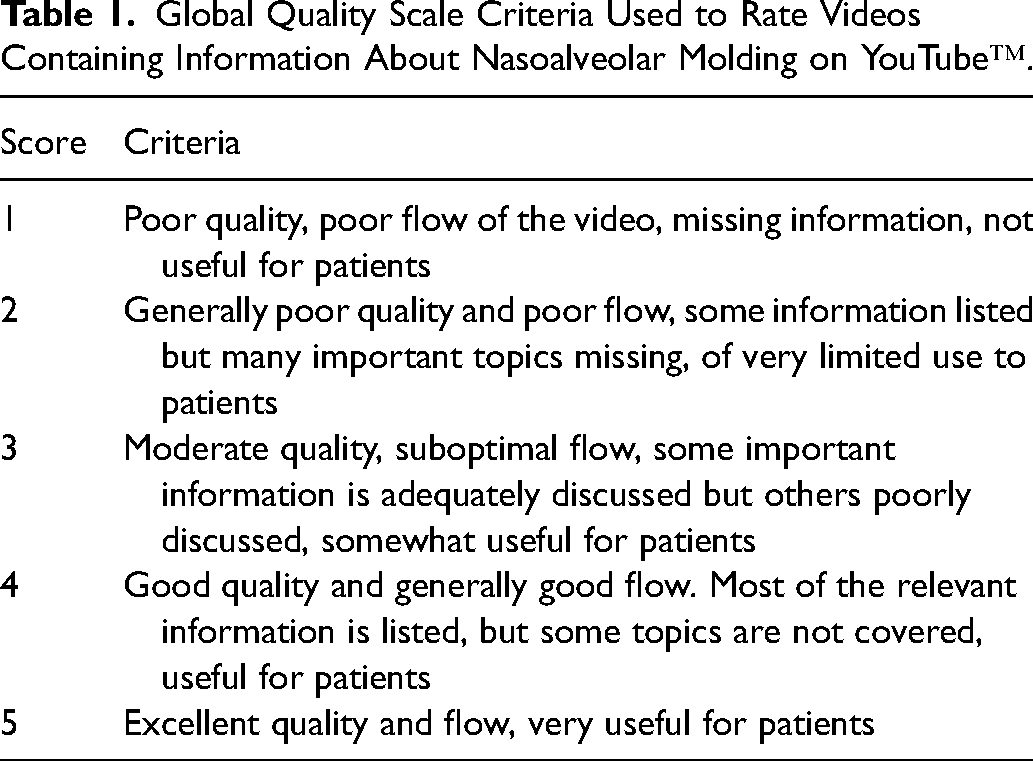
To determine whether the content of the videos was useful or not, a content usefulness index consisting of 8 parameters was created according to the explanations in the videos related to:
Treatment technique Aims, indications, and advantages of the NAM Onset of treatment* Treatment duration* Frequency of the appointments* Complications Instructions (application of the tapes, oral hygiene, care of the plate, etc) Practioner (who provides this treatment)
Depending on whether the video contained information on the related topics, a score of 0, 1, or 2 (0 or 1 score for the parameters indicated with *) was given to each section and from this, a “total usefulness score” was calculated. The questions composing the usefulness index were collected from the frequently asked questions from caregivers in our craniofacial orthodontics clinic over more than 15 years. Among the videos, those with a total usefulness index score of 6 or higher were classified as high content, and those lower than 6 were classified as low content (Table 2).
Grouping of the Videos According to Their Source and Content.
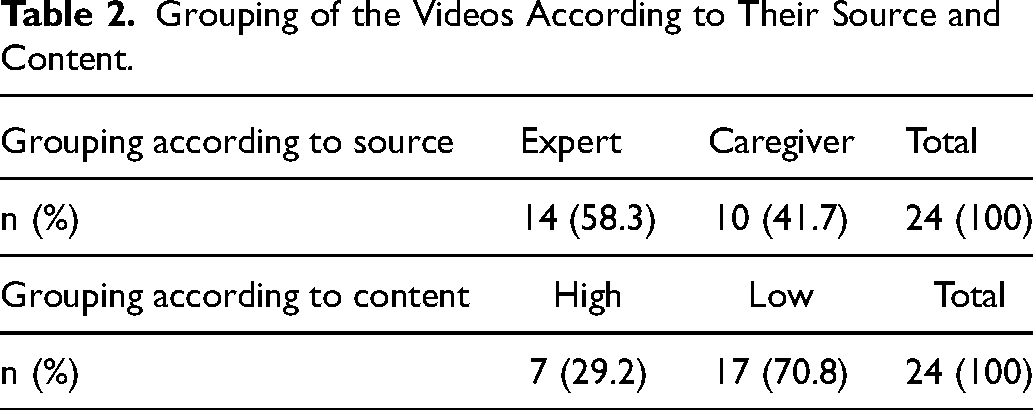
In addition, the source of the videos was evaluated and they were divided into 2 groups according to whether the videos were recorded by an expert or a caregiver (Table 2).
Statistical Analysis
All assessments were performed simultaneously and unannounced by 2 experienced orthodontists (DGC and RBNY), and interclass correlation coefficients were calculated to assess interobserver reliability. Two weeks after the first evaluation, the videos were re-evaluated by both researchers to determine the intraobserver reliability and the intraclass correlation coefficient was calculated. Study findings were evaluated using the SPSS v.21.0 software package (SPSS Inc., Chicago, IL, USA). The descriptive statistics of the parameters were calculated, and the correlation coefficients were calculated to evaluate the relationship between the parameters. Spearman rank correlation analysis was used for the relationship between variables. The Kolmogorov-Smirnov and Shapiro-Wilk tests were used to determine whether the data showed a normal distribution. The Mann-Whitney U-test was used for comparisons between groups when the data did not show a normal distribution. A P-value < .05 was considered significant.
Results
The intraclass correlation coefficient values were found to be high, ranging between 0.94 and 1 for intrarater reliability, and from 0.94 to 0.97 for interrater reliability in terms of the usefulness score, audio-visual quality, and GQS. Therefore, one researcher's data (DGC) was chosen to be evaluated for this study.
Table 3 shows the descriptive statistics of the YouTubeTM videos on NAM. Of these videos, the mean GQS score was 2.3 ± 0.8 and the mean usefulness index was 4.1 ± 2.3. The mean video and audio quality scores were 2.4 ± 0.6 and 2.3 ± 0.6, respectively. The mean viewing rate was 1446.85% ± 1928.93% whereas the mean interaction index value was 0.8% ± 1.2%.
Descriptive Statistics of the YouTube™ Videos.
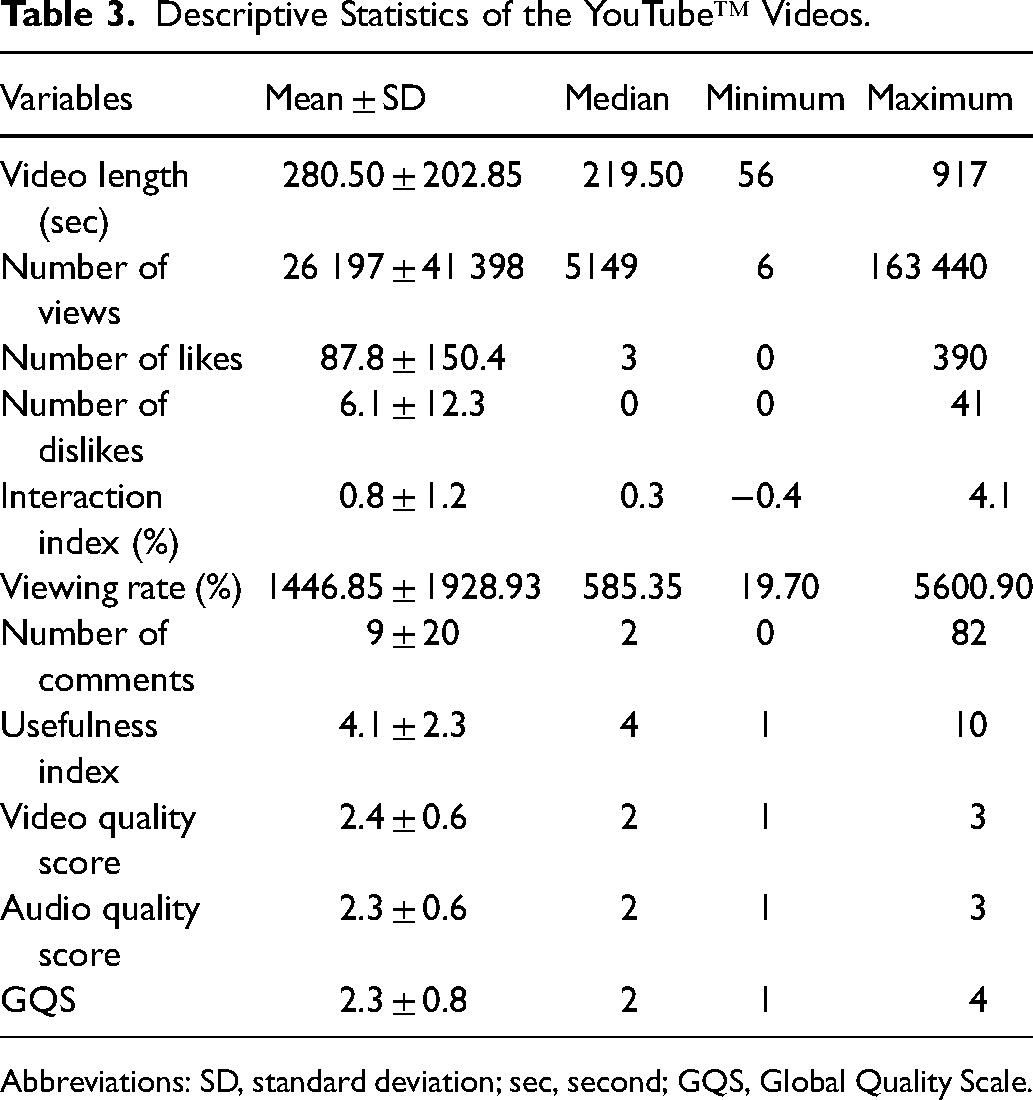
Abbreviations: SD, standard deviation; sec, second; GQS, Global Quality Scale.
Results of Spearman rank correlation analysis showed that there was no significant relationship between the GQS and number of views, number of likes, number of dislikes, number of comments, and video length (P > .05) (Table 4). On the other hand, a significant and positive correlation was found between GQS and usefulness index (P < .001) and, audio and video quality (P < .01). As these values increased, a significant increase in the GQS value was observed.
Results of Spearman Rank Correlation Analysis.
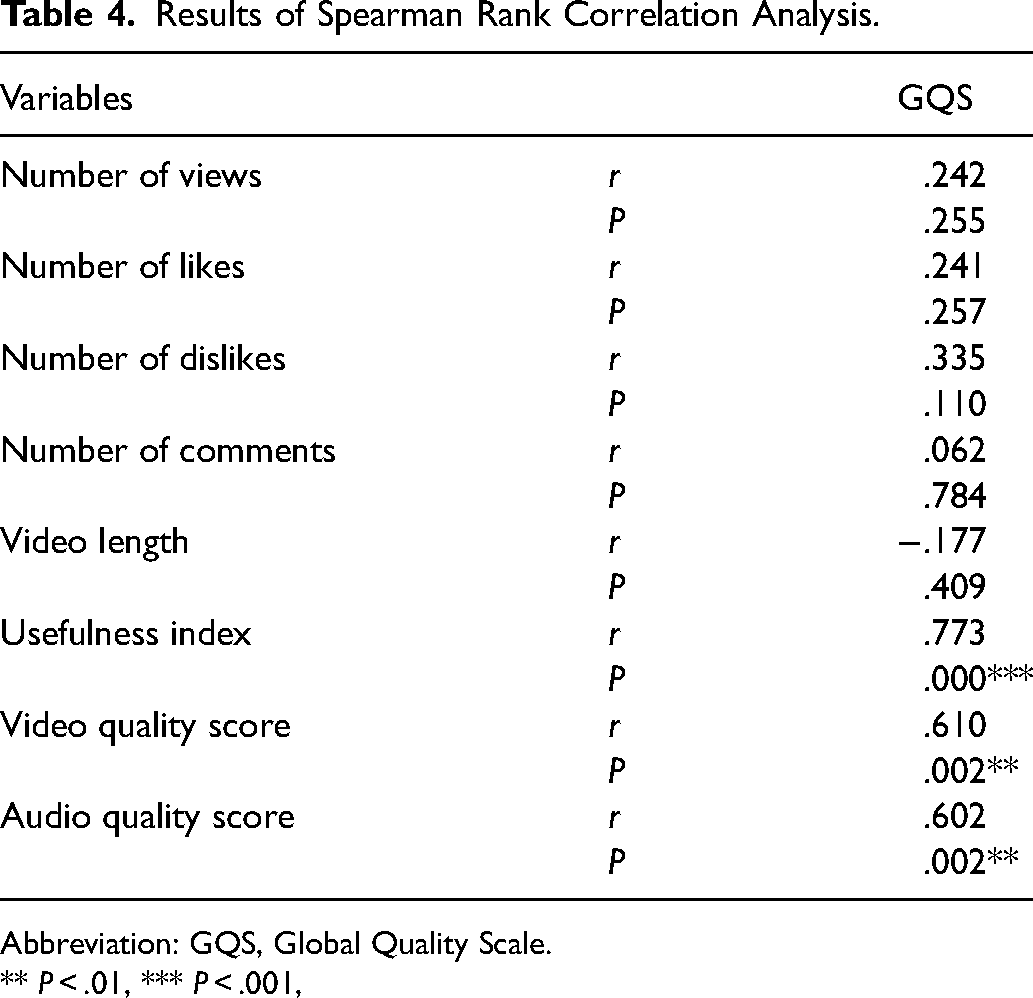
Abbreviation: GQS, Global Quality Scale.
** P < .01, *** P < .001,
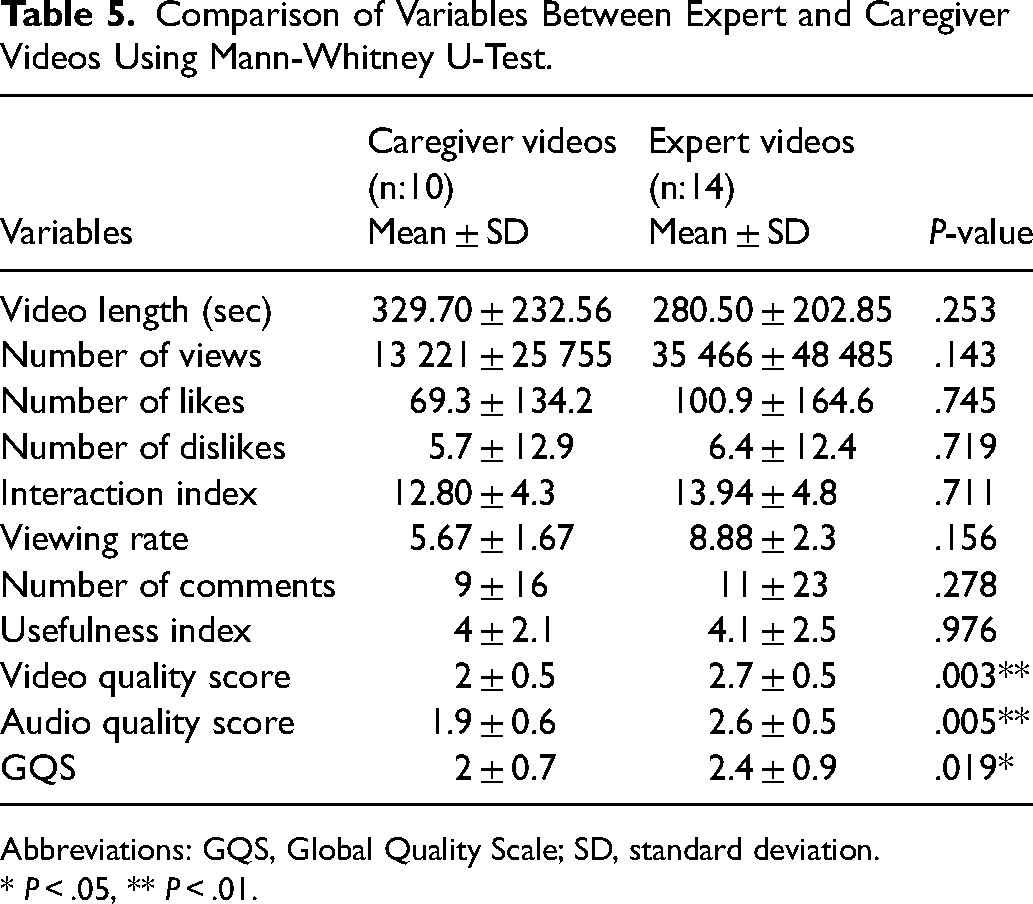
The comparison of the videos composed by caregivers and those composed by experts are given in Table 5. GQS, video, and audio quality scores were significantly higher in the expert videos compared to the caregiver videos (P < .01). On the other hand, no statistically significant difference was found in other variables (P > .05).
Comparison of Variables Between Expert and Caregiver Videos Using Mann-Whitney U-Test.
Abbreviations: GQS, Global Quality Scale; SD, standard deviation.
* P < .05, ** P < .01.
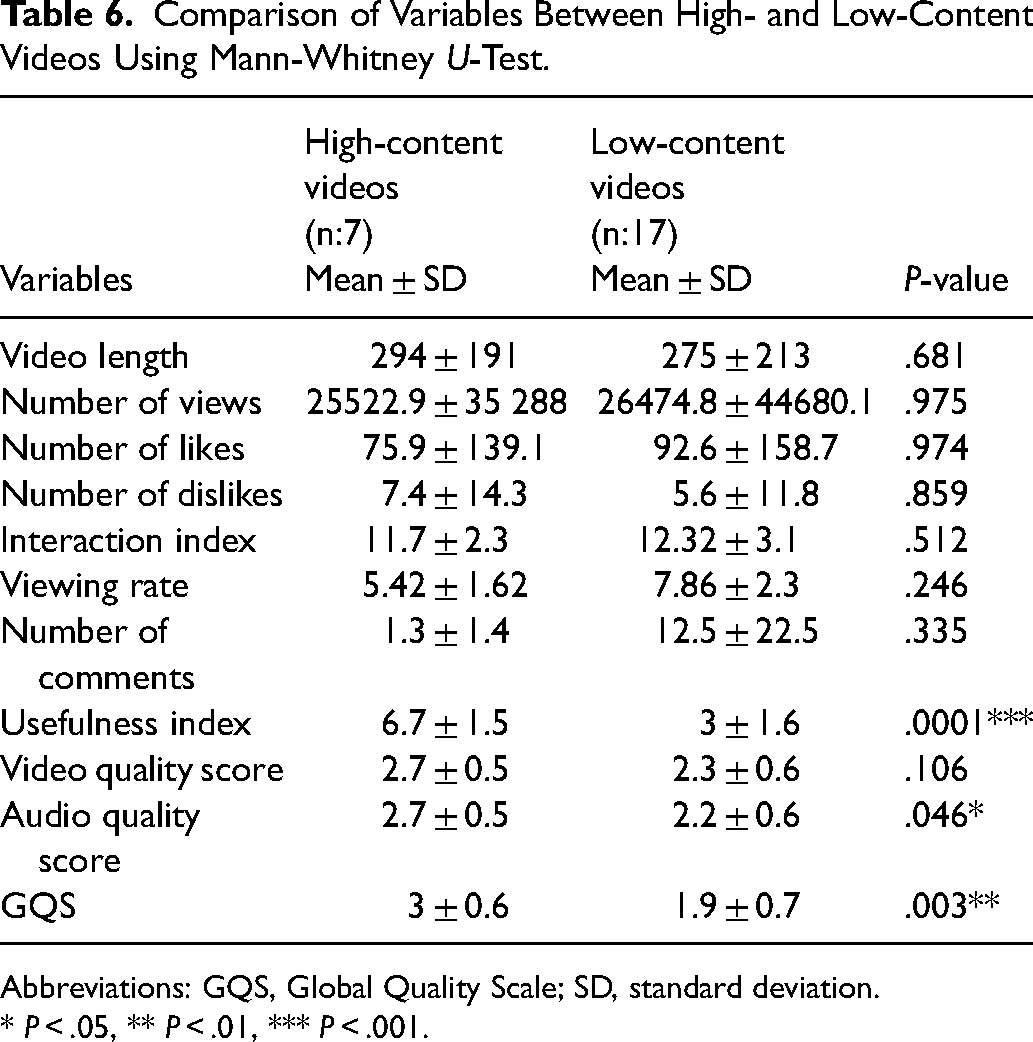
According to the groupings made regarding the video content usefulness, 7 videos were classified as high content usefulness and 17 videos were classified as low content usefulness. Among those high-content videos, 4 were in the expert group and 3 were in the caregiver group. Table 6 shows the comparison of variables between high and low-content videos. Usefulness index, GQS, and audio quality scores were significantly higher in the high-content group (P < .001, P < .01, and P < .05, respectively). In other parameters, there was no statistically significant difference between the 2 groups (P > .05).
Comparison of Variables Between High- and Low-Content Videos Using Mann-Whitney U-Test.
Abbreviations: GQS, Global Quality Scale; SD, standard deviation.
* P < .05, ** P < .01, *** P < .001.
Discussion
Today, social media platforms play a unique and important role in terms of developing social interaction and sharing ideas with people across different societies, cultures, religions, races, and time zones. In addition to social interaction, these channels are also frequently used for the education of patients diagnosed with various diseases and/or those receiving treatment. 16 Video sharing sites are frequently in demand in terms of accessing this type of health content and information and YouTubeTM comes first among these sites. As in other branches, a lot of content is produced and watched by users in the field of orthodontics. The videos about orthodontics vary in terms of content and quality and the majority are videos that include individual views and opinions on orthodontic treatment experiences. 17 On the other hand, it is argued that videos in this area can lead to misdirection for patients and their caregivers among others, so content producers should be careful. 18
The cleft lip and palate deformity presents many challenges that cover both the functional and aesthetic aspects. Surgeons constantly evaluate and modify their techniques to achieve better patient outcomes both in the short and long term, and many different techniques for surgical repair have been developed to this end. 19 At the same time, presurgical orthopedic techniques have also evolved to obtain better results. One such example is presurgical NAM, a type of infant orthopedics technique, first described by Grayson et al 5 in 1993 to simplify primary repair and improve postsurgical esthetics (described briefly below). immediately after birth, a custom-made plate with nasal extension is worn full time with weekly or biweekly adjustments, the achieve the goals of aligning the displaced alveolar segments into normal positions, reducing the width of the cleft, correcting the malpositioned nasal cartilage, increasing columella length, and improving the symmetry of the nasolabial area in the short and long terms.20–22 In general, this treatment is provided in centers specialized in cleft care as a part of interdisciplinary therapy. However, caregivers naturally are not always familiar with NAM. Considering that caregivers of the patients frequently refer to YouTubeTM as an online source of information, the content, and quality of NAM-related videos on this platform are very important.
In previous studies on YouTubeTM videos related to CLP,11,12 a higher number of videos were evaluated compared to our study where a limited number of videos met the inclusion criteria. It is apparent that fewer videos on this particular treatment phase of the whole interdisciplinary treatment of CLP are available compared to more generalized videos where YouTubeTM was searched with the keywords “cleft lip and palate” or “cleft lip and palate treatment/surgery/repair.” On the other hand, although NAM composes only a small part of the CLP treatment, it is an important step for caregivers to cope with. The literature shows that caregivers generally feel anxious about the process and their responsibilities at the beginning of NAM. 23 An important factor in reducing this initial anxiety, is learning from other families’ experiences and sharing experiences in the waiting room. It appears that this factor leads to anxiety reducing while knowledge increases. YouTubeTM videos may be a good additional medium to deliver this information to more caregivers as long as they contain adequate and high-quality information.
In our study, the content and quality of the information of YouTubeTM videos about NAM were evaluated using a usefulness index composed of frequently asked questions about NAM in a craniofacial orthodontic clinic with more than 15 years of experience. The usefulness index score was found to be well below average. Similarly, the mean GQS score of the videos indicated poor quality and flow, missing a lot of important information and therefore of limited use to caregivers. The percentage of high-content videos (29.16%) was considerably less than low-content videos (70.84%). On the other hand, Korkmaz and Buyuk 11 classified the vast majority of the videos on CLP treatment as moderate in terms of information sufficiency, with only 26% as poor. In addition, Bozkurt and Aras 12 reported that the majority of the YouTubeTM videos on CLP were moderately or very useful. These contrasting findings between studies may be due to examining CLP in general, covering information about etiology, diagnosis, feeding, treatments, esthetics, psychology, risks, costs, etc, whereas this study focuses on the main aspects of NAM. It is apparent that caregivers seek basic information about NAM on these videos regarding its aim and advantages, the onset and duration of the treatment, frequency of the appointments, complications, instructions to use appliances, and where to get this treatment. Although this type of basic information should be suited to be easily delivered by video, none of the videos examined in our study fully covered the answers to these questions. In the usefulness index, the onset of the treatment, one of the most frequently asked questions, had the lowest score and had been answered only in 20% of the videos. Because the timing of NAM is of the utmost importance in the success of the treatment due to the higher capacity of cartilage molding in younger infants, 4 providing this information in videos would help the caregivers to start NAM therapy earlier and save precious time. Similarly, complications, another component of the usefulness index, were rarely mentioned in the videos (17% of the videos) although they may be encountered during NAM therapy. Alfonso et al 24 classified the complications of NAM as a contributing factor to the physical burden of care and stated that they are minor although frequent. Garcés Alvear et al 25 determined the complications that may occur due to NAM devices in their bibliographic review after analyzing 21 articles. They concluded that the complications are related to soft tissues, hard tissues, and those derived from care. Some babies suffer from complications such as candidiasis, an over-expanded nostril creation to improper placement or modifications of the nasal stent at home, intraoral ulcerations due to the contact of the plate, or dermal irritations caused by taping, intolerance to the plate, and eating difficulties. 25 Therefore, complications may be a significant concern for the caregivers. Furthermore, they are eager to learn how to avoid or overcome these complications. The third rarely offered information (only in one-third of the videos) was the frequency of the appointments which is considered a major burden of care during NAM treatment. 24 This information is considered very important as some caregivers may even decline the treatment because of the short appointment intervals. On the other hand, the purpose, indications, and advantages of NAM were generally explained in the majority of the videos.
Parameters pertaining to video characteristics, such as video length, number of views, likes, dislikes, and comments were not related to the GQS. Bozkurt and Aras 12 also showed that video and audio-visual quality, usefulness scores, and video length did not affect the number of views, likes, dislikes, and comments. They explained that the YouTubeTM user's preferences were based on a variety of variables. In our study, we found a positive correlation between the usefulness index, audio-visual quality, and GQS. Supporting these findings, when the videos were further compared in our study according to usefulness criteria, there was no difference between high and low content videos in terms of viewing rate, number of likes or dislikes, and interaction index whereas high content videos had higher audio quality and GQS compared to the low-content videos. In accordance with our findings, Sezici et al 26 couldn't reveal any difference between high- and low-content YouTubeTM videos on orthodontic retention regarding video characteristics except for GQS, flow, information, and content. Interestingly, the users do seem to have any preference to watch and like higher-quality videos containing more useful information about NAM in comparison to low-content videos. This may be due to the limited availability of videos on this topic and users watching them indiscriminately or the presence of motivating factors other than the quality and content of the video.
When the videos were compared according to their sources and video characteristics interestingly, the usefulness score did not differ between expert and caregiver videos whereas the GQS was slightly better and audio-visual quality was significantly better in the expert videos. The latter is an expected outcome since professional shooting opportunities could have been used by the experts more readily. Experts were also expected to publish more detailed, useful, and informative videos, nevertheless, the usefulness scores of both groups were the same. As mentioned earlier the criteria defining the usefulness scores were created according to the frequently encountered issues in the clinic that families are very curious about; such as information about the treatment, complications and coping methods, the use of devices and tapes, device cleaning, the timing and duration of the treatment initiation were addressed or not. This result may be due to the following reasons: 1—The fact that the specialists did not frequently address very basic but important issues from a caregiver's perspective. 2—Expert videos were partially focused on specialists, partially on center presentation, and partially on treatment promotion. 3—Caregivers have better identified their information needs to be based on their experiences of NAM treatment. 4—Limited information sharing in order to shorten the video duration. It seems clear, that the videos of both groups were insufficient to meet the information needs of the families. There is a need to publish more targeted videos in terms of information content.
Information about health issues should be provided mainly by professionals in order to overcome potentially misleading and false instructions. Furthermore, patients prefer to be guided by professionals for oral-health-related information on the web. 27 Although personal advice cannot be substituted for professional knowledge, the nature of NAM and the findings of our study demonstrate the importance of gathering information from both experts and caregivers in this treatment, where the caregivers play a very active role in helping other caregivers to better understand NAM application and the experts lead and advise the patients and their caregivers based on the scientific data and experience.
The main limitations of our study were being able to evaluate only a limited number of videos meeting our criteria, using a self-developed usefulness index, and inclusion of videos in English. However, NAM is applied in many countries worldwide. Country and language-based assessments with a larger number of videos are required in future studies. Caregivers should be able to reach high-quality information (evidence based where applicable) sourced by both professionals and caregivers, preferably in their native language. Furthermore, NAM is not yet a standard of care in cleft treatment although there is scientific evidence demonstrating its long-term benefits on nasolabial esthetics and it is offered as a treatment by several accredited cleft teams of the American Cleft Palate-Craniofacial Association.23,24 From the perspective of the burden of care including access to the treatment, number of visits, treatment duration, or travel distance, NAM may not be the ideal treatment option for all patients and families because of the limited physical considerations.24,28 The fact remains that not all cleft cases need or should undergo NAM and information about this fact was not available in the YouTubeTM videos. In the literature, situations, where NAM application is not very crucial have been defined. In cases of minor clefts, only the lips are affected but the nasolabial structures are intact, NAM is not required since similar results are obtained with non-NAM patients. 29 In addition, NAM may not be a suitable option for babies intolerant to the device and also in situations where the caregiver provides poor attention to the treatment. 25
Conclusion
YouTube™ videos were generally inadequate in their content of information on NAM. Most videos did not include the timing of treatment, frequency of visits, and complications.
Expert videos showed better audiovisual quality and flow compared to non-expert videos but they did not offer higher quality information about NAM considering the usefulness index.
Considering the needs of caregivers of children undergoing NAM, it is important to provide complete and useful information on YouTubeTM through the collaboration of experts and non-experts.
Footnotes
Declaration of Conflicting Interests
The author(s) declared no potential conflicts of interest with respect to the research, authorship, and/or publication of this article.
Funding
The author(s) received no financial support for the research, authorship, and/or publication of this article.
