



Abstract
This editorial summarizes the emergence of bionic technology in the form of exoskeletons and how these wearable robotics are and could be applied in the nursing profession to improve the occupational health of nurses and deliver patient care. The benefits, risks, and limitations of these novel technologies are also briefly discussed.
Exoskeletons were once the domain of science fiction, appearing in books, comic books, film, and television, or could be found among insects and crustaceans in the natural world. As modern-day computing technology developed throughout the 20th century, these wearable robotic suits and prosthetics began to appear. Initially, they were pioneered by General Electric in the 1960s who received funding from the United States Department of Defence to build a prototype to enable a human to lift heavy objects (Bogue, 2009). The concept was adopted by others who started to develop locomotor exoskeletons that supported the human musculoskeletal system for rehabilitation and enabled an injured or paraplegic person to stand and walk (Vukobratovic, 2007). By the 1980s, scientists had also begun to explore military applications of exoskeletons to give soldiers additional protection and abilities during warfare, which has continued to the present day (Reed, 2014). More recently, this humanoid robotic technology is being developed and tested to support workers with a range of repetitive manual tasks in the agricultural, construction, manufacturing, and healthcare sectors to reduce fatigue, along with back, neck, and shoulder pain (Bogue, 2018). Exoskeletons are generally categorized into two groups of wearable machines: (1) passive and (2) active (Figure 1). Passive exoskeletons use combinations of springs and dampers that can store energy from human motion and reuse it when required to enhance a posture or motion, while active ones have devices called actuators which convert energy, that is, electrical, air, or hydraulic, into mechanical force to support and strengthen human movement (de Looze et al., 2016).
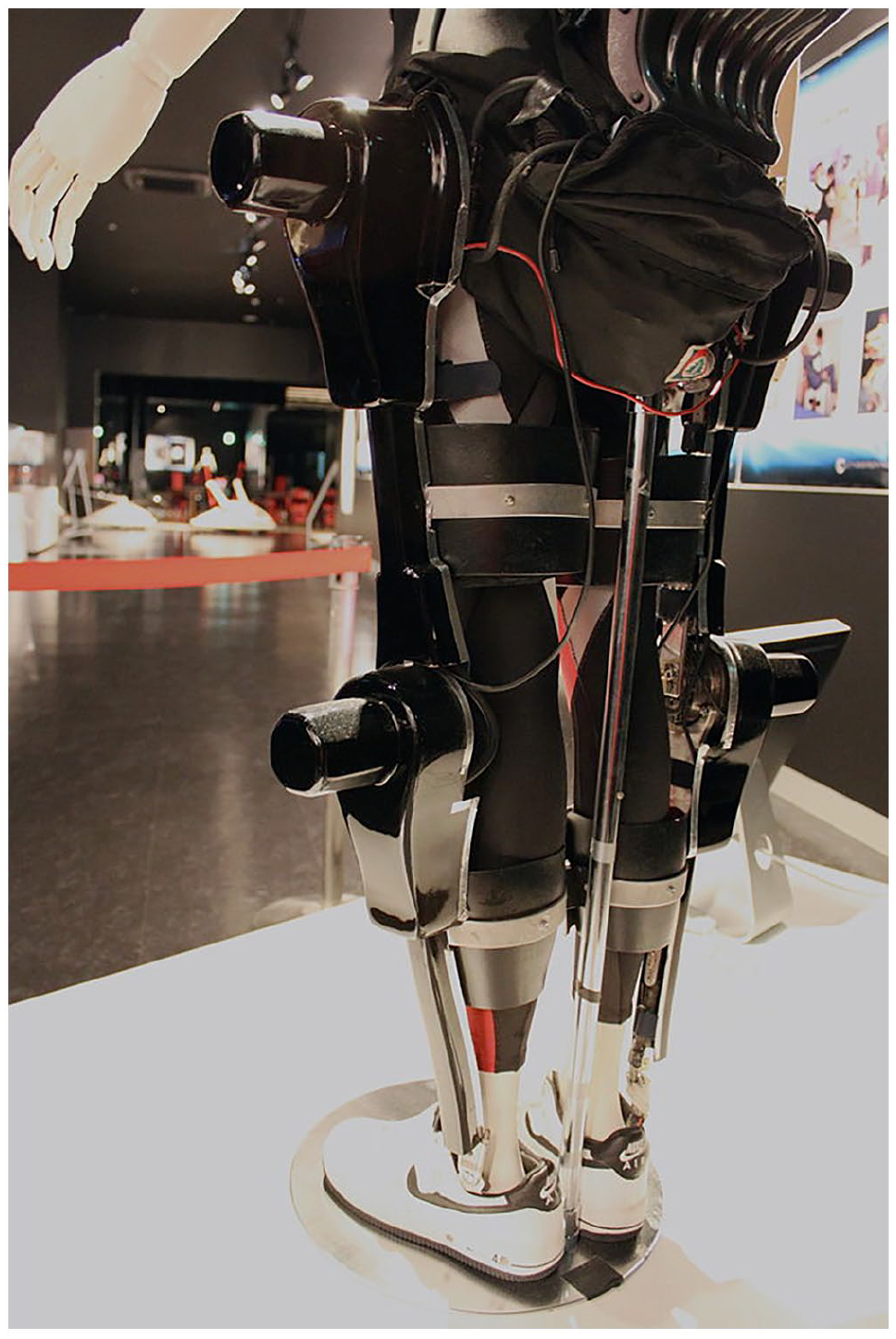
Lower body exoskeleton.
Exoskeletons can come in many forms including upper body, lower body, or full-bodied exoskeletons, with single joint versions also being developed, and they can be applied across multiple areas (Toxiri et al., 2019). One such area, back support, is relevant to nursing to reduce work-related musculoskeletal disorders in those who undertake repetitive physical tasks on a regular basis. A systematic review from 2016 found 26 different exoskeletons for back support that had a range of industrial and ergonomic uses, ranging from prototypes to fully developed and commercially available wearable robots. Nineteen were active and 17 were passive exoskeletons, with some helping to reduce back muscle activity between 10% and 40% during lifting and holding (de Looze et al., 2016). Of these, only two studies were specific to healthcare. Hasegawa & Muramatsu (2013) examined a lower limb device to support caregivers when transferring a person between a wheelchair and a bed or a wheelchair and a toilet. Similarly, Tsuzura et al. (2013) proposed a motor-driven power suit to help caregivers lift and move heavy objects. A more recent review of the scientific evidence on back support exoskeletons found 13 additional studies and reported decreases in back muscle activity and spinal compression forces but performance tended to decline where tasks required more agile movements (Kermavnar et al., 2021). However, the majority of these studies were tested in a laboratory with healthy subjects and none were demonstrated in healthcare.
A number of current studies exist examining a variety of exoskeletons in providing back support to health professionals. Cha et al. (2020) explored the views of healthcare professionals that is, surgical nurses, surgical residents, and attending surgeons in the United States, in relation to using exoskeletons to decrease work related injuries in theatre. Similarly, Liu et al. (2018) inspected an upper-body exosuit to support laparoscopic surgery and found it appeared to decrease arm pain and fatigue among surgeons who wore it without interfering with operating procedure. In addition, Miura et al. (2020) tested a hybrid assistive limb aimed at reducing lumbar load when transferring a 60-kg patient mannequin from a seated to a standing position, although the participants were healthy volunteers and not practising nurses. Hwang et al. (2021) also investigated three different passive back-support exoskeletons for transferring a simulated patient from a bed to a wheelchair, and vice versa, using a variety of transfer methods and in this instance professional caregivers were involved. At present, the scientific literature published in academic nursing journals on the use of exoskeletons with practising nurses is sparse. Those from other disciplines such as engineering are limited, as the application of this bionic technology tends to focus on workers undertaking manual tasks in industries such as construction and agriculture which can have a largely male workforce (Figure 2). Given nursing is a predominantly female profession whose physique and fitness can vary throughout their careers, this technology will need to be adapted and refined to suit their specific needs.
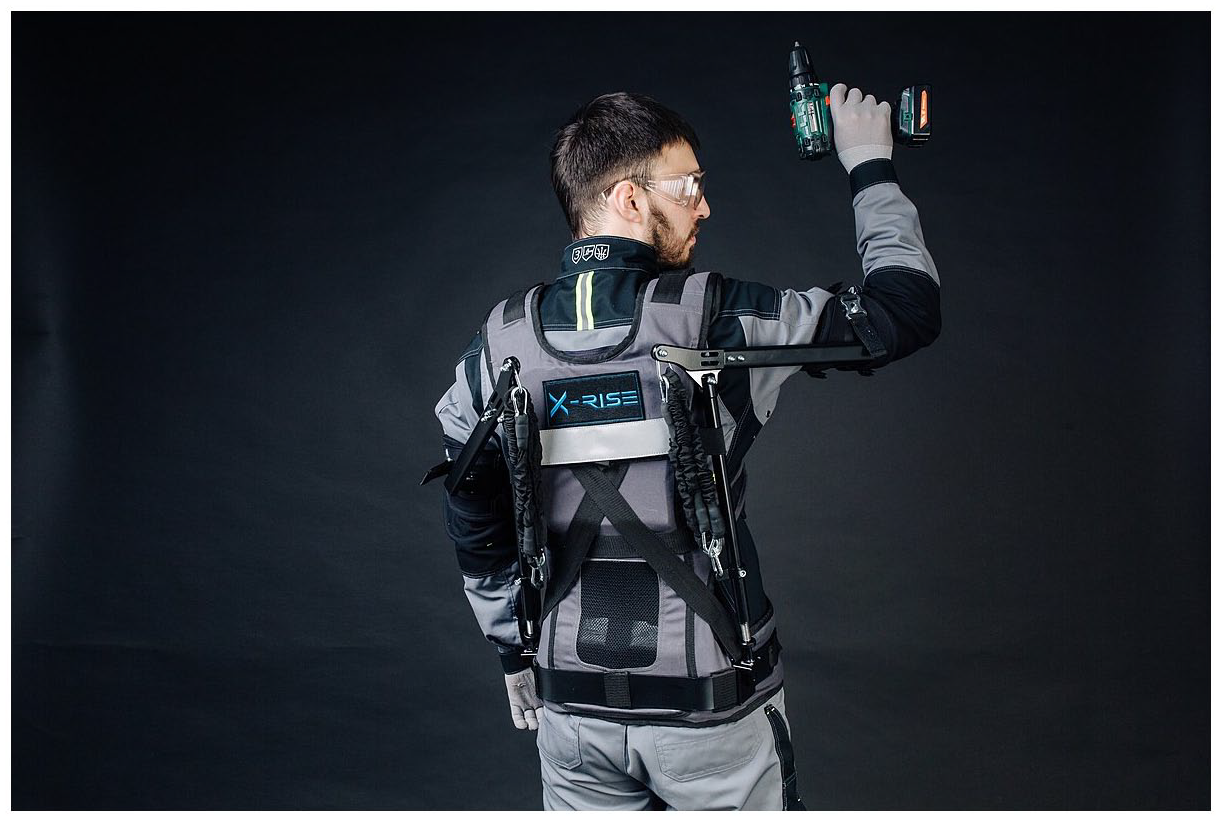
Upper body exoskeleton.
Furthermore, nurses are rarely involved in the design of the hardware and software that comprises exoskeletons which could benefit the development and use of this technology in healthcare, as nurses have in-depth knowledge of the physical, mental, and emotional demands of clinical practice and how wearable robots could assist with these. For instance, an upper body exoskeleton could support nurses with manual handling in hospitals and community settings, so they could move patients safely while also protecting their spine and back, neck, and shoulder muscles. This might also help reduce stress and burnout among nurses, particularly those working in critical care, surgery, care of the older persons, or other clinical area where supporting patient mobility is required a number of times each day and sometimes at night. Given nurses can suffer from a range of musculoskeletal disorders due to the occupational demands of the health service (Van Hoof et al., 2018), especially with rising levels of obesity among patients and older adults who can be frail and immobile, more research is needed focusing on co-designing and rigorously testing the efficacy of wearable robotics on nurse’s health.
Exoskeletons are also being applied across a range of clinical areas including neurology, orthopedics, and gerontology to directly support patients. For instance, wearable robotics have been tried in patients with spinal cord injury (Chisholm et al., 2016; Gagnon et al., 2019), multiple sclerosis (Drużbicki et al., 2021), stroke (Singh et al., 2021), osteoarthritis (McGibbon et al., 2021; Papi et al., 2016), and robotic assistive devices are being developed and deployed with older adults (Verrusio et al., 2018) among others. A recent Delphi survey about emerging technologies for older adult care also identified informal carers as a population that could benefit from the use of exoskeletons, given the hands on role they play in providing care for loved ones who are chronically unwell or terminally ill (Abdi et al., 2021). Hence, nurses could work with carers when discharging patients from hospital or assessing their home care needs in the community, to determine if a wearable robot could support family members in their day-to-day caring roles.
Yet, like any technology exoskeletons have several risks and limitations. The costs associated with designing and developing the hardware and software needed for a wearable robot can be significant and this process can take a long time. Furthermore, the rapid pace of technological change means devices can quickly become out of date and be superseded with newer tools. This can make the field challenging to research as the evidence base is littered with an array of exoskeletons in various stages of development (Pesenti et al., 2021), with few robust clinical trials conducted to determine their efficacy. Gaining a thorough understanding of the perceptions of practising nurses, nurse managers, patients, and carers toward this technology, along with the organizational, cultural, or socio-economic factors that may affect its adoption and uptake would also be useful to explore. This type of research could help ensure this novel digital intervention is implemented in both public and private health services, where appropriate, to help nurses and informal carers deliver patient care in a safer and more effective manner.
No doubt the technology will continue to develop and improve over time and become integrated with other electronic systems and devices in healthcare. This will give nurses more opportunities to get involved in developing and deploying exoskeletons across a range of healthcare settings. Hence, nurses should work more closely with robotics and software engineers to ensure this emerging bionic technology is designed and applied appropriately (Booth et al., 2021), and rigorously tested, before being implemented and used with patients, carers, and practicing professionals. Nurse educators should also begin to incorporate fundamental product design and engineering concepts and their applications into baccalaureate and graduate nursing programs (O’Connor & LaRue, 2021), to ensure nurses of the future have the informatics competencies required to engage with other professional groups in introducing new technologies such as exoskeletons in nursing and healthcare.
Footnotes
Author Contributions
The sole author drafted and wrote the manuscript.
Declaration of Conflicting Interests
The author declared no potential conflicts of interest with respect to the research, authorship, and/or publication of this article.
Funding
The author received no financial support for the research, authorship, and/or publication of this article.
