



Abstract
Drawing on the auto/biographical experiences of four women working in the field of death studies as well as on a range of creative, professional, and academic sources about loss and the process of writing, in this article, we explore creativity, innovation and impact, and the strategies on offer in auto/biographical writing about dying, death, and grief. We ask and explore the questions: What is writing doing? When is writing doing? and provide insights into the productive potential of writing as a way to continue bonds ( Klass et al., 1996), live with loss and engage with grief. Centrally concerned with how first-person writing can function as a powerful practice for responding to experiences of dying and grief, we take a creative approach to the article that seeks to do what it advocates—to write in the first person, to reflect, and to explore the limits and potential of language to produce meanings from loss. The article intersperses the personal narratives of three writers (Gayle, Tamarin, and Kate) woven together by Bethan with epigraphs from other writers whose work is connected to that offered here in terms of its themes. This practice of collaborative writing, and of citing the work of others from a wide range of backgrounds, suggests and produces connections and intersubjectivities, emphasizing the theme of this special issue—public dying and public grieving—and signals the complicated, inevitably partial, and powerful ways in which writing can function to make grief a shared and public experience.
Introduction and Context
There has been a huge growth in “pathographies” over the last few decades, both from people who are dying, bereaved, or by the people who support them. Contributing to this growth has been an increasing recognition of the power of writing, therapeutically, educationally, and psychologically (e.g., Baikie and Wilhelm, 2005; Cameron, 1995; Joplin, 2000) and the usefulness of memoirs for both the writer and reader (Rentzenbrink, 2022). Recognizing this, during the pandemic in 2021 we came together as colleagues at the Centre for Death and Society at the University of Bath to hold a series of online writing workshops under the banner of the CDAS Writing Initiative to write together, explore creative writing, and to reflect on the losses that were being experienced at that time. This article has developed out of, and from, those conversations and collegial supportive networks, and our conviction that in a challenge to traditional, mainstream, and some would say “masculinist” models, academic writing (along with all other academic labor) is not a value neutral, objective and tidy endeavor but rather an emotional and political experience (e.g., Letherby, 2003; Twinley & Letherby, 2022). Moreover it is an embodied experience, for as embodied beings our bodies are key to our learning, development, sense-making, and our relationships with our self and others (Johnson, 2017). Such recognition enables and encourages collaborative and collective working, acknowledging the significance of the auto/biographical nature of all writing which always involves, whether acknowledged or not, a relationship between self and other (e.g., Brennan & Letherby, 2017; Morgan, 1998). Here, as we will show, creative auto/biographical scholarship thus has clear epistemological implications, not least in terms of the challenge to mainstream assumptions about “tidy research” and its attempt to counter (as well as challenge) the imbalance between the researcher and the researched, and writer and reader, in that it can engage academic audiences in different ways and have an impact outside of the academy (e.g., Douglas & Carless, 2013; Parsons & Chappell, 2020). In support of this and contributing to the debate that objectivity in writing is neither possible nor desirable (see, e.g., Harding, 1987; Jenkins, 2002; Williams, 2005) one of us has already made the case that “…it is better to understand the complexities within research [and scholarly writing] rather than to pretend that they can be controlled, and biased sources can themselves result in useful data” (Letherby, 2003, p. 71, see also Letherby et al., 2012).
Throughout this article, we purposefully and reflexively engage with creative auto/biographical practices in relation to death and loss, in the making public of intensely private (and often sequestered) experiences of writing as academics. This is underpinned by a belief that academic insights and outputs benefit from honesty, transparency and openness and, far from undermining the credibility of academic authors as is often the fear (Morgan, 1998; Stanley, 1993), this approach has the potential to enhance the credibility of the work produced. All of this, we suggest, emphasizes how different forms of writing can hold power, and highlights that there are different ways of “doing writing” with a range of benefits for writers and readers.
Structure of the Paper
In three separate yet connected sections, three women—Gayle, Tamarin, and Kate—working in the field of death studies writing for academic audiences, and the wider public in different spaces and places, reflect on the following two questions:
What Is Writing Doing? When Is Writing Doing?
These questions served as prompts that we settled on during an hour-long online meeting exploring what Stella Duffy and Chris Cleave (2022, p. 67) refer to as “writing as process not product.” Each section is fore scored by three quotes chosen by Bethan from other writers—academics, public figures, and others—which she felt resonated with the writing that follows them. The use of epigraphs that emphasize a theme is a common practice in Bethan's own origin discipline of English Literature. Here, the chosen epigraphs function to show that while writing is a highly personal activity, with each section in this article offering a narrative from an idiosyncratic life, two people with the same experience can make very different meanings from it. Writing is also something about which there are many shared ideas. Indeed, writing itself is a form of public engagement when shared (whether intentionally shared, or shared without permission—think, for example, of highly impactful private diaries that have been published without the author's consent). As Les Back (2016, p. 194) suggests, “writing is a profoundly social activity; it connects my thoughts to yours.” Similarly, Sara Ahmed (2017, p. v) notes, “each time you write or speak you are putting yourself into a world that is shared.”
Bethan is of the conviction that listening, reflecting back, editing, supporting, cajoling, encouraging, reinforcing, and the infrastructural work of community building (often hidden and unacknowledged) is a powerful force in producing creative and academic work. Many women have undertaken this role historically, leading to the notion of “the woman behind the man” (for more on this see, e.g., Twamley et al., 2024), and it is certainly rife in academia regardless of gender. Bethan has chosen here not to share her own experience to reinforce the value of the role of not contributing with your own voice, but of contributing through the voices of others—through the work of weaving, supporting the bringing of other's voices together, in the practice of amplifying and structuring. Such work is often entirely unrecognized in the world of academic publishing but constantly takes place in journals, book collections and podcasts (all of to which Bethan herself contributes). Such work is of value as it is, and should be recognized as such, though the mechanisms through which this might be brought about remain a challenge in the often cumbersome and complex landscapes of academia and what is a “visible” and credited output, and who conducts the “invisible labor.” Such work is also happening here in this article by all four women involved in its writing and also by Michael Brennan, the editor of the special issue, and by peer reviewers whose unseen, unpaid and often undervalued labor is making the entire publication possible.
The complex layers of the multifaceted labor that go into writing and publication add further complexity to the questions what is writing doing? and when is writing doing? Writing is producing work for others, and it is contributing to the work of others, sometimes in unseen ways. It is also important to note that the work undertaken behind the scenes is not always entirely positive for those on the receiving end of invisible labor that inputs into their writing. As Gayle reflects in her section, peer review can be a brutally critical practice that does not always offer the valuable critical commentary it should, and academia is rife with horror stories of stolen words, changed ideas, and troubling authorship. Furthermore, although, as suggested above, the writing done here may be characterized as “therapeutic” it is also important to acknowledge that such endeavors may be unexpectedly retraumatizing not least because as Margaret Stroebe and Henk Schut (2010) identify, grief is a dynamic process and individuals may oscillate between confronting and avoiding their feelings and the different tasks of grieving. Thus, we acknowledge that writing is not only/always “good,” yet we focus on the community building capabilities of writing because we have shared together, and with others, many fruitful discussions about writing as well as sharing our writing itself. Even as we work on this article, we want to encourage readers to engage with the questions and ideas posed, perhaps using some of the techniques suggested, or some of the potential fora for your own writing that are signaled here (such as ABCtales.com discussed later in Gayle's response to the prompt questions). Similarly, we encourage you to bring your writing and ideas about writing to us and others by joining our free online workshops or engaging via the hashtag #CDASWrites on social media.
****
First, Tamarin responds to the prompts. She does so in the context of her work in baby loss bereavement. An artist and academic, Tamarin has worked with national U.K. baby loss charities Held in Our Hearts, Sands, and Antenatal Results and Choices to learn from parents about the meanings and rituals they invent in reproductive loss when cultural narratives fail to serve them. This work, funded by the Leverhulme Trust, built on a collaboration with Held In Our Hearts, creating therapeutic writing resources for parents bereaved at birth, and on her essay “Something Good Enough” (Norwood, 2021a), which won the Lancet Wakley Essay Prize in 2021. The essay and her memoir The Song of the Whole Wide World explore her and her family's experience when, a few months into pregnancy, they learned that the baby she was carrying had an ambiguous but life-limiting condition which meant he would be unlikely to survive his birth by more than minutes or hours. Tamarin's memoir spans these months of pregnancy, her baby son's birth and peaceful death in her arms, and her attempts to make meaning of grief in the months that followed.
Below, Tamarin uses these varied writing experiences to reflect on the questions What is writing doing? When is writing doing? She utilizes her experiences of three of the projects she has worked on—the production of grief writing notelets, the delivery of writing workshops and her own sustained memoir—to reflect on the differences between writing and ruminating, writing that describes and writing that creates, and what it is that writing in and through grief can create (for more on mourning and materiality see, e.g., Gibson, 2008; Newby & Toulson, 2018).
Tamarin: Writing and Ruminating
... all too often writing is considered a thing of the mind […] we must write with the body. (Stella Duffy & Chris Cleave, 2022, p. 69)
We are constantly re-creating ourselves and making sense of a changing world; writing helps to anchor us. (Jeannie Wright & Pip Ranby, 2009, p. 65)
Writers believe in the patterns their words make, which they hope and trust add up to ideas, to stories, to truths. (Julian Barnes, 2013, pp. 85–86)
In the grief writing workshops I run, there's a question that often comes up: People always tell me not to ruminate. Isn’t it ruminating, to write about grief? Wouldn’t it be better to get up, go for a walk, do some gardening, keep busy, do something?
There are many ways to respond to this question, but here I want to reflect upon an assumption that may underlie it: that writing is not doing.
I think it is. Physical activity brings benefits in grief, and it's true that the tiny muscular movements needed to put pen to paper are a very paltry offering in this regard. (Then again, we can look to the visual arts for notable exceptions, if we consider the bold and vast full-body lettering of Tania Mouraud, or the scratchy, dripping, painterly inscriptions of Cy Twombly, or the quasi-calligraphic dance pieces choreographed by Chinese artist Shen Wei, that see dancers leave traces of black ink on the floor, “approximating dancing with writing almost to the point of convergence” [Schwan, 2015]; these are all physical as much as cerebral exertions.)
But for the most part, when I think about what writing can do, I think about what it can do within the mind: in the mind of the writer doing the writing, in the mind of the reader they become when reading back what they have written, and in the mind of anyone else who might come along and read it later.
From a scribbled shopping list to a deeply wrought poetic work, every instance of writing is doing something, even if nothing more than reminding us what we wanted to get from the shops. We might imagine all instances of writing happening on a continuum, from writing that barely counts as doing, to writing that is doing an awful lot. Sometimes we are doing an awful lot when we write, and in my experience, that kind of writing is exactly what we need to be doing in grief. To explore this continuum in relation to autobiographical writing on grief, in what follows I will plot upon it three recent projects on which I have worked.
As you read further, thinking about this continuum, it helps to keep in mind an imperfect distinction between writing that describes something that already exists, and writing that creates something that did not exist before. Although all writing creates something new—scrawls on the page, a representation of a thing, energy transposed into words on the page—some writing is not principally concerned with forcing something new into existence, but rather with describing something that already exists. This distinction runs along a similar line to that between fiction and nonfiction. And, of course, it is an imperfect and very porous distinction, because just as memories are changed each time they are recalled, writing down an experience changes how we understand it. As a result, writing that principally describes is also, inevitably, writing that creates.
In their own way, each of the following three projects began from a need to describe what already existed or had already happened, and each moved, in a way that is always porous, from describing into creating. I think that in grief, it is this movement that can make writing into doing, and can differentiate writing from rumination.
“From the Heart” Notelets
The “From the Heart” Notelets project was a collaboration with Scottish baby loss charity Held In Our Hearts, supported by UKRI Higher Education Innovation Funding. Together we created packs of postcard-sized note cards with memory and writing prompts to support parents in capturing fleeting memories, thoughts, and impressions when a baby died. Prompts include “Here are some things I remember about the feeling of holding you…,” “If I could play you any song, it would be … because…,” and “Here are some things I want the whole world to know about you….” These notelets, which come in packs of 20, include suggestions for other ways to write through grief, and where to find further emotional support. I had proposed developing resources like these in a 2021 article on the powerful potential of creating and sharing stories, images and metaphors when a baby died near birth (Norwood, 2021b), and by 2023 these very resources were in the hands of bereaved parents. They are now a standard part of the package of support offered across several NHS Boards in Scotland, and increasingly in parts of England too.
These notelets allow memories to be held in the hand. They are of course physical objects—indeed, we increased our budget to obtain just the right card stock: warm to the touch, readily accepting ink, feeling weighty in the hand and substantial enough to prop on the mantelpiece. Making memories into external objects which are weighty, portable, and legible makes them easier to share with other people, guiding conversations that might otherwise be hard to broach, and lessening the feelings of isolation that so often worsen the grief of baby loss. But more than being held in the hand, the cards help make memories and fragmentary thoughts into things that can be held in the imagination. When a baby dies, often we have very few memories, and very few physical things to remember them by. In this project, what writing can do is bolster and give weight to what small and fragmentary memories are available, making them more palpable and permanent by layering them with imagery and meaning, and in this way, the memories take up more (physical) space.
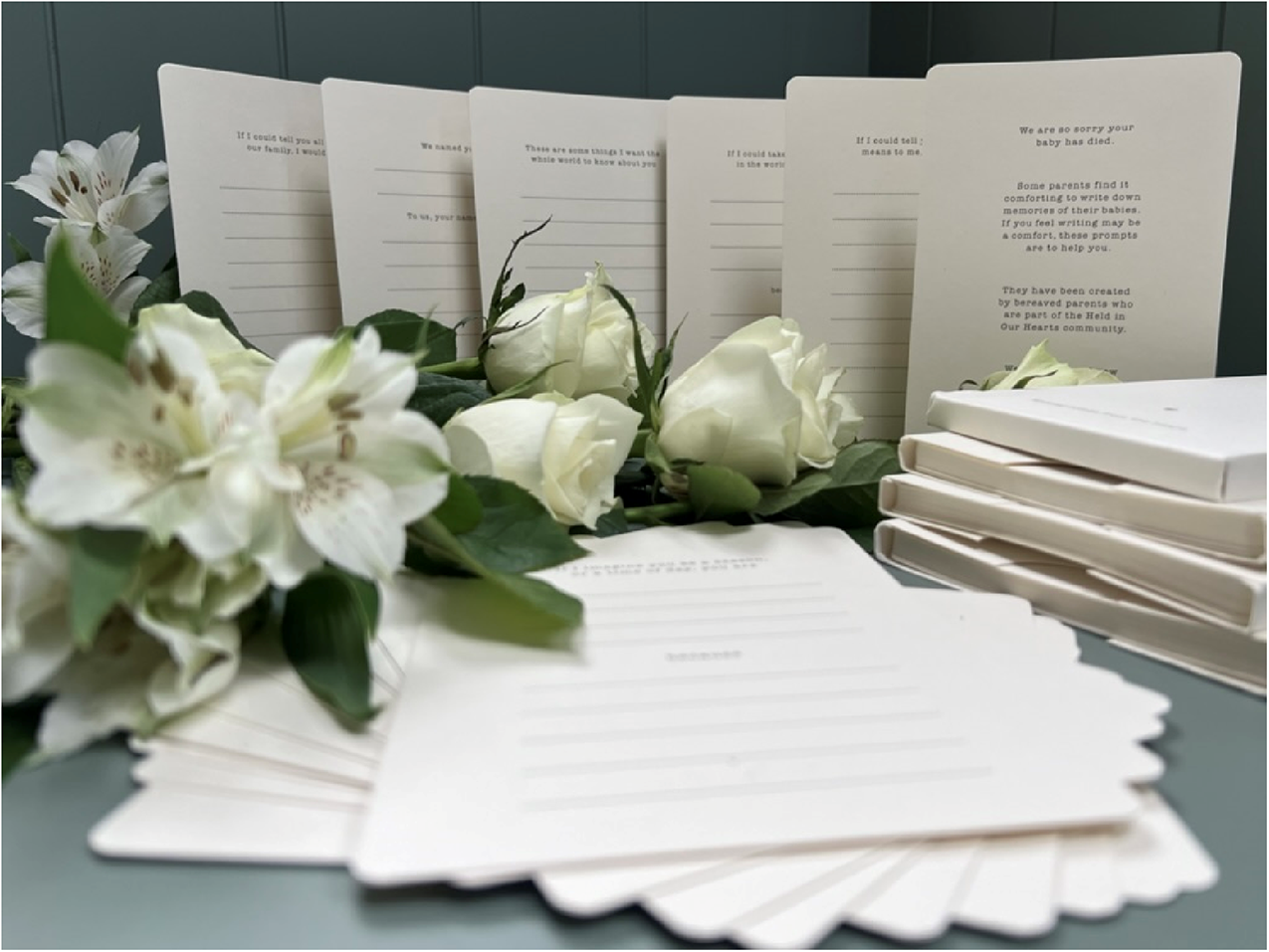
The “From the Heart” notelets created by Tamarin Norwood and Held In Our Hearts.
Grief Writing Workshops: Writing at Night
When fragmentary thoughts and impressions are granted physical space on the page, it presents further opportunities for writing to tip into doing, and describing to tip into creating. In my grief writing workshops, we sometimes make a plan for night-time rumination. Many bereaved people find repetitive and circular thinking unhelpful, and especially at night, find themselves dragged into a downward spiral towards the same dark or difficult thoughts. In times of ordinary stress, jotting down a list of tasks that need doing can be an effective way to settle the mind in readiness for sleep, because it asks you to comb through tangled preoccupations, separate them out, and then pin them down onto the page as a to-do list to review clear-headedly in the morning. This is something writing can do.
Times of grief far exceed the ordinary stresses of everyday life. But we can still begin to address night-time rumination by jotting down a list of the most imminent thoughts and preoccupations that are keeping us awake. These jottings do no more than grasp and describe thoughts already existing in the mind.
At this stage in my workshops, I often point out two things. First: that we do ourselves harm if we undermine our own rituals and beliefs about grief, for instance by describing or thinking of them as silly or irrational, as people so often do. We have within us great resources for creating sense from what seems senseless, and the way we think about these resources can help or hinder them. Take seriously the brief impressions or “silly” thoughts that occur to you and the more resourced you become, and consequently more able to create sense from grief. Second: many writers and artists report being more able to create at night. There exists a great literature of research about nighttime thought, and the way it differs from the logical clarity of daytime thought (for an overview in literary contexts, see Schwenger, 2012). At night, asleep or awake, we are dreamers, and the elasticity of thought that can pull us down into rumination can be our ally in grief if we do not let it circle and spiral unchecked, but rather learn how to follow it, guide it, and hold it close enough to examine.
With all of this in mind, we can use writing to hold the beginning of a thought still on the page, and then with the courage of a poet and the creativity of the night-time mind, we can probe that thought to feel what it contains. The tiniest inflections of feeling can be written down too, and each one of those probed further, until we have on the page a tangle of words that might resemble the tangle of thoughts in our mind—but on the page they stay still, and because they have found words, they have tone, color, and shape. This tangle might offer otherwise inaccessible ways of understanding our grief, and it is another way that writing can do something. On the page, like a speck of time caught in amber, the tangles of a sleepless mind can be inspected, turned about in the hand and looked at another way, formed into something new, or returned to another time.
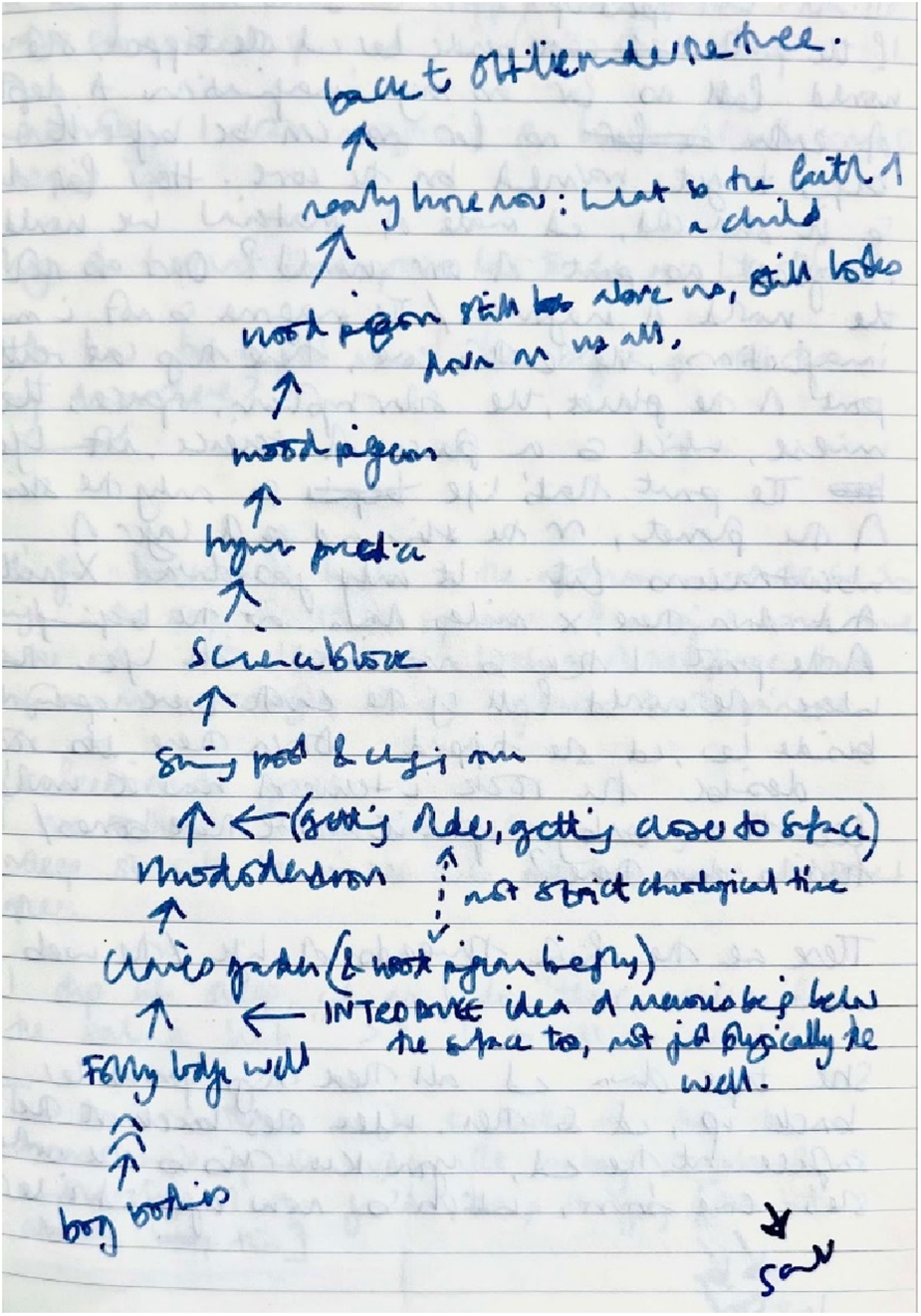
An example of nighttime note taking: holding the beginning of a thought still on the page.
Memoir: Sustained Writing on Grief
The third project is my piece of sustained autobiographical writing on grief published as a memoir in 2024. The writing process employed some of the approaches outlined above, but consolidated the fragmentary images and insights resulting from these approaches into an account that was not fragmentary. On the contrary, in this case I believe the writing did something specifically because it consolidated into a rounded narrative, in which images and insights grouped together to create thickened descriptions that amounted to more than the sum of their fragmentary parts. The style of my writing was poetic or literary: some steps removed from (or rather, some steps redrafted and edited from) the immediacy of those thoughts and inflections first captured like the amber on the page in the middle of the night. But what does this writing do once it is in the world?
For the reader, it appears to offer a first-hand account of grief that is persuasive enough to inspire changing practices and perspectives in healthcare settings: since publication it has been brought into medical and midwifery curricula in England and Australia, and national baby loss charity Sands recommends it to the families they support. At the time of writing, a pilot study run by literature scholar and midwifery lecturer Katharine Gillet at the Newcastle School of Nursing and Midwifery, Australia, is using the book to identify how far literary and poetic treatments of grief experience can teach bereavement care more effectively than other modes of midwifery training currently on offer. So far, the study is finding that the literary mode “drastically impacts” midwifery learning, humanizing practice, increasing empathy, and “impart[ing] the wisdom of experience” without going through the experience oneself (not yet published). Here, it appears that what writing can do is teach experiential solidarity; and writing does this when experience is integrated with meaning in the way that poetic and literary writing can afford. Similar arguments are made by those who advocate bibliotherapy (poetry therapy or therapeutic storytelling) and narrative medicine (medicine practiced with the competence to recognize, absorb, interpret and be moved by the stories of illness); see Bowman, 2021 and Charon, 2006 respectively.
For myself, as its writer, the consolidation of my experience into a completed and self-contained narrative, and then a physical printed object, has been central to my experience of grief. It performs the unexpected function of “using up” or consummating the experience, such that I can feel which parts of the experience I have written up, and which I have not. The parts that remain unwritten—or were written in fragments but not consolidated into this printed object—have a scattered and grainy feel to them which is distinct from the clear, whole and rounded feel of the parts of my experience I wrote into the book.
Here lies a note of caution: although I hold the book of our son's life story as dear as I hold his memory, I am not yet certain exactly what difference such a consolidating form of writing has made to his memory. Are the unwritten parts now somewhat lost to me? Or conversely, are the written parts now somewhat lost to me in their handing over to an audience? I believe that rounding my grief so carefully and lovingly into a book—into another living creature, as I feel it—has made my grief ontologically different. If we are considering what writing does, and when writing does, here is an example of writing doing something very powerful indeed when it rounds and consolidates otherwise fragmentary experience, yet I do not know what it does to me, nor am I in control of what it does to me.
How little we can know about what our own writing might do to us. And when writing is published, finds readers, and is shored up by publicity, then writing becomes something other than simply the product of a process of writing. And then, how much harder it is to predict what our writing might do to us.
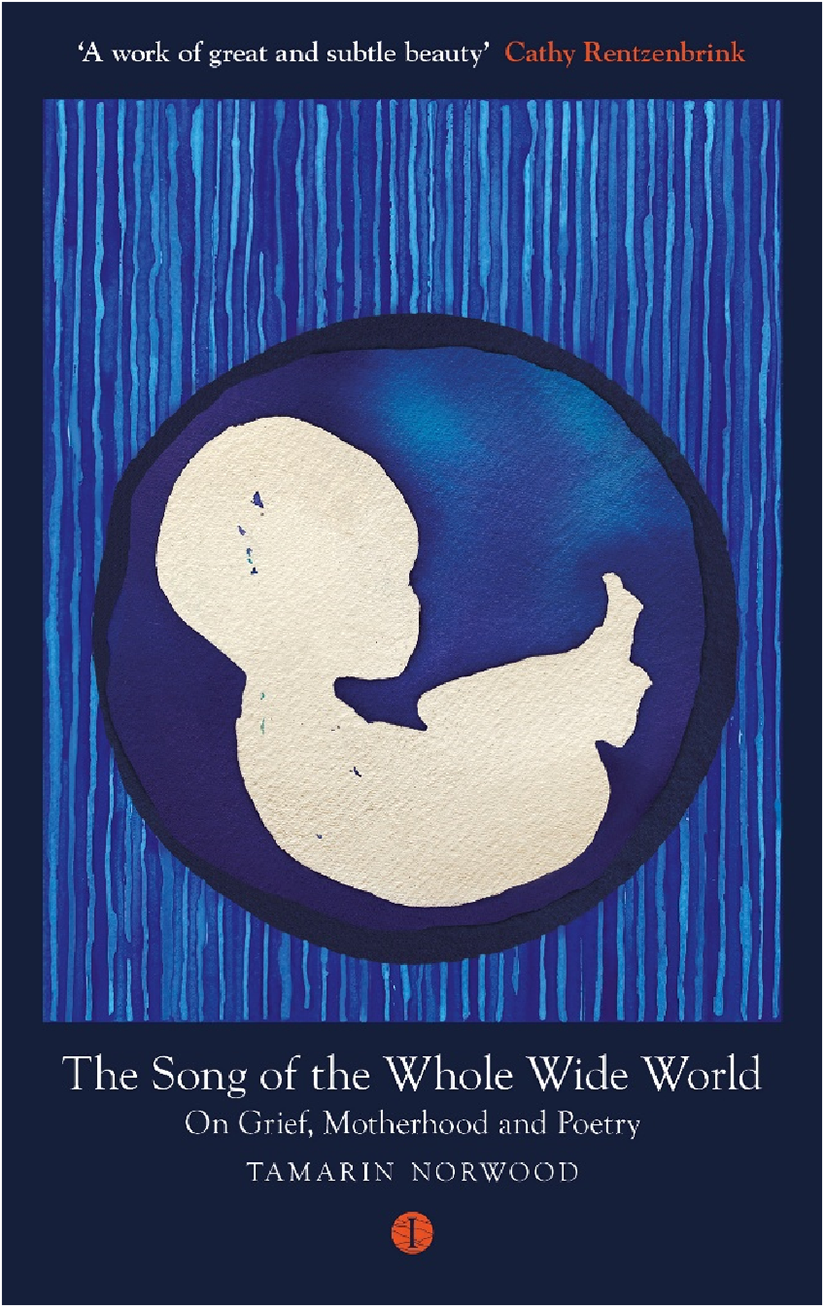
Tamarin's book cover
Next, Gayle responds to our prompts:
What Is Writing Doing? When Is Writing Doing?
Gayle loves to write, finding it both therapeutic and enjoyable. She is a sociologist who publishes mostly in the areas of methodology (including creative ways to present data), reproduction and non/parental identity, meanings and experiences of love, loss and the aftermath of death, solitude and/or loneliness, gender and identity, working and learning in higher education and travel and transport. She has been writing fiction and memoir for 15 years and draws on her own experience—both personal and academic—in her writing.
Here, Gayle uses her myriad writing experiences to reflect on the questions When is writing doing? What is writing doing? She offers two examples of her own creative auto/biographical memoir, a term she adopts to indicate the constant interplay of self and other (e.g., Letherby, 2003, 2022; Morgan, 1998; Stanley, 1993), as well as some of the responses she has received online—on a popular public writing site and on social media—to what she has produced. By allowing a means to actively engage in continuing bonds (Klass et al., 1996), with loved ones now dead, to process feelings and experiences, develop understanding, and share with others, Gayle shows how writing is doing. In evidencing the responses she has received to her writing, she shows what it is doing—creating space for shared experiences, empathy, prompts for exploration of others’ own experiences, and a sense of solidarity in an amorphous community of writers. She also emphasizes the complex forms of care that must be taken when “doing writing,” both in terms of self-care and care for others’ stories.
Gayle: Doing Writing as Doing Grief
Grief is a cruel kind of education […] You learn how much grief is about language, the failure of language and the grasping for language. (Chimamanda Ngozi Adichie, 2021, p. 5)
We should have the luxury of telling our stories, all our stories. (Ta-Nehisi Coates, 2019)
The transformation of silence into language and action is an act of self-revelation, and that always seems fraught with danger. (Audre Lorde, 2017, p. 3)
Loss—a miscarriage in my mid-20 s in the mid-1980s—brought me to academia and to my discipline, sociology and in turn sociology has affected the way I do grief. I began writing memoir, nonfiction and fiction after the death of my husband, John (in 2010) and my mum, Dorothy (in 2012). Much of this writing connected to my experiences of loss, not just with reference to John and my mum, but also in response to the death of my dad, Ron (in 1979) and the loss of my (to my knowledge) one and only pregnancy, my one and only baby.
My experience supports a continuing bonds approach to writing, which challenges the “get over it and move on” model of grief, in that it focuses on meaning-making in response to loss and the way people make sense of and engage with their world (Howarth, 2007; Klass et al., 1996; Valentine, 2008). For me (at least) doing writing was, and is, doing grief. Once begun, before long these writings, this work, became part of my publishing practice, both within and outside of the academy (see, e.g., gletherby at ABCtales.com) and, as with my other, more traditional academic publications, the support and encouragement I have received from readers suggests that what I write is meaningful to others who have experienced similar.
An extract from a piece of memoir I wrote in 2022: I’m sitting in my neighbor's flat. She lives on the floor below me in our small block of flats. It's the first time I’ve been inside her home, although we often chat outside in the shared parking area. The décor is not quite to my taste but I like it. There's been some reconstruction work so the lay-out is a bit different to mine too. The building is over 50 years old so the rooms are somewhat bigger than in some of the newer builds in town. In amongst the sofas, bookcases and coffee tables there's quite a bit of child paraphernalia including toys and a colorful plastic table and chairs set. I smile and ask after her grandchildren who I sometimes hear when they are staying over. She apologizes, as she always does, about the noise they make and I reply, as I always do, with ‘no, don’t apologize, don’t worry, I like to hear them’. I mean it. I do. Another neighbor, newer to the block, who lives above me, and whom I’m already finding more difficult to connect with, asks the inevitable (well so it has been for me) question; ‘do you have any grandchildren Gayle?’.
No, no children or grandchildren.
Oh a nice easy life then.
My mood dips as my stomach clenches, my world turning pale gray. Not the blackness of despair which I once felt, nor the bright flashing red of angry for, for sure, I’m used to such comments by now. The assumption that I will have followed the expected maternal path and the insensitive — through embarrassment or just a lack of real interest or care — throw away retort when I name my status, or rather the lack of it. ‘Well it wasn’t my choice,’ I reply, ‘but I’m lucky to have many children and young people in my life’. The conversation moves on. We are gathered to discuss some work that needs doing on the property we share. My mind wanders. I’m thinking of a quote from Hilary Mantel's 2010 memoir Giving Up the Ghost which I first saw when it was shared on twitter just after her death in late September this year: “You think of the children you might have had but didn’t. When the midwife says, ‘It's a boy’, where does the girl go? When you think you’re pregnant, and you’re not, what happens to the child that has already formed in your mind? You keep it filed in a drawer of your consciousness, like a short story that never worked after the opening lines.”
I began this piece during a writing workshop organized by the Centre for Death and Society (#CDASWrites) and facilitated by Tamarin. Our theme was “narratives of loss” and our first writing prompt was “what color does this morning feel like to you?” Still uneasy following the interaction in my neighbor's flat, I chose “pale grey” as my color. Grey is an ambivalent, not solely negative, color for me. I love my smart grey trousers and the several same color comfy, soft to the touch, jumpers I wear through autumn to spring. I chose to have two grey walls and a grey carpet in a living room, which is otherwise full of color. So although “pale grey” seemed to fit well my “on the verge of somber” mood (and the weather) I chose it during the workshop also for its (for me at least) association with warmth and the comfort of home.
The final exercise of the writing workshop was to write a piece to challenge a dominant narrative, an expectation of behavior, feeling, or thought. I returned again to my own personal maternal identity and experience: People say ‘never mind, it's for the best. It will happen next time, next time, when the time is right’. But there never was a next time, a right time. It did NOT happen ever again. It did NOT happen ever again. It did NOT happen ever again. It began with an actual loss. A baby. Just a foetus to some but a baby to me. A baby who died before it had the chance to be born. And then a loss of possibilities. No more pregnancies (or at least not that I know of). No more babies, children, grandchildren. Childless I am not. There have always been, and are, plenty of children and young people in both my personal life and my work life. But, the loss, the losses, I feel acutely still, more than three and a half decades on since my baby died. I’m reminded everyday by a family tableau in a café, a TV drama, a careless comment… I feel the Waiting, always, waiting to remind me of what might have been. I talk about my loss(es) when asked and share my experience in the hope that in some small ways I might raise awareness in the less than empathetic and connect with others who have been through similar. And yet the word never feels quite right. If I accept that I ‘lost’ my baby, aren’t I admitting to failure? To a lack of care, to not preventing an event that could have been prevented? A worry underscored by the fact that the time never was right. People say ‘never mind, it's for the best. It will happen next time, next time, when the time is right’. But there never was a next time, a right time. It did NOT happen ever again.
Writing this piece, and many, many others, did and does not ever feel morbid or self-indulgent to me (although just occasionally I have both received and responded to this critique of my work, e.g., Letherby, 2020). Rather, it has felt valuable reflecting the acknowledgement that (auto/biographical) creative and other writing can be therapeutic and help individuals through both trauma and adversity. Additionally, evidence suggests that across the lifecourse writing (and reading) enhances emotional development and emotional well-being—see Letherby (2024) for more detail here. The reading of memoir (and fiction) can, and does, have emotional and political value for both storytellers and readers/listeners. And yet, for some, at some times, particular stories, particular experiences, may be too difficult to hear. So, while it is important that hidden, silenced and (often) misunderstood stories are written they need to be done so with care. Such an ethos of care underscores the value of public writing initiatives that support others to write in safe and supportive environments, such as Tamarin's grief writing workshops, and the “From the Heart” notelets she created with Held In Our Hearts, which have since been shared through the charity's social media channels, allowing bereaved families to convene for a protected hour each week to write in private but in company.
Here is another example of my memoir writing, this time shared publicly online. It comes from a dream I had of my husband John, last year. I often dream about loved ones who have died. Sometimes this disturbs me, more often it comforts. On this particular occasion there was comfort and the dream stayed with me:
Dreaming of John
A few days ago I dreamt of John, my partner and husband of 18 years, who died 14 years ago next month. John himself didn’t appear until near the end of the dream but was present in other ways throughout.
I was in a space, an outdoor/indoor space, a house or home it felt like with a roof and walls, but with uneven concrete floors and wide and deep puddles and pools of water. I was dozing on a large gray L-shaped sofa under a fluffy blankie; one of my favorite things to do. Looking up I saw a friend put up his ironing board (was it his house or someone else's? who knows) and begin to iron.
‘I hate ironing’, I said. ‘John would always do mine when he was alive.’
Laughing my friend replied; ‘Iron John.’
‘Yes, yes, that's what we used to call him.’
Rising from the sofa I went to look for another friend who I knew would be somewhere in the same space. A friend who was with me when John died and who, afterward, through the grief that followed, was, and still is, one of my main supporters. I found her at the top of some rough wooden stairs in a shed which had two benches but no tools. On one of the benches sat my friend's adult daughter and the two of them were deep in conversation. I left them to it and wandered around for a while wading through at least a couple of the deep water pools. In my dream I stayed dry even though my waist was covered.
Bored I mounted the stairs once more but on hearing that the mother-daughter discussion continued I turned to find something else to occupy my time until they were free to talk with me. And there he was, my dear John, at the bottom of the stairs. Wearing a beautiful dark red hand-knitted ribbed jumper he looked as he had the last time I’d seen him looking well. When alive he was almost 11 years older than me. Now dead he's four years younger than I. How odd.
‘Where did he get that jumper from?’ I wondered. ‘I’ve not seen it before.’
Neither of us spoke but we both smiled as I walked slowly towards him. And then we hugged, tight, close.
And some part of me outside of the dream starts thinking. ‘He feels just the same. What lovely shoulders he has. How wonderful to be able to do this, to touch him again, to smell him again.’
We’re still hugging, our bodies comfortably together, as I wake.
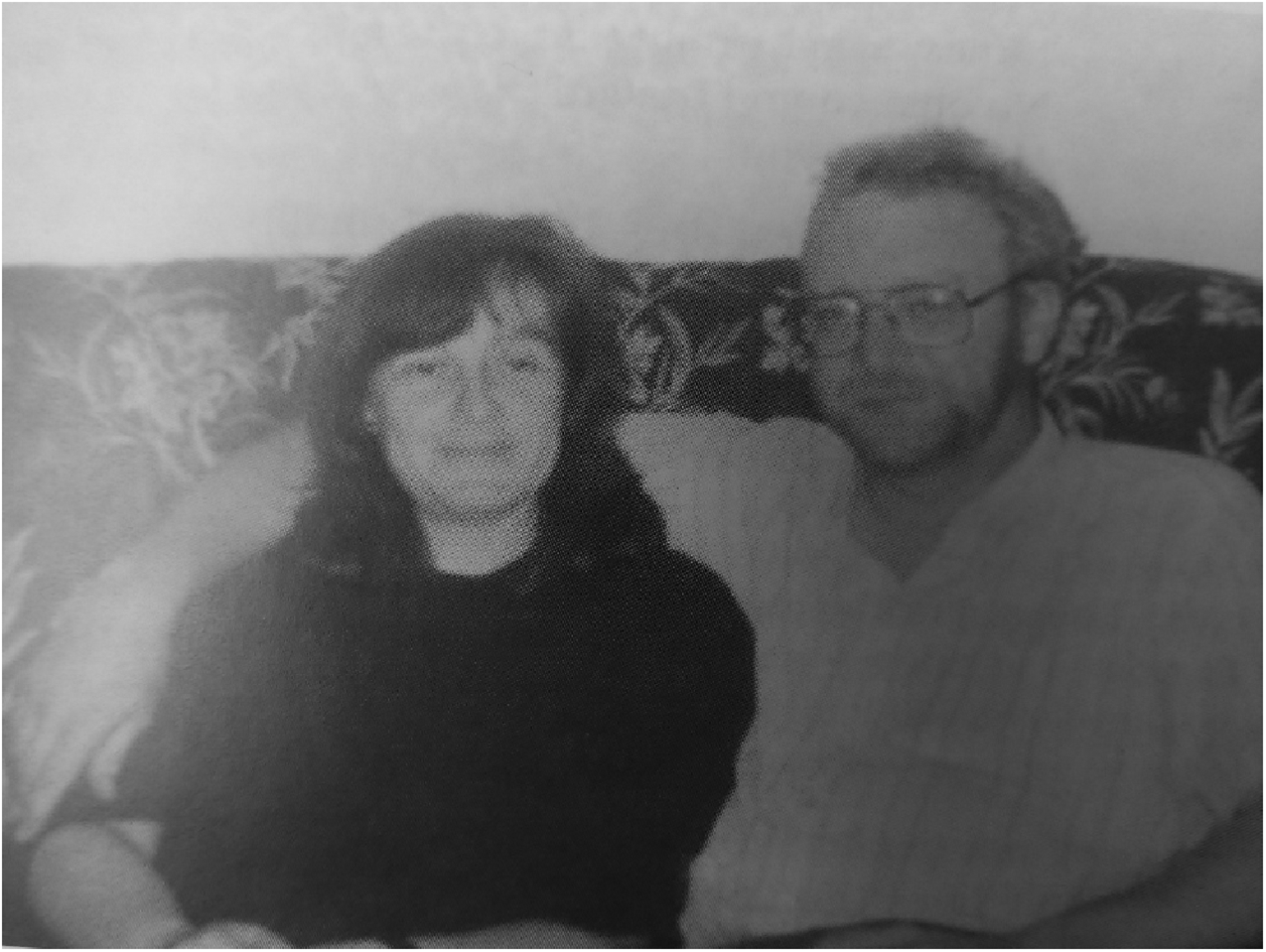
Gayle and John (quite a while ago…)
I posted this piece on ABCtales.com, an open to all website with more than 20,000 writers and readers, where I post much of my writing. I received a few comments including: “Pleasant dreams,” “Thank you for sharing your lovely experience,” and “Dreams are precious and can be so comforting.” I appreciate and am comforted by the fact that, as one person wrote, to dream this way is “not all bad or creepy like some people make it out to be but rather comforting (to experience and) to read.” Similarly, after I shared my dream on Facebook several friends commented that my story told of “a beautiful experience,” that was “poignant,” “a gift” and “encapsulates love.” Such writing—whether based in fact, fiction or a mixture of both—has emotional meaning for all involved and has the potential to have impact, to do something, beyond as well as within the academy (e.g., Frank, 2000; Mar et al., 2011; Letherby, 2025).
****
Finally, Kate responds to the prompts:
What Is Writing Doing? When Is Writing Doing?
Kate has been central in community building in death studies in the United Kingdom and beyond, and writing in its many forms has been a part of this. However, Kate has also shared with the CDAS Writing Workshop team how valuable and therapeutic writing has been to her personally as a way to process her own experiences. She reflects here on how private writing, which sits in contrast to the potentially so public writing of academia, offers the chance to “say the unsayable.” As a sociologist who has often critically examined the complexities of what is deemed appropriate and inappropriate to say in different cultures and contexts, her reflections show what writing can do, and when writing is doing, by demonstrating its capacity to allow for the processing of private thoughts and feelings. After exploring some experiences of writing her personal thoughts and her and her family's experiences for the public, writing then became a vehicle through which Kate negotiated the division of public and private, and the ethical considerations of what to write and where. Her decision not to write publicly came from writing privately and publicly, and from her own reflections on what this writing was “doing.”
Kate: Drawing a Line
I have always written for myself […] for therapy. (Dr Rachel Clarke, 23 June 2021, Keynote, Borrowed Time Conference)
Creativity – like human life itself – begins in darkness. (Julia Cameron, 1995)
So how do we return to our lives – to the awe of existence – and reclaim a sense of wonder? Well, for me, it had something to do with work but it also had something to do with community. Work and community. I kind of realised that work was the key to get back to my life, but I also realised that I was not alone in my grief and that many of you were, in one way or another, suffering your own sorrows, your own griefs. (Nick Cave, 2018)
I am a sociologist whose exposure to the power of writing as creative therapy came after the birth of my second child, who was born with medical complexities. Grieving for an imagined life that would no longer be his or my family's, my very good academic friend Hannah Rumble suggested that I read The Artist's Way by Julia Cameron (1995). The first chapter and recommendation resonated so strongly that a (now five-year old) habit was born: my “Morning Pages.” Accompanied by a fresh coffee or three, every morning I write at least three pages in a notebook about whatever I am thinking at the time. At first this writing focused predominantly on my family and grief, but over time has included work, relationships, politics, world events and everything in between. These entries will never be published, and will never be read by anyone else, and having confidence in this has enabled a license—a freedom—to say the unsayable. Writing my “Morning Pages” is a very active and mindful doing.
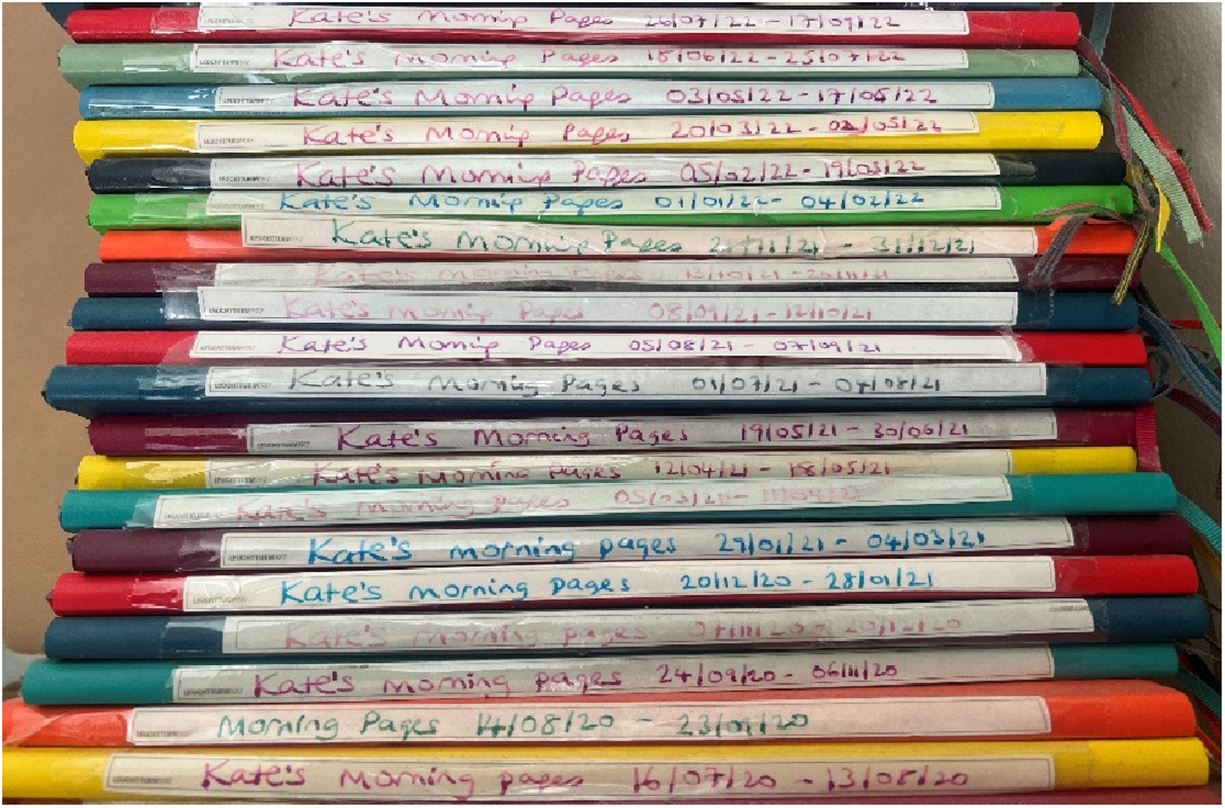
Kate's “Morning Pages”
For me, in terms of what this writing is doing, it serves multiple functions. It is a safety valve. A mirror. It is an old friend. It is where I work things out, make lists, rant and reflect. And it is an enabler as, in having an outlet for my grief and reflections on the consequences of my second child's arrival, the “Morning Pages” enabled me to put some of my (what I felt, more socially acceptable) thoughts into the public domain. Because I have the safety-valve of my forever-private “Morning Pages,” in both Woodthorpe (2021) and Woodthorpe (2023) I was able to make public and articulate some of the experiences of being a parent of a child with medical complexity and in receipt of children's palliative care, the second of which—through writing it—led me to the conclusion that I would not write or publish further on my son. I metaphorically drew a line under my writing for public consumption, on that topic at least.
In this case, doing the writing was a productive mechanism through which to decipher next steps, where to focus, what to make visible and how. In Woodthorpe (2023), I described the process I went through in determining that I would no longer write publicly about my son, and how I grappled with the extent to which in not doing so (as an academic with a privileged platform) I was contributing to the disenfranchisement or silencing of marginalized groups (Rogers, 2020). I also reflected on the resilience required as an academic to share life experiences beyond the academy, and the capacity to be able to respond to “academic critique.” Indeed, as the authors of this article we are no doubt steeling ourselves for that right now, in submitting an unconventionally structured and written auto/biographical paper to this special issue, that will be peer reviewed first and then critiqued in future scholarly work once published. This standard academic process of review and critique is easier, as I noted in my chapter on researcher vulnerability (Woodthorpe, 2023), when it is about scholarly ideas rather than your actual life. As I said at the time: From my own experience, writing about ‘evidence’ and your analysis, even when openly recognizing that this comes from an intersubjective ontological position, is a million times easier than when you are writing about the ‘topic’ of your own life. (p. 129)
Writing has thus been a very constructive “doing” for me as using the tools I have learned through my daily “Morning Pages,” I have written to work out my position on further work.
Concluding Thoughts
What Is Writing Doing? When Is Writing Doing?
Writing, which can seem so simple, is a highly complex, emotionally laden, powerful and potentially deeply problematic practice. Drawing on the auto/biographical work experiences of four women working in the academic field of death studies as well as a range of creative, professional and academic sources about loss and the process of writing, in this article, we have explored creativity, innovation and impact and the strategies on offer in auto/biographical writing about dying, death and grief.
Writing is one way to continue bonds, live with loss, and engage with grief. The voices of a range of authors from different creative backgrounds writing in English have been drawn in to emphasize the commonalities and differences present in how the women writing here and others think about writing, loss and grief. Patterns emerge, shift, and offer opportunities for exploration about the ethics of writing, the nature of memory, and challenges of our many public and private selves.
Here, we have been centrally concerned with how first-person writing can function as a powerful practice for responding to experiences of dying and grief. We have taken a creative approach because the article seeks to do what it advocates—to write in the first person, to reflect, and to explore the limits and potential of language to produce meanings from loss, drawing in a range of different voice-like-fragments to make a perhaps messy and complex whole that reflects what language and its expression itself is—contextual, contested and changing. The practice of collaborative writing undertaken here, and that of citing the work of others from a wide range of backgrounds, suggests and produces connections, emphasizing the theme of this special issue—public dying and public grieving—and signals the complicated, inevitably partial, and powerful ways in which the practice of writing can function to make grief a shared and (more) public experience.
Our aspirations for this article are that it offers insight into different ways of understanding writing, what it is doing, and when it is doing something different to what might be expected. The writing practices reflected upon and those used to produce the article are powerful for the individuals who are writing, and we hope can also be so for others. For example, the fragments of voices included here from other authors from a range of backgrounds are a testament to this, as the diverse and disparate voices drawn together here show how one's own writing can end up in unexpected places, having had an effect on someone somewhere in a way that as a writer you may never come to know. Academic writing is perhaps less likely to do this when paywalled and barriered, or when written in language inaccessible to many—though debate within our CDAS Writing Workshop and group about the value of obfuscatory language abounds, with Bethan in strong defense, as writer Foluke Taylor (2023) is, of the power of writing that needs to be untangled and grappled with.
In working together, in sharing personal experience, only some of which we have written about here, we are demonstrating our valuing of both the subjective aspects of writing (and of knowledge production) and of intersubjectivity (see, e.g., Benjamin, 1988; Gillespie & Cornish, 2010). As a group we agree on the importance of creative auto/biographical storytelling even though our individual experiences—of loss and of writing about it—differ. As is clear, in preparation for writing this article we not only shared our own stories with each other but also the stories of others (including various established authors and “celebrities”) who have written similarly about loss and bereavement. We contend that such endeavors—that is, reading, sharing, writing—involves individual and shared reflection and dialogue and hope that our writing will stimulate similar in others. If you agree and if you wish to engage with #CDASWrites and explore public and private writing within the context of this community, please do reach out to us via social media or cdas@bath.ac.uk.
Footnotes
Acknowledgments
We are very grateful to Michael Brennan (special edition editor) and Jason Powell (journal editor) and to the anonymous reviewers of our article for their careful reading of our writing and their generous support and encouragement. We also thank Cathy Renzenbrink for her Centre for Death and Society (CDAS) seminar “Writing Inside and Outside of the Academy” and the many friends and colleagues—from CDAS and elsewhere—who engage positively with our writing and who sometimes join us in thinking creatively about What is writing doing? When is writing doing?
Declaration of Conflicting Interests
The authors declared no potential conflicts of interest with respect to the research, authorship, and/or publication of this article.
Funding
The authors received no financial support for the research, authorship, and/or publication of this article.
Author Biographies

.
.
.