



Abstract
Pregnancy loss continues to occupy an uncomfortable space in public discourse. This article analyses articles in the UK press published between 2013 and 2023 referencing the Baby Loss Awareness Week (BLAW) that focus on narratives of personal experience of pregnancy loss. These narratives sit between the personal and the public, and constitute examples of public grieving that serve a range of purposes, from the expression of continuing bonds with the miscarried or stillborn baby, the desire to share one's experience of loss, and often to the wish to translate this experience into something positive. We draw on Finch's concept of “displaying families,” considering how they construct an identity for the baby who never lived and demonstrate continuing bonds with them. By analysing how this “identity work” is made public, we explore how pregnancy loss is presented in public media as a transformative teleological experience for parents.
Introduction
In 2022, one in every 250 births in the UK was a stillbirth (ONS, 2022) and it is estimated that around one in five pregnancies end in miscarriage (Tommy’s, 2024). While there is growing awareness of the incidence of such losses and of their emotional effects, those bereaved through pregnancy loss and stillbirth continue to describe a lack of adequate support and recognition. Raising awareness of these types of losses is an important part of the work of third-sector organisations such as the Stillbirth and Neonatal Death Charity (Sands), Antenatal Results and Choices (ARC), Tommy's, and the Miscarriage Association (MA). As part of this endeavour, charities and support organisations in the UK come together to raise awareness of pregnancy loss and baby loss during Baby Loss Awareness Week (BLAW), held in October. Since its first iteration in 2002 (Sands, 2024), BLAW has developed into an internationally-recognised week of memorialisation and fundraising events. With it comes increased media coverage, with a range of articles related to pregnancy and baby loss published in local and national newspapers. These articles frequently showcase individual experiences of pregnancy loss, narratives which constitute examples of public grieving that serve a range of purposes.
Our aim in this paper is to analyse a selection of these articles, sourced from BLAW-related coverage in the UK press between 2013 and 2023, in order to identify common themes and purposes. Through this critical approach we describe and examine patterns in these public presentations of private events, in order to better understand how families’ experiences of baby loss are represented in the UK press.
Previous research into grief following pregnancy and baby loss has indicated a number of specific challenges that such losses entail, such as those relating to social perceptions of “reproductive success” (Earle et al., 2008), memorialisation (Fuller & Kuberska, 2022), and altered perceptions of time (Browne, 2022; Littlemore & Turner, 2020), among many others. Studies have also explored complex emotional trajectories following pregnancy loss (McCann, 2019; Volgsten et al., 2018), including complicated grief of the lost future (Malacrida, 1999), social isolation and lack of social recognition (Kuberska, 2020; Rossen et al., 2023), or lack of legitimised “parental identity” (Murphy & Thomas, 2013). There is also a growing area of inquiry that focuses on media representations of reproductive losses, often in celebrities, that also speak to the themes explored in pregnancy loss studies (Binion & Brann, 2024; Feasey, 2022; Martin, 2023).
In this article, we analyse reproductive loss accounts published in the UK newspapers as part of the BLAW campaign and explore how these narratives engage with and explore specific themes of breaking the silence, parental identity work, gendered experiences, and the desire to find a positive in a difficult experience. While these themes do not exhaust all topics described in the articles, their consistent co-presence suggests that they are important components of a public presentation of grief following pregnancy and baby loss.
Literature Review
The three sections below introduce the main theoretical areas that have been used in the development of our analysis: continuing bonds (Klass, 2006), displaying families (Finch, 2007), and the role of narrative in working through difficult life experiences, such as bereavement (Frank, 2013; Palmer, 2007).
Continuing Bonds, Continuing Identities
It has been acknowledged that following a death, the attachment to the deceased does not cease (Parkes & Prigerson, 2010, p. 68), a phenomenon that has been referred to as the “continuing bond” (Klass et al., 2014). The relationship with the deceased necessarily changes, and continues to change, but it does not end; new connections between the bereaved and their lost loved one are constructed and reconstructed even after the death (Klass et al., 2014, p. 18). For Parkes and Prigerson (2010, p. 81), grieving is therefore “a creative activity” through which the bereaved create a role in their lives for those they have lost. The existence of these bonds implies a continuing identity and place within the family for the baby, and a concurrent identity for the parents. However, in the context of pregnancy loss and neonatal death, these identities may be contested and complicated by the fact that the baby did not survive beyond birth, and the baby's identity is therefore, to a large extent, created in the imagination of the parents. As Layne (1997) explains, “unlike a growing child or an adult who leave behind a trail of existence, an unborn child lacks the material traces of social life”, and “stillbirth, along with other forms of pregnancy loss”, has therefore tended “…to be devalued because there appears to be no person to grieve for” (Lovell, 1997). If the child who has died is the first child, identities as parents are called into question because they are dependent on a relationship with a child (Murphy & Thomas, 2013).
In order to mitigate these challenges, bereaved parents sometimes “construct a biography” for their child (Ellis, 1998) and, in doing this, retain the baby's place within the family (Côté-Arsenault, 2003). However, familial identities are also implicated in a broader range of social networks which are instrumental in their formation and maintenance, and research has indicated that parents act to ensure that the deceased baby's identity is validated and acknowledged not only privately but also publically (Littlemore & Turner, 2020; Murphy & Thomas, 2013). One useful lens through which to examine the ways in which parents may construct, demonstrate and seek acknowledgement of their continuing bonds with the lost child is that of “displaying families” (Finch, 2007).
Displaying Families; Displaying Identities
Pregnancy loss research has explored the variety in how people experience the presence of absence (Kuberska & Turner, 2019), with maternal identity as a natural focus of inquiry (McCann, 2019; Murphy, 2012, 2019; Rossen et al., 2023), although fatherhood has received some attention as well (Jones et al., 2019; McCreight, 2004; Nguyen et al., 2019). But the impact that reproductive losses have on the perceived shape of the family as a whole is an equally interesting analytical angle. Of particular relevance here is Finch’s (2007) notion of “displaying families.” Through displaying actions constitutive of “doing family things,” like spending time in public together, individuals and groups can confirm to others that the relationships under consideration are, indeed, “family” relationships, and have these relationships acknowledged and validated (Finch, 2007, p. 67). Indeed, Finch contends that “families are defined more by ‘doing’ family things than by ‘being’ a family” (2007, p. 66). Pregnancy loss disrupts these practices by removing the future possibility of displaying a family in a conventional way. Murphy and Thomas (2013) also draw on Finch's notion of displaying families in their study of the ways in which parents demonstrate the place of the stillborn child in their lives. They note that displaying their family, which includes the deceased child, allows for an acknowledgement of the relationship, a continuing bond, and a consequent strengthening of their identities as parents.
The concept of family display may be particularly pertinent to the narratives under consideration in this paper, as they describe the “doing” (e.g., through memorialisation choices), but also lean into the “being” (by constructing a static-by-necessity identity for the child within the family unit – but with the recognition that the child cannot be involved in “doing family” in the same way). As Finch (2007, p. 72) points out, the “need for display” will vary in its intensity depending on the circumstance, and the extent to which “family-like qualities of relationships […] need to be redefined, renegotiated and actively demonstrated.”
The Role of Narrative
Finch (2007, p. 77) proposes narrative as a key tool for displaying family relationships, providing a vehicle through which “‘my family’ and its character can be communicated.” However, narrative is likely to play a role beyond that of family display in the context of pregnancy loss. What has been termed the “narrative turn” in psychology and social science has led to a deepened interest in the impact and relevance of stories more broadly (Angus & McLeod, 2004), and a considerable amount of attention has been paid to their role following a negative or traumatic experience. Story-telling following such experiences is often associated with healing and recovery (Palmer, 2007, p. 374), providing a sense of structure and completeness to an event which may have been processed in a fragmented and incomplete way (van der Kolk, 2015; Wigren, 1994). Traumatic experiences can disrupt or challenge identities (Wigren, 1994), and through telling stories these can be reconstructed and publicly expressed if desired (Frank, 2013; Palmer, 2007; Weeks et al., 2001). We can also regain our agency, (re)taking ownership of our own voice in the telling of our story.
More specifically, narrative has been shown to play a role in the grieving process. Gillies and Neimeyer's (2006, p. 32) meaning reconstruction model of bereavement proposes three mechanisms through which bereaved individuals move forward following a loss: “(a) making sense of the death, (b) finding benefit in the experience, and (c) undergoing identity change,” re-establishing a coherent self-narrative. Narrative has been used as a therapeutic tool to assist in this meaning-making (Alves et al., 2018), including in the context of pregnancy loss (Baglia & Silverman, 2015) and perinatal death (Alves et al., 2012). Producing narratives can also assist in constructing the “continuing bonds” described above and one's own identity within these (Murphy & Thomas, 2013; Ratcliffe & Byrne, 2022). Being co-constructed “against a shared backdrop of stories, rituals, practices and norms” (Ratcliffe & Byrne, 2022, p. 332), they may also help to situate these bonds within a broader social context.
While the articles under consideration in this study were not produced in the context of a therapeutic interaction, they do still constitute narratives – albeit co-constructed with and shaped by journalists. Thus, a key part of our analysis will explore the ways in which these texts could be said to function in the same way as the narratives described above.
Data and Methods
The goal of this study was to critically analyse representation of reproductive losses found in newspaper articles published with the intention of raising awareness about pregnancy and baby loss. This project has been approved by the Coventry University Ethics Committee (P175077).
In April 2023 we performed a search of newspaper articles published in the UK between January 2013 - December 2023 on Pressreader (www.pressreader.com) using the search term “Baby Loss Awareness Week.” Pressreader was chosen as it included results from a variety of sources, from national broadsheets to tabloids. We then screened articles to find items reporting on personal stories of pregnancy loss, including those that contained quotations from parents or other family members. It is important to note that these articles were not written by parents themselves, but by journalists. This screening resulted in a dataset of 133 articles that described experiences of various types of pregnancy loss experienced by individuals who were not public figures (see Figure 1).
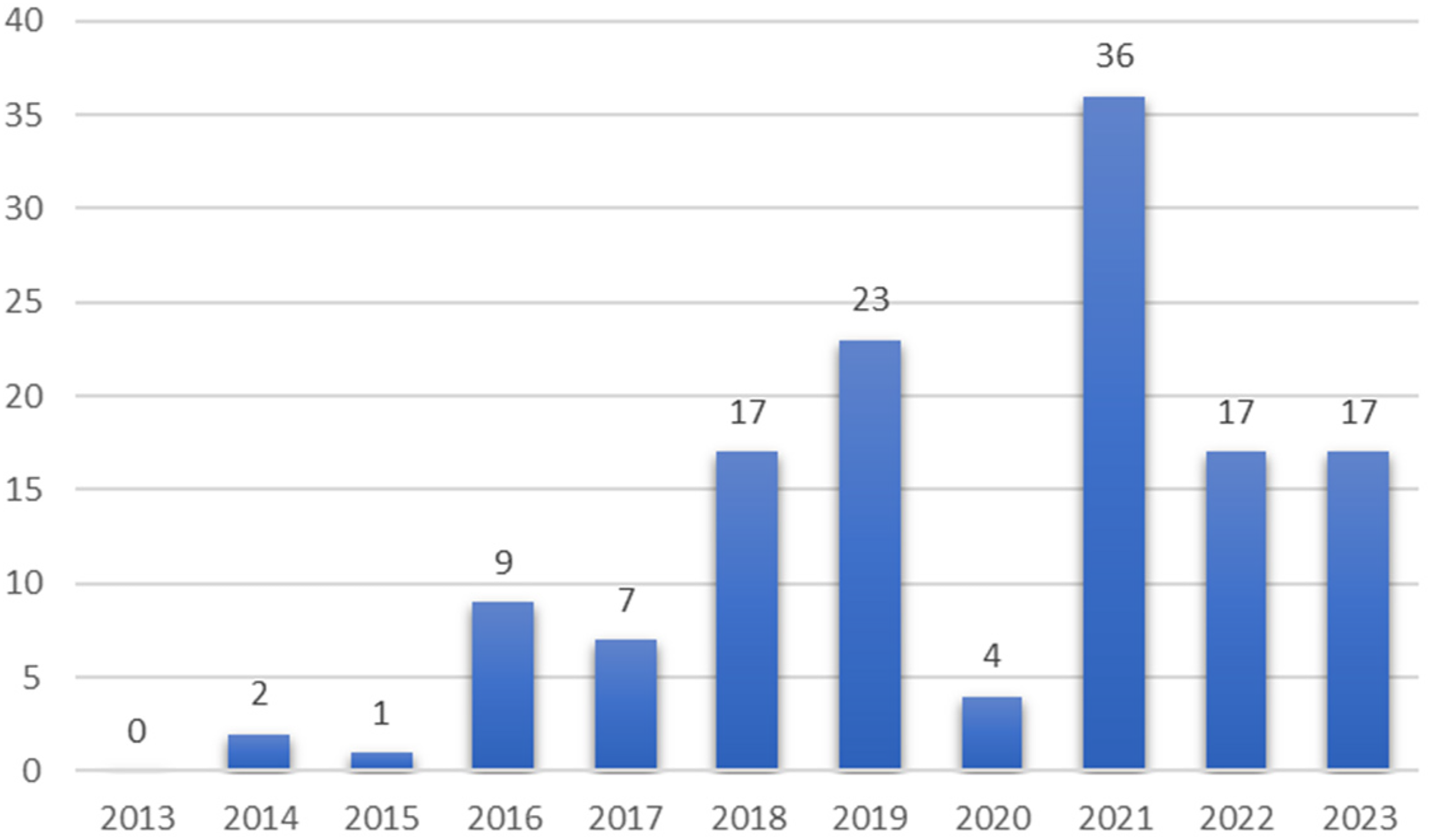
Numbers of included articles published 2013–2023.
We manually open-coded the articles, identifying prominent themes and perspectives within the texts as well as broader narrative arcs. We also took notes for all articles and included comments about any unique features (e.g., choice of photographs). We mapped identified themes using Miro software. Broad themes were identified via discussions of the mapped themes (see Figure 2).
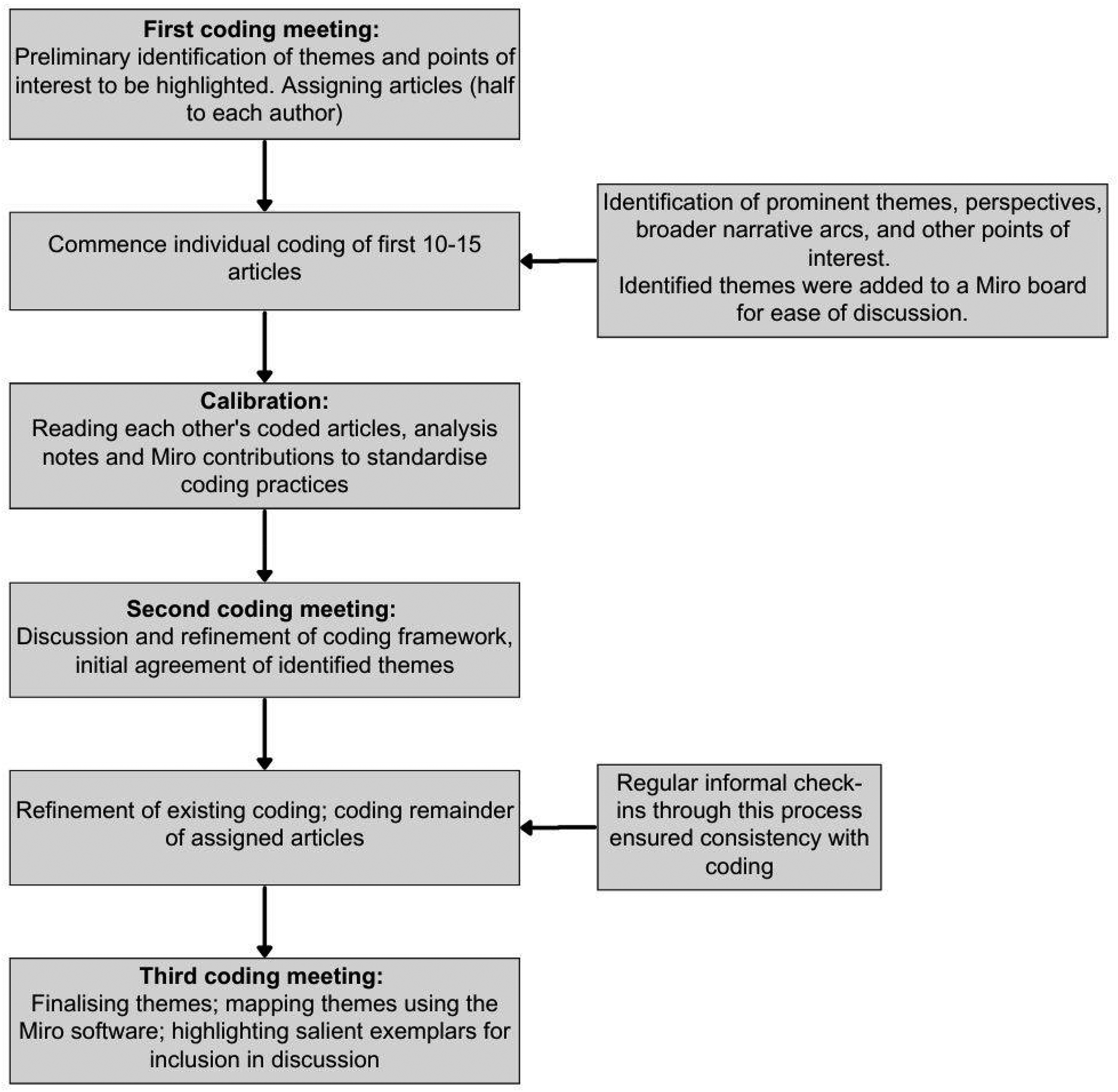
Flowchart detailing the coding process.
Both authors were sensitive to the potential emotional impact of working closely with such data. They checked in with each other regularly, and sufficient time was devoted to the coding process to allow the authors to step away from the data when needed.
Findings and Discussion
We identified prominent themes around breaking the silence, raising awareness, parental identity work, the genderedness of pregnancy loss experiences, and the desire to “find a positive” in an experience of loss. Although it was analytically productive to disentangle the themes for the purposes of interpretation and discussion, it is important to note that most articles contained a combination of most or all themes, highlighting the dominant if tacit sociocultural perceptions framing pregnancy loss.
Breaking the Silence, Raising Awareness
One of the most prominent themes was related to a desire to “break the silence/taboo” of reproductive loss. The language used to express this theme resembled public-facing messages from third-sector organisations, which were featured in nearly all articles. People sharing their stories in the articles are likely to be familiar with pregnancy and baby loss charities (and their messaging), given that they are often very reliable sources of support following a loss. These charities are also involved in organising BLAW, including communications, so it is not surprising that their messaging is frequently present in the articles (Cronin, 2018; Polletta et al., 2021).
The desire to share one's story was often justified by the need to speak about this kind of reproductive experience more openly in public and thus “break the silence/taboo.” The term “taboo” was used synonymously with “silence,” both arguably hyperbolic in this context, to express dissatisfaction at the insufficiently quickly changing public perceptions of reproductive losses. Sometimes the narrative framing simultaneously captured a variety of issues, from the difficulty of talking about this subject, to defying a socially accepted practice of not bringing up sad topics (especially in front of strangers), to a hope to be a part of a desired move to a society where pregnancy loss is openly talked about. Notably, these messages were similar across the articles spanning nine years, e.g., “But having a special awareness week […] is a chance to put it out there in the public domain and remind people that it happens and try and get rid of the taboo” (2014-1) or “Miscarriage still feels like a taboo. I’d like to help make these conversations a little easier. It can’t go on being the big dark secret that we have to carry around” (2021-34).
Notably, there was a tension between the familiar messages of breaking the silence/taboo and all the societal, legal, and political changes that articles also mentioned. For example, many of the articles described high quality support they received from various third-sector organisations or the NHS, and there were regular pieces that referred to both Baby Loss Awareness debates in the UK parliament and the MPs who “bravely” shared their stories of reproductive losses. The fact that baby loss had entered the political landscape in such a significant way arguably undermines the idea that it is a “taboo,” although there is evidently a gap between the attention paid on a political level and the reticence and awkwardness experienced among friends and acquaintances.
The fact that parents quoted in the articles favoured such phrasing may indicate the influence of the language used on the support websites, but also the pain and shock they experienced as a result of their loss, dramatic emotions that require dramatic language. These phrases were also used as a call for action, e.g., “Together let's help to break the silence around pregnancy and baby loss” (2018-3). “Raising awareness” was another theme often found in articles. This phrasing also resembles discourse commonly used by charities, where “raising awareness” is used as a shorthand for drawing attention to the charity's cause and to encourage donations. People whose stories were featured in the articles expressed a motivation to tell their story in order to warn others of the possibility of loss, e.g., “It's not about scaring people but they need to be aware” (2019-11). Similarly, some articles described the death of a baby due to an avoidable medical error, with an implicit suggestion that being more aware of the possibility could have prevented their loss. But these narratives can also be read as accounts of emotional pain, exacerbated by the gap between common conceptualisations of reproductive journeys (that can “be controlled” and always “end well”) and the reality of an abrupt ending that can cause enormous grief, a sense of loneliness, and perhaps even of failure. For example, one individual declared “No parents should have to go through what [husband] and I have gone through” (2018-16) implying that losses like theirs could and should be prevented in the future, despite representing a rare but often unavoidable experience. The language of “raising awareness” is a convenient recognisable shorthand, but in the contexts of parents’ stories of pregnancy loss, it spells: look at our pain, this could be you. Mourning, including public mourning, could be seen as a potentially political act, enabling us to learn to live together in communities of vulnerability (Butler, 2004) where emotional pain previously considered to be “private” can be openly demonstrated and discussed. In addition to working through complex emotions, grief and bereavement following pregnancy and baby loss involve reconstituting complex networks or interpersonal dependencies that will never become fulfilled as the anticipated baby can never become a part of them. Telling these stories in the press, and calling for “more awareness,” could be seen as an attempt to form one of these communities of vulnerability.
Parental Identity Work
Newspaper articles featuring stories or reproductive loss were, on the one hand, an opportunity to present the loss as a part of a longer family trajectory – including mentioning other children who may have come before or after. On the other hand, they were also opportunities to highlight those family members who may not traditionally be acknowledged by wider society, such as babies lost to miscarriages, stillbirth or neonatal death, using “traditional” means, such as names, descriptions, and photographs. These practices legitimised the identity of the baby as a family member, giving them a name, personal traits and “place” in a narrative. For example, one mother explained “I lost my son at 23 weeks. He was just lying naked in a blanket with a hat on. He weighed just one pound” (2021-13). Many articles included sensitively selected photos, often featuring living children holding a photo of the deceased baby or memory objects (e.g., tiny footprints or the contents of a memory box). These practices, carried out through the medium of a newspaper, also served to validate the baby's existence and consolidate the family's identity in the eyes of the public, aligning well with what Finch described as “displaying families” (2007), a process in which the gaze of others reifies a group of people as a family. The inclusion of photographs in most of the articles also gave a sense of the demographic represented in them, as the overwhelming majority depicted white, heterosexual-presenting couples and their children.
Multiple articles also explored parental identity work associated with pregnancy loss. Through the use of kinship terms as well as speaking about how these social roles may be questioned by others, people featured in the articles clearly presented themselves as mothers and fathers to their deceased daughters and sons. The positions these parents assumed sometimes adopted universalising identity-validating language, but were on occasion contradictory between individual parents; while one parent asserted “We're no different to a mother with a living baby. Hold onto that love – it's a direct gift from your baby, it's unique and special” (2018-5) another explained “I am her mother but I will never mother her” (2019-1).
These practices of displaying parental identities in public, so obvious for “conventional” families, were almost always underpinned by an awareness that something unusual was being done – no matter how the narratives tried to argue the opposite. One parent stated “We feel so blessed that we have [daughter] but it still breaks our hearts that [stillborn son] isn”t at home with us. We’ll never forget [son], he’ll always be a part of our family and [daughter] will grow up knowing all about him” (2023-11). Through telling the story of their child in public media, parents demonstrate and validate their child's place in the family biography.
Enacting Gendered Social Scripts
Very importantly, and in line with Martin's findings about how pregnancy loss is reported in US press, articles considerably favoured perspectives of women in cis-heteronormative families (2023). Mothers’ voices were predominant in the articles, with the majority of quotes attributed to them. Fathers’ voices and experiences were included in some of the articles, but often as part of the couple, encapsulated within the use of inclusive pronouns “we” and “us.” Only 11 articles (out of 133) represented an exception to this trend by foregrounding the experience of fathers.
Mothers’ experiences presented in the articles often followed a similar trajectory, from the happiness of being pregnant and waiting for the new baby to the devastation of a sudden loss. Although articles sometimes featured details about those women's lives, their primary role was almost invariably that of a mother (and sometimes baby loss awareness advocate). Alongside grief and sadness following the loss, we observed similar tendencies to Martin, who highlighted the extent to which guilt, self-blame and “sadness that they were unable to provide a sibling for their existing child” were socially sanctioned emotions for women (2023, p. 2345). For example, one mother explained “I just felt I was rubbish, rubbish at having babies… I felt I’m letting my husband, my family and my daughter down” (2018-17).
Men's experiences were often differentiated from those of the mother, often drawing on the differing levels of physicality of the experience. It was highlighted that men still grieved despite this difference: “[Men] might not be the one carrying the baby, but they still mourn the loss of a future child in the same way a mother does” (2021-28). Men's experiences were further differentiated in articles which highlighted the different reactions within the couple, e.g., one mother explained that she was glad they had photos taken of their stillborn baby despite the fact that her partner “wasn’t sure” (2015-1). In another article, the mother describes not wanting to see her stillborn son due to feelings of guilt that “[her] body had failed him… Thankfully, [her] husband said yes” (2020-2). Such contrasting of reactions may further entrench stereotypical views of men's grief following pregnancy loss, and indeed, some of the articles highlighted stereotypically “masculine” responses to emotional events, such as anger. Other articles mentioned men struggling to talk about the experience, sometimes justifying the reticence to share emotions through a concern for the wellbeing of his partner, e.g., “He didn’t want to talk to me about it as he didn’t want to burden me with his grief or upset me more” (2021-14). Indeed, the desire to support was discussed in several articles, often as part of a clear expectation of the man's role being as a “supporter,” e.g., “As fathers, husbands and partners, our role when tragedy strikes is abundantly clear: support, sustain, cherish and encourage. Yes, of course it's our loss, too. But it's infinitely worse for the woman. Uphold her. Love her. But accept that you need to grieve as well” (2018-13).
The normative attitudes around the supportive role of men conveyed through these quotes cohere with framings discussed by Martin in her discussion of pregnancy loss representations in the US news ( 2023, p. 2344). It is important to note that we are not criticising the experiences of the parents, or the way they frame them in their own stories. Instead, we seek to shed light on the ways in which these experiences are brought to bear on broader ideological framings emerging from the choices made by journalistic writers in their construction of these articles.
When articles foregrounded men's experiences, this tended to be in the context of their fundraising efforts, which almost exclusively involved physical, endurance-related activity. Of the 11 articles that focused on men's experiences, seven related to their efforts to raise funds, raise awareness, or to effect policy change. Sport and other physical pursuits were key pathways to this goal, or to supporting wellbeing more broadly. Articles highlighted the positive aspects of physical activity on mental health, e.g., “Running has helped me so much since the death of [daughter]. When [daughter] died I felt as if my world had come crashing down around me and I didn't know how I was going to manage. The sadness in our house was overwhelming and I felt that I needed to escape so I turned to running. When I am running I can clear my head” (2017-5). Again, although the articles highlighted that men need to have opportunities to speak about their grief on their own terms, individual stories tended to focus on stereotypical, “action-driven” ways through which men might handle their emotional journey.
The Desire to “Find a Positive” – Effecting Change
The great majority of narratives in the analysed articles had a resolution that could be considered broadly “positive,” which may be expected given that most parents were telling their stories having undertaken a significant amount of grief work. This perspective is reminiscent of the concept of narrative repair, highlighting themes of growth, regeneration, or well-being (Palmer, 2007). A narrative repair differs from narrative despair, which focuses on the suffering and pain and may have limited “appeal or usefulness” for its audience (Palmer, 2007, p. 372). This “positive” aspect took a number of different forms, from describing the living children who were born after the loss, accounts of growing as a person or couple as a result of the loss, to outlining the fundraising efforts or calls for change that parents engaged in as a result of their experience. There were very few articles that focused exclusively on the pain of the experience. This tendency may be explained by the fact that the families represented in these narratives are those who are ready to share their experiences; for many, reaching this point of readiness will have necessitated a degree of distance from the immediate pain.
Echoing Murphy and Thomas’ (2013) observation that family display through narrative was a tool to raise awareness of the effect of such losses, with the goal of improving practice in the future, the main calls for action involved in these articles were calls for better care; calls for policy change; calls to raise awareness, “break the silence” or “end the taboos” as discussed above; and raising awareness of fundraising activities, often with a link to a fundraising page and associated charity. Articles calling for improved care following a loss were frequent, and varied in their specificity, from calls for more scans (2016-2, 2017-1) to more general calls to “improve care standards” (2018-16).
Advice-giving was found across the set of articles, with parents quoted as advising other families to “remember it's not [their] fault” (2017-2), “hug everybody closely, be kind to yourself, and don’t blame yourselves” (2022-12), “know you’re not alone” and to “honour your baby however it feels right” (2018-5). Talking about the loss with others was a key piece of advice (2019-14, 2019-19, 2019-23), and multiple articles explicitly stated that the purpose of sharing the story was to help others feel less alone. Finally, some parents featured in the articles advised any parents to seek help if they had any pregnancy-related concerns, with one explaining “I don’t want anyone to go through what I went through” (2021-20). In addition to the advice in the articles addressed to other bereaved or anxious families, a smaller but notable selection of articles included advice on how to support grieving parents.
The desire to help others following a loss often extended to charity work, volunteering, or other initiatives designed to support other bereaved parents. These activities served two main purposes. The first was to help other parents, with one parent explaining, “people wonder why I still do all this [charity work] now that I have my two children, but I’d never want another woman to feel alone and isolated like I did, so if I can help someone a little bit, that's why I do it.” (2021-16). The second was as a means of memorialisation: “Helping Sands has been my way of honouring our little girl, and although she was so small, she has made such a big imprint” (2018-6). Parents described how engaging in these activities also helped to facilitate their own grief process and was a way of giving back to the charities that supported them through their bereavement.
The articles often reported on specific events held to support bereaved parents, on upcoming fundraising initiatives, and on their results (e.g., donations to maternity units or the money raised from sponsored challenges). The narratives within these articles frequently made reference not only to fundraising success, but also to a desire to raise awareness, “breaking the silence of baby loss” (2018-1) and “normalising the narrative” (2018-12) as discussed above. The articles frequently had a tone of overall positivity, as if to emphasise to the readers the complexity of the baby loss emotional journey, e.g., “I wanted to do this [baby loss memorial] event so others can talk about it. I don”t want people to go away feeling sad. They will be able to stand up and share the names of their baby and when their birthdays might have been. They will leave on a positive note and know that they’re not alone” (2023-15).
Finally, some bereaved parents described their loss as acting as a catalyst for positive change in their lives. For example, two articles featured mothers who had undertaken career changes into midwifery, or chosen to specialise in bereavement midwifery; one of them explained that she felt like she was “taking this journey into midwifery for [daughter]” (2021-20). The positive changes made following the loss could be more personal, as parents experienced post-traumatic growth, e.g., “I started to realise that if I could come through losing [son] I could pretty much deal with anything. In a strange way his death gave me the confidence to move on with my life and take the risks I had always been too scared to do in the past” (2016-7) or “[son]'s short life certainly made me think about life, its meaning…I became a better doctor after this tragedy” (2018-8).
All these efforts to effect positive change may be considered part of the grieving process inasmuch as they may constitute an “attempt to reaffirm or reconstruct a world of meaning” through “sense-making” and “benefit-finding” (Neimeyer, 2016, p. 66). Taken in combination with the ways in which these narratives also constitute family display as discussed above, the desire to share these experiences may also be a way to address needs that a loss renders unmet and unmeetable (Parkes & Prigerson, 2010, p. 114) – in this case, a need to “parent” and to act out of love for a child, even though the child is no longer living. Seen in the broader narrative arc, these attempts to find meaning in the experience and to explore the positive impacts it has had can be seen as codas, the “happily-ever-after” that Palmer (2007) mentions. At the same time, because of their relatability, they are deemed appropriate for the readers of the newspapers, highlighting grief journeys that are at least to some extent palatably resolved.
Broader Discussion and Suggestions for Future Research
Although relatively innocent on the surface, many of the analysed articles encapsulated a complex constellation of circumstances. People described very personal experiences of grief but addressed them to the anonymous audiences of newspapers. The calls for the need to “break the silence” continued over the years, suggesting that despite baby loss having a dedicated awareness week with associated media coverage and political attention, parents still reported challenges in broaching the topic with those around them. Stories of stillbirth and neonatal or infant death dominated the coverage even though miscarriage is much more common. Photos illustrating articles often featured dead babies or other mementos of pregnancy loss, in an attempt to normalise what some could perceive as morbid. The emotional work this asks of readers could potentially alienate them, thus undermining the very attempts to open the conversation that the articles sought to make. These tensions are not easy to reconcile.
The goal of this paper was to draw attention to how personal stories of pregnancy loss are represented in the UK press during BLAW. We have explored how pregnancy loss is presented as a transformative teleological experience, opening those who experienced it to pain and vulnerability but also fuelling a desire to improve care for those who will experience baby loss in future. We have demonstrated how the narratives presented in the newspaper articles exist at the intersection of the personal and the public, and constitute examples of public grieving that serve a range of purposes. We have identified three major themes that were present in almost all the articles we surveyed: “breaking the silence,” “parental identity work” and “finding a positive.” The parallels found in the majority of the stories, describing a similar range of emotions of pain, grief, surprise, a desire to expand a family, having other living children, finding support in the community implicitly privilege a normative script for how to deal with a reproductive disruption. The articles can therefore be said to reinforce “a normalising gaze that legitimises certain displays at the expense of others” (Gabb, 2011, p. 39), through their overwhelming representation of white, heterosexual families and their portrayal of a dominant narrative that ends, to some degree, in “positivity;” other living children, being able to give back to the community that offered support, or post-traumatic growth. In their focus on “typical families,” their losses, and the ways in which these are framed through narrative repair, these articles legitimise ways of dealing with this experience. At the same time, they marginalise experiences that do not fit this norm, be they due to non-normative family structures, e.g., single/queer parenthood, childlessness, complex or unresolved bereavement, or differing levels of grief in response to loss.
In contrast to the broadly normative experiences described in the articles, there is a rich evidence base to show that people grieve reproductive losses in different and equally valid ways (e.g., Kilshaw, 2024; Kilshaw & Borg, 2020). Marginalised groups are disproportionately affected by pregnancy and baby loss, while their experiences are underheard and underrepresented (McCloskey, 2022; Peel, 2010; Selman et al., 2023). Future research could usefully investigate the impact of this unequal representation on the communities who may not see themselves represented in newspaper stories of pregnancy and baby loss. An exploration of how emotions are presented in these kinds of public-facing narratives could offer further insights into understanding of how pregnancy losses are framed and described in the mainstream media. It would also be useful to explore the impacts these newspaper articles have on their audiences, especially with the interaction facilitated through online comment sections, and to explore the extent to which these articles meet their stated aim of “breaking the silence” around these types of losses. Finally, research that acknowledges and investigates the emotional impact of sharing their experiences on the contributors themselves would be welcome.
Conclusion
We hope that our study has helped to invite a critical perspective into how pregnancy and baby losses are represented in the public media. We have aimed to shed light on the ways in which these representations are often highly normative, highlighting a focus on standardised narratives of otherwise typical families. The dominant message is indeed one of “heartbreak giving way to hope after grieving,” perhaps offering hope to other parents going through similar experiences. However, we posit that such a framing suppresses the many experiences that do not follow this trajectory. While engaging with these articles is presented as beneficial both for the families represented in them, and for their readers, it is important to recognise the complex web of factors that are implicated within these narratives, and the experiences of reproductive disruption which go unrepresented.
Footnotes
Acknowledgements
The authors would like to thank their colleagues and anonymous reviewers for commenting on the manuscript.
Declaration of Conflicting Interests
The authors declared no potential conflicts of interest with respect to the research, authorship, and/or publication of this article.
Ethical Considerations
This project has been approved by the Coventry University Ethics Committee (P175077) on 10/04/2024.
Funding
The authors received no financial support for the research, authorship, and/or publication of this article. Karolina Kuberska is supported by the Health Foundation’s grant to the University of Cambridge for The Healthcare Improvement Studies Institute.
