



Abstract
This study examines the implementation and use of bereavement response plans (bereavement plans) in Danish and Norwegian daycare institutions. Two large-scale surveys were conducted to explore the implementation rates, satisfaction levels, and source of the plans. The data collected was analyzed using frequency analyses and Chi-square tests of independence. The findings suggest that 87% of Danish institutions have bereavement plans compared to 98% in Norway. Furthermore, the study highlights the differences in the development of bereavement plans between the two countries, as Danish institutions trust their individually tailored plans more than their Norwegian counterparts, while the Norwegian plans seem to be of higher quality. Despite these differences, bereavement plans provide a sense of safety for staff when supporting bereaved children in both countries. This study contributes to the ongoing efforts to improve bereavement support in daycare institutions and emphasizes the importance of continued research and development in this area.
Introduction
The loss of a parent is a life-altering event that can have profound and long-lasting effects on children. Previous research has demonstrated that parental bereavement increases the risk of mental health disorders (Berg et al., 2016; Gray et al., 2011), social difficulties (Lytje, 2018; Nielsen et al., 2012), and academic problems (Burrell et al., 2020; Høeg et al., 2019). While these studies provide valuable insights into the consequences of parental loss, they often treat grief as a static and universal process.
Other authors (Archer, 1999; Ariès, 1981) have argued that grief is shaped by a range of contextual factors beyond the type of loss. These factors include how families cope with the loss (Luecken et al., 2009; Saldinger et al., 2004), the role of rituals in mourning (Søfting et al., 2016), the response of schools and daycare (Lytje, 2016a; Lytje & Dyregrov, 2022), and the support of friends and other community members (Winther-Lindqvist & Larsen, 2021). The type of grief experienced by bereaved children may thus depend heavily on the reactions and support they receive from those around them. Furthermore, children may perceive how others suppress or fail to communicate about their loss, and do likewise. These factors interact in complex ways and influences how children perceive and cope with their loss. For example, a child may feel unsupported or stigmatized if their grief reactions are not understood or accepted by others. Alternatively, a child who receives appropriate and sensitive support from their community may be more resilient toward loss. In this perspective, how the remaining family responds to the loss is particularly important, as this will provide the child with signals on how to deal with grief in relation to others. While studies (Bosticco & Thompson, 2005; Lytje & Dyregrov, 2023a) have shown that even though parents want the best for their children, they also may be engrossed in their own loss, and sometime struggle to support their children. This at a time where parental/adult presence for care and talk is an important protective factor (Christ & Christ, 2006; Luecken et al., 2009).
Regardless of parental capacity, schools and daycare institutions play an important supportive role while the family recovers its bearings. Few adults know the children as well and spend as much time with them as their teachers and social educators. Studies (e.g., Lytje & Dyregrov, 2022, 2023b) have shown that preschool teachers and social educators can make an important difference, when it comes to supporting the bereaved child following a loss. However, they often feel uncomfortable, unprepared, and unqualified to offer such support (Dyregrov et al., 2013; Levkovich & Elyoseph, 2023). This might lead to discomfort when offering such support or even refraining from doing something in fear of doing something wrong.
One approach to ensure a supportive institutional response for bereaved children is through training teaching staff, or in the development of bereavement plans within childcare institutions. Studies have shown that these efforts have had varying degrees of success across different countries. For example, Holland (2003) developed the initiative “Lost for Words” for schools in Hull, which was successful in helping teachers become better equipped to support bereaved children. However, this initiative failed to gain national recognition in the United Kingdom, with only 15% of British schools having any form of structured bereavement response plans in year 2000 (Rowling & Holland, 2000). Research has indicated that effective approaches to supporting bereaved children in childcare institutions involve the development of individually tailored bereavement response plans, as adopted in Denmark and Norway (Lytje, 2016a; Lytje et al., 2021). Although both countries initially based their approaches on the work of the researchers Dyregrov and Raundalen, their systems have since diverged (Lytje et al., 2021).
Lytje et al. (2021) found that the Norwegian plans generally exhibited higher quality and better maintenance than the Danish plans, likely due to the commercial nature of the plans in Norway, as opposed to the individual basis of the plans in Denmark. However, the study was unable to determine the effectiveness of the plans or whether having a plan increased the teaching staff's ability to respond to bereavement. A tentative hypothesis suggests that plans developed by the daycare staff themselves may be better tailored to their institution's needs than plans developed by others.
To address the use of the plans, we undertook two large-scale surveys. The surveys explored the implementation, use, and satisfaction related to bereavement response plans in Denmark and Norway.
Method
Our study was conducted in two stages. The first survey was carried out in Denmark, which provided a foundation for the subsequent survey conducted in Norway. While we aimed to use as similar surveys as possible, some adjustments were necessary to account for national differences. For instance, we provided more options for how plans were developed in Norway, as some institutions obtained their plans from external collaboration partners. Each respondent represented a unique day care institution. Therefore, the number of participants corresponded to the number of participating day care institutions. The study followed the ethical standards and guidelines, as were set down by the Danish cancer society in Denmark and University of Bergen in Norway. The study further complies with the European General Data Protection Regulation (General Data Protection Regulation (GDPR) – Official Legal Text, n.d.).
The Danish Survey
The Danish survey was designed in collaboration with the Survey Company Epinion. Phone interviews with daycare institution leaders across Denmark were conducted, including nurseries, kindergartens, and integrated institutions catering to children aged 0–6. A list of daycare institutions was obtained from the KOB/Experian database, which covers around 4000 institutions out of approximately 6000 total Danish institutions (Danmarks Statistik, 2020; Kræftens Bekæmpelse, 2020).
The survey was conducted as a computer-assisted telephone interview in November 2019, with professional telephone interviewers asking the respondents between 12 and 22 questions depending on whether they had a structured bereavement response plan and recent incidences of bereavement. The survey was first launched as a soft launch, which involved testing the survey with a small sample of respondents to ensure that the questions were clear and unambiguous, before being fully launched. These were included in the final sample.
The data collected were subject to quality checks and weighted based on location and institution type to ensure generalizability. The full dataset was published as an independent report, which is only available in Danish (Kræftens Bekæmpelse, 2020).
The Norwegian Survey
The data collection process was carried out electronically over a 3-week period in May 2021, with a reminder sent out halfway through the survey. The survey was conducted through the software program SurveyXact. The Norwegian survey was based on a translation of the original Danish survey, with minor changes to account for national differences. Respondents who had a bereavement plan were asked 22 questions, while those who did not were asked a total of 14 questions.
Analysis
The data obtained from the survey was analyzed through a combination of frequency analyses and statistical tests. Frequency analyses were used to summarize the responses to each question. To examine the relationships between categorical variables, we conducted Chi-squared tests of independence (p < 0.05). By using these analytical methods, we were able to identify patterns and associations within the data, which provided valuable insights into the preparedness of daycare institutions in addressing the needs of bereaved children.
Results
The key findings from the surveys are presented in the following sections, which are categorized as Implementation and Maintenance, Bereavement Responses and bereavement plans, and Staff Qualifications. Sample sizes vary depending on whether previous questions excluded respondents from answering subsequent questions. In the Norwegian survey, respondents were given the option to skip a question, which also resulted in differences in sample size. Of all Danish institutions 3,500 phone numbers were available, which contributed to 603 computer-assisted telephone interviews being conducted for daycare leaders. The Norwegian survey was distributed to 4,832 email addresses of which 907 were returned as unreachable. Of the remaining 3,935 respondents, 364 were complete and 56 partly completed, resulting in a response rate of 11%.
Implementation and Maintenance
Table 1 illustrates the implementation rates of bereavement response plans, with 87% of Danish daycare institutions having such plans compared to 98% of Norwegian institutions. Notably, the question regarding the source of the plans was asked slightly differently in Norway, as Danish daycare institutions do not typically obtain their plans from municipalities or external partners (Lytje et al., 2021). In Denmark the question had “yes/no” categories, while in Norway respondents could discriminate between three “yes” categories; “yes, independently developed” (49% answered affirmative), “yes, from other municipality” (34% answered affirmative), and “yes, from external collaborating partner” (25% answered affirmative). In Table 1, the affirmative responses were added for the “yes” category. Despite alternative options being available, half of the Norwegian institutions still chose to develop their own plans. The difference is statistically significant with more institutions in Norway having plans.
Do Your Institution Have a Bereavement Plans?
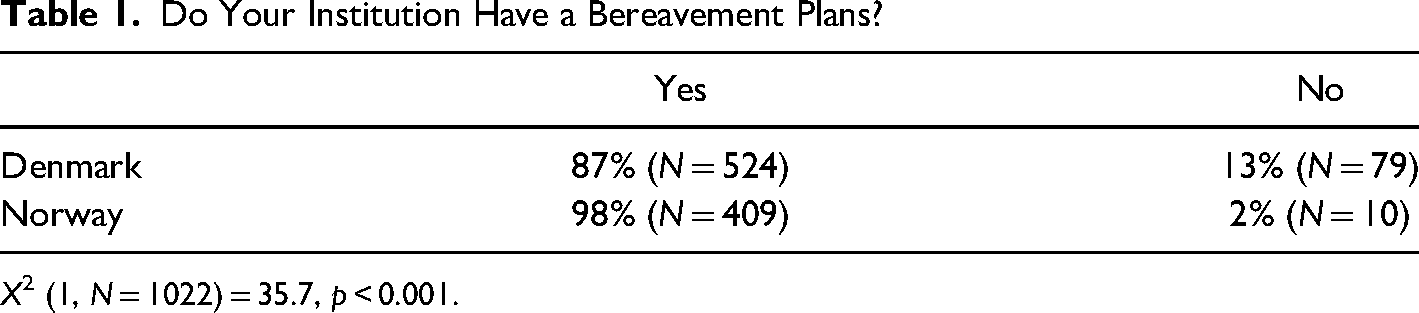
X2 (1, N = 1022) = 35.7, p < 0.001.
Table 2 provides an overview of the time since the bereavement plans were introduced in the daycare institutions. It shows that bereavement plans have been evident in the majority of daycare institutions in both countries for at least seven years. With historic evidence pointing towards the b-plan system originating from Norway (Lytje et al., 2021), it is understandable that Norwegian responders indicate a significantly longer duration of having had bereavement plans.
How Long Have You Had a Bereavement Plan?
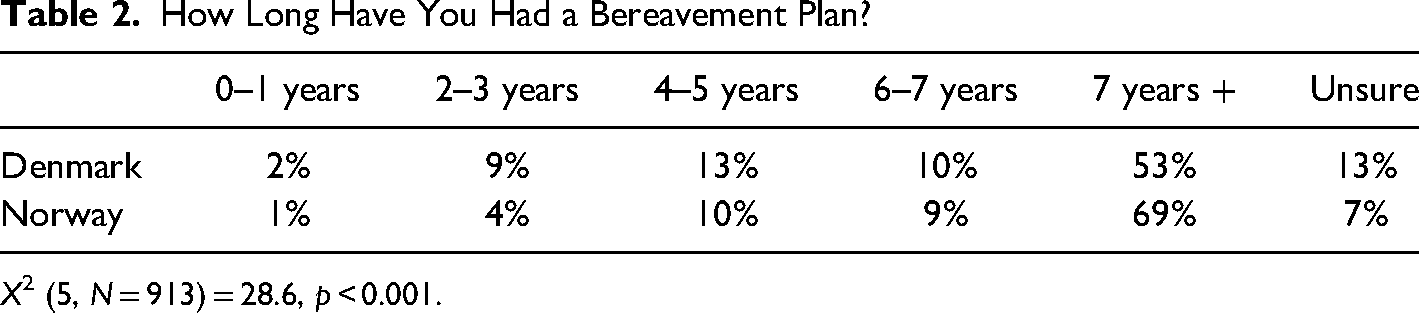
X2 (5, N = 913) = 28.6, p < 0.001.
Table 3 shows similar reasons for implementing bereavement plans in the two countries. They implemented bereavement plans as a professional prioritization, because of experiences with bereavement, or because the local government has encouraged them to do so. In the Danish context, it is interesting that 24% of the institutions implemented the b-plan because of local municipality guidelines, as there are no national recommendations or laws demanding them to. On the other hand, it is worth noting that only 26% of Norwegian institutions cited regulations as the reason for developing a b-plan, despite Norway having national laws (see Lytje et al., 2021), that mandate the implementation of structured crisis support, as opposed to Denmark.
Why Did You Develop a Bereavement Plan?
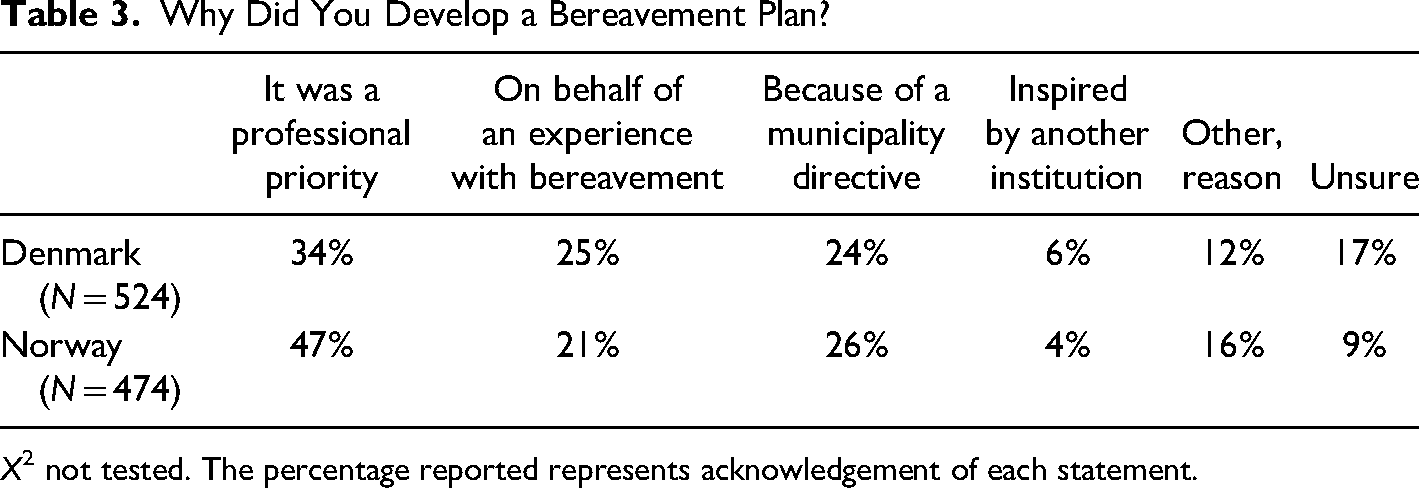
X2 not tested. The percentage reported represents acknowledgement of each statement.
When it comes to the maintenance of developed bereavement plans (Table 4), our previous document analysis hinted that Norwegian plans being better maintained than their Danish counterparts (Lytje et al., 2021). While nearly the same number of institutions maintain their own b-plan, an additional 19% of Norwegian institutions use an external collaboration partner for this, confirming that Norwegian bereavement plans are better maintained. Bear in mind that the large N may make even small percentual differences statistically different.
Have You Revised Your Bereavement Response Plan?
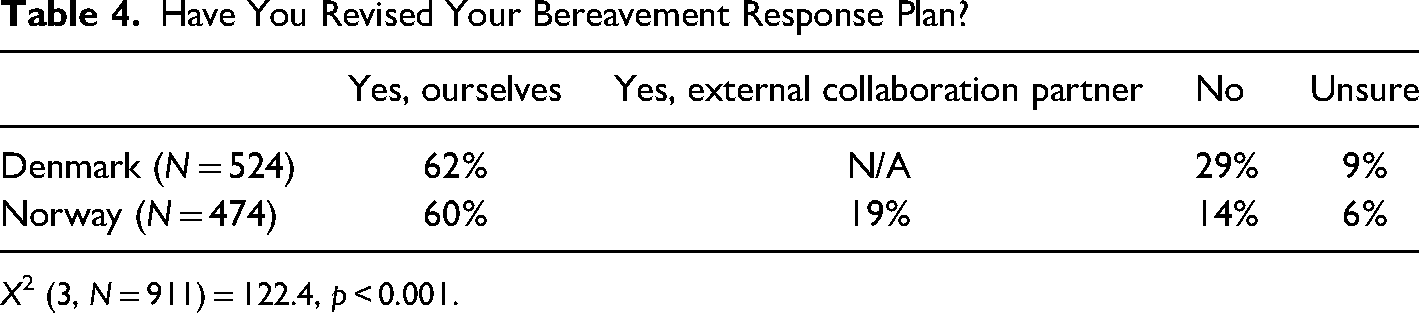
X2 (3, N = 911) = 122.4, p < 0.001.
Table 5 shows that a majority of day care institutions have updated their bereavement plans within the last 3 years.
When Did You Revise Your Bereavement Response Plan?
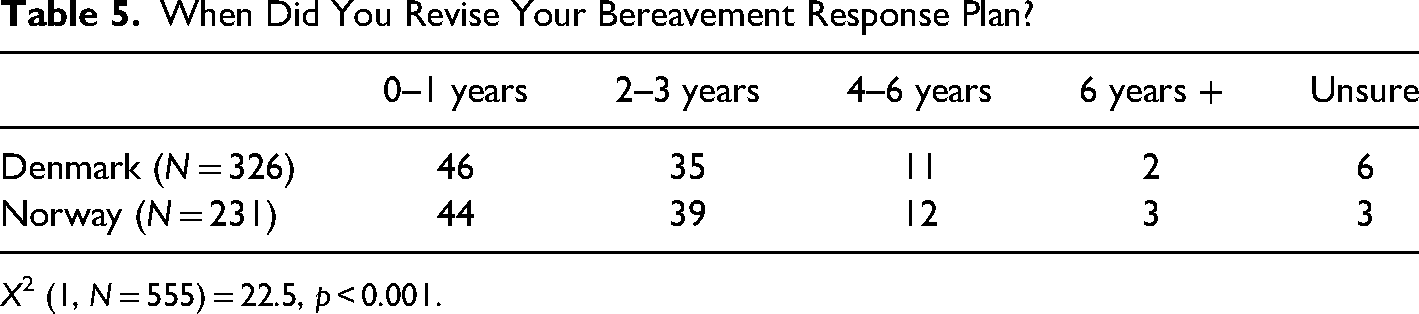
X2 (1, N = 555) = 22.5, p < 0.001.
Bereavement Responses and Bereavement Plans
In this section, we explore whether staff trust their b-plan to offer support following bereavement. Table 6 shows that Danish daycare staff generally seem to have a much higher trust in their bereavement plans ability to support them through a bereavement, than their Norwegian counterparts. This, both in terms of supporting children and parents and in relation to short-term and long-term bereavement support. More than two-thirds (77%) of the Danish respondents believe their b-plan can help them support parents compared to 41% of the Norwegian respondents. A significantly higher percentage of Danish kindergarten staff (29%) than Norwegian staff believe that the plans help them provide short-term support to bereaved children. Similarly, a larger proportion of Danish staff (23%) compared to Norwegian staff also believe that the plans facilitate long-term support.
Bereavement Plan Ability to Help Facilitate Support.
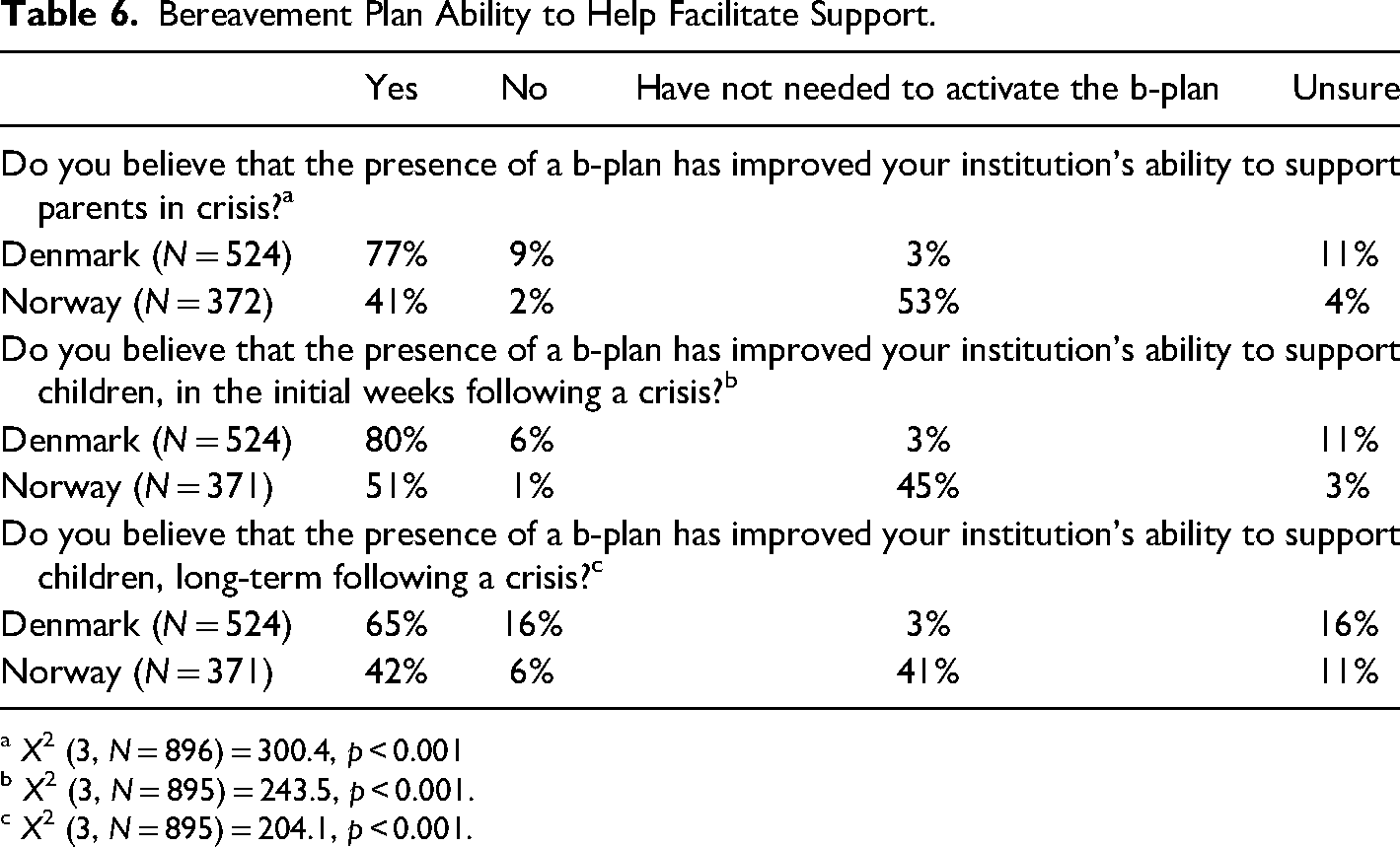
a X2 (3, N = 896) = 300.4, p < 0.001
b X2 (3, N = 895) = 243.5, p < 0.001.
c X2 (3, N = 895) = 204.1, p < 0.001.
The majority of all staff, regardless of country, indicate that the knowledge of the presence of a b-plan provides them with a feeling of safety. In Norway 95% of all cases felt safer in the knowledge of having a b-plan compared 91% in Denmark (Table 7).
Does the Bereavement Plans Provide You With a Feeling of Safety, Because You Know it is Available if Something Should Happen?
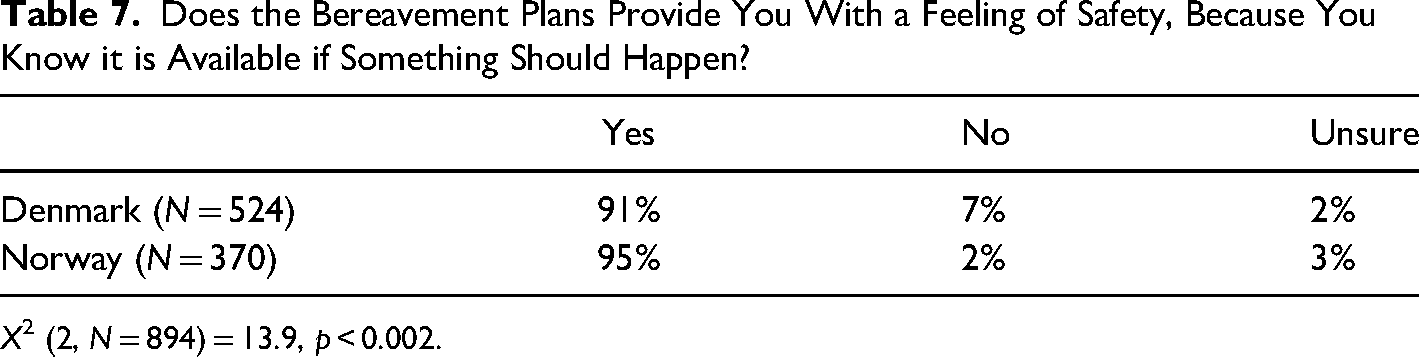
X2 (2, N = 894) = 13.9, p < 0.002.
Staff Qualifications
Table 8 shows differences between Danish and Norwegian responses in relation to how qualified staff generally feel, when it comes to supporting bereaved children and their families. Generally, leaders from Danish institutions report that they feel better prepared for offering bereavement support, than their Norwegian counterparts. Eighty-two percent of Norwegian staff want more education and guidance on supporting bereaved children, compared to 40% of the Danish staff. The results indicates that 72% of the Norwegian institutions need more practical tools on how to offer support to children compared to 36% of Danish Institutions. Similar differences are evident when it comes to tools when offering parental support (Danish = 36% vs Norwegian = 72%).
Institution Ability to Provide Support.
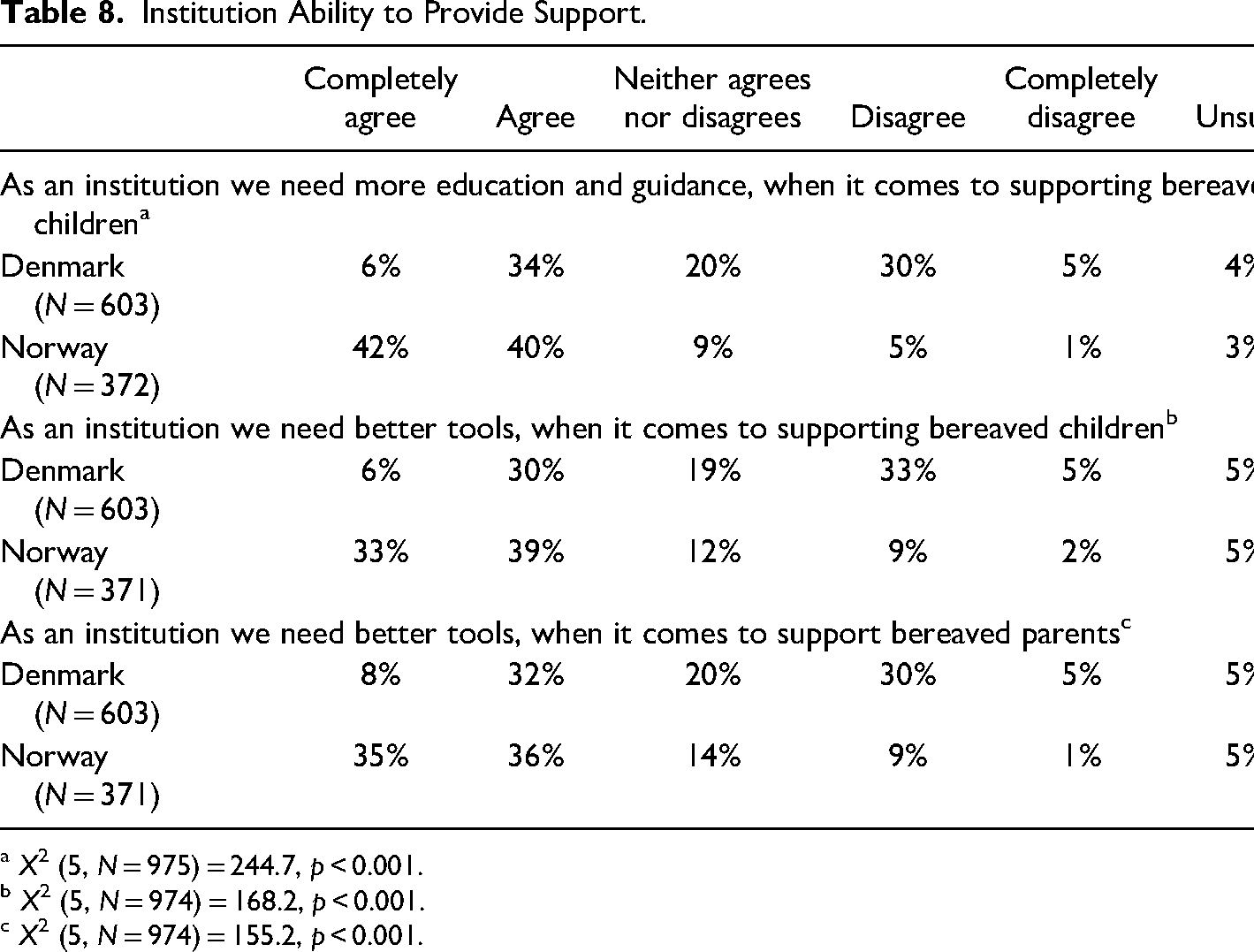
a X2 (5, N = 975) = 244.7, p < 0.001.
b X2 (5, N = 974) = 168.2, p < 0.001.
c X2 (5, N = 974) = 155.2, p < 0.001.
In regard to the need for bereavement support training when qualifying for a pedagogical degree, both surveys point towards this being needed. More Danish than Norwegian institutions feel that the social educators are well prepared to deal with bereaved children and their families. However, a majority of the respondents in both countries answer no or unsure about how well they are prepared (Table 9).
Do You Feel That Social Educators in Your Institution, Through Their Education, are Well Prepared to Deal With Bereaved Children and Their Families?
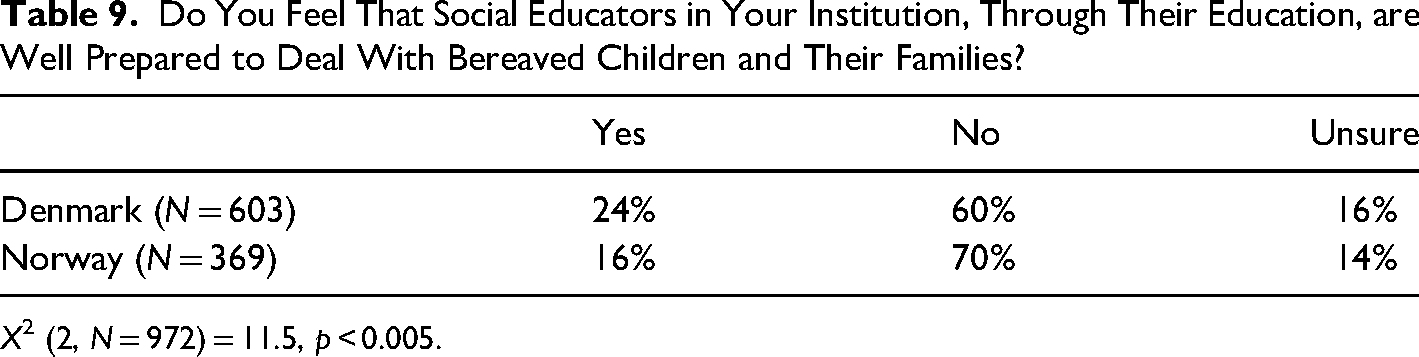
X2 (2, N = 972) = 11.5, p < 0.005.
Discussion
The results from both surveys showed similarities and differences in how daycare institutions in two Scandinavian countries are prepared to support bereaved children and their families. Bereavement plans were present in the majority of the institutions in both countries, and the reasons for having them were similar. However, in Norway, a higher proportion of institutions obtained their plans from commercial companies compared to Denmark. Furthermore, there were differences in the extent to which institutions believed that the presence of a bereavement plan improved their ability to support children, both in the initial weeks following a crisis and long-term. Danish staff demonstrated greater confidence in the effectiveness of these plans in enhancing their ability to provide support compared to the Norwegian staff.
Implementation and Maintenance
While previous research has explored the development and maintenance of Danish bereavement plans in schools, this study provides the numbers for the implementation rates in both Norwegian and Danish daycare institutions. Having bereavement plans implemented in 87% of Danish daycare institutions and 95% of Norwegian institutions are impressive numbers. This indicates that bereavement will be addressed even when young children lose a family member. The survey also shows that the majority of the institutions in both countries have had such plans for more than 7 years.
Norwegian law requires communities and their institutions to have contingency plans for crises in case of terror attacks, natural disasters, and accidents (Lov om barnehager, 2005). This might have helped increase the implementation rates for such plans.
However, it is also noteworthy that Denmark, without such laws, has nearly as high an implementation rate as Norway. If the law is not responsible for the high implementation rate, then what is?
The reasons for the high implementation rates of bereavement plans in both Norwegian and Danish daycare institutions are not apparent in our data. The institutions generally implemented their support systems for similar reasons, with the most common reason being a professional prioritization of the topic based on experiences with bereavement or local regulations. Notably, professionals in Norway began advocating for bereavement support measures in schools in the 1980s, and this quickly spread to neighboring Scandinavian countries. In Denmark the Danish Cancer Society also began working to achieve the same early on.
In the surveys, day care institutions were asked to indicate when their bereavement plans were implemented, but the categories only covered a period of 7 years despite their initial materialization in the last century. Conducting qualitative interviews could have provided a more thorough understanding of the propagation of bereavement plans in both countries and should be encouraged.
In a previous document analysis (Lytje et al., 2021), we found that Norwegian bereavement plans were updated more frequently than their Danish counterparts, and this finding was confirmed in our current study. This could suggest that Danish daycare institutions have a greater sense of ownership over their plans, as more of them take individual responsibility for developing and updating their plans. Nevertheless, the majority of institutions in both countries have updated their plans, indicating that bereavement and bereavement plans are a priority for them.
However, interviews revealed that simply having an updated plan may not be sufficient if staff members do not know how to implement it effectively in a crisis (Lytje, 2021). Despite this, the high percentage of institutions with updated plans is encouraging and hopefully ensures a prompt and effective response in case of a crisis.
Bereavement Responses and Bereavement Plans
There are notable differences in the perception of how bereavement plans prepare and support staff in dealing with bereavement between the two countries. Generally, Danish daycare staff report finding their plans much more useful than their Norwegian counterparts. In contrast, less than half of Norwegian staff feel that their institution's plans adequately prepare them with the necessary knowledge and tools to support parents and children in the long-term.
One possible explanation for this difference is that around half of the bereavement plans in Norwegian institutions are developed externally, either by the municipality or an external collaboration partner. In contrast, the Danish system's major strength may be that through individually developed bereavement plans, staff gain a good understanding of what their response should entail and feel a greater sense of security (Lytje, 2016b).
To increase faith in the available plans, involving Norwegian daycare institutions in updating the plans could be an effective approach to fostering greater ownership of the plans.
Another possible explanation for the difference in perception of bereavement plans between Denmark and Norway is that Danish plans specifically focus on bereavement and how to handle it, while Norwegian plans tend to be broader, with more emphasis on crisis and disaster management. This could explain why over 90% of staff in both countries report feeling safe with the presence of a b-plan. When answering questions specifically related to bereavement, Danish staff may think only about this particular situation, while Norwegian staff may have a broader understanding of safety, including crises and disasters.
Regardless of the reason for the difference in perception, the fact that so many institutions in both countries feel a sense of safety with the presence of a b-plan is a significant strength. This is especially important as studies have shown that staff uncertainty in dealing with bereavement can result in poor or even absent support for children and families (Dyregrov et al., 2013; Levkovich & Elyoseph, 2023).
Staff Qualifications
While the majority of Danish daycare institutions do not feel the need for better education or tools to deal with bereavement, the opposite is found for Norwegian institutions. One possible explanation is that Norwegian plans are more broad and therefore less detailed on individual sections such as loss, whereas Danish plans limit themselves to focusing solely on bereavement, allowing for a more comprehensive approach to this topic.
Another possible explanation is the increased focus from Danish NGOs on publishing guidelines for developing bereavement plans and offering training to staff about how to handle bereavement in the daycare setting.
Despite the stark differences in the need for education and tools between Danish and Norwegian staff, it is worth noting that the majority of daycare leaders in both countries, assuming that it was leaders that answered the survey in Norway, agreed that their staff need more education on how to handle bereavement during their training to become social educators. However, it's important to acknowledge that the Danish survey only included responses from daycare leaders, which could indicate a general desire for better-qualified staff.
Is One System Better?
Despite their shared origin and the fact that the majority of daycare institutions in both countries have had bereavement plans for at least 7 years, there are some differences in how these plans are perceived and utilized. In our previous study (Lytje et al., 2021), we found that Norwegian bereavement plans were generally of better quality, but in this study, we found that Danish institutions seem to benefit more from their bereavement plans. It is worth noting that we had difficulty obtaining Norwegian bereavement plans in our previous study, which may have biased our conclusions. Our request for plans may have been answered mainly by institutions that were proud of their plans, leading to a biased sample. In contrast, Danish plans are widely available on the internet, which may have given us a more representative view of the overall quality and usefulness of the plans. Overall, these findings suggest that the perception and usefulness of bereavement plans may vary depending on how they are developed and disseminated, and further research is needed to better understand these factors.
As highlighted in previous research (Lytje, 2016a), the Danish approach of developing individual plans within childcare institutions can foster a stronger sense of ownership and pride among staff. This approach may also result in more practical plans, including reminders to buy flowers and contact parents, in contrast to plans developed by external consultants. While half of Norwegian institutions continue to develop their own plans, the other half that receive plans externally may account for the greater uncertainty observed in the Norwegian sample. These staff members may not have the same level of ownership and confidence in the plans’ usefulness, as they were not involved in their development.
Finally, the broad scope of Norwegian plans may make them less user-friendly compared to the specialized Danish plans, which typically do not cover natural disasters or terrorism. While a contingency plan may be invaluable during such events, they are rare occurrences in Scandinavia. However, Norway has experienced several large-scale disasters in its history, including the Utøya mass killings in 2011. Therefore, Norwegian plans may benefit from having a separate b-plan that specifically addresses common cases of bereavement, such as the death of a family member from an illness like cancer. On the other hand, Danish institutions may need to create a separate plan for dealing with natural disasters and acts of terror.
Limitations
This study has limitations regarding the data collection, particularly in Norway. Despite being provided with a list of email addresses for all kindergartens, a small percentage responded to the survey. Moreover, the response rate was unevenly distributed across different regions, making it difficult to draw conclusions about the representativity of the whole country. The low response rate in Norway (11%) means that the results should be interpreted conservatively. These limitations were not encountered in the Danish sample.
It is important to note that the study was unable to determine whether the responding daycare institutions had experienced more or less encounters with parental death. This could potentially affect the generalizability of the findings and should be taken into consideration when interpreting the results. Lastly, while respondents in Denmark were leaders of their institutions, it is more difficult to ascertain if the Norwegian respondents were leaders. However, incoming emails to the institution would mostly be opened by leaders or referred to leaders by office staff. Further research with larger and more representative samples is needed to confirm the patterns observed in this study.
Conclusion
This study has shed light on the bereavement response systems in Danish and Norwegian daycare institutions, highlighting the similarities and differences between the two countries. Interestingly, our findings suggest that Danish institutions have greater trust in their individually tailored bereavement plans than their Norwegian counterparts.
Despite this difference, it is important to recognize the significant strength of the bereavement plans in both countries, as they are available in the vast majority of institutions and provide a sense of safety for staff when supporting bereaved children. It is worth noting that while Norwegian laws may have facilitated the implementation of these plans, Denmark has managed to achieve similar levels of adoption without such legislation.
However, our study also reveals that there are still gaps in our understanding of the effectiveness of these plans. Recent interviews with Danish daycare staff (Lytje, 2021) suggest that the plans may not work as well as anticipated in certain situations. Therefore, further qualitative studies are needed to gain a more comprehensive understanding of the strengths and weaknesses of the Danish and Norwegian bereavement support approaches.
Overall, our study contributes to the ongoing efforts to improve bereavement support in daycare institutions and emphasizes the importance of continued research and development in this area.
Footnotes
Acknowledgements
The authors would like to thank the participating daycare institutions that took the time to participate in this study, and Ida Marie Gabrielsen for her work on practical issues in relation to the surveyXact online survey used in Norway From Denmark, Claus Bo Hansen, from Epinion, for their support in generating the Danish data. Lastly, they are thankful to Isabella Skaarup Kindt for her assistance in preparing the manuscript for publication.
Declaration of Conflicting Interests
The authors declared no potential conflicts of interest with respect to the research, authorship, and/or publication of this article.
Funding
The authors received no financial support for the research, authorship, and/or publication of this article.
