




Abstract
Perinatal death is a devastating loss for parents, often exacerbated by the lack of social support. There is accumulating evidence that perinatal bereavement photography is a valuable memory-making tool to support parents experiencing perinatal loss. However, very few studies have examined posttraumatic growth (PTG) concerning perinatal loss and bereavement photography. This mixed-methods study aims to investigate predictors of PTG for parents using bereavement photography. The sample consisted of 489 parents in Australia and New Zealand using professional perinatal bereavement photography. Quantitative data were gathered through an anonymous online survey. Qualitative data were gathered from 36 parents through recorded semistructured interviews. Quantitative results indicate that engagement with and sharing photographs within a supportive environment and having a spiritual orientation were significant predictors of PTG. The overarching theme of Meaning making was constructed through reflexive thematic analysis of qualitative interview data. Participants reported bereavement photography as humanizing the loss of their baby and wanting their baby's death to have meaning through legacy making and parents having increased compassion for other parents. Bereavement photos provide a tangible means for parental grief to be validated and facilitates ongoing meaning making from the loss.
Keywords
The long-term adverse psychological outcomes for parents experiencing perinatal loss include anxiety and depression (Herbert et al., 2022), posttraumatic stress disorder (Berry, 2022; Fernández-Ordoñez et al., 2021), and complicated grief (Flach et al., 2022). Until recently, there has been minimal research on the potential, unanticipated positive outcomes such as posttraumatic growth (PTG) in perinatally bereaved parents engaging with memory-making interventions (Jones et al., 2023).
The term PTG has been used to describe the positive enduring adjustment and psychological change in the aftermath of traumatic experiences that shattered people's assumptions about the world (Tedeschi & Calhoun, 1996). Key domains related to PTG are identified as Relating to Others, New Possibilities, Personal Strength, Spiritual Change, and Appreciation of Life (Cann et al., 2010; Tedeschi & Calhoun, 1996). PTG has received extensive research attention (Henson et al., 2021) for people experiencing a range of physical illnesses; interpersonal trauma such as violence; childhood adversity such as sexual abuse; and larger events such as natural disasters and war. Further, while parental bereavement has received some research attention (Michael & Cooper, 2013; Waugh et al., 2018a), fewer studies have examined PTG concerning parents who have experienced perinatal loss, including miscarriage, stillbirth, or neonatal death (Alvarez-Calle & Chaves, 2023). Overall, bereavement may provide the situation in which PTG can occur (Michael & Cooper, 2013), where finding benefits and meaning making may help to stimulate PTG for bereaved parents (Flach et al., 2022). The following section will assess in detail factors related to parental bereavement and PTG.
Factors Related to Grief and PTG
Several demographic and loss-based factors have been investigated in PTG in parents experiencing child loss more broadly. Waugh et al. (2018b) concluded from their systematic review that mothers reported higher levels of PTG than fathers and that growth was more evident as time passed. This review also noted that in studies conducted primarily in North America, religious beliefs were associated with growth. The review concluded that potential facilitators of PTG included meaning making, maintaining continued bonds with their child, and connection with other bereaved parents. However, social networks could either facilitate or impede growth. The review's only two mixed methods studies (Bogensperger & Lueger-Schuster, 2014; Gerrish et al., 2010) were conducted with relatively small sample sizes (30 and 13 participants, respectively). The mean age of children at the time of death was 7 years. Further research is needed, therefore, to ascertain the facilitators of PTG for parents experiencing the loss of a pregnancy or newborn baby. Similarly, it is unclear if mechanisms to maintain continued bonds and subsequent PTG may be similar or different in perinatally bereaved parents.
Research has also identified time since death and grief intensity as factors associated with higher levels of PTG. Time since the death of the baby was positively correlated with PTG scores (Engelkemeyer & Marwit, 2008), which is consistent with studies of other traumas (Henson et al., 2021; Waugh et al., 2018b). However, the results of grief intensity and PTG are contradictory. Some studies report higher PTG when there is a greater perceived severity of grief experience or when grief is more intense (Albuquerque et al., 2018; Freedle & Kashubeck-West, 2021). These studies suggest that stronger experiences of trauma and grief are more likely to result in higher PTG, particularly after increased time has passed. Other studies note that grief intensity was inversely correlated with PTG (Albuquerque et al., 2018), wherein high levels of grief are associated with low levels of PTG (Lafarge et al., 2017; Krosch & Shakespeare-Finch, 2017). Finally, Tian and Solomon (2020) reported that moderate levels of grief were associated with higher levels of PTG. In contrast, high and low levels of grief were associated with low levels of PTG.
Interpersonal factors, such as self-disclosure and social support, help the development of PTG, though there has been little research until recently on parents experiencing perinatal loss. Self-disclosure and sharing of traumatic experiences are reported to promote PTG (Henson et al., 2021; Levi-Belz et al., 2021). Sharing traumatic bereavement experiences with others is a way to deepen relationships, as shown in a sample of bereaved parents (Keskinen et al., 2019), and helped to validate grief and strengthen PTG (Tedeschi et al., 2017). A qualitative study on perinatal loss found that, through talking about these experiences, narratives can be created to find meaning in the loss and help to integrate the experience into one's daily life (Ramirez et al., 2019). However, the opportunity to do this is challenging, as perinatal loss can be invisible, where the social identities of parents and babies are yet to be established (Diamond et al., 2021). Sharing experiences and talking about loss through bereavement photography may relate to PTG due to the ability to make meaning from the loss.
Several studies have more specifically explored PTG in parents experiencing perinatal loss. Qualitative literature has identified experiences of PTG in parents facing perinatal loss (Black & Wright, 2012) and reported themes including new respect for life, appreciation of current relationships and new opportunities (Black & Sandelowski, 2010); gratitude and appreciation for life (Forinder & Norberg, 2013); transformations in self-perception, attitudes, life philosophy and relationships (Thomadaki, 2017; Waugh et al., 2018b).
A recent systematic review by Alvarez-Calle and Chaves (2023) examined ten studies related specifically to stillbirth and PTG and found that moderate levels of PTG have been reported using the posttraumatic growth inventory (PTGI), namely, in three domains. The first area concerned personal strength, where parents reported feeling stronger than they expected, being able to handle or accept difficult experiences, and having a greater appreciation of life. The second area concerned positive changes concerning others, primarily through increased compassion for others, greater ability to help others, and having stronger relationships with partners and children. The third area of growth related to participants’ perceptions of new possibilities, identifying new goals, life purpose, and restoring a sense of purpose. Most studies in the review reported low levels of spiritual growth (Alvarez-Calle & Chaves, 2023), perhaps suggesting a more secular orientation associated with PTG. Other studies, however, have identified that being religious or spiritual is related to higher PTG (Henson et al., 2021; Levi-Belz et al., 2021; Michael & Cooper, 2013; Waugh et al., 2018a), which may be due to the way meaning making is supported.
Bereavement Photography
Over the past decade, bereavement photography is emerging as an important memory-making intervention for perinatal and neonatal loss (Oxlad et al., 2023; Thornton et al., 2019; Vivekananda et al., 2024). Several studies reported bereavement photos were important for validating parental grieving and sharing of their losses and providing permanent, tangible mementos that enabled continued bonds with their children (Blood & Cacciatore, 2014; Cacciatore & Flint, 2012; Martel & Ives-Baine, 2014; Ramirez et al., 2019; Vivekananda et al., 2024).
A recent article by Jones et al. (2023) identified positive bereavement adaptations for a sample of mainly mothers of stillborn babies who engaged in continuing bond expressions through memory-making and legacy-building activities, including bereavement photography. This article also identified negative impacts on parental mental health when there was inadequate social support for parents’ ongoing relationship with their babies and when parents experienced social pressure to move on with their grieving. While PTG has been examined for perinatal loss more broadly, this article by Jones et al. (2023) is one of the few to examine stillbirth, memory-making interventions, and PTG.
Furthermore, most studies on perinatal bereavement photography have been conducted on relatively homogenous samples with relatively small sample sizes. In their review of studies examining stillbirth and bereavement photography, Oxlad et al. (2023) reported a total sample size of 351 participants in the 12 studies examined in the article. The authors concluded that study samples consisted exclusively of Caucasian research participants in the United States of America or the United Kingdom. Further research is warranted in perinatally bereaved parent samples that include parents from more collectivist nonwestern cultural orientations (Triandis, 1993). Further examination is also needed to understand better whether parents’ religious or spiritual orientations impact their experiences of bereavement photography. Research with larger and more diverse samples may enable greater analysis and extend research findings on bereavement photography.
Current Study
This current study investigated the PTG of parents who have experienced perinatal loss and used professional bereavement photography through a volunteer organization in Australia, and New Zealand called Heartfelt. This research examined the following questions of the quantitative data:
What is the relationship between loss and demographic variables on parents’ PTG as measured by the PTGI? Does engaging with and sharing photographs and grief intensity predict PTG?
Concerning the qualitative data, the study examines how parents perceive bereavement photography as supporting or enhancing PTG.
Method
Design
This study used a mixed-methods exploratory research design. An anonymous online survey with open and closed-ended questions was used for quantitative data collection. Independent variables included continued bonds, sharing photographs, and grief intensity; the dependent variable was PTG. Qualitative data were collected through recorded semistructured telephone interviews with participants.
Participants
Participants were recruited through purposive convenience sampling from a pool of ∼10,000 parents in Australia and New Zealand who used bereavement photography through a professional volunteer photographer with Heartfelt organization. Photos taken by health professionals or families are not this study's focus. Participants were contacted through the Heartfelt Facebook page and via email. A total of 657 participants completed the survey. Of this, 168 participants were excluded due to missing data. Thus, this left 489 participants for the final sample. At the end of the survey, participants were invited to participate in interviews, and 36 parents (three fathers and 33 mothers) self-registered. Interviews lasted between 30 and 45 min, and recordings were transcribed using machine transcription software and manually checked for accuracy.
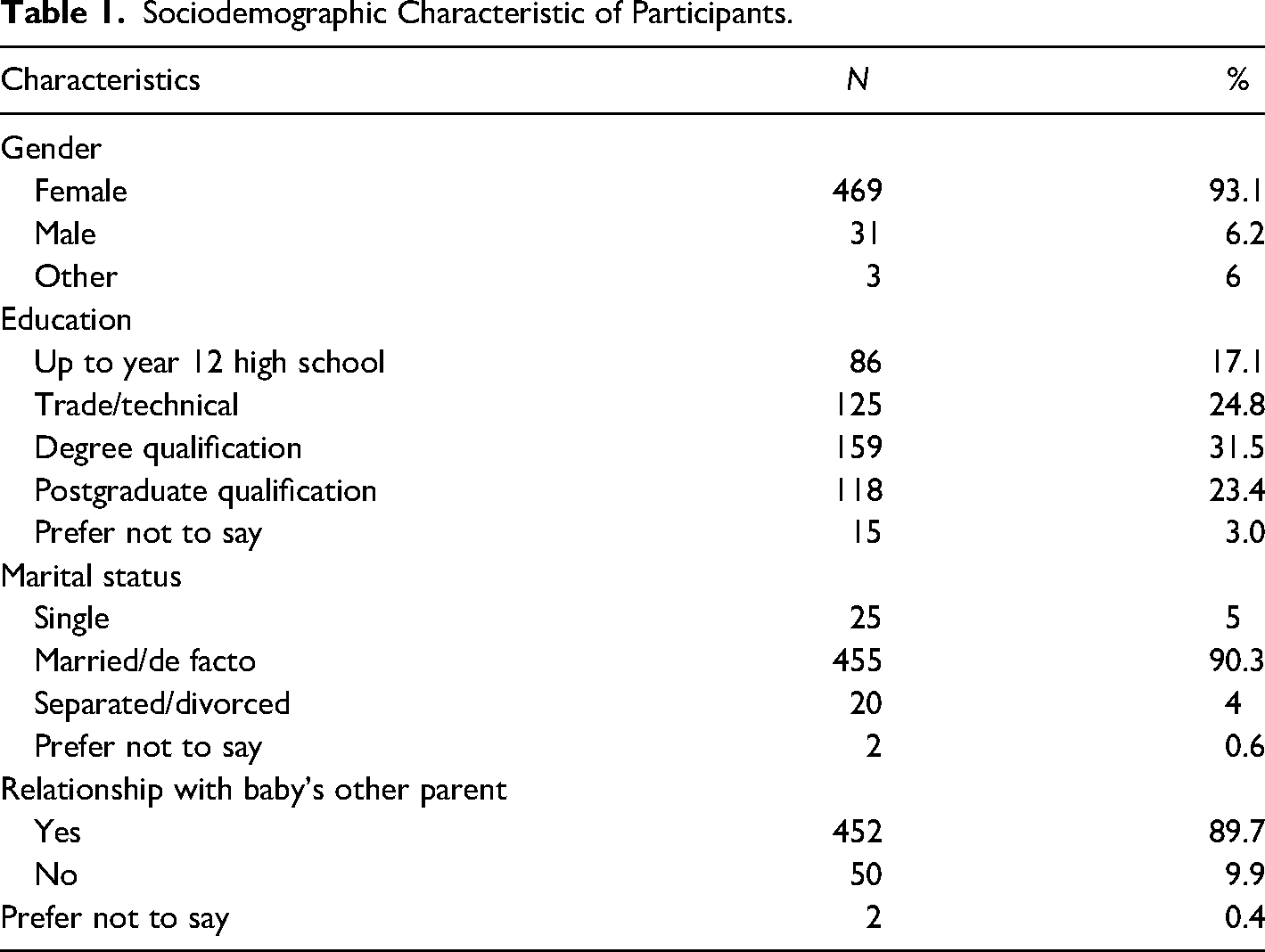
Demographic information about participants is reported in Table 1.
Sociodemographic Characteristic of Participants.
Materials
The anonymous online survey included questions regarding demographics (gender, age, education, relationship status, etc.) and details about the perinatal loss (i.e., how long since the loss and age at death). The study used two preexisting scales: a 16-item Engagement and Sharing Photography, a 10-item Brief PTGI, and a 14-item Perinatal Grief Intensity Scale (PGIS). Three questions were developed for this study to measure participants’ perceptions about their cultural orientation and their attitudes toward religion and spirituality.
Brief PTGI
The 10-item Brief PTGI (Cann et al., 2010) assessing positive posttraumatic outcomes consists of five subscales: Relating to Others, New Possibilities, Personal Strength, Spiritual Change, and Appreciation of Life. Participants rated themselves on a 5-point Likert scale from 1 (I did not experience this change as a result of losing my baby) to 5 (I experienced this change to a great degree due to losing my baby). Higher scores in these categories indicate higher PTG. The brief PTGI has shown excellent internal reliability when used on bereaved parents and test–retest reliability (Manove, 2014), α = .84 for this current sample. Factor analysis of the Brief PTGI confirmed the same five factors as the full PTGI (Cann et al., 2010; Manove, 2014; Tedeschi & Calhoun, 1996).
PGIS
The PGIS (Hutti et al., 1998) was developed to identify grief after a perinatal loss, with scores higher than 3.53 indicating a higher grief intensity. A study by Hutti et al. (2017) reported the scale as highly reliable, with a Cronbach's alpha of .75. Factor analysis found that all questionnaire components loaded onto the scale, accounting for 66.94% of the total variance (Hutti et al., 2017). The scale has three subscales. A mean for each subscale is calculated. The total score is calculated with the following equation: Total PGIS score = 3.08 + (.41 × mean Reality subscale score) – (0.2 × mean Confront Others subscale score) – (.15 × mean Congruence subscale score). Higher scores indicate more intense grief.
Culture, Religion and Spirituality
Three questions were developed to examine participants’ perceptions of belonging to a collectivist or individualist culture (Triandis, 1993); whether they belonged to an organized religion; and whether or not spirituality is important. A 5-point Likert Scale was used, ranging from 1, indicating Strong Agreement, to 5, indicating Strong Disagreement.
Engagement and Sharing Photos Scale
Seventeen questions were adapted from Jones (2020) and further developed by the research team to measure participants’ comfort in engaging with and sharing bereavement photos. One question rated participants’ comfort in being “able to look at photos of my baby.” Three questions rated comfort in sharing photos with partner, family, and friends. Three questions rated whether partners, family, and friends perceived photos as positive. Three questions asked if photos were seen as stopping participants from moving on with their lives. Four questions about sharing and displaying photos in person or on social media were asked. Finally, three questions asked about possible negative reactions from others about photos. Items were rated on a 7-point Likert scale ranging from 1 (strongly disagree) to 7 (strongly agree). High scores indicate more willingness to engage with or share, while low scores indicate a privacy preference or lower engagement. A factor analysis was conducted, and all questionnaire items were loaded onto the scale. The value for Cronbach's alpha for the scale was α = .88, indicating strong internal consistency.
Interview Questions
Participants were asked open-ended interview questions: What were some of the beneficial aspects of bereavement photography? What have they learned from their experience? What would they like other parents to know? Interviews were undertaken by provisionally registered psychologists not directly associated with the research. Interviews lasted between 30 and 45 min. Recordings were transcribed using machine transcription software and manually checked for accuracy.
Ethics
Ethical approval was obtained from the X University Human Research Ethics Committee on Feb 1, 2021 (XRef #: 23165). Participants provided electronic consent after reading the research information. A distress protocol was implemented to reduce harm due to the distressing nature of perinatal grief. All participants were supplied with the contact details for grief counseling support. The student research team and interviewers received death literacy training and ongoing supervision.
Data Analysis
Missing data analysis was undertaken in SPSS v27. Any participant with more than 30% missing values in a particular scale was considered to have not completed that scale. Four hundred and eighty-nine participants completed the PTGI. Of participants who at least partially completed a scale, less than 5% of data was missing on each variable. As such, expectation maximization was used to replace missing variables. Data were then analyzed in JASP v0.16.4.0.
Qualitative analysis was conducted to gain insight into the complexities of bereavement photography outcomes. This article only reports findings related to bereavement photography and PTG. Other findings are reported elsewhere (Vivekananda et al., 2024). Reflexive thematic analysis (Braun & Clarke, 2021) was undertaken on interview transcripts. The coding process followed the six phases as recommended by Braun and Clarke (2006): familiarization with the data, generating initial codes; developing, linking, and reviewing themes into meaningful clusters; defining and naming themes to construct a narrative; linking quantitative and qualitative data for the final report. The resulting themes were cross-validated by two researchers who discussed, questioned, and reflected on their decisions and assumptions throughout the analysis (Braun & Clarke, 2021). Data triangulation (Noble & Heale, 2019) integrated information from the literature review and quantitative and qualitative data to provide a more comprehensive understanding and to increase the rigor and transferability of findings (Denzin & Lincoln, 2005).
Results
Descriptive Data
Table 2 presents descriptive data on demographic variables.
Descriptive Data of Demographic Variables.
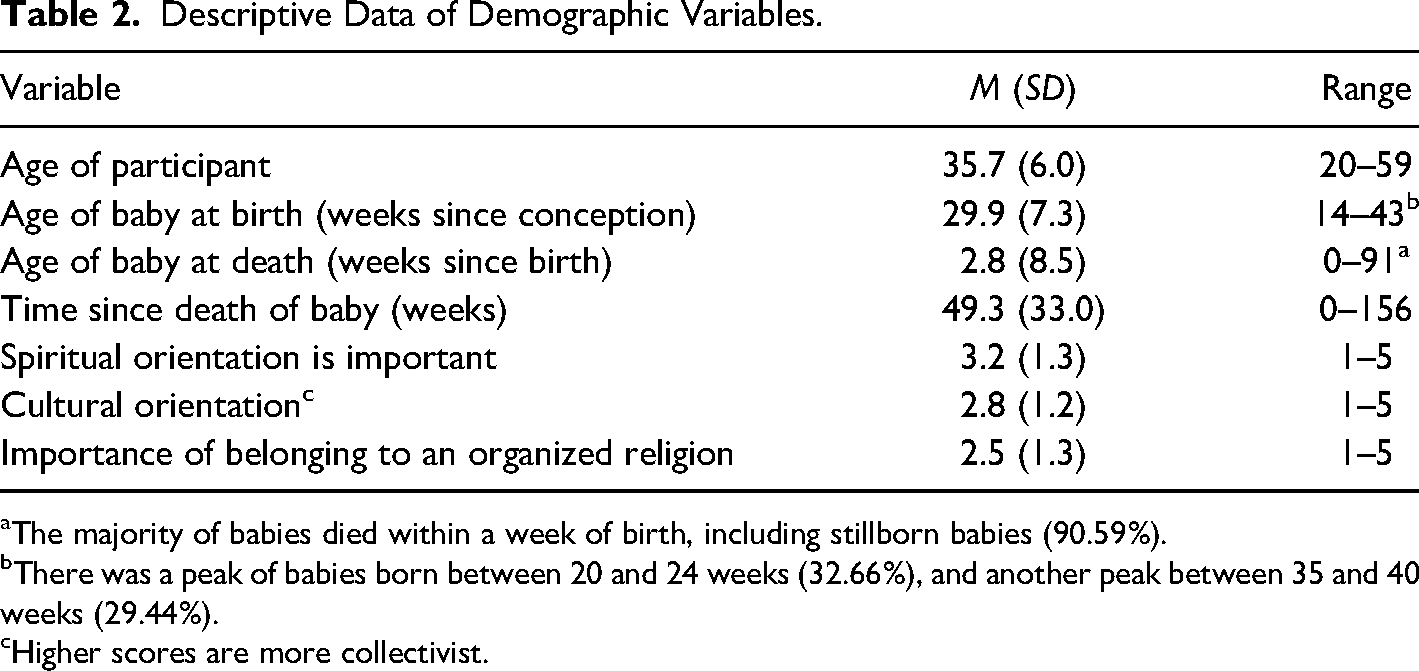
The majority of babies died within a week of birth, including stillborn babies (90.59%).
There was a peak of babies born between 20 and 24 weeks (32.66%), and another peak between 35 and 40 weeks (29.44%).
Higher scores are more collectivist.
PTGI —Short Form
Table 3 presents the means and standard deviations for the PTGI. Moderate to high levels of PTG were observed for Personal Strength, Appreciation of Life, and Relating to Others, while New Possibilities and Spiritual Change presented in the lower range of PTG.
PTGI Total Score and Subscales Means and Standard Deviations.
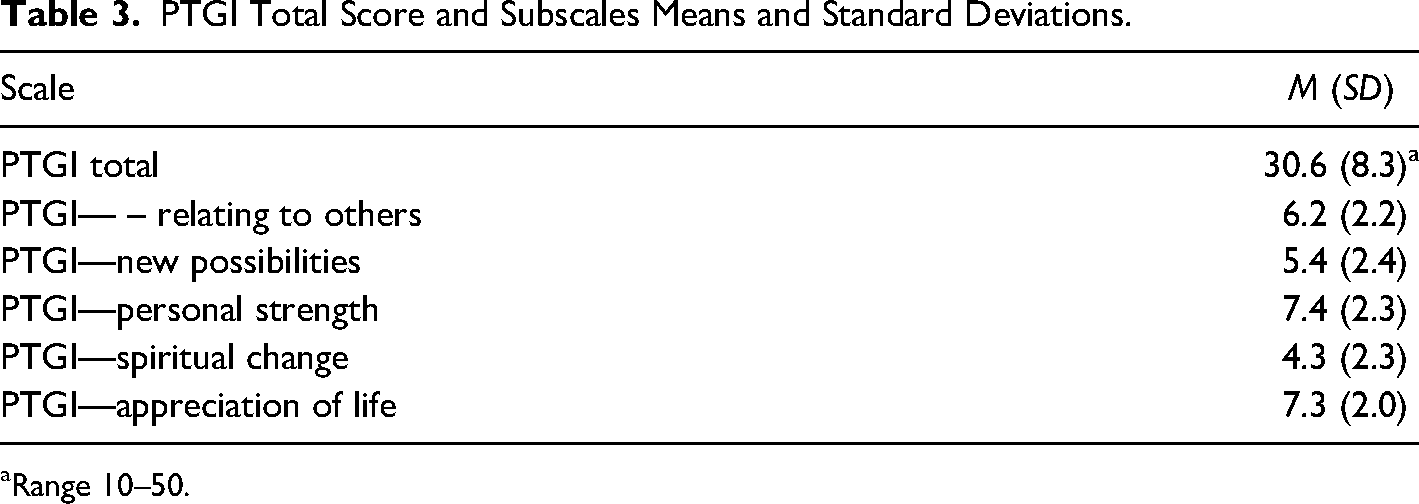
Range 10–50.
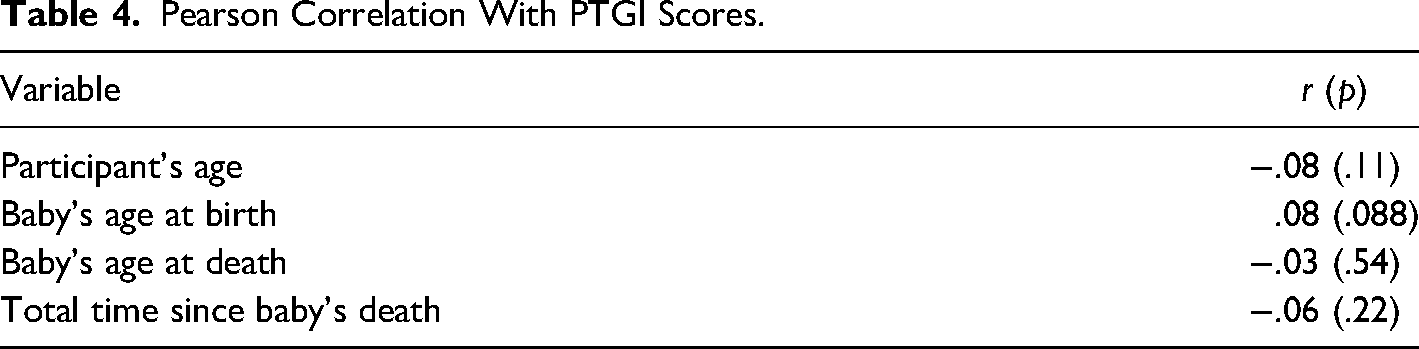
Table 4 shows there was no relationship with the participant's age, the age of the baby at birth, the baby's age at death, or the total time since the baby's death. Pearson correlations were also conducted to investigate the relationship between PTG and participants’ age and variables relating to the baby.
Pearson Correlation With PTGI Scores.
Preliminary analyses were conducted on each of the variables of interest. A t-test was conducted comparing differences in gender on PTG, and correlations between PTG and spirituality, organized religion, and cultural orientation separately. The importance of spirituality and belonging to an organization were positively correlated with PTG, though with a small effect size.
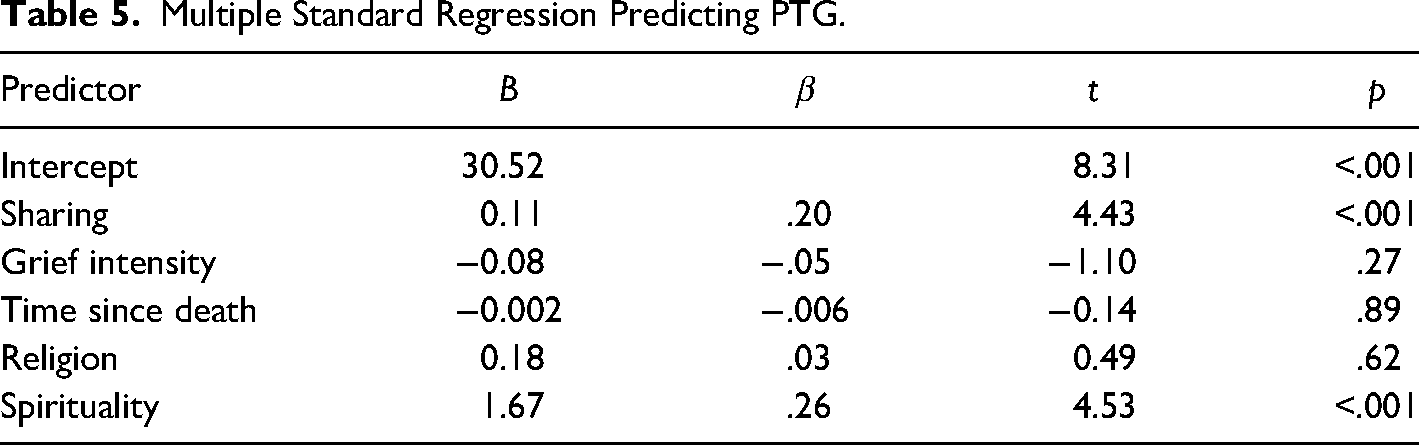
Multiple regression was conducted to determine whether Sharing/Engagement and Grief Intensity predict PTG, with Time Since Death included due to strong associations found in the literature, and spirituality and religion included as they had significant correlations with PTG. Looking at and sharing bereavement photos and spirituality were significant predictors of PTG, but Grief Intensity was not. Predictor values are shown in Table 5.
Multiple Standard Regression Predicting PTG.
Qualitative Analysis of Semistructured Interviews
Reflexive thematic analysis was undertaken for PTG themes, with meaning making emerging as the overarching main theme from semistructured interviews. Three subthemes related to PTG and meaning making were developed: (1) meaning of loss over time, (2) legacy making, (3) advocacy for services and challenging stigma, and paying it forward.
Participants are given codes P1, P2, etc.
Theme 1: Meaning of Loss Over Time
The sudden loss of a baby often feels “surreal,” with P15 commenting, “We went from packing a bag to have a baby, to being given brochures to have a cremation.” Parents often reported being left struggling to comprehend the loss. Bereavement photography allowed parents to normalize and humanize their experience, “it also helped people understand the grief that we're going through. It humanized our loss.” (P10). The photos acted as a physical tangible “evidence” for parents that they could look back on if they wished to do so. [Photos are] “important [as] there is a reminder of that time with my son” (P27) and “ we're very limited, photos or memories of her so that they all hold some pretty substantial meanings looking at it” (P29). Having the photographer present helped parents feel validated that their baby was human and a real loss. P25 found the photos, helped other “people connecting … with stillbirth in a way that I don't think they would have done if they weren't able to see that she really was human.”
Many parents reported that having the photographs helped to humanize their experience and communicate to others that their child was a beloved family member. P3 commented, “For us, it was nine months’ worth of … a baby in my tummy, so I feel like those photos [show] she does exist.” P6 also stated the photos acknowledge “that she was real and she is part of our family and not try to deny her existence.”
Other parents like P3 reported that as time passed, they developed a changed perspective and had a greater appreciation for the “small things” in life. Looking back at the photos, I've sort of learned to appreciate the moments a little more and to soak up those moments a little more … Like when she took the photo of the feet or the hands like I, those little things were more important to us than saying like a full image … It really put into perspective how we should be focusing on those little things and appreciating … those small important things in the moment.
Theme 2: Legacy Making
Participants also shared a wish for “something positive” to come from their baby's death. For many, this included participating in the current research study as P7 explained: “It would be very unusual for me to participate in research, I just generally wouldn't. But I am incredibly grateful that we were able to receive those photos,” whereas P27 believed “research makes a difference in the long-term.” Similarly, P5 explained more fully their motivations and needs. “I have an overwhelming need because I want [baby's] memory to be something positive … to ensure other families are given the same options of support moving forward.”
Parents also described the importance of legacy making, which enabled continuing bonds with their baby: We had … a very strong sense … about the legacy that we wanted [baby] to leave. We always wanted her to make the world a better place in her life and we didn't want anything different from her in death … right from the offset, we saw her very much as a child, who had the same rights and responsibilities and engagement as part of the family as any living child would have done. (P25)
Theme 3: Advocacy and Paying it Forward
Many participants reported their desire to raise awareness about bereavement photography and perinatal loss through being active in the grief and loss community. Parents reported wanting to challenge the stigma of perinatal loss, especially through increased education as “our culture isn't good with grief … with the loss or with death or being able to actually say that somebody died.” (P27)
Photographs were often shared to open conversations around grief and loss and to break the social silence surrounding perinatal loss with P13 wanting for increased awareness so other parents “don't feel like [they're] doing it alone.” Whereas P21 raised awareness to break the social silence, “so many people go through these kinds of losses in complete silence and that's not how it should be.” This aligns with P17 stating, “I think it needs to be spoken about … I think [the photography] opens conversations up.” These responses indicate parents’ desire to create greater communication about the reality of perinatal loss. Social media is a platform that parents often reported using in order to raise awareness about perinatal loss. P17 commented on their online communication, “I've shared [photographs] on social media, and I shared them on lots of sites for bereaved parents. Every support group in Australia and internationally would have seen a photograph of [my baby's] foot.” P16 reported using social media to build awareness and stop the taboo around everything” and “sharing those photos and getting comments, it was really nice to feel like I was sharing the reality that can be for some people.” (P20)
Participants often described increased levels of compassion and altruism for other parents experiencing loss. They expressed the desire to pay forward the kindness they had received from others, especially in relation to bereavement photography. Many reported becoming active in reaching out to other parents in similar situations, as P7 described “I’m very active in the … loss community.” This aligns with P25 who takes “up pretty much every opportunity we can to do things to help with bereavement and loss and stillbirth.”
A common desire from participants was for all parents in similar situations to be given the opportunity to receive photos. The photos inspired P12 to help others in a similar situation and advocate for “anything that might make services more accessible or get more funding or anything like that … make things a little bit easier for other parents in the same situation.” P6 expresses similar motivation, “like I've always been sort of a spokesperson, I guess for helping things like this move along, become wider spread and more common … I just feel like if a family didn't have the opportunity we had, I'd be pretty upset.”
Discussion
Our study is the first to report mixed-methods findings linking viewing and sharing bereavement photography and PTG. Regression analysis showed that higher levels of engaging with, viewing, displaying, and sharing photos and having social acknowledgment from others are associated with higher levels of PTG. These positive benefits of bereavement photography have received validation from related research findings on the positive relationship between deliberate rumination on losses and PTG (Freedle & Oliveira, 2021; Lafarge et al., 2020) and that a supportive social environment mediates deliberate rumination and PTG (Henson et al., 2021).
Moderate to high levels of PTG were found, particularly in the PTGI factors of Personal Strength, Appreciation of Life, and Relating to Others. Data triangulation with qualitative responses validated PTGI factors. The overarching theme of meaning making is related to humanizing the loss of their baby and wanting their baby's death to have meaning through legacy making and parents having increased compassion for other parents. Participants also reported wanting to advocate for better services for perinatal loss and to promote a better understanding of perinatal losses within the broader society. In addition, participants expressed concern for other parents facing similar losses and wanted to ensure they took advantage of opportunities for support. Such displays of “altruism borne of suffering” (Staub & Vollhardt, 2008, p. 267), reciprocity, and paying it forward have also been reported as important motivators for providing bereavement support by volunteer bereavement photographers (Vivekananda et al., 2023). A small, significant correlation was found between a spiritual orientation and PTG, which has been reported in the broader PTG literature (Waugh et al., 2018b). Spirituality likely helps with meaning making and legacy making. However, the same association was not found for belonging to an organized religion and PTG. Similarly, no significant correlation was found for participants’ cultural orientations on PTG, indicating that participants from nonwestern collectivist cultural orientations reported similar levels of PTG as participants from more Western individualist cultural orientations.
Participants reported that most partners, family, and friends viewed photos positively. The importance of supporting bereaved parents through their loss with tangible mementos and providing a supportive environment where they can share them is apparent. This acknowledgment and social support are positively correlated with PTG in our study. Other writers have argued that sharing traumatic bereavement experiences with others is a way to deepen relationships (Keskinen et al., 2019), grief is validated, and PTG may be strengthened (Tedeschi et al., 2017). Self-disclosure and sharing of traumatic experiences are reported to promote PTG (Henson et al., 2021; Levi-Belz et al., 2021). Creating narratives can help to find meaning in the loss and integrate the experience into one's daily life (Ramirez et al., 2019).
Nevertheless, the high levels of support found in our study can be contrasted with findings by Freedle and Kashubeck-West (2021), where over half of the stillbirth group were unable to share their loss with others adequately, and 38% of participants in Jones’ (2020) sample withheld from sharing more freely. However, results from our previous study (Vivekananda et al., 2024) showed that three quarters of the sample still wanted to talk more freely about bereavement photography. Several unexpected findings are reported. PTG was not found to be related to the Time since Death variable, which conflicts with the research that PTG increases over time (Henson et al., 2021). One potential explanation for this finding may relate to the recruitment of many participants for the study occurring through an online community that publicly acknowledges perinatal loss and memory-making activities. Further, our sample had all received bereavement photography, and meaning making derived from sharing photographs could also reduce the effect of these other variables. Our study reported that Perinatal Grief Intensity was unrelated to PTG. In contrast, Krosch and Shakespeare-Finch (2017) reported that loss factors contributed significantly to the variance in PTG, with higher grief intensity predicting lower PTG.
Ninety percent of our sample reported still being with the other parent of their deceased baby. This can be compared with the divorce rate in the general population, estimated at 42–53% of marriages (World Population Review, 2023), with bereaved parents having a 60% higher risk of marital separation, with this risk increasing over time (Lyngstad, 2013). Most of our sample (91.9%) reported being able to share photos with their partner, with 88.5% perceiving their partner as positively viewing bereavement photography (Vivekananda et al., 2024). Partner support is shown to have a moderating effect on PTG following a perinatal loss (Freedle & Oliveira, 2021; Yoon et al., 2022), and couples experiencing more concordant grieving is also associated with higher individual PTG (Büchi et al., 2009). Further, our recent research (Salvini et al., in press) showed that fathers also benefited from participating in bereavement photography, where couples used photography as a transitional object to share their feelings and thoughts about their baby.
Strengths
The mixed-method design ensured that quantitative findings were grounded in participants’ subjective experiences of bereavement photography (Wipulanusat et al., 2020). In addition, data triangulation increases the validity of the research findings (Noble & Heale, 2019). This is the largest study reported on perinatal bereavement photography and PTG.
Limitations and Future Research
There are a few limitations that may impact the quality of the study. The cross-sectional survey design means that no causal inferences can be made. The sample only consisted of parents who had received bereavement photography, meaning that we could not compare between those who received photography and those who did not. Future research should address this by having a comparison control group. Using convenience sampling may have resulted in overly positive viewpoints toward photography. Finally, the limitations of self-report surveys and social desirability need to be acknowledged. Future research should examine fathers’ experiences of bereavement photography due to a gender bias towards mothers when studying perinatal losses.
Implications
Our findings have implications for health professionals and counselors to improve psycho-social-spiritual-community outcomes across the lifespan. The potential exists to incorporate bereavement photos into the treatment of parents with complicated grief/prolonged grief disorder, where deliberate attention and reducing avoidance of distressing grief and loss feelings is the key mediator in treatment outcomes (Glickman et al., 2017). Potential benefits exist for integrating grief experiences by parents being able to look at, display, and share bereavement photos of their baby (Vivekananda et al., 2024). Health professionals also have a role to play in community death literacy education (Vivekananda et al., 2020) and challenging the stigma and invisibility of perinatal loss. Our research highlights the importance of a socially validating community recognizing parents’ everlasting love and ongoing bonds with their babies promotes both memory and meaning making following perinatal loss.
Footnotes
Acknowledgments
Our gratitude goes to the many parents who took the time to complete our survey and agreed to participate in interviews. Your courage, generosity and love have touched us deeply.
Declaration of Conflicting Interests
The authors declared no potential conflicts of interest with respect to the research, authorship, and/or publication of this article.
Funding
Heartfelt provided a small amount of funding for research assistance to author 3 to finalize this publication article.
