



Abstract
This study was designed to better understand how service dog partners experience the loss of their service dog. An anonymous survey was distributed to service dog partners who had lost a dog within the last five years. One-way ANOVAs were used to assess loss differences (retirement vs. death) on scores for Centrality of Events Scale, Warwick-Edinburgh Mental Well-Being Scale, Social Constraints Measure, and Self-Compassion Scale. Linear regression was conducted on the total bereavement score to determine the impact of the above assessment measures. We found higher grief scores for those whose service dog died compared to those whose dog retired. Perceptions of social constraints and feelings related to the centrality of the event were predictors of overall grief for those who lost a dog due to retirement; centrality of event feelings predicted grief level for those experiencing a death. Findings suggest a need for grief support for service dog partners.
Introduction
Advances in medicine have given rise to the number of individuals with disabilities who are able to live longer, fuller lives. In the United States, 26% of adults report having some type of disability (Bureau, n.d.) and service dogs are increasingly seen as a viable option to support this population. A growing body of research suggests that service dogs offer numerous benefits including social support, an increased sense of well-being, and a decreased need for alternative forms of service (Ng & Fine, 2019; Walther et al., 2017; Winkle et al., 2012). Despite the growing use of service dogs, there is a dearth of information about the impact of the loss of these partnerships – either through death or retirement. Yet, the relationship between a service dog and partner is unique; significantly different than that between a companion pet and guardian. Notably, unlike the loss of a companion dog, the loss of a service animal places the partner in a physically, vocationally, and socially vulnerable position (Herlache-Pretzer et al., 2017; Rodriguez et al., 2020). Thus, the research that has been conducted on grief and loss following the death of a companion animal may not generalize to the loss of a service animal.
Service Dogs
Service dogs, as defined by the Americans with Disabilities Act of 1990 (Bureau, n.d.), are individually trained to perform specific tasks for an individual person with a verifiable physical, psychiatric, intellectual, sensory, or mental disability (US Department of Justice, 2021). Service animals have public access rights; by law, they can accompany their partner in almost all public places (US Department of Justice, 2021). The only animal species currently recognized by the ADA as eligible to fulfill the role of service animals are dogs, and in select instances, miniature horses (US Department of Justice, 2021) Examples of service animals include guide dogs for the visually impaired, hearing service dogs, and psychiatric or medical alert animals such as seizure detection dogs. It is important to note that a key feature of a service animal's training is that they are taught to perform specific and often complex tasks that are directly related to their human partner's disability. For example, a service dog might be trained to alert their partner to an oncoming medical emergency, such as a seizure, or to lie close to their partner during a seizure to protect them from hurting themselves. Another type of service dog may be trained to retrieve objects that an individual with physical limitations is unable to retrieve on their own. Training a service animal typically involves approximately two years of intensive training and a significant initial and ongoing financial investment. As a result, it is not unusual for people to wait up to three years to receive an appropriately trained service dog (Gravrok et al., 2020).
Relationship Between Service Dog and Partner
Given the dynamics of the service dog/partner relationship, including the personal, financial and time investment, partners often have a very strong connection with their dog. The bond between a service dog and partner is unique; a supportive and independence-enhancing relationship (Stewart, 2006). Numerous studies have identified how service dogs positively impact people with disabilities, including the ability to foster opportunities for socialization and community participation. Specific examples include an increase in human-to-human contacts, more social greetings and interactions with strangers, increased opportunities to engage with others while at work or social functions, and a shift in focus from the partner's disability to one of competence (Hart et al., 1987; Lane et al., 1998). Fairman and Huebner [12] noted that service dogs provide emotional support and security, while Rintala et al. (Rintala et al., 2008) found that service dogs contribute to an increased sense of independence, benefitting not only the partner, but also their caregivers. Other physical benefits, particularly in regard to service dogs for the visually impaired, include increased mobility and faster walking (Walther et al., 2017).
One of the biggest challenges for a person with a disability is overcoming feelings of being different and the stigma often associated with having a disability. These individuals often struggle with perceived social acceptance, particularly in areas such as athletic competence and career development. A service dog can help by changing someone's personal identity to one of a person–dog team, thereby softening feelings associated with being stigmatized (Sanders, 2000).
In addition, service dogs can increase people's sense of control, resulting in increased confidence and self-concept (Wiggett-Barnard & Steel, 2008). Furthermore, service dogs provide companionship and comfort. For all these reasons, the loss of a service dog can have a profound impact on their partner.
Service Dog Partners’ Grief Response
Inevitably, a time will arise within each relationship between a service dog and partner where the dog's working role will end, whether through the dog's retirement or death. The transition to retirement, when a dog reaches a point in which it can no longer function as a service dog, can be an ambiguous loss; one without closure and multiple layers of loss and grief (Boss, 2000). While the service dog may not have died, the essence and mutual benefits of the partnership have been lost (Whelan, 2017). In contrast, partners who have lost their service dogs as a result of death experience a concrete loss, yet still often lack the benefit of a supportive community that truly understands the significance of this loss (Chur-Hansen, 2010). While grieving partners may find understanding within the service dog community who recognize the strength and meaning of the unique relationship, they often encounter challenges in talking about the loss of their dog with family members, work colleagues, and friends (Chur-Hansen, 2010). This places these individuals at increased risk for experiencing disenfranchised grief – a loss that involves limited social recognition and a lack of ritualized support (PhD, 1999). Furthermore, when considering that service dog partners typically lose several dogs over the course of their lives, the magnitude of this type of loss has the potential to grow exponentially over the years (Wenthold & Savage, 2007; Yamamoto & Hart, 2019). Each loss is unique, however, and is often a significant life event.
Centrality of Events
Significant events can become a central part of an individual's identity. For those who have undergone a stressful life event, the centrality of the event has been shown to be closely associated with the presence of psychopathology. Stressful event centrality, in the form of loss, has been found to be associated with post-traumatic stress disorder, prolonged grief disorder, and depression, even when controlling for attachment style, relationship to the deceased, cause of death, time since loss, and unexpectedness of the death (Boelen & Prigerson, 2012). The loss of a service dog (from retirement or death) is often a significant life event, due in part to the lost relationship, but also, because of the changes this brings to one's independence and activities of daily living. Factors that might influence the centrality of this loss for service dog partners include their level of attachment anxiety (Field et al., 2005), their emotional connection with their dog (C. Bussolari et al., 2021; Wrobel and Dye, 2003), their dependence on their service dog to conduct their daily activities, and their perceived level of social support (Jacobson et al., 2017).
Social Constraints
One form of inadequate social support, and a predictor of distress related to traumatic events, is social constraints defined as “both objective social conditions and individuals’ construal of those conditions that lead individuals to refrain from or modify their disclosure of stress and trauma-related thoughts, feelings, or concerns” (Lepore & Revenson, 2007). Negative social interactions can impact cognitive and emotional processing of stress-related concerns by discouraging individuals from disclosing their concerns. Deficits in the processing of concerns may, in turn, impede psychological adjustment. In the context of companion animal loss, individuals who have high social constraints related to bereavement report higher levels of perceived stress, depressive symptoms, and negative mental health and functional outcomes compared to those without constraints (Habarth et al., 2017; Juth et al., 2015) They also have lower self-compassion (Bussolari et al., 2018). One aspect of loss and resultant grieving that is especially challenging for many in terms of social constraints involves the ongoing relationship and connection that many people have with those they have lost.
Continuing Bonds
Although separated from their service dog, whether through death or retirement, the bond formed between those with disabilities and their service dogs frequently remains strong. Recent grief theories (Field et al., 2005; Neimeyer et al., 2006) suggest that individuals process their grief by integrating memories, smells, and tangible items of their loved ones into their present day. This meaning-making process enables individuals to find comfort during their time of loss and has been labeled “continuing bonds” (Klass et al., 1996). While initially studied in human loss contexts, more recently, researchers have investigated the role of continuing bonds in the area of pet loss (Field et al., 2005, 2009; Habarth et al., 2017; Packman et al., 2011). Packman et al. (2011), for example, identified 12 means of expressing continuing bonds with pets including cherishing a pet's belongings and associated places, having dreams or reminiscing about a lost pet, and creating a pet memorial (Habarth et al., 2017). Packman et al. found that bereaved pet guardians report utilizing a wide range of continuing bonds and typically report finding them more comforting than distressing. The use of such coping strategies can be one form of self-compassion.
Self-Compassion
Inspired by Eastern and Buddhist philosophy, self-compassion has been described by Neff (2003) as attention and care directed toward oneself. Neff (2003) proposed that self-compassion encompasses three facets: self-kindness (vs. self- judgment); a sense of a common humanity (vs. a sense of isolation); and a cultivation of mindfulness, referring to present-moment, nonjudgmental awareness and attention. In addition, self- compassion has been described as a way to activate self-soothing and self-regulating functions associated with trauma and loss (Gilbert, 2014). Studies suggest promising connections between self-compassion and psychological well-being, emotional resilience and well-being, as well as decreased depression and anxiety (Fong & Loi, 2016; Neff, 2009; Neff et al., 2007). Self-compassion has also been found to moderate reactions to distressing situations involving negative events (Leary et al., 2007; Muris & Petrocchi, 2017).
There is minimal research on self-compassion and grief, however, initial findings relevant to bereavement suggest important associations. For example, Neff (2009) noted that engaging in self-compassion can be helpful when the perceived suffering is felt to be too difficult to bear or impossible to control. Furthermore, Lenferink et al. (2017) found, in a sample of relatives of long-standing missing persons, a negative association between self-compassion and emotional distress. In a recent pet loss study, researchers found that participants with more self-compassion reported less intense grief, less frequency of dismissive or negative social interactions, and better psychosocial functioning (Bussolari et al., 2018). Taking previous research into account, it stands to reason that within the context of pet bereavement, self-compassion could play a supportive and protective role.
While many factors that impact grief have been studied in the context of companion animal loss, no research to date has explored how these topics relate to service dog loss. The purpose of this study was to gain a better understanding of how service dog partners experience the loss of their service dog through either death or retirement. Given this unique relationship, we were interested in the specific ways that this often-repetitive loss is associated with psychosocial functioning and bereavement. We were also interested in comparing these outcomes to previous studies on grief responses and continuing bond coping strategies following pet loss.
Materials and Methods
An anonymous online survey was created using Qualtrics software, in collaboration with Canine Companions for Independence (CCI), to evaluate service dog partners’ experiences and perceptions surrounding the loss of a service dog through retirement or death. The survey was created and tested by researchers and experts in the field of service dogs and then piloted to test for appropriate branching, flow of questions, ambiguity, and potentially missing or inappropriate response options. The survey was distributed via an email invitation to all recipients of a CCI trained dog who had lost their dog through death or retirement within the previous five years (N = 383) and was available from September 7, 2020 to December 3, 2020. Three follow-up messages were sent after the initial invitation.
The survey was designed to use branching logic to only display relevant questions for each participant, based on service dog loss through retirement or death. Demographic data on participants were collected (marital status, number of adults in the household, number of children, education level, ethnicity, sex, and income). In addition, information about their dog was obtained, including type of service dog lost, age upon retirement/death, length of relationship, reported feelings of preparedness for the loss, whether a new dog was acquired (and if so, how much time passed between the loss and the new dog), and total number of dogs lost via selection of specific options from pre-determined lists. Those who lost a dog due to retirement were asked what happened to the dog upon retirement. For those who had lost a dog due to death, they were asked specific questions about the death (cause of death, if the dog was euthanized (and if so, who made the decision), and feelings related to the ability to prevent the death). Free-text boxes were provided for participants to enter brief alternate answers when none of the listed options applied to them. A final question at the end of the survey allowed participants to provide their contact information if they were interested in a follow-up interview.
Survey Instruments
The remaining parts of the survey consisted of several validated measures to assess the impact and potential mitigating factors of the loss and compare these factors for loss caused by retirement versus death. To assess attachment, the Human-Animal Attachment Measure (HAAM) (Stewart, 2006) was used. To assess the impact of the loss, participants were given The Pet Bereavement Questionnaire (PBQ) (Hunt & Padilla, 2006), The Centrality of Events Scale (CES) (Berntsen & Rubin, 2006), The Continuing Bonds Interview (CBI) (N. Field et al., personal communication, 2007) and the Warwick-Edinburgh Mental Well-Being Scale (WEMWBS) (Lepore & Ituarte, 1997; Tennant et al., 2007). Additional aspects of the survey included The Social Constraints Measure (SCS) (Lepore & Ituarte, 1997) and self-compassion, measured by The Self-Compassion Scale-Short Form (SCS-SF) (Raes et al., 2011).
The human-animal attachment measure
The Human-Animal Attachment Measure (HAAM) (Stewart, 2006) is an 18-item measure that assesses attachment as one total score that includes proximity seeking, secure base, and safe haven components. Items are coded on a 4-point Likert scale from 1 (strongly agree) to 4 (strongly disagree). The reported overall inter-item reliability is α = .96 (Stewart, 2006). The Cronbach's alpha for each of the composite scores has been reported as 0.96 for proximity seeking, 0.94 for secure base, and 0.80 for safe haven (Stewart, 2006). Mean scores for people with mobility disabilities have been reported as 2.99 (SD 0.79) for proximity seeking, 2.44 (SD 0.41) for secure base, and 2.36 (SD 0.42) for safe haven. These scores can be compared to pet owners mean scores: 4.19 (SD 0.50) for proximity seeking, 3.97 (SD .51) for secure base, and 2.95 (SD .49) for safe haven.
The Pet bereavement questionnaire
The Pet Bereavement Questionnaire (PBQ) (Eckerd et al., 2016; Hunt & Padilla, 2006)) is a 16-item measure in which respondents answer questions on a 4-point Likert scale for the single construct of pet bereavement based on three factors: grief, anger, and guilt. Possible scores range from 0 to 48. The scale assesses the level of grief individuals report after experiencing the death of a pet, and has reported good internal consistency reliability and validity (Hunt & Padilla, 2006). The PBQ was modified slightly in the current study with internal consistency for the total Pet Bereavement Questionnaire α = 0.90 for the retirement sample and α = 0.86 for the death sample. The anger and guilt subscales for the two samples contained different items; therefore, comparisons for these scales was not possible. The grief subscale contained the same questions for each population (retirement and death), allowing for comparison.
The centrality of events scale
The Centrality of Events Scale (CES) (Berntsen & Rubin, 2006) measures the extent to which an event is central to a person's identity and life story. Participants rate seven statements about the centrality of the loss event (e.g., ‘‘This event has become a reference point for the way I understand myself and the world.’’) on a 5-point Likert scale (1 = totally disagree; 5 = totally agree). The reported inter-item reliability for the Centrality of Events Scale is α = .88 (Berntsen & Rubin, 2006). The Centrality of Events Scale has demonstrated discriminant validity from other factors related to problematic bereavement, including cause of loss, time since loss, and depression (Boelen, 2009). The internal consistency of the Centrality of Events Scale in the present study was α = 0.91 for retirement and α = 0.90 for death.
Continuing bonds interview
The semi-structured Continuing Bonds Interview (CBI) (N. Field et al., personal communication, 2007) was used to evaluate the degree of ongoing connection participants reported having with their deceased service dog. Continuing Bonds Interview items include: sense of presence; use of belongings; associated places; fond memories; dreams; reunited with deceased; living up to ideals or wishes; everyday decisions; reminisce; memorials; intrusive symptoms; and lessons learned. Participants were asked to indicate the extent to which they endorsed each of these continuing bonds expressions during the past month on a 4-point scale ranging from 0 (not at all) to 3 (nearly every day). If participants endorsed a given item (i.e., a rating of 1 or more), they were asked to describe and rate the extent to which they experienced it as comforting or distressing on a 5-point scale ranging from 1 (not at all) to 5 (extremely). The internal consistency of the Continuing Bonds Interview in the present study was α = 0.85.
The warwick-Edinburgh mental well-being scale
The Warwick-Edinburgh Mental Well-Being Scale (WEMWBS) (Tennant et al., 2007) is a mental well-being scale that focuses on the positive aspects of mental health. The Warwick-Edinburgh Mental Well-Being Scale is a short and psychometrically robust scale that has been used to assess wellbeing in general populations worldwide (Clarke et al., 2011; Hunter et al., 2015; López et al., 2013; Tennant et al., 2007). The Warwick-Edinburgh Mental Well-Being Scale is a 5-point Likert scale consisting of 14 items, which range from “none of the time” to “all of the time”. A global score is calculated by adding up item scores, with a possible range of 14 to 70. The higher the global score, the higher the level of mental well-being. Median scores between 48–52 have been reported for students and general populations (Johnson et al., 2017; Tennant et al., 2007) with Cronbach's alpha reported as 0.89 for students and 0.91 for the general population. The internal consistency of the Warwick-Edinburgh Mental Well-Being Scale in the present study was α = 0.94 for retirement and 0.95 for death.
The social constraints measure
The Social Constraints Measure (SCS) (Lepore & Ituarte, 1997) is a 15-item scale assessing participants’ perceived inadequacy of social support resulting in a reluctance to express thoughts and feelings about a specific stressor, in this case either the death or retirement of their service dog. Participants were asked to rate how often their friends or family had engaged in or omitted certain social behaviors (e.g., “Not seem to understand your situation?” and “Tell you to try not to think about the event?”) with responses measured on a four-point Likert-type scale (1- never to 4- often). The 15 items are summed to give a total scale score with possible values ranging from 15 (low constraints) to 60 (high constraints). Excellent internal consistency was obtained for this measure in our study (Cronbach's α = 0.95 for retirement and α = 0.96 for death).
The self-compassion scale-short form
The Self-compassion Scale-Short Form (SCS-SF) (Raes et al., 2011) is a 12-item questionnaire using a five-point Likert scale (0 = ‘Almost never’ to 5 = ‘Almost always’) to record how often one behaves kindly and caringly towards him/herself in difficult life situations. Six items are positively worded (e.g. “When something painful happens I try to take a balanced view of the situation”), and the other six are negatively worded (e.g. “When I fail at something that's important to me, I tend to feel alone in my failure”). Overall self-compassion scores were calculated by reverse coding the self-judgment, isolation, and over-identification items then summing all six subscale means. The Self-compassion Scale-Short Form has demonstrated adequate internal consistency (Cronbach's alpha ≥ 0.86). The internal consistency of the Self-compassion Scale-Short Form in the present study was α = 0.94 for retirement and α = 0.88 for death).
Statistical Analysis
Descriptive statistics and frequency distributions (reported as percentages) were computed by use of IBM SPSS statistical software. Because not all questions were answered by all respondents, the total number of respondents for each question varied. Reported percentages for each individual question are based on total responses for that question. One-way ANOVAs were used to assess loss differences (retirement versus death) on total scores for The Centrality of Events Scale, The Warwick-Edinburgh Mental Well-Being Scale, The Social Constraints Measure, and The Self-Compassion Scale-Short Form. Linear regression was conducted on the total bereavement score of retirement and death losses to determine the impact of The Centrality of Events Scale, The Social Constraints Measure, Human-Animal Attachment Measure, The Self-Compassion Scale-Short Form, and The Warwick-Edinburgh Mental Well-Being Scale, while controlling for partner and dog factors. Values of P < 0.05 were considered significant.
Results
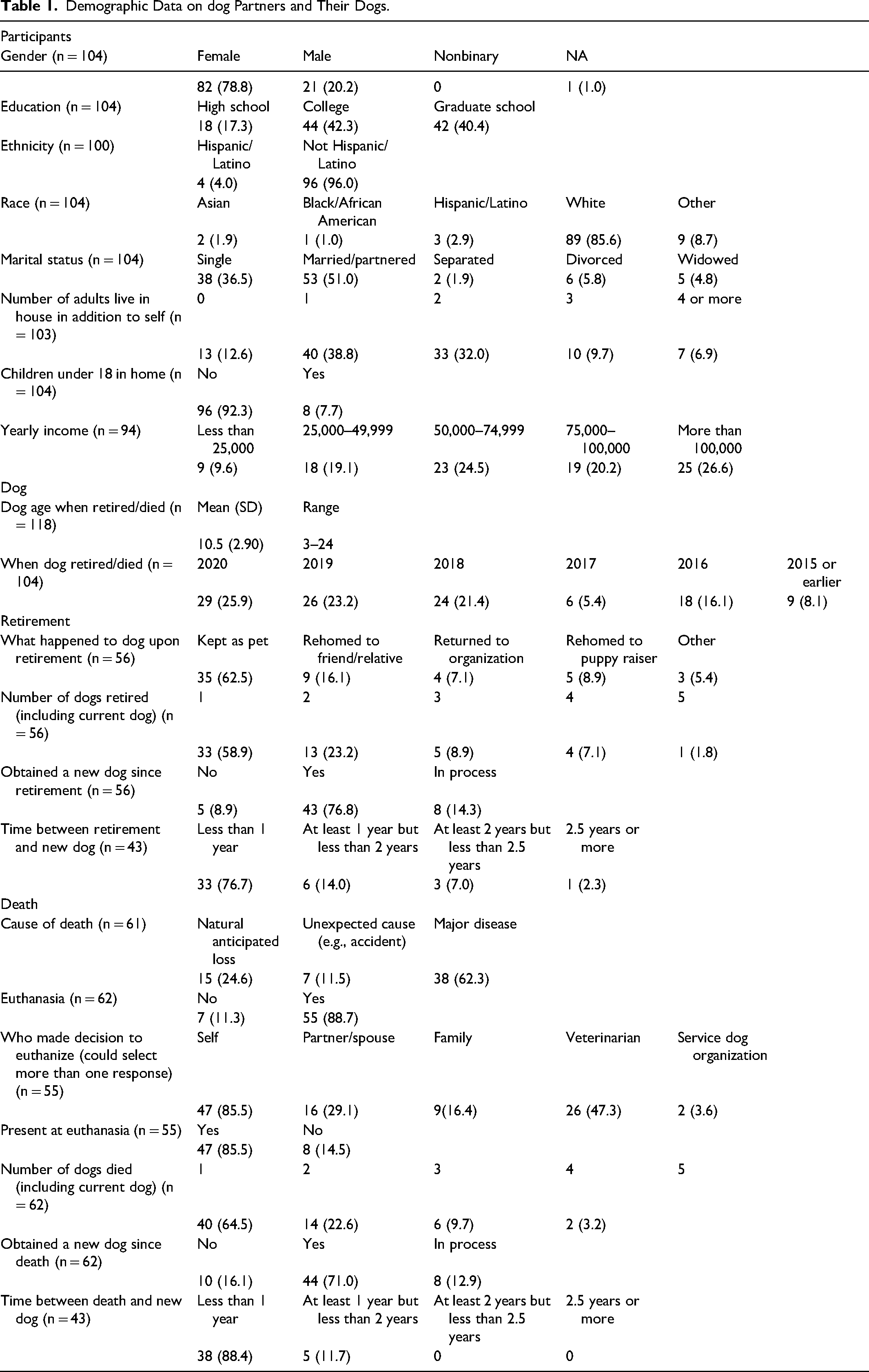
A total of 118 responses were collected, 56 (47.5%) were partners who lost a dog due to retirement and 62 (52.5%) who lost a dog due to death. Of these individuals, 82 (81%) had a service dog to assist with a physical disability and 19 (19%) had a dog to assist with a hearing disability. The sample was predominately highly educated, White, Non-Hispanic females without children under the age of 18 in the home (Table 1). Details about the dogs, including age and date when retired/died (mean age 10.5 years), previous experience with service dog loss (for most, this was the first dog they had lost), if a new service dog had been acquired (most had obtained a new dog) and if so, how much time passed before obtaining a new service dog (typically within a year). Participants who lost a service dog due to retirement were asked to report what happened to the dog upon retirement, to which the majority reported keeping the dog as a pet. Those who lost a service dog due to death were asked about the cause of death, to which most reported a major disease. Additionally, most partners indicated their service dog had been euthanized, and that they had made the decision themselves and were present during the procedure (Table 1).
Demographic Data on dog Partners and Their Dogs.
Means, standard deviations, and Cronbach's alphas for Human-Animal Attachment Measure subscales (Proximity seeking, Secure base, Safe haven), The Centrality of Events Scale, The Social Constraints Measure, The Self-Compassion Scale-Short Form, and The Warwick-Edinburgh Mental Well-Being Scale were computed and are summarized in Table 2. There were no differences between those who lost a service dog due to death versus retirement for any of these measurements.
Means, Standard Deviations, Cronbach's Alphas, and ANOVA Values for Retirement and Death Conditions for the Scales: The Human-Animal Attachment Measure Subscales, Centrality of Events Scale, Self-Compassion Scale, Social Constraints Measure, and Warwick-Edinburgh Mental Well-Being Scale.
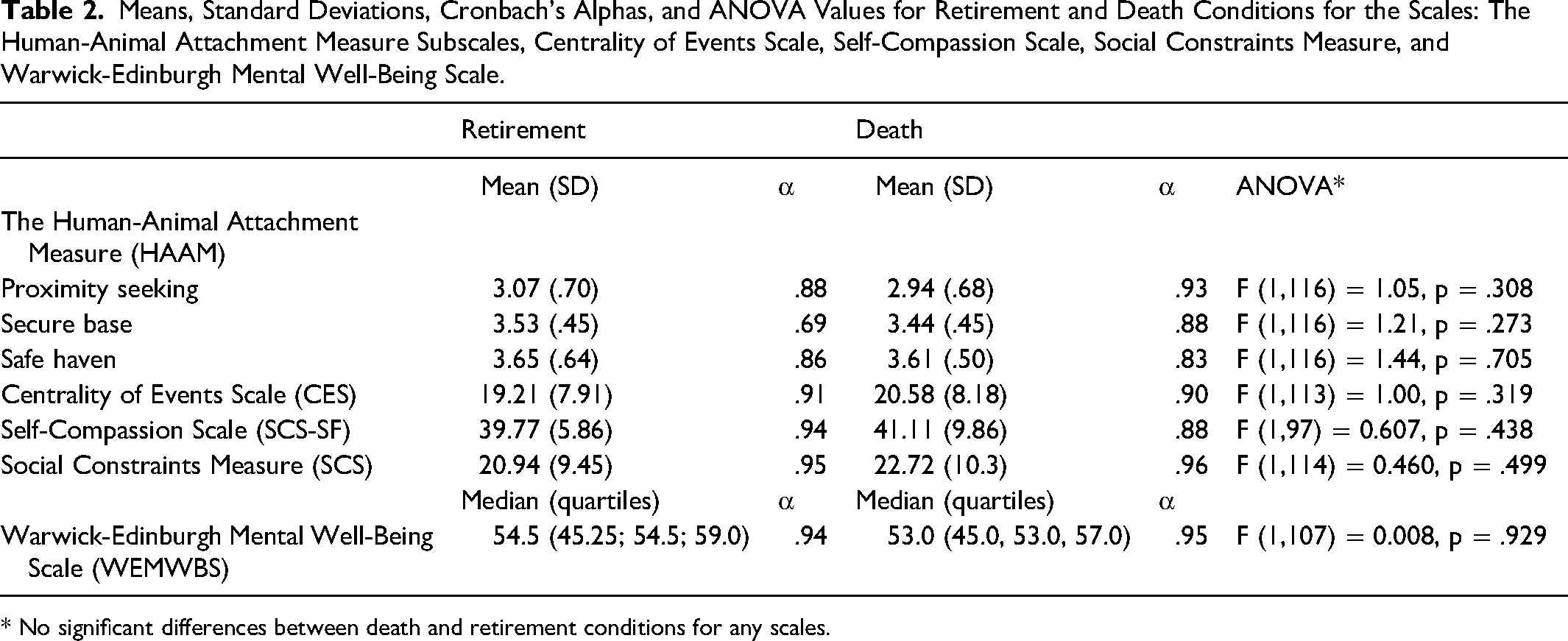
* No significant differences between death and retirement conditions for any scales.
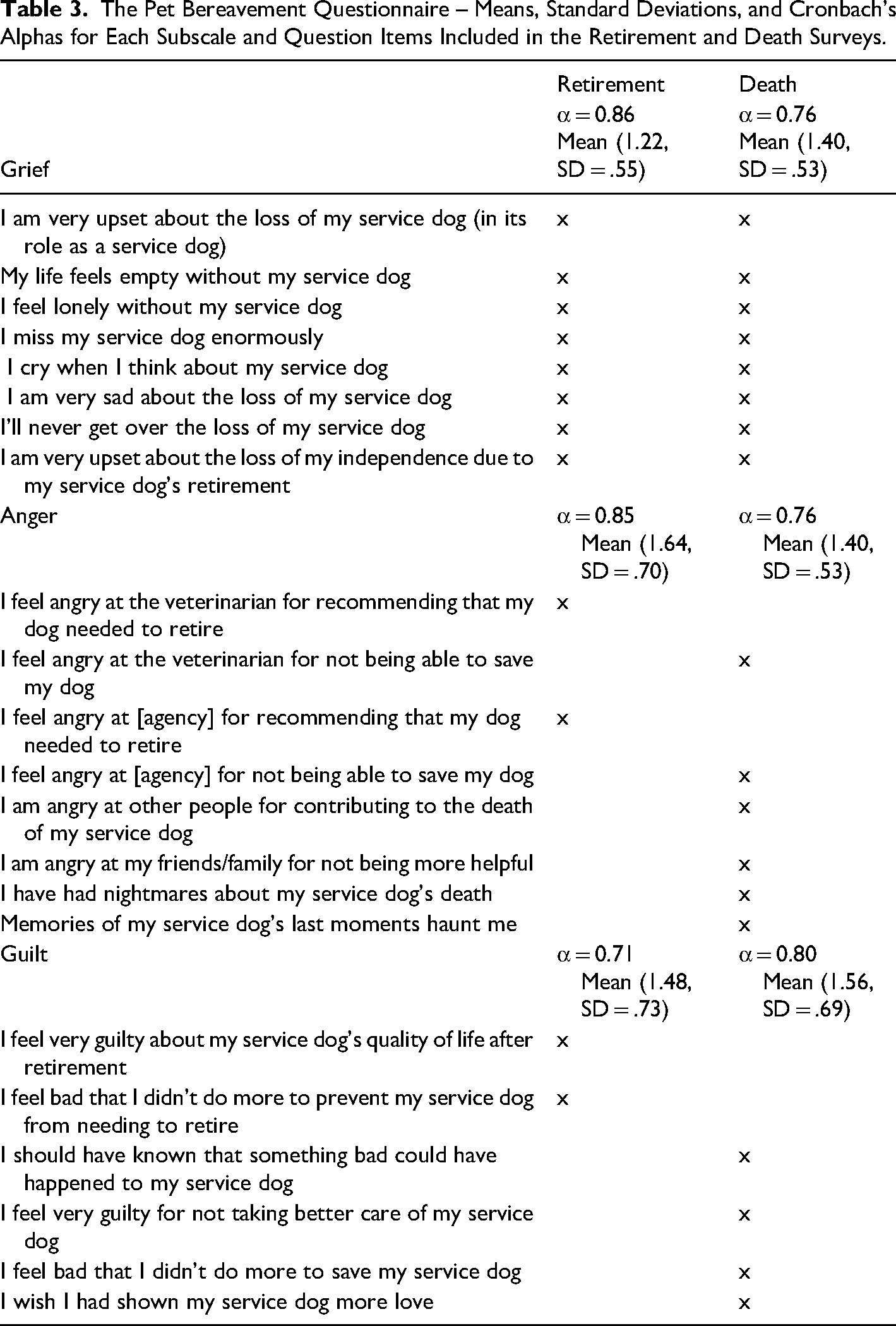
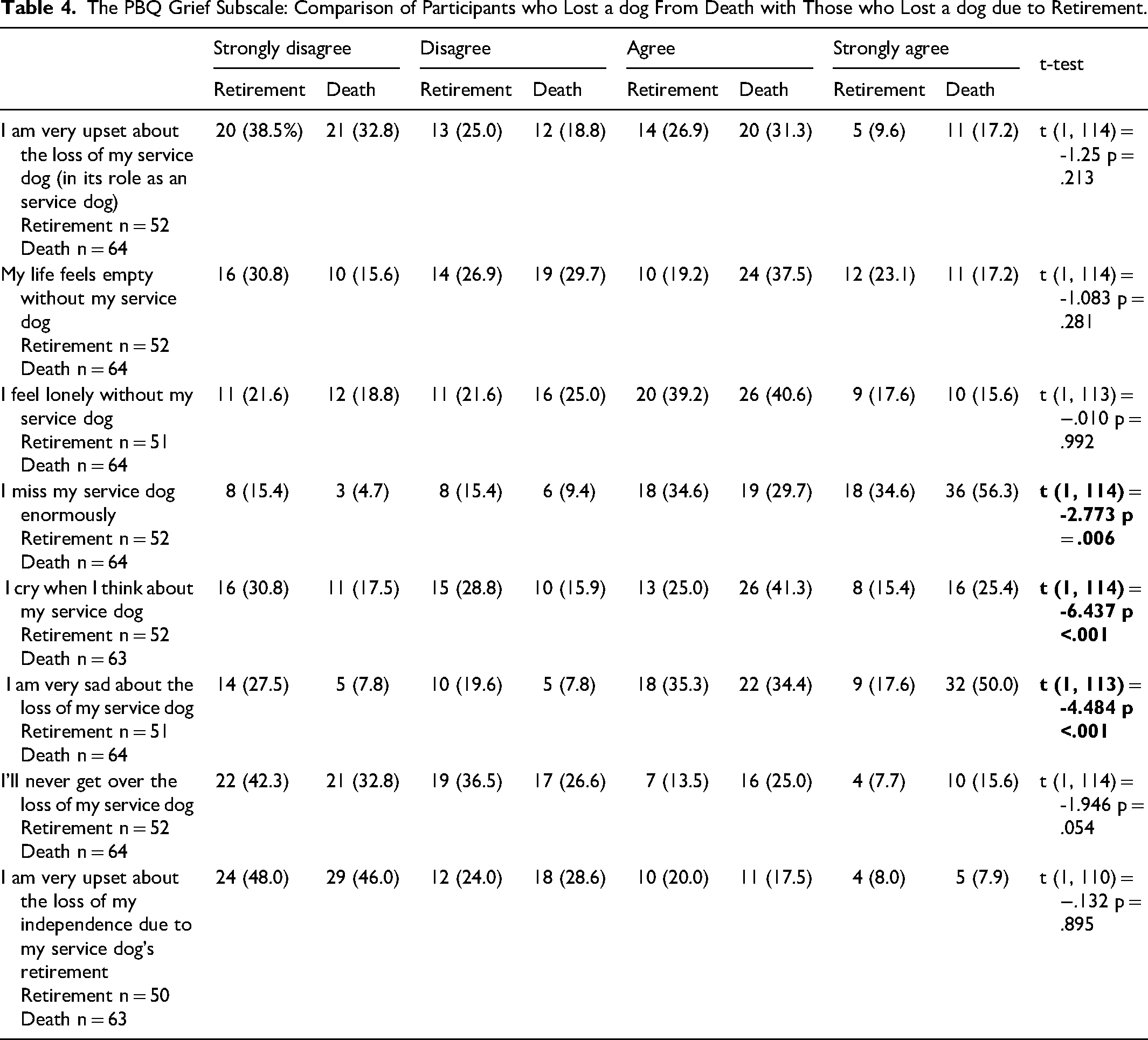
Means, standard deviations, Cronbach's alpha and the specific questions included in the Retirement and Death surveys for each of The Pet Bereavement Questionnaire subscales are reported in Table 3. There was a significant difference in the grief subscale between death and retirement loss (t (1, 112) = -2.403, P = .018). Because the other two scales were modified to reflect the different samples (retirement and death), this was the only subscale compared between the two groups. Responses for each question comprising The Pet Bereavement Questionnaire grief subscale by partners who had lost a dog due to retirement or death are reported and compared in Table 4. Partners who lost a dog due to retirement were more likely to disagree with the statements “I miss my service dog enormously (t = 2.77, P = 0.006); I cry when I think about my service dog (t = 6.44, P <0.001; and I am very sad about the loss of my service dog (t = 4.48, P <0.001).
The Pet Bereavement Questionnaire – Means, Standard Deviations, and Cronbach's Alphas for Each Subscale and Question Items Included in the Retirement and Death Surveys.
The PBQ Grief Subscale: Comparison of Participants who Lost a dog From Death with Those who Lost a dog due to Retirement.
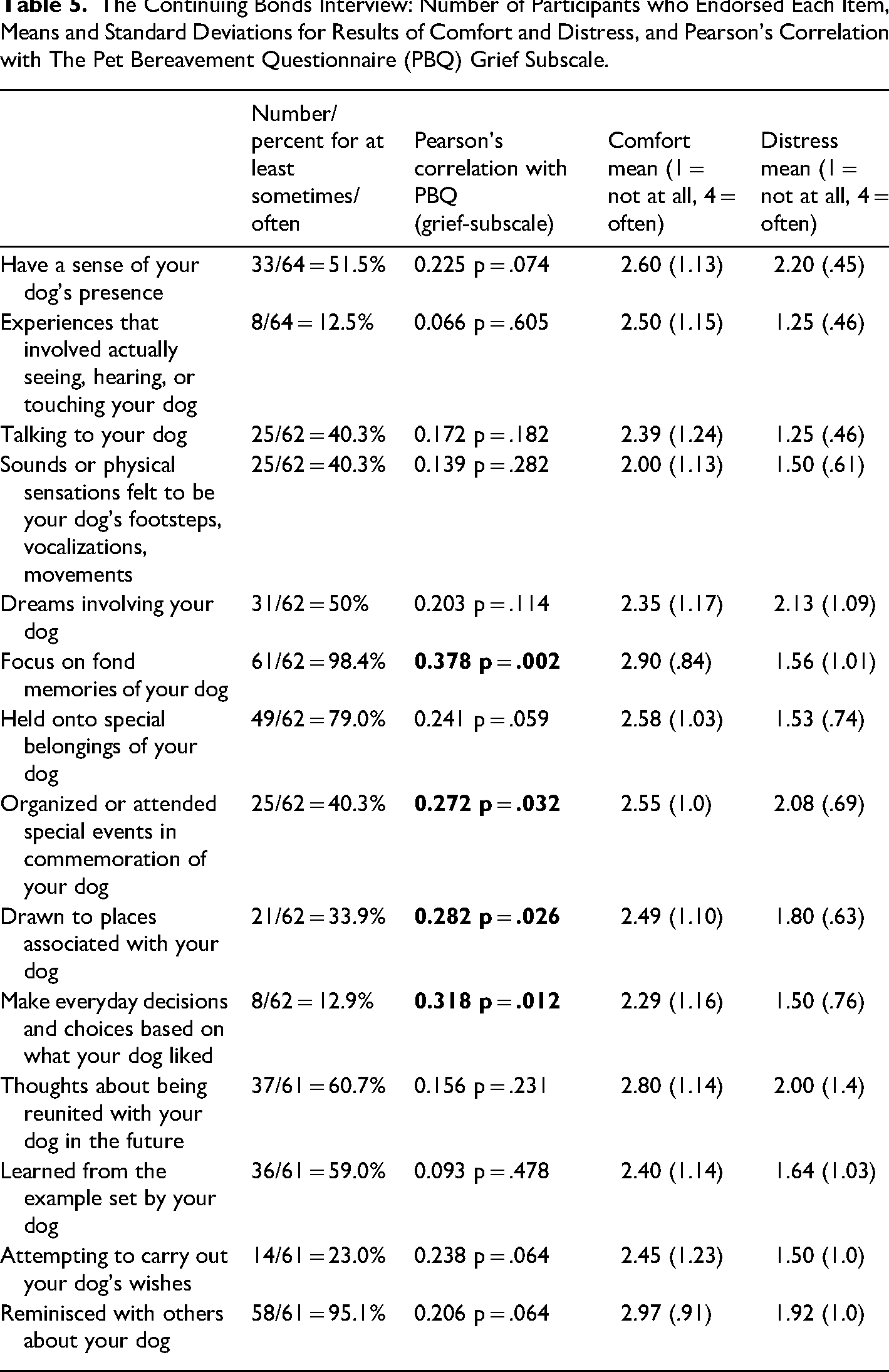
The number and percent of participants who endorsed each item of The Continuing Bonds Interview items, means and standard deviations for the potential resulting impact of comfort and distress, and Pearson's correlation with The Pet Bereavement Questionnaire grief subscale are summarized in Table 5. The Continuing Bonds Interview items that correlated with The Pet Bereavement Questionnaire grief subscale included: Focus on fond memories of deceased dog (0.38, P = 0.002); Organized or attended special events in commemoration of deceased dog (0.27, P = 0.032); Drawn to places associated with deceased dog (0.28, P = 0.026); and Make everyday decisions and choices based on what deceased dog liked (0.318, P = 0.012).
The Continuing Bonds Interview: Number of Participants who Endorsed Each Item, Means and Standard Deviations for Results of Comfort and Distress, and Pearson's Correlation with The Pet Bereavement Questionnaire (PBQ) Grief Subscale.
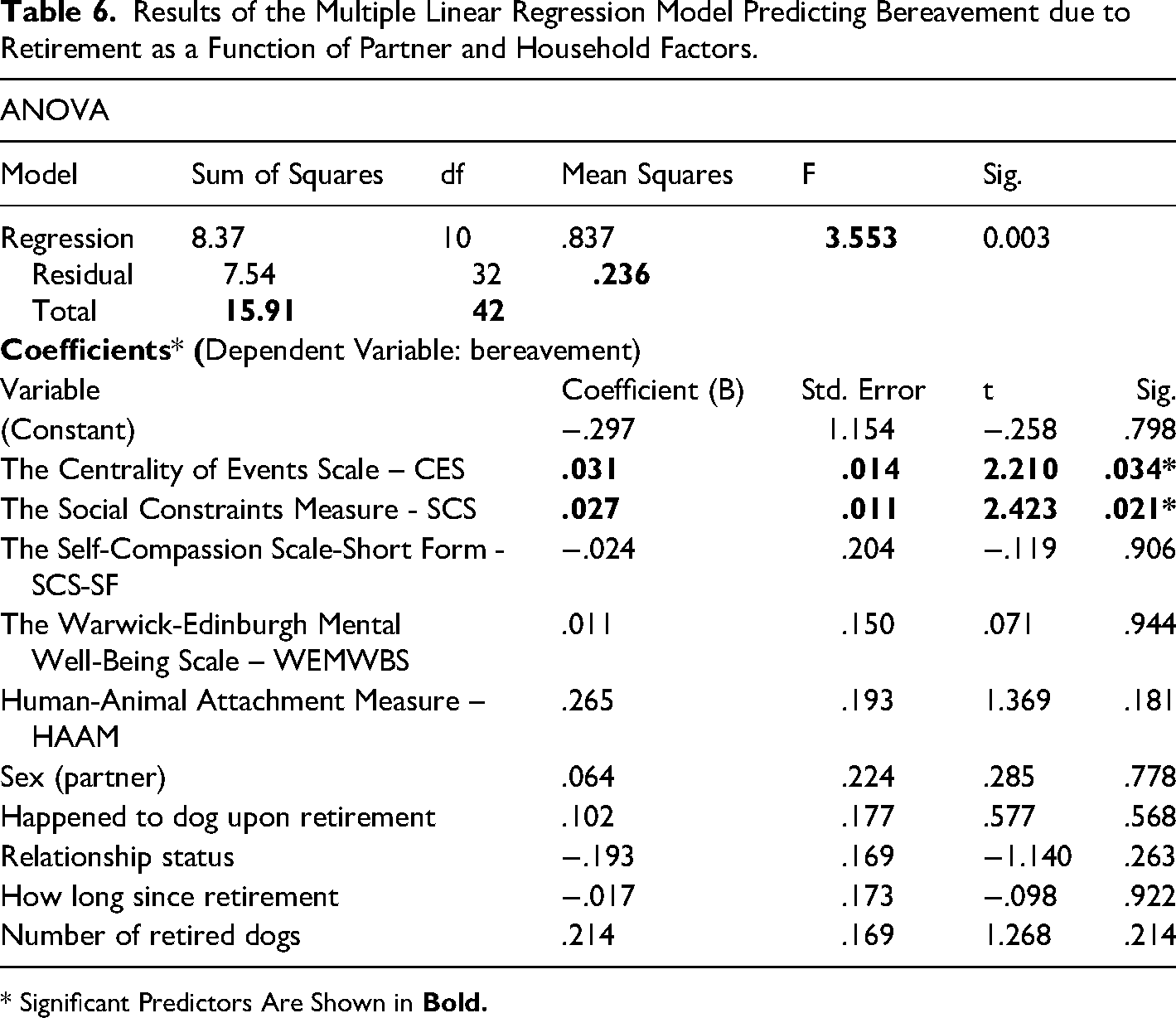
Linear regression was conducted on the total bereavement score, as measured by The Pet Bereavement Questionnaire, of the retirement sample to determine the impact of The Centrality of Events Scale, The Social Constraints Measure, The Self-Compassion Scale-Short Form, Human-Animal Attachment Measure, and The Warwick-Edinburgh Mental Well-Being Scale, while controlling for what happened to the dog upon retirement (kept as pet or did not keep), how long ago the dog retired (within last two years or longer), number of retired dogs (1 or more than 1), and partner demographics (sex, relationship status). The multiple regression model predicting total bereavement score for partners whose dogs had retired was significant (F10 = 3.55, P = 0.003), with an R2 of 0.526. Significant predictors of bereavement included The Centrality of Events Scale (B = .031; p = 0.034) and The Social Constraints Measure (B = −.027; P = 0.21). Complete results for the regression analysis are shown in Table 6.
Results of the Multiple Linear Regression Model Predicting Bereavement due to Retirement as a Function of Partner and Household Factors.
* Significant Predictors Are Shown in
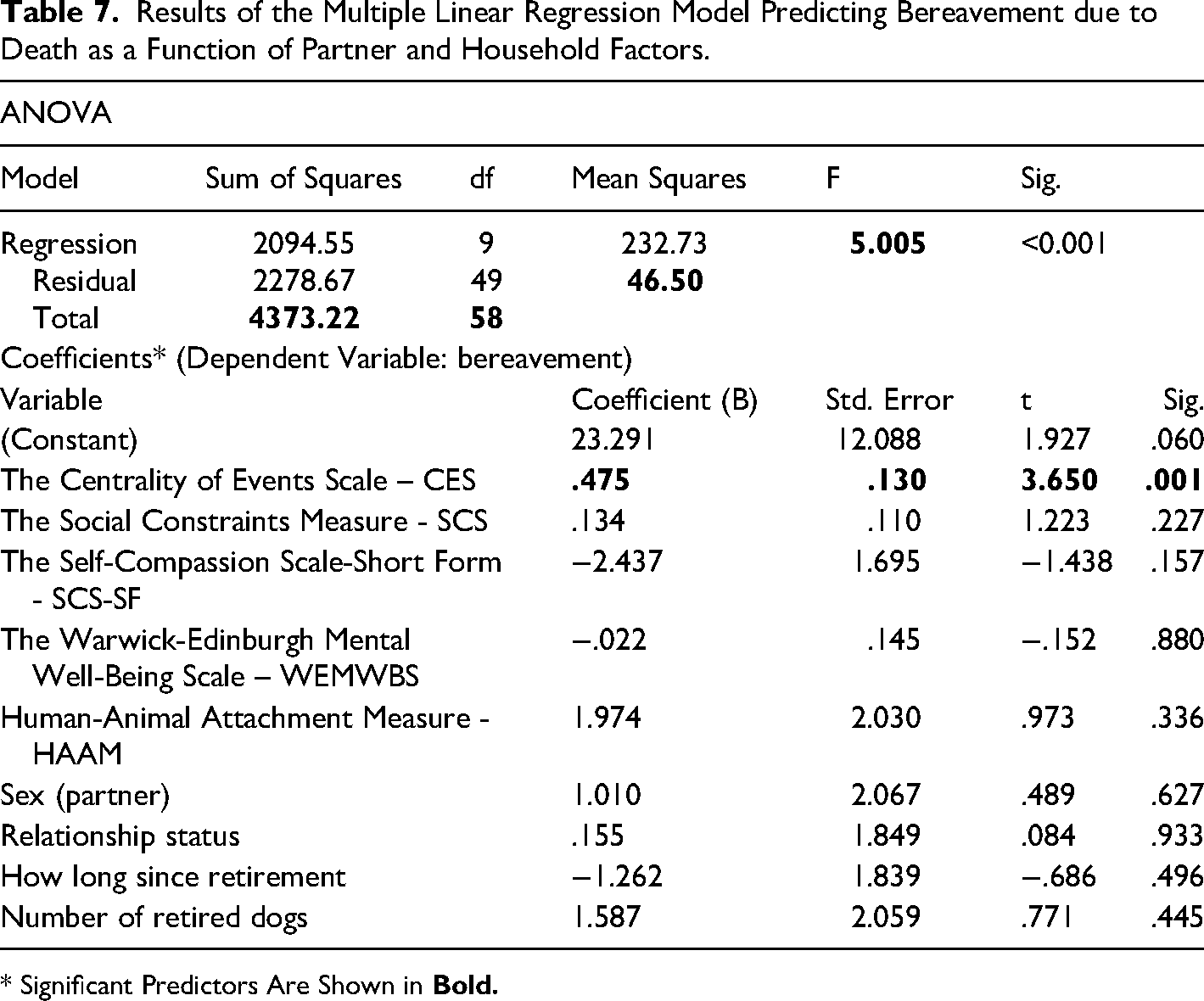
Linear regression was also conducted on the total bereavement score, as measured by The Pet Bereavement Questionnaire, of the death sample to determine the impact of The Centrality of Events Scale, The Social Constraints Measure, The Self-Compassion Scale-Short Form, Human-Animal Attachment Measure, and The Warwick-Edinburgh Mental Well-Being Scale, while controlling for how long ago the service dog died (within last two years or longer), number of service dogs that had died (1 or more than 1), and partner demographics (sex, relationship status). The multiple regression model predicting total bereavement score for partners whose dogs had died was significant (F9 = 5.005, P < 0.001), with an R2 of 0.479. The only significant predictor of bereavement was The Centrality of Events Scale (B = .475; P = .001). Complete results are shown in Table 7.
Results of the Multiple Linear Regression Model Predicting Bereavement due to Death as a Function of Partner and Household Factors.
* Significant Predictors Are Shown in
Discussion
This study was designed to better understand how service dog partners experience the loss of their service dog through either death or retirement. When assessing overall grief, as measured by the Total Bereavement Scale, we found higher grief scores for those whose service dog died compared to those whose dog retired. For all participants, however, these grief scores were comparable to other pet loss studies (Behler et al., 2020). So, while the nuances of the types of losses associated with service dog retirement and death may be different than pet loss, the magnitude of grief appears similar. Perceptions of social constraints and feelings related to the centrality of the event were both predictors of overall grief for those who lost a dog due to retirement, while only centrality of event feelings predicted reported grief level for those experiencing a death. It is of interest to note, however, the non-significant predictors of grief including bond level, mental health, and self-compassion. These results are helpful in guiding the development and enhancement of supportive services for grieving service dog partners.
The importance of social connections during times of loss has been documented in studies pertaining to both animal and human loss (Bellet et al., 2018; Bussolari et al., 2018; Habarth et al., 2017). Retirement is not a common type of loss and therefore, perhaps less understood by others, and as a result, may be more difficult to discuss. Partners may not have the same social support needed when their service dog retires as compared to those whose service dog has died. It is suggested that service dog organizations, given their intimate knowledge of the impact of this type of loss, are in a unique position to be able to offer proactive support services to partners before, during and after a dog retires.
With respect to event centrality, for both the retirement and death sample, the level to which these individuals created meaning around the loss appears to predict the extent of their grief. Similar findings have been reported in studies pertaining to human loss (Bellet et al., 2018; Boelen & Prigerson, 2012; Rozalski et al., 2016). Centrality of event, the degree to which the memory of a traumatic life event forms a turning point in one's life-story and becomes a central component of a one's identity (Berntsen & Rubin, 2006) has been associated with heightened levels of distress rumination and negative thoughts following a loss (Boelen, 2009). This appears especially true when someone has been unable to create a meaningful narrative around the loss (Bauer & Park, 2010; Gillies & Neimeyer, 2006; Neimeyer et al., 2006). People desire to create meaning of negative events and as such, this coping strategy is a major component of healthy bereavement (Neimeyer, 2016). When someone is unable to effectively make meaning of a loss, that event's centrality in the individual's life narrative can adversely affect bereavement. Yet, the creation of adaptive meaning making can actually serve as a buffer against the effect of the loss's centrality (Bellet et al., 2018).
Given the nature of service dogs and the need for frequent and rapid replacement, and the potential lack of opportunity for resolution, it is likely that many partners are not able to take the time needed to effectively make meaning of the loss. Offering grieving partners other types of temporary support besides a service dog to help with daily activities might be one option to help give these partners the time they need to work through their loss before acquiring a new dog. The use of narrative constructivist therapy may be of benefit during this time of transition. Directed journaling (Lichtenthal & Neimeyer, 2012) or the creation of epitaphs or life imprints, in which people reflect on the imprint the lost dog has had on their lives, are examples of this type of supportive therapy (Neimeyer, 1999).
In the current study we also investigated the continuing bonds strategies employed by partners of a deceased dog to garner more information regarding the use of these types of coping strategies. Bereaved partners reported using a wide range of continuing bonds strategies. Similar to previous studies (Bussolari et al., 2018; Habarth et al., 2017), the top three endorsed continuing bonds expressions in terms of frequency were fond memories, reminiscing, and use of deceased pet's belongings for comfort. In addition, grief level was significantly correlated with “focus on fond memories of the deceased dog”, “organized or attended special events in commemoration of deceased dog” and “make everyday decisions and choices based on what deceased dog liked” suggesting that these coping strategies are ones utilized by service dog partners with higher levels of grief. Furthermore, as seen in previous studies (Habarth et al., 2017; Packman et al., 2011), there was an overall tendency to experience continuing bonds as more comforting than distressing.
These findings have meaningful clinical implications for bereaved service dog partners. Our results confirm that individuals engage in continuing bonds following the death of their service animal. Yet, the development, use, and value of continuing bonds experiences are unique and individual. While some people adopt several forms of continuing bonds immediately upon death, others may develop them later, or not at all. Additionally, it should be noted that continuing bonds experiences often change over time. Importantly, it is not whether a person experiences continuing bonds that is most critical, but rather the degree of comfort or distress that is experienced from a particular kind of connection.
Conclusions and Future Research
These results suggest there is a need for additional psychoeducational materials and grief support for service dog partners that portray potential pre-loss and bereavement experiences. The inclusion of direct quotes and personal stories portraying the lived experiences of those who have lost their service dog partners, along with educational materials, may work in concert to promote feelings of universality, normalize the often ambiguous and disenfranchised service dog partners’ grief experiences, and offer guidance regarding the grieving process. Of importance, due to the increased risk of disenfranchised loss, those suffering a loss due to retirement may need additional, specifically tailored support.
This study has several limitations that should be noted. Because data were collected during the COVID-19 pandemic, results may differ if conducted during another, less stressful time. Additionally, service dog partners were only assessed one time, thus, it is suggested that future research could use a longitudinal, repeated measures research design. The sample was also limited to CCI partners with mobility issues or those with hearing impairments and therefore caution is suggested when generalizing to other types of service dog partnerships. It would be of value to conduct similar research with other types of service dogs (e.g., guide dogs for the blind; psychiatric service dogs; seizure alert dogs, etc.) to investigate if the same patterns and relationships exist given the specific service partners’ needs. Lastly, it would be helpful to evaluate the impact of supportive services created and implemented as a result of this study.
Footnotes
Acknowledgments
The authors would like to thank the service dog partners who participated in this study and Canine Companions for Independence.
Declaration of Interest
The authors report no conflicts of interest
Declaration of Conflicting Interests
The author(s) declared no potential conflicts of interest with respect to the research, authorship, and/or publication of this article.
Funding
The author(s) received no financial support for the research, authorship and/or publication of this article.
