



Abstract
Keywords
Incorporating outdoor swimming and water safety (SWS) lessons in primary schools can help children develop the competencies they need to enjoy outdoor activities. It can enable them to adapt to various water situations, which helps them stay safe in and around water. Although outdoor SWS lessons offer these advantages, they come with unique challenges and risks, such as rough weather and potentially hazardous water conditions.
Learning to swim and understanding water safety in an outdoor environment can significantly reduce the risk of drowning (Button et al., 2020; Guignard et al., 2020; Kjendlie et al., 2013; van Duijn et al., 2021). The number of drowning deaths in Norway from 2019 to 2023 was 416, averaging 83 per year, including 17 children between the ages of 1 and 14 (Norwegian Society for Sea Rescue, 2024). Although the causes of drowning varied, all cases of death by drowning occurred in outdoor water environments, such as lakes, rivers, and the sea (Norwegian Society for Sea Rescue, 2024). Since SWS lessons in school provide essential life skills and can potentially save lives in the process, they are highlighted in Norway's physical education (PE) curriculum (Norwegian Directorate for Education and Training, 2020).
Outdoor SWS lessons provide access to natural water environments that offer authentic learning environments. Children are unlikely to transfer SWS skills directly from a swimming pool, which is a closed, predictable environment, to open water situations (Kjendlie et al., 2013). Outdoor water bodies offer a variety of challenges and opportunities for children, such as learning to float in turbulent water (van Duijn et al., 2021). Despite the brief duration of most SWS programs, children will still significantly improve their SWS competence (Button et al., 2020). It is important to incorporate unpredictable elements into SWS lessons (Guignard et al., 2020), given that diverse water environments can increase a child's quarticity—that is, their physical and mental capacity to habituate to the water element (Varveri et al., 2015). Therefore, children who experience cold and unsteady water have a high probability of learning valuable SWS skills from practice.
While swimming in outdoor water environments, children are exposed to a variety of stressors, such as cold water (Tipton et al., 2017), waves (Kjendlie et al., 2013), currents (Moran & Ferner, 2016), deep water (Christie & Elliott, 2024), seaweed, and blurry water (van Duijn et al., 2022). Although stress from outdoor SWS lessons can offer children valuable learning opportunities (Button et al., 2023), it can also negatively affect their ability to swim by creating a fear of water (Peden & Franklin, 2020). Children's perceptions and experiences of stress in outdoor water situations can also influence their ability to adapt, cope, and regulate themselves (Kruke, 2021).
To sum up previous studies, teaching aquatic skills in open-water environments allows children to navigate in diverse water and build adaptive skills, which may not be fully addressed in pools. When organizing outdoor SWS lessons, teachers emphasize collaborative management, experiential learning, risk awareness, and the principle of “challenge by choice” as key components of these lessons (Lundhaug & Eriksen, 2022). In the current study, we will examine how children experience these lessons.
Theoretical Framework
The theoretical framework of this study is based on the cognitive activation theory of stress (CATS) (Ursin & Eriksen, 2004) and experiential learning (Kolb, 2015; Roberts, 2008). Within this framework, we investigate how children experience stress, coping, and learning during outdoor SWS lessons.
The Cognitive Activation Theory of Stress
Although many view stress as harmful and something to be avoided whenever possible, others suggest that stress is beneficial and that we should actively seek it out (Selye, 1983; Ursin et al., 1978). In this study, the experiences where stress is related to coping and learning are explored and the CATS (Ursin & Eriksen, 2004) serves as the foundation for understanding stress and how it is managed. In CATS, the stressor or potentially stressful situation is not necessarily important for the experience and the stress response but rather the individual's perception and evaluation of the stressor or situation (Ursin & Eriksen, 2004).
The brain filters all stressors before they gain access to the response system. According to CATS, there are two main filters: one related to stimulus expectancy (what does the stressor mean) and the other related to response outcome expectancy (i.e., what do I expect will be the outcome of my responses). The latter is based on previous learning and experience. In CATS, coping is defined as positive response outcome expectancy (Ursin & Eriksen, 2004). Thus, individuals who have a positive expectation of the outcome—that is, those who expect to overcome the challenges they are facing—are coping. An example of a statement in line with positive response outcome expectancy is: “My strategies (i.e. responses) are effective and will lead to a good outcome for me.” The contrast of coping is having a negative response outcome expectancy—that is, the belief that my strategies will yield a negative outcome for me. This is related to feelings of hopelessness. An individual may also establish no response outcome expectancy, meaning that the expectancy of the outcome is uncertain: sometimes I will succeed, and sometimes I will fail, and I cannot predict the outcome of my efforts. This is related to helplessness (Ursin & Eriksen, 2004). To give an example from outdoor SWS lessons, a child that has learned to face different challenges may perceive entering cold water (the stressor) as an exciting opportunity. The child might expect to be able to stay in the water and even swim in it. This excitement and exposure to the cold water can trigger a brief stress response, which may enhance engagement and confidence. As a result, this positive experience can further strengthen the expectation of successfully handling similar situations in the future. On the other hand, another child might find the idea of entering cold water overwhelming or frightening, expecting they will not be able to handle it. Although both children face the same stressor, individual response outcome expectancies may significantly affect their experiences and stress response.
Furthermore, individuals who believe they will be able to overcome a difficult situation have established the expectation that they will do so successfully (Ursin & Eriksen, 2010). Children's past experiences and learning are crucial to how they expect to cope with challenges in educational settings, including outdoor SWS lessons. Previous positive experiences will strengthen their expectancy of a positive response outcome. Furthermore, mastery-oriented learning climates can emphasize individual autonomy and are therefore central to creating and maintaining positive response outcome expectancy (Eriksen et al., 2005). Therefore, children who experienced coping with challenging conditions, preferably supported by a learning climate geared toward coping, are more likely to develop positive response outcome expectancy.
While CATS highlights coping as the positive expectancy of the outcome (“Will I cope?”; i.e., coping as an expectancy), a different perspective is to use the term coping for coping strategies (“What will I do to cope?”; i.e., coping as a strategy) (Lazarus and Folkman, 1984). Although everybody uses different strategies to cope with stressors or stressful situations, according to CATS, coping is independent of the strategies used. It is the expectancy that the strategies are effective that is coping, and this is what will dampen the stress response and the subjective report of the experience (Pensgaard & Duda, 2002). Coping strategies are the dynamic and ongoing cognitive and behavioral efforts individuals make to handle specific external or internal demands (stressors) that they perceive as challenging or that surpass their resources (Lazarus & Folkman, 1984). Coping, according to this definition, is both process-oriented, in which it can change over time, and contextual, in which it varies based on the situation. A total of 400 hundred distinct coping strategies have been identified for various stressors (Skinner et al., 2003). Coping strategies may be categorized into problem-focused and emotion-focused coping strategies (Baker & Berenbaum, 2007; Carver et al., 1989; Lazarus & Folkman, 1984; Pearlin & Schooler, 1978). In PE, it has been shown that children employ various coping strategies, including escaping the situation and different problem-solving strategies (Åsebø & Løvoll, 2023) as well as hiding techniques, such as clowning, being noisy, engaging in other activities and becoming passive (Lyngstad et al., 2016). However, in this study, we used the CATS definition of coping, in which coping is defined as positive response outcome expectancy and where coping is independent of the chosen strategies.
Experiential Learning
An experiential learning approach emphasizes learning from experience. Based on Roberts (2008), the focus of this study is on embodied experiences, which highlight senses, thoughts, feelings, and sensations. Embodied experiences are associated with “the lived body,” which is a central category in Maurice Merleau-Ponty's (1964) texts. “The lived body” does not distinguish between the subjective sphere and objective reality: “The distinction between subject and object is blurred in my body” (Merleau-Ponty, 1964, p. 167). The body becomes both an object and a subject in the act of perception (Merleau-Ponty et al., 2012).
In its role as a subject, the body explores and creates new meanings from external reality. The body-subject is deeply intertwined with its surroundings, that is nature in this case, and cannot be separated from it. The body is always there, situated, seeing, touching, tasting, and smelling from a particular perspective. When the body is so immersed into nature, it is difficult to define the boundary between the body and nature. However, not all interactions with nature result in unity. This “union” with nature implies movement and attention.
In the context of children's experiences during outdoor (SWS) lessons, the lived body concept becomes particularly relevant. When children interact with water, their bodies are not merely passive recipients but active participants in the experience. For example, as they float or swim, the boundary between their bodies and the water becomes blurred. The water is perceived not just as an external environment but as something felt, moved through, and responded to. The children's senses, thoughts, and emotions are deeply engaged, creating embodied experiences that are vital for learning SWS skills.
The combination of firsthand experience and reflection can foster greater ownership of learning, reveal insights, and cultivate deeper reflections on experiences (Williams & Wainwright, 2020). This approach is based on Kolb's (2015) model of experiential learning, characterized by concrete experience, reflective observation, abstract conceptualization, and active experimentation. Outdoor environments are ideal for experiential learning, as they are open learning environments that provide many opportunities for children and teachers to interact, learn, and cocreate (Harris, 2018). Furthermore, Harris (2018) emphasized that outdoor locations offer a more flexible and responsive learning environment than the classroom. Children who succeed in experiential learning become autonomous learners with the skills to work alone or in groups (Moon, 2004). Outdoor education, in general, provides children with opportunities for personal growth, increased physical activity and social competence, enhanced school engagement, and improved health and well-being (Marchant et al., 2019). Thus, outdoor experiential learning is situated and task-oriented and complements classroom learning. However, supervision is crucial to ensuring the safety of children during these lessons (Wickens et al., 2021).
The peer buddy system is often used in experiential learning settings, especially in outdoor education, as it aligns with the core goals in outdoor education, such as growth and learning, described by the models developed by Miles and Priest (1990). During outdoor education, the goal is to challenge the students (Ford et al., 1993; Williams & Wainwright, 2020), which resonates well with peer support. Through peer buddy systems, social interactions progress from getting acquainted to building trust and dealing with challenges during outdoor activities (Bisson, 1999). Peer buddy learning environments improve participants’ leadership and teamwork skills (Kourtesopoulou & Kriemadis, 2021). Through outdoor SWS lessons in a peer support environment, children can learn to rely on each other. In outdoor SWS lessons, learning to keep oneself and others safe is emphasized (Moran et al., 2011).
Although there is little research on outdoor SWS lessons in schools, outdoor SWS lessons have been studied through observations and interviews with educators recruited from swimming clubs, teachers, and leaders from schools (Junggren et al., 2018; Lundhaug, 2024; Lundhaug & Eriksen, 2022; van Duijn et al., 2021). The aim of the study was to provide new knowledge about stress, response outcome expectancy, and experiential learning by exploring outdoor SWS lessons in a Norwegian primary school setting. We explored the children's subjective experiences with outdoor SWS lessons in PE. The research question is: How do children articulate their experiences of stress, coping, and learning during a week of outdoor SWS lessons?
Materials and Methods
Children's experiences were examined using qualitative methods to gain insight into a single case: a unique school practice (Postholm, 2019). To foster critical thinking, analyze embodied knowledge, and promote creativity in outdoor studies, we conducted a visual- and narrative-based methodology (Gurholt, 2019). We used photo-elicitation interviews (PEIs), wherein the research team was responsible for capturing and selecting photos, as well as identifying topics and ideas that could be meaningful to the participants. This approach fosters participant engagement and ownership of the conversation, which can provide insight into their experiences (Epstein et al., 2006; Torre & Murphy, 2015). Using photos as triggers helps participants articulate their own interpretations of the situations, fostering familiarity and engagement (Hurworth, 2004). We conducted PEIs in focus groups to gain insight into the differences and similarities in experiences and viewpoints among children. The data from five focus groups of PEIs conducted with primary school children were analyzed using template analysis (Brooks et al., 2015).
Recruitment and Sample
Thirty-five children from a Norwegian primary school were invited to participate in the study. The school was strategically and purposefully recruited (Patton, 2015). Based on recommendations from the author's university colleagues and other researchers, the primary school was selected due to its established practice of outdoor SWS lessons. Of the 35 invited children, 33 (13 girls and 20 boys) agreed to participate. The children were between 8 and 12 years old.
Setting
The study was conducted in Norway at a public beach in the early fall. The beach offered a camp with tents that served as changing rooms, an open fireplace for preparing lunch and shallow beach entry areas for outdoor SWS lessons. Herman (teacher) provided beginner and intermediate SWS lessons on site. These lessons were part of an outdoor week of crossdisciplinary learning, which included topics such as arts and crafts, health and nutrition and math. The weather throughout the week was sunny, with little wind and air temperatures of 15–20°C. Water temperatures were 14–16°C, which is considered cold water (Tipton et al., 2017). All the children wore 3 mm wet suits provided by the school. The outdoor SWS program included learning goals, such as safely entering the water, floating, controlling their breath, diving, self-rescuing, and rescuing each other. For safety reasons, the children were divided into four groups, with a maximum of eight children in each group. A buddy system was introduced to teach responsibility, where each child chose a partner to look after during lessons, ensuring their presence and informing each other before leaving the group. For more details, see Lundhaug and Eriksen (2022).
Data Collection
All outdoor SWS lessons with all children from four different grades were filmed for 4 days. The first author and a research assistant video-recorded the outdoor SWS lessons using handheld waterproof action cameras. They filmed while standing in the water with the children and Herman. We made still photos by extracting them from the video footage. These photos were used as triggers for the children in PEIs to boost their emotional memories and clarify or bring meaning to a situation. To help them remember details from their experiences, the children were shown pictures of their groups, rather than just themselves. The open-ended questions allowed for a more profound exploration of the children's perspectives. All 33 children participated in PEIs, which were conducted in four groups identical to those in the SWS lessons. Each of the PEIs lasted 35–50 min. An overview of the collected data is provided in Table 1.
Overview of the Collected Data.
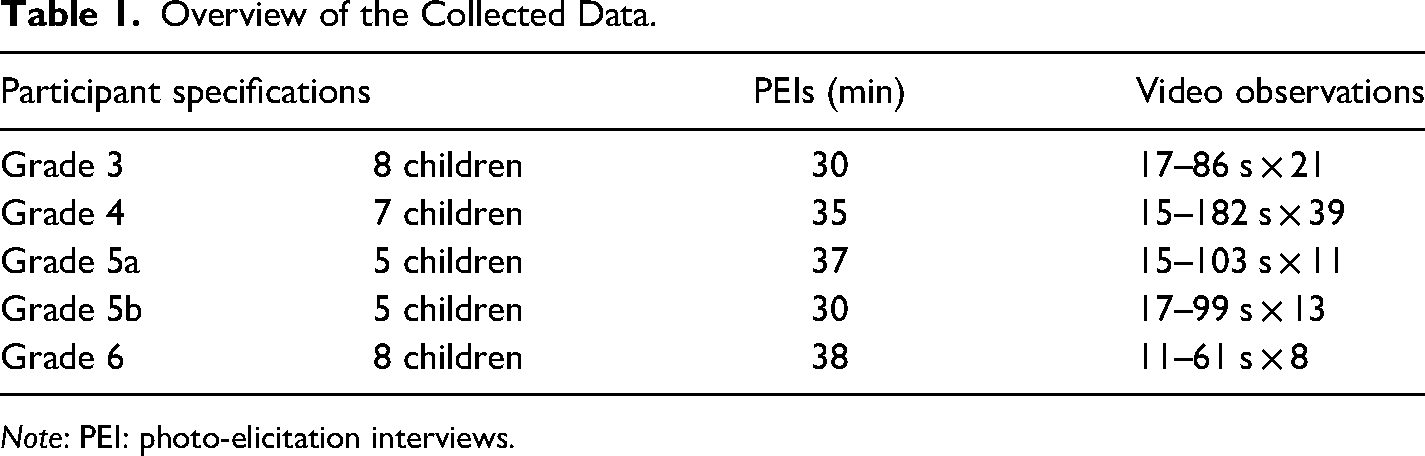
Note: PEI: photo-elicitation interviews.
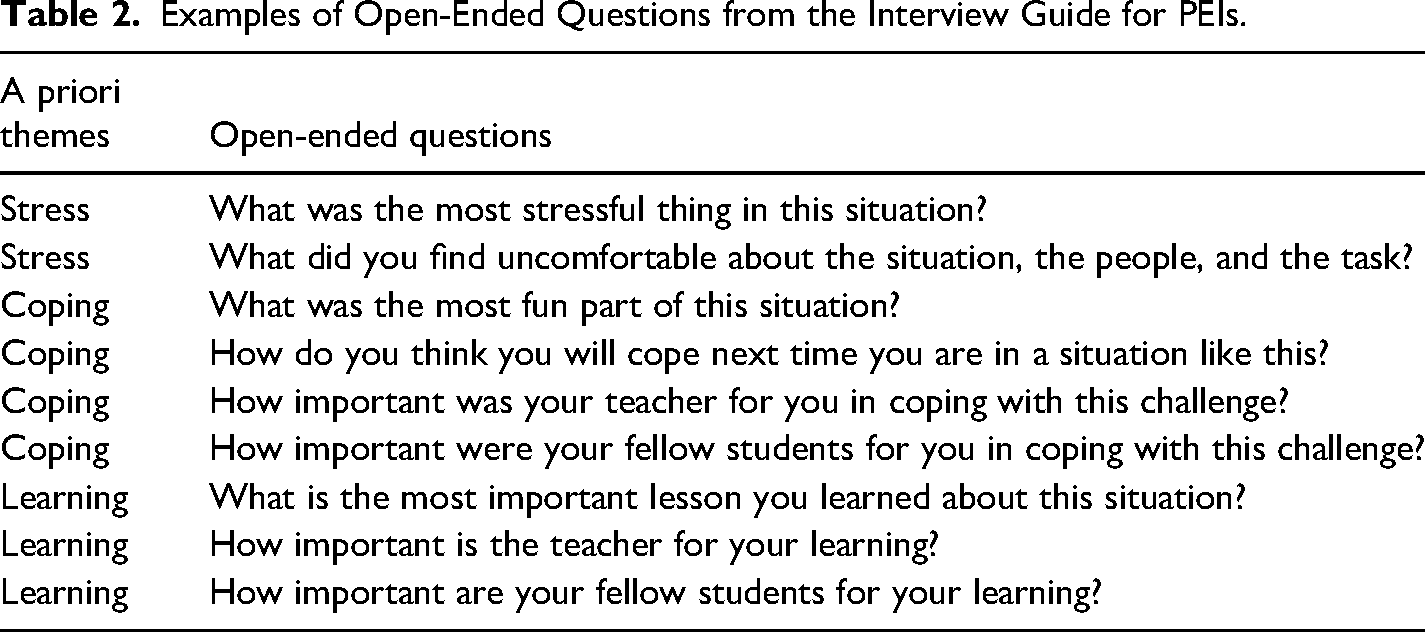
During PEIs, 4–5 still photos were shown to motivate the children to recall, associate, reflect, and discuss specific experiences from the outdoor SWS lessons. PEIs were semistructured, and an interview guide was used centered around the children's experiences of stress, coping, and the learning process (see Table 2 for examples of open-ended questions from the interview guide for PEIs). Before the data collection, PEIs were piloted with two children aged 10, after which adjustments were made to ensure that the questions, format, and photos used were appropriate, clear, and engaging in eliciting the desired responses. PEIs took place the same week that the children attended SWS lessons at the local beach.
Examples of Open-Ended Questions from the Interview Guide for PEIs.
Data Analysis
The data were analyzed using template analysis, which provides a flexible framework for organizing and interpreting data using predefined themes derived from mainstream theories (Brooks et al., 2015). Data from video observations and PEIs were systematically condensed through a structured process of template analysis followed by the procedural steps of King and Brooks (2017), such as familiarization with the data, preliminary coding, clustering, producing an initial template, applying the template to new data and modifying as needed, developing themes, and final interpretation. The observations were based on our video recordings to contextualize the phenomena being examined (Blikstad-Balas, 2017). We studied the children's body language in the videos and the statements they made in PEIs to find answers to their experiences of stress, coping, and learning in the SWS lessons (Canning, 2017).
The video footage was coded using the components of the outdoor SWS lessons, such as warm-up, swimming, breath control, underwater swimming, and lifesaving. Using video allowed us to capture still photos of specific moments. The CATS framework (Ursin & Eriksen, 2004) guided our selection of pictures for PEIs, leading us to choose images that represented stress, coping, or learning, which served as a priori themes (Brooks et al., 2015).
To identify relevant still photos, we reviewed the video footage and focused on moments where the children's behavior, body language, and facial expressions suggested signs of stress (e.g., hesitation or discomfort), coping (e.g., attempts to overcome challenges), or learning (e.g., mastery of a task or increased confidence). We looked for body language that represented stress, such as gasping, uncontrolled breathing, shaking, blue lips, stiff movements, hesitating, and avoiding the water exercises (Golden & Tipton, 1988). Furthermore, we also examined their body language in order to determine if they were coping with the challenging water environment, such as smiling, having an open posture, having a relaxed attitude, shouting with joy and excitement, jumping and splashing in the water with joy as well as trusting the teacher with direct eye contact and actively following his instructions (Dael et al., 2012; Furley & Schweizer, 2020).
The still photos that best illustrated elements of stress, coping, or learning were selected in alignment with the a priori themes derived from CATS (Ursin & Eriksen, 2004). Using this approach, the images chosen for the PEIs were grounded both in theoretical perspectives and in observable experiences, representing relevant aspects of stress, coping, and learning. (See the themes and descriptions of the photos in Table 3.)
Examples of Photos Used in PEIs.
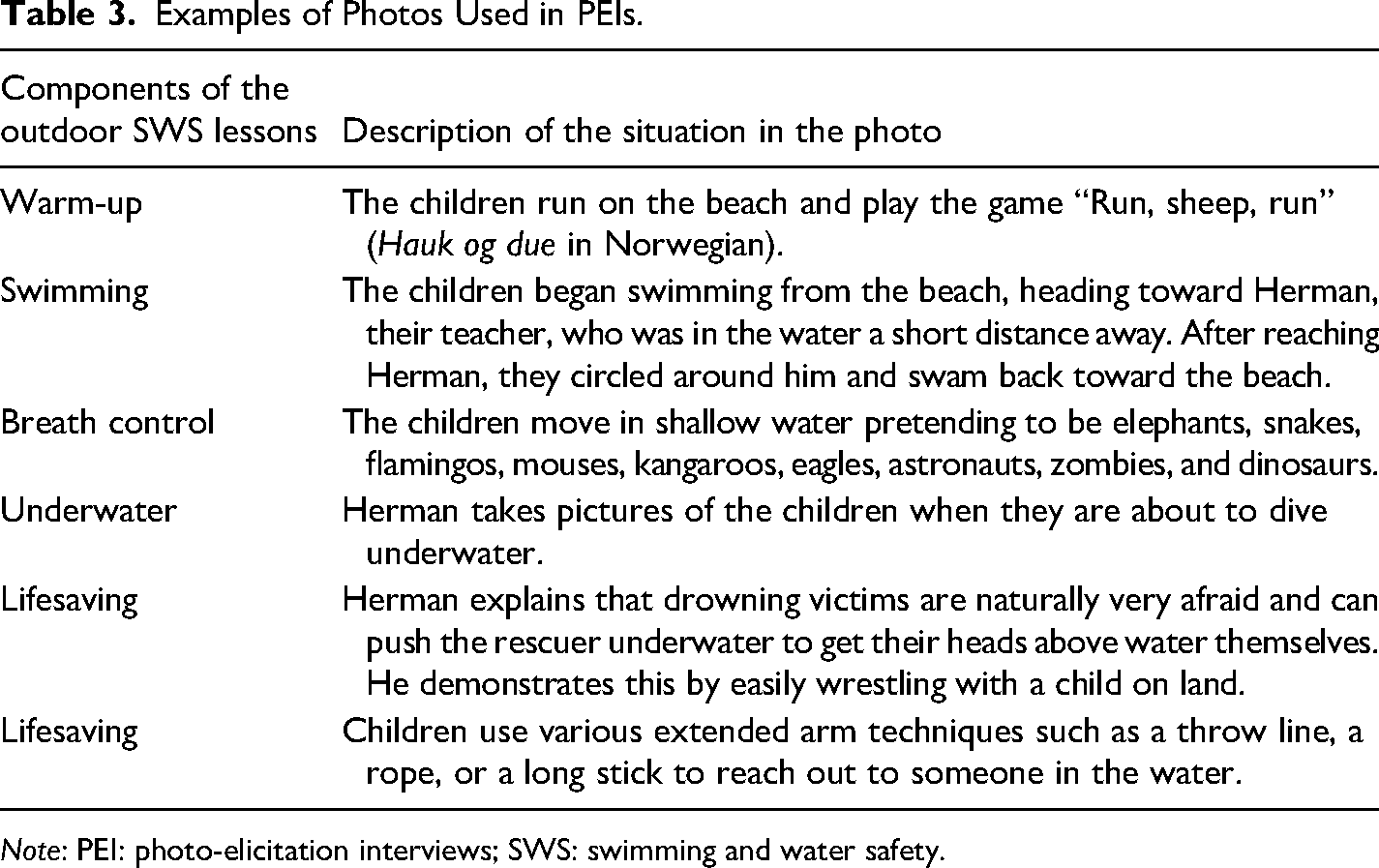
Note: PEI: photo-elicitation interviews; SWS: swimming and water safety.
Ethics
When children are involved in a study, it is essential to address specific ethical considerations to ensure their safety, well-being, and autonomy (Canning, 2017; Montreuil et al., 2021; Smith, 2011). Children may feel pressured to participate because the teachers hold authority and influence over them. Even if they are uncomfortable or unsure about participating, a child may feel compelled to say “yes” to avoid disappointing their teacher or standing out. To address these concerns, both Herman and we, as researchers, clearly explained that participation was voluntary and that declining would have no negative consequences. The children, parents, headteacher, and teachers received information about the research project and had the opportunity to ask questions before and during the outdoor week. Thirty-three children agreed to be video-filmed and to participate in PEIs with consent from their parents. The teachers collected written consent from both the children and their parents. The Data Protection Services at the Norwegian Centre for Research approved the study, which is part of a larger research project (No. 640611). Participation in the study was voluntary, and we informed the children that they could withdraw their consent at any time without losing their SWS lessons or facing other negative consequences, with all video footage consequently deleted. The data were encrypted and all personal information was treated confidentially. All participants in this article were given a pseudonym. The parenthesized numbers after the pseudonyms are the child's age. The researchers did not know the children or teachers previously.
Findings
Guided by our interest in stress, coping, and learning experiences, we explored the children's perspectives. They informed our understanding of what they described as stressful in the SWS lessons. Additionally, they shared insights into how they experienced coping and what they learned from these experiences.
What Did the Children Describe as Stressful in the SWS Lessons?
Video observations revealed that the children often hesitated to engage in the activities initially but gained confidence over time. In contrast, PEIs highlighted how children perceived these moments, with one child describing the experience as “exciting but scary.” In PEIs, in response to pictures showing stiff bodies and grimacing faces, children explained they found it challenging to adapt gradually to cold water. In video observations, we saw some children hesitated to enter the water, while others lifted their arms to avoid immersion with the arms in the cold water until they reached the desired depth. Many grimaced. We interpreted these embodied reactions to submerge in cold water as stressful situations that create feelings of stress. However, the trend was that most children overcame this initial hesitation relatively quickly and participated enthusiastically in the activities.
In PEIs, some children described the SWS lessons in open water in the morning as uncomfortable. They said it was colder in the morning and the sun would heat the water during the day. Casper (11) connected his experience from the SWS lesson to his general experiences from the sea where currents and other dangers could pose a threat. Some children feared unknown objects in the water, such as plants, crabs, and jellyfish. Thus, they tried to avoid murky water that could contain hidden unknown objects. However, when they saw what looked like a jellyfish, they typically stopped to observe and identify it, and some even explored whether touching it was painful. As Andrew (10) said, he thought one was a lion's mane jellyfish, but it was not. Instead, it was a moon jellyfish (Aurelia aurita).
Casper (11) did not like the taste of saltwater and said, “It makes me feel sick when I get saltwater in my throat.” The children also considered it unpleasant the first time they felt the water infiltrating their wetsuit. Trine (10) said, “It was freezing when we were asked to lie flat on our stomachs and float.” When asked when they felt stressed, Berta (10) answered, “For example, if the person in front of me swims hard and splashes with his feet, then I get water all over me.” In summary, these findings show that the children identified unpleasant marine plants and animals, cold and unsteady water, and disruptions from other children as stressful experiences.
How Did the Children Experience Coping?
The video data demonstrated a progression in children's embodied engagement, such as moving more spontaneously and playfully in the water during the week of outdoor SWS lessons. This was further supported by PEI data, where children reflected on how they were overcoming initial hesitating to experience coping. Some children expressed that they appreciated the amount of time and space provided, allowing them to experience coping by confronting the challenges at their own pace. For instance, we observed Thea (8) on land on the first day, visibly shivering. Despite repeated invitations from Herman to enter the water, she initially refused. However, when Herman extended his hand and asked if she would like to climb onto his back, she nodded and allowed him to carry her into the water. After the lesson, Thea said, “I want to go swimming tomorrow!” The next day, she smiled and ran out into the water until it reached her knees. On the first day, Thea said that she could not swim because she had not brought her swim shoes. On the second day, she remembered to bring the shoes, which, according to her, made her feel comfortable participating in the SWS lesson. It also seemed that Thea wanted to try swimming the next day because Herman had exposed her to the water.
PEIs highlighted how children highly valued Herman's guidance and support in coping with challenging moments. They appreciated his patience, cheerfulness, and energy. His SWS classes were fun because he had been teaching SWS for so long, they explained. According to Tiril (11), “He wasn't very strict. But he could be strict when he needed to be.” According to Casper (11), Herman has a pleasant mood, a positive attitude, and a sense of humor. He added that Herman had taught him how to keep calm when confronted with unfamiliar and challenging events that could make him panic. By focusing on controlled and calm breathing, Casper kept his composure, which allowed his panic to dissipate gradually, and he could continue his activity after concentrating on breathing for a few seconds. PEIs demonstrated how guidance provided by a competent teacher reinforces water skills and fosters the development of positive response outcome expectancy among children.
Both video observations and PEIs highlighted the significance of employing creative approaches to support children's coping during the outdoor SWS lessons. During the PEIs, children particularly stated that they enjoyed the role-playing game in which they were able to move in and under the water in the way different animals do. The video data demonstrated how children engaged in coping during an open-ended task that required them to create a new game. One group of children decided to play a challenge game in which the goal was to sit underwater for as long as possible. Video observations captured four boys sitting still in the water for nearly 3 min. They made up the rules for the game, which included sitting in the water, at least up to their shoulders. Lars (9) was the referee of the game, and if anyone rose from the water, he would push them down again until their shoulders were under the water. After a while, they grimaced and shivered. Magne said, “I am beginning to feel warm in my fingers, and it is warm on my feet too.” After about 3 min, Herman said they should stop the game. He clapped and congratulated them all and told them it was time to go ashore and change into dry clothes. The boys got up and ran to the shore. In PEIs, Even (9) said that this challenging game was the most fun activity this week. Similarly, Even recalled that he sat in the water until he was cold and started shivering. The first author asked why this game was the most fun activity. Even (9) explained that he liked challenging himself and that this type of challenge was not possible in an indoor pool. Many of the children in the group agreed with this. Even said that they would adapt to the warm pool much faster since the water there is not that cold. It was the coldness of the water that made it challenging and fun. Through these embodied experiences of challenging themselves in water settings, the children demonstrated coping and autonomy through challenge by choice.
Video observations highlighted how the combination of the protected, shallow beach environment, Herman's supportive interactions, and the collaborative structure of the lessons enhanced the children's experience of coping. In PEIs, some children expressed that it was cold entering the water initially, but it was fine once they got water in their wetsuits and started the activity. The air temperature was 20°C on the first day. One focus group said that they enjoyed playing in the water and ignored the cold water until it became painful. Tiril (11) mentioned that she dived until she got a “brain freeze” and had to take a break. Some of the children said they did not like diving underwater. Several children said getting water in their eyes, nose and mouth was scary. During the diving exercise, Herman took photos underwater. These pictures were part of the lesson and not part of the data collection. Herman challenged Vilde (10) to open her eyes to the picture. Vilde said: I tried it first (diving with my head underwater), but my eyes were closed. Herman (the teacher) then asked me to try again with my eyes open, but he took the picture too late. I had already come up. The third time, he managed to take a picture, and it turned out well (with my eyes open). (Vilde) This (outdoor SWS lessons) is better than ordinary school days. Because now we get a day of whatever we want. Also, for the rest of this outdoor week, we get to do something fun. I wish we could do this for many more years. (Andreas)
The support of Herman inspired some children to swim outside school hours, and some of them bought their own gear such as their own wetsuits. In PEIs, John (11) said he went for a swim with a wetsuit, snorkel, and diving mask after school and found some shells. Gunnar (10) commented that he liked wearing his wetsuit because he could relax and almost fall asleep. Andreas (10) added, “I felt free; I was outside in nature, and I enjoyed being in nature.” Although the children did not specifically mention that the experiences from the SWS lessons contributed to increased school motivation in general, many children agreed that they valued these lessons very highly. Overall, the children's experiences of coping during the SWS lessons were characterized by a combination of adequate time and space to engage with water, supportive guidance, challenge by choice, and the gradual buildup of confidence and autonomy.
What Did the Children Learn from Their Experiences?
The video observations and PEIs highlighted that children not only gained knowledge but also actively reflected on their experiences during the SWS lessons. Herman introduced tasks that challenged the children at different levels. From floating in water to diving underwater, the assignments were designed to trigger the children's curiosity and urge to explore. The transition from teacher-led learning to child-led play began with structured guidance where the children learned and experienced that they could expect to cope with the different tasks and situations. Herman demonstrated the underwater diving task step by step, from having the chin, mouth, and nose to the entire head underwater at the end. As the children gained confidence, Herman shifted to an observational role, allowing them to explore the activity independently. This shift led to child-led play in which children engaged more spontaneously. Some children enjoyed rotating underwater, for instance. Herman then gathered the children for reflection. When diving, those who struggled shared what they did to help themselves succeed, such as cupping water in their hands and dipping their faces in it. In the reflection gathering, the children shared their experiences, challenges, and insights with the rest of the class. Herman encouraged openness and seemed to create a supportive learning climate.
Video observations captured a learning situation in which children practiced rescuing one another by extending an arm or throwing an object. Herman explained the goal of helping without putting oneself at unnecessary risk. Then, he asked for a volunteer in the class to rescue him. The child grabbed his arm. Herman responded by taking the child's arm and pulling him down toward the water. The child lost his balance and fell into the water. Herman explained why it was essential for rescuers to think of their own safety first before helping others. Ada (9) liked how he explained to them why safe techniques are important. She said she paid attention to Herman because he was much more experienced than she was.
After the lifesaving demonstration, Herman gave them an open-ended task to reach the distressed person by using branches, a 5-m rope or throwing lines. They worked in groups of two to three children. We observed a boy standing in shallow water about 5 m from land. Other children used different tools to rescue him. The children chose many solutions to the problem. One child found a branch that was too heavy to lift alone. They worked in pairs to lift it. The branch did not float, and the boy they tried to save was pulled under the water because of the branch's weight. The second tool was a rope. The children waded out a certain distance, gave the rope to the boy needing help, and pulled him ashore. Using a short rope to rescue each other was the most efficient method for most children in this context. The third tool was the throwline, which was challenging to handle. We observed that only one child managed to handle the throwline. The others had problems throwing it all the way and in the right direction to the boy needing help. The children came up with solutions for solving the task and reflected on their choices with Herman. Reflection sessions were often followed by open discussions. This seemed to create a dynamic learning atmosphere in which children learned from each other and expanded their understanding through conversation and reflection.
In PEIs, the children discussed how they experienced outdoor versus indoor SWS. Ada (9) shared how she perceived the experience of floating in the sea versus the indoor pool. She said: “You can improve your swimming in the sea because it is easier to float there than in the pool.” She did not explain why she found it easier to float in the sea, but her perceived ease of floating could be attributed to factors such as the buoyancy contributed by her wetsuit. Second, her prior swimming experiences without a wetsuit may have shaped her expectations of buoyancy, since seawater's natural properties increase buoyancy, allowing her (and any objects) to float easier in the sea than in freshwater. Ada's statement not only illustrates what she learned but also shows her evolving understanding of buoyancy through reflection.
Herman also provided individual guidance, in which each child received personal feedback and advice to improve further. In PEIs, children said they appreciated his presence in the water and that he encouraged them to be confident in the challenging water setting. They also enjoyed participating in challenging activities and pushing their limits. Lisa (8) stated: It was fun that Herman was also in the water, and we asked him to throw us up in the air. It was awesome to be thrown into the air by him—Yeah! (Lisa) I learned that you must not be afraid to learn new things with water. So I went to Herman and asked if I could join in. He said yes and threw me out into the water. (Anna)
Thus, the children experienced that Herman encouraged them to challenge themselves further. The children's experiences with the outdoor SWS lessons showed a strong and positive association with experiential learning. The children learned to take responsibility for helping themselves and each other without putting themselves at risk through experiential learning.
Collective Outdoor SWS Learning
As we observed, the children shared knowledge and cared for each other's safety. According to observations and PEIs, the children's learning about water safety was influenced by working in pairs and groups. For example, Marius (8) and his friends swam in life jackets. Marius said it was enjoyable and that they used the safety equipment to protect themselves. Additionally, Herman served as a role model for taking care of each other's safety. While Emil (8) was floating on his back, the author observed Herman holding his head to ensure Emil's safety. Anders (8) mentioned that he was learning to save those who sink into the sea. Herman showed them how to use sticks or ropes instead of carrying people directly, emphasizing safe rescue techniques. Anders explained how directly carrying someone could cause the rescuer to sink, showcasing his understanding of the risk and the importance of using proper rescue techniques.
In PEIs, Ada (9) mentioned dreading getting cold but then warming up by getting changed into warm, dry clothes, highlighting personal safety measures both for herself and as advice to her friends. The conversation included how getting water in the face can be scary and how overcoming this fear is part of learning to swim safely. Veronika (8) advised not running to avoid stumbling and hitting one's head on a rock, which could lead to drowning. The importance of not covering one's nose while swimming, as mentioned by Emil (8), indicates a safety practice learned and shared with others. During the outdoor SWS lessons, the children talked about wearing wetsuits and life jackets and using specific rescue equipment (ropes and sticks) to ensure everyone's safety during swimming activities.
These examples demonstrate how the children and teacher prioritized each other's safety by learning rescue techniques, using safety equipment and understanding and reducing risks while swimming and engaging in water situations.
Discussion
In this study, the research questions address how children experience stress, coping, and learning during a week of outdoor SWS lessons. As shown by the findings, the children experienced and perceived stress differently. Several factors were identified as stressors, including uncomfortably cold and unsteady water, unpleasant marine plants and animals, and disruptions from other children in the class. Furthermore, the teacher and classmates influenced how the children established positive response outcome expectancies, that is, the CATS definition of coping (Ursin & Eriksen, 2004). We also observed that during the SWS lessons, the children actively reflected on their SWS experiences. From our analysis of the children's descriptions of their experiences with outdoor SWS lessons, we coined the new term “CoSafe” learning.
Stress Experiences
Based on our experiences and interactions, it appears as if most of the children enjoyed the SWS lessons. They thought it was fun, and they had positive expectations to their abilities to cope with challenging situations. This is in line with CATS, which defines coping as positive response outcome expectancy and states that an individual who perceives a situation as controllable will probably have a positive response outcome expectancy (Ursin & Eriksen, 2004). However, if a child evaluates the situation to be beyond their control and in addition experiences a nonsupportive learning climate, no- or negative response outcome expectancy may be more likely. Children might drop SWS lessons if they feel that their response outcome expectancy is negative, or they have not established a response outcome expectancy. No- or negative response outcome expectancy is related to feelings of helplessness and hopelessness. Alternatively, when children have control over the situation and are in a mastery-oriented learning climate with support from teachers and fellow students they may be more likely to establish a positive response outcome expectancy and can, therefore, anticipate that there is much they can do to handle the situation and they may dare to try out different coping or learning strategies. This logic is based on CATS: children who perceive they have control over the situation are more likely to expect positive response outcomes (Ursin & Eriksen, 2004). As we demonstrated, some children seemed to have a positive response outcome expectancy when participating in role-plays in the water (i.e., moving in and underwater like different animals), when getting thrown in the air or jumping from heights. Other children adopted a positive response outcome expectancy when trying to stay in cold water as long as possible during the “challenge game.”
The findings showed that the children experienced being exposed to seaweed, jellyfish, cold, and salty water as challenging stressors. We believe being exposed to stressors like this is natural and beneficial for the children. To be able to establish positive response outcome expectancy it is necessary to experience that you can handle stressors or challenging situations. Importantly, we did not find any indications that the children had no- or negative response outcome expectancies during the outdoor SWS lessons. We believe that the findings suggest that the children employ different strategies to reinforce their positive expectations about the outcomes. For instance, the girl who refuses to swim without shoes demonstrates an expectation of a positive result, as she exercises autonomy by choosing to wait until the next day. This autonomy is interpreted as an indication of her confidence in a good outcome. One may argue that she used an avoidance strategy. However, according to CATS, it is her belief that the chosen strategy will solve her problem that will dampen the stress response. In this situation, she avoids the water the first day. She was prepared with shoes the next day and seemed to expect a positive result. Similarly, the boys who challenge each other to endure the cold water the longest also exhibit an expectation of success. These examples illustrate how children develop or strengthen their positive response outcome expectancy.
Supportive Teachers and Fellow Students
When conducting the PEIs, it seemed that most of the children enjoyed talking about their favorite moments and experiences during the week, including their decisions for choosing methods of diving, floating, and cooperating in groups. Although some children were very afraid of the water at the start of the week of outdoor SWS lessons, the findings demonstrate that most children seemed to have a low fear of water and were motivated to learn by the time they finished the week. Similarly, Peden and Franklin (2020) concluded that learning to swim is easier by reducing the fear of water. Both video observations and PEIs emphasized that the children highly valued the presence of supportive teacher and peers, which allowed them to engage in challenging learning experiences. This resonates with Peden and Franklin (2020), who stated that one of the most effective strategies for learning to swim and reducing fear is active adult supervision. However, the distraction of adults from supervision can lead to drowning deaths among young children. These distractions can include mobile phone use, socializing, and less well-known distractions, such as confusion over group supervision duties (Wickens et al., 2021).
Although the children did not specifically mention feeling increased motivation toward school because of the outdoor SWS lessons, PEIs showed that they highly valued these lessons and recommended that more schools initiate similar outdoor learning practices. Marchant et al. (2019) explored the relationships between outdoor lessons and school motivation and found that outdoor-based curriculum delivery improves children's learning and well-being. Furthermore, CATS states that positive response outcome expectancy is based on previous learning and experiences, with successful coping generalized across situations. As shown by individual experiences, the outdoor SWS lessons provide new opportunities to explore holistic education that considers physical, social, emotional, and cognitive aspects through authentic frames. Moreover, Marchant et al. (2019) suggested that children's overall development could be improved through a holistic approach to education.
Reflective Learning of the SWS Lessons
Our findings show that the children valued the playful way of learning. The children appreciated the possibility of generating their own games and goals, which is consistent with Moon's (2004) concept of learner autonomy. Here, the children had the opportunity to undertake the responsibility of working alone and in groups. These findings indicate that experiential learning implicitly enhanced learner autonomy and enabled the children to learn the necessary SWS skills.
According to Merleau-Ponty et al. (2012), the body is both an object and a subject in the act of perception. Observing Anna's (8) joyful play in the water, it was apparent that she was completely absorbed in her movements and attention. Anna loved to be thrown up in the air and into the water by Herman. Her body seemed to be totally integrated into the lesson. Anna seemed to have found a good rhythm between breathing and moving. Her body language expressed joy from moving in diverse water environments, splashing water, and breathing fresh air. Positive expectations are probably a prerequisite for this interpretation as this experience will strengthen the positive response outcome expectancy.
The body can integrate objects from being separate to becoming an extension of the body (Merleau-Ponty et al., 2012). According to some learners, the wet suit became an extension of the body in this case. After school, John (11) enjoyed swimming with a wetsuit, snorkel, and diving mask. In the cold water, Gunnar (10) enjoyed wearing his wetsuit because it helped him relax. Andreas (10) felt free and enjoyed nature, thanks to the wet suit. Using a wet suit as an extension of the body while joyfully playing in the water was how they gained confidence in their own “new” body, and using a wet suit strengthened their positive response outcome expectancy.
Furthermore, the children considered exploring different lifesaving equipment and rescue methods important in understanding the purpose of SWS lessons. The children witnessed the outcome of not considering the rescuer's safety when a child was pulled under by the teacher during the demonstration. However, they were provided with time and space to experiment with what might work for them and their skills as well as their comfort levels when rescuing someone. This follows Kolb's (2015) experiential learning cycle, in which the learner grasps an experience and transforms that experience. Experiencing cold water may also improve children's awareness of the hazards and identify consequences such as “cold shock,” hyperventilation and hypothermia (Tipton et al., 2017). Roberts (2008) described this as an embodied experience in which children acquire SWS knowledge through sensory perception. The children in the current study commented on the coldness of the water, for example, but demonstrated perseverance and positive response outcome expectancy. This embodied experience may also improve their aquaticity (Varveri et al., 2015) and make them better prepared and equipped for future, potentially dangerous exposures to cold water. They have learned that their responses are likely to yield a positive outcome, which helps reduce their stress response and prevents panic—whether they fall into the water themselves or need to assist someone in a rescue. This preparation increases the likelihood of choosing relevant safety strategies to handle such situations.
The children valued the supportive teacher during the experiential way of learning. Our findings describe a child who hesitated to enter the cold water on the first day of the SWS lesson. The teacher encouraged her to try again the next day. During PEIs, Thea (8) explained how she had forgotten to bring the shoes needed to participate but remembered to bring them the following day. She appreciated that Herman recognized her reflections and that she made adjustments so that she could participate on the second day, which correlated with experiential learning (Kolb, 2015). Where Williams and Wainwright (2020) suggested that outdoor PE offers limited time, leading to a decline in reflection quality, the participants in this study articulated their ability to independently explore and experiment. According to the children, Herman offered feedback during the SWS lessons, and it seemed that he created a conducive environment for reflection and coping. This emphasizes the importance of seeing learning as a holistic experience in which experiences and reflection are as valuable as facts and theories.
“CoSafe” Learning
Our findings indicate that children developed knowledge and skills related to outdoor SWS through collaborative learning in pairs and groups. Further, the findings suggest that collaborative learning contributed to children's positive response outcome expectancy. These findings align with existing literature emphasizing the integration of peer support systems in outdoor learning environments to enhance coping with stress (Miles & Priest, 1990) and the implementation of the “challenge by choice” approach (Ford et al., 1993; Williams & Wainwright, 2020). Based on the findings, we developed a new term, “CoSafe” learning, to describe this collective approach to learning SWS. “CoSafe” learning is characterized by enhanced situational awareness, experiential learning, transparent communication, collaborative engagement, and a sense of accountability. “CoSafe” represents both a learning method and an educational outcome within the context of outdoor SWS lessons. While the primary focus of the peer buddy system is the development of social skills, the unique outcome of cooperative learning in outdoor SWS lessons lies in the children's ability to become “CoSafe.” This concept captures the development of trust and mutual responsibility, fostered through building a supportive and collaborative learning environment. As such, “CoSafe” also emerges as a distinct learning outcome, emphasizing the ability to “stay safe together.” This reflects the integration of cooperative learning principles for coping with challenges in outdoor SWS settings.
Previous research has indicated that outdoor SWS lessons in schools contribute to the development of a stronger class community through shared experiences, collaboration, and communication by the water (Junggren et al., 2018). These findings may be perceived as having a broad and vague meaning. The term “CoSafe,” which we created based on the analysis in our study, is more specific and differs from the expression “class community” in three ways. First, it focuses on shared responsibility and an active, relational learning practice in a natural setting. Second, it focuses on a goal-oriented approach to learning to stay safe and to experience and develop positive response outcome expectancy. Third, it provides SWS lessons with the goal of fostering safe living, not only in water situations but in other contexts as well.
There were clear indications that a connection may exist between children's individual experiences of stress and coping and the importance of social support from fellow students and the teacher to overcome challenges. This is in line with the significance of a coping-oriented climate in a group and the development and maintenance of positive response outcome expectancy (Eriksen et al., 2005). Hence, coping can be increased through a “CoSafe” approach to learning. Similarly, taking responsibility for helping each other seemed to be associated with children's experiential learning. Experiential learning emphasizes “here and now” experiences when validating and exploring abstract concepts (Kolb, 2015). When children are engaged in SWS lessons, the concept of safety is explored through experiential learning. This means that children learn through embodied experiences and reflections on experiences that give concepts meaning and subjective importance. According to Kolb (2015), it also serves as a shared reference point for exploring ideas and solutions, such as the children in this study trying different tools to rescue each other and sharing ideas. Therefore, when children share experiences, they can learn collectively from their experiences, both in concrete and abstract ways. Thus, a “CoSafe” approach to learning contributes to learning as well as being a learning outcome in itself.
Implications
By understanding how children experience outdoor SWS lessons, teachers can improve outdoor teaching, inspire the joy of movement, and potentially reduce drowning accidents in the future. Naturally, there is also a small risk here. As more people get inspired, more are likely to swim outdoors, which may increase accident statistics. In this study, SWS lessons were organized outdoors with an emphasis on shared responsibility among the children. “CoSafe” learning is based on the peer buddy system in which children choose one fellow student that they will look after during lessons. Here, the child makes sure that their buddy is always present and agrees to be responsible for letting the other know when they are leaving the group, such as by going to the toilet. In essence, these buddies work together to make sure that no one is left behind. “CoSafe” learning is not only relevant in PE and SWS lessons but could also be applied in everyday situations in life.
Limitations of the Study
While the study provides valuable insights into children's experiences with outdoor SWS lessons, certain limitations should be acknowledged. Peer pressure could have influenced the PEIs (Adler et al., 2019; Daley, 2013). Discussing photos as a group can provide constructive feedback. Peers can offer supportive comments, helping each other understand different perspectives and reactions. However, peer pressure may lead to greater embarrassment if the influence is negative. Children may feel embarrassed about sharing certain feelings, such as saying they were stressed, or they may feel self-conscious about their expressions and body language in photos. Peer comments, even if not intended to be hurtful, can amplify these feelings. There might also be pressure to conform to group norms in explanations and reflections. Children may sometimes downplay their challenges or alter their true feelings of stress in water situations. For instance, during an outdoor SWS lesson, one game involved children being playfully pushed back down into the water when they tried to stand up. Although the children seemed to enjoy this game, it is important to acknowledge that this interpretation is based on our video observations and what the children shared in PEIs. Some children may have felt differently without expressing their feelings.
There may also be limitations to the study due to the lack of accuracy when recalling memories (Hritz et al., 2015). When asked about past experiences, there is a chance of recall bias, influenced by current feelings, suggestions from peers or the context of the photos and discussion. For example, during the PEIs, some children may have been unable to recall specific situations from photos or may not have been particularly involved in them. Nevertheless, PEIs demonstrated how children viewed their experiences with stressful situations, coping, and learning during outdoor SWS lessons.
We suggest that future research investigate how children's experiences of stress, coping, and learning during outdoor SWS lessons may also have an impact on the way they deal with stress, coping, and learning in other school subjects.
Conclusion
This study integrates CATS and experiential learning to explore how children experience stress, coping, and learning during outdoor SWS lessons. Although primary school children perceive these lessons as stressful due to factors such as cold and unsteady water, unpleasant marine plants and animals, and disruptions from peers, most children appeared to view these challenges as valuable learning opportunities. The application of CATS highlights the significance of helping children in developing positive response outcome expectancy to enhance confidence and autonomy. Furthermore, the usage of experiential learning emphasizes the role of embodied experiences in fostering personal growth and social responsibility.
Based on the peer buddy system, this study introduces the concept of “CoSafe” learning which emphasizes collaboration and shared responsibility in outdoor SWS lessons. These findings align with the Norwegian curriculum's goals of fostering interdisciplinarity, in-depth learning and life skills, while also highlighting challenges such as limited time, restricted access to water environment, lack of equipment, and the need for enhanced teacher competence. Additionally, it demonstrates how outdoor SWS lessons offer children valuable opportunities to set goals, reflect, and develop water safety awareness. With the support of teachers, such lessons enable children to successfully manage complex water challenges, thereby fostering both in-depth learning and life skills.
Footnotes
Declaration of Conflicting Interests
The authors declared no potential conflicts of interest with respect to the research, authorship, and/or publication of this article.
Funding
The authors received no financial support for the research, authorship, and/or publication of this article.
