




Abstract
The agriculture sector provides 80% of the world's food, employment, and income worth $2.2 trillion (Bosc et al., 2013; Graeub et al., 2016). Coffee is the most important source of income in low-income countries in terms of earnings for agricultural enterprises (Kuma et al., 2019). In Africa, Ethiopia and Uganda are the two countries that produce and export the most coffee. Ethiopia exported 9.3 million 60-kilogram bags in the financial year 2023–2024, worth $1.5 billion. Uganda came in second with 6.10 million 60-kilogram bags (worth US$ 983.41 million). However, the coffee sector relies on smallholder farmers, who face several challenges in their farming process (i.e., production, harvest, postharvest handling, and marketing) including insect pests and diseases, recurrent drought, reduced soil fertility, low product pricing, high input costs, and poor quality coffee seed varieties (Tadesse et al., 2020; Wagner et al., 2021; Wang et al., 2015). Insect pests and diseases, for example, cause up to 57% coffee yield loss (Cerda et al., 2017), as well as low quality (Pimenta et al., 2018; Walker et al., 2019) which in turn leads to low and fluctuating coffee market prices (Kidist et al., 2019). Enhancing farmer learning to address challenges is seen as a crucial way to close the gap (Ochago et al., 2021). Finding solutions to farmers’ challenges in turn requires the involvement of multiple actors. Extensive research has shown that a range of actors (e.g., researchers, donors, and practitioners) have embraced a coffee value chain approach – to understand interconnected challenges ranging from agricultural production to marketing – as a way to understand and address farmers’ challenges (Bisseleua et al., 2018; Davies et al., 2018; Horton et al., 2017).
The value chain approach focuses on the activities of actors, and how they interact with one another along the chain. The value chain describes the entire process of creating a product or service, from conception to intermediary stages of production, distribution to end consumers, and disposal after use. Innovation platforms (IPs) are the most common operationalization of value chains in low-income countries (Camacho-Villa et al., 2016; Kilelu et al., 2014). IPs are structured interfaces among farmers where they tap into the capacities of diverse actors to learn to address their farming challenges (Homann-Kee Tui et al., 2013). There is extensive research demonstrating that farmers have indeed learned to solve their challenges through such arrangements as IPs (Chichaybelu et al., 2021; Mahiya, 2021; Vissoh et al., 2017). Despite the existence of such literature, the question of how exactly farmers learn to address their challenges has persisted (Schut et al., 2019). Existing research reveals two main findings in response to this question. First, when confronted with a challenge, farmers engage in a variety of learning activities to improve their problem-solving skills in many geographical and sectoral contexts. For example, Ochago et al. (2021) found that when Ugandan coffee farmers were confronted with pest and disease infestations, they engaged in learning activities such as reflection to gain knowledge on different pest and disease management measures. Farmers collectively purchased agro-chemicals from a reputable dealer using their pest and disease management knowledge—a solution to their pest and disease management challenges. Moreover, studies conducted in contexts other than Uganda, indicate that individuals learn to overcome challenges through reflecting on prior challenges, sharing practical ideas with others, and working together to solve challenges (Laforge & McLachlan, 2018; Lubell et al., 2014; Okumah et al., 2021). In summary, the ways that farmers have learned to address their challenges in the past are documented. However, these studies did not go on to explain how farmers learned to solve their challenges by clearly linking farmers learning aspects such as farmer challenges, reflection, experimentation, and knowledge. Existing qualitative and descriptive studies focus on farmer knowledge rather than linking the aspects of farmer learning (Okumah et al., 2021). Hence, the first part (hypothesis 1) of the current study fills this gap by determining farmers’ learning process. In other words, investigating how farmers’ knowledge to address their challenges is a product of reflection, which is triggered by challenges. Additionally, this research bridges this gap by demonstrating that farmers’ ability to address challenges is a result of experimentation, which in turn is a product of existing problem/challenge-solving knowledge.
Second, under the IPs arrangement, farmers who perform more than one role develop a broad range of knowledge on how to address their challenges. Recent evidence suggests that when faced with the challenge of pests and diseases, farmers (who just produce) develop knowledge about pest and disease management methods such as organic pesticide production and application, and inorganic pesticide spraying on plants (Iorlamen et al., 2021; Tahir et al., 2020). Farmers who are also input suppliers and traders develop knowledge about agrochemicals to sell to other farmers and cost-benefit analysis (Homann-Kee Tui et al., 2015), among other things. It is obvious from this research that farmers’ learning processes (learning to solve their challenges) are shaped by their role identities; yet, the effect of farmer role identities (FRI) on their learning process remains unclear. The following is well-known from the existing literature on farmer role identities and learning: Farmers identify themselves or are perceived by others based on their roles (Burton et al., 2020; Burton & Wilson, 2006; McGuire et al., 2013). For instance, farmers identify themselves, or are seen, as productivist (Burton & Wilson, 2006), and ‘good farmers’ (Burton et al., 2020; Riley, 2016). Thus, farmers’ role identity is how farmers see their role in the farming society, as well as the meanings and expectations that come with those roles and their performance (Burke & Stets, 2009). Farmer role identity positively influences farmer learning (McGuire et al., 2015). Farmers’ identities influence their learning by influencing the learning activities they participate in, such as training, meetings, seminars, exchange trips, and demonstrations (Yirzagla et al., 2021) leading to increased challenges solve knowledge (Ochago et al., 2021). While the authors discovered a link between farmer identities and learning, it is less clear how farmers’ identities influence their knowledge acquisition when faced with challenges. Furthermore, it is unclear if farmers will be able to address their challenges as a consequence of experimenting, which is based on existing problem-solving knowledge. Existing research is primarily qualitative (Carlsson et al., 2015; Syed & McLean, 2016), descriptive (Wahlhütter et al., 2016), and focused on the social and biophysical environment (Burke & Running, 2019; McGuire et al., 2013; McGuire et al., 2015; Sulemana & James, 2014), and focused on knowledge, which is one component of the experiential learning process (McGuire et al., 2013; McGuire et al., 2015). The focus on the environment is because agriculture is environmentally damaging (Lavoie & Wardropper, 2021). This research (hypothesis 2) addressed this gap by investigating the effect of farmers’ identity on their experiential learning process. In other words, a farmer may learn through experience when planting (producer role) but they do not learn as much when selling to the market (marketer role) because they do not experience the act of selling/marketing as frequently. As a result, they learn more when they take on more roles.
Theoretical Foundation
Kolb's experiential learning theory is widely used in current research to describe how learning takes place (Kolb & Kolb, 2017; Matsuo & Nagata, 2020; Morris, 2020). Experiential learning (EL), according to Kolb's model, is a cyclical and context-dependent process in which experiences are transformed into experiential knowledge (Kolb & Kolb, 2009; Kolb, 2015). This engage in experiencing, reflective observation, abstract conceptualization, and active experimentation Kolb's model depicts and idealizes a learning cycle in which learners engage four aspects i.e., (1) concrete experiences, (2) reflective observations, (3) experiential knowledge, (4) active experimentation as constituents of their experiential learning process. Hence, hypothesis 1(later broken down to H1a-d) which seeks to determine farmers’ EL is discussed as follows:
Concrete Experiences
Kolb (2015) suggests that the experiential learning process begins with actual experiences or experiential learning activities based on a concept. Experiences are described as challenges in existing research on experiential learning (Morris, 2020; Ochago et al., 2021). The EL process entails resolving context-specific and ill-structured challenges (Blair, 2016). This article focuses on the value chain challenges that smallholder coffee farmers confront specifically in Uganda. Smallholder farmers grow the majority of coffee, but they face a range of challenges throughout the value chain, including up to 57% yield loss caused by pests and diseases (Cerda et al., 2017; Liebig et al., 2016). Furthermore, during drying and hulling, poor harvesting and postharvest techniques account for more than 60% of a coffee bean's overall quality loss (Hameed et al., 2018). Finally, low and fluctuating coffee market prices are due to poor coffee quality, which is a result of both pre-and post-harvest operations (Kidist et al., 2019). Even though these challenges are well-known, there is little research in the agricultural value chains and learning literature on how challenges help farmers get started with their EL (Probst et al., 2019; Schut et al., 2019). In their study of farmers’ experiential learning in coffee value chains, Ochago et al. (2021) found that challenges such as pests and diseases, poor quality and quantity of coffee, and low and unpredictable coffee prices increased farmers’ EL. This study combines four interconnected elements to identify farmers’ challenges, in line with coffee value chains: challenges during production, harvesting, postharvest handling, and marketing.
Reflection Observation
Learners begin to build a better understanding of the concept by observing and reflecting on their experiential learning experiences (Kolb, 2015). Reflection observation, according to Beard and Wilson (2013); Di Stefano et al. (2015) entails seeing, hearing, and discussing the experience—what happened, how it happened, and why it happened. Schön (1987)'s reflection theory was revisited by Ajjawi and Boud (2018); Cajiao and Burke (2016) who viewed reflection as two parts: reflection in action and reflection on action. “Reflection in action” refers to decisions made while in the scenario, or “how teachers think on their feet”, p. 12 (Farrell, 2012). Reflection-in-action is almost totally concerned with the process of problem-solving. According to Moon (2013), people are said to be reflecting when they are deeply thinking about how to address complex challenges. To address challenges, reflection-in-action requires using observational analysis, listening, and/or touch or ‘feel.’ Moreover, the multi-dimensional nature of farming challenges necessitates complex solutions. This frequently entails challenge-solving and knowledge acquisition via an adaptive process of experimentation (Cajiao & Burke, 2016; Di Stefano et al., 2015). On the other hand, reflection on action occurs after the activity has been done (Schön, 1987). Reflection-on-action is the act of looking back to assess what has occurred (Ajjawi & Boud, 2018). Identifying challenges, determining root causes, and exploring feasible solutions are all part of the reflection process (Miller & Maellaro, 2016). When faced with coffee value chain challenges, farmers, according to Ochago et al. (2021), reflect on their current knowledge to solve challenges and interactions with other value chain actors such as fellow farmers, processors, traders, etc. A farmer reflecting on their current knowledge and interactions with other value chain actors is defined as reflection in this study. Hence, the following hypotheses were tested:
Experiential Knowledge
Experiential knowledge, according to Johanson (1977), is information gained purely via personal experience. When a farmer generates, finds, and records solutions to challenges, they create experiential knowledge (Andreeva & Kianto, 2011; Newman & Conrad, 2000). Experiential knowledge, then, refers to a farmer's ability to align information with his or her own or other farmers’ skills and knowledge and apply it to problem-solving activities. Farmers that work with coffee IPs, for example, learn about new farming methods including optimum plant spacing, line planting, composting, fertilizer application, pest and disease spraying, selective picking of red ripe cherries, and so on (Chichaybelu et al., 2021; Ochago et al., 2021). According to other scholars, farmers learned about value chain actors (such as fellow farmers, processors, traders, etc.) and farming methods through their IPs (Ochago et al., 2021). This study employs two interconnected aspects to define farmers’ experiential knowledge, based on existing research: knowing new value chain actors and farming methods. When farmers thought about their current knowledge and interactions with other value chain actors, their level of experiential knowledge (knowing new value chain actors and farming practices) grew (Ochago et al., 2021). As a basis, the following hypothesis was put to the test:
Active Experimentation
Farmers experiment to see whether they can solve their challenges by applying what they already know (Leitgeb et al., 2014; Meynard et al., 2012). They try out new seed varieties, alternative production procedures, and innovative ways to market their products through social networks. Farmers are part of a larger social context, which emphasizes the necessity of networks. Farmers’ level of experimenting, according to Skaalsveen et al. (2020), is mostly influenced by their exploitation of new ideas and approaches and transmitting this experiential knowledge through informal learning networks. Farmers’ level of experimentation increased their application of current knowledge to address challenges and interact with other value chain actors. Accordingly, active experimentation happens when a farmer applies his or her current knowledge to address challenges and interacts with other value chain actors to increase their level of challenge solving abilities. So, the following hypothesis was tested:
Farmers engage in a variety of experimentation activities to improve their challenges-solving abilities using existing farming challenges-solving knowledge. For example, Ochago et al. (2021) found that experimented with alternative pest and disease control measures after realizing that the root of the high disease and pest infestation is due to fake agrochemicals. In particular, they collectively purchased certified agro-chemicals in bulk from reputable dealers within their farming communities. Based on this, the following hypothesis was tested:
Farmer's Role Identities
Moreover, the EL process is dependent on (5) the context, which is, in this study, farmers’ role identities. According to Stryker (1968)'s identity theory, the person is made up of several identities that are structured and hierarchical, and are linked to the various roles and positions one holds within a social context. Burton (2004) examined the British grain farmer through the lens of a general theory of identity. He found an intense relationship between the farmers’ person, role, and group identities. A person's identity is made up of meanings that are unique to the individual (Stets, 2006). These meanings serve as a standard or a reference for the identity. Person identities reflect individuals’ understandings of themselves as having particular traits and qualities. Because of this, they tend to be relevant across roles and within a variety of situations making them quite high in an individual's identity salience hierarchy (Stets, 2006). Since a more salient identity is likely to be activated more often, it becomes possible to predict how a person may act in specific situations (Burke & Stets, 2009). The person identity (e.g., coffee farmer) is often considered the organizer and modifier of a person's social (group) and role identities (Burton, 2004)
A social identity is how one characterizes oneself in terms of how they are similar to or distinct from an abstract social grouping (Stets, 2006). When an individual is able to connect their role and person identities with an abstract group identity, that individual connects to that group identity more completely than if their role and person identities are not as closely linked to the group identity (Stets & Burke, 2000). The farmers described in this research have developed a social identity of being farmers within the coffee Innovation platforms (IPs). One significant distinction between social identity and role identity is that when one adopts a social identity, he or she compares oneself to the set of criteria maintained by the reference group. In contrast, role identifiers place a greater emphasis on effectiveness, or the ability to perform that role: “What one does in one's role identity is more important than who one is based on one's group identification” (Stets, 2006; Stets & Burke, 2000).
A role identity operates similarly to the person identity, however, role identity encompasses all of the meanings that a person attaches to himself while executing a role (Stets, 2006). Burton and Wilson (2006) created a typology to describe how farmer identities were organized in a hierarchy, with the most important identity being the most influential. The agricultural producer was the most common farmer identity category. Farmers’ roles in this farmer identity revolve around on-farm management practices and methods such as ‘correct’ fertilizer, pesticide, and other agricultural chemical applications, as well as marketing. Moreover, such roles come with behavioral and action expectations (Burke & Stets, 2009; Dukerich, 2001; Stryker, 2008). Simply put, roles have an impact on how people perceive how they should act (Stets, 2006). As a result, when people assume a role, they frequently think or act differently than when they assume a different role.
To better understand farmer role identities, current identity research has focused on the meanings people assign to themselves as occupants of specific positions in the farming society. Many FRI typologies and how they are socially created have been described (Burton et al., 2020; Burton & Wilson, 2006; Kaplan & Garner, 2017; Kaplan et al., 2019), but not in the context of rural agricultural value chains. Instead, in terms of role composition, agricultural value chain literature lists the following: farmers, processors, traders, transporters, and input providers (Fatunbi et al., 2016; Ochago et al., 2021). This literature does not capture farmer role identities along the value chain in a systematic way. Hence the first part of this paper gathered qualitative information regarding farmer role identities and their relevance to the experiential learning process.
The Moderated Indirect Effect of Farmer Role Identities on Their Experiential Learning Process
According to Ashforth et al. (2008), role identity encompasses both competence (e.g., experience, skills, abilities, and traits) as well as motivation (e.g., values and goals). The impact of role identity on role-related learning is unavoidable. Role identity, for example, influences problem-solving knowledge (Cardon et al., 2009). Unfortunately, research linking individual identities to specific learning activities, let alone research focusing especially on farmer knowledge is scanty. As a result, this study used the findings from the qualitative study to the effect of farmers’ role identities influenced their EL (see section 4.1). These findings provide a preliminary indication that the indirect linkages between farmers’ value chain challenges and their experiential knowledge via reflection of farmers’ value chain challenges may be conditional on farmer role identity. As such, this paper employs ‘role identity’ as a moderator in the process that links challenges to experiential knowledge via reflection (H2a-b).
Then the indirect linkages between farmers’ experiential knowledge and their value chain challenges via active experimentation may be conditional on farmer role identity (H2c-d).
Methodology
Design
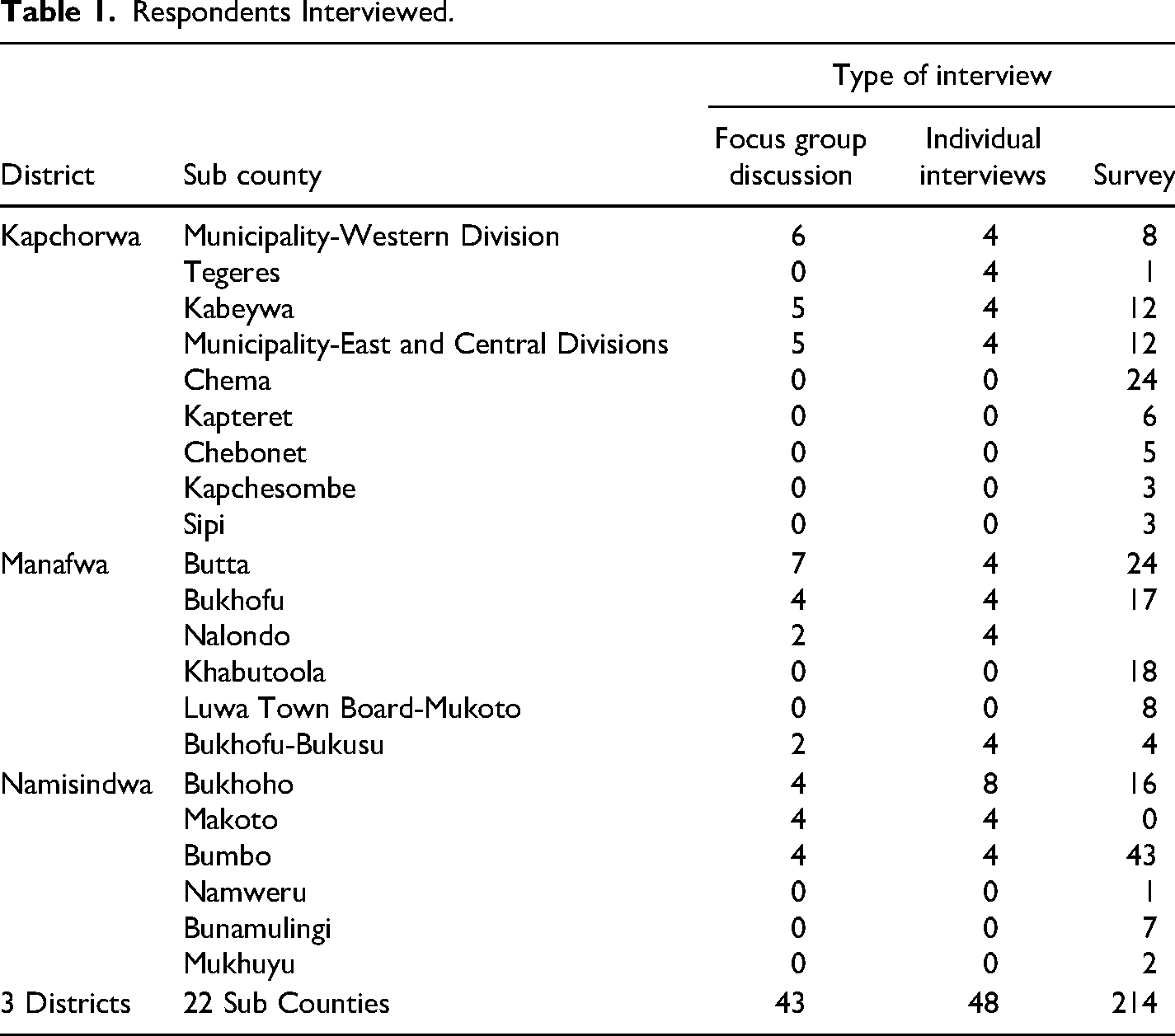
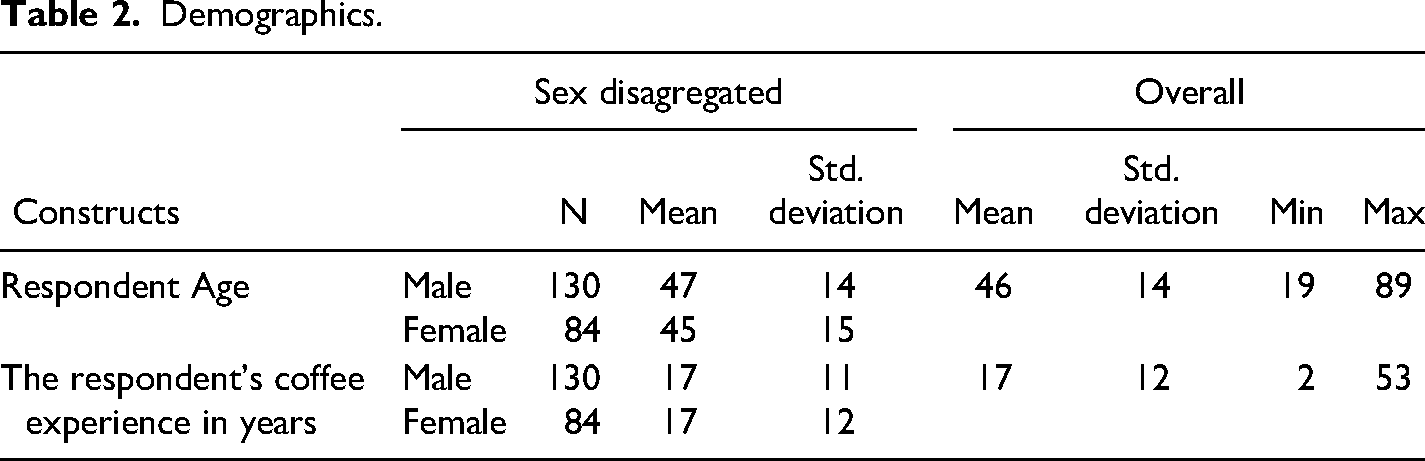
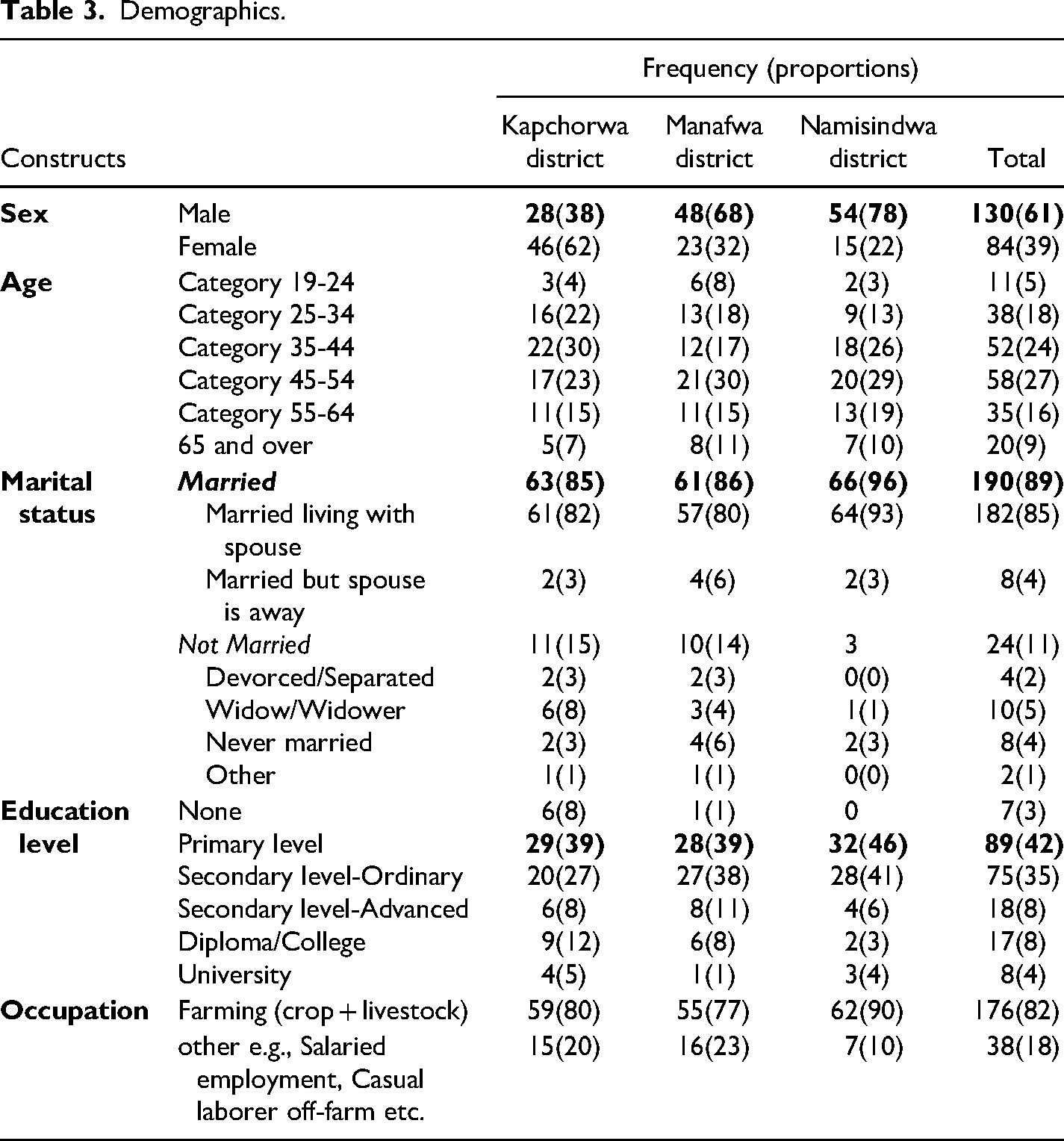
Approved by the Research Board of Wageningen University School of Social Sciences, this study examined 305 coffee IP farmers in Uganda's key coffee-growing districts of Kapchorwa, Manafwa, and Namisindwa (Table 1). According to the findings in Tables 2 & 3, the majority of responders, 61%, were men. Men were also slightly older (over 47 years) than women (45). Nearly all the participants (89%) were married. Almost half (42%) of those interviewed had completed primary education, which took an average of 7 years. The respondents had an average of 17 years of coffee cultivation experience. Following a mixed-methods sequential-embedded approach, the qualitative study (phase 1) inspired the formulation and analysis of the survey study (phase 2) (Creswell & Clark, 2017; Harrison et al., 2020). This approach was chosen because it would allow the results of the first round of data collecting and analysis to inform the content of a subsequent survey (Farmer et al., 2014).
Respondents Interviewed.
Demographics.
Demographics.
Materials for Phase 1: Qualitative Study
A checklist was created as a reference to define the agenda for the focus group discussions (FGDs) before conducting the focus groups. Krueger (2014)'s guidelines were used to structure the facilitator guide. Following studies such as Brasier et al. (2014), a semi-structured format to offer a platform for discussion was incorporated to explicitly capture farmers’ role identities as follows: (a) In terms of division of roles in coffee farming, how would you define yourself? (b) Has your traditional identity (production) changed since 2014? (c) If so, which processes did you go through to learn the new identity? and (d) How has the change in your identity helped you learn new ways to solve your farming challenges?
Procedures for Phase 1: Qualitative Study
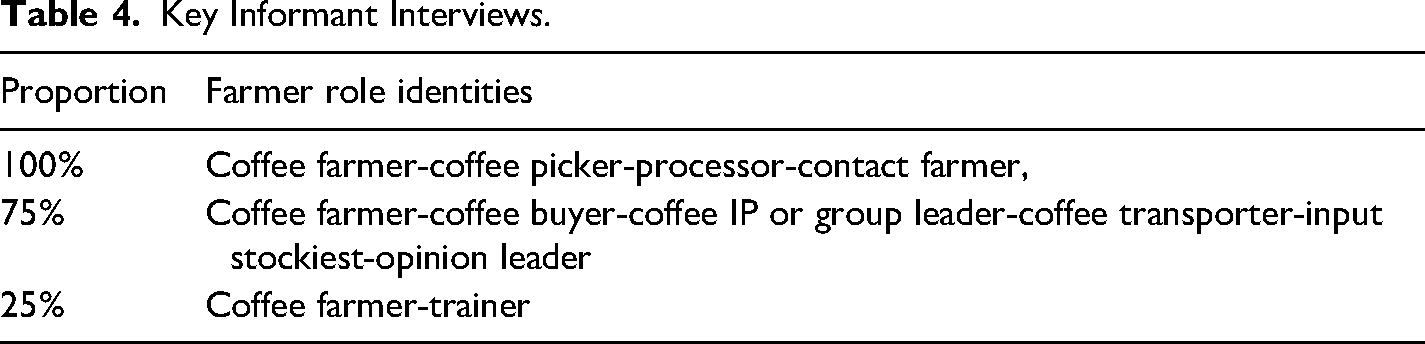
With the help of key informants, lists of IP facilitators/coordinators were produced to capture the study's overall aspects. After learning about the study's goals, each district IP coordination team (the IP facilitators/coordinators) developed a list of potential FGD participants during a one-day meeting with the researcher. Then, at the IP level, they made actual contact with participants before calling by phone to check their availability. From each IP, four people were chosen purposively. Their choice was impacted by their grasp of the study's components. Coffee farmer-picker-processor-contact farmer, coffee farmer-coffee buyer-coffee IP or group leader-coffee transporter-input stockiest-opinion leader, and coffee farmer-trainer were among the roles identified by the key informants (Table 4).
Key Informant Interviews.
Each focus group discussion took place in a meeting room with respondents seated in a semi-circular fashion, writing supplies such as flip chart papers and different colored marker pens, and audio recording equipment. With the support of the main author, each FGD was facilitated in a central location by two trained research assistants: a moderator and a note-taker. Participants were asked to speak freely about their responses in their native tongues. For each group, the views reached by consensus or by hand vote were recorded. This is due to the fact that the majority of the speakers were men, model/contact farmers, traders, processors, opinion leaders, or those in positions of leadership. These people were well educated, financially secure, or had well-managed coffee fields, as well as well-informed and networked. The main author acted as an observer and took independent notes on the discussion. The discussions were audio and video-recorded with the participant's permission. Each focus group discussion (FGD) lasted about 4 h with a coffee break, one ice breaker, and lunch on completion. Data was collected and analyzed from 43 FGD participants at the end of this process (Table 1).
Finally, topic areas from FGD were replicated at the individual coffee farmer level. Each research assistant conducted a two-hour face-to-face interview with a respondent at their home during this round of data collecting. All interview results were written down in notebooks and audio recorded. Data was collected and analyzed from 48 IP members at the end of this process (Table 1). Through simultaneous collection and analysis of data (Gioia et al., 2013), the number of interviews was determined using the saturation logic (Yin, 2018).
Materials for Phase 2: Quantitative Study
The respondents were interviewed using a standardized survey questionnaire that had been content validated by a panel of experts. This survey instrument was created in response to qualitative findings and existing literature (Supplementary material 2).
Procedure for Phase 2: Quantitative Study
A sample of 214 respondents (Table 1) was interviewed using a standardized survey questionnaire that was content validated by a panel of experts for an average of 1 h and 15 min each. The survey participants were chosen using a random selection technique. The structured interview instrument's applicability was assessed using pretesting with a comparable group who did not engage in the study. The items for the variables that were developed utilizing the existing literature can be found in supplementary material 3. All study components were investigated using Likert scale items. Respondents can use Likert-type scales to reflect their true feelings. The responses were rated on a scale of strongly agree (5) to strongly disagree (1). The main author trained the enumerators who were fluent in the local dialects to ensure data quality. Every day after the data collection operation, team debriefings were held to share lessons and issues to ensure a consistent interpretation of the survey questions.
Analytical Strategy
Qualitative Analysis
All interviews were transcribed verbatim and coded using Atlas ti 8, a qualitative data analysis program. The Gioia method (Gioia et al., 2013) was used because this research is loosely guided by past literature. Iterations among the data, established literature, and continuous fieldwork influenced the coding. Codes were created using words and concepts often mentioned by participants during interviews in three coding rounds. The first round entailed open coding, which involved going through the data sentence by sentence and transcript by transcript to assign meaning to text chunks including phrases, sentences, words, and entire paragraphs (Corbin & Strauss, 2014). Words and concepts commonly used by participants during interviews were used to construct first-order codes that describe the roles. Then, by combining first-order codes, based on their commonalities in terms of meanings and themes, second-level codes were developed (role as per coffee value chain nodes, also known as code groups). Finally, the overarching theoretical dimensions were established by code groups (non-traditional farmer identity, Coffee dealer, advisory service provider, and manager, hereafter referred to as smart codes). During data analysis, patterns within and between cases were taken into account (Miles et al., 2019).
Quantitative Analysis
The partial least squares structural equation modeling (PLS-SEM) method was used to obtain the results (Hair et al., 2019). The original plan was to use the statistical program SmartPLS 3 (Henseler et al., 2015) for the structural model analysis, but this was only possible for the measurement model. PLS-SEM analysis is divided into two parts: the measurement model and the structural model (Hair et al., 2019). On one hand, the measurement model uses quality attributes such as outer loadings, Cronbach alpha value, composite reliability, and average variance extracted. The structural model, on the other hand, uses coefficients, P-values, and Confidence Intervals). The Hayes Process analysis was used to evaluate the structural model. Hayes's conditional process analysis, also known as “moderated mediation analysis,” uses partial least squares regression-based path analysis to estimate mediation models that allow for system moderation (Hayes et al., 2017; Hayes & Rockwood, 2020). The process macro, as introduced by Hayes, is a computational tool that estimates all of the path analyses for each equation separately using pre-programmed models. The Hayes process was chosen because it allowed all four arrows that make up the structural model to connect (cyclic nature), something that SmartPLS did not allow.
Controlling for the effects of network size (total bonding, bridging, and linking ties), and statistically removing their possible impacts on the paths in the Hayes process models, the study hypotheses were tested. The Hayes process analysis model 4 was used to assess the mediation models with reflection and active experimentation. Second, the dual-stage moderated farmer production role identity mediation effects in CE→RA→EK and EK→AE→CE were tested using model 21 of the Hayes process. To generate a 95% confidence interval for significance testing, all measures were bootstrapped with a 5,000 resampling procedure. The standard error and covariance matrix estimator were heteroscedasticities compatible. Before analysis, all variables that define the product, such as farmer production role Identity, CE, RA, and AE, were mean-centered. Several iterations with the respondent aided in the interpretation of the results.
Findings
Qualitative Study: Understanding Farmer Role Identities
Tables 5, 6 & 7 results showed that all respondents performed more than one role, i.e., being a coffee farmer and others. The predominant farmer role identity as mentioned below in the results of interviews captured modern coffee farmer: My identity has changed from a traditional coffee farmer to a modern coffee farmer. Those days I used to stick to my old ways of farming but now I practice good agronomy as well as other aspects of the value chain. (Interview 039, male, Bumbo coffee IP, Namisindwa).
Farmer Role Identities (Focus Group Discussion and Follow-up Interviews Combined).
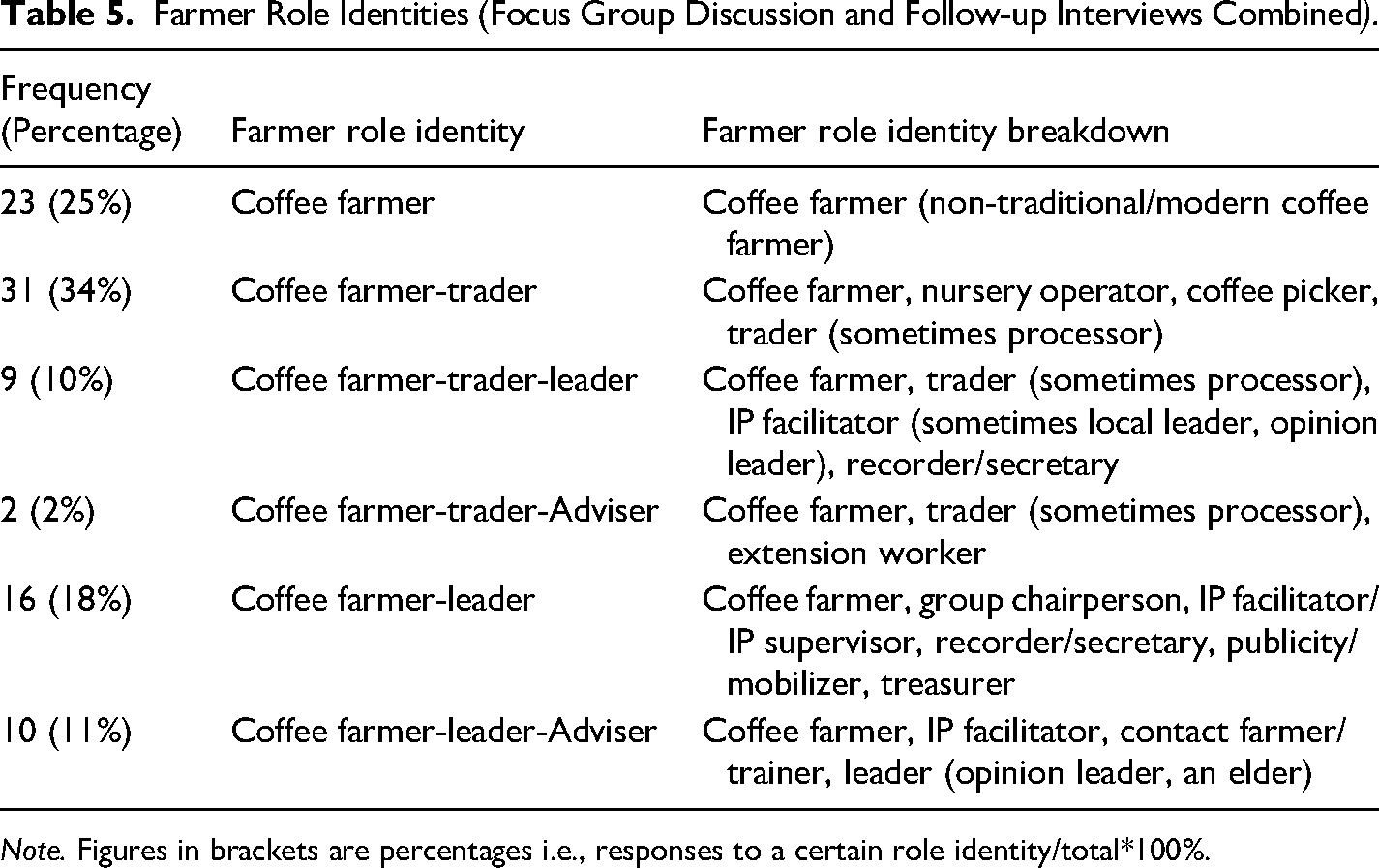
Note. Figures in brackets are percentages i.e., responses to a certain role identity/total*100%.
Farmer Role Identities (Focus Group Interviews).
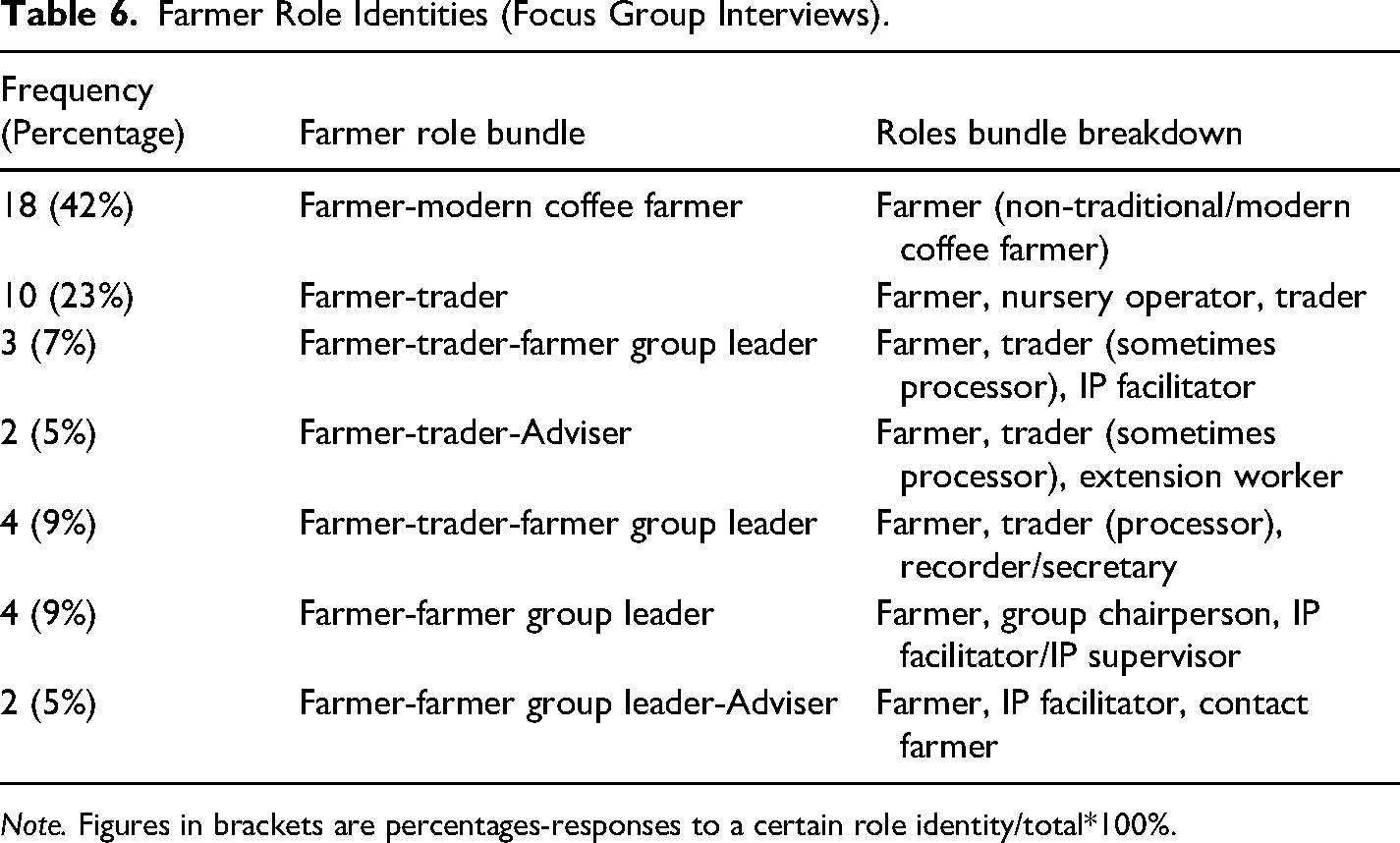
Note. Figures in brackets are percentages-responses to a certain role identity/total*100%.
Farmer Role Identities (Follow-up Interviews).
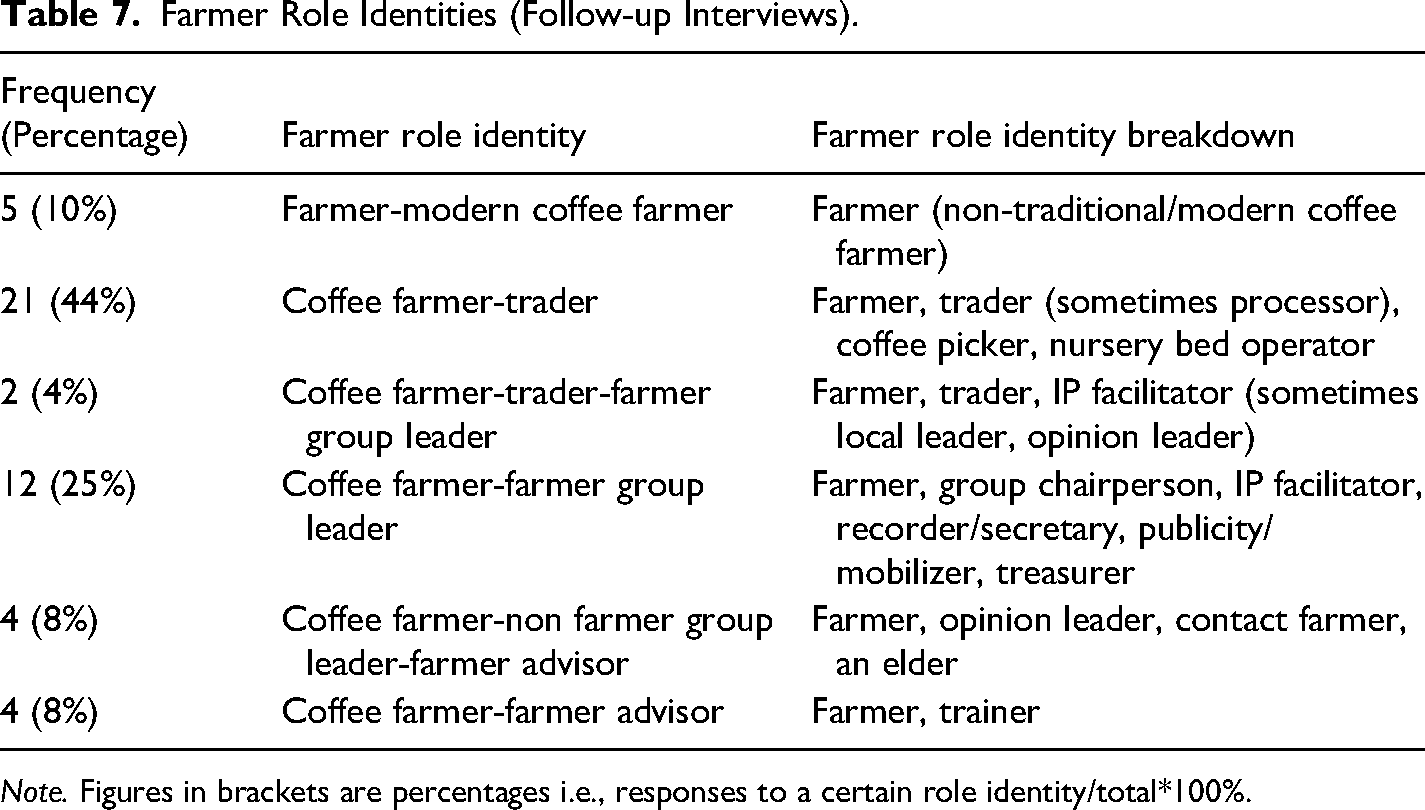
Note. Figures in brackets are percentages i.e., responses to a certain role identity/total*100%.
For the following reasons, the majority of respondents identified as non-traditional coffee farmers: Coffee farmers, in particular, believed that they were the foundation of the coffee industry as a whole, which is why they maintained their farmer identities. The other explanation for the same role is that coffee cultivation was inherited/passed down through the family and is the identity of the household. Another reason for retaining the role's non-traditional farmer identity is its less tedious nature, as stated by a farmer. As a person, it's very complicated for me to trade as it requires a lot of movement and money. To me, farming/production is more settled in one place and can run other errands. I can plant more crops because I am always around which a trader will not manage as they always move to source for coffee. (Interview 036, male, Butta coffee IP, Manafwa). I perform many roles, but for the sake of our discussion, let me refer to myself as a coffee buyer. I perform this particular role a lot in the coffee value chain. A facilitator, trainer (field officer), and coffee farmer are additional roles (Interview 001, female, Kabeywa Coffee IP, Kapchorwa)
Coffee farmers also serve as contact persons/model farmers/prominent farmers/extension agents/trainers, opinion leaders, recorders/secretaries, IP facilitators, church leaders, elders, and so on. I am a coffee farmer, a reverend, a counselor, a coffee trader, and the leader of a women's group. (Interview 018, female, Bukhofu coffee IP, Manafwa) I am a coffee farmer, nursery operator, trainer, IPs district coordinator, and opinion leader, according to another farmer (Interview 047, male, Bumbo coffee IP, Namisindwa)
Although it is evident that farmers identify themselves with more than one role, the question remains as to how they learn to do so. The findings (94% for individual interviews and 100% for FGD) suggest that learning to perform more roles is a shared obligation. To put it another way, coffee farmers learn to perform more roles through engaging in collective learning activities such as reflecting and experimenting. In terms of reflection, when farmers were not in IPs, they admitted to reflecting less. Coffee farmers serve their fellow farmers, traders, and stakeholders by providing advice. The feedback provided by these stakeholders helps farmers to assess themselves. Working in a similar position (role) encourages people to exchange information, such as about seasonal planting, market prices, and good coffee farming practices, which contributes to further thought. A change in the rate of reflection can be explained by increased interaction between group members: I now learn from many different IP-affiliated organizations like Makerere University and Great Lakes. Through trying to compare the information I get from these sources and the old information I had, I discovered the knowledge gap which led me to learn more through interaction. (Interview 007, male, Chema coffee IP, Kapchorwa). In the coffee marketing state, I would confront the challenge of having my coffee rejected frequently due to poor quality and being offered a very low price per kilogram of coffee. This prompted me to seek advice from other farmers in the community (for example, our local council three chairperson). I learned to perform new roles as a result of my interactions with other farmers and stakeholders. Now, in addition to being a farmer, my new identity is being a good coffee picker and trader. (Interview 009, female, Chema coffee IP, Kapchorwa)
Interestingly, while coffee farmers learn to modify their production roles through engaging in collective learning activities, the new roles also drive their EL process. For example, when faced with pest and disease attacks, coffee farmers can discuss their challenges through routine IP activities such as meetings before acting. As stated below, such meetings invariably provide a space for in-depth reflective dialogue: I used to use pangas for pruning, but I realized that I was damaging my coffee, specifically the stems. Because we lacked proper pruning equipment, the coffee trees dried out quickly. We discussed and decided as a group to invite District Local Government (DLG) personnel to train us on coffee management. […]. The DLG provided us with some equipment to use, and after learning how they work, we decided to purchase them on the market. (Interview 007, male, Chema coffee IP, Kapchorwa.) Always reflect on the new knowledge I gained, I take time to think through and relate with the humble beginning where the IP picked me from, there is a lot of difference for that reason I work so hard to do even better (Respondent D: Interview 50, FGD Namisindwa). Knowledge of coffee increased hence instead of being idle I took up a trader role. I too got a lot of coffee trading encouragement from my experienced neighbor. I likewise took up the role of a picker to pick quality coffee along with training and monitoring the actions of my hired pickers. (Interview 016, female, Mt. Elgon Women in coffee IP, Kapchorwa). I'm constantly weeding, pruning, spraying, and managing water and soil these days. I occasionally use locally grown herbs that we ferment and spray for leaf rust and stem borers. All of this I learned through the training I attended. (Interview 020, male Bukhofu Coffee IP, Manafwa). After training on nursery bed operations under the KIFANGO group, I was motivated to start up my nursery bed, which I later expanded to a fully-fledged commercial nursery site. (Interview 026, female, Busyula Coffee IP, Manafwa)
Quantitative Study: How Farmer Role Identities Shape Experiential Learning
Measurement Model
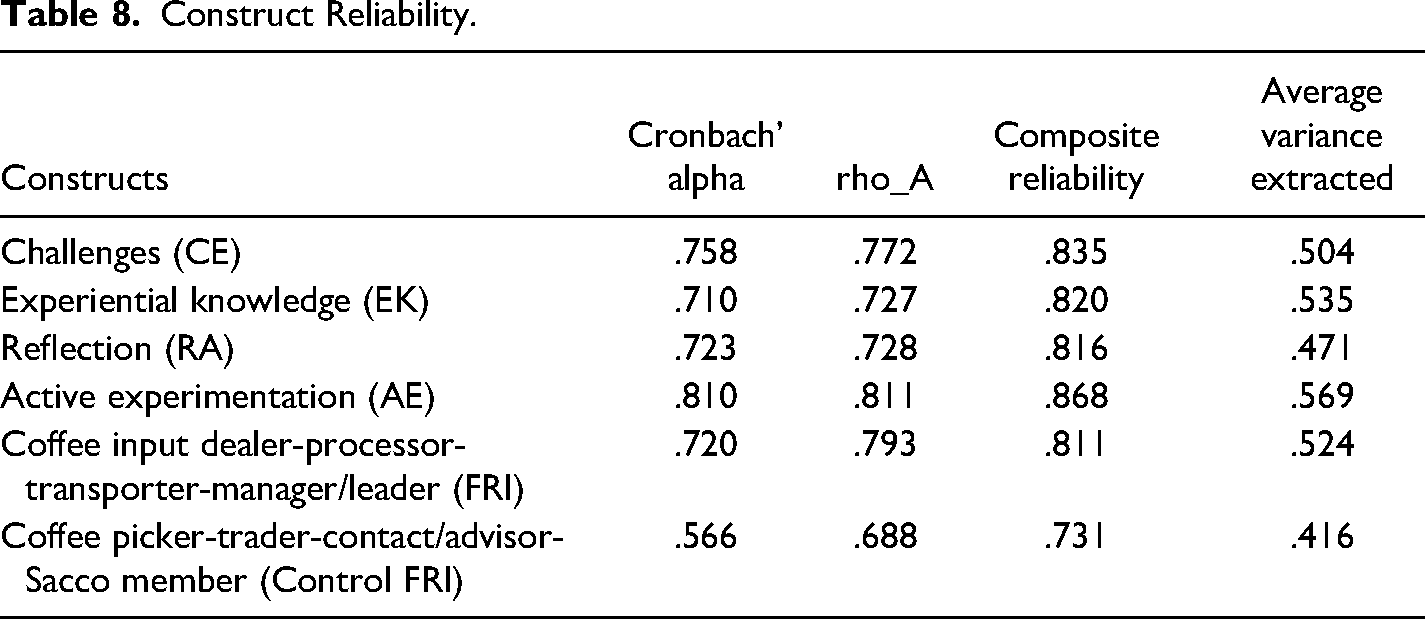
PLS-SEM includes algorithms to verify measurement reliability and validity before evaluating structural model links. Hair et al. (2019) have well-documented procedures for evaluating loadings, Cronbach's alpha, composite reliability, ρA, the average variance extracted, and discriminant analysis for reflective components (Tables 8 & 9).
Construct Reliability.
Discriminant Validity.
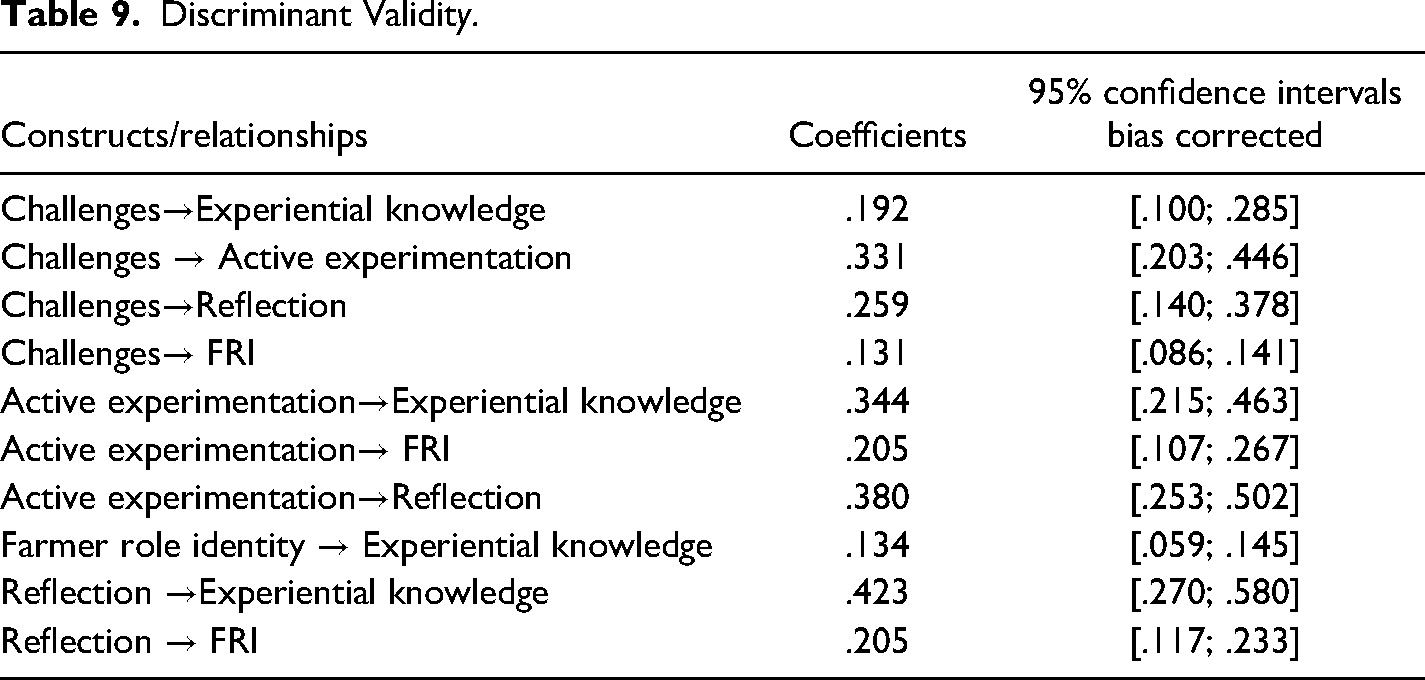
Table 8 shows that all Cronbach's coefficients and rho_A values were greater than 0.7, demonstrating internal consistency and reliability (Hair Jr et al., 2017). The bulk of loadings in supplementary material 3 was satisfactory and extremely significant (p < 0.01). While some indicator loadings were less than 0.7, they were preserved since the constructs’ composite reliabilities exceeded the acceptable requirement of 0.7 (Hair et al., 2011). This outcome demonstrated that the indication was accurate (Hair Jr et al., 2017). Furthermore, all AVE values were significantly less than 0.5, showing high convergent validity. For discriminant validity, the bootstrapping procedure with 5,000 samples, the no sign changes option, the bias-corrected and accelerated (BCa) bootstrap confidence interval, and two-tailed testing at the 0.05 level were used (Aguirre-Urreta & Rönkkö, 2018; Cheah et al., 2019). The heterotrait-monotrait (HTMT) values were lower than the 0.85 conservative criteria, as shown in Table 9. (Henseler et al., 2015). Discriminant validity was proven by these findings (Hair Jr et al., 2017).
Structural Model
Based on the correlation analysis (Table 10), the first analysis step tested the mediation effect of farmers’ reflection and active experimentation during their experiential learning process (H1a-d). Table 11 illustrates that challenges and reflection have a strong positive relationship. The variable's coefficients (β=.178) and bootstrap values [.037; .319] indicate significant impacts. As a result, H1a is endorsed, which stipulates that farmers who have confronted coffee value chain challenges reflect on their current knowledge and interactions with other value chain actors. Additionally, the relationship between reflection and experiential knowledge had a positive and significant relationship as depicted by the coefficients (β=.238) and bootstrap values [.130;.347]. Therefore, H1b was supported. The results of the relationships between experiential knowledge-active experimentation and active experimentation-challenges were all positive and significant with bootstrap values of [.146;454] and [.113;.392] respectively. As a result, H2c&d are supported. Table 12 confirms the mediation effect of reflection and active experimentation on the links between challenges and experiential knowledge, as well as between experiential knowledge and challenges.
Descriptive Statistics and Correlations.
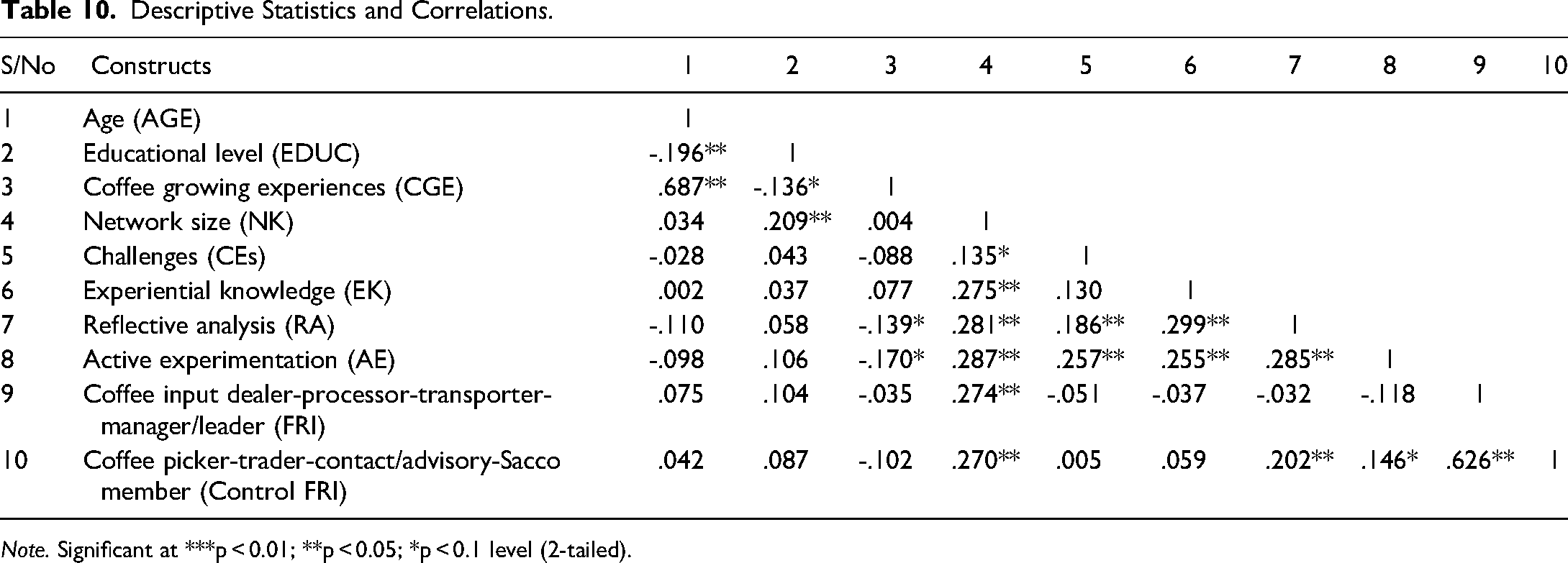
Note. Significant at ***p < 0.01; **p < 0.05; *p < 0.1 level (2-tailed).
The Simple Mediation Path Model Results.
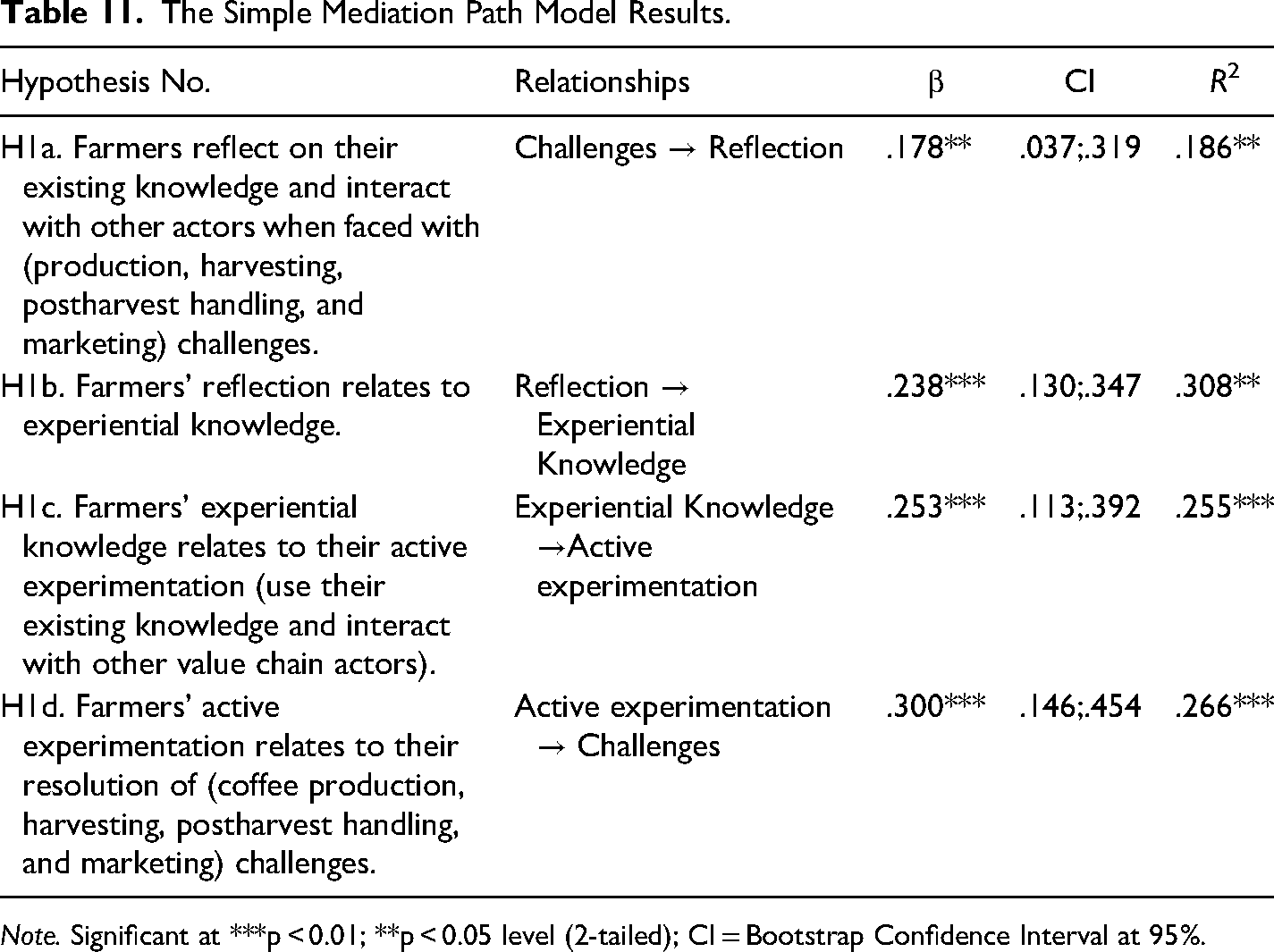
Note. Significant at ***p < 0.01; **p < 0.05 level (2-tailed); CI = Bootstrap Confidence Interval at 95%.
Mediation Analysis (Indirect effects of X on Y).
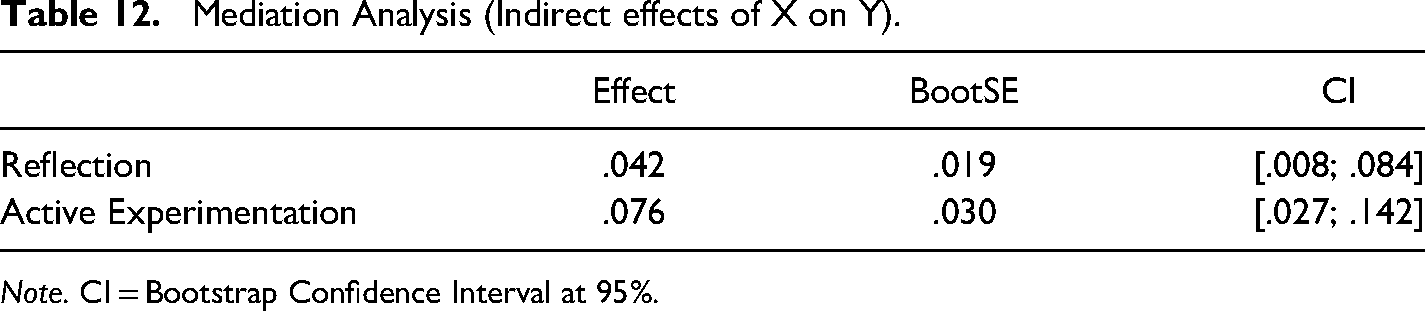
Note. CI = Bootstrap Confidence Interval at 95%.
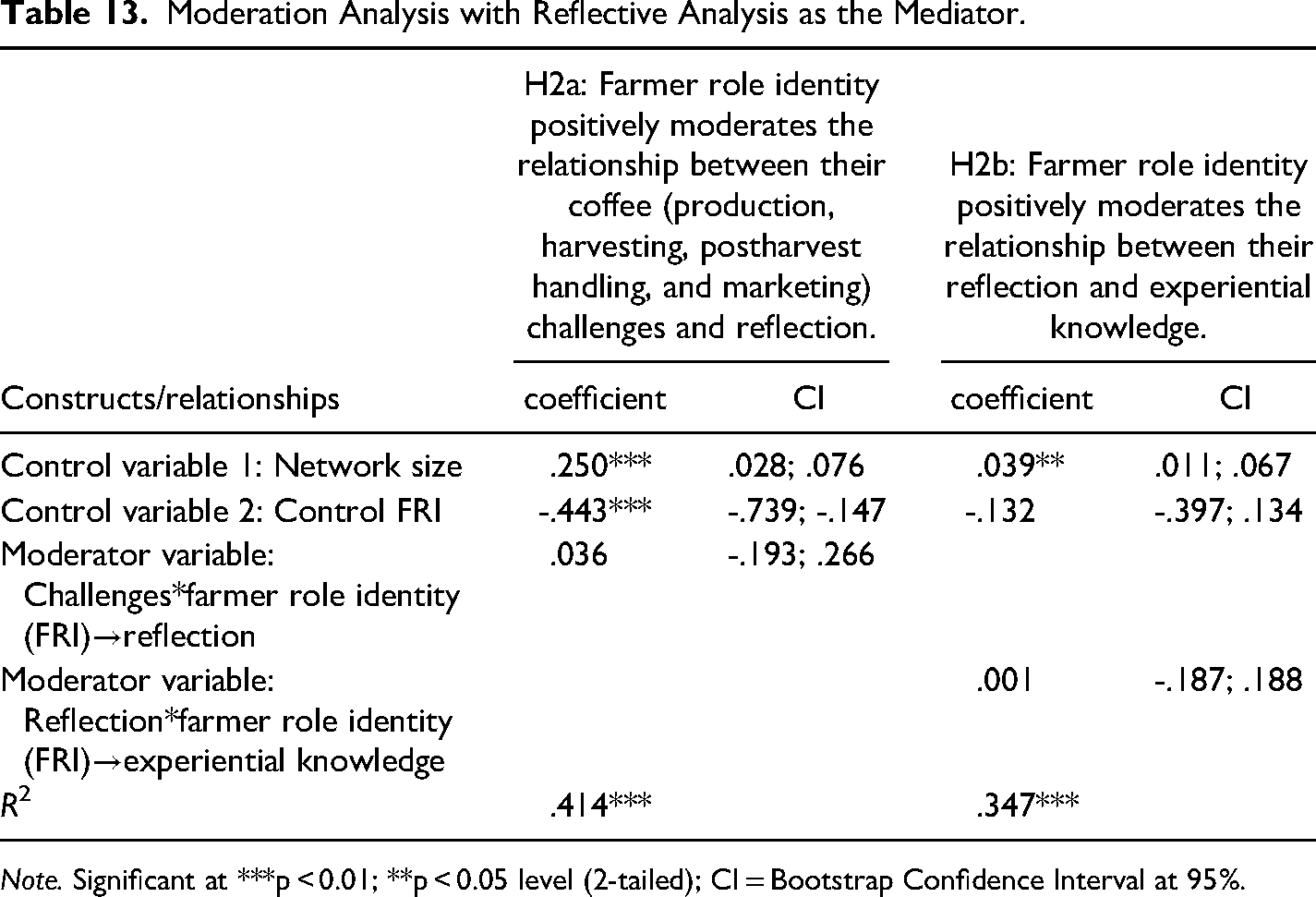
The moderating influence of FRI on reflective analysis as a mediator of farmers’ experiential learning was investigated in the second step of the analysis (H2a&b). FRI had a positive but non-significant effect on the link between challenges and reflection (β=.036), as indicated in Table 13. Therefore, H2a was not supported. Farmers’ network size, including bonding, bridging, and linking social capital (β=.250) positively moderated the association between challenges and reflection when combined with FRI. Similar results are observed in the relationship between reflection and experiential knowledge.
Moderation Analysis with Reflective Analysis as the Mediator.
Note. Significant at ***p < 0.01; **p < 0.05 level (2-tailed); CI = Bootstrap Confidence Interval at 95%.
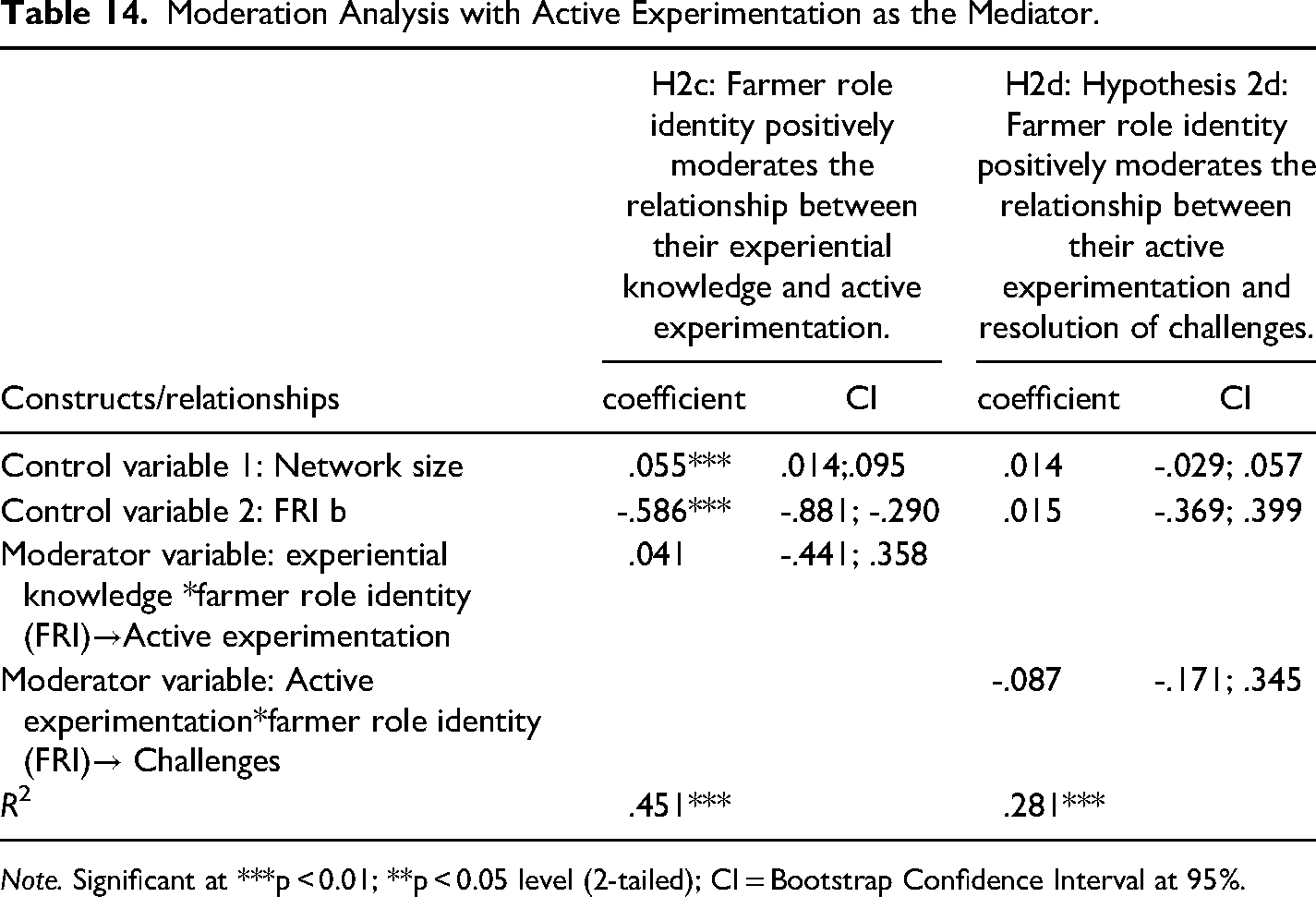
The third stage of the research looked at the effect of FRI as a moderator of active experimentation as another mediator of farmers’ experiential learning (H2b&d). The interaction term between CE and FPRI (β=.041) was positive but did not predict active experimentation, as shown in Table 14. However, the interaction term between AE and FRI (β=-.087) was negative and did not predict CE, according to the findings. As a result, both H2c&d are not supported. Farmers’ networks, like all previous relationships, positively moderated the relationship between EK and AE.
Moderation Analysis with Active Experimentation as the Mediator.
Note. Significant at ***p < 0.01; **p < 0.05 level (2-tailed); CI = Bootstrap Confidence Interval at 95%.
Discussion
This paper connects farmers’ EL process to their role identities in the context of IPs in the Ugandan coffee sector. This research qualitatively established coffee farmers’ role identities in the learning process before quantitatively evaluating the effect on farmers learning activities and acquisition of experiential knowledge through learning activities. The first question in this study sought to determine if and how farmers’ role identities might relate to farmers’ experiential learning (EL) processes. The most common farmer role identity is coffee farmer-trader. This identity has a lot to do with coffee production and marketing (See supplementary material 1). The coffee farmer identity is right behind the coffee farmer-trader identity. This identity type places a strong focus on-farm management practices and methods such as the ‘correct’ application of fertilizer, pesticides, and other agricultural chemicals (Burton et al., 2008). The coffee farmer identity in the study is a springboard, contrary to the role identity theory's assertion that people must move out of their old role identity for the new identity to become a driving force and motivational. These findings (farmers having multiple identities) are consistent with that of (Burton et al., 2020; Burton & Wilson, 2006; McGuire et al., 2013) who found that in non-IP settings of the developed contexts, farmers wear several hats. Similarly significant, these findings add to existing labels for farmer identities by scholars or farmers themselves. For instance, in previous research farmer identity (production) is labeled as productivist (Burton & Wilson, 2006), good farmer (Burton et al., 2020; McGuire et al., 2013; Riley, 2016), steward (Comito et al., 2013). Aside from these studies, the current research examines the components of one's identity. The most plausible explanation is that farmers no longer have the luxury of performing only one role in the coffee sector, which is becoming more commercialized with a focus on strengthening structures, farming technologies, and institutions e.g., IPs.
Another important finding of this research is that forming a new identity is a social learning process. These findings support prior research on farmer identity, such as those of Burton and Wilson (2006) who found that new identity development involves a social activity. In contrast to earlier studies, the current study examines it from the perspective of a rural coffee value chain, focusing on social networks and how new identities emerge (See supplementary material 2). The IPs provide a socially engaging space for coffee farmers to reflect on their past challenging experiences, generating knowledge about new identities through supporting farmer learning activities (Kusters et al., 2018; Schut, 2017). Also, the IP environment unlocks locally available resources such as that of farm families, which supports the execution of role-related tasks.
Again, this study found that challenges kick-start the process of assuming new roles, such as coffee trader. Farmers must acquire knowledge and experience to be successful in the new roles. This identity will only take precedence while learning and experimenting; after that, the farmer's identity will take control once more. The study demonstrates how the farmers learn through interactions and experimentation as a result of taking on new roles. Because of this, a significant percentage of participants in the interviews identified as “modern” coffee farmers. In terms of relating identity and learning, this finding prompts one to ask the following questions: “who am I?” (And what am I doing?) and “what else can I or should I do?” and “what should I or am I learning about what else I want to do or do?” This result enriches the earlier study by Ochago et al. (2021) who found when faced with challenges such as low coffee prices engaged in performing arrange of activities such as consulting fellow farmers (some of who double as traders), reflecting on their previous coffee sale experiences with family members, etc. attained new roles as coffee trader. In addition to prior research, this study also finds that assuming new roles, in turn, shapes farmers’ EL. Unfortunately, no statistically significant moderation effect of farmer role identity on farmers’ EL process was discovered in this study. The size of farmer networks, instead, moderated the farmer's experiential learning process. The most plausible explanation is that farmers do not abandon their person identity (farmers) to assume another. They simply took on new roles. These additional roles are difficult to distinguish from the person's identity as a farmer. This explains why no significant moderating effects were observed.
Implications
This study contributes significantly to EL and role identity theories, and practice in various ways. Initially, the study findings contribute to role theory in comparison to recent non-agriculture literature (Galliher et al., 2017a; Galliher et al., 2017a; Kaplan & Garner, 2017; Seaman et al., 2017; van der Gaag et al., 2017; Wang et al., 2017) as follows. First, respondents’ most common role identity is that of a coffee farmer. This identity type places a strong focus on-farm management practices and methods such as the ‘correct’ application of fertilizer, pesticides, and other agricultural chemicals as well as marketing. The coffee farmer identity in the study is the foundation, contrary to the role identity theory's assertion that people must move out of their old role identity for the new identity to become a driving force and motivational. According to this study, farmers’ decision to take on a new identity is dominated by a productivist identity (Burton, 2004; Burton & Wilson, 2006). Productivitism is frequently legitimized by government programs that emphasize that increasing output is in the national interest.
Second, this study not only captures farmer role identities and social background in the coffee sector but also role identities (church leader, elder, opinion leader) (Stets & Carter, 2006, 2012; Stets et al., 2008), a factor that social identity theorists have overlooked. In other words, this research broadens the core construct (farmer role identity) to include a variety of identities. Consequently, scholars will be able to better understand and keep up with essential identity-related phenomena in agricultural value chains and IP-level learning.
Third, the effect of coffee farmer role identity on learning activities to develop problems solving-knowledge makes a significant contribution to the role identity (Burke & Stets, 2009; Dukerich, 2001; Stryker, 2008) and EL theory (Kolb & Kolb, 2009; Kolb, 2015), in the rural coffee value chain and institutional context such as IPs. To begin with, the saliency of the identity is dependent on the value chain node and the role of social networks/institutional context, according to this analysis, which adds to the role identity theory. Situational contexts for collective learning among farmers, such as IPs, play an important role in the social shaping of a farmer's identity. Furthermore, the farmers’ new roles influence the farmers’ reflection on their challenge to gain knowledge of challenges-solving. Besides, farmers’ new roles enabled them to deal with challenges by experimenting with the knowledge they had gained. This implies that the farmer's experiential learning process is influenced by new roles as a contextual factor. This finding extends Kolb's experiential learning cycle by connecting farmer role identities to their experiential learning process in the rural farming context.
Fourth, according to role identity theory, the self is made up of several role identities that are organized in an identity hierarchy, with more important identities at the top and less important identities lower down (Stets & Burke, 2014). The findings show that a social and EL process that necessitates the acquisition of new information, skills, and networks is dependent on the farmer's role identification.
Based on these empirical contributions, agricultural extension workers can tailor the design and application of current learning initiatives to the right farmer group by assessing the impact of farmers’ identity on their learning process. In essence, the findings point to how policies and interventions can be aligned with interpersonal processes, as well as what farmers can focus on as part of efforts to promote competence growth. Depending on the desired shift, farmers and their representatives in farmer organizations – as well as programs seeking to sustain farmers’ endeavors - may create rationales and road maps to direct the creation of desired role identities among farmers.
Additionally, the study results can be used to direct IP farmers’ role identity development, allowing them to follow the types of activities and situations that will help them improve their awareness and make the necessary role identity change. This finding strengthens the connection between two institutions, namely the IP and the farm family, in the development of farmers’ identities and, as a result, their EL.
Once more, the findings point to more flexible structures for collective and social learning to allow for diverse farmer roles. In this way, experienced coffee farmers may help others learn or improve their level of problem-solving knowledge. These farmers, in particular, assist others in reflecting on and experimenting with coffee value chain learning practices, resulting in increased knowledge levels. Farmers’ new roles encourage reflection on their challenges in order to gain problem-solving knowledge. The new role encourages people to exchange information relevant to the role at hand, which contributes to further thought. Indeed, increased interaction between group members with varying roles can explain the increased rate of reflection. The feedback provided by these stakeholders in the IP setting assists farmers in evaluating themselves. Farmers admitted to reflecting less when they were not enrolled in IPs. This implies that agricultural extension workers should intentionally or through their routine extension activities provide space/time for farmers to reflect on their challenges. Even so, in the IP setting, farmers were assigned to perform certain roles such as model farmers based on their exceptional performance in such roles/tasks related to the role. Agricultural extension workers (along with IP leaders) thus should act as facilitators in collective settings such as IPs, allowing farmers to access diverse stakeholders to reflect with. Additionally, farmers’ new roles enabled them to deal with challenges by experimenting with the knowledge they had gained. Farmers do try (experiment) with indigenous pest and disease management methods, for example. This experimentation is primarily the result of joint activities such as attending IP leadership-organized training, interacting with trainers and fellow IP members during and after training, and sharing ideas along the coffee value chain between IP members and other stakeholders. There are also on-site practical learning sessions and demonstrations, as well as personal farm areas. As a result, agricultural extension workers and IP leaders can continue to design, implement, and encourage farmers to participate in joint role-based learning activities as part of their EL process.
Then, since new role identities are elicited by learning interventions, agricultural extension workers can use IP at the local level to identify practical solutions to local problems and improve the targeted agriculture value chain by linking different stakeholders at the community level or grassroots level (Fatunbi et al., 2016). Identifying these practical solutions can be done through platform activities such as field days, exchange visits, training, and workshops to mention but a few. This helps to improve the skills of stakeholders in addressing various challenges facing them and improves productivity.
Still, in contrast to prior IP literature (Fatunbi et al., 2016), which indicated that people identify with a single role or identity, this study discovered that a single farmer plays many roles. This is per the coffee production cycle/value chain challenges, prevalent value chain activities, and the networks with which the farmers interact to reinforce their identity. Besides, having IP members serve numerous roles is a sustainability strategy for agricultural extension workers to embrace. IPs rely on donor support to carry out their activities, including recruiting members (Dabire et al., 2017; Ragasa et al., 2016; Schut et al., 2018). This is one of the reasons why the IP's composition varies after a given challenge is addressed or as members take on a new challenge (Davies et al., 2018) when new stakeholders are brought in to address a new or emergent challenge while others leave (Ampadu-Ameyaw et al., 2016). Finally, the current study adapts four items used by Kember et al. (2000) to measure reflection. Farmers’ social networks are included in addition to the four items, as guided by qualitative findings (Ochago et al., 2021). None of these items have ever been theorized, grouped, or used in the way that this study does. Other studies that consider such item combinations may be conducted.
Supplemental Material
sj-docx-1-jee-10.1177_10538259241244726 - Supplemental material for The Effect of Ugandan Coffee Farmers’ Role Identity on Their Experiential Learning
Supplemental material, sj-docx-1-jee-10.1177_10538259241244726 for The Effect of Ugandan Coffee Farmers’ Role Identity on Their Experiential Learning by Robert Ochago, Domenico Dentoni and Maral Mahdad in Journal of Experiential Education
Footnotes
Author Note
Robert Ochago: Conceptualization, Methodology, Investigation, Software, formal data analysis and presentation, Writing - original draft preparation, Writing - review & editing.
Domenico Dentoni: Conceptualization, Methodology, Writing - review & editing, Funding acquisition.
Maral Mardad: Writing - review & editing.
Declaration of Conflicting Interests
The authors declared no potential conflicts of interest with respect to the research, authorship, and/or publication of this article.
Funding
The authors disclosed receipt of the following financial support for the research, authorship, and/or publication of this article: This work was supported by the This study was funded by the Australian Centre for International Agricultural Research (ACIAR) to fund a Ph.D. project as part of the program “Value chain Innovation Platforms for Food Security” (VIP4FS) partnering the World Agroforestry Centre (ICRAF), University of Adelaide (Australia) and Wageningen University, The Netherlands. Supervision was provided also thanks to the Entrepreneurial Learning in Inclusive Agribusiness (ELIA) project, funded by the Dutch Scientific Council (NWO).

Supplemental Material
Supplemental material for this article is available online.
Author Biographies
References
Supplementary Material
Please find the following supplemental material available below.
For Open Access articles published under a Creative Commons License, all supplemental material carries the same license as the article it is associated with.
For non-Open Access articles published, all supplemental material carries a non-exclusive license, and permission requests for re-use of supplemental material or any part of supplemental material shall be sent directly to the copyright owner as specified in the copyright notice associated with the article.
