




Abstract
Background
Many universities in Canada offer experiential education (EE) opportunities for students that are both field-based and on-campus. Despite a commitment to EE, there is a paucity of information about various stakeholder perspectives of EE and the equity implications of the different approaches to EE. Furthermore, it is unclear how EE programs at universities changed in response to the COVID-19 pandemic and related restrictions.
Purpose
This study aims to explore stakeholder perspectives of EE experiences and understand the shifts to EE, perhaps towards more equitable and accessible EE opportunities, prompted by the COVID-19 pandemic.
Methodology/Approach
We used an exploratory case study approach involving a survey with university students, interviews with university instructors and community organizations, and a document review, to understand stakeholder perspectives and shifts to EE due to COVID-19.
Findings/Conclusions
Findings suggest that there are consistent benefits of EE, and barriers to EE, across student, instructor, and organization perspectives, where learning from changes prompted by the pandemic could be beneficial to increase equity in EE.
Implications
We recommend that instructors and institutions continue to work in partnership with students and community organizations to build virtual, on-campus, and local field-based EE (FBEE) opportunities that aim to increase equitable access and impact.
Introduction
Experiential education (EE), also known as experiential learning, has gained momentum and acceptance in institutions of higher education worldwide (Roberts, 2018; Slavich & Zimbardo, 2012). Although definitions of EE differ, EE is generally known as a process of learning through direct discovery and experience—connecting theoretical knowledge with the realities of what is being studied (Hedin, 2010; Kolb, 1984; Salandan, 2012; Smith, 2003). In other words, learning by “doing” (Hedin, 2010). Practically, EE can be categorized as either field-based or on-campus (Roberts, 2018). Field-based EE (FBEE) involves experiences such as study abroad, internships, practicums, co-op placements, community-based research projects, and service-learning opportunities (Roberts, 2018). On-campus EE (OCEE) can include simulation labs, role-playing, games, case studies, adventure education, presentations, various types of group work, research, and problem-based learning (Bethell & Morgan, 2011; Lewis & Williams, 1994; Pedler, 2017; Qualters, 2010: Timken & McNamee, 2012). In all forms, EE benefits both students and institutions.
EE provides students with an opportunity to enrich their knowledge and experience by applying theoretical learning to real-life situations while also benefitting memory and reflection skills, ultimately contributing to student beliefs and confidence (Chapman et al., 1995; Trolian & Jach, 2020). Specific types of learners have been shown to especially benefit from EE. For example, older learners, hands-on learners, and those that find it difficult to learn within a formal classroom have been noted to benefit from context-based EE learning (Cantor, 1995). In particular, off-campus FBEE is very popular as it provides students a chance to experience their field or industry. Scholarly literature indicates potential benefits for students such as improved cross-cultural and multidisciplinary learning skills, tools for self-reflection, self-awareness on privilege and role in a context or workplace, improved cultural humility, greater understanding of safety and ethics, and increased context-specific knowledge towards more sustainable, mutually beneficial contributions (De Camp et al., 2018; Shah et al., 2019). FBEE also enables students to learn what is expected of them before graduating and test the applicability of their learning in the real world. It is thought to, ultimately, increase students’ employability (Endersby & Petro, 2019; Roberts, 2018; Trolian & Jach, 2020). Both FBEE and OCEE also benefit institutions through the development of strong partnerships and relations with local, regional, and international communities and increase the appeal for students to attend the university (Roberts, 2018).
Despite its benefits, there are also a number of challenges with EE for students, instructors, and host organizations, including significant monetary and time costs (e.g., for travel and supervision) that introduce inequities among student learning (Whatley, 2017). Since most of the EE costs are incurred by students, those that are underprivileged cannot afford the direct costs and the opportunity costs that are presented, especially by FBEE. In addition, there are equity and cross-cultural-based challenges in FBEE. For example, short-term international student placements have been argued to have an unsustainable impact, perpetuate inappropriate allocation of scarce resources, lack cultural sensitivity, reinforce power differentials and voluntourism, and disrupt local services (Melby et al., 2016; Shah et al., 2019). These practical harms are embedded in historical power structures such as colonialism and orientalism (Bell, 2013; Hall, 1996) where many students from Canadian institutions experience unchallenged ethnocentrism and postcolonial power dynamics during global EE (Matthew & Lough, 2017). Despite calls for increased preparation among students to mitigate these potential harms, students at many tertiary institutions have limited access to preparation materials to foster critical reflection and analysis skills that are needed to mitigate the harmful power dynamics between host organizations, students, and communities involved (Melby et al., 2016; Shah et al., 2019).
Hence, equity in EE has been central to some of the EE literature, especially literature emerging since the COVID-19 pandemic. For example, the COVID-19 pandemic prompted a shift in how curriculum was provided to increase the access students and instructors have to a diversity of EE experiences (Ohito et al., 2021). In other words, the COVID-19 pandemic led to pivoting EE experiences to virtual platforms (Aquino, 2022; Bowen, 2020; Burga et al., 2021; Ewert & Davidson, 2021; Karasik, 2020; McGovern, 2022; McGowan, 2021; Sweet et al., 2022; Xiao et al., 2022). Despite challenges of virtual platforms, there is opportunity to learn from the shifts prompted by COVID-19 to further develop equitable and accessible EE opportunities for all students.
Rationale and Purpose
Despite a commitment by several Canadian tertiary colleges to EE, there is a paucity of information about various stakeholder perspectives of EE and the equity implications of the different approaches to EE. Furthermore, it is unclear how EE programs at universities changed in response to COVID-19. As such, the purpose of this study is to (1) explore and describe a sample of stakeholder perspectives of EE experiences; (2) understand the shifts to EE that were a result of COVID-19; and (3) discuss if and how learning from the changes prompted by COVID-19 could result in more equitable EE experiences at Canadian universities.
Methodology
This study included both an exploratory case study, involving a survey with university students and interviews with university instructors and community organizations, and a document review. The study was approved by the university Research Ethics Board.
Survey and Interviews
Setting
The empirical data were collected at one Canadian tertiary institution based in Ontario, along with community organizations connected to the institution through EE programs. Sampling at one institution along with individuals from community organizations created a robust and feasible sample size for this pilot study.
Participants
The study population included university students, course instructors, and representatives from recipient community organizations. Students from all the university faculties were invited to participate in the survey. The instructors and community organizations were purposefully sampled based on their involvement in developing, teaching, and participating in EE courses. All participants provided informed written consent.
Procedures
The students completed an online semistructured survey. Hard copies were distributed if preferred. Survey questions focused on student EE learning experiences and barriers/facilitators to both FBEE and OCEE. For example, survey questions included, “Reflect on the experiential learning opportunities you have participated in – what approaches optimized your learning experience? What worked well? What did not work well?” The survey took approximately 30 minutes to complete. Similarly, the EE course instructors and representatives from host community organizations participated in key informant interviews. These respondents were asked about their experiences with EE, the facilitators, and barriers to their own engagement in EE as well as the barriers/facilitators to supporting EE experiences for students. For example, questions included, “Describe your experience with EE – was the EE approach used effective in optimizing student learning and why or why not? In what ways do you think the organization may have benefited from this approach to EE? After your experience what are your reflections on aspects such as cost, time, effort etc.?” Depending on their preference, the interviews were conducted either in-person or through an online survey. Quotes shared from participant surveys and interviews are referenced in the following sections based on participant codes representative of their participant number or related organization.
Analytic Strategy
Analysis was both descriptive and thematic. Descriptive analysis involved tabulation to identify the most frequent responses to the key questions in both interviews and surveys. Thematic analysis involved coding of the qualitative data to generate themes related to respondent experiences with EE. The themes were generated for each stakeholder group and by the forms of EE. Comparative analysis was then conducted to identify cross-cutting themes across stakeholder experiences. Since the empirical study was conducted pre-COVID-19 (2019), a document review was conducted to triangulate and update the data and identify changes to EE made during the pandemic (2022).
Document Review
We reviewed both academic and gray literature to understand if there were any changes to EE experiences due to COVID-19. The document review supplemented the interviews and survey by providing a context on existing EE opportunities at Ontario tertiary institutions, how the COVID-19 pandemic impacted EE at tertiary institutions, and subsequent EE initiatives that were developed to address the challenges of the pandemic in these institutions.
In this study, two types of documents were considered: (1) publicly accessible university documents from a sample of the five Ontario universities to understand what EE opportunities were available to students and how they shifted due to COVID and (2) published academic literature on EE from relevant databases and journals such as ERIC, Sociological Abstracts, and the Journal of Experiential Education, to understand how EE programs changed due to COVID.
University Documents
We included five of the 22 Ontario universities to explore a sample of EE programs. These universities were included if they (1) implement off-campus and/or out-of-country EE; (2) have a significant and interdisciplinary undergraduate and graduate study body; and (3) had publicly available documents about their EE program. We searched the university webpages using general terms such as experiential education, study abroad, and work abroad for the period between March 2020 and March 2022. Documents were reviewed to understand the existing EE opportunities available to students and consider how these changed due to COVID.
Published Literature
We used general search terms such as “experiential learning,” “experiential education,” and “COVID-19” or “pandemic,” to gather academic literature that discussed shifts in EE due to COVID-19 globally. We also hand-searched key EE journals. Documents were reviewed for explicit articulation of the impact of COVID-19 and policies/guidelines on what should be or was done to FBEE and OCEE.
Analytic Strategy
Documents were analyzed through a content analysis approach to identify common themes across university approaches and suggested in academic literature. Themes were then comparatively analyzed in conjunction with data from the surveys and interviews.
Findings
We first present the survey and interview results and then the findings from the document review.
Survey and Interviews
Through university-wide invitations to students along with purposive sampling of faculty and community organizations, we obtained responses from 64 students, five course instructors, and seven representatives from EE host organizations.
Study Sample and EE Experience
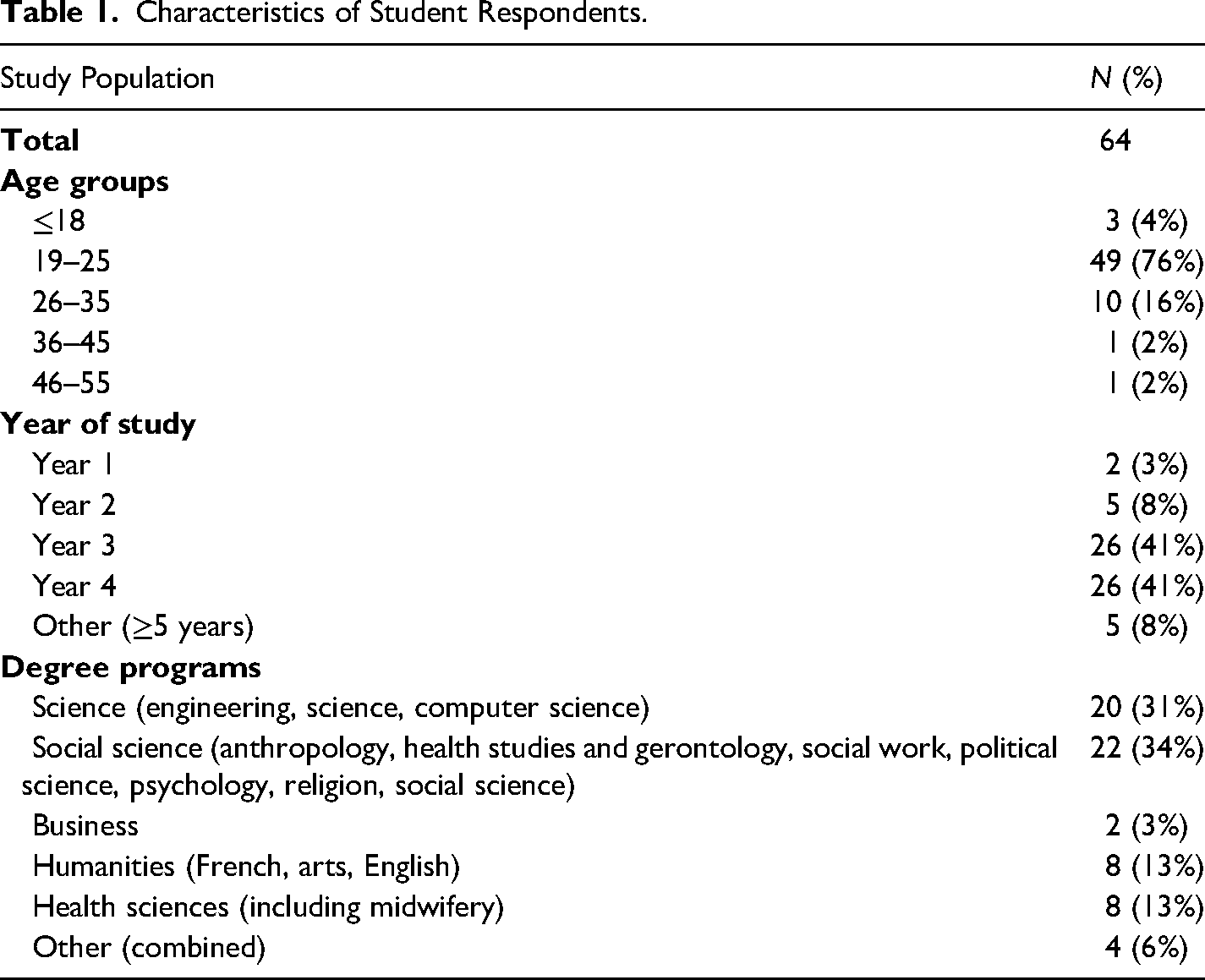
Of the 67 students that responded to the survey, most were between the ages of 19 and 25 years with almost half in their third or fourth year of study (see Table 1). A majority of the students involved, 81% (52), indicated that they had participated in EE (see Figure 1). Twenty students had participated in OCEE and 20 students had participated in FBEE. Twelve did not specify whether their EE was on-campus or field-based.
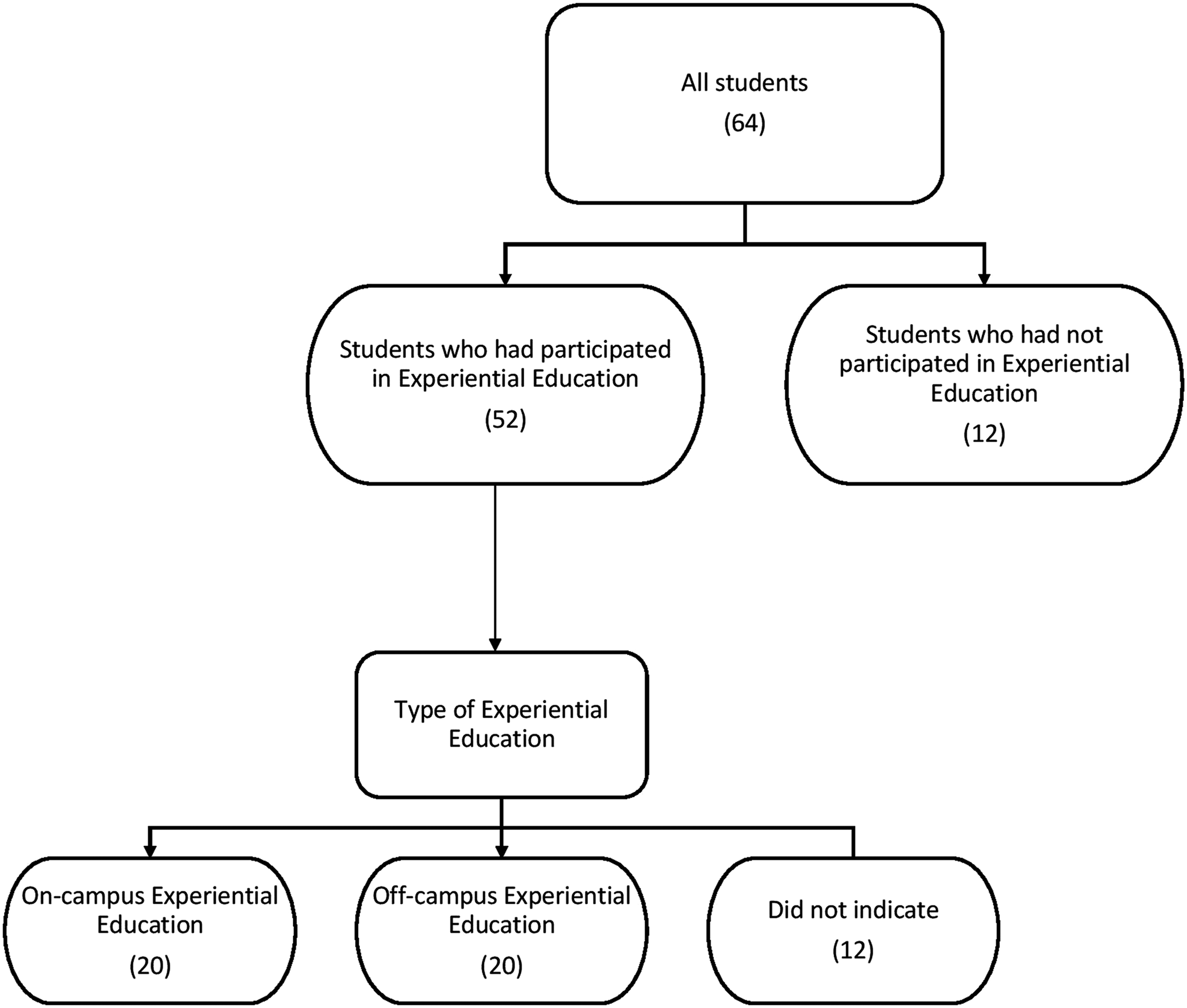
Study participant numbers by flow chart category.
Characteristics of Student Respondents.
Five faculty/course instructors participated in the study. Faculty affiliations included health sciences, social sciences, and engineering. Seven respondents from seven different community organizations completed the survey. These had both OCEE and FBEE experiences.
Defining EE and EE Approaches
Students defined EE as, “solving real world problems” (S1), involving “hands-on learning,” or “learning by doing” or “learning by experience.” One student explicitly indicated that EE must be “learning outside of the classroom, where you bring what you learned in class to life” (S19). Students emphasized that “real life experience” or “working in the real world” is crucial to EE. Having the opportunity to gain real world experience in a field of interest. Further, it's the ability to see what you are learning about in class (ex. theories or policies) applied in real life and in action. (S27)
However, some student definitions, commonly from students who had not participated in EE, were ambiguous—“a new style of learning that hasn’t been tested much” (S60).
The instructors’ and community respondents’ responses mirrored those of the students. For example, two community participants described it as “learning through doing” and “firsthand experienced outside the classroom.” Respondents also discussed that EE engaged students in creative thinking that differs from their in-classroom experience, honing student autonomy in their learning and providing opportunities for practical, real-world experiences: Introducing something new to students by hands-on learning or learning about something that they would not otherwise have the opportunity to from the textbook and assigned readings. (IDHPMS)
EE Approaches and Their Effectiveness
Respondents shared their experience of both OCEE and FBEE and their effectiveness. According to respondents, OCEE included activities such as open-ended assignments, personal projects, peer-based learning, discussions, competitive team projects, simulations, electronic designs, mentoring, debates, workshops, and labs. FBEE included placements in community service, health and teaching settings, job shadowing in various settings, and attending seminars outside the classroom. Of the students who participated in OCEE, 20% (five) viewed EE as involving “problem-based or project-based learning.” Of the students who participated in FBEE, 80% (16) indicated that EE should involve “out of classroom experiences,” “placements,” “job shadowing,” or “volunteering.”
Students indicated that the best approach to EE depends on the student learning style and the objectives of their participation. However, students who had participated in OCEE stated, “making it based on my interest” [S1], embracing “a new style of learning” [S6], and “keeping it fresh, new skills being taught by new people” [S20] would make it more effective. Comparatively, one community respondent doubted the effectiveness of OCEE: I believe experiential learning can only occur outside the classroom through learning by doing. However, learning by hearing from experienced people may be useful (OCEE). I am not sure how effective it is. (IDMcMK)
Students who had participated in FBEE emphasized the importance of “working in a field that [they] wish to go into in the future” (S23 and S30). Others also highlighted the importance of being able to make mistakes and receive feedback (S22, S24, S26, S27, and S28) in increasing the effectiveness of FBEE.
Rationale for EE Participation
While the instructors and community organizations participated in both forms of EE because they believed it enhanced students’ learning, most of the students who had participated in any form of EE did so because it was part of their curriculum. Although it was required, most students had enjoyed the experience. Several students thought that EE enhanced their learning experience by providing hands-on “real life experiences” (S31), facilitating further understanding, supporting their autonomy in learning, enabling them to network with community organizations (S33), and supporting real-world impact. It also enabled them to “discover themselves”: Testing out the knowledge I have and use my skills to create change in the work, while also enhancing my abilities and finding out about what I like and don’t like about the work. It's really about finding myself and see where I fit. (S22)
My objectives would be to be able to conduct the work on my own and have fostered connections to community members and workers in my field to promote continued learning. (S34)
The theme of ability to apply in-class theoretical learning to real life was discussed extensively by instructors. Respondents from organizations recounted benefits similar to those identified by the students, with an emphasis on the real-world experiences: [EE] is an approach that allows the student to connect theory to practice and to bridge the gap between their university experience here on campus and the real world beyond the campus borders in a way that allows them to connect their disciplinary perspectives to address complex challenges that we are facing as a society. (CHT25)
Evidently, instructors were explicit about the application of theory to practical learning through EE and students valued the real-world experience perhaps with less connection to theory. Instructors in professional disciplines also described EE as “essential” to student learning since it is a required core competence: It is essential for our students to have hands on clinical experience/assessment to meet core competencies. This also assists them in understanding the importance of interprofessional relationships and other health care provider roles. (Anonymous)
Although the primary rationale for engaging in EE was to benefit the students, some respondents recognized the benefits of EE to the community organizations:
From an employer perspective – co-ops would be most useful because of the ability to mould students into a particular way of thinking when they are young. (IDHPMS)
Facilitators to Student Participation in EE
Students noted facilitators to engaging in EE as opportunities to explore learning in a different way and learn employable skills (discussed above). Furthermore, the majority of both OCEE and FBEE participants, 85% and 70%, respectively, indicated that EE was enjoyable since they were able to “apply [their] undergraduate studies and knowledge in a real world interdisciplinary setting – something [they] have not done in [their] traditional academic setting” (S32). Additional facilitators for students included obtaining credit for their EE, instructor and community organization flexibility and willingness to accommodate to various student needs and capacities, and supportive instructors and knowledgeable field mentors. Students also identified the ability to work independently and engage in self-directed learning (with clear instructions), as facilitators to their EE engagement.
The main facilitator for the instructors’ and community organizations’ engagement in EE was the benefits that EE presented to the students (discussed above). Specifically, instructors discussed that their implementation of FBEE responded to students’ interests where they observed that the interest is growing. In addition to the students’ interest, instructors reported that engaging in EE contributed to strengthening of students critical thinking capacities. Some of the instructors further emphasized the benefits to community organizations as an additional facilitator.
The community organizations identified additional facilitators. Some of these were focused on the characteristics of the learner and the instructor: student's eagerness to learn, a good fit between student and mentor, student competencies, reliability, student training/supervision, support from the institution (instructor), and flexibility (both student and instructor). This, according to the community respondents, makes it a worthwhile investment. The organizations also appreciated the opportunity to contribute to students’ real-world experiential learning: A learner can enhance their education by weaving directly what they understand to be true about the world around them, with (more or less) curated opportunities to see the “real” world in action. The learning environment often benefits from the knowledge that students bring. (Wal04)
In addition, community organizations discussed the mutual benefit for all stakeholders as a facilitator to their engaging in EE: the students leave having met their learning objectives, while the organizations benefit from student contributions. Several respondents reported that many students tend to return to the place where they had completed their placement for career opportunities: The organization benefits from the ways we learn from students, their contributions to our service delivery (both labour directly provided, and also influence on how practice evolves). (Wal04)
Almost every student who has ever completed a placement with the aforementioned department has applied to work for that department; I find that to be an indicator of success. (KOM07)
Hence, it is no wonder that some organizations, as observed by an instructor, have become dependent on the students’ contributions: Organizations have become dependent on the university with supplying them with students to shore up where they need to shore up… (DI47)
When asked about the effectiveness of EE approaches, there seemed to be a preference for FBEE by all respondents as exemplified by a community respondent: From an employer perspective – co-ops would be most useful because of the ability to mould students into a particular way of thinking when they are young. From an academic perspective, volunteering and internships are most important because it allows students to confront and overcome challenges as they emerge in a real-life situation, and by doing and digesting content by doing, learning becomes easy and the content will become lodged in their memory from application. (IDHPMS)
Barriers to Student Participation in EE
Barriers noted were linked to FBEE and included time, financial costs, and inflexibility from instructors (see Table 2).
Barriers and Facilitators to Participating in EE.
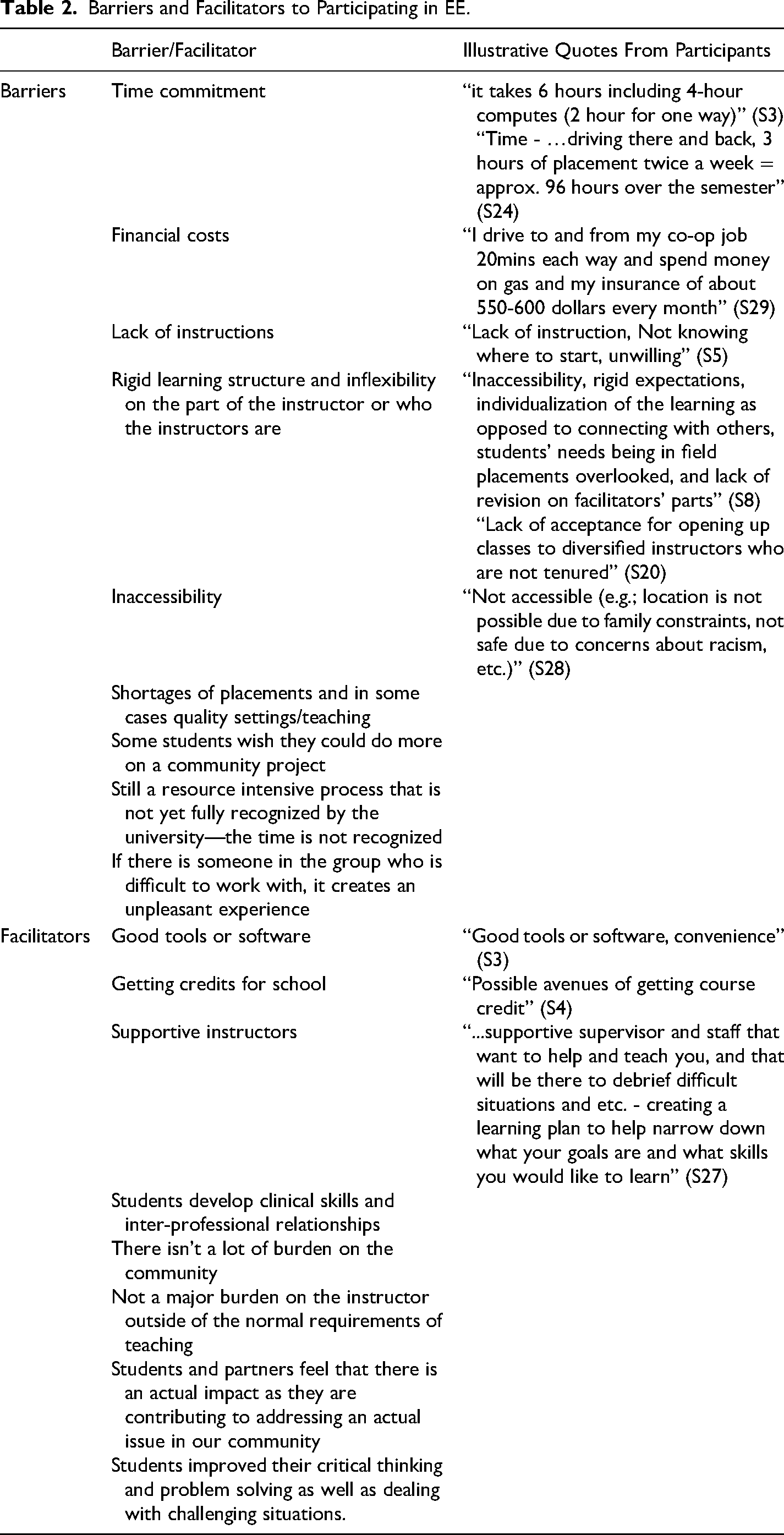
All the respondents (student, instructors, and community) identified the time commitment as a critical concern and barrier to engaging in EE. The students discussed how they found it difficult to balance life commitments with FBEE especially; here, some students discussed how it took 30 min to reach their placements, which translated into many hours they could not afford to spare. Similarly, the instructors discussed the time required to design an EE course well; they also referred to the time it takes to grade EE. The community organizations also recognized the time commitment required to host a student in terms of supervision: It takes me 6 hours including 4-hour commute (2 hour for one way). (S3)
It takes a lot of time but I think it’s worth it in terms of the learning outcomes. Still not sure that it’s fully understood both in terms of the time and the skill it takes to do that in a meaningful way. (CHT25)
The time has been “insurmountable” the marking time is incredible. Hours and hours. Because at the end they have a group paper, journal and a reflection paper on their own personal development. (DI47)
…Our time is always required to help plan for these opportunities, supervising them when they occur, and debriefing after… (Wal04)
Financial costs also emerged as an additional barrier identified by all respondents but in particular among the students. The students discussed how much FBEE imposes financial costs—either costs of using public transit or purchasing gas: I drive to and from my co-op job 20mins each way and spend money on gas and my insurance of about 550-600 dollars every month. (S29)
Placements require the student to travel to our location… at the expense of the student. Sometimes there are program materials provided by researchers/learner… (Wal04)
The community organizations also recognized the financial costs incurred by the organizations, in terms of in-person hours, but sometimes in direct costs if they have to reimburse the student's costs. This often imposes financial costs for the institution and community organizations which are often functioning on a limited budget: (in course X) – a guest speaker for an hour and a half in a classroom. We provide honorarium for non-profit organizations…organizations are already stretched for resources… Course Y – the cost on time for organizations is much more as staff who work on that project spend up to a half day a week over the course of the semester supporting students. (CHT25)
there are costs of staff supervision and training, re-imbursement for student expenditures/mileage. (Lau11)
Additional barriers included inadequate opportunities for students, whereby only a few organizations are available to host students. This translates into these organizations being overwhelmed by students requesting for opportunities to work with them—which further exacerbates the organizations’ time and financial costs discussed above. The limited number of community organizations also presents a challenge for the instructors too, since they then need to spend more time trying to find placements for the students.
Community respondents also identified a barrier related to the organizational culture, which may be challenging to engage students. This is more so the case in organizations which are not accustomed to working with students. Perhaps as a reflection of the organizational culture, students commented on organizational bureaucracies as a barrier to their participation to EE: It is very difficult, at times unpleasant and uncomfortable, but ultimately worth it because I feel not only pride in what I have learned but also that I have essentially taught myself. (S26)
Community respondents further commented on the students’ lack of reflexivity and flexibility as barriers although they were not discussed in detail.
Despite many barriers, instructors indicated that they chose certain approaches to EE, such as inviting guest lecturers, to respect student time and limit the cost burden associated with FBEE. Participants from the organizations emphasized the importance of clear expectations from instructors, instructors engaging more with community partners, receiving greater support in terms of space and resources from the course program, and giving more autonomy to students.
Document Review
We analyzed the approaches of five tertiary institutions which included approximately three policy documents and/or institution webpages from each institution about their EE programs (see Appendix). In addition, we analyzed eight academic journal articles published between 2020 and 2022 on adaptations to EE programs since the COVID-19 pandemic. These academic and institutional documents were analyzed in conjunction with each other.
Adapting EE
Many EE experiences across various Canadian institutions were canceled or facilitated virtually due to the COVID-19 pandemic (McGowan, 2021). To understand the existing EE opportunities and how opportunities were adapted, both university and academic documents were considered.
All of institutions considered in this study (five) provide a variety of EE opportunities for students, both on-campus and field-based (see Appendix). On-campus opportunities included EE courses, research, simulations, interdisciplinary learning, cocurricular activities, labs and design opportunities, and performance/arts-based projects (I1–I5). Field-based opportunities included study abroad, co-op, work placements, practicums, work studies, and short-term impact experience courses. These opportunities were described to be offered both in Canada/locally and internationally (I1–I5).
Of the institutions sampled, four institutions noted direct shifts due to COVID-19, particularly to FBEE experiences such as work placements and study abroad. For example, institutions 1, 2, 4, and 5 indicated that the pandemic could impact the experience either through a shift to virtual or cancelation (I1, I3, I4, and I5). These institutions provided resources such as a COVID-19 ‘Frequently Asked Questions’, virtual onboarding and remote supervision information for students, supervisors, and organizations, and a list of partner universities outside of Canada that would be able to host students for virtual study abroad programs (i.e., online attendance at lectures abroad). Virtual opportunities were seldom indicated outright and three of the four institutions that noted COVID-19 shifts also informed students that it is up to the capacity of the host organization to determine what is possible.
In addition to the institutions sampled, academic literature noted the shifts in EE experiences due to the impacts of the pandemic. In particular, literature described the shift from in-person to virtual experiences such as research, simulations, and augmented reality programs (Aquino, 2022; Bowen, 2020; Burnett et al., 2021; McGowan, 2021; Sweet et al., 2022; Xiao et al., 2022). Community organizations and university programs recognized the need for the students to continue benefiting from experiential learning and pivoted to virtual working (Ali, 2020; Xiao et al., 2022). Virtual EE experiences were discussed as effective for students as they reduce challenges with transport, cost, and accessibility and create a wide scope of opportunities for students to connect with diverse and global stakeholders (Aquino, 2022; Bowen, 2020; Burga et al., 2021; McGowan, 2021; Sweet et al., 2022; Xiao et al., 2022). The limitations of virtual experiences were also discussed, specifically in terms of balancing school and personal life, difficulties building connections with organizations and communities online, and challenges with connectivity and accessibility of technology (Bowen, 2020; Burga et al., 2021; Sweet et al., 2022). Some literature noted that although virtual opportunities are important and beneficial to limit inequities in accessing EE, the benefits of in-person EE both field-based and on-campus are significant to learning, and more adaptation and adjustment is needed to continue offering in-person opportunities (Butler, 2022; McGowan, 2021; Sweet et al., 2022).
Implications
This paper has described a sample of student, instructor, and organization experiences with EE. In addition to stakeholder perspectives, this study has also considered the shifts to EE prompted by the COVID-19 pandemic through document analysis. While findings indicate several benefits of both on-campus and FBEE, barriers exist that limit the potential accessibility and impact of EE experiences. Most of the benefits and barriers discussed were in relationship to FBEE experiences. As postsecondary institutions continue to emphasize the value of EE, barriers need to be addressed if all stakeholders are to equitably benefit from EE opportunities both virtual and in-person (Baldwin & Rosier, 2017).
Findings suggest that FBEE seemed to have the most benefits as well as the most barriers to all respondents. To facilitate and support students engaging in FBEE, barriers should be addressed (Simmons et al., 2018). In particular, universities should work to further support students who experience financial barriers to enable equitable participation (Huang et al., 2018). Despite potential challenges with conflicting timetables and part-time jobs, scheduling some EE opportunities within the course time would also facilitate student participation. To mitigate the burden of time on instructors, university EE offices are encouraged to further build mechanisms to support instructors who are interested in incorporating EE in their courses (York University, 2021a, 2021b), for example, reviewing EE aspects of the course, identifying, and maintaining a directory of potential organizations that would accept students and providing communication/liaison support as required. Further support has the potential to reduce instructor workload and increase interest in providing EE opportunities. In addition, to minimize barriers identified between community organizations and instructors, increased communication and partnership building with organizations should be prioritized. For example, instructors should prioritize their engagement with prospective organizations before and during their course design process to ensure that there is goal alignment. Similar to principles of community-based research, it is important that EE is beneficial to all participants and puts the community at the center of the work (Holkup et al., 2004). Greater partnership building throughout the design of EE experiences could increase the sustainability and impact of such opportunities for students, institutions, organizations, and communities.
Moreover, scholars have argued for an increase in preparatory materials to foster critical reflection among students participating in EE experiences, especially FBEE experiences (Imperato et al., 2016; Schwartz et al., 2011; Shah et al., 2019). Best practices in EE now include comprehensive preparatory courses and materials to build both student and instructor abilities for critical self-reflection, humble leadership, consideration of power dynamics, and cross-cultural communication skills (Akhurst, 2016; Crump et al., 2010; Melby et al., 2016; Purkey & Hollaar, 2016; Shah et al., 2019). Many tertiary institutions in Canada have begun to prioritize preparatory courses and material for students to build these skills. For example, institutions such as the University of Ottawa, Queen's University, McMaster University, and the University of Western Ontario host courses accessible to students on topics such as intercultural engagement, ethical practices in EE, critical analysis through an intersectional lens, and critical reflection to recognize power and privilege (Kapiriri et al., 2021). These preparatory materials present processes and tools to improve reflection practices and deepen academic theorizing skills, while also emphasizing the importance of social justice issues and historical, political, and social context that impacts power and privilege.
Based on learning from the COVID-19 pandemic and on the findings that OCEE has the least barriers, especially for students, virtual and on-campus approaches are shown to provide effective EE options for students and should be encouraged. While this may not reduce the workload for the instructors or mitigate all accessibility barriers (i.e., internet capacity; cost could still be challenges), shifting to focus on on-campus and virtual EE opportunities enhances the equity of such programs. For example, virtual approaches applied to global EE/study abroad, which tend to be very expensive and out of reach for many students, reduce costs and expand the opportunity for a more diverse group of students to participate (Ainscow, 2020). Moreover, many of the factors that students note are important to optimize their learning are possible to implement virtually. For example, inviting engaging presenters, using visual learning techniques, leveraging small-group learning, providing opportunities for research, and applying knowledge in a lab or simulation setting could be transferred to a virtual environment. In short, the opportunity to reconceptualize what we consider “real” or hands-on experience with a shift to virtual experiences provides a more equitable scope of options for students to participate in EE.
Study Limitations
This was an exploratory qualitative study. As such, we have a relatively small number of respondents. The sample size is consistent with similar studies (e.g., Chan et al., 2021) and with qualitative research approaches, whose objective is not to obtain generalizable findings. Second, the student sample did not include a reasonable representation of the students who had not participated in EE. It would be beneficial to draw from a sample of students whose courses do not mandate EE but had participated in EE to gain a more holistic perspective. Furthermore, the instructor and organization samples only included those who had participated in EE. Sampling instructors and organizations that have knowledge of but have not participated in EE would provide insight into additional barriers that hamper their willingness to engage in EE. Finally, given the ongoing experience with COVID-19, information about adapting to changes is limited. There has been insufficient time to publish academic literature on the effects of COVID-19 on EE and the subsequent adaptations and learning for institutions. Similarly, the choice of search terms to find academic literature on such adaptations was limited. We endeavored to gather a meaningful scope of literature on the approach to changes in EE at a tertiary institution level but recognize the opportunity for further research. Future research should focus on further learning about how institutions adapted EE experiences due to the COVID-19 pandemic and prioritize exploration of how students’ EE experiences were impacted by the COVID-19 pandemic and their perceptions of quality of such experiences due to potential shifts.
Conclusion
This study has provided an overview of EE experiences from the perspectives of the students, instructors, and community organizations. In addition, this study has explored the shifts to EE due to the constraints emerging from the COVID-19 pandemic. Findings suggest that there are consistent benefits of EE, and barriers to EE, across student, instructor, and organization perspectives, where learning from changes prompted by the pandemic could be beneficial to increase equity in EE. We recommend that instructors and institutions continue to work in partnership with students and community organizations to build virtual, on-campus, and local FBEE opportunities that aim to increase equitable access and impact. By challenging the ways through which education has been previously conceptualized and learning from shifts prompted through COVID-19, students may be able to engage with their learning in more meaningful ways while organizations may benefit from partnerships with higher education institutions. In particular, tertiary institutions promoting EE should carefully consider explicit ways through which community organizations can be supported to meaningfully support EE without them sacrificing their meager human and financial resources. Continuous systematic assessment of the effectiveness of the various approaches as they emerge will facilitate continuous innovation and quality improvement of EE.
Footnotes
Acknowledgments
We acknowledge the important role Nicoda Foster played in collecting the data and conducting the initial data analysis.
Author Note

PhD Candidate, Global Health Office, McMaster University
1280 Main Street West, Hamilton, Ontario, Canada
chidwihw@mcmaster.ca
Associate Professor, Department of Health, Aging and Society, McMaster University
1280 Main Street West, Hamilton, Ontario, Canada
kapirir@mcmaster.ca, (905) 525-9140 ext. 27203
Angela Mak
MSc Graduate, Global Health Office, McMaster University
1280 Main Street West, Hamilton, Ontario, Canada
angelachen110@shaw.ca
Declaration of Conflicting Interests
The authors declared no potential conflicts of interest with respect to the research, authorship, and/or publication of this article.
Funding
The authors received no financial support for the research, authorship, and/or publication of this article.
Author Biographies
Appendix: Supplementary Information
Sampled University Documents.