




Abstract
During adolescence, defined by the World Health Organization to be the “phase of life between childhood and adulthood, from ages 10 to 19” (WHO, n.d.), youth seek self-efficacy, identity awareness, and social acceptance while navigating rapid developmental changes (Tsang et al., 2012). These changes can increase anxiety and damage self-efficacy, especially for adolescents who have experienced childhood adversity (Courtney et al., 2020; Jones et al., 2022; Tak et al., 2017; van der Kolk, 2014). To compound these challenges, the COVID-19 pandemic and its resulting traumas have exacerbated the adolescent mental health crisis (Chatterjee, 2021; Jones et al., 2022).
The purpose of this phenomenological mixed methods case study is to examine how an innovative experiential learning approach—equine-assisted learning (EAL)—influences adolescent self-efficacy, anxiety, and learning during this contemporary perfect storm of developmental changes, an unparalleled mental health crisis, and a global pandemic. The overarching research question driving the study was, “Does EAL improve self-efficacy and reduce anxiety levels in youth?” Additional, related questions included: “How do youth define and view their growth in terms of self-efficacy?” and “How do horses support youth learning about self-efficacy and anxiety during times of collective stress and trauma?”
Background and Context: Youth Wellbeing, EAL, and Rurality
Childhood adversity is known to be a leading cause of depression and anxiety in both youth and adults, and these ailments are among the most common mental health illnesses present in adolescents (Merikangas et al., 2010). Anxiety, or an “emotion characterized by feelings of tension, worried thoughts, and physical changes like increased blood pressure” (APA, 2023), has been linked to poor performance, while, relatedly, lower levels of self-efficacy can create higher anxiety levels (Owens et al., 2012). Further, natural disasters, such as a global pandemic, lead to an increased risk of posttraumatic stress disorder (PTSD), depression, and anxiety (Douglas et al., 2009). Early studies link the COVID-19 pandemic to increases in adolescent depression and anxiety (Jones et al., 2022; Racine et al., 2021; Xie et al., 2020), and in the U.S. COVID-19 has accelerated already-expanding mental health crises for youth (Chatterjee, 2021; Courtney et al., 2020; Lee, 2020). According to Guessoum et al. (2020), the novel coronavirus and resulting lockdown may result in multiple impacts on adolescents, including “chronic and acute stress, worry for their families, unexpected bereavements, sudden school break, and home confinement in many countries, increased time of access to the internet and social media, worry for the economic future of their family and country” (para. 2).
Given the challenges of the COVID-19 pandemic and related research, we looked to a novel experiential education approach that occurs in outdoor or other well-ventilated spaces as the focus of this study. EAL, which engages participants in active learning with and from horses, includes both unmounted (e.g. grooming, leading) and mounted (e.g. riding) experiences, as well as other innovative applications of other wellness approaches (e.g. yoga poses on horseback). Through developing a relationship with a large animal and observing how horses respond to fear, stress, and trauma, participants learn skills designed to promote competence, self-worth, and agency (van der Kolk, 2014). Other research touts the potential for equine-assisted therapy to reduce anxiety through regulation of blood pressure, breathing, and heart rate (Baldwin et al., 2018; Wach, 2014). In fact, simply being in the presence of horses can result in physiological, social-emotional, and mental benefits (van der Kolk, 2014). In terms of youth-specific research, EAL has been shown to decrease stress hormone levels in adolescents and increase social competence and positive behavior, with particular improvement in self-awareness and self-management (Pendry & Roeter, 2012; Pendry et al., 2014).
While EAL programs have rapidly gained popularity and demonstrated exciting initial results, the research examining their effectiveness remains limited, in part due to the small sample sizes and rural locations common to these programs (Artz et al., 2021; Fry et al., 2018; Jung et al., 2022). Meta-analyses and reviews of research evaluating equine-assisted interventions cite a need for additional study and documentation of such programs (Burgon et al., 2018; Wilkie et al., 2016). Specifically, there is a need for research that focuses on EAL (as opposed to equine-assisted therapy) and that applies robust theory and a rigorous design appropriate to small, complex samples such as those typical to EAL contexts.
The site of this study, Montana, is a particularly important context for such research. As is true with many rural contexts, Montana's geographic isolation, weather, provider availability and training, and a cultural stigma surrounding seeking mental health support (i.e. the cultural reference to “cowboy up!,” which essentially means to “toughen up” and refuse to seek support) all create barriers to accessing mental health care (Downey et al., 2022; Kaiser Family Foundation, 2016; Keller et al., 2019; Uken, 2012). Although Montana's “cowboy culture” can encourage and cultivate self-efficacy, its emphasis on “individualism,” an “isolation mentality” and actions that are “purpose-driven and prideful” can accentuate mental health disparities and suicidal ideation (Caulkins, 2014, p. 23). Among adolescents, Montana's suicide rate is twice the national average rate (American Foundation for Suicide Prevention, 2017). Collective traumas add another layer of difficulty and complexity to the mental health crisis in rural contexts, and the pandemic has widened the urban-rural gap in terms of both physical and mental health care (Biddle & Brown, 2022; Downey et al., 2022; Summers-Gabr, 2020). The resistance by many Montanans to COVID-19 mitigation (i.e. vaccination, isolation, masking, etc.) has marginalized the state's most vulnerable residents and further stigmatized well-being efforts (Keller et al., 2021; Newcomer et al., 2021).
While the study described in this article is unique to a specific rural context, it holds the potential for application in other rural places, especially those with social and cultural connections to horses. As is true for many states across the region, horses have been integral to the lives of the Indigenous peoples of Montana for hundreds of years (Clement, 2020), and they were (and still are) central to ranch life for others who settled throughout the area (Holmes et al., 2008). Today, horses remain important cultural and economic centerpieces for many rural communities across the region. Popular television shows like Yellowstone reinforce the horse's mythical place in both historical and contemporary Montana and promote cowboy culture as situated within the “New West” (Rabitsch & Pyrka, 2022, p. 95). Given the mental health and COVID-19 challenges amplified within rural contexts, and the potential for EAL to address these challenges within the context of Montana specifically, the EAL program that is the focus of this case study offers a unique and in-depth opportunity to examine the potential for EAL to influence anxiety, self-efficacy, and learning.
Theoretical Framework: Advancing Self-Efficacy Theory in the COVID-19 Era
This study builds upon Bandura's (1977, 1982, 2011) theoretical understandings of the interconnectedness of self-efficacy, anxiety mitigation, and agency, particularly in their potential to confront and heal both individual and collective trauma, adversity, and stress. Self-efficacy—or an individual's belief in their capacity to reach goals or engage in performance or social tasks—is integral to behavior modification and closely related to overall agency, achievement, and well-being (Bandura, 1977; Honicke & Broadbent, 2016; Richardson et al., 2012). Improved perceptions of self-efficacy have been shown to mitigate the risk factors of childhood adversity, trauma, and chronic stress (Cooper, 2015; van der Kolk, 2014) and to reduce both social and cognitive anxiety (Tahmassian & Moghadam, 2011; Yang et al., 2021).
When Bandura introduced his Self-Efficacy Framework in 1977, he suggested “self-efficacy expectations” stem from four main sources: performance accomplishments, vicarious experience, verbal persuasion, and emotional arousal (p. 195). While all four of these sources are important, recent scholarship notes the connection between high emotional arousal and increasing anxiety specific to learning during the COVID-19 pandemic (Yang et al., 2021). Furthermore, since most scholarship that investigates youth trauma, adversity, and stress—and most scholarly application of Bandura's framework—focuses on individual experiences (Petrone & Stanton, 2021), the pandemic offers a novel context to consider intersections between anxiety, self-efficacy, and collective experiences.
EAL is a particularly powerful format for implementing and examining Bandura's theoretical understandings, as it offers a valuable approach for studying the relationships between self-efficacy, emotional arousal, and anxiety (Baldwin et al., 2018; van der Kolk, 2014; Pendry & Roeter, 2012; Pendry et al., 2014). Prior research suggests “the experiential nature and honest response of the horse provided the adolescents with opportunity to try out and ‘rehearse’ new behaviors as outlined in [Bandura's] social learning theory” (Wilson et al., 2015, p. 14). The study described in this article seeks to further examine the phenomenon of EAL through application of Bandura's framework during pandemic-related collective stress.
Methods
We employed a mixed-methods, phenomenological case study design (Yin, 2003), which recognizes variability among participants while allowing for deep understanding of individual and collective phenomenon (e.g. the influence of EAL on youth self-efficacy during a pandemic). Phenomenology is well-suited to experiential education research given its goal to “understand the essence of the experience” (Creswell & Poth, 2018, p. 67), instead of simply presenting outcomes. In this study, we were eager to learn about how EAL's integral essences shape self-efficacy, anxiety, and awareness. To structure our analysis, we applied van Manen's (2007, p. 13) “phenomenology of practice,” which attends to both tangible practices (e.g. learning to halter and lead a horse) and intangible emotions and experiences (e.g. naming feelings of anxiety to make them distinct from genuine fear). Given our focus on EAL as a program consisting of experiential education practices and on EAL's potential to influence youth emotion and awareness, this specific phenomenological approach offers insight to “formative relations between who [participants] are and who [they] may become, between how [they] feel and how [they] act” (van Manen, 2007, p. 26). Therefore, phenomenological methods can illuminate intersections unique to research dedicated to mental health changes, innovative or informal interventions, and adolescent development.
Our mixed methods orientation sought to offer deeper insight to phenomenological essences through rigorous integration of quantitative and qualitative methods. We included quantitative elements such as general and social self-efficacy scales (Sherer et al., 1982) and general anxiety disorder scales (Spitzer et al., 2006) to inform development and integration of qualitative elements (interviews, focus groups, and observations). The research design also incorporated a combination of participant self-reporting, researcher observation, and participatory sense-making (De Jaegher & Di Paolo, 2007), which engages participants as co-researchers in interpreting data, to triangulate analysis of participant experiences. Given our emphasis on both tangible and intangible phenomena and the inclusion of adolescent youth as co-researchers, the study is best described as a sequential exploratory quant→QUAL design (Creswell & Poth, 2018). Our initial quantitative findings shaped the qualitative phase's protocols, and the qualitative findings were weighted more heavily in our findings given our interest in in-depth understanding of phenomena, our small sample size, and our specific context.
Finally, the study's focus on a specific context positioned it well for a case study approach. Case study research, especially when combined with phenomenological methods, seeks to “catch the complexity of a single case” (Stake, 1995, p. xi). Since case studies, which are bounded by aspects unique to the context, are less likely to result in generalizable findings, they are most useful for studying “experiential understanding” (Stake, 1995, p. 37). The study described in this article is bounded by its focus (i.e. one EAL program), geographic location (i.e. one rural community), and timeframe (i.e. one summer during a pandemic).
Program Context and Study Introduction
A licensed mental health care professional and local EAL nonprofit director co-developed the program curriculum, which involved six weekly 120-min classes during the summer of 2020. Each session was co-led by the mental health professional and a certified Professional Association of Therapeutic Horseback Riding International (PATH, Intl.) instructor and supported by several adult volunteers. Prior to the initial session, volunteers were trained in safety procedures, such as requiring participants to wear ASTM/SEI-certified riding helmets when around horses. Further, because this study took place during the height of the COVID-19 outbreak and prior to availability of vaccinations, extra care was taken to ensure participant, volunteer, and researcher epidemiological safety. Importantly, the study took place in a large, well-ventilated indoor arena, with large doors kept open during each session to encourage airflow.
Seven youth (two males—including one transgender male—and five females) ranging from 10 to 15 years old, participated in the study. All participants self-identified as having anxiety but were not required to have a medical diagnosis of generalized anxiety disorder. Unlike most urban youth, and even youth in other rural contexts, most of the participants had prior experiences with horses, are friends with other youth who have their own horses, and see horses regularly in and around their community.
Classes began with a group conversation that included a safety pledge, a weekly “feelings check-in,” discussion of if/how participants had experienced anxiety and/or applied strategies learned in the program within their daily lives, a guided mindfulness exercise (e.g. body scan), and an activity that introduced strategies for increasing awareness and self-efficacy (e.g. art therapy, meditation, journaling). Integrated into this opening activity, EAL facilitators shared research about youth development, anxiety, fear, nutrition, and mindfulness-based stress reduction exercises.
Following the opening activities, the horses would be brought into the arena. While each session included different focal skills and content, most included an observation activity (“What do you notice as the horses interact with each other?”), grooming instruction and time, and leading/movement exercises (e.g. leading horses over tarps). Throughout these activities, volunteer facilitators would work with pairs of participants to ensure adherence to safety protocols and to integrate EAL and anxiety mitigation content and skills. For example, a facilitator might ask a participant why they are hesitant to pick up a horse's foot to clean out the hoof, which could invite discussion about use of breathing techniques (“try breathing with the horse”), clear communication (“be decisive in your touch”), and application of learned content and skills (“remember, if you face the back of the horse and stand closer, you’ll be able to hold the leg more effectively”).
Sessions ended with another group discussion. This segment focused on situating learned content and skills within broader anxiety and self-efficacy research, identifying ways to transfer techniques to daily lives, debriefing class activities, asking and answering questions, and recognizing peer or facilitator practice. Some sessions included journaling time, revisiting mindfulness techniques, and assignment of “homework” (e.g. “journal each day to track your use of these strategies”).
Our research team consisted of the program director, three volunteer facilitators, and two university educational researchers. The study was approved by the university's Institutional Review Board and described to parents/guardians, EAL volunteers, and participating youth verbally and through consent and assent forms. Members of the team met individually with each adolescent participant to discuss the study, answer questions, and build rapport. To further develop relationships that are important to phenomenological research with youth, team members engaged as both observers and facilitators during EAL sessions. Following each session, the team met to debrief and share observations. In addition, we expanded on observations and field notes through email exchanges.
Quantitative Data Sources
The goal of the initial quantitative data collection phase was to determine self-efficacy and anxiety baselines for each participant and identify areas of convergence and divergence for the group to inform the qualitative phase of the study. To identify appropriate quantitative data sources and instruments, members of the research team observed a pilot EAL program during the summer of 2019. Findings from that pilot indicated improvements in participant leadership skills, facilitated by the EAL framework, which inspired this study's effort to determine changes in perceptions of self-efficacy and adolescent agency. Given the pilot study's results, the researchers decided to implement the widely used General and Social Self-Efficacy Scales (Sherer et al., 1982) and the General Anxiety Disorder Scale (GAD-7; Spitzer et al., 2006) to collect quantitative data.
The GAD-7 (Spitzer et al., 2006) is a 7-item practical self-report anxiety questionnaire where participants are asked how often, during the last two weeks, they have been bothered by each of seven core symptoms of GAD. Response options are “not at all,” “several days,” “more than half the days,” and “nearly every day,” scored as 0, 1, 2, and 3, respectively. Therefore, GAD-7 scores range from 0 to 21, with scores of >5, >10, and >15 representing mild, moderate, and severe anxiety symptom levels. The GAD-7 demonstrates strong reliability (0.85) and validity (73.3%; Rutter & Brown, 2017).
The General and Social Self-Efficacy Scale (Sherer et al., 1982) is a 17-item self-report questionnaire. Items are rated on a five-point Likert scale ranging from agree strongly to disagree strongly and are intended to assess a “general set of expectations that the individual carries into new situations” (Sherer et al., 1982, p. 664). The general self-efficacy sub-scale focuses on one's own sense of self-efficacy (e.g. the ability to set and achieve one's goals), and the social self-efficacy sub-scale focuses on one's sense of agency in social settings (e.g. the ability to easily make friends). This General and Social Self-Efficacy Scale generate an overall self-efficacy score as well as two subscale scores related to general self-efficacy and social self-efficacy, with higher scores representing higher levels of self-efficacy.
These scales have been successfully applied to similar contexts and were originally developed to measure self-efficacy without being tied to a specific situation or behavior (Meyer et al., 2011). The original scale demonstrated high reliability (Cronbach alpha = .86 and .71), and the instrument's primary developer (Sherer) noted the instrument's appropriateness to measure growth in self-efficacy for at-risk youth (Meyer et al., 2011).
Qualitative Data Sources
As discussed below, the results of the study's quantitative phase were mixed. Therefore, the qualitative portion of the study was designed to delve more deeply into the specific EAL program's influence on self-efficacy, anxiety, and learning. We sought to examine the underlying meanings, or “essences,” of shared experiences—or phenomena—cultivated by the specific EAL program (Creswell, 1998; Lin, 2013). Central to phenomenology is investigation of sensory descriptions to bring felt understandings into consciousness (Smith, 2018), therefore making the orientation of mixed methodology especially useful in a study focusing on adolescent mental health.
To inform design and interpretation of qualitative open-ended survey responses, interviews, observation protocols, and memoing, research team members reviewed session lesson plans, which identified program goals, procedures, and personnel, as well as the results from the quantitative pre-assessments. Weekly semi-structured interviews began with a reminder of the purpose of the study and a description of the procedures, as well as invitations for participants to ask questions or provide additional explanations to support participatory data collection and interpretation. To record observations of group conversations and activities, researchers recorded field notes to document participant body language and discourse. During observations and interviews, we asked follow-up questions to support participatory-sense making (De Jaegher & Di Paulo, 2007). For example, when we asked, “How did you feel after you started brushing the horses?,” a participant responded, “Calm.” While that response provides valuable information, following the response with a probing question (e.g. “What physical sensations did you feel that help me know what you mean by ‘calm’?”) offered deeper insight while simultaneously increasing self-awareness for youth.
Data Analysis
During the initial class session, participants completed General and Social Self-Efficacy Scales and the GAD-7 as a pre-assessment. To develop baseline data, descriptive statistics were analyzed and results shared with the mental health professional after the initial class and before the second session. At the program's conclusion, participants again completed the General and Social Self-Efficacy Scales and GAD-7 to determine areas of change over the course of the program, with t-tests used to provide comparative statistics.
To analyze the qualitative data, we used a multi-phase phenomenological process that integrated descriptive and focused values coding practices (Saldaña, 2016). First, we used open coding to “lump” lesson plan, interview, and observation data by tangible practices or activities (e.g. “feelings check-in,” “grooming activity”) and to develop descriptive categories. Next, we applied focused coding techniques to refine categories and illuminate sensory “essences” (e.g. “physical responses to social expectations”). During this phase, emerging phenomenological themes (e.g. “acknowledging agency”), sub-themes (e.g. “engaging resistance as agency”), and exemplars were identified. Researcher memos provided additional insights for crystallizing data and interpretations (e.g. “wondering about basic/menial physical routines/tasks—like grooming—as connected to anxiety reduction”). A final phase of coding checked alignment between curricular values (i.e. codes from lesson plan content) and participant essences (i.e. verbal and non-verbal responses and sensory descriptions identified through interviews and observations) in order to situate the themes and exemplars within Bandura's self-efficacy framework.
Findings
The purpose of this study was to examine how EAL influences adolescent self-efficacy, anxiety, and learning during a period of collective trauma, such as that caused by the COVID-19 pandemic. Given our mixed methods orientation, we analyzed the data both separately (i.e. reviewing quantitative data on its own) and iteratively (i.e. using results of one phase to inform development, implementation, and interpretation of other phases, measures, and data). Analysis of the quantitative data offered insight to the study's overarching research question, “Does EAL improve self-efficacy and reduce anxiety levels in adolescent youth?” The qualitative analysis was directed at responding to two sub-questions, which intended to delve more deeply into the underlying phenomena: (a) “How do youth define and view their growth in terms of self-efficacy?” and (b) “How do horses support learning about self-efficacy and anxiety during times of collective stress and trauma?” Below, we discuss the quantitative and qualitative results further in conversation with each other through discussion of three phenomenological themes.
Fight: Learning to Effectively Confront Anxiety through EAL
Many adolescents who experience anxiety become irritable or refuse to engage in academic or social activities (Miller, 2023). In our study, both quantitative and qualitative results demonstrated that EAL supported adolescent participants in learning to effectively confront anxiety without resorting to “fighting” themselves, their emotions, or other people. Results of the GAD-7 demonstrated that, from the start of the program to the end, all but one participant (86%) experienced dramatic reductions in anxiety, and one participant experienced no change in anxiety scores (see Figure 1 and Table 1). The average improvement in GAD-7 scores was five points, which is substantial given that the scale is based on 21 total possible points. Three participants improved to the point where their scores moved them to lower categorical levels of anxiety. One participant's anxiety, for example, was reduced from the “severe” anxiety category to the “minimal” (lowest) anxiety category.
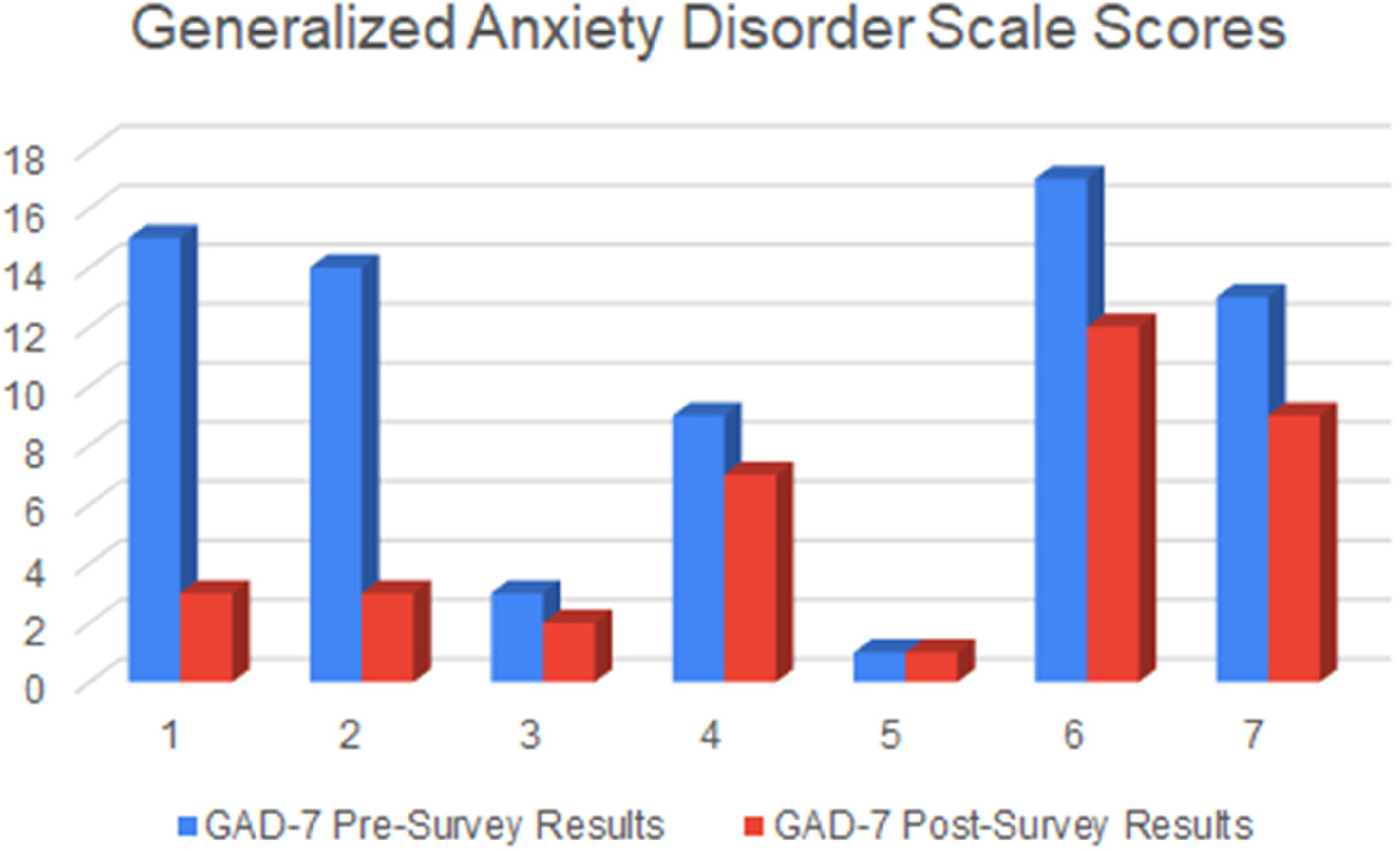
Generalized anxiety disorder scale results.
Generalized Anxiety Disorder Summary Statistics.
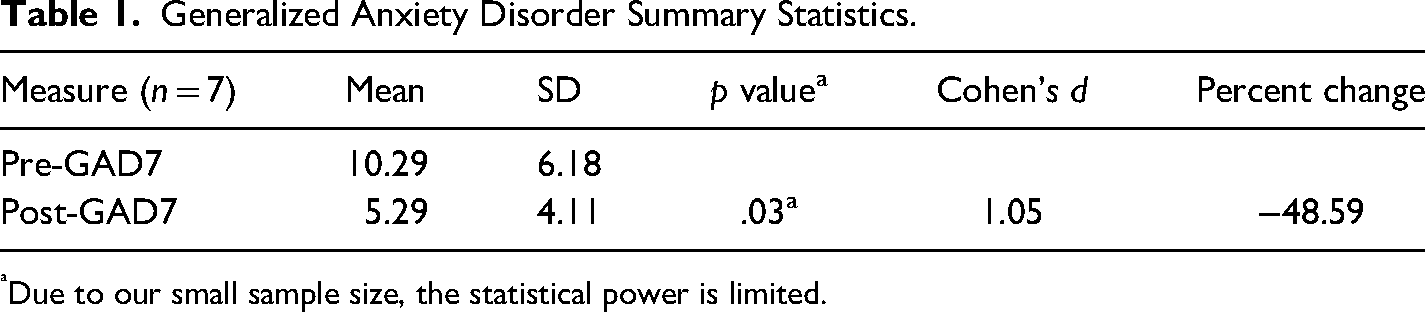
Due to our small sample size, the statistical power is limited.
While the GAD-7 results indicated reductions in anxiety from the program start to its end, they did not tell us why or how the reductions occurred. To delve into the phenomenon more fully, our qualitative analysis revealed intentional application of strategies learned during EAL sessions and emerging self-awareness that suggests agentive decision-making instead of reactive “fighting” against sensation or emotion. For example, one participant noted that EAL “makes me more focused and aware, but also calm and relaxed.”
Our qualitative results demonstrated substantial alignment between curricular values (e.g. course topics and goals, as expressed in weekly lesson plans) and participant essences (i.e. sensations and perceptions, as determined through observations and interviews; see Figure 2), but they also highlighted potential for disconnect between such values—which are typically generated by adults—and essences—which, in this case, were experienced by youth. For example, throughout session discourse, “horses” proved more prominent than “anxiety” for the participants. As participants explained, their primary purpose for coming to the class was “to be with horses,” while learning about anxiety and new strategies to manage it was secondary. Of course, these purposes are intertwined, and as the series of classes progressed, participants began to acknowledge the interconnections.
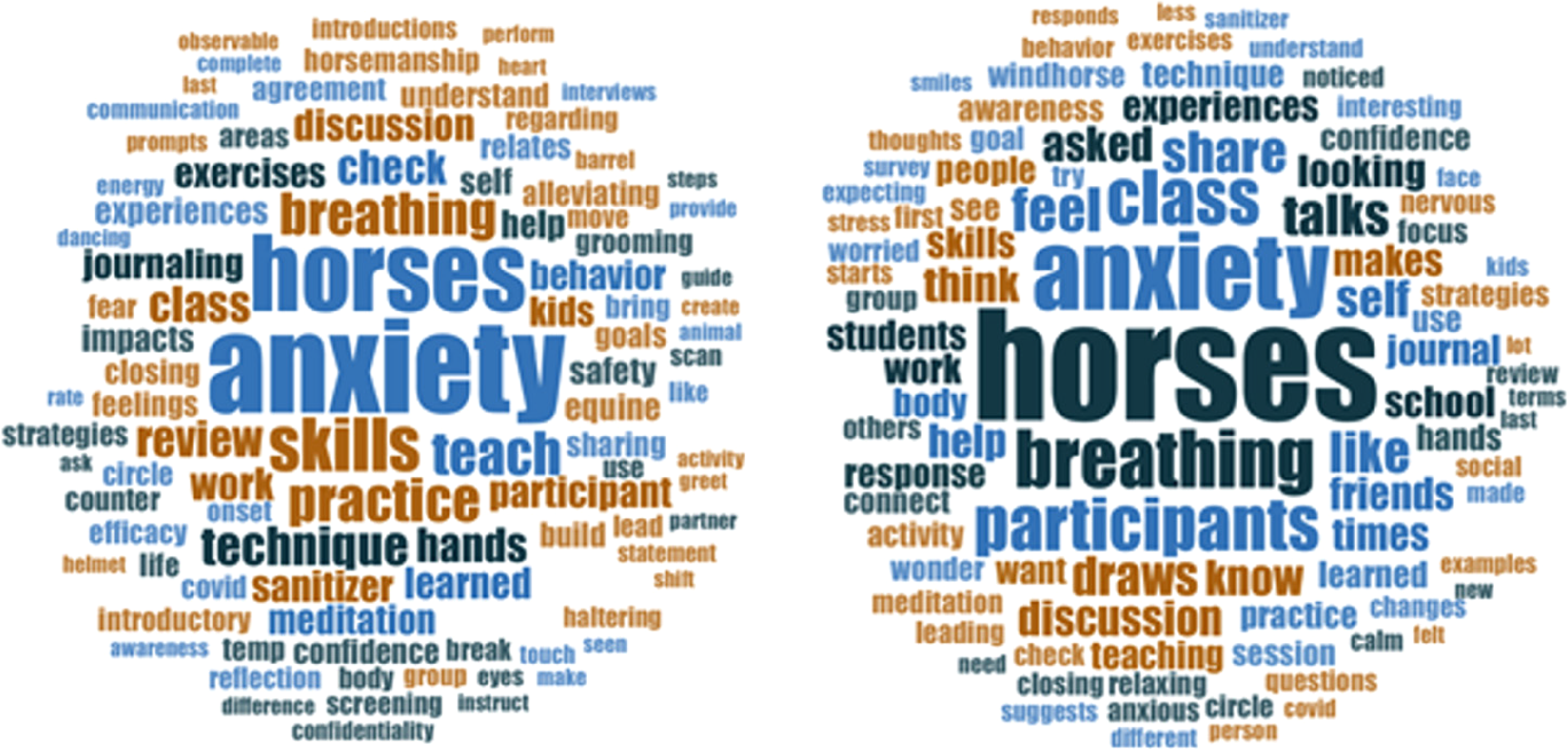
Frequently used words from lesson plans (left) and observations, interviews, and open-ended surveys (right).
Above all, participants valued the ways horses show trust (e.g. “He follows me when I walk away”) and marveled at the willingness of horses—prey animals—to form partnerships with humans—predators. As one participant explained, “It's amazing they trust us.” Many EAL activities provided opportunities for the facilitators and participants to talk about how confidence minimizes anxiety, how losing trust damages confidence, and how to develop confidence in ourselves and our skills. All the participants demonstrated increased awareness of social expectations and anxiety, particularly as related to the hidden, or intangible, ways humans experience emotions. They also recognized that horses are transparent in terms of their feelings. As one participant noted, “I’d rather be around horses than people because horses don’t lie, cheat, or steal.”
Flight: Learning to Embrace Self-Efficacy and Sensation
In addition to “fighting” anxiety instead of acknowledging and understanding it, many adolescents “flee” from anxiety by withdrawing from social activities and/or avoiding discussion of emotions (Miller, 2023). In our pre-surveys, several participants demonstrated uncertainty in terms of defining anxiety and self-efficacy, especially in terms of their own day-to-day lives. For example, one participant marked “Not sure at all” for all of the items on the GAD-7. Similarly, throughout the class series, another participant struggled to articulate emotions and feelings, often saying “I don’t know” and needing extensive scaffolding and follow-up questioning.
Results from the self-efficacy pre- and post-tests revealed that two participants reported improvements in their overall self-efficacy, and five reported a decline in overall self-efficacy. The average change in overall self-efficacy scores was a decline of 1.14 points. Importantly, the scales separate and then synthesize social and general self-efficacy scores. This integration led to reductions in the overall self-efficacy means, which were impacted by declines in social self-efficacy subscale scores within the instrument. Four participants reported declines in social self-efficacy, two reported improvements, and one reported no change. The average change in social self-efficacy was a reduction by 1.86 points.
Despite social self-efficacy declines for four of the participants, general self-efficacy scores showed improvements. Five participants reported improvements and two reported a decline; the average change in general self-efficacy was an improvement by 1.57 points. Table 2 shares the descriptive statistics and paired t-test results for this scale.
Self-Efficacy Scale/Subscale Summary Statistics.
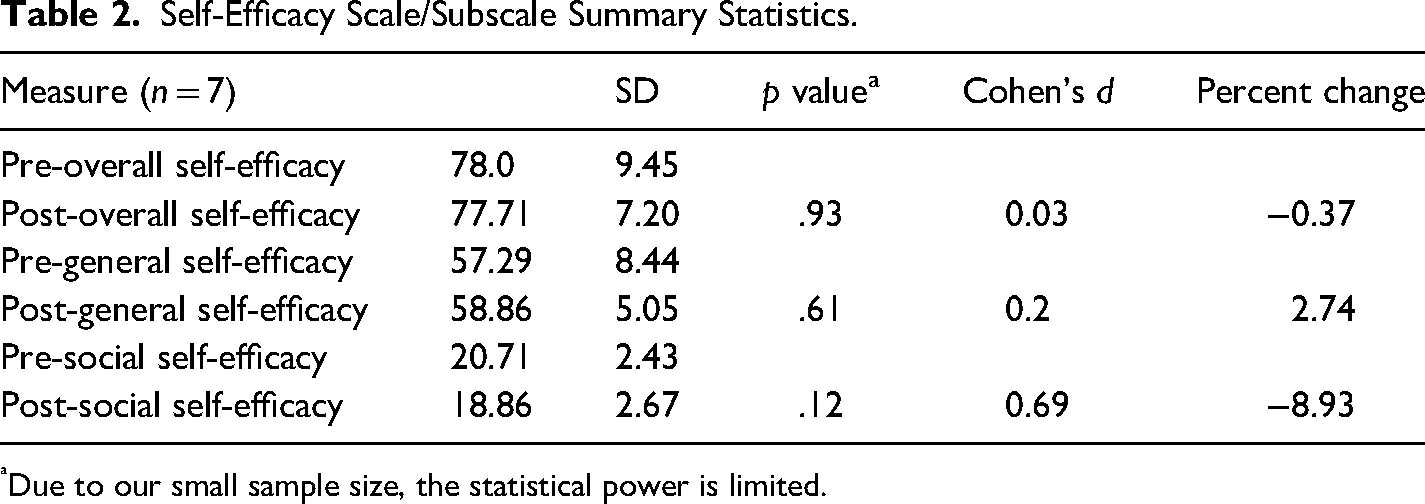
Due to our small sample size, the statistical power is limited.
Although many of the participants initially avoided describing sensations or emotions surrounding anxiety and self-efficacy, they valued the opportunities to do so made possible through the EAL program. Once the participants began to share their experiences, emotions became central to the learning phenomenon. Importantly, of Bandura's (1977) dimensions, emotional arousal was the essence that aligned most clearly with participant discourse, while adult-generated class plans focused on performance accomplishments (e.g. applying content and skills) or verbal persuasion (e.g. discussing anxiety in whole group settings; see Figure 2).
At the start of the program, participants held narrow definitions of trust, confidence, and self-efficacy, often equating these ideas with perfection. When asked about expecting too much from themselves, being too hard on themselves, and/or their unwillingness to try new things, many participants expressed awareness, along with frustration. Several verbalized a fear of failure that was more often tied to their own expectations than to those of parents, peers, or teachers. For example, one participant chose to complete a drawing activity using a stick and arena dirt instead of his journal. When asked about this choice, he noted, “I’d rather draw or write in the dirt than on paper, because on paper I can’t fix it when I screw up.” This participant, like many of the others, struggled to trust himself in terms of articulating and understanding his emotions and expectations.
As the program progressed, participants developed and articulated more complex perceptions of confidence, trust, and self-efficacy. Often, these perceptions were tied to EAL-specific skills. For example, one participant was initially reluctant to groom her horse, saying, “I don’t think he likes me.” After she was encouraged to focus her attention on the horse's body language (e.g. ear position, tail swishing, licking lips), she was able to identify an appropriate grooming tool and pressure for the horse's “sweet spot.” This example helped the participant recognize a difference between liking/disliking an activity (i.e. grooming) and liking/disliking a person. Similarly, she was able to distinguish between a belief in her own capability that is grounded in knowledge, confidence, and trust versus uncertainty or anxiety about “doing things wrong.”
Freeze: EAL as Agentive Phenomenon
Many adolescents who experience social anxiety exhibit “freezing” behavior during active learning experiences (i.e. student-centered, experiential learning that often occurs in pairs or small groups), and such responses negatively influence youth self-efficacy and their views of learning more broadly (Cohen et al., 2019; Hood et al., 2021). Our quantitative analysis suggests that while anxiety might decrease through EAL activities, social self-efficacy might be negatively affected through EAL. We turned to the qualitative results to better understand how and why EAL might reduce anxiety without increasing social self-efficacy.
Broadly, the qualitative results suggested that participants were better able to articulate, understand, adapt, and implement anxiety management strategies during EAL activities that included physical—and social—interactions with horses and peers than before or after such activities or in their day-to-day lives. The values alignment analysis also highlighted ways the pandemic compromised social interaction, while EAL encourages those aspects. For example, when one participant explained her tendency to want to always have a hand on the horse, she claimed that she feels most “connected” through touch. During the COVID-19 pandemic, physical interactions were minimized, with participants noting it was “weird” to see and be physically around people after weeks of lockdown. Importantly, physical presence of the horses resulted in immediate and substantial changes in participant body language and willingness to be close to other people. For example, observation field notes described changes when the horses were led into the learning space, participants “lit up,” “began bouncing on their toes,” “uncrossed their arms,” and moved closer to their peer partners.
Several participants enacted both active and passive (i.e. “freeze”) strategies to understand and manage their anxiety, enact self-efficacy, and assert their agency. For example, during a discussion about breathing as a means to manage anxiety, one participant mentioned she did not find the specific breathing technique helpful. She noted that it made her feel “more anxious” and “claustrophobic,” so she “changed it up” to be “rainbow breathing.” In this case, the participant recognized that a mainstream anxiety reduction technique did not work for her, and she was able to adjust, articulate, and claim the strategy that did work for her. In many ways, this is the ultimate example of self-efficacy. As another example, toward the beginning of the program, the transgender male resisted reciting the safety pledge individually. He regularly reminded his peers and the adult facilitators that this decision was purposeful because he did not like “being the focus of attention.” When the safety pledge was adapted so all participants would verbalize the pledge simultaneously, the participant engaged readily. This example highlights challenges associated with defining social self-efficacy in terms of “readiness” to engage within a predefined social activity or other active learning strategy, especially if that activity or strategy is dictated by adults.
Discussion and Recommendations: Fight, Flight, or Freeze?
Given our small sample size, unique rural context, and case study approach, our findings are limited with regard to generalizability. We also acknowledge that the promising outcomes of EAL research may be due to novelty effects of a unique experience (Anestis et al., 2014). Additionally, just prior to the final session where the post-assessment occurred, participants learned that the local school district had decided to transition to in-person learning via a phased cohort model. Several of the participants were visibly upset about this news (“I won’t be with any of my friends!”), and their survey results—particularly the social self-efficacy items—may have been influenced. Finally, we acknowledge that some researchers question self-reported data, especially that reported by youth.
Despite these potential limitations, this study offers broader methodological and practical guidance related to phenomenological research with youth, especially that which explores experiential learning, EAL, self-efficacy, anxiety, and/or collective trauma. First, our findings suggest that EAL offers the potential to reduce anxiety and increase confidence for youth, including those experiencing collective stress and trauma, thereby affirming results from prior research on equine-assisted interventions and self-efficacy (van der Roest et al., 2015). Second, while the results of this study corroborate many others in terms of common adolescent responses to anxiety (i.e. to fight, flee, or freeze), they also point to a need to reframe research and practice that views these responses as problematic or deficient.
Both the quantitative and qualitative results of this study suggest that while EAL can support learning in terms of (a) effectively confronting anxiety instead of “fighting” emotion and (b) embracing self-efficacy instead of “fleeing” from sensation, this particular EAL program did not necessary help participants overcome a tendency to “freeze” when experiencing an anxiety-inducing social learning activity. This study's mixed results point to prior research that suggests active learning approaches may actually interfere with self-efficacy and action for adolescents who experience social anxiety (Cohen et al., 2019; Hauge et al., 2014; Hood et al., 2021). As many of the studies that informed our research do not distinguish between academic or individual self-efficacy and social self-efficacy, we encourage additional research in terms of the connections between EAL and social self-efficacy.
This study's qualitative findings helped illuminate the potential for “freezing” (i.e. resisting action or active learning) to validate a form of emotional arousal that proves more effective in advancing contemporary understandings of social self-efficacy, particularly in terms of research with adolescents, than long-standing measures and frameworks. For example, the adults in this study encouraged application of mainstream strategies to actively “manage” anxiety and discouraged “freezing” or resistance. Our findings suggest youth understand and can respond effectively to social cues, but that they are choosing to engage (or not) with others as a means to honor their own agency. While many researchers trust youth participants to self-report their beliefs and feelings, researchers rarely trust those same youth to interpret, explain, or communicate what their beliefs and feelings mean. Critical youth studies scholars challenge such an assumption, arguing that it confines interpretations within narrow, static, outdated, and adult-centric understandings of anxiety, self-efficacy, agency, metacognition, and more (Petrone & Stanton, 2021; Lesko, 2012; Patel, 2012; Petrone & Rink, 2020). To expand upon Bandura's work, these scholars argue for more attention to youth experiences and to engaging youth as partners in examining, interpreting, and communicating those experiences.
Conclusion
The purpose of this study was to examine how EAL influenced adolescent self-efficacy, anxiety, and learning during the COVID-19 pandemic. Overall, the participants in this study demonstrated common responses to trauma/stress/anxiety, including fight (confrontation or resistance), flight (distraction or deflection), and freeze (inaction or focusing; Bracha, 2004). These strategies generally fit into the same three categories of responses shown by horses and other “prey” animals, and they are common responses for adolescents experiencing anxiety and trauma (Cohen et al., 2019; Hood et al., 2021; Miller, 2023). Although they are common and natural, conventional social and behavioral science often regards these approaches as evasions, rather than strategies to positively manage challenges. However, as demonstrated in this study, adolescents may purposefully use these approaches to advance self-efficacy and agency.
The research shared in this article suggests that contemporary contexts may require researchers who specialize in adolescent development, mental health, and education to expand definitions and instruments used in self-efficacy research. Such understandings and tools have remained largely unchanged since Bandura introduced his social cognitive theory in 1977. The results of our study suggest unanswered questions surrounding self-efficacy theory and research within experiential education and EAL, particularly in terms of determining individual readiness to engage in active social learning, verifying interpretations of perceptions and behavior with youth; recognizing the ways mainstream and adult-centric sociocultural norms shape analysis of youth experiences, and understanding disproportionate valuing of the dimensions of Bandura's self-efficacy framework.
Footnotes
Declaration of Conflicting Interests
The author(s) declared no potential conflicts of interest with respect to the research, authorship, and/or publication of this article.
Funding
Montana State University provided internal funding support for this study.

Correction (May 2023):
Article updated to correct the phrase under the heading “Program Context and Study Introduction,” at the end of para. 3, “cognitive behavioral exercises” should instead read “mindfulness-based stress reduction exercises.