



Abstract
Careers in Science, Technology, Engineering, and Math (STEM) are increasingly common in today's economy, with greater job opportunities and salaries available for STEM workers (US Bureau of Labor Statistics, 2021). Despite increasing demand and positive career outlooks in these fields, youth from backgrounds traditionally underrepresented in STEM (e.g., women, Black and Latinx youth) tend to disengage with science at disproportionately higher rates than their overrepresented peers (Estrada et al., 2016; Jackson et al., 2019). This disengagement is not from lack of initial interest, but rather the many hurdles that youth from underrepresented backgrounds must negotiate to persist in STEM fields across the entirety of the STEM pipeline, including a lack of role models, fewer authentic science experiences, and under-emphasis on the value of science to society (National Academies of Sciences, Engineering, and Medicine, 2017, 2020). These factors can decrease feelings of belonging to the STEM community, reinforce minority exclusion norms, and ultimately, decrease STEM persistence (Estrada et al., 2016; Jackson et al., 2019; Long & Mejia, 2016).
Advocates for increasing representation in STEM have highlighted the importance of mentored research experiences during experiential learning to engage and retain underrepresented youth (Djonko-Moore et al., 2018; National Academies of Sciences, Engineering, and Medicine, 2017, 2020). Designed well, these experiences can provide hands-on research activities that prioritize exploration coupled with mentorship and student-centered learning to prompt critical analysis and reflection (Matriano, 2020; National Academies of Sciences, Engineering, and Medicine, 2017). By understanding the impact of mentored research experiences in experiential learning across audiences and educational environments, we can further promote engagement and retention in STEM fields (Hernandez et al., 2018; National Academies of Sciences, Engineering, and Medicine, 2017; 2020). This work uses longitudinal data spanning the high school to college transition to explore how programs using experiential learning in urban parks affects STEM outcomes, including science engagement and retention, focusing on the individual and cumulative impacts of research experiences and mentoring from, primarily, near-peer mentors.
Promoting STEM Persistence Through Experiential Learning
Experiential learning is often associated with problem-based, project-based, or inquiry-based learning, including authentic research experiences, making it well-suited for application to projects seeking to improve STEM retention (Breunig, 2017; Li et al., 2019). Many of these types of programs couple project-based research experiences with guided mentoring. Both of these components can be integrally linked to the experiential learning approach, in part through emphasis on the action-reflection cycle, which allows learners to elaborate, contextualize and substantiate scientific knowledge (Matriano, 2020).
Authentic research experiences provide learners with the opportunity to engage in new challenges and experimentation that they may not encounter in more traditional educational settings (Browne et al., 2011; Morris, 2020). Learners identify questions, find creative solutions, and translate skills to new areas, and, through this process, link their theoretical knowledge to the real world. The high level of engagement created via experiential learning, coupled with the freedom to work on projects that are personally relevant, empowers learners to be active participants in their own learning and builds persistence and interest in science, including among youth from underrepresented backgrounds (Djonko-Moore et al., 2018; Matriano, 2020). This hands-on personalized approach deepens learners’ appreciation for STEM topics and increases long-term persistence in STEM for all students (National Academies of Sciences, Engineering, and Medicine, 2017; Sibthorp et al., 2015; Thurber et al., 2007).
The most effective STEM engagement programs pair hands-on experiences with social engagement, community, and mentorship (Djonko-Moore et al., 2018; National Academies of Sciences, Engineering, and Medicine, 2020). Mentoring acknowledges the emotional aspects of learning that can aid in interest and retention (Kolb, 2015; Kolb & Kolb, 2005; Strange & Gibson, 2017). Specifically, mentoring supports the reflection part of the action-reflection cycle, with mentors prompting youth to connect their work to their own their life experiences. Mentors can also share their own experiences to foster a sense of belonging and reduce feelings of isolation (Braun et al., 2017; Lee, 2007; Trujillo et al., 2015), which may be particularly effective for near-peer mentor relationships where closeness in age can make it easier to identify with others’ lived experiences (Chester et al., 2013; Tenenbaum et al., 2017). Mentoring recognizes the psychosocial aspects of learning, such as the social feedback system, that allows youth to express their STEM interests and receive recognition from others (Bernstein et al., 2009; Jackson et al., 2019). Mentorship can have positive effects on STEM outcomes, including identity development, sense of belonging, and feelings of professional development, and particularly strong impacts for underrepresented youth who are at higher risk for feeling ‘otherized’ by STEM (Djonko-Moore et al., 2018; National Academies of Sciences, Engineering, and Medicine, 2020; Trujillo et al., 2015).
The College Transition
High school youth make many decisions that have implications for their pursuit of a STEM career, including classes to take, colleges to apply to, and how to spend out-of-school time (Bottia et al., 2015; Maltese & Tai, 2011). Moreover, the transition from high school to college is pivotal, providing myriad opportunities for youth to affirm their interests and develop their identities as young adults (Rahm & Moore, 2016; Syed & Mitchell, 2013), while simultaneously being characterized by high uncertainty, which can reduce sense of belonging, especially for underrepresented youth (Hurtado et al., 2007; Walton & Cohen, 2007). High school youth, especially those from underrepresented backgrounds, may benefit substantially from the structure of experiential learning. The approach emphasizes building connections to lived experiences, which clarifies the personal relevance of STEM fields and builds a foundational STEM identity that carries through to college (Djonko-Moore et al., 2018; Goralnik et al., 2018; Kolb & Kolb, 2005; Maltese & Tai, 2011; National Academies of Sciences, Engineering, and Medicine, 2017; 2020; Norton & Watt, 2014).
Research Context
We will study the impacts of research and mentoring experiences on science engagement and STEM trajectories of high school students from backgrounds traditionally underrepresented in STEM after they participated in a summer, urban ecology research mentoring program and into their transition into college. Funded by the National Science Foundation (DRL-1421017 and DRL-1421019) and jointly run by The Wildlife Conservation Society and Fordham University, Project TRUE (Teens Researching Urban Ecology) was a summer research experience for New York City youth that aimed to strengthen STEM interest, skills, and increase diversity in STEM fields (Aloisio et al., 2018; Coker et al., 2017).
Project TRUE applied an experiential learning framework to program design, weaving hands-on research experiences designed for exploration with personalized near-peer mentoring and peer collaboration that fosters reflection in an iterative process (Matriano, 2020). Each summer during the 7-week program, 50 high school students designed and conducted team-based field ecology research projects under the mentorship of 15 undergraduate students, who were in turn mentored by graduate students, informal educators, and biology faculty. Prior to the program, undergraduates identified an urban ecology research topic and developed research protocols for data collection in local zoos, parks, and green spaces. Projects focused on ecological research with generalizable implications for urban environments, such as bat activity in local parks, or microplastic or eel abundance in local watersheds, thus grounding projects in community-centered, culturally relevant learning and increasing potential opportunities for reflection. By developing their own projects and using a student-centered approach, youth learned to adapt, apply and extend their competencies to new areas consistent with previous programs using experiential learning (Breunig, 2017). Throughout the program, learning was largely student-centered, with undergraduate team leaders as the high school students’ primary mentors, providing guidance as necessary, although other, adult mentors were also present for the majority of activities. This near-peer mentoring model—pairing mentors and mentees that are close in age and along a discipline-specific developmental pathway—allows mentors to draw on personal experiences to connect with mentees, encouraged personal ownership over projects, and facilitated the connections and reflections that are integral to the experiential learning process (Aloisio et al., 2018; Santora et al., 2013).
Upon starting the program, high school students selected the research projects that they wanted to pursue and developed a personal research question nested within the broader topic. They were supported by their mentors as they developed science skills and knowledge that would allow them to conceptualize their research, draw connections between existing research, community resources, and their lived experiences. They generated their own research questions by reflecting on their personal experiences in nature and identifying how ecological research can provide beneficial, real-world change to their local communities and environments, consistent with experiential learning cycle (Kolb, 1984, 2015).
Teams spent 3 weeks collecting data in the field, which could include wading in rivers to set traps for snapping turtles, going on evening walks with handheld microphones to record bat calls, or identifying plant species on a greenroof. All projects emphasized hands-on participation in science and challenged learners to produce a brand new dataset to answer a pressing scientific question. After fieldwork, youth spent 2 weeks analyzing data included all steps of the experiential learning process: exploration and inquiry through the physical activities, personal and collaborative reflection as youth implemented the study, and connections between their experiences in the field and broader life experiences. As youth worked closely with their peers and mentors, they had repeated opportunities to think critically about the nature of scientific research, its application to real-world settings, and the meaning of STEM to the broader community. These experiences occurred both personally and through discussion, often when youth were moving between research sites or concluding tasks and had unstructured time to consider the cognitive and emotional aspects of the work, along with its connections to their personal identities.
Throughout the research process, and particularly when interpreting the results, mentors prompted youth to think critically about the research process and the implications of their work for the future, situate the project and their findings within the scientific literature, and develop solution-oriented recommendations for stakeholders. The program culminated with the creation of research posters, which youth presented in several public poster symposia attended by local researchers, practitioners, community organizations, and the public.
Research Objective
We studied the impacts of research and mentorship experiences on Project TRUE youths’ STEM outcomes, expecting both to have positive impacts. Specifically, students who had positive research experiences were expected to have stronger science interest, skill development, and intentions to pursue a STEM major in college. Additionally, students who had positive experiences with mentorship would have a stronger sense of belonging to STEM and intentions to pursue a STEM major.
We explored the emergent impacts of research and mentoring in experiential learning, as well as comparisons of the two programmatic elements on STEM outcomes. While both research and mentoring are effective program attributes for developing STEM interest and future intentions (Kardash, 2000; Tenenbaum et al., 2014), the present study addresses if these components impacted science engagement and persistence in STEM majors differently and the role they played during the high school to college transition. We examinee these components as both separate and collective contributors to an experiential approach to address whether these formats are individually beneficial in unique ways to the experiential learning cycle. We expected research opportunities to have a larger direct impact on youth STEM outcomes because the experiential nature of field-based research would be more salient than mentoring. We also examined the impacts of youth assessments of research and mentoring on common themes that emerged in response to open-ended questions prompting reflection on the impact of their summer experience.
Methods
We surveyed youth at multiple time points relative to their participation in Project TRUE, including before participation (rising high school seniors) and annually up to 3 years after participation (college juniors). The Fordham University Institutional Review Board (FWA #00000067) reviewed and approved all research protocols and instruments.
Instruments
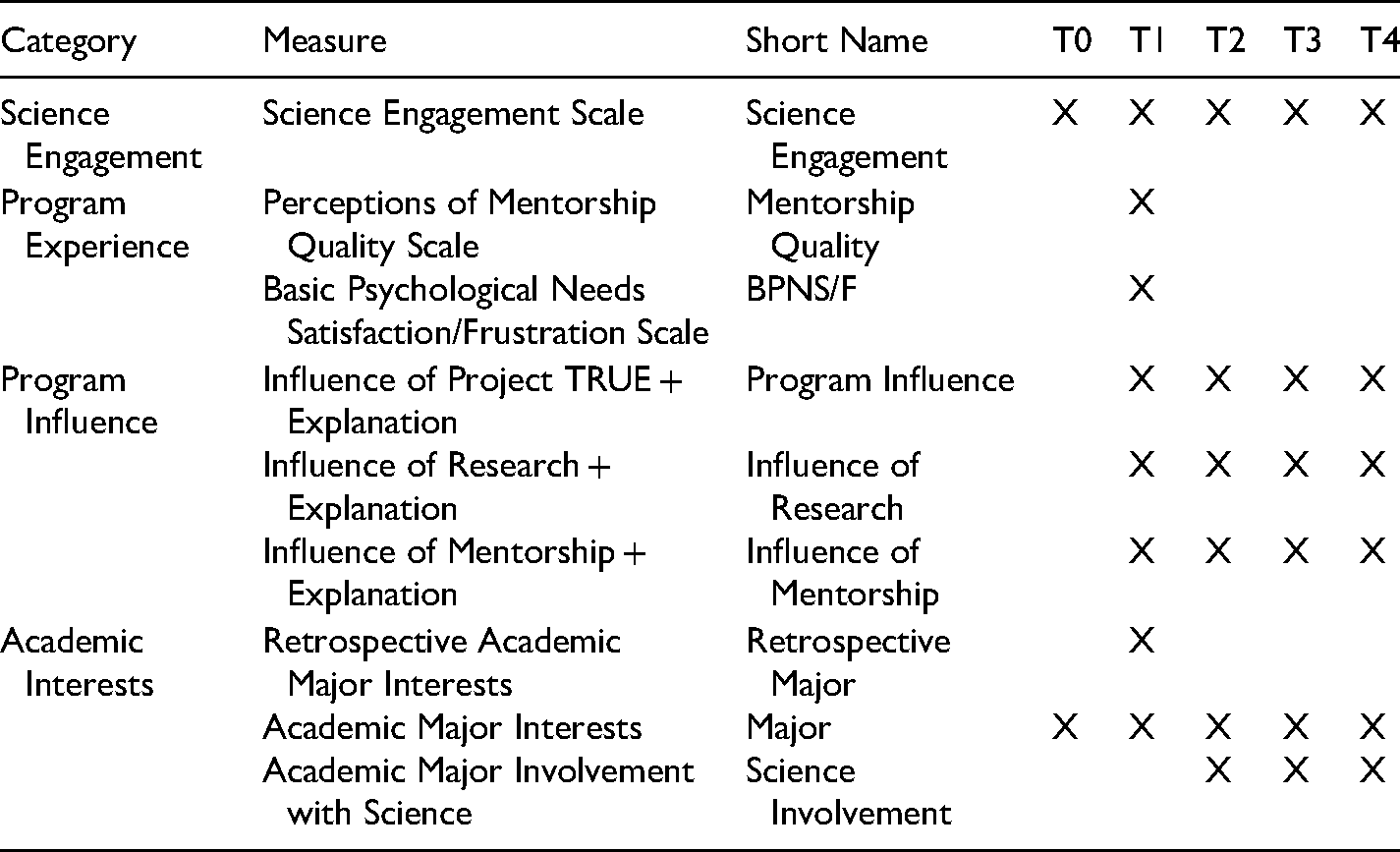
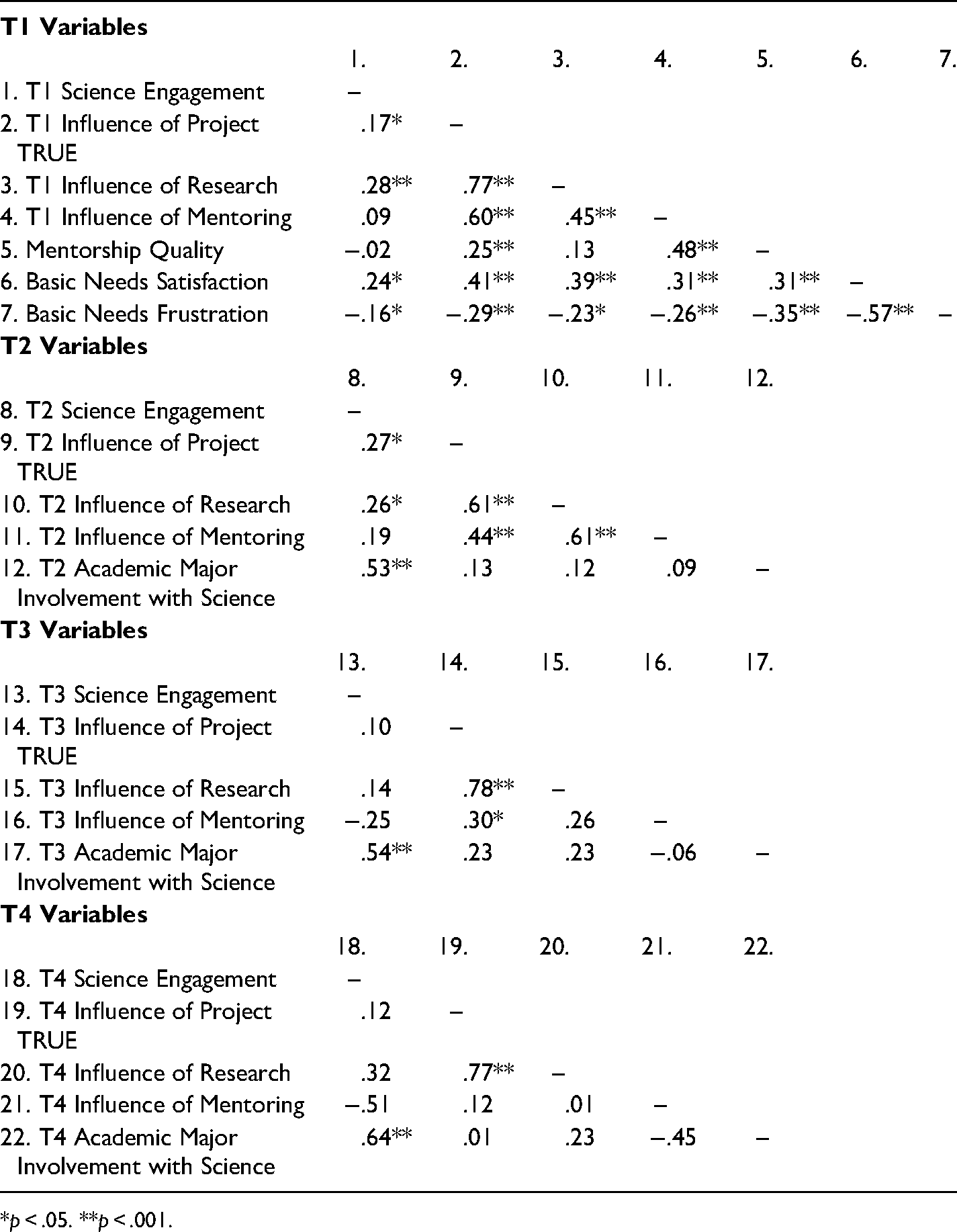
We developed three survey instruments to be administered at different time points: on the first day of the program (T0), on the last day of the program (T1), and annually up to 3 years after participation (T2 to T4). The surveys included many of the same modules to enable comparisons over time (Table 1). See Table 2 for a correlation matrix of the continuous variables at each time point.
Summary of survey items.
Pearson correlation matrix for continuous variables.
*p < .05. **p < .001.
Main independent and predictor variables
We used a 17-item modified version of the Relationship Quality Scale (Rhodes et al., 2005) to assess mentor quality (Cronbach's α = .90). Items measured perceived mentor support, approachableness, and competence, with respondents rating the items on a 7-point Likert scale from Strongly Disagree to Strongly Agree. We evaluated mentorship quality at the post-program time point (T1) only. An example of the questions included, “My mentor had lots of good ideas about how to solve a problem,” and “When something was bugging me, my mentor listened to me.”
To understand participants’ perceptions of the influence of key components of the program, all post-program surveys (T1 to T4) included three close-ended questions. Respondents were asked to assess “how much did [your participation in Project TRUE/your field work/your mentor] positively influence your interests and decisions?” on a 7-point Likert scale from Not At All to A Lot. Three open-ended questions requested explanations for answers to the previous questions, asking “why did you rate the influence of [Project TRUE/your field work/your mentor] as [piped response to the corresponding close-ended question]?” For completed surveys, the average response rates to the open-ended questions were 97% at T1, 89% at T2, 87% at T3 and 85% at T4 indicating a large majority of responders completed the open-ended questions.
We used the Basic Psychological Needs Satisfaction / Frustration Scale (BPNSF; Chen et al., 2015) to measure how the programmatic experience contributed to youths’ internal motivation at T1 (Cronbach's α = .68). The scale includes 18 items that address feelings of competence (6 items), relatedness (6 items), and autonomy (6 items). Respondents rated the items on a 5-point Likert scale from Not True At All to Completely True. Questions included, “I felt a sense of choice and freedom in the things I did” and “I felt like a failure because of the mistakes I made.”
The pre-program survey (T0) included demographic questions about gender, race and ethnicity, English as a first language, and GPA.
Main dependent and criterion variables
All surveys included a 17-item science engagement scale (α = .95; Heimlich & Wasserman, 2015) designed to assess participants’ attitudes towards science and participation in science-related activities (Cronbach's alphas: T0 α = .85; T1 α = .91; T2 α = .90; T3 α = .87; T4 α = .86). Respondents rated their agreement using a 7-point Likert scale from Strongly Disagree to Strongly Agree. Questions included, “I always want to learn new things about science,” and “I find science is useful in helping to solve the problems of everyday life.”
All surveys included an open-ended question asking respondents to list their intended academic major. The survey administered immediately after the program (T1) included an additional open-ended retrospective question about academic interests before participating in Project TRUE and whether these changed since participating in the program.
The delayed-post survey (T2–T4) included an additional close-ended question: How much do you expect these [academic] subjects to involve your science interest? Responses were rated on a 5-point Likert scale from Not at All to A Great Deal.
Data Collection
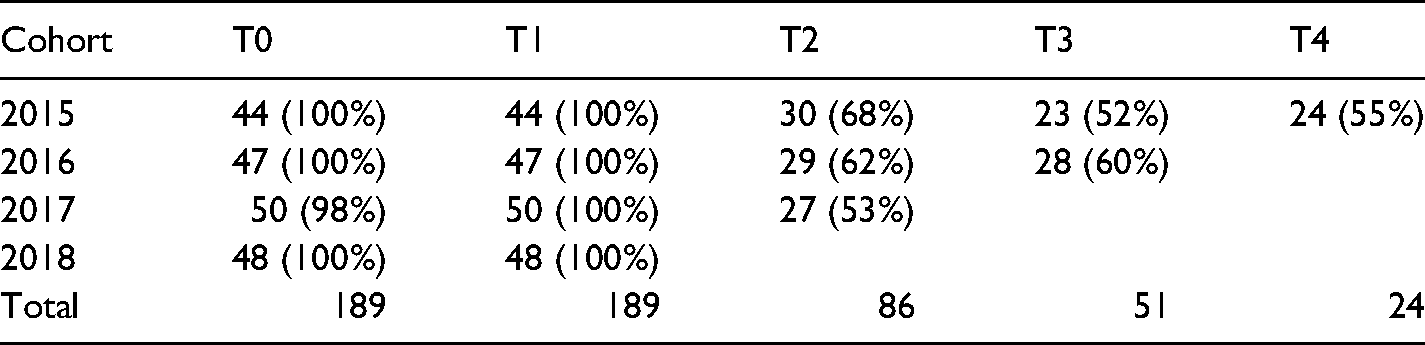
We collected data from four cohorts of Project TRUE participants (2015 to 2018). Each year, between 44 and 50 youth completed the program, for a total of 189 participants. We administered the pre-program (T0) and post-program (T1) surveys in person on the first and last day of the program, ensuring a 100% response rate. For all delayed-post surveys (T2–T4), we emailed a unique survey link to each participant and conducted follow-up outreach with non-responders on a weekly basis for up to 1 month. All youth received a unique confidential code to enable matching across time points. Sample sizes varied across cohorts and time points (Table 3).
Survey sample sizes.
Participants
Most participants were from groups underrepresented in STEM fields. Across cohorts, 31% identified as White and Hispanic; 24% as Asian and non-Hispanic; 23% as Black and non-Hispanic; 10% as Black and Hispanic, 7% as White and Non-Hispanic, 2% as Asian and Hispanic, and 4% as another racial or ethnic category. 71% of participants were female and 29% were male. The average GPA was 3.56 (SD = .42).
Data Analysis
One researcher coded youths’ primary academic major into STEM or non-STEM majors at each time point, with STEM majors corresponding to the National Science Foundations’ Research Areas (Gonzalez & Kuenzi, 2012). Non-STEM was all other majors, including majors involving science skills, but not traditionally considered STEM, such as economics and psychology, and majors without a direct connection to science, such as art and history. In 32 instances, individuals did not specify a major but indicated it involved science (e.g., “science”, “anything science related”); we included these responses in the STEM group.
For the open-ended questions about research and mentorship program influence, two researchers used an inductive coding approach to identify emergent codes for a randomly selected sample of 20% of the responses across all post-program time-points. They discussed their codes and consolidated them into six categories that reflected youths’ beliefs about why the program (mentor/research) was effective. The final codes were: (1) science interest (increased or retained), (2) academic interest (STEM-related), (3) science self-efficacy (increased confidence or perceived capacity to engage in science), (4) soft skill development (self-discovery or identity change), (5) science skill development (development of skills necessary for a science career), and (6) building a social relationship (social connections developed through the program). One researcher coded all remaining responses, coding each response as ‘1’ if the code was present, or ‘0’ if it was not.
We used ANOVAs to analyze the relationship between influence codes and quantitative measures. Regressions, ANOVAs, and Pearson correlations examined the quantitative influence of the program components, with correlations and binary logistic regressions to examine predictors of STEM interest and majors. We used both linear and logistic regressions because they can include multiple predictor variables and therefore account for variance shared between the two predictor variables, which is needed to compare distinct effects of research and mentoring. We used repeated measures ANOVAs for longitudinal analyses on T1 to T3 data, excluding T4 data because of a small sample size. For all analyses, the analysis was conducted using only completed surveys, no imputation was used.
Using voluntary responses created potential for youth who responded in years two, three and four to be more motivated by the program than those who did not respond. We compared initial science engagement at T0 of youth who did not respond to subsequent surveys to those who did respond. We found no differences, suggesting that the sample of retained respondents was representative of the larger population.
Results
Short-Term Impacts of Research Experiences
To address whether research experiences had a positive impact on science interest and beliefs about personal skill development we examined student's reported beliefs about the research-aspect of the program. We also address if their general research experience was related to their science engagement. Project TRUE research involved experiential learning using active participation – working in the field to collect data on plants and animals – and from T1 to T3, youth most commonly described how this research experience influenced their science interest (15%), science skill development (14%), and soft skill development (14%). Controlling for initial science interest (T0), youth who mentioned their developing (T1) science interest (M = 5.74, SE = .16) indicated that the T1 research experience was more influential than those who did not mention science interest (M = 6.29, SE = .23; F(1,135) = 4.81, p = .03). Reports of T1 soft skill development or science skill development were not related to quantitative evaluations of the research experience (p's > .10). As such, mentions of building science interest within research experiences were perceived as a meaningful component of participants’ experience. As we controlled for individual's pre-existing science interest, the differences in influence accounted for by science interest are related to programmatic impacts, and not pre-program differences in science interest.
We used youths’ rating of the influence of the research experience immediately after the program (T1) to explore short-term impacts on T1 science engagement, as measured by a 17-item scale. The influence of the research experience was positively correlated with science engagement (r = .28, p < .001, Figure 1), indicating that youth who were interested in science also felt that their experience doing research was highly influential, consistent with our expectations.
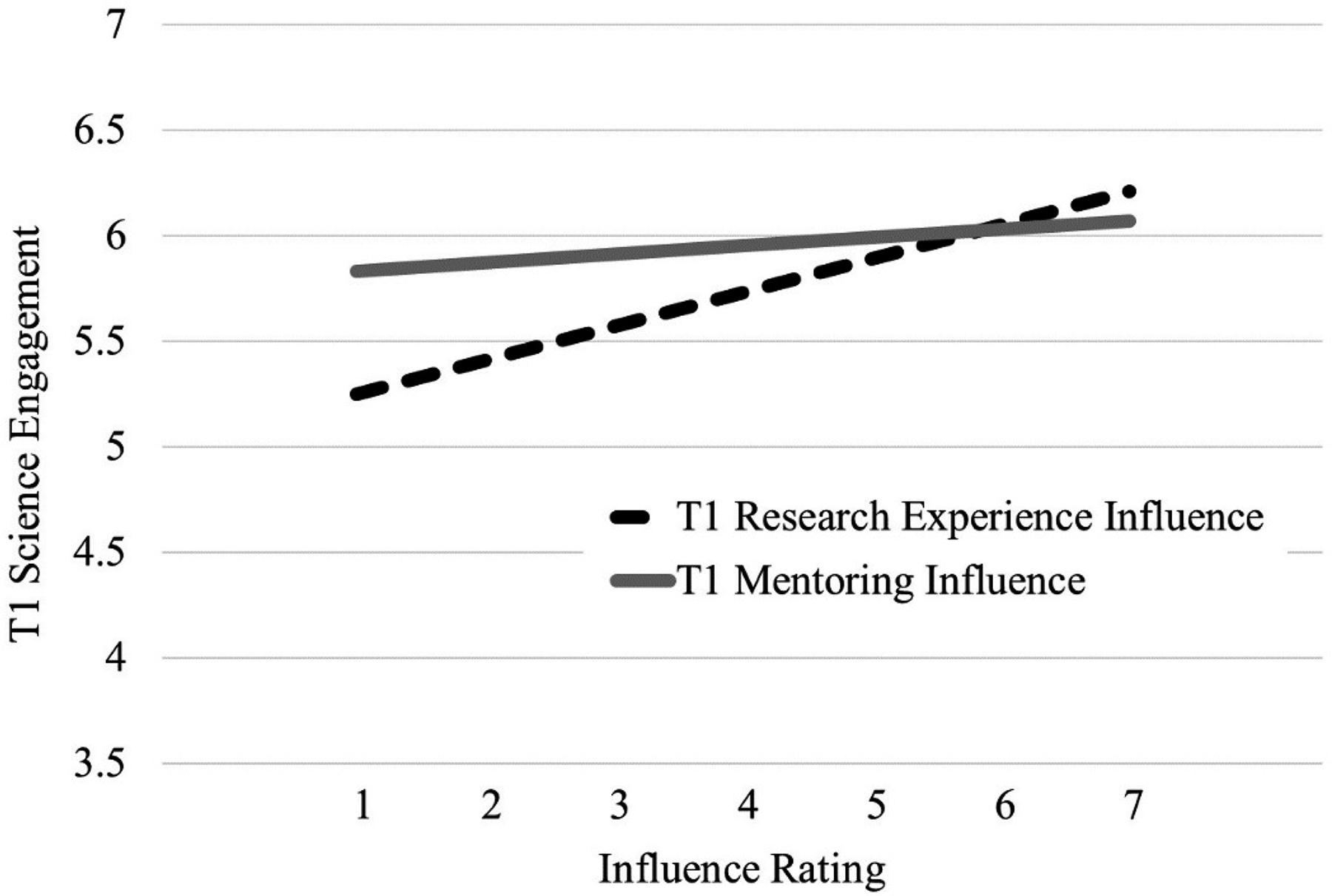
Correlation between the influence of project TRUE components and science engagement immediately after the program (T1).
Short-Term Impacts of Mentoring
To examine whether mentoring had positive impacts on sense of belonging, we examined what aspects of mentoring were most influential to their experience, and if their evaluations of the mentoring experience was related to their science engagement. From T1 to T3, youth were most likely to report that mentoring affected their sense of social connection (20%), soft skill development (11%), and science skill development (10%). After controlling for initial (T0) science interest, mentioning social connections at T1 (M = 5.97, SE = .21) was related to greater mentor influence (T1; F(1,135) = 7.81, p = .01) than no mentions of social connection (M = 5.11, SE = .25). Science skill development and soft skill development were not (p's > .06). Specifically, youth who reported feelings of social connection rated the influence of their mentor higher than those who did not mention social connections.
We found a positive relationship between T1 mentorship influences and basic psychological needs satisfaction (r = .31, p < .001) and a negative relationship with basic psychological needs frustration (r = −0.26, p < .001), suggesting that the mentor relationship is related to feelings of competence, relatedness, and autonomy. Additionally, perceived mentorship quality was higher for youth who reported experiencing social connection during the program (T1), after controlling for pre-program (T0) science interest (F(1,137) = 5.27, p = .02), underscoring the importance of relationship-building and inclusion in creating a positive mentoring experience, and consistent with our hypothesis about the relevance of mentoring to sense of belonging.
In contrast to the influence of research experience, youths’ assessment of the influence of mentoring was not significantly correlated with science engagement at T1 (r = .09, p = .23; Figure 1). Science engagement was also not correlated with youths’ perception of mentorship quality (r = −0.20, p = .79). While mentoring may influence science engagement indirectly, inconsistent with our hypotheses, these results suggest that youth do not see a direct connection between the two factors.
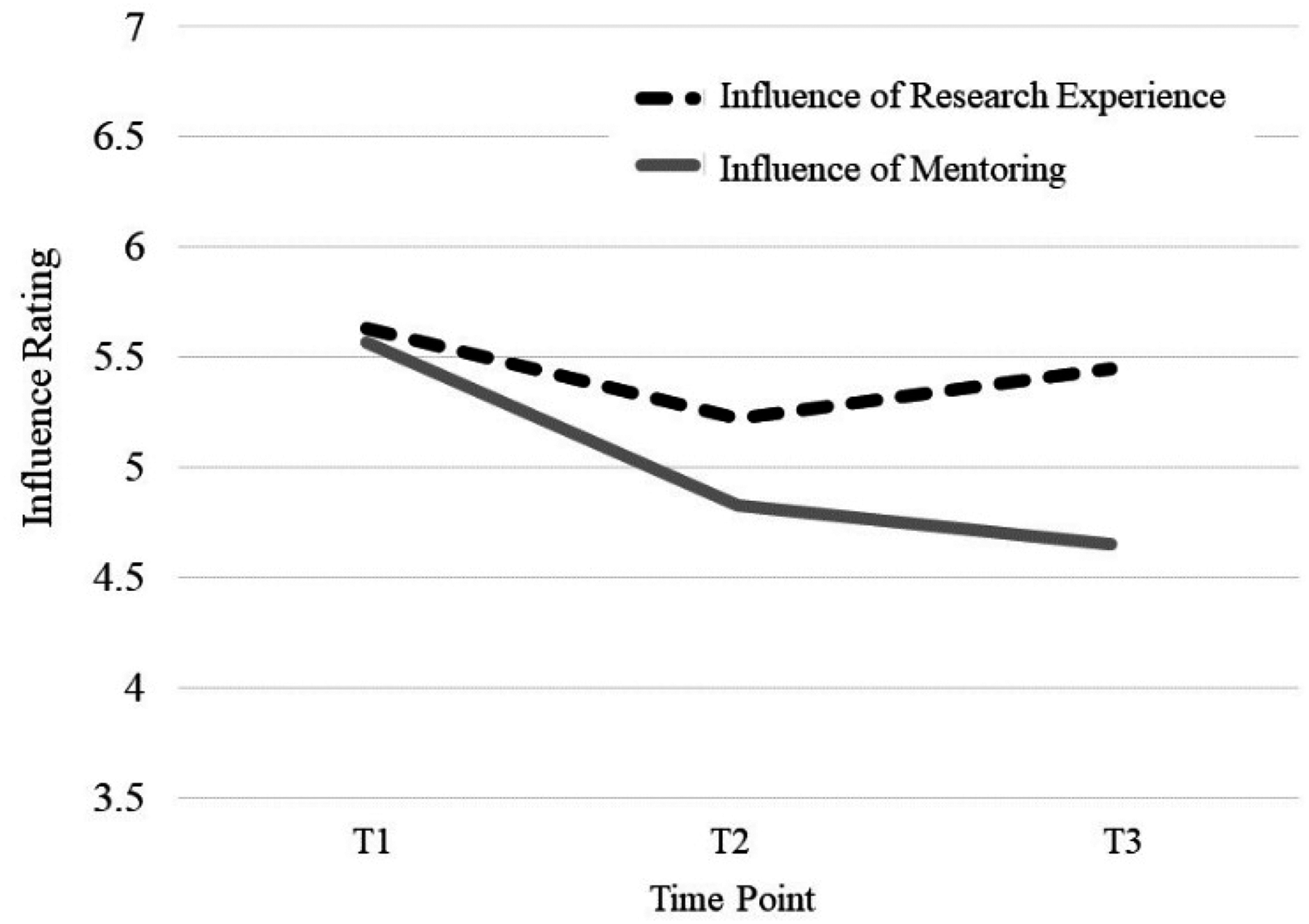
Sustained influences of research experiences compared to mentorship from immediately after the program (T1) to 2 years later (T3).
Longitudinal Impact on STEM Outcomes
To address our hypothesis about positive youth research and mentoring experiences on STEM intentions we also examined youth's interest in STEM longitudinally to see engagement with STEM was maintained over time. Youths’ interest in STEM versus non-STEM majors varied over time, with strong STEM intentions continuing into the first year of college and decreasing thereafter. Before (T0) and immediately after (T1) Project TRUE, the vast majority reported that they planned to pursue a STEM major in college (85% and 84% respectively). In the fall semester of their freshman year (T2), a similar percentage (87.5%) reported that they were pursuing a STEM major, which decreased to 77% in their sophomore year (T3) and 57% in their junior year (T4).
While we do not have a sufficient sample size for examining interaction effects of research and mentoring experiences across time, we compared the individual influences of these factors over time using a repeated measures ANOVA (T1 to T3). We found no significant changes in the influence of research experiences over 2 years (F(2,40) = 0.50, p = .62; Figure 2). The influence of research experience remains above the midpoint at all timepoints, suggesting that it had an effective, sustained influence into the sophomore year of college.
Consistent with our hypothesis, research experiences during experiential learning played a key role in expanding interest in pursuing a STEM career. There was a positive correlation between assessments of the influence of their research experience at T1 and perception that science would be part of a future career at T2 (no T1 rating; r = .27, p = .05), but not T3, p = .86. This positive correlation was true regardless of major. In other words, individuals who reported more positive influences of research experiences also reported science as a larger part of their future careers at the beginning of college (T2), regardless of whether their major was in a STEM field.
As with the short-term analyses, and not entirely consistent with our hypotheses, other mentorship variables had a less direct impact on longer-term STEM outcomes than was expected. Specifically, perceptions of mentorship quality were not directly related to perceiving science as relevant in one's future career (T2; p = .88). Examining the influence of mentoring over time (F(2,74) = 12.46, p < .001), youth reported significantly higher influences of mentoring at T1 (M = 5.84, SD = 1.50), compared to T2 (M = 4.61, SD = 1.84; t = 3.96, p < .001) and T3 (M = 4.45, SD = 1.90; t = 4.37, p < .001; Figure 2). Mentorship influence was not significantly different from T2 to T3 (t = 0.55, p = 1.00). The difference between immediately after the program versus years later may indicate that perceptions of mentorship impacts on academic trajectory are weaker once individuals leave a mentorship environment.
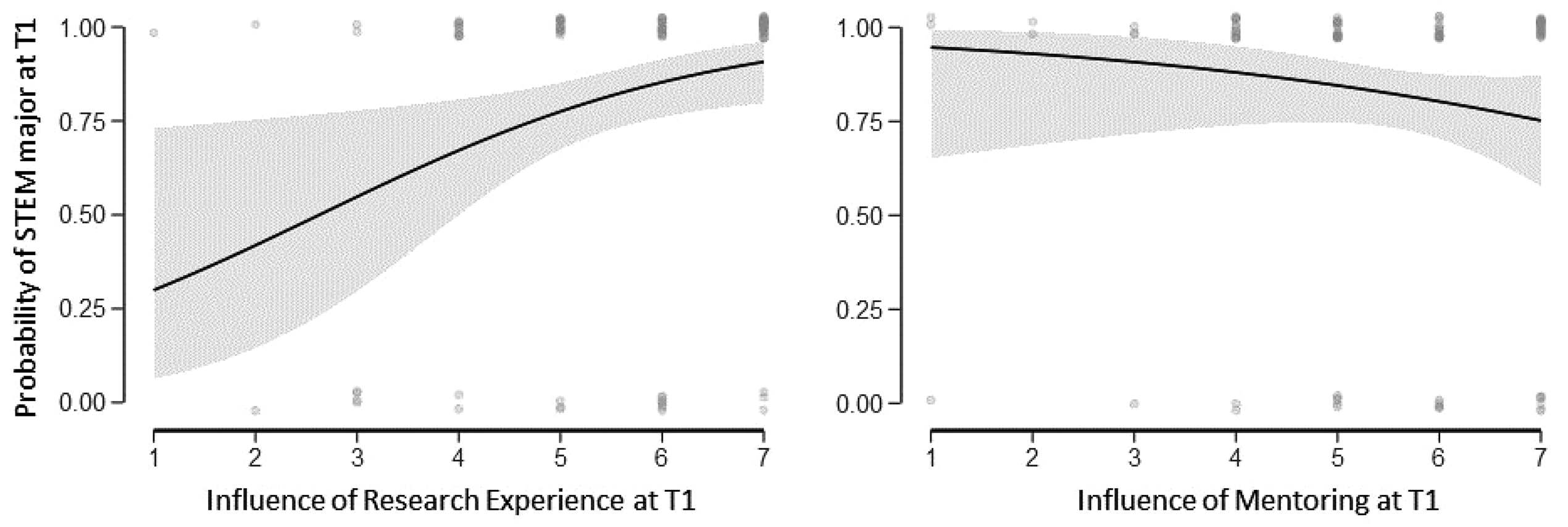
Logistic regressions of the influence of research experience and mentoring on the probability of pursuing a STEM academic major at T1.
STEM Academic Trajectories
The previous analyses indicated that research experiences and mentorship during experiential learning made unique contributions to youth STEM outcomes, to address our hypothesis about the unique influences of these two factors we conducted several additional analyses with their inclusion in the same model to address their relative contributions. A logistic regression that included the influence of T1 research experiences and mentorship significantly predicted whether youth planned to pursue STEM versus non-STEM majors at T1, immediately after the program (χ2(2) = 6.55, p = .04, McFadden R2 = .06; Figure 3). However, the predictors did not have the same effect: the influence of research experiences had a significant positive relationship with whether a participant planned to pursue a STEM major (b = 0.52, z = 2.42, p = .02, 95% CI [0.10, 0.94]), while the influence of mentorship was not significant (p = .21). Neither fieldwork nor mentorship at T1 or T2 were significant predictors of STEM major at T2. However, using the SPSS PROCESS macro model 1 (Hayes, 2017), which tests moderation, including for logistic regression, and controlling for general satisfaction and frustration, a significant overall model was found, χ2(5) = 14.56, p = .01, McFadden R2 = .33, with a significant interaction of research experience and mentoring on STEM major (dummy-coded STEM vs. non-STEM; b = 1.14, z = 2.07, p = .04, CI 95% [0.06, 2.22]). Conditional effects revealed a positive relationship between research experiences and choosing a T2 STEM major over a non-STEM major, but only when mentoring influence was high (b = 2.90, z = 2.27, p = .02, 95% CI [0.40, 5.40). At lower or moderate mentoring influence, there was no effect of T1 research experiences on STEM major choice, p's > .33. While the findings for research experiences were consistent with our hypotheses, the results about mentoring experiences were not, as mentoring did not show a unique, significant effect when present alongside research experience evaluations.
While we did not find any direct effects on STEM major at T2, there was a significant interaction of T1 research experiences and mentoring on T2 STEM major indicating the research experiences are still impactful at T2, but only when mentorship influences were also high. A hierarchical linear regression examining the effect of research experience and mentor influences on general science interest at T1 was significant, even after controlling for pre-program science engagement (F(3,137) = 68.65, p < .001, R2 = .60). As in previous results, the influence of research experience was positively related to science engagement (t = 2.61, p = .01) but mentorship was not (p = .83). The close relationship between research experience and pursuing a STEM major reinforces earlier findings that youth make meaning of their experiences through active participation in experiential learning, while mentoring indirectly impacts the effectiveness of these experiences.
Discussion
Authentic research experiences during experiential learning were effective at supporting youths’ science interest, intentions to pursue STEM majors, and perceptions that STEM would be part of their future careers. Additionally, youths’ perceptions of their research experiences had sustained positive effects on science engagement, even 2 years after the program. Our findings were consistent after controlling for initial science engagement, indicating that the effects of research experience, as youth perceived them, on positive STEM outcomes for underrepresented youth was not due to their initial science engagement. These results agree with those from previous studies that have found that experiential learning, and active participation in science are transformative (e.g., Browne et al., 2011; Chemers et al., 2011; Djonko-Moore et al., 2018), with the potential to have lasting impact on youths’ STEM trajectories (Thurber et al., 2007).
The types of research experiences provided through Project TRUE were effective at supporting youth from backgrounds underrepresented in STEM fields. Models of experiential learning suggest that both exploration and reflection are important (though not solely sufficient) components of learning (Morris, 2020). Reflection particularly allows learners to analyze and synthesize knowledge by relating to past experiences (Kolb, 2015). For underrepresented youth who face additional barriers during and immediately after the college transition, reflection can give a sense of belonging to science and establish resilience that provides persistence across transitions into new environments (Brown et al., 2020; Djonko-Moore et al., 2018). Applying an experiential learning approach to urban ecology research, as Project TRUE does, allows youth to make meaning of their experiences in the field and reflect on how science relates to their personal goals and values. In this way, our results are consistent with previous work: STEM persistence among underrepresented youth was bolstered by experiential learning, which encourages personal connections with research experiences (Goralnik et al., 2018).
In contrast to research experiences, mentoring, as perceived by participants, did not have a strong, consistent relationship with science interest or intentions to pursue STEM. It did, however, have strong positive relationships with youths’ sense of social connectedness. These findings are may appear somewhat contrary to previous works which have indicated the value of mentoring on underrepresented students’ retention in STEM, such as meaningful impacts of quality mentoring on science self-efficacy and identity (e.g., Estrada et al., 2018). However, in the case of research with undergraduates, mentoring can be sustained over a much longer period of time, which may provide distinct benefits over mentorship during a shorter summer program like the one in this article.
While mentorship had weaker impacts than research experiences, it is still an integral aspect of experiential learning because it impacts youths’ emotional learning and internationalization of values (Hernandez et al., 2018; Lee, 2007). Mentors can share experiences, convey values, and help youth develop identities that promote reflective observations about STEM experiences (Braun et al., 2017; National Academies of Sciences, Engineering, and Medicine, 2020). Underrepresented youth tend to have a lower sense of belonging and therefore gain aid from attention to the emotional aspects of learning provided by experiential learning during the tumultuous high school to college transition (Brown et al., 2020; Djonko-Moore et al., 2018; National Academies of Sciences, Engineering, and Medicine, 2020), even if these impacts are not sustained long-term.
The lower impact of mentorship found in the present study could be attributed to the fact that pre-college mentorship needs to be longer than what is provided in a summer program alone (e.g., Russell et al., 2007) or because newer and longer-term mentorship opportunities arise during their college experiences. It is also important to note that in no way does a lack of sustained impact suggest quality mentorship is not valuable to programs using an experiential learning approach, but simply that mentorship is more indirectly influential to experiential learning programs. The interaction between T1 mentoring and research experiences on T2 STEM majors provides some support for this conclusion because research experiences were influential only during early college when mentoring was also influential, indicating that quality mentorship experiences impacts the relationship between research experience and future STEM engagement. The collective impacts of mentorship and research experiences may therefore be more impactful than even the sum of the impacts of research and mentorship individually. This finding could indicate emergent properties of the pairing of research and mentorship in experiential learning that allow these two components to build off one another, providing new or longer-lasting outcomes than either component could alone.
The nested and near-peer mentoring model may contribute to these effects. Different types of mentorship likely impact the relationship between experiential learning and STEM engagement in different ways. For example, having more traditional, senior mentorship may provide beneficial role models and social support for youth through opportunities to interact with someone established in the field (National Academies of Sciences, Engineering, and Medicine, 2020). Near-peer mentoring can be more effective at fostering real-world connections and revealing possible pathways, with similarities in age meaning a closer correspondence of lived experience (Chester et al., 2013; Tenenbaum et al., 2017). The broader objectives of a mentoring program should thus shape the structure of the mentoring relationships.
As longitudinal data that bridges the high school to college transition, this work is critical in understanding multi-year impacts of outdoor experiential learning on underrepresented youths’ pursuit of STEM. Furthermore, the emphasis on placed-based research provides youth with structured opportunities to reflect and coalesce meaning and knowledge from their science experiences. We found that applying the experiential learning approach to a research mentoring experience can be particularly beneficial to underrepresented youth as they transition from high school into college. By reflecting and making meaning for contextualized research experiences, underrepresented youth fostered science interest. By going through this process with near-peer mentors in a collaborative environment, youth developed social connections that may have sustained their STEM engagement into college. Previous research has recognized that high school STEM achievement is related to STEM success in college (Crisp & Cruz, 2009) and that pre-college summer bridge programs have positive impacts on STEM retention (Raines, 2012) and this work confirms how experiential learning opportunities can be particularly impactful for underrepresented youths’ STEM outcomes (National Academies of Sciences, Engineering,and Medicine, 2017).
Limitations and Future Research
We used longitudinal data collected over 4 years and faced some limitations in sample size at later time points, which decreased power and reduced our ability to use T4 data for analyses and interpretation. The study was further limited by the inability to provide causal claims at T1 and a reliance on participant self-report data after T1, which is susceptible to self-selection bias at later time points, although we did not find indications of this when comparing responders and non-responders.
While this study provides some insight into how research and mentorship experiences are valuable to sustaining underrepresented youth's STEM engagement, future research can further explore how experiential learning approaches can contribute to related STEM outcomes, such as psychosocial outcomes and learners’ ability to contextualize research experiences. Addressing the contributing role of mentorship would further our understanding of how psychosocial factors contribute to youth's STEM engagement and support strategies to effectively engage a more diverse audience in ways that promote social inclusivity. As this program was largely focused on youth with pre-existing interest in STEM, further work should also address the effectiveness of experiential learning-oriented research opportunities on youth with no pre-existing STEM interest or low STEM self-efficacy. Access to STEM programs vary and thus programs that effectively engage underrepresented youth with little previous STEM interest or experience could provide further avenues for reducing disparities in STEM representation (National Academies of Sciences, Engineering, and Medicine, 2017).
Footnotes
Acknowledgements
We thank the participants of the Project TRUE program, especially the high school students, project leaders, undergraduate students and program assistants. We thank Rachel Becker-Klein and Terri Fox from PEER Associates for their invaluable assistance with program evaluation. We thank the individuals and institutions that partnered with us for access to field sites including: NYC Dept. of Parks and Recreation, Brooklyn Bridge Park Conservancy, Gotham Coyote, Greenwood Cemetery, and the Randal's Island Alliance. We thank Brian Johnson, Amy Tuininga, SENCER-ISE: Science Education for New Civic Engagement and Responsibilities—Informal Science Education (grant no. DRL-1237463), and the Noyce Foundation for their support during the earlier phases of Project TRUE.

Declaration of Conflicting Interests
The author(s) declared no potential conflicts of interest with respect to the research, authorship, and/or publication of this article.
Funding
The author(s) disclosed receipt of the following financial support for the research, authorship, and/or publication of this article: This work was supported by the National Science Foundation AISL Program (grant number DRL-1421017, DRL-1421019).
Supplemental Material
Supplemental material for this article is available online.