




Abstract
A common joke among interns goes: “As an intern, it’ll be your job to work for free!” Despite such jokes, the internship phenomenon is growing fast as internships have long been shown to be beneficial for all players involved: students, firms, and universities (Hall et al., 1995). For students, internships provide a unique opportunity to practice their knowledge and skills (Wasonga & Murphy, 2006), acquire additional professional know-how and tools above and beyond their academic studies (Daugherty, 2000), boost their CVs, expand their network (Divine et al., 2007), and improve their employability—including job offers by internship companies (Shoenfelt et al., 2013). For the firms, internships provide both additional—and often, a highly motivated and inexpensive (sometimes even unpaid)—workforce (Galloway et al., 2014) and access to future talent, which lowers the risk of suboptimal employee–organization fit (Gault et al., 2000). Finally, for universities, internships improve the quality of their offering. First, internships allow universities to combine practice alongside academic theory (Raelin, 2009; Weible, 2009). Second, internships increase students’ employability, considering the criticism regarding the relevance of academic education in the 21st-century job market (Pfeffer & Fong, 2002). Specifically, understanding what employers want allows colleges to refine curriculum and engage students in hands-on learning that will be relevant to their future occupations.
Given the growth of the internship phenomenon and its importance, scholars are exploring different factors, ensuring internship success, such as structure (Pianko, 1996), dynamics (Liu et al., 2011), and participants’ satisfaction (D’abate et al., 2009). In the current article, we follow previous work (D’abate et al., 2009) investigating intern satisfaction based on well-established motivation research, namely, the Job Characteristics Model (JCM) and work environment characteristics (Steers & Porter, 1991b). Our unique contribution to the existing body of internship research is threefold: (a) We focused on internships in small high-tech startups rather than in large organizations. As explained below, the entrepreneurial imperative of our time (Kuratko, 2009) calls for enhancing students’ entrepreneurial mind-set and skills that may be better acquired in startup companies; (b) while previous research (D’abate et al., 2009) hypothesized and analyzed only the JCM’s basic independent variables (e.g., task variety) and their influence on interns’ satisfaction, we also investigated critical psychological states (e.g., meaningfulness of work) that these variables induce; and (c) to increase generalizability, we collected data from seven different internship batches during 2½ years with a much larger and more diversified subject pool (details below) in comparison with past research examining the factors influencing intern satisfaction (D’abate et al., 2009).
Literature Review
The Internship Phenomenon
The internship phenomenon is anything but new. Rather, some scholars trace it to the old training methods of apprenticeship (from the French word: “aprentiz,” meaning “someone learning”) prevalent in ancient China and Greece some 2,500 years ago through the European guilds of the Middle Ages until today. At present, most internships are based on the traditional approach of professional individuals or organizations teaching inexperienced (and often young) people by involving them in actual work. In educational literature, internships are typically considered a specific means of experiential learning or learning-by-doing (Kolb & Kolb, 2005; Maaravi, 2018a, 2018b). Today, internships exist in a wide variety of jobs and organizational environments, such as public relations (Beebe et al., 2009), accounting (Sessions, 2006), and hospitality (Yiu & Law, 2012), among others.
After decades of research examining internship (e.g., Gerken et al., 2012), it seems reasonable to assume that despite potential problems and limitations (see Muehlemann et al., 2007), this tradition indeed provides significant value to all players: universities, organizations, and students (Hall et al., 1995). Due to the ever-changing nature of education and business, and the unique challenges they both face in the 21st century (e.g., Tapscott & Williams, 2010), internships will probably continue to flourish. Indeed, internships offer students real-world job experience and vital opportunities to learn new skills (Daugherty, 2000) while also providing a motivated and cost-efficient workforce for organizations (Galloway et al., 2014). Therefore, research on the various facets of internships—psychological, sociological, managerial, or pedagogical—is of crucial importance to the future of both education and business.
The Entrepreneurial Imperative and Entrepreneurship Education (EE)
The economic environment is becoming increasingly dynamic and uncertain, causing people, companies, and governments to perceive of entrepreneurship as key to their success and growth. Indeed, entrepreneurship is seen by scholars, business people, officials, and educators as a prominent driver of the current economy (Sánchez, 2013). For individuals, it may help to adapt to the 21st century’s insecure job market (Newman et al., 2018). Companies see intrapreneurship (or organizational innovation) as a means to survive and prosper in the rapidly changing business environment (Baruah & Ward, 2014). And governments invest substantial budgets in promoting entrepreneurship as they seem to understand the strong relationship it has with economic growth (Farinha et al., 2018). The centrality of this “entrepreneurial imperative of the twenty-first century” (Kuratko, 2009) has also made entrepreneurship a central topic in academia (Fayolle & Gailly, 2008). Thus, thousands of universities internationally now offer a wide variety of entrepreneurship programs—from electives or minor programs to acceleration programs, venture funding, and even full academic degrees (Guerrero et al., 2016). Although different, these programs usually share the following elements: enhancing entrepreneurial mind-set and intent, teaching relevant skills and tools (e.g., the Lean Startup Methodology; Blank, 2013), and exposing students to real companies, investors, and industry partners (Kuratko, 2005). These programs and activities are premised on the long-concluded notion—which is becoming increasingly accepted by both academics and practitioners (Kuratko, 2005; Lackéus, 2015; Piperopoulos & Dimov, 2015)—that “. . . entrepreneurship can be taught, or at least encouraged, by entrepreneurship education” (Gorman et al., 1997).
While some entrepreneurship programs aim to help students become entrepreneurial, others are designed to create entrepreneurs (Fayolle & Gailly, 2008). The goals of the former are mainly to help students become more creative (Neck & Greene, 2011), to increase their entrepreneurial self-efficacy (Newman et al., 2018), and to encourage them to take action and create value for others (Bruyat & Julien, 2001). The latter, on the contrary, focuses on increasing students’ entrepreneurial intentions (Bae et al., 2014), teaching them entrepreneurial know-how and skills, and eventually helping them to become entrepreneurs and develop new ventures (Nabi et al., 2017).
EE usually comprised three levels of teaching: (a) about entrepreneurship, (b) for entrepreneurship, and (c) through entrepreneurship (Fayolle & Gailly, 2008; Sirelkhatim & Gangi, 2015). Teaching about entrepreneurship focuses on increasing students’ awareness of entrepreneurship as a possible career path (Piperopoulos & Dimov, 2015). Teaching for entrepreneurship includes two additional components: enhancing entrepreneurial intentions (Souitaris et al., 2007) and providing students with the knowledge, skills, and techniques needed for both value and venture creation (Fayolle & Gailly, 2008). Finally, teaching through entrepreneurship provides students with the knowledge and skills for starting a new business through actual venture creation (Vincett & Farlow, 2008).
While previous research (Gerken et al., 2012) has focused mainly on internships in established companies, EE programs also designate internships to startups (Blank, 2013) or innovation-driven new companies (IDE; see Aulet & Murray, 2013). Indeed, internship research suggests that interning in startup companies, and witnessing and experiencing entrepreneurship firsthand might potentially increase students’ awareness of such a career path (Callanan & Benzing, 2004), enhance entrepreneurial intentions (Ajzen, 1991; Krueger et al., 2000; Souitaris et al., 2007), provide students with venture creation knowledge and skills (Daugherty, 2000), and finally, be the closest experience to actual venture creation (Vincett & Farlow, 2008).
Thus, we suggest that developing and offering internships within startup companies might be a useful complementary approach for universities engaging in EE. To our knowledge, the current article is the first attempt to describe and research satisfaction of interns from such internship programs.
Internship Satisfaction
A classic definition of job satisfaction was suggested by Locke (1976), who defined it as “. . . a pleasurable or positive emotional state resulting from the appraisal of one’s job experience” (p. 1304). This definition encompasses both the affective and cognitive aspects of satisfaction. Nevertheless, decades of research dating back to Herzberg (1964, 1974) have established that job satisfaction does not stem solely from an employee’s work but also from the surrounding work environment. Indeed, studies have found environmental predictors of job satisfaction, such as physical space, safety, equipment and resources, opportunities, supervision, and interpersonal relationships, among others (Ellickson & Logsdon, 2002; Iiacqua et al., 1995).
There is much research on the antecedents and consequences of job motivation and satisfaction (see Aziri, 2011) and less research on internship satisfaction (Smayling & Miller, 2012). The current article builds on a specific study regarding intern satisfaction, namely. D’abate et al.’s (2009) study. In that article, the authors assessed internship aspects which contributed most to intern satisfaction by surveying 111 undergraduate students taking part in internships, with questions based on well-established motivation theories and factors—the most prominent of them being the JCM (Hackman & Oldham, 1980). The authors found general support for these theories, yet omitted a crucial component of the JCM: the critical psychological states mediating the job characteristic’s effect on satisfaction. With this in mind, our unique contribution—beyond focusing on startup internships—is a more thorough investigation of the JCM and its applicability to internships. In addition, our unique contribution is complemented by a much larger and more diverse sample size: 434 students, who interned in 130 different companies.
The JCM
The JCM (Hackman & Oldham, 1980) describes the factors concerned with “what an employee does at work,” and how these factors induce critical psychological states which then increase general job satisfaction. These factors are skill variety (i.e., the degree to which the activities needed to complete a task are varied), task identity (i.e., the degree to which the employee understands her part in the entire job process), task significance (i.e., the degree to which the job has a substantial impact on the lives of other people), autonomy (the degree to which the job provides substantial freedom of work), and feedback (the degree to which direct and clear information about the effectiveness of her performance is provided to the employee). Importantly, task identity was not included as one of the job characteristics in our study as D’abate et al. (2009) suggested that it might not be a relevant characteristic in internship scenarios as interns mainly work on projects that are not fully completed during their short internship.
Based on earlier literature arguing for the similarity between work and internship characteristics (D’abate et al., 2009) and the centrality of job satisfaction as a prominent result in the JCM (Loher et al., 1985), our first hypothesis is as follows:
The critical psychological states induced by JCM factors are (a) experiencing work meaningfulness (i.e., the degree to which an employee experiences the job as generally meaningful, valuable, and worthwhile); (b) feeling responsibility for work outcomes (i.e., the degree to which the employee feels personally accountable and responsible for the results of her work); and (c) knowledge of results (i.e., the degree to which the employee knows and understands how effectively they are doing their job). Our second hypothesis, per the JCM, is follows:
Work Environment Characteristics
Steers and Porter (1991a) suggested that, in addition to the characteristics of the work itself, some of the more general characteristics of the work environment influence job satisfaction. Moreover, it was demonstrated that such additional factors are essential to portray a more comprehensive model of job satisfaction alongside JCM both in ordinary jobs (Loher et al., 1985) and in internships (D’abate et al., 2009). One such characteristic is the degree to which the work environment offers interns substantial learning opportunities. Studies have found a significant correlation between workplace learning opportunities and general job satisfaction (Rowden & Conine, 2005; Schmidt, 2007). Another critical workplace characteristic related to job satisfaction is supervision support (Ellickson & Logsdon, 2002; Glisson & Durick, 1988); for example, Babin and Boles (1996) found that employees’ perception of supervisory support reduced stress and increased job satisfaction. Finally, Rothman’s (2003) study pointed to the interpersonal relationship with coworkers (e.g., helpfulness, encouragement) and the organizational culture (e.g., the formality of work environment, workplace etiquette) as contributing to job satisfaction (hereafter, organizational atmosphere). Our third hypothesis is, therefore, as follows:
Method
Participants
Participants were 434 (245 male and 189 female) undergraduate students at a private university in central Israel, taking part in an elective course in which they took an unpaid internship at a local startup or startup-related company (e.g., an innovation hub) for 10 weeks. Altogether, participants in the current study interned in 130 different companies over the course of seven semesters (2½ years). Each intern was paired with a supervisor who mentored her throughout the internship. Most of the students (18.4%) were business undergraduates, 10.7% were communication undergraduates, 7.9% were computer science undergraduates, 4.7% were economics undergraduates, and 2.3% were entrepreneurship undergraduates. The rest were psychology undergraduates, diplomacy undergraduates, or some combination of the above.
Measures and Procedure
After completing the 10-week internships, participants were required to answer a survey measuring several aspects of their experience. Specifically, interns answered 20 items regarding their experience, rated on a scale between 0 (low) and 100 (high). To investigate the JCM model, we included items that measured the job characteristics and the critical psychological states. The full description of the items, their corresponding factors, and Cronbach’s alpha coefficients (for multi-item factors) can be found in Table 1.
Measures of Job and Work Environment Characteristics.
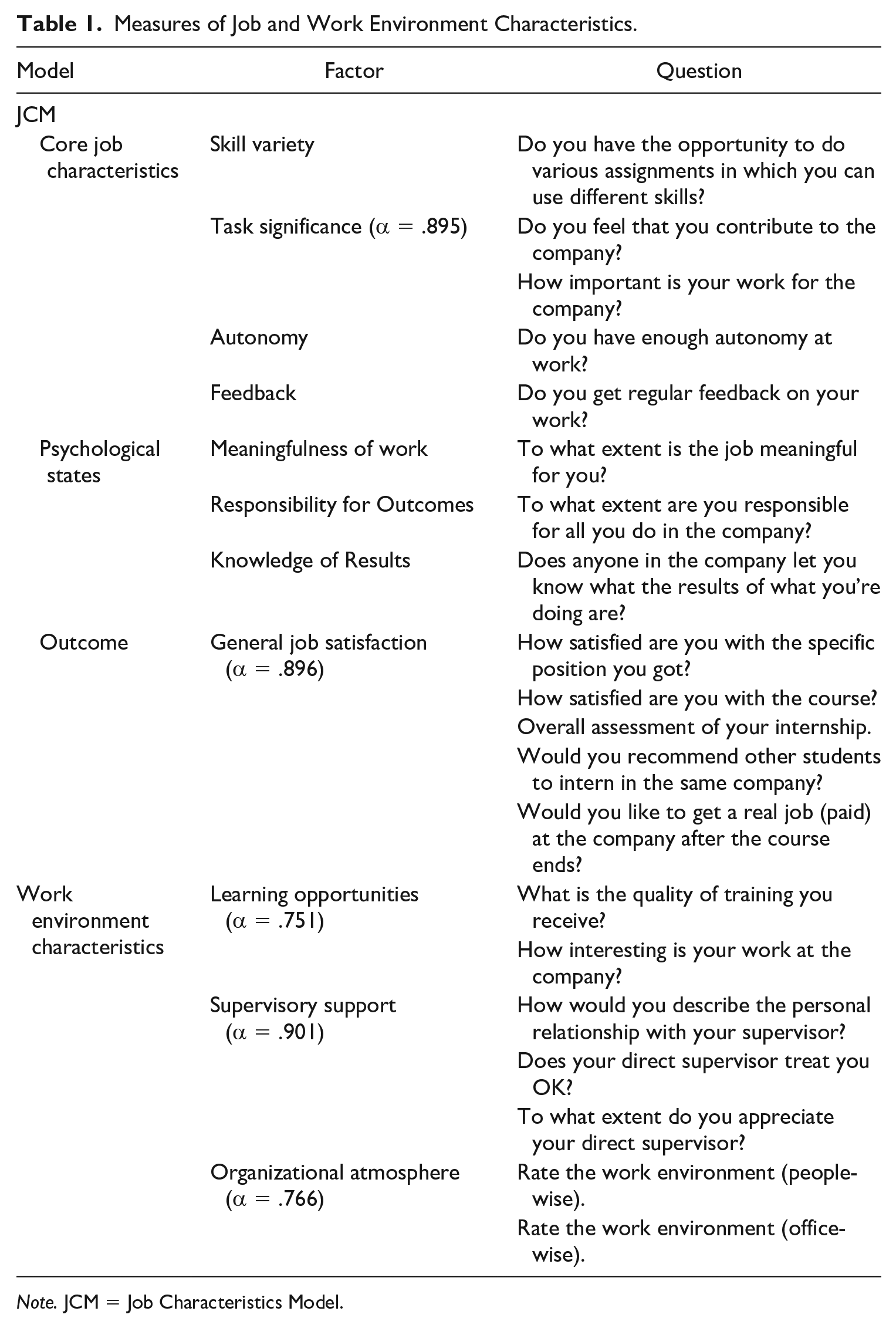
Note. JCM = Job Characteristics Model.
In addition, seven items of the postinternship survey were used to account for work environment characteristics (see Table 1): two items measured learning opportunities, three statements measured supervisor support, and two statements measured organizational atmosphere. In addition, as the internship was part of an academic program, a few more items, not presented in Table 1, were included in the survey for pedagogic purposes.
Data Analysis
To test our first hypothesis (H1), we initially loaded the four job characteristics into a regression model, with job satisfaction as the dependent variable. We then used the PROCESS procedure created by Hayes (2017) to provide a deeper analysis of the more complex mediation effects between all three levels: JCM factors, critical psychological states, and internship satisfaction (H2). Specifically, we tested whether meaningfulness of work mediated the effects of task significance and task variety on job satisfaction; whether responsibility for outcomes mediated the effect of autonomy on job satisfaction; and whether knowledge of results mediated the effects of feedback on job satisfaction. Finally, the work environment characteristics (i.e., learning opportunities, supervisor support, and organizational atmosphere) were loaded into a regression model already containing the job characteristics as additional predictors of general job satisfaction (H3).
This study was approved by the institutional review board (IRB) at the Adelson School of Entrepreneurship, The Interdisciplinary Center, Herzliya (IRB No. 14).
Results
Data Analysis
Table 2 presents the means, standard deviations, and zero-order correlations for all variables in the study.
Means, Standard Deviations, and Zero-Order Correlations of Variables in the Analysis.
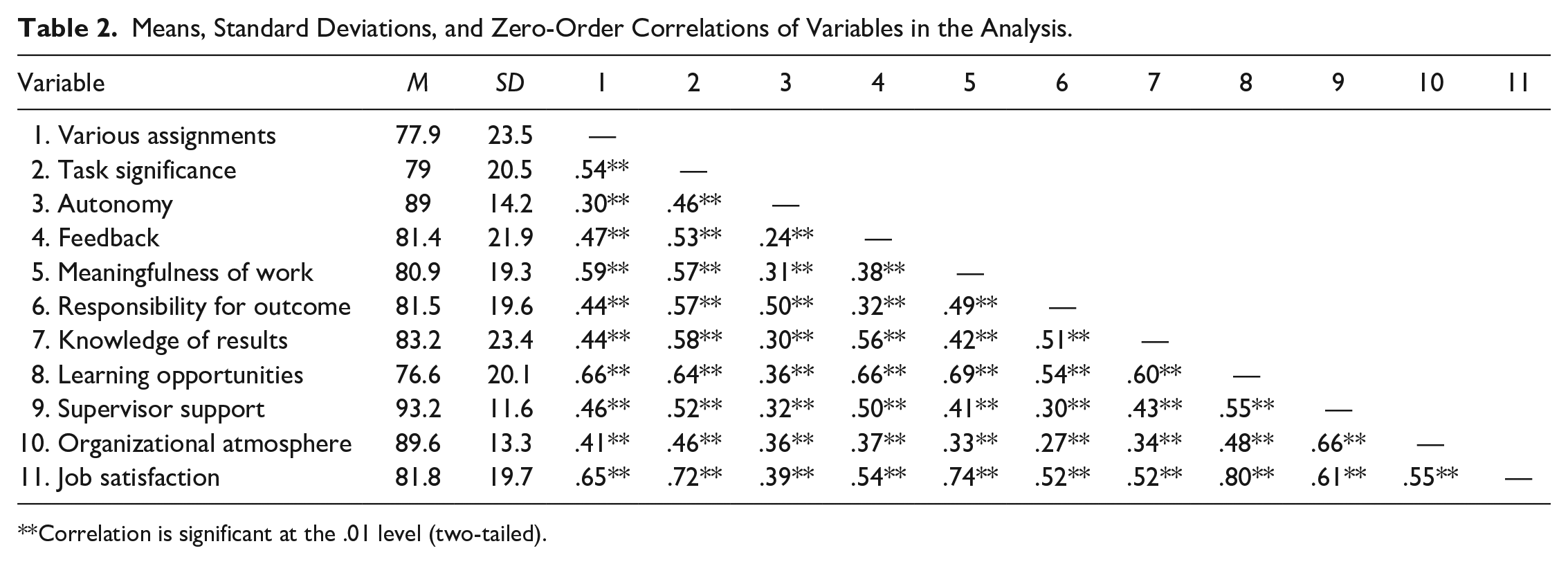
Correlation is significant at the .01 level (two-tailed).
As can be seen in Table 3, the regression model with the four job characteristics as predictors of internship satisfaction generally supported our hypothesis (H1): Task significance (β = 0.439, p < .001), task variety (β = 0.332, p < .001), and feedback (β = 0.135, p < .001) all had a significant, positive relationship with job satisfaction. Nevertheless, autonomy was not found to be a significant predictor of job satisfaction. This model explained 62% of the variance in job satisfaction, which was statistically significant at the .001 level (
Regression Models (N = 434).
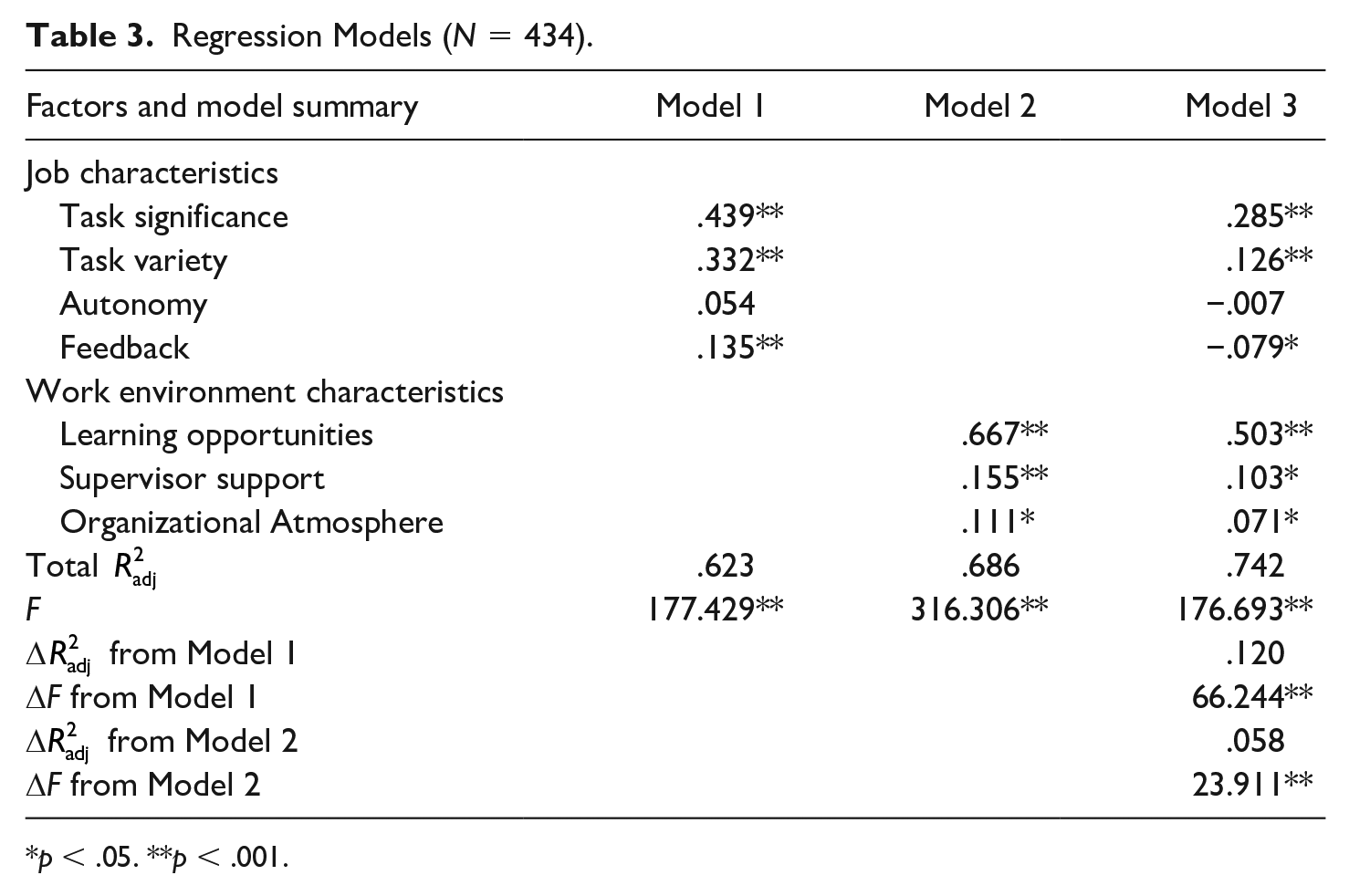
p < .05. **p < .001.
Next, we conducted separate mediation analyses for each of the four job characteristics of the JCM, with psychological states as mediators, to further investigate their direct and mediated effects on job satisfaction (H2). The first mediation model (Figure 1) consisted of task significance and skill variety (as independent variable/covariates), meaningfulness (mediator), and job satisfaction (dependent variable). First, both task significance and skill variety significantly predicted job satisfaction, R2 = .613, F(2, 424) = 336.21, β = 0.508, p < .001, and β = 0.379, p < .001, respectively. Second, both task significance and skill variety significantly predicted meaningfulness, R2 = .450, F(2, 424) = 173.49, β = 0.359, p < .001, and β = 0.403, p < .001, respectively. Third, when inserted into a model together, meaningfulness predicted job satisfaction, R2 = .699, F(3, 423) = 328.03, β = 0.395, p < .001, and both task significance and skill variety remained significant predictors of job satisfaction, β = 0.366, p < .001, and β = 0.220, p < .001, respectively, indicating partial mediation. The 95% confidence interval of the effect of meaningfulness as a mediator of the effect of task significance and skill variety on job satisfaction ranged from .08 to .20 and .07 to .19, respectively (5,000 bootstrap resamples); thus, the mediation effect was significantly different from zero.
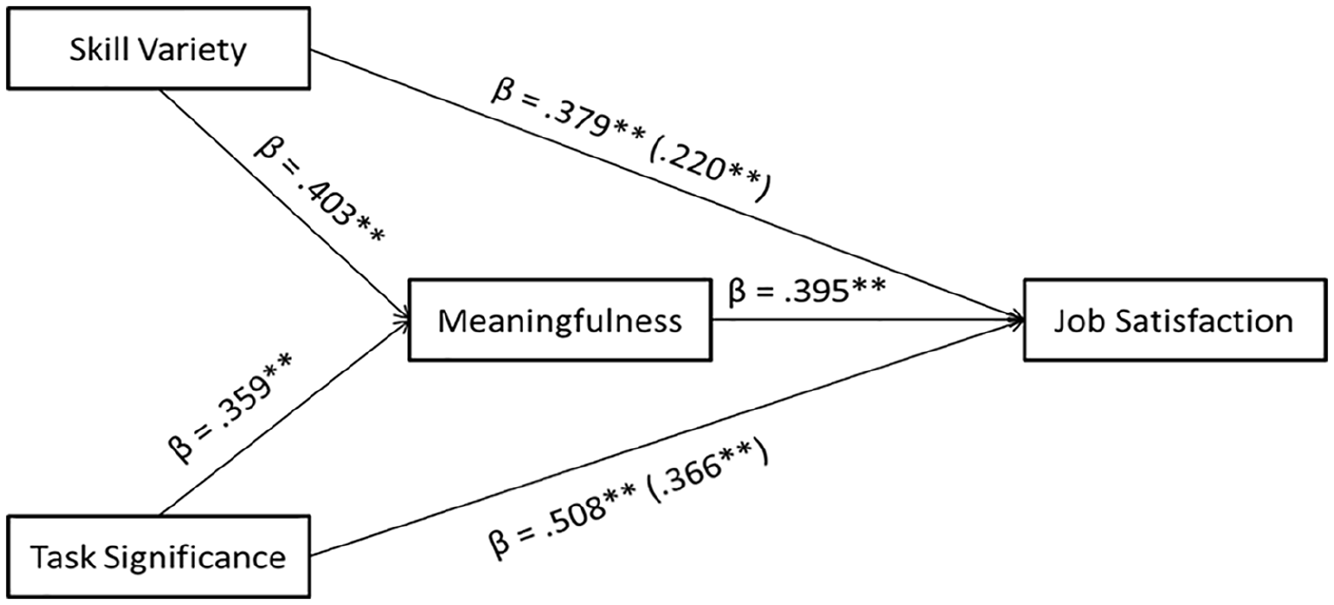
First mediation model.
The second mediation model consisted of autonomy (independent variable), responsibility (mediator), and job satisfaction (dependent variable; see Figure 2). First, autonomy significantly predicted job satisfaction, R2 = .151, F(1, 430) = 76.77, β = 0.389, p < .001. Second, autonomy significantly predicted responsibility, R2 = .258, F(1, 430) = 149.92, β = 0.508, p < .001. Third, when inserted together into a model, responsibility predicted job satisfaction, R2 = .293, F(2, 429) = 89.28, β = 0.438, p < .001, and autonomy remained a significant predictor of job satisfaction, β = 0.166, p < .001, indicating partial mediation. The 95% confidence interval of the effect of knowledge of results as a mediator of the effect of feedback on job satisfaction ranged from .20 to .40 (5,000 bootstrap resamples); thus, the mediation effect was significantly different from zero.
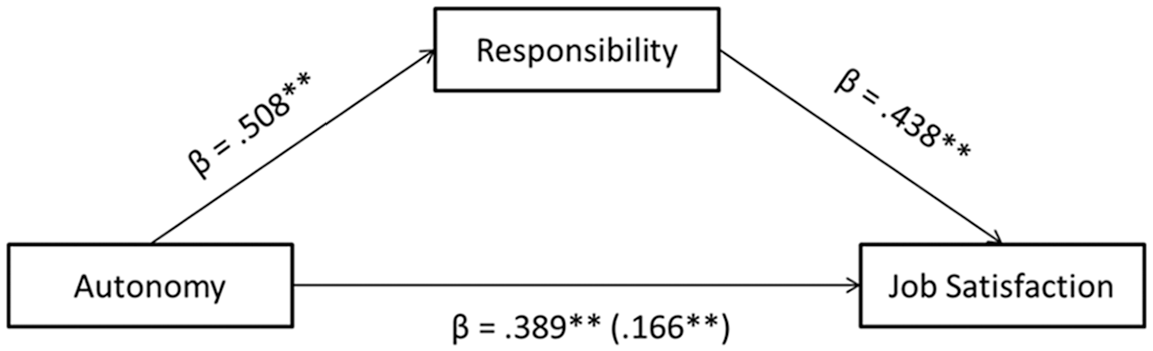
Second mediation model.
The third mediation model consisted of feedback (independent variable), knowledge of results (mediator), and job satisfaction (dependent variable; see Figure 3). First, feedback significantly predicted job satisfaction, R2 = .281, F(1, 428) = 167.74, β = 0.530, p < .001. Second, feedback significantly predicted knowledge of results, R2 = .321, F(1, 428) = 202.71, β = 0.566, p < .001. Third, when inserted together into a model, knowledge of results predicted job satisfaction, R2 = .350, F(2, 427) = 115.17, β = 0.318, p < .001, and feedback remained a significant predictor of job satisfaction, β = 0.350, p < .001, indicating partial mediation. The 95% confidence interval of the effect of knowledge of results as a mediator of the effect of feedback on job satisfaction ranged from .09 to .23 (5,000 bootstrap resamples); thus, the mediation effect was significantly different from zero.
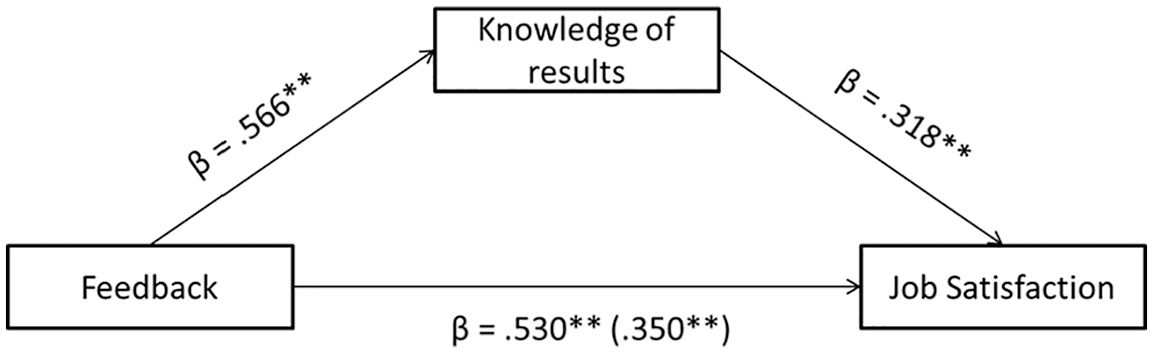
Third mediation model.
As can be seen in Table 3, adding the three work environment characteristics (learning opportunities, supervisor support, organizational atmosphere) to a model already containing the core job characteristics explained an additional 12% of job satisfaction’s variance (∆
Discussion
Our results provide strong support for both the JCM (D’abate et al., 2009; Loher et al., 1985) and the relationship between work environment characteristics and internship satisfaction. Interestingly, the work environment characteristics seem to be the stronger predictors of internship satisfaction—explaining more variance than the job characteristics—with the strongest among them being learning opportunities interns feel they have been given. This is unsurprising as the potential to learn has long been shown to be one of the key motivations for participating in internships in the first place (Daugherty, 2000; Wasonga & Murphy, 2006). Indeed, internships provide crucial opportunities for students to synthesize their classroom knowledge with actual workplace experience, familiarize themselves with the industry, and better understand whether their career path suits them (Coco, 2000). Thus, when designing internships, both universities and companies should take this into account and—while not ignoring JCM and other environmental factors—focus more on learning opportunities.
Supervisor support, a related work environment characteristic, was also found to be a crucial predictor of job satisfaction. Proper guidance, feedback, and mentoring regarding job specifics are paramount in contributing to a rich learning experience and high work effectiveness (Sapp & Zhang, 2009). Furthermore, a good supervisor not only provides task-specific knowledge and advice but also eases the intern into the social and professional environment, equipping her with know-how on organizational etiquette and structure (Sanahuja Velez & Ribes Giner, 2015). This is also in line with the broader organizational behavior literature that has pointed to the effect a direct manager’s behavior has on employee satisfaction (Nohria et al., 2008).
Organizational atmosphere, the last and broadest of the work environment characteristics, influences job satisfaction by providing the foundation for and the catalyzation of learning opportunities and supervisory support. The interpersonal relationships between interns and employees, the ease of assimilation into the organizational culture, and the friendliness of the staff and work environment are what allow the intern to feel part of the company, thereby aligning her goals with those of her coworkers. More importantly, a positive organizational atmosphere enables the intern to focus on acquiring the relevant knowledge and experience and making the most out of her internship, instead of having to deal with social or workplace aesthetic issues (Tracey et al., 1995).
Our findings lend further support to the JCM and expand on the previous research, applying it to intern satisfaction (D’abate et al., 2009) by measuring and including the critical psychological states in our analysis. The hypothesized job characteristics (task variety, task significance, feedback, and autonomy) predicted the experience of critical psychological states (meaningfulness of work, knowledge of results, and feelings of responsibility), which in turn predicted job satisfaction. Of the critical psychological states, meaningfulness of work seems to be a rather strong predictor of job satisfaction. This is not surprising, as alongside rewards, opportunities for promotion, and working conditions (Cascio, 2003), meaningful work has been shown to lead to improved performance, commitment, and satisfaction (Pratt & Ashforth, 2003). A sense of responsibility was also found to be a significant predictor of job satisfaction. This is operationalized in the amount of decision making and independence allowed to an intern, which can motivate and enable them to try new ideas, learn from consequences, and expand their domain-relevant skills (Coelho & Augusto, 2010).
Implications for Universities, Startup Companies, and Students
The current research adds to the growing literature on internships (D’abate et al., 2009; Liu et al., 2011) and may shed more light on how to structure and manage successful programs for the benefit of universities (Weible, 2009), startup companies (Galloway et al., 2014; Gault et al., 2000), and, most importantly, students (Divine et al., 2007; Shoenfelt et al., 2013; Wasonga & Murphy, 2006). Furthermore, understanding differences in stakeholders’ (universities, startups, and students) perceptions of internships and bridging the gaps between them are crucial to meeting expectations of all sides and assuring the internship’s perceived and actual success (Sauder et al., 2019). This study is another step toward aligning these perceptions, by offering all sides concrete guidelines on what is expected of them and what to expect from others to maximize success.
For universities designing and delivering EE programs, the current research emphasizes the importance of internships as an additional component in their offering (Kuratko, 2005; Lackéus, 2015; Piperopoulos & Dimov, 2015). When selecting startup companies for student internship, universities should prefer ones that correspond to our findings, that is, companies that are able and willing to offer students a substantial learning experience, mentored by a dedicated supervisor and handled according to JCM. In addition, our findings may help universities design the internship program guidelines accordingly or even guide companies and their representatives on how to best manage such programs. For example, universities could offer workshops to management at startup companies to assure that their organizational culture is one which maximizes the internship’s effectiveness.
For startups, our findings suggest that interns should not be seen merely as cheap labor or potential employees. This is mainly true for startup companies that typically suffer from a lack of resources on one hand and are always in search of new talent for rapid growth on the other hand. Rather, to maximize intern satisfaction—and consequently their effectiveness and willingness to be hired by these companies (Aziri, 2011; Smayling & Miller, 2012)—the current research suggests that students should be treated as professional and serious company employees. Not only does previous research indicate that the same JCM factors that affect employees also influence interns (D’abate et al., 2009), but in this study, we have also demonstrated the above by examining the critical psychological states proposed by the model (e.g., meaningfulness of work; Hackman & Oldham, 1980). This is also evident when it comes to work environment factors (Steers & Porter, 1991a) and especially supervisory support (Ellickson & Logsdon, 2002). For internships, a crucial factor is how supervisors serve as mentors and offer help and encouragement to interns learning efforts (Rothman, 2003).
Finally, students aiming to become entrepreneurs or intrapreneurs, and therefore seeking an internship as an integral part of their EE, should follow the results of the current research when they decide where to intern. Specifically, when meeting potential startups, students should look for those that can offer them skill variety, task significance, autonomy, and feedback on the one hand, and learning opportunities, supervisor support, and organizational atmosphere on the other hand. The combination of these factors is suggested to increase chances for a more meaningful and satisfactory internship experience.
Limitations and Future Research
First, due to the dependent and independent variables being measured simultaneously and in the same survey, there might be a common method bias that accounts for our results. Nevertheless, we ran a common factor analysis, which included all the study variables, as per Harman’s single factor test, which showed that our data did not have one single factor that explained the majority of the variance. Therefore, we can assume that common method bias was not responsible for the results (Malhotra et al., 2006). Yet, we do advise future studies to incorporate multiple methods to address this concern and validate our findings.
Second, although we did account for the critical psychological states, three of the four personal and work outcomes of the JCM are still unaccounted for (internal work motivation, low absenteeism, and high-quality work performance). In addition, we did not collect data about the model’s moderation variables such as knowledge and skill or growth need strength (Hackman & Oldham, 1975). Future studies should try and account for the complete model using multiple methods to measure the final outcomes as well as the moderators. For example, whereas internal work motivation is self-reported, absenteeism is data-based, and work performance can be measured by the supervisor’s feedback or the likelihood of offering the intern a job at the company.
Third, some demographic variability was missing in our study. For example, our participant sample was composed of only undergraduate students. To extrapolate, research on intern satisfaction in startups should encompass nonacademic and graduate-level populations. Furthermore, past internship experience was not measured as a variable in our study. It would be interesting to study whether the factors used in our study would have differential effects on individuals with a history of internship experience compared with individuals with no past experience. Finally, following D’abate et al. (2009), we used JCM as well as work environment factors to investigate satisfaction among interns, whereas these methods were not specifically designed to research interns and internships. Future studies should aim to develop internship-specific measurement tools.
Conclusion
As the internship phenomenon is expanding, research demonstrates its advantages for students (Daugherty, 2000; Divine et al., 2007; Wasonga & Murphy, 2006), companies (Galloway et al., 2014), and universities (Weible, 2009). Given the rising importance of EE in the 21st century, in the current article, we make the first attempt to investigate internships in startup companies as a means to enhance all elements of such education: awareness of entrepreneurship (Callanan & Benzing, 2004), entrepreneurial intentions (Ajzen, 1991; Krueger et al., 2000; Souitaris et al., 2007), and venture creation knowledge and skills (Daugherty, 2000). Our results may shed light on this crucial teaching for and through the entrepreneurship approach.
Footnotes
Declaration of Conflicting Interests
The author(s) declared no potential conflicts of interest with respect to the research, authorship, and/or publication of this article.
Funding
The author(s) received no financial support for the research, authorship, and/or publication of this article.
