



Abstract
Play skills are a behavioral cusp as they provide the foundation for the development of other related skills in young children. Children with developmental disabilities often demonstrate significant delays in their play skills. When children do not engage in play at the same rates or in the same ways as their peers or siblings, their ability to learn and practice other skills such as communication and social interactions is negatively impacted. We used a concurrent, multiple probe design across participants to assess the efficacy of using a system of least prompts (SLP) intervention package to teach pretend play to three children with disabilities in contexts with their peers. The SLP intervention package was related to increases in target pretend play behaviors for all three children. Also, parents and teachers reported observed changes in play across both the classroom and the home environments.
Play skills are behavioral cusps as they provide the foundation for the development of other related skills in young children. The development of play skills is related to the development of language and social skills (Barton et al., 2020; Barton & Wolery, 2008; Casby & Ruder, 1983; Lifter et al., 2011). Through play, children experience their environment, practice early social interactions, express emotions, and use self-regulation skills (Barton et al., 2018; Cheah et al., 2001). Children with developmental disabilities often demonstrate significant delays in their play skills (Barton, 2015, 2016; Kasari et al., 2013; Williams et al., 2001). Delays in play can have a cumulative impact on social and language skills (Barton & Wolery, 2010; Barton, Pokorski, et al., 2018; Odom, 2005). Thus, play skills are critically important, pivotal behaviors and should be facilitated for ALL young children.
Play is generally defined according to two broad categories: object play and social play. Object play is defined by the play acts that children demonstrate using toys and objects (Barton, 2016; Barton & Wolery, 2008, 2010). Pretend play is a complex type of object play. Toddlers begin to demonstrate simple pretend play by imitating others (Barton, 2015; Ingersoll, 2010, 2012; Stone et al., 1997; Stone & Yoder, 2001; Sweeney et al., 2018). As children learn more advanced language, motor, and social skills, they incorporate these skills into more complex pretend play (Barton, 2016). Social play is defined relative to the child’s interactions with other children while playing (Barton et al., 2020; Cheah et al., 2001; Parten, 1932). Children learn object play and social play skills as they engage and interact with peers and adults in high-quality environments (Barton & Pokorski, 2018).
Although most children learn social and object play skills through typically occurring responsive interactions with caregivers, some children, including children with disabilities, might require intentional intervention to teach play behaviors (Barton, 2015; Barton et al., 2020). The system of least prompts (SLP) has been effective in teaching children to engage in more complex play (Barton et al., 2020; Barton & Wolery, 2010; Ledford et al., 2019). For example, in a recent review of object play literature, Barton and colleagues (2020) found that seven of 10 studies that used SLP reported a functional relation between the use of an intervention package including SLP, and an increase in object play by children with disabilities.
Teachers who provide instruction to teach children play skills often do so while supervising other children in the classroom who are also engaged in play activities. Few studies have taught play mirroring this typical intervention context. Most play intervention studies to date have taught children to play in isolation and have not included peers in instructional contexts. Current research that has focused on play with peers has predominantly done so during generalization conditions rather than during the primary instructional condition. For example, Barton and colleagues (2020) found that current research has predominantly measured the generalization of play across peers, but few actually taught play with peers during the instruction. Barton and Wolery (2008) suggested that the inclusion of peers during the intervention may increase interaction with both peers and materials and reduce the target child’s dependence on prompts. Furthermore, play itself might provide children with typical opportunities to interact with peers (Barton & Pokorski, 2018). Lifter and colleagues (2011) asserted that play researchers often assess the social behaviors and communication skills that children use when playing rather than the actual play skills observed. Thus, additional research to assess the efficacy of the teaching of play skills within a context that includes peers is warranted.
We examined the efficacy of an intervention package including the system of least prompts on the pretend play behaviors of children with disabilities in a play context with their peers. The following research questions guided this study:
Method
Participants
After obtaining permission from the appropriate institutional review board (IRB), three children with disabilities were recruited from two inclusive preschool classrooms in an elementary school in a large metropolitan school district in the southeastern United States. Inclusion criteria were (a) reported chronological age between 36 and 72 months; (b) the child was currently eligible for special education services; (c) the teacher reported or provided documentation that the child’s mental age, an estimation of a child’s developmental age, was equal to or greater than18 months; (d) attendance rate of at least 80% in the most recent quarter, reported by teacher; (e) teacher reported the child’s ability to participate in adult facilitated play with peers for at least eight minutes; (f) researcher observed no more than 5 unprompted play behaviors during a five minute period, across three observations; (g) parent/teacher reported low play skills on the questionnaire; (h) teacher reported that child independently communicated via speech or sign; and (i) reported that child’s primary language was English. Information including age, IEP history, and attendance was provided by the classroom teacher. All other information was gathered through direct observation by the researcher and the researcher-developed questionnaires completed by parents.
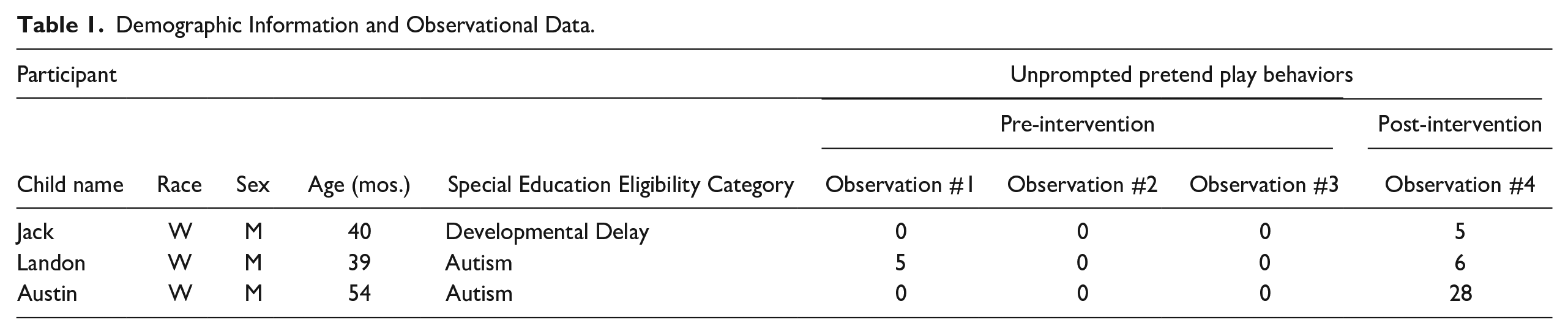
Jack was a 40-month-old White male who received special education services under the developmental delay (DD) category. He communicated using speech. His teacher reported that his play was below expectations for his age. Landon was a 39-month-old White male in the same classroom as Jack. His teacher reported that he received special education services under the educational eligibility of autism. He communicated using speech, although his verbalizations were brief, one-to-three-word utterances. Austin was a 54-month-old White male and was enrolled in a different inclusive classroom in the same school. He also received special education services under the educational eligibility of autism. His teacher reported that his play skills were below age expectations. He communicated using speech. See Table 1 for additional information.
Demographic Information and Observational Data.
Peer participants met the following inclusion criteria: (a) chronological age between 36 and 72 months, (b) were not eligible for special education services, (c) attendance record of at least 80%, and (d) age-appropriate play skills. We evaluated these criteria using teacher reports. All peer play partners were nominated by the classroom teacher and selected from the same classrooms as the target participants. Megan and Janan were White, and Andrew was Asian. Janan and Andrew alternated as play partners for Jack and Landon, depending on scheduling and attendance. Megan was Austin’s play partner.
The interventionist and primary coder was a White, doctoral student in a special education program with 12 years of experience as a speech-language pathologist. The secondary data coder also was White and a graduate student in special education. A third, Asian, graduate student in special education coded procedural fidelity (PF). All were female.
Setting and Materials
All sessions took place during the typical morning free play time routine when both the target child and the peer participant were present. Sessions were 8 min during all conditions.
The number of sessions per week varied across participants and conditions based on attendance and data stability. All baseline, intervention, and maintenance sessions took place in the participant’s classroom during free play. During sessions the other children played in centers in groups of two to three children; these were usually facilitated or supervised by classroom staff. Thus, study sessions looked very similar to the play activities taking place around the room. All sessions included the target child, a consented peer, and the researcher. If additional children tried to join in the play session, the implementer redirected them to play in another center.
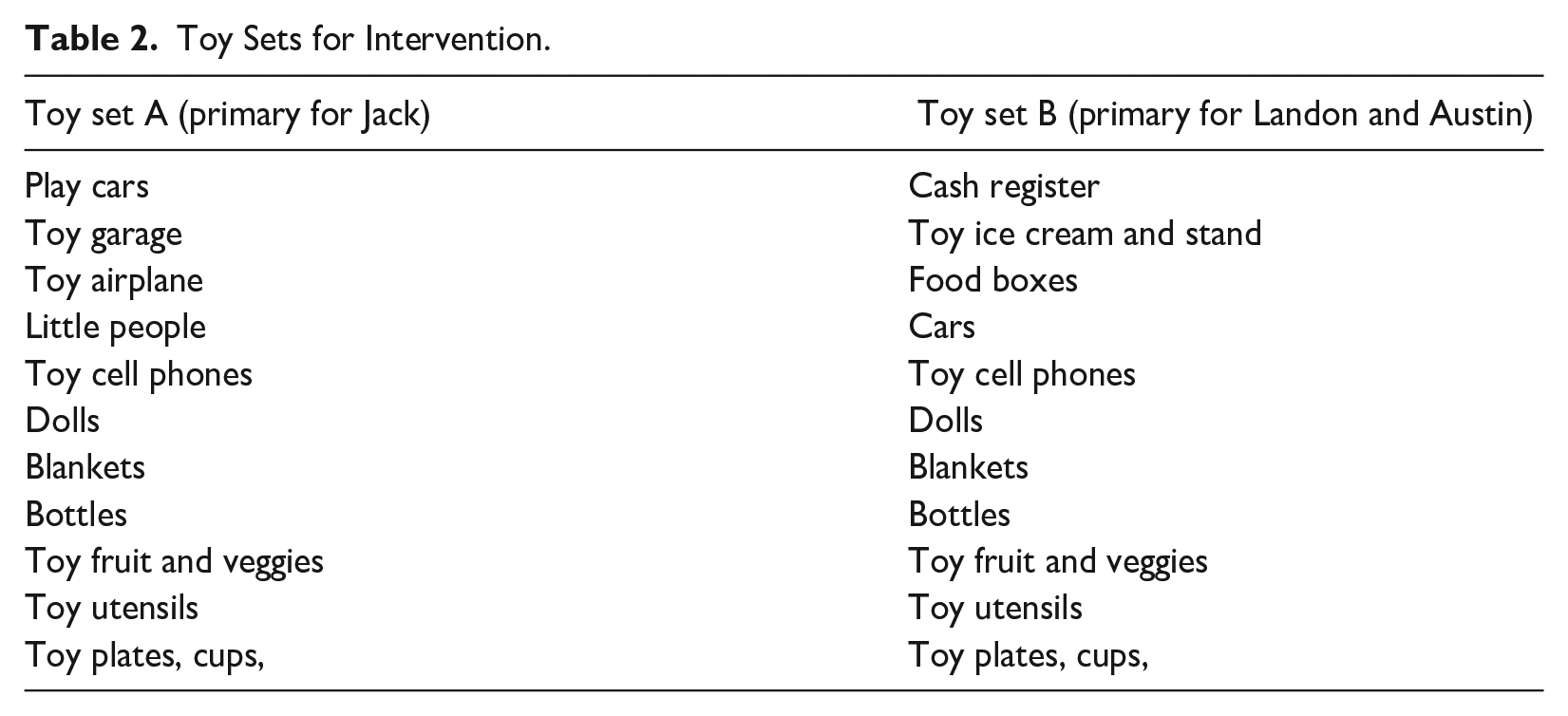
Two toy sets were used during study sessions; the sets were designed to be equitable in form and function. The primary play set for Jack included a car garage, airplane, and Little People™ figures; the primary play set for Landon and Austin included a cash register, ice cream toys, canned goods, and boxes of groceries. Cars, toy cell phones, dolls, blankets, bottles, fruits and vegetables, dishes, and utensils were available in both play sets. The generalization toy set used for Jack was the primary set used for Landon and Austin and vice versa (see Table 2).
Toy Sets for Intervention.
Experimental Design
We used a concurrent multiple probe single case design across participants to examine the functional relation between the intervention (i.e., the SLP intervention package) and individual play targets (Gast et al., 2018). We used visual analysis to analyze the trend, level, and variability within and across all conditions and the consistency of data, degree of overlap, and immediacy of change across conditions and tiers (Barton, Lloyd, et al., 2018). We randomly selected the first tier to receive the intervention after all three tiers demonstrated stable data and commenced intervention in the subsequent tiers in the same manner. We commenced maintenance within each tier when data were high and stable.
Dependent Variables and Data Collection
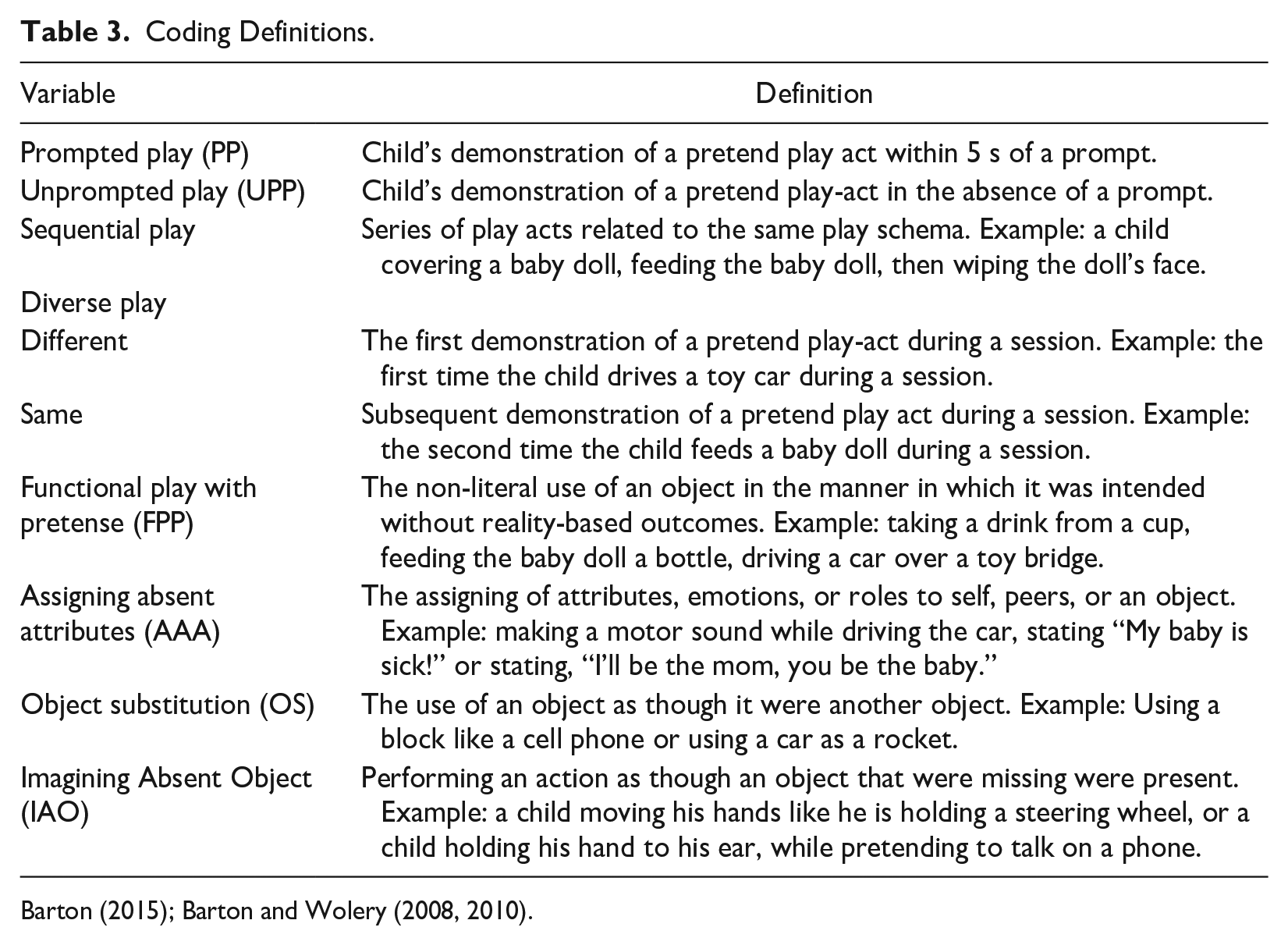
Play behaviors were adapted from Barton (2015); these are outlined in Table 3. We identified individualized unprompted pretend play (UPP) targets for each child based on baseline data. Play targets for both Jackson and Landon were the use of all types of UPP (functional pretend play [FPP]; assigning absent attributes (AAA); object substitution (OS); and imagining absent objects (IAO)) based on low levels of all play types. Austin’s baseline data were highly variable. His use of two specific types of pretend play remained relatively low (below 10) and stable throughout baseline: OS and IAO. Thus, the primary dependent variable for Austin was unprompted OS and IAO behaviors. We video-recorded all sessions and used ProcoderDV to code all dependent variables using timed event recording (see Barton, 2015 for exact data collection and measurement procedures).
Coding Definitions.
Interobserver Agreement
IOA data were collected for 52% of all sessions. The percentage of IOA collected varied across participants, toy sets, and conditions. Table 4 lists the averages and percentage of IOA collected per participants, toy sets, and conditions. We used the point-by-point method to calculate IOA with a 3-s agreement window and the following formula: agreements divided by agreements plus disagreements (Ledford & Gast, 2018). The implementer served as the primary coder and coded all videos. The secondary coder was trained across all dependent variables and commenced coding once she achieved 80% IOA on three non-IOA student videos. Videos were randomly selected for IOA coding using an online random number generator.
Interobserver Agreement Across Children and Conditions.
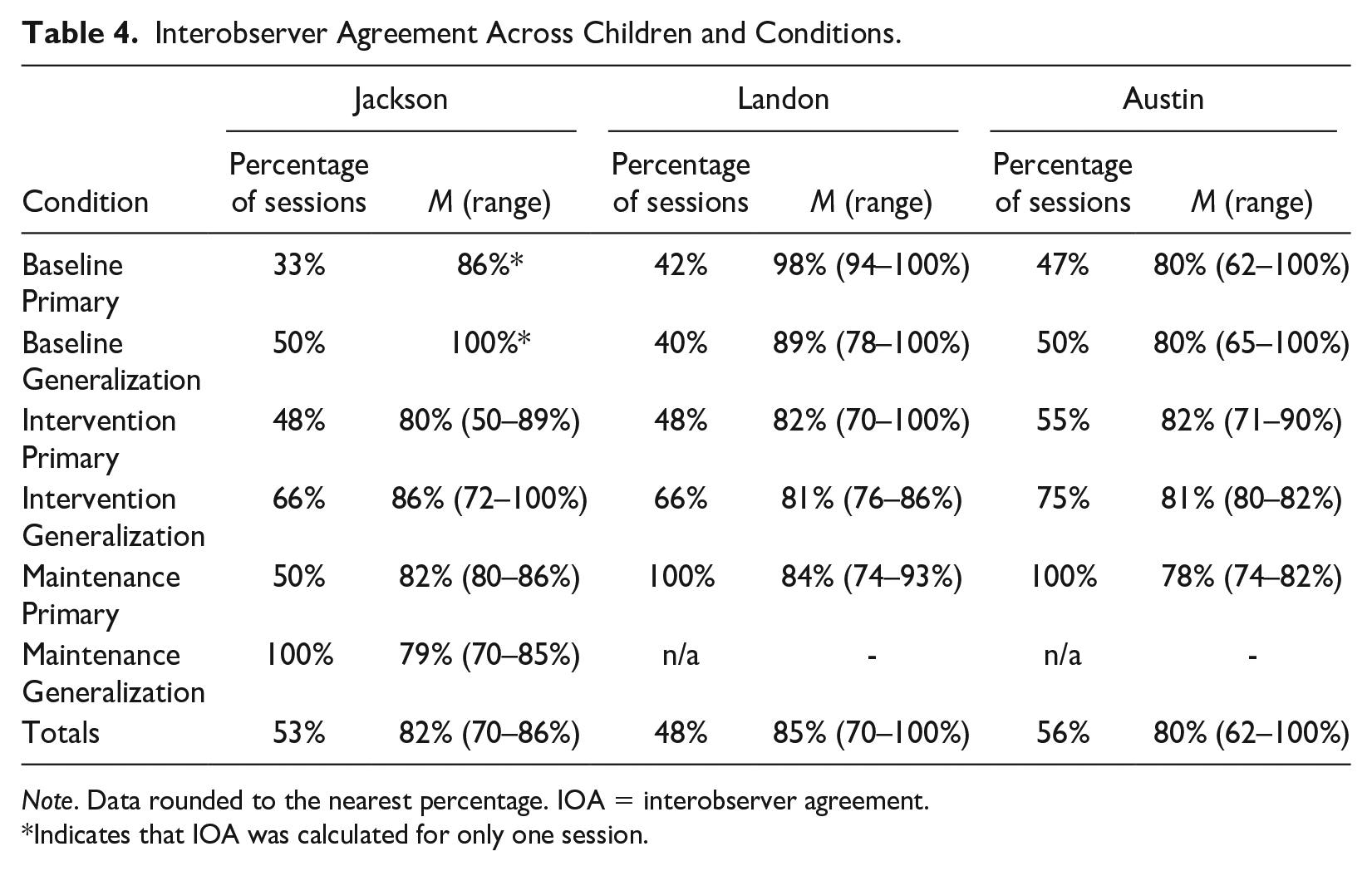
Note. Data rounded to the nearest percentage. IOA = interobserver agreement.
Indicates that IOA was calculated for only one session.
When IOA for a single session was lower than 80%, the secondary coder was asked via email to review the IOA coding manual and review her coding. This occurred for 63% of the IOA sessions throughout the course of the study. All coding disagreements were resolved via a consensus discussion, and final data reflect the consensus agreements. The total IOA across all conditions was 82% for Jackson, 85% for Landon, and 80% for Austin. To monitor for systematic coding errors, bias, and drift, both the IOA and the primary coder’s data were continually graphed and monitored. Based on visual analysis of these data, drift and bias were unlikely.
Procedures
Baseline
The implementer sat next to the target child and their peer and placed the toys on the floor in between the children. Peers were included in the session to provide a natural play context. Peers and the target child were shown the toys and invited to play at the beginning of each session. The children assented to participation when they entered the play area following the invitation to play. Peers were not asked to model or prompt play for the target child. The implementer said, “Let’s play!” at the beginning of each session and used verbal mapping, and contingently imitated the target child’s play. Verbal mapping refers to when the interventionist models the language that the child might use to verbally describe their play actions. Similarly, contingent imitation refers to when the interventionist imitates the child’s play acts, using similar objects or toys (Barton & Pokorski, 2018). The implementer also briefly answered questions from the children, redirected challenging behavior, and responded to social initiations.
Intervention
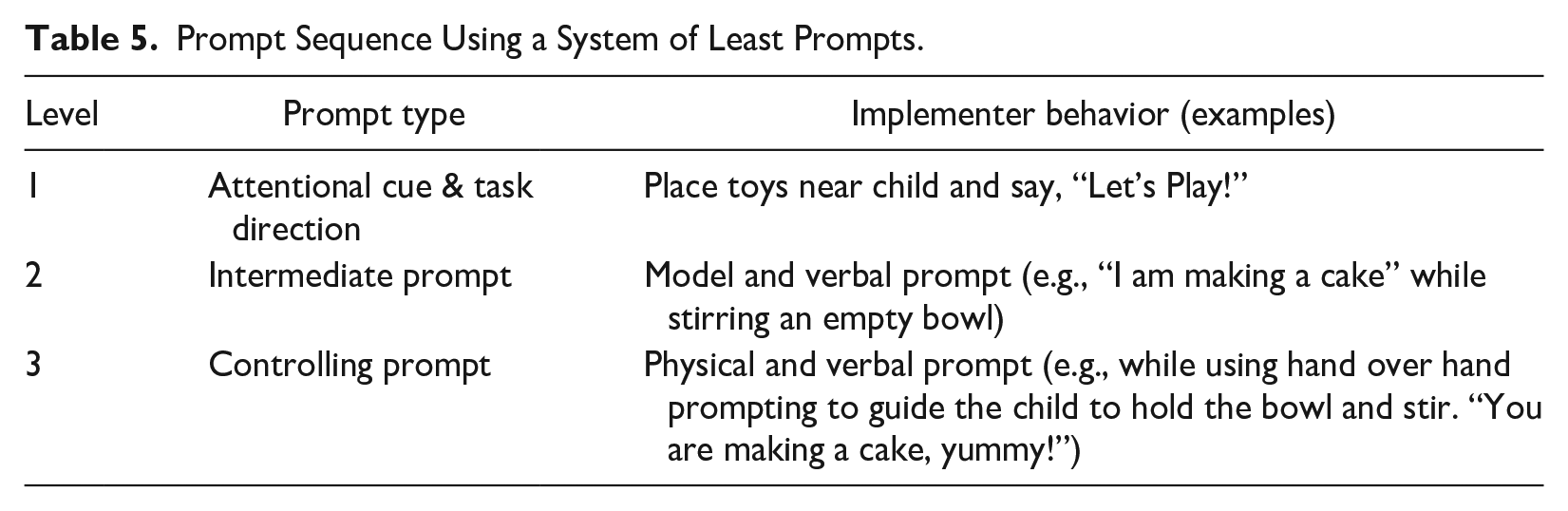
The procedures during intervention sessions were the same as the baseline except for the use of the SLP intervention package (see Table 5; Ledford et al., 2019). We initiated the SLP hierarchy with a model, a verbal prompt at the intermediate level, and full physical prompting as the controlling prompt. If the target child did not demonstrate an unprompted use of their individual target play behavior for more than 30 s—during which the implementer was using contingent imitation and verbal mapping—the implementer provided a model prompt and narrated her play, “I am driving a car.” If the child did not imitate the model within 20 s, the implementer provided the controlling prompt, hand-over-hand assistance. However, when a physical prompt was provided to Austin, he turned away or moved out of reach of the interventionist. Thus, for Austin only, the interventionist used the verbal directive, “You try!” as the controlling prompt. In accordance with the SLP prompting hierarchy, when the child demonstrated the target play-act, at any time during the prompting process, the child was given immediate and specific verbal praise, stating what the child had done, “You drove the car! That is a fast car!” When a child initiated an unprompted play-act but required assistance to physically complete the act, the implementer stated, “Let me help you!” These acts rarely occurred but were coded as unprompted because the child did not require prompting to initiate the act. For example, when a child tried to cut through the Velcro on a piece of fruit with a knife, the interventionist physically assisted the participant to push the knife through the Velcro on the fruit.
Prompt Sequence Using a System of Least Prompts.
Individual Adaptations
Due to Jack’s variable levels of responding and considerable overlap with the baseline, an edible reinforcer was used along with the verbal reinforcement after Session 21 on a fixed ratio-1 (FR-1) schedule. The choice for the use of an edible as a reinforcer was made after consulting with Jack’s classroom teacher about reinforcers that could be easily incorporated within the play session. As frequencies of play increased and stabilized, the edible reinforcement schedule was thinned to a variable ratio-3 (VR-3) schedule and eventually thinned too just after each session was completed.
After consulting with Landon’s teacher regarding his preferred reinforcers, an edible reinforcer was added to Landon’s verbal reinforcement for UPP. Due to lower-than-expected levels of responding, an edible reinforcer was introduced for Landon on an FR-1 schedule during Session 39, and during Session 45, visuals of five play acts and cookies were shown to Landon at the beginning of each session. The visuals included a picture of a child pretending to lick a toy ice cream cone, a child pretending to drive a toy car, a child pretending to stir an empty toy bowl, a child pretending to cut a toy piece of fruit, and a child pretending to feed a baby doll with a toy bottle. The implementer stated, “First play, then cookie,” and briefly described the play-act in each visual. She then placed each visual outside of the play area, but within the child’s visual field for the remainder of the sessions. We thinned the frequency of edible reinforcement to a VR-3 schedule at Session 50 for Landon which resulted in a decrease of UPP. During Session 57, an FR-1 schedule of edible reinforcement was reintroduced and continued through the end of the intervention condition.
Generalization and Maintenance
Generalization and maintenance sessions were identical to baseline sessions. Generalization toy sets were used during generalization sessions.
Procedural Fidelity
A graduate student coded 42% of sessions for PF across participants, play sets, and study conditions. These were randomly selected using an online random number generator. The implementer’s adherence to all study procedures was coded. The PF coder used timed event recording to code the implementation (or lack) of experimental procedures across all participants and conditions. PF results indicate that the experimental procedures were implemented with high fidelity across participants and conditions. Two types of fidelity errors occurred: (a) the initial invitation to play was not always captured on video and (b) the implementer occasionally provided verbal praise related to play behaviors during generalization and maintenance sessions selected for PF. PF data are shown in Table 6.
Procedural Fidelity Across Children and Condition.
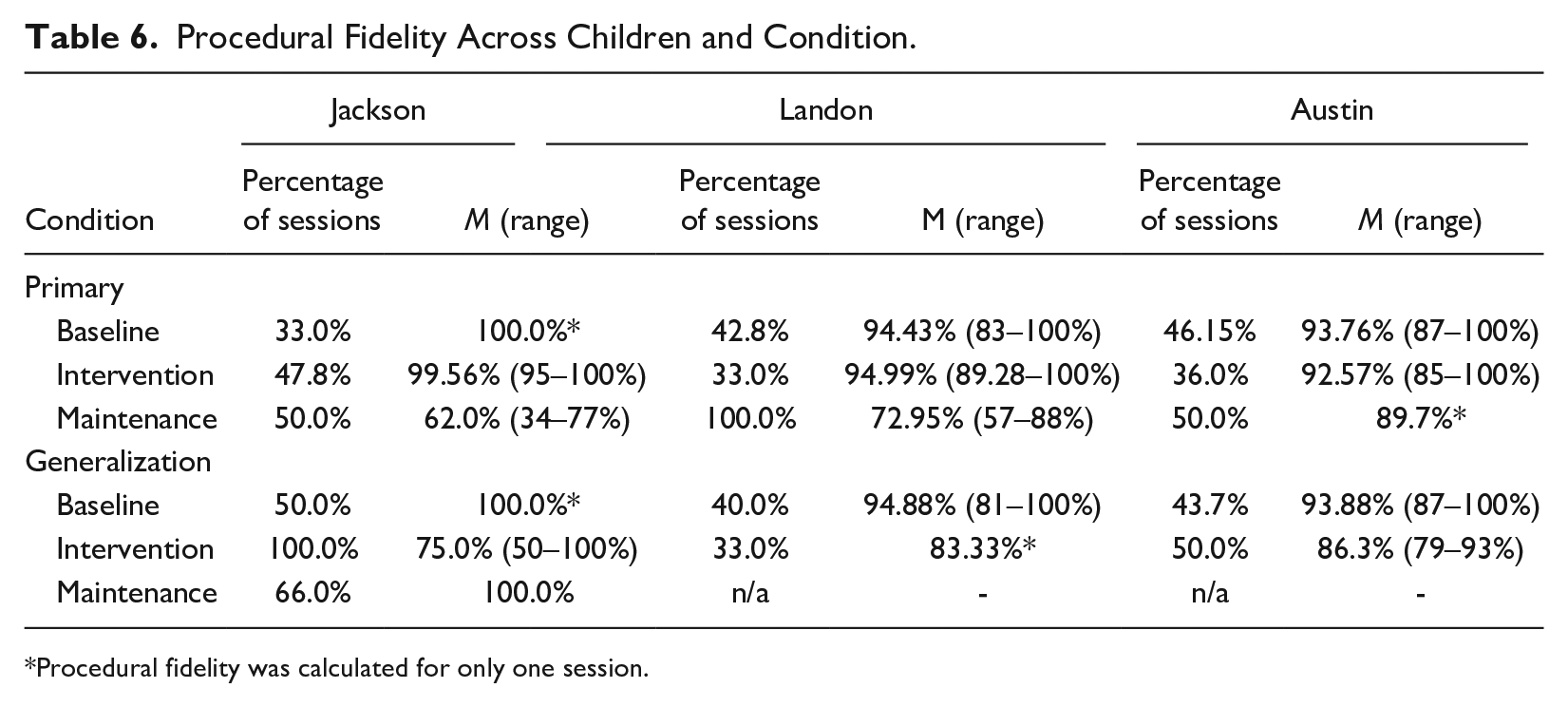
Procedural fidelity was calculated for only one session.
Social Validity
Social validity data were collected in two ways. First, teachers and parents were asked to complete a survey at the beginning and end of the intervention to rate their perception of the effects of the intervention on the targeted child’s play behavior. Second, classroom observations (i.e., during regular classroom free play with all peers and classroom toys) were completed prior to the study and at the conclusion of the study and compared over time to evaluate the outcomes.
Results
Pretend Play
We identified individualized target UPP for each child based on baseline data. Overall, we identified a functional relation between the use of the SLP intervention package and levels of target UPP behaviors (see Figure 1).
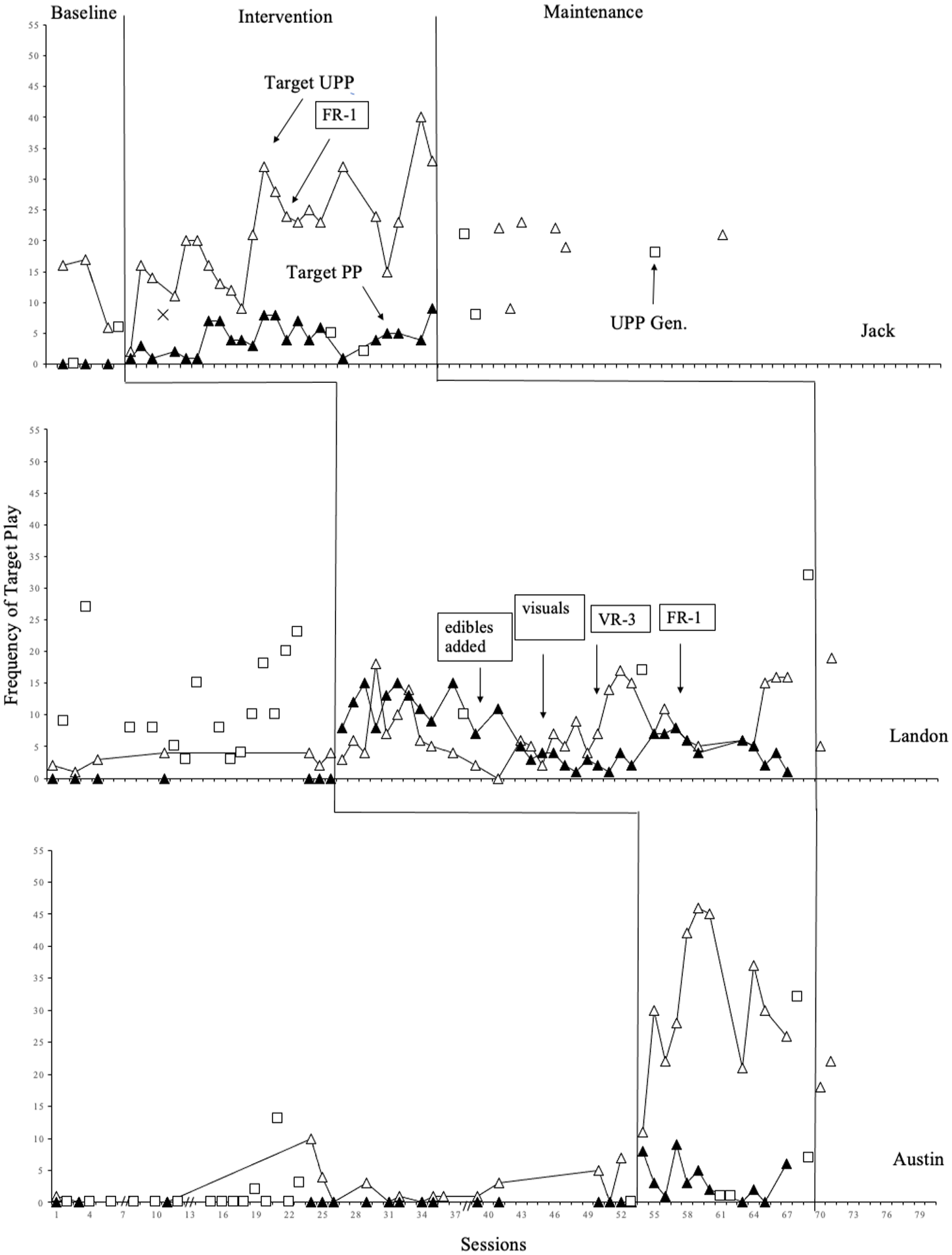
Prompted Play (PP) and Unprompted Pretend Play (UPP) Across Participants and Conditions.
Jack
During baseline, Jack’s target UPP was initially stable and ranged from 16 to 17 per session and then decreased to six acts for one session. Upon introduction of the intervention, his target UPP acts dropped to one. From the second intervention session through the 21st session, his target UPP increased and was highly variable, ranging from 9 to 32 target UPP per session; there also was considerable overlap (39%) with baseline data. Due to the high variability and considerable overlap, observed in his play, an edible reinforcer was introduced. His target UPP stabilized after the edible reinforcer was introduced and levels remained well above baseline levels for nine of the final 10 sessions. The final three data points in the intervention ranged from 23 to 40 target UPP. Target UPP levels during maintenance probes were consistent with target UPP levels achieved during the intervention, although data for one session (16%) overlapped with data from the baseline. Target UPP levels during generalization were similar to levels during primary sessions.
Landon
During baseline, Landon’s target UPP was low and stable, ranging from 0 to 4 per session. After the first intervention session, data were highly variable, ranging from 4 to 18 target UPP, and had a decreasing trend. Data remained low and variable after Session 39 when an edible reinforcement was introduced. Based on lower-than-expected levels of target UPP and significant overlap with baseline (40%; Session 45), first-then visuals were added. After this adaptation, his levels increased for eight sessions. We thinned the frequency of edible reinforcement to a VR-3 schedule at Session 50, which resulted in a decrease in target UPP. We returned to an FR-1 schedule of reinforcement at Session 57 and by Session 65, reached 15 target UPP and remained at or above this level for the remaining three sessions. Data overlapped with the baseline in 21% of intervention sessions. One session overlapped with the baseline after the first-then visual was introduced. Due to the end of the school year, only two sessions were conducted during maintenance. Target UPP data were 5 and 19, respectively, remaining above baseline levels.
Austin
During baseline Austin’s target UPP was low and variable, ranging from 0 to 10 per session. When SLP was introduced, levels increased immediately to 11 and continued to increase. Levels remained high and variable (range = 11–46) and did not overlap with baseline data. Target UPP remained above prompted play through the end of the study. Only two sessions were conducted during maintenance and UPP data were 18 and 22, respectively.
Generalization
Jack’s target UPP data during baseline were low and stable ranging from 1 to 6 per session. During the intervention, levels increased and ranged from 2 to 8 target UPP per session. During Session 11, the implementer provided prompting in error. Landon’s target UPP data ranged from 3 to 27 during baseline and from 10 to 32 during the intervention. Generalization probes were not collected during maintenance due to the end of the school year. Austin’s target UPP data ranged from 0 to 13 demonstrations per session. During the intervention, target UPP ranged from 1 to 32 per session. Generalization data were not collected for Austin during maintenance due to the end of the school year.
Unprompted Different Play
Data on the child’s use of unprompted different play were collected across participants and all study conditions. No functional relation was identified between the use of the SLP intervention package to teach pretend play and the unprompted use of differentiated types of pretend play. Increases in unprompted different play after intervention occurred for two of the three participants although data remained variable. During baseline, Jack’s use of different target UPP ranged from 5 to 7 per session. After the intervention, Jack’s unprompted different play remained highly variable and ranged from 2 to 27 per session. However, levels of unprompted different play overlapped with a baseline for 22% of intervention sessions and 33% of maintenance sessions. During baseline, Landon’s use of unprompted different play was low and stable ranging from 0 to 3 per session. After intervention began, Landon’s unprompted different play remained low and stable and had considerable overlap (48%) with the baseline. A slightly increasing trend occurred for the final 3 sessions of intervention. The variability and overlap limit conclusions regarding behavior change. During baseline, Austin’s unprompted different play was highly variable, ranging from 2 to 41. Data remained variable after the intervention began and ranged from 14 to 51 unprompted different play and had considerable overlap (90%) with baseline UPD data (see Figure 2).
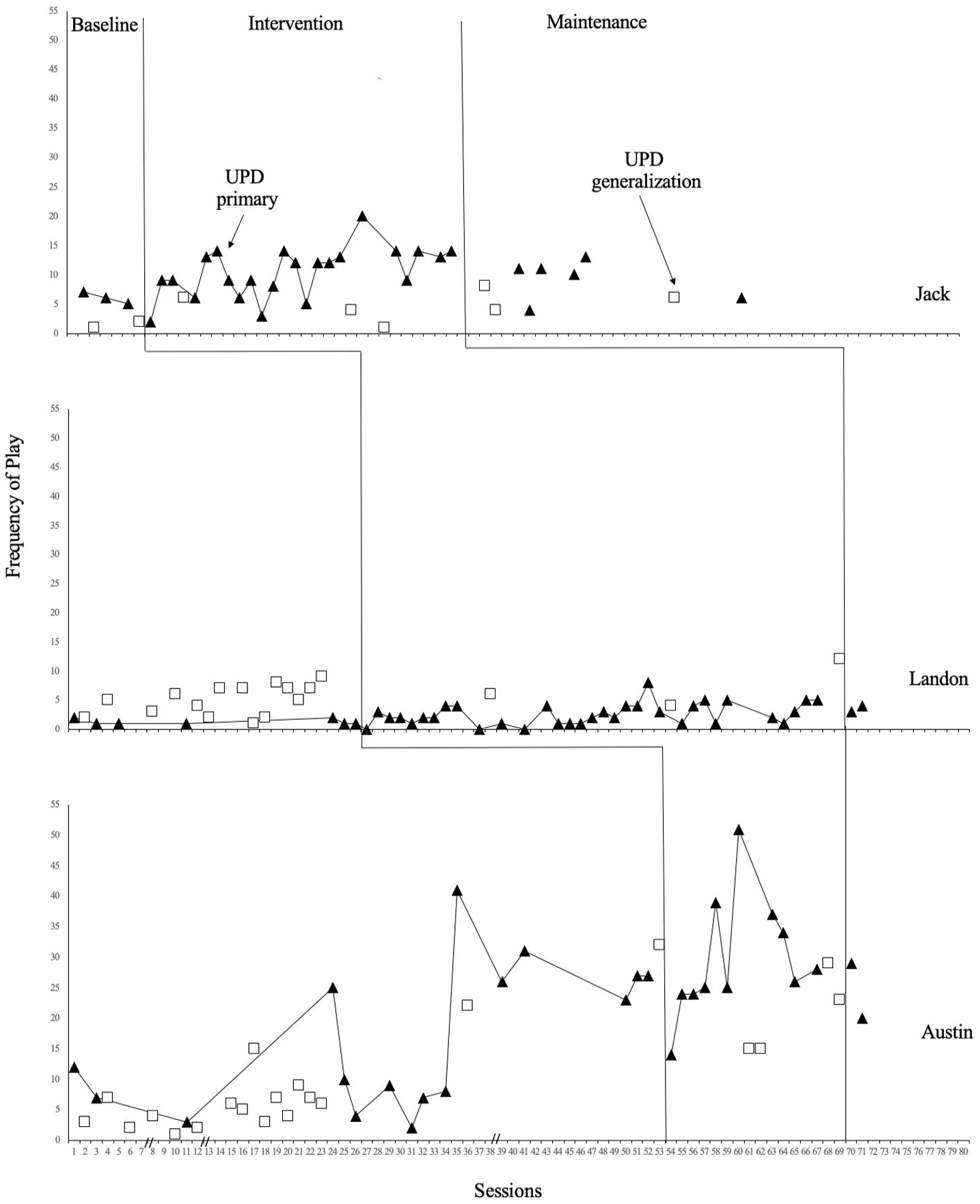
Unprompted Different Play Across Participants and Conditions.
Social Validity
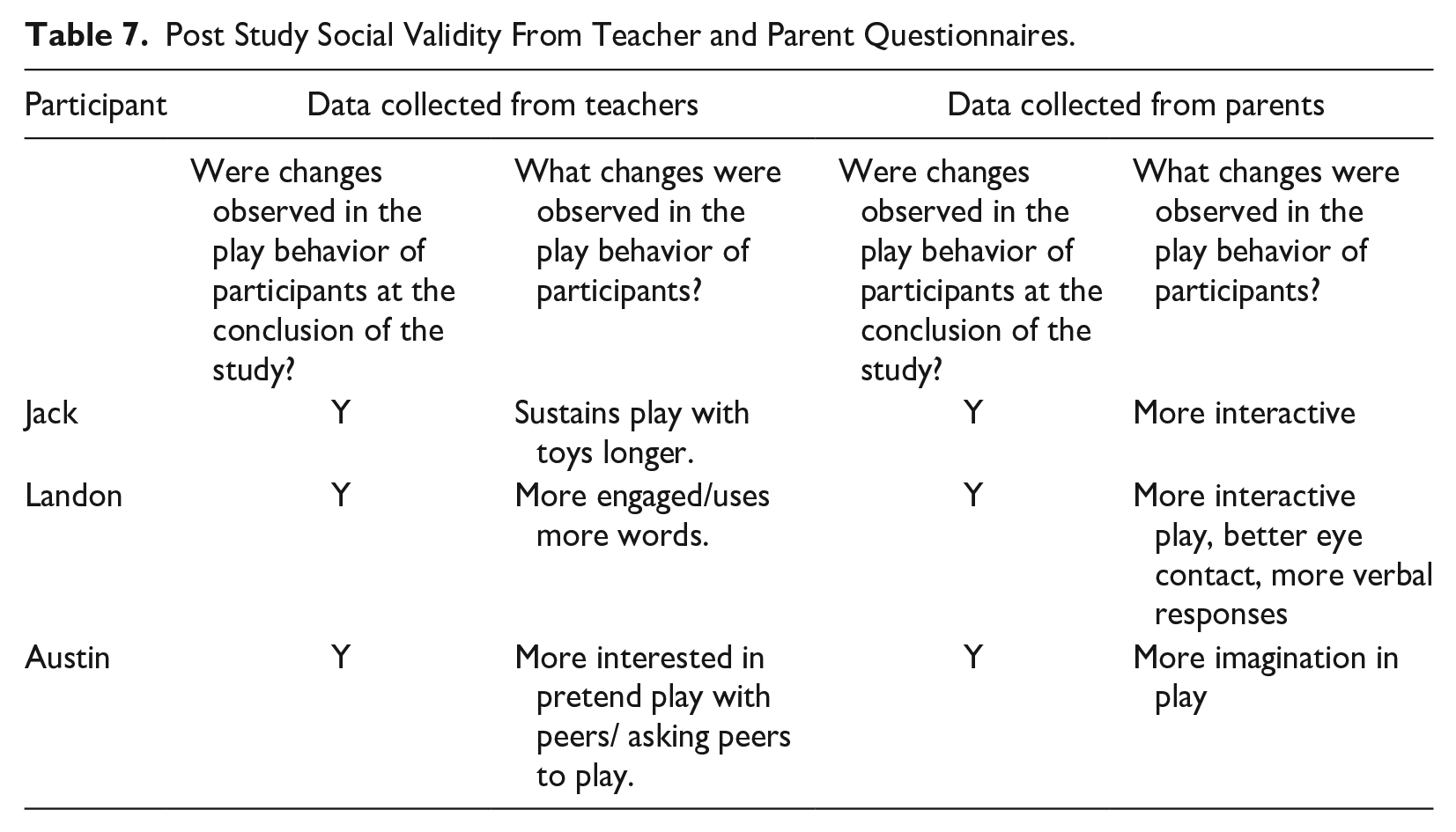
Data collected from pre and post-study questionnaires indicated that parents observed positive changes in their child’s play (See Table 7). At the conclusion of the study, two parents reported that their child’s play was more interactive, and one parent reported that her child’s play was more imaginative. Similarly, teachers reported the following changes: children played longer with toys, children were more engaged in play and more verbal, and children were more willing to participate in pretend play and to invite others to play. Following the intervention, all children demonstrated an increased frequency of target UPP during free play observations in the participants’ classrooms completed at the conclusion of the study (see Table 1).
Post Study Social Validity From Teacher and Parent Questionnaires.
Discussion
The SLP intervention package was effective for teaching individual pretend play targets to three children with disabilities in a context with a peer. These findings support previous research in that SLP is effective for teaching play and extend research by showing play targets can be effectively taught in small group contexts.
Play Diversity and Generalization
Increases in unprompted different play acts were observed during the intervention condition for two of the three participants. These findings support previous research (Barton, 2015; Barton & Wolery, 2010; Lifter et al., 2005; Qiu et al., 2019) in that the SLP intervention package was related to increases in diversity of play for some children (Barton et al., 2019). In their systematic literature review Barton and colleagues (2020) reported that of the six identified studies that used SLP to teach pretend play, only two (Barton, 2015; Barton & Wolery, 2010) reported data regarding unprompted different play. The relative dearth of information related to the diversity of unprompted pretend play indicates a need to expand research in this area.
Our results also extended research by providing both generalization and maintenance data across all three children. Barton and colleagues (2020) reported that relatively few researchers measured the generalization and maintenance of play outcomes within studies with high quality and rigor. In our study, the children generalized target UPP across toy sets though similar toys were available across sets. However, due to time constraints, the collection of maintenance data was limited for two of the three participants. Additional research examining generalized and maintained play behaviors is warranted.
Intervention Adaptations and Fidelity
The three participants required idiosyncratic adaptations to the intervention package, which is consistent with previous research (Barton et al., 2019) and suggests interventions should be flexible enough to allow for planned individualization. We planned our toy sets to include toys to capture different play interests and appropriate for use across varied levels of play development. In our study, the unprompted play behavior observed varied across children. Jackson’s unprompted play most often centered around vehicle use and included functional pretense play and assigning absent attributes to the vehicle stating, “Oh, No! or Wee!” as the vehicle sped down a hill. Landon’s demonstration of unprompted play included feeding dolls and using functional pretense play. He did not assign attributes to the dolls, such as crying or being sick. Both Jackson and Landon played in close proximity to their peer but rarely interacted with their peer. As the study progressed, Austin’s demonstrations of unprompted play included more complex levels of pretense and peer interaction. He demonstrated pretend play that included imagining absent objects, object substitution, and assigning absent attributes. Austin’s interaction with his peer included their joint development of play schema. They acted as firemen, raced to emergencies, and put out fires with an imaginary hose, complete with sound effects.
In addition, we adapted our use of the SLP package to meet the individual needs of our three participants. For Jack and Landon, we provided an edible reinforcer along with verbal reinforcement for targeted pretend play. When initial attempts to thin Landon’s reinforcement schedule resulted in decreases in pretend play, we added “first-then” visuals that were placed in Landon’s visual field for the remainder of the session. Data suggest that the SLP intervention package was an efficient means to teach play skills to children with autism. However, children’s play itself is spontaneous and intrinsically motivating (Kasari et al., 2013; Movahedazarhouligh, 2018). It is important to note that although the use of this SLP intervention package resulted in increases in unprompted pretend play skill use across all participants, two of the three children required extrinsic reinforcement. Thus, additional research is warranted to determine how to increase the intrinsic value of play for children with autism.
Austin resisted the full physical controlling prompt typically used during SLP. Thus, we changed the controlling prompt used for Austin to a verbal prompt, “You try!” All changes were made based on individual data and resulted in increases in the targeted unprompted play behavior observed across participants. Research must continue to support the development of intervention packages for children with disabilities with heterogeneous needs and interests. Future research might include the use of a prompt assessment or caregiver interview to determine the types of prompting that the child may be likely to benefit from or readily accept. Additional research also should identify specific strategies for identifying individual play targets.
Following the Division for Early Childhood (DEC, 2014) recommended practices, we embedded the intervention within the classroom routines and designed the procedures to allow for individual adaptations to be added to the intervention package based upon the needs of the participants. As stated earlier, the adaptations added to the intervention for all three participants resulted in increased demonstrations of pretend play. While we adapted the intervention, we adhered to the active ingredients of intervention—the SLP hierarchy. Following the recommendations of Ledford and Wolery (2013), we measured fidelity broadly, across all participants and conditions and measured it precisely, using counts derived from direct observations. Thus, we were confident that although adaptations were made for all three participants, the systematic delivery of the SLP package was not compromised. Researchers should continue to examine procedural variations when using SLP to teach play to ensure participants experience improvements in target behaviors.
The intervention package was implemented with fidelity in a play context with two children. At times, all children required additional attention from the implementer: Prompts regarding their own willingness to play with the target participant or responses when they requested attention. Researchers have demonstrated that classroom teachers can implement SLP with ongoing coaching (Barton, 2015; Barton et al., 2013), but additional replications are needed in small group settings. Our findings support the utility of SLP during small groups to teach play; however, future replications with endogenous implementers are needed. The implementer in the current study was not endogenous to the child’s classrooms, which limits the ecological validity.
Social Validity
Social validity ratings and post-intervention observational data indicate that all three children used more play behaviors in their classrooms at the end of the study as compared with the beginning. These pre-post data are limited, and future replications should measure generalization to a classroom context throughout the intervention (Barton, 2015; Barton & Wolery, 2010). Parents and teachers reported that they perceived the outcomes of the intervention to be positive; although their perceptions were inherently biased given they were aware of the intervention and might be impacted by social desirability. Researchers should use masked raters to evaluate the social validity of future play intervention research.
Anecdotal observations indicated that changes to levels of social play were observed in one of the three participants across the duration of this study. We did not observe changes in social play and interactions with both younger children, which might be due to their age and current behavior repertoire. Future research is required to determine if pairing an older (more developed) peer model with a younger child yields greater development of target play skills.
Although we did not measure, we anecdotally noticed that as Austin’s use of pretend play increased his social engagement also increased. During baseline, Austin often narrated the behavior of the children around him and rarely engaged in spontaneous play. As his UPP increased, his narration decreased. By the end of the intervention, he often interacted with his peer spontaneously throughout the 8-min sessions. As Austin’s interactions increased, his peer included him in her play. As the study continued, their play became more reciprocal. Based on our observations, he shifted from primarily engaging in onlooker play to primarily engaging in a more complex type of social play—associative play (Parten, 1932). This change in the level of social play category should be examined in future research. Future research also is needed to determine the degree to which the development of pretend play skills in children with disabilities yields greater engagement with their peers and effectively leads to more complex social play.
Limitations
There are several limitations to this study. First, the lack of peer training must be addressed in future studies. Without formal peer training and the consequential lack of fidelity regarding peer support, it is difficult to determine the degree to which the peers in this study helped or hindered the intervention process. Furthermore, planning for the training of peers and the collection of fidelity data associated with the inclusion of peers will be essential to the development of future studies.
In addition, we did not collect data regarding the frequency of the types of pretend play acts prompted during the intervention. However, tracking the type of play prompted during the intervention may yield additional information regarding the possibility of a correlation between the types of play prompted and the unprompted pretend play later demonstrated by the children. Furthermore, there is the possibility that the differences in the toy sets, although minimal, influenced the frequency of unprompted play observed in children. This may be particularly apparent in Landon’s baseline data. His UPP when using the generalization play set is considerably higher than his UPP using the primary set during baseline. This could be due to the fact that the cash register, only present in his primary set, yielded high amounts of unprompted functional play or due to the fact that the car garage in the generalization set was conducive to unprompted pretend play. The form and function of play sets and the child’s toy preferences should continue to be important considerations for future studies.
In addition, the implementer’s invitation to play often was not caught video which impacted the reported procedural fidelity. In future studies, every effort should be made to record all experimental procedures. Similarly, IOA was close to minimum standards and fell below 80% for multiple variables—we believe this was due to the complexity of measuring play. Although visual analysis of IOA indicates that no systematic bias was detected, IOA scores below 80% weaken our confidence in the stability of our data. Future replications might use consensus coding or conduct IOA on 100% of the data.
Conclusion
We demonstrated that the SLP intervention package was an effective strategy to teach pretend play to young children with disabilities in a context with their peers, which is an important contribution to the play intervention research (Barton et al., 2020). Additional replications are needed to determine the best techniques to use to train peers and to assess and sustain implementation fidelity. Furthermore, continued research is needed to increase the ecological validity of this intervention package using classroom implementers.
Footnotes
Declaration of Conflicting Interests
The author(s) declared no potential conflicts of interest with respect to the research, authorship, and/or publication of this article.
Funding
The author(s) received no financial support for the research, authorship, and/or publication of this article.
