



Abstract
Mindfulness strategies can have a large impact on emotional regulation, emotional intelligence, and interpersonal relationships. Parents of children on the autism spectrum may experience greater stress, depression, and strained interpersonal relationships than those with typically developing children or those with children experiencing other developmental delays. The purpose of the current study was to evaluate the feasibility, acceptability, and initial effects of a virtual Mindful Self-Compassion workshop for parents of children on the autism spectrum and the impact on stress, self-compassion, parenting self-efficacy, and mindfulness. This pilot study used a mixed-method approach to test this hypothesis. Participants completed surveys before and after the brief workshop and participated in a 1-hr focus group within 1 week of completing the surveys. The findings indicate that a short, 3-day virtual workshop may be effective toward improving parents’ mindfulness and self-compassion. Parents reported feeling more mindful in their day-to-day life, more self-compassionate during difficult times, and more patient with themselves and other people in their family. A brief, virtual workshop may be effective for short-term improvements in outcomes for parents of children on the autism spectrum.
Keywords
Parenting a young child on the autism spectrum 1 frequently comes with its own unique set of challenges and stressors (Bluth et al., 2013). These families, more so than families of typically developing children, are often faced with economic, social, and psychological challenges including increased costs of health care and therapeutic interventions, and limited public family outings (Cappe et al., 2011; Zaidman-Zait et al., 2014). Parents of children on the autism spectrum tend to experience increases in stress, depression, and anxiety—all of which are also associated with child behavior problems related to being on the autism spectrum (Rezendes & Scarpa, 2011). Research shows that self-blame in parents of children with disabilities is closely linked to increased stress levels, depression, helplessness, lower perceived competence, and self-esteem (Jayasekera, 2016).
Mindfulness includes learning to give attention to the present moment in a way that one can fully experience and question difficult thoughts, emotions, and pain, but without judgment (Kabat-Zinn, 2003). This brings in the practice of acceptance, which can help manage everyday stressors of life immensely. Mindfulness can come in many different forms and can be practiced for many different reasons. While there is not an exhaustive list of mindfulness practices or skills to master, there are several mindfulness practices and organizations, with some being tailored to the general population and some tailored to groups of people with specific needs.
Using mindfulness to address parental coping often results in reduced stress, increased awareness, and improved ability to respond to emotional distress for parents of children on the autism spectrum (Neff & Faso, 2015). Furthermore, self-compassion is frequently associated with increased life satisfaction, hope, well-being, goal reengagement, and a decrease in stress, depression, and anxiety. For parents of children on the autism spectrum, mindful parenting may mediate the relationship between child behavior problems and depression, anxiety, and stress in mothers (Hartley et al., 2019). While challenging behaviors are not a core diagnostic feature of autism, they are common (Gadow et al., 2004), and challenging behaviors are often one of the first concerns reported by parents before a diagnosis (Guinchat et al., 2012). Mindful parenting interventions have been linked to a decrease in maladaptive behavior in the child on the autism spectrum (Singh et al., 2006), and this result is bolstered by positive behavior support (Singh et al., 2014). Thus, the impact of mindfulness and self-compassion may extend beyond parent outcomes to their children on the autism spectrum.
A recent meta-analysis identified the need for targeted parent support interventions (MacKenzie & Eack, 2022). While current interventions designed to improve parent outcomes for parents of children on the autism spectrum may teach mindfulness, none of the studies in this meta-analysis measured mindfulness or self-compassion as study outcomes. This study highlighted the important need for the development of targeted parent support interventions. A brief and virtually delivered Mindful Self-Compassion (MSC) workshop may be particularly important for parents of children on the autism spectrum who often carry a high level of demand between involvement in treatment, advocating for, and caring for their children, and the weight of this burden is particularly related to parenting self-efficacy (Kurzrok et al., 2021).
The purpose of this study was to take a first step toward addressing this research gap and determine whether a brief, targeted, virtual MSC workshop could be feasible, be acceptable, and demonstrate initial effects. We addressed this in the following research questions:
We hypothesized as follows:
Method
The study design included a mixed-method pre–post evaluation with focus groups to understand parents’ beliefs and motivation for practicing mindfulness. This study was approved by the university Institutional Review Board, and participant informed consent was obtained. Data samples were collected through surveys designed and distributed in REDCap (Harris et al., 2009) at baseline and posttest time points. The surveys included a demographic survey, the Broad Autism Phenotype Questionnaire (BAPQ; Hurley et al., 2007), the Parenting Stress Index–Short Form (PSI; Abidin, 1990), the Early Intervention Parenting Self-Efficacy Scale (EIPSES; Guimond et al., 2008), the Freiburg Mindfulness Inventory (Walach et al., 2006), and the Self-Compassion Scale (SCS; Neff, 2003). Researchers collected qualitative data during focus groups after the final workshop.
The participants attended three 75-min virtual workshops, and a 1-hr-long focus group. Participants attended the workshops in two cohorts, offered 1 month apart. All participants who completed the surveys were given a US$20.00 gift card and a MSC workbook. The free workbook was provided so that participants could have access to the practices, homework, and skills set by the instructor as well as extra practices not included in the workshop (Table 2).
Participants
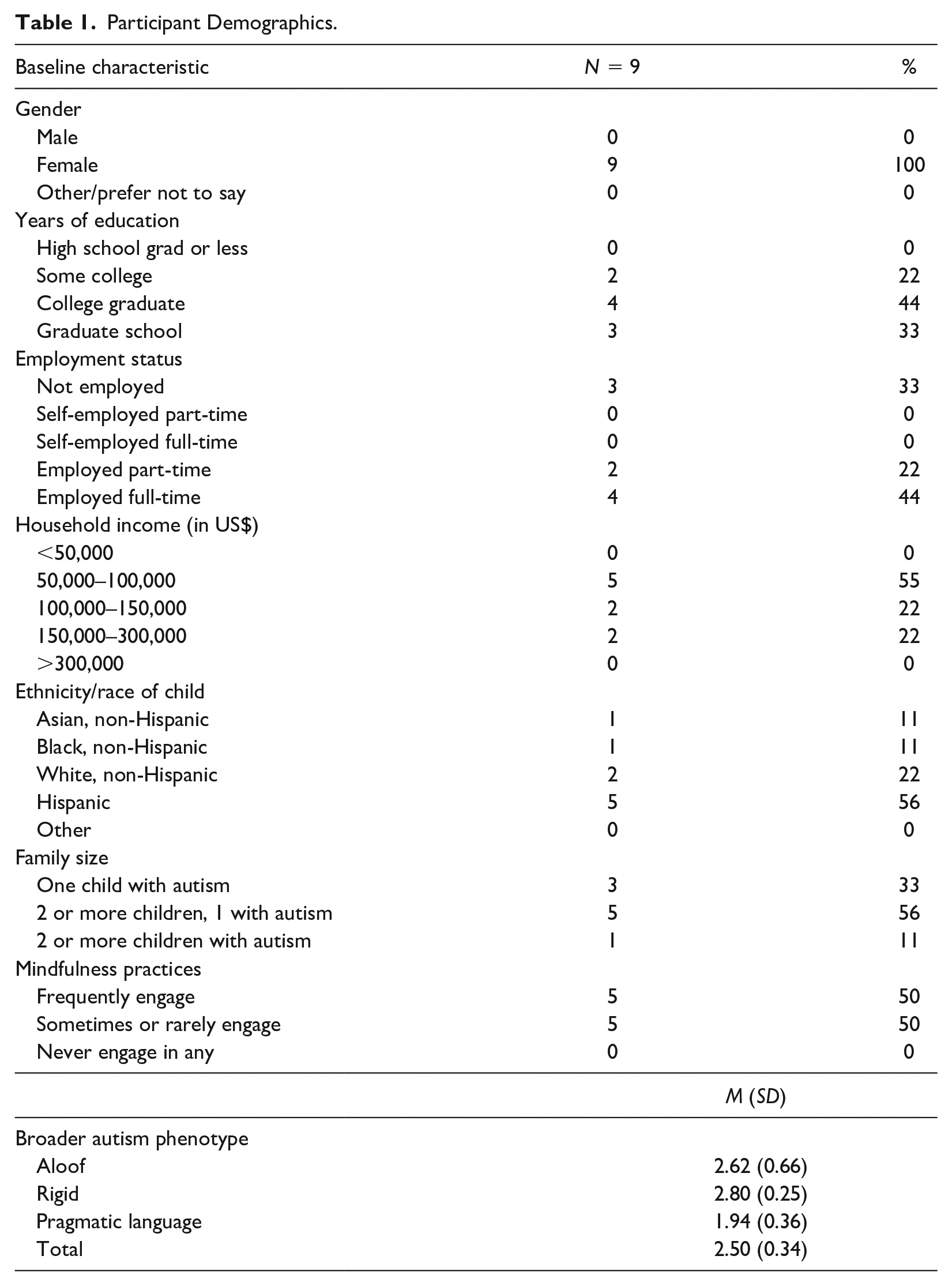
Researchers recruited and included self-appointed primary caregivers in families with at least one young child on the autism spectrum (8 years or younger). The participants were recruited through several autism-focused organizations and research labs in central Texas. Ten participants consented to participate in this study: seven participants in the first workshop and three participants in the second. One participant discontinued participation early in the study and is removed from all analyses. Another participant participated in the full intervention and focus group but did not complete the final surveys. This participant is excluded only from the outcome analyses. Mothers aged 34 to 54 years old participated in the study. One participant indicated a chronic mental health diagnosis. Children of the participants who were diagnosed with autism ranged from 3 to 8 years old. Seven mothers reported participating in their child’s interventions. Participants reported engagement in mindful practices: yoga, prayer, attending house of worship, meditation, exercise, leisure reading, alone time, deep breathing, body scans, journaling, self-care, mindful eating, and active practice in self-compassion. Half of the parents reported practicing at least one mindfulness practice frequently, and the remaining parents reported some or rare practices of at least one mindfulness practice (Table 1).
Participant Demographics.
Measures
Broad Autism Phenotype Questionnaire
The broad autism phenotype is a set of personality and language characteristics that reflect the phenotypic expression of autism in nonautistic relatives of people with autism. These characteristics are milder yet qualitatively similar to certain defining features of autism. The BAPQ (Hurley et al., 2007) provides a cut-off score indicating that a caregiver does or does not nominate a set of personality characteristics that reflect the phenotypic expression of autism. This measure has strong internal consistency (Cronbach’s α = .95), and moderate sensitivity (67%) and specificity (63%) when used as a self-report measure (Hurley et al., 2007).
Participants, for the most part, had average scores in the BAPQ. Participants had a mean and standard deviation of M = 2.50 (SD = 0.34; Table 1). There was one parent who was over the cut point for positive BAPQ status and one other parent who was close to the cut point for positive BAPQ status (Sasson et al., 2013).
Parenting Stress Index–Short Form
The PSI (Parenting Stress Index, 4th Edition Short Form) is a questionnaire designed to identify at-risk problem areas in parents’ behavior and was administered at baseline and posttest (Abidin, 1990). The PSI was scored using the subscales proposed for parents of children on the autism spectrum (Zaidman-Zait et al., 2010). The proposed subscales include General Distress, Parenting Distress, Rewards Parent, Child Demanding, Difficult Child, and Comparative Expectations. This scoring method demonstrates strong interitem reliability (α = .79–.86) and large and significant correlations with other measures of parenting stress (Zaidman-Zait et al, 2010).
Early Intervention Parenting Self-Efficacy Scale
The EIPSES was used to measure the participants’ confidence in their ability to successfully raise their child on the autism spectrum. This questionnaire has two factors: parental satisfaction, or the quality of affect associated with parenting, and efficacy, or the degree to which a parent feels competent and confident in handling child problems. This scale was administered at baseline and posttest to measure the participants’ self-report of confidence in their ability to successfully raise their child (Guimond et al., 2008). The EIPSES has strong construct validity and internal consistency (α = .80; Guimond et al., 2008). This includes two factors: parental satisfaction with parenting, and efficacy, degree to which a parent feels competent and confident in handling child problems.
Freiburg Mindfulness Inventory
The Freiburg Mindfulness Inventory (Walach et al., 2006) is a questionnaire for self-reported mindfulness practice. The purpose of this survey is to characterize a person’s experience of mindfulness in a generalized context. Mindfulness includes learning to live in the moment and fully experiencing one’s thoughts, feelings, emotions, and pain in a less reactive, less overwhelming, and less judgmental way. Respondents report how frequently they practice 14 different mindfulness techniques on a 1 to 4 scale, and a total score is derived by summing the items. Higher scores indicate more frequent mindfulness practice. The 14 items in this measure are scored by adding up all items to get one summary score. The validation study shows that this measure is useful, valid, holistic, and reliable (α = .79–.89) when measuring mindfulness (Walach et al., 2006).
Self-Compassion Scale
The SCS assesses trait levels of self-compassion and represents the thoughts, emotions, and behaviors associated with various components of self-compassion (Neff, 2016). The components of self-compassion tap into different ways the respondents of this questionnaire emotionally respond to pain and failure with kindness or judgment, understanding their situation cognitively, and paying attention to suffering. The items are split into six categories: self-kindness, self-judgment, common humanity, isolation, mindfulness, and overidentification. There are 26 items in this measure. The scores of this scale are calculated by determining the mean of the item responses. This scale is reliable (α > .86) and has demonstrated strong predictive and convergent validity across multiple groups and is well aligned with the MSC intervention (Neff, 2016).
Intervention
The intervention included three workshops, each 75-min long, once a week. The workshops were conducted virtually through video conferencing software, with the option to watch the workshop asynchronously at another time. Three parents opted to watch asynchronously for at least one of the three sessions. A certified MSC coach led the workshops and created an introductory curriculum to maximize the information given to the participants. The introductory curriculum included important beginner lessons of MSC, whereas a full MSC course includes hundreds of skills and practices for mindfulness and self-compassion. The brief format was identified by the expert MSC coach as the best first attempt at introducing this material to parents given the pandemic and parent availability for virtual sessions. Each session began with a meditation, followed by a brief exercise, instruction in a MSC technique, and closing included a poem and home practice assignment (Table 2).
Workshop Curriculum Overview.
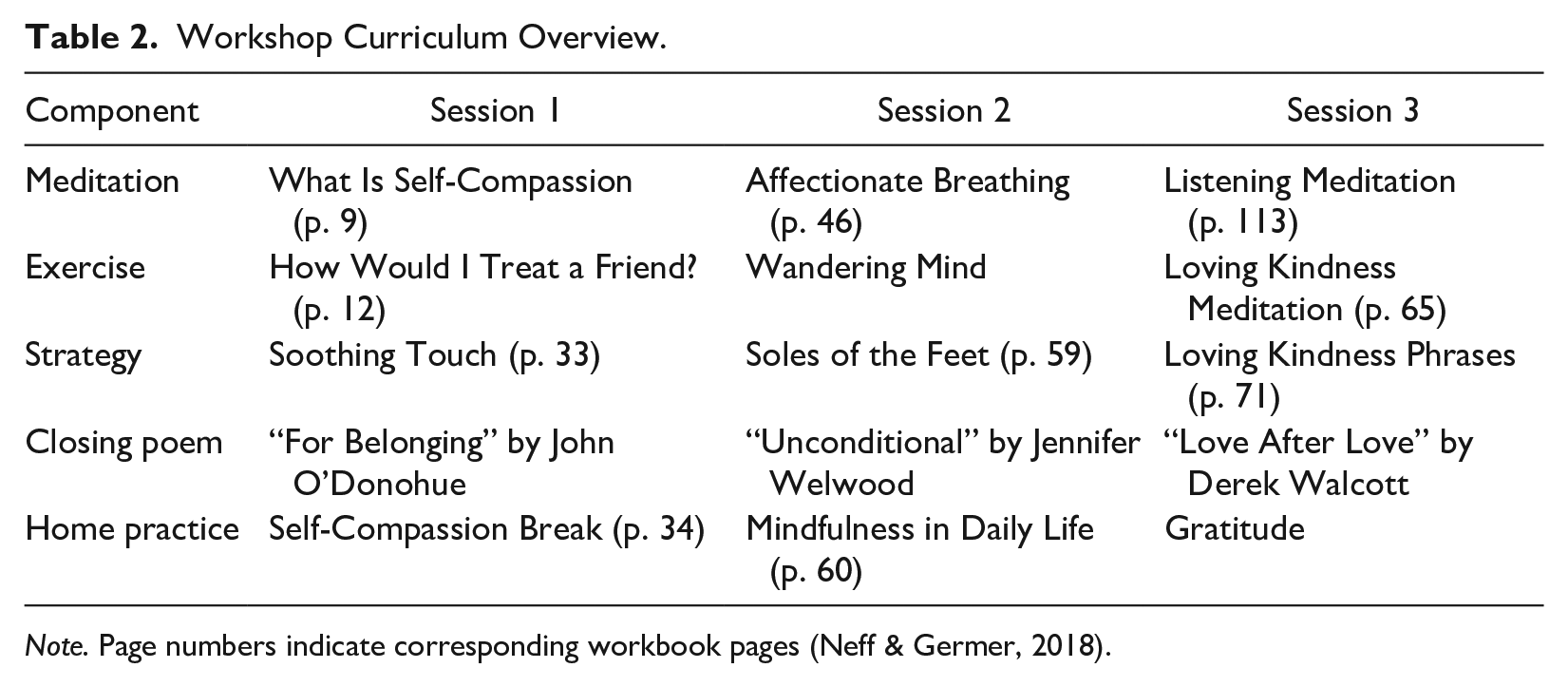
Note. Page numbers indicate corresponding workbook pages (Neff & Germer, 2018).
Focus Groups
Two 1-hr virtual focus groups, or an interview for one participant who could not participate during the live focus group, was hosted 1 week following the final workshops. The first author led all focus group sessions and the interview. The video conferencing software recorded and automatically transcribed the sessions. The first author verified the transcripts and checked for accuracy. During brief instances of poor audio quality, written notes were used as a supplement. The second author verified all final transcripts for accuracy. The first author identified potential themes, and the second author verified all codebook items before themes were created.
The focus group questions were formulated to answer our hypotheses without leading the respondent to the answer. The group began with an introduction and guidelines, including encouraging participants to answer with honesty and respect to one another, even if they did not agree with another’s point of view. First, parents were asked about their children and their reasons for learning mindfulness techniques. Second, parents were asked about barriers to learning mindfulness for parents of children on the autism spectrum. Third, parents were asked about specific mindfulness and self-compassion techniques that were learned, and the challenges and benefits of meeting virtually. At the conclusion, the researchers conducted a content check to conclude the focus group.
Feasibility and Acceptability
Intervention delivery feasibility was assessed using three measures. Parent attrition and engagement with the virtual intervention was evaluated by calculating the percent of participants who completed all sessions offered. Second, feasibility was discussed with the parents in the focus group to highlight barriers and strengths of the model. Acceptability of the intervention procedures were also assessed during the focus groups. Third, the researchers interviewed the interventionist about the barriers and strengths of the brief virtual workshop model.
Analysis
Pre–posttest results were analyzed using a two-tailed within-subjects paired t test. The research team coded focus group transcripts for themes by both authors using a thematic analysis of qualitative content data approach (Braun & Clarke, 2006). After initial review, both authors separately reviewed the responses for themes. The first author summarized these identified themes, and a thematic map was proposed. The authors reviewed each statement to ensure all responses were represented in the final themes.
Results
Feasibility
Of the 10 participants initially included, nine participants continued through all of the workshops (attrition = 10%). The participant who discontinued anecdotally reported the meeting time was inconvenient. Attendance was high (78%–89% of participants attended each session), and the participants who did not attend synchronously (three participants) reported watching the missed sessions in full between sessions. The recording software confirmed the number of downloads was consistent with this self-report. During the poststudy interview with the MSC interventionist, two barriers to feasibility were identified: (a) the participant chat feature not functioning during the sessions may have decreased participation during discussions, and (b) sharing tables and resources from the handbook clearly with the parents was difficult in a virtual format.
Quantitative Results
The results from the SCS and the Mindfulness scale demonstrate changes from pre- to posttest (Table 3). The EIPSES meaningfully improved over the course of intervention. Interestingly, stress levels increased throughout the duration of the intervention.
Pretest and Posttest Data Summaries.
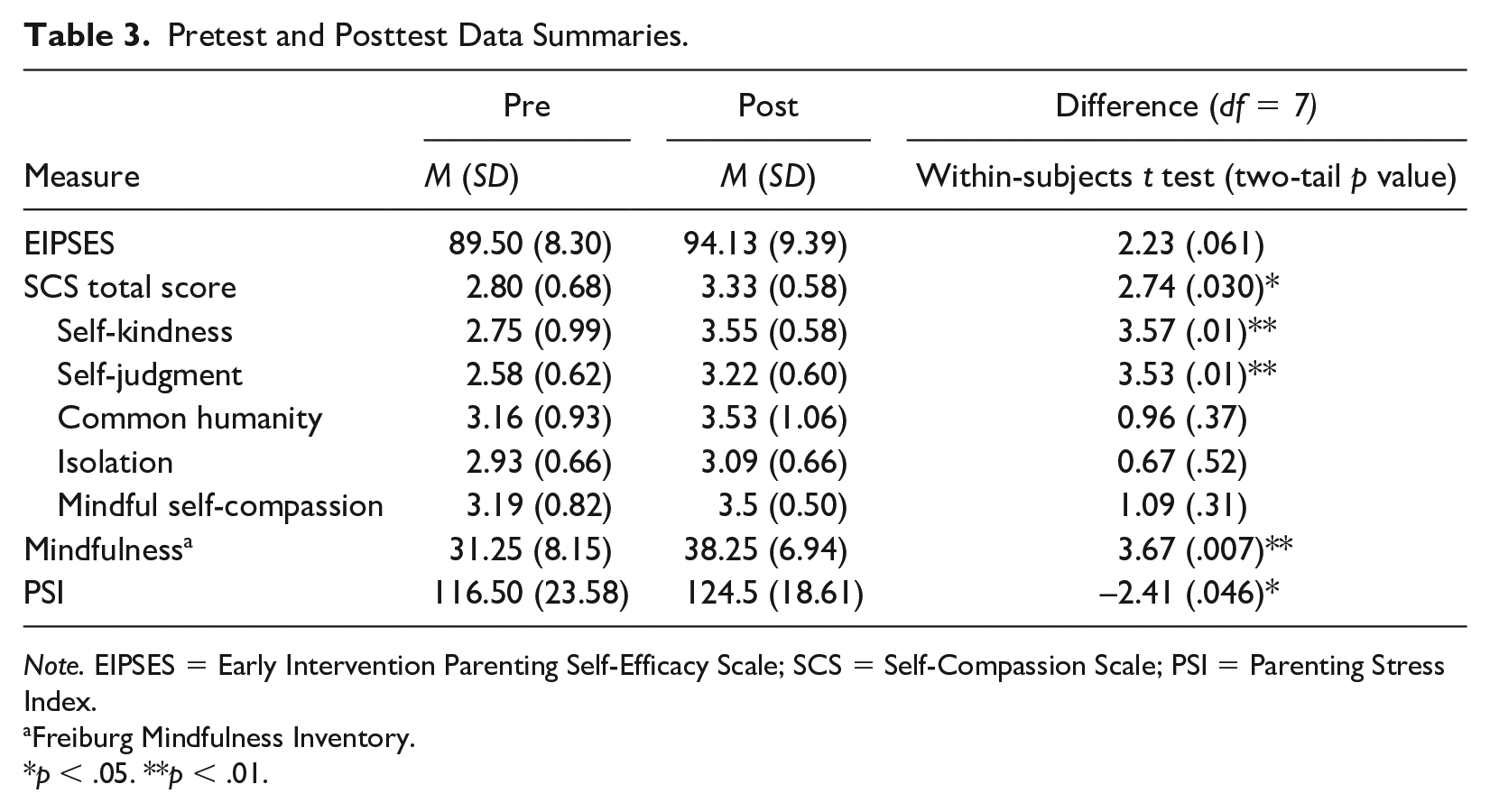
Note. EIPSES = Early Intervention Parenting Self-Efficacy Scale; SCS = Self-Compassion Scale; PSI = Parenting Stress Index.
Freiburg Mindfulness Inventory.
p < .05. **p < .01.
Parenting Stress Index–Short Form
The participants reported a significant increase in total stress scores throughout the weeks that this intervention occurred (p < .05; Table 3). These scores, both pre- and post-intervention, fall above the 95th percentile, compared with parents of typically developing children, indicating that all of the parents in the study experienced high levels of parenting stress, which is expected when parenting a child on the autism spectrum (Bonis, 2016).
Early Intervention Parenting Self-Efficacy Scale
Parents reported higher self-efficacy following the intervention (M = 94.13, SD = 9.39) as compared with pretest (M = 89.50, SD = 8.30); differences were not significant (p = .061, Table 3).
Freiburg Mindfulness Inventory
Parents reported a meaningful and significant increase in frequency of mindfulness practices following the intervention. The participants reported moderate to low pretest scores (M = 31.25, SD = 8.15), and these scores significantly increased following the intervention (M = 38.25, 6.94, p < .05; Table 3).
Self-Compassion Scale
Parents reported a small and significant improvement over the course of intervention in self-compassion. Scores ranging from 1 to 5 increased from low (M = 2.80, SD = 0.68) to moderate (M=3.33, SD=0.58) during the study, and this increase was significant (p < .05; Table 3). Specifically, significant improvement was observed across two key subscales: Self-Kindness and Self-Judgment; while other self-compassion subscales such as Common Humanity, Isolation, and MSC did not demonstrate significant improvement over time.
Focus Groups
The researchers identified four themes from the focus group transcript: self-care, general and parenting stress, interpersonal connections with family and other parents of children on the autism spectrum, and barriers to learning mindfulness in general, in person, and online. Each theme, outlined in Figure 1, is described below, including excerpts from the transcripts that illustrate the themes.
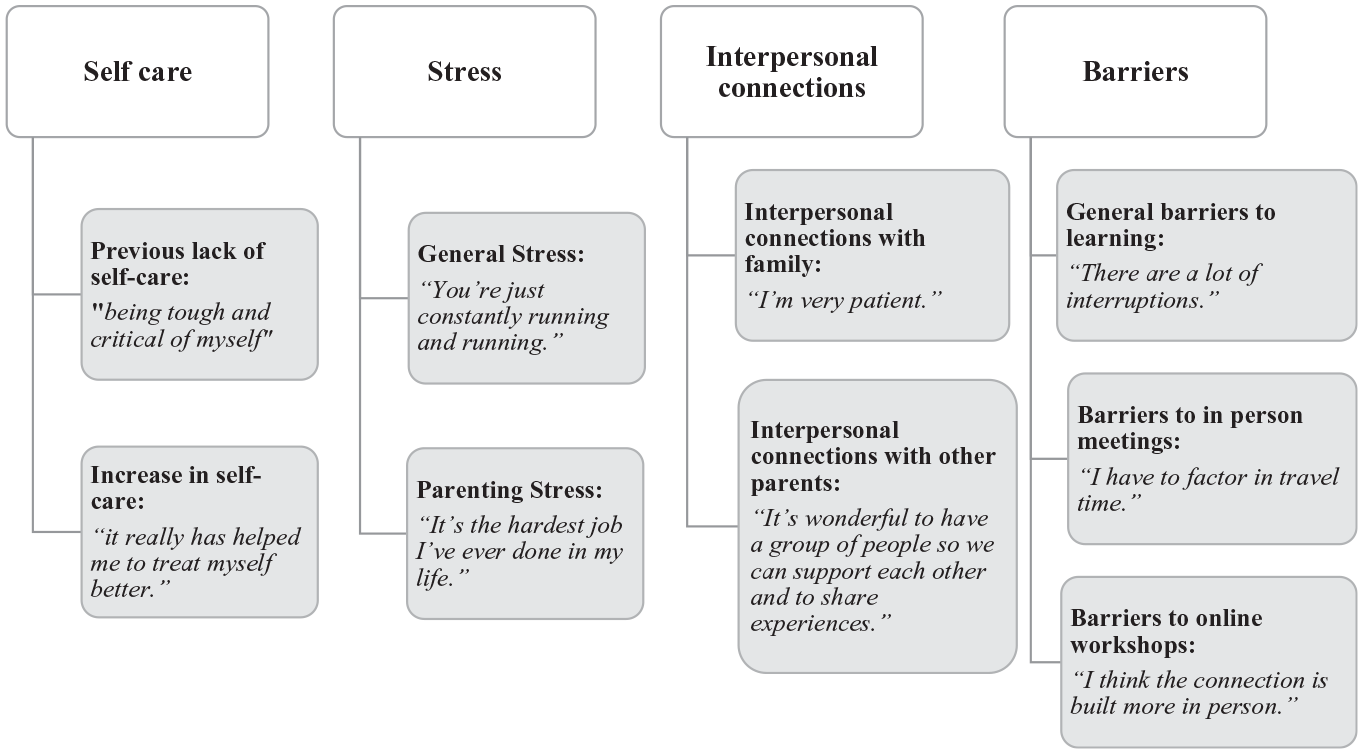
Overview of Focus Group Themes.
Self-Care
Lack of Self-Care: “Being Tough and Critical of Myself.”
Participants shared that they joined this study because, in general, they are “extremely critical” of themselves. Other focus group members echoed this particular sentiment. When discussing their child’s autism diagnosis, one participant stated that they were “losing some confidence as a parent, because I was facing this new challenge that I was having to learn about.” The parents discussed the fact that “giving ourselves the time that we need [to reflect] has not been emphasized.”
Increase in Self-Care: “It Really Has Helped Me to Treat Myself Better.”
During the focus groups, participants reported that the workshop helped increase their self-care. One parent stated, “self-compassion loving kindness and gratitude all together . . . just helps me take a step back and realize, you know, appreciate the things that are going well and take care of myself while I work on the things that are still in progress.”
Parents reported that they were impressed with “how well rounded you can be if you take some time to actually do this.”
General Stress: “You’re just constantly running and running.”
Parents reported a high amount of stress in their lives. One parent stated that they “feel tired and everything is getting out of control.” In reference to participating in a mindfulness course, one parent said, “there’s not really a lot of time unless you make it to learn about these things.”
Parenting Stress: “It’s the Hardest Job I’ve Ever Done in My Life.”
A consensus in the focus group was that parenting a child on the autism spectrum is the most difficult job a mother can have. In addition, “parenting autism children is even harder because you’re working with a lot of things that are sort of beyond your expectations.” Many parents expressed that the workshop helped with self-patience and self-kindness when it comes to parenting their child with autism.
Interpersonal Connections With Family and Other Parents of Children on the Autism Spectrum
Interpersonal Connections With Family: “I’m Very Patient.”
Parents expressed that they feel more connected to their family after participating in this mindfulness intervention. One parent expressed, “now I try to be a calm person and—and it helps everybody [in the family].” Another participant stated, “not only can we teach ourselves to be more mindful and present and appreciative of every moment, but also we can teach our kids by learning this ourselves.”
Interpersonal Connections With Other Parents: “It’s Wonderful to Have a Group of People So We Can Support Each Other and to Share Experiences.”
Many of the participants enjoyed participating in the workshops because of the shared experience with other parents. One parent stated, “many of us are going through different kinds of challenges in life.” The group format was also well received because they were able “to listen to everybody else’s perspective” and because they have children “with different abilities, different skills, different issues.”
Barriers
Barriers to Learning: “There Are a Lot of Interruptions.”
The participants reported difficulties that might prevent parents from being able to learn mindfulness techniques or participate in workshops. One parent stated that there are interruptions when trying to learn “these techniques while [taking] care of the kiddo.” Another stated, “I’m right here, but my eyes are over there because my son is doing something.” Others stated some barriers to learning may also be due to societal opinions about taking time for yourself. “We’re always in a rush and we’re always on to the next thing [. . .] so there’s not really a lot of time unless you make it.”
Barriers to In-Person Meetings: “I Have to Factor in Travel Time.”
The general consensus in barriers to meeting in person was the travel time required and difficulty finding child care when caregivers have to go to a location to participate in the workshop. One parent stated that the online workshop was “easy to join and very comfortable” to participate from their own home.
Barriers to Online Workshops: “I Think the Connection Is Built More in Person.”
The participants in the focus group stated that a barrier to online workshops is the lack of connection with other participants when participating in a workshop online. They stated that the benefit to doing an in-person workshop would be the fact that it is a “fully immersive experience.” Another barrier to online workshops is the risk for technical difficulties during the workshop.
Acceptability
Parents agreed that the virtual format was beneficial. One participant shared, “Personally, I love it. It saves the travel time. I think that it pretty much accomplishes everything that in person meeting will accomplish. I think that meeting in person, at least for me, it could be a potential barrier because I have to factor in the travel time and all that stuff. So I do like the online format so much.”
Parents also agreed that the group format was beneficial. One parent reported, “I think I love being in a group format just because I get to listen to everybody else’s perspective which is very different from mine because even if we have, you know all children with different abilities, different skills, different issues, I think we do have variance.”
Discussion
Feasibility and Acceptability
A recent systematic review supports the finding that this workshop was feasible and reasonable to conduct in a virtual format (Gentry et al., 2019). Parents reported in the focus groups that the online format was generally acceptable as it enabled them to continue with their day before and after the workshop due to mitigated travel time. In addition, the fact that the sessions were recorded helped the parents who were not able to attend the synchronous workshop still learn the material for the week. The recorded workshop also helped the participants if they simply wanted to re-watch or further their learning in some of the aspects that were taught during the workshop.
Parent participation was high across all sessions. Parents reported appreciation for virtual format and the openness of the instructor. Two barriers to feasibility were identified by the instructor which could be improved by utilizing different video conferencing software and features. Hosts of virtual workshops should utilize technology with screen sharing and chat capabilities. These features could enhance participant engagement with the workbook materials and with one another.
Improvements in Parents
Overall, the current study confirmed our hypothesis that the parents who attended the MSC workshop experienced higher reported mindfulness, self-compassion, and parenting self-efficacy. Of the study measures, mindfulness and self-compassion were the most proximal outcomes as these were the specific targets in the workshops. This is reflected in the improvements noted on the specific subscales for self-kindness and self-judgment. During focus groups, participants discussed specific ways in which the workshop helped with mindfulness and self-compassion in regard to being kind to themselves and being patient with family members. Specifically, parents reported in the focus groups that the How would I treat a friend? and Soothing Touch exercises were particularly useful, and many parents agreed and reported having practiced these strategies frequently. Even with only three 75-min sessions online, the parents who participated in the study were able to receive a noticeable amount of training that may have changed their ability to be more mindful and self-compassionate in their daily life.
The positive outcomes observed on the parent surveys were echoed in the focus groups. Parents reported that they were more confident in their knowledge of the mindfulness techniques and that the strategies learned in the workshop did increase their confidence in parenting and interacting with others. However, parents also reported that a 3-day introduction workshop did not give them enough time to perfect any of the strategies. Fluency in the mindfulness and self-compassion skills are important for efficacy, and it likely will take more than three sessions for parents to practice for them to become fluent in these techniques.
This lack of fluency may have affected more distal outcomes such as parenting stress. While the intervention demonstrated some positive effects, parenting stress increased during the course of the study. Parenting stress might have remained high throughout our study due to the emergence of the global pandemic. While this study started a few months into the pandemic, the sessions overlapped with the beginning of the new school year. Many parents were navigating a return to school or uncertain placements for their children during the study period. This is also incongruous with other recent findings of brief virtual mindfulness workshops, hosted prior to the pandemic, for parents of children with developmental disabilities (Neece & Chan, 2017), parents of adolescents with autism (de Bruin et al., 2015), parents of adults with autism (Lunsky et al., 2021), and for mothers of infants (Mitchell et al., 2018). We hypothesized that parenting stress might be mitigated by the three-session introduction to mindfulness and self-compassion, yet the scores on the PSI do not support this hypothesis. Self-compassion is a predictor of parenting stress (Bohadana et al., 2019), and future research should explore if longer duration of the intervention translates into reduced parenting stress.
Parents stated in focus groups that three sessions might not be enough to understand mindfulness and self-compassion completely, yet they did feel as if their stress levels were mitigated to some degree through some tools such as “How do I treat a friend?” where parents compared how they treat their friends with ways they treat themselves, soothing touch, where they learn how to activate their parasympathetic nervous system through touch, gratitude practices, and mindfulness. It is also important to consider the specific link between self-compassion and stress in mothers of children on the autism spectrum (Bohadana et al., 2021). Although stress increased in this study, the improvement in self-compassion may have a delayed effect on stress following more practice or a longer intervention.
Parent Beliefs
Overall, parents reported a need for the strategies presented in the workshops. This is evidenced by lack of self-care and high rates of parenting stress reported in the focus groups as well as reflected in the PSI standardized scores. Parents discussed how the workshops improved their own self-care and patience with others. Furthermore, they reported the benefits of practicing these strategies in daily interactions with themselves and others, and how learning these strategies facilitated them being able to pass these skills onto their partners and children. Finally, parents reported enthusiasm for participating in this workshop alongside other parents of children on the autism spectrum, and many parents echoed this sentiment as one of the greatest strengths of the workshop.
Proposed Adaptations Based on Focus Group Responses
Due to the nature of virtual workshops, there are a few recommended adaptations toward improving feasibility and acceptability. Beginning the workshop with longer introductions, and more time for the parents to get to know each other could improve parent engagement and encourage growth of a community among the parents and set the participants at ease. The participants recommended these specific improvements during the focus groups. The need to provide greater connection between parents is highlighted in the lack of improvement on the Common Humanity and Isolation subscales of the SCS. Second, increasing the duration to the full, manualized eight sessions could be beneficial. While the introductory, three-session format was sufficient for this first adaptation during the pandemic, parents indicated strong interest in receiving more in-depth practice and training. Expanding the workshop may improve parents’ ability to connect with one another, practice the strategies, and fully engage with the material. Finally, leveraging the many features available in video conferencing software to improve feasibility including screen sharing workbook pages and utilizing the chat feature could further increase participation.
Limitations
The results should be interpreted in light of a few important limitations. First, a primary limitation in this study was the low sample size. The COVID-19 pandemic almost certainly affected the recruitment efforts. Many parents were experiencing multiple extra demands on their time and attention. Women, particularly women of color, have been disproportionately affected by the pandemic, and it has brought to light America’s inadequate child care options (DeFrancesco Soto, 2020). These factors may have played an important role in parents’ availability and ability to fully engage with the material between sessions. A second important limitation is that although ethnically diverse, our participants only represented college-educated mothers. Hosting the workshops virtually may allow more families to participate which may also increase uptake of the strategies across caregivers. Although there are many benefits to virtual delivery, frustration and confusion can occur when connections are poor or lost or when the online platform is not intuitive to the participants. Finally, focus groups were the only formal measure of feasibility in this study, and response biases may have affected this outcome. However, attempts were made to minimize the likelihood for response bias including (a) conducting the focus group without the primary interventionist, (b) asking a balance of positive and negative questions, and (c) advance planning our approach and questions.
Future Recommendations for Research
Future research should evaluate the feasibility and acceptability of the virtual MSC intervention delivered across the eight manualized sessions. In addition, the aspects of feasibility and acceptability may be further explored through parent surveys and ratings of specific components of the intervention over time. Research may also consider the impact of the current intervention on observational measures such as parent–child joint engagement and biological measures of stress such as blood cortisol levels. Individual needs for mindfulness practices and how those practices are integrated with child instruction may vary across caregivers and families, thus future research should consider an adaptive intervention model that increases support for families based on their response to initial supports (Chow & Hampton, 2019).
Future Recommendations for Practice
The mindfulness and self-compassion scores demonstrated meaningful improvement over the course of the study. The study was low cost and low burden, and it could be beneficial to incorporate mindfulness and self-compassion strategies into the parent training for early intervention for children on the autism spectrum. This could be facilitated by training early interventionists in these practices and including it in the parent training sessions, in-person or virtually.
Summary
Parents of children on the autism spectrum have increased stress, and many benefit from specific additional support. The MSC virtual workshop was a feasible and acceptable way to help increase mindfulness and self-compassion for these parents. Early intervention could benefit from supporting parents with this low-cost, low-burden tool.
Footnotes
Acknowledgements
We acknowledge our fantastic mindfulness instructor, Monica Gelinas. We are also incredibly grateful for the parents who gave their time to participate in this project. Finally, we could not have completed this project without the support of the Plan II Honors program at the University of Texas at Austin.
Declaration of Conflicting Interests
The author(s) declared no potential conflicts of interest with respect to the research, authorship, and/or publication of this article.
Funding
The author(s) disclosed receipt of the following financial support for the research, authorship, and/or publication of this article: The Lebermann Plan II Excellence Endowment at The University of Texas at Austin provided support for this project.
