



Abstract
Existing literature documents the importance and difficulty of serving families under a family-centered approach in Early Intervention/Early Childhood Special Education (EI/ECSE). However, less is known about the collective systematic experiences of those families. Through a qualitative metasynthesis of 15 empirical studies, we unveiled how EI/ECSE systems reproduced and/or reduced inequitable practices and that the promise of a family-centered approach is not experienced by all families and children. At a macro-level, a series of structural (e.g., racism, ableism) and social (e.g., access to various capital) factors shaped access to and the quality of services. At a micro-level, a series of facilitators (e.g., parents as experts) and barriers (e.g., disrespectful interactions) shaped everyday access to services and opportunities for meaningful collaboration between parents and service providers. Current gaps in the literature, implications for policy and practice, and recommendations for future research are addressed.
Family-centered practices, based on a collaborative, respectful, responsive, and strength-based partnership between the family and service providers, are considered foundational in the field of early childhood interventions (ECI) encompassing both Early Intervention and Early Childhood Special Education (EI/ECSE) (Division of Early Childhood [DEC], 2014; Dunst & Espe-Sherwindt, 2016). Young children with disabilities and their families are provided with ECI services and support under two related federal programs outlined in the Individuals with Disabilities Education Act (IDEA, 2004). From birth to 2 years of age, children and their families receive services under part C, often referred to as Early Intervention (EI), provided primarily in natural environments such as homes with a family-centered approach. From age 3 to 5, children and their families are served under part B services, often referred to as Early Childhood Special Education (ECSE) or Section 619, shifting programming to a more school-based, child-centered approach (Douglas et al., 2021) informed by a family-centered philosophy. IDEA centers the rights of parents 1 to actively participate in all facets of the intervention process (Bruder et al., 2021); however, under IDEA, participation and advocacy is ultimately a parent’s choice (Cioè-Peña, 2020). Parents’ choice and ability to participate in the intervention process are influenced considerably by values, resources, expectations, and relationships within society at a particular time. These issues directly and indirectly affect parents’ capacity to participate and advocate for their child(ren) and themselves (Trainor, 2010), and influence the roles professionals and institutions play, making certain individuals more vulnerable to experiencing normalized injustice within EI/ECSE (Blanchard et al., 2021; Love & Beneke, 2021).
Research on the experiences of families navigating EI/ECSE services indicates that parents from dominant sociocultural backgrounds (e.g., White, middle-class, educated) tend to be more satisfied with services and report better outcomes when compared with parents from marginalized sociocultural statuses (e.g., Black, Indigenous, and People of Color [BIPOC], low-income class, low-educated; Bailey et al., 2004; Hebbeler et al., 2007). Across sociocultural backgrounds, parents report encountering difficulties navigating services as well as limited communication, collaboration, and involvement in decision-making when transitioning from EI to ECSE (Douglas et al., 2021). Such difficulties are magnified for families from non-dominant sociocultural backgrounds (Annamma et al., 2013; Buren et al., 2020). Furthermore, there are concerns about the quantity and quality of EI/ECSE personnel and their capacity to meet the growing numbers of young children, families, and their multifaceted needs. These providers are expected to be knowledgeable and skilled in family partnerships and delivering a wide variety of intervention practices (Bruder et al., 2021) to a diverse population of children and families. Yet, EI/ECSE providers report difficulties in creating and sustaining relationship-based, family-professional partnerships when the demographic and sociocultural characteristics of the families they serve are different from their own (Fleming et al., 2011). Certainly, institutes of higher education (IHEs) have a principal responsibility to address the difficulties reported by providers by effectively recruiting, training, and supporting a qualified and competent EI/ECSE workforce. However, there are currently shortages of comprehensive EI/ECSE programs of study, inconsistent requirements for certification and licensure, and a lack of professional development opportunities (Bruder et al., 2021).
A growing body of research in EI/ECSE documents both the importance and difficulty of serving families raising children with disabilities (e.g., Bailey et al., 2012; Hebbeler et al., 2007). However, less is known about the collective experiences of these families while navigating EI/ECSE services (e.g., Douglas et al., 2021). This qualitative metasynthesis aims at examining the self-reported perceived collective experiences of families receiving such services, and how these collective experiences intersect, influence each other, and affect our understanding of the field as a whole.
Theoretical Frameworks
We utilized the below interrelated theoretical frameworks in conversation with the EI/ECSE field’s “Family Recommended Practices” (DEC, 2014). These recommended practices are grounded in family-centered principles (e.g., dignity and respect); family capacity-building practices (e.g., support families in achieving their goals); and family-professional collaborations (e.g., active participation of families in shared decision-making related to their child) (DEC, 2014, pp. 10–11). First, we used an intersectional framework (Crenshaw, 1991), as framed by Black feminist theorists, to articulate how social inequalities are compounded by multiple systems of domination (e.g., racism and ableism). For this review, we defined racism and ableism as intertwined systems that structure opportunity and assign value based on social interpretations of race/ethnicity and ability (Annamma et al., 2013). Second, we used Bourdieu’s (1986) social capital theory as a lens to interpret how economic (e.g., money and other material assets), cultural (e.g., tangible, and intangible assets such as skills, education, and knowledge), and social capital (e.g., relationships and networks) influence the experiences of parents raising children with disabilities and their interactions with EI/ECSE services (Trainor, 2010). The selected analytical frameworks were chosen to examine how EI/ECSE practices reproduce and/or interrupt inequities in the experiences of families navigating those practices at both the macro-level (e.g., larger systemic and structural factors) and micro-level (e.g., child, family, and service provider direct involvement and relationships with each other).
Method
We utilized a metasynthesis as a systematic method for analyzing, synthesizing, and integrating qualitative studies (e.g., Erwin et al., 2011), with the aim of developing new cumulative knowledge (Flemming & Noyes, 2021). As a methodology, a qualitative metasynthesis is well suited to develop overarching interpretations about social phenomena emerging across studies while also maintaining the integrity of each study (Erwin et al., 2011; Flemming & Noyes, 2021). We applied this methodology to better understand the collective experiences of parents navigating EI/ECSE services and to respond to the following research questions:
Selection Criteria
In this review, we focused on the perspectives and experiences of families navigating the EI/ECSE system in the United States where services are provided under the auspices of IDEA (2004). Studies used in the review database needed to meet all four of the following inclusion criteria: (a) peer-reviewed journals published between January 2004 (the reauthorization of IDEA) and March 2021; (b) reported perspectives of parents (including biological parents, guardians, foster parents, extended family members, or adopted parents) raising children with any disability category; (c) used qualitative designs; and (d) explored the perspectives of families navigating EI/ECSE. Studies including the experiences of parents receiving EI/ECSE altogether with other stakeholders (e.g., providers and/or children older than 5) in which findings were not separated by groups were excluded. The exclusion criteria included removal of any study that: (a) was not an empirical qualitative study focused on EI/ECSE; (b) was a quantitative study, conceptual paper, literature review, or meta-analysis; or (c) was conducted outside the United States, as international policies regulating special education services differ from IDEA (2004).
Search Procedures
To locate relevant research for this review, we systematically searched altogether the following electronic databases: (a) APA, (b) PSYCHInfo, (c) ERIC, (d) EBSCO Academic Search Premier, and (e) Education Search, as advised by our local librarian to remove the majority of exact duplicates from the search results. Abstracts for each record were searched using all possible combinations of the descriptor terms parent* or famil*, and perception or perspective or experiences, and collaboration or participation, and these Boolean phrases: “Individualized Family Service Plan” or IFSP, and “Individualized Education Program” and “early intervention” or “EI” or “early childhood special education” or “ECSE” or “EI/ECSE.” We then conducted an ancestral search, examining references for relevant reviews (i.e., Jimenez et al., 2012; Khetani et al., 2013; Luke et al., 2021; Podvey et al., 2010), and conducted a hand search of journals focused on EI/ECSE (i.e., Journal of Early Intervention, Topics in Early Childhood Special Education, and Infants and Young Children) to locate any neglected studies. After the application of the inclusion and exclusion criteria, elimination of duplicates, and screening procedures, 15 qualitative studies represent the core of this review. We followed the recommended reporting for systematic reviews and synthesis of the literature (Moher et al., 2009) as shown in Figure 1.
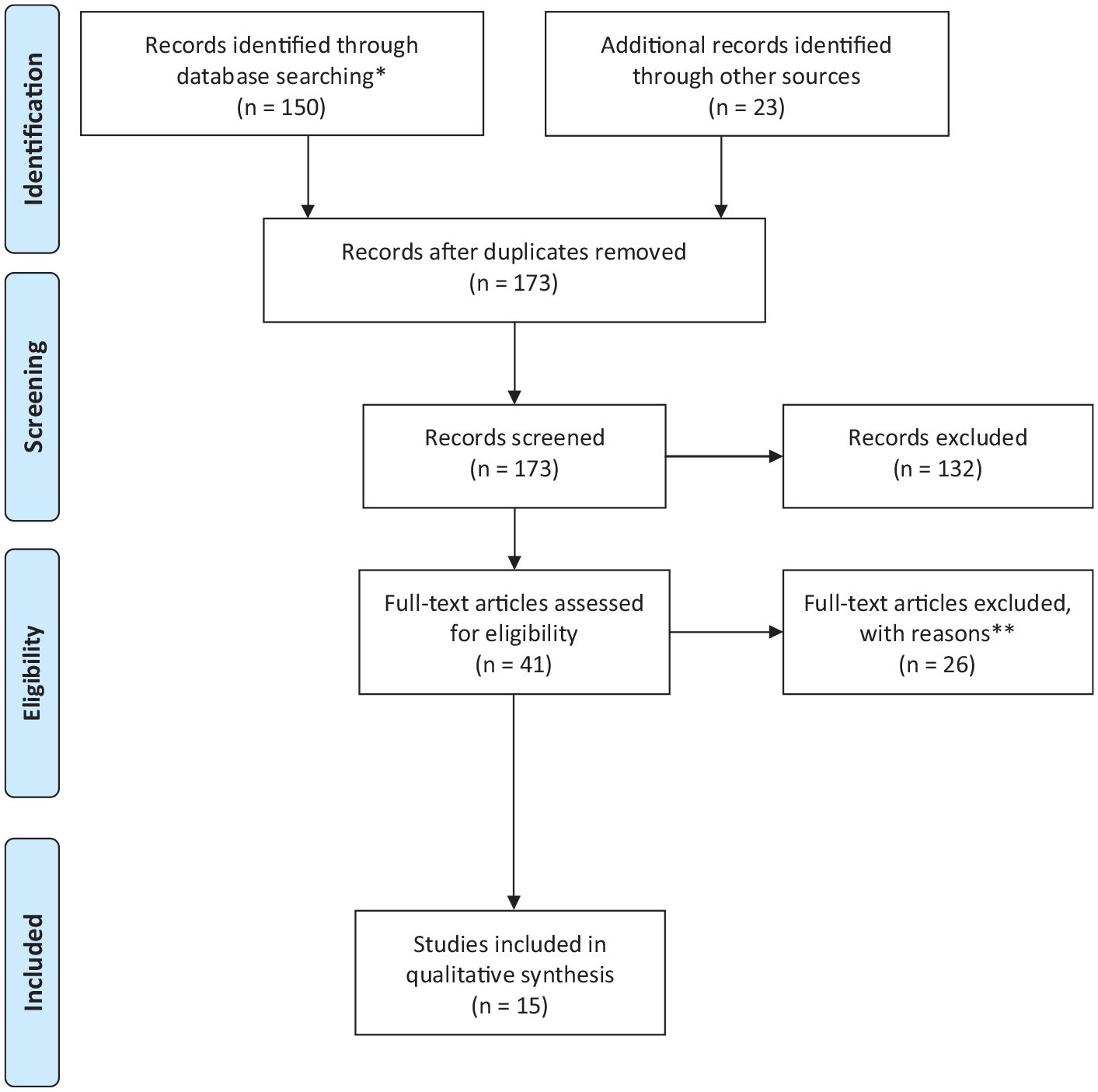
PRISMA Search Procedure and Eligibility Reporting Flowchart.
Coding and Analysis
Our data coding and analysis processes and procedures were systematic and iterative. The authors met weekly for approximately 7 months to complete this portion of the study. First, the first author developed a spreadsheet to extract descriptive data from each study, including information on the participants’ demographics (e.g., race/ethnicity, socioeconomic status [SES]) and study characteristics (e.g., number of participants, research design). Prior to extracting data, both authors met to review, discuss, and clarify each element included in the spreadsheet. We then randomly selected a sample set of two of the 15 articles chosen for the study, and we each independently reviewed them to pilot the spreadsheet. Any discrepancies between coders were then discussed and resolved by mutual agreement, after together re-reading and reconciling issues identified in the section of the study subject to the discrepancy. After completing our initial pilot study, each author read all the articles and completed separate copies of the spreadsheet by following the pilot process described above to resolve discrepancies and reach consensus.We carefully reviewed different quality appraisal guidelines and recommendations for qualitative systematic reviews, before deciding to use Erwin and colleagues’ (2011) appraisal qualitative metasynthesis checklist (Table 1, p. 194) due to its specific applicability to ECI research. The checklist provided guidance on appraisal indicators (e.g., research problem is stated clearly and related to the research literature; sampling plan and data collection adequately align with the research question). To assess the quality and credibility of each study, we reviewed them on a 1- to 15-point scale, with 15 being the highest possible score. Appraisal indicators listed in Erwin and colleagues’ (2011) checklist were used to evaluate the transparency, credibility, trustworthiness, and clarity of the research process. Each author independently appraised the quality of each study by recording how each study met such guidelines (i.e., “yes,” “no,” or “not sure”). Any discrepancies between the coders’ findings were then resolved by following the pilot process to re-appraise and re-score the articles as needed. All the articles included in this metasynthesis were given high scores (e.g., scores ranging from 11 to 15) based on overall standards of quality and credibility. The study characteristics, participant demographics, and appraisal scores can be viewed in Table 1.
Demographic Representation of Participants, Focus of Study, and Quality Appraisal.
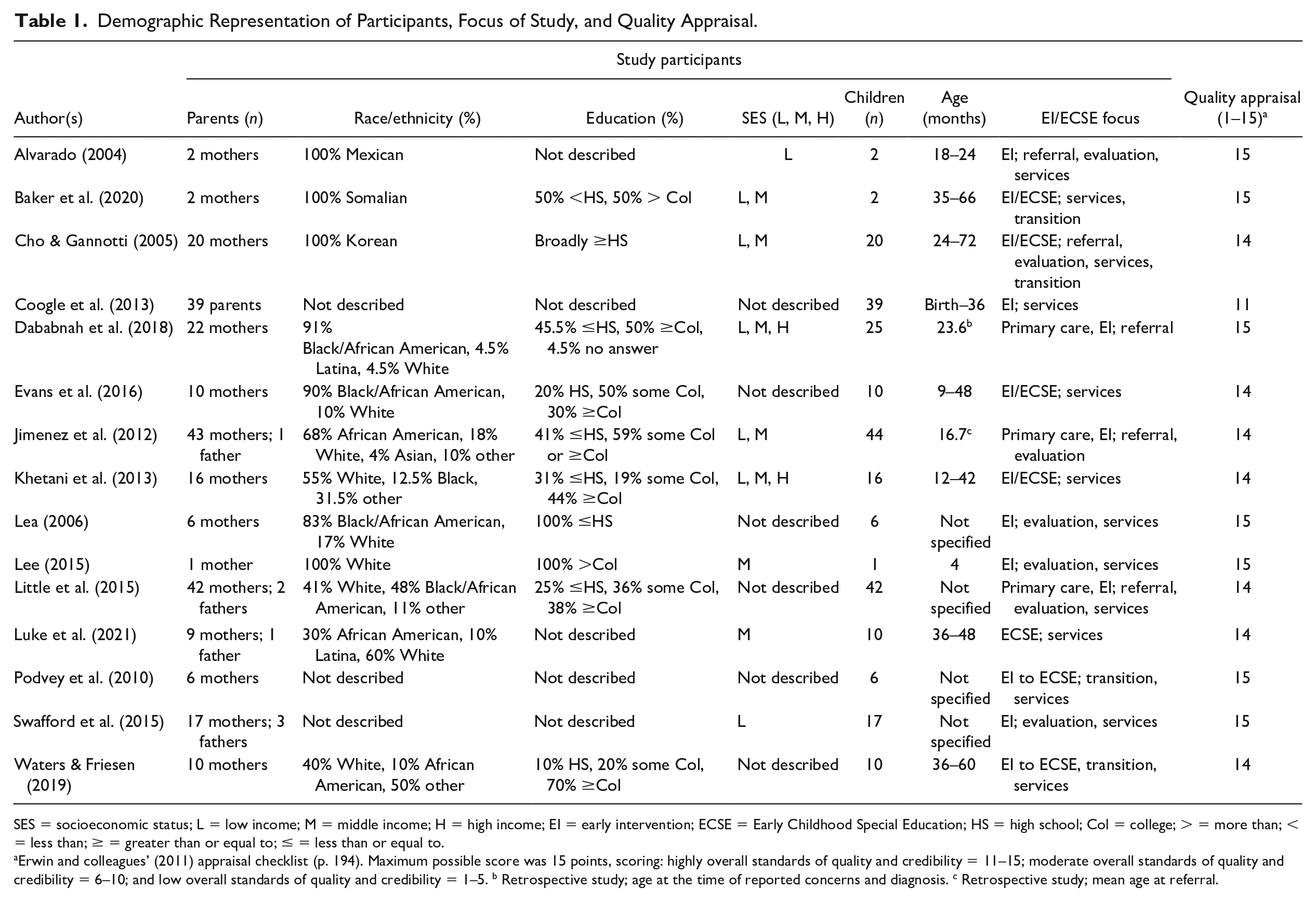
SES = socioeconomic status; L = low income; M = middle income; H = high income; EI = early intervention; ECSE = Early Childhood Special Education; HS = high school; Col = college; > = more than; < = less than; ≥ = greater than or equal to; ≤ = less than or equal to.
Erwin and colleagues’ (2011) appraisal checklist (p. 194). Maximum possible score was 15 points, scoring: highly overall standards of quality and credibility = 11–15; moderate overall standards of quality and credibility = 6–10; and low overall standards of quality and credibility = 1–5. b Retrospective study; age at the time of reported concerns and diagnosis. c Retrospective study; mean age at referral.
Second, we created an analytic summary of each study, documenting the claims and evidence of their findings and conclusions, as modeled by Ong and colleagues (2020; 2021). The first author drafted the initial summary, and the second author revised each summary to ensure accuracy. We then developed a living codebook through a hybrid approach that used both deductive and inductive coding (Fereday & Muir-Cochrane, 2006). This hybrid approach drew from our knowledge of the EI/ECSE field and the literature on our selected theoretical frameworks. Specifically, the deductive codes allowed us to focus on key family-centered themes (e.g., shared decision-making) and instances of structural discrimination (e.g., ableism and racism). The inductive codes offered us the opportunity to look more closely at each analytic summary and identify codes emerging across studies. We then discussed and defined our emerging codes in our living codebook before each author independently coded the studies and went through the process of reviewing, discussing, and selecting codes. Our codebook was updated and refined by consensus through an iterative process of coding, analysis, and re-coding. We used Dedoose (2021; version-9.0.17), a software used to analyze qualitative data. We tested our coding for reliability at the code level using Cohen’s kappa (CK) and found a pooled CK of .94 observed across the two coders, indicating a good-to-excellent level of reliability. When discrepancies appeared, we returned to each analytical summary and original study, and proceeded to discuss, refine, and reach concordance as needed.
Third, we applied thematic analysis (Braun & Clarke, 2006) to the codes to develop our key themes. We then together discussed and developed thematic maps by grouping the codes into themes and subthemes, as shown in Supplemental Materials Figures 1 to 3 and Supplemental Table 1. We looked for connections between the literature beyond the set of studies included in the synthesis, in a process similar to abductive analysis as suggested by Timmermans and Tavory (2012). For example, we found connections between our review and the literature about structural determinants of health (e.g., racism and ableism) and social determinants of health (e.g., different forms of social capital) (Crear-Perry et al., 2021), which helped us to better examine and understand the experiences of families navigating EI/ECSE services. We identified three main analytical themes: (a) structural and social determinants in EI/ECSE, (b) meaningful participation and collaboration, and (c) service navigation.
Findings
In this section, we provide an overview of the studies and describe our thematic findings.
Overview of Studies
The experiences of 252 parents raising 250 young children with a range of disabilities receiving EI/ECSE services, documented in 15 empirical qualitative studies, are represented in the findings of this metasynthesis. Eighty-seven percent of the studies provided some information about children’s disability labels; of those, approximately 50% were labeled with developmental delays, 25% within autism spectrum disorder, and the rest included a variety of disabilities. Eighty percent of the studies reported race/ethnicity and approximately 70% of all of the participant parents identified as BIPOC. With respect to EI/ECSE enrollment, 47% of the studies solely focused on families and their children enrolled in EI services, 33% included participants enrolled in either EI or ECSE, 7% in ECSE, and 13% focused on families transitioning from EI to ECSE. Only 67% reported parental educational attainment, of which 80% of participants had at least a high school diploma or further degrees. A range of SES was represented but only reported in 53% of the studies. Geographically, studies were located across the United States with a large majority of the participants living in urban settings. The studies used multiple methods of qualitative data collection informed by their study designs (e.g., ethnography) and theoretical frameworks (e.g., bioecological theory): 93% used interviews, 40% participant observation, 33% document analysis, 27% used a demographic or open survey, and only a single study used a focus group methodology. Key information about each study and demographic characteristics of participants is shown in Table 1. A sample of themes, subthemes, codes, subcodes, and representative quotes are shown in Table 1 in Supplemental Materials.
Thematic Findings
We organized themes from a systemic to an individual approach to illustrate the experiences of families navigating EI/ECSE services.
Theme I: Structural and Social Determinants of EI/ECSE
Theme I (see Figure 1 in Supplemental Materials), Structural and Social Determinants of EI/ECSE, comprised two main subthemes: (a) structural determinants and (b) social determinants. This theme brings attention to individual and institutionalized disparities in our systems of practice. Understanding and overcoming these disparities is key to building more equitable systems (Blanchard et al., 2021).
Structural Determinants of EI/ECSE
Studies documented how parents experienced different types of discrimination (Alvarado, 2004; Cho & Gannotti, 2005; Dababnah et al., 2018; Evans et al., 2016; Lea, 2006; Little et al., 2015; Luke et al., 2021; Swafford et al., 2015). Some parents reported perceived racism in interactions with providers across EI/ECSE services or in their communities (Alvarado, 2004; Dababnah et al., 2018). A Black mother described her experience during the referral process: You assume because I’m Black . . . that I might not be as smart. So, I surprise you when I give you all the information. Maybe I was taking it the wrong way . . . I would get this whole lip service with the doctor, “Well, you can’t do this with Medicaid.” I said, “I don’t even have Medicaid, I have private insurance.” . . . There are assumptions like . . . I’m just this person that has multiple kids. This is a Black woman. If you see my three kids, you assume I don’t have a husband. (Dababnah et al., 2018, p. 329)
As per other forms of discrimination, teenage mothers perceived mistreatment by service providers because their age made them seem incompetent as mothers in the eyes of service providers (Lea, 2006), and other parents did perceive mistreatment because of their single parenthood status (Dababnah et al., 2018; Swafford et al., 2015).
Several works in our synthesis reported parents wanting service providers to have high expectations for their children but experiencing ableism; service providers had low expectations for their children when working with them (Alvarado, 2004; Cho & Gannotti, 2005; Luke et al., 2021). Luke and colleagues’ (2021) study illustrated how parents experienced this issue: These participants [parents] were fearful that ECSE teachers would have low expectations for their children and emphasized their expectation that teachers believe in their children’s abilities and potential for learning, rather than focusing on their children’s disability or what they could not do. (p. 9)
Across studies, disability stigma was documented (Dababnah et al., 2018; Evans et al., 2016; Lee, 2015; Little et al., 2015; Waters & Friesen, 2019) and described, including the way it negatively impacted parents’ understanding of disability-related services and the fear of judgment from others in their interactions with community and family members. For example, Evans and colleagues (2016) offered a parent description of special education services: “when I was in school ‘dumb kids’ went to special classrooms for reading speech or whatever and I don’t want that for him” (p. 107). Along those lines, in Dababnah and colleagues’ study (2018), a mother explained: “[Child’s] father actually just told me, a month or so ago, that he’s not fully comfortable with [child’s diagnosis]. He doesn’t really know what it is. He doesn’t want anyone to judge his son” (p. 330). Both quotes show how societal misconceptions about disability create stigmatization and different forms of discrimination, negatively affecting children and their families.
Social Determinants of EI/ECSE
Across studies, we found that access to different forms of economic, cultural, and social capital (Bourdieu, 1986) facilitated parents’ ability to strategize the use of tangible and intangible resources (e.g., location of the neighborhood, economic opportunities, skills, education) by leveraging key relationships and networks.
Zoning and Opportunity: Economic Capital
Geographic location influenced parents’ opportunities to access services. Living in or near urban and affluent neighborhoods facilitated access to a broader variety of services (Baker et al., 2020; Dababnah et al., 2018; Swafford et al., 2015). Living in rural and less affluent neighborhoods imposed more barriers (e.g., fewer service providers) and hindered access to services (Baker et al., 2020; Coogle et al., 2013; Swafford et al., 2015). For immigrant parents, access to services in the United States was perceived to be overall greater than in their countries of origin (Alvarado, 2004). Yet regardless of location, to get full access to needed services, some parents felt the only option they had was to pay for services out of pocket (Cho & Gannotti, 2005; Coogle et al., 2013). For example, a parent in Coogle and colleagues’ (2013) study said: “The services that we were provided was not enough, we have funded our EI ourselves in hopes for the best outcome for our child” (p. 6). Thus, access to services required access to some forms of economic capital. For example, Dababnah and colleagues (2018) found that parents who persisted in obtaining EI/ECSE services despite difficulties “had college or advanced degrees; or household incomes greater than $100,000” (p. 328). These examples show how different sources of economic capital shaped access to a variety of services, reflecting inequalities in structural and social determinants in EI/ECSE, disadvantaging families in or near poverty and/or living in rural locations (Hardy et al., 2021).
Strategizing Own Resources: Cultural Capital
Having knowledge about how the EI/ECSE system worked occasionally facilitated access to services (Baker et al., 2020; Cho & Gannotti, 2005; Coogle et al., 2013; Dababnah et al., 2018; Kethani et al., 2013). For example, parents acquired specialized knowledge and information about their rights to request services (Baker et al., 2020; Cho & Gannotti, 2005). However, parents experienced a hostile system independent of how much knowledge and/or skills parents held (Cho & Gannotti, 2005; Dababnah et al., 2018). The following example showed how a parent carefully strategized how to use their available resources in a way that works within the culture of EI/ECSE services: My requirements were rarely granted on my first attempt. In general, I have to request the same service at least two or three times . . . I don’t sign the IEP unless my request is even partly accepted . . . [if] my requests could be seen by the school personnel as too demanding, I took an advocate to the meeting. (Cho & Gannotti, 2005, p. 6)
Key Supports: Social Capital
Families relied on key networks of support and relationships to navigate services (Alvarado, 2004; Cho & Gannotti, 2005; Evans et al., 2016; Khetani et al., 2013; Lea, 2006; Podvey et al., 2010; Waters & Friesen, 2019). Parent groups (Cho & Gannotti, 2005; Waters & Friesen, 2019) and faith groups (Evans et al., 2016) were mentioned as important networks of support that provided families with the needed knowledge, information, and assistance to navigate services and improve outcomes for their children and their families. The presence and availability of knowledgeable and supportive relationships through extended family members (e.g., grandparents, aunts) and friends were mentioned as key supports across studies (Evans et al., 2016; Podvey et al., 2010). Emotional supports provided by nuclear family members (e.g., husbands, siblings) were also mentioned (Alvarado, 2004; Evans et al., 2016; Khetani et al., 2013; Lea, 2006; Podvey et al., 2010; Waters & Friesen, 2019). But in some cases, available extended family members and/or community members were not supportive due to disability stigma and misunderstanding of the lived realities of families raising children with disabilities (Dababnah et al., 2018; Evans et al., 2016; Lee, 2015; Waters & Friesen, 2019).
Theme II: Meaningful Participation and Collaboration
Our second theme (see Figure 3 in Supplemental Materials) is meaningful participation and collaboration between parents and EI/ECSE service providers, which is discussed through the subthemes of facilitators that promoted collaborative relationships (i.e., parents as experts, supportive service providers, knowledgeable and competent providers) and the barriers to them (i.e., disrespectful interactions, professional overpower, professional incompetence).
Facilitators
First, we address the factors that facilitated collaborative relationships between parents and service providers.
Parents as Experts
Across studies, parents saw themselves as experts on their child(ren) and expected service providers to trust them as experts (Jimenez et al., 2012; Luke et al., 2021; Swafford et al., 2015). For example, one parent explained: “I expected the teacher to trust that I as a parent am an expert in her. I’m not an expert in anything else, so when I tell you that she can do something . . . believe me” (Luke et al., 2021, p. 8). Parents relied on their expertise and knowledge about their children to make decisions (Baker et al., 2020; Podvey et al., 2010). For example, parents decided to wait and see if further support was appropriate and/or needed after receiving information from service providers (Jimenez et al., 2012). Parents wanted to have clear information about services and next steps from service providers (Jimenez et al., 2012; Swafford et al., 2015) so they could use this information and their knowledge about EI/ECSE policies, systems, and services, to advocate for adequate services for their children (Baker et al., 2020; Podvey et al., 2010). Parents reported that when service providers valued and considered their knowledge about their children, it positively affected shared decision-making on referrals, evaluation/eligibility, and intervention services (Cho & Gannotti, 2005; Dababnah et al., 2018; Jimenez et al., 2012; Swafford et al., 2015).
Supportive Service Providers
Across studies, parents appreciated having providers who genuinely and actively cared for their children (Cho & Gannotti, 2005; Coogle et al., 2013; Lea, 2006) and their whole family (Swafford et al., 2015). For example, parents valued flexibility in service provision (Coogle et al., 2013; Waters & Friesen, 2019), as well as receiving encouragement (Lea, 2006) and guidance (Coogle et al., 2013; Little et al., 2015; Luke et al., 2021; Waters & Friesen, 2019) in a compassionate (Coogle et al., 2013) and respectful manner (Cho & Gannotti, 2005; Swafford et al., 2015). A mother further reflected, One woman in particular, she was with us for about eight months before we went to the homeless shelter and I was so sad. We left and she was still calling me saying that she could still see us [in the homeless shelter]. She followed us there and came every week. We would go to the park and do our little things there. It made me feel so good because I had left everybody else behind . . . she was sacred, she’s the little angel who stayed with us. (Waters & Friesen, 2019, p. 29)
Supportive providers were knowledgeable about helping children with regard to their disability and needs (Luke et al., 2021), and helped to create atmospheres in which families felt valued (Cho & Gannotti, 2005; Swafford et al., 2015; Waters & Friesen, 2019) and in which shared decision-making was possible (Cho & Gannotti, 2005). Parents valued receiving information and support to better navigate EI/ECSE services (Jimenez et al., 2012), and even those beyond EI/ECSE services such as how to get food stamps (Alvarado, 2004), affordable housing (Swafford et al., 2015), and getting letters of support from service providers to other agencies they were involved with such as the department of social services (Lea, 2006).
Knowledgeable and Competent Providers
Parents expected their service providers to be knowledgeable about specific ways to work with children with disabilities while taking into account parents’ expertise as it related to their children (Luke et al., 2021; Swafford et al., 2015), which seemed to facilitate family involvement in their children’s services (Lee, 2015; Little et al., 2015; Luke et al., 2021; Waters & Friesen, 2019). Parents welcomed providers’ expertise in the form of advice, guidance, and insights about their children’s needs (Little et al., 2015; Luke et al., 2021; Waters & Friesen, 2019) and in the form of step-by-step suggestions to implement supports and strategies at home (Coogle et al., 2013; Little et al., 2015; Waters & Friesen, 2019).
Barriers
This subtheme included instances where families described feeling disrespected, noticing professional incompetence, or professional overpower that prevented parents and service providers from establishing collaborative relationships and engaging in shared decision-making processes.
Disrespectful and Uncaring Interactions
Across studies, families described experiencing interactions that denoted disrespect (Cho & Gannotti, 2005; Coogle et al., 2013; Lea, 2006). For example, Cho and Gannotti (2005) found in their study that “an overwhelming number of the same mothers reported that some educators often disenfranchised and marginalized them” (p. 5). Some families also experienced recurrent tardiness from professionals, which was considered disrespectful and ineffective (Coogle et al., 2013; Lea, 2006). Furthermore, some parents across studies experienced a lack of empathy from service providers (Cho & Gannotti, 2005; Jimenez et al., 2012; Lea, 2006; Lee, 2015) which manifested as a lack of sensitivity toward families’ mu.epsaceted needs and realities navigating EI/ECSE services. Cho and Gannotti (2005) described how mothers experienced this issue: Surprisingly, no one in the study was informed by their case manager that respite services could be made available to them. Such information, however, was obtained through parental support groups or other disability advocacy organizations. At the time of the interviews, a few mothers were unaware of the nature of respite despite a lengthy relationship with their case manager. (p. 5)
These examples highlighted the role that disrespectful and unempathetic behaviors play as roadblocks toward establishing trusting family-professional partnerships (Buren et al., 2020). Some parents reported distrust of service providers (Lea, 2006) and their practices such as reporting inaccurate evaluations (Alvarado, 2004; Jimenez et al., 2012).
Lack of Shared Decision-Making
Across studies, several examples showed how parents’ expertise of and goals for their own child and family situation went unheard or were diminished by service providers (Baker et al., 2020; Cho & Gannotti, 2005; Dababnah et al., 2018; Jimenez et al., 2012; Lea, 2006). Lea (2006) found that “. . . during the IEP meeting, Veronica was never asked what type of placement she wanted for her child; she was told that the early childhood center was the only option” (p. 274). This was especially true for parents that used “intuitional knowledge” about their children as a way to advocate instead of “professional knowledge” (Baker et al., 2020), an issue well documented in the literature (Trainor, 2010). Across studies, parents tended to be asked whether they agreed with recommended goals and services instead of being asked what goals or courses of action they thought may be most appropriate (Lea, 2006; Lee, 2015), or were referred to EI/ECSE services when they did not agree with service providers about developmental concerns (Jimenez et al., 2012). Parents’ expertise and/or concerns were not always attended to (Baker et al., 2020; Cho & Gannotti, 2005; Dababnah et al., 2018; Jimenez et al., 2012), which led to a diminished sense of voice and efficacy (Davis et al., 2021). Parents also hesitated to voice their concerns with service providers for fear their child(ren) may not be granted the services and support they need (Cho & Gannotti, 2005). Professional overpower thus seemed to prevent parents and professionals from engaging in a truly shared decision-making process (Baker et al., 2020; Cho & Gannotti, 2005; Dababnah et al., 2018; Lea, 2006; Lee, 2015; Swafford et al., 2015) which is integral to productively work with families.
Professional Incompetence
Parents experienced dissatisfaction with service providers’ perceived lack of competence and effectiveness (Cho & Gannotti, 2005; Coogle et al., 2013; Luke et al., 2020; Waters & Friesen, 2019). For example, a parent reflected on this issue: I would like a more experienced service coordinator, one who doesn’t seem to be too inundated to help, one who is more than just polite, one who really knows what she is doing, one who returns phone calls, one who really seems to care, and especially one who does not have me waste precious time on getting my child the therapy and care she needs and deserves. (Coogle et al., 2013, p. 6)
The aforementioned themes and subthemes highlighted the role that systemic, institutional, and individual professional practices play in either promoting or halting the establishment of trusting family-professional collaborative partnerships (Buren et al., 2020).
Theme III: Navigating Services
Parents’ ability to navigate EI/ECSE services is critical to ensuring their children receive the support they need. Theme III (see Figure 3 in Supplemental Materials) discusses the facilitators that promoted (i.e., flexible, individualized, supportive services and efficacy of voice) and barriers that hindered (i.e., lack of voice, feeling lost, unsuccessful efforts) families’ experience in navigating services.
Facilitators
Below are the facilitating factors that made it possible for families to have an easier experience navigating services at different points during their EI/ECSE trajectories (e.g., referral, evaluation, service, transition).
Flexible, Individualized, and Supportive Services
Families appreciated and valued services that were flexible regarding meeting their unique schedules and needs (Coogle et al., 2013; Waters & Friesen, 2019). Such services tended to specifically support families and their children in a tailored, individualized approach (Cho & Gannotti, 2005; Coogle et al., 2013; Lea, 2006; Lee, 2015; Waters & Friesen, 2019). As such, these services were perceived as supportive of child and family well-being, and thus, the service providers were perceived as supportive (Cho & Gannotti, 2005; Coogle et al., 2013; Lea, 2006; Little et al., 2015; Luke et al., 2021; Waters & Friesen, 2019). A parent in Coogle and colleagues’ (2013) study reflected on their flexible, supportive, and individualized services: I love that all the therapists can work out a great schedule based on my son’s schedule and they complete all services at my home so I do not have to travel and he feels more comfortable in his own environment. (p. 5)
Efficacy of Voice
Parental voice refers to the perceived efficacy of communicating with service providers (Davis et al., 2021). Parental efficacy of voice was more likely to emerge when parents were being respected as experts on their child (Cho & Gannotti, 2005; Dababnah et al., 2018; Lea, 2006; Luke et al., 2021). Parents using their voice sometimes also meant fighting for services (Cho & Gannotti, 2005). The gaining of parental voice and a sense of power in the family-professional relationship often happened slowly over time (Lea, 2006; Swafford et al., 2015). For example, a parent reflected on their sense of voice, agency, and the balance of power in their relationship with service providers: We were the pupils learning what they had to teach us and what we had to know. But there came a point because we worked with our son and we were here with him all the time, we sort of exceeded them, and they were willing to listen to us as to what he needed. (Swafford et al., 2015, p. 149)
Barriers
There were several barriers identified that prevented the establishment of collaborative relationships between parents and service providers. Most of these issues were observed in parental lack of voice, feeling lost and overwhelmed, and by parents’ unsuccessful efforts navigating services.
Lack of Efficacy of Voice
Across studies, parents experienced a disregard of their voice within services which prevented them from engaging in shared decision-making (Baker et al., 2020; Cho & Gannotti, 2005; Dababnah et al., 2018; Jimenez et al., 2012; Lea, 2006; Lee, 2015; Swafford et al., 2015). For instance, this issue was illustrated in Lea (2006): The mothers were usually asked if they agreed as opposed to being asked what goals they thought would be most appropriate. If the mother had an opinion or a desired goal in mind that differed from the opinion of the service providers, it often was ignored. (p. 274)
Parents voicing their concerns about their children’s development and/or about the inadequacy of services were sometimes minimized or unaddressed by service providers which derailed and delayed prompt referrals, eligibility, and service provision (Dababnah et al., 2018; Jimenez et al., 2012). Some parents in turn learned to keep quiet and not voice their concerns in fear of negatively affecting their child’s services (Cho & Gannotti, 2005).
Feeling Lost and Overwhelmed
A lack of understanding of what EI/ECSE services are and how they could be beneficial to certain children made families hesitant to persist in seeking or keeping services (Jimenez et al., 2012; Little et al., 2015) or prevented them from getting more involved (Swafford et al., 2015). In addition, navigating interagency referrals and/or initiating services felt overwhelming for some parents (Jimenez et al., 2012), as well as transitioning from part C to part B (Podvey et al., 2010; Waters & Friesen, 2019). Some parents described being given too much information at once, saying: “. . . they [service providers] give you piles and piles of pamphlets and paperwork . . . and, you know, you just can’t [deal with it]” (Little et al., 2015, p. 434). Conversely, others reported the opposite: “participants whose children were not evaluated by EI more commonly reported that their pediatrician did not explain what EI does or how to obtain services” (Jimenez et al., 2012, p. 553).
Given the nature of EI/ECSE services, families are expected to work with a variety of service providers from a variety of disciplines in an intimate manner which felt overwhelming to some families (Cho & Gannotti, 2005; Lee, 2015; Little et al., 2015). A mother reflected on this issue in Lee’s (2015) study: “I often feel more like my son’s case manager than his mom. It’s a lot of organizing and coordinating” (p. 7). Similarly, another mother explained: “To tell the truth, dealing with service providers gives me more stress than caring for my two children [with autism spectrum disorders]” (Cho & Gannotti, 2005, p. 6). Families were not always given comprehensive information about either IFSP or IEP-related services such as transportation (Swafford et al., 2015) or respite (Cho & Gannotti, 2005).
Unsuccessful Efforts
For some families, initial contact and follow-up efforts were especially vulnerable to breakdown. For example, a parent recalled: “I did call them and like I said, I think I talked with someone and I think they were supposed to call me back or send me some information or something, but I never heard anything” (Jimenez et al., 2012, p. 554). Services were not always easily accessible, especially in rural areas. Planning for services required a lot of coordination and time that were not always successful (Coogle et al., 2013; Swafford et al., 2015). This burden prevented families from receiving the services they were entitled to. For example, a family shared: “You don’t have a choice—some of the services you have to wait ‘til a slot is open and things like that” (Swafford et al., 2015, p. 146). In addition, the work schedules of parents, especially fathers, prevented them from attending appointments and engaging directly in services (Evans et al., 2016; Lea, 2006). Also, parents were denied services and were given different reasons and justifications as to why certain services could be denied such as school district budgetary deficits (Cho & Gannotti, 2005; Lee, 2015; Little et al., 2015).
Discussion
In this qualitative metasynthesis, we have covered a broad array of factors revealed by the reviewed literature that shape the unique experiences of families navigating EI/ECSE services as well as the implications of those experiences. These findings contribute to extending our understanding of how EI/ECSE systems both reproduce and reduce unequal practices that affect families’ experiences navigating services. Our research indicates that the promise of a family-centered approach is not experienced by all families and children receiving EI/ECSE services (Bailey et al., 2012). Parents report being unable to effectively use their voice to discuss their concerns and desires with their service providers, either for fear of retribution that will negatively affect their children or because they are not given the option. Such experiences are reflective of engagements between parents and service providers in unbalanced, hierarchical power relationships that limit parental input and collaboration (Davis et al., 2021). Under IDEA (2004), parents are expected to be able to advocate for their children as collaborative partners in the decision-making process of structuring their child’s educational programming. But our research highlights how unequal practices experienced by parents are reproduced by a misguided presumption imbued in the IDEA legal framework and DEC recommended practices, that assumes all families will be able to equally leverage different economic, cultural, and social capital (Cioè-Peña, 2020; Trainor, 2010). It also assumes all EI/ECSE service providers are equipped to truly provide family-centered services to all families when in fact EI/ECSE providers report not feeling equipped to do so, especially if families belong to different demographic groups than service providers (Fleming et al., 2011). Along those lines, our research supports the field’s long-standing concerns about the inability of the EI/ECSE workforce to implement respectful, responsive, collaborative, family-centered services, and the necessity to do so to meet the needs of a growing, diverse population of young children and their families (Bruder et al., 2021). By failing to recognize these issues and how it unequally affects families’ experiences navigating EI/ECSE services, the EI/ECSE system also conceals how families pervasively encounter intertwined experiences of racism, ableism, and discrimination while navigating services–issues that are well documented in the larger special education literature (e.g., Annamma et al., 2013; Buren et al., 2020; Cioè-Peña, 2020).
Furthermore, our findings contribute to research on the role social determinants play (e.g., neighborhoods, SES) in shaping and exacerbating unequal opportunities available to children and their families (Hardy et al., 2021). In our review, unequal access to opportunities was linked to differing experiences for families navigating EI/ECSE systems. For example, neighborhood economic demographics (e.g., upper or low-income) and location (e.g., rural or urban) directly affected the types of services families sought and/or had access to (Hardy et al., 2021). Notably, the inability of families to leverage different forms of valued social, cultural, and economic capital while navigating EI/ECSE directly and negatively affected families’ experiences of access to services, opportunities to engage in collaboration and decision-making, and participation in educational planning (Trainor, 2010). Our findings further support research documenting how social determinants (e.g., housing, income) and structural determinants (e.g., racism and ableism) are interconnected and cannot be addressed and understood separately (Crear-Perry et al., 2021). Structural and social inequality are in fact built into daily interactions and procedures within EI/ECSE systems, as documented in our review. Therefore, enhancing service providers’, leaders’, and researchers’ capacity to turn their gaze toward how structural determinants and social determinants reproduce inequality is key to breaking patterns of injustice in service planning and delivery.
Our review also highlighted areas filled with possibilities. We found that when service providers are supportive, respectful, competent, and flexible, parents feel empowered to navigate services, and to use their voice to advocate for their children by engaging in collaborative partnerships based on shared decision-making, key features of a family-centered approach (DEC, 2014). Our findings also reinforce the pressing need to rethink and reexamine our systems of higher education and professional development programs to better provide the support EI/ECSE providers need to be prepared to provide effective services to all families and children, especially those from historically marginalized statuses (Buren et al., 2020).
Implications for Institutes of Higher Education and Professional Development Programs
To meet the needs of families raising children with disabilities, IHEs need to prepare and equip current and future EI/ECSE service providers and researchers to examine complex contextual and historical inequity issues experienced by children with disabilities and their families as a result of structural (e.g., discriminatory, racist, and ableist practices), systemic (e.g., interinstitutional interactions across time and space that reproduce inequality), institutional (e.g., policies, norms, and practices promoting power imbalance), and individual practices (e.g., deficit-based presumptions about certain families and children) (Blanchard et al., 2021). The findings of our review also support the need for research on EI/ECSE services that shift away from merely describing inequality and examining its effects to actually countering the roots and mechanisms of its reproduction by engaging in transdisciplinary macro- and micro-level research. Collectively, our themes attempt to identify mechanisms that reproduce and prevent inequality, and we take the position that this type of research can play a more prominent role in the social sciences to produce tangible societal reductions of inequality (Nalani et al., 2021).
Implications for EI/ECSE Programs and Service Providers
Our findings can serve as a springboard to rethink how inequality within EI/ECSE services is generated by the policies, procedures, and actions of our own institutions, as our institutions are microcosms of larger societal issues. It invites leaders, administrators, and service providers to actively examine their own assumptions and expectations of families and their children with disabilities, which directly requires each individual to address presumptions and bias against people from marginalized groups and in favor of privileged groups. These findings urge EI/ECSE service providers and leaders to recognize understandings of difference, power differentials and inequity embedded in our practices, norms, and policies (Blanchard et al., 2021) to engage in respectful, empathetic, and dignified collaborations with families. Our findings highlight the need for programs and service providers to design opportunities at the individual and institutional levels to truly center families’ goals and expertise (e.g., Buren et al., 2020), and identify how eliminating professional overpower enhances parents’ efficacy of voice and reduces disrespectful and unequal interactions (Davis et al., 2021).
Policy Implications
Given decades of research documenting the importance of family engagement in EI/ECSE for family and children outcomes (Bruder et al., 2021), there may be an assumption that a family-centered approach is widely used by EI/ECSE providers and experienced by all families (Bailey et al., 2012). However, as this review highlights, those assumptions ignore the fact that service providers report being ill-equipped to serve children and families from historically marginalized statuses (e.g., Fleming et al., 2011). It also ignores the historical structural and social barriers that limit the involvement of families raising children with disabilities, especially those from historically marginalized backgrounds (Buren et al., 2020; Cioè-Peña, 2020). Our findings invite leaders and decision-makers to move beyond individual-based solutions and efforts, to a contextualized, system-level approach to resolving long-standing inequalities embedded in EI/ECSE services (Blanchard et al., 2021; Love & Beneke, 2021).
Limitations
The limitations of our metasynthesis are bound by our methodological choices. First, we decided to include only peer-reviewed qualitative studies. Our decision to do so eliminated certain studies (e.g., quantitative, mixed-method, gray literature) that could extend the examination of the experiences of families navigating EI/ECSE services. Second, we included only studies conducted in the United States. Further research including the experiences and lessons learned from research originating in other regions of the world is needed. Third, as a methodology, metasynthesis is still in its relative infancy, despite having been initially developed in the 1970s (Erwin et al., 2011). As a methodological approach, it continues to evolve yet requires further refinement across disciplines (Flemming & Noyes, 2021), including special education (e.g., Buren et al., 2020; Douglas et al., 2021; Erwin et al., 2011).
Conclusion
Ide.epsying the collective experiences of families raising young children with disabilities while navigating EI/ECSE services is key to extending our understanding of the factors that reproduce or prevent inequalities in the system. Through our metasynthesis, we first extended the research on the structural and social determinants of EI/ECSE services under a family-centered approach, shedding light on the factors reproducing unequal access to services and collaborations. Second, we further documented the research on the factors that facilitated or obstructed the establishment of meaningful family-professional collaborations such as the presence (or lack) of respect, power imbalance, and efficacy of parental voice and its impact on service navigation. By examining findings and discussing implications at macro and micro levels, this review extends our understanding of structural, systemic, institutional, and individual factors that require further examination to transform unequal practices in EI/ECSE.
Supplemental Material
sj-docx-4-jei-10.1177_10538151231164902 – Supplemental material for Parents’ Experiences Navigating Early Intervention and Early Childhood Special Education Services: A Qualitative Metasynthesis
Supplemental material, sj-docx-4-jei-10.1177_10538151231164902 for Parents’ Experiences Navigating Early Intervention and Early Childhood Special Education Services: A Qualitative Metasynthesis by Ruby Batz and Asha Yadav in Journal of Early Intervention
Supplemental Material
sj-tiff-1-jei-10.1177_10538151231164902 – Supplemental material for Parents’ Experiences Navigating Early Intervention and Early Childhood Special Education Services: A Qualitative Metasynthesis
Supplemental material, sj-tiff-1-jei-10.1177_10538151231164902 for Parents’ Experiences Navigating Early Intervention and Early Childhood Special Education Services: A Qualitative Metasynthesis by Ruby Batz and Asha Yadav in Journal of Early Intervention
Supplemental Material
sj-tiff-2-jei-10.1177_10538151231164902 – Supplemental material for Parents’ Experiences Navigating Early Intervention and Early Childhood Special Education Services: A Qualitative Metasynthesis
Supplemental material, sj-tiff-2-jei-10.1177_10538151231164902 for Parents’ Experiences Navigating Early Intervention and Early Childhood Special Education Services: A Qualitative Metasynthesis by Ruby Batz and Asha Yadav in Journal of Early Intervention
Supplemental Material
sj-tiff-3-jei-10.1177_10538151231164902 – Supplemental material for Parents’ Experiences Navigating Early Intervention and Early Childhood Special Education Services: A Qualitative Metasynthesis
Supplemental material, sj-tiff-3-jei-10.1177_10538151231164902 for Parents’ Experiences Navigating Early Intervention and Early Childhood Special Education Services: A Qualitative Metasynthesis by Ruby Batz and Asha Yadav in Journal of Early Intervention
Footnotes
Declaration of Conflicting Interests
The author(s) declared no potential conflicts of interest with respect to the research, authorship, and/or publication of this article.
Funding
The author(s) received no financial support for the research, authorship, and/or publication of this article.

Notes
Supplemental Material
Supplemental material for this article is available online.
References
Supplementary Material
Please find the following supplemental material available below.
For Open Access articles published under a Creative Commons License, all supplemental material carries the same license as the article it is associated with.
For non-Open Access articles published, all supplemental material carries a non-exclusive license, and permission requests for re-use of supplemental material or any part of supplemental material shall be sent directly to the copyright owner as specified in the copyright notice associated with the article.
