




Abstract
Dr. Sarup Mathur is the Ryan C. Harris Professor of Special Education in the Division of Educational Leadership at Arizona State University. She is nationally recognized as a leader in the fields of emotional and behavioral disorders and juvenile justice, particularly specializing in the areas of social skills and re-entry of adjudicated youth. She has been the co-editor of a yearly special issue of Education and Treatment of Children on severe behavior disorders of children and youth, is the former secretary and president of the Council for Exceptional Children’s Division of Emotional and Behavioral Health, and has enabled teachers in juvenile justice to support adjudicated youth by developing transitioning planning processes. She has written numerous scholarly articles, published and edited books, and has secured extensive grant funding to support the training of doctoral students specializing in working with adjudicated youth.
Keywords
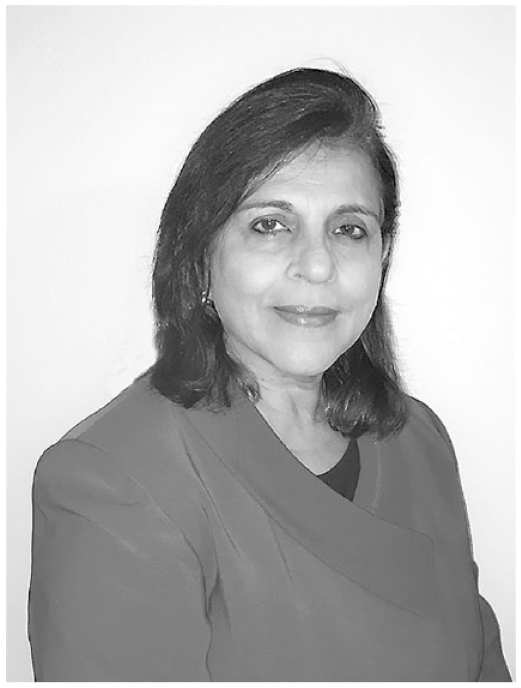
Dr. Sarup Mathur is the Ryan C. Harris Professor of Special Education in the Division of Educational Leadership at Arizona State University. She is a Board-Certified Behavior Analyst and is nationally recognized as a leader in the fields of emotional and behavioral disorders and juvenile justice, particularly specializing in the areas of social skills and re-entry of adjudicated youth.
Dr. Mathur has directed numerous projects that have received external funding, including Project RISE, funded by the Office of Special Education Programs (OSEP) and Project RISE-IT, funded by the Department of Justice (DOJ). The projects connected to both grants focused on the re-entry success of adjudicated youth released from secure care facilities. From this work, several tools and resources have been developed to support the needs of adjudicated youth being released from secure care facilities. These tools are widely recognized as go-to documents for using evidence-based practices to support successful transitions of these youth.
In addition, Dr. Mathur has authored several manuscripts, acted as the co-editor of a yearly special issue of Education and Treatment of Children on severe behavior disorders of children and youth, is the former secretary and president of the Council for Exceptional Children’s Division of Emotional and Behavioral Health, and has developed programs providing professional learning experiences to visiting scholars from India through the project entitled India Support for Teacher Education Program (In-STEP).
Your journey into becoming a teacher started in India. How did you end up in Arizona?
I did my initial teacher preparation from Women’s Training College, Dayalbagh Educational Institute (DEI), Agra, India. After getting married to Ravi, I joined him in Reno, Nevada. By the way, ours was an arranged marriage, a very different concept for many of us living here. After coming to Reno, I started teaching kindergartners and first graders in a private school. I also started taking courses as a non-degree graduate student at the University of Nevada, Reno. I still vividly remember my first day in the Introduction to Counseling class. As Professor Myers entered the classroom, I stood up, a practice in India that indicates a sign of respect toward the teacher. I realized I was the only one standing and quickly sat down. Understanding the variations of behaviors and how they relate to the features of the context started drawing my attention. My husband completed his master’s degree from the University of Nevada, Reno and landed a job in Mesa, Arizona, at the McDonnell Douglas Helicopter Company, which was later bought by Boeing. Since then, my husband Ravi and I have been in Arizona with our two children, Sumir and Anshi. After completing my master’s and PhD in special education from Arizona State University (ASU) under the guidance of the late Dr. Rob Rutherford, I was fortunate to find a job at ASU.
Your original degree is in education. Can you tell us about your journey to special education? And emotional and behavioral disorders?
Yes, I completed my bachelor’s and master’s degrees in education with emphasis in education and psychology from India. When I came here in the United States, I was interested in developing a deeper understanding of behavioral issues of children and youth. I had the opportunity of meeting with Dr. Rob Rutherford, who suggested that special education with a specialization in emotional and behavioral disabilities was a great fit for my psychology and motivation background.
Can you tell me about your international collaboration and provide advice to teachers and academics on how to make this kind of collaboration happen?
I have had the opportunity of developing various international collaborations. Since my undergraduate and graduate education was from India, I remained in contact with the faculty of education of DEI, Agra, India. Whenever I visited India, I continued to meet with them, learn from them, and presented guest lectures in their courses. In the summer of 2006 and 2007, I taught research methods to master’s and doctoral students enrolled in their education program.
Another collaborative project was the In-STEP funded by USAID. The program was offered in two cohorts, the first in fall 2013 and the second in fall 2014. I worked with 110 visiting scholars who came from the northeastern region of India to complete a 3-month residency program at Mary Lou Fulton Teachers College (MLFTC), ASU. In this project, my primary role was to support professional learning communities (PLC) training. Through integration of core courses, and PLCs, we provided various learning experiences to these visiting scholars. One of the requirements of this program was to develop a reform proposal to improve P-12 education in their own local communities. These PLCs served as vehicles for implementing their proposals and maintaining long-term and sustainable relationships after they were back in their own communities. While advancing this work with them, I made site visits to several schools in India, communicated with various institutions and agencies in India (e.g., Vidya Bhawan society) and submitted concept papers to further our college’s interest in the global understanding of relevant issues.
Another ongoing collaboration is with faculty from The University of New South Wales (UNSW), Sydney. Professor Terry Cumming, a UNSW faculty member, and I collaborated on a research course using collaborative thinking and planning. We met several times in-person and online to discuss the objectives and student learning outcomes of this course, develop the syllabus, identify common and cohort specific readings, and discuss their placement in the online learning management system. The main goal of this course was to introduce the basic principles and methods of special education research and evidence-based practices. This course was taken by master’s degree students at UNSW and EdD students at MLFTC, ASU. Dr. Cumming instructed the course, while I served as a moderator for students from ASU. After the course was over, we evaluated this experience as a case study and presented the findings at a couple of national and international conferences. Now we are co-authoring a chapter.
Networking and personal contacts have facilitated in both creating and maintaining my international collaborations. Communication has been important in establishing international relationships. I am in communication with faculty at DEI and UNSW, as we continue to find various common projects and opportunities to work together. I have also served as a thought partner with faculty from a couple other universities. For example, for one of the USAID projects, I was invited to serve as a thought partner on a project that focused on issues on migrant populations, violence prevention, and social emotional learning. Oftentimes collaborations are created because of the knowledge and scholarship of those involved. Sometimes, while attending international conferences, you find a colleague with a common interest, which can lead to international collaboration.
A lot of your early work was in the area of social skills. What are some misconceptions that most teachers are unaware of regarding social skill training for students with emotional and behavioral disorders (EBD)?
I completed my dissertation on social skills training with females involved in juvenile justice. Through that study, I learned that prosocial behaviors can be taught to a difficult population of youth by using direct instruction. Later, I was involved in conducting a couple more studies that incorporated strategy instruction and cooperative learning structures with students in alternative settings. The studies employed multiple baseline research designs and indicated positive results associated with direct instruction of social skills and cooperative structures. Later, I participated in conducting meta-analyses of social skills research (e.g., group studies and single-case studies) and found that the effects of social skills training were modest at best. Social interaction skills were found to be more amenable to training than communication skills. Most of the studies focused on social interaction incorporating peer mediation as a component in social skills instruction; I am talking about the late 90s and early 2000s. We noticed issues with the selection of participants and missing fidelity data. The meta-analysis with single-case studies raised some interest in the community of scholars, as it challenged the more accepted views about the relevance of quantitative synthesis of single-case design. It was exciting to participate in the advancement of this intellectual discussion and develop a counterargument summarizing the specific reasons for such a synthesis. This work that we did two decades ago continues to generate interest and has resulted in the most cited articles that I have co-authored.
One of the misconceptions is that only students with special needs benefit from social skills instruction. That is not true. All children can benefit from using these skills and there are formal and informal ways to teach these skills. A great teacher can create opportunities to teach, reinforce, or prompt the use of these skills. Another one I hear is that you need to have a curriculum or a packaged program for teaching these skills. All the commercial packaged programs are not necessarily research based. I would encourage teachers to use trusted sources of scientific evidence, such as What Works Clearinghouse. There is a continuous need to further refine social skills training programs. Even in one of the most recent meta reviews of evidence-based practices for students with or at risk for emotional and behavioral concerns, social skills training and several other interventions have been found to produce a wide range of effect sizes that are promising but need consistent and rigorous experimental evaluations. I still recommend that teachers use opportunities to teach social skills but want them to know that we need to remodel and refine these interventions for various contexts and learners. More specifically, we need to make sure that culture is considered a part of social skills training to make it student-centered. Each student brings unique cultural strengths to the classroom and we the teachers need to recognize and nurture them by being open-minded and supportive and willing to change preconceived ideas.
It’s always interesting to learn about other academic’s family trees and how their influence sets you on your own academic journey. Can you briefly talk about some members of your academic family tree and the academic spaces that you frequented during your doctoral program?
I was fortunate to have great mentors throughout my academic journey and very grateful for their mentorship. In India, I received great advice and guidance from Dr. G. P. Sherry, director, DEI, Agra. She fostered in us the attributes and values rooted in the “DEI education policy” that is based on evolving into a “complete person” who is well-rounded with intellectual strength, scientific temper, emotional maturity, and character; and develops an interdisciplinary lens for understanding the issues of society.
After coming to the United States, I learned a lot from Dr. Rutherford, a great scholar in the field of emotional and behavioral disabilities. He had high expectations for his doctoral students and a disposition and desire to help them develop into scholar leaders. He provided constructive feedback, encouragement, and support. Along with him, I was also mentored by many other scholars, such as Mike Nelson, Peter Leone, and Steve Forness during my doctoral program.
One of the greatest mentoring experiences I have enjoyed is participating in the Teacher Educators for Children with Emotional and Behavioral Disorders (TECBD) National Conference that provided me an outlet for my professional interest in emotional and behavioral disabilities. This conference was founded by Dr. Rutherford, and he encouraged his doctoral students to connect with scholars in this field. I was able to speak with the giants and legends in person and ask for their input, advice, and contact information for further discussions. The TECBD conference provided me with a non-threatening, safe space to overcome my fear of presenting ideas, sharing information, and allowed me to meet people such as James Kauffman, Ken Kavale, Lyndal Bullock, Kathleen Lane, Lee Kern, Kristine Jolivette, Bev Johns, and Cathy Kea, to name a few. I am still maintaining several of these collaborations from the time of my doctoral studies. Now that I advise doctoral students, I recommend TECBD to them and try to promote and nurture their early professional affiliations. I would like to extend my thanks to my colleague and friend, Heather Griller Clark, for her continued commitment to this conference.
Where did the transition from focusing on students with EBD in school shift toward adjudicated students in juvenile justice settings?
When I was working with Dr. Rob Rutherford, he introduced me to alternative settings, including juvenile justice settings. At the same time, several opportunities came along the way to continue this line of inquiry. He asked me to co-direct the National Center for Education, Disability, and Juvenile Justice (EDJJ), and the model demonstration grant entitled the Arizona Detention Transition Project (ADTP) with him along with other scholars. In the years following, I began to focus more on reentry issues of youth, specifically those who were involved in juvenile justice. More recently, I led two other projects with Heather Griller Clark, Reentry Intervention and Supports for Engagement (RISE) and Reentry Intervention and Supports for Engagement by Integrating Technology (RISE-IT). Based on this work, I learned that youth engagement is impossible without community engagement. It has become apparent that systemic professional development is critical for professionals who are serving these youth across various educational environments—from public schools to alternative settings, to detention, to long-term secure care settings. I have also learned how challenging it is to conduct research in the juvenile justice settings. These challenges may range from security-level challenges (e.g., heightened security, surveillance) to instructional challenges (e.g., turnover of staff, quality of the curriculum, removal of students due to disciplinary action or court appearances) to methodology-related challenges (e.g., obtaining IRB approval, restrictions to access data). I still think there is so much to do in these settings for the benefit of youth, who are involved in the juvenile justice settings and those who serve them.
One role of juvenile justice facilities is to provide an education. What would say are some differences in terms of education in school settings versus education in juvenile justice settings?
In general, education in juvenile justice isn’t comparable to public education due to several reasons. Sometimes it is not considered a priority and is characterized by poor learning conditions, low expectations, and high turnover of teachers and students. One may find students in these settings coming to class in restraints, completing homework in their cells, and monitored by armed security officers. Anywhere from 30% to 60% of students in these settings have disabilities and more than 50% have mental health needs. Students in these settings have intensive academic, social, emotional, and behavioral and mental health needs that require predictable conditions and structures that provide better learning opportunities and service. They have ended up in these settings because they have fallen through the cracks; the previous systems and structures have failed them. They don’t need another system to fail them; rather, they need one that can meet their intensive needs and help them in having options to make up failed classes. Despite all these challenges, I have heard some great success stories too. I have known youth who have developed great relationships with their teachers and transition specialists. They reintegrated well into the community after they were released and are productively engaged. Many of them attribute their success to effective reentry programming, trusting relationships, or having a great mentor in their life.
Are these issues in juvenile justice education what led you to your transition-based work?
Yes, you are right. It became apparent that we needed to create partnerships across the school and juvenile justice. Many school professionals do not know what goes on in a juvenile justice setting. In one of our studies, we found that our stakeholders representing various youth service agencies indicated a strong need for professional development in best practices involved in reentry. We had surveyed them to examine their perceptions and awareness of existing transition practices for youth. We also wanted to understand specific barriers and challenges that interfere with their awareness. The findings were interesting. Quite a few stakeholders exhibited a considerable lack of awareness of practices or indicators in some of the reentry domains. Lack of knowledge of stakeholders about effective re-entry practices was an impediment to youth re-entry success. It became apparent that we needed to create capacity building opportunities for developing a shared understanding among all the stakeholders, whether they represented schools, employment agencies, community colleges, or juvenile justice. If all stakeholders increase their understanding about their local reentry practices and resources, they are more likely to enhance meaningful outcomes for youth.
Your scholarship is diverse and includes quite a few research-to-practice manuscripts in addition to your research-based scholarship. What do you feel is the importance of writing research-to-practice manuscripts?
I have struggled with this gap between research and practice. I find it really problematic. Students with EBD and those at risk are in critical need of evidence-based instruction. When we look at the conditions of learning and instruction that takes place in classrooms, it is not always research based. Research and actual reality of implementation in practice are two separate things. We don’t see research translating into practice, so as a scholar we must become intentional to ensure that we provide meaningful guidance based on research. Teachers and other practitioners often view research as somewhat inaccessible and removed from their day-to-day work. They need immediate actionable items and more concrete guidance on practices.
What future advances and/or research should be or has yet to be fully explored in the field of EBD?
I think we need more collaborative research between special education and other disciplines on conditions of learning, instruction, and services for students with EBD. Sometimes we have overemphasized specific behavior and attached too much relevance to those behaviors. For example, for a very long time, we pushed for teaching eye contact and viewed it as a desirable behavior for all students, including for those who came from the cultures where this behavior was viewed as socially unacceptable. While focusing on teaching the skill of asking questions, sometimes we forgot to consider the context and cultural differences and how to be considerate and respectful.
We need to adopt cultural humility and check on our own biases, to really understand whether focusing on a specific social behavior contributes to the overall functioning of the student or does it add to my personal bias contributing to issues of disproportionality. We need to develop a better understanding of the educational context in which educators function, their working conditions, and support they receive from administration. Quality of work experience is especially important when serving students with EBD, as they need the workforce that is stable in providing positive educational experiences. We need to focus on protective factors for EBD across the stages of development (e.g., elementary, secondary) and see how we utilize them in developing interventions and services at each stage. Finally, we need to invest in capacity building of professionals serving students with EBD and focus on teacher training and professional development.
Footnotes
Declaration of Conflicting Interests
The author(s) declared no potential conflicts of interest with respect to the research, authorship, and/or publication of this article.
Funding
The author(s) received no financial support for the research, authorship, and/or publication of this article.
