



Abstract
School leaders have been retiring and resigning in record numbers, creating a significant need for new leaders to fill those roles. The demands and stress of these jobs limit the number of people interested in educational leadership positions. Millennials can fill this impending void. Previous studies have examined what millennials need in the industry to achieve job satisfaction and retention. This study was the first to propose a new leadership framework, the Millennial Leadership Conceptual Framework (MLCF), that takes into account research on transformational leadership and millennial workplace preferences. This paper surveyed educational leaders to determine if the MLCF components of relationships, voice, and moral purpose were essential for the recruitment and retention of millennials in educational leadership. The results revealed that voice, relationships, but not moral purpose, were critical to millennials’ recruitment and retention.
The average principal turnover is 21% in Title I schools and 17% in non-high-needs schools (Grissom & Bartanen, 2018). Frequent principal turnover impacts principal quality, and the new principal is often less experienced and qualified (Grissom & Bartanen, 2018) than their predecessor. Principals and the other site administrators (e.g., vice principals) who support them are essential to the overall success of school sites. Together, they influence student achievement, staff morale, feelings of connectedness, and decrease staff turnover (Grissom & Bartanen, 2018; Reid, 2022). Their impact is second only to teachers (Fullan & Quinn, 2015). However, there are two worrisome trends regarding these positions. First, the current population of administrators is aging and nearing retirement (Principal Attrition and Mobility, 2023). Second, the perception of administration was significantly tarnished during the COVID-19 pandemic (Katsarou et al., 2023).
School leadership needs consistency to maximize student achievement and staff morale (Grissom & Bartanen, 2018; Reid, 2022). (In this study, leaders will encompass all site administrators.) The increased demands of leadership have increased stress, burnout, and turnover on school leaders (Reid, 2022). The perception of administration was significantly tarnished during the COVID-19 global pandemic (Katsarou et al., 2023). Families often took out their frustrations on the administrators of their schools. This stress, coupled with the additional tasks that administrators are now responsible for (e.g., fiscal, facilities, social-emotional well-being of staff, student instruction, student social-emotional growth) has increased stress and burn-out (Beausaert et al., 2016).
In addition many school leaders are nearing retirement. According to the National Center for Education Statistics (NCES, 2023a), 25% of leaders plan to retire as soon as they are eligible for retirement benefits. In 2017, nearly one quarter of school principals were over 55 and the average age of a school leader was 49 (NCES, 2017).
These demographics indicate that schools require younger individuals, such as millennials, to assume leadership positions. In 2024, millennials are between the ages of 26 and 44 (Chicioreanu & Gheorghe, 2018), and the most logical group to fill the looming void of school site leaders. Millennials are in their prime working years because they are 20–40 years before retirement. Therefore, there can be a significant return on investment if they are recruited and retained to join the ranks of educational leadership. They are early in their careers and more likely to be promoted than older workers (Smith & Webber, 2005). Millennials make up 22% of the U.S. population and are more racially diverse than previous generations (Frey, 2020). The diversity of millennials closely aligns with U.S. student populations. In 2019, Millennials were 20.9% Latin American or Hispanic, 13.8% Black American, and 55% White American (Frey, 2020). In 2022, the U.S. student population was 28% Latin American or Hispanic, 15% Black American, and 45% White American (NCES, 2023b). Schools will need millennials to take on the upcoming demand for school site leadership. However, there has not yet been a study that investigates millennials and what they require for retention in educational leadership positions. The retention of potential leaders in districts and administrator preparation programs is negatively impacted without such information.
According to previous research on general millennial workplace preferences, millennials require relationships for workplace satisfaction (Abrams, 2018). Relationships provide the opportunity for collaboration and feelings of connectedness. Collaboration requires individuals to form relationships with others to work collectively on a task. Teamwork involves working with others and, therefore, needs strong relationships to be impactful. Social sensitivity skills help millennials build these relationships (Dewitt, 2022). Peer interactions are improved when colleagues have connections which allow for effective communication and collaboration (Katal et al., 2022). Millennials want relationships with those in the organization; lateral relationships with their colleagues and vertical with their superiors (Abrams, 2018). When millennials seek employment after college, they seek a sense of belonging (Guy & Pentz, 2017).
During the literature review process on leadership and millennials, similarities were identified among what millennials had identified as crucial in transformational leadership theory, the essential elements of professional development and effective teams, and the critical orientations of adult learning theory. Matrices were used to connect the commonalities that align with millennial workplace preferences and they are shaded grey in Figure 1. The common characteristics were distilled them into the Millennial Leadership Conceptual Framework. The Millennial Leadership Conceptual Framework states that millennials require relationships, voice, and moral purpose to remain in administrative roles. Next, how these were identified will be explained. Summary of components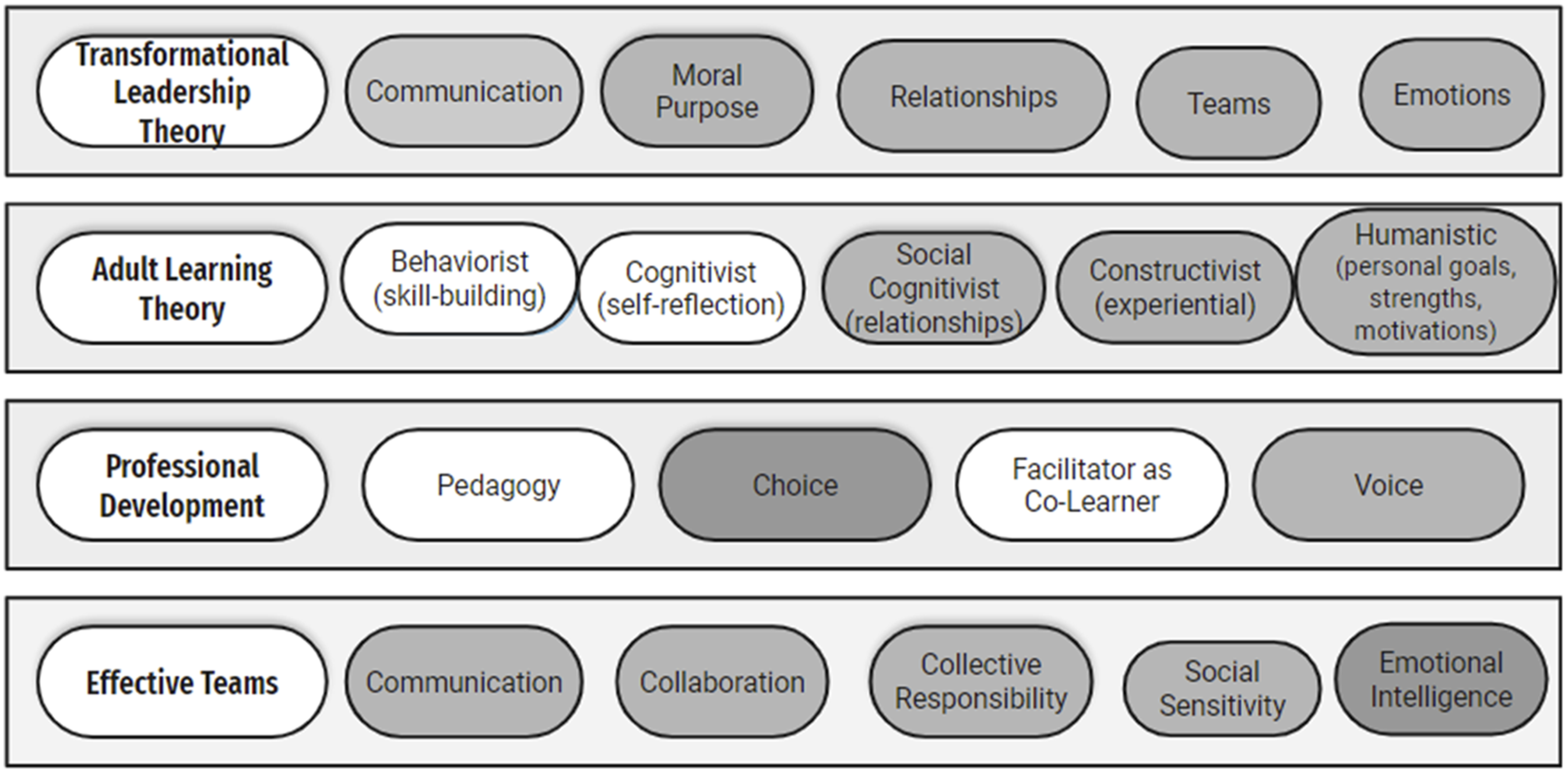
Transformational leadership theory is central to the concept of moral purpose, which is also in the cognitivist aspect of adult learning theory (Dewitt, 2022; Fullan & Quinn, 2015). One of the fundamental tenets of transformational leadership theory is the team, and based on that, all the components of essential teams would also be applicable to transformational leadership. Choice is closely tied to self-reflection, which is crucial for professional learning to be effective. Choice also comes with the collaborative aspect of effective teams, because making choices requires both giving and taking when collaborating. Relationships are also fundamental to collaboration and professional learning, where the facilitator learns alongside the participants. Adult learning theory (Knowles, 1978) included relationships into the social cognitivist component of the theory, and transformational leadership specifically highlighted relationships as one of the five essential elements. Emotions go hand in hand with relationships because they require human connection to be impactful. The personal goals, strengths, and motivations that compose adult learning theory’s humanistic aspect are also derived from emotion. In professional development, the participants have a voice and emotional investment (Leland & Kasten, 2002). Effective teams also have emotional intelligence, or the ability to think collectively, which requires emotional vulnerability and understanding between the team members.
When analyzing millennials specifically, no current leadership framework addressed the characteristics that they identified as critical to retention and recruitment. Some components of theories (transformational leadership and adult learning theory) were applicable, as were some traits of impactful professional development and teams. Therefore, to address millennials specifically, the present study used the Millennial Leadership Conceptual Framework (MLCF), and the connected components of shaded in grey in Figure 1, to determine if the MLCF would apply to millennials in educational site leadership positions.
However, the information in Figure 1is too cumbersome and needed to be further distilled to make the MLCF actionable and practical for real-world applications. Communication and voice were consolidated into voice. Moral purpose connects with personal goals, motivations, and choice, and is summarized with moral purpose. Relationships require collaboration, and effective teams require relationships along with collective responsibility. Finally, social sensitivity, emotions, and emotional intelligence are also essential components of relationships and are, therefore, integral to them. The MLCF states that millennials require relationships, voice, and moral purpose to remain in leadership roles.
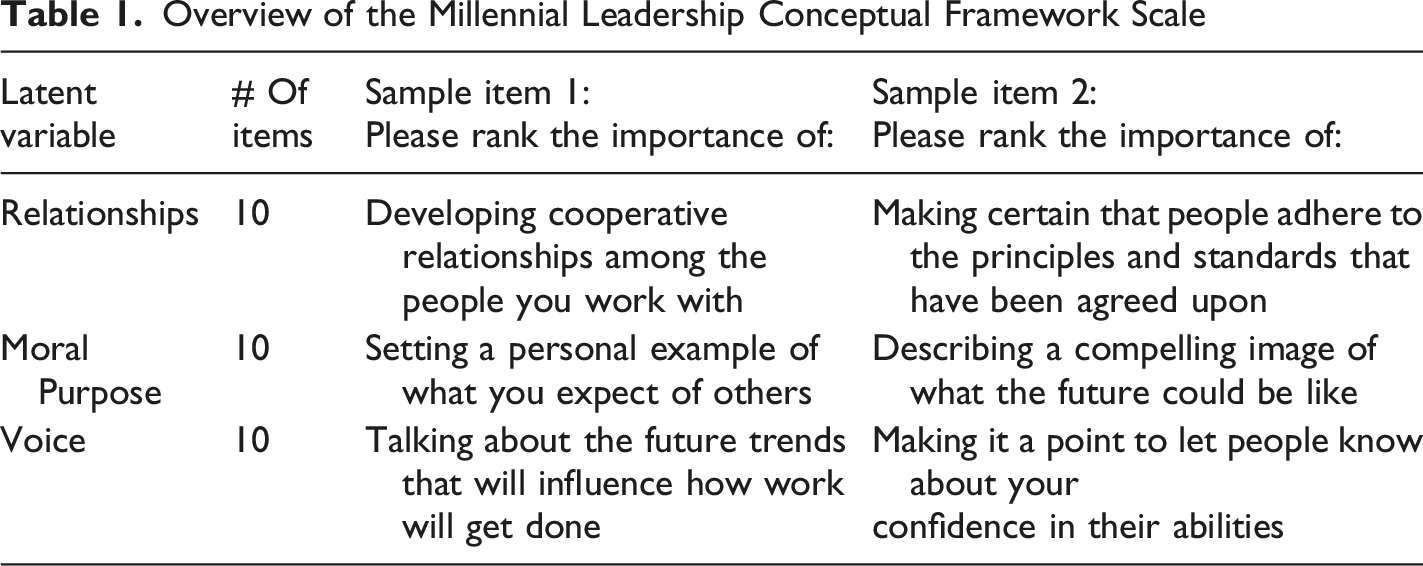
In the present study, I surveyed millennial educational leaders about the characteristics they found important for job satisfaction. Specifically, the research question which guided this study was: Are the three components of the MLCF, relationships, moral purpose, and voice, required for them to remain in their leadership role? Leaders were asked 30 survey questions to determine if the three components of the MLCF were important to millennials. The questions were based on the Leadership Practices Inventory (LPI) (Posner & Kouzes, 1988, 1993, 1994). The LPI was used to determine if the three characteristics of relationships, moral purpose, and voice were the most important aspects for job retention and recruitment. They studied managers from different countries and public and private industries to develop the LPI (Posner & Kouzes, 1993). Since the MLCF was so closely aligned to transformational leadership, the LPI was used as a foundation for the survey. The categories identified in LPI correspond with the tenets of MLCF.
Next, I will describe the participants and provide a brief review of the survey tool. Specifically, I describe the geographic regions of California represented by the respondents, discuss the respondents’ ages, demographic information, and years of experience in administration. After describing the respondents, I analyze and present the research findings and determine the validity of the MLCF’s three components: relationships, moral purpose, and voice.
Millennial Leadership Conceptual Framework
Overview of the Millennial Leadership Conceptual Framework Scale
Data Collection
The three variables (i.e., relationships, moral purpose, and voice) were analyzed using a cross-sectional survey design to determine their impact on millennial job retention. The participants were school leaders and completed attention checks (questions that were used to ensure that participants were reading the questions and not randomly selecting answers) at the start and throughout the survey. Participants self-reported their age on the survey. The survey instrument was developed by the LPI and refined by Pozner and Kouzes (1988, Posner & Kouzes, 1993; Posner & Kouzes, 1994). Participants in the survey were selected through two means: social media and email. The link to the survey was posted on LinkedIn, Facebook, and Instagram. Educational leaders were encouraged to share the link with others, and emails were sent to leaders across California using the California Department of Education’s School Export email list (California Department of Education, 2024). The 369 participants responded to 30 survey questions. Leaders self-assessed the importance of various characteristics in maintaining their leadership positions. The response scale was modified to a Likert-type 5-point scale (Guetterman & Creswell, 2019) and administered through Qualtrics.
According to the California Department of Education (2024), there were 10,010 schools in California, and 40% of the U.S. workforce were millennials (U.S. Bureau of Labor Statistics, 2023), which meant that at the time of the study, there were approximately 4,004 school principals who were millennials. Using a population size of 4004 and a 95% confidence level with a 5% margin of error, the required sample size is 351 (SurveyMonkey, n. d.). To meet the necessary sample size, surveys were sent to 2,500 indiiduals with a predicted response rate of 15%. This would provide the required sample size for reliable data. A total of 369 responses were gathered and analyzed.
Data Analysis
Once the data were collected and the survey was closed, the data were analyzed to determine if the MLCF was correct and if its components (i.e., relationships, voice, and moral purpose) were rated important by millennial leaders. Millennial data were analyzed using principal component analysis (PCA). A principal components analysis (PCA) was used to reduce the variables into smaller set of principal components (Laerd Statistics, 2015; Shrestha, 2021). A factor procedure was used to conduct the PCA. The initial eigenvalues were reviewed to determine which principal components should be retained for further analysis (Laerd Statistics, 2015d; Shrestha, 2021). Eigenvalues of less than 1 were excluded (Laerd Statistics, 2015d; Shrestha, 2021). The scree plot was examined to determine if more or less components should be retained (Laerd Statistics, 2015; Shrestha, 2021). The scree plot revealed that the first four components should be retained. An examination of the rotated component matrix revealed a complex structure of seven questions loading the same component (Laerd Statistics, 2015d; Shrestha, 2021). Due to the complexity remaining in the data, a forced factor extraction was conducted with a forced factor value of four, which was then decreased again and a force factor of both two and three were used. Ultimately, a forced factor of three was used.
The PCA revealed that relationships, voice, and strategic thinking, not moral purpose, were deemed important for job satisfaction. Thus, the variable moral purpose was no longer examined and replaced with strategic thinking. Depending on the normalcy of the data, additional analysis was conducted.
Participant Demographics
Initially, a descriptive analysis of the demographic data were conducted using Qualtrics. The vast majority, 300 of the 369 participants, were principals. All respondents worked in California. More females (n = 233 or 63%) responded to the survey than males (n = 135 or 36.7%). According to NCES (2023), California had 47.6% male principals and 52.4% female principals. There were four (1%) respondents between the ages of 25– 34 and 118 (32%) respondents between the ages of 35–44, but there were also 218 (46.5%) respondents who were not millennials. There were 11 (3%) respondents who had completed their 1st year in administration, 108 (29.3%) who had been a leader for 2–5 years, and 250 (67.75%) who had been a leader for 6 or more years.
When the data were cleaned to only allow millennials, the majority were between 35–44 years old (n = 109, 98.6%). The ratio of males to females was 29 (25.7%) to 84 (74.3%). The demographics of millennials showed the vast majority being White American (n = 86, 72.9%), then Hispanic (n = 10, 8.5%), Asian (n = 6, 5.1%), other (n = 6, 5.1%), prefer not to say (n = 5, 4.2%), and American Indian/Native American or Alaskan Native and Native Hawaiian both having one respondent (0.8%).
Millennials Versus Non-millennials
The purpose of this study was to determine if millennials have unique leadership requirements to stay in leadership positions compared to non-millennials. A Mann-Whitney U test was conducted to determine if there is a difference between two different groups (Laerd Statistics, 2015c; MacFarland & Yates, 2016). The Mann-Whitney U test revealed that p values for all but two of the questions were greater than .05 and, therefore, the result was not statistically significant, and the null hypothesis should be retained (Laerd Statistics, 2015c; MacFarland & Yates, 2016). The results, therefore, indicated little to no difference between the responses of millennials and non-millennials. Thus, the data were further examined.
Millennial Subgroups
The data were analyzed to determine if there were differences between age-spans among millennials, underrepresented races when compared to Whites, and males compared to females. Since the goal was to determine if there were statistically significant differences between two groups (i.e., 25–34 vs. 35–44 years old, Whites vs. underrepresented minorities, males vs. females), a one-way ANOVA was selected (Emerson, 2022; Laerd Statistics, 2017). The first three assumptions were met: having a continuous variable, one independent variable with two or more independent groups, and having independent observations (Emerson, 2022; Laerd Statistics, 2017). The components identified through the PCA analysis were then compared to determine if statistically significant differences existed between age, race, and gender.
The Kruskal-Wallis H test has four assumptions: one dependent continuous or ordinal variable, one independent variable with two or more categorical groups, independence of observations, and the shape of the distribution of the independent variables must be determined to guide how the results are interpreted (González-Estrada et al., 2022; Laerd Statistics, 2015b). The first three assumptions were met, and the data distribution was determined. The shape of the distributions was not similar for the different age groups when the boxplots were examined (González-Estrada et al., 2022; Laerd Statistics, 2015b). The hypothesis test summary was analyzed, and the null hypothesis was retained for all but “speaking with genuine conviction about the meaning and purpose of your work is an essential component of remaining in a leadership role,” indicating that there was a significant difference between 25–34-year-old respondents and 35–44 year-old respondents.
The only question that had statistical significance between the age spans was “Speaking with genuine conviction about the meaning and purpose of your work,” X2 (1) = 4.574, p = .032. An average of the medians revealed that millennials aged 25–34 ranked it a 4 on the Likert scale, fairly important. The respondents ages 35–44 ranked it a 5, very important.
The Shapiro-Wilk test revealed that there was a statistically significant difference in some of the age spans because their significance was less than or equal to .001, and the data were not normally distributed, which meant the assumption was violated (González-Estrada et al., 2022; Laerd Statistics, 2015b).
The average medians were then examined to determine where the lack of normality in the shapes of the curves came from. The average medians showed there was one question that was scored on the 5-point Likert scale differently for the 25–34-year-old respondents compared to the 35–44 year olds. The younger millennials ranked being clear about your philosophy as a 5, very important, where the millennials scored it a 4, very important.
Race
The variables for race were recoded so that the American Indian/Native American, Asian, Black/African American, Hispanic, Native Hawaiian/Pacific Islander and other were a single variable for minority participants. Prefer not to say (n = 5) were removed, leaving 107 responses. Once the variables were combined, exploratory statistics were performed to determine if the fourth assumption for ANOVA was met, a normal distribution (Emerson, 2022; Laerd Statistics, 2017).
A visual analysis of the boxplots revealed that there were no outliers. The p-values were greater than zero for all the variables. Because the p-values were greater than zero, the null hypotheses were valid and should be retained (Laerd Statistics, 2015a). When the medians were analyzed, one difference was found between minority and White participants: identifying measurable milestones that keep projects moving forward. White respondents ranked that component fairly important, and minority participants ranked it as very important.
There was homogeneity of variances based on Levene’s test for both actively listening to diverse points of view and making it a point to let people know about your confidence in their abilities, p = .226 and p = .971, respectively (Emerson, 2022; Laerd Statistics, 2017; Morgan et al., 2020). Therefore, the assumption was met, and an ANOVA test could be conducted (Emerson, 2022; Laerd Statistics, 2017). The ANOVA yielded the same p-values reported in Levene’s test (Emerson, 2022; Laerd Statistics, 2017; Morgan et al., 2020). Therefore, it was not statistically significant.
Gender
The Shapiro-Wilk revealed a statistically significant difference in the shape of the data, thus violating the fourth assumption for all the questions (p < .001; González-Estrada et al., 2022; Laerd Statistics, 2015a). When the median averages were analyzed, they were the same for each of the questions, except for ensuring that people are growing in their jobs by learning skills and developing themselves. The last question showed that males ranked the ensuring people are growing question as fairly important, 4 on the Likert scale, whereas females ranked it 5, very important.
The hypothesis test summary revealed that the null hypothesis should be rejected at a significance level of less than 0.05, with p-values of 0.047 and 0.022 (González-Estrada et al., 2022; Laerd Statistics, 2015a). The average of the medians was analyzed to examine the differences between males and females in greater detail because the null hypothesis was rejected. Actively listening to diverse points of view revealed that there was no difference in the medians (Laerd Statistics, 2015a; Morgan et al., 2020). The p-value was close to the significance cut-off of .05 with a value of .047 (Laerd Statistics, 2015a; Morgan et al., 2020). The second question, making it a point to let people know about your confidence in their ability, was scored as fairly important, with a Likert value of 4 by males and a Likert value of 5, very important, by females.
The means were also analyzed to understand the difference between genders because there was no observable difference when the medians were compared. Malretentiones scored actively listening to diverse points of view and making it a point to let people know about your confidence in their abilities lower than females.
A hypothesis test summary was conducted to determine if the null hypothesis needed to be rejected because the data were not normally distributed (Laerd Statistics, 2015a). All the hypotheses were not statistically significant and, therefore, the null hypothesis was retained.
The null hypothesis was retained because the fourth assumption was violated and there was not a statistically significant difference (Emerson, 2022; Laerd Statistics, 2015b). The average medians still required analysis. The average medians, revealed that the genders ranked all the strategic thinking questions the same, 4, fairly important, and 5, very important.
Summary of Findings
When the initial principal component analysis was done of the survey instrument used to understand what millennials require to remain in their leadership positions, the components of relationships and voice were identified as critical. However, moral purpose was not considered important; rather, strategic thinking was identified. Therefore, the MLCF should comprise relationships, voice, and strategic thinking to retain millennial leaders and attract new millennials to these positions.
The subgroups of the millennials were then analyzed (i.e., age spans, race, and gender). The younger millennials ranked publicly recognizing people who exemplify commitment, identifying measurable milestones that keep projects moving forward, and taking initiative in anticipating and responding to change as 4.50, midway between “fairly important” and “very important” on the 5-point Likert scale. Speaking with genuine connection about the meaning and purpose of one’s work was ranked as fairly important by younger millennials and very important by older millennials. When the millennials’ responses were analyzed by race, only one difference was found. Identifying measurable milestones that keep projects moving forward was ranked as very important by White respondents and fairly important by minority respondents. Finally, when millennials’ responses were examined by gender, there were two questions that showed gender differences. Ensuring that people growing in their jobs by learning new skills and developing themselves and making it a point to let people know about your confidence in their abilities were both ranked as fairly important by males and very important by females.
Limitations
The focus of the study was on millennials and their perceptions of the important components of leadership that enable them to remain in leadership positions. The age span for millennials is not always consistent between researchers. Therefore, this study used the widest definition to ensure all millennials were included. A total of 118 millennials responded to the survey. However, when the age spans within millennials were examined (i.e., 25–34 and 35–44), a discrepancy was found between the two spans. There were only four respondents between the ages of 25–34. Therefore, future research into the age spans of millennials should be conducted with greater representation of those younger millennials.
In California, 47.6% of principals are men and 52.4% are women (NCES, 2023a). The study had 35.9% male respondents and 63.8% female respondents. These percentages are comparable to those in the California population. However, there were no data showing the genders of California millennial principals. Therefore, the comparability of the gender distribution of millennials in this study (i.e., males: n = 31, 26.3%; females: n = 87, 73.7%) with that of California cannot be determined.
The demographics of the millennial respondents revealed that Hispanics were underrepresented, with 8.5% of respondents being Hispanic compared to California’s population of 24.7% of principals being Hispanic (NCES, 2023b). When the demographics of respondents were compared to national statistics, the demographics were similar for all groups except for Black or African American principals (NCES, 2023b). Implications.
The results from this study can inform administrative credentialing programs and the retention and recruitment efforts of important school districts for millennial leaders. Applying the findings, policies, and procedures better aligns with the needs of prospective and current millennial leaders, thereby increasing recruitment and retention rates. Improving recruitment and retention will help fill the pending void in administrative positions and increase leadership stability in California public school districts.
The results showed that millennials do value relationships and voice, but do not significantly value moral purpose. Rather, they find strategic thinking more valuable. When individual questions were analyzed, millennials valued telling stories of encouragement about the work of others and being clear about their philosophy of leadership less than non-millennial educational leaders. This suggests that approaches to recognizing leaders and leadership styles should be modified to meet the needs of the next generation of educational leaders. The study’s results are now discussed in terms of how they can be applied to improve recruitment and retention in educational leadership positions for millennials.
Recruitment
Recruitment of potential leaders often involves an administrative credentialing program. Those considering administration must first get their administrative credential before they can apply and be considered for administration (California Commission on Teacher Credentialing, 2022). Acquiring an administrative credential does not mean a potential leader must take an administrative job. Still, without it, they cannot be considered (California Commission on Teacher Credentialing, 2022).
Structure of Preparation Programs
To recruit millennials, districts and credentialing programs need to highlight and structure leadership positions so that individuals interested in administrative roles understand the importance of relationships, voice, and strategic thinking. Specifically, the youngest millennials (i.e., 25–34 years old) need to know that administrative positions will allow them the opportunity to create strong relationships. The participants in this study had strong relationships with those they worked with and also recognized those who were doing great work. Prospective millennial leaders are trusted to take initiative, respond to change, and create measurable milestones for projects they embark on. They need to be aware that they will have the ability to share their philosophy on leadership with those they lead. The structure of the programs and how the curriculum is delivered could provide these opportunities.
Coursework for the administrative credential could include role-playing scenarios where participants practice skills, act out leadership scenarios, and collaborate with their peers to brainstorm various ways to address the situations. These humanistic learning experiences align with millennial preferences for adult learning (Downs, 2020; Guy & Pentz, 2017). The credentialing program should provide training for instructors on professional development for prospective leaders, cultivating relationships with diverse individuals, offering recognition that aligns with their colleagues’ personality preferences, setting goals, and celebrating the achievements of those they lead, both with and alongside them. While obtaining their administrative credential, prospective leaders should be working on crafting their leadership philosophy and exploring various ways to communicate it to staff, students, and the broader community. Additionally, current leaders could serve as guest presenters in these programs, discussing their leadership and how they incorporate relationships, voice, and strategic thinking into their daily routines. Grading in these programs should be very clear, with milestones provided so millennials can celebrate as they progress toward completing large program assignments and components.
Job Shadowing
Job shadowing is a robust training tool for participants in credentialing programs. Individuals interested in leadership and potential educational leadership roles would benefit from job shadowing opportunities to gain firsthand experience with leadership. Additionally, job shadowing offers potential educational leaders the opportunity to develop relationships, articulate their moral purpose, and employ strategic thinking to enhance student achievement. Job shadowing enables prospective millennial leaders to observe leadership in real-time without the stress of responsibility. Those prospective millennial leaders who are hesitant to consider becoming an administrative leader would have the security of having an expert present to provide real-time feedback and explain their thought process in each situation; qualities that millennials desire (Abrams, 2018; Cole et al., 2023).
Job shadowing provides prospective leaders with the opportunity to observe various aspects of educational leadership. Job shadowing allows them to see site- and district-level leadership. In each school semester, prospective leaders should spend time shadowing at a school site in curriculum and instruction, student services, and special education. The shadowing time could replace one of their classes, allowing prospective leaders to balance their work, educational, and personal lives. Through job shadowing, leaders are expected to actively discuss what they observe, rather than merely making observations and being a passive observer.
Job shadowing could set the foundation for powerful mentorships. Mentorships between aspiring and current leaders would provide an opportunity for relationships to form and for prospective millennial leaders to gain field experience and have a support system, aligning with millennials’ need for humanistic learning experiences (Allen et al., 2022; Guy & Pentz, 2017). These strong relationships could be symbiotic, with the veteran leader providing support and experience, and the prospective leader providing innovation and questions that allow the veteran to examine their practices and potentially modify and adjust them to meet the diversity that is intertwined in millennials’ identities and is present in student, staff, and communities where leaders lead.
Retention
Recruiting millennial leaders is the first step; retaining them is equally essential to provide the stability that has proven beneficial to students, staff, and communities (Grissom & Bartanen, 2018; Reid, 2022).
Retention of leaders will require districts to structure their leadership hierarchy and expectations in a way that supports and encourages relationships, voice, and strategic thinking. This may require the professional development of existing leaders (of all generations) to facilitate a paradigm shift in the approach to leadership. Often, California public school districts have established long-standing processes and procedures for evaluating, promoting, and providing professional development for their leaders. However, for millennials’ leadership retention, these processes and procedures may need to be adjusted so there are more opportunities for individuals to have a voice in the organization’s future.
The structures for lateral communication between leaders and their peers, as well as vertical communication among their superiors, may need to be reexamined to ensure that communication pathways are clear and accessible to both new and veteran leaders throughout the hierarchical California school district structure (Abrams, 2018). Gender differences also need to be taken into consideration regarding how male and female leaders communicate with those they are leading and how they provide support to their staff. When California public school districts embark on major initiatives, they should break them into components and create milestones so that younger millennial leaders can see success and celebrate when they meet those goal posts. However, there should also be flexibility in how these goals are communicated, so that leaders of different races can choose if the “milestone” approach is valuable to their leadership style.
Professional Development
Female and male respondents ranked ensuring that people grow in their jobs and letting people know about your confidence in their abilities as very important. Therefore, district leaders should provide opportunities for leaders to develop their leadership skills and offer positive feedback whenever possible. District leaders who mentor, supervise, or evaluate millennial educational leaders should reflect on the areas that millennials find important and provide support accordingly. District leaders should ensure their feedback and support address relationships, voice, and strategic thinking. Professional development should draw on adult learning theory to ensure that all learners can access the content and benefit from the experience. Humanistic learning experiences enable leaders to identify their goals, strengths, and motivations, and apply these insights through role-playing and experiential learning experiences (Downs, 2020; Guy & Pentz, 2017).
Mentorships
Mentors and supervisors should seek opportunities for millennials to continue honing their craft and building their skills. Millennials should be provided with choices to self-identify areas they want to focus on for that year. Experienced millennial leaders should also be given the opportunity to mentor others. Allowing them to have mentees will enable them to continue feeding their passion while supporting newer leaders. Providing opportunities for job-alike peers to meet and have candid conversations without their superiors would allow leaders to build relationships with colleagues. These relationships will provide support and encouragement when leaders encounter stressful situations, which could ultimately lead them to reconsider their profession. Membership in professional organizations that offer professional development opportunities for networking also helps millennials feel more connected, such as the Association of California School Administrators, the California Association of Latino Administrators, or the California Association of Asian and Pacific Leaders in Education. Professional organizations that allow underrepresented groups to collaborate and support each other enhance millennial job satisfaction and retention. At the same time, California public school districts should strive to become more diverse, reflecting the demographics of their communities, students, and staff. Women and minorities are underrepresented in the administrative ranks (NCES, 2023a; 2023b), and membership in professional organizations dedicated to their identities can help them develop relationships and celebrate their uniqueness.
Areas for Future Research
School leadership needs consistency to maximize principal impact (Grissom & Bartanen, 2018; Reid, 2022). However, the increased demands of principalship have increased stress, burnout, and turnover (Reid, 2022). The COVID-19 global pandemic exacerbated stress and negatively impacted principal mental health and well-being (Reid, 2022). Not surprisingly, the highest-needs schools demand more from principals, so turnover rates are most significant in these schools (Grissom & Bartanen, 2018).
The average principal turnover is 21% in Title I schools and 17% in non-high-needs schools (Grissom & Bartanen, 2018). Frequent principal turnover impacts principal quality and the new principal is often less experienced and qualified (Grissom & Bartanen, 2018) than their predecessor. When Grissom & Bartanen, 2018 analyzed leaders’ experience on school campuses, 27% of principals in the highest-achieving schools were novices, contrasted with 53% of principals in the lowest-achieving schools. In high-poverty schools, 39% of school leaders were inexperienced compared to 26% in low-poverty schools (Grissom & Bartanen, 2018). The trend continues in schools with high percentages of racially minoritized students, with 45% of principals being inexperienced compared to 25% in schools with low racially minoritized percentages (Grissom & Bartanen, 2018).
Research has proven that principal turnover is greatest at Title I schools and the neediest students are also enrolled at these schools (Grissom & Bartanen, 2018). Education needs to identify ways to recruit and retain the best leaders at Title I schools to provide students with the stability they need to be successful. Stability in school site leadership can improve staff morale, teacher retention, and ultimately, student success (Grissom & Bartanen, 2018; Reid, 2022). Future research could examine Title I schools to see if relationships, strategic thinking, and voice are as critical to leader retention and recruitment.
The results of this study highlighted the importance of strategic thinking to a millennial leader’s satisfaction as a school leader. Research has proven that leaders who implement strategic thinking have a more task-oriented leadership style (Bajcar et al., 2015). Given the adult learning theories that were examined for this study, strategic thinking aligns with the behaviorist and constructivist adult learning (Allen et al., 2022; Knowles, 1978). Further research needs to be conducted to determine the impact of strategic thinking, and which components of strategic thinking are the most impactful for millennials.
The millennial generation spans many years. Further research should examine subcategories of millennials to identify if there are differences within the millennial generation. Younger millennials were early into their professional career when the COVID-19 global pandemic caused significant changes in education and the public’s interactions with school personnel. Experiencing these changes when a professional is just starting their career may impact the characteristics are deemed critical to job satisfaction.
Conclusion
Educational leaders have significant responsibilities like adopting and implementing curriculum, monitoring student learning, guiding and implementing pedagogy, implementing state and federal policy, and monitoring and supporting student and staff mental health (Reid, 2022). The school leader has significant influence over student learning, campus culture and morale, parental involvement and sense of belonging, and teacher turnover (Grissom & Bartanen, 2018; Reid, 2022). Consistent leadership has proven to improve staff retention (Grissom & Bartanen, 2018). However, turnover has increased given the demands of leadership and the stress associated with the diverse responsibilities that was exacerbated by the COVID-19 global pandemic (Katsarou et al., 2023; Reid, 2022). Therefore, increased retention of leaders is critical to student and staff success. The turnover rates of leaders create a need to recruit additional leaders. Millennials, those between 25–44 in 2024, are in their prime working years and are the most likely generation to become educational leaders (Chicioreanu & Gheorghe, 2018).
This quantitative study examined previous research on leadership theories, adult learning theories, professional development, teams, and millennials and extrapolated commonalities between them to create the MLCF. The analysis of previous work highlighted three components (i.e., relationships, voice, and moral purpose) which millennials need to be recruited or retained in educational leadership positions. The Leadership Practices Inventory (LPI) was adjusted to assess and analyze the qualities of relationships, voice, and moral purpose, and determine if they were deemed essential by millennials (Posner & Kouzes, 1993, 1994). I administered a 30-question survey to over 2500 principals who had their emails published on the California Department of Education (n.d) School Directory Export list. Respondents were asked to rate the importance of using a 5-point Likert scale. Data was gathered between December 1, 2023, and January 20, 2024.
Data were compiled and cleaned to ensure that respondents completed the initial and final consent forms and the midway attention check. The demographics of the participants were analyzed. A principal components analysis (PCA) was done on the survey questions to identify the main components. Three components were identified: relationships, voice, and strategic thinking. Two of the three proposed components of the MLCF — voice and relationships — were identified as important by millennials, with moral purpose not ranking as highly; however, strategic thinking was rated highly.
When millennials and non-millennials were compared, there was little difference in 10 of the questions asked. Two of the questions showed a significant difference between millennials and non-millennials: telling stories of encouragement about the good work of others and being clear about your philosophy of leadership. Millennials rated these lower than their non-millennial counterparts. This suggests that there are some generational differences in what they consider the most important components for educational leadership jobs to provide satisfaction. However, overall, both millennials and non-millennials rank the importance of leadership characteristics similarly.
There were differences between age spans for speaking with genuine conviction about the meaning and purpose of your work when the subgroups within the millennial age span were examined. Younger millennials scored lower when speaking about the meaning and purpose of their work than their older peers. There were no differences in the areas of voice or strategic thinking. The results from this survey show that within the millennial generation of educational leaders, there are no significant differences in their evaluation of what is essential for job satisfaction. However, there is a thread among millennials that speaking about your philosophy of leadership and the meaning and purpose of your work is not seen as very important to job satisfaction.
When White American versus racially minoritized participants were compared, there was a difference in the component of relationships regarding identifying measurable milestones, with minority participants ranking this higher than White respondents. Voice and strategic thinking did not show a significant difference. Once again, the differences between White Americans and racially minoritized groups were not significant but could be examined further to see if there are differences within the minority groups.
Gender showed a difference in relationships regarding the importance of ensuring that people grow in their jobs by learning new skills and developing themselves. Voice showed a statistical difference between male and female respondents in actively listening to diverse points of view and making it a point to let people know about your confidence. Female respondents rated these higher than their male counterparts. Strategic thinking did not show a difference between genders. Gender had more characteristics that varied among the millennial survey respondents than the other subgroups analyzed.
Overall, the data revealed a greater difference within the millennial generation, with gender differences being the greatest, than between millennials and non-millennials. This showed that leadership is nuanced, but there are some commonalities that would strengthen leadership preparation programs. California public school districts could also structure their leadership positions to make them more attractive and rewarding for educational leaders to increase retention. Specifically, increasing the opportunities for prospective and existing leaders to have mentors so they can develop relationships. Current millennial leaders could also lead professional development and credentialing courses, allowing millennials to see their contemporaries in leadership roles. Providing potential leaders with field experience would also allow them to learn about administrative responsibilities with the support of an experienced individual, tapping into their desire for humanistic learning experiences. California public school districts should also provide similar opportunities to existing leaders, allowing them to have mentors and/or mentees. California public school districts should allow current leaders to share their desires for ongoing professional development and then provide learning that meets those needs.
Educational leaders play a pivotal role in the success of students and staff. To attract and retain highly qualified individuals in these positions who are willing to lead for many years, adjustments need to be made to meet their evolving needs for job satisfaction. This study offers guidance on how school districts and administrative credential programs can address the need for relationships, voice, and strategic thinking, thereby improving the recruitment and retention rates of millennial leaders.
Footnotes

Funding
The authors received no financial support for the research, authorship, and/or publication of this article.
Declaration of Conflicting Interests
The authors declared no potential conflicts of interest with respect to the research, authorship, and/or publication of this article.