




Abstract
This study aimed to identify the factors that foster a collaborative culture in the school improvement process. Estonian schools are characterized by a high degree of autonomy in developing the school curriculum and choosing the appropriate methods for its implementation. As a result, some schools are more successful, while others face difficulties in improving their pedagogical processes. Six Estonian schools with lower performance indicators participated in the School Improvement Program in 2021–2022. In each school, leaders and teachers formed a team together with two mentors. Supported by university experts, the school teams began working on a topic they chose to improve their students’ learning while simultaneously increasing the school’s leadership capacity by strengthening a collaborative school culture. The results of this qualitative research demonstrate that the arrangement of teamwork and the creation of shared values and goals constitute the key factors in creating a collaborative culture. Collaborative culture can be fostered by composing a stable team, developing routines for collaboration, ensuring open communication among all parties, focusing consistently on the goal, and building trust among participants. The obstacles are resistance to change, an unstable team, no routines for collaboration, a lack of communication, and no commitment to the goal. External support is important for both successful school teams and those facing challenges in the improvement process.
Rapid changes in society and new knowledge in the field of education require that teachers learn to support students’ development as a natural part of every school’s daily work. Nonetheless, the willingness to learn together and systematically renew one’s own practices is an effortful and time-consuming process, and results do not occur quickly. Such a process requires a supportive environment and new abilities from leaders to maintain focus, share responsibility, and create a collaborative learning culture among teachers (e.g., Robinson et al., 2017; Sims & Fletcher-Wood, 2021).
In Estonia’s decentralized education system, school leaders enjoy some of the highest levels of autonomy in Europe, including the ability to choose the staff, take financial decisions, and decide on the professional development of teachers (OECD, 2019). School leaders are generally characterized by their desire to respond to external expectations, innovate, and participate in a wide range of projects (Eisenschmidt et al., 2021), and teachers also consider school culture to be innovative and change-oriented (Oppi & Eisenschmidt, 2022). Hence, the challenge is that school improvement plans seldom concentrate on students’ learning (Vanari & Eisenschmid, 2022). Moreover, school leaders themselves report difficulties related to the development of teacher collaboration (Tirri et al., 2021), and collaborative learning is rarely viewed as a means for teachers to impact one another’s professional development (Eisenschmidt et al., 2020).
Research-practice partnerships are seen as a promising approach for expanding the role of research in improving schooling (Coburn et al., 2016; Sjölund et al., 2022). In line with Coburn et al. (2016), this study explored how the School Improvement Program was implemented in schools with lower performance indicators, such as student motivation and well-being at school and student dropout rates. The program aimed to help school teams create a learning and teaching culture that fosters students’ learning and to increase school leaders’ capacity to move toward evidence-based and collaborative leadership practices. The program was implemented in a school-university partnership, where school teams worked on one chosen area of improvement for an entire school year. In addition to the university team, each school team was supported by two mentors, who maintained weekly contact with them, offering support and reflecting on their activities. Implementing the School Improvement Program allows us to understand those aspects of the school that help or hinder school teams in their attempts to build a collaborative school culture. Therefore, this study aimed to identify the factors that foster the development of a collaborative culture in the school improvement process. The study is guided by the following research questions: (1) How was the arrangement of teamwork perceived in the school improvement process? (2) How was the goal setting perceived in the school improvement process? (3) How was external support perceived in the school improvement process?
Overview of Literature
School Improvement
Schools have been strongly criticized for their educational content’s lack of relevance to the changing labor market, their obsolete organizational structures, and their failure to provide ethical answers to the numerous social problems that we face as a society (Bialik & Merhav, 2020); in other cases, school educators have been reproached for their rather slow and conservative approaches to improvement (Fullan, 2014).
A recent literature review by McLure and Aldridge (2022) demonstrated that effective reforms begin with system-level alignment and coherence between school goals and needs. The link between new and ongoing changes in schools should be balanced with the flexibility of the school, taking into account the socio-cultural factors present in the context of each school and ending with the capacity of the school leadership to manage change. Even if we seek to achieve change at the system level, change begins at the school level, so each individual school plays a key role in improving the local or national education system. For school leaders, school improvement planning is predicated on the design of a plan that will result in improved school processes, operations, and student achievement (Meyers et al., 2019).
Hopkins et al. (2014) identify five phases to articulate the different approaches to school improvement. These phases describe the evolution of understanding about school improvement and also demonstrate powerful ways in which learning and teaching can be enhanced. According to Hopkins et al. (2014), any school improvement process begins with understanding the organizational culture and its dynamics, which include its leadership, teacher communities, and teachers’ work and development. The second phase is characterized by a shift toward the “teacher as a researcher,” and school improvement at this stage is often defined as the implementation of innovations or participation in action research projects. The third phase of development is the provision of concrete guidelines and strategies for managing and implementing change at the school level. These approaches are facilitated by more systematic interaction between externally formed school improvement design teams and school effectiveness research communities.
Such an approach is justified by the fact that schools at the lower end of the performance spectrum require more top-down intervention, and, in the school improvement process, certain building blocks should be in place before further progress can be achieved (Day et al., 2011). Evidence suggests that a low-achieving school can obtain rather good results within a few years if the following three conditions for interventions are met: (1) quick wins are strategically incorporated within a medium-term approach, (2) successful practices are rapidly transferred from one school to the other, and (3) development is facilitated by extensive professional development and mentoring (Higham et al., 2009).
According to Hopkins et al. (2014), in the fourth phase, the focus is on building the learning capacity of students at the local level and continuing to emphasize the role of leadership. Finally, the fifth phase is described as systemic improvement, which involves consideration of the broader context and the educational actors around the school. Schools that successfully develop can inspire others and become learning labs for new practices and networks, thereby increasing quality and equity through the sharing of innovative practices (Timperley et al., 2014). For a similar reason, Bickmore et al. (2021) conducted a 14-month project in which novice and experienced school leaders met regularly to support each other in the identification of problematic practices and subsequently develop and implement a school improvement plan. The results demonstrated that the peer leadership community (e.g., the community of practice) was perceived positively, as the process provided a platform for feedback, reflective practice, and idea sharing.
Hopkins et al. (2014) emphasize that while these phases are not mutually exclusive and can overlap and flow into one another, they nonetheless represent a natural progression. Furthermore, the more we learn about them, the quicker we can progress through them. Thus, the natural process of steps outlined by Hopkins et al. (2014), which begins by identifying the organizational culture, identifying improvement needs, providing concrete guidelines and strategies for leading and implementing change at the school level, and finally developing the learning capacity of the organization and inspiring others, is the logic followed in the School Improvement Program explored in this study.
Collaborative Culture
Teacher collaboration constitutes one of the key elements of school improvement, quality, and effectiveness (Creemers & Kyriakides, 2010; Gonzales et al., 2022; Nehez & Blossing, 2022). It is also argued that collaboration represents a general characteristic of good schools and encourages teachers to view innovation as a common and continuous process of change rather than as an additional task (Vangrieken et al., 2015). A collaborative school culture helps teachers increase their self-esteem and self-confidence, take responsibility for their professional development, and find their work more meaningful (Kruse & Louis, 2009).
In the literature, the most commonly mentioned strategies that leaders employ to increase the collaborative nature of school culture are implementing distributed leadership (Spillane, 2006), creating a shared vision and setting goals focused on the quality of teaching and learning (see Hallinger et al., 2017; Leithwood et al., 2020). Creating and promoting a shared vision and formulating and pursuing well-defined goals are essential parts of the improvement cycle in a school organization (Glaes-Coutts et al., 2020; Kruse & Louis, 2009; Leithwood et al., 2020; Nehez & Blossing, 2022). Therefore, an essential skill required by school leaders is the ability to perceive “big ideas” and present them in a way that is easily understandable (Gonzales et al., 2022; Nehez & Blossing, 2022; Northouse, 2019).
In an effective collaboration process, certain organizational routines provide structure and enable the coordination of various tasks by helping teachers and school leaders interact in a way that is consistent with organizational goals (Barber et al., 2010; Liljenberg & Nordholm, 2017). Organizational routines have been understood in the literature as driving forces for improvement and change in schools (Liljenberg & Nordholm, 2017; Maag Merki et al., 2023). The activities of the improvement process are routinized and made visible in the school via practical arrangements: the action plan is accessible to all; teachers meet regularly; the leadership team communicates continuously; and progress is reported.
An important aspect through which school leaders influence teacher commitment to change and professional learning is by fostering teachers’ trust in the school’s vision and leadership. Trust formation in a school community is a key mechanism for advancing meaningful improvement initiatives (Goddard et al., 2015). The meaningfulness of the goal depends on the extent to which the goal is relevant to the teacher’s work, and, to support this, the most important first step is to define a focus and create an action plan enabling each teacher to understand why the change is sought and how it will affect their work.
External Support in School Improvement
External support is an important element in the school improvement process, and one form of external support that has received significant attention is joint university-school programs (e.g., Bryk et al., 2010; Sigurðardóttir et al., 2022; Timperley et al., 2014), where school and university staff collaborate in the development process. This partnership between researchers and practitioners aims to build the capacity of educational systems to engage in research-informed improvement efforts (Bryk et al., 2010). University-school partnerships often aim to collaboratively develop and test interventions and work out new practices, which is a process that engages researchers and practitioners in designing and testing solutions for improving teaching and learning (Coburn et al., 2016; Sjölund et al., 2022). From a university perspective, academics aim to ensure that research plays a stronger role in educational improvement and to develop new resources for practitioners. Attempting to implement new theories and measure their impact is a challenging task for teachers, and, without external support, they could fail and abandon their efforts (Schildkamp & Poortman, 2015; Tappel et al., 2023).
One measure of school improvement that is less addressed in discussions on external support is mentoring. Mentoring is more common for novice teachers (e.g., Bickmore & Bickmore, 2010) and leaders (e.g., Zepeda et al., 2014), but leaders and school teams who work with challenging changes might also require external support, such as in cases where they must determine and articulate the school’s needs, provide training and tools to evaluate participants’ behavior (which may generate resistance to reform), and promote collaborative practices (Lochmiller, 2018).
However, school improvement remains challenging. For example, previous studies, such as the work of Reezigt and Creemers (2005), have highlighted the influence of teachers’ and leaders’ past experiences on school improvement. If past experience has been negative, for example changes have not been implemented, teachers may be against the proposed changes. In addition, Schein (2010) emphasizes the need to allow a longer timeframe for school improvement efforts to percolate from the surface level of school culture to deeper, underlying assumptions and values. In line with these insights, Higham et al. (2009) and Sigurðardóttir et al. (2022) have stressed the need for at least three years to achieve positive results and to ensure the sustainability of changes in the educational landscape.
The development needs of schools during the recent COVID-19 pandemic were particularly acute. Research findings highlight the critical importance of leadership, emphasizing, in particular, the central role of school leaders in both problem-solving and fostering collaboration among teachers (Constantia et al., 2023). Research shows that pre-existing (pre-Covid) practices in schools, such as distributed leadership, peer networks, and collaboration, were beneficial factors that helped successful schools lead the learning process calmly and respond to challenges (Beckmann et al., 2022; De Voto & Superfine, 2023; Watson & Singh, 2022).
Context of the Current Study
The Estonian school system has undergone rapid changes over the last 30 years, transitioning from a centralized and highly autocratic system to an organizational structure with one of the highest levels of autonomy in Europe (OECD, 2019). Schools in Estonia are operated by local municipalities, the state, or private providers (termed the owner of the school) (Estonian Parliament, 2010). According to a national database, 81% of general education schools are nevertheless owned by local municipalities.
The school is directed by the head teacher (referred to as the principal in this study), who is ultimately responsible for the development of teaching and learning processes, other activities performed in the school, the overall development of the school, and the lawful and purposeful use of school resources (Estonian Parliament, 2010). In addition, the formal management team of Estonian schools usually includes a vice-principal of studies and, in larger schools (around 250–1000 students), also a vice-principal for development and coordinators for after-school/class activities and students with special needs.
Estonian schools achieve excellent PISA results. To improve teaching and learning processes, every school is required to compile, at minimum, a three-year development plan and perform an internal self-evaluation once during that period (Estonian Parliament, 2010). Nevertheless, earlier research in the Estonian context has demonstrated that although school leaders consider students’ focus important, development goals tend to be unclear, and responsibilities and leadership tasks are shared only among the management team (Poom-Valickis et al., 2022). Moreover, an analysis of school improvement plans demonstrates that, predominantly, the improvement goals do not focus on teaching and learning (Vanari & Eisenschmidt, 2022).
School Type and Size (Number of Students and Teachers).
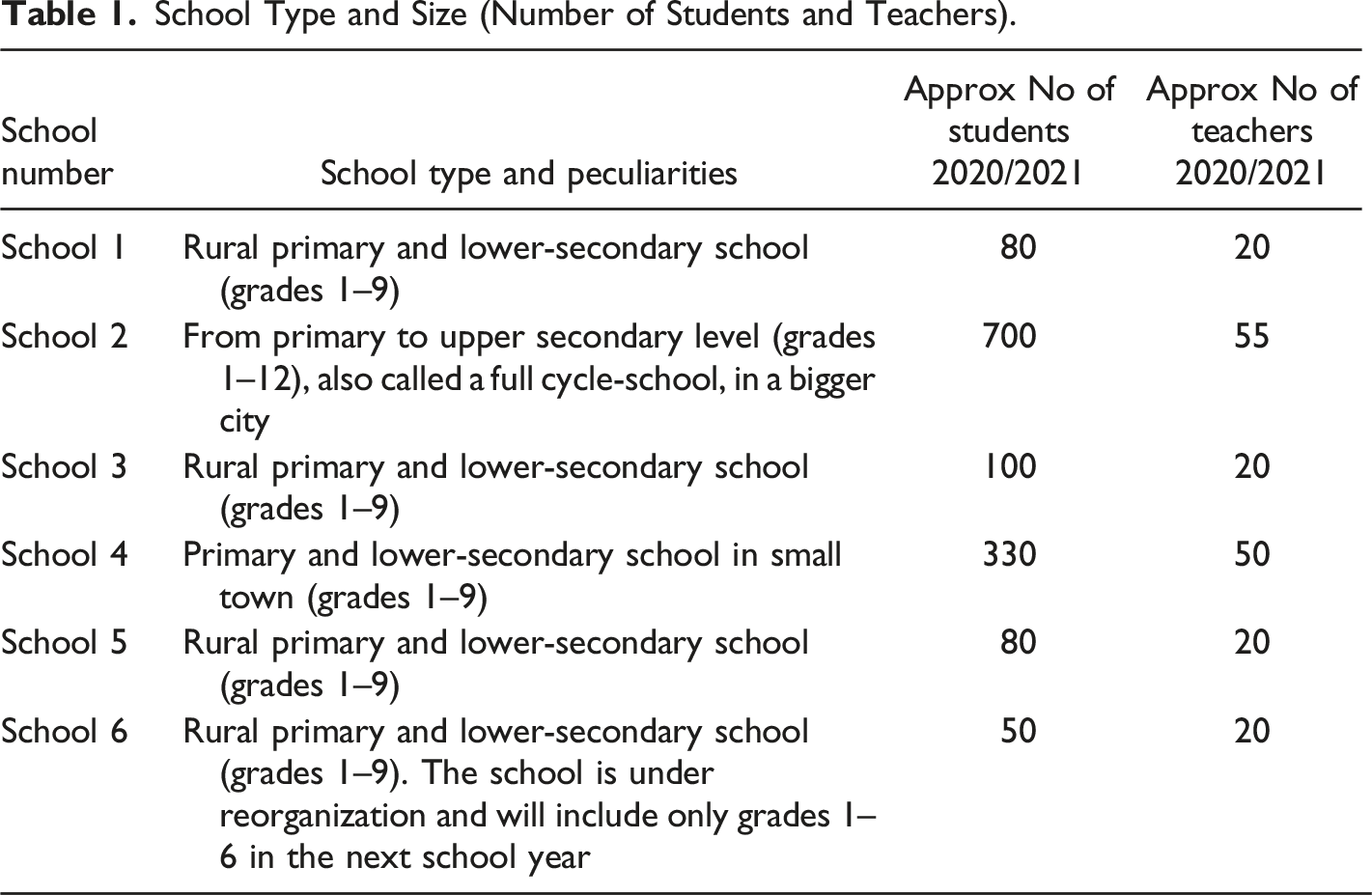
To support the teams of the low-performing schools in the school improvement process, the School Improvement Program was designed by experts at Tallinn University. This program aimed to enhance the collaborative school culture by supporting a school team through one academic year on a topic of their choice to enhance teachers’ learning and increase leadership capacity. The program was designed based on university experts’ earlier experience and research in supporting schools in their improvement process. This combination of academic knowledge and practical experience was then adapted to the target schools. In collaboration with the Estonian Quality Agency for Education and the university expert school-improvement team, a steering group was formed, consisting of three representatives from the agency and three academic staff members from the university. The program was implemented by the university, which also bore primary responsibility for its development. Twelve mentors were selected, all of whom possessed expertise in educational leadership and demonstrated thorough knowledge of learner-centered and collaborative leadership practices in general education schools. Of these mentors, nine were current school principals, two vice-principals, and one a former school principal with 40 years of leadership experience.
The mentors were paired, with every school assigned two mentors by the University team. From a methodological standpoint, the decision to allocate two mentors per school was taken to test whether this approach enhanced the effectiveness of the intervention, particularly in scenarios where schools faced significant challenges. However, one of the mentors left the program after a few months for personal reasons, leaving one school with one mentor for the remainder of the intervention.
Each school appointed a team to work on the chosen school improvement goal. The team consisted of at least five school staff members, including the school leader(s) and teachers. In addition, it was strongly recommended that the team leader be a teacher. The university team organized monthly 1-day meetings with the school teams to offer theoretical and practical tools to help schools implement their chosen development plans.
During the process, the school leadership teams were advised to aim for three goals determining the effectiveness of change management (Snoek et al., 2017): (1) establishing continuous dialogue between the different parties involved, both within the school and between the school and the university, (2) ensuring that the change was meaningful for teachers and management, and (3) ensuring that participants experienced a sense of ownership.
The mentors’ role was to help the school team plan and facilitate the change process and maintain focus by providing support and feedback. The mentors followed the above-mentioned change management objectives in their activities by maintaining a continuous dialogue between the school team, the school, and the university. Moreover, the mentors were constantly available to the school teams, helping to facilitate both group dynamics and real-time responses to questions raised.
In addition, the mentors communicated with the local municipalities of each school to raise their awareness and perceived ownership of the challenges and progress of the schools participating in the program. This kind of mentoring was planned as one of the central mechanisms for combining theoretical frameworks with the practical aspects of daily improvement activities.
By focusing on the school improvement program, developed from research findings and the specific context of Estonian schools, the current study aims to identify the factors that foster the development of a collaborative culture in the school improvement process. The study is guided by the following research questions: (1) How was the arrangement of teamwork perceived in the school improvement process? (2) How was the goal setting perceived in the school improvement process? (3) How was external support perceived in the school improvement process?
Method
We chose to employ a multiple case study format because it is a research strategy that helps clarify complex social phenomena and retain the meaningful characteristics of real-life situations, such as organizational processes (Yin, 2003). Multiple case studies provide the opportunity for comparative in-depth analysis of several cases in their context (Tight, 2017), thereby providing better understanding of the complexity of changes in school culture.
Participants
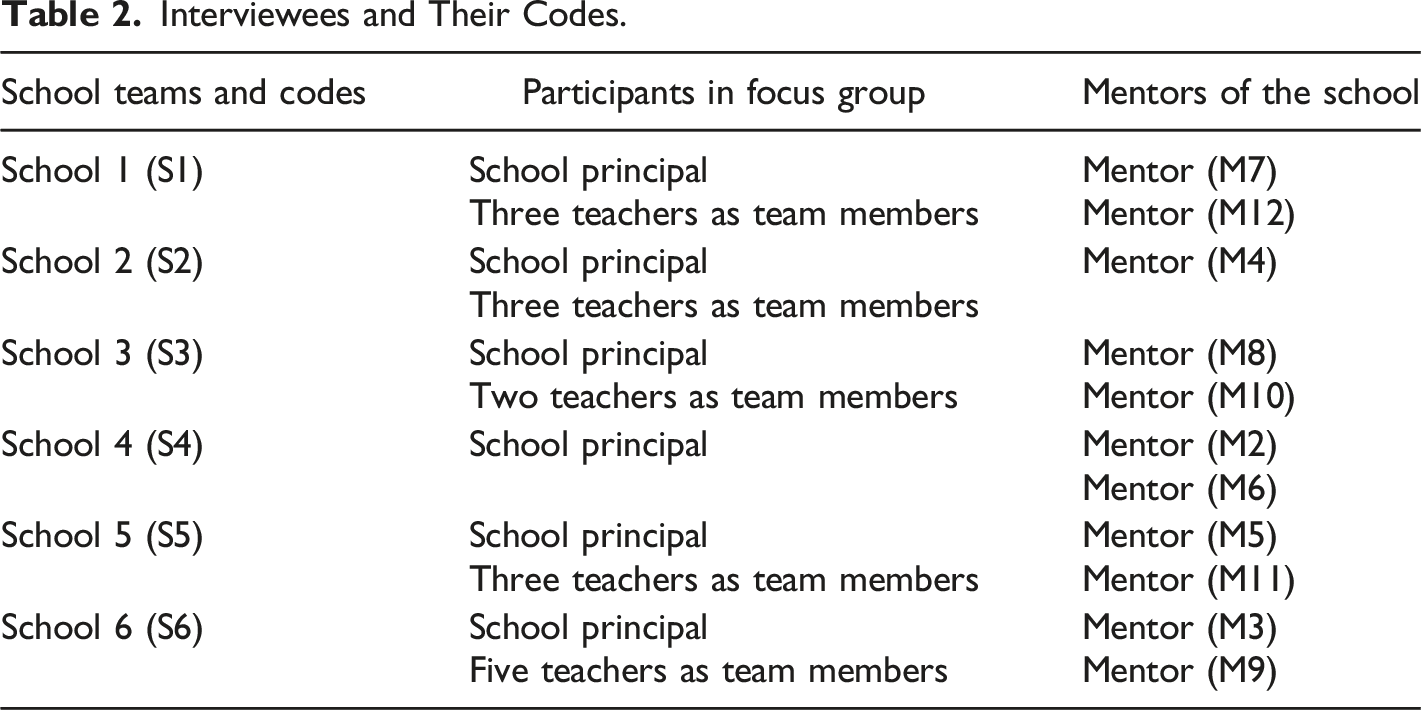
Interviewees and Their Codes.
Data Collection
Six school-team group interviews and 11 individual mentor interviews were conducted at the end of the School Improvement Program via Zoom (see Table 2). The data were collected in May–June 2022. The school-team group interviews lasted for approximately 50–60 minutes, while each individual interview with a mentor lasted approximately 30–60 minutes. All interviews were recorded and transcribed, and the transcripts were coded (e.g., School 1 (S1), mentor of the School 1 (S1_M7), etc.).
The mentor and school-team group interviews were structured into two themes: experience of participating in the program and the impact of the program on school improvement. Although the themes were the same for both sets of interviewees, the school teams were asked to reflect on their own achievements, while the mentors expressed their opinions about the school’s progress.
The interview questions consisted of two sub-themes: (1) how well the aims of the program had been met in the areas of leadership, teamwork, and collaboration and (2) what the impact had been of activities in those areas at the personal, school team, and school levels. The role of the mentors and the university experts were reflected upon, and cooperation with the school owner was also addressed.
The interviews were transcribed using a transcription system for Estonian speech (Alumäe et al., 2018). In order to ensure the confidentiality of the interviewees, all participants were coded in the transcribed data. The codes were kept secure and could only be accessed by two authors of the present article; in addition, they were stored separately from the interview transcriptions.
Data Analysis
An inductive, multi-phase approach guided by research questions was used to analyze the interviews. In the first phase, we followed a consensual coding approach (Kuckartz, 2014), which focuses on identifying broader themes and sub-themes related to collaborative school culture. In this process, the three coders first completed the initial coding independently and then compared the initial codes. Through a reflection process and several rounds of discussion, the coders agreed on consensual themes and sub-themes. Consensual coding helps increase precision and transparency in the coding process (Kuckartz, 2014).
Main Themes and Sub-themes of Analysis.
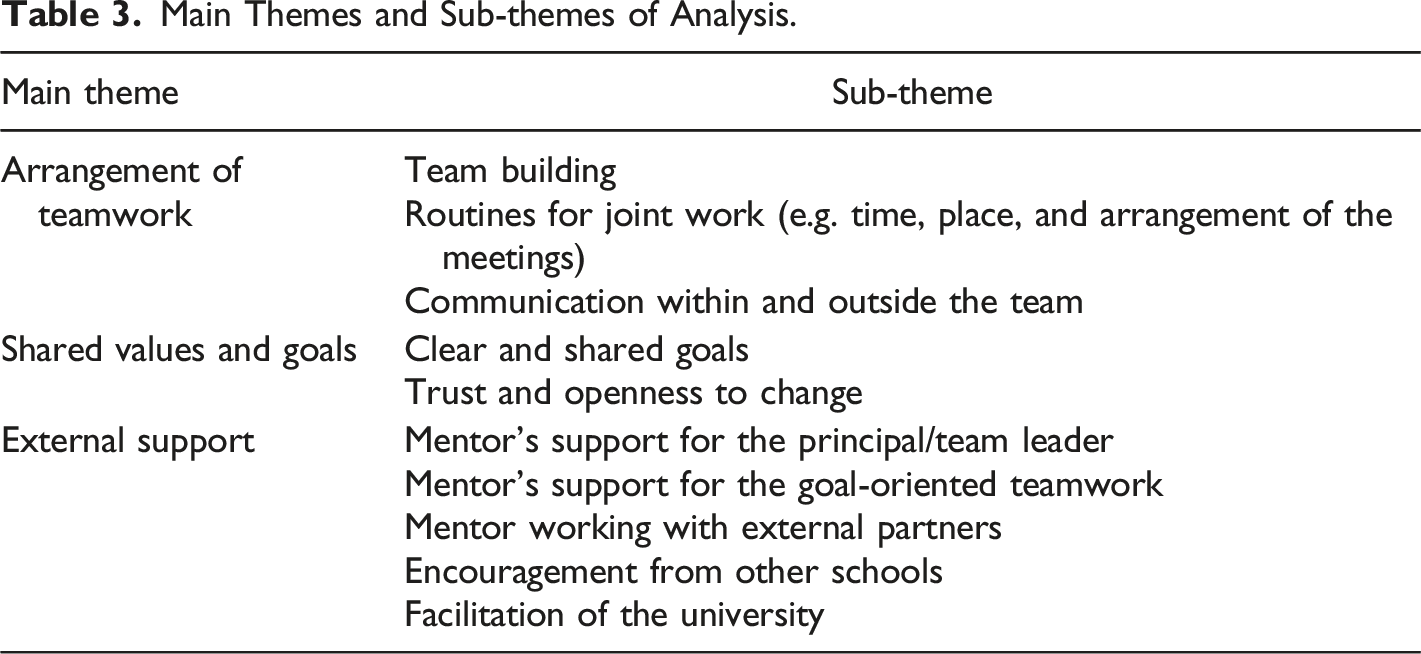
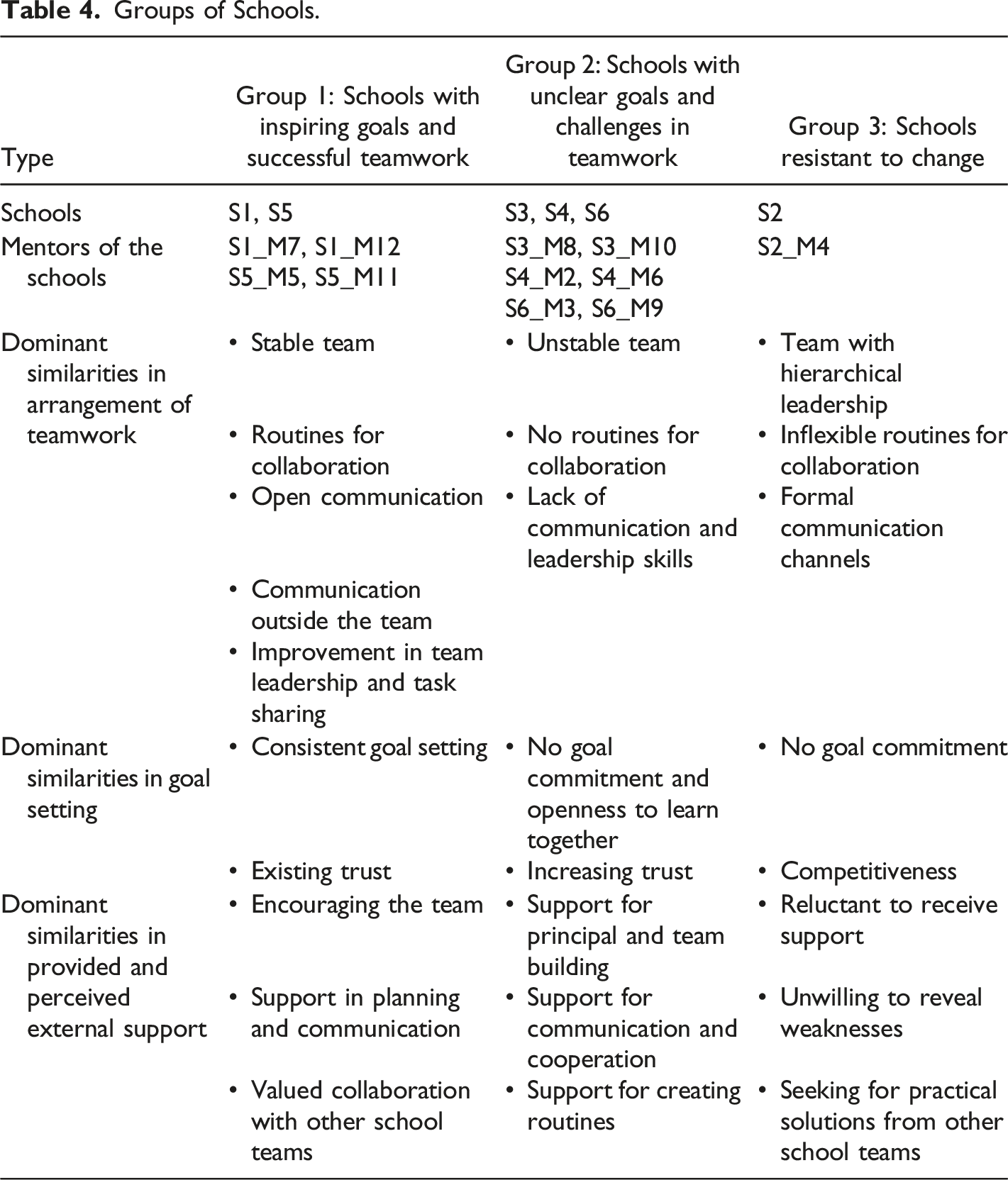
When analyzing each school case, the coders noticed several similarities between cases. Therefore, in the third phase, the authors decided to analyze the cases according to a classification procedure to define the dominant similarities within the three main themes: (1) arrangement of teamwork, (2) goal setting in the team, and (3) external support.
Groups of Schools.
Findings
Here, we present the results on how school teams and mentors experienced the school improvement process, highlighting factors that either fostered or hindered teamwork, how they perceived the goal setting, and external support in the improvement process. As mentioned earlier, based on the findings, we formed three school groups. Therefore, we also present the results of the three research questions together by school groups: (1) those with inspiring goals and successful teamwork, (2) those that experienced challenges in goal setting and teamwork,and (3) those resistant to change.
Group 1: Schools With Inspiring Goals and Successful Teamwork
This group was characterized by a stable team that had established routines for collaboration. There was open communication within the team—although communication outside the team required improvement—and they succeeded in enhancing team leadership and task sharing. Furthermore, the school teams were focused on their goal, and trust existed among team members. Here, external support focused on encouraging the team and supporting the planning of activities and communication.
Successful Arrangements of Teamwork
Two schools in the program were characterized by their willingness to work as a team. There was no turnover of team members, the teams were stable, and the school team members supported each other in reaching the desired goals. Even though it was difficult to find a time suitable for everyone to meet, collaboration was considered important by all team members. The challenge for both schools was communicating outside the team. In particular, it was difficult to engage part-time teachers in the process. One mentor felt that explaining the goals and activities that the teams had established in the program to the whole school community required more deliberation. Moreover, the school team remarked that engaging other teachers took more time than expected: “We can make a plan, but things take a certain amount of time, which we could not predict in the fall” (S5).
While there was willingness to work together in teams, there was also room for improvement in team leadership and task sharing, for which the school teams also possessed the requisite readiness. Furthermore, in both schools, it was noted that one team member adopted additional responsibility without agreeing with the others: “At first, X did more than the others, somehow couldn’t share the tasks, seemed to be faster if you did it yourself” (S5). In the case of one school, the mentor observed that one teacher used authoritarian approaches toward others. The team members also sensed when some members had either already moved on or fallen behind in understanding the goal: “My goal was to pull back a bit. I felt like I was doing it on my own, that I knew the topics, and I felt like the others were not catching up” (S1).
Successfully Shared and Clear Goals
The teams’ willingness to work together was underpinned by clear goals. As one interviewee reported, “we have a development team that is interested in development, and that is the most important thing” (S1). The clarity of the goal was achieved through consistent discussions within the team. For both teams, working toward the goal was meaningful. Moreover, moving toward the goal was supported by trust among the team members, including the courage to make mistakes: “We have been very effective because we have not been afraid of making mistakes; maybe I could have done something wrong or been confused, but that is perfectly OK” (S1). In the case of these schools, the mentors highlighted the role of the principal in creating a secure environment where teachers also felt safe expressing their hesitations: “The principal listened carefully and, in his usual calm manner, invited everyone to express their views” (S5_M5).
Valued External Support
Receiving a mentor’s support was a new experience for the schools, and as one mentor mentioned, this form of collaboration required practice and the alignment of expectations. Moreover, the school team may have felt insecure at first: “It took us a while to discuss the issues with confidence; it is necessary to understand expectations” (S1_M7).
Neither school experienced any management changes or uncertainty about restructuring during the program. Moreover, the mentors supported the teams in planning the next steps and learning how to communicate with teachers: “The team needed help to communicate the program to the whole teaching staff; it was not easy: there were teachers who were resistant to the program” (S5_M11).
External environment of these schools was considered. Nevertheless, the assistance that mentors were able to provide to bolster the school’s relationship with the local municipality varied for this group of schools. For one school, communication with the school owner was challenging because of a lack of trust in the school principal. At the same time, the mentor considered that the development of the school deserved more attention from the local municipality. For the other school, the team felt that the school owner was confident in their success and trusted the school’s progress. Despite the different relationships, the mentors played an important role in making the improvements visible to the municipality: “It seemed important to the local government that we [the mentors] also said that the school was doing a good job” (S1_M12).
Other school teams were also mentioned as a point of reference from which the participants could draw conclusions about their own progress. Joint seminars with school teams were valued both as a time to learn new knowledge and as an opportunity to reflect on their own activities: “Some things became clear when we had to explain them to the other schools; it was a good place to learn” (S1).
These school teams also valued the university’s emphasis on evidence-based decisions: “theory has also been accumulating, to quite a large degree, but it supports everyone’s actions. . . . We made ourselves a folder where we collected these materials so that when a teacher is confused about what to do, they can visit the folder” (S1).
Group 2: Schools With Challenges in Goal Setting and Teamwork
This group was characterized as an unstable team lacking routines for collaboration and exhibiting poor communication and leadership skills. For schools in this group, goal commitment and openness to learning together required improvement. However, the program increased trust within the school team, and they appreciated the flexible external support they received for teamwork, communication, and establishing collaboration routines.
Challenges with Arrangement of Teamwork
All three schools in this group experienced challenges with team building. For example, at the beginning of the program, one school team consisted of only formal leaders, and just one teacher was involved. All three teams remained unstable during the program year and changed several times. The school principals’ lack of leadership skills represented one of the obstacles to effective teamwork; as one mentor mentioned, “the principal identifies himself more as a teacher than as a principal” (S3_M10). Poor leadership skills were also reflected in the school teams themselves, which created tensions between teachers and the formal management team.
One obstacle to teamwork in all schools was a lack of routines for collaboration. There was no common collaboration time and no established means of communication. As one interviewee remarked, “we haven't been in the habit of discussing regularly together. . . . it's the first time we've worked like this” (S3). Moreover, while the teachers valued the initiative for common collaboration time, they found it challenging to adhere to the agreements and use their time effectively. Collaboration was also overshadowed by poor relationships between teachers, which prevented them from focusing on the content of the goal.
The mentors noticed that teachers lacked basic collaboration skills, such as listening to each other and using time wisely. It seemed like working in teams was a new experience that rendered collaboration difficult: “They’ve never had joint discussion time; it was a whole new experience” (S6_M9). Although the school teams did not mention a lack of communication, the external view of the mentors was more critical, highlighting that there was little sharing of information within the school teams. This was especially true regarding the essence of the changes planned in the school. Therefore, one mentor suggested that “the first two months should focus on having meaningful dialogue in the team, so that mutual understanding and the habit to discuss challenging topics can develop” (S3_M8).
Challenges with Goal Setting
One of the main struggles for all school teams was setting clear goals for their development assignments. For example, there was much doubt and confusion about what the improvement goal should be. Indeed, all three school teams in this group changed their goals repeatedly during the program. In these cases, it was evident that the participating individuals were not accustomed to setting mutual goals or pondering the improvement of students’ learning in a collaborative environment. The principal of one school acknowledged that the entire teaching staff lacked previous experience of committing to a joint improvement goal. In addition, all the school teams were also engaged in other ongoing initiatives, thus hampering their ability to agree on a single goal: “They were working on two other projects at the same time, and the teachers also attended other training courses” (S3_M10). Involvement in many simultaneous development activities fragmented team members’ focus on progressing toward their goals.
All school teams in this group displayed a low level of openness to pursuing the goals set and to learning together while solving issues to reach those goals. Furthermore, one mentor considered the teachers’ reluctance to change their approach to teaching and students’ learning to be a barrier: “obviously there were teachers with long careers who were very confident and thought they did everything right. They have always done things like this, so that must be the correct way” (S4_M6). However, during the program, the teachers began to trust themselves and their colleagues. Moreover, the goals became clearer through joint discussions in the teams: “It has been good to be able to discuss and listen to and understand others like this. Yes, it harmonized understandings” (S6).
Encouraging External Support
The participating schools valued the support of a mentor, especially in supporting motivation in difficult moments: “Actually, the mentors were the ones who were with our team all the time, urging us to think and work together and not allowing us to recline” (S6). The principals required the support of mentors to develop leadership skills, especially when a new principal was appointed. In addition, one mentor observed that the principal was afraid of making mistakes and required encouragement: “Wanting everything done right carries over into the culture and the team. In the team, nobody wants to say the wrong thing” (S3_M10). Moreover, although the program concerned the practice of shared leadership, one of the mentors considered that the school principal lacked these skills.
One of the challenges for the mentors was to identify how to support team building and maintain a routine for collaboration, and they emphasized that team building required more time than expected at the beginning of the program. Another mentor suspected that they may have interfered too much, resulting in the team becoming dependent on them instead of increasing its own autonomy.
The mentors also supported the school team through their communication with the local municipality and parents. However, one school improvement process may have been hampered by the unclear future of the school—a situation that was accentuated by the lack of meaningful discussion between the school principal and the teachers about this issue. As a result, one of the mentors served as a kind of intermediary between the municipality and the school “getting clarity from the municipality, because this school reform was hanging over their heads.” The mentor continued by stating, “I can say that I, as a mentor, had to clarify things [to establish peace in the workplace]” (S6_M9). The mentors also noticed a change in the behavior of the school owners, who began to consider the school as a whole rather than simply interacting with the principal.
Furthermore, cooperation with other schools in the program was considered valuable. An important turning point for the school teams was a study visit to other schools, where an open discussion about the teachers’ journey towards deep learning for improvement was held.
The role of the university was perceived by the schools primarily as the creation of routines in the improvement process; for example, regular team seminars helped harmonize understanding. The role of the university was also valued because of its flexibility to adapt the program according to the needs of the school teams, since many teams were unstable. All the school teams agreed that they had become far more aware of the importance of evidence-based improvement. There was also a better understanding of the challenges that can arise in the improvement process.
Group 3: School Resistant to Change
This group was characterized by teams with a hierarchical leadership. The routines for collaboration were established but inflexible; communication was formal; there was no goal commitment; and there was an overall sense of competitiveness in the school. Moreover, there were challenges with communication and admitting the need for change. Furthermore, there was little confidence in external support and no open discussion of challenges; however, the opportunities to learn from other schools’ practical examples were appreciated.
Resistance to Arrangement of Teamwork
This school stood out from the others because of its team’s resistance to change. This team remained stable throughout the program, consisting mainly of formal school leaders, with no changes in membership. The school team emphasized that they had developed a collaborative culture for many years before the program. The mentor also considered that good cooperation existed within the school team; however, the mentor noticed that there was little collaboration outside the team. There was a tendency to refrain from involving others, and information was communicated through spokespersons, mainly the principal. According to the mentor, the head of the school managed the entire development process, and the school team followed the principal’s attitudes and messages: “In this school, the principal has a lot of authority; the principal says how things are done” (S2_M4).
Unsuccessfully Shared and Unclear Goals
The school team did not perceive the need for the change; even explicit data about different problems were ignored. Moreover, according to the principal, the school’s goal in the program was unclear: “We didn’t understand what was expected of us; we already had these programs. . . . we had our own training” (S2).
According to the mentor, one of the obstacles to change was the school team’s desire to show outsiders that everything was working well: “I’m not really sure, but I think that the façade is of constant importance to them. . . . more effort is spent on maintaining the façade’ (S2_M4). Despite the activities in the program, the school failed to implement any changes and only completed the necessary assignments.
Resistance to External Support
The school team noted that the mentor was always present to provide support—for instance, in cases where they needed to understand how to draft a questionnaire and proceed with and draw conclusions from the data. Nonetheless, the mentor felt that the team lacked a good overview of the day-to-day situation in the school, and the motivation of the school team remained unclear. The school team’s responses to cooperation with the local municipality were terse and limited to confirming that the local municipality would be kept abreast of developments and that the school did not require help. The mentor believed that the local school network was disorganized, creating tensions in the area and necessitating active lobbying by the principal for the future of the school: “The school team were a bit scared; there is also a school network overhaul on the agenda; they were closed to the outside community” (S2_M4).
Although the school appeared resistant to change, the school team appreciated the meetings organized by the university, which allowed them to learn from other schools’ practical examples and to gain encouragement.
Discussion and Implications
In this study, we aimed to identify the factors that supported and hindered the development of a collaborative culture in schools participating in the School Improvement Program. In the following section, we compare the development of a collaborative culture in the three school groups by analyzing three factors: the arrangement of teamwork, goal setting in the improvement process, and perceived external support.
Arrangements of Teamwork
In the context of a collaborative school culture and distributed leadership, team building and the willingness to work together are essential preconditions (see e.g., Leithwood et al., 2020). Of utmost importance is also the manner in which teamwork is led and the way communication is organized. The schools with the greatest challenges faced difficulties in formulating a lead team, sharing responsibilities, and keeping the team stable throughout the program. Formally, the school leaders claimed to follow the principles of distributed leadership, but, in practice, they took control themselves and failed to delegate leadership tasks to teachers. By contrast, the schools with inspiring goals and successful teamwork demonstrated stable teams, effective teamwork, and a distributed leadership culture.
Schools that experienced challenges in their improvement processes faced difficulties with the arrangements of teamwork, while teams that achieved progress displayed well-functioning routines for collaborative work. The basis for a collaborative culture is a supportive working environment (e.g. routines, time, resources) in which teachers enjoy sufficient time to meet regularly and work together (Bush & Glover, 2014). An earlier study found that, in certain circumstances, teachers were disappointed by the lack of conditions conducive to collaboration; for example, meetings were postponed or canceled (Poom-Valickis et al., 2022). Conversely, the results of the present study confirm earlier findings that practical and well-functioning routines support a collaborative culture (Maag Merki et al., 2023).
The results also indicated that the changes were too rapid for some schools, especially if the aims were unclear and the team lacked the experience or skills to work collaboratively. Consequently, the pace of change should not be overly fast, as otherwise it could overwhelm the individuals involved and lead to change fatigue, cynicism, stress, and resistance to new initiatives at the teacher level (McLure & Aldridge, 2022). Furthermore, the change process should be flexible, as the school context may also change. In three schools, it was necessary to change the goals during the year.
In general, communication between school team members was rather effective. However, all school teams faced challenges in conveying the developments to other teachers, although communicating a shared vision to the wider community is an essential part of the improvement process (e.g., Leithwood et al., 2020).
Furthermore, the school team that demonstrated resistance to change was characterized by a hierarchical leadership, although the teachers involved were accustomed to working in this particular team. Moreover, while the school team possessed the potential for improvement, its aims lacked clarity, meaningfulness to teachers, and a sense of ownership.
Goal Setting in the Improvement Process
Effective school improvement is based on clear goals (Hallinger et al., 2017), and, in this respect, the schools differed. Schools with inspiring goals and successful teamwork quickly found a clear focus during joint discussions in a safe environment created by the principal, while schools that experienced challenges took a long time to find such focus, as team members changed or lacked previous experience of collaborative improvement. In the latter case, the challenge of goal setting was poor leadership, as the team leader was unable to facilitate shared understanding. In the school that was resistant to change, a formal goal was established, but the actual problems experienced by the school were ignored.
All the cases analyzed in this study underscore the importance of reflective conversations in school teams to understand problems in a shared way, and the key factor in such circumstances is the school leader. Sinnema et al. (2023) refer to the need for leaders to possess the conversational ability to define, explain, and solve problems effectively. Therefore, the School Improvement Program, as well as other professional development activities, highlight the importance of school leaders developing these capabilities throughout their careers (Meyer et al., 2019).
As mentioned earlier, for the facilitation of change to be successful, it must be compatible with ongoing projects and initiatives at the school and should take into account the speed and number of changes that are required (McLure & Aldridge, 2022). Major problems arise when change efforts are implemented simultaneously, the school is focused on other priorities, and coherence between the goals and strategies is not considered. A large number of parallel changes could lead to low coherence between different initiatives, causing leaders to lose focus (Robinson et al., 2017). Surprisingly, however, the school teams themselves did not mention competitive processes. Some mentors explained that the schools were accustomed to the presence of several ongoing projects, and as a result the school teams were unable to pay sufficient attention to any of them. This could indicate that some school teams were already experiencing a certain level of fatigue and were immune to further changes.
Another important finding of this study, which echoes the earlier literature, is that learning from failures is extremely important for improvement (Scheerens, 2014). Three schools in our study faced rather demanding challenges (e.g., limited experience of and readiness for teamwork, a lack of leadership skills, and difficulties in internal-external communication). All three teams acknowledged these shortcomings, and this allowed them to learn and adapt to new practices. All teams seriously considered the meaningfulness of teamwork; they created routines, negotiated leadership practices, and realized the importance of reconsidering their vision and action plan. Furthermore, they developed trust in the team, which is extremely important in the change process (Goddard et al., 2015). As Bryk et al. (2010) underline, without “the social energy provided by trust, improvement initiatives are unlikely to culminate in meaningful change, regardless of their intrinsic merit” (p. 157).
External Support
Mentor support was highly valued by all the school teams. Moreover, for the most part, their views overlapped with those of the mentors. For example, they mentioned that the mentors helped them analyze the school’s needs and maintain their focus and that they worked well with local municipalities. Some schools required strong support and a mediating role from the mentors when communicating with the wider community. By contrast, only the mentors mentioned the need to personally support school principals, especially concerning the creation of a collaborative culture and the arrangement of teamwork. Our findings also highlighted the need for a clear discussion on trust and mutual expectations between the mentor and the school team before they begin working together. The use of external experts constitutes one measure for improving school leadership capacity by helping determine and articulate the needs of the particular school (Tappel, et al., 2023). Moreover, external support can help integrate schools into a network of groups dealing with similar questions and promote collaborative practices (Lochmiller, 2018). The teams of schools in this study also valued learning from other schools.
In our cases, support from members of the local municipality was often ambiguous. Thus, it was necessary for the mentors to foster communication between the school teams and local government officials. Where this was successful, local government representatives demonstrated interest in the improvement program, and this was inspiring for the school team. Furthermore, school teams that experienced a stable environment were more focused on the learning process. By contrast, the change of a school leader created instability, which hindered the implementation of changes to the learning process. Therefore, organizational stability is an important factor to consider when planning changes.
A common characteristic of all the school teams was appreciation of the value of communicating with and learning from other school teams that were considered inspiring examples of successful practices. The school teams in our study compared themselves to these other teams, which was beneficial in the context of this program because it allowed them to determine the challenges faced by their organization in more detail, as successfully developing schools should inspire others (Timperley et al., 2014).
One school team was characterized by a reluctance to receive external support, which may have been due to the uncertain and unstable context in which it operated (i.e., changes in the local school network) and the pressure to innovate and participate in several simultaneous programs—a finding also reported in another study of Estonian schools (Eisenschmidt et al., 2021).
Future Perspectives: Practical Implementations and Research Foci
This study was conducted in a partnership setting, and while the results can be used to elaborate school improvement programs, they can also be utilized to provide feedback to the participating schools to support their development. As the schools participating in the program were characterized by some low performance indicators (e.g., students’ motivation and school satisfaction), it is reasonable to assume that these school teams require more structured interventions, and some preconditions must be present before further progress can be achieved (Day et al., 2011; Higham et al., 2009; Sigurðardóttir et al., 2022). Moreover, the literature emphasizes the importance of such school teams
School teams participating in improvement programs should set aims that are related to improving students’ learning. However, the impact on students is not immediately visible. Moreover, beginning the implementation of such programs could even hinder the achievement of certain outcomes (Creemers & Kyriakides, 2010), but the school team should continue, because positive effects are likely to be achieved in the medium-to-long term (Sigurðardóttir et al., 2022). This means that school teams and mentors should be familiar with this curve and consciously lead the process, including supporting teachers in the classroom. However, this also requires that leaders have recourse to strong arguments supported by theory and evidence to motivate teachers to continue. Therefore, school improvement programs should last longer than one year; indeed, some research claims that at least three years is the minimum time required to achieve positive results and sustainable change (Higham et al., 2009).
Schools function in a concrete context, and, although Estonian schools are autonomous and local municipalities seldom interfere with school work, school leaders and teachers may still feel insecure if messages from local authorities are unclear or appear to be negative. We found that the local municipalities were mostly uninvolved in school improvement programs. Therefore, the potential of local governance to shape school culture and foster school leaders’ improvement efforts (Nehez & Blossing, 2022) remained unexploited in our study. Furthermore, the level of information provided to parents on the planned changes in the schools’ learning process remains unclear. Moreover, participation in various simultaneous programs was considered important by these schools to gain media coverage and recognition from the community. In the next phase of these programs, closer collaboration between schools and municipalities should be established.
One important factor that speaks in favor of establishing longer improvement programs is the unavoidable need for a strong, cooperative, and forward-looking school team responsible for planning and implementing the changes. Therefore, the results of our study align with findings from previous research (Sigurðardóttir et al., 2022) that sufficient time should be allotted, initially and throughout the program, to the creation of mutual understanding and the establishment of a sense of ownership regarding the aims and tasks of the group. To support this process, the strengths and skills brought to the team by each member should be recognized, appreciated, and supported by the team itself. Teamwork skills also require practice. Thus, in school improvement programs, teamwork skills should receive extra attention, and clear teamwork routines should be established. For the successful creation of a collaborative team, the support of school leaders in implementing improvement practices should be emphasized (Nehez & Blossing, 2022). For example, this could be achieved in the form of regular mentor discussions held with principals.
One of the practical outcomes of this study is that the next improvement program for schools with lower performance indicators is designed to last three years. This will allow us to conduct research from different perspectives. First, we will be able to delve deeper into and more thoroughly explore schools’ earlier experiences with school improvement and teachers’ basic underlying assumptions, which are unconscious, taken-for-granted beliefs and values regarding collaborative culture. Second, it will be possible to conduct a longitudinal study of how school culture and collaborative arrangements change over the three years and to determine the turning points for different schools.
The limitation of this study is that the results reflect the opinions of the school team members present at the time of the interviews. However, in some teams, the members changed several times. Nonetheless, it would have been valuable to interview all the members who had participated in the process as, during the interviews, some participants noted that they had participated for such a short time that they were unable to respond to most of the questions.
Footnotes
Declaration of Conflicting Interests
The author(s) declared no potential conflicts of interest with respect to the research, authorship, and/or publication of this article.
Funding
The author(s) received no financial support for the research, authorship, and/or publication of this article.
