




Abstract
This study examined the commitment of British universities to educating responsible business leaders capable of addressing grand challenges related to environmental sustainability. Specifically, it investigated the extent to which environmental sustainability topics are embedded in the course descriptions of business-related programs, and how these descriptions relate to universities’ formal commitments to sustainability and selected organizational characteristics. This is the first study to provide a systematic analysis of 2,758 business-related courses offered by all British universities, thereby contributing comprehensive new insights to the ongoing debate on education for environmental sustainability. The analysis focused on evaluating both the frequency and depth of integration of environmental sustainability topics within course descriptions. Findings indicate that all universities—regardless of their formal sustainability commitments or organizational characteristics—offer a similar amount of sustainability-related course content. Notably, a university’s formal commitment to sustainability at the organizational level does not correlate with a greater inclusion of environmental sustainability in course content. This suggests a degree of organizational hypocrisy in the delivery of environmental sustainability education within British universities.
Keywords
Introduction: Business Education for Environmental Sustainability
Universities play a vital role in educating future responsible business leaders, especially in the context of an uncertain and turbulent future marked by grand challenges such as climate change and environmental sustainability (André, 2024; Giovanelli et al., 2021; Li et al., 2024; Malarski & Berte, 2023; Žalėnienė & Pereira, 2021). Environmental sustainability has long been a critical component of both teaching and research agendas in universities worldwide, particularly within the context of business education (Cottafava et al., 2022; Günther et al., 2022; Reficco et al., 2023). Demands to integrate elements of environmental sustainability education into the curriculum of business education have been longstanding and achieved with varying degrees of success (Mokski et al., 2023; Painter-Morland et al., 2016; Warren & Tweedale, 2002). In the 2007 edition of Harvard Business Review, M. E. Porter and Reinhard (2007) argued that businesses need to prepare for the consequences of climate change and their environmental impact. Relative changes in how businesses operate would be needed, and therefore appropriate student learning required. Some progress has been made, as evident in initiatives such as Principles for Responsible Management Education (PRME) which is a United Nations initiative seeking to support business and management education globally in teaching responsible management education (Cullen, 2020). However, others (e.g., Dyllick, 2015) argue that responsible business education is an oxymoron and doubt that business education can actively participate in managing socio-economic transformations because “education for sustainability challenges the “rationality” of the capitalist paradigm of production and consumption, thereby providing a challenge for the tertiary curriculum in general and for the business curriculum in particular” (Springett, 2005, p. 146). However, whether universities believe in environmentally sustainable business education or not becomes irrelevant in a competitive educational global market in which customers (students) demand more social responsibility from educational institutions (Li et al., 2024). As a result, universities usually have no choice but to respond to these external pressures by at least demonstrating formal commitment to issues of environmental sustainability (Garanzini & Michael, 2023).
Despite the recognized importance of business education in addressing global challenges such as creating a sustainable future, existing research on British universities presents fragmented and limited evidence regarding the inclusion of topics such as climate change, sustainability, and environmental awareness in business-related courses. Although global research on teaching environmental sustainability within business degrees has expanded, British universities remain underrepresented—an unexpected finding given their international appeal and global recognition (Popowska, & Sady, 2024; Universities UK, 2022). For instance, Brocato et al. (2022) analyzed sustainability courses worldwide but included only five syllabi from three UK universities. Moon and Orlitzky (2015) examined course offerings from 72 European and 22 North American institutions to assess corporate social responsibility and sustainability programs. Other studies focused on Finland (Aaltonen & Siltaoja, 2022; Pesonen, 2003), Romania (Alexa et al., 2020), Spain (Benito Olalla & Merino, 2019), and Brazil (Galleli et al., 2022; Jabbour et al., 2013). Where British universities have been studied, research often relied on self-reported data regarding sustainability education, which, while insightful, may not accurately reflect actual practices (Azmat et al., 2023; Reficco et al., 2023; Snelson-Powell et al., 2020). For example, Snelson-Powell et al. (2016) found that although UK Business School deans recognized the importance of sustainability, this awareness was not consistently mirrored in teaching content. Another study involving interviews with 23 MBA directors confirmed a disparity between the intention to teach sustainability and the actual curriculum (Snelson-Powell et al., 2020). These two UK-based studies led the researchers to argue for the existence of organizational hypocrisy in the context of teaching environmental sustainability. Organizational hypocrisy highlights the disconnect, or decoupling, between institutional intentions and actions, often driven by the desire to attract students and enhance reputation through “window dressing” (Kılıçoğlu & Kılıçoğlu, 2024). Institutions that engage in organizational hypocrisy often do so because they recognize that stakeholders value specific issues, such as environmental sustainability, and understand the benefits of outwardly communicating their commitment. However, the drive to respond to stakeholder, market and normative pressures is not always reflected in actual behavior. Organizational hypocrisy is not static (Yang et al., 2020), and hence existing evidence based on self-report measures, small samples (e.g., Azmat et al., 2023) or data collected more than a decade ago (e.g., Snelson-Powell et al., 2020) may not offer a holistic perspective on this important phenomenon.
Therefore, our aim is to extend the research on organizational hypocrisy in the context of tertiary education for environmental sustainability by conducting a census of UK universities offering business-related courses to evaluate the extent to which environmental sustainability is incorporated in the content of such courses, and how such content is related to universities’ professed sustainability commitments, size, organizational prestige and organizational research, and teaching capacity and capability. We focus on business courses, because scholars argue that even though for-profit businesses encourage overconsumption, they also have the potential to offer sustainable solutions (Kemper et al., 2019). The study focuses on environmental sustainability due to the natural environment’s critical role in business, consumer behavior, and government policies (Gov.uk, 2022). From a business perspective, environmental sustainability helps organizations reduce costs, align with consumer trends, and comply with national and international environmental regulations (OECD, n.d.; M. Porter, 2024; White et al., 2025). By adopting environmentally sustainable practices, businesses not only contribute to a healthier planet but also enhance their long-term profitability and stability. Therefore, environmental sustainability education should be an essential component of university business courses to prepare future business leaders to address emerging global challenges.
To address our research question, we follow a novel approach not applied previously to explore organizational hypocrisy and education for environmental sustainability—that is content analysis of course content promoted on universities’ websites. This manuscript continues with an overview of the organizational hypocrisy concept. We then propose hypotheses which are tested quantitatively. Results are discussed and implications presented. We conclude with future research recommendations.
Organizational Hypocrisy in Education for Environmental Sustainability
Organizational hypocrisy refers to the misalignment between stated intentions and actual actions within organizations (Snelson-Powell et al., 2020). The concept, originally introduced by Brunsson (1989), describes the disconnect between what an organization says, what it does, and the policies it formally adopts. This disconnect is driven by the need to meet external expectations and maintain legitimacy in the eyes of stakeholders, even when genuine implementation of these values is lacking (Ali Gull et al., 2023; Pacheco-Ortiz et al., 2024). The concept derives from institutional theory which seeks to explain how organizations operate in a social environment and how they respond to environmental pressures and changes (Scott & Meyer, 1983). When facing change or external pressures, organizations have a range of responses at their disposal, one of which is to act hypocritically, that is to say one thing but do another in order to maintain or gain social acceptance and support. Studies explored the consequences of organizational hypocrisy, such as the erosion of trust and credibility among stakeholders and have investigated factors that exacerbate or mitigate this phenomenon, including leadership integrity, organizational culture, and external pressures (Çayak, 2021; Silver et al., 2021). The occurrence of organization hypocrisy is not limited only to profit-making organizations but also arises in not-for-profit contexts such as higher education, often involving the exaggeration of certain organizational achievements, including environmental sustainability actions (Larsson, 2013).
Universities often position themselves as leaders in environmental sustainability, espousing green policies and practices in their strategic plans and public communications (Leal Filho et al., 2018; Shawe et al., 2019). Universities often pledge their commitment to environmental sustainability through initiatives such as membership in PRME and the publication of organizational sustainability strategies (UNEP, 2021; Universities UK, n.d.). These initiatives, according to institutional theory, act as legitimacy-seeking mechanisms, allowing organizations to align with stakeholder expectations (Beddewela & Fairbrass, 2016; Berthod, 2018; Brunsson, 1993; Kuruppu et al., 2019; Meyer & Rowan, 1977). Such commitments suggest that practices should align with them more than in the case of organizations that do not profess or signal such commitments. Organizations seek legitimacy by conforming to the norms, values, and expectations of the society within which they operate such as, in the case of universities, current and prospective students, faculty, funding bodies, and the broader public because they know the importance of societal approval to the successful functioning of these institutions (Yang et al., 2020). The conformity, however, can lead to organizational hypocrisy because declared policies may not always align with the organization’s day-to-day operations (Snelson-Powell et al., 2020). By practicing organizational hypocrisy, universities risk damaging their reputations, which can affect student enrolment, funding opportunities, and partnerships. Additionally, they may face increased scrutiny and demands for accountability from the public and regulatory bodies (Snelson-Powell et al., 2020). Ideally, therefore they should minimize the gap between intentions and actions, that is reduce organizational hypocrisy.
We therefore pose a critical question: To what extent do officially declared sustainability commitments such as PRME membership and sustainability policies influence the integration of environmental sustainability into teaching practices, and how is the level of such practices related to selected organizational factors? Do formally stated sustainability commitments translate into tangible actions and what explains the variations in the extent of teaching practices implemented? One way for universities to fulfil their sustainability commitments is by integrating these principles into their educational frameworks (Universities UK, n.d.). To explore this, we examine the discrepancy between universities’ sustainability pledges and their actual teaching practices and further examine the link between organizational characteristics and education for environmental sustainability. We therefore contribute new knowledge to the ongoing debate on teaching environmental sustainability and the drivers of organizational hypocrisy in university settings by focusing on business-related curricula offered by British universities.
Hypothesis Development: Sustainability Commitments, Organizational Characteristics, and Education for Environmental Sustainability
According to institutional theory, organizations face pressure from the external environment in the form of coercive (e.g., enforcement of regulation by authorities), normative (e.g., value, beliefs, or norms), and mimetic pressure (e.g., imitation of practices by firms to respond to competitors; DiMaggio & Powell, 1983). When faced with such forces, organizations may engage in organizational hypocrisy—that is, not practicing what they preach—often because they know that the costs of organizational hypocrisy are insignificant (Effron et al., 2018). Organizational hypocrisy occurs due to several reasons including lack of resources, competing priorities, lack of capabilities, and a traditional focus on disciplinary silos (Holmberg et al., 2008; Snelson-Powell et al., 2020). In the context of higher education institutions, universities currently face normative and mimetic pressures to implement environmental sustainability teaching, rather than regulatory (coercive) pressures. Normative forces include voluntary actions, such as membership in non-compulsory associations and the establishment of internal voluntary policies. Mimetic forces involve competition and the tendency to imitate peer institutions to avoid losing legitimacy. As a result, universities’ responses are largely voluntary and may vary, depending on the resources each institution has available to fulfill its commitments. For example, in the experience of the authors, universities may struggle to allocate sufficient funding and support for environmental sustainability teaching, making it difficult to implement teaching content related to environmental sustainability in a systematic way and instead introduce superficial solutions such as glossy marketing or overselling. Lecturers may be reluctant to add new content to already packed syllabi, and students may feel overwhelmed by the additional material (Leal Filho et al., 2019). Therefore, we argue that universities which make conscious decisions to allocate resources to such initiatives as PRME and organizational sustainability policies should be more committed to teaching environmental sustainability than those who do not manifest such commitments. In other words, where institutional support is high because institutions formally commit to sustainability policies, universities should deliver more environmental sustainability course content than those universities that do not have such institutional support.
For environmental sustainability, one such voluntary association is PRME which was launched to support universities around the globe in their efforts to deliver more responsible, environmentally sustainable business and management education (PRME, n.d.). Committing to PRME by becoming a member is an expression of formal but voluntary university’s commitment to transforming teaching content to include course content related to sustainability. This involves setting realistic goals, transparent reporting, and genuine commitment to change. The PRME initiative is almost 20 years old, and therefore universities have had ample time to implement and cement their membership commitment in teaching content. PRME membership requires members to submit evaluation reports related to sustainability and responsible education commitment, therefore requires considerable resources being committed to PRME membership and concrete solutions introduced. Recent research (Eustachio et al., 2024) concluded, based on a world-wide survey of professors from 104 countries, that PRME membership is positively related to the reports of greater inclusion of sustainability-related topics in teaching, and that professors from universities which are PRME members reported receiving more support in relation to teaching sustainability than non-PRME members.
In addition to external commitments such as PRME, universities produce internal organizational policies and norms to demonstrate their commitment to issues of interest. In the case of environmental sustainability, many universities publish sustainability policies on their websites, outlining their commitment to sustainability across several organizational dimensions, including teaching. For example, London South Bank University has a dedicated tab on their home page labeled “Sustainability,” which links to a formal organizational sustainability strategy (LSBU, n.d.). We propose that this formally stated sustainability policy is a firm indication of an organization’s commitment to deliver environmental sustainability-related teaching. To summarize, we posit that when institutions make public, formal commitments, whether through international associations like PRME or institutional strategies, such signals represent normative alignment and should be associated with stronger integration of environmental sustainability content in their academic offerings. We argue that publishing such sustainability policies on the university’s landing page is an indication of institutional support for environmental sustainability which in turn should translate into greater course content related to environmental sustainability. Based on the above we hypothesize the following:
Next, we examine how selected organizational characteristics relate to environmental sustainability course content. Do similar universities behave in a similar way, namely do universities mimic their competitors? Snelson-Powell et al. (2020) identified several facilitators and barriers to organizational hypocrisy in the context of teaching environmental sustainability, including prestige, size, capacity, and capability.
Concerns regarding prestige, status, image management, reputation, and the establishment of brand identities are becoming increasingly significant in higher education, particularly in a progressively competitive landscape (Alvesson & Gabriel, 2016; Hemsley-Brown et al., 2016; Miotto et al., 2020). Despite arguments that organizations face pressures to look good and improve their prestige (Aaltonen & Siltaoja, 2022) through, for example, accreditations that require sustainable education content, less is known about whether prestige affects universities’ teaching of environmental sustainability (Snelson-Powell et al., 2020). Prestigious universities derive their status from research and teaching excellence, graduate outcomes, and strong market standing (Boliver, 2015a; Snelson-Powell et al., 2020). Such universities should be better positioned to implement changes in their teaching content to reflect a commitment to environmental sustainability. In the UK, university membership in the Russell Group is often seen as an indicator of prestige. The Russell Group is an association of 24 leading research-intensive British universities known for their academic excellence, high research output, strong industry connections, and strong employer reputation (Boeren, 2024; Quiroz Flores et al., 2021). While other indicators of prestige, such as accreditations, may also be considered, they are far less recognized among students and employers compared to the widely acknowledged institutional prestige associated with Russell Group membership (Attree et al., 2025; Croxford & Raffe, 2015).
University size, expressed as the number of students, should also be related to environmental sustainability teaching. Universities face growing pressures to fulfill increasing requirements with smaller budgets due to funding complexities (OfS, 2024). In competitive and uncertain markets, organizations often adopt proven practices to gain social acceptance and maintain their legitimacy; however, there can be misalignments between what they say, decide, believe, and actually do (Kılıçoğlu & Kılıçoğlu, 2024). Universities that recruit more students and are therefore larger should be more likely to respond to market needs and offer more content related to environmental sustainability.
Capacity and capability are two dimensions shown to impact environmental sustainability teaching. Capacity is defined as access to resources, and capability as the skills and knowledge to implement substantial changes, including changes in teaching content (Snelson-Powell et al., 2020). For this study, we define capacity as knowledge resources, and capability as the ability to implement this knowledge in teaching. We use the Teaching Excellence Framework (TEF) and the Research Excellence Framework (REF) scores to establish a university’s capacity (with REF scores indicating knowledge resources) and TEF scores as an indicator of capability (how well knowledge generated via research is implemented in teaching). REF and TEF are the official evaluation frameworks for UK higher education, assessing the teaching and research performance of British universities.
Overall, we argue that resources (prestige, size, TEF, and REF scores) influence a university’s ability to offer education for environmental sustainability. Resource-rich universities that are more prestigious, larger, and possess greater capacity and capability are better able to respond to market pressures than resource-poor universities. Specifically, drawing on the concept of mimicry (DiMaggio & Powell, 1983; Wukich et al., 2024), we argue that universities imitate the behaviors of institutions within their own peer groups and therefore their teaching content will be more similar within peer groups than between groups of competitors. Thus, we hypothesize that similarities in prestige (members of the Russell Group), similarities in capacity and capability (as measured by TEF and REF scores) and size (number of students) will determine the level of environmental sustainability-related course content (Miotto et al., 2020):
Method and Research Design
Study Population Selection
We focus on British universities for several reasons. Firstly, they are consistently ranked among the top universities globally, as evidenced by rankings such as the QS World University Rankings (Top Universities, 2023). Secondly, the UK has emerged as a prime choice for international students, surpassing even the US in popularity, according to Universities UK (2022). This enhances the "soft power" of these universities, influencing not only UK leaders but also future global leaders (THE, 2024). Thirdly, graduates from UK universities often advance to positions within multinational corporations, extending their influence beyond national boundaries (AGCAS, 2023). Additionally, UK universities have been under intense scrutiny regarding decolonization and social responsibility, prompting them to rethink their teaching content (Woods et al., 2022).
We used the UK government list of all officially recognized universities and colleges in the UK to identify the qualifying institutions (Gov.uk, 2023). As a result, our study is based on a census of the entire population of UK universities. Some universities were excluded because they did not offer business-related courses, such as the Liverpool School of Tropical Medicine, or had ceased to exist, such as Heythrop College. Consequently, 139 universities were included in the final sample, consisting of all universities that were identified as delivering business-related degrees. Content available on university websites in the academic year 2022/2023 was captured for analysis.
Why Study Business-Related Courses?
Business-related courses attract record numbers of both domestic and international students, surpassing enrolment in any other academic discipline (Higher Education Student Statistics [HESA], 2022). In the 2021/2022 academic year, over 530,000 students enrolled in business-related courses at UK universities (HESA, 2023). We focus on graduates from these courses because business executives often make strategic decisions that impact the environment. Modern businesses are expected to be socially responsible across all industries and countries (Tapaninaho & Heikkinen, 2020).
Our focus extends beyond traditional Business Schools because many business-related courses are offered outside these institutions and are often overlooked in discussions about business education. For example, Goldsmiths, University of London, lacks a Business School yet offers numerous business-related courses through their School of Professional Studies, Science, and Technology.
We focus on teaching because it is the primary activity of universities. Even universities that consider themselves research-intensive rely on teaching as their main source of income (HESA, 2024). Furthermore, teaching impacts hundreds of thousands of students annually in the UK and globally.
Content Analysis Procedure
Universities use their websites to convey information about academic courses to prospective students. As such, university websites are among the most important tools for communicating with these potential students and other stakeholders (Quiroz Flores et al., 2021). Consequently, course descriptions on these websites are crafted to include information that universities consider important, highlight the unique features of their courses, and differentiate their offerings from those of competitors.
We assume that featuring descriptions of environmental sustainability in the course descriptions signals the importance a university places on this topic in the education of future business leaders. We study content because of its critical role in communication (e.g., Baxter et al., 2022; Leite et al., 2024) and because the content created and shared by universities is an observable behavior. This serves as a behavioral measure of universities’ commitment to teaching environmental sustainability, in contrast to the self-reported views of lecturers used in previous studies (Riffe et al., 2019).
To analyze the content of the websites, we employed content analysis. Content analysis is a technique for systematically describing the manifest content of communication. It is a research method for making replicable and valid inferences from data to their context. This technique requires a coding process that enables the researcher to observe, record, and categorize the content of communication, identify trends and frequencies, make comparisons, and deduce meanings (Baxter & Czarnecka, 2025; Riffe et al., 2019).
The coding approach was deductive and the coding framework (Table 1) was developed as follows. The selection of independent variables to include in the coding framework has been guided by the concept of organizational hypocrisy, previous sustainability research literature, and the characteristics of the UK higher education sector. The authors determined that conducting a census of UK universities would provide the most comprehensive coverage of the sector. Therefore, all universities listed in the official UK government list of universities were included (Gov.uk, 2023).
Content Analysis Framework.
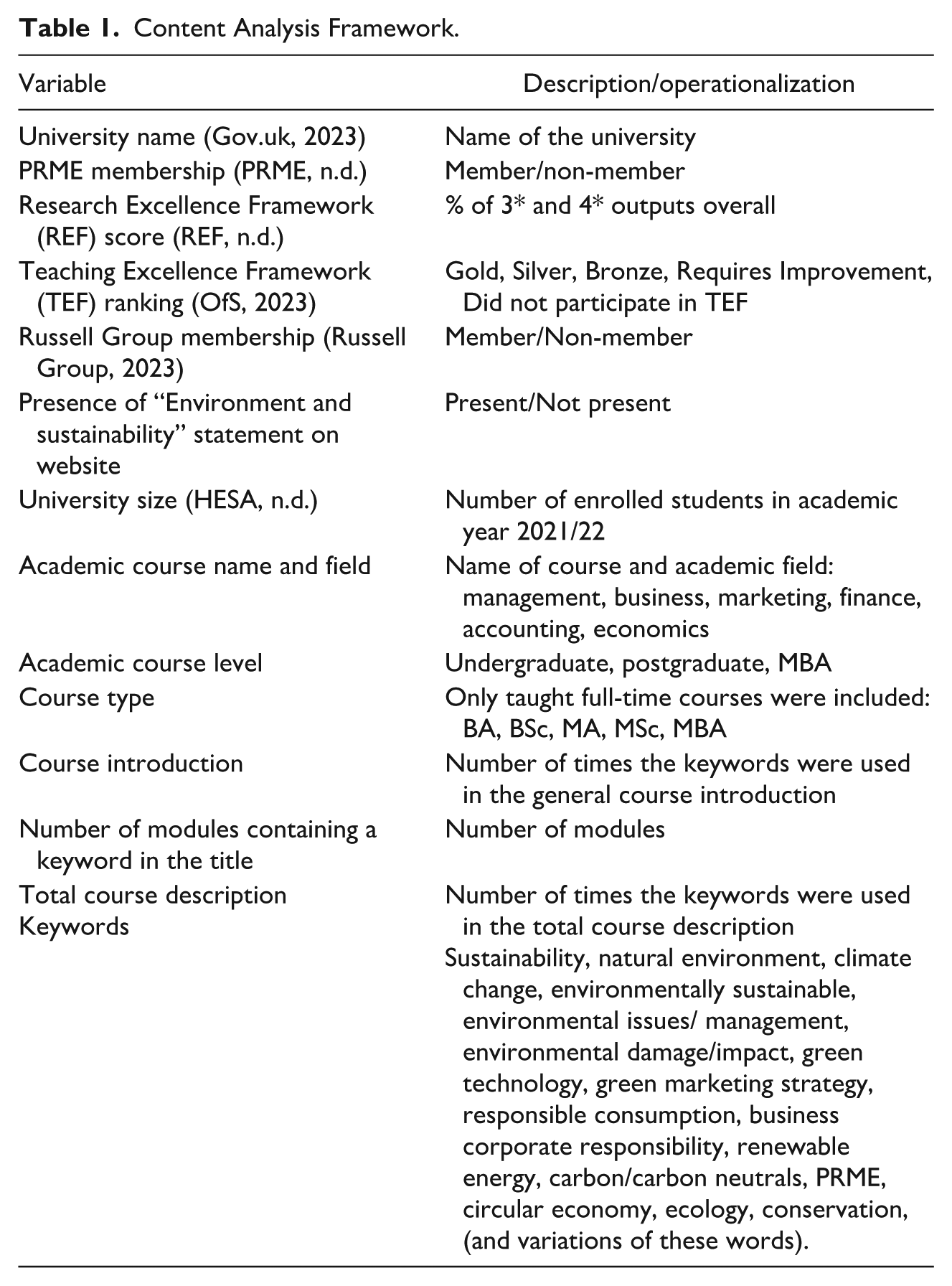
Next, the authors researched the characteristics of the UK higher education sector (Atherton et al., 2024). This involved reviewing official government policies on how universities are assessed, which led to the inclusion of TEF and REF scores. These are the only two official frameworks used by the UK government to assess research and teaching performance in universities (Atherton et al., 2024; OfS, 2023; REF, n.d.). REF and TEF scores express a university’s teaching and research-related capacity and capability. A high REF score is expressed as the percentage of high-quality research publications (rated as 3* or 4*) produced by researchers affiliated with the university, and it may range from 0% to 100%. REF score indicates the extent to which the university conducts research that is relevant, rigorous, and focused on significant and current challenges, implying capacity. The higher the proportion of world-leading and internationally recognized research, the more resource-rich the university is.
TEF score indicates the quality of teaching, learning environment, and student outcomes (like graduate employment) at UK universities. There are four possible TEF scores: requires improvement (lowest), bronze, silver, and gold (highest evaluation). Some universities did not participate in TEF. A high TEF score indicates the capability to implement research knowledge, awareness of teaching trends, and the importance of education for graduates.
The authors then discussed how to measure organizational hypocrisy. To do so, they drew on past research to understand how environmental sustainability is approached in the UK higher education sector, and how universities express their interest in this topic. This step helped establish the coding variables used to capture how universities profess their commitment to environmental sustainability. The authors referred to previous research (Cullen, 2020; Eustachio et al., 2024; Snelson-Powell et al., 2020) and identified membership in PRME as a key indicator of a university’s voluntary commitment to sustainable education. As a result, PRME membership was included as a variable in the coding framework. PRME is an international network of business schools endorsed by the United Nations. We did not differentiate between different types of PRME membership; if a university was listed as a PRME member, it was counted as such.
In addition, a review of university websites and reports revealed that many UK universities publish environment and sustainability policies, similar to the modern slavery statements often found on their landing pages. The presence of an “environment & sustainability” statement on the website indicates that the university recognizes the importance of sustainability and publicly demonstrates this commitment through a dedicated link on the main university website showing the university’s sustainability policy.
University size, as measured by the number of enrolled students in the 2021/2022 academic year, was also included. University size is a significant indicator of institutional income and influence (Quiroz Flores et al., 2021). Larger universities are likely to receive more student feedback and, consequently, may face higher expectations of acting on that feedback—as well as greater risk of student backlash if they do not do so.
Furthermore, course name and field, academic level, and course type were included as variables in the coding framework to examine potential links between course characteristics and the inclusion of environmental sustainability course content. These variables reflect the actual course offerings at UK universities (Discover Uni, 2020).
Next, nation was included as a variable because, while the higher education systems across the four UK nations (England, Wales, Scotland, and Northern Ireland) are largely unified, their funding structures differ which may affect how universities operate (Wolf & Cohe, 2024). Russell Group membership describes a university’s prestige. Russell Group universities claim to have distinguishing characteristics such as world-leading research and teaching, long-standing institutional reputation, and significant social, economic, and cultural impact nationally and internationally, producing more than two-thirds of the world-leading research in UK universities (Russell Group, 2023). Hence, RG membership is an indicator of prestige and resource richness.
Finally, a list of keywords that would capture the content of the course descriptions and address our research question was developed. We reviewed previous literature (O’Byrne et al., 2015; UNESCO, 2024; University of Plymouth, n.d.; Vanderbilt University, 2024) and analyzed a sample of course descriptions to generate an initial, broad, and comprehensive list of keywords related to our theme of environmental sustainability. We read the cited publications and wrote down the keywords which appeared in them and related to sustainability in general. Next, we refined this longer list into a shorter list that focused primarily on environmental sustainability. This process was completed by two co-authors of the study. The final list included the following keywords (and their variations): sustainability, natural environment, climate change, environmental sustainability/environmentally sustainable, environmental issues/management, environmental damage/impact, green technology, green marketing strategy, responsible consumption, business corporate responsibility, renewable energy, carbon/carbon neutrals, PRME, circular economy, ecology, conservation.
Course Inclusion Criteria
An academic course (or degree program in the USA) is a structured program consisting of modules (or classes in the USA) that leads to the award of a qualification. Courses are composed of modules, which are individual units of learning (HESA, 2011). After reviewing the offerings of several universities, we decided to focus on undergraduate, postgraduate, and MBA full-time courses (excluding “sandwich” and “foundation” options) centered on business, management, marketing, finance, and accounting. Academic courses offered as with/and were included only if both elements were business-related (e.g., a BA in Business Studies with Languages would not be included in our sample).
We excluded stand-alone degrees in “sustainability management” or “environmental management” because we were not interested in courses dedicated specifically to environmental-related business education. Instead, we aimed to examine the inclusion of environmental sustainability content in generalist business courses. Using the official list of universities in the UK (Gov.uk, 2023), we entered each university’s website into a web browser, selected the “search courses” option, and searched for courses using “business” as a keyword. We used this keyword to focus on courses presented as offering business content. Figure 1 summarizes the hypotheses and operationalizations of the variables.
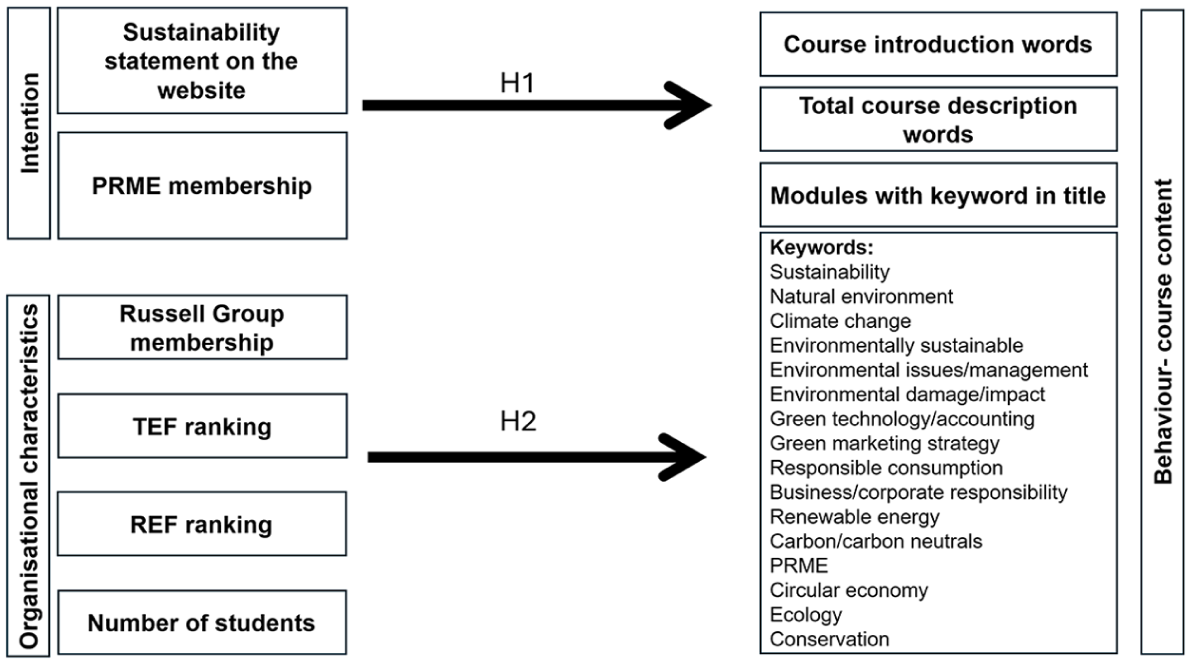
Summary of hypotheses.
Data Collection
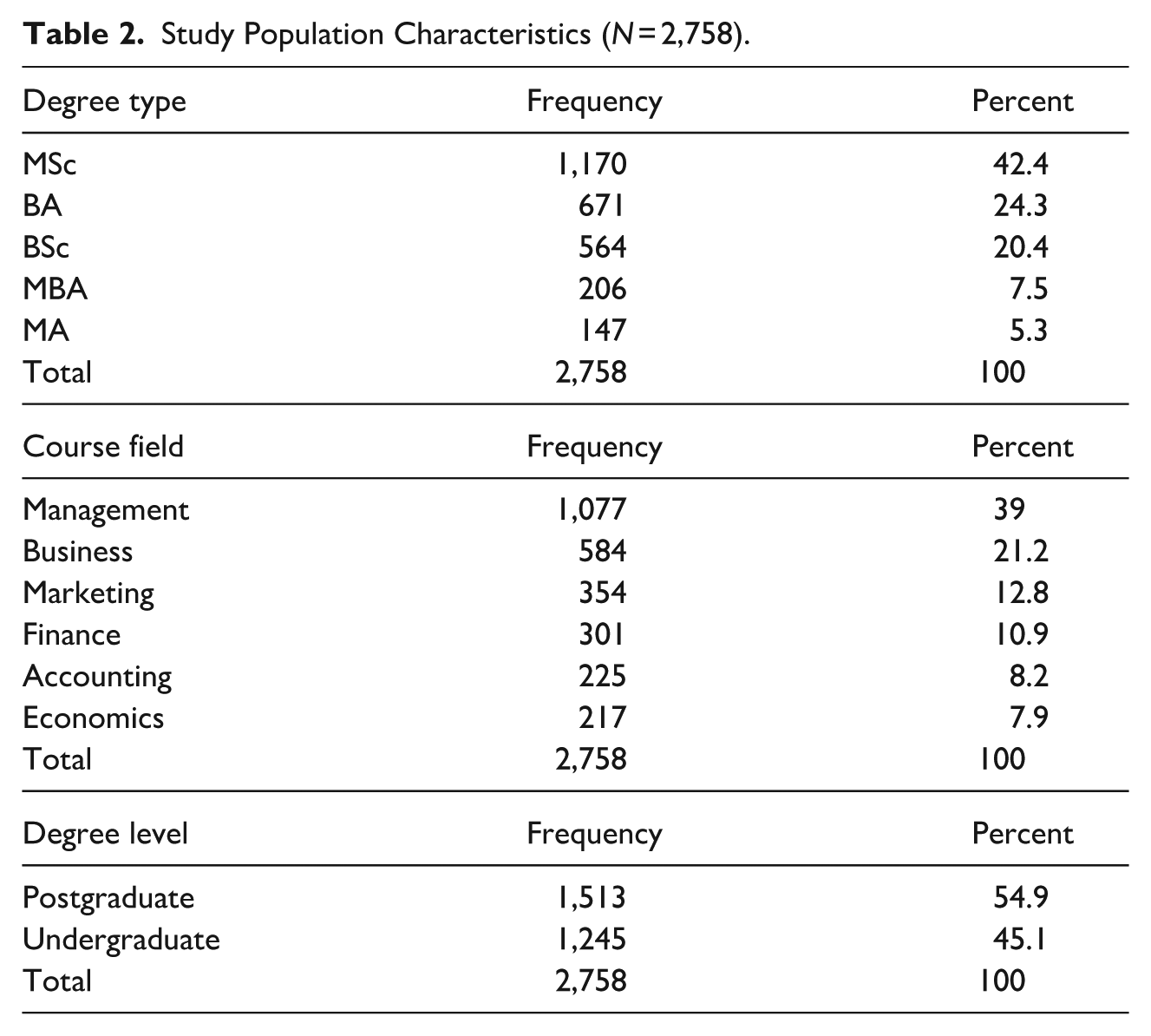
The data was collected in 2023 by two co-authors of this study and two research assistants. To ensure intercoder reliability, we designed a robust coding procedure as presented in Table 1 (Riffe et al., 2019). This procedure involved comprehensive initial coding training, test training, and regular quality checks between the coders. The data collection and coding procedure resulted in a final dataset containing 2,758 courses (Table 2).
Study Population Characteristics (N = 2,758).
Data Analysis and Results
Descriptive Analysis
We began data analysis with descriptive statistics. First, we examined how many courses featured any of the keywords in the course introduction section, which is the initial part of the course information displayed when searching for a course (Table 3). This would indicate that environmental sustainability was positioned as an important aspect of the course. Most courses (80.93%, 2,232) did not feature any of the keywords in the course introduction section, suggesting that environmental sustainability issues were not deemed important enough to be included in the part of the course description that prospective students first see when searching for a course on a website.
Keywords in Course Descriptions.
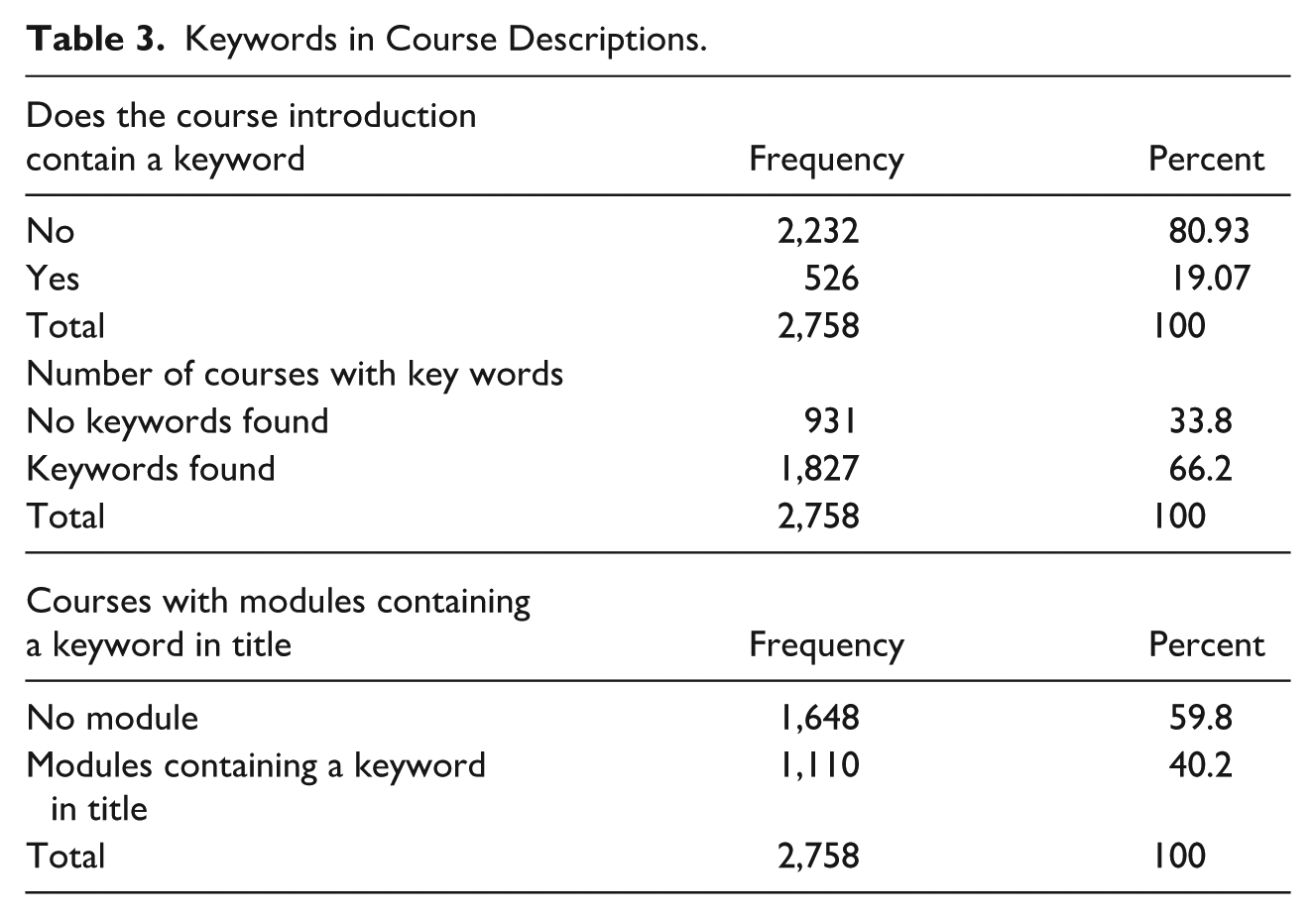
Next, we analyzed how many courses featured any of the keywords in any part of the course description. This yielded a more positive result, with only 33.8% (931) of courses not featuring any keywords at all. These courses did not include keywords in the course introduction section, lacked modules with keywords in their titles, and did not have keywords embedded in the module descriptions. Finally, we analyzed how many courses included modules with keywords in the module titles. The majority of courses (59.8%) did not include any modules with keywords in their titles.
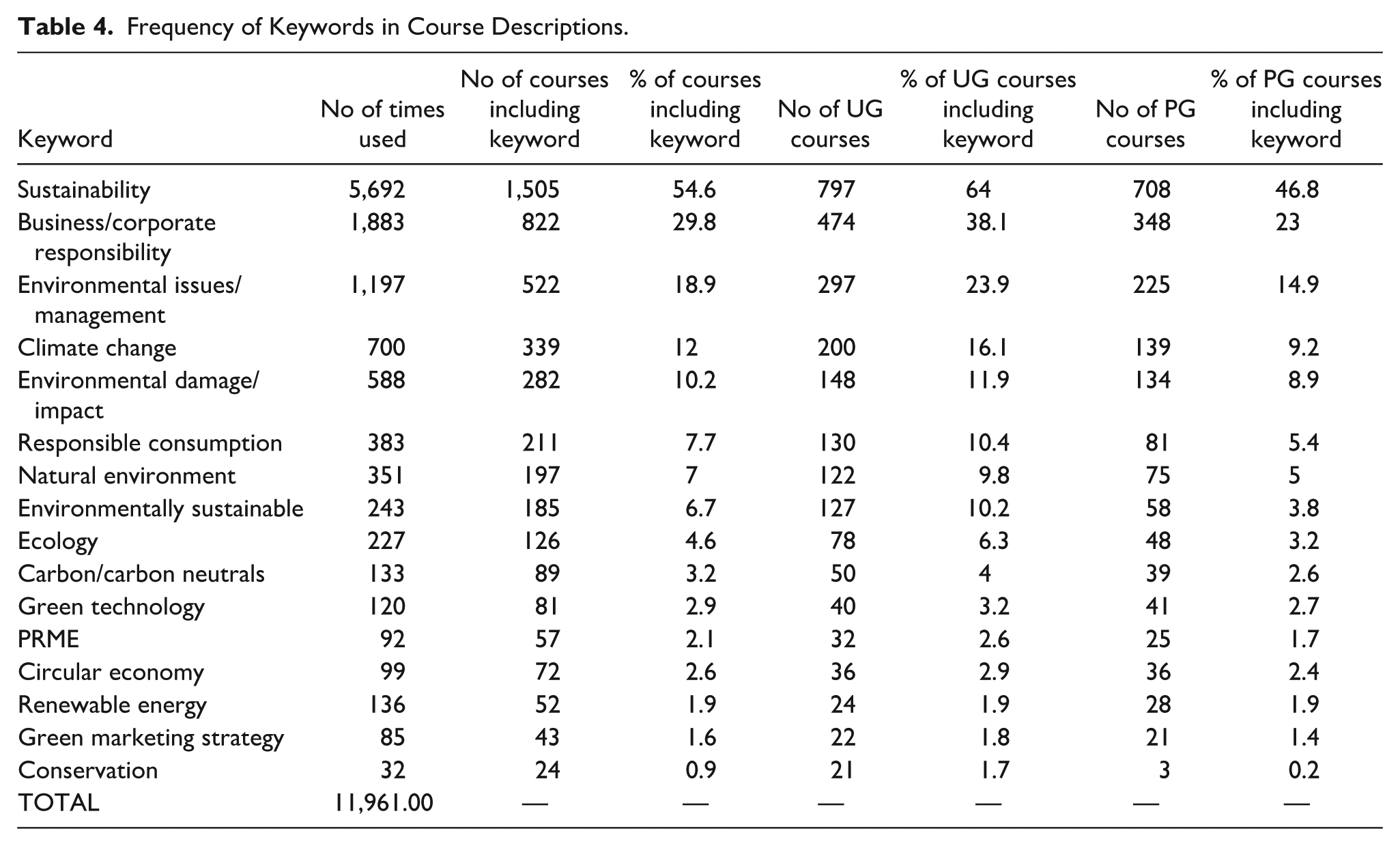
Next, we analyzed the frequency of occurrence of individual keywords in course descriptions (Table 4). One keyword, namely sustainability, has been used in over half of all courses (54.6%), followed by business/corporate responsibility (29.8%) and environmental issues/management (18.9%). More specific words were used less frequently, for example renewable energy only in 1.9% of courses.
Frequency of Keywords in Course Descriptions.
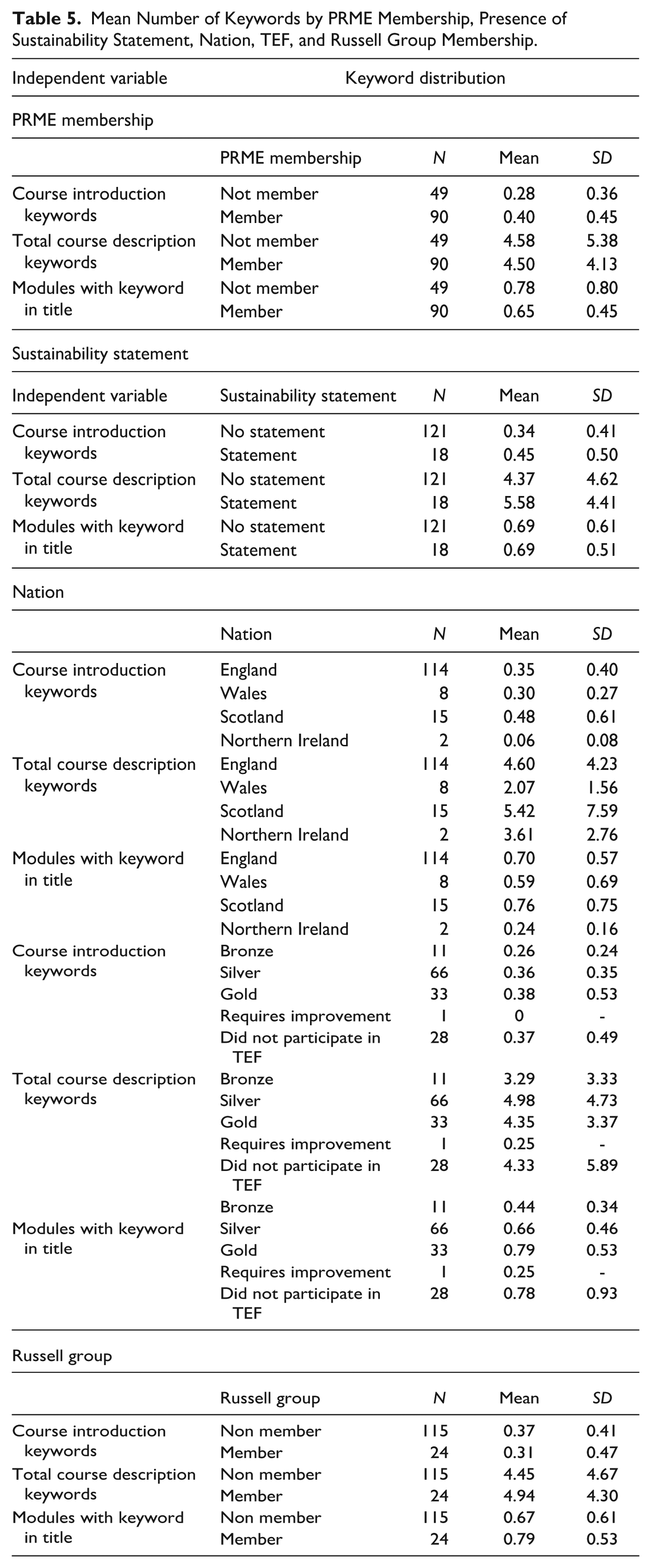
Next, we calculated the mean number of keywords per course field. Business courses on average had the greatest number of keywords per course (5.30), followed by economics courses (5.22), management courses (4.72), marketing (3.74), accounting (3.38), and finance courses (2.43). Table 5 presents the mean number of keywords featured in the indicated parts of course descriptions.
Mean Number of Keywords by PRME Membership, Presence of Sustainability Statement, Nation, TEF, and Russell Group Membership.
Hypothesis Testing
Next, we tested the proposed hypotheses. To do so, we aggregated the data from the course level to the university level. Specifically, we calculated the mean number of keywords per course per university for course introductions, total course keywords, and modules with keywords in the title. For example, if a university had 22 courses, we summed the keywords used per course and divided them by the number of courses (22) to arrive at an average number of keywords per course per university.
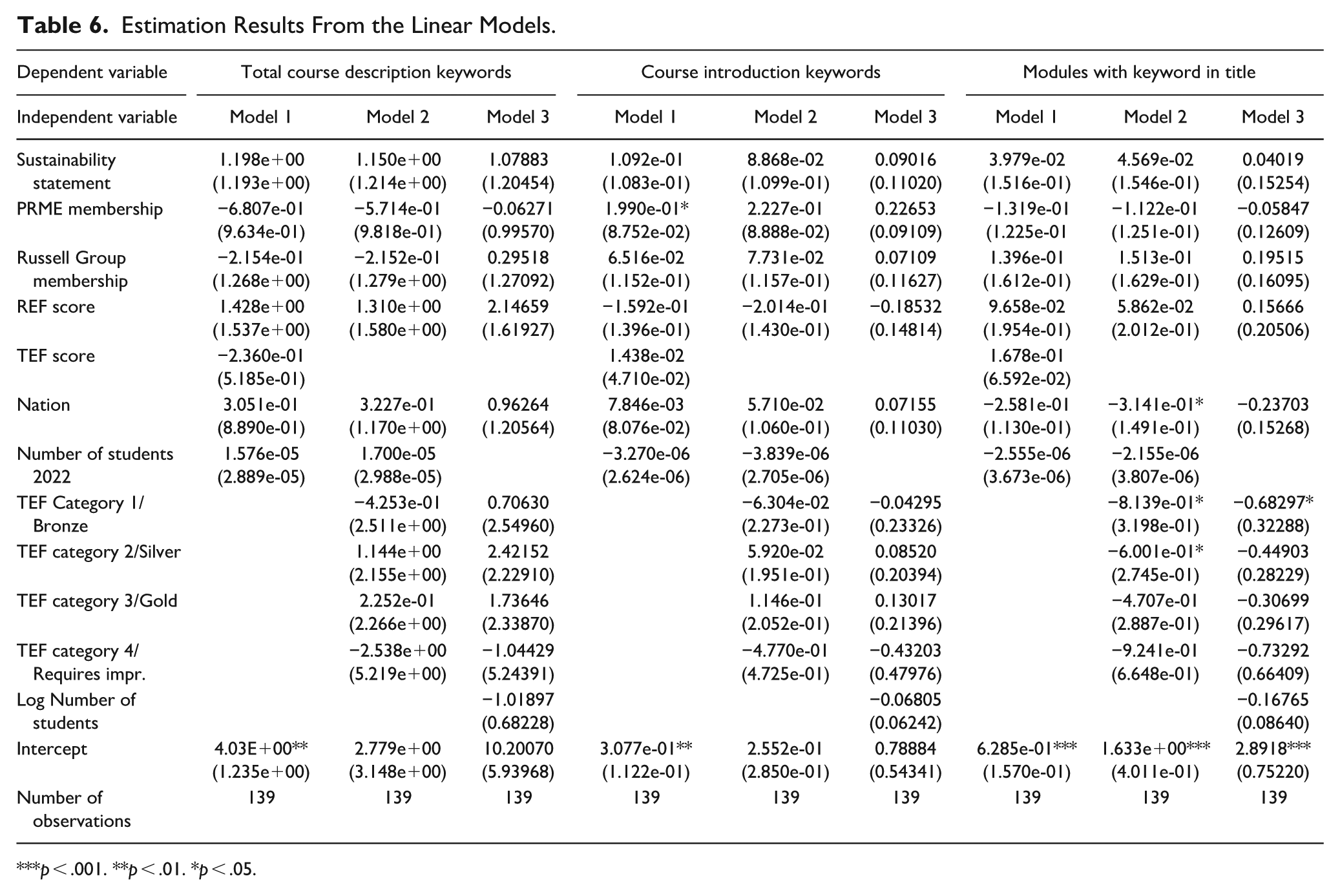
To test the hypotheses, we estimated three groups of linear models. In Group 1, the dependent variable is the number of total course description keywords. In Group 2, the independent variable is the number of course introduction keywords. In Group 3, the independent variable is the number of modules with keywords in the title. Within each group, three models were estimated, as shown in Table 6. Each model within a group controls for various variables, as indicated in Table 6. Model 1 in each group serves as the baseline model, controlling for the base independent variables.
Estimation Results From the Linear Models.
p < .001. **p < .01. *p < .05.
Table 6 presents the estimation results from the linear models: coefficients and spherical standard errors are shown in parentheses (all models meet the Gauss-Markov assumptions (Greene, 2003)). Models 2 and 3 include transformations for two variables: the number of students (transformed into the log of the number of students) and TEF categories. A logarithmic transformation was applied to the number of students variable to address the substantial variance, as differences among higher values disproportionately exceed those among lower values; this transformation compresses the scale and increases the relative influence of smaller magnitudes. TEF categories were transformed into four dummy variables to explore the individual effect of each TEF category (there are five TEF categories, but one is omitted to avoid the dummy variable trap (Greene, 2003)). The dummy variable was coded in the following way: the dummy variable for TEF Category 1 is equal to 1 if the TEF score is Bronze and equal to 0 otherwise; TEF Category 2 is equal to 1 if the TEF score is Silver and equal to 0 otherwise; TEF Category 3 is equal to 1 if the TEF score is Gold; and TEF Category 4 is equal to 1 if the TEF score is Requires Improvement. In addition, TEF Category 5 is equal to 1 if the TEF score is “did not participate in TEF” but this variable is omitted.
The unit of analysis is the university, and the independent variables are the mean number of keywords used in course introductions, the mean number of keywords used in total course descriptions, and the mean number of modules with keywords in the title. Initially, each course was coded for the number of keywords in the course introduction and course description, as well as for modules with keywords in the title. We then aggregated this data to the university level and calculated the mean number of keywords in course introductions, the mean number of keywords in course descriptions, and the mean number of modules with keywords in the title. Data were analyzed using R (version 4.2.0).
Evidence for Hypothesis 1 is provided by the estimate of PRME membership and sustainability statements across the models. The results indicate that PRME membership is statistically significant only in Model 1 for the variable course introduction keywords. All other eight models show that this variable is not statistically significant. Additionally, the results indicate that the sustainability statement does not relate to any of the independent variables in a statistically significant level. Hypothesis 1 is therefore only partially supported.
Evidence for Hypothesis 2 is provided by the estimates of the four variables. None of the estimates are statistically significant in any of the models. Therefore, Hypothesis 2 is not supported, as resource-rich universities do not offer more course content related to environmental sustainability compared to universities with fewer resources.
Discussion and Implications
This study examined the extent to which environmental sustainability issues are embedded in course content of business-related courses offered by British universities and how the content can be related to formal commitment of universities to sustainability issues and selected organizational characteristics. By doing this, we in turn examined the extent of organizational hypocrisy at UK universities in the context of business education for environmental sustainability. This study makes a significant contribution by being the first to systematically analyze business-related course descriptions across all UK universities, offering novel empirical insights into the integration of environmental sustainability in higher education. It reveals a gap between universities’ public commitments to sustainability and the actual substance of their course content, highlighting a form of organizational hypocrisy. Despite formal pledges and affiliations, such as PRME membership, UK universities do not differ significantly in the amount or depth of environmental sustainability content offered, suggesting that market legitimacy pressures drive a uniform, superficial engagement with sustainability education. By exposing this disconnection, the study challenges assumptions about the effectiveness of institutional commitments and underscores the need for more concrete, system-level actions to align educational content with sustainability goals.
Our results show that UK universities incorporate topics of environmental sustainability in business-related courses, but they do it in a very selective way. The number and type of keywords as well as the location of these keywords within the course content description provide evidence of how important environmental sustainability issues are to UK universities. Specifically, one keyword stands out, namely “sustainability” used in 54% of course descriptions, followed by “business/corporate responsibility” used in 29% of course descriptions. More specific keywords are used sparingly. This finding demonstrates that universities use certain buzz words but fail to translate this pledge into more specific actions. The overuse of certain words suggests that universities communicate a very narrow understanding of environmental sustainability and do not expose their students to wider perspectives and issues of environmental sustainability. For example, our study included 1,077 management-focused courses, but the phrase “environmental issues/management” was used only in 522 courses. Other specific phrases are used even more sparingly: our study included 354 marketing-focused courses, but the phrase “green marketing strategy” was used only 85 times across 43 courses. In some ways this is the first suggestion of presence of organizational hypocrisy—universities are adept at identifying terminology that is easily recognizable by stakeholders and, as a result, frequently employ such language because they know these buzzwords are easily interpretable by stakeholders (Reficco et al., 2023). However, the failure to convert these generic phrases into specific, actionable items within course descriptions (Ioannou & Broomfield, 2021) may also lead to credibility issues for universities and suggests a very rational and calculated approach to education for environmental sustainability.
Next, when looking at the incorporation of the keywords in the different parts of the course descriptions, we found that majority of courses (80%) did not include any of the keywords in course introductions. Course introductions are the first part of course description that prospective students see, and hence this result suggests that issues of environmental sustainability were not positioned as important aspects of those business-related courses. In addition, majority of courses (60%) did not include any modules dedicated specifically to environmental sustainability, and hence vertical integration was limited (Barrella & Watson, 2016). When analyzing other parts of the course descriptions, we found a more optimistic result. When looking at the overall course description, only 34% of courses did not include any of the keywords. Overall, these results suggest that universities engage with sustainability issues in business-related courses to a very limited extent.
When comparing universities, our results show that PRME membership (versus non-membership) is positively associated with the number of course introduction description keywords but does not impact on any other outcomes. PRME membership was not related to higher frequency of keywords in total course description nor the number of modules dedicated to environmental sustainability. Therefore, PRME members signal their commitment to environmental sustainability in course introduction, but the results suggest that it may be done disingenuously, with the intent of communicating good intentions which are not later translated into specific module content devoted to environmental sustainability. In addition, publishing sustainability policy under a dedicated tab on the home page of a university does not relate to more sustainability-related content either. This suggests that universities which profess their commitment to sustainability do not perform better than universities which do not make such official pledges. Such universities practice some level of organizational hypocrisy. On the other hand, universities which do not profess such commitments offer environmental sustainability content in the same way and amount. Action can happen without talk (and further investigations are needed if talk is needed to promote action), and talk does not always translate into action. Our results contradict the findings of Eustachio et al. (2024), who claimed that PRME membership among universities worldwide is positively related to the teaching of sustainability-related topics.
Organizational characteristics of universities, such as size, prestige, capacity, and capability do not impact on the amount of environmental sustainability content of courses. All universities deliver similar amounts of course content related to environmental sustainability. Our results stand in opposition to study by Snelson-Powell et al. (2020) and Reficco et al. (2023) who claimed that organizational hypocrisy appeared more in prestigious schools. In our study, prestige as measured by RG membership did not positively relate to greater organizational hypocrisy.
To sum up, British universities who officially pledge their commitment to sustainability do not offer more course content related to environmental issues than universities without such formal commitments. For these universities, we argue, there is organizational hypocrisy because we expect such universities to offer more course content related to environmental sustainability. Further we argue that “talk” is not required to include educational for sustainability in the curriculum, just as “talk” does not guarantee action (Rasche & Gilbert, 2015).
Theoretical Contributions
Theoretically, we follow MacInnis (2011) and Corley and Gioia (2011) to discuss theoretical contribution of this study. First, via this empirical investigation we delineate (MacInnis, 2011) the current practice of education for environmental sustainability and extend existing knowledge about education for environmental sustainability in the context of business-related tertiary education in the UK. We provide novel evidence confirming the presence of some level of organizational hypocrisy at universities and delineate the relationships between organizational characteristics and education for environmental sustainability.
Organizational characteristics such as prestige, size, and research and teaching excellence do not influence the course content related to environmental sustainability. This contradicts previous findings demonstrating that prestigious business schools deliver less sustainability teaching (Snelson-Powell et al., 2020). The inclusion of course content related to environmental sustainability was not related to PRME membership and sustainability policies or any of the studied organizational characteristics. This suggests that all universities in the UK, regardless of their sustainability pledges and organizational characteristics, implemented a similar amount of content related to environmental sustainability.
Theoretically, this finding suggests that normative and mimetic pressures have led universities to offer similar levels of environmental sustainability teaching, regardless of their formal commitments or competitive differences. This may indicate a need to introduce regulatory pressures to ensure consistent delivery of sustainability education across all universities, as normative and mimetic influences alone appear insufficient. We propose that this institutional mimicry exemplifies competitive isomorphism. Specifically, we argue that our results suggest competitive isomorphism (Han & Ito, 2023; Sakib, 2020), because even though universities in our study differed at the organizational level, those differences were not reflected in market-facing behavior. Our findings demonstrate that even when there are organizational differences in capacity, capability, size, and commitment to sustainability, universities offer very similar products in terms of teaching content. Organizational differences do not produce different behavior in education for sustainability in business-related courses, suggesting that the market response is similar. Contrary to our expectations, the mimicry was present across peer groups, not within peer groups, suggesting that competitors mimic the best in the sector rather than their direct competitors within peer groups. This kind of competitive isomorphism has been shown to occur in other organizational contexts, suggesting it may be a common behavior of institutions competing in a competitive market. As legitimacy is considered essential for competition, organizations tend to adopt practices perceived as most legitimate, ultimately leading to similarities in how they operate across competitive groups (Wang, 2023).
Practical Implications
This study offers important practical implications for universities and policymakers seeking to deliver educational provision to prepare future responsible business leaders and subsequently to minimize organizational hypocrisy in this context. First, universities which wish to substantially contribute to tackling important grand challenges related to environmental sustainability by educating responsible leaders, should review their course offerings to ensure the course descriptions highlight the environmental sustainability content. For this to be feasible, the courses must genuinely address environmental sustainability issues. Universities should expose their business students to a wide range of environmental sustainability topics by incorporating more specific issues rather than relying on generic phrases such as “sustainability” and “business/corporate responsibility.” By emphasizing specific actions and strategies for environmental sustainability and using a broader range of terms, students can better translate environmental sustainability concepts into actionable steps. For example, while “sustainability” is a broad term that is challenging to operationalize, terms like “environmental management,” “green technology,” “green accounting,” or “circular economy” are more precise and convey specific applications of sustainability.
Universities should also evaluate whether their courses include modules related to environmental sustainability. More than half of the courses (59.8%) did not feature any modules with sustainability-related terms in their titles. While universities publicly pledge their commitment to sustainability, these pledges must be supported by concrete actions to avoid accusations of organizational hypocrisy (Yang et al., 2020).
Regardless of strategic decisions at the university, school or course level, embedding environmental sustainability into modules falls within the academic autonomy of lecturers and can be pursued independently (UCU, n.d.). Hence, educators may incorporate topics related to environmental sustainability into lectures, seminars, and assessments as they see fit within the context of their modules.
For policymakers, if the goal is to increase awareness of environmental sustainability in business, it is crucial to embed the role of university education in shaping future business leaders who think responsibly into policy. Introducing regulatory pressure, that is a formal requirement for all business courses to include an element of environmental sustainability could be one approach. Ensuring systemic integration may involve national centralized decision-making bodies, though this method incurs organizational costs related to monitoring and reporting and requires national-level implementation and monitoring mechanisms.
Second, previous research suggests that organizational hypocrisy in teaching environmental sustainability has a significant impact, potentially leading to cynicism and disillusionment among students, undermining institutional credibility, and diminishing the effectiveness of sustainability education (Ioannou et al., 2023). While our study did not examine its effects on reputation or student trust, reducing organizational hypocrisy may enhance perceived credibility; however, this depends on organizational strategy and cost-benefit considerations. In some cases, a certain level of organizational hypocrisy is harmless, and allocating resources to eliminate it may not be cost-effective (Brunsson, 1989, 1993; Glozer & Morsing, 2020). Universities that wish to reduce the gap between their professed sustainability commitments and actions should consider the suggestions listed above.
Limitations and Future Research
First, this study was limited to using specific keywords to describe environmental sustainability in course descriptions. A broader range of keywords could potentially yield different findings, leading to different conclusions. The study was also limited by its focus on a single course search keyword: business. It is plausible that alternative keywords applied to the course search, such as marketing, management, or economics, would yield additional courses and potentially lead to different conclusions.
Our study focused on one specific type of sustainability, that is environmental sustainability. Future studies could also scrutinize human, social and economic sustainability teaching in university business courses (T. Porter & Derry, 2012).
Another significant limitation involves determining the adequate amount of environmental sustainability content, that is how much content can be classified as being sufficient? Not all modules should include such content, and the debate on whether integration should be horizontal (across all modules) or vertical (through a dedicated module on environmental sustainability) remains unresolved. Future research could investigate the impact of the proportion of course content on attitudes toward sustainability. For instance, is there a threshold of environmental sustainability content necessary for it to be noticeable and impactful similar to the “just noticeable difference” concept (Lee & Haller, 2022)? Moreover, incorporating a measure of levels of organizational hypocrisy which quantifies the extent of organizational hypocrisy in organizations may reveal additional insights.
Another notable limitation of this study lies in our approach to measuring the commitment to teaching environmental sustainability. We content analyzed course descriptions available on university websites, as these represent the official offerings of the university and are often consulted by prospective students. However, examining teaching materials such as lecture slides or reading lists could provide additional insights into the integration of environmental sustainability into course content.
Future research could also explore differences in academic course offerings by universities in various countries, examine disparities in graduate outcomes, or study the performance of students exposed to such instruction at the university level or in lower levels of education (Torsdottir et al., 2024). A cross-national comparison could potentially highlight whether, and to what extent, national education systems and business culture relate to environmental sustainability teaching at universities and other levels of the education system (Atherton, 2021).
Additionally, theoretical exploration could focus on the impact of institutional differences and similarities, including the influence of leadership (Yaghi & Yaghi, 2021), the gender of leaders, or the religious context of a country. Other measures of institutional prestige could be used in addition to Russell Group membership. Some critics argue that the perceived prestige of the Russell Group is more a result of successful marketing than inherent superiority (Boliver, 2015a; Boliver, 2015b). Studies have shown that several non-Russell Group universities perform comparably in areas like academic selectivity and teaching quality (Boliver, 2015a; Boliver, 2015b), therefore additional indicators of institutional prestige, such as accreditations, should be incorporated into future studies.
Conclusion
To summarize, this study makes three main contributions. First, this is the first study to provide a systematic analysis of 2,758 business-related courses offered by all British universities, thereby contributing new evidence to the debate on education for environmental sustainability. Second, instead of relying on self-reported perceptions of business school curricula, an approach fraught with limitations, as highlighted by Reficco et al. (2023), we conducted a content analysis of actual course descriptions accessible to prospective students. Third, through this methodological approach, we offer a novel perspective on the issue of organizational hypocrisy in business education. We argue that decoupling occurs in both directions: not only does talk not always lead to action, but action can also occur without talk.
Footnotes
Declaration of Conflicting Interests
The authors declared no potential conflicts of interest with respect to the research, authorship, and/or publication of this article.
Funding
The authors received no financial support for the research, authorship, and/or publication of this article.
