




Abstract
Students who seemingly do not fit the masculine ideal of an entrepreneur rarely consider entrepreneurship as a suitable career path due to a lack of identification and perceived feasibility. To challenge the masculinization of entrepreneurship, we drew from contemporary literature on gender role stereotypes to design a course that enables business and management educators to foster entrepreneurial aspirations among all genders. To that end, we introduce and evaluate a variety of pedagogical nudges that help raise awareness of and dismantle the stereotypical beliefs that deem masculine characteristics necessary to succeed in an entrepreneurial career. Results from 122 students and scientists who participated in the course show that these nudges, including the androgynous representation of entrepreneurship and the creation of safe spaces, help participants transform their views on who and what is involved in entrepreneurship. Our discussion underscores the importance of addressing gender role stereotypes in entrepreneurship education as a means to increase the pool of individuals who can identify with the role of a startup founder and to de-bias the allocation of resources in venture creation processes.
Keywords
Public perception of entrepreneurs needs to be more appreciated, entrepreneurship education needs to be increased and underrepresented groups need to get special attention and be given help in order to start, run or grow a business or enterprise. (Council of the European Union, 2014, p. 18)
Introduction
This article presents our answer to the perennial question of how to encourage a more heterogeneous group of students and scientists to consider entrepreneurship as a desirable career path (Braches & Elliott, 2017; Merluzzi & Burt, 2021; Poggesi et al., 2020). While the numbers point to a slow but steady increase in diversity in startup ecosystems (Statista, 2022), research shows that the gender role stereotyping of entrepreneurship as a primarily masculine career pursued by white, middle-aged Western men remains prevalent (Gupta et al., 2022; Meyer et al., 2017). This masculinization of who and what is involved in entrepreneurship is fueled by the extensive media coverage of founders such as Elon Musk, Jeff Bezos, and Mark Zuckerberg (Farny et al., 2016; Gupta et al., 2008) and has implications for who identifies with entrepreneurial careers (Liñán et al., 2021; Rocha & van Praag, 2020; Thébaud, 2010). In addition, this masculinization influences who receives the necessary resources to pursue entrepreneurship, as decision-makers are often biased in favor of the masculine entrepreneurial ideal (Balachandra et al., 2019; Brush et al., 2019; Kanze et al., 2018). As a consequence, the opportunity to create personal wealth, improve one’s standard of living, and gain professional independence by pursuing an entrepreneurial career is seized by a relatively homogeneous group of individuals, thus failing to tap into important innovation potential for societal advancement and economic development (Bullough et al., 2022; de Bruin et al., 2006).
In our role as entrepreneurship educators, we asked ourselves what business and management educators in higher education institutions (HEIs) can do to inspire students and scientists who seemingly do not fit the masculine entrepreneurial ideal to consider entrepreneurship as a desirable career for themselves, thereby addressing gender inequalities in labor markets (Knipfer et al., 2017; Simpson, 2006; Wagstaff et al., 2020). The many efforts to promote greater diversity in entrepreneurship that have been implemented by educators in HEIs around the world have focused primarily on women and the design of educational interventions tailored to their needs (Botha et al., 2006; Bullough et al., 2015; Elliott et al., 2020). Yet entrepreneurship education (EE) literature lacks guidance on how to address the masculinization of entrepreneurial careers and comprehensively implement effective measures to raise awareness of and dismantle gender role stereotypes among participants of all genders (Berggren, 2020; Jones, 2014).
To address this gap, we developed and evaluated an innovative course concept for EE that challenges the prevailing masculinization of entrepreneurship by using pedagogical nudging techniques. We found that purposefully designed nudges are effective in increasing students’ identification with entrepreneurial careers and sensitizing future decision-makers to the impact of gender role stereotypes. In the following, we share the knowledge acquired along our journey of conceptualizing and designing the course. We thereby contribute to scientific and practical efforts to promote gender-sensitive EE in several ways (Bullough et al., 2015; Byrne & Fayolle, 2010; Jones, 2014). First, we bridge the gap between research on gender role stereotypes associated with entrepreneurship and research on pedagogical nudging. In particular, we enhance the current understanding of how to successfully implement pedagogical nudging to dismantle gender role stereotypes, a heretofore underexplored approach in educational contexts (Weijers et al., 2021). Second, we demonstrate that a thoughtful combination of different types of nudges embedded in the key components of any well-designed entrepreneurship course sparks transformative learning among students of all genders. Third, we present implications for EE aimed at achieving greater gender equality in the context of entrepreneurial careers.
Entrepreneurship Education as a Means to Challenge Gender Role Stereotypes
The Genderedness of Entrepreneurial Careers and Contemporary Pedagogical Interventions
A constructivist-oriented EE aims to equip students and scientists with tools and methods to gain experience in systematically exploring and exploiting business opportunities (Bullough et al., 2015; Fayolle & Toutain, 2013; Neergaard et al., 2012). As a result, participants gain knowledge and skills related to entrepreneurial thinking and acting that they may apply in creating new ventures, provided that their subjective attitude toward that career path is favorable (Fayolle & Gailly, 2008; Langowitz & Minniti, 2007). Attitudes and intentions toward an entrepreneurial career, however, differ according to gender (Maes et al., 2014; Nikou et al., 2019). As opposed to biological sex (i.e., being female, male, or intersex), gender is socially and culturally constructed. We acknowledge that gender is not a binary construct and that multiple gender identities exist. Gender describes societal expectations of what it means to be a woman, man, neither, or multiple genders. In other words, typically masculine or feminine attributes are deemed appropriate for men, women, and transgender individuals to varying extents (Basow, 2011; Bem, 1981). An androgynous person, for example, expresses both typically feminine and masculine traits (Basow, 2011). Because the field of entrepreneurship has historically been dominated by men (Calas et al., 2009), there is a persistent widespread belief that supposedly masculine characteristics (e.g., being ambitious, risk-taking, and self-confident) are required to succeed in entrepreneurship, referred to as gender role stereotyping (Eagly & Wood, 2012; Gupta et al., 2009; L. Miller & Budd, 1999). As a consequence, supposedly feminine characteristics (e.g., being affectionate, caring, and sympathetic) are not perceived to fit an entrepreneurial career (Ahl, 2006).
It has been demonstrated that when demographic differences are controlled for, new ventures started by women are as successful as those started by men (Gatewood et al., 2009; Hughes et al., 2012; Robb & Watson, 2012); regardless, the masculinization of entrepreneurship continues to impact those who seemingly do not fit this entrepreneurial ideal. In fact, there is ample evidence that women in particular perceive greater role incongruence and are therefore less likely to identify with the role of a startup founder (Rocha & van Praag, 2020; Shinnar et al., 2012; Thébaud, 2010). However, this does not only apply to women. A recent assessment of entrepreneurial intentions among business students shows that men students with high masculinity have significantly higher entrepreneurial intentions than men scoring low on masculinity scales (Vercruysse & Birkner, 2021). In addition, investors and other resource providers have been found to be biased toward the entrepreneurial ideal in their decision-making, which explains the persistent gender gap in acquiring resources crucial to a successful entrepreneurial career (Brush et al., 2018, 2019; Gupta et al., 2019; Kanze et al., 2018). Again, research suggests that investors are not biased against women per se, but against those entrepreneurs who exhibit more feminine behaviors, such as warmth, sensitivity, and emotionality (Balachandra et al., 2019).
As a response to the genderedness of entrepreneurial careers, EE literature has focused on developing instructional innovation supporting primarily women to enhance their entrepreneurial self-efficacy and intentions by delivering leadership skill training (Botha et al., 2006; Bullough et al., 2015), implementing peer mentoring (Elliott et al., 2020), and creating safe spaces to engage with role models (Cochran, 2021). In addition, educators are required to employ gender-sensitive language (Ahl, 2007), use case studies or role models that portray successful women entrepreneurs (Oppedisano & Laird, 2006; Orser et al., 2019), and engage participants in discussions about gender influences on venture creation (Orser & Elliott, 2020). While these pedagogical interventions are a crucial step forward to achieve greater heterogeneity among those pursuing entrepreneurial careers, gender-sensitive interventions and their impact in all gender classroom settings are still underexplored, and “too many courses and programmes remain gender blind” (Aggestam & Wigren-Kristoferson, 2021, p. 22). In addition, research on gender and EE has mainly been concerned with outcomes of EE rather than the pedagogies and underlying mechanisms that lead to these outcomes (Nabi et al., 2017; Schultz, 2022; Westhead & Solesvik, 2016). This sparks our interest in purposefully conceptualizing an entrepreneurship course that is open to all genders and evaluating pedagogical interventions for their potential to transform gender role stereotypes.
Transforming Gender Role Stereotypes Through Pedagogical Nudging
The association of entrepreneurship with masculine characteristics is difficult to overcome, for it is deeply rooted in society and shaped by socialization from early childhood on (Bem, 1981; Heilman & Chen, 2003; L. Miller & Budd, 1999). Transformative learning theory suggests that business and management educators in HEIs can challenge gender role stereotypes in entrepreneurship if they succeed in initiating a perspective transformation among the participants (Mezirow, 1997; Taylor, 2008). To this end, entrepreneurship educators need to accompany students along “the process of becoming critically aware of how and why our presuppositions have come to constrain the way we perceive, understand, and feel about our world; of reformulating those assumptions to permit a more inclusive, discriminating, permeable, and integrative perspective” (Mezirow, 1990, p. 14). A paradigmatic shift in perspective is achieved when participants’ frames of reference—for example, the gender role stereotypes that they hold about entrepreneurial careers—are challenged on a cognitive, conative, and affective level (Mezirow, 1997).
Contemporary literature on EE contains evidence that transformative learning can be facilitated using pedagogical nudging techniques (Neergaard et al., 2021). The concept of nudging is anchored in behavioral economics, which describes nudges as strategic interventions that are easy to implement, cost-effective, and targeted to influence people’s cognitive processes toward beneficial decision-making without forcing a particular choice (Thaler & Sunstein, 2008). Nudging theory is based on the assumption that people process information in two dual systems: System 1 consists of fast, unconscious, automatic thinking, while System 2 involves controlled, conscious, and reflective thought and decision processes (Stanovich, 1999). Individuals can become aware of automatic, non-reflective behaviors through affective, micro-perceptual shocks, or jolts. This means that certain emotions may irritate automatic behavior and serve as a starting point for reflection on that behavior (Mälkki, 2010). In this study’s context, pedagogical nudging can provide a cognitive means to stimulate awareness and transform gendered career choices in entrepreneurship. Thus, nudges act as a pedagogical method to trigger reflective student responses that result in a transformed perspective about who and what is involved in entrepreneurship (Neergaard et al., 2021).
While pedagogical nudging is a new territory for researchers and educators (Weijers et al., 2021), it uniquely explains changes in students’ dispositions toward the entrepreneurial career after being exposed to relatively minor and easy-to-implement interventions. Therefore, pedagogical nudging is a particularly promising tool to be widely implemented in any EE course. As educators may lack the confidence to employ gender-sensitive teaching (Dachner & Beatty, 2023), we aim to provide guidance and inspiration on how to comprehensively address gender role stereotypes through pedagogical nudging across the four core components of any balanced, well-designed course on entrepreneurship (Fayolle & Gailly, 2009; Gartner & Vesper, 1994; Souitaris et al., 2007): (1) a taught component that features knowledge dissemination on entrepreneurial careers; (2) a business planning component that includes advice and feedback; (3) an interaction with practice component that features expert talks, guest speakers, and excursions; and (4) a university support component that shows the role and supporting activities of universities.
The WoMenventures Course
In 2017, a US $15,500 fellowship for “WoMenventures” enabled us to realize our idea for a course that raises awareness of and dismantles gender role stereotypes associated with entrepreneurial careers. Since then, five cohorts of interdisciplinary students and scientists (N = 122) from HEIs in Berlin have participated in the course. The following sections provide detailed insights into the course’s design, target group, and instructional approach, as well as the pedagogical nudges that were applied.
Course Design
In designing the course, we drew on a variety of sources of information, including interviews with 79 students, scientists, and startup founders to examine what determines entrepreneurial career aspirations in higher education. We then supplemented their perspectives by conducting two focus groups and interviewing entrepreneurship faculty (N = 17) from our international network about their experiences with gender-sensitive teaching.
The main findings summarized in Table 1 indicate that the course should appeal to participants of all genders, especially because the women we interviewed feared that gender-specific issues often appeal primarily to women, making it hard to counteract disadvantages in entrepreneurial careers. To achieve greater equity, the experts deemed it necessary to highlight the factors that reinforce the idea that women’s approaches to venture creation somehow diverge from (masculine) norms in entrepreneurship, an often unconscious practice referred to as othering (Coleman et al., 2019; Foss et al., 2019). Therefore, those we interviewed—especially the women students—wanted stereotyping to be an implicit part of the course, fearing that it would otherwise become mired in problematization instead of promoting actionable countermeasures. In particular, the women who had already started a venture reported that they had missed having diverse role models in entrepreneurship courses, as they had learned about successful women and their perspectives only during their own venture creation processes.
Findings From Interviews and Focus Groups.
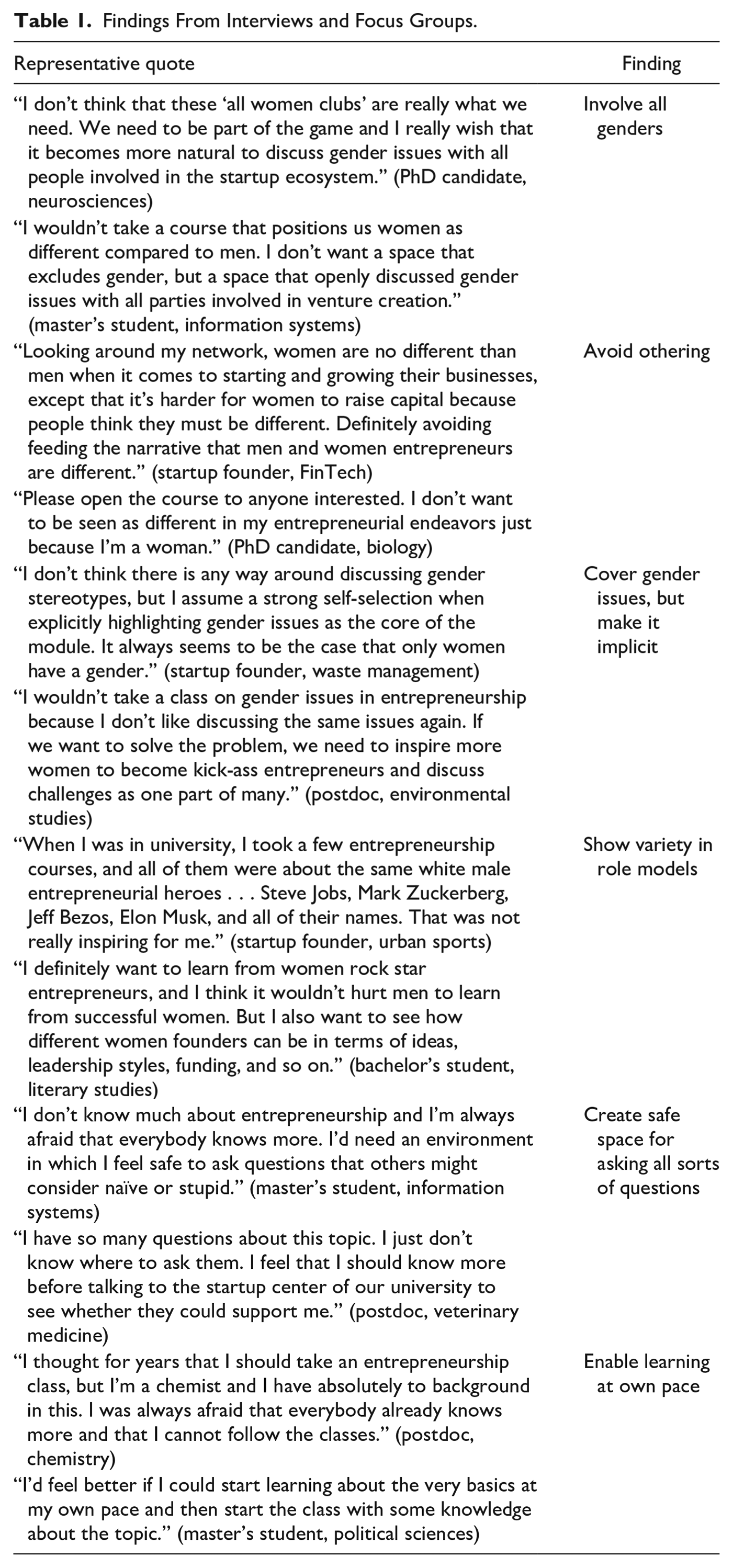
The students and scientists who had never taken a course on entrepreneurship indicated that the topic was not covered in their major’s curriculum, and they had difficulty identifying with the career path of a startup founder due to their perceived lack of skills, knowledge, and congruence with what they perceived as a founder personality. Therefore, these interviewees felt it was important to create a course environment that invites participants to ask all kinds of questions without feeling uncomfortable and where new topics could be tackled at students’ own pace. In addition, the experts highlighted the importance of a more androgynous portrayal of entrepreneurship as well as an inviting learning atmosphere outside the lecture hall, as this can reduce mental blocks and allow participants to more openly discuss sensitive topics, including gender role stereotypes.
Target Group
As most interviewees preferred a course format that invites a broad audience to learn about venture creation processes and gender role stereotypes in entrepreneurship, we purposefully invited interdisciplinary participants of all genders. The target group hence consisted of students and scientists at Freie Universität Berlin and other HEIs in Berlin who were interested in entrepreneurial careers, including its facilitators and inhibitors. While we have welcomed participants from a variety of disciplines during the past 5 years, we discovered that the course is particularly popular with students and scientists in neuroscience, data science, computer science, information systems, and literary studies.
Instructional Approach
In weighing different options for suitable training approaches, we carefully considered previous EE literature and the interview findings that provided detailed insights into our target groups’ course expectations (see Table 1). Eventually, we decided on a flipped classroom approach, given past findings suggesting that it would best allow us to meet those requirements (Abeysekera & Dawson, 2015; O’Flaherty & Phillips, 2015; Roehl et al., 2013). The term “flipped” refers to the inversion of traditional lectures, wherein the transmission of theoretical and practical information occurs outside the lecture hall through electronic resources such as video-recorded lectures or podcasts (Berrett, 2012; Pluta et al., 2013). Research has shown that the training approach encourages participants to take ownership of their learning by enabling them to engage with the electronic resources at their own pace (O’Flaherty & Phillips, 2015; Vorbach et al., 2019). Thus, in-class time can be used to conduct problem-solving activities in smaller groups of participants (Drennan et al., 2005; Sweet & Michaelsen, 2012), which has been shown to promote the creation of safe spaces for the discussion of sensitive topics such as gender role stereotypes, namely by reducing information asymmetries during classroom sessions (E. Miller & Nambiar-Greenwoord, 2022). For the outside-class activities, we developed an online training (see “Phase I: Online Training (12 Weeks)” for more detailed information) to lower barriers that have previously prevented our target group from taking entrepreneurship courses (Botha et al., 2006; Bullough et al., 2015; Carter, 2000), as we convey the sense that everyone enters the course with the same level of knowledge.
Course Content and Pedagogical Nudges
Figure 1 and the following sections provide a detailed overview of the content and pedagogical nudges we applied across the four components of a well-designed entrepreneurship education course (Gartner & Vesper, 1994; Souitaris et al., 2007).
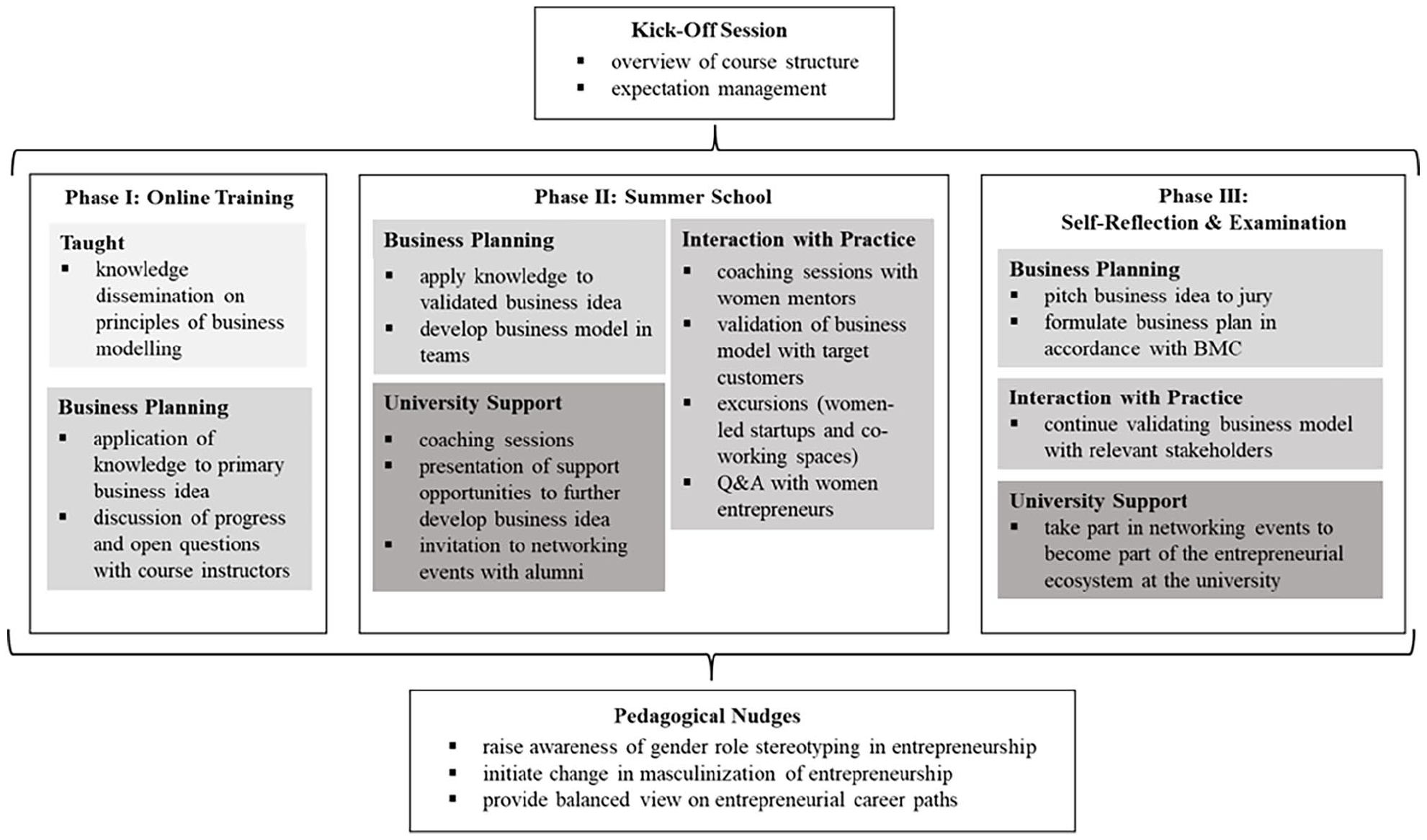
Course structure and content.
At the beginning of the course, a two-hour kick-off meeting was held during which the instructors presented the structure of the course and its general objectives. To raise awareness of gender role stereotypes related to entrepreneurship, we used the following two pedagogical nudges during the kick-off session:
The very first question in the kick-off meeting was “Who can name startup founders that at least half of the course participants also know?” For each name mentioned, we then asked the other participants to raise their hand if they knew the founder. After the activity, we asked the participants what they noticed in terms of the diversity of known startup founders. As the answers usually revealed that the majority of famous entrepreneurs were men, our question served to initially build awareness for the phenomenon of the masculinization embedded in entrepreneurship that is fueled by popular media, among others.
All participants were asked to bring a visualization (e.g., pictures and/or drawings) of their entrepreneurial ideal and to describe how they think this person dresses and behaves and which core characteristics they attribute to this person. Again, we wanted to know what participants noticed when envisioning a typical entrepreneur. This exercise allowed us to discuss in more detail the implications of the participants’ own images, ideas, and knowledge about entrepreneurs in relation to their perceived fit.
In addition, each participant received the opportunity to perform a one-minute pitch of a business idea. We did not announce the opportunity to pitch one’s own idea in advance to avoid giving the impression that we expected a perfect pitch and thus stimulating a feeling of disadvantage in participants without entrepreneurial experience. It turned out that observing how others did not deliver a perfect pitch inspired almost all participants to share their own thoughts on business ideas, even if the ideas were not very mature. These ideas became relevant in the subsequent 12-week online training that each participant completed individually.
Phase I: Online Training (12 Weeks)
The online training covered the taught (i.e., knowledge dissemination) component and the first of three business planning components of the course. We developed an online training format that allowed participants to engage at their own pace with the principles of business modeling—that is, the activities relevant to creating value for customers and the startup (Teece, 2010). The training is structured according to the Business Model Canvas (BMC) developed by Osterwalder and Pigneur (2010) and consists of nine building blocks, for each of which we provide videos, descriptive text elements, visualizations of theoretical models, and quizzes. In designing the online training and its various interactive elements, we consulted the literature on best practices in online learning environments, much of which has been reviewed by O’Flaherty and Phillips (2015). For example, we considered the experience of several scholars that students found the combination of various online learning resources such as videos, podcast interviews, quizzes, screencasts of lectures, and text elements related to the topic at hand to be particularly engaging (Forsey et al., 2013; Gilboy et al., 2015; Martin et al., 2013). We made sure that all video elements were no longer than 15 minutes, which has been identified as the ideal length for learning new concepts (Prober & Khan, 2013; Yeung & O’Malley, 2014). Moreover, we set up an online discussion forum because student interaction during activities outside the classroom can be increased through mutual assistance with unanswered questions (Yeung & O’Malley, 2014).
In addition, we used the following pedagogical nudges in the online training:
To introduce the overall topic covered in each of the nine building blocks, we created 18 videos of fictional entrepreneur “Clara” launching her own food waste management startup. For example, in one video she asks herself how to identify an appropriate value proposition, and participants are instructed to follow her steps in evaluating and refining the core value that she offers to her target customers. From there, participants follow Clara and her venture creation process through the entire online training. In line with recent recommendations for the inclusive representation of entrepreneurship (Datta et al., 2021; Liñán et al., 2021; Orser & Elliott, 2020), we deliberately chose an androgynous portrayal of Clara, to ensure that the focal case study emphasizes neither masculine nor feminine traits and that many participants could identify with the person depicted in the videos (see Figure 2). The videos can be assessed here: https://t.ly/F1_3d.

Androgynous representation of Clara.
In addition to Clara’s example, we bolstered the knowledge taught in the online training with practical examples of entrepreneurs and their ventures that were known to the participants (Petridou et al., 2009; Vorbach et al., 2019). In doing so, we gave priority to highlighting women founders as role models, thereby showing the diversity of characters and approaches to founding a startup as a counterpoise to the masculine entrepreneurial ideal. The presence of women role models has been shown to have a positive influence on the entrepreneurial attitudes of those who identify as low in masculinity (BarNir et al., 2011; Bechthold & Huber, 2018; Cochran, 2019). In any case, we put the emphasis on examples that are as counter-stereotypical as possible (women entrepreneurs in men-dominated industries, such as Tan Hooi Ling, co-founder of the ride-hailing company Grab, or men entrepreneurs in feminine sectors, such as Taofick Okoya, inventor of the Queens of Africa dolls).
To demonstrate that what is taught in the online training can be easily applied to one’s own business idea without much prior entrepreneurial experience or knowledge and regardless of any perceived mismatch between the student’s own and the ideal entrepreneurial characteristics, all participants were required to develop their own business idea as part of the online training. After completing a building block, they were asked to take notes on the insights they gained from the various content elements and what they mean for their own business idea. The notes appeared virtually as sticky notes on the BMC and could be printed to discuss the progress of participants’ ideas with course instructors or other participants.
During the 12 weeks of the online training, all participants were offered two opportunities to book a voluntary individual one-on-one session with the course instructors to discuss open questions and their progress in applying the knowledge learned to their own business ideas. When announcing the coaching sessions, we emphasized that we were open to all kinds of questions and that the sessions were dedicated to discussing questions in a calm atmosphere. It has been shown that these types of safe spaces, where questions can be asked openly and without reservation, offset especially feminine students from being seen as weak (Braidford et al., 2013; Debebe, 2011). In addition, these personal interactions have been proven to maintain student motivation during online training programs (Williams et al., 2006).
Privacy regulations prevented us from tracking every interaction of participants in the online training. Instead, we integrated a series of quiz questions in each section to check whether all of the relevant knowledge had been acquired. Only when 80% of the questions and tasks had been answered correctly could participants advance to the next section of the BMC. In addition, participants’ sticky notes containing the thoughts on their own ideas had to be brought to class and used as the basis for team building during the summer school.
Phase II: Summer School (1 Week)
The subsequent summer school session covered the second business planning component as well as the interaction with practice and university support components of the course. In the 5 days of the session, participants applied the knowledge they gained from the online training to the business ideas they were developing, by participating in interdisciplinary teams formed on the first day. The teams were guided through the steps of developing a business model: defining and validating a value proposition with potential customers (day 1); developing a minimum viable product (MVP) and obtaining customer feedback (day 2); refining the business idea and engaging in peer-to-peer coaching sessions (day 3); figuring out financial and legal issues (day 4); and condensing all the topics covered during the week into a business model and pitching the idea to a panel of judges (day 5). We used the following pedagogical nudges throughout the week to raise awareness for and dismantle gender role stereotypes:
Each day, we invited diverse startup founders, investors, and coaches from different industries and at different stages of the venture creation process to share their experiences on the topics of the day (e.g., how they developed their first MVP and what they learned from it). After sharing their hands-on experience, they typically stayed for another hour or two to provide feedback on the teams’ business models. Thereby, we purposefully provided high visibility for a diverse range of startups to counteract the conception of the “one ideal way of doing business,” which has been shown to have a positive impact on entrepreneurial attitudes, especially among women (Bechthold & Huber, 2018).
We organized two breakfast sessions with women founders in the early morning of the summer school days. The breakfast was buffet style, and the hour we set aside for this session had no predetermined structure. We introduced the founders to the class, asked them to briefly introduce themselves, and subsequently invited everyone to enjoy breakfast. Usually, after a few minutes, the informal atmosphere encouraged participants to approach the founders and start conversations. We deliberately put emphasis on inviting women entrepreneurs to informal conversations as we found that some gender-sensitive topics were brought up that never came up in a larger group, including work-life balance, balancing the creation of a startup with the birth of a child, family support for the venture creation process, and investor discrimination.
Given research findings indicating that networking activities with local ventures are especially important to forming women’s entrepreneurial attitudes (Petridou et al., 2009), we organized field trips to at least one local startup run by women. The overall aim of those venture visits was to show what it looks and feels like to turn a business model into reality (apart from the masculine image that students had in mind). Many participants had never seen a startup office from the inside, and they were surprised by the creative atmosphere.
As Cochran (2021) has pointed out, space and surroundings influence students’ experience of EE. We thus decided to host the summer school outside the traditional lecture halls for two reasons. First, we wanted to foster a creative and welcoming atmosphere in which participants, especially those who perceived a lack of fit with the entrepreneurial ideal, felt safe to leave their comfort zone by applying previously unknown knowledge to their own business ideas, gaining experience, and not being afraid to make mistakes in the process. Second, we aimed to cultivate an environment that was entirely unfamiliar to all participants to promote a sense of equal starting conditions for the summer school session.
After ending the summer school session with a small ceremony, where each attendee received a certificate for successful participation, all participants entered the examination phase.
Phase III: Self-Reflection and Examination (≥6 Weeks)
The participants created their own written business plans, which served as the examination, and were encouraged to self-reflect on what they had learned regarding venture creation and gender role stereotypes in entrepreneurship. For their business plans, participants again worked in teams to further develop the business models started in the summer school. To that purpose, they were asked to interact with their target groups through interviews, surveys, or observations to gain more detailed insights into how potential customers perceive the (prototypical) products and services in terms of value proposition, usability, and pricing. To take on the topic of gender role stereotypes, we used the following pedagogical nudges during the course’s final phase:
Participants were asked to dedicate a separate subsection of their business plan to discussing the lack of skills and competencies on the team as well as to reflect on hiring practices and biases that could occur. The purpose of the exercise was to demonstrate the extensive impact of gender role stereotypes in business processes as proposed by G. Miller and Sisk (2012). Discriminatory gender biases in hiring decisions have been extensively studied and usually discussed in regard to women in managerial positions (Castaño et al., 2019). To sensitize the participants to their individual responsibility as (future) entrepreneurs, we asked them to present countermeasures on their own teams that would mitigate unconscious gender role stereotypes in their selection of candidates. Such activities allowed the students to develop decision-making and interpersonal skills, which are increasingly in demand in today’s complex business environment (Pearlstein, 2021; Ritter et al., 2018).
A key element in addressing and challenging dominant assumptions about gender and entrepreneurship is the ability to critically reflect on normative beliefs and values (Farny et al., 2016; Wheadon & Duval-Couetil, 2017). Critical thinking has been defined as “reflecting on past events, interactions, and observations of perceived inequalities with a goal of questioning what happened, evaluating personal decisions and actions, and contemplating if change is possible and how it might occur” (Edmondson et al., 2020, p. 250). To foster critical thinking throughout the course, participants were asked to keep a diary about their encounters with gender role stereotypes until the course ended. They were also encouraged to talk with friends and family about the topic and to reflect on their experiences. Participants who wanted to share insights were invited to write a post about their reflections and learning to be published on the course’s website.
To maintain a close relationship with alumni, we ensured that all participants were given access to university support services for venture creation processes. To this end, we designed a course newsletter and regularly disseminated information about events, grants for startups, and opportunities to work with or for startups. We also invited representatives of activities aimed at (aspiring) women entrepreneurs to share their information with us. These measures ensured that as many students as possible could feel addressed and attracted to further offerings, especially those who previously felt rather put off by the masculinization embedded in entrepreneurial activities.
Evaluation of Learning
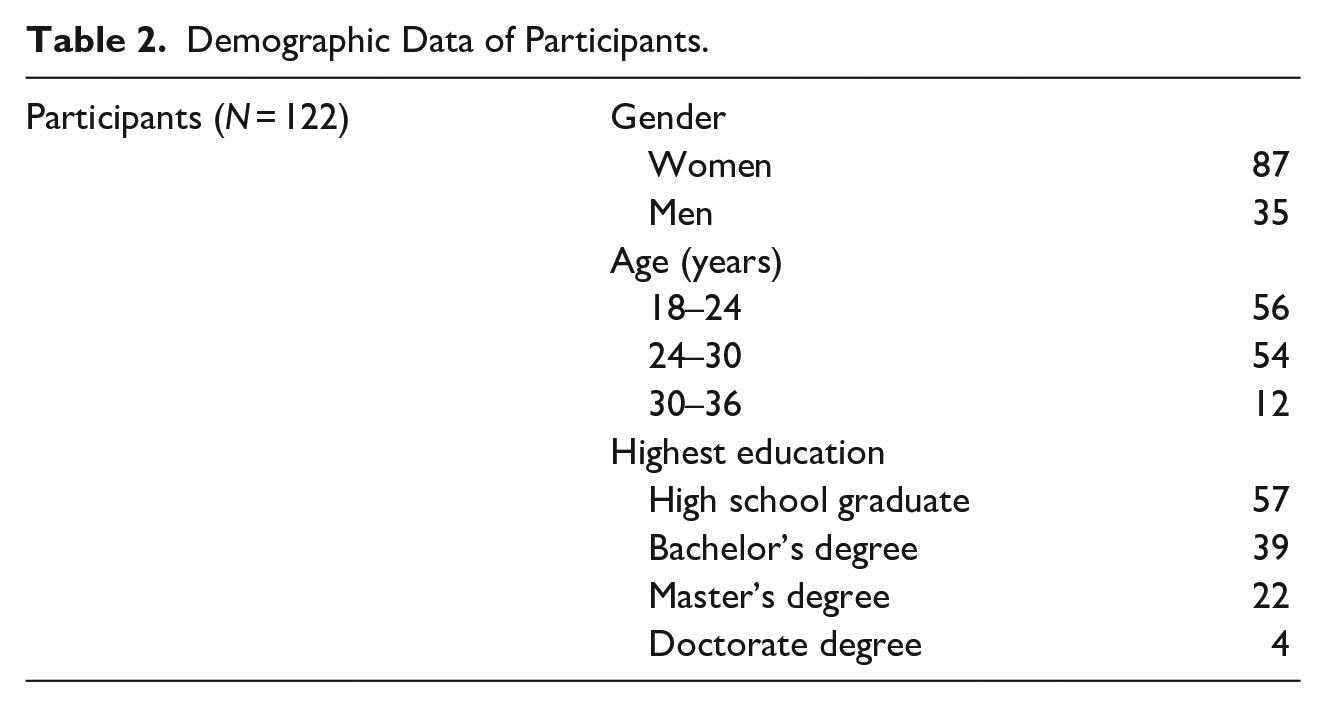
Between the summers of 2017 and 2022, five cohorts totaling 122 students and scientists from 14 disciplines completed the course. Demographic details of our sample can be found in Table 2. Each group was accompanied by two instructors, both of whom are experts in EE and research on gender and entrepreneurship. For these five cohorts, we have continuously monitored participants’ learning experiences and outcomes.
Demographic Data of Participants.
Evaluation Criteria and Procedures
Our evaluation focused on several qualitative assessments with the goal of examining the impact of our nudges on transforming gender role stereotypes associated with entrepreneurship. One evaluation approach relied on a pedagogical ethnography based on observations and informal conversations with participants during the course (Alexander, 2003). This kind of evaluation has proven to be suitable for observing changes in participants’ attitudes, behaviors, and emotions during class, group work, and all other activities that make up the course, as it allows researchers to interact closely with them (Neergaard et al., 2021). To this end, both instructors and various student assistants took detailed field notes, which were discussed after each class session.
To further enrich the data and gain more detailed insights into how and to what extent participants’ beliefs toward the masculine entrepreneurial ideal were transformed, we asked participants to submit, along with their application for the course, a feedback form with answers to open-ended questions about their course expectations and perceptions of their entrepreneurial ideal. In total, we received 187 pages of responses totaling 54,043 words. An exemplary student description of the entrepreneurial ideal can be found in Figure 3.
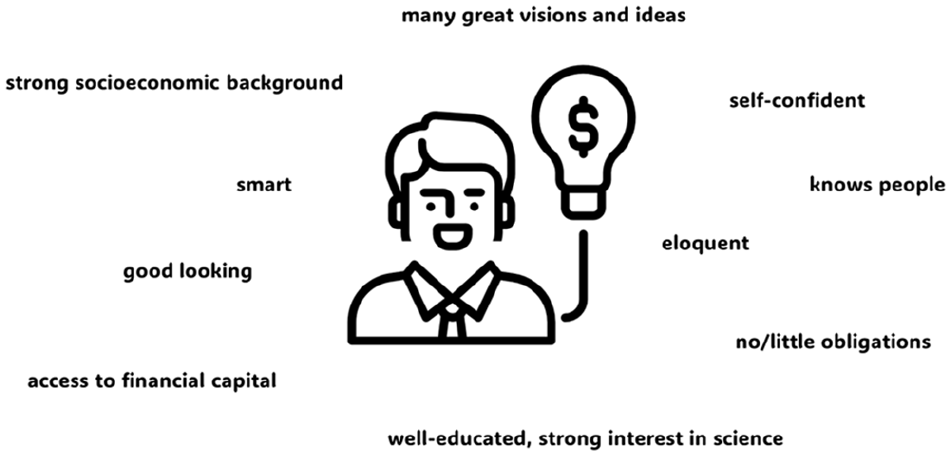
Exemplary visualization of the ideal entrepreneur (Icon made by Freepik from www.flaticon.com).
We then scheduled a half-hour appointment with all participants to discuss their entrepreneurial ideal and gain a deeper understanding of who and what entrepreneurship represents to them. Because submitting written responses and participating in interviews were considered part of active participation and therefore key components of passing the course, we received responses from all 122 participants. To assess the impact of the nudges, the same interviews were repeated immediately after the course and again 1 year later. In total, 118 participants (86 women and 32 men) completed these follow-up interviews. The interviews were audio recorded and transcribed verbatim.
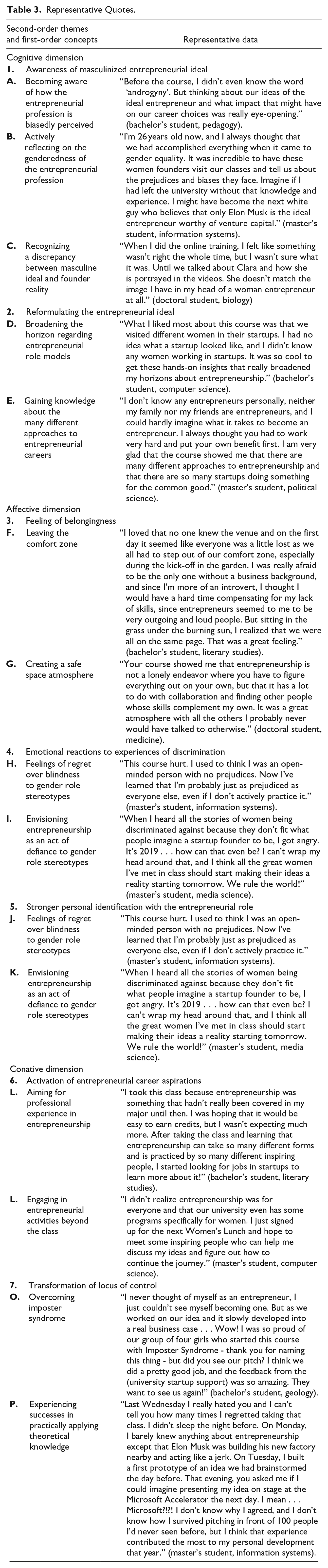
For data coding and analysis, we relied on the Gioia methodology, which provides well-established procedures for systematic and comprehensive analysis of large amounts of qualitative data (Gioia et al., 2013). This resulted in three overarching aggregate dimensions—the cognitive, affective, and conative—that we aimed to transform regarding participants’ perceptions of the masculine entrepreneurial ideal associated with the entrepreneurial career. The emerging data structure and representative quotes can be found in Figure 4 and Table 3. In addition to the described qualitative evaluations of the impact of our educational nudges on transforming gender role stereotypes associated with entrepreneurship among our participants, we also quantitatively monitored the development of participants’ entrepreneurial intentions and attitudes over time. Such a quantitative evaluation is common in entrepreneurship education programs and the results can be found in the Supplemental Appendix.
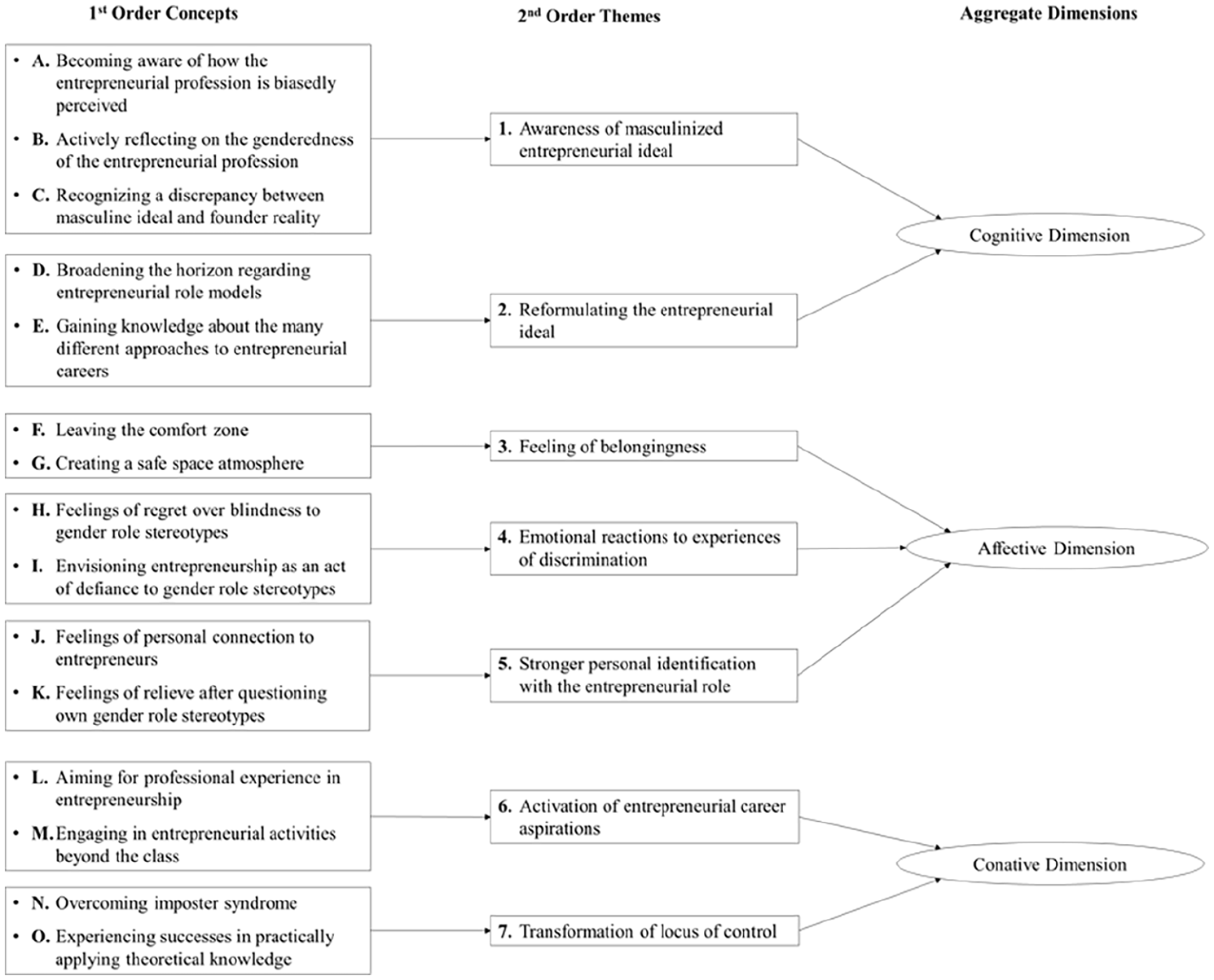
Data structure.
Representative Quotes.
Interpretation of Results From Five Cohorts
Overall, the analysis of our data suggests that our pedagogical nudges were effective in raising awareness of and transforming the masculinized entrepreneurial ideal, which had various cognitive, affective, and conative effects on participants’ career aspirations.
Entrepreneurial Career Aspirations
Cognitive Dimension
In comparison to what participants knew and believed about entrepreneurial careers prior to taking the course, our pedagogical nudges supported educators (1) in raising awareness and (2) reformulating the prevailing masculine entrepreneurial ideal. This was achieved through nudging interactions with diverse role models inside and outside the classroom, as these encounters alerted participants to the biased notion that the profession of entrepreneurship is perceived as something that requires primarily masculine qualities,
. . . which I thought were essential. You know . . . this ‘I don’t care what other people think or want because I’m the alpha male.’ After I learned that some, but far from all, entrepreneurs are like this, this [career] option became much more interesting. (bachelor’s student, pedagogy)
Especially the field trips to “real” startups led by women and the diary writing of encounters with gender role stereotypes nudged participants to reflect on the genderedness of entrepreneurial careers and recognize discrepancies between the masculine entrepreneurial ideal they had in mind and the reality of many founders:
This tiny girl of 23, standing in front of us talking about the neuroscience revolution and her startup, was the most surprising visitor in our class. Apart from her habitus, she didn’t look anything like an entrepreneur, at least not in the way I would have imagined. (doctoral student, neuroscience)
In addition to raising awareness, these nudges also proved suitable to reformulating the entrepreneurial ideal by broadening the horizon regarding entrepreneurial role models and supporting participants to gain knowledge about different approaches to entrepreneurial careers:
In the media, it always seemed like you could only become an entrepreneur in the tech world, and I didn’t know any successful women who started their businesses there. Today, I have much more sympathy for entrepreneurship, knowing that there are many different areas you can be active in, and you don’t have to destroy the planet. You can simply be yourself and still be successful. (master’s student, computer science)
Affective Dimension
Regarding students’ emotions, the data indicates that we were able to nudge the participants toward (3) feelings of belongingness, (4) emotional reactions to experiences of discrimination as well as (5) a stronger personal identification with the entrepreneurial role. In particular, the location of the summer school off-campus created a safe space and facilitated participants to step out of their comfort zone by engaging in entrepreneurial activities with which they had previously no connection and little identification:
It was my first lecture with outdoor activities, and this already made it very special. The feeling of connection with nature somehow made me forget that others are probably much more familiar with this topic. (bachelor’s student, pedagogy)
In addition, the special location and the informal exchanges with women entrepreneurs facilitated the expression of emotional reactions. These emotions triggered in-depth reflection after participants realized that they had always automatically and unquestioningly perceived entrepreneurship as a gender-neutral career path. A student (identifying as a man) stated:
It made me very angry to learn that women are still disadvantaged when they ask for money for their startup. I was not aware of this, and we discussed a lot about this during the last week. (master’s student, computer science)
This exchange and the opportunity to discuss questions and doubts during informal conversations with the founders who visited our class led the students to establish a personal connection with the entrepreneurial role.
Conative Dimension
In terms of students’ actions and behaviors contributing to the pursuit of an entrepreneurial career, the various nudges we implemented (6) supported the activation of participants’ career aspirations and (7) transformed their perceived locus of control. Above all, the practical application of the knowledge acquired in the online training to their own business ideas—including the quick sense of achievement in building their own prototype and pitching their ideas, even though they believed they did not possess the supposedly relevant masculine characteristics—made the participants aware . . .
. . . that it doesn’t take much to play around with your own product and build a first version (. . .). I never thought I would be able to build a product. I mean, who am I? But it was so easy, I’m going to build more and keep going. (master’s student, media science)
This quote reflects how success in applying their knowledge in practice helped participants overcome their imposter syndrome, which stemmed from a perceived mismatch between their own and “real” entrepreneurial qualities:
Playing around with our prototype and asking potential customers for their thoughts made me realize that there’s no reason why I can’t be the next woman startup superstar. (doctoral student, neuroscience)
In addition to experiencing that activities related to exploring and exploiting innovation potential are within their locus of control, learning that the university’s support infrastructure is open for everyone regardless of their gender or study background facilitated participants to stick to their ideas and develop them further:
It made me so so curious. I’ve already signed up for an extracurricular activity and I’m excited to see how far my entrepreneurial journey can go. (bachelor’s student, business administration)
Long-Term Impact
To date, three of the participants have gone on to pursue entrepreneurial careers and founded their own ventures, while about a dozen are currently employed by a startup. The woman who started her company in the health tech industry still aims to counterbalance the prevailing masculine entrepreneurial ideal:
Your course taught me so much about the dynamics in the tech world, and whenever I have the opportunity to go on stage or visit future founders, I show everyone that being a woman and being active in the tech world are a perfect match.
Nevertheless, similar to general trends in entrepreneurship education that have shown long-term declining positive effects (Nabi et al., 2017), we also found that the entrepreneurial career aspirations of some participants declined one year after the course, particularly among those who felt they deviated from the entrepreneurial ideal. We asked participants what had happened in the year after the course and a graduate (woman) of a master’s program in information systems said,
I guess reality hit me. After the course, I was really on fire and went to a lot of networking events. I met more inspiring women, but in the end, it still felt like a man’s world. Especially in the digital entrepreneurship field, it was mostly men who were either trying to start their companies or deciding whether you were eligible for their [incubation and acceleration] programs. I often felt that I didn’t really belong there.
Another alumnus who left university to work for a large corporation after earning a doctorate said that
without you, I wouldn’t have even thought about entrepreneurship being something that was meant for me. I’ve decided to first get a foothold in the corporate world and gain more experience, but I’m always on the lookout for some badass women entrepreneurs who can become my mentors.
These findings indicate that the pedagogical nudges we implemented in our course start to compete with opposing forces—such as the “visible” dominance of men in entrepreneurship—that students face after graduation. Therefore, our nudging techniques show a high potential for use in continuing educational programs, such as accelerators or incubators, to consolidate the transformation of gender role stereotypes in the long term.
Discussion and Lessons Learned
This article set out to answer the question of what business and management educators in HEIs can do to inspire a more heterogeneous group of students and scientists to consider entrepreneurship as a desirable career path, thereby addressing gender inequalities in labor markets. The course that we designed in response to that question draws on the concept of pedagogical nudging and focuses on raising awareness of and dismantling gender role stereotypes related to entrepreneurship. More specifically, we implemented a thoughtful combination of nudges that activate students’ cognition, affect, and conation across all key components of an entrepreneurship course. Doing so ensures that both systems of thinking—automatic and reflective—are nurtured with experiences that challenge and transform students’ assumptions about suitable career options without pressuring them to follow a particular path (Neergaard et al., 2021). In the following, we discuss two key lessons from our course and thereby contribute to scientific and practical efforts to promote gender-sensitive EE (Aggestam & Wigren-Kristoferson, 2021; Elliott et al., 2020). We particularly provide guidance and inspiration for educators who may lack the resources and confidence to employ gender-sensitive teaching (Dachner & Beatty, 2023; Edmondson et al., 2020) and present evidence on how the masculinization associated with entrepreneurial careers can be effectively addressed through pedagogical nudging—especially in all gender classroom settings—a heretofore underexplored approach in EE (Neergaard et al., 2021; Weijers et al., 2021).
Implications for Entrepreneurship Education
First, even though gender role stereotypes are deeply rooted in society (Bem, 1981; Heilman & Chen, 2003; L. Miller & Budd, 1999), our findings show that business and management educators can initiate a transformation in perspectives about who is suitable for an entrepreneurial career without having to revise entire entrepreneurship curricula. Small changes in content and instructional methods can serve as pedagogical nudges that influence the determinants of one’s attitudes toward entrepreneurship and gender imbalances in startup contexts (Neergaard et al., 2021). For instance, the careful selection of teaching materials can help to counterbalance the masculinization of entrepreneurship by offering more androgynous portrayals of entrepreneurs and their characteristics in case studies, in visualizations of presentation slides, and in course descriptions (Datta et al., 2021; Liñán et al., 2021; Orser & Elliott, 2020). Highlighting women entrepreneurs as inspiring role models and how diverse they can be in terms of traits, characteristics, ideas, socioeconomic background, visions, and approaches to starting a venture has also proven effective in nudging students who seemingly do not fit the masculine ideal to better identify with the role of a startup founder. Such strengthening of students’ identification with an entrepreneurial career can be reinforced through the guided application of entrepreneurial knowledge early in the course or program in which they participate. By developing a product or service that solves a problem in their everyday lives, students can experience how easily entrepreneurial knowledge can be applied, even if they seem to lack the characteristics commonly considered to be typical of entrepreneurs. This process of enhancing their entrepreneurial aspirations is supported by creating safe spaces throughout the course where they can ask questions and express insecurities without fear of being perceived as weak. To this end, we hosted informal breakfast sessions with diverse entrepreneurs who answered all sorts of questions in small groups and arranged peer-to-peer coaching among participants with similar (i.e., limited) entrepreneurial experience.
Second, addressing gender role stereotypes in entrepreneurship is not the work of women alone (Kelan, 2010; Marlow & Martinez Dy, 2018; Henry et al., 2017) but requires inclusive EE involving the joint efforts of participants of all genders. Stereotypes about who and what is involved in entrepreneurship have a decisive influence on the allocation of resources needed to explore and exploit business opportunities, including access to venture capital or incubation and acceleration programs (Brush et al., 2018, 2019; Gupta et al., 2019; Kanze et al., 2018; Morris et al., 2006). For instance, to avoid fostering the impression that the low proportion of women entrepreneurs requires fixing the women (Ahl & Nelson, 2015; Coleman et al., 2019), we have learned that we need more pedagogical interventions that allow reflecting on the extent to which the image of entrepreneurship and the context in which it is embedded require fixing—that is, fixing the system (Marlow & Martinez Dy, 2018). To that end, pedagogical nudges that help participants identify and address gender role stereotypes throughout the venture creation process are key and serve EE’s mission to provide every student with an equal opportunity to become an entrepreneur (Aggestam & Wigren-Kristoferson, 2021).
Limitations
Despite the positive results of our evaluation, we were not able to assess the effect of each nudging technique in isolation and untangle the interactions, which opens avenues for future research. Consistent with research questioning the long-term effects of nudging and EE (Duval-Couetil, 2013; Marchiori et al., 2017; Nabi et al., 2017), our results also show that the long-term impact of our course on entrepreneurial aspirations is limited. We therefore encourage researchers to explore how those limitations can be overcome and what pedagogical approaches might cushion the reality shock that startup ecosystems remain dominated by men, which in the interviews was revealed to be a long-term weakener of the overall positive outcomes of our course. Moreover, we note that pedagogical nudges are not universally applicable but need to be adapted according to gender role stereotypes that exist in different (entrepreneurial) contexts (Laguía et al., 2019; Welter, 2011). Finally, gender-sensitive entrepreneurship education would benefit from broadening its perspective by drawing attention to intersectionality (Lo, 2023; Marlow & Martinez Dy, 2018; Orser & Elliott, 2022).
Supplemental Material
sj-docx-1-jme-10.1177_10525629231215798 – Supplemental material for Promoting a Contemporary Image of Entrepreneurial Careers: A Course Concept to Address Gender Role Stereotypes Through Entrepreneurship Education
Supplemental material, sj-docx-1-jme-10.1177_10525629231215798 for Promoting a Contemporary Image of Entrepreneurial Careers: A Course Concept to Address Gender Role Stereotypes Through Entrepreneurship Education by Janina Sundermeier and Conny Steenblock in Journal of Management Education
Footnotes
Acknowledgements
We are very grateful to all the students who participated in this study. We thank the editors and anonymous reviewers who provided detailed feedback and contributed considerably to the development of our manuscript. Finally, we also thank Marie-Charlotte Matthes, who put great effort into developing the course and its unique design and made students welcome.
Declaration of Conflicting Interests
The author(s) declared no potential conflicts of interest with respect to the research, authorship, and/or publication of this article.
Funding
The author(s) disclosed receipt of the following financial support for the research, authorship, and/or publication of this article: This work received financial support from the Stifterverband.

Supplemental Material
Supplemental material for this article is available online.
References
Supplementary Material
Please find the following supplemental material available below.
For Open Access articles published under a Creative Commons License, all supplemental material carries the same license as the article it is associated with.
For non-Open Access articles published, all supplemental material carries a non-exclusive license, and permission requests for re-use of supplemental material or any part of supplemental material shall be sent directly to the copyright owner as specified in the copyright notice associated with the article.
