



Abstract
Stress is ubiquitous in life and creates a need for effective responses in any domain. In this exploratory study, our goal was to understand better how business students learn and use stress management techniques in the classroom context and how this learning applies to different domains. We used thematic coding and textual analysis of weekly student journal reflections about their use of different stress management techniques over 12 weeks. Moving beyond their use of stress techniques in the classroom, students’ comments suggest that their broad use of tools, led to improved well-being (i.e., increased positive affect, reduced stress, and negative affect) beyond the classroom into other life domains. An analysis of student statements further showed increases in their present-focused cognitive orientation, the key dimension of mindfulness, over time. Their heightened present-focused cognitive orientation seems to stem from their practice of the deep breathing stress management technique. Thus, the results suggest that an explicit focus on students’ stress reduction in the classroom may have important implications for how educators can better prepare students for addressing stress and improving psychological and cognitive gains through applied learning across multiple life experiences.
Keywords
Introduction
Unhealthy stress is common and can undermine well-being if left unaddressed. Stress that threatens one’s physical, cognitive, and psychological well-being is considered distress (Lazarus, 1966). In contrast, eustress is considered a beneficial, healthy adaptation to stress (Quick et al., 1997). Developing appropriate strategies to mitigate distress and increase eustress should be learned early in life, especially as young adults experience new freedoms at university. To address this need, scholarly work examining stress management techniques has moved from an early focus on developing one’s “mental focus,” often in the athletic context (Suinn, 2005), to improved performance across multiple life domains (Gulzhaina et al., 2018). In the university setting, classroom-based stress management interventions have been found to reduce general anxiety, academic-related stress, and improve student well-being (Deckro et al., 2002; Flinchbaugh et al., 2012; Gulzhaina et al., 2018; Shapiro et al., 2000). Other classroom-based stress management research has reported positive behavioral outcomes, including improved student creativity (Morgan, 2017), interpersonal communication skills (Holman et al., 2018), and increased use of positive coping skills (Shapiro et al., 2000). The development of new skills from student participation in stress management interventions, consequently, is associated with institutional performance gains at the macro-level (Reddy et al., 2018).
Despite decades of advances in stress management in higher education, scholars find in distinct university samples that one third of first-year college students report high levels of interpersonal and academic stress (Acharya et al., 2018), and 51% of graduate students report experiencing psychological distress (Levecque et al., 2017). Moreover, for university students, the COVID-19 pandemic perpetuated feelings of hopelessness, anxiety, and languishing. As student mental health issues increased during the pandemic, student success offices and campus health and wellness centers were inundated with distressed students (Lumpkin, 2021), amplifying the need to further examine the value of classroom-based stress management techniques.
To regulate the ill effects of stress, scholarly work is emerging to discern the underlying psychological processes that may help an individual develop mindfulness (Malinen et al., 2020). While exact definitions can vary, mindfulness, in the clinical domain, is an experienced awareness that is initiated by purposeful attention and orientation to what happens in the present (Conversano et al., 2020; Kabat-Zinn, 2015). Mindfulness develops through intentional meditation or other mind-body interventions like stress management techniques (Cozzolino et al., 2020) that increase cognitive awareness and, in turn, may enhance physical outcomes (Noetel et al., 2019). The components of mindfulness, including attention, intention, and attitude, when combined, generate a “fundamental shift in perspective” which helps individuals to detach from negative life events (Shapiro et al., 2006, p. 377), such as stress. The clinical value of mindfulness training programs with college students has included improved cognitive reappraisal, awareness, and self-efficacy (Karing & Beelmann, 2021), and reduced depression (Finkelstein-Fox et al., 2018). The value of student mindfulness in the current higher education context is promising, as researchers recognize how student mindfulness serves as an effective coping strategy to reduce stress and improve academic resilience and general well-being (Halladay et al., 2019). Understanding how classroom-based stress management interventions may lessen student stress and improve their psychological states (i.e., mindfulness) is beneficial to students and academic institutions. Thus, in this exploratory study we assess the outcomes of student participation in classroom-based stress management interventions over the semester to determine if students experience stress reduction in various life domains and whether they developed improved psychological states over time.
Literature Review
Stress Management Interventions and Mindfulness in Management Education
Since the 1980s, researchers have assessed the topic of stress in the management education classroom. Initially, scholars developed tools to assess student stress (Kushell, 1983) and the antecedents to academic stress (Kohn & Frazer, 1986). Other scholarly work has examined the role of stress in the classroom, such as the impact of stress on leaders’ decision-making roles (Ferris, 1998), how to reduce stress though pedagogical changes (King & Kabat-Farr, 2022), and how to teach about stress in the business classroom (Hartley & Young, 2019). Another stream of work has recognized the importance of teaching stress management techniques within the management education classroom, leading to student reports of reduced stress (Flinchbaugh et al., 2012) and increased positive emotions (Hamdani, 2021). Despite these advances, scholarly work still acknowledges the disconcerting link between heightened student stress levels and compromised well-being and mental health in the management education classroom (Edwards et al., 2021).
To further explore what eases student stress, recent research has examined the role of mindfulness in management education. Mindfulness is often represented as a type of stress management intervention. Mindfulness-based interventions offer an inexpensive and accessible exercise aimed at improving student mental health with low risk of adverse effects or harm (Halladay et al., 2019). Halladay’s meta-analysis of clinical studies of college students found that mindfulness may also be appropriate as an early stand-alone intervention (e.g., for stress or sleep issues) or as students wait for more comprehensive mental health assessment and services (e.g., for anxiety disorders). For first year college students, mindfulness practice protected students from depressive episodes, especially for students who lacked emotional regulation skills (Finkelstein-Fox et al., 2018). Also with first year college students, Bai et al. (2020) found that after eight sessions of mindfulness training, students reported stable family stress, but no change in work or school stress. Specific to management education, in the MBA classroom, Kuechler and Stedham (2018) found that mindfulness-based interventions could enhance students’ self- and other-oriented perspective taking to increase novel solutions and actions. Another study found MBA students who participated in six weeks of meditation reported increased focus levels in the class (Marshall et al., 2018). Going beyond the classroom, other management scholars surmise that mindfulness teaches a lifelong skill, facilitating positive acts. For instance, while not tested, Vu and Burton (2020) conceptualize how mindfulness practice can heighten students’ ethical awareness to complex situations and enable them to react in a constructive manner. Thus, discernment of mindfulness gains from students’ intentional use of stress management techniques in the classroom is warranted.
In another area, despite the growing benefits of classroom-based stress management techniques (Flinchbaugh et al., 2012; Gulzhaina et al., 2018), intervention-based research often fails to discern if and how students’ classroom-based learning is applicable in other contexts. Workplace stress-management training has reported a spillover effect, helping individuals to regulate stress in all aspects of their lives (Yung et al., 2004). Examination of the application of classroom-based stress-management training in other settings, however, has been rare and displayed methodological limitations. In one classroom-based study, Colley et al. (2018) found students reported using stress management techniques in various life domains, but the researchers did not teach specific stress management techniques in the classroom. Another study focused on the spillover effects of a one-time stress management training session (Pitt et al., 2018). The current study seeks to extend our understanding of how and when student learning from classroom-based stress management training may spillover to benefit students in other contexts through changes in students’ psychological states and enriched capabilities to address their stress.
This study uses qualitative data from weekly journals to examine undergraduates’ preferences for different stress management techniques that they learned and practiced during a required management course. Students’ comments highlight how their preferences, challenges, and use of techniques moved beyond the academic context into various life domains. The results suggest that an explicit focus on student stress reduction in the classroom and an application of the tools in various domains have important implications for how educators can better prepare students to address stress beyond the management education classroom and into their future professional development.
Methodology
Study Context and Sample
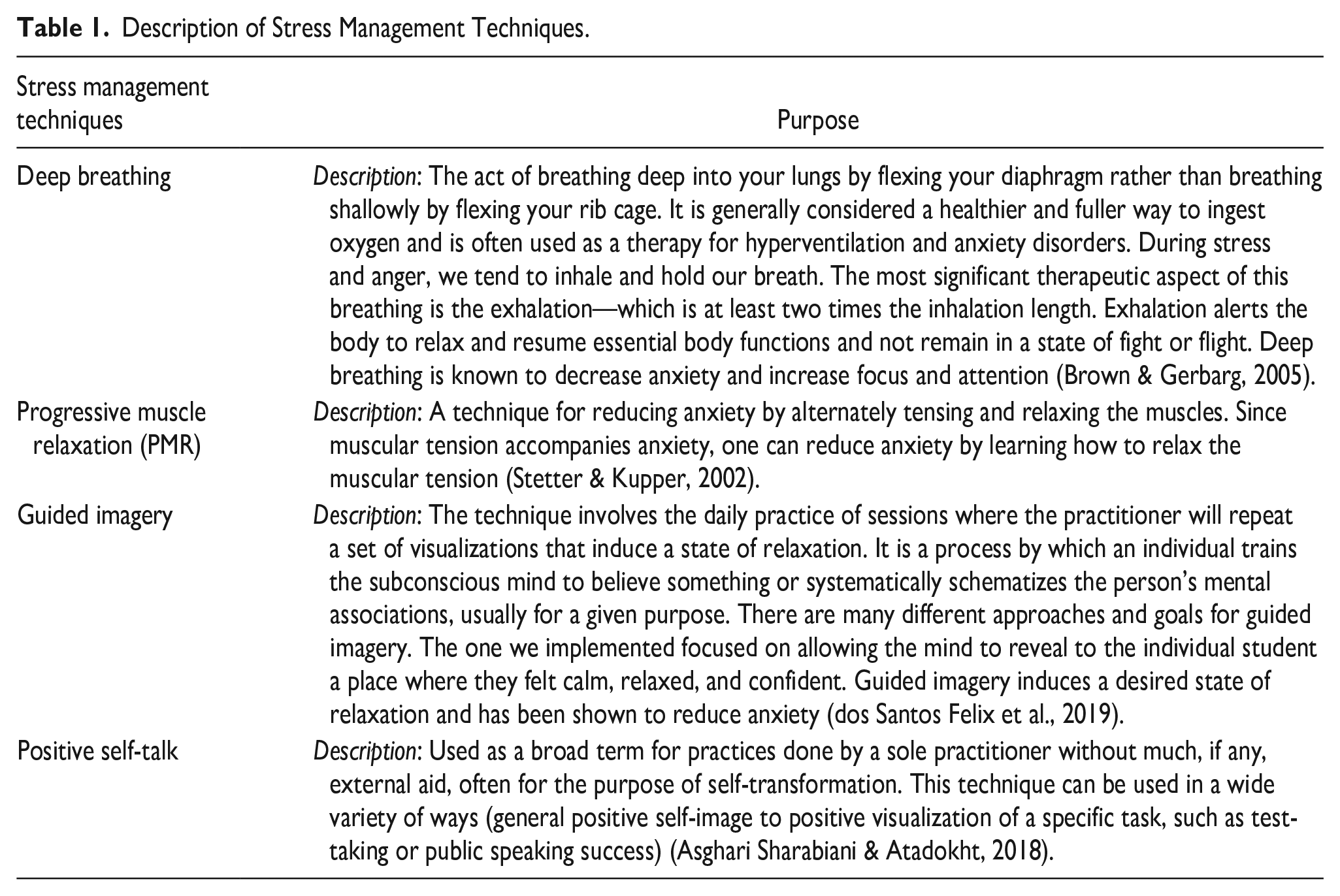
To understand the stressors that students face and teach them techniques to manage their stress better, the researchers designed the intervention to introduce four stress management techniques in a required undergraduate organizational behavior class over 12 sequential weeks at a midwestern U.S. university. The authors employed an exploratory approach to gather insight into students’ use and perspectives of efficacy for the stress management techniques, as well as if, how, and where students used and benefited from the new techniques. The four specific stress management techniques that earlier research studies suggest are potentially efficacious interventions (Deckro et al., 2002; Shapiro et al., 2000; Weinberg & Gould, 2019) were presented in the following order (a) deep breathing, (b) progressive muscle relaxation, (c) guided imagery, and (d) positive self-talk (see Table 1 for a detailed description of each technique).
Description of Stress Management Techniques.
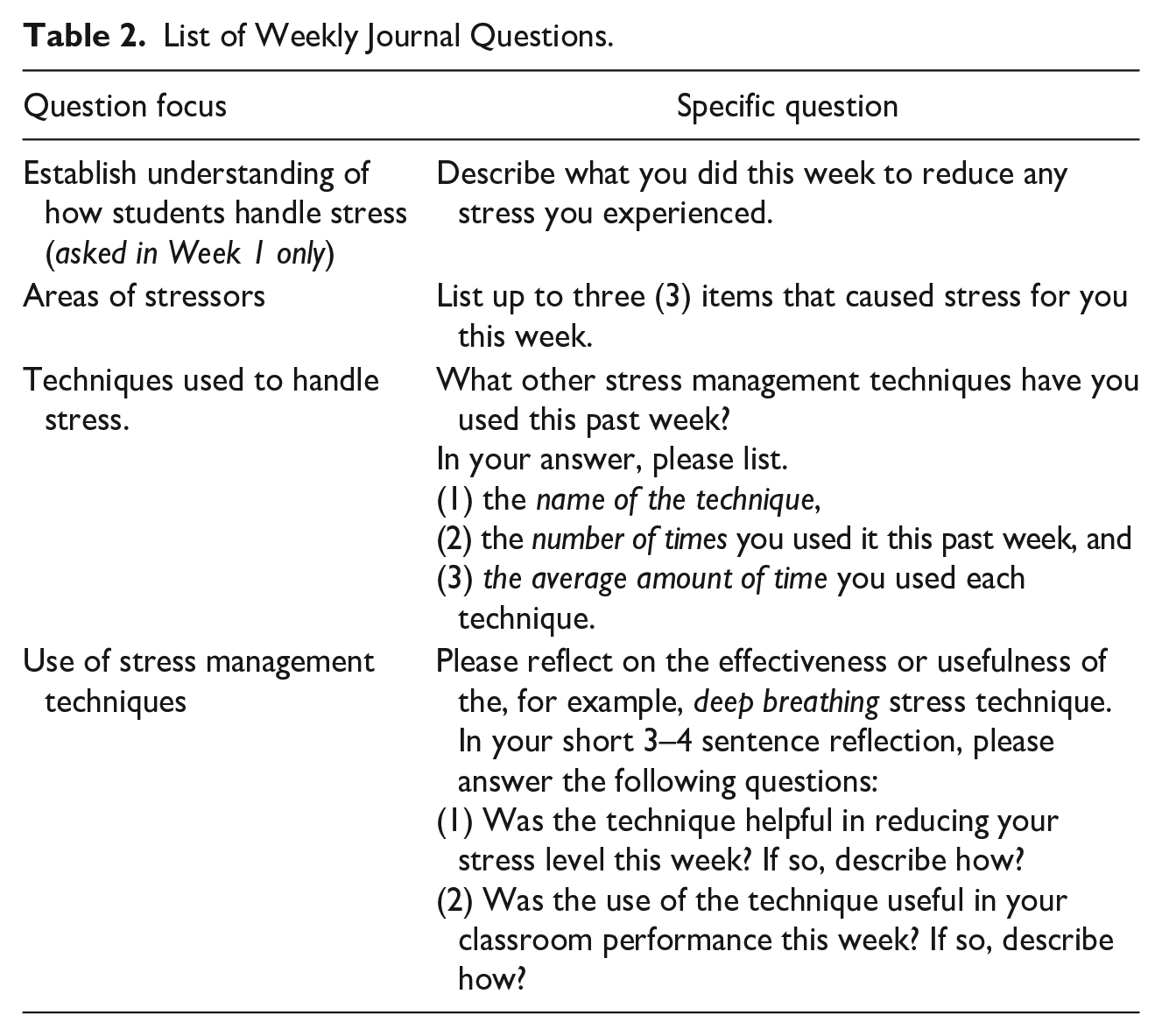
The four techniques were tested in two course sections, with class sizes of 22 and 33. Both courses met in-person twice a week for 1.5 hours. Teaching stress management techniques embedded an experiential learning technique about a course topic (i.e., managing workplace stress in the “Managing Stress” textbook chapter) (Newstrom & Davis, 2002) into the curriculum and offered students a chance to develop competencies to navigate current and future challenges. 53% of the students were classified as juniors, 35% were sophomores, and 12% were seniors. The lead author was the instructor in one of the sections. The second author, a sports psychology professor, taught the four different stress management techniques described below to the students. Students were taught a particular technique at the beginning of each 3-week period during their class, given roughly 5 minutes to practice the technique at the start of each class for those 3 weeks. Students were encouraged to practice on their own time outside the classroom. A new technique was introduced similarly every 3-week period until students were taught and practiced all four techniques. During each week of the intervention, as part of the course participation requirements, the students completed 12 weekly journals where they responded at the start of each week to the same questions about their experienced stress and their use of the stress management techniques (see Table 2 for the specific questions). Five students did not complete the journals, leaving a final sample of 50 students. All components of the study were approved by the university’s institutional review board.
List of Weekly Journal Questions.
Data Collection
The qualitative data from the students’ (N = 50) weekly journal responses for 12 weeks were examined in this study to understand students’ experiences with the techniques and their responses to stressors. The students completed the weekly journals and uploaded their responses to the course learning management system. The students were required to complete these journals outside of class on the Sunday before the next class meeting. Students were informed that they were not graded on the content or length of their journal responses but given complete-incomplete participation grades for their journaling. The student journaling accounted for less than three percent of the students’ semester grade. Students were informed that the journals would be reviewed anonymously after the course ended and grades were posted, mitigating response bias from the researchers’ position in the study (Anteby, 2008).
The students addressed several items in their journals, including a description of their stress in the previous week, their use of the different stress management techniques, and any reported benefits from the techniques. Most of the students were thoughtful in providing journal responses that described unique stress-related experiences and use of stress management techniques each week. Four students were inconsistent in their journaling or repeated similar content in their journals across the 12 weeks. Redundant journal entries were removed, keeping only the initial response in our dataset.
Data Analysis
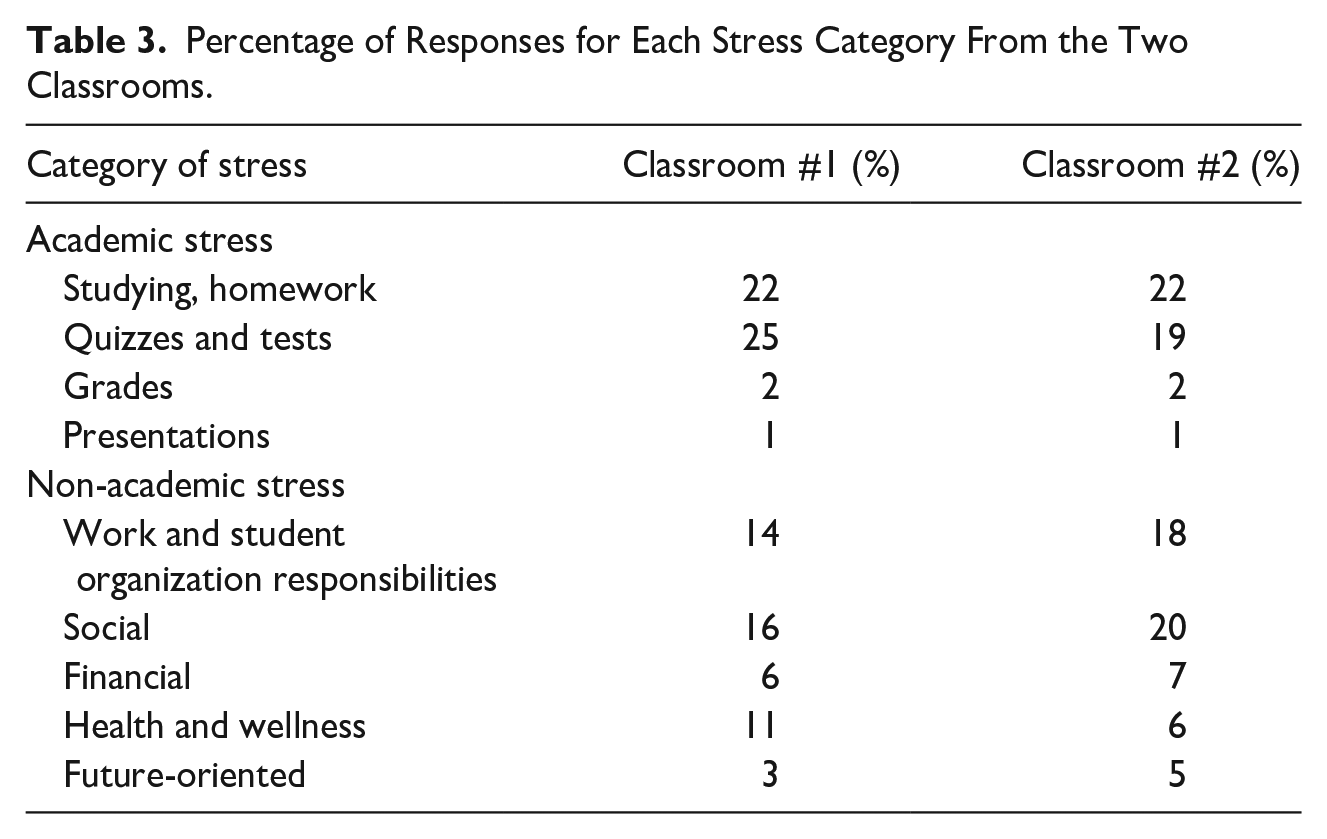
Using an exploratory qualitative design, the researchers employed two techniques—inductive thematic coding and inductive textual analysis—to analyze students’ journal responses about their experiences with stress management interventions. The use of multiple qualitative analysis tools strengthens and refines our results compared to those offered by a single analytic approach (Johnson & Onwuegbuzie, 2004; Leech & Onwuegbuzie, 2007). First, we conducted an inductive thematic analysis of the journal data in which independent reviewers manually coded the journal content into thematic groups. In the inductive thematic coding, student journal responses to the questions were reviewed by four independent coders, including two co-authors and two exercise science students trained in stress management techniques who were blind to the study’s purpose. The coding process included the reviewers’ independent sorting of the student responses into thematic categories, consistent with existing qualitative analysis processes (Lincoln & Guba, 1985; Pratt & Rosa, 2003). After the coding, the reviewers met to report their results and identify thematic categories for the student responses. Rater consensus on the categories was reached, and responses within each category were counted to determine the number and type of student-reported responses. The student responses between the two classes showed similar response rates in each category (see Table 3). Our initial thematic review of students’ journal data yielded an emerging picture of student stress and their use of the stress management techniques. The richness of the journal responses provided the researchers with increased insight into how students used and felt about stress management techniques. The initial exploratory nature of the qualitative data portrayed themes describing students’ response to stress, including 1) types of experienced stressors; 2) tools and methods students employed to reduce stress; and 3) the applicability of their learning to using the techniques in multiple life domains. Each area is discussed in more detail below.
Percentage of Responses for Each Stress Category From the Two Classrooms.
Next, to further discern the psychological nature and processes underlying the themes reported above, we used inductive textual analysis to examine a composite corpus of students’ journal content. The third author conducted the inductive textual analysis by entering the narrative data from student journals into Linguistic Inquiry and Word Count (LIWC) 2015 (Pennebaker et al., 2015) content analysis software. LIWC analyzes text by comparing each word from a narrative transcript (i.e., student journals) to a validated dictionary of 83 categories (Pennebaker et al., 2015). Such dictionary categories include psychological and affective processes (e.g., positive emotion, negative emotion, anxiety, anger, sadness), and language composition elements (e.g., pronouns, negation, qualifiers, etc.) (Pennebaker et al., 2015). We also integrated a validated stress category within LIWC (Wang et al., 2016) to further assess students’ stress-related textual content. Moreover, the use of textual analysis within the LIWC categories provided an examination of students’ expressions beyond the content of themes alone. For instance, the LIWC algorithm reads words in sequence, discerning between the emotion words and “negation” or “quantifier” words. For example, the use of the word “not” in sequence with “happy” would negate the emotion that is picked up in the output. The defined output of the analyses produced a percentage of word counts for a specific category (i.e., positive emotion, negative emotion, stress) from each narrative transcript. We used the word counts to inform changes in student data over time.
Extant research supports our use of LIWC to further discern the meaning of text contained in the student journals. LIWC has been used previously to interpret narrative data from undergraduate students (Slatcher & Pennebaker, 2006) and to distinguish psychological states in applied psychology research (Kahn et al., 2007; Sergent & Stajkovic, 2020; Shantz & Latham, 2009; Tausczik & Pennebaker, 2010). In addition, extant research has used LIWC to examine different levels of word counts, ranging from low (25–304 words) (e.g., Jordan et al., 2019; Pennebaker et al., 2015) to high numbers (1.2 million total words; 31,578 per respondent) (Sergent & Stajkovic, 2020). Our study’s word count sample for the use of stress management techniques falls within the middle range (i.e., from 413 to 1269 total words per respondent), averaging 463 words for each student’s 12 weeks of journaling. The content analysis examined 23,155 total words. There were no instructions given to students for the length of their answers to the weekly questions that asked students to create lists, provide numerical counts, and respond with open-ended descriptions.
Next, we describe the outcomes of the inductive thematic coding, and follow with the results of the inductive textual analysis (i.e., LIWC categories and word counts) that depict the emergence of psychological states from the use of stress management techniques over time.
Findings
Initially, our findings from the inductive thematic coding emerged to show the various stressors students experience, the methods they used to attenuate this stress, and how they used the stress management techniques in various contexts outside the classroom. Then, the inductive textual analysis findings depicted the psychological processes and changes in psychological states that emerged in their journaling during the 12 weeks.
Types of Stressors
Academic Stress
The most apparent stressors for students, not surprisingly, were academic stressors that occurred weekly and accounted for 48% of the identified stressors. The coding of reported stressors led to a more nuanced view of the different academic stress categories as compared to earlier inductive stress research (e.g., Terp et al., 2019). The multiple academic stressors included: (a) routine studying, projects, and homework; (b) quizzes and exams; (c) presentations; and (d) grades. Students expressed heightened levels of stress, especially related to class assignments at the beginning of the study. Then, by the third week most students (76%) reported academic-related stressors. For example, in week four, one student wrote, “I had a test on Wednesday this week, which was somewhat stressful . . . the thought of a few upcoming tests this upcoming week that I am worried about . . .. I am becoming sick, so that has added stress in general.” The same student reported continued academic stress the next week when stating, “I had a stressful finance test. I had and still have a lot of homework due this week” As the semester progressed to the final week of the study, 88% (43/49) of the students reported a school-related stressor. The reported academic-related stress at this point is not surprising, given the prevalence of increased academic demands at the semester’s end.
Life Stress
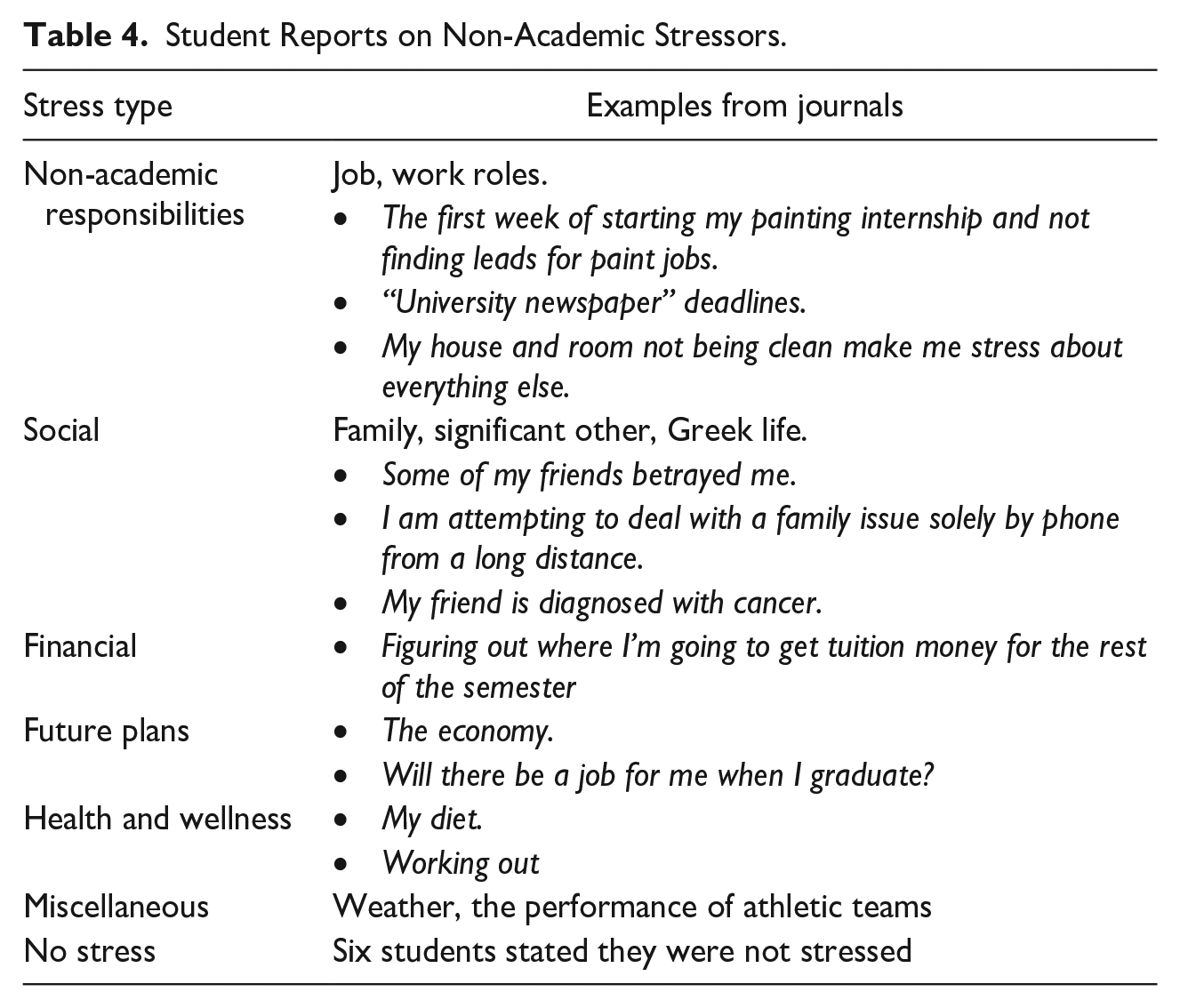
Students also acknowledged frequent stress emanating from other life domains. The depth and breadth of the students’ stressors (52% of reported stressors) in other life domains was noteworthy. Consistent with the findings from earlier research (Acharya et al., 2018; Pitt et al., 2018), students acknowledged experiencing stress in virtually every sphere of life, including stress in their relationships, jobs, volunteer roles, future life plans, and financial stress (see Table 4).
Student Reports on Non-Academic Stressors.
Tools to Manage Stress
To understand any change that resulted from the stress management techniques, in week one of the journaling, students were asked to identify what they did to reduce stress. At this time, many students reported regularly engaging in activities to manage their stress. Such activities included getting adequate sleep and exercise, having time alone to relax via reading and listening to music, playing video games, and spending time with others. However, as shown in the following quotes, most students also reported additional psychological gains after learning the new stress techniques.
Value of the New Stress Management Tools
As the weeks progressed, the students reported the benefits they experienced from using the stress management techniques learned in the classroom. Each week, students identified how often and how long they used the technique—and where and when they used the technique. Most students reported using the techniques for about 2 to 5 minutes. Over 12 weeks, the students explicitly reported using the techniques outside the classroom 496 times. We calculated this number using the students’ responses to the following questions over 12 weeks of journaling: (1) Was the technique helpful in reducing your stress level this week? If so, describe how; (2) Was the use of the technique useful in your classroom performance this week? If so, describe how. We received roughly 1,100 responses to these questions. Students reported using the techniques outside the classroom in 45% of their written responses (N = 495 comments).
The overall results demonstrated that most students found value in the techniques, with students noting the techniques “were useful” 68% of the time. Importantly, students who initially were skeptical about one technique reported value in other techniques. For example, in week 9, one student shared: I don’t intend to be rude by any means, but I think the breathing thing we do in class is a waste of time. Turning the lights off in class just makes me want to fall asleep. If I’m stressed out, I should just deal with it and not burden or waste any class time trying to deal with it.
However, the following week, after learning about positive self-talk, this same student stated “I think that the positive self-talk technique has benefitted me this week. I believe that this technique helped reduce stress levels for me. The technique was helpful in the classroom and was useful for my job.”
The student journals also allowed for understanding when, how, and where students used stress management techniques. Specific to their classroom use, we found that students reported the techniques useful before or during a class (33%), before an exam (26%), or before giving a presentation (9%). Students also articulated broad stress-related benefits, including decreased stress (26%), increased calming (14%), enhanced relaxation (14%), improved focus (12%), and better performance (10%). One student noted that the . . . breathing exercise did help release a lot of stress. Whenever I would start to feel overwhelmed or started to have a lot of anxiety, focusing on breathing helped. Before classes would start, I would take a few moments to gather myself and focus on my breathing to clarify my mind.
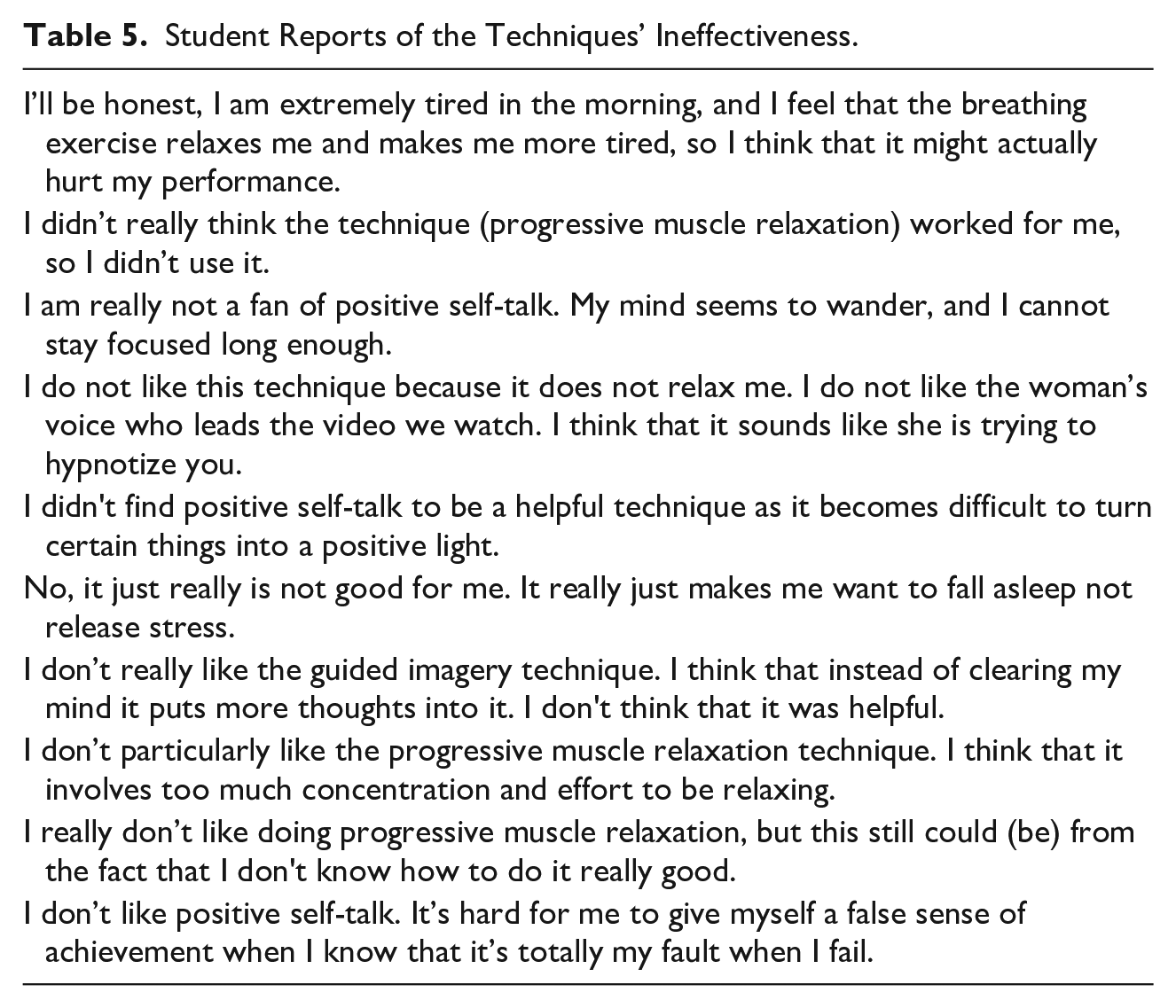
We found that students failed to find the techniques useful 32% of the time. In these cases, students provided various reasons why the techniques were not useful, such as dislike of a particular technique, failure to stay focused when using the technique, or their preference for other methods (i.e., exercise). See Table 5 for student comments reflecting why the techniques were not useful. While students acknowledged situations where the techniques were not useful, all the students reported a technique to be helpful at some point during the semester. For example, students reported deep breathing to “work well at reducing my stress level overall” and “helped me with my overwhelming stress.” Another student shared how they found the guided imagery to be helpful, by stating, “I like the guided imagery technique . . . I like using the technique when I am trying to fall asleep but cannot turn my brain off, it helps me relax and stop thinking about a ton of different things.”
Student Reports of the Techniques’ Ineffectiveness.
Thus, all students found a preference for at least one technique and acknowledged a reported benefit from the technique.
Student Preference for Deep Breathing
Students reported value in all the techniques, but the data depicted a clear student preference for the deep breathing technique. Students used deep breathing 83% of the reported times in their journals, with the next technique, progressive muscle relaxation used only 10% (Guided imagery = 6%, positive self-talk <1%). Students continued use of deep breathing throughout the 12 weeks counters what we might expect from a recency effect, wherein students would most readily recall the technique they more recently learned (Carvalho & Goldstone, 2017). Supporting the collective student preference for deep breathing, one student notably wrote, I love deep breathing exercises. I hope that by the time we finish this class, it will be a habit that I can carry along with me for the rest of my life. During class, I found the technique to relax me before group work and perform at my best level possible.
Additionally, the students continued their use of deep breathing even after being taught new techniques. One student stated how their use of deep breathing became habit-forming, “I continue to use deep breathing as a technique because it was the only one useful for me. My body naturally does it when I am faced with a challenging situation. It is very calming.”
One important finding in the inductive thematic analysis, as the above student acknowledged, was the student use of the techniques beyond the classroom into a range of “challenging situation(s).”
Application of Learning
Beyond students’ expressed use of the techniques in the classroom, the student responses described how they learned to use the stress management techniques outside the classroom. The researchers hoped to find student use of the techniques outside the classroom as predicated by asking students to report when and where they used the techniques in their journals. Their responses highlighted contexts such as their jobs, social and family settings, and other university roles (e.g., student clubs). Importantly, the range of locales wherein students expressed using the techniques suggested that their learning from the classroom-based stress management training applied to various life domains not explicitly discussed when the techniques were first introduced.
Indeed, their use of the techniques in various contexts, such as in volunteer organizations and tense work situations, seemed to reinforce the application of learning and suggested that student use of the techniques in the classroom helped them in other domains. Indeed, one student noted how using the techniques during class helped them during “the rest of the day.” Another student shared how using the techniques in other classroom contexts helped them interact positively with classmates with divergent worldviews. One student reported the multiple benefits of using the techniques before going to bed each night, such as using “progressive muscle relaxation to help clear my mind. Then I use the guided imagery to allow me to think through stressful situations in my life.” Student use of stress management techniques beyond the classroom suggested their application of classroom-based learning in non-academic settings. The findings emerged to show how students recognized how stress management techniques could be utilized to help them in other life domains. Below are some exemplar quotes:
• I used the deep breathing technique this week at (job in retail sector).
• I had to use the deep breathing exercise before my speech to become elected treasurer, and for this, it took around a minute to fully relax and then give the speech. I think it helped too because my speech went well, and I did win the position.
• Before my swim meet last week, I used the progressive muscle relaxation technique we practiced in class . . . The swim meet went well. I finished reasonably close to my best time, so I was happy. I'm not sure how much was due to the technique, but I’m glad it worked.
• I couldn’t get to sleep until using one of these techniques one night, so it helped my health.
• I feel deep breathing and positive self-talk have made a difference in my life. I have made them a habit that will help me manage any lifestyle, whether it be today or ten years from now, with a family and career. These techniques will improve my health and state of mind for the better and help me keep stress in check.
In summary, the composite analysis of the student journals articulated the value of the different stress management techniques, where and how students implemented the techniques, and the application of learning from the classroom to different contexts.
Changes in Psychological States and Processes
In addition, by using inductive textual analysis to examine 12 weeks of student journal responses, we found how the stress management training appeared to influence changes in students’ psychological states and improved their capabilities to address their stress. The textual analysis went beyond thematic coding of student experiences to the use of word counts to quantify the psychological statements and inform the psychological meaning of students’ journaling. The average weekly word count percentages from their journaling depicted improvements in students’ psychological states. Specifically, the data reported that students’ positive psychological states increased, whereas their negative states decreased over the 12 weeks. Moreover, the changes in students’ psychological states appeared to reflect their development of a present-focused orientation of mindfulness. Next, we discuss the empirical changes (i.e., word counts) in the psychological states.
Changes in Psychological States
As hoped by the authors at the onset of the study, the journal reflections suggest changes in the emotional content from student use of stress management techniques. In one area, student reflections of positive emotions increased over time. The textual analysis word count percentages of positive emotions (e.g., love, nice, sweet) increased from 2.91 in week 1 to 6.58 in week 12 (see Table 6 for complete data points over 12 weeks). In contrast, we found decreasing trends of psychological states that could otherwise impede student well-being, such as diminishing reports of students’ negative emotions and anxiety. For example, the word count of student reports of negative emotions (e.g., hurt, ugly, nasty) decreased from 2.68 in week 1 to a low of 1.83 in week 10. Also, the word counts of student reports of anxiety (e.g., worried, nervous) decreased from 2.01 in week 1 to 0.24 in week 12. Perhaps most central to this study’s focus, we found that the word counts of student use of stress-related words (e.g., abuse, anger, cruel), also decreased over time (e.g., 2.02 in week 1 to 0.85 in week 12). As such, as represented by a textual analysis of their journaling, we found support for favorable changes in student emotional and stress-related states, such that positive emotions increased over time and negative psychological states (i.e., negative emotions, anxiety, stress) decreased over time. Although a direct link has not been proven, these trends suggest a potential connection between the use of the stress management techniques by students and their improved psychological states.
Changes in Psychological States.
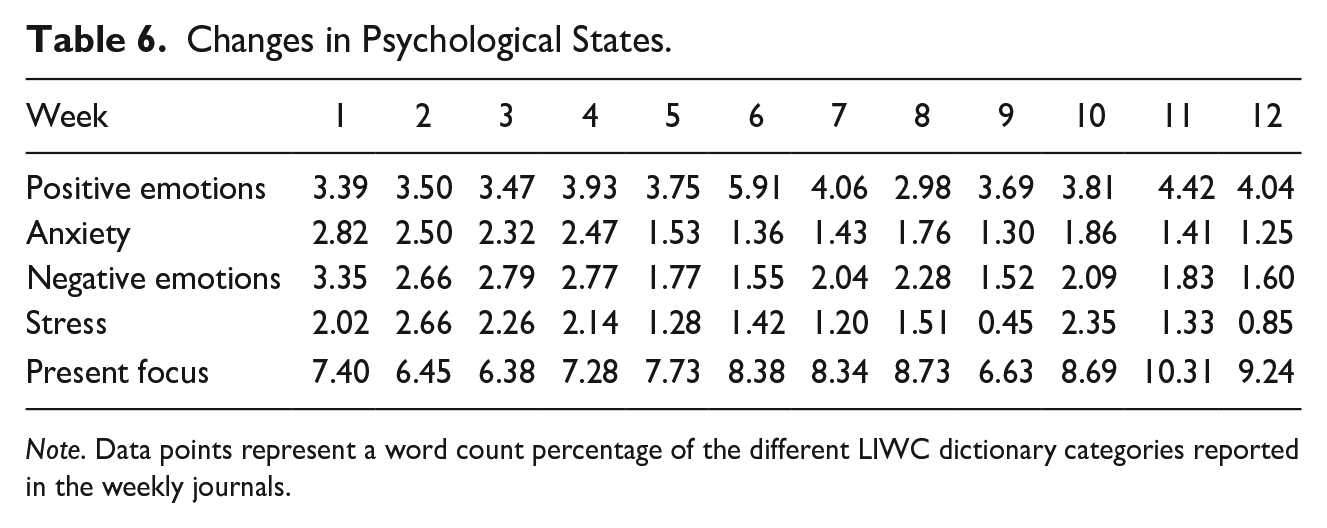
Note. Data points represent a word count percentage of the different LIWC dictionary categories reported in the weekly journals.
The Process of Developing Mindfulness
In addition to the gains reported in students’ psychological states, throughout their journaling students emphasized the benefit of improved focus or refocus on their experiences. This finding suggests that students believed they could focus on the present moment more because of the mindful techniques and that focusing on the present moment helped them. The textual analysis revealed data reflecting student perceptions about their cognitive orientation to the present moment. Our study found that the present-focused cognitive orientation word count (words—today, now, is) in student journaling increased dramatically from 6.04 in week 1 to 12.93 in week 12. No notable changes were found in the past or future-oriented statements during the study. Changes in the students’ cognitive state appeared to be reflected through examples such as an increase in planning and use of rational thoughts in the decision-making process or improvement in creative thinking. In one such example a student shared, “I do frequently use a form of guided imagery when planning or rehearsing events ahead of execution. This generally lets me identify areas for improvement and items which may need contingencies planned.”
Other examples of changes in their cognitive state are described as an increase in focus, clear mind and transparent thought processes, attentiveness during classes, and an overall sense of calm. For instance, one student commented, I find the guided imagery stress technique to be beneficial. I like to use it to help myself refocus. It’s almost as if I forget about all my worries while I am practicing the technique. I also find it very useful at the beginning of class each morning because it focuses on the day.
Notably, the importance of a present-focused orientation was indicative of increased mindfulness. One student explicitly expressed the increase in mindfulness by saying, “I believe the techniques helped me with stress management, and my overall health . . . and developed mindfulness in me.”
The student comments suggest a link between deep breathing use and mindfulness gains. We will illustrate this connection next.
Developing Mindfulness Through Deep Breathing
Our findings of the students’ use of deep breathing illustrated how a single technique could positively influence their physical, emotional, and cognitive states to improve their stress response via improved mindfulness. In our findings, students described these positive effects of deep breathing to facilitate narrowing their focus and shifting their cognitive mindset. One student’s comment reflects this shift by stating, “It [deep breathing] helped me overcome some stress I felt not only mentally but physically . . . This, in-turn, allowed me to focus on more pressing tasks in school and work . . . and concentrating my mind mentally.”
One student reflected how deep breathing reduced their stress level in only a few minutes: I use the deep breathing technique on a daily basis. Any time I get stressed or have to do something that's really difficult for school, I use the deep breathing technique to focus and keep me relaxed. I probably used the deep breathing technique about 8–9 times this week for about 1–2 minutes each time.
Another student explicitly expressed the learning transfer by reflecting “I do remember focusing on my breathing before the (job) interview I had on Thursday. I believe it helped me calm down and remain focused going into the conference.”
Thus, we found evidence of a process that appeared to enable a mindfulness shift in students’ states (i.e., emotional, physical, cognitive) that stems from stress management techniques, especially deep breathing. Student comments suggest that their enhanced mindfulness levels were synonymous with an increased focus, a clear mind, more transparent though processes, and attentiveness in multiple life domains. The development of mindfulness from learning and using stress management techniques seemed to enable students to transfer their learning, improve their stress response, and gain confidence in other life domains. One student memorably shared about the benefits of deep breathing, by stating: . . . I think that I saw some improvement with this [deep breathing] technique. I did feel a little less stressed this week and I think that using this technique will decrease my stress levels even more. The more I use this technique, the less stress I feel and the more confident I am in what I do.
Through the stress management techniques, especially deep breathing, a process developed that appeared to allow students to shift their emotional and cognitive states to reduce stress. The study design could be implemented in any academic (e.g., pre-K-12, university, graduate education) or workplace context, both in-person and virtually. In the education context, incorporating stress management techniques into instruction could be done with different age levels to determine if there is an increased benefit of introducing the techniques to younger students. Seminal research by sport psychologist Terry Orlick depicts the efficacy of stress management techniques training with 7 to 10-year-olds (Li-Wei et al.,1992; Orlick, 2014) and teenagers (Partridge & Orlick, 2008) with age-appropriate materials. As the current study’s sample illustrates, college students benefit similarly from stress management training. University students could be taught these holistic techniques starting in their introductory business or management education courses (Waddock & Lozano, 2013) to help students develop a “toolbox” of techniques for managing stress across all aspects of their lives, including in the workplace.
Study Implications
Implications to the Classroom and Management Education
The study’s findings have practical implications for academic classrooms and workplace settings. The students articulate their technique preferences, where they reported using the techniques, and the resulting mindfulness gains. The brevity and ease of deep breathing may explain why students reported this technique as the most popular, expediting their ability to apply deep breathing in different domains and foster mindfulness perceptions. From a physiological orientation, the development of mindfulness appeared to connect to earlier research that shows how deep breathing not only helped decrease physical tension related to stressors, but also improved brain and cognitive functioning (i.e., mindfulness gains) from increased oxygenation (Chaló et al., 2017; Finkelstein-Fox et al., 2018; Regehr et al., 2013). Student reports of their intervention use, and outcomes can inform the effectiveness of future interventions for mindfulness development in both the classroom and workplace settings. In the past, mindfulness was thought to improve only after years of intense practice (e.g., Goldstein, 2003). In contrast, aligned with a growing body of research (Grégoire & Lachance, 2015; Kuechler & Stedham, 2018), we find students’ reports of mindfulness increasing over the semester. The student mindfulness gains aligned with prior research depicting how a present-focused orientation to relevant life situations (Vowinckel et al., 2015; Zimbardo & Boyd, 1999, 2008) enables one to perceive things differently to overcome problem behaviors (Siegel, 2010). Notably, the mindfulness gains occurred without any mention of mindfulness or present focus in the study prompts. Thus, the mindfulness gains expressed over time in combination with the students’ prominent use of the deep breathing technique, appears to suggest that deep breathing is a valuable, short-term intervention for mindfulness development across various contexts.
Over the duration of the semester, we found that students reported an ongoing application of the skills they acquired in the classroom and practiced in course assignments into other contexts. Student application of these stress management techniques to multiple life domains extends prior findings in management education research. For instance, earlier research shows how students used learning from classroom capstone projects to launch new businesses (Witt et al., 2019; Wysong et al., 2022); developed new professional skills through case-based learning (Burke-Smalley & Mendenhall, 2020); used new leadership skills from professional development (Reyes et al., 2019); and transferred the value of transnational business educational experiences to future employment (Buchanan & Bharadwaj, 2022). Our results show that many students could recognize stress, alter their response, and then endorse learning these techniques to those working around them.
From a management educator’s perspective, our results describe a prime example of what we hope students will learn in our courses and apply to their future careers. The ease and brevity of adopting the stress management techniques to the classroom setting—or at least the deep breathing that appeared to be most beneficial to students—should provoke stimulating departmental discussions about what educators can and should do within the classroom to improve student well-being. A robust research stream outlining an inverse relationship between student stress and academic performance (e.g., Amanvermez et al., 2020; Richardson et al., 2012) warrants consideration of whether business schools are responsible for teaching stress management techniques in the academic curriculum. Management educators should also consider the ethical implications of not providing students with opportunities to learn about stress management techniques in the classroom given the efficacy of stress training to support mental wellness (e.g., Edwards et al., 2021). Should management educators have a moral obligation to help students acquire skills that could mitigate stress, anxiety, or depression they experience in the university setting? Likewise, given the value of stress management techniques to student well-being more broadly, should accrediting bodies in higher education hold colleges and universities accountable for teaching such skills in general education curricula? The ease of use and implementation in the classroom, and the applicability of student learning across various life domains seems to suggest requiring stress management techniques would be a wise investment.
The Value of Applied Learning to the Workplace
Students’ application of their learning about classroom-based stress management techniques into multiple life domains has implications for future training and development in academic and workplace settings. In educational settings, how students respond to dealing with the stress from the new freedoms and events in the academic context is perhaps underestimated and often unexamined. Our findings align with previous research demonstrating that formal and purposeful training on stress reduction can reduce stress, break cycles of unhealthy psychological states (Kabat-Zinn, 2003), and lead to positive emotions that enhance one’s psychological resources (Fredrickson & Losada, 2005) across all life experiences (Bean & Forneris, 2016). Of importance to future employers during a time of increasing workplace stress (Smallfield & Kluemper, 2022), is that students’ ability to adjust to college stressors can gauge how they will successfully transition into the workplace upon graduation. The introduction and use of stress management techniques in the classroom is an appropriate time for students to develop beneficial workplace habits. Behavior modification research suggests it takes at least six continuous months of consistently engaging in the new activity for it to become part of an individual’s routine behavior (Prochaska, 2020). By introducing and promoting stress management technique use to students over the course of a 4-month semester, students can finish the semester well on their way to modified stress management behavior. Furthermore, application of student learning from classroom-based interventions into various contexts appears to help them develop personal resources that could attenuate the future stress of entry into the workplace while also enhance their mindfulness, all of which could enhance workplace performance.
Organizational leaders’ focus on stress management, once viewed as an employee responsibility, is gaining momentum to help employees address stress for improved well-being, health, and performance (Holman et al., 2018; Eriksen et al., 2002; Munz et al., 2001). Limited empirical evidence, however, exists to show if learning stress management techniques outside the workplace helps employees address workplace stressors. Such research is necessary. The growing use of new app-based technologies developed to guide one’s use of stress reduction techniques (e.g., Calm and iBreathe), in combination with tools that can track the techniques’ physical outcomes (e.g., smartwatches) (Villani et al., 2007) can aid such research. Moreover, given the emphasis on health and well-being during the COVID-19 pandemic, understanding how stress-related programs can help employees flourish rather than survive (Roberts, 2006) is an immediate organizational concern. We believe that our study’s evidence of students’ applied learning highlights the value of introducing and practicing stress management techniques for gains in multiple life domains.
Strengths and Limitations
As with any research study, this one had both strengths and limitations. The use of student journals allowed for richness in the data for understanding how the students used and expressed benefits of the stress management techniques. Students articulated the times and places they used the techniques. The researchers initially anticipated that using the techniques would be beneficial to students within the classroom setting. Student use of the techniques in a variety of other life domains depicted how they applied their learning to all aspects of their lives. Furthermore, the empirical examination of open-ended journal responses gave us the ability to analyze student comments and discern the underlying psychological change processes and the increased mindfulness that the students developed over time. We found the stress management training to be helpful to undergraduate students. Future research should examine the value of the stress management techniques to graduate students. It may be that the improved psychological states students reported in the current study could also help graduate students reduce inherent difficulties attributed to graduate students in earlier management education research, including their perceptions of hindrance stressors (McCauley & Hinojosa, 2020) and improve their mental health (Pervez et al., 2021).
There are also limitations to our study. The researchers recognize that since the lead author also served as the instructor in one course the potential for response bias exists. However, steps were taken to minimize this effect. For example, the student journal content was not graded or reviewed by the course instructor during the semester to mitigate this concern (Anteby, 2008). Ideally, using the same instructor in multiple classroom interventions could control for potential instructor bias. From a practical viewpoint, not all the students found different techniques useful. Some of the students reported that they found the techniques difficult to use, could not remember the exact implementation steps for all the techniques, or were not feeling stressed. Future research could improve the study design. For example, the students could use the interventions for extended periods in and out of the classroom, use app-based stress management tools, or comparison group designs could control for intervention effects. Future research should also explicitly discern why the techniques were not found useful. The use of pre- and post-test surveys would be beneficial to understand individual differences in perceived stress levels and psychological states (Smyth et al., 2018) in addition to the stress management techniques. Future research should replicate the study post-pandemic and across more diverse samples (e.g., age, racial/ethnicity, socioeconomic background) to allow for greater generalizability of the findings. Nonetheless, students improved psychological states over time reflect the benefits of our intervention.
Conclusion
Our findings illustrate the benefits of introducing and practicing different stress management techniques, especially deep breathing, in the management education setting. Moreover, we outlined the improved psychological states that follow student use of stress management techniques and a process in which students develop mindfulness. The students found the stress management techniques they learned in the classroom to be useful and applied their classroom learning to other parts of their lives. Thus, taking a few minutes a day in the classroom helps students develop their ability to mitigate stress and improve their psychological states across multiple life experiences.
Footnotes
Declaration of Conflicting Interests
The author(s) declared no potential conflicts of interest with respect to the research, authorship, and/or publication of this article.
Funding
The author(s) received no financial support for the research, authorship, and/or publication of this article.
