



Abstract
Background
Research has identified employment as a social inclusion priority for individuals with intellectual and developmental disabilities (IDD) and has emphasized person-centered vocational training as a predictor of future employment. The Impact Project is a summer program offered by project partners in British Columbia, Canada, that provides youth with IDD vocational training to improve their employment experiences in preparation for future employment.
Objective
This study explicates the importance of soft skills in vocational training identified by youth and their parents/carers regarding attained employment experiences during the Impact Project (2020–2022).
Methods
This study evaluates qualitative data from youth and their parents/carers who reflected on their vocational training and attained employment experiences.
Results
Qualitative findings highlight the significance of soft skills, namely confidence, social capital, and job readiness in the youth's employment experiences and outcomes. Youth and parent/carer observations about these soft skills add insight to understanding positive employment outcomes from the Impact Project.
Conclusion
Qualitative data from the Impact Project (2020–2022) illuminate how soft skills contributed to the youth's employment experiences. These findings contextualize quantitative employment outcomes and can guide vocational training programs for youth with IDD in preparation for future employment.
Keywords
Introduction
Previous research with and by people with disabilities has stressed the importance of employment as a personal aspiration (Almalky, 2020; Cheah et al., 2023; Readhead & Owen, 2020). Employment is often identified as a key mechanism for social inclusion: an important means through which individuals with IDD can lead full lives as members of their communities (Almalky, 2020; Humber, 2014; Mogensen et al., 2023). However, despite the identification of employment as a social inclusion priority, employed individuals with IDD receive low wages, work few hours, and their work sometimes takes place in segregated settings (Almalky, 2020; Grossi et al., 2020; Khayatzadeh-Mahani et al., 2020; Smith et al., 2021). Researchers, policy makers, practitioners, family members, and individuals with IDD (or self-advocates) are calling for improved employment opportunities for individuals with IDD as a means to social inclusion (e.g., Snell-Rood et al., 2020).
Several research collectives have established that vocational training is a predictor of employment inclusion for working-age individuals with IDD (Awsumb et al., 2022; Barnard-Brak et al., 2023; Cimera et al., 2014; Mogensen et al., 2023). Specifically, early vocational training, referring to training tailored to youth with IDD who are transitioning out of school environments, was seen as a predictor of future employment (Barnard-Brak et al., 2023; Cheah et al., 2023; Cheak-Zamora et al., 2015). In fact, working age youth with IDD who were employed upon completion of high school were likely to remain employed and receive competitive wages (Burgess & Cimera, 2014; Cimera et al., 2014; Mazzotti et al., 2021). Unsurprisingly, community leaders and researchers have recommended a stronger emphasis on providing youth with disabilities a stronger foundation of compelling career development experiences in their high school years (Barnard-Brak et al., 2023; Pearson et al., 2020).
Regardless of such recommendations, most available empirical evidence about the importance of employment initiatives during high school originates from outside of Canada (Mazzotti et al., 2021; Pearson et al., 2020). Various studies demonstrate that existing transition initiatives are “falling short” in supporting youth with IDD (Cheak-Zamora et al., 2015; Nord, 2020; Smith et al., 2021). In Canada, research on employment transitions for youth with IDD has been identified as sparse (Khayatzadeh-Mahani et al., 2020). An exception is a recent study by Bowman et al. (2022) in Ontario, Canada, who found that “starting early, taking a person-directed approach to planning” led to improved transitions to employment for youth with disabilities.
Internationally available studies exploring effective early vocational training programs for youth with IDD tend to concentrate on “objective” employment outcomes or attained employment. A few studies in youth-centered pre-employment planning highlight the importance of “soft skill” development in connection to employment outcomes (Schall et al., 2020; Schutz et al., 2022; Seaman & Cannella-Malone, 2016; Taylor et al., 2022). This existing research on soft skills in association with employment outcomes demonstrates that “soft skills” are considered pivotal for understanding youth's experiences and improved employment outcomes (e.g., Awsumb et al., 2022; Inge et al., 2023; Mazzotti et al., 2021). The current study aims to add to this literature by analyzing the importance of soft skills for employment experiences as expressed by youth and their parents/carers who were part of the Impact Project (2020–2022).
Methods
In British Columbia (BC), Canada, approximately one in five (21.8%) adults with IDD report having had some form of paid employment, averaging below $6,000 a year (CLBC, 2023). Given the lack of available research specific to the province of BC and the identified social inclusion priority of employment, the BC Ministry of Social Development and Poverty Reduction funded the Impact Project. This Project, a partnership between the BC Employment Network (BCEN) and the University of British Columbia's Canadian Institute for Inclusion and Citizenship (CIIC), aimed to address the low employment rates among individuals with IDD in BC by providing youth with IDD between the ages of 15 and 19 with vocational training during the summer break. The Project's guiding research question is: Does providing youth-centered vocational programming to transitioning youth with intellectual and developmental disabilities (IDD) improve their employment experiences and outcomes? To answer this research question, researchers at the CIIC completed a mixed-methods program evaluation of the Impact Project focused on recorded employment outcomes.
This manuscript reports qualitative findings from the larger concurrent mixed methods formative program evaluation of the Impact Project (Creswell & Plano Clark, 2018). This type of program evaluation considers both quantitative and qualitative data collected during the Project to triangulate findings and provide a more comprehensive understanding and validation of the data. The more detailed quantitative results of this program evaluation have been published elsewhere (Mudde et al., 2025). Figure 1 synthesizes changes in employment experience for the 252 youth who participated in the Project. The two pie charts show that the group of youth with no employment experience decreased by 13% and reflects a 24% increase of both unpaid and paid employment experience at the end of the Impact Project.
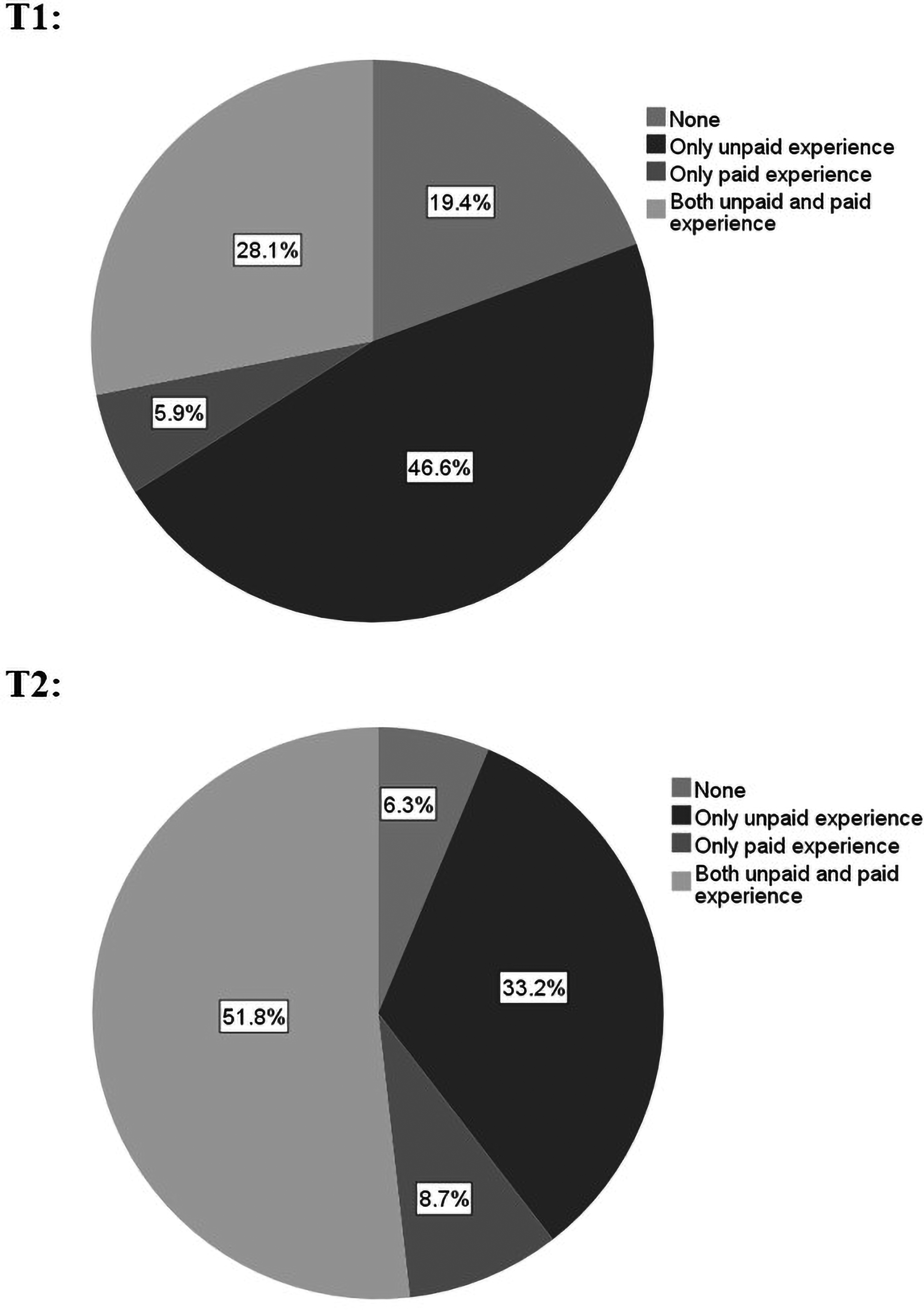
Changes in Employment Experiences in the Impact Project. the First Pie Chart Displays the Employment Experiences for the Youth at T1 or Entrance into the Vocational Training Summer Program. The Second Pie Chart Displays the Employment Experiences for the Youth at T2 or Exit from the Program. The Charts Include Youth from all Three Cohorts for the Summers of 2020, 2021, and 2022 who Actively Participated in the Impact Project (Copyright Authors).
The current study considers qualitative data from the youth with IDD who actively participated in vocational training and parent/carer observations about attained employment experiences and outcomes during the first three summers of the Impact Project (2020–2022). Ethics approval (H19-04002) for the program evaluation of the Impact Project was obtained from the Behavioural Research Ethics Board of the University of British Columbia Okanagan. Signed consent was obtained for all participants, either directly from the youth or from their parent(s)/carer(s).
Qualitative description (QD) (Kim et al., 2017; Sandelowski, 2010) informed the qualitative methods of the mixed methods design. QD is especially relevant for research aimed at gaining “firsthand knowledge” of individuals’ lived experiences of a particular topic or experience. A QD approach meant the authors aimed to stay close to the data as shared by the youth and their family members/carers. Author A analyzed responses thematically and descriptively; using an iterative process of identifying themes by reading youth and parent/carer observations about their experiences in the Impact Project. For the purpose of credibility and confirmability of the analysis by Author A, Author C reviewed the thematically coded responses; reading youth and parent/carer observations about their experiences independently to assess whether similar thematic patterns emerged. Authors A and C compared interpretations, where differences in interpretation were discussed and resolved among the research team.
Participant Sampling
The Impact Project officially began in 2020. Our initial program evaluation covers the first three cohorts of youth that participated in the summer of 2020, 2021, and 2022. The Project is a collaborative effort between eight community living organizations, or “project partners”, and researchers from the CIIC, referred to as the “research team”. The project partners are not-for-profit organizations that provide a host of services to individuals with IDD and their families, and they are members of the BCEN, a collective that encourages and supports programming for individuals with IDD to secure and maintain employment. To be eligible for inclusion in the program, youth were required to meet the following criteria: aged 15–19 years at entry into the program; previously diagnosed with IDD; and no previous participation in the program. Project partners were community living agencies who partnered with local school districts to recruit potential youth participants. Parents/carers and youth were invited to information sessions. Interested youth were recruited into the project partners’ summer program. The findings presented here are the qualitative results from the Impact Project, collected during the three summers of the Impact Project (2020–2022). Over the three years, 253 youth actively participated (2020 n = 72; 2021 n = 91; 2022 n = 90). The youth were predominantly male (73%), 17 years of age on average, and about 38% of the youth had completed Grade 12 at the start of their participation in the Project (Mudde et al., 2025). A total of 102 parents/carers provided secondary observations about their youth's experience and general feedback about the Project in a voluntary online survey.
Setting
The assessment of the Impact Project took place in a community-based research context. The research team and project partners collaborated closely to understand the needs and priorities of the community organizations, provincial government, and youth with IDD. To facilitate consistent recording and collection of data, the research team and project consultant co-produced the pre- and post-surveys, various youth-centered vocational training activities, and activity diaries. In addition, project partner staff and their vocational specialists completed mandatory five-day training for the proper collection of data and completing pre- and post-vocational training surveys with youth and promoting feedback surveys to parents/carers.
Project partners provided “vocational training” during the summer for transition-aged (15–19 years) youth with IDD. The term “vocational training” refers to individual and group-based activities and training offered both online (virtually) and in-person settings. The COVID-19 pandemic resulted in mandated restrictions which meant this study observed the safety of participants, employes, and the community during the summer of 2020 and 2021. This meant some in-person vocational training activities were adjusted to online settings. Other activities could be adjusted in terms of the number of people participating in those activities. Vocational activities included resume building, navigating employment websites, dressing for employment interviews, and communicating with colleagues and employers.
‘Youth-centered’ activities referred to the participant-directed intention of the Project. Whether online or in-person, vocational specialists at the project partner agencies engaged with the youth to establish their interests and potential previous experiences with employment. Youth-centered activities included vocational training specific to the youth's interests, including but not limited to working with animals, landscaping, working with kids, working in the service industry, or clerical employment. This youth-centered engagement included the tailoring of potential unpaid and paid employment opportunities in the community to individual youth's interests. Such an approach considered the variability in youths’ exposure and knowledge about employment. When circumstances warranted it, vocational specialists used processes of trial and error to explore the youth's interests.
The term “employment experiences” refers to the unpaid and paid employment contracts youth were exposed to during their time in the summer program. As the dependent variable, “employment outcomes” were calculated based on the total number of employment experiences gained while part of the Impact Project. The focus of the research was based on the intention of developing and building understanding about whether youth-centered vocational training helped the youth in obtaining and retaining employment. By extension, the youth-centered variability and specific age-range of the youth meant they were exposed to potential employment pathways and workshops that invested in the building of various soft skills. “Soft skills” refers to life skills that help youth succeed in the workplace, including effective teamwork, communication, and time management. Soft skills related to vocational training that for most participating youth carried relevance in preparation for future employment.
Data Collection and Analysis
The 252 active youth completed entrance (T1) and exit (T2) surveys that included open answer questions related to their pre- and post-vocational training soft skills, knowledge, and feelings related to employment. These surveys were completed in interview format with the vocational specialists at the eight project partner agencies who documented the youth's answers. The qualitative questions elicited information from the youth about their experiences and participation in the program, specific to their employment outcomes recorded at T2. In addition, secondary information was provided by parents/carers who completed an online UBC-licensed Qualtrics XM survey to provide feedback and observations about their youth's employment experiences and outcomes related to the Impact Project.
As is common in qualitative data (QD) research (Hyejin et al., 2016), qualitative content analysis informed the analytic process. The aim of QD is “a rich, straight description of an experience or event” (Neergaard et al., 2009, p. 24) where the researchers stay close to the data “with minimal transformation during analysis” (p. 24). Interpretation is “low inference” (p. 24) and the findings are presented as a description of the participants’ experiences “similar to the informants’ own language” (p. 2). For this article, the research team analyzed the qualitative data that accompanied the quantitative data from the Impact Project for 2020–2022 for 183 of the 252 actively participating youth (73%) that attained employment experience. In addition, secondary observations collected online from 102 parent/carer surveys about their youth's experiences in relation to the Project were analyzed after the youth's observations.
We specifically addressed the youth's and parents/carers’ feedback about the program that spoke to their employment experiences and outcomes. The research team assessed the youth's answers to the following open-ended questions: “What did you learn while participating in the program?”, and “What did you like about the program?” We included secondary data from parents/carers based on the open-ended question: “As a parent/guardian/carer, what changes did you notice in your youth's behavior, attitude, and actions during the course of the Impact Project?” Themes were identified and coded based on counting similar answers and grouping those into broader themes as referenced foremost by the youth, after which those themes were used to distill similar observations made by the parents/carers. Quotes were selected to reflect those common themes or coded soft skill domains. Open answer responses revealed the central importance of the development of soft skills that informed employment experiences and outcomes.
Attending to interpretive validity, our findings presented below are supported by participant quotes, and pseudonyms are used for each individual. Names of the youth are replaced by pseudonyms and connected to their age and year of participation in the summer program. Parent/carer comments are connected to the year of their youth's participation at one of the eight project partners, which are numbered to provide anonymity.
Results
Youth perspectives and parent/carer observations often connected the development of soft skills to their observations about attained employment experiences and the Project overall. The development or improvement of soft skills was identified to inform employment experiences and vice versa. The youth made positive connections between changes in their confidence, social capital, and job readiness in relation to employment that were also observed by parents/carers. These three themes of confidence, social capital, and job readiness are elaborated in more detail below in connection to the verbatim quotes from the youth and parents/carers.
Confidence
The vast majority of T2 surveys from participating youth and feedback from parents/carers highlighted increased levels of confidence in relation to employment and the Impact Project. Increased confidence was a positive aspect identified in obtaining employment experiences and was connected to building perseverance, increasing self-awareness, and improving personal appearance.
Mary, a youth from the first cohort, when asked “What did you like about/learn in the Impact Project?”, responded, “Confidence for my future; able to talk to people about jobs/apply for jobs; feeling less shy in new social situations” (17-year-old, 2020). Similarly, James from the second cohort replied, “Being confident, working on computers, teamwork, respecting others” (17-year-old, 2021), and Michael wrote, “I learned to have more confidence” (17-year-old, 2021). Robert from cohort three said confidently that Impact taught him “how to quickly find a job, how to use Indeed, and how to work independently” (16-year-old, 2022).
Several parents/carers observed increased confidence and excitement in their youth in relation to employment experiences. A parent with a youth participating in cohort one described how their child gained “more confidence, [as] skills improved, [gaining] better understanding of what employers may look for” (Agency 1, 2020). Another parent described: My son has struggled with self confidence, especially with how he communicates with other people. The Impact Project and the on-site warehouse training really helped him with a boost of confidence that he's starting to look into part-time job postings on Indeed and planning/scheduling his time for a possible part-time job on top of his grade 11 schooling this year. (Agency 2, 2020)
Confidence Through Perseverance
A subtheme that comes through in the feedback about the connection between employment and confidence related to the youth's perseverance. Perseverance here referred to goal setting, adapting well to changes, and improvement of work based on employer feedback that increased the youth's level of confidence. Many of the youth expressed how they enjoyed learning about work place expectations, being resilient, and increasingly confident in their abilities at and outside of their current, and potential future, job placement. For example, John described that he learned “not [to get] overwhelmed when working on a task” and how to working efficiently, presenting strong quality of work (16-year-old, 2020). Patricia in cohort three described learning resiliency by trying her best: “If I try my best and pay attention then I’m good to go” (18-year-old, 2022).
The theme of perseverance tied into the reported increase in confidence and navigating at times difficult social relations. William stated that he “learned many skills and how to deal with different work situations (difficult customers), learned more skills on how to interact and handle social situations” (17-year-old, 2022).
Parents/carers connected perseverance and confidence to observed accountability and their youth's capacity to adapt. In noting changes in their youth's behavior, attitude and actions, one parent described that their “[youth learned] to be accountable and [complete] steps involved to do required task” (Agency 5, 2022). Similarly, another parent in cohort three recounted, “My daughter's confidence increased and her willingness to try and her overall perseverance improved” (Agency 5, 2022). According to a parent in cohort two, their son “is more confident, more aggressive in seeking employment and has more knowledge about the job he wants” (Agency 7, 2021). Another cohort two parent stated, “My child became more aware of the importance of time management, and his emotional well being, and his flexibility when things change in general” (Agency 2, 2021), reflecting perseverance and resiliency in changing environments.
Confidence Through Self-Awareness
Related to confidence and perseverance as soft skills, youth and parents/carers described increased self-awareness. Self-awareness here referred to improving communication skills and the management of emotions in different situations, strategies on how to manage emotions when difficult situations arise, and the ability to express why emotions might be triggered in work situations. The project partners delivering the vocational training designed workshops and activities to teach youth how to be more self-aware and several youths acknowledged to feel better equipped in dealing with their own emotions when addressing customers and other difficult workplace situations. In describing what he liked about Impact, Richard stated, “Communication skills, conflict solving and more” (18-year-old, 2020). In cohort three, Joseph described his self-awareness through learning about the “roles and responsibilities in Customer service, different jobs, hazards in a workplace, safety at workplace, [and] appropriate behavior at work” (16-year-old, 2022). In cohort two, Jessica expressed she learned how to “be more communicative, to not be embarrassed to show emotions, be more friendly and open-minded” (15-year-old, 2021).
Several parents/carers associated confidence and self-awareness with an increased independence, maturity, and emotional capacity in their youth to communicate their needs and interact with peers. A parent in cohort one reported that their son displayed “some more maturity. [He] remembers to log on, on his own, on time, every time now (Agency 4, 2020). Another parent from the same cohort and project partner described: My son usually doesn't like to communicate with others nor share his thoughts or opinions. Towards the end of the program, he was more willing to participate and communicate with the other participants as he became more comfortable with them. I believe that being forced to use an online platform due to COVID-19 had the unexpected positive effect to create a more comfortable environment for people like my son who get anxious around other people. (Agency 4, 2020)
Confidence Through Personal Appearance
Improving confidence in employment situations included vocational specialists teaching youth about wearing the proper work attire and how to dress appropriately for job interviews. Dressing the part as a theme was remembered by many participants and connected their confidence to their interview skills, resume building skills, and communication skills with authority figures. Linda, from cohort one, said: “I learned that you have to wear appropriate clothing to interviews. I also learned that you need to have some questions in mind for the interviewer” (19-year-old, 2020). Similarly, Karen learned “how to budget money, how to dress and act appropriately and how to do interviews” (18-year-old, 2020). Thomas, from cohort one also learned “how to dress appropriately, how to use Indeed.ca, and proper workplace etiquette” (16-year-old, 2020).
In cohort two, Lisa expressed how she found out more about her dreams and passions and what types of skills these require: “To make a resume, cover letter, skills needed for finding and keeping a job, how to dress professionally, how to be safe and aware of surroundings, how to do a job interview, how to write an email properly” (19-year-old, 2021). Nancy also “learned about different types of jobs, bus training, how to do a resume and job interview, workplace hygiene, appropriate workplace behavior” and expressed feeling confident about getting a job in the future (17-year-old, 2021).
Similar experiences that connected personal appearance to confidence and work-related soft skills were observed in cohort three. Ashley responded, “I learned stuff like sorting, what to dress in for work, and interviewing… working in restaurants or grocery stores. I learned about safety and did fun activities (15-year-old, 2022). Similarly, Anthony felt confident about his knowledge about employment after the Impact Project and “learned how to submit a resume (online), how to make a good impression during an interview, learned to be more on topic on things, also learned how to make new friends and how to network” (16-year-old, 2022).
Clothing was mentioned less often or explicitly in the parent/carer surveys. One parent in cohort three commented, “My son looked forward to going to work each day and was committed to wearing the safety gear and doing a good job” (Agency 5, 2022). Another parent in cohort two expressed, “The program seemed to have helped reinforce the reality of having to be independent soon. He was even talking about having to get dress shoes as he might need them when he starts to find employment” (Agency 2, 2021).
Social Capital
The tailored approach of the Impact Project focused on finding employment and revealed the importance of the social skills required. The project partners and the vocational specialists worked with the youth, their parents/carers, employers, and the wider community. This created an environment for the youth with IDD in both virtual and in-person settings to develop more social skills that can thematically described as “social capital”. This theme of social capital proved to be important for the youth's experiences in obtaining paid or unpaid employment experiences. Social relations and the importance of maintaining them showed up in participant descriptions of increased confidence. The majority of youth descriptions of their employment outcomes referenced social aspects connected to the Impact Project. Social capital here referred to the ability for youth to establish a network of positive relationships with other young people with disabilities within their community while learning about employment.
In cohort one, Emily liked “everything we learned like social skills, finishing a resume, and learning how to apply for a job. Learning useful skills for the future,” connecting social skills to employment training (17-year-old, 2020). Steven, from cohort three, “liked how patient and kind everyone was. I liked how actually fun everything was and it wasn’t boring at all. I liked how inclusive everything was” (17-year-old, 2022). In that same cohort, after lock-down measurements had been lifted, Devin candidly said, “What didn’t I like? Just talking to coaches. Open communication, human element, not online, very personal support” (17-year-old, 2022). According to Jonathan, even online workshops were a positive experience as he liked the “YouTube videos, brainstorming with others, using the Whiteboard” (17-year-old, 2022).
Many youths expressed the added benefit of meeting people like them and the ability to make new friends. Jacob, in cohort two, said he liked “everything; peer mentor experience, making new friends” (16-year-old, 2021). Similarly, 17-year-old Scott “liked making new friends” (2021), 18-year-old Ben enjoyed “making new friends, [learning] how to be at the job on time, and other employer expectations” (2021), and 16-year-old Gregory “liked that [he] got to experience different jobs and meet new people” (2021). In cohort three, Christine “liked meeting new people and getting a job” (16-year-old, 2022). Tyler enjoyed “conversations with others, learning new skills, [and] guest speakers from different jobs” (17-year-old, 2022). These connections and social relations both refer to peer connections and the connections with the community and employes that the youth built as part of their pre-employment and on-the-job training.
According to one carer's response, the success of the Impact Project was the connection between employment outcomes and bolstering social capital: “He has improved quite a bit in computer skill and using his phone to text his mentor. He also enjoys the program a lot as he was able to learn more job-related skills and socialize with other youths” (Agency 3, 2021). A parent in cohort one also observed their youth “enjoyed the social activities and began to think more about what kind of work they might enjoy” (Agency 3, 2020).
Social Capital Through Teamwork
Apart from the tailored approach where youth engaged in 1-on-1 time with vocational specialists, they also were asked to participate in group activities, either online or in-person. The youth indicated that the teamwork aspects of the summer program improved their employment experiences in a positive way. For example, Helen shared that she learned about “[the] importance of team building, sharing ideas, asking for help, being safe, being appropriate and being nice to people” (16-year-old, 2020). Aaron described how he learned “good communication skills [to] work in a team” (18-year-old, 2020) and Kyle described how he liked “meeting people, working in groups, learning about each other and learning new skills” (17-year-old, 2020). Fifteen-year-old Christian in cohort two learned “how to wash a car properly, how to build a birdhouse, [and] how to work in a team” (2021).
Teamwork showed up more frequently in cohort three after COVID-19, indicating most youth liked learning about employment in team settings. Thirteen youth described working with others or working in a team or groups as a positive experience. For example, Sean stated that he learned about “teamwork, brainstorming with others helped, helpful to have managers from different industries to understand more about different jobs and what they are looking for when hiring” (17-year-old, 2022). Madison expressed that she learned about “working with others” as an important social skill gained from other youth and employment settings in connection to the Impact Project (18-year-old, 2022).
This capacity for teamwork was echoed by the parents/carers who described their youth's increased social capital through their willingness to work in groups: My child typically does not do well in a group atmosphere. He really enjoyed the online meetings with his group and talked very positively about each of them. He specifically noted that the group was very accepting and positive. There was obviously a very positive atmosphere and he felt encouraged to participate. (Agency 1, 2020)
Job Readiness
Another soft skill that showed considerable mention related to the previous soft skills of confidence and social capital was job readiness. This specifically referred to the increased feeling of knowing what to expect from employment and how to interact with different people while employed. Topics included feeling ready for employment because of the reduction of barriers to employment. An aspect of job readiness was the improved understanding of the role of authority and how to engage with authority in employment settings. Employment specific authority referred to understanding and following instructions and asking for help in work environments when necessary. As Dylan explained in response to the question about what he learned during Impact, “If a boss tells you to do something in a specific way, you try to do it” (16-year-old, 2020). Similarly, in conversation with an employer, Jesse asserted he learned the importance of “keeping a proper tone, trying to enjoy your work, and safety at the workplace” (18-year-old, 2020). Fifteen-year-old Terry connected a lot of soft skills he learned during Impact, such as “basics about the job employment process; what employers look for in an employe; having more confidence; being efficient with time; having schedules; [and] being more organized” (2020).
Bruce, a 17-year-old in cohort two learned about “making new friends, how to be at the job on time, and other employer expectations” (2021). According to Will, the most important things they learned were “how to get a job and what employers are looking for. How to make a resume” (16-year-old, 2021). Similarly, Bobby asserted that he learned: “what does the employer want, [and] how to do your job properly [are important]” (15-year-old, 2021). In cohort three, Jordan “learned how to act and deal with certain customers. I learned how to properly speak to the manager and how to be in an interview. I learned how to be safe at work” (18-year-old, 2022). Seventeen-year-old Liam expressed that he learned “how to do [his] job properly and ask questions” when unsure (2022).
According to parents/carers, growth in job readiness showed in respect for authority and was indicated as a reduced barrier to employment. Employer-employe relations had an impact on the youth's excitement to work in a safe and respectful environment: I noticed, he felt so proud of himself and mature during the summer course. He becomes now more committed and serious about his current volunteering job. He understands now that when it comes to a meeting or a workshop he should be there on time, listen and [have] respect. He understands as well that if he starts a task, he should complete it. He knows now at any job he should follow the rules and the instructions that belong to that work place. (Agency 2, 2020)
Discussion
The research question central to the community-based Impact Project was whether vocational training, using a youth-centered approach, will improve employment experiences and outcomes for youth with IDD between 15 and 19 years of age. Interpretation of the quantitative data from the Impact Project for 2020–2022 confirmed vocational training led to increased and improved paid and unpaid employment experiences for 183 of the 252 actively participating youth (73%). Qualitative responses from Project participants provided crucial understanding and additional context regarding those employment experiences and outcomes.
Qualitative responses collected by project partners acknowledge the importance of increased soft skills in relation to the youth's employment experiences. Observed employment-related successes of the youth-centered and community-based Project were commensurate with existing research (e.g., Bowman et al., 2022; Mazzotti et al., 2021). In particular, interpretation of qualitative findings aligns with prior research highlighting the critical role of soft skills in improving both employment experiences and outcomes (e.g., Barnard-Brak et al., 2023; Cheah et al., 2023; Inge et al., 2023; Mazzotti et al., 2021; Mogensen et al., 2023; Pearson et al., 2020; Schall et al., 2020; Schutz et al., 2022; Snell-Rood et al., 2020; Taylor et al., 2022).
According to a systematic review by Taylor et al. (2022), 17 studies showed strong evidence of positive economic outcomes of competitive integrated employment (CIE) for individuals with IDD (p. 454). Most studies included in Taylor et al.'s (2022) synthesis focused on the benefits of inclusive or integrated employment as a preferred outcome for people with IDD and consideration for policy. Studies acknowledged integrated employment should include training youth in soft skills related to independence, confidence, interpersonal relations, and direct employment-related skills.
Findings from the Impact Project add to this research by showing that attaining employment was contingent on a tailored youth-centered approach that supported their development of both soft and job-specific skills. The current study reflected the importance of three soft skill themes, or “life domains” as referred to by Inge et al. (2023). Results highlight the themes or domains of (self-)confidence, social capital or interpersonal relations, and job readiness. In fact, results suggest all three domains are intricately linked to gaining job-specific skills and employment experience. This confirms research by Mazzotti et al. (2021) that soft skills or life domains (Inge et al., 2023) and competitive integrated employment (CIE) are intertwined (Taylor et al., 2022).
Findings from the Impact Project emphasized that youth developed increased confidence in their ability to attain and maintain employment as a result of the vocational training. Both youth and their parents/carers noted that improvements in perseverance, self-awareness, and personal appearance contributed to a greater sense of confidence in work-related contexts. This finding aligns with Cheah et al. (2023), who reported that, within the context of Singapore's third Enabling Masterplan (2017–2021), access to inclusive employment opportunities contributed to growth in maturity and confidence among individuals with disabilities. Parents/carers in the Impact Project noted increased maturity or independence of their youth, who had gained confidence in their employment skills through vocational training. Studies by Schall et al. (2020), Taylor et al. (2022), and Inge et al. (2023) also established that customized employment and training for young adults with disabilities led to significant increases in independence, including home living, employment, and advocacy.
Connected to increased confidence, youth and parent/carer observations from the Impact Project prominently referenced an increase in social capital alongside increased employment experience. Social capital refers to social connections with peers in community and at work, leading to more positive experiences in teamwork settings. Likewise, Cheah et al. (2023) study discussed the benefits of working and volunteering, that “involved enhanced social experiences and interactions, making new friends, and enjoying friendships, having an income, and increased happiness for self and family” (p. 5).
Data from the Impact Project showed attaining community-engaged employment increased the youth and parents/carers’ confidence in obtaining future employment or job-readiness. Our data suggests that reducing future barriers to employment experience in community would be most effective when embracing soft skill training. These soft skills exist in close association with job-specific skills, such as improved confidence about the ability to work, work with others, work with employers, and understand employment requirements. Barnard-Brak and fellow researchers (2023), in the context of the United States and the Crossing Points project in Alabama, also stated that “employment outcomes for young adults with IDD participating in a collegiate vocational preparation program suggests that the interaction of job-related skills and job-specific task analysis performance was the most predictive of community employment” (p. 120).
The researchers at the University of Alabama suggested teaching job-specific skills directly to reduce barriers to community employment. Our data suggest that teaching job-specific skills and generic soft skills simultaneously, proved most effective; that is, generic soft skills like the ability to form social connections, take public transportation, and dress appropriately, bolstered learning job-specific skills and reduced barriers to employment in community. Employment experience improved soft skills, while those soft skills (e.g., confidence, social capital, and job readiness) improved employment experience. This is in line with Inge et al.'s (2023) observation that work and skill development in prominent life domains are intertwined (p. 481). Results from the Impact Project confirm more exponential growth when both employment-based skills and soft skills increased. This hints at the interconnectedness of employment and soft skill development as a holistic understanding of a more complete employment-related skill set for youth with IDD in preparation for future employment.
The importance and interrelatedness of training youth in both generic and job-specific soft skills was also demonstrated by youth who did not actively participate and did not attain employment during their involvement in the Impact Project. These youth and their parents/carers observed less improvement in employment experience and did not observe increased soft skills. In a study by Schall et al. (2020), results of a multisite randomized clinical trial with youth between the ages of 18 and 22 with autism spectrum disorder (ASD) were assessed regarding their feelings and measures of independence for gaining and having employment. The authors established that “the youth who acquired employment continued to develop in most areas [of independence] whereas their peers in the control condition displayed plateaued growth” (p. 310). Although the Impact Project occurred in a different setting, our data similarly saw growth in both soft skills and employment experience for those youth who actively participated and gained employment against those youth who did not.
Although the Impact Project focussed primarily on the perspectives of the youth and their vocational training and employment experiences, secondary observations by parents/carers recognized the importance of community relations and parent/carer perspectives to interpret the youth's skill-based and employment-based outcomes. Schutz et al. (2022), who collected information based on parental observations about youth transitioning out of school into the workforce and community employment “reported that their children would benefit from an array of employment-focused transition practices” (p. 266). Similar to Schutz et al. (2022), parent/carer feedback collected in the Impact Project “provide important insights into the employment preparation of their children with disabilities” (p. 267). Specifically, vocational training activities in the Impact Project aligned with pre-employment transition needs identified by parents in the study by Schutz et al. (2022). Program activities in one-on-one and group settings provided the youth with a more established sense of confidence and independence on top of newly attained job-specific skills. These pre-employment activities supported the youth to see themselves as able to succeed in employment environments. Survey results from parents/carers in the Impact Project likewise observed that gained soft skills to address barriers to employment, created confidence and excitement about future employment.
The Impact Project addressed the specific features, individual factors, personal attitudes, and approaches to employment for youth with IDD in a community setting. Our results confirm other research results and add to the importance of pre-employment planning and training for youth with IDD that considers their individual needs and strengths (Mogensen et al., 2023). As a review by Readhead and Owen (2020) confirmed, “specific features of the individual, the employment setting, and community and family supports … promote success for persons with IDD who choose to work” (p. 157). Rather than a sole focus on attaining early employment experience, vocational training and pre-employment planning should pay attention to soft skills or life domains (Inge et al., 2023). Building confidence, social capital, and job readiness are intertwined and can guide pre-employment transition planning for youth with IDD as a social inclusion priority in policy.
Limitations
The themes addressed in this article add to our understanding of early vocational training to support youth with IDD in their transition from school into employment pathways.
While we assert that community-based qualitative research is highly valuable, we also want to acknowledge some limitations to this study and the generalizability and applicability of findings. Qualitative findings reported here, while confirming other research results, also referred to a specific group of participants in the context of BC, Canada. Results may not be applicable to other groups with different characteristics, contexts, or employment inclusion needs. The QD approach in this study means that many relevant voices within the wider research project had to be condensed to the most prominent perspectives and observations. Results reported in this study are not meant to over-simplify the complex needs in pre-employment planning and inclusion for individuals with IDD, their relations, the community, and the project partners providing support services in scarce funding environments. The potential of translating Project findings into actionable vocational training programs is dependent on many variables that are not always within the scope of what communities or policies can offer.
It also needs to be acknowledged that despite limitations of COVID-19 during the Impact Project, youth and project partners proved resilient and adaptive to challenges, continuing their activities in an online or COVID regulated format. Regardless of COVID limitations, results proved an overall positive outcome and some unexpected victories, that include the entrepreneurship of some youth in setting up their own landscaping endeavors and some youth benefiting more from the online vocational training environment.
Conclusion
Early vocational training has been proven to be a predictor for successful employment outcomes for youth with IDD transitioning from school to adult life (Awsumb et al., 2022; Cimera et al., 2014; Mazzotti et al., 2021; Sung et al., 2015), and qualitative results from the Impact Project confirm that positive employment outcomes should be analyzed in relation to positive improvement of various soft skills. As research recommends offering youth with IDD vocational training during high school, this study highlighted such vocational training should also consider soft skill training to bolster early employment experiences and outcomes as predictors of future employability (Barnard-Brak et al., 2023; Inge et al., 2023).
Qualitative data from youth in combination with the observations from parents/carers revealed overall enthusiasm about vocational training. The Impact Project provided youth with IDD the opportunity to explore employment through activities and soft skill building (e.g., community involvement) that are demonstrated predictors of future labor market participation. The results provide impetus for a developmental strategy that offers vocational training to youth with IDD in preparation for transitioning into employment environments, with training that is youth-centered and connected to soft skill building as predictors of future employment (see also Barnard-Brak et al., 2023; Mogensen et al., 2023).
Overall, this article considered how a youth-centered approach based on community-engaged vocational training with youth transitioning from school into employment benefitted from both employment training and soft skill development. The richness of qualitative data collected during the Impact Program inform our understanding about successful approaches to employment transitions. We observed direct connections between the youth's engagement in employment outcomes and their increased soft skills. Soft skills, specifically confidence, social capital, and job readiness, intersect with employment outcomes that impact the youth's experiences with, and abilities to attain employment.
Footnotes
Acknowledgements
The authors acknowledge that their work is situated within the traditional, ancestral, unceded, and continued lands of the Syilx Okanagan Nation and their peoples. The authors extend their sincere appreciation to the youth, their parents and caregivers, as well as the many individuals and collaborating partners from community-based organizations whose commitment and contributions made the Impact Project's summer employment training program possible.
Ethics Statement
This research was approved by the Behavioural Research Ethics Board of the University of British Columbia Okanagan (H19-04002).
Informed Consent
Informed consent or assent was obtained from all participants and/or parents or caregivers before participation in the Impact Project.
Funding
The authors disclosed receipt of the following financial support for the research, authorship, and/or publication of this article: This project was funded by the British Columbia Ministry of Social Development and Poverty Reduction in a partnership between the BC Employment Network and the Canadian Institute for Inclusion and Citizenship (F19-02171).
Declaration of Conflicting Interests
The authors declared no potential conflicts of interest with respect to the research, authorship, and/or publication of this article.