



Abstract
Background
Compared to the general population, adults with disabilities often have poor employment rates. Apprenticeships offer one way to improve employment outcomes; yet, it is unclear whether apprenticeships have been effective among adults with disabilities.
Objective
Our objective was to explore apprenticeships among adults with disabilities.
Method
We conducted a systematic literature review of 19 studies which examined apprenticeships among adults with disabilities.
Results
The studies were inconsistent in their characterization of disability and/or the nature of the apprenticeship. Yet, overall, most studies reported that apprenticeships were effective for adults with disabilities. In spite of their effectiveness, stakeholders often have negative views of apprenticeships for adults with disabilities.
Conclusion
Implications for research and practice are discussed.
Introduction
In the U.S., more than 70 million adults report having a disability (Centers for Disease Control and Prevention [CDC], 2024). Disability refers to a body or mind condition that limits an individual's ability to engage in daily activities such as receiving education or working (CDC, 2024). Depending on the type of disability, there could be limitations in learning, mobility, sight, and cognition. Perhaps more than such limitations, there are societal barriers that impact individuals with (versus without) disabilities (IWD). Such barriers include discrimination, low expectations, physical inaccessibility, and stigma (Lindsay et al., 2023).
The combination of such barriers likely leads to poor employment outcomes among IWD. Compared to the general population, IWD are significantly more likely to be unemployed or underemployed (for a review, see Almalky, 2020). Poor employment rates have negative effects for both IWD and society. Regarding the former, employment is positively correlated with greater individual mental health and economic self-sufficiency (Vornholt et al., 2017). With respect to the latter, without employment, IWD may rely on governmental assistance. For example, the annual federal, societal expenditure for supplemental security income (SSI) is $36.3 million (Social Security Administration, 2024). SSI benefits are usually limited to IWD who struggle to access gainful employment.
Apprenticeships could improve employment among IWD. Broadly defined, an apprenticeship is a skill-transmitting program in which the learner acquires professional skills from a master of the field via instructional training and hands-on experience (Nielsen, 2010). Among the general population, apprenticeships have been demonstrated to lead to employment (Berger-Gross, 2021; Cahuc & Hervelin, 2020). However, it is less clear the extent to which apprenticeships are effective for IWD. In the United States, only 1.5% of apprentices report a disability (Goodman et al., 2022). Apprenticeships could be an untapped opportunity to improve employment outcomes for IWD. To this end, the purpose of this review was to explore the extant literature about apprenticeships for IWD.
At the most basic level, it is important to characterize who has been involved in research about apprenticeships and the types of research that have been conducted about apprenticeship programs for IWD. Regarding the former, in alignment with the “nothing about us, without us” paradigm (Charlton, 1998), there have been renewed calls to ensure that IWD are included in research (Shogren, 2023). Yet, it is unclear to what extent researchers have included IWD in studies about apprenticeships. In addition to understanding who participated in extant research, it is also important to characterize the research methods that have been used to examine apprenticeships. Quantitative and qualitative methods each have strengths and weaknesses (Leko et al., 2022; Toste et al., 2023). By understanding the types of research that have been conducted, it can inform the need for other types of research.
It is also important to characterize the findings of extant research. Specifically, it is important to understand the success of apprenticeships among IWD (Berger-Gross, 2021; Cahuc & Hervelin, 2020). By characterizing the effectiveness of apprenticeships, we can begin to understand their feasibility, as well as opportunities for improvement. Relatedly, it is important to identify barriers to the implementation of apprenticeships. Recent theoretical frameworks for intervention research suggest that evaluating the effectiveness of an intervention is insufficient; it is also critical to identify barriers to implementation (Curran et al., 2012). Any intervention—including an apprenticeship program—could be effective, but if it cannot be feasibly implemented by the community, then effectiveness is a null point.
To understand the extant research about apprenticeships for IWD, it is important to conduct a systematic review of the literature. Such a review can help characterize the nature of research, as well as the need for additional research about apprenticeships for IWD. To that end, for this review, our guiding questions were: (1) Who were the participants in research about apprenticeships?; (2) What types of research designs have been conducted about apprenticeships?; (3) What is the effectiveness of apprenticeships for IWD?; and (4) What are the barriers to participation in apprenticeships among IWD?.
Method
Search Criteria
Studies were included if they met the following inclusion criteria: (a) published in English in a peer-reviewed journal; (b) included empirical data; (c) included results related to apprenticeships; (d) reflected adult participants with at least one adult with a disability. We solely included articles with empirical data because we were only interested in studies that offered original findings grounded in empirical methods. Governmental reports and news articles were excluded from this review as we were only interested in peer-reviewed research.
Study Selection
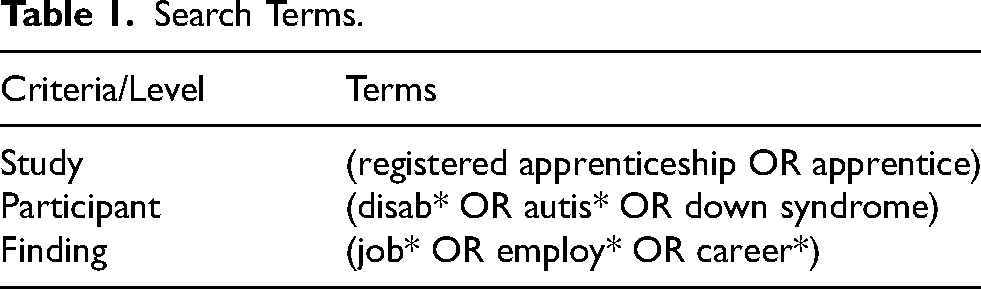
An electronic database search utilizing Proquest was conducted using a combination of key search terms. See Table 1. All possible combinations of the search terms were inputted into the search platform utilizing the exact procedures for each iteration. After exporting results, a systematic procedure was followed to narrow and refine the search results based on the inclusionary criteria. First, duplicate results were eliminated. Abstracts of the combined list of citations were screened for eligibility. The full text of the studies which passed the screening was retrieved and reviewed to ensure all inclusion criteria were met. Specific reasons for any study excluded during the full-text review were also recorded. Upon completion of the screening of the database search results, we engaged in a backward/chain citation search by reviewing the references of the eligible studies from the full-text review. Next, we conducted a forward citation search for eligible studies. The final search was conducted on December 6, 2024.
Search Terms.
The selection of studies was conducted by following the Preferred Reporting Items for Systematic Reviews and Meta-Analyses (PRISMA) guidelines for systematic literature reviews (Page et al., 2020). During the initial search phase, a total of 244 records were populated from the database. After removing duplicate results, 213 records were left to be assessed for eligibility. Articles undergoing full-text review were considered for each of the inclusion criteria. This process narrowed the number of articles to 17. See Figure 1. Notably, one of the articles (Lewis et al., 2011b) included three sequential, independent studies. Accordingly, we discuss the findings in terms of 19 studies (not articles).
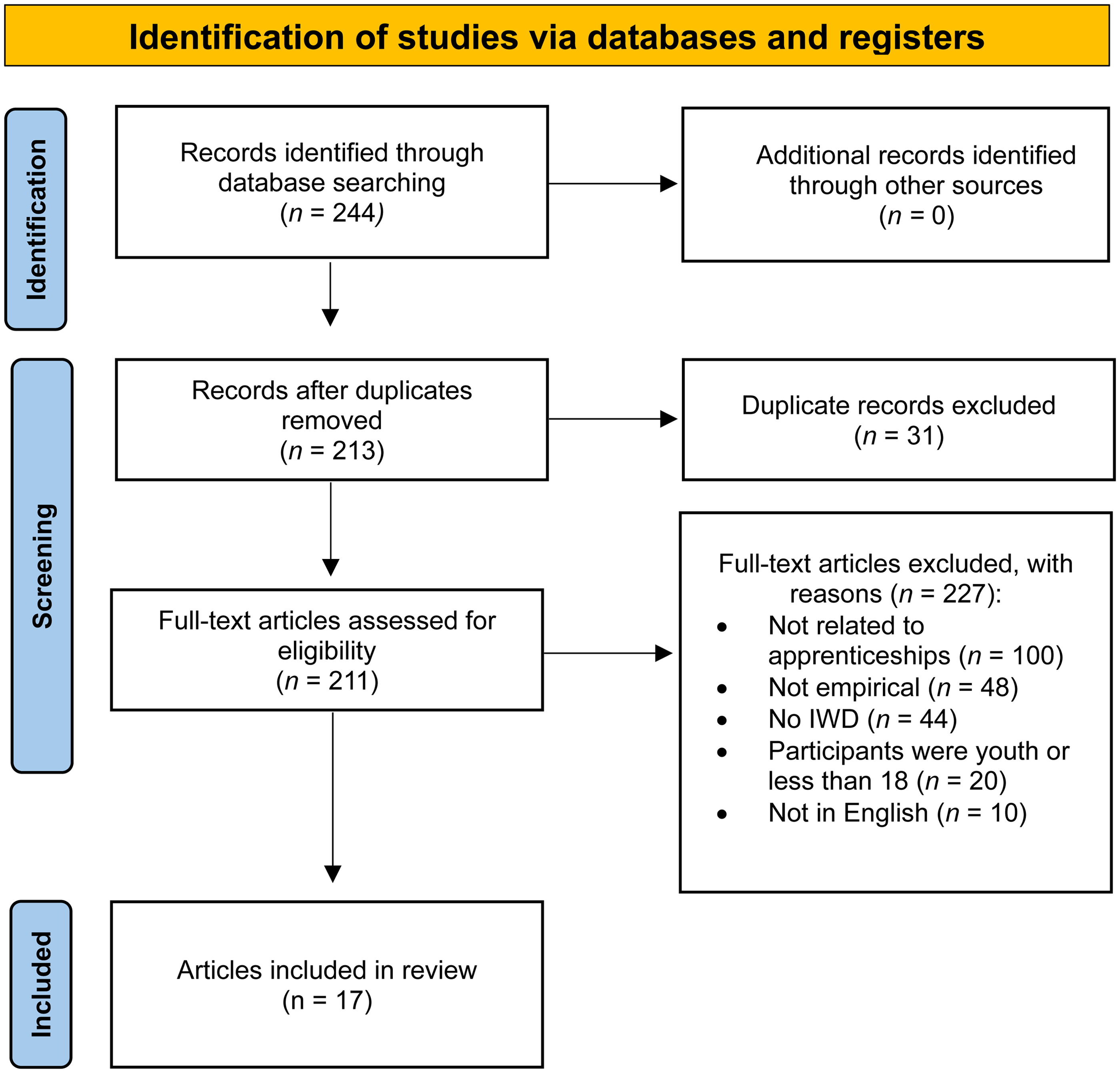
PRISMA Diagram. *Some Articles Were Excluded for Multiple Reasons; Thus, the Total Number of Reasons for Exclusion may add up to More Than the Number of Articles That Were Excluded.
Coding
The following data were coded for each article in response to the guiding questions.
Types of Participants
We coded the types of participants in each study. If there was more than one type of participant, multiple types of participants were recorded for the study. Types of participants included: employers, IWD, and supervisors.
Types of Research Designs
We coded the types of research designs reflected in each study. Some studies included more than one type of design; all types were coded. The types of designs included the types of data collected (e.g., quantitative, qualitative, or mixed methods). We further characterized the types of data (e.g., for qualitative designs, we coded whether the data reflected focus groups or individual interviews).
Effectiveness of Apprenticeships
For each study, we coded the results of the study with respect to the effectiveness of the apprenticeship.
Barriers to the Implementation of Apprenticeships
For each study, we coded any mention of barriers to implementing the apprenticeship.
Data Analysis
The first and second authors coded the relevant studies. Independently, the authors coded the studies using the abovementioned variables. They recorded all responses onto an excel spreadsheet. Biweekly, the authors met with the larger research team to discuss the coding process and resolve any questions about the coding. For example, during a team meeting, we added a code for participant age to characterize the average age of the participants.
Inter-Rater Reliability
The two authors independently coded all 13 variables from five (25%) randomly selected studies to calculate interrater agreement. Agreement rates for coding were determined using point by point interobserver agreement (IOA), wherein the total number of agreements were divided by the number of agreements plus disagreements, then multiplied by 100 to get an IOA percentage (Kazdin, 1977). The agreement rate was 95.7%. All coding disagreements were resolved through discussion until consensus.
Results
Types of Participants
Altogether, there were 458,697 participants across 19 studies. Several studies obtained large samples via extant databases. For example, there were 375,561 participants from the Rehabilitation Service Administration database (RSA-911; Donahue et al., 2023; Kaya et al., 2023; Kaya et al., 2022; Kim et al., 2022), 41,199 participants from the German Federal Employment Agency registry (Reims et al., 2023), and 30,572 participants from the Statistics Canada 2007 National Apprenticeship Survey (NAS; Laporte & Mueller, 2013). Participants reflected six countries/continents: the United States, Canada, Germany, Switzerland, Australia, and Taiwan. Across the studies, demographic data (e.g., participant gender, age, race/ethnicity, educational background, and type of disability) were inconsistently reported. Regarding gender, 53.7% (n = 225,158) were male and 46.3% (n = 193,979) were female. With respect to age, over 89% (n = 409,315) of the participants were adults (over 18 years old). Race/ethnicity was only reported in six studies—all of which were conducted in the United States (Donahue et al., 2024; Kaya et al., 2022; Kaya et al., 2023; Kim et al., 2022; Malloy et al., 1998; Schall et al., 2024). Among the participants in the six studies, the majority was white (60.55%, n = 262,176), 21.97% (n = 95,107) were Black, 9.34% (n = 40,444) were Latino, 3.05% (n = 13,204) were Asian, and 4.21% (n = 18,244) identified as other race/ethnicity. Educational background was reported among 359,208 participants in six studies (Cocks et al., 2015; Donahue et al., 2024; Kaya et al., 2022; Kaya et al., 2023; Malloy et al., 1998; Reims et al., 2023). The majority of the participants (47.83%, n = 171,824) reported having a high-school degree. To a lesser extent, 29.27% (n = 105,123) attended some college, and less than 22.90% (n = 82,261) of participants reported having an elementary-school education or less. See Table 2.
Prevalence of Participants with Disabilities
Altogether, 97.97% (n = 418,606) of the participants reported having disabilities. Notably, this percentage may not be an exact estimate, as some studies did not provide the specific subsample size of IWD. For example, Laporte and Mueller (2013) included data from 30,572 participants who were registered in apprenticeship programs in Canada. They report that the overall sample included IWD, but did not report the exact number of participants with disabilities.
Prevalence of the Types of Disabilities Among Participants
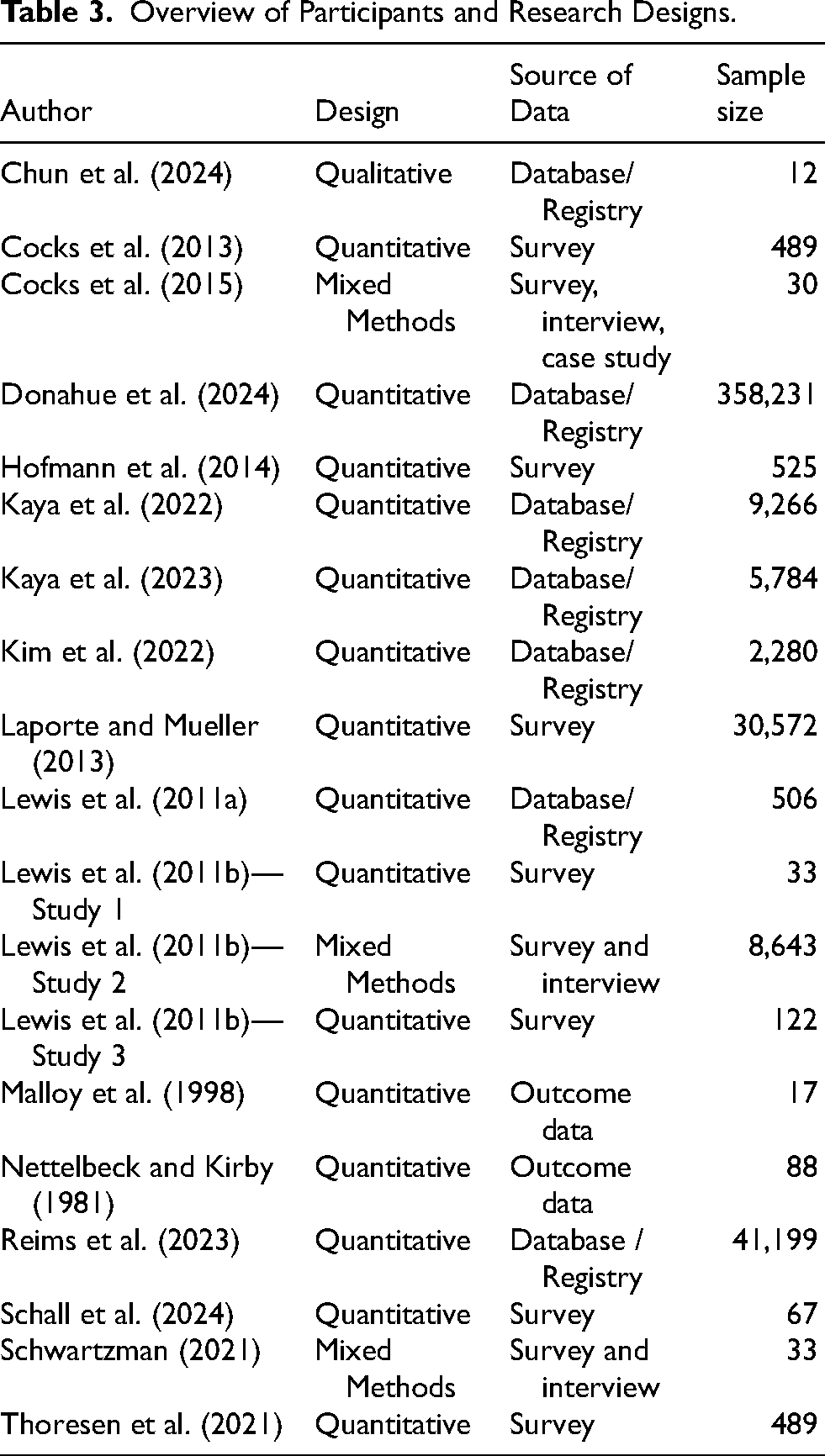
Only 12 studies reported the types of disabilities among their collective 45,122 participants (Cocks et al., 2013, 2015; Hofmann et al., 2014; Kim et al., 2022; Lewis et al., 2011a, 2011b; Malloy et al., 1998; Nettelbeck & Kirby, 1981; Reims et al., 2023; Schall et al., 2024; Schwartzman, 2021; Thoresen et al., 2021). Among the 12 studies, there was great variability in how disability was characterized. Some variation could be attributed to different definitions of disability across countries. For example, in an Australian study (Nettelbeck & Kirby, 1981), the participants were grouped by their IQ scores (e.g., 51–70, 71–80, and 81–90) whereas in a German study (Reims et al., 2023), the types of disabilities were characterized as: “psychological”, “mental”, “learning”, “musculoskeletal”, and “other”. See Table 3.
Participant Demographics (N = 458,697).
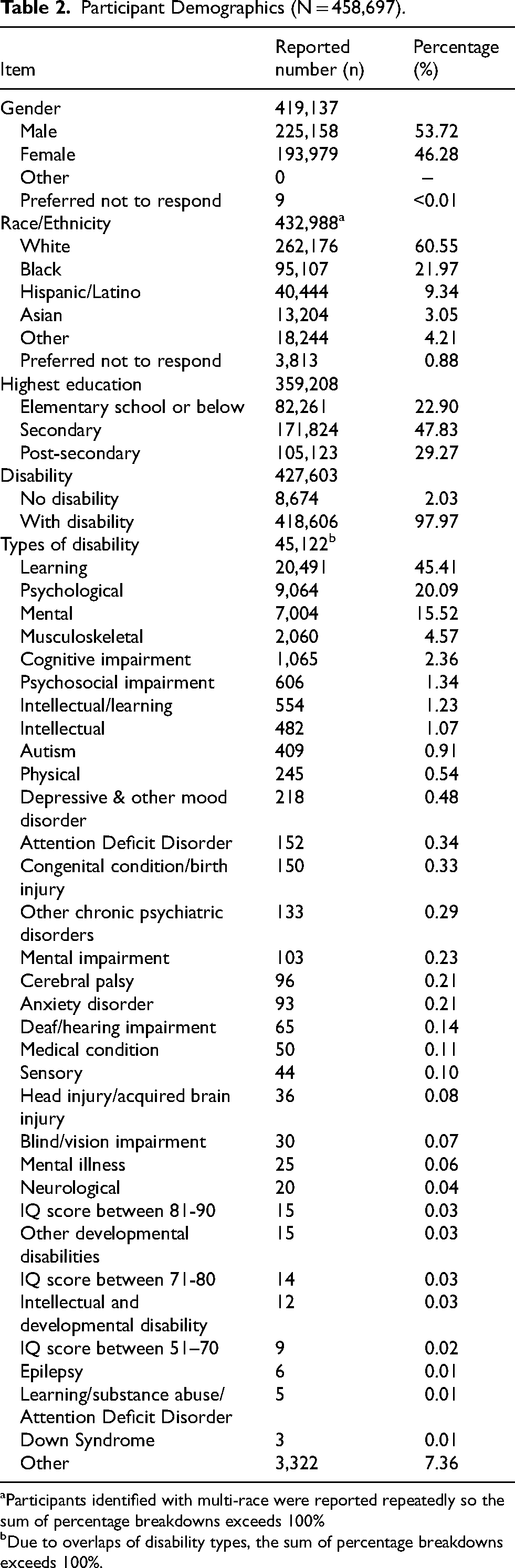
Participants identified with multi-race were reported repeatedly so the sum of percentage breakdowns exceeds 100%
Due to overlaps of disability types, the sum of percentage breakdowns exceeds 100%.
Overview of Participants and Research Designs.
Prevalence of Individuals with Disabilities Enrolled in Apprenticeships
Two studies found that less than one percent of individuals receiving vocational rehabilitative (VR) services were offered to participate in an apprenticeship (Donahue et al., 2023; Kaya et al., 2022; Kaya et al., 2023). For example, Kaya et al. (2022) examined the relations between receipt of VR services, demographic characteristics, and employment outcomes of 9,266 adults with anxiety disorders; less than 1% of participants were engaged in registered apprenticeship programs. Kaya et al. (2023) confirmed these results in a similar study that examined the employment outcomes of 5,784 Asian Americans who received VR services.
Types of Research Designs
The majority (78.94%, n = 15) of the studies reflected quantitative designs (Chun et al., 2024; Cocks et al., 2013; Donahue et al., 2024; Hofmann et al., 2014; Kaya et al., 2022; Kaya et al., 2023; Kim et al., 2022; Laporte & Mueller, 2013; Lewis et al., 2011a, 2011b; Malloy et al., 1998; Nettelbeck & Kirby, 1981; Reims et al., 2023; Schall et al., 2024; Thoresen et al., 2021). Specifically, of the quantitative studies, 93.33% (n = 14) were surveys and 6.67% (n = 1) used outcomes from permanent products. Of the survey studies, 57.14% (n = 8) were questionnaires distributed by the authors and 42.86% (n = 6) reflected administrative datasets. With respect to permanent products, Nettelbeck and Kirby (1981) collected woodwork pieces to measure woodworking participants’ skills following the apprenticeship.
The remaining studies were mixed methods (15.79%, n = 3; Cocks et al., 2015; Lewis et al., 2011b; Schwartzman, 2021) or qualitative (5.26%, n = 1; Chun et al., 2024). All mixed methods studies (100%, n = 3) reflected survey and interview data, with 33% (n = 1; Cocks et al., 2015) also containing case studies. The qualitative study was a case study (Chun et al., 2024).
Of the studies, 57.89% (n = 11) were descriptive (Cocks et al., 2015; Donahue et al., 2024; Hofmann et al., 2014; Kaya et al., 2022; Kaya et al., 2023; Kim et al., 2022; Laporte & Mueller, 2013; Lewis et al., 2011b; Reims et al., 2023; Schall et al., 2024; Thoresen et al., 2021) and 42.11% (n = 8) were intervention studies (Chun et al., 2024; Cocks et al., 2013; Lewis et al., 2011a, 2011b; Malloy et al., 1998; Nettelbeck & Kirby, 1981; Schwartzman, 2021). Also, 57.89% (n = 11) were cross-sectional studies (Cocks et al., 2015; Donahue et al., 2024; Kaya et al., 2022; Kaya et al., 2023; Kim et al., 2022; Laporte & Mueller, 2013; Lewis et al., 2011a, 2011b; Reims et al., 2023; Schall et al., 2024) and 42.11% (n = 8) were longitudinal studies (Chun et al., 2024; Cocks et al., 2013; Hoffman et al., 2014; Lewis et al., 2011b; Malloy et al., 1998; Nettelbeck & Kirby, 1981; Schwartzman, 2021; Thoresen et al., 2021).
The research designs also varied with regard to the nature of the apprenticeship. Only 15.79% (n = 3) of the studies specifically studied apprenticeships (Laporte & Mueller, 2013; Nettelbeck & Kirby, 1981; Schwartzman, 2021). Many studies (31.58%, n = 6) focused on VR programs that included apprenticeship as a part of the VR intervention (Chun et al., 2024; Donahue et al., 2024; Kaya et al., 2022; Kaya et al., 2023; Kim et al., 2022; Reims et al., 2023). Also, 36.84% (n = 7) combined the samples from apprenticeships and traineeship programs (Cocks et al., 2013, 2015; Lewis et al., 2011a, 2011b; Thoresen et al., 2021). Further, 15.79% (n = 3) of the studies examined other vocational training programs which included apprenticeships (Hofmann et al., 2014; Malloy et al., 1998; Schall et al., 2024).
Effectiveness of Apprenticeships
Effectiveness of Apprenticeships: Completion of Apprenticeship Programs
Four studies reported the percentage of apprentices who completed their apprenticeship (two studies were reflected in Lewis et al., 2011a; Lewis et al., 2011b; Nettelbeck & Kirby, 1981). For the 193 IWD enrolled in an apprenticeship across these three studies, 52% (n = 100) completed the apprenticeship. Of the remaining participants, only 1.6% (n = 3) took more time than expected to complete the apprenticeship.
Accordingly, it is important to identify which characteristics make a participant more or less likely to complete the apprenticeship. To that end, Laporte and Mueller (2013) conducted a study examining the relations between demographic characteristics and apprenticeship completion. They found that having a disability significantly decreased the likelihood that participants would complete the apprenticeship on time. Another study reported that completion rates were highest for those who had an acquired brain injury or sensory disability, but lowest for those with psychiatric disabilities (Lewis et al., 2011a).
Effectiveness of Apprenticeships: Improved Employment Outcomes
Five studies demonstrated the effectiveness of apprenticeships in improving competitive or supported employment outcomes for IWD. Across three studies with 182 participants who completed an apprenticeship, 85.2% (n = 155) obtained employment, 8.2% (n = 15) were seeking employment, 3.3% (n = 6) were pursuing further education or training, and 3.3% (n = 6) were unemployed (Cocks et al., 2013, 2015; Nettelbeck & Kirby, 1981). Schwartzman (2021) conducted an intervention study comparing employment outcomes among individuals with developmental disabilities who either participated in an apprenticeship (n = 22) or a local “Job Club” (n = 11). The apprenticeship consisted of two days of classroom instruction and one day of on-the-job training per week for four months, while the Job Club met at an independent living skills agency once a day for a 30-min discussion about jobs. Compared to participants in the Job Club, apprentices reported greater job-related confidence, improved vocational abilities, and higher rates of employment. Similarly, Lewis et al. (2011a) examined the outcomes of 506 IWD who participated in EDGE, a disability employment service in Australia. Participants with disabilities who completed (versus did not complete) apprenticeships, on average, worked more hours a day, were employed for longer durations, and received a higher average hourly wage.
Effectiveness of Apprenticeships: Pre-Apprenticeships May Be Effective
One study examined the effectiveness of a pre-apprenticeship: training programs designed to prepare individuals without the necessary skills to enter an apprenticeship program (Apprenticeship Tennessee, n.d.). Chun et al. (2024) examined how vocational rehabilitation sites utilize the Career Pathways initiative, a program that combines education, training, and support services. Out of 12 sites, only one site included pre-apprenticeships as an aspect of their Career Pathways program. Compared to participants at other sites, participants in the Career Pathways program that emphasized pre-apprenticeship and internship experiences demonstrated significantly greater likelihood of attaining post-secondary credentials and higher employment rates.
Effectiveness of Apprenticeships: Apprenticeships Were More Effective Than Traineeships
Two studies compared the effectiveness of apprenticeships and traineeships. Compared to apprenticeships, which typically take several years and are focused on trades, traineeships often take less time and offer training in less specialized areas (Apprenticeship Careers Australia, 2025). Compared to traineeships, apprenticeships were more effective in improving employment outcomes. For example, Thoresen et al. (2021) compared employment outcomes among 489 individuals with and without disabilities to determine the effect of an apprenticeship (versus traineeship). The researchers distributed a survey before the apprenticeship/traineeship and three years after completing it. Notably, most of the participants with intellectual disability completed traineeships, not apprenticeships. Participants who completed apprenticeships (versus traineeships) demonstrated significantly higher wages and worked more hours. Cocks et al. (2013) conducted a study comparing the effects of Australian apprenticeships and traineeships on the economic outcomes of 489 individuals with and without disabilities. Of the 114 IWD who completed an apprenticeship, only 13% (n = 15) relied on government-provided disability support pension or allowance as their main source of income. In comparison, 28% (n = 79) of IWD who completed a traineeship relied on government sources as their main income. Further, 80% (n = 91) of those who completed an apprenticeship (compared to 65% (n = 182) of participants who completed traineeships) relied on their hourly wage as their main source of income.
Effectiveness of Apprenticeships: Improved Quality of Life
Only one study examined the effect of apprenticeships on quality of life. Cocks et al. (2015) surveyed 30 individuals with developmental disabilities to understand the effect of the apprenticeship on their quality of life. Overall, participants who completed (versus did not complete) an apprenticeship reported greater quality of life. The type of developmental disability did not moderate the relation between apprenticeship and quality of life. Further, many individuals who completed (versus did not complete) the apprenticeship reported significantly greater employee benefits such as increased responsibilities, a pay raise, a permanent contract, and/or a bonus.
Effectiveness of Apprenticeships: Predictors of Success in Apprenticeships
Several studies identified predictors of success in apprenticeships. One study examined the role of participant gender. Thoresen et al. (2021) found mixed results regarding the role of gender. Specifically, female (versus male) participants with disabilities demonstrated significantly higher employment rates while male (versus female) participants with disabilities worked significantly more hours. Another study (Reims et al., 2023) found that, in addition to demographic characteristics (e.g., gender), the structure of the apprenticeship market also impacts success in apprenticeships. For example, when the market is more robust and has little competition for jobs, apprentices are more successful.
Three studies examined the role of supports for apprentices with disabilities. Supports included: social support, training of support staff, and disability services. Schwartzman (2021) found a correlation between social support needs and employment status at pre- and post-apprenticeship. Participants with more social support were significantly more likely to be employed after the apprenticeship (Schwartzman, 2021). Hofmann et al. (2014) collected survey data from apprentices with learning difficulties about the types of support they received during their vocational education and training (VET) experience. Support from VET teachers (e.g., a teacher demonstrated an active interest in the participants’ training), positively influenced apprentices’ career aspirations and self-esteem. In a case study by Cocks et al. (2015), adult disability services improved employment outcomes for participants with disabilities. Martin, a man with intellectual disability, received an apprenticeship in addition to external specialist support, on-the-job training, social support from other students, and employment assistance, resulting in a paid job and greater quality of life.
Barriers to Apprenticeships for IWD
Barriers to participation in apprenticeships were reported in four studies. Specifically, two studies (Kim et al., 2022; Cocks et al., 2015) noted a lack of awareness of apprenticeship opportunities for IWD. Kim et al. (2022) surveyed 2,280 individuals who had utilized customized employment, of which 97.5% had reported a significant disability. Customized integrated employment (CIE) is an employment program designed to meet the interests and skills of individuals with significant disabilities; apprenticeships were one of the services offered to those in the program. Barriers to the program included: limited financial resources, deficiency of basic skills, and cultural unresponsiveness. In a mixed methods study by Cocks et al. (2015), barriers were reported among three of the four case study participants. One participant faced several barriers to participating in the apprenticeship due to his severe and uncontrolled seizures. Additionally, his hours and wages had to be kept low so that he could continue to receive his pension. Roy, a participant in his late thirties, reported difficulty finding apprenticeships that offered sufficient wages. Amy's challenges to her apprenticeship included bullying and discrimination from co-workers and employers.
Two studies focused on the feasibility and social validity of apprenticeships for IWD; however, findings were mixed. Using the Delphi method, Schall et al. (2024) surveyed 67 stakeholders about employment interventions for individuals with intellectual and developmental disabilities (IDD). The stakeholders were: researchers, (n = 15, 22.39%), employment service providers (20.90%, n = 14), high-school teachers (20.90%, n = 14), individuals with IDD (17.91%, n = 12), and parents or caretakers of people with IDD (17.91%, n = 12). While stakeholders believed that supported employment is generally helpful for finding employment for adults with IDD, only 35.82% participants (n = 24) had any knowledge or exposure to apprenticeships. As a result, of the five supported employment models surveyed, apprenticeships were the only model that was not socially validated by stakeholders. Another study interviewed 15 parents of individuals with IDD who participated in an apprenticeship (Schwartzman, 2021). Of the participants, 46.67% (n = 7) reported positive perceptions about the skills being taught and instructors of the apprenticeship, but 40% (n = 6) reported that they doubted the program's ability to obtain full-time employment for all apprentices. The results of these two studies demonstrate that stakeholders may be skeptical about the effectiveness of apprenticeships.
Discussion
The purpose of this study was to examine the literature about apprenticeships for IWD. There were three main findings: (1) although apprenticeships may be effective at improving employment outcomes, there are barriers to apprenticeships for IWD; (2) IWD have lower completion rates of apprenticeships than adults without disabilities; and (3) there is a lack of consistency in terminology and characterization of apprenticeships, making it difficult to draw conclusions.
First, apprenticeships may be effective at improving job skills, rates of employment, and wages among IWD. However, none of the included studies reflected randomized controlled trials (RCTs)—the gold standard of experimental design (Toste et al., 2023). Thus, it is difficult to attribute any changes in employment rates to apprenticeships. Future research about apprenticeships should reflect RCTs to minimize threats to internal validity and more definitively attribute any change in outcomes to the apprenticeship.
While apprenticeships may be effective for IWD, many IWD may not be afforded the opportunity to participate in apprenticeships. In the United States, less than 1.5% of people in apprenticeships report having a disability (Goodman et al., 2022). Based on this review, it seems that the limited participation of IWD could be due to lack of knowledge about apprenticeships (Schall et al., 2024) and/or concerns about the effectiveness of apprenticeships (Schwartzman, 2021). Fortunately, such barriers are malleable and can be addressed through education and training of relevant stakeholders about the value of apprenticeships. Such education and training could occur in VR agencies. While our review found that many participants gained access to apprenticeships through a VR agency, in the U.S., VR agencies report very few referrals to apprenticeships (Mitchell et al., 2023). Providing training to VR agencies about the value of apprenticeships could trickle down to more referrals and VR staff educating families, IWD, and employers about the value of apprenticeships.
Second, the completion rate of apprenticeships for IWD is low (52%). However, the rate is comparable to adults without disabilities. In the U.S., 55.3% of IWD and 52.4% of individuals without disabilities complete apprenticeship programs at any given time (Kuehn et al., 2021). This parity in completion rates contradicts the assertion that IWD may be less likely to complete apprenticeships. Altogether, this finding suggests that research—which reflects apprentices with and without disabilities—is needed to identify the barriers to apprenticeship completion and target them for intervention.
It is important to note that apprenticeship completion may relate to the nature of disability. Because of the international nature of the review and varying descriptions of disability, it is difficult to determine whether participants with certain types of support needs were more or less able to complete the apprenticeship. Research is needed to identify how the extent of support needs may impact the apprenticeship experience. By identifying the role of support needs, interventions can be developed to support adults with disabilities in completing apprenticeships.
Appropriate accommodations for IWD vary by person. Supports could include assistive technology for task sequencing, performance, and assembly; universal design features in the workplace; and allowing a personal job coach on-site with the individual (Sundar, 2017). By more closely examining the relation between support needs and apprenticeship completion, we can have a better understanding of who is prone to low completion rates.
Third, there is a need for greater consistency in research about apprenticeships for IWD. In the systematic review, apprenticeships were often clustered within an employment intervention making it difficult to characterize what constituted the apprenticeship. Apprenticeships, especially registered apprenticeship programs, can be funded and operated by local or federal government. As a result, standards and implementation procedures can vary widely within a country and across countries, even those with similar values and governmental organizations. Researchers should clearly characterize the nature of the apprenticeship including its duration, scope, purpose, context, and supports.
Relatedly, there is also a need to examine for whom apprenticeships may be most effective. Because of the heterogeneity in the participant samples, it is not possible to identify for whom apprenticeships were more or less effective. This is problematic as adults with certain types of disabilities are more or less prone to lower employment rates. Indeed, within the disability population, the worst employment rates are among adults with intellectual disability (ID). Nationally in the U.S., only 16% of adults with ID are employed nationally, with only 10% employed in competitive employment—90% of employed adults with ID work in segregated settings and often receive subminimum wage (Winsor et al., 2023). Research is needed to discern whether apprenticeships could be especially effective among IWD who are more susceptible to low employment rates.
Limitations
While an important launching point to characterizing the literature about apprenticeships, this review has several limitations. First, due to the capacity and primary language of the research team, only studies published in English were included in this review. Additionally, we only included peer-reviewed articles in this review. Accordingly, potentially relevant results from non-peer-reviewed sources (e.g., government or organization reports) were not reflected in this review. Further, due to the publication bias against studies that report no effect, we may be over-estimating the effectiveness of apprenticeships.
Conclusion
Directions for Future Research
Research is needed on employer perceptions about apprenticeships for IWD. For an apprenticeship to exist and be effective, it is critical to include relevant employers. The broader literature about employers suggests some bias toward IWD. While employers self-report positive attitudes towards hiring IWD, studies on employers’ actual hiring behaviors reflect negative attitudes (Burke et al., 2013). For example, in a study in Hong Kong, employers received four identical job applications: one from a person with depression, one from a person with a hearing impairment, one from a person with a mobility impairment, and one from a person without a disability (Pearson et al., 2003). The applicant without a disability was offered the job twice as often as the applicants with disabilities. Other research with employers suggests they have concerns about the potential extra money and time needed to train employees with disabilities (Vornholt et al., 2017). Yet, none of these studies directly examined perceptions of apprenticeships. By characterizing employers’ perceptions of apprenticeships, there can be targeted campaigns to educate employers, as needed, about the value of apprenticeships and employees with disabilities.
Research is also needed to contextualize findings related to employment. As noted in this review, limited employment outcomes may not be related to the effectiveness of the apprenticeship, but rather the need to continue to receive governmental benefits (Cocks et al., 2015). In the United States, there are earning limits for IWD that impact their access to financial assistance (e.g., Supplemental Security Income, Schur et al., 2014). When considering intervention research about apprenticeships and the ultimate goal of employment, researchers may also consider collecting data to understand how the receipt of governmental benefits may impact employment outcomes.
Implications for Practice and Policy
Employment agencies and employers may consider embracing universal design for learning (UDL). A framework for designing products, environments, and services to be accessible for people with a diverse range of skills and abilities (Office of Disability Employment Policy [ODEP], n.d.), UDL often results in improved environments for adults with and without disabilities. UDL may result in more physically accessible workplaces or cognitively accessible training programs that benefit all employees. By reflecting the tenets of UDL in apprenticeships (and eventual employment sites), there may be greater success among individuals with and without disabilities in completing the apprenticeship.
In addition, there should be materials available for practitioners, policymakers, and consumers about the value of apprenticeships for IWD. Making information about apprenticeships for people with disabilities readily available at schools, libraries, and VR agencies could increase awareness of apprenticeship opportunities (Mitchell et al., 2023). High school guidance counselors and special education teachers should be aware of apprenticeships as options during transition planning. Further, unregistered apprenticeship programs may consider registering with the federal or state agencies. By registering, there is public information about the apprenticeship that could be available to relevant stakeholders and increase the opportunities to apply for apprenticeships (Kuehn et al., 2021).
Footnotes
Acknowledgement
N/A
Conflict of Interest
N/A
Ethics Statement
N/A
Informed Consent
N/A
Funding
The authors disclosed receipt of the following financial support for the research, authorship, and/or publication of this article: Funding for this study was received from the United States Department of Labor (grant number 24A60AP000082). The contents are those of the authors and do not necessarily represent the official views of nor an endorsement by the Department or the US Government.