




Abstract
Background
Technological interventions have shown considerable potential in facilitating vocational inclusion for individuals with disabilities. Nevertheless, existing research addresses isolated variables, such as the effectiveness of a specific technology or its application within a particular disability group, neglecting an understanding of the multifaceted factors that influence successful implementation.
Objective
To explore this issue, a scoping review was conducted to identify the range of technologies studied to date and to examine the key elements influencing effective implementation.
Method
Studies published in English and German since 2018 were included. Following the PRISMA guidelines and procedures, a total of 61 articles were systematically analyzed.
Results
The findings indicated that implementing technologies for vocational inclusion is a multifactorial process. Not only are individual characteristics important, but also the nature of the tasks (e.g., structure or type of the task), the characteristics of the technology (e.g., type) and the contextual environmental factors (e.g., setting or other stakeholders). Additional considerations such as motivational aspects, trainings, and the need for individualized approaches also emerged as critical.
Conclusion
The review highlights the importance of engaging multiple stakeholders, particularly people with disabilities, not only in the development of new technologies but also in their integration within real-world workplace settings.
Keywords
Introduction
The Convention on the Rights of Persons with Disabilities (United Nations, 2006) was adopted by the United Nations in 2006 to promote the inclusion of persons with disabilities. In this regard, the inclusion of persons with disabilities in value-added work processes is not only a fundamental and protected human right, but also in line with the goals of the global community's 2030 Agenda. And yet, although the employment rate of people with disabilities varies from country to country, they are underemployed globally and have fewer job opportunities than people without disabilities (Bonaccio et al., 2020; Schur et al., 2017). In addition to their strong motivation to work, people with disabilities bring several valuable qualities to the workplace, including strengths such as precision and attention to detail (e.g., commonly demonstrated by individuals on the autism spectrum), as well as creativity and problem-solving abilities (Aichner, 2021), leading to improvements of companies’ reputations and performances (Jurado-Caraballo & Quintana-García, 2024). In a systematic review on the benefits of hiring people with disabilities, Lindsay et al. (2018) identified advantages both for companies (e.g., increased customer satisfaction, innovation, and productivity) and for employees with disabilities (e.g., enhanced self-esteem, higher income, and improved quality of life).
Technological advances have changed the nature of work and, despite their potential drawbacks (e.g., work overload or stress), they could facilitate the inclusion of people with disabilities in work environments. For example, in a systematic review, Sauer et al. (2010) found that the use of assistive technologies (AT) in vocational settings positively influences job performance among individuals with cognitive disabilities, improving both job accomplishment rates and independence. In this regard, Bächler and Behrendt (2023), in their assessment of ATs for the vocational inclusion of individuals with intellectual disabilities (ID), conclude that AT can enhance work participation for this group. Additionally, technologies could improve task personalization by increasing autonomy and task variety. Alanazi and Benlaria (2024), in their study on AT and workplace inclusion, conducted interviews with individuals with various types of disabilities. They found that using different technologies, such as software and cognitive support tools, enabled participants to “contribute to their workplace” by effectively fulfilling their responsibilities (Alanazi & Benlaria, 2024). In this context, Randall et al. argue that AT can support individuals with ID throughout job preparation and execution. This includes online methods such as virtual training and instructional videos, as well as technologies like smartphones for remote communication with job coaches (Randall et al., 2025). Additionally, it is also suggested that well-designed work can improve cognitive abilities in people with cognitive impairments (Banta Lavenex et al., 2024). However, considering an occupational psychology approach, by relying on models such as Task Technology Fit (TTF), the use of technologies should be carefully considered, as negative effects are also possible if there is a poor fit between the technology, the task to be performed and the individual's characteristics. In a meta-analysis on the use of technologies to support employment outcomes for individuals with intellectual and developmental disabilities, Damianidou et al. (2018) found that technologies (e.g., assistive technologies and digital tools), enhance vocational performance in this population. They further underscored the importance of integrating universal design principles tailored to the specific needs of this population. Additionally, they emphasized the need for continued research into emerging technologies and their potential impact on the employment opportunities and inclusion of people with disabilities. This emphasizes that using technologies in a work context for people with disabilities is likely a multifactorial process, requiring consideration of various aspects.
Considering the importance of employment for people with disabilities and the role of technology in this context, the question arises: What factors should be taken into account when selecting and implementing technologies in the workplace to ensure successful vocational inclusion for people with disabilities? In this regard, scoping reviews are a suitable method for identifying, mapping, and summarizing existing knowledge and research gaps in the literature (M. D. Peters et al., 2020). Therefore, by conducting a scoping review on the role of technology in the vocational inclusion of people with disabilities, we aim to analyze the literature and determine which types of disabilities, technologies, and work activities have been examined over time. Shahbudin and Jamil (2024) conducted a bibliometric and systematic review examining publication trends, key terminology, research focus areas, and potential gaps in this field. While their analysis focused on theoretical models such as the Theory of Work Adjustment and the Social Model of Disability, their primary emphasis was on broader frameworks rather than the practical application of technology in specific work tasks. This scoping review, in contrast, takes a more practice-oriented approach by examining how technologies are applied in vocational settings and what factors influence their success. Beyond the direct interaction between task, technology, and person, it also considers additional elements, such as the office environment, pre-trainings, and other contextual factors, that may contribute to successful vocational inclusion. Furthermore, by incorporating insights from grey literature and conferences, this review captures emerging trends and developments in assistive workplace technologies.
Method
This review was conducted following the PRISMA guidelines (Tricco et al., 2018) and the framework for scoping reviews proposed by Arksey and O’Malley (2005). Additional recommendations from Levac et al. (2010) and Joanna Briggs Institute (M. D. Peters et al., 2020) were also incorporated. Therefore, an initial protocol was developed, followed by a pilot study, the results of which have been published (Hamideh Kerdar et al., 2022). The following is an outline of the steps which have been taken as part of this review. Any deviation from the published protocol is mentioned in their designated subchapter (M. D. J. Peters et al., 2022).
1. Identifying the research question
As detailed in the protocol (Hamideh Kerdar et al., 2022), the primary research question guiding this scoping review was: “How can technologies facilitate the vocational inclusion of people with disabilities?” Within this overarching question, additional variables were explored, including the types of technologies, disabilities, and work settings that have been studied. Furthermore, the review examined the critical factors necessary to ensure the successful implementation of these technologies.
2. Identifying relevant studies
Based on the protocol, seven databases were initially planned to be considered. However, in the end five databases (Embase, Web of science, IEEE Xplore, PsycInfo, CINHAL) were searched. The reasons for this reduction were a lack of relevant articles in some of the databases, difficulties in exporting large numbers of results, and significant overlap of results. Additionally, to include grey literature and stay updated, Google Scholar, ResearchGate, and conference proceedings were periodically monitored from 2022 to 2024, with relevant publications incorporated. Even though other reviews were excluded, their texts and reference lists were thoroughly examined for relevant articles on vocational inclusion through technology. Furthermore, other databases and journals, such as EBSCOhost and ACM, were occasionally hand-searched.
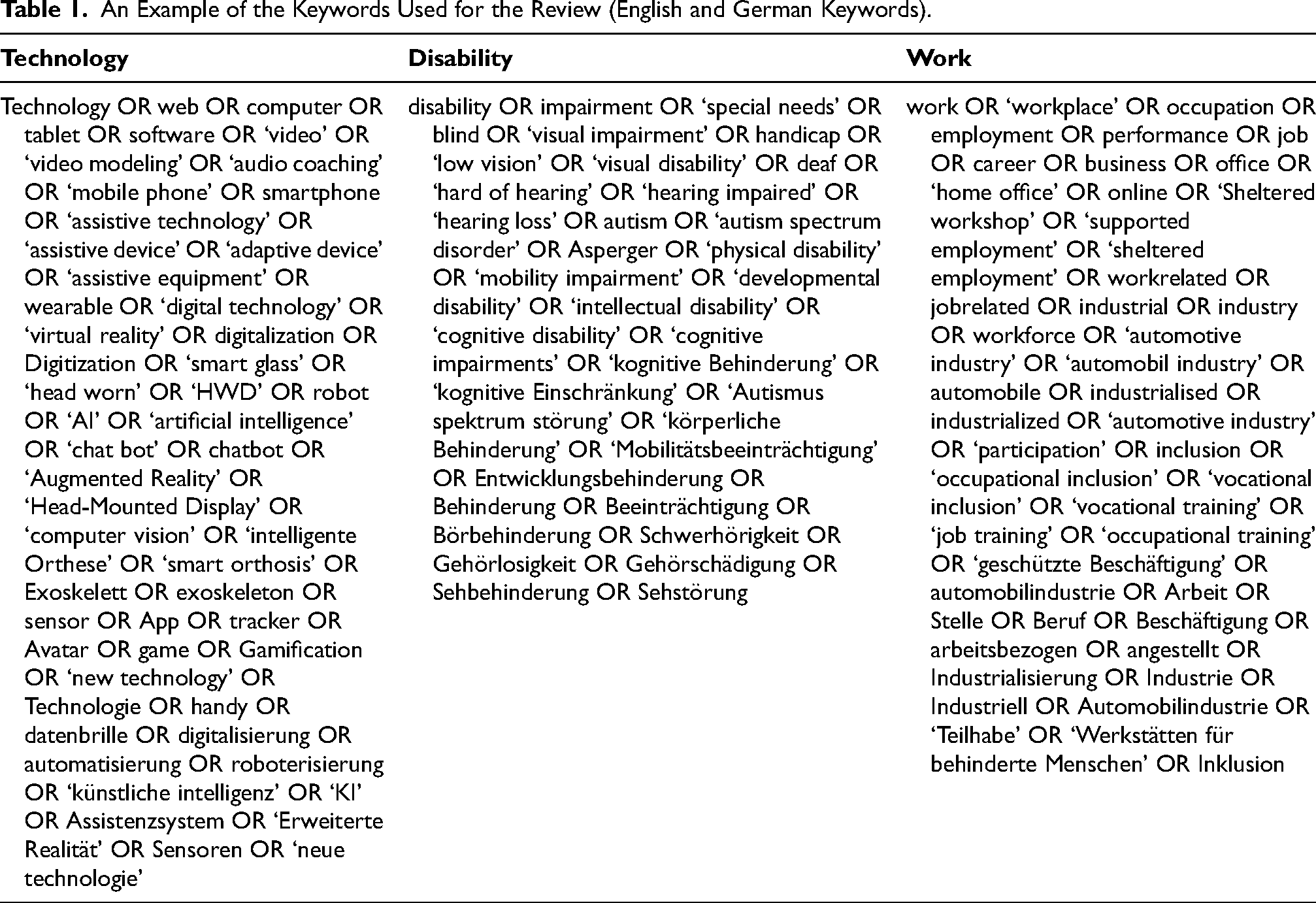
The final keywords were developed based on the research questions, each database's guidelines, and suggested keywords. Two reviewers monitored and refined the list by adding or removing keywords as necessary. This process was documented in a separate file, with the keywords formulated in alignment with the database guidelines (Bramer et al., 2018). After the keywords were finalized and agreed upon following the piloting phase, they were tested simultaneously by two independent researchers. The finalized keywords were then applied across five databases. As illustrated in the example of the keywords presented in Table 1, specific technologies were used as search terms. During the pilot phase, it became evident that using general technology-related keywords failed to retrieve many relevant articles. Consequently, a comprehensive keyword matrix was developed to ensure more effective and accurate literature retrieval.
An Example of the Keywords Used for the Review (English and German Keywords).
Initially, EndNote was planned for the screening of titles and abstracts from the exported articles. However, the results were ultimately transferred to Rayyan (Ouzzani et al., 2016), an AI-based research tool chosen for its features that facilitated easier, more efficient, and error-free screening and collaboration.
3. Study selection
Articles in English and German were considered. Even though, the initial plan, based on the protocol was to consider all the articles since 2010, due to the very large number of articles (ca. 77000) resulted based on the search, the publication years were narrowed down to articles published since 2018.
To ensure consensus and improve the screening process based on the inclusion and exclusion criteria, two rounds of screening were conducted with two independent reviewers. In the first round, the titles and abstracts of thirty randomly selected articles were screened independently by the first and second authors, achieving 100% consensus. In the second round, the first author and a student, both familiar with the inclusion and exclusion criteria, independently screened 2010 articles, resulting in a Cohen's kappa of 0.71%, indicating a substantial agreement. Discrepancies were discussed among the authors, leading to adjustments in the inclusion and exclusion criteria. The first author then continued screening the remaining articles, consulting the second author when uncertain about any article's inclusion.
Studies were included if they met the following criteria:
- Included adults of working age (i.e., 16–64 years). Studies including participants of varying ages were included provided that only a few fell outside the defined age range (e.g., one participant below the minimum age). - Included participants with physical, cognitive, intellectual, developmental, or multiple disabilities. - Investigated tasks that could reasonably be considered job-related or part of vocational activity.
Studies were excluded when:
- The study population consisted exclusively of older adults. - The research did not focus on specific technologies relevant to the review. - Job-related tasks were not addressed. - Participant characteristics were insufficiently described to determine eligibility. - The full text was unavailable, and the provided abstract offered insufficient information to assess eligibility. - The study was a review article (e.g., scoping review, systematic review).
After screening all titles and abstracts, the full texts of the included articles were charted in Excel.
4. Charting results
To document the details of the included articles, a data extraction table was created in Excel. The documented details were determined based on the protocol and pilot phase. The following information was recorded: author(s), year of publication, country of origin, study design and setting, sample size, disability, (type of) technology, task, results, and other influential factors (e.g., pre-training of co-workers, presence of a job coach, personality traits, etc.). In cases of uncertainties regarding the inclusion of an article, the second author was consulted.
5. Collating, summarizing, and reporting results
Once data charting was completed, the Excel table was imported to MAXQDA 2020 (VERBI Software, 2021) for further analysis. A qualitative thematic analysis was taken, in order to develop an in-depth understanding of the data gathered. The data was analyzed inductively using Braun and Clarke's (2006) six steps: familiarization with data, generation of initial codes, searching for themes, reviewing themes, defining themes, final analysis.
Results
Figure 1 illustrates the workflow of this scoping review, while the study characteristics of the included papers are detailed in Supplementary File 1.
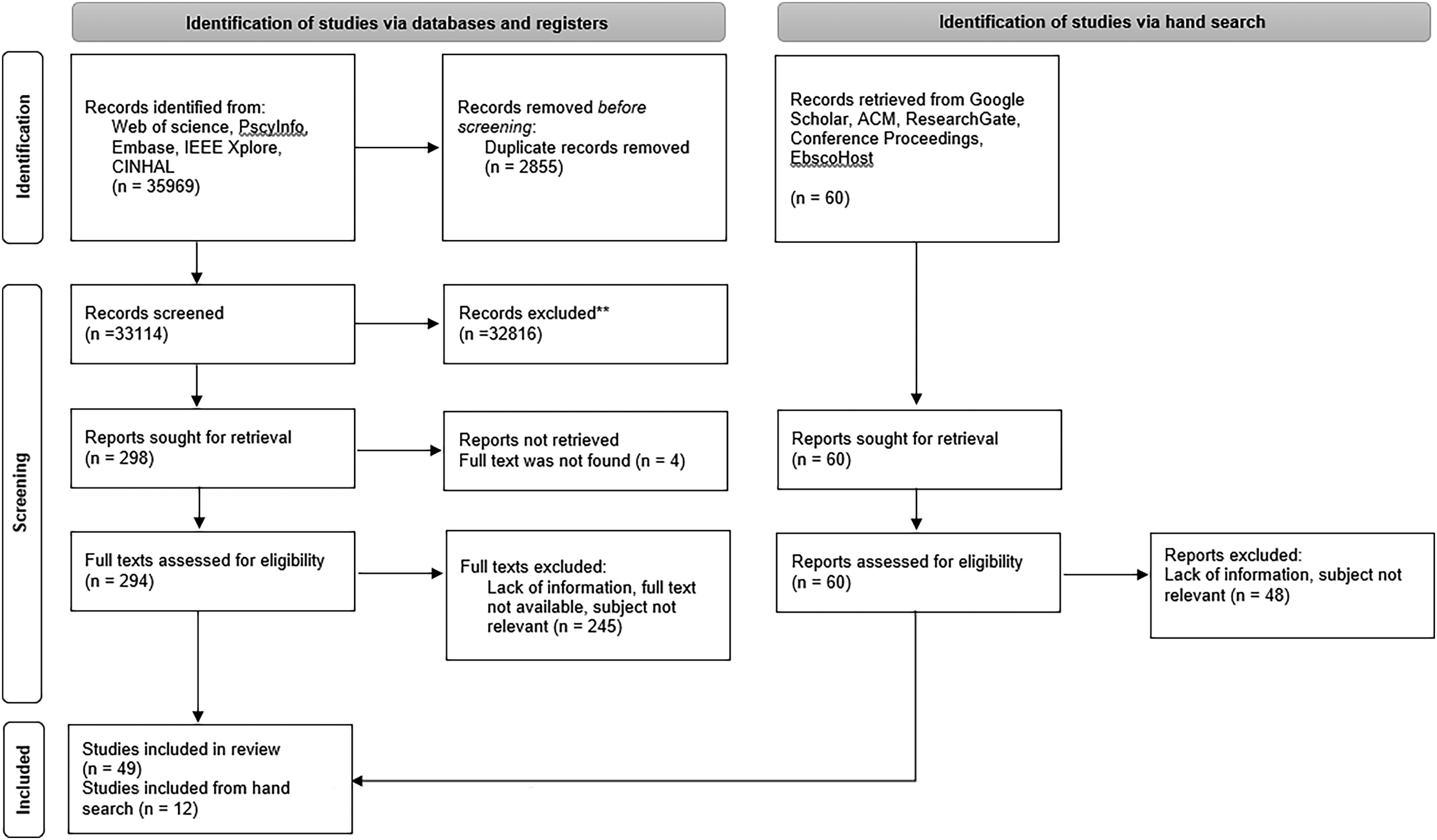
PRISMA Flow Diagram of the Scoping Review.
Inspired by the TTF model, the analysis identified several key factors influencing the implementation of new technologies. These factors, which impact either the creation of new job/task opportunities or the enhancement of existing conditions, are categorized into five main categories: task, technology, person, environment, and other factors. The following sections introduce these main categories along with their detailed components. Figure 2 provides a summary of these main and subcategories.
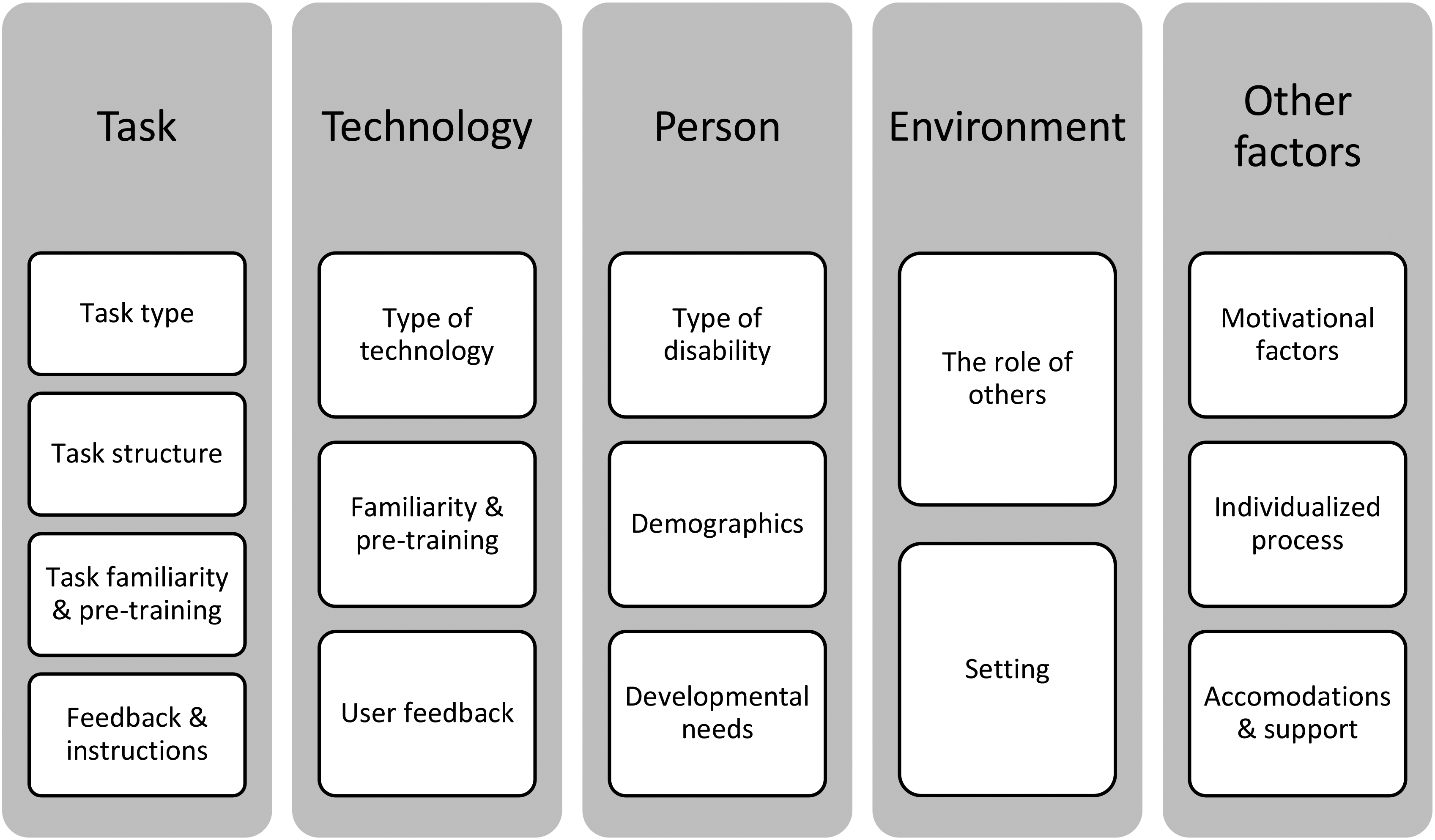
Overview of main categories and subcategories of factors identified in the included studies.
Task
a) Participants were enrolled in or had prior experience with vocational training programs (e.g., Helbig et al., 2023; Jakubow et al., 2024; Van Laarhoven et al., 2018), b) The studies were conducted in participants’ actual workplaces, where they performed their routine tasks (e.g., Wills et al., 2019) or based on the tasks that they already had experience doing them (e.g., (Potluri et al., 2018)), c) Tasks were new, but participants were given the opportunity to learn and practice them (either with or without the technology). For instance, participants in the study by Kuper et al. (Kuper et al., 2020) watched a short instructional video on the electrical wiring task before engaging in interactive VR training. Individual differences were also highlighted due to these trainings. For example, Heider et al.'s study demonstrated that some participants required additional time during training sessions to familiarize themselves with the tasks and effectively utilize the technologies (Heider et al., 2019), d) Tasks were entirely novel, and participants did not have the opportunity to practice them before the intervention (e.g., Kosch et al., 2019; Villante et al., 2021).
Technology
Physical systems include hardware technologies, robotics (e.g., Arboleda et al., 2020; Dalm et al., 2022) and systems containing multiple technologies (such as sensors and audios (G. E. Lancioni et al., 2024b)). Regarding hardware technologies, while some studies used iPads and tablets (e.g., Van Laarhoven et al., 2018; Villante et al., 2021; Wills et al., 2019), 3D printing (Bonnet de León et al., 2020), and head-mounted electronic magnification devices (HMDs) (Lussier-Dalpé et al., 2022), Chezan et al. (2020) provided alternative technologies tailored to participants’ individual needs. For example, to enhance comfort and usability, two participants were provided with wired earbud headsets featuring built-in microphones and volume control, as Bluetooth headsets were challenging to keep in place during tasks. Finally, a system is defined as the integration of multiple technologies to create a unified technological framework that facilitates task completion and addresses the diverse needs of target groups. The systems introduced in the included studies can be categorized into two groups: those specifically developed for research purposes and those implemented in participants’ real working environments to support their vocational inclusion. For instance, in the first category, Lancioni et al. (2023) used a Samsung Galaxy device with an Android operating system equipped with Alexa, along with additional technologies such as motion sensors, Bluetooth-enabled smart bulbs, and Bluetooth-based mini speakers. This integrated system was designed to support individuals with severe to profound intellectual disabilities by guiding them in object transportation, providing instructions, offering navigation cues, and delivering reinforcement. An example of the latter category is the study by Gauci (2020), in which participants described the technologies they use in their professional settings. One participant, for example, utilized a laptop with a keyboard and mousepad, a telephone, a headset, and a mobile phone, each ergonomically arranged to accommodate her limited left-hand mobility. This setup enabled her to efficiently multitask between typing, note-taking, and client communication.
Digital systems include software and mobile applications, VR, and VM. In interviews conducted by Creed (2018), professional artists with disabilities reported using various software, such as photoshop and illustrator, and mobile applications for their work. Other studies introduced new technologies to participants with different disabilities. For example, in the study by Ertas-Spantgar et al. (Ertas et al., 2021a), an app for accomplishing steps of a designated task (cooking) was used. Morse et al. (2021) also used an app for the video and audio-based instruction of preparing food items for their participants with developmental disabilities. As explained earlier, in the case of VR, Kuper et al. (2020) asked their participants with Autism Spectrum Disorder (ASD) to look at a video of wiring electronic “outlets” and practice the tasks using VR. The authors conclude an increased level of self-efficacy of the participants, however, some of the participants reported discomfort due to the “VR sickness” or the “overwhelming intensity of colors”. In the context of VM, different approaches were employed. Some studies have utilized self-modeling as a key strategy. For instance, Parson et al. (Parsons et al., 2022) implemented this approach to teach vocational and social skills to an adult with autism. The authors argue that such method specially was helpful as the videos and the success of the task had a motivational impact. Similarly, Jenssen and Van Stratton (2021), recorded instances of inappropriate workplace behaviors exhibited by their participant, allowing him to later review the footage and discuss it with his coach. On the other hand, some studies used strangers to the participants as a model to teach the task or the technology (e.g., Heider et al., 2019; Helbig et al., 2023). In studies such as Bross et al. (2020b), researchers involved different parties as models, including the participant's colleagues.
While participants expressed complaints and suggested improvements, they also provided positive feedback. For instance, in the study by Lussier-Dalpé et al. (2022), where a head-mounted magnification device was used, participants were highly satisfied with how the technology enhanced their experiences, particularly due to its flexible magnification feature. Similarly, in the study by Grijseels et al. (2023), participants using exoskeletons reported high levels of satisfaction, as the technology helped reduce physical strain, ultimately contributing to improved well-being and decreased pain. In the study by Teixeira and Alves (2021), participants were specifically satisfied the technologies were chosen based on their individual needs by the occupational therapists.
Person
Environment
Other Factors
The inclusion of participants’ opinions and preferences is categorized under the sub-section ‘motivational factors’. This approach aligns with the individualized nature of the process, as it reflects personal choices that impact task performance. For example, Kellems et al. (2018) chose the tasks based on a collective opinion of the participants, their teachers and parents. Walsh et al. (2020), evaluated the job preferences and skills of their participants for their study, concluding that participants performed better on the jobs that they preferred and that a strong preference for a specific job can outweigh the importance of matching skills. In this regard, Kuo et al. (2024), added tasks to their study, based on the participants’ wishes, giving them also the chance to choose the technology format such as a video or audio medium.
Summary of Inferable Evidence
The applicability of assessing the success or failure of implementing new technologies, primarily tailored to the needs of target groups, varied across studies due to differences in research aims and study designs. However, in many articles, particularly in experimental studies, authors provided evidence-based conclusions on the effectiveness and limitations of the implemented interventions. These findings were systematically analyzed in this review and categorized into three main areas: a) Person-related improvements; b) Vocational improvements; c) Recommendations.
Person-Related Improvements
One of the highlights of technologies were providing confidence (Bonnet de León et al., 2020; Dalm et al., 2022), independence and self-sufficiency for the participants to accomplish their vocational tasks. Several studies have observed deficiencies in essential skills among participants, particularly in problem-solving, social, and communication skills, which have negatively impacted their vocational experiences and job retention. These studies have highlighted the role of technology in enhancing these skills. For instance, in Chezan et al.'s study (2020), participants with ASD and ID faced challenges in engaging in conversations with their co-workers. Based on the individual needs of each participant, various technological tools, such as smartphones and headsets, were implemented to facilitate workplace communication. The authors concluded that the intervention was successful, as it enabled participants to initiate conversations with their co-workers. Similarly, in Helbig et al.'s study (2023), a combination of behavioral skills training and VM led to the acquisition and maintenance of social skills, including improvements in body language, conversation initiation, and seeking assistance in employment settings. Likewise, Stauch and Plavnick (2020) reported significant improvements in social skills following their VM-based intervention. Beyond social skill development, technological interventions also fostered self-sufficiency among participants. For example, in Gauci's study (2020), a participant expressed that, despite various challenges and accessibility barriers, technology enhanced their sense of independence. In the study by Jenssen and Van Stratton (2021), an individual with ASD was able to reduce disruptive behaviors, such as excessive vocalization, through an intervention involving videos and an application. This, in turn, led to increased independence, enabling the participant to complete workplace tasks more efficiently and accurately. Similarly, Van Laarhoven et al. (2018) found that the use of devices such as iPads and HP Slates facilitated task completion and promoted workplace autonomy.
Vocational Improvements
Similar to the improvement of social behaviors, several studies reported enhancements in task performance as a result of technological interventions. In experimental studies where participants completed tasks both before and after the interventions, the impact of technology was more pronounced. For instance, Bross et al. investigated the effects of VM on customer service tasks across multiple studies. In one of their studies (Bross et al., 2019), a participant demonstrated improved customer service skills in a real-world retail setting with the support of VM. These findings were replicated in another study (Bross et al., 2020b), where VM facilitated improvements in specific customer service interactions, such as greeting phrases. However, in contrast to these studies, Bross et al. (2020a), found that although VM initially enhanced a participant's performance during the intervention phase, the quality of performance declined to pre-intervention levels once the technology was removed. Notably, when workplace colleagues assumed the role of intervention providers, the participant's performance improved once again. In a study by Yandun et al. (2019) researchers introduced a “sound-based electronic goal” for athletes with visual impairments during football practice, comparing its effectiveness to traditional human callers providing feedback. The findings indicated that athletes exhibited greater accuracy in goal scoring with the electronic goal system (92%) compared to the human caller (82%). Another example is the implementation of an app for task step instructions, as demonstrated by Ertas et al. in several studies (Ertas-Spantgar et al., 2024; Ertas et al., 2021a; Müller et al., 2022). According to the conclusions drawn from these studies, the app enhanced task performance by reducing errors and increasing efficiency, particularly in multi-step activities such as cooking and workplace tasks. The app's adaptive support progressively promoted greater independence over time.
Observations and Recommendations
The analysis of the included articles identified the following aspects related to technologies:
Task- and technology-related considerations: It is important to note that the reviewed studies typically focused on a limited range of activities when assessing the effectiveness of the introduced technologies. Consequently, the findings may not be fully generalizable to more complex or diverse tasks. For example, in the study by Bross et al. (2019), participant expressed the need for additional video content addressing behavioral improvements in more intricate workplace scenarios. This aligns with the recommendation by Ertas et al. (F Ertas et al., 2021), who, in their study of a mobile app for task management, emphasized the importance of evaluating the app's effectiveness in the context of more complex tasks. Furthermore, this limitation in generalizability extends to tasks learned or performed in simulated or virtual environments. For instance, in the study by Jakubow et al. (2024), a participant who learned to prepare a grilled cheese sandwich in VR environment expressed hesitation and uncertainty when asked whether they felt confident using a real stove for cooking. Accessibility and usability of technologies: One of the key strengths of these studies was their focus on identifying the challenges faced by individuals with disabilities when using mainstream technologies, as well as exploring potential improvements. For instance, it was noted that individuals with visual impairments encounter significant accessibility barriers when interacting with conventional technologies (Creed, 2018). In the study by Crudden and Steverson (2022), some participants expressed concerns about the potential skills required to adapt to new technologies or features, fearing that these changes could jeopardize their employment or require them to seek new jobs. In the study by Dalm et al. (2022), participants expressed concerns that emerging technologies, such as robots, could replace them in the workplace. Additionally, they found interacting with the robot to be less user-friendly compared to participants without disabilities. Another challenge arises when new technologies are introduced in the workplace or existing technologies are updated, necessitating users to learn new features and integrate them with their assistive technologies. For example, a participant in the study by Gauci (2020) could no longer use her personalized telephone system after the office modem was replaced. However, it is important to note that these studies were conducted in close collaboration with the target groups, with a strong emphasis on soliciting feedback. This approach creates opportunities for enhancing the technologies in question. For example, in the study by Yandun et al. (2019), participants used an electronic target system for football shooting practice, with the authors adjusting features like noise levels based on participant feedback.
Discussion
By reviewing a broad range of studies spanning over more than five years, this scoping review examined the role of technology and key influencing factors in supporting the vocational inclusion of individuals with disabilities. The findings highlighted that the effective use of technology for vocational inclusion requires careful consideration of multiple factors. Individual needs are particularly significant for this group, alongside other critical elements such as task and technology suitability, the working environment, and the availability of job accommodations, including training and supportive workplaces. Collectively, these factors are essential for the successful implementation of technological solutions. Consistent with these findings, Wong et al. (2021), in a systematic review on job accommodations for employees with physical disabilities, identified similar factors, including the type and nature of work, person-related aspects such as disabilities and demographic characteristics, and workplace conditions. Furthermore, the factors identified in this scoping review align with the conclusion drawn by Müller et al. (2022), emphasizing that the successful implementation of technologies is achievable only when all stakeholders, including the target group themselves, their supervisors, colleagues, and personal assistants such as job coaches, are in agreement and working collaboratively. In the study by Vega-Córdova et al. (2020), participants with ID who served as co-researchers expressed mixed experiences regarding support from professionals. On one hand, they raised concerns about insufficient guidance. For instance, one co-researcher stated, “The information we receive (referring to the instructions of a task) is sometimes unclear.” On the other hand, participants expressed appreciation for the support they received from their team. For example, one co-researcher shared, “When I have had problems during the process (research), I have relied on my colleagues.” In this context, Grijseels et al. (2023) highlighted the importance of employer support in fostering the acceptance of new technologies in the workplace. Their study underscored the role of supervisors in cultivating a culture that accommodates the needs of employees with disabilities. Additionally, they emphasized the importance of testing new technologies to improve the working conditions of employees with disabilities. In the results of this review, one key finding within the “Environment” element emphasized the importance of individuals in the surroundings of people with disabilities, particularly in vocational settings. The review revealed the positive impact of involving supervisors, teachers, parents, caregivers, and job coaches throughout various stages, from task selection and motivational support to follow-ups and performance feedback. In this context, Schaap et al. based on interviews with employees with disabilities, confirmed that interactions between employees and their supervisors significantly influence sustainable employability. Additionally, Frogner et al. (2023), through field-based ethnographic research, demonstrated the critical role of supervisors in sheltered workshops in understanding the needs and abilities of sheltered workers.
When it comes to new technologies, both a bright and a dark side are often observed. On one hand, this review highlighted the positive impact of technology on vocational inclusion. Examples such as videos, apps, and various systems demonstrated how technology can facilitate work and improve workplace conditions for individuals with different needs or skill gaps. Consistent with the findings of this review, participants in the study by Iftimoaei and Achitei (2023) emphasized how technology can help employees with disabilities fully utilize their potential and skills. For instance, the use of tablets and communication apps could be beneficial for individuals with communication challenges, such as those with ASD. On the other hand, the studies also highlighted the dark side of digital advancements, particularly the barriers introduced by emerging technologies. Participants reported decreased task efficiency due to accessibility limitations and the rapid pace of technological change, which complicates adaptation (Creed, 2018; Dalm et al., 2022). In this regard, in interviews with disability experts, Jetha et al. (2023) identified significant challenges posed by inaccessible digital technologies, often resulting in the immediate exclusion of employees with disabilities. Similarly, a scoping review on digital accessibility for individuals with visual impairments and blindness highlighted the persistent accessibility barriers faced by these groups (Hamideh Kerdar et al., 2024).
It is essential to consider that the influential factors identified in this review are predominantly based on experimental studies. However, the dynamics of real-world work environments have been comparatively underexplored. Consequently, the findings of this review emphasize a critical research gap, underscoring the need for ethnographic, observational, and experimental studies conducted in authentic workplace settings. On one hand, future research should investigate how technological advancements can support individuals with disabilities in accessing and integrating into the job market. On the other hand, it is equally crucial to examine how such technologies are utilized to transform and improve workplace conditions for people with disabilities. For instance, studies such as Jenssen and Van Stratton's (2021) explored the use of new technologies to support participants in their workplace by teaching appropriate behaviors tailored to the specific work environment. The researchers designed interventions based on the participant's work routines and behavioral habits, illustrating a targeted approach to workplace adaptation ((Bross et al., 2020a; Bross et al., 2020b) are other examples of such studies). In this regard, providing individuals with access to digital tools and ensuring that training is aligned with the evolving job market could enhance participation, performance and inclusion. Future research should also examine how vocational rehabilitation programs can use technology to help with acquiring skills, supporting task adaptation and promoting autonomy in real-world work contexts.
This scoping review has its own limitations. First, the scope of the review was restricted to publications in English and German, thereby excluding potentially relevant studies published in other languages. Furthermore, although a considerable number of articles were reviewed, the inclusion criteria were confined to studies published between 2018 and 2022 and sourced from five databases. Publications from the period 2022 to 2024 were included only through hand-searching, which increases the likelihood that some relevant studies may have been inadvertently overlooked. Additionally, due to the nature of scoping reviews, while key themes and factors were identified, it was not possible to establish causal relationships or correlations among the elements examined. In this regard, while the various tactics identified in the analysis provide valuable insights for future research, they do not establish which approach or technology is most effective. For example, in case of VM, due to the inherent nature of scoping reviews, the analysis is limited in determining the relative effectiveness of different approaches taken by the authors, namely self-modeling or the use of familiar versus unfamiliar individuals as models. Lastly, one of the most significant methodological challenges encountered was the necessity of explicitly including specific technologies—such as tablets, smartphones, and videos—in the keyword development and search strategy. This requirement led to an extensive and complex list of keywords, which may have resulted in the inadvertent omission of studies involving technologies not explicitly named. This limitation underscores the importance of adopting standardized and unified keyword strategies within the field of disability studies to ensure greater comprehensiveness and consistency in literature retrieval.
Conclusion
By analyzing the studies included in this review, key elements of vocational inclusion in the context of new and innovative technologies were identified. Although the perspectives gathered are derived from a limited number of studies, they offer valuable insights into the critical factors that should be considered when implementing such technologies for vocational inclusion. The findings of this review establish a foundational body of knowledge for future research and practice, emphasizing that accessibility and user-friendliness are essential for individuals with diverse needs. Moreover, a comprehensive approach that accounts for environmental, task-related, and personal factors is necessary to ensure effective vocational inclusion.
Supplemental Material
sj-docx-1-jvr-10.1177_10522263251376943 - Supplemental material for Technological Interventions for Vocational Inclusion of Individuals with Disabilities: A Scoping Review
Supplemental material, sj-docx-1-jvr-10.1177_10522263251376943 for Technological Interventions for Vocational Inclusion of Individuals with Disabilities: A Scoping Review by Sara Hamideh Kerdar, Britta Marleen Kirchhoff, Lars Adolph and Liane Bächler in Journal of Vocational Rehabilitation
Footnotes
Acknowledgements
n/a.

Ethical Approval and Informed Consent Statements
Based on the nature of the study (i.e., a scoping review), it is not applicable.
Informed Consent
Based on the nature of the study (i.e., a scoping review), it is not applicable.
Funding
This study is part of a project of the Federal Institute for Occupational Safety and Health in Germany. No external funding was received.
Declaration of Conflicting Interests
The authors declared no potential conflicts of interest with respect to the research, authorship, and/or publication of this article.
Data Availability Statement
All data generated or analyzed during this study are included in this published article and its supplementary information file.
Supplemental Material
Supplemental material for this article is available online.
References
Supplementary Material
Please find the following supplemental material available below.
For Open Access articles published under a Creative Commons License, all supplemental material carries the same license as the article it is associated with.
For non-Open Access articles published, all supplemental material carries a non-exclusive license, and permission requests for re-use of supplemental material or any part of supplemental material shall be sent directly to the copyright owner as specified in the copyright notice associated with the article.
