




Abstract
Background
Persons with disabilities in South Africa experience challenges in accessing training and employment opportunities.
Objective
This study aimed to determine the role of specialised recruitment agencies by exploring activities they engage in and services provided to employers and job seekers with a disability.
Method
Twenty-five specialised recruitment agencies were interviewed through semi-structured individual telephonic interviews. A qualitative research design was employed. Data were transcribed verbatim and analysed thematically.
Findings
It was found that the SRAs assume four roles: recruitment, placement, trainer, and consultation. Within these roles, various services were provided, which were related to recruitment, placement, and support in equity compliance. These roles assumed by SRAs largely depended on the size of the organisation
Conclusion
The four roles collectively foster a supportive environment for employees with disabilities. Training dispels misconceptions, and pre- and post-employment support ensures access and accommodations. It is evident from agencies that assumed all four roles that successful placement of persons with disabilities was dependent on the provision of support within all four roles.
Keywords
Introduction
South Africa has one of the world's highest unemployment rates. In the first quarter of 2025, the unemployment rate for youth aged 15–34 was reported at 46.1% (Statistics South Africa, 2025). Notably, unemployment rates are significantly influenced by gender, educational attainment, and the presence of a disability. Although exact unemployment statistics are unknown for persons with disabilities, estimations are as high as 90% (Hanass-Hancock et al., 2023). Persons with disabilities account for 7,5% of the population in South Africa, which translates to about 3 million people (Statistics South Africa, 2014). This population with a disability continues to struggle to access services and participate in society and are considered the most marginalised members of society, with the majority living in a dire economic state (Statistics South Africa, 2025).
Efforts by the government to facilitate economic participation for persons with disabilities included introducing a quota system under the Employment Equity Act 55 of 1998, amended in 2015, which enforces a 2% representation of persons with disabilities in the private and public sectors. However, the latest report of the Commission for Employment Equity (CEE) (2023–2024) indicated that the representation of employees with disabilities remains at % and has not moved since the inception of the Act (Department of Labour, 2024). Despite these low figures, the CEE encourages employers to consult existing policies, such as the Code of Good Practice (The Code) (Department of Labour, 2004) and the Technical Assistance Guidelines (TAG) (Department of Labour, 2002), that guide the recruitment, retention, and accommodations of persons with disabilities in the workplace. It is, however, known that most employers have difficulty with the implementation of these strategies and guidelines (Hanass-Hancock et al., 2023).
With the observed failure by South African private companies and government departments to attain the set 2% employment quota, there was a pressing need for radical and more practical strategies for attracting candidates for job positions (National Council of and for Persons with Disabilities [NCPD], 2016).
Currently, limited dedicated and reliable employment services in South Africa offer recruitment, placement, and training services to persons with disabilities and employers. The government of South Africa for instance, has implemented initiatives in place where citizens seeking employment may seek employment opportunities. These initiatives include the South African Department of Employment and Labour e-employment services, where individuals seeking work can register and explore job opportunities. In addition, government departments may also access resumes that match advertised job positions on the sites.
While this initiative represents a positive step by the government toward enhancing employment access, the system remains largely inaccessible to individuals with low literacy levels and those with disabilities. Furthermore, many of the positions advertised require formal qualifications, thereby excluding a significant portion of the disability population who may not meet these criteria. As a result, despite the availability of such services, there is a notable lack of uptake by persons with disabilities, highlighting persistent structural and systemic barriers that limit their participation in the labour market.
Employers, more specifically from private companies, primarily seek the assistance of private-owned recruitment agencies to attract talent to match available job positions by offering them a commission for every successful placement. This led to the rapid establishment of independent private agencies offering disability employment services. Most of these were initiated and driven by persons with disabilities themselves (National Council of and for Persons with Disabilities, 2016).
The recruitment agents employed by these agencies are referred to in this study as specialised recruitment agents (SRAs). They comprise groups or organisations offering disability employment services such as recruitment, placement services, and disability sensitivity training. The recruitment agencies are mostly privately owned and thus not a part of the government's employment service agency. This means that these companies charge a fee for the talent sourcing and consultation services provided to organisations. SRAs operate at the intersection of the demand side, that is, employers seeking to diversify their workforce, and the supply side, which involves persons with disabilities seeking meaningful employment by facilitating inclusive hiring practices and aligning job opportunities with the unique skills and support needs of candidates with disabilities.
The SRAs act as intermediaries between persons with disabilities who are actively seeking employment and employers seeking to hire persons with disabilities. Although the South African government created a dedicated employment service portal to assist government departments with the recruitment and placement of persons with disabilities, employers from private companies rely on independent SRAs and non-profit disability organisations to access potential candidates. Government agencies also reportedly utilise private SRA services to attract talent (Maclean et al., 2024). However, there is limited empirical data on the frequency, scope, and impact of these services, as well as the strategies and models employed by SRAs in practice in South Africa.
This lack of clarity presents a critical gap in the literature, policy, and practice. Understanding the operational mechanisms and potential barriers as well as innovations of SRAs is essential to strengthen employment pathways for person with disabilities seeking employment. Furthermore, the data obtained may inform policy development, intersectoral collaboration, and funding priorities.
Therefore, this study aims to explore the roles, practices, and service delivery approaches of SRAs in supporting both employers and persons with disabilities seeking employment. By doing so, it seeks to contribute to evidence-based recommendations that enhance the effectiveness and inclusivity of disability employment support systems in South Africa. Moreover, that government run employment services are limited (Maclean et al., 2024).
Literature Review
Barriers to Employment of Persons with Disabilities
Global literature highlights multiple barriers and facilitators to the employment of persons with disabilities (Morwane et al., 2021; Vornholt et al., 2018). A key barrier is employers’ lack knowledge about different disabilities and the capabilities of employees with disabilities, often rooted in misconceptions and stereotypes. Employers may struggle to see beyond disability, and those employed often remain in entry-level positions with limited career growth (Khayatzadeh-Mahani et al., 2019). Awareness training is frequently recommended to address employer reluctance and dispel misinformation (Dreaver et al., 2020).
Employers often fear that accommodations for persons with disability are excessively costly and time-consuming (Kocman et al., 2018). However, research indicates that most accommodations are low-cost and can often be met with existing resources (Nicholas et al., 2019). These fears are compounded by legislation mandating accommodations, with potential fines for non-compliance (Fraser et al., 2011), leading some employers to avoid hiring persons with disabilities. Providing support and guidance can help clarify the actual costs and legal responsibilities involved (Khayatzadeh-Mahani et al., 2019).
Also, employers express concern over the lack of qualified candidates with disabilities (Bonaccio et al., 2020), claiming these individuals do not meet qualifications for the available employment opportunities (Bialik & Mhiri, 2022). However, research indicates that even qualified individuals with disabilities remain underrepresented, likely due to barriers in recruitment and interviews (Rana et al., 2022). Disability recruitment strategies help attract suitable candidates by removing access barriers and ensuring accommodations – particularly during recruitment and interviews – are in place (Rashid et al., 2020). SRAs play a vital role in developing and implementing these strategies within organisations (Morris et al., 2024).
Specialised Recruitment Agents
In high income countries (HICs) SRA's play a key role in matching persons with disabilities to suitable employment and supporting their career development (Nützi et al., 2017). They also assist employers in accessing a talent pool of potential candidates with disabilities (Nicholas et al., 2018), enhancing workforce diversity, fostering inclusive work environments, ensuring legal compliance, and recommending reasonable accommodations (Di Francesco et al., 2021). Given the employment barriers discussed earlier, SRAs serve as critical facilitators in promoting disability-inclusive employment.
The critical role for SRAs in facilitating employment of persons with disabilities is emphasized in various international reports (World Health Organisation & World Bank, 2011). For examples, an international e-discussion among stakeholders from both low and middle income (LMICs) and HICs revealed a demand-supply gap: employers struggled to find qualified candidates with disabilities, while persons with disabilities lacked access to employment information (Roggero et al., 2006). Intermediaries like SRAs were proposed as a key solution to bridge this gap.
Several studies reaffirm the role of SRAs in facilitating the employment of persons with disabilities. Houtenville and Kalargyrou (2012) reported that 320 employers from companies based in the United States indicated recruitment practices and challenges of employing persons with disabilities. Employers first require assistance in understanding legislation in employing persons with disabilities and also require disability training and support (Houtenville & Kalargyrou, 2012). Companies were more inclined to hire persons with disabilities when they had prior positive experiences. Similarly, a scoping review by Gewurtz and co-authors (2016) across HICs and LMICs revealed that providing employers with information on recruitment strategies and fostering relationships with SRAs significantly enhanced the hiring and retention of persons with disabilities (Gewurtz et al., 2016).
Erickson et al. (2014) examined strategies employed by US companies with high disability representation and found that 53% of over 600 human resource managers engaged SRAs, while 64% provided disability sensitivity training (Erickson et al., 2014). A comparable South African study involving 200 human resource managers similarly highlighted the role of SRAs, with 61% recommending collaboration with SRAs alongside the adoption of country-wide recruitment strategies (Wiggett-Barnard & Swartz, 2012).
Similarly, in HICs, employment services for persons with disabilities are well-established, involving vocational coaches, job coaches, placement offices, and vocational rehabilitation professionals. In contrast, LMICs lack such integration (Rana et al., 2022; Tripney et al., 2019), and the roles of SRAs in these contexts are rarely detailed. However, two studies from India offer some insight. One study examined five talent managers from companies providing disability employment services and identified key activities included such as peer networking, workplace exposure, and sensitisation training for both employees and employer (Kulkarni & Scullion, 2015).
In the second study, Kulkarni and Kote (2014) interviewed 12 placement officers from NGOs to explore the identities of SRAs. They identified four key roles: the trainer (delivering training), the marketer (promoting services and showcasing employees with disabilities), the partner (supporting retention through collaboration), and the facilitator (assisting with assistive technology and housing subsidies). SRAs typically fulfilled all four roles, each involving different levels of employer engagement (Kulkarni & Kote, 2014). Notably, they largely drove the placement process, independently assessing both candidate needs and required workplace accommodations.
There is limited but emerging evidence of SRA use in South Africa (Charles et al., 2023; Wiggett-Barnard & Swartz, 2012). McLean and colleagues (2024) reported successful collaboration between government agencies and SRAs, where effective communication with human resource managers led to successful placement and retention of employees with disabilities. however, the specific activities of SRAs remain unclear.
To explore these activities, two key questions were posed: What services do SRAs provide to job seekers with disabilities and potential employers? And, what roles do SRAs play in facilitating the successful employment of persons with disabilities?
Methods
Research Design
This study used a qualitative research design (Creswell & Poth, 2018), suitable for exploring the complex social, attitudinal, and systemic factors affecting the recruitment and placement of persons with disabilities. This design allowed for in-depth insight into the nuanced perspectives of recruitment practitioners serving both employers and job seekers with disabilities.
Participants
Expert sampling was used to recruit SRAs because the study required participants with specific expertise in disability-inclusive recruitment (Kumar, 2011). This approach ensured that the data collected was informed by individuals with direct experience and advanced knowledge in the field, thereby enhancing the credibility and relevance of the findings. A list of SRAs in South Africa was compiled through a Google search of top recruitment agencies offering disability employment services., as well as through disability advocacy groups. A total of 62 invitations were sent. However, 37 individuals did not meet the selection criteria as they were not directly involved with candidates and employers, holding roles such as director, disability advocate, or community worker. SRAs were selected based on their experience in recruiting and placing persons with disabilities. Participants were required to currently provide disability employment services and have at least 6 months of relevant experience. In total, 25 SRAs participated, all appointed by agencies specializing in disability employment. A large sample size was used to reflect the diversity of SRA roles across contexts and to ensure data saturation.
Table 1 provides a detailed overview of the SRAs. Twenty-three had experience placing individuals with various disabilities, while two focussed solely on individuals with visual disabilities. Four agencies were operated by individuals with disability. Twelve served only private companies, while the rest worked with both private and government sectors. Recruitment officer was the most common job title. Of the recruitment agencies, sixteen were privately owned, five were non-profit organisations (NPOs), and four were Disabled Persons’ Organisations (DPOs).
Profile of Specialised Recruitment Agents who Participated in the Study (N = 25).
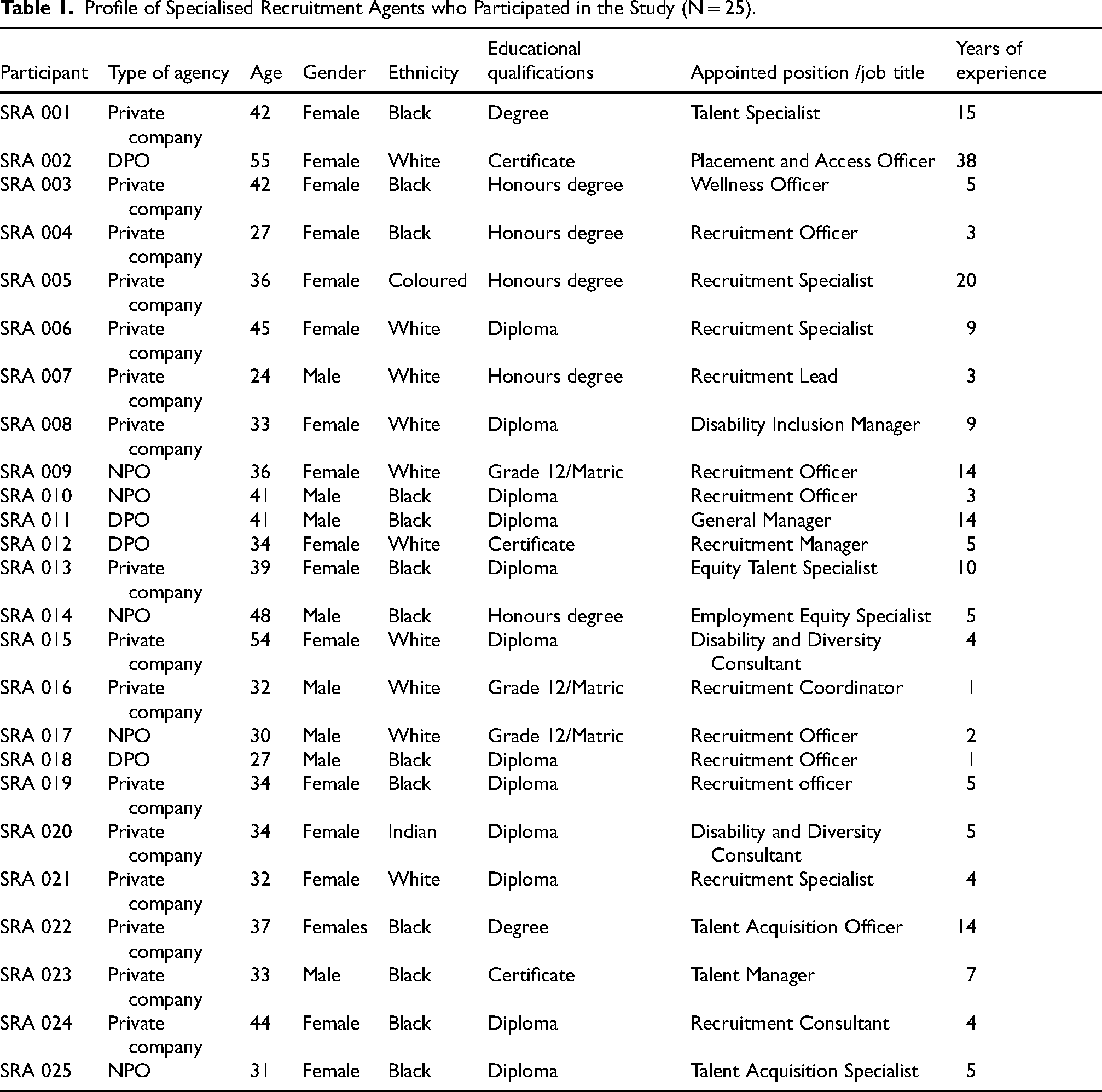
Becoming an SRA does not require any specific professional qualification, resulting in varied educational backgrounds, often unrelated to disability. Their experiences ranged from one to 38 years. Seven SRAs had over ten years of experience in disability employment services, all working for the largest, most diversified recruitment agencies.
The SRAs mainly operated in South Africa's major cities, Johannesburg and Pretoria (13), Durban (11), and Cape Town (9) - which are economic hubs with better infrastructure, and employment opportunities. They typically recruited candidates from nearby townships and surrounding areas. Some SRA worked for agencies with offices across multiple provinces.
In the South African context, recruitment agencies are not mandated to join or register with a professional body. Instead, they are primarily regulated under the Employment Services Act No. 4 of 2014 (Department of Labour, 2014), which requires registration with the Department of Labour through its Registrar of Private Employment Agencies. This framework ensures that agencies are accountable to operate ethically and lawfully, in accordance with regulations published in the Government Gazette (Department of Labour, 2014) as well as the terms of contractual agreements with clients, whether employers or persons with disabilities seeking employment. While agencies may voluntarily align with professional associations such as the South African Board for People Practices or the Association of Professional Staffing Companies to promote best practice and ethical guidelines, membership is not compulsory. In this study, only two SRAs were members of a professional body. Ultimately, all SRAs remain accountable to statutory authorities, clients, and legal frameworks through contractual obligations, service delivery expectations, and adherence to ethical recruitment practices.
SRAs utilised various methods to find suitable candidates, with the most common being contacting schools to inquire about their school leavers (n = 15) - though this was the least effective. Other techniques included word-of-mouth referrals (n = 7), social media platforms (n = 5) like WhatsAppTM and FacebookTM, outreach to disability rights organisations (n = 5), and newspaper advertisements (n = 4).
Data Collection and Analysis
Data was collected through qualitative methods using semi-structured telephonic interviews, following a strict protocol to ensure rigour and consistency (Elo et al., 2014). Each interview questions included 16 open-ended questions, lasted 45 to 60 min, and. was conducted on a pre-arranged date. Participants were requested to be in quiet, interruption-free space and to describe their roles and the services they provide to clients with disabilities and employers seeking talent with disabilities.
Telephonic interviews were audio recorded and transcribed verbatim by the first author, with a research assistant verifying accuracy. Inductive content analysis was used, following the three stages outlined by Elo and Kyngäs (2008), followed. Reported activities and tasks were coded, and similar codes were categorised together. Two coders independently coded the data and cross-checked each work. Disagreements were resolved through discussion. The initial categories reflected broad services, which were then grouped by common function into main categories (e.g., consultation role) that represented the roles of SRAs.
Ethical Considerations
Ethical approval was granted by the Research Ethics Committee of the Faculty of Humanities at the University of Pretoria (ID: 27511856, HUM032/0519). Participants were informed that participation was voluntary and could be withdrawn at any time. Verbal and written consent was obtained before interview, and anonymity was maintained though identification codes. All data was managed with strict confidentiality to protect participants’ privacy.
Results
Services Provided by Specialised Recruitment Agents
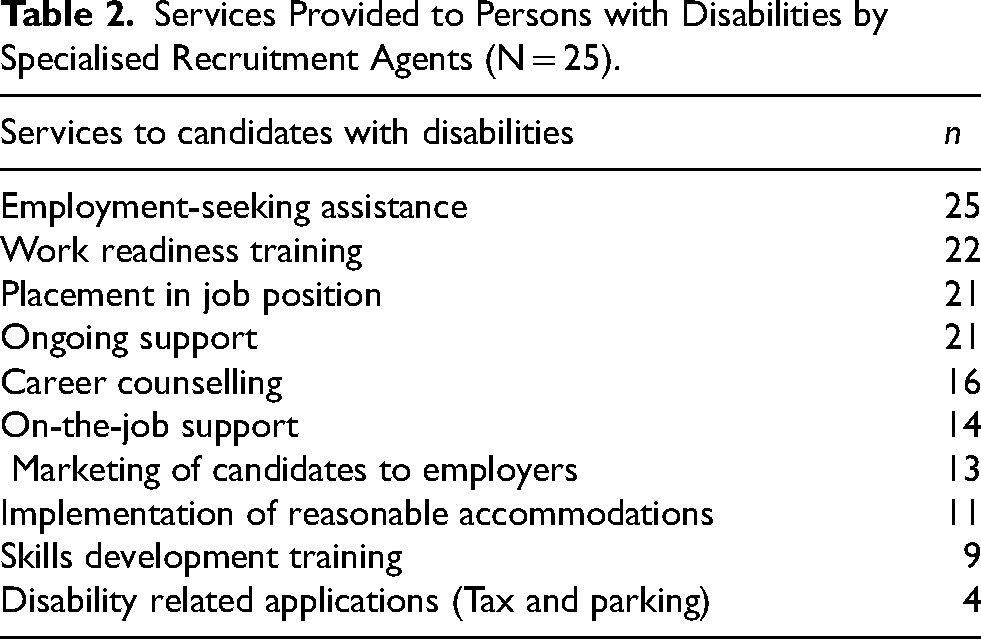
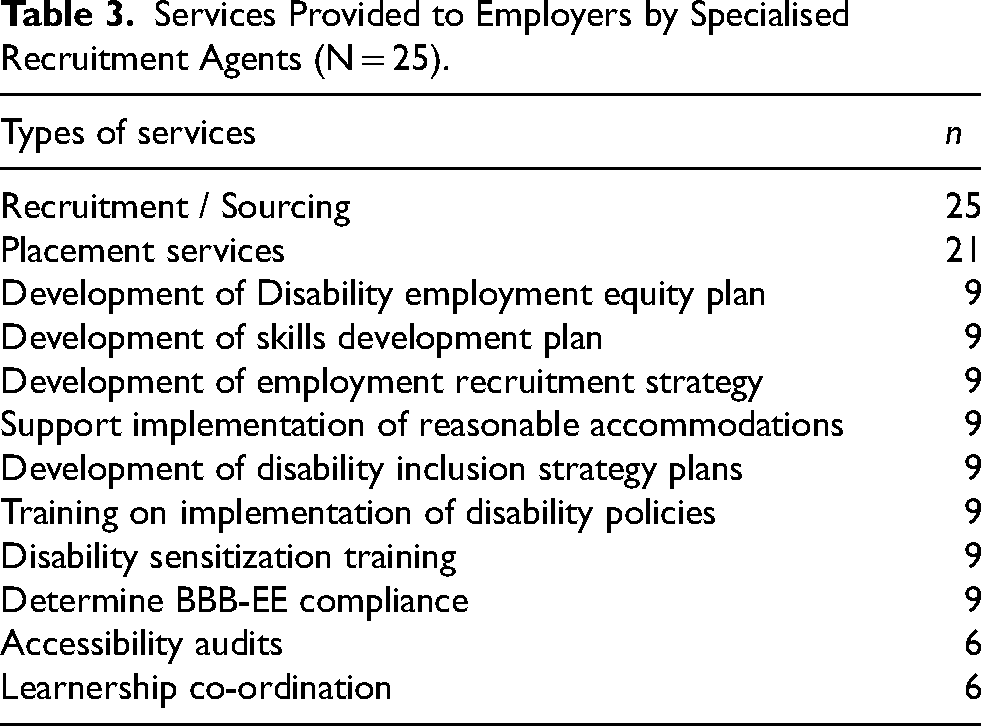
SRAs reported providing 10 types of services to individuals with diverse disabilities seeking job placement and 11 services to employers recruiting talent with disabilities. Not all SRAs offered every service, with larger agencies providing a wider range. These services are listed in Tables 2 and 3.
Services Provided to Persons with Disabilities by Specialised Recruitment Agents (N = 25).
Services Provided to Employers by Specialised Recruitment Agents (N = 25).
Services Provided to Candidates with Disabilities by Specialised Recruitment Agents
All SRAs offered employment-seeking support, including helping candidates with disabilities identify suitable jobs, secure interviews, accept offers, and finalize appointments. Key services also included work readiness training, job placement, and ongoing support. Table 2 outlines these services, with full role descriptions outlined in Appendix.
Interestingly, candidates were often unaware of career options, so SRAs typically began the recruitment process by providing, “career counselling in order to guide their job selection decision and determine their career options (SRA 017; 021).
Career counselling is followed by a work readiness program to help candidates understand job expectations. SRAs noted that most persons with disabilities need support in navigating workplace dynamics and employer interactions. “We offer a work readiness programme as part of our skill development training before placing candidates” (SRA 015).
In some cases, induction is provided after placement to help candidates understand job expectations, tasks, and workplace culture. It covers professional etiquette, problem-solving, and use of assistive technologies like computers. “Training is offered before they are placed in a job position to ensure they are prepared” (SRA 004).
Ongoing support is offered in the form of job coaching to the candidate with regular follow ups conducted telephonically and support provided when needed (SRA 016).”. Depending on the size of the agency and services provided, “support can be provided for weeks to allow candidates to settle in” (SRA 022).
Marketing candidates’ skills to employers’ boosts employment chances, though some are rejected for not meeting job requirements. “We load their profile on our database and then forward to companies to consider the suggested person” (SRA 019), and “We try to sell the candidate to the employer; we make them see the capabilities first before the disability” (SRA 017).
Some SRAs also assist with disability parking disks and tax rebate applications—services essential for many employed clients (SRA 002; 015).
Services Provided to Employers by Specialised Recruitment Agents
Twelve services for employers were identified, with recruitment being the primary one. Full role descriptions are in Appendix.
Employers reported challenges with sourcing talent with disabilities and hence approach SRAs to assist with recruiting and securing these candidates. “The companies approach us with a request for a candidate to place in available job positions. Specifications are offered, and we go and source for the candidate” (SRA 018) and “We first search for people already in our database and see if they meet the job requirements” (SRA 007).
SRAs assist employers in developing employment equity plans and recruitment strategies that outline how to meet equity targets by implementing affirmative action for hiring persons with disabilities. These plans include strategies to attract suitable candidates and retain them within the company: “It also includes evaluating the company's disability employment equity plan to see whether it is aligned with the stipulations of the EEA (1998) (SRA 023) and “Broad-Based Black Economic Empowerment (B-BBEE) scorecard” (SRA 001).
Several SRAs highlighted the importance of disability sensitisation and integration training, noting that they provide workshops for employers and employees to enhance understanding of disability (SRA 004, SRA 015), offer guidelines on managing persons with disabilities (SRA 011), and conduct disability equality training focused on workplace integration (SRA 001, SRA 012).
SRAs evaluate workplace accessibility, support reasonable accommodations, and coordinate learnership and skills development programs for employers. “We advise the client of reasonable accommodation required by each candidate; We support them with using the equipment (assistive technology) and software ordered” (SRA 021).
Services Offered by Specialised Recruitment Agents Grouped into Roles
The SRAs roles, based on services to candidates with disabilities and employers, were grouped into four categories: consultation, placement, support, and training. These roles can occur in any order. Figure 1 summarizes these services from Tables 2 and 3.
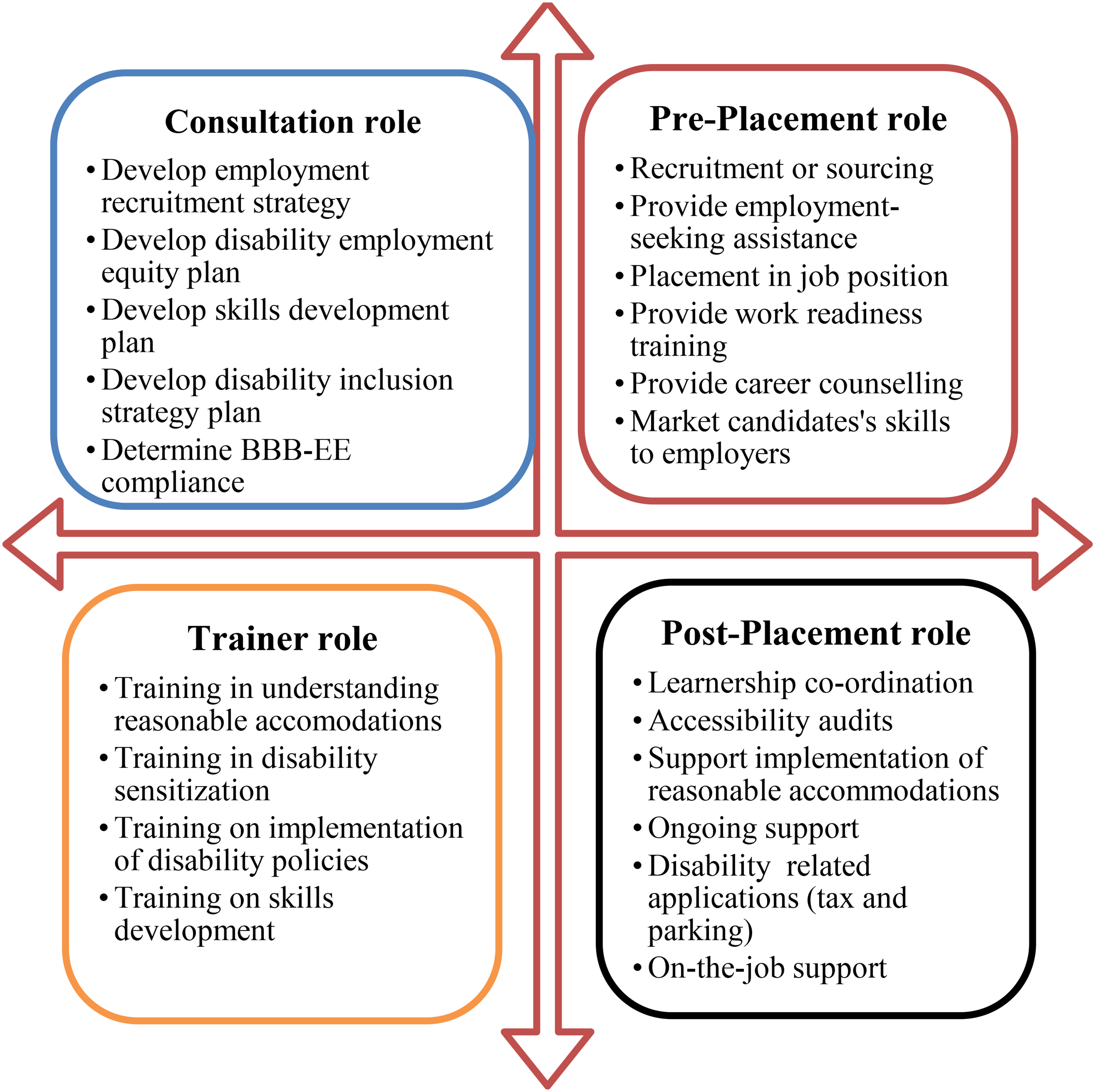
The pre-placement role involves recruiting and placing candidates, which is the main role of SRAs (Table 2). The post-placement role provides ongoing on-the-job support to employers and candidates. The trainer role delivers workshops on disability to employers and employees, distinct from the consultation role, which offers direct support to employers on disability inclusion.
Discussion
This study is the first of its kind to explore the roles of SRAs in Africa. This was determined by describing the services provided to both employers seeking to employ talent with disabilities and candidates with disabilities seeking employment. The results are compared against two similar studies conducted in India by Kulkarni and Kote (2014), which specifically explored the roles of SRAs, and by Kulkarni and Kote (2014), which described specific activities these SRAs engage in.
Current Practices of SRAs in South Africa
The findings in this study indicated that the SRAs provide a diverse range of services to their clients, persons with disabilities seeking employment opportunities, and employers scouting for talent with disabilities. They were also found to have diverse qualifications which were unrelated to disability. It was also unclear whether they had any formal disability-related training. In the literature, job coaches, placement officers, and any individual offering disability placement services often have a qualification background in disability, such as occupational therapy or special needs teachers (Jang et al., 2014). Notably, in other studies, this lack of training in disability manifests itself in the lack of knowledge about the needs of persons with disabilities seeking employment (Rogerro et al., 2006). Nonetheless, though the SRAs in this study lacked qualifications related to disability, they all reported experience engaging with individuals with diverse types of disabilities, which has equipped them with the necessary knowledge required during the placement process. Again, in this study, although the SRAs are not all part of a professional body, they appear to answer to a professional board that provides continued professional development training on a regular basis.
The SRAs in this study mainly served private companies and rarely government departments. These SRAs were primarily located in urban areas, away from most townships, towns, and rural areas. This positioning of SRA offices creates an access challenge, as most are based in urban towns. People with disabilities living in rural areas or on the outskirts of main cities face barriers to accessing their services. Transportation is a notable barrier in terms of costs and access for individuals who use a wheelchair for mobility. These findings are in line with what is in the literature, where inaccessible transportation hinders access to employment and training opportunities (Morwane et al., 2021; Rana et al., 2022).
SRAs in this study used different methods to identify and attract candidates with disabilities for job positions that employers have available. However, they find it difficult to determine the most effective strategy since each one has its own limitations. One method involved recruiting through schools, but teachers sometimes fail to recognise the support that school leavers can receive from SRAs and fail to recommend them accordingly. Additionally, many individuals with disabilities aren't aware of the services provided by SRAs, which further reduces their chances of accessing employment opportunities. Online recruitment (i.e., social media platforms and adverts online) is somewhat effective, but many candidates who apply don't meet the requirements specified in most job postings.
The SRAs in this study have placed emphasis on formal employment opportunities, as opposed to other forms of employment such as informal employment or voluntary work. Employment opportunities are primarily in the form of learnerships, which are short-term, low-paying programs subsidised by the government, and are part of the skill development plans. Unfortunately, these programs require a certain level of school education, which most candidates do not possess (Botha et al., 2023; Morwane, 2023).
Roles of Specialised Recruitment Agents
The study identified four roles - consultation, pre-placement, post-placement, and training that are essential for successfully placing individuals with disabilities. These roles closely align with the SRAs roles described in existing literature (Dutta et al., 2008; Jang et al., 2014; Kulkarni & Kote, 2014; Kulkarni & Scullion, 2015). Two of the identified roles, that is, the consultation and trainer roles, do not follow a linear pattern similar to the pre- and post-placement roles but may occur at any point in the placement process. From the data, it was indicative that services from all four roles significantly impact the retention of individuals with disabilities in employment. Therefore, all four roles are necessary to provide the required support for successful placement.
The pre-placement role, which occurs in the initial stages of employment, is limited to services such as matching and placement within a job position. In this role, the candidates are solely assisted with the job application, selection, and acceptance process. The candidates thus receive no further support beyond being assisted with accepting the job position. It is noteworthy that most of the SRAs assume the role of placement in this study. This can be attributed to factors such as the size of the organisation and the willingness of the employers to fund services beyond placement. The pre-placement role, which has similarities with the facilitator's role as described by Kulkarni and Kote (2014), presents some limitations.
Primarily, no support is provided in accessing assistive technology necessary for work, such as wheelchairs and communication devices. Moreover, there are no established collaborations with local rehabilitation professionals such as physiotherapists and occupational and speech-language therapists in the government sector (i.e., in government hospitals or schools). The lack of assistive technology necessary for employment and access to rehabilitation services affects participation and, consequently, access to employment opportunities. A seamless referral and collaborative system between SRAs and rehabilitation practitioners can significantly facilitate the successful placement of individuals with disabilities. Also, there is no support provided to facilitate the integration of the individual with a disability. Consequently, employers often fail to retain talent in employment.
The third role identified in the study is the post-placement role, in which services are provided to both employers and candidates with disabilities once placement in a job position has been finalised. These services are focused on guiding individual with disabilities in fulfilling their work requirement and identifying and implementing the accommodations required. Overall, it focuses on assimilating individuals with disabilities within a work environment. The support role is similar to that of the partner role described by Kulkarni and Kote (2014), where the SRA collaborates with the employer; one of the ways is through the provision of joint certification programmes. Yet, in this study, SRAs reported the involvement of most employers in training initiatives as minimal and not necessarily collaborative. Joint certification in this study was mentioned regarding the facilitation of learnerships, which only a few SRAs offered.
In practice, the duration and extent of these support services often depend on whether they are funded by the recruiting employers. Consequently, the provision of support varies considerably across agencies, with interventions ranging from short-term assistance of approximately one week to sustained programs extending beyond six months. The reviewed literature recommends that support be provided for at least six months and be terminated only when the candidate is fully integrated or reports that he/she no longer needs support (Jang et al., 2014; Kulkarni & Scullion, 2015). Some persons with disabilities, specifically those with a severe disability, may well require support over an extended period before being able to work independently.
Unfortunately, the reality is that due to financial restrictions and a lack of workforce, the SRAs in this study who offered support in the post-placement stage of the candidate indicated that they usually withdrew support after three to four weeks. In the case of SRAs who coordinate learnership programmes, the support provided may last considerably longer, that is, from 12 months to three years. Persons with disabilities in learnership positions mainly fare quite well due to support offered over an extended period of time. But, when they proceed to full-time employment, support is halted and thus limited. This contributes significantly to poor retention of persons with disabilities in employment. The literature alludes to the importance of guidance and support in assimilating employees with disabilities in employment (Bialik & Mhiri, 2022; Schutz et al., 2023)
The consultation role occurs at any stage during the placement process, although ideally, it should occur prior to the placement of candidates with disabilities in an organisation. In this role, a series of services are provided to ensure the retention of employees with disabilities within the organisation, such as support in the development and/or evaluation of a disability recruitment strategy. A disability recruitment strategy promotes diversity and inclusion within the workplace, fostering an environment where individuals of all abilities feel valued and respected. It helps create a culture that celebrates differences and recognises the unique perspectives and contributions that individuals with disabilities bring to the table. More importantly, a recruitment strategy ensures access to a pool of talent with disabilities who might have otherwise been disregarded. Furthermore, the development of a recruitment strategy ensures that companies have a plan for attracting talent that fits the organisation's culture and vision. Also, this strategy includes the creation of job positions that can accommodate diversity and the removal of access barriers within the organisation. Literature posits that an inclusive environment that embraces diversity allows employees with disabilities to feel valued and empowered (Rana et al., 2022).
In addition, in the consultation role, further support includes evaluating the company's disability employment equity plan to see whether it aligns with the stipulations of the Department of Labour (1998) and assessing the company's skills development plan and its B-BBEE scorecard (transformation agenda). The company's skills development plan usually also includes disability sensitivity training and training for prospective employees with disabilities on specific skills required for the job position.
The downside of the consultation role, however, is that it tends to, at times, lean towards an economic approach that focuses on productivity and profitability. For instance, job specifications may require a specific skill and qualification level, which the majority of individuals with disabilities may lack (Charles et al., 2023). Nevertheless, it is within the consultation role that SRAs also guide the creation of job positions that accommodate different skill levels and advise on the accommodations that may be required within these positions.
The fourth role identified in this study is the training role. In this role, services provided entail training on disability-related issues offered to both employers and employees within the organisation in the form of workshops and seminars. The training role is different from that described in the consultation role, where support is provided directly to the employer. The training workshops offered aim to provide a better understanding of employment legislation (e.g., the Department of Labour, 2002 and Department of Labour, 2004); to increase disability awareness by using practical examples (in the form of case studies); and to implement reasonable accommodations. The SRAs utilise persons with disabilities as case studies in these training programmes. This serves as a strategy for SRAs to market the candidates to potential employers, thereby creating awareness of the capability of candidates with disabilities. The training role complements the consultation role in that, following the provision of support in the development of a disability employment equity and recruitment strategy, active recruitment and placement of persons with disabilities is stimulated in companies. When comparing the roles described in Kulkarni and Kote (2014), this role is similar to two of their roles, trainer and marketer, in which training and connecting employers with candidates with disabilities occurs.
The four roles appear to work in complement to create a supportive working environment for individuals with disabilities. The consultation and training roles assist both employees and employers to better understand disability by dispelling misconceptions and negative attitudes, while also highlighting the valuable contributions individuals with disabilities bring to an organization. The pre- and post-employment roles further enhance this process by promoting access to job opportunities and ensuring necessary accommodations are available in a cost-effective manner for the employer. Importantly, the effectiveness of these roles depends on collaboration and communication between the employer, the SRAs, and the employee with a disability. This interpretation is consistent with existing literature, which identifies factors such as accessible hiring processes (Maclean et al., 2024), workplace support availability (Morris et al., 2024), and the elimination of workplace stigma (Rana et al., 2022) as facilitators of successful employment for people with disabilities.
Conclusion
The study aimed to explore the current practices of SRAs in a low and middle-income country. Individuals with disabilities continue to face challenges in finding and keeping jobs. The main barrier to employment is the prevailing attitudes and misconceptions about disability held by employers. SRAs play a critical role in facilitating the employment of persons with disabilities by supporting both employers and job seekers. The study identified four roles with distinct services provided in each. The services offered in these roles are essential for successful job placement and retention. For people with severe disabilities who may require varying levels of support, the services provided in all four roles are beneficial. However, it is unfortunate that most SRAs are limited in their role, mainly due to financial constraints. A collaboration between the SRAs and government agencies is imperative and could potentially elevate services available to job seekers with disabilities.
Strengths and Limitations of the Study
This study was exploratory in nature and provided an overview of the current practices of SRAs in a low- and middle-income country such as South Africa. However, there is limited data on how the SRAs collaborate with employers on the successful placement of an individual with a disability. Also, little is known about the efficacy of the disability awareness programmes provided by SRAs in eliminating stigma and facilitating the inclusion of persons with disabilities within the organisation they work in. Lastly, the views of individuals with complex disabilities who are in formal employment could be explored, and they could recount their experiences with working with SRAs and employers and state the barriers and facilitators of a successful placement process.
Future Recommendations
Given the exploratory nature of this study, future research should explore dynamics of collaboration between SRAs and employers in the placement of individuals with disabilities. In addition, a detailed investigation into the effectiveness of disability awareness programmes offered by SRAs in reducing workplace stigma and promoting inclusive organisational cultures is needed. Also, the perspectives of individuals with complex disabilities who have successfully entered formal employment remain underexplored. Future studies should therefore explore their experiences, particularly in relation to the role of SRAs and employers in navigating the placement process.
Most importantly, future studies should investigate the role and impact of government-run employment services in supporting the inclusion of persons with disabilities in the labour market. The extent to which these public employment services collaborate with SRAs, employers, and other stakeholders, and as well as their effectiveness in reaching and supporting job seekers with disabilities should be explored. This would contribute to a more comprehensive understanding of the employment ecosystem in South Africa and inform policy and practice for more inclusive employment placement strategies.
Footnotes
Acknowledgements
We would like to express our sincere appreciation to the specialised recruitment agents who participated in the study for their valuable contributions to this research.
Ethical Considerations
Ethical approval was granted by the Research Ethics Committee of the Faculty of Humanities at the University of Pretoria (ID: 27511856, HUM032/0519).
Informed Consent
Both verbal and written informed consent were obtained from all participants prior to the interviews. Anonymity and confidentiality were maintained through the use of identification codes.
Funding
The authors disclosed receipt of the following financial support for the research, authorship, and/or publication of this article: Financial assistance was obtained from the National Institute for the Humanities and Social Sciences (NIHSS) (SDS17/1187) and the National Research Foundation (NRF) (NFSG180510327750) for completion of project. possible.
Declaration of Conflicting Interests
The authors declared no potential conflicts of interest with respect to the research, authorship, and/or publication of this article.
