




Abstract
Background
There is a critical absence of standardized assessment tools necessary for comprehensively evaluating the skills and competencies of adults with autism to establish their employability profile and support them in the development of their socio-professional skills, in pre-employment transitions services (Pre-ETS).
Objective
To validate the ‘Work Rehabilitation and Adaptation Profile’ for adults with Autism Spectrum Disorder (WRAP-ASD) by assessing its psychometric properties and confirming its suitability across multiple Pre-ETS.
Method
A scale development and validation method was applied across day activity center, workshops, work programs and internships (n = 41 trainees with autism, n = 19 vocational rehabilitation professionals). Work functioning was observed with WRAP-ASD for motivation, attendance, peer relationships, communication, cognitive skills, rules/safety, independence, physical demand, tool/machinery handling, productivity/quality. WRAP-ASD is an Excel-based observation grid (≈3-h-over-2-weeks) with 59 items using 4-point scales from 3-almost always to 0-never.
Results
The WRAP-ASD demonstrated strong construct and convergent validities and high internal consistency. Predictive validity identified key items exclusive for each Pre-ETS. The WRAP-ASD was updated with 49 items, by removing 8 items, merging 4, and revising 4.
Conclusion
WRAP-ASD is sensitive to the different vocational needs and support requirements for Autism Levels 1–3. This is an added value over the six existing measurement tools.
Keywords
Introduction
This manuscript addresses the critical absence of standardized assessment tools necessary for comprehensively evaluating the skills and competencies of young adults with autism to establish their employability profile and support them in the development of their socio-professional skills in support and accompaniment services for integration and job retention. Considering this, the present study aims to validate the ‘Work Rehabilitation and Adaptation Profile for adults with Autism Spectrum Disorder’ (WRAP-ASD) (Vincent, 2024) by examining its psychometric properties, with particular attention to its suitability in diverse pre-employment transition services.
Young autistic adults with significant support needs can, after their schooling, continue their work training in support services for integration and retention in employment. To ensure the quality of the training offered to them, it is important to have a standardized instrument, recognized by vocational rehabilitation (VR) professionals. In fact, it is important to examine the realization of different dimensions of work such as motivation, attendance, peer relationships, communication, cognitive skills, rules, safety, independence, physical demands, tool and machine handling, productivity and quality.
Pre-employment transition services (Pre-ETS) for vocational and socio-professional assistance are typically delivered in community and public settings (Shattuck et al., 2020). In the U.S., Pre-ETS typically refers to services for transition-age youth and young adults. In Canada, three different pathways are possible for the Pre-ETS (Gouvernement du Québec, 2025). People with disabilities have access to services ranging from maintaining and developing autonomy to integrating and maintaining employment in a regular workplace (more for transition-age youth). They can also opt for a job integration and retention program run by the employment and social solidarity network (more for transition-age youth, or later, if a disability happened in the adulthood). They can opt for a social participation pathway, under the responsibility of the health and social services network (adults of all ages). It is here that an assessment tool like the WRAP for people for intellectual disability is used since 2012 to guide people to the appropriate service. It is worth noting that the Canadian strategy for the integration and employment of disabled people (Gouvernement du Québec, 2019) refer to a taxonomy that goes farther with “employment-related skills” and “support and accompaniment services for integration and job retention”. Pre-ETS (and employment-related skills services) are necessary to decrease low employment rates (∼22 to 46%) in different countries among individuals with ASD who typically have difficulties in social interactions and a lack of adequate resources for managing interpersonal relationships (Berrigan et al., 2023; Chan et al., 2018; Office for National Statistics, 2022; Roux et al., 2013; Statistics Canada, 2023; Wehman et al., 2020). As individuals with ASD transition from educational settings to the workforce, particularly upon reaching adulthood, they encounter significant obstacles (e.g., social communication, difficulty staying organized, managing their time and keeping track of their tasks, managing sensory particularities in a work environment) (Chan et al., 2018).
To help them overcome these obstacles, five Pre-ETS designed for transition-aged youth with disabilities were found through 26 peer-reviewed articles published between 2017 and 2023 (Rooney-Krona et al., 2024).
Poppen et al. (2024) conducted a survey to assess the provision and accessibility of school-based transition services aligned with Pre-ETS categories for students with disabilities. However, the study did not measure outcomes attributable to each service, emphasizing the need for tools that can evaluate the specific impacts of Pre-ETS. Whittenburg et al. (2024) examined the implementation of Pre-ETS under the US Workforce Innovation and Opportunity Act (n = 200 000 youth aged 14 to 27 in at least one Pre-ETS between 2017 and in 2020 (n = 207 848)) but similarly did not address the outcomes of each service individually. An observation grid entitled the ‘Work Rehabilitation and Adaptation Profile for adults with Autism Spectrum Disorder (WRAP-ASD)’ was pre-validated for its content and applicability (Vincent et al., 2023), in the Pre-ETS category “Instruction in self-advocacy”.
While these services are essential for providing support in areas such as career exploration, practical work experience, and self-advocacy, no standardized tool currently exists to evaluate their effectiveness (Poppen et al., 2024; Rooney-Krona et al., 2024; Taylor et al., 2022; Taylor & Whittenburg, 2024; Whittenburg et al., 2024).
Literature Review of Existing Assessment Tools
No further studies were found beyond those extracted by Mercure et al. (2025), who conducted a review of six databases and identified six standardized tools assessing work-related domains for individuals with autism: the Autism Work Skills Questionnaire (
Characteristics of the Six Tools Assessing pre-Employment Transition Services for People with Autism.
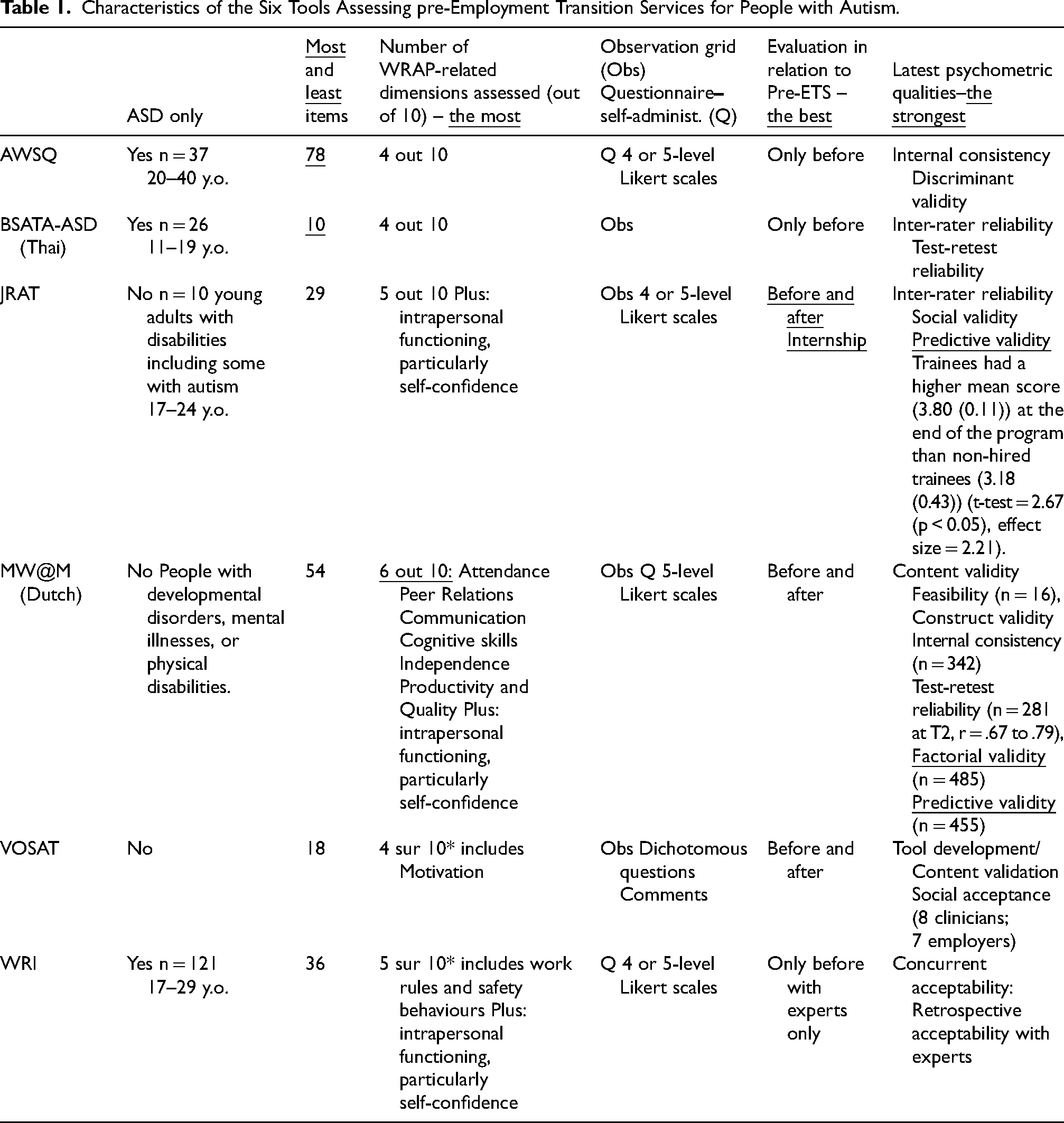
The Work Rehabilitation and Adaptation Profile for adults with Autism Spectrum Disorder (WRAP-ASD) is an observation grid that corroborates six domains with the MW©M and also supports the motivation domain evaluated by the VOSAT (Jiujias, 2020a, b) and the work rules and safety behaviours domains addressed in the WRI (Suarta et al., 2021). Considering that the WRAP-ASD is an existing tool that demonstrates more potential in work functioning than six tools inventoried for assessing vocational readiness; Considering that the WRAP-ASD proposes 4-level categorical scale designed for each item instead of general 4–5 Likert scales; considering that its feasibility has been demonstrated after being in a Pre-ETS setting (workshop), to evaluate construct and convergent validities of the WRAP-ASD considering the application of its 10 theoretical domains of work functioning across Pre-ETS, that are workshop, apprenticeships in work program and workplace internships, to assess WRAP-ASD's internal consistency, to determine WRAP-ASD's predictive validity, and to propose a more suitable version of the WRAP-ASD for VR professionals across workshop, apprenticeships in work program and workplace internships.
Methods
A scale development and validation method (Boateng et al., 2018), also labelled as psychometric design (Kline, 2015), was applied across a day activity center and three Pre-ETS (workshop, apprentisceships in work program, workplace internship). Key psychometric properties addressed are construct validity, convergent validity, internal consistency and predictive validity. The project was approved by the Centre Intégré Universitaire de Santé et Services Sociaux de la Capitale Nationale (CIUSSS-CN) Research and Ethics Committee (#2022-2378).
Target Population and Recruitment
The target population for this study consisted of adults with autism attending day activity centers (control group) and three Pre-ETS (intervention groups), ranging from 1 to 5 days per week. The Diagnostic and Statistical Manual of Mental Disorders (5th ed.; DSM–5; American Psychiatric Association, 2013) introduced three ASD levels of severity, that require different level of support.
The Observation Grid ‘Work Rehabilitation and Adaptation Profile’
The WRAP-ASD was developed in French in Canada (Vincent et al., 2023) and provides a more comprehensive assessment compared to the six tools presented in section 1.1. Content validation involved consensus among 17 experts from 10 disciplines. Its applicability was tested in a community organization workshop (a Pre-ETS corresponding to ‘Instruction in self-advocacy’), where three specialized educators observed five young adults with Level 2 autism requiring substantial support (Vincent et al., 2023; Mercure et al., 2025). Typically, the full assessment using the WRAP-ASD requires approximately three hours over two weeks to be completed. The WRAP-ASD is an Excel-based observational grid, meticulously designed to assess ✓ ✓ ✓ ✓ ✓ ✓ ✓ ✓ ✓ ✓
The tool contains 59 items, each further detailed by 413 explanatory boxes, which guide the evaluator in assessing specific aspects of work functioning (Vincent et al., 2023). Work functioning is rated using a 4-level scale: almost always (3), regularly (2), sometimes (1), or never (0). A fifth option, NA (not applicable), is available for instances where certain aspects of work functioning cannot be observed. The items address individual competencies, skills, attitudes, and behaviours, as well as tool usage, accommodations, and contextual factors in diverse work environments. Lower ratings are typically observed in day activity centers, while progressively higher ratings are noted in workshops, work programs, and internships (Tremblay et al., 2012).
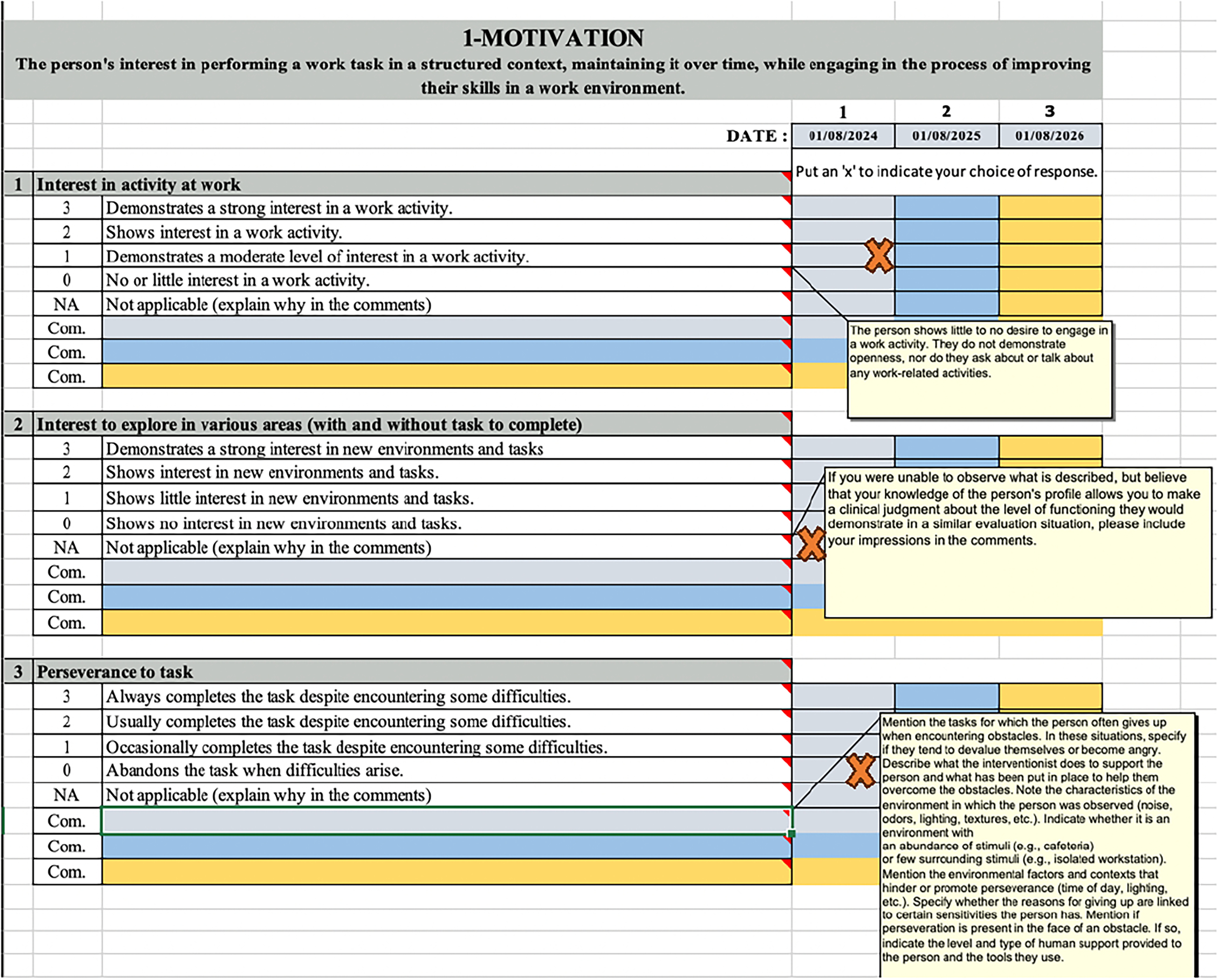
Extract from the Latest WRAP-ASD Translated into an English Version for the Domain ‘Motivation’. Legend: English version for the domain ‘Motivation’, presenting three revised items that can be observed on a 3, 2, 1, 0, or NA scale. The VR professional is required to add comments in Com. for the chosen level of notation. There are three possible observations in time (in grey, blue, orange). Red triangles, when clicked, provide further explanations in yellow boxes, as shown for item 1 at level 0, item 2 for NA, and item 3 for Com. For example, the triangle at level 0 of item 1 includes a five-line comment on attitudes. For items rated as NA, a note prompts the evaluator to specify observations from another context.
Recruitment and Sample Size
Recruitment was conducted by the research coordinator, who approached six resources. Ultimately, four responded, including the heads of Pre-ETS at three hospital centers and community organisation. These leaders directed their VR professionals to administer the WRAP-ASD assessment across four types of Pre-ETS settings: day activity centers, workshops, work programs, and workplace internships. Both staff and participants provided signed consent forms. The targeted sample size was 57, consistent with the cohort used in the PRACT-PDI study (Tremblay et al., 2012). This sample size, equivalent to 75% of the previous study's cohort, was deemed sufficient for questionnaire validation, reflecting a 25% decrease in participation among individuals with ASD.
Data Collection
The VR professionals collected data using the WRAP-ASD observation grid. They started by completing the first three tabs of the Excel-based assessment. The ‘Home’ tab captures essential details such as the assessment date, setting, and individual demographics (name, gender, age, diagnosis, and educational level). Moving to the ‘Presentation’ tab, they reviewed the table of contents, which outlines the evaluation process, instructions for administration, a ten-tab questionnaire covering different domains, results compilation, and a lexicon. The ‘Instructions’ tab guided VR professionals to observe the participant for a minimum of three months to ensure thorough assessment. They engaged with adults with ASD, observed behaviours, discussed assessment items, and consulted with relevant staff. Following the observational period, VR professionals rated their observations for all 59 assessment items and wrote comments (to specify the context, if not applicable, or if there is an issue with the item). Subsequently, they proceeded to the ‘Results and Recommendations’ tab, where graphical representations of assessment outcomes were compiled. The ‘Overall Result’ tab provided a concise summary of the individual's progress. Once completed, assessments were submitted to the research coordinator for further analysis and compilation.
Data Analysis
Descriptive statistics were initially computed for all sociodemographic data, theoretical domains, and individual items, including totals, means, frequencies, and standard deviations. To compare means across the four socio-professional services, a non-parametric analysis of variance (Kruskal-Wallis test) was employed at a significance level of 0.05. Construct validity
Results
Sociodemographic of Trainees and VR Professionals
Table 2 displays data from 41 trainees in day activity centers and three Pre-ETS, with a mean age of 33.2 ± 11.2 years, and 78% being male. Trainees had spent an average of 5.4 ± 6.2 years in their respective services, with those in the day activity centers having the longest duration (10.6 years) (p-value = 0.006). All trainees were diagnosed with autism; 30.6% had no other diagnosis, 36.1% had an intellectual disability, and 27.8% had two or more diagnoses. More details on education level are provided in Table 2. Of the 19 VR professionals who completed the WRAP-ASD, 84% were women, with an average of 10.1 years of experience working with autistic individuals and 3.8 years of experience working with the same participants. Additionally, 89.5% were specialized educators with college training (technical program), and 70.7% were employed by CIUSSS-CN. Table 2 also indicates the geographical locations of the Pre-ETS settings where the VR professionals were employed.
Sociodemographic Characteristics of Trainees in day Activity Center and pre-Employment Transition Services (n = 41) and of VR Professionals Conducting the Observations with the WRAP-ASD n = 19).
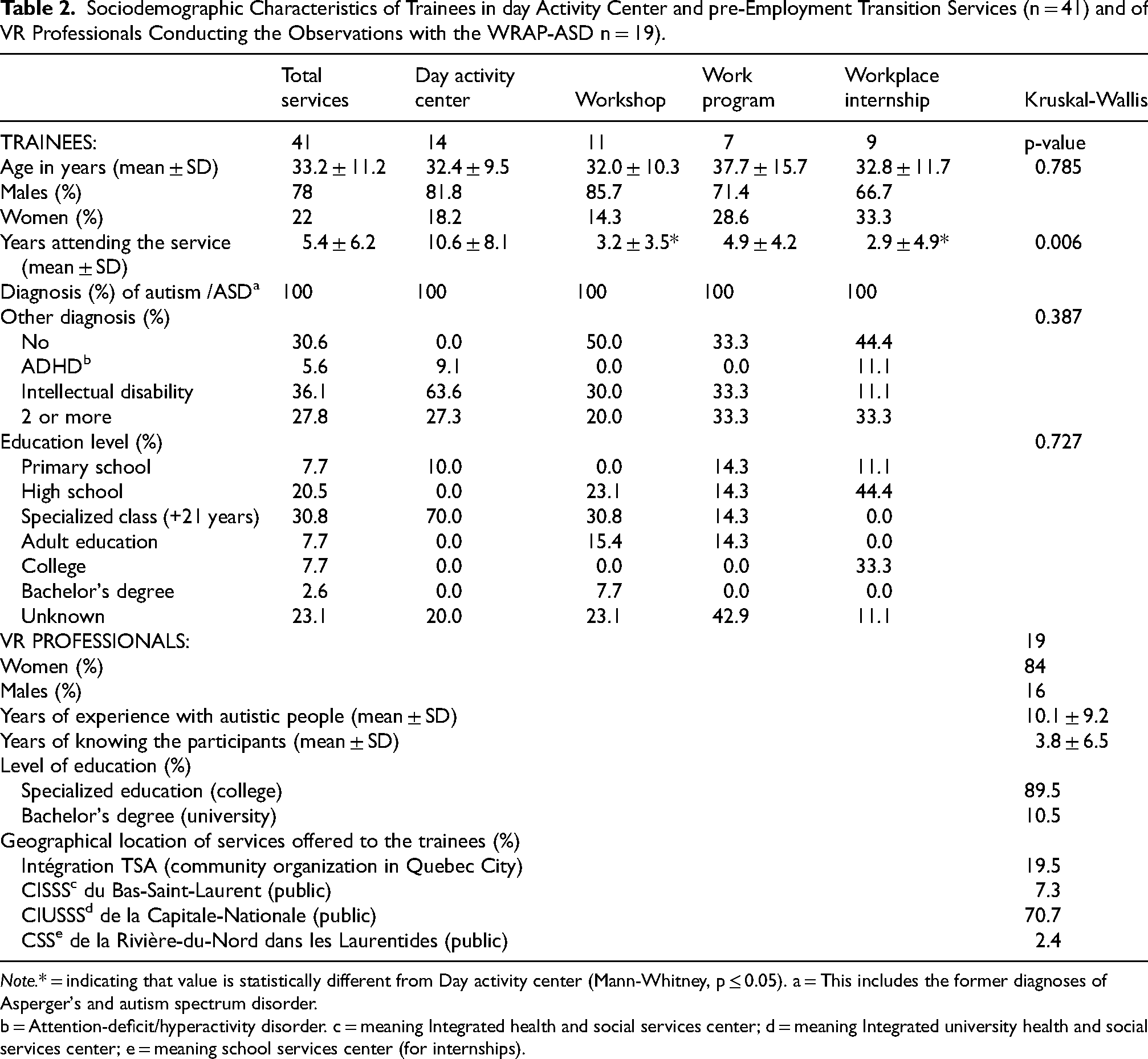
Note.* = indicating that value is statistically different from Day activity center (Mann-Whitney, p ≤ 0.05). a = This includes the former diagnoses of Asperger's and autism spectrum disorder.
b = Attention-deficit/hyperactivity disorder. c = meaning Integrated health and social services center; d = meaning Integrated university health and social services center; e = meaning school services center (for internships).
Construct and Convergent Validities
Construct validity is well established and supported by significant differences in the overall global ratings between the day activity center and the three Pre-ETS programs (p = 0.002) (see Table 3). These findings indicate that the WRAP-ASD effectively discriminates between different types of Pre-ETS. Specifically, the Mann-Whitney U test shows significant differences in autonomy between day activity centers and the three Pre-ETS programs in five domains: 2, 3, 4, 6, and 10 (0.001 < p < 0.037). Additionally, differences were found between day activity centers and specific Pre-ETS programs in domain 7 (workshop and workplace internship) and domain 9 (workshop). To further support these findings, there is a significant difference in global ratings between the day activity center (n = 11) and workplace internship (n = 9) (p < 0.001), with a large effect size (r = -0.765) (see Table 3), indicating a substantial divergence in global ratings between these settings. The convergence of the WRAP-ASD tool with its 10 domains is also notable, as ratings of some domains are not correlated with others, as shown in Figure 2. In green, seven out of the 10 domains exhibit strong interconnections, with correlation coefficients exceeding 0.700. Specifically, domains 4, 5, 6, 7, and 10 are highly interrelated.
Correlation Matrix of WRAP-ASD's 10 Domains with Correlation Coefficients Greater than 0.700 for Convergent Validity. Legend: Full green border circles: domains that highly correlate with each other. Dotted green border circles: domains that moderately correlate with each other. Full red border circles or circles 1, 2 and 9: domains that do not correlate with each other.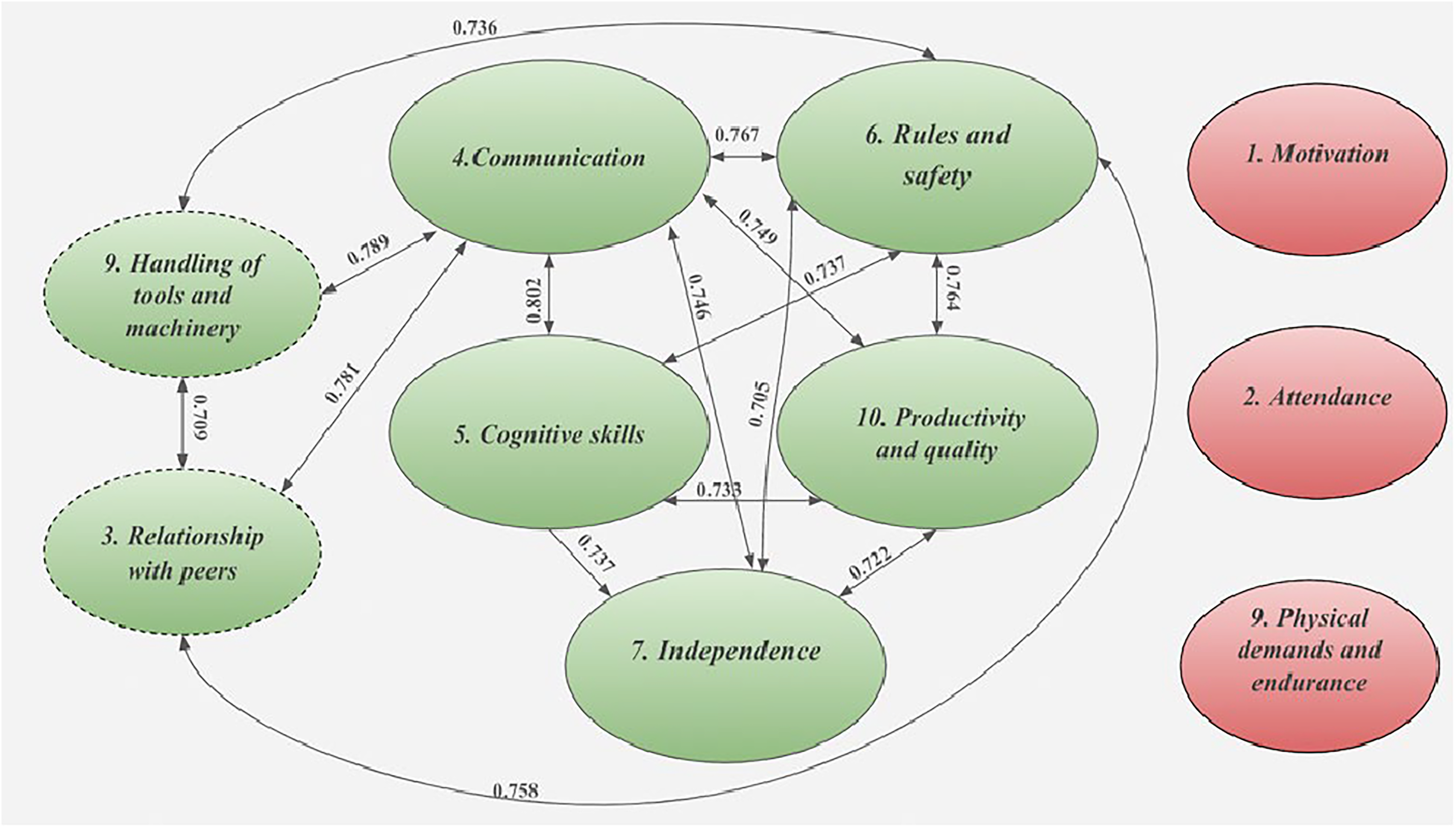
Construct and Convergent Validity Analysis of WRAP-ASD Ratings Across 10 Work Domains for Trainees in day Activity Center and pre-Employment Services Transition (n = 41).
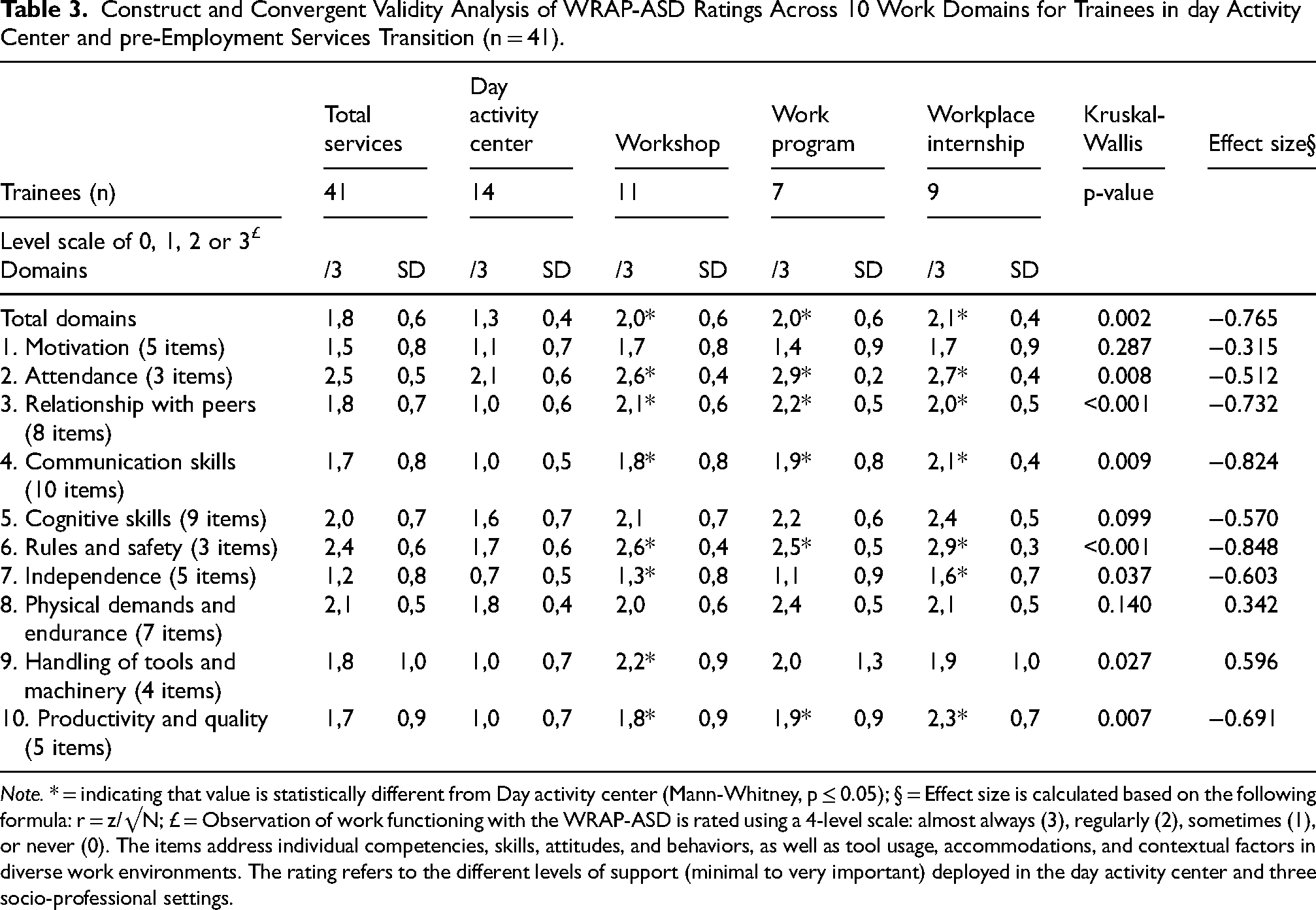
Note. * = indicating that value is statistically different from Day activity center (Mann-Whitney, p ≤ 0.05); § = Effect size is calculated based on the following formula: r = z/√N; £ = Observation of work functioning with the WRAP-ASD is rated using a 4-level scale: almost always (3), regularly (2), sometimes (1), or never (0). The items address individual competencies, skills, attitudes, and behaviors, as well as tool usage, accommodations, and contextual factors in diverse work environments. The rating refers to the different levels of support (minimal to very important) deployed in the day activity center and three socio-professional settings.
Internal Consistency
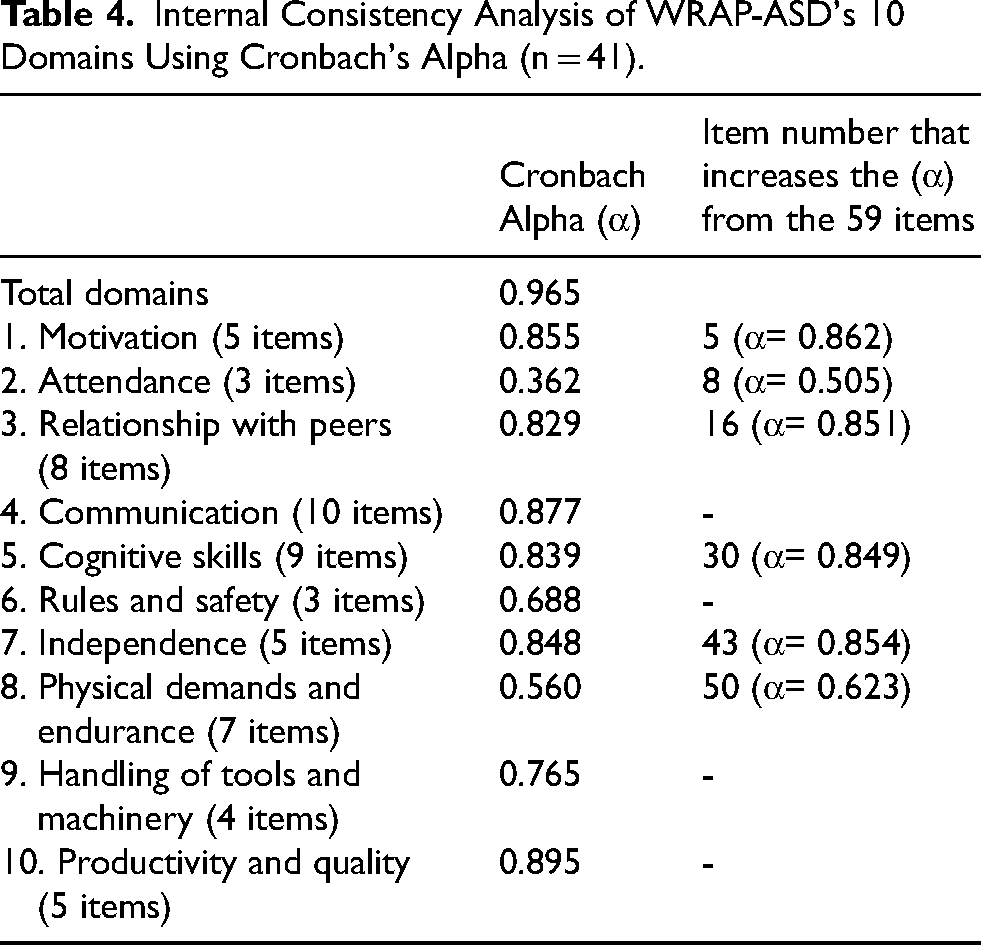
Internal consistency of the WRAP-ASD is very high, as evidenced by a Cronbach's alpha of 0.965 across all items, as well as within its ten domains (see Table 4), indicating item redundancy. Notably, six domains (1, 3, 4, 5, 7, 10) demonstrate strong internal consistency, with Cronbach's alpha values ranging from 0.829 to 0.895. However, two domains exhibited lower internal consistency: ‘2. Attendance’ (α = 0.362) and ‘8. Physical demands and endurance’ (α = 0.560). Upon removing six items (5, 8, 16, 30, 43, and 50), internal consistency slightly improved across certain domains, resulting in increased Cronbach's alpha values. Significant improvements were observed by removing item 8 from domain 2, increasing Cronbach's alpha from α = 0.362 to α = 0.505, and by removing item 50 from domain 8, increasing alpha from α = 0.560 to α = 0.623.
Internal Consistency Analysis of WRAP-ASD's 10 Domains Using Cronbach's Alpha (n = 41).
Predictive Validity
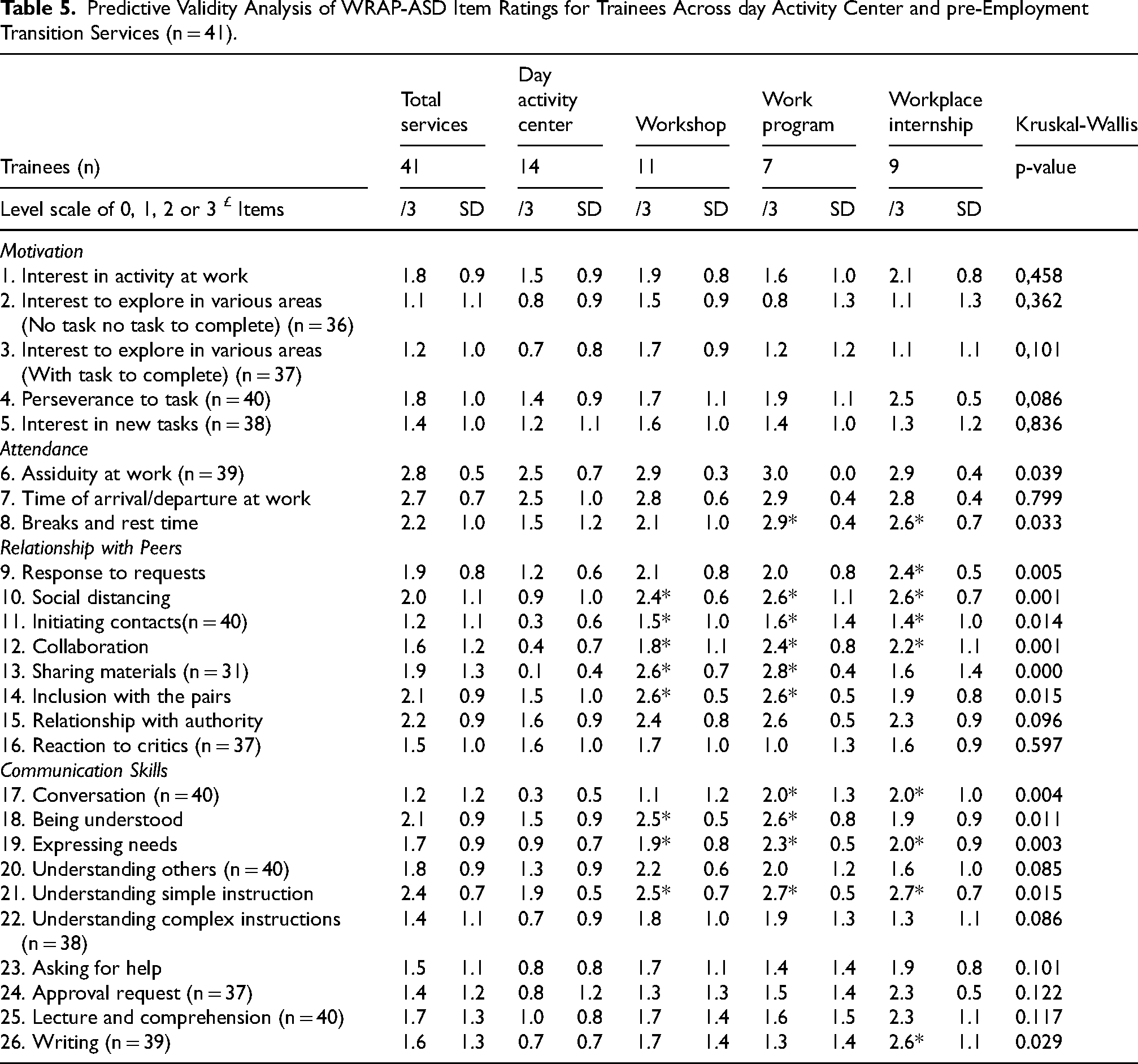
Predictive validity is moderate, as the Kruskal-Wallis's test identified only 26 out of 59 items as significant indicators for the three Pre-ETS programs (p-values = 0.001 to 0.033). These items are highlighted in grey in Table 5. In yellow, two specific items are identified as significant factors for differentiating outcomes across two Pre-ETS programs. Item 29, Capacity to focus on a task, in the workplace internship showed a score of 2.9, which is significantly higher than the other three settings (p ≤ 0.05). Item 44, Hours of work, in the work program settings showed a score of 2.3, significantly higher than in the workshop setting (p ≤ 0.05).
Predictive Validity Analysis of WRAP-ASD Item Ratings for Trainees Across day Activity Center and pre-Employment Transition Services (n = 41).
Predictive Validity Analysis of WRAP-ASD Item Ratings for Trainees Across day Activity Center and pre-Employment Transition Services (n = 41) (Continued).
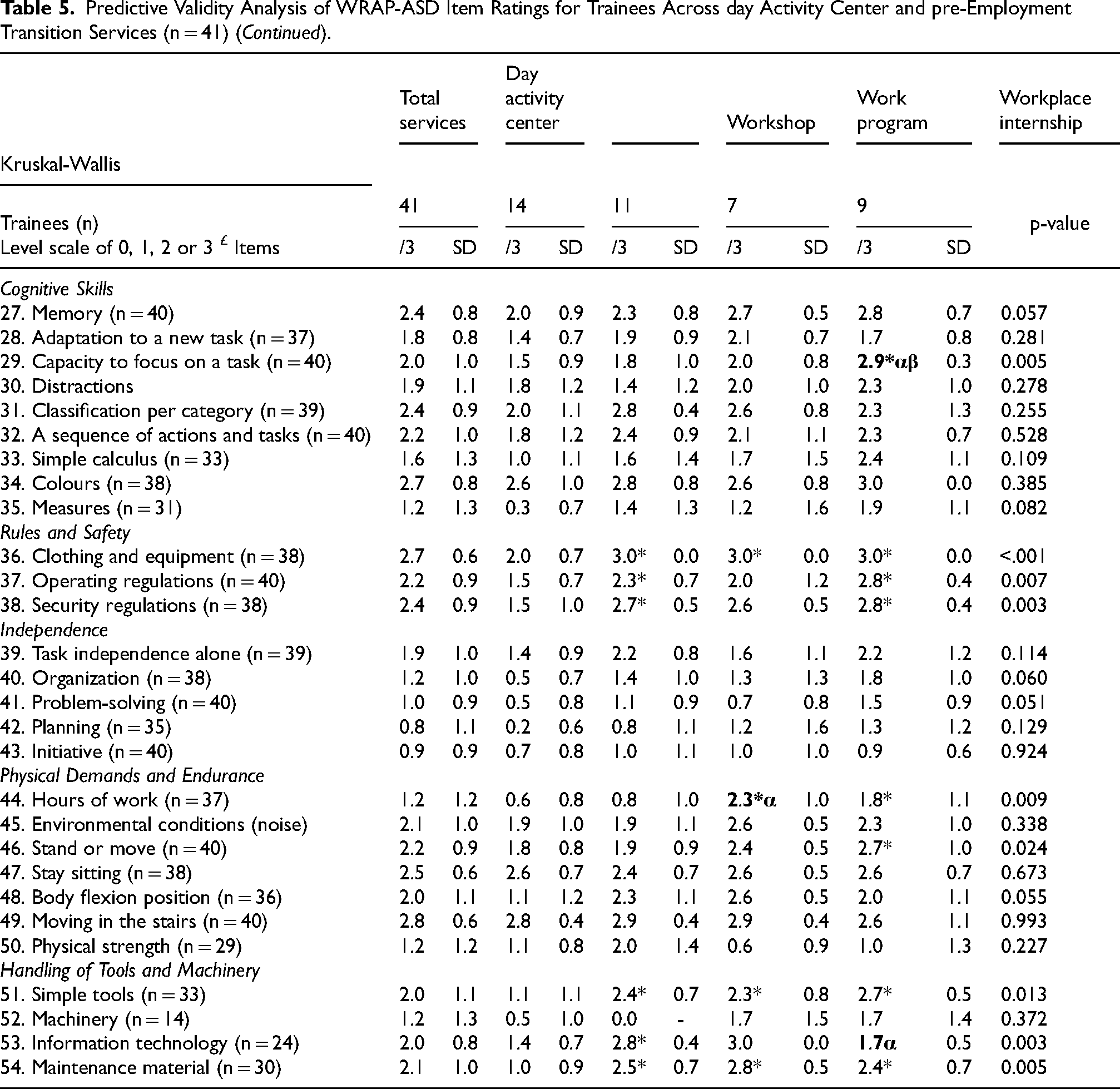
Predictive Validity Analysis of WRAP-ASD Item Ratings Across Trainees in day Activity Center and pre-Employment Transition Services (n = 41) (Continued).
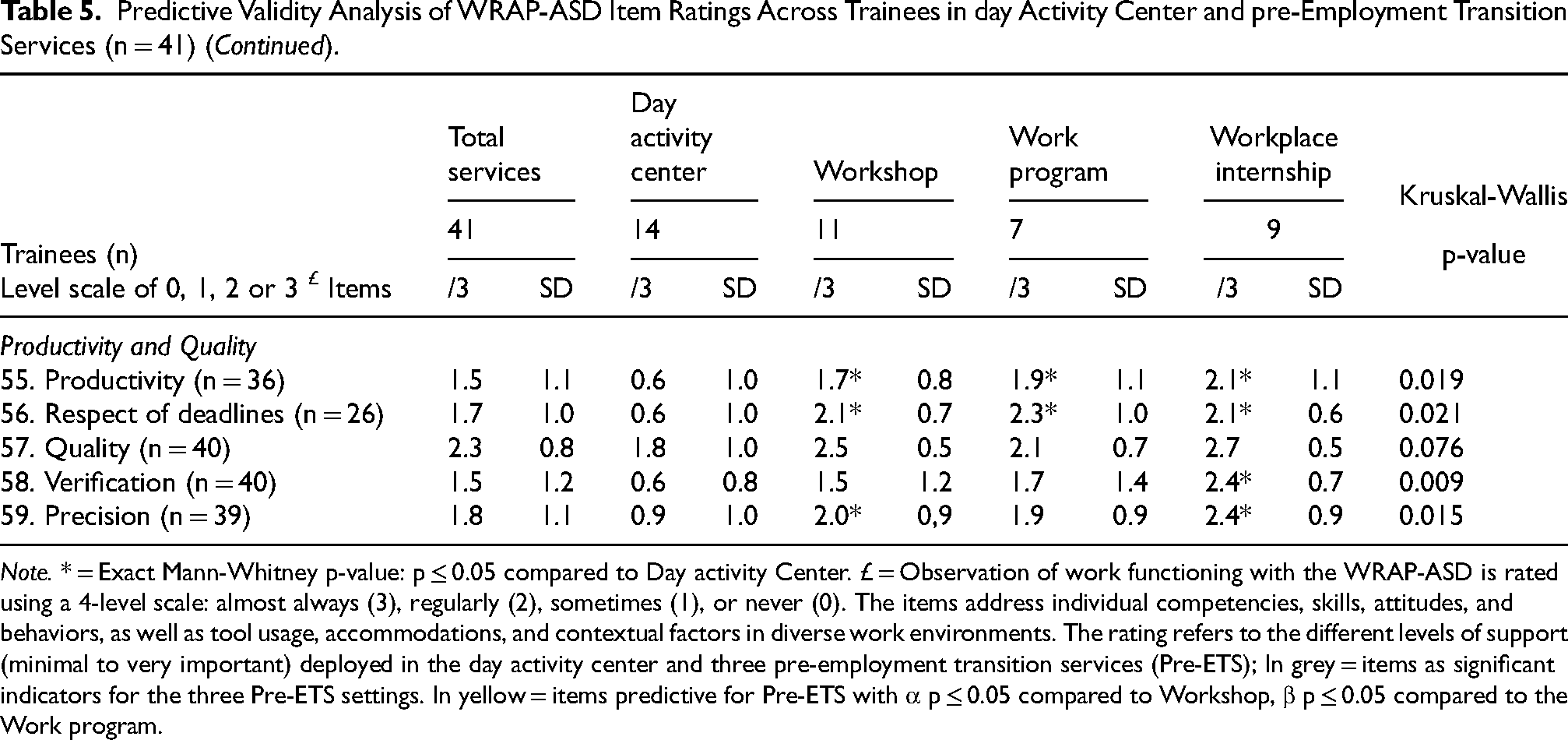
Note. * = Exact Mann-Whitney p-value: p ≤ 0.05 compared to Day activity Center. £ = Observation of work functioning with the WRAP-ASD is rated using a 4-level scale: almost always (3), regularly (2), sometimes (1), or never (0). The items address individual competencies, skills, attitudes, and behaviors, as well as tool usage, accommodations, and contextual factors in diverse work environments. The rating refers to the different levels of support (minimal to very important) deployed in the day activity center and three pre-employment transition services (Pre-ETS); In grey = items as significant indicators for the three Pre-ETS settings. In yellow = items predictive for Pre-ETS with α p ≤ 0.05 compared to Workshop, β p ≤ 0.05 compared to the Work program.
Proposition of a More Suitable Version of the WRAP-ASD for VR Professionals Across Multiple Pre-ETS
To make the WRAP-ASD more suitable for observations in Pre-ETS, we used previous statistics (3.2 to 3.4) and VR professionals’ written comments. From the 34 non-significant items (Kruskal-Wallis, p-value > 0.05), we first removed items 5, 16, 30, 43, and 50, as their deletion increased Cronbach's Alpha and they represented common traits among individuals with ASD, leading to similar score results across the three Pre-ETS. Secondly, we merged items “2 and 3” and “7 and 8,” as they consistently scored identically across all services and were redundant. Additionally, item 8 increased Cronbach's Alpha upon deletion, so merging them allowed for better integration in each domain. Thirdly, items 34, 47, and 49 were removed due to their lack of discriminatory power, as they consistently scored similarly across all services. Fourth, items 24, 29, 52, and 55 were refined to enhance their specificity, based on feedback from VR professionals and the expertise of the principal investigator (PI). Finally, the remaining 21 non-significant items (1, 4, 6, 15, 20, 22, 23, 25, 27, 28, 31, 32, 33, 35, 39, 40, 41, 42, 45, 48, 57) were maintained in their original form, as no feedback were received from VR professionals, and trends in the results suggest the non-significance between groups may be due to a relatively small sample size. Consequently, the validated tool comprises 10 fewer items than its experimental predecessor and includes 4 revised items. See Table 6 for the proposed validated tool. The Canadian French new version of the validated WRAP-ASD is accessible online.
An Updated 49-Items Version of the WRAP-ASD for VR Professionals Across Multiple pre-Employment Transition Services.
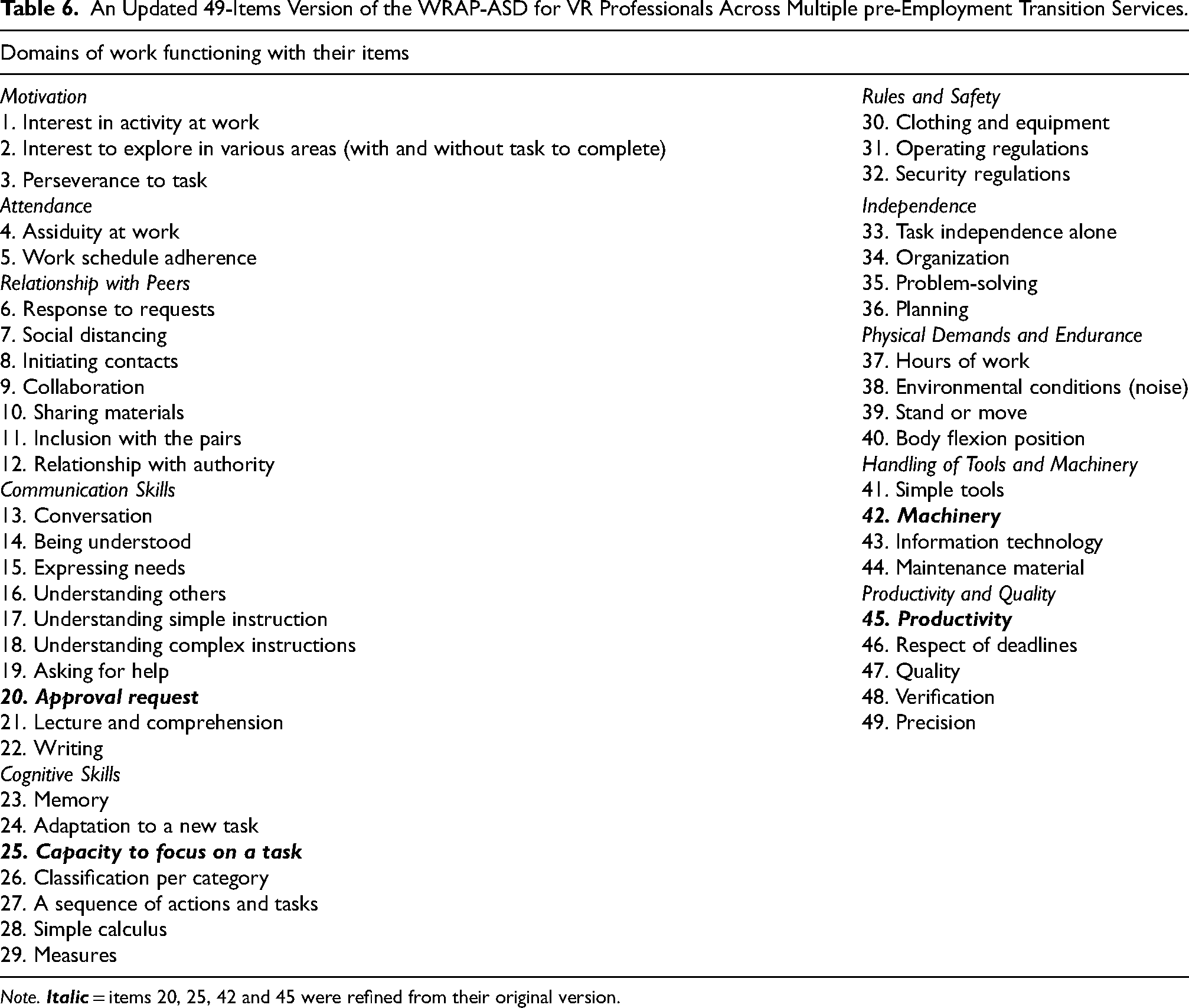
Note.
Discussion
All four objectives of this study have been reached. The psychometric properties of the WRAP-ASD have been clearly demonstrated with strong construct and convergent validities (obj.1), high internal consistency (obj.2), and moderate predictive validity (obj.3). These findings confirm the tool's ability to accurately assess work functioning in adults with ASD across various Pre-ETS settings, validating both its properties and its suitability for these contexts (obj.4). The significant distinctions observed between day activity centers and Pre-ETS programs further underscore the WRAP-ASD's sensitivity to the diverse vocational needs and support requirementsf for level 1 autism to level 3 autism (American Psychiatric Association, 2013). The second version of the ‘WRAP-ASD’ is more suitable for 19 VR professionals across three different Pre-ETS. Following their feedback, adjustments were made to clarify different items. This second version, with 49 items, is better suited to observe and support individuals with ASD in a variety of vocational contexts, reinforcing its practical value in Pre-ETS settings.
This assessment tool can be used in practice in day activities centers, workshops, apprenticeship in work programs and internships, to check if the trainees with autism are ready to change service, what they still need to improve and adjust the tools that are put in place for them. By generating a visual graph of the 10 areas of work functioning, the data collected in the WRAP-ASD provides an overall picture of the trainee, followed by the compilation of comments as recommendations. The observation form in EXCEL mode allows compilation on three different dates, which allows monitoring over time of the trainee's work skills. Results from the WRAP-ASD inform deeply services or supports to provide further.
Added Value Compared to Other Tools
Results demonstrated a significant advantage over the six other tools reviewed, because most of which were validated in only one Pre-ETS setting or not at all. For example, the AWSQ was validated in a single, unspecified Pre-ETS setting and targeted only high-functioning adults aged 18–39 (n = 46) who had completed secondary education and were either preparing for or already engaged in employment (Gal et al., 2013). Similarly, the BSATA-ASD, validated with a small sample (n = 6) of adolescents aged 12–19, focused only on two domains—work abilities and work attitudes—within a single context (Suchart et al., 2015), limiting its applicability compared to the WRAP-ASD's broader validation across multiple settings. The JRAT, validated during and after workplace internships within the Project SEARCH program, focused on predictive validity without explicitly assessing construct validity, and was validated with a small sample of 17–24-year-olds (n = 10) with various disabilities, including autism (Müller & VanGilder, 2014). The MW©M was validated before and during a Pre-ETS (specific context not mentioned) with a sample that included 23% of individuals with autism and ADHD (n = 141), but its focus remained on specific aspects like mental ability and work behavior (Van Ruitenbeek & Zijlstra, 2019), making the WRAP-ASD a more versatile tool. The VOSAT, designed for adults with cognitive disabilities, including autism, was validated primarily for workplace readiness skills in specific Pre-ETS settings, lacking the broad applicability seen in the WRAP-ASD (Jiujias, 2020a, b). Lastly, the WRI, validated with autistic individuals aged 17–29 (n = 121) prior to their integration into a Pre-ETS, concentrated on domains like responsibility and communication, but its validation was limited to a single pre-employment context (Wittevrongel et al., 2021), unlike the WRAP-ASD's validation across multiple settings.
Interestingly the p
In contrast, the predictive validity of other tools is limited. For example, JRAT could distinguish only between two groups—those who were highly trained and those who were not—with significantly higher scores observed among hired versus non-hired trainees (3.80 vs. 3.18, p < 0.05) (Müller & VanGilder, 2014). Similarly, the MWCM focused on specific outcomes such as work accuracy and pace but only explained a small portion of the variance in work behavior (R² = 0.165–0.247) across a limited number of dimensions, unlike the WRAP-ASD's broader coverage of 11 domains. Thus, while both the JRAT and MWCM show some predictive validity, their applicability is more restricted compared to the WRAP-ASD's comprehensive assessment across multiple settings.
Strengths and Limitations
Several strengths of our study lie in its internal validity, largely due to adherence to the method of developing and validating scales (Boateng et al., 2018). Objectivity and consistency are maintained through pre-established procedures for recruitment (FD), independent evaluations by 19 VR professionals, and independent analysis (FD, CZ). Regarding the observation grid sent to VR professionals, the wording of the items and explanatory notes encourages assessors to consider the tools available to the trainee, the adaptation of the environment, and the structural arrangements for carrying out the work tasks. However, one drawback was the inability to perform factor analysis due to an insufficient number of participants per Pre-ETS setting, which may affect the robustness of the tool's structural validation. Additionally, while the tool's high Cronbach's alpha, exceeding 0.95, indicates strong internal consistency, it raises concerns about potential redundancy among items. This redundancy can lead to a ceiling effect, where the tool measures a narrow range of constructs, potentially diminishing its overall validity (Panayides, 2013). One limitation of our study is its external validity, as the results are generalizable only to day activity centers, workshops, work programs, and internships in three geographical regions of the province of Quebec, Canada. Furthermore, the tool is currently validated only in French, limiting its accessibility to non-French speakers.
Future Research
A future study should address the factor analysis consideration (insufficient number of participants per Pre-ETS setting) by expanding the participant pool in a cross-sectional study and enhancing the tool's broader applicability (Kyriazos & Stalikas, 2018) and relevance across diverse Pre-ETS. To further assess the tool's test-retest reliability and sensitivity to change over time, a future observational and longitudinal study should be conducted across different pre-ETS types (XO3XO9, X = adapted working in Pre-ETS, O = observation) (Boateng et al., 2018). Observations at three and nine months would allow for the evaluation of the tool's ability to capture changes in individuals’ skills and competencies, as well as track vocational progress and outcomes. Also, in countries where Pre-ETS programs are offered but where French is not the primary language, future cross-cultural validations of the WRAP-ASD should be carried out, to ensure its broader applicability.
Conclusion
The WRAP-ASD is a pioneering and essential tool for assessing work functioning in individuals with autism, marking a significant advancement in the field of vocational rehabilitation. As the first tool in French specifically designed for this population, it addresses a long-standing gap by offering a standardized, psychometrically validated method for evaluating vocational progress across three Pre-ETS settings. Its comprehensive scope and rigorous validation make it uniquely suited to meet the complex needs of individuals with ASD in workplace environments.
Our study confirmed four key properties of the WRAP-ASD: strong construct and convergent validities, high internal consistency, and moderate predictive validity, resulting in a refined tool consisting of 49 items. These items cover a broad range of 10 theoretical domains of work functioning, while also accounting for support levels and environmental factors, aspects often overlooked by other tools. Its adaptability to multiple Pre-ETS environments, along with its Excel-based format, streamlines data collection and reporting, making it a practical and versatile tool for vocational professionals.
By directly addressing the lack of standardized assessments within Pre-ETS services, the WRAP-ASD represents a major step forward in improving employment outcomes for individuals with ASD. Its development fills a critical need for a tool that evaluates vocational readiness and work functioning, paving the way for more individuals to transition successfully into competitive employment. As the tool evolves, further efforts to enhance its cultural adaptability and integrate environmental factors will broaden its relevance and impact.
The WRAP-ASD is more than just an assessment tool—it has the potential to dismantle many barriers faced by individuals with autism as they navigate the workforce. Its structured, evidence-based approach enables vocational rehabilitation professionals to provide tailored support, empowering individuals to meet workforce demands with confidence. Looking ahead, continued refinement of the WRAP-ASD, particularly in expanding its cultural and environmental considerations, will cement its role as an indispensable resource for vocational rehabilitation. In the broader context of improving Pre-ETS services, this tool is poised to play a crucial role in breaking down employment barriers, equipping individuals with autism with the skills and confidence needed to succeed.
Footnotes
Acknowledgments
The authors of this article would like to thank the health managers, practitioners and professors who participated in the content validation and thus contributed to the experimental version of WRAP-ASD : Jenny Huppé (CIUSSS-CN), Julie Lahaie (Intégration TSA), Pascale Coulombe (Centre de services scolaire de la Rivière-du-Nord), Maude Lemieux (Cirris), Juliette Bertrand-Ouellet (Cirris), Pauline Beaupré (professor at UQAR), Makrina Bournatzis (CIUSSS de la Capitale Nationale (CN)), Johanne Caron (CIUSSS-CN), Julie Daoust (CIUSSS -CN), Élise Fitzgerald (clinique privée Gaspésie), Marie-Chantal Forgues (CISSS de Lanaudière), Isabelle Morin (CIUSSS-CN), Anne-Marie Nader (professor at UQTR), Geneviève Paquette (CISSS de Lanaudière) et Gaëtan Tremblay (CISSS de Lanaudière).
Ethics Statement
The project was approved by the CIUSSS-CN Research and Ethics Committee
ORCID iDs

Funding
The authors disclosed receipt of the following financial support for the research, authorship, and/or publication of this article: Commission des partenaires du marché du travail (Labour Market Partners Board) (7389-24964). The first author, Chaimaa Zemrani, holds a master's scholarship from a fund obtained by the principal investigator (Claude Vincent), the Ministry of Economy, Innovation and Energy (2022-2027-PSOv2a-UL-IS-63676).
Ministry of Economy, Innovation and Energy, Commission des partenaires du marché du travail (Labour Market Partners Board), (grant number 2022-2027-PSOv2a-UL-IS-63676, 7389-24964).
Informed Consent
VR professionals and users’ services were both fully informed about the research project and provided their written consent to participate before data collection.
Declaration of Conflicting Interests
The authors declared no potential conflicts of interest with respect to the research, authorship, and/or publication of this article.