




Abstract
Background
Transitioning to adulthood is a demanding phase for youth and more challenging for youth with disabilities. Many transition interventions have been implemented to support transition preparedness for youth with disabilities. However, it is still unclear how these interventions work under different contexts.
Objective
The aim of this realist review is to review the literature on different interventions aimed to support adolescents transitioning to adulthood. The research question was: How (Mechanism) and in what circumstances (Context) transition to adulthood interventions work to improve education, employment, and community integration skills outcomes for youth with disabilities (Outcome)?
Methods
This review adhered to the essential steps for realist reviews, employing Context-Mechanism-Outcome Configurations (CMOCs) heuristic tools to formulate realist causal explanations.
Results
Of the 32 documents that met the inclusion criteria, vocational and educational skills were the most frequently reported outcomes. The review found that transition interventions with inclusive real-life environments that cater specifically to the needs of youth without stigmatization are instrumental in empowering youth's self-advocacy, confidence, and self-determination and enabling active participation and engagement.
Conclusions
While this review provides actionable insights, future research should explore the long-term sustainability and scalability of transition interventions.
Keywords
Introduction
Transitioning to adulthood represents a complex and non-linear process characterized by a dynamic interplay of progress and setbacks shaped by societal norms, cultural values, and personal beliefs (Tchibozo, 2012). This critical phase typically involves milestones such as completing education, securing employment, establishing financial independence, forming romantic relationships, and integrating into the community. For youth with disabilities, these milestones are often harder to achieve due to the compounded effects of societal stigma and the inherent challenges associated with their disabilities (Nguyen et al., 2018). Ableism, defined as the pervasive set of social beliefs, practices, policies, and physical environments that discriminate against people with disabilities, further complicates this journey (Christakis & Iezzoni, 2023). In focus group discussions, youth with disabilities consistently highlight how societal ableism significantly limits their opportunities, adversely affecting their quality of life as adults (Ingimarsdóttir et al., 2024).
There exists a notable disparity in access to post-secondary education, employment, and equitable wages between individuals with and without disabilities (Anderson et al., 2018a). In Canada, for example, while 30.8% of adolescents with disabilities pursue higher education, only 14% attain a bachelor's degree, as opposed to 27% of the general population (Michalski et al., 2017). Employment statistics in North America reflect a similar trend, where only one youth with disability secures a job for every two peers without disabilities (U.S. Bureau of Labor Statistics, 2022). Additionally, the stigma attached to disabilities can exacerbate the psychological and emotional challenges these youth face during their transition, often leading to low self-esteem, diminished confidence, and heightened social anxiety (Anderson et al., 2018b; Cage & Howes, 2020). The lack of family engagement, adequate staff training, and employer cooperation also hinder the development of robust support systems for these individuals (Carter et al., 2021).
Educational and employment policies also significantly influence the success of transitioning to adulthood, differing markedly between countries and even within regions, such as between the U.S. and Canada. In the United States, federal laws like the Individuals with Disabilities Education Act (IDEA) of 2004 and the Americans with Disabilities Act (ADA) provide structured frameworks for transition planning (Americans with Disabilities Act of, 1990; Individuals with Disabilities Education Improvement Act, 2004). The IDEA mandates that transition planning for students with disabilities begins by age 16, involving the development of a post-secondary transition plan within the Individualized Education Program (IEP) (U.S. Department of Education, 2004). Conversely, Canada's decentralized approach results in varied support and resources across provinces, complicating uniform policy enforcement. For example, in Ontario, the Education Act outlines specific provisions for transitioning youth with disabilities into adulthood but does not enforce a unified national standard (Education Act, R.S.O. 1990, c. E.2). This decentralized approach allows for tailored interventions based on regional needs but can also result in varying levels of support and resources for youth with disabilities transitioning to adulthood.
Despite these challenges, with appropriate support and accommodations, individuals with disabilities can make meaningful contributions to their communities and the economy (Yusof et al., 2014). Transition to adulthood interventions consist of planned and organized support for young individuals with special needs on their journey to adulthood. Transition to adulthood interventions can be identified as complex context-dependent interventions due to the multidimensional nature of the process and the involved interdependent components (Skivington et al., 2021). This complex intertwined-layers process is influenced by different factors such as “motivation, confidence, self-efficacy” (microlevel), allocated resources (macro level) and organizational readiness (meso level) (Craig et al., 2008). Several reviews explored the effectiveness of transition interventions in different contexts (Fong et al., 2021; Frentzel et al., 2021; Lindsay et al., 2019; Nachman, 2020). However, it still needs to be determined how transition to adulthood interventions work in these contexts and what the catalysts are for successful interventions. To address this gap, we conducted a realist review to examine the North American experiences of transition interventions, focusing on their impact on education, employment, and community integration outcomes for youth with disabilities. Specifically, the following question was posed:
How (mechanism) and in what circumstances (context) transition to adulthood interventions work to improve education, employment, and community integration skills (outcomes) for youth with disabilities?
We acknowledge that different types of disabilities can raise different needs; however, in this review, we will investigate the general challenges commonly discussed in the literature and facing people with disabilities. Also, we ensured that the taxonomy used in this review could be applied across disability types.
Materials and Methods
The realist methodology extends beyond evaluating the efficacy of interventions to elucidate the underlying causal mechanisms at play by which a complex intervention produces particular outcomes within a specific context (Pawson et al., 2005). The realist approach also places emphasis on the diverse outcomes that may arise when a complex intervention interacts with various social settings. This methodology has become increasingly popular in health systems and policy research (Dryden-Palmer et al., 2020; Jackson, 2023; Palm & Hochmuth, 2020). Kerr et al. (2017) used the realist approach to understand the complexity of transition interventions from child to adult care services for children with a life-limiting condition.
Context in the realist world is defined as “social rules, values, sets of interrelationships” that can be either enabling or disabling to trigger the hidden mechanism (individual's reasoning and responses), which can create a new context and result in specific outcomes (Greenhalgh & Manzano, 2022). Therefore, the realist perspective does not adopt the theory that an intervention resulted in specific outcomes but that an intervention offered resources that altered the context, which triggered a particular mechanism (participants’ reasoning and responses) that resulted in specific outcomes (Sobh & Perry, 2006). Hence, the same intervention might result in different outcomes in different contexts.
Search Procedure
The review protocol was registered in the International Prospective Register for Systematic Reviews (PROSPERO) CRD42019138804 (Desmarais et al., 2019). This review adhered to the essential steps for realist reviews outlined by Pawson (2002), employing Context-Mechanism-Outcome Configurations (CMOCs) heuristic tools to formulate realist causal explanations. Additionally, it utilized the Realist And Meta-narrative Evidence Syntheses: Evolving Standards (RAMESES) publication standards for realist syntheses to enhance the reporting quality of this review (Wong et al., 2013).
The evidence-gathering process for this analysis involved a two-phase approach. The first phase was exploratory, designed to map out the existing body of literature and to establish an understanding of the current state of knowledge concerning the transition to adulthood among youth with disabilities. The insights gained during this initial phase informed the crafting of targeted review questions for the subsequent phase. The second phase was more focused, aiming to directly probe into the CMOCs pertinent to the transition strategies for youth with disabilities. It is important to recognize that the evidence-searching process in a realist review is inherently iterative and overlapped, ensuring the formation of the most comprehensive causal explanations.
A Boolean search was conducted using an exhaustive list of combinations of key search terms relevant to the research objectives. For example: ‘mobility limitation OR “impairment” OR “brain damage*” OR “Cognition Disorders” AND ‘Counseling OR social support OR Education OR Community Participation OR Transition* OR integrat* OR adulthood” AND ‘teen* OR adolescen* OR puberty”’ AND ‘Adopt* OR Uptake OR North America’”. Results were imported and saved using EndNote 20 (Version 20.6.0.19133). The following databases were searched from their inception to October 17, 2018, and the search was updated on June 22, 2022: Cochrane Library, MEDLINE, CINAHL, PsycINFO, and EMBASE. CAMPBELL and ERIC were searched from 2018 to 2022. We selected databases based on their relevance to research in rehabilitation, psychology, behavioural science, and education. The Cochrane Library and Campbell are platforms that host multiple databases, and our search did not exclude any of these databases. The search strategy developed for the MEDLINE database was then adapted for the other databases (See Supplementary File 1). A manual search of the bibliographic reference list of relevant reviews for primary studies was identified to ensure that all relevant articles were considered. In addition, relevant websites were searched for relevant empirical primary studies: National Technical Assistance Center on Transition (NTACT), Health Systems Evidence, Social Systems Evidence from McMaster University, and the International Prospective Register of Systematic Reviews (PROSPERO). Finally, research team members, educators, and healthcare professionals with expertise in youth transition were consulted to identify other pertinent empirical studies. Three pairs of reviewers independently reviewed all titles and abstracts and then reviewed the full-text articles according to the selection criteria (Figure 1). Inter-rater reliability/agreement between reviewers was established on a sample of 195 studies, which was excellent (92%). Disagreements were resolved through discussion between reviewers or involving an additional reviewer.
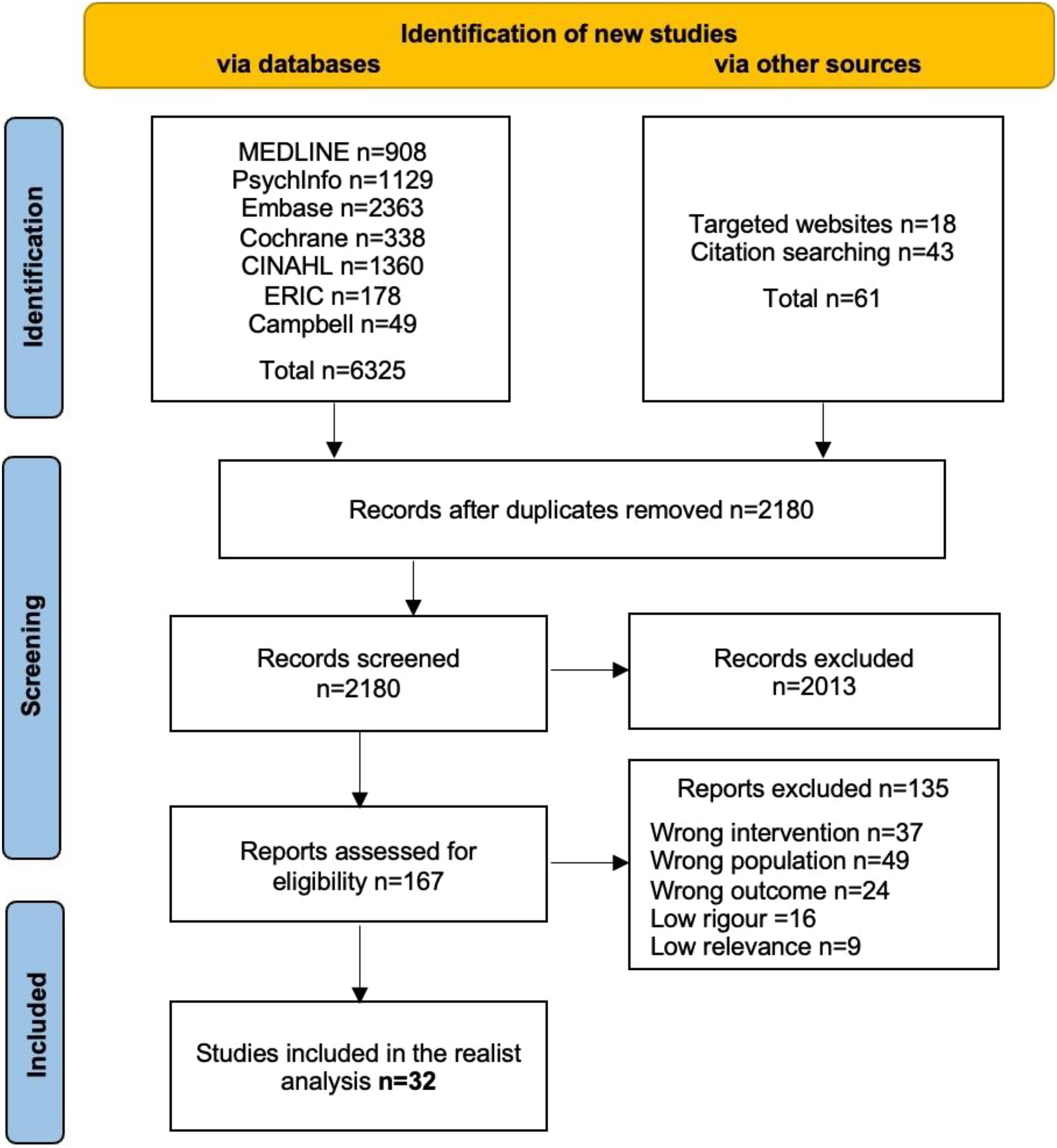
Evidence Search Strategy Adapted from PRISMA.
Study Identification, Selection and Appraisal
All identified abstracts were double-screened for eligibility by three reviewers (A.Z, N.D-O, and S-E.P.) using blinded screening on the RAYYAN software, which was also used for deduplication. To be included, studies needed to be (1) empirical primary studies, (2) using quantitative, qualitative, or mixed methods, (3) conducted in North America, (4) reporting an intervention designed to improve the transition from school to adult life for youth 14 to 21 years of age with disabilities.
We also included studies that described program models, practices, or features if they contributed meaningful information about contexts, mechanisms, or outcomes related to the transition to adulthood for youth with disabilities. In line with realist review methodology, studies were considered relevant if they provided explanatory insights into how transition interventions operate, even if they did not evaluate a discrete or newly implemented intervention. Following the RAMESES guidelines, studies were assessed for inclusion based on the principles of relevance (contribution to CMOCs and theory building) and rigour (credibility of the methods used to generate the relevant data). The same process was followed during the double-screening of all full-text documents resulting from the abstract screening stage.
Two reviewers (A.Z., N.D-O.) independently rated the rigour of extracted information on context, mechanisms, and outcomes by considering the method used to generate this information in each study and the relevance of this data and its contribution to understanding the causal explanation of the phenomena under observation. The methodological quality of all included studies was appraised using the Mixed Methods Appraisal Tool (MMAT), version 2018 (Hong et al., 2019). The MMAT enables the evaluation of qualitative, quantitative, and mixed methods studies within a single framework. Each study was assessed based on five design-specific criteria, with one point assigned per criterion clearly met. Screening questions were used to ensure eligibility but were not included in scoring. A total score was calculated by dividing the number of criteria met by five and expressing it as a percentage.
Studies were classified as weak (0–49%), moderate (50–79%), or strong (80–100%) based on their percentage scores. However, consistent with realist review methodology principles (Pawson et al., 2005; Wong et al., 2013), studies were not excluded solely based on methodological rigour. Instead, rigour was used to inform the interpretation of findings, with greater weight given to findings from methodologically stronger studies when developing Context-Mechanism-Outcome Configurations (CMOCs). Studies of lower quality were used cautiously, mainly to suggest possible mechanisms or contextual influences rather than definitive causal claims.
Data Extraction, Analysis, and Synthesis
For realist analysis, data is extracted from different study parts to inform CMOCs (Pawson, 2006). When the research team had agreed on the studies to be included, the characteristics of these interventions and populations, as well as context, mechanisms and outcomes in each intervention, were extracted into an MS Excel spreadsheet. Five reviewers extracted data into the data extraction sheet, and a sixth reviewer addressed discrepancies.
We conducted a descriptive analysis of the data in the extraction table to expose recurrent patterns that may inform CMOCs. A thematic analysis was also undertaken to code the extracted data using both inductive and deductive reasoning iteratively to develop CMOCs and the data to identify the causal explanation of those mechanisms within a context that led to an outcome (The RAMSES II project, 2017). Mechanisms were coded using an inductive approach to allow the codes to emerge from the data. The context and outcomes were primarily coded deductively, informed by the Taxonomy for Transition Programming (TTP) model (Kohler et al., 2017); however, new codes were identified inductively when necessary. TTP is an all-encompassing framework for conceptualizing the numerous components of an optimal transition to adulthood for youth with special needs, as proposed by Kohler et al. (2017). TTP includes five practice categories that describe an optimal transition: Student-focused Planning, Student Development, Interagency Collaboration, Program Structures, and Family Engagement (Figure 2).
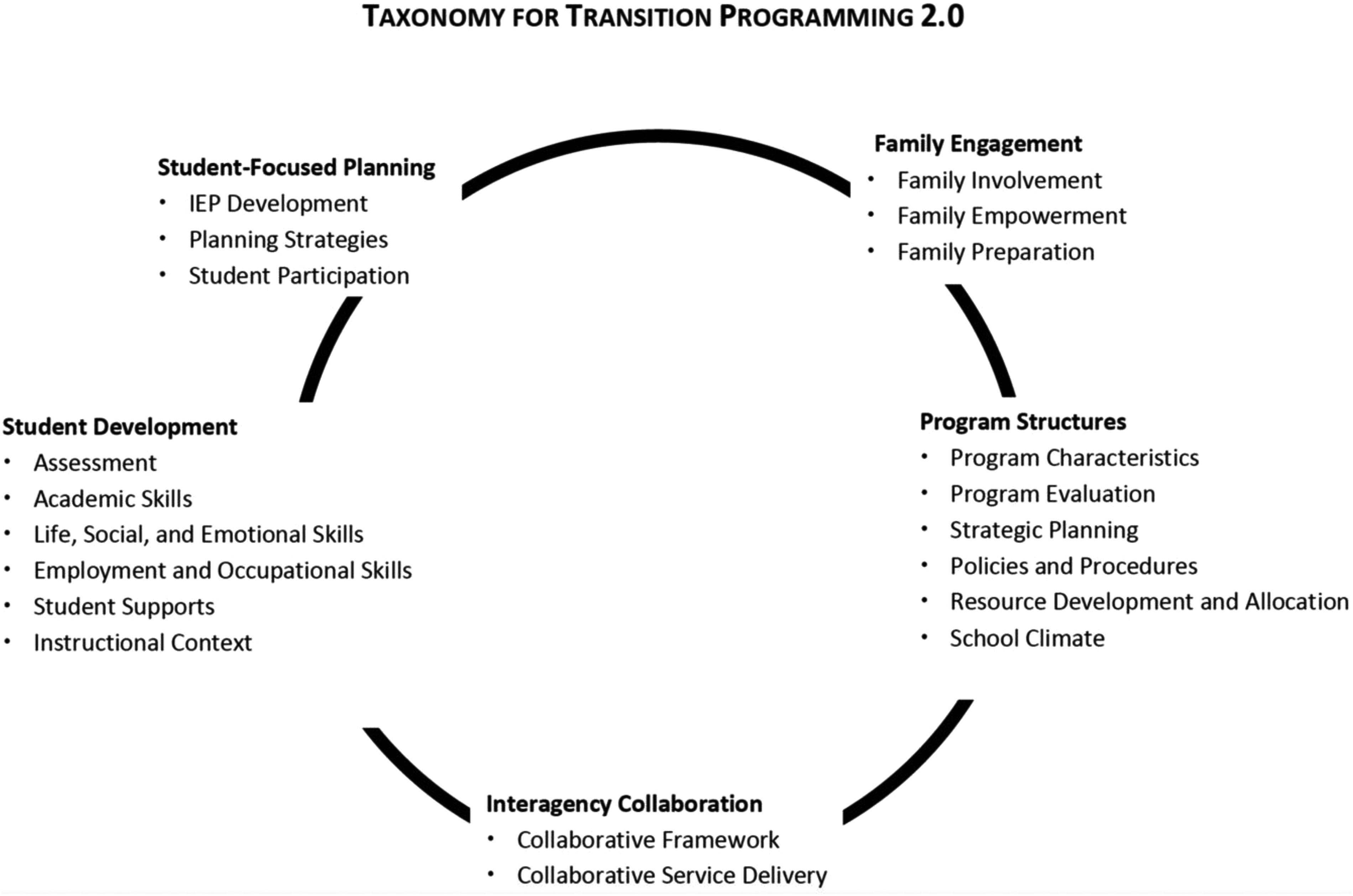
Taxonomy for Transition Programming (Kohler et al., 2016).
The coding process began by highlighting sentences that encapsulated key features and meanings, which were then used to develop codes. These codes were assigned names that reflected the primary significance of the highlighted sentences. Following this, the codes were analyzed and organized into themes. Additionally, connections and patterns among the codes were examined. Simultaneously, CMOCs were generated and tested at the study level and across studies to reach the refined program theories researchers agreed on. For example, these are some of the important sentences that contributed to the CMOCs generation from Loiselle et al. (2019):
Context
(The workshops were held in a community training center (
Mechanism
(All participants perceived
Outcome
(Their
The process was non-linear, involving regular discussions to evolve, refine, or refute CMOCs until an agreement was reached.
Results
Study Characteristics
The search yielded a total of 6386 records. After the selection process, 32 studies published between 2001 and 2022 had enough details to inform and contribute to understanding the interrelationships between the context, mechanism, and outcomes of the implemented transition interventions and were included in the review (Figure 1). Of the 32 included studies, 18 were quantitative, nine were qualitative, and five were mixed methods (Table 1). The included studies represented a range of disability categories. Autism spectrum disorder (ASD) and intellectual disabilities (ID) were the most frequently reported, but other categories were also represented, including physical disabilities (PD), cerebral palsy (CP), developmental disabilities (DD), visual impairments, hearing impairments, orthopedic impairments, emotional disabilities, traumatic brain injury (TBI), and spina bifida (SB). Not all studies reported their sample sizes. However, the reported sample sizes ranged from one to 14,733 participants with disabilities. All 32 included studies underwent appraisal using the MMAT. Based on the assessment, 12 studies were classified as strong, 7 studies as moderate, and 13 studies as weak in methodological quality (Table 1). Although weak studies were retained in the synthesis to maximize relevance and theoretical richness, findings from stronger studies were prioritized when constructing and refining CMOCs. Studies classified as weak contributed primarily to hypothesis generation regarding potential contexts and mechanisms but were interpreted with caution (See Supplementary File 2). The interventions occurred in various settings, with almost half implemented in a school setting. Most of the studies focused on only enhancing youth's behavioural, social and vocational skills (n = 16), two focused solely on their education, nine on employment outcomes, and five focused on more than one outcome (Table 1).
Overview of Characteristics of 32 Studies Included in the Review.
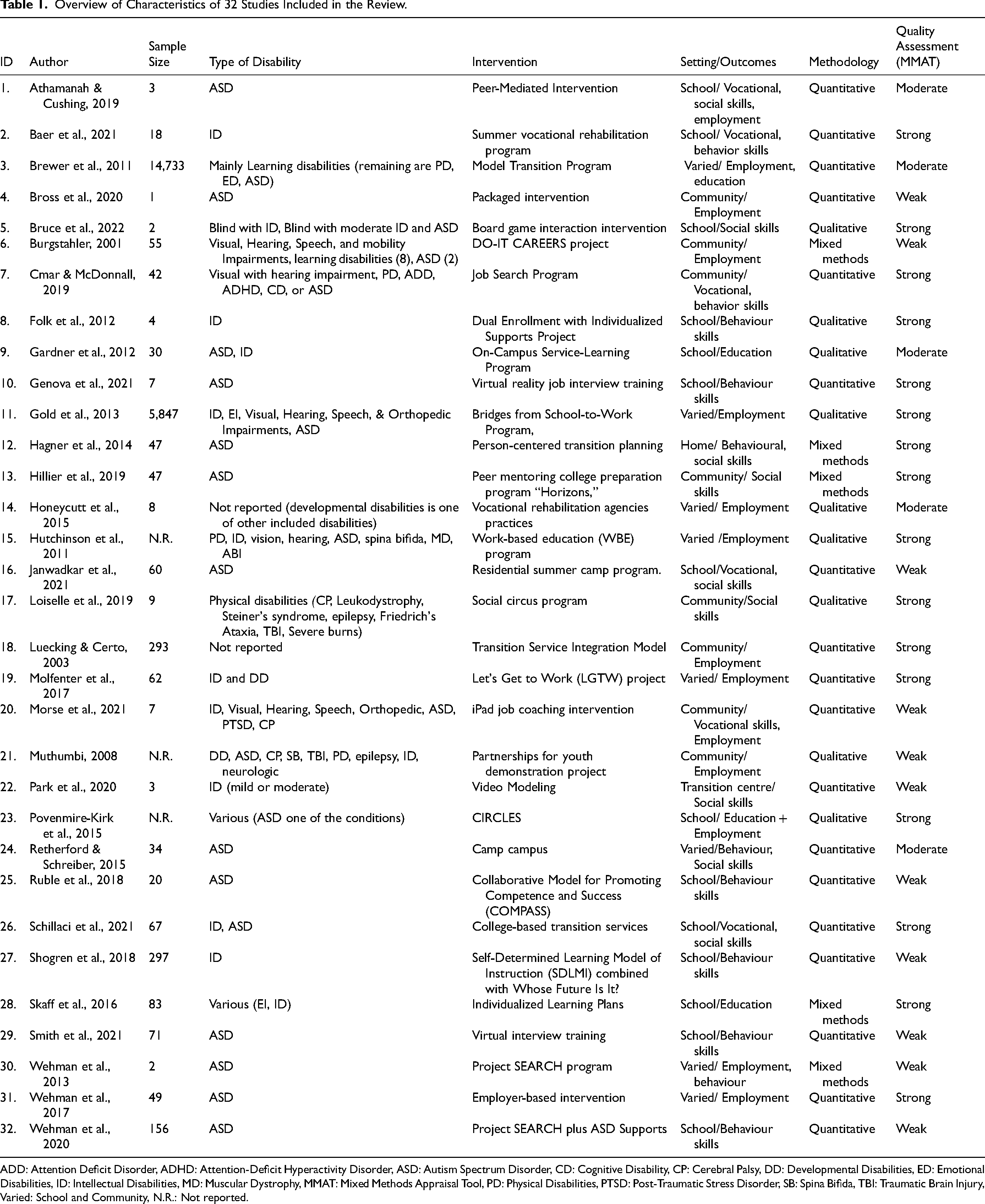
ADD: Attention Deficit Disorder, ADHD: Attention-Deficit Hyperactivity Disorder, ASD: Autism Spectrum Disorder, CD: Cognitive Disability, CP: Cerebral Palsy, DD: Developmental Disabilities, ED: Emotional Disabilities, ID: Intellectual Disabilities, MD: Muscular Dystrophy, MMAT: Mixed Methods Appraisal Tool, PD: Physical Disabilities, PTSD: Post-Traumatic Stress Disorder, SB: Spina Bifida, TBI: Traumatic Brain Injury, Varied: School and Community, N.R.: Not reported.
Student development, program structure, and interagency collaboration were the most common TTP components targeted in 97%, 94%, and 78% of the interventions, respectively. Student-focused planning and family engagement components were only considered by 69% and 47% of the included studies.
Reported Effectiveness of Transition Interventions
Based on the 32 included studies, 26 found that the implemented transition interventions achieved their intended goals for youth with disabilities. The effectiveness of an intervention was based on the reported results of the studies and not on a collective systematic statistical significance. One study (Skaff et al., 2016) found no difference after the intervention in their college and career readiness skills. The remaining five studies (Bruce et al., 2022; Genova et al., 2021; Hillier et al., 2019; Park et al., 2020; Shogren et al., 2018) reported mixed results in which students’ skills and knowledge improved, but the students did not feel confident about the real-life challenges and could not transfer these learned skills to the community.
Refined Program Theories
From analyzing the extracted data through a realist methodology, initial theories emerged at the study level and were tested across studies to generate refined theories (see Supplementary File 3 for CMOCs at the study level). Finally, the refined theories were translated into hypothetical “if–then-because statements,” resulting in the following:
If support is available for youth with disabilities through the involvement of different stakeholders (family, teachers, staff) and peers (youth without disabilities) in a student-focused transition process to provide support, mentoring, and a non-judgmental environment (C), then this will facilitate gaining social and behavioural skills, such as self-advocacy and self-determination (O) because youth with disabilities will feel safe, “unlabeled”, and heard (M) (Athamanah & Cushing, 2019; Folk et al., 2012; Gardner et al., 2012; Hagner et al., 2014; Hutchinson et al., 2011; Janwadkar et al., 2021). If the transition intervention offers peers, staff, and teachers training, consultation and collaboration opportunities with experts in youth transition (C), such an environment will result in community integration and a successful transition to adulthood for these youth with disabilities (O) because it will raise disability awareness among these stakeholders and in the community, which can enhance staff and organization commitment (M) (Bross et al., 2020; Honeycutt et al., 2015; Hutchinson et al., 2011; Janwadkar et al., 2021; Loiselle et al., 2019; Molfenter et al., 2017; Muthumbi, 2008; Povenmire-Kirk et al., 2015; Wehman et al., 2017, 2020). If transition interventions consider a collaboration approach, partnership with job agencies, and deep stakeholder involvement, use theory to guide the interagency collaboration between the different parties (C), then these interventions will have high transition ratios and employability for youth with disabilities (O) because organizations and agencies are encouraged and motivated to commit and work together and be involved (M) (Brewer et al., 2011; Burgstahler, 2001; Cmar & McDonnall, 2019; Folk et al., 2012; Gardner et al., 2012; Genova et al., 2021; Gold et al., 2013; Loiselle et al., 2019; Luecking & Certo, 2003; Molfenter et al., 2017; Muthumbi, 2008; Povenmire-Kirk et al., 2015; Retherford & Schreiber, 2015; Ruble et al., 2018; Schillaci et al., 2021; Shogren et al., 2018; Wehman et al., 2020). If there is an intensive, inclusive, community-based experience tailored to the needs of youth with disabilities along with family engagement early in the transition process (C), then an improvement will be reported in their knowledge, self-advocacy, self-determination, and how to accommodate their disability (O1), and it will be easier for them to transfer and generalize these skills to real-life experiences (O2) because the confidence of youth with disabilities will increase besides their self-esteem and autonomy (M) (Athamanah & Cushing, 2019; Baer et al., 2021; Burgstahler, 2001; Cmar & McDonnall, 2019; Hagner et al., 2014; Hutchinson et al., 2011; Janwadkar et al., 2021; Morse et al., 2021; Ruble et al., 2018; Schillaci et al., 2021; Smith et al., 2021; Wehman et al., 2013, 2017, 2020). If the transition intervention is not youth-focused (not individualized) and offers low-intensity (e.g., once a week) training for youth with disabilities on situations that mimic real life but no direct community experience is provided for these youth (C), then it might improve youth's knowledge (O), but not their confidence and self-advocacy skills required to communicate their needs in real life situations (M) to pursue their goals or generalize any gained skills after the intervention ceases to real-life experiences (Bruce et al., 2022; Genova et al., 2021; Hillier et al., 2019; Park et al., 2020; Shogren et al., 2018; Skaff et al., 2016).
Figure 3 maps the development of these CMOCs through a model that describes successful transition intervention based on the findings.
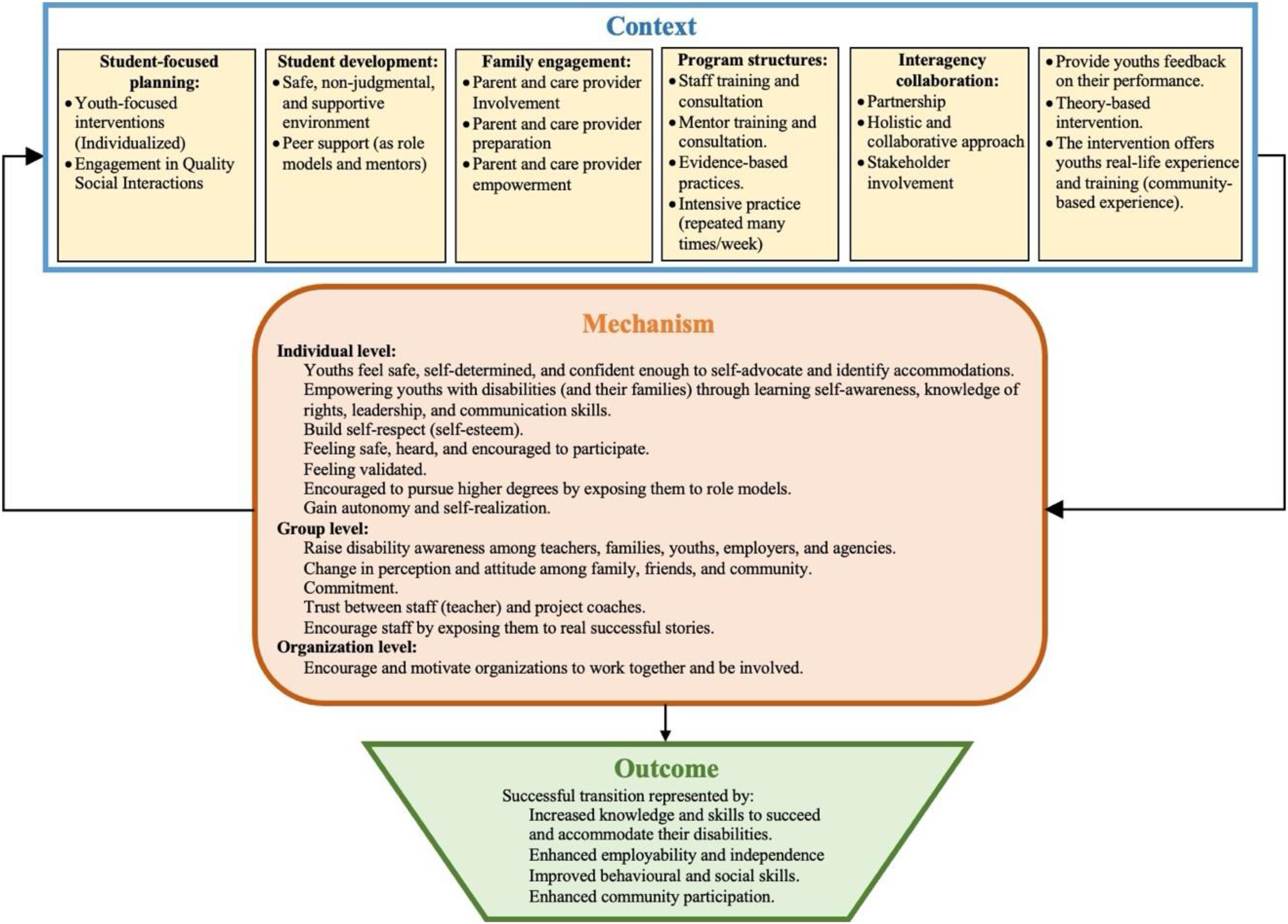
Theoretical Model Depicting the Realist Perspective Behind a Successful Intervention to Support the Transition Process for Youth with Disabilities based on the Findings of this Review.
What Works/Does not Work for Whom and Why
The following section provides an overview of theories of how transition to adulthood interventions do or do not work, drawing from the evidence reviewed. The six subheaded themes emerged during the data analysis and synthesis process. Each theme is substantiated with selective quotations from data texts from the included studies, which have been chosen to illustrate the described theories and highlight key elements of the above-mentioned CMOCs.
Individualized Interventions
Youth with disabilities are primary actors in the transition process, and their views and needs should be considered early for a successful transition to adulthood. This centrality of youth involvement aligns with a growing body of research emphasizing the agency of young individuals in shaping their future trajectories. Acknowledging their active role not only respects their autonomy but also indicates the importance of empowering youth via self-advocacy skills so they can ask for required accommodations and be heard. It also ensures that transition services and interventions are tailored to their unique requirements. This perspective is illustrated in the findings from Folk et al. (2012) and Hutchinson et al. (2011), who described how individualized supports allowed students to reframe their self-identity and pursue higher goals: “For students in the Developing the Dual Enrollment with Individualized Supports project, the opportunity to recreate themselves as “unlabeled” college students provided significant motivation to participate and achieve in a “world of high expectations.” (Folk et al., 2012) “Our data suggest that the kinds of Work-Based Education programs that met the needs of at-risk youth provided these students with consistent, supportive, accommodating environments that were emotionally safe and included an adult role model for appropriate social and vocational behavior.” (Hutchinson et al., 2011).
The transition intervention implemented by Hillier et al. (2019) offered real-life experience, peer support, and family engagement, which might explain the youth's motivation to pursue higher education after the intervention since they interacted with peers presented as a role model and felt supported. However, the intervention was not individualized to the interests of each participant; rather, it was based on the existing literature, which might be a factor that students reported low confidence in being able to face the challenges they might encounter in a new environment. Skaff et al. (2016) provided additional evidence to support this theory as the transition intervention implemented in his study was not student-focused, and parents reported that the intervention was not meeting their children's needs. Ingimarsdóttir et al. (2024) shared the experience of individuals with disabilities and reported they had been excluded and had no active role in their future, which enforced the feeling of alienation and losing hope of a bright future.
Real-Life Experience
Real-life experience is another theme that was identified in this review. Studies that adopted interventions which mimic real-life situations but no community-based training reported that youth could not generalize the obtained skills to real life (Bruce et al., 2022; Park et al., 2020). Genova et al. (2021) used virtual reality (VR) technology to offer training for youth with disabilities that mimic real-life tasks. Although youth reported increased knowledge and understanding of the required skills, their confidence did not improve, and they could not express their needs and advocate for themselves. This was highlighted by the authors themselves, who noted: “It is possible that despite improvements in some aspects of the job interview, the students still felt unprepared for the job interview. This could be due to limitations of the intervention itself, such as not providing the opportunity for practicing self-generated, natural responses. Further, the students may have felt they needed additional practice and targeted lessons in skills not taught by VR-JIT (Virtual Reality Job Interview Tool)” (Genova et al., 2021). This highlights the importance of integrating real-world practice opportunities into transition interventions to build genuine confidence and readiness among youth with disabilities.
Intervention Settings
Five studies (Bruce et al., 2022; Genova et al., 2021; Hillier et al., 2019; Schillaci et al., 2021; Shogren et al., 2018) targeted behavioural, social, and vocational skills in school settings. They reported mixed results; an improvement in the knowledge and skills of youth with disabilities was reported however, there was no improvement in the level of confidence and anxiety about their performance in the real world. Also, students could not generalize these gains to other settings. Most transition interventions implemented in a school or home setting effectively improved behavioural, social, and vocational skills (Athamanah & Cushing, 2019; Baer et al., 2021; Folk et al., 2012; Janwadkar et al., 2021; Gardner et al., 2012; Ruble et al., 2018; Schillaci et al., 2021; Shogren et al., 2018; Smith et al., 2021). On the contrary, transition interventions applied in combined settings effectively improved employment outcomes for youth with disabilities (n = 7) (Brewer et al., 2011; Gold et al., 2013; Honeycutt et al., 2015; Hutchinson et al., 2011; Wehman et al., 2017).
Intensive Training
Most of the studies that offered intensive training for youth, characterized by immersive, extended daily sessions delivered repeatedly throughout the week, successfully enhanced transition ratios, employability, and skill acquisition by offering youth multiple opportunities to practice and master essential skills (Baer et al., 2021; Morse et al., 2021; Smith et al., 2021; Wehman et al., 2017, 2020). A lack of training intensity, however, was seen as a barrier to success in some interventions, as highlighted by Hillier et al. (2019): “Uncertainty and unpredictability are particularly difficult for individuals with autism spectrum disorder …, and more sessions would have provided additional opportunities to ameliorate these fears. Both participants and their parents reported the low “dosage” of the program as a weakness.” Hillier et al. (2019).
Youth Skills and Peer Mentoring
Our findings reported that peer mentoring consultation or group mentoring supervised by same-age peers without disabilities builds a sense of belonging and raises disability awareness for mentors, consequently creating an inclusive environment that accepts and is willing to accommodate youth with disabilities to thrive between their peers without disabilities (Athamanah & Cushing, 2019; Burgstahler, 2001; Gardner et al., 2012; Hillier et al., 2019; Hutchinson et al., 2011; Janwadkar et al., 2021; Loiselle et al., 2019; Retherford & Schreiber, 2015; Schillaci et al., 2021). Self-determination, self-efficacy, and self-perception were also reported in four studies (Janwadkar et al., 2021; Loiselle et al., 2019; Schillaci et al., 2021; Skaff et al., 2016) as hidden mechanisms to drive youth with disabilities toward their independence. For example, Loiselle et al. (2019) found an improvement in self-efficacy and self-perception of youth with disabilities involved in a peer community-based intervention, which nurtured these youth’ self-determination, advocacy, and confidence to make the right decisions and ask for accommodations in a workplace or educational institution. These impacts were reflected in participants’ descriptions of how peer mentoring strengthened their self-confidence, self-determination, and ability to advocate for themselves in educational and employment settings: “The group's generalized initial negative self-perception (image, esteem, confidence) and related social difficulties (shyness) … were progressively enhanced along with a stronger feeling of self-determination … This greater sense of control over their lives was nourished, according to them, greatly by their supporting peers.” (Loiselle et al., 2019)
In addition to benefits for youth with disabilities, peer mentoring programs can also enhance the knowledge and awareness of peer mentors without disabilities, as highlighted by Athamanah and Cushing (2019): “In addition, peers may gain valuable knowledge on strategies to utilize when working with youth with autism spectrum disorder in the future.” (Athamanah & Cushing, 2019)
Staff Support, Stakeholder Collaboration, and Family Engagement
Our results found that interventions met their goals when staff were supported and offered training. Ruble et al. (2018) highlighted how targeted coaching activities can equip teachers with the skills to adapt instruction and improve outcomes for students with disabilities: “These evidence-based coaching activities allow the teacher to develop competence for obtaining new information, integrating this information into teaching plans, testing the effectiveness of the teaching plans, and adjusting as necessary based on the child's goal attainment progress.” (Ruble et al., 2018)
Teachers and staff felt motivated to commit and collaborate to facilitate the transition process when a supporting environment was available (Bross et al., 2020; Janwadkar et al., 2021; Molfenter et al., 2017; Shogren et al., 2018; Wehman et al., 2017, 2020). In addition, four studies (Honeycutt et al., 2015; Hutchinson et al., 2011; Povenmire-Kirk et al., 2015; Wehman et al., 2017) reported that one of the main factors of the reported high transition ratios and achieved outcomes is the commitment of the different stakeholders, such as administrators, agencies, educators, staff, and employers to offer a holistic and comprehensive experience for these youth living with disabilities.
Collaboration between different stakeholders and caregivers’ involvement is an essential contextual factor that facilitates the transition process and ensures all parties are working toward the same goals (Brewer et al., 2011; Bross et al., 2020; Burgstahler, 2001; Gardner et al., 2012; Gold et al., 2013; Honeycutt et al., 2015; Hutchinson et al., 2011; Luecking & Certo, 2003; Molfenter et al., 2017; Muthumbi, 2008; Povenmire-Kirk et al., 2015; Ruble et al., 2018; Schillaci et al., 2021; Wehman et al., 2020). Molfenter et al. (2017), for example, revealed that the collaboration between educators and caregivers as lifelong advocates embraced the development of trust, shared vision, and continuous improvement for adolescents with disabilities: “Project coaches supported and advocated for the school staff, which built trust between them. This trust and familiarity helped school staff feel at liberty to openly discuss the struggles they were facing to implement changes.” (Molfenter et al., 2017)
However, the transition intervention offered by Park et al. (2020) lacks stakeholder involvement and community-based experience, which might contribute to the mixed reported outcomes.
Discussion
This realist review synthesized evidence from 32 studies to explore how and in what circumstances transition to adulthood interventions support education, employment, and community integration outcomes for youth with disabilities. Our findings showed that interventions that emphasized individualized support, real-world experiences, intensive training, peer mentoring, and stakeholder collaboration were more successful in fostering the key skills needed for a successful transition, such as self-determination, self-advocacy, and confidence. However, interventions lacking real-world application, intensive practice, or strong stakeholder engagement often led to improvements in knowledge but did not translate into confidence, independence, or sustained success beyond the program. These results highlight the importance of contextually sensitive, inclusive, and collaborative transition interventions that can trigger critical mechanisms for positive long-term outcomes.
Independent living, which is the capacity of individuals to care for themselves, is significantly facilitated by social and behavioural skills like self-determination, self-advocacy, and effective communication. These skills are crucial for youth with disabilities as they are linked to sustaining education and employment (Flegenheimer & Scherf, 2022; Lindsay et al., 2019). It is, therefore, vital to evaluate the impact of transition interventions on their post-secondary education, employment, social engagement, and overall independence.
Our review found that studies reporting no change in anxiety and confidence levels often cited a lack of community-based experience where youth could directly apply their newly acquired skills in real-world settings. Community-based training during high school is essential as it allows youth with disabilities to explore their options and develop new academic and vocational skills that are directly applicable to real-life scenarios (Rowe & Zegwaard, 2017).
For instance, Hillier et al. (2019) noted that community-based interventions for youth with autism spectrum disorder were limited by insufficient opportunities and lack of intensive training, as sessions were only held weekly. In contrast, intensive training programs, such as those described by Morse et al. (2021), where youth are trained until they master tasks to a high degree of proficiency, show more promise. Similarly, Wehman et al. (2017, 2020) demonstrated the benefits of immersive internships (35 h per week) that provide extensive practice, performance monitoring, and feedback, highlighting the necessity of robust training schedules.
Successfully generalizing intervention outcomes to various contexts signifies a program's effectiveness. Peer mentoring and community-based training have been particularly effective in helping youth with disabilities apply their skills across different settings and improve workplace engagement (Athamanah et al., 2020).
This review also highlights the critical role of comprehensive training for staff and administrators, which prepares them to fully engage with the accommodations, potential, and expectations of youth with disabilities. Such preparation fosters an informed workplace where employers are cognizant of the accommodations needed and the challenges faced by these individuals (Choiseul-Praslin & McConnell, 2020), potentially reducing job turnover among this demographic (Fong et al., 2021). However, the deployment of community-based interventions that provide real-life experiences is resource-intensive and can be facilitated through effective partnerships among schools, academic institutions, and employment agencies. Snell-Rood et al. (2020) found that stakeholder commitment can make these demanding interventions more viable, and Poirier et al. (2022) emphasized the benefits and challenges of sustaining interagency collaboration, advocating for ongoing training to enhance mutual understanding among stakeholders.
Beyond professional and organizational support, family engagement also plays a pivotal role in supporting successful transitions, which is often compromised in interventions by assumptions about the autonomy of transition-aged youth. Family involvement remains crucial as parents often continue to play a supportive role for youth with disabilities who require familiar support in navigating their transitions (Dymond et al., 2017). Schools collaborating with families can significantly bolster students’ acquisition of necessary transition skills (Bouck et al., 2021; Burke et al., 2019). The literature also indicates a strong relationship between family engagement, the acquisition of self-determination skills for youth with special needs, and the consequent post-secondary outcomes and independence (Zeng et al., 2024). Self-determination encompasses the ability to make decisions freely, accept failures, engage in self-reflection, and initiate action, making it a crucial predictor of post-school outcomes for adolescents (Zeng et al., 2024). Research by Nuske et al. (2019) reveals that educators often struggle to adequately support students with autism due to a lack of preparedness and awareness of their specific needs. By fostering the self-advocacy skills of these students, educators can empower students with disabilities to successfully navigate and adapt to college or workplace environments, thereby unlocking their potential (Frentzel et al., 2021).
However, the implementation of necessary accommodations can inadvertently lead to peer discrimination and reduced societal acceptance, which may deter these youth from advocating for themselves due to fear of societal prejudice. To counteract these challenges, integrating peers without disabilities into the mentorship and support network can challenge negative stereotypes and reduce societal stigma associated with disabilities (Fisher et al., 2020; Harrison et al., 2019). Creating a welcoming, secure, and inclusive environment is essential for enabling individuals with disabilities to express their needs openly, contribute actively, and thrive without the fear of being “labeled”. A systematic review by Athamanah et al. (2020) highlights that inclusive educational practices not only increase social acceptance but also normalize disability within the campus environment, motivating students without disabilities to engage in volunteer activities. These findings underscore the importance of developing transition interventions that are rooted in an understanding of the complex CMO interplay from the early stages of planning.
Implications for Practice
Transition interventions must be tailored to the unique needs, interests, and aspirations of youth with disabilities. This approach respects their autonomy and empowers them through the development of self-advocacy and self-determination, which are critical predictors of post-school success (Frentzel et al., 2021; Zeng et al., 2024). Policymakers and program developers should ensure that transition programs emphasize meaningful, hands-on opportunities in inclusive environments to help youth with disabilities bridge the gap between theoretical learning and practical application, thereby fostering confidence and skill transferability (Athamanah et al., 2020). Additionally, repeated, immersive sessions allow youth to master essential skills, reduce unpredictability-related anxiety and build competence and confidence.
Peer mentoring programs, where youth with and without disabilities interact, offer dual benefits: fostering a sense of belonging for youth with disabilities and raising awareness among their peers (Athamanah et al., 2020). This inclusive approach creates supportive environments that encourage collaboration and acceptance. Similar collaboration should be coordinated among stakeholders, including educators, staff, caregivers, employers, and policymakers, as effective partnerships enhance program coherence, build trust, and foster shared commitment to successful outcomes (Snell-Rood et al., 2020). Policies should encourage interagency partnerships and involve stakeholders at all stages of program development and implementation (Burke et al., 2019).
By addressing these elements, transition programs can foster meaningful and sustainable outcomes, empowering youth with disabilities to thrive in education, employment, and community integration.
Implications for Future Research
Future research should assess the long-term sustainability and scalability of transition interventions, particularly in diverse and under-resourced contexts. Disability groups such as youth with physical disabilities, visual or hearing impairments, and traumatic brain injury were underrepresented in the included studies and should be prioritized in future work. Additionally, studies should investigate how intersectional factors, including gender, ethnicity, and socioeconomic status, impact intervention outcomes. Expanding research in these areas will help ensure more inclusive, effective, and context-sensitive transition supports.
Limitations
Our review employed a narrative approach, which, by nature, is not exhaustive and does not facilitate meta-analytic techniques. This limitation may lead to some important information being overlooked. Additionally, our focus was predominantly on North American experiences with transition interventions, which may limit the generalizability of our findings to other geographical contexts. However, the realist analysis considered interactions between different contexts, mechanisms, and outcomes, which might be transferable cautiously.
Conclusion
This review confirms that individualized, context-sensitive programs emphasizing real-world experiences, peer mentoring, stakeholder collaboration, and adequate staff training are the most effective contexts to activate self-determination, confidence, and skill transferability as mechanisms to pursue education and employment and foster community integration.
Supplemental Material
sj-docx-1-jvr-10.1177_10522263251356223 - Supplemental material for In What Contexts, How, and Why Do Transition to Adulthood Interventions Work for Adolescents Living with Disabilities: A Realist Review
Supplemental material, sj-docx-1-jvr-10.1177_10522263251356223 for In What Contexts, How, and Why Do Transition to Adulthood Interventions Work for Adolescents Living with Disabilities: A Realist Review by Ahlam Zidan, David Gabay, Sarah-Eve Poirier, Marie Grandisson, Steve Jacob, Mathieu Ouimet, Francine Julien-Gauthier, Sarah Martin-Roy, Marie-Ève Lamontagne, Chantal Desmarais and Noémi Dahan-Oliel in Journal of Vocational Rehabilitation
Supplemental Material
sj-docx-2-jvr-10.1177_10522263251356223 - Supplemental material for In What Contexts, How, and Why Do Transition to Adulthood Interventions Work for Adolescents Living with Disabilities: A Realist Review
Supplemental material, sj-docx-2-jvr-10.1177_10522263251356223 for In What Contexts, How, and Why Do Transition to Adulthood Interventions Work for Adolescents Living with Disabilities: A Realist Review by Ahlam Zidan, David Gabay, Sarah-Eve Poirier, Marie Grandisson, Steve Jacob, Mathieu Ouimet, Francine Julien-Gauthier, Sarah Martin-Roy, Marie-Ève Lamontagne, Chantal Desmarais and Noémi Dahan-Oliel in Journal of Vocational Rehabilitation
Supplemental Material
sj-docx-3-jvr-10.1177_10522263251356223 - Supplemental material for In What Contexts, How, and Why Do Transition to Adulthood Interventions Work for Adolescents Living with Disabilities: A Realist Review
Supplemental material, sj-docx-3-jvr-10.1177_10522263251356223 for In What Contexts, How, and Why Do Transition to Adulthood Interventions Work for Adolescents Living with Disabilities: A Realist Review by Ahlam Zidan, David Gabay, Sarah-Eve Poirier, Marie Grandisson, Steve Jacob, Mathieu Ouimet, Francine Julien-Gauthier, Sarah Martin-Roy, Marie-Ève Lamontagne, Chantal Desmarais and Noémi Dahan-Oliel in Journal of Vocational Rehabilitation
Footnotes
Acknowledgements
The authors thank Hervé Tchala Vignon Zomahoun, Nathalie Rhéault, and Jill Boruff for their support and guidance while developing the comprehensive search strategy, Alexa Cirillo, Kevin Caporuscio, Noémie Lalonde, and Anisha Sivasubramaniam for their contribution during the screening process, and Brent Rosenstein for his assistance during the development of the Context-Mechanism-Outcome Configurations.
ORCID iDs

Funding
The authors disclosed receipt of the following financial support for the research, authorship, and/or publication of this article: This study is funded by L'office des personnes handicapées du Québec, Le Secrétariat à la jeunesse and the Fonds de recherche du Québec – Société et culture (FRQSC). A.Z. is the recipient of the Islamic Bank Development scholarship; D.G is the recipient of the 2019 McGill Faculty of Medicine and Health Science's summer research bursary, N.DO is supported by an FRQS Junior 2 clinical research scholar award.
Ethics statement
Not applicable.
Informed consent
Not applicable.
Declaration of Conflicting Interests
The authors declared no potential conflicts of interest with respect to the research, authorship, and/or publication of this article.
Supplemental Material
Supplemental material for this article is available online.
References
Supplementary Material
Please find the following supplemental material available below.
For Open Access articles published under a Creative Commons License, all supplemental material carries the same license as the article it is associated with.
For non-Open Access articles published, all supplemental material carries a non-exclusive license, and permission requests for re-use of supplemental material or any part of supplemental material shall be sent directly to the copyright owner as specified in the copyright notice associated with the article.
