



Abstract
Background
Workplace harassment has garnered increasing scholarly attention in recent years. Several aspects of this phenomenon have been explored in depth, such as prevalence, predisposing factors, antecedents, consequences and prevention methods. However, limited research has examined the resolution processes undertaken by key stakeholders following incidents of workplace bullying (WB).
Objectives
This scoping review aims to map out the key steps and potential interventions following a report of workplace harassment, and thus provide recommendations. Specifically, the roles of the presumed victim, the organization's representative, and the practitioner will be defined and presented for each step of the process and each intervention, considering the needs of all stakeholders.
Method
This scoping review analyzed peer-reviewed articles published from January to December 2024 (25 years). The analysis focused on methods employed to resolve the situation, the outcomes (when available), the procedural stages, and the roles of the main stakeholders.
Results
The results indicate that mediation and filing a complaint are the most used interventions, while seeking support from the organization and separating the victim and the perpetrator are the most used strategies. The review identifies five procedural stages: Reporting the bullying, Fact Finding, and Choosing, Implementing and Evaluating the method. Finally, both internal and external stakeholders should be involved from the beginning of the process.
Conclusions
We propose a five-stage framework that articulates the roles of key stakeholders. This process, while not necessarily linear, outlines the steps taken by internal and external stakeholders.
Keywords
Introduction
Workplace bullying (WB), also referred to as workplace harassment, is prevalent across organizations and has garnered increasing scholarly interest in recent years.1–3 Workplace bullying is considered a worldwide issue since it is present in many different workplaces and domains and is reported worldwide. 4 The prevalence rate varies from 1% to 47% of employees in Europe 5 and from 3.9% to 24% 4 in Australia and New Zealand. In North America, 19% of US employees self-reported experiencing bullying, 6 and nearly 1 in 5 (19%) women and almost 1 in 8 (13%) men working in Canada reported being victims of workplace harassment. 7 Workplace bullying has been reported in a variety of sectors, for example, by healthcare professionals, 8 university employees, 9 employees in education, 10 and public sector employees. 11
Despite its global prevalence, 4 few studies have assessed the effectiveness of interventions post-incident. 12 Existing research has largely focused on classifying and identifying the types of interventions used by various organizations. 13 While various studies and government agencies have suggested interventions and protocols to deal with WB, there is still a lack of knowledge on how to properly handle a case of WB in organizations. 2 This study aims to address this need by proposing a framework in the form of a process with the currently available literature. The proposed framework not only integrates current best practices but also serves as a practical tool for key stakeholders tasked with addressing WB in organizational settings.
Concept of workplace bullying
Although multiple definitions of workplace bullying (WB) exist, the literature generally favours a broad definition: workplace bullying refers to one or more negative acts or comments that are persistent over time and directed at a member of an organization. 1 In their recent policy on harassment prevention and resolution, the Treasury Board of Canada 14 rephrased the above definition by highlighting the notion of impact: workplace harassment is any action or comment that has a negative impact and is directed towards another individual in the workplace. This inappropriate conduct can “demean, belittle, or cause personal humiliation or embarrassment (p. 4)” to an individual and may also include threats and intimidation. As this definition is still broad and can include a variety of behaviours, a classification has been suggested to disentangle this concept. 15
Workplace bullying can be conceptualized into three categories based on the behaviours exhibited by the aggressor: work-related, personal bullying, and physical violence. 15 Work-related bullying includes all negative behaviours related to the victim's work (work overload, refusing leave, controlling resources, blocking promotion, etc.), while personal bullying refers to direct and indirect negative behaviours attacking the person, such as spreading gossip, ignoring the person, verbal attacks, persistent criticisms, or negative eye contact. Physical bullying or threatening refers to all physical violence or threats a victim may encounter. Finally, WB can also be classified according to the title and position held by the victim and aggressor. The two most frequent types of bullying are “top-to-bottom” bullying and “horizontal” or “vertical” bullying. 16 Top-to-bottom bullying, also called ascending bullying, occurs when a manager bullies their subordinate. Horizontal bullying (also called vertical bullying) occurs when colleagues bully one another. Recent studies have begun to focus more closely on “bottom-up” bullying, which occurs when a subordinate bullies their manager. 17 This widespread issue has been shown to have many negative multi-level impacts. 15 The existing classifications each address distinct aspects of harassment, rendering them complementary. However, this diversity also highlights the pressing need for a unified definition that integrates multiple dimensions simultaneously. These definitions also leave out some aspects, like the roles of the different stakeholders involved in these situations, which would be helpful to provide guidelines for the sequence of a resolution. To illustrate the disparities between the definitions and the aspects they take into account, it is noteworthy that many articles do not use this labelling and do not categorize WB.18,19 Therefore, this manuscript seeks to advance the formulation of a global definition by breaking down the process of resolving these situations and addressing the roles of the various stakeholders.
Impacts of workplace bullying
Workplace bullying (WB) has adverse consequences not only for individual victims but also for organizations and society at large. In particular, multiple literature reviews indicated that personal impacts for the victim included work-related consequences (e.g., higher absenteeism, lower performance), physical health consequences (e.g., increase in stress, cardiovascular disease), psychological consequences (e.g., suicide, depression) and affective consequences (e.g., fear, lower self-esteem).15,20,21 Organizational impacts can be associated with productivity (e.g., decreased performance, missed deadlines), costs (e.g., health plan increase, increase in turnover), work culture (e.g., negative climate, ineffective relationships), legal aspects (e.g., wrongful discharge lawsuits) and reputation (e.g., the way the customer will see the company).15,22 Societal impacts also include higher costs related to health care and medical treatment, sick pay, welfare, retirement, and the criminal justice system, as well as a loss of productivity. 22 Considering the negative impacts associated with all of these types of WB, it is not surprising that extensive research has been conducted on its prevention and potential interventions.12,13,23 However, no studies have yet focused on identifying and understanding the steps that could decrease these negative impacts.
Prevention and intervention
Prevention techniques generally include the creation and implementation of a policy on harassment and bullying, as well as classes given to employees and employers. 24 Prevention techniques aim to prevent bullying before it even happens. Conversely, intervention techniques usually occur after the bullying has happened and aim to resolve the issue. A range of interventions can be utilized by consultants addressing WB cases, including coaching, mediation, conflict moderation, formal investigations, and organizational development initiatives.13,25,26 The authors, however, note that a multi-level approach is necessary when resolving WB cases. In parallel, counselling, restorative justice, and punitive measures are identified as potential interventions. 23 Depending on the intervention retained, human resources management or an external consultant, as well as the victim, may have a role to play. 27 Accordingly, a clear understanding of the roles and responsibilities of involved stakeholders is essential to facilitate communication and collaboration during the resolution process.
The present study
Extensive research has examined the impacts,15,28–30 characteristics, 1 and predictors of workplace bullying (WB) at both personal and organizational levels. 31 However, to our knowledge, no study has yet mapped out the process taken by the different stakeholders (e.g., managers, victims, resolution practitioners) when WB occurs. Only two processes were recently documented, but without investigating the roles of the different stakeholders. The Government of Canada proposed one which is intended to be used by managers, advisors, or practitioners trying to resolve the issue. Additionally, a process based on key points for the resolution of workplace bullying situations has also been proposed. 32 Those points were identified through interviews with victims of bullying. However, both processes do not inform participants about all available interventions that can be put in place to resolve the harassment situation. Considering that interventions for WB are seldom effective, 32 it is essential to delineate the necessary process (and steps) for prompt action to prevent its negative impacts. Without such measures, employees will continue to experience its detrimental effects.
Consequently, the objective of this scoping review is to map out the process – key steps and potential interventions – following a report of workplace harassment, including the roles of stakeholders involved in the process, and thus provide recommendations. Specifically, the roles of the presumed victim, the organization's representative (i.e., manager), and the practitioner (working internally or externally) will be defined and presented for each step of the process, as well as for each of the proposed interventions, considering the needs of all stakeholders. Therefore, this study aims to answer the following questions: (1) What steps are to be taken by the various stakeholders after a harassment situation occurs? (2) What are the roles of the various stakeholders in each step of the process? (3) What interventions can be proposed to resolve the harassment situation?
This study will contribute to the scientific literature by proposing the first process for the resolution of WB that maps the roles of different stakeholders (e.g., managers, victims, resolution practitioners) based on the results of a scoping review. The aim is to lay the foundation of a first model that will be tested and adjusted following the results of new studies building the theoretical framework and implementing the model. The overall goal is to develop a universal process (including steps) for dealing with WB in the workplace.
Method
Given the limited number of studies specifically addressing the processes following a report of WB and the disparity in the methods used by each professional, a synthesis of knowledge is needed. This scoping review, which took into consideration peer-reviewed articles published from January 2000 to December 2024 (25 years), was conducted to map out the steps taken by the different stakeholders and to document the effective interventions following the report of a WB case. The choice of doing a scoping study has been guided by its description, which is to synthesize current knowledge, guide future research, and promote data-driven best practices. 33 In addition, the goal of a scoping review is to present what is known on a specific subject and not to answer a question in a synthesized and critical way. 34 This is consistent with this review, which aims to determine what is known about the process and the steps required to successfully resolve a case of bullying at work, considering various stakeholders, with a focus on key steps taken for intervention on bullying and, when possible, the outcomes of these interventions. On the contrary, a systematic literature review will usually answer questions about the effectiveness of specific interventions, need a specific delimited question to answer and rigid a priori. 35 The state of steps to resolve WB situations is not advanced enough to use such a methodology, and goes beyond the scope of this study. Other studies with similar objectives also used a scoping study, but one to cover the return to work of employees on sick leave 36 and the other on the disclosure of the impacts of mental health conditions. 37
This scoping review followed the methodology outlined by Mazaniello-Chézol and Corbière, 38 which is based on the ones by Arksey et al., 39 Levac et al., 40 and Peters et al.. 33 Specifically, it follows four main steps to effectively and rigorously conduct a scoping review: (1) conceptualization of the scoping review; (2) implementation of the research strategy; (3) execution of the review; and (4) dissemination of the results and findings. The following sections indicate how these four steps and their subsets have been followed and applied to this study.
Conceptualisation of the scoping review
The first phase is particularly important since it is the one that determines the relevance of completing a research study. 38 During this phase, a review of the literature on the subject was completed. Based on the findings of this review, the research question and study goals were chosen and agreed upon.
A detailed research protocol was then developed, outlining the study's rationale and methodological approach. Based on the recommendation of a librarian, a search in four databases was to be conducted (APA PsychInfo, CINHAL, PubMed, and Scopus) for articles published in a period of 25 years (January 2000 to December 2024). Only articles published in English and French were included. Finally, quantitative, qualitative, and mixed methods articles were retained to maximize the data collection.
Implementation of the research strategy
During the second phase, two steps were followed: a meeting with a specialist librarian in the social sciences field and an electronic database search. During the meeting with the specialist librarian, the identified databases were validated (APA Psychinfo, CINHAL, Pubmed, and Scopus). The databases were chosen based on the librarian's recommendation and the authors’ expertise, as WB articles are mostly published in medical, social science and business journals. A list of relevant keywords was then determined, and the syntax for the different databases was used. A search of all relevant information on the topic was then conducted to assess the number of relevant publications on the topic and to validate the research question. Finally, the electronic database search was launched using the syntax: (“workplace bullying” OR “workplace harassment”) AND (resolution OR intervention OR “conflict management” OR “conflict resolution”).
Process of the review
The PRISMA ScR Guidelines were followed to carry out the review. 41 The initial database search yielded 1575 articles using this syntax. After the removal of duplicates, 970 unique records remained for screening. Specifically, the following inclusion criteria were applied while reading the title and abstract of the articles: (1) date of publication (between January 2000 and December 2024); (2) languages (English and French); (3) interventions or steps taken following WB (any interventions or steps taken by stakeholders following WB); (4) stakeholder's role (roles of the stakeholders in the intervention); and (5) study design (qualitative, quantitative and mixed).
For the eligibility phase, the 87 articles that met these criteria were then read entirely, and the same inclusion criteria were applied. While the outcomes of the studies were analyzed when present, this was not considered an exclusion criterion. Considering that this study aimed to identify steps and interventions after WB occurred, articles focused on identifying the impacts of WB, in terms of prevention and prediction, were excluded. Finally, the 24 articles selected were presented to the co-authors for their approval. The number of articles screened and retained at each step is reported in the PRISMA chart (see Figure 1), following the recommendation of Mazaniello-Chézol and Corbière 38 and the example of Tricco et al. 41
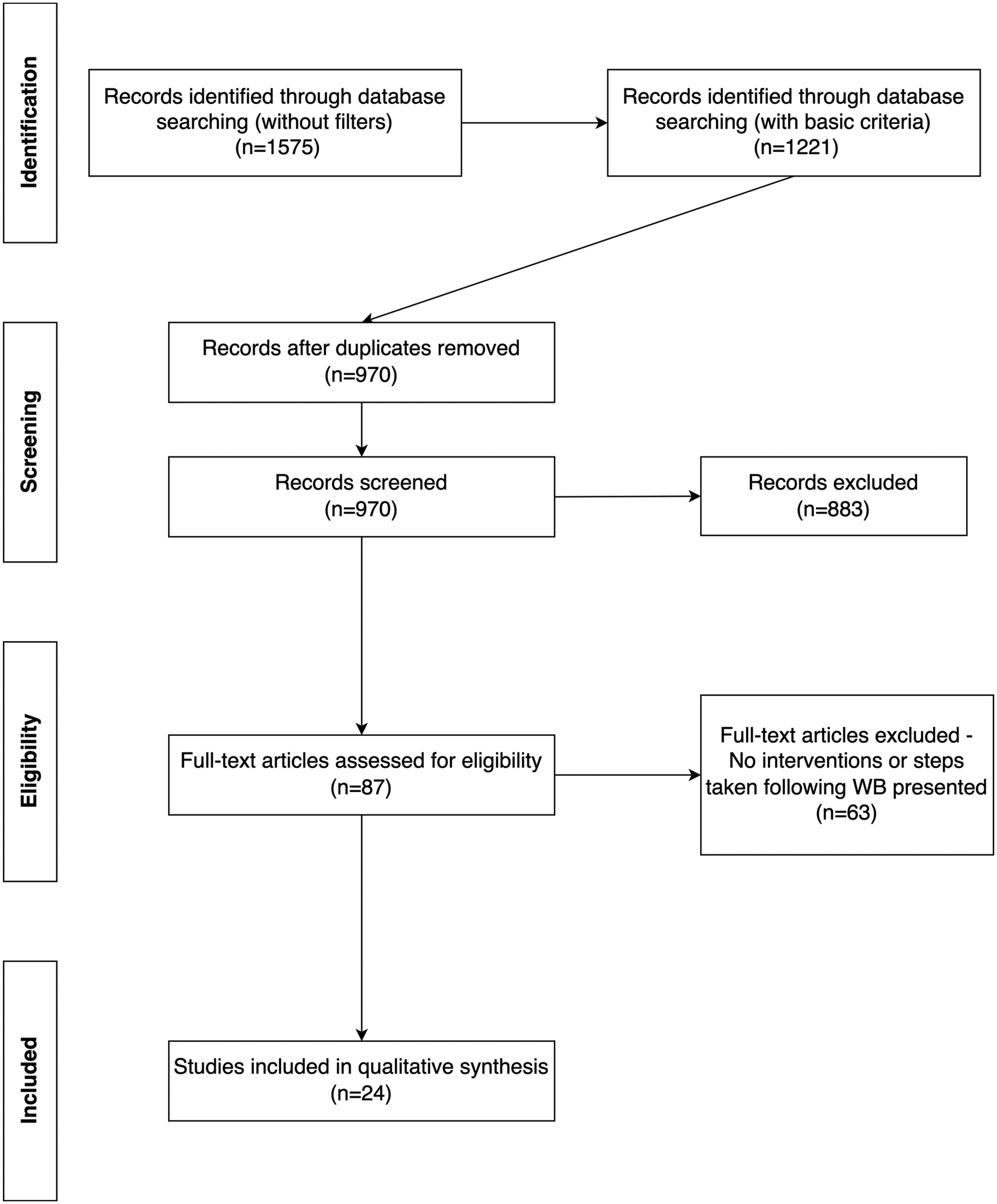
PRISMA chart.
Data extraction
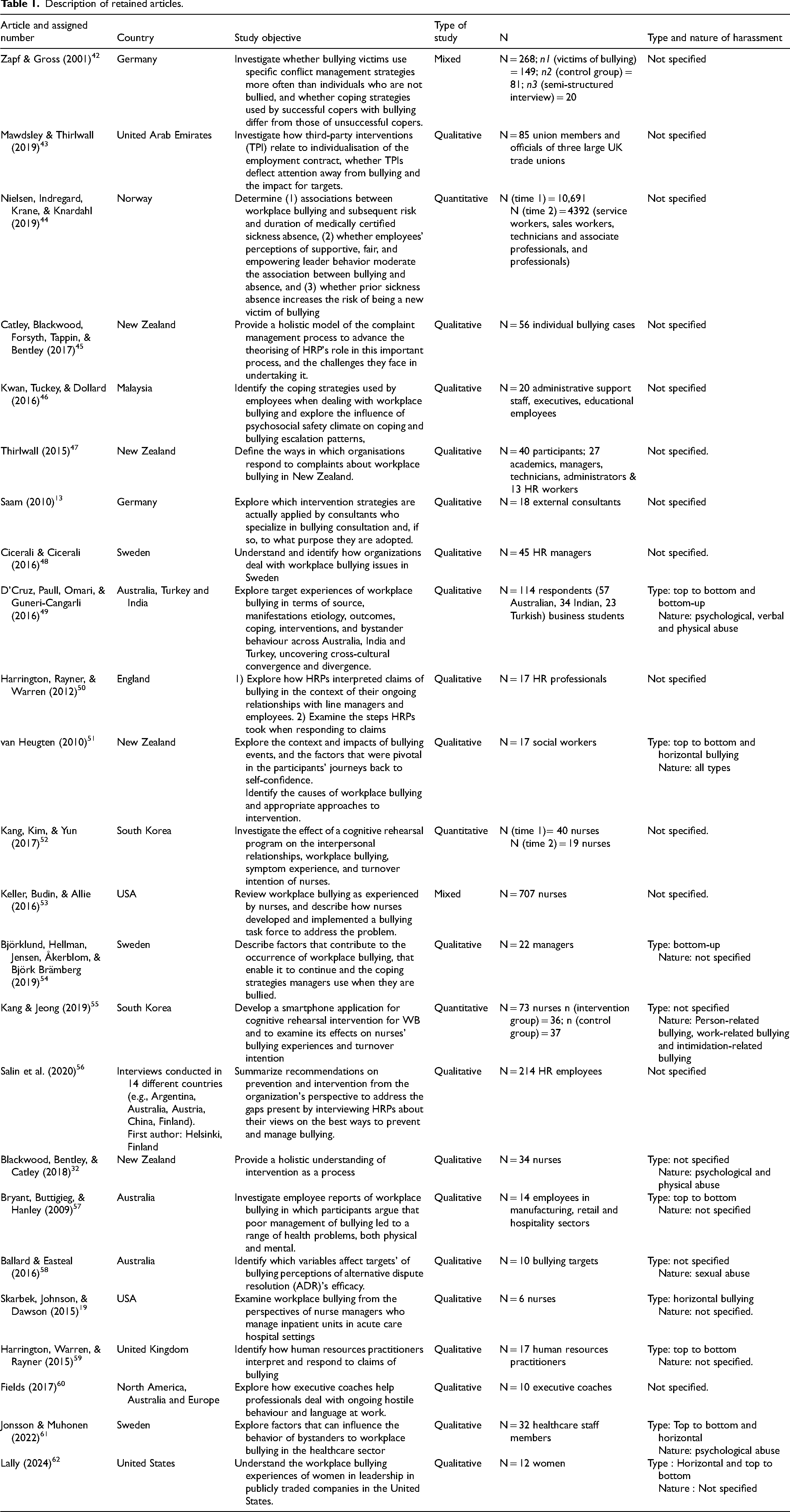
The pertinent information from each article was organized into a table (Table 1). The first author (KG) completed the first extraction by entering the information into the preestablished chart. This step was reviewed by two co-authors (FC and MC), and the first 8 articles were reviewed by the research team. Since a consensus was achieved with the first 8 articles, the other articles were divided equally between the first author and the three co-authors.
Description of retained articles.
Dissemination of the results and findings
As per the objective of this research, a thematic analysis was applied to identify the type of action taken by the stakeholder (intervention or coping strategy), the steps taken by the stakeholders during the intervention or the process of WB, and the roles of the different stakeholders. When outcomes of the intervention were included in the scientific article, they were analyzed. The following three steps summarize the process taken: (1) extracting findings and coding findings for each article; (2) grouping the results; (3) analyzing the group information to identify similarities and discrepancies in the data.
To begin, the information was organized into two tables to separate coping strategies from interventions. The columns for these two tables were: (1) name of the intervention or coping strategy; (2) description; (3) outcome. Once this step was completed, a third table was created. This table included information about: (1) the stakeholders involved and (2) their role. Finally, a fourth table was created in which the different phases of the intervention were also coded.
Results
Descriptive analysis results
The 24 selected studies were published between 2001 and 2024, with the majority being published between 2015 and 2019. Studies were predominantly conducted in Europe (39.1%; Sweden, Germany, Norway, Finland), Australia and New Zealand (30.4%), Asia (17.4%; Turkey, India, South Korea, United Arab Emirates and Malaysia) and the United States (13.0%). Finally, most of the retained studies employed qualitative designs (75.0%, n = 18), while the remainder used quantitative (16.6%, n = 4) or mixed approaches (8.3%, n = 2). Table 1 presents an overview of the 24 articles chosen.
Synthesis analysis
Type of workplace bullying addressed
Most of the interventions proposed were not specific to one type of WB. Specifically, 75.0% (n = 18) of the studies did not specify the nature of the bullying encountered (physical, psychological, or sexual), and 66.6% (n = 16) did not specify who the perpetrator was (bottom-up, top-to-bottom, or horizontal).
Domains studied
The studies were conducted in the private sector (33%), the public sector (20%), and both (6%). More specific areas were the medical sector, educational sector, students, and manufacturing employees.
Identification of methods used to resolve bullying situations
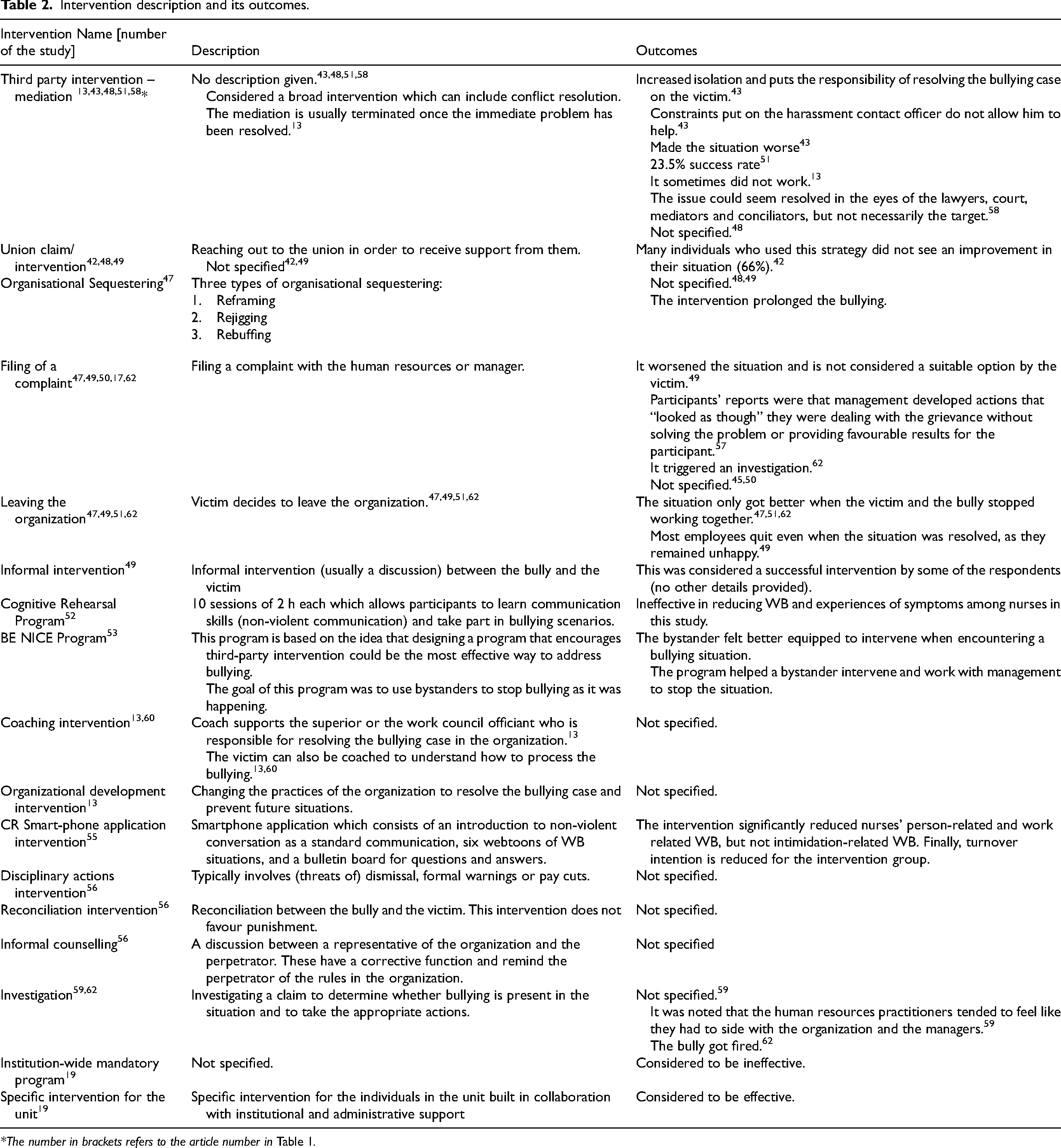
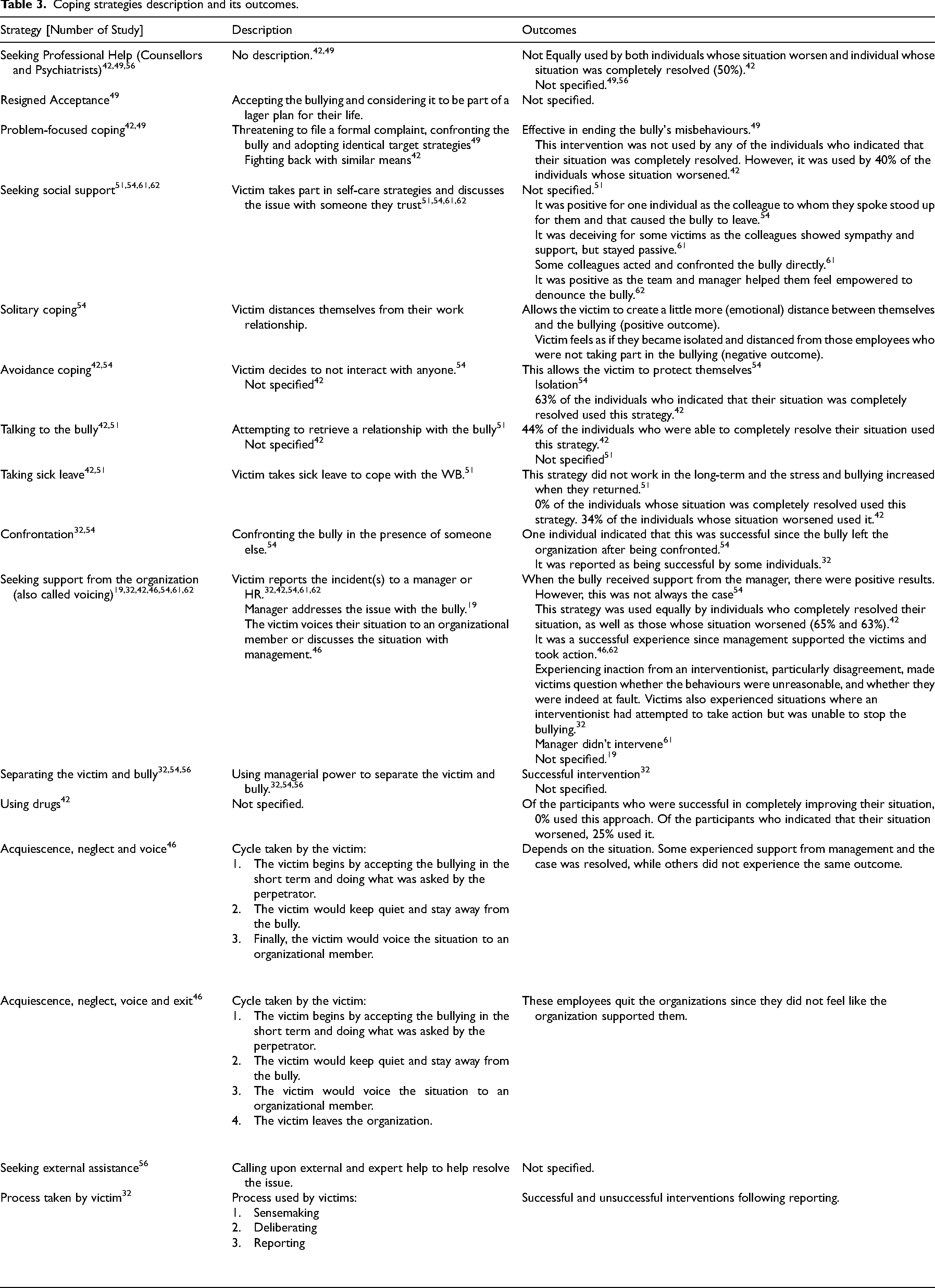
The 24 articles retained presented either interventions or coping strategies used by various stakeholders. In total, 17 interventions and 16 coping strategies were identified in the articles. For this manuscript, interventions are defined as actions taken by more than just the victim, usually the organization or one of its representatives. Coping strategies are defined as adaptative strategies taken by the victim of workplace bullying to deal with this issue. Where intervention outcomes were reported, findings varied: some interventions produced positive effects, while others had no impact or even exacerbated the situation for the victim.
The interventions used most were: mediation (5), filing a complaint (5), leaving the organization (4), and union claim or intervention (3). Seeking support from the organization (7), seeking social support (4), separating the victim and bully (3), and seeking professional help (3) were the coping strategies used most. Of these, quitting the organization and separating the victim from the bully were the only coping strategy and intervention that yielded positive results. Specifically, it was deemed to have been positive since the situation only got better once the victim left the organization. Table 2 presents the interventions identified in the article and their outcomes, while Table 3 presents the coping strategies used and their outcomes.
Intervention description and its outcomes.
*The number in brackets refers to the article number in Table 1 .
Coping strategies description and its outcomes.
Phases of the intervention
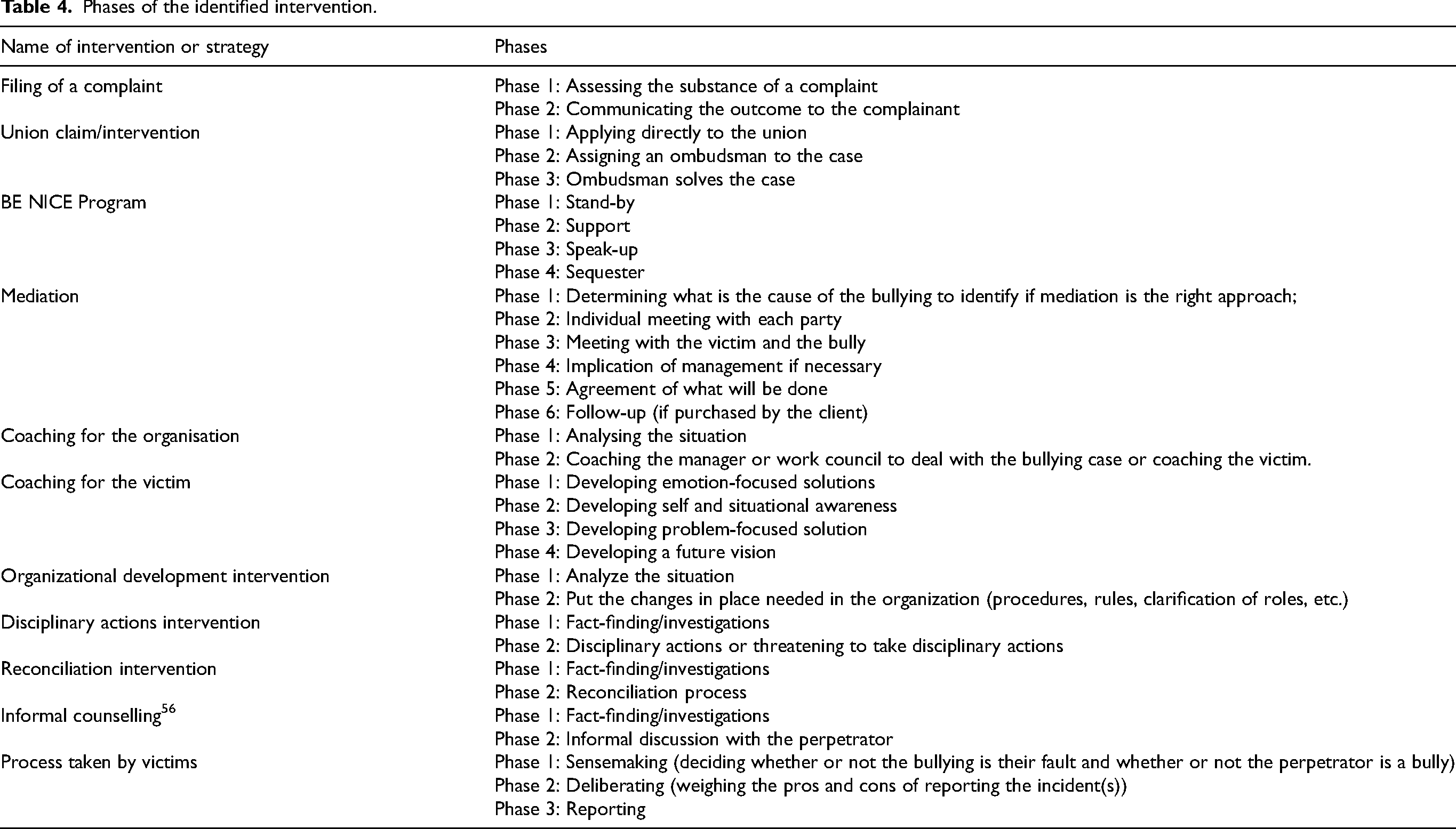
Only 29.2% of the articles (7 articles) described the steps (phases) taken in the intervention suggested. When the responsible stakeholder for the intervention is not the victim, the first phase usually involves a gathering of information or an assessment of the situation. Specifically, interventions for which the organization (management, human resources, or hired external consultant) is responsible start with an analysis of the situation. This same first phase is usually also completed by victims since they usually start the process by assessing their situation in order to decide their next steps. 32 Finally, all these phases have one factor in common, which is that they must be completed promptly. All the articles indicate that the steps in an intervention should be completed as rapidly as possible to address the WB issue. Table 4 outlines the various steps mentioned in the articles found for each of the interventions.
Phases of the identified intervention.
Stakeholders involved and their roles
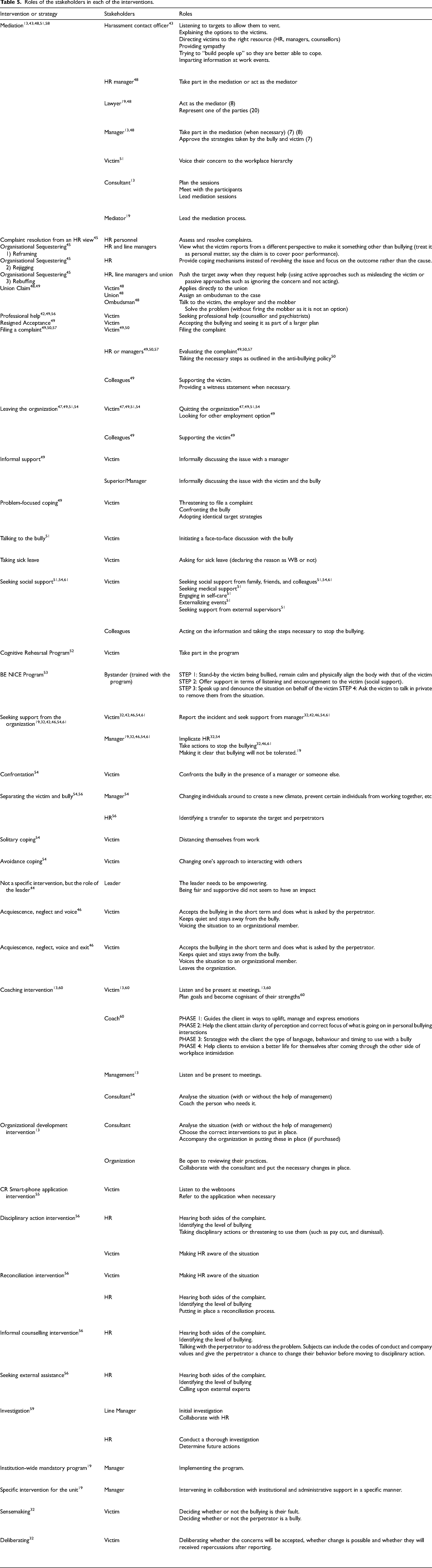
This scoping review identified that both internal and external stakeholders should be involved when resolving bullying in an organization. Specifically, according to the retained articles, the following internal stakeholders could be involved: (1) harassment contact officer; (2) HR manager; (3) HR representative; (4) manager; (5) victim; (6) union; (7) ombudsman; (8) colleagues; and (9) bystanders. Notably, 45.8% of the identified methods were undertaken solely by the victim: seeking professional help, resigned acceptance, leaving the organization, problem-focused coping, talking to the bully, taking sick leave, seeking social support, cognitive rehearsal program, solitary coping, avoidance coping, cognitive-rehearsal smart-phone application intervention, and sensemaking and deliberating. In the other methods reported (11 out of 13), the manager or the human resources are usually the stakeholders involved. Their roles usually consist of putting in place an intervention and taking the necessary actions to stop the bullying. Specifically, the responsibility of acting following the denunciation falls on those stakeholders. Lawyers, consultants, and mediators are the external stakeholders who could also be involved in the process. Finally, different authors identified different stakeholders for the same role. For example, depending on the article, the mediator could be the HR manager, a lawyer, or a consultant. Finally, there were discrepancies in some of the interventions and the roles of the stakeholders. Informal support could either be the victim speaking unofficially to a supervisor for support or the manager discussing the issue unofficially with the victim and the bully. Table 5 presents the roles of the various stakeholders involved in the coping strategies and interventions.
Roles of the stakeholders in each of the interventions.
Discussion
The objective of this scoping review was to map the process—key steps and potential interventions—following the reporting of a workplace bullying (WB) incident, taking into account the roles of various stakeholders in the resolution process. A total of 24 articles were included, the majority of which employed qualitative methodologies and originated from Europe, Australia, and New Zealand. Given the descriptive nature of interventions following WB incidents, the predominance of qualitative studies was anticipated. However, North America appears to be underrepresented, with only a limited number of studies on WB interventions identified from this region.
Only a few studies reported the specific type of harassment or the nature of the perpetrator, suggesting that WB interventions may be somewhat generalizable and not necessarily tied to particular forms or contexts. The analysis identified 17 interventions aimed at addressing WB after its occurrence, with mediation, filing a complaint, and leaving the organization being the most frequently mentioned. These findings highlight that the burden of response often falls on the victim, who is solely responsible for nearly half of the interventions identified. Furthermore, many of these interventions yielded mixed or negative outcomes. This aligns with existing literature indicating that human resources personnel often observe limited effectiveness in addressing escalated WB cases.1,42
Sixteen coping strategies were also identified, among which seeking social or organizational support and separating the victim from the perpetrator were the most frequently cited. Notably, perceived support was one of the key factors influencing whether victims chose to report an incident. 32 This finding is consistent with studies emphasizing the importance of leadership in demonstrating, through concrete actions, that WB will not be tolerated.18,63 Moreover, the perceived support from management and the organization can affect both the outcomes of interventions 54 and the well-being of victims, potentially exacerbating harm if support is lacking. 64 Organizational support also influences employees’ decisions to remain loyal to, or to leave, their workplace. 65 Nonetheless, research consistently shows that victims of WB are often disappointed by the lack of meaningful action taken by management to support them.66,67
Proposed process
Figure 2 presents a proposed resolution process following WB that includes the observations based on the process taken by the victim and presented by Blackwood et al., 32 the process proposed by the Government of Canada, 68 and the information gathered in this scoping review. This process, which unifies the literature, outlines the key steps taken by the key stakeholders in the resolution of WB. Considering that WB is a complex issue, it would be impossible to provide a single, defined process that would allow for the resolution of this issue. The process suggested should thus be considered sequential but not rigid. In other words, the order in which the steps are presented should be respected, but the way to complete these steps could vary greatly from one organization to another. Many factors will determine how these steps will be taken: the size of the organization, the structure of the organization, the victim's wishes, and the actions of the bully.27,69 However, the one aspect which should be respected in all of these steps is prompt and consistent action. Many studies indicate that when the process is started, it should be taken seriously by the organization and that they must act quickly and consistently.69,56,70 It's also noteworthy that the longer it takes to resolve the case, the greater the negative impacts will be on the organization and the victim. 71
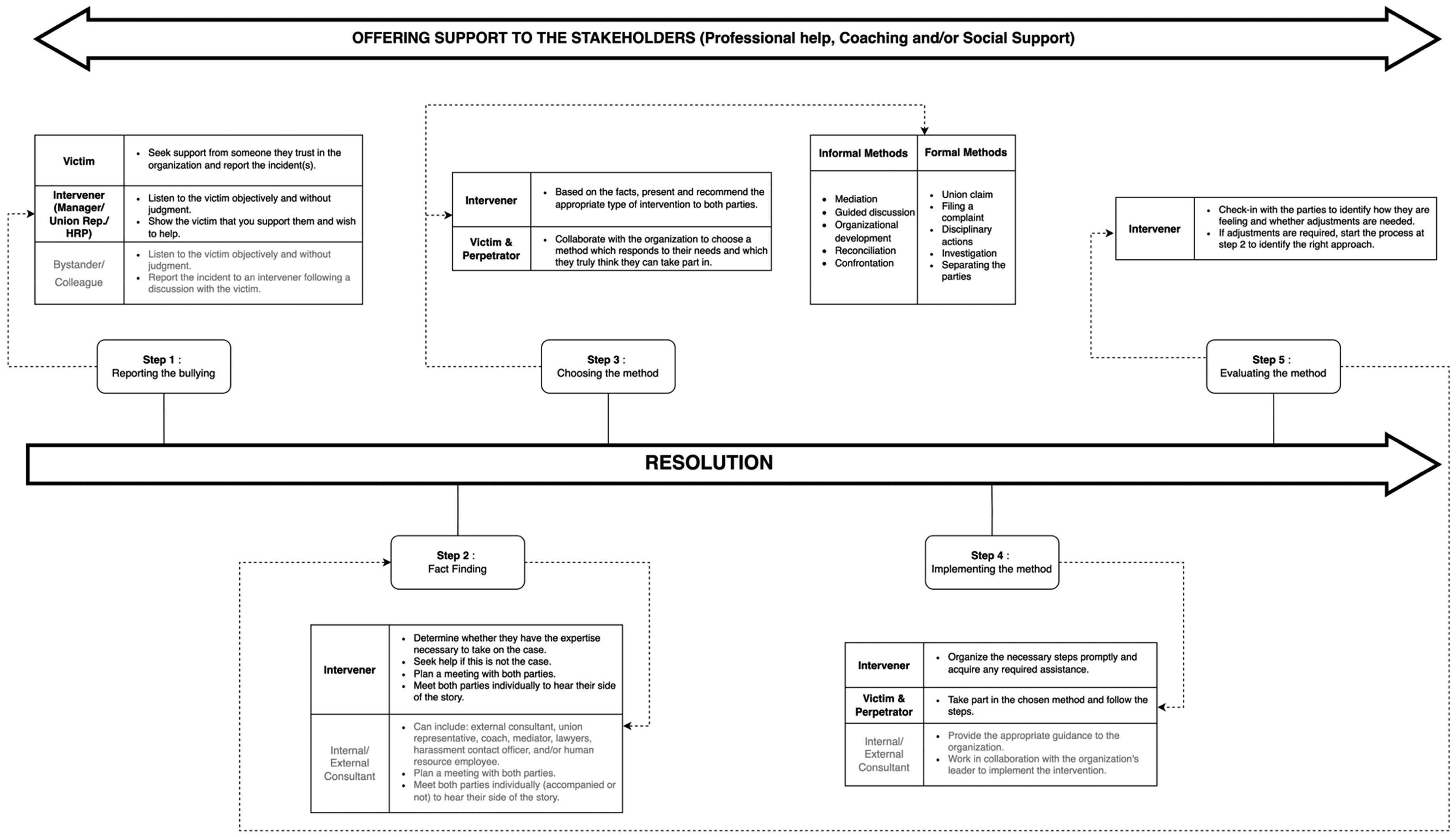
Proposed process.
Key stakeholders in the process
The core stakeholders involved in the WB resolution process are the human resources practitioner (HRP), management, the victim, and the alleged aggressor. These stakeholders are the ones who should have ownership of the process since their participation will influence the planning and increase their motivation and commitment to the resolution of the case. 71 Therefore, for the resolution of WB using this process, all these parties are expected to commit to the process. HRPs are considered one of the main stakeholders since they are responsible for enforcing the rules, policies, and procedures of the company, moderating disputes, and facilitating the relationships between employees. 72 Managers, who are considered to be individuals in the organization who have authority, are also important stakeholders in the process as they are responsible for promoting a healthy working climate to their employees. 68 The specific role to be taken by management will depend on many factors, such as the company's policy on bullying, the implication of management in the bullying case, the victim's ease with management, and other considerations. However, in most cases, managers and HRPs will work collaboratively to resolve the conflict since managers are usually the stakeholders who can make the necessary decisions. 50
The victim will also have an important role to play in the process. In fact, the victim is the one most able to start this process by speaking up and denouncing their situation. 32
Both the victim and the alleged aggressor will have an important part to play in choosing the intervention. For an informal approach to be used, both parties must be willing to work towards the same goal. 73
Finally, other stakeholders, such as internal and external consultants, may be included in the process, but these have an optional role. Once again, factors such as the size of the organization and the budget allowed to resolve the issue will have an impact on who will be implicated.18,56
Offering support as a transversal step in the process
The proposed process includes a transversal step that offers support to the stakeholders. This step is based on the known psychological impacts of WB on those stakeholders. 15 In fact, support in the form of coaching is considered to be effective in helping not only the target of bullying but also the perpetrator and senior leadership.18,32 Support can also be offered through professional help from a counsellor or therapist42,49,56 and social support.51,54 These interventions are usually completed outside of the organization by external parties and aim to reduce the damage caused by WB. 74
Steps
Step 1: reporting the bullying
The first phase requires the victim to report the bullying to a person they trust in the organization.19,32,42,46,54 Interventions presented in this scoping review also encouraged bystanders and colleagues to report incidences of WB and to act accordingly to their respective roles. 53 One of the most important factors is how the employee is received by the person they trust. Often, the intervener will be a manager, a member of the human resources team, or a union representative. 48 As suggested by the Government of Canada, 68 two words of caution: it is crucial for the employer to treat the subject seriously, listen to the victim, and be non-judgmental, objective, and patient. It is also important for the individual who listens to the victim not to jump to immediately resolve the issue. Finally, taking prompt action is also mandatory in such cases.56,68
Step 2: fact finding
The first step taken in any type of intervention should always be a thorough investigation and analysis of the situation.13,56 This is consistent with most conflict resolution models in which the first step is to gather information for analysis. 73 This step can take many forms, but it must be in accordance with the policy in place (if this exists),1,50 and the intervener must objectively gather information on the issue. 68 This step requires the responsible person to listen to both sides and determine the level of bullying. 56 Should the manager or the human resource employee feel unable to conduct such an analysis, they should seek assistance. 59 Assistance can be obtained with the help of external or internal consultants. Internal consultants, such as a human resource employee or manager and a harassment contact officer, should be considered to be neutral in the organization.32,43,54 External consultants can include organizational consultants, mediators, coaches, and lawyers. 56
Step 3: choosing the method to address the bullying
Based on the facts gathered in the previous step, the third step requires the intervener to present the possible options for resolution to both parties. Most of the articles reviewed did not present this as a distinct step. We propose to choose the resolution method after the fact-finding step and in collaboration with the victim, the perpetrator, and the representative of the organization. This is based on the fact that it is particularly important for both parties to be involved in choosing the method since this will be linked to their motivation and commitment to resolving the case. 71 Choosing the method also allows the parties to feel as if they have some control over the outcome and counters the loss of control they experience when faced with WB. 75 Different interventions will also require a different commitment and collaboration from the parties. 56 Specifically, interventions can be categorized as formal or informal approaches. 56 Informal approaches usually wish to reach a reconciliation between the perpetrator and the victim, while formal interventions usually involve a formal investigation, which can be followed by sanctions in the form of disciplinary actions. 56
Informal interventions are usually favoured first when dealing with a case of WB. 23 However, when a situation is serious enough, disciplinary actions might need to be taken even if the victim does not wish to file an official complaint. 68 In this case, an informal intervention can also be used to restore the relationship.
Examples of informal interventions are mediation, guided discussion, organizational development, reconciliation, and confrontation. Formal interventions include union claims, filing an official complaint, disciplinary actions, official investigations, and separating the parties.13,48,49,56,59
Step 4: implementing the method
Once the method has been chosen, the fourth step requires the intervener to promptly implement the method and follow the appropriate procedure for the chosen intervention. 56 Based on the intervention chosen, the appropriate stakeholders should be requested, and the proper experts should be hired.
Step 5: evaluating the method chosen
The final step would be to evaluate the intervention chosen. Many employees indicated that the method used by the organization did not work, and they felt they had no other option than to leave the organization. 32 The goal of this step is to evaluate whether or not the intervention was successful and to make further changes should it not be working. 13 We propose that the process be restarted if the evaluation does not produce positive results.
Strengths and limitations of the study, future studies
This scoping review offers two principal strengths. First, the study provides a comprehensive overview of existing literature that details interventions and coping strategies employed by key stakeholders in an organization following workplace bullying incidents. While previous reviews outlined effective interventions for WB, the strength of this research is that it unified the interventions with government protocols dealing with WB. The second strength of this research is that it is the first study to propose a practical, rigorous, and transparent model for intervening following WB. This model takes into consideration not only the steps but also the roles of the key stakeholders, as well as the possible peripheral stakeholders.
Despite its contributions, this study has a few limitations. First, the articles chosen and reviewed often lacked information. For example, many of them did not outline the steps taken or even define the intervention. This made the analysis more challenging. Second, the proposed resolution framework is theoretical in nature and has yet to be empirically validated through field implementation. Finally, the geographical distribution of the selected studies – concentrated in Northern Europe, the United States, and Oceania – may limit the generalizability of the findings to other cultural or organizational contexts. Also, the type of industries and their size are not always reported in the studies, making it unclear for which areas this model is best suited. Future studies should focus on testing this model and adjusting it as needed. Specifically, studies should focus on implementing this model and identifying areas of improvement in order to develop a universal model for dealing with a case of WB.
Conclusion and practical implications
The objective of the present study was to map out the process following the reporting of a workplace harassment case, taking into account the roles of stakeholders involved in the process. A scoping review was completed, which considered peer-reviewed articles published since January 2000 up to December 2024. The results indicated that mediation and filing a complaint were the most used interventions while seeking support from the organization, separating the victim and perpetrator, and seeking professional help were the most used coping strategies. The results also indicated that the first step following the reporting of WB often included data gathering by an intervener. For 45.8% of the methods, only the victim was in charge of the solution. Building on this analysis, a five-step resolution model was proposed, outlining the roles of both internal and external stakeholders across the resolution process. Having a delineated process that clearly outlines the roles and responsibilities of the organization's stakeholders could help to remove some of the responsibility placed on the victim and foster more collaboration between all stakeholders. It could also better equip the stakeholders by clarifying their roles and responsibilities within the organization, thus positively impacting the victim's well-being.
Footnotes
Acknowledgements
The authors have no acknowledgments.

Funding
The authors disclosed receipt of the following financial support for the research, authorship, and/or publication of this article: The first author received a scholarship from the Research Chair in Mental Health and Work.
Declaration of conflicting interests
The authors declared no potential conflicts of interest with respect to the research, authorship, and/or publication of this article.
Data availability statement
The data supporting the results of this study are available within the tables included in this published article.