



Abstract
Background
Low-wage workers carry a disproportionate burden of chronic condition morbidity due to their overall socioeconomic disadvantage and the risks accrued from low-wage work environments. Studies show low-wage work is linked to more occupational hazards, higher physical demands, more stress, lack of access to health insurance coverage and paid sick leave, and poverty – all of which result in poorer health. Work accommodations are modifications in the workplace setting that can help minimize health-related work limitations, and in some countries, employers are required to make “reasonable accommodations,” by law, for workers with chronic health conditions.
Objective
The purpose of this scoping review is to identify what is known about work accommodations for low-wage workers globally.
Methods
A systematic search of literature, using the PRISMA-ScR protocol, was conducted in PubMed, CINAHL, and Scopus databases through July 2024. Screening and data abstraction were performed by two independent reviewers. Studies that incorporated work accommodations as a variable and provided findings specific to low-wage workers were included.
Results
The search produced 473 citations; 14 met inclusion criteria. Health conditions represented were variable. Most studies used descriptive designs, and over half used a qualitative approach.
Conclusion
More studies are needed reflecting low-wage workers’ requests for and receipt of work accommodations. Work accommodations may be an important target for intervention among populations with chronic health conditions towards reducing morbidity, work limitations, and health inequities.
Keywords
Introduction
In the United States (U.S.), low-wage workers carry a disproportionate burden of chronic disease morbidity due to their overall socioeconomic disadvantage and the risks accrued from low-wage work environments. Using a social-inclusion approach as described by Boushey et al., we define low-wage workers as those earning less than two-thirds the national median wage for men in 2022, 1 or less than $19.43/hour. 2 Low-wage workers comprise 44% of the U.S. workforce–or about 53 million workers. 3 These 53 million workers are less likely to be provided employee benefits such as health insurance and paid sick leave, which exposes them to direct and indirect unexpected healthcare costs. 4 Contributing to these healthcare costs, the nature of work often includes exposure to health risks including harmful chemicals, 5 extreme temperatures,6,7 physical demands,5,8 and stress. 9 Compounding these exposures, this group of workers often engages in coping behaviors that contribute to developing chronic health conditions and poorer health overall, 10 which are the leading causes of disability.11,12
With suboptimal management, chronic conditions result in functional limitations that can progressively become disabling. 12 Limitations due to chronic health conditions and poor health can affect the ability to work resulting in less productivity and more work absences, which cost the U.S. economy $36.4 billion in missed workdays each year. 13 In 2019, 34.4% of adults in the U.S. reported a functional limitation. 14 Disabilities are present when a person rates having “a lot of difficulty” or that they “cannot do at all” in at least one out of six functional domains: seeing, hearing, mobility, communication, cognition, and self-care.14,15 Strategies to reduce the effects of functional limitations that can occur due to chronic conditions, however, are readily available, with one key strategy being work accommodations. 16
Also referred to in the literature as “job accommodations,” “work adjustments,” or known more generically as “workplace supports,” work accommodations are changes made to the work environment, equipment, or other aspects of employment to assist workers with impairments or limitations in performing their job duties. 16 Examples of changes in the work environment that would be considered work accommodations include, but are not limited to, the addition of assistive equipment, flexible schedules such as including more breaks, and modifications to work duties or responsibilities such as reassigning non-essential tasks to other workers.16–18 Though available for use and promoted by the U.S. Department of Labor, work accommodations are woefully underutilized; 19 an estimated 22.8% of the U.S. workforce may benefit from workplace accommodations, but only 47–50% of those workers receive them. 19
The low proportion of workers in need of accommodations who receive them seems contrary to the benefits employers might yield as a result of extending work accommodations to workers who need them. The benefits of work accommodations that employers could accrue are highlighted in a 2019 Job Accommodation Network (JAN) survey, which found 90% of employers use work accommodations as a means of retaining employees, 58% saved costs from reduced turnover, 68% reported increased productivity, and 57% reported less absenteeism. 20 When employees with functional limitations are supported by work accommodations, employers report cost savings from reduced turnover, workers’ compensation, and increased productivity.20,21 Although the sample in the JAN survey included a higher proportion of middle-to-higher wage earners, the benefits may generalize to low-wage settings, as well. Work accommodations benefit not only employees, but also businesses, local economies and communities, and society as a whole.20,21 One way that society benefits from work accommodations is when workers can continue earning income through employment and reduce their need for financial support through the social service system. 22 In addition to these laudable benefits to employers and society, it is reasonable to hypothesize that workers receiving work accommodations might also have improved mental and physical health outcomes.
With low-wage workers carrying a disproportionate share of chronic disease burden, 23 they may benefit the most from work accommodations in terms of being able to maintain employment and improve both mental and physical health outcomes. While work accommodations are vitally important in research on worker health, reviews of studies specifically examining work accommodations among low-wage workers have not been conducted. As such, the purpose of this scoping review is to broadly assess the extent to which work accommodations have been studied among low-wage workers, and map how relationships between work accommodations, employment outcomes, and health outcomes at both the worker and employer levels have been conceptualized in studies to date.
Methods
Given this study is a literature review, it is exempt from Institutional Review Board review. With the goal of this review to broadly map the peer-reviewed literature with respect to low-wage workers and work accommodations, a scoping review is consistent with this goal and was used as an approach. 24 Our protocol was developed using the Preferred Reporting Items for Systematic Reviews and Meta-Analyses extension for Scoping Reviews (PRISMA-ScR), 25 Figure 1.
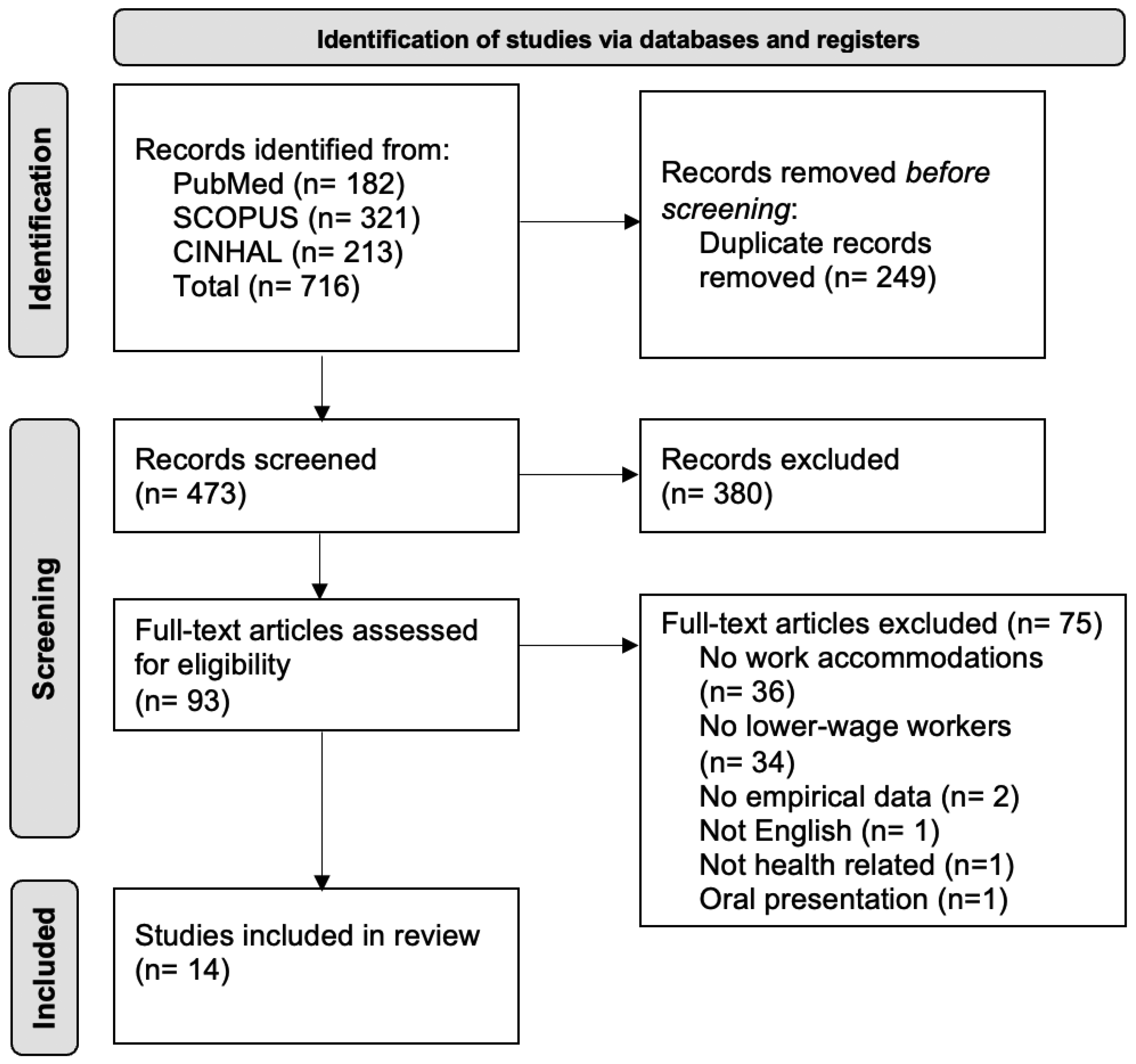
PRISMA-ScR.
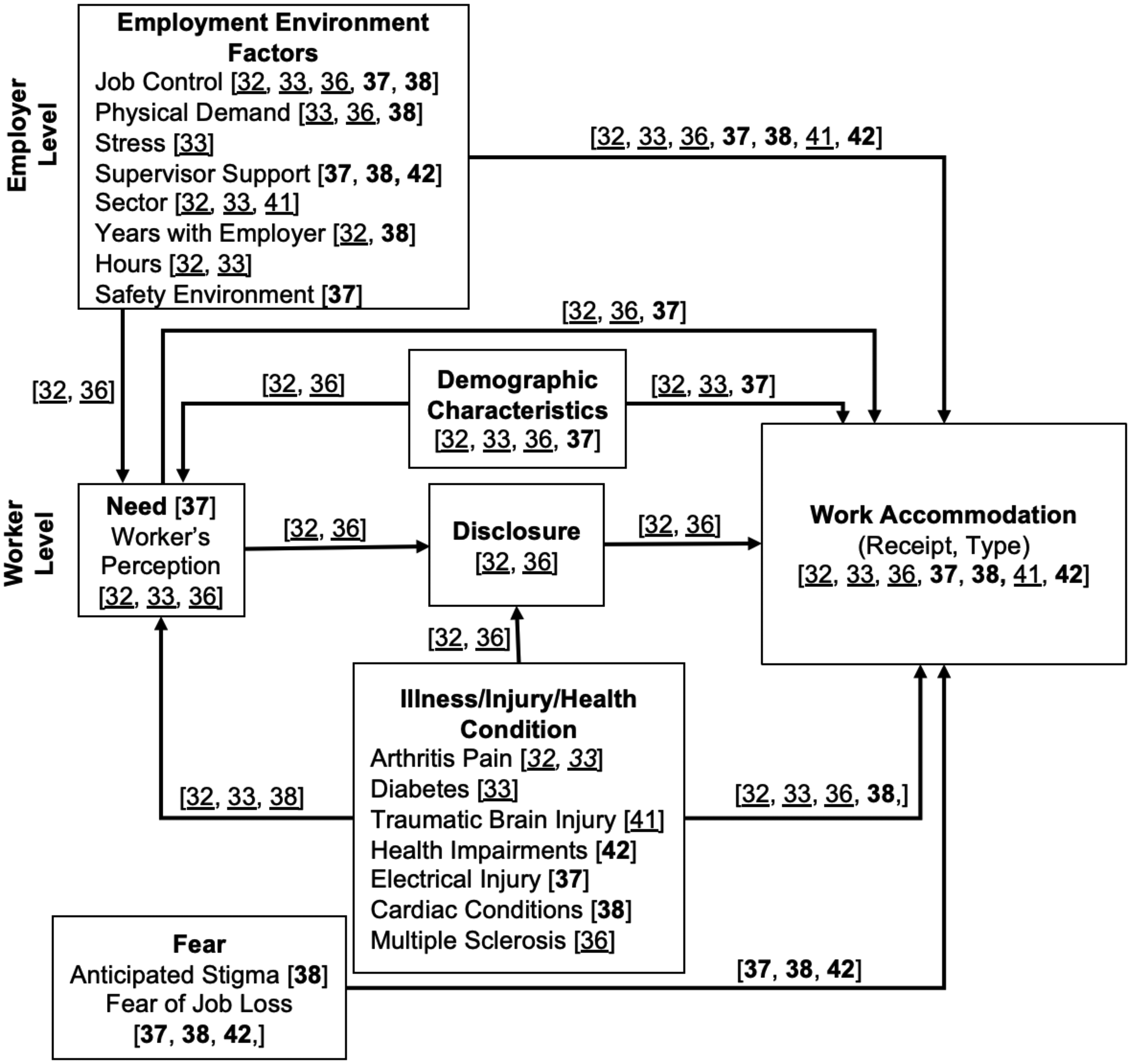
Model A: work accommodations as outcome.
Data sources and searches
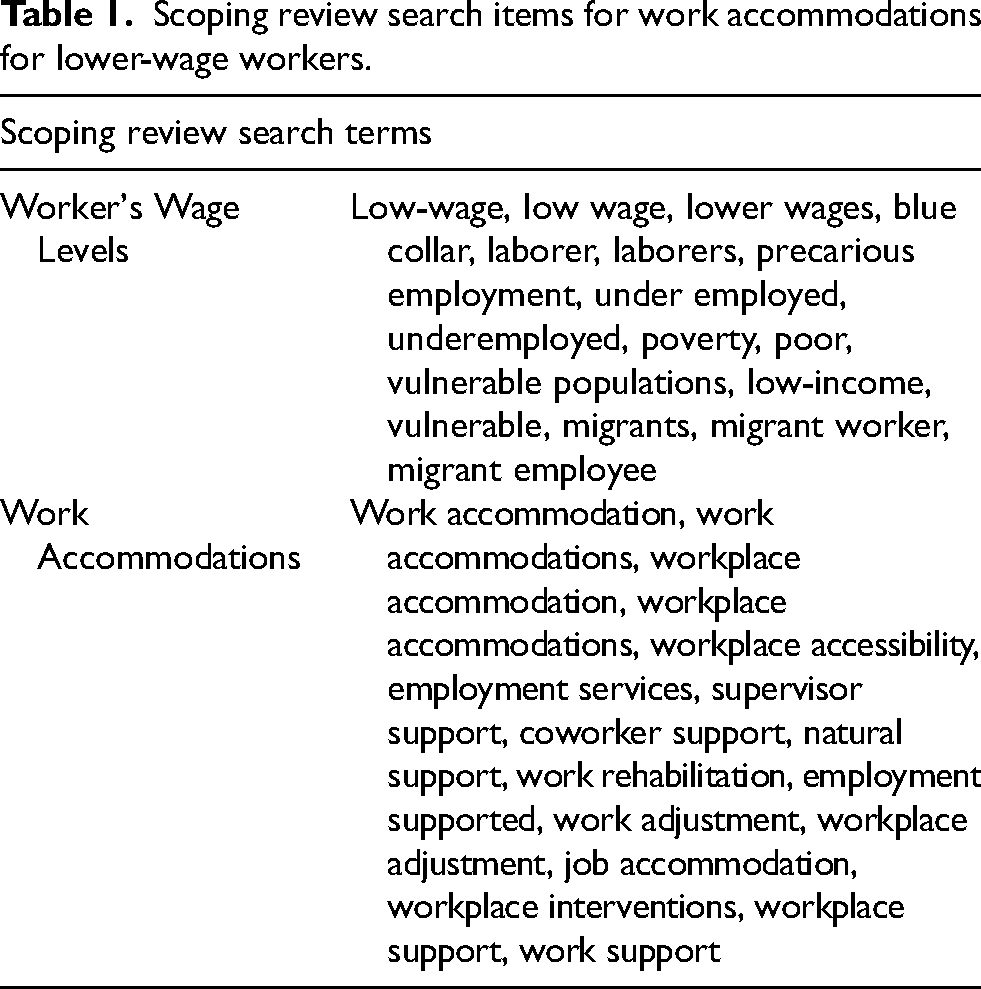
Searches were conducted through July 3, 2024, with no date limit set. PubMed (MEDLINE), SCOPUS, and CINHAL databases were used to identify relevant articles. The search strategies were drafted by an experienced health sciences librarian and further refined through team discussion. The final search results were exported into EndNote 20 26 and duplicates were removed. Search results were then exported into Covidence 27 for team collaboration and screening. Search terms can be found in Table 1.
Scoping review search items for work accommodations for lower-wage workers.
Inclusion criteria and yields
Inclusion criteria were developed a priori and applied to the initial search yield of articles. 28 The inclusion criteria were as follows: include work accommodations as a variable of interest or finding, which we defined as modifications to the work environment, schedule, responsibilities, or equipment for an individual to assist with performing job duties provided by the employer; 16 include empirical results for low-wage employees defined as the use of the terms low-wage, blue collar, or pink collar, or listing jobs or employment categories with low-wages as listed by the U.S. Bureau of Labor Statistics 29 or International Labour Organization; 30 published in a peer-reviewed journal; and published in the English language. All study designs were included, as well as studies from countries outside of the U.S. due to the limited number of articles, to achieve thorough mapping of the current state of the literature.
Titles and abstracts of articles were screened for relevance by two reviewers using the inclusion criteria flexibly to account for differences in definitions of key terms that were not apparent by abstract only (e.g., “workplace adjustment” also captured articles referring to cultural adjustments made by foreign workers) and articles that did not mention employment type or wage in their title or abstract. The same inclusion criteria were meticulously re-applied to full texts before abstraction to exclude articles incidentally captured due to differences in definitions of key terms and lack of description of job type or wage. Disagreements in studies selected for inclusion were resolved in Covidence by a third reviewer after discussion. A total of 473 articles were found during our search, 14 met inclusion criteria and were therefore included in the sample (Figure 1).
Data abstraction processes
A protocol and template for data abstraction were created and piloted for systematic abstraction of pertinent information. Abstracted data included general article characteristics such as study sample demographics, study methods, explanatory and dependent variables of interest (for quantitative studies), and salient themes (for qualitative studies). In addition to characterizing the types of accommodations represented in the literature, a central purpose of this review was to determine whether accommodations were situated as an outcome, explanatory (including as a mediating or moderating variable), or control variable, and the configuration of relationships between accommodations, worker and workplace factors, and health in the study design or findings.
Results
Included articles were published between the years 2014 and 2024. A summary of the results can be found in Table 2. The U.S. and Canada were the most common settings for studies of work accommodations, with five (35.7%) and four (28.6%) studies conducted in these countries, respectively. Five studies (35.7%) focused explicitly on a population of low-wage workers or occupations categorized by low-wage work, while all others included low-wage workers among a more diverse group of workers along a wage continuum. Eight (57.1%) articles used a qualitative approach – three of which were secondary analysis of qualitative data; and the remaining six (42.9%) used a quantitative design. Studies included sample sizes that ranged from 12 to 73 participants in qualitative studies, and 25 to 3313 study participants in quantitative studies. Participants’ mean ages across included studies ranged from 22.9 to 64.6 years, with the majority of studies including participants between 40 and 50 years of age. Notably, the health conditions for which accommodations were described or sought were variable, with no condition taking precedence and are listed in Table 2.
Study characteristics.
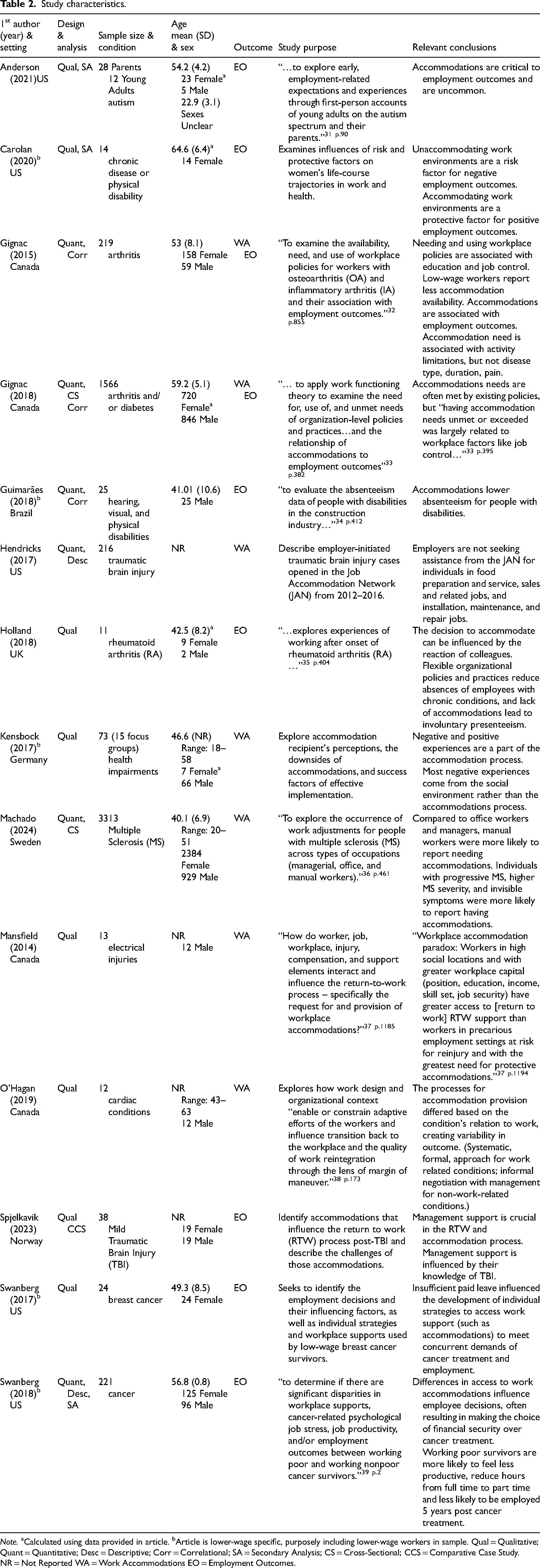
Note. aCalculated using data provided in article. bArticle is lower-wage specific, purposely including lower-wage workers in sample. Qual = Qualitative; Quant = Quantitative; Desc = Descriptive; Corr = Correlational; SA = Secondary Analysis; CS = Cross-Sectional; CCS = Comparative Case Study.
NR = Not Reported WA = Work Accommodations EO = Employment Outcomes.
Modeling work accommodations in the literature
Within the scientific community, conceptual models are useful for illustrating mechanistic pathways of complex phenomena. As a social phenomenon with potential significant implications for health, a more nuanced understanding of the factors and pathways involved in extending work accommodations to low-wage workers can both advance our understanding of employment as a social determinant of health (SDOH) 40 as well as identify potential targets in the pathway for intervention development and testing.
Given this, we organized the review findings as conceptual models by prioritizing whether work accommodations were positioned as an outcome or explanatory variable in analyses (in the case of quantitative studies) or in salient thematic findings (in the case of qualitative studies). The conceptual models of our review findings also depict whether explanatory factors were at the individual (worker) or employer level, and how their relationships to work accommodations were configured. Final models required the primary author, a second data analyst, and the last author to concur on the configuration. Authors agreed that two models differentiated by the designation of accommodations as an outcome or explanatory variable were sufficient to capture the factors and relational pathways among variables or thematic findings in the studies reviewed. The models are organized around work accommodations as an outcome (Model A) or work accommodations as an explanatory variable (Model B).
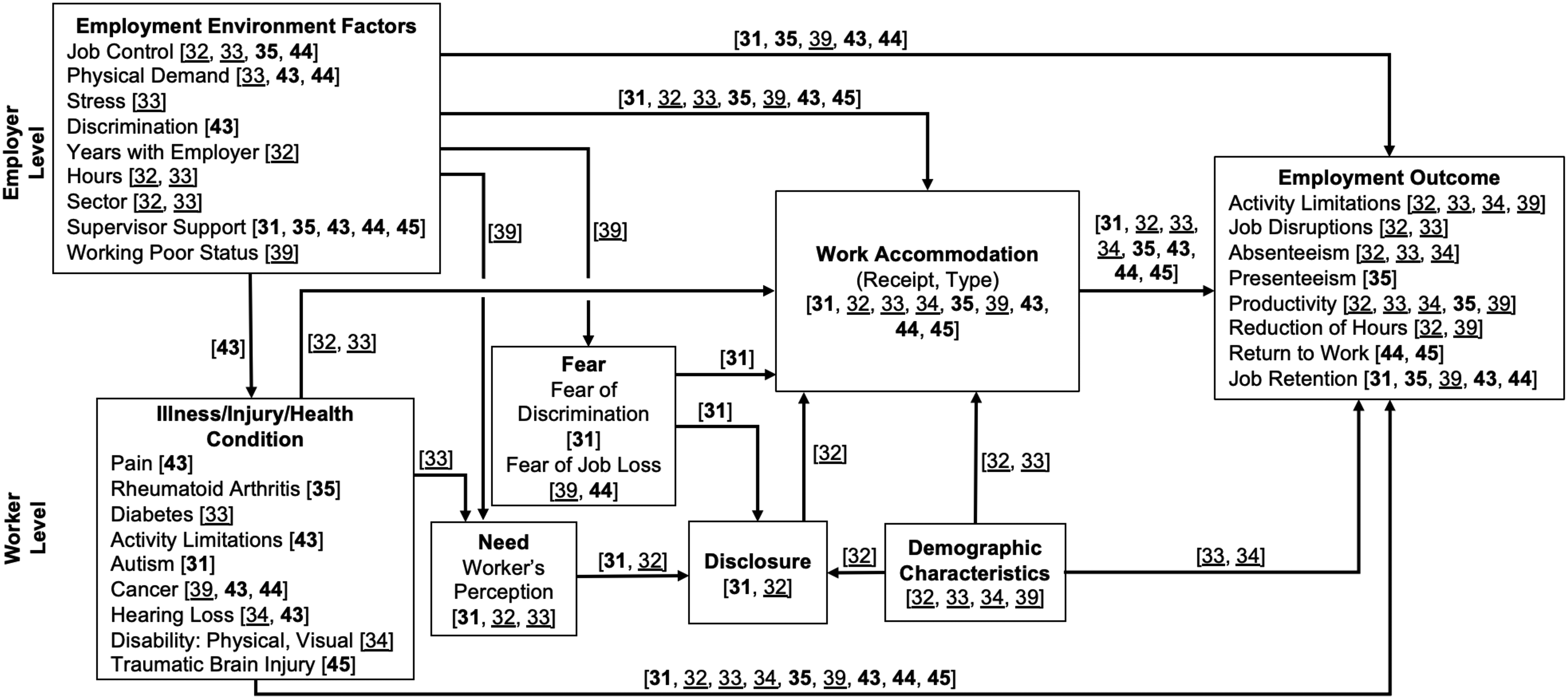
Model B: work accommodations as explanatory variable.
Four (28.6%) studies examined both work accommodations (WA) and employment outcome (EO) and may overlap across both models.
Model A: work accommodations as outcome
As shown in Figure 2, half (n = 7) of the studies considered work accommodations as an outcome. As an outcome, work accommodations are often measured dichotomously (received/not received).32,33,36–38,41,42 In a recent quantitative study of work accommodations for arthritis and diabetes, Gignac 33 classified work accommodations as accommodation needs met, accommodation needs unmet, and accommodation needs exceeded. Similarly, Machado 36 asked respondents if they had work accommodations with answer options of yes, yes but not enough, no but I do need, and no not needed, though for statistical purposes collapsed answers to yes and no. The more nuanced classifications extended the more typical measures of work accommodations needed (yes/no), work accommodations available (yes/no), and work accommodations used (yes/no)32,33,36 to account for workers’ perceptions of the extent to which their accommodation needs were met.
Employer level
Contextual factors operating at the employer level were explanatory variables in all 7 studies. In 5 of these studies, job control was associated with work accommodation outcomes. In two quantitative studies, Gignac found employees with greater job control had greater perceived need for work accommodations, were more likely to use work accommodations, 32 and more likely to report their work accommodation needs were exceeded by their employers, 40 while workers with less job control and high physical demands were more likely to report unmet work accommodation needs. 33 In another quantitative study, Machado 36 found that the type of occupation (manager, office worker, manual worker) and the influence the position affords over the employee's work are important factors in work accommodations. Qualitative studies of workers following either injury or illness who could benefit from work accommodations had similar findings. Mansfield 37 found that job control, occupational classification, and perceived job security influenced the experiences of workers in need of work accommodations for electrical injuries. Among workers returning to work following a cardiac illness, O’Hagan 38 found work accommodations were not as valued among workers with high job control and low demands because their jobs were flexible enough to make the changes they needed themselves. Overall, job control and demands are important employment-level factors that influence work accommodation experiences, with the low-wage characteristic of low control and high demands consistently associated with unmet work accommodation needs in the included studies.
Supervisor support was described as an important employer-level factor in all 3 qualitative studies, but in none of the quantitative studies. Kensbock's 42 study of work accommodation recipients’ perspectives of the process found that supervisor support shaped the accommodations process. Mansfield 37 found that a combination of job characteristics such as occupational classification, job control, job security, income, education, and social status were associated with supervisor support, with managers receiving work accommodations needed for successful return to work and unskilled laborers often reporting supervisors who disregarded or were reluctant to comply with prescribed work accommodations. As one example, a participant in O’Hagan's 38 study reported that, after multiple failed attempts, they were only able to successfully return to work due to the support of their supervisor, shift foreman, and occupational physician – all of whom collaborated to allow for work accommodations. Moreover, a qualitative study found that when employers were more concerned with injury claims and monetary costs, employees reported that their employers were reluctant to provide work accommodations. 37 Supervisor support shapes the experiences of workers with health conditions, including the success or failure to receive needed work accommodations.
Quantitatively, findings of differences between sectors for work accommodations have been mixed. Sectors made up of low-wage workers, such as food preparation and service (2.2%), sales (4.4%), and installation, maintenance, and repair (2.9%), requested work accommodations assistance from Job Accommodation Network far less often than sectors of professional jobs 41 and workers in similar Canadian sectors of sales/ service, and trades/ transportation/ equipment operations also were less likely to report work accommodations available from their employers. 32 Gignac's 33 later study also tested the relationship of job sector and work accommodations needs unmet, met, or exceeded, but found no statistically significant differences. Job sectors are one way of measuring work context and may be important to consider when studying work accommodations, given the robust associations with wage, control and demands, and health risks.
Years worked with an employer also holds a relationship with the receipt of work accommodations, as do hours worked, and the safety environment of the workplace. At a large Canadian auto manufacturing plant, senior workers could bid for less physically demanding work as an accommodation post cardiac event and take the place of less-senior laborers in the position; 38 related findings revealed that workers with greater years with their current employer were more likely to report needing and using work accommodations. 32 In addition, workers reporting more weekly hours were more likely to report the use of work accommodations, 32 while those with part time hours and irregular shift hours were more likely to have unmet work accommodation needs. 33 Finally, at the employer level, the safety environment of the workplace influenced the return-to-work experience of injured workers, with the strength of the safety environment relating to the amount of support the worker perceived. 37
In summary, several factors at the employer level that reflect working conditions and employment contexts have been included in studies examining work accommodation needs, receipt, and use. In general, factors associated with low wage work (less job control, lower job status, and irregular shift hours/part-time work) were more consistently related to not receiving work accommodations.
Worker level
Demographic characteristics were found to be related to work accommodations both quantitatively and qualitatively. Workers with more education, greater pain, and activity limitations were more likely to report needing and using work accommodations, 32 and women were more likely to report having unmet accommodation needs. 33 Foreign born (foreign to Sweden) and lower education were predictors of having or needing work accommodations. 36 However, workers’ perception of their need for work accommodations did not always result in receiving one. 32 The most vulnerable of workers are the same workers most often not receiving necessary work accommodations.
Although a necessary step preceding the receipt of work accommodations, only two studies investigated the role of disclosure of a health condition to an employer, where employees who had disclosed their health condition to their employer were more likely to both express a need for and use work accommodations. 32 Significantly, among workers who had work accommodations, 95% had disclosed their health condition. 36 Unfortunately, in Machado's 36 study, manual workers disclosed their health conditions most often when compared to managers and office workers, but had the least opportunities for work accommodations. To the extent that injuries or health conditions either occur in or are directly attributable to the work environment, qualitative findings from O’Hagan's study of 38 auto manufacturing plant workers revealed mandates to offer accommodations were only given for work-related injuries or health conditions, while accommodations for non-work related were negotiated between the manager and union. An additional finding from that study was that priority is given to musculoskeletal disorders due to the associated disability costs. 38 Gignac 33 also found that workers with the health conditions arthritis or arthritis and diabetes reported less availability of work accommodations when compared to the control group of workers without those conditions; however, the needs of each group (arthritis, diabetes, arthritis and diabetes, and healthy) were similar with no significant differences. Although the type of health condition was not associated with whether work accommodation needs were met, as discussed in the previous section, select employment environment factors were.
The relationship of fear and work accommodations was found only in the 3 qualitative studies. In one study with recipients of work accommodations at a German industrial company, some expressed fear of losing their jobs during the accommodations process. 42 Relatedly, participants of Mansfield's study 37 reported fear of requesting work accommodations related to the perceived lack of job security, including work accommodations that had been written in their return-to-work plan and recommended by health care providers. Workers also feared losing their jobs if they accepted another job position to meet needed work accommodations, stating they had witnessed former employees being laid off after accepting supervisory positions. 37 In another study, participants reported fear of being stigmatized by coworkers and others for accepting the accommodation known as “placement” or accepting a job position that meets their job restrictions. 38 Fear of job loss or of being stigmatized has the potential to prevent workers from disclosing their need of work accommodations or accepting available work accommodations.
Factors at the worker level that can predict accommodation outcomes are greatly understudied, and a disservice for the most vulnerable worker populations who are often working in low-wage jobs. In addition to factors known to be associated with low-wage work such as gender and education, symptom severity, disclosure, knowledge of legal rights in employment settings, and fear related to job security are also associated with the need and receipt of work accommodations, demonstrating the social, legal, and psychological complexity of requesting and/or receiving work accommodations in the low-wage workplace.
Model B: work accommodations as explanatory variable
As shown in Figure 3, nine studies (64.3%) included work accommodations as an explanatory variable – all of which examined employment-related factors as an outcome; 4 were quantitative32–34,39 and 5 were qualitative.31,35,43–45 Gignac's studies32,33 overlap between models A and B and will not be repeated in the section below. The overlapping studies explored work accommodations as both an outcome variable (model A) and an explanatory variable (model B); therefore, findings of work accommodations as an outcome variable will not be shared below to avoid redundancy.
Though understudied, work accommodations, or the lack thereof, have been linked to employment outcomes. Work accommodations often improve employment outcomes such as job retention, improved productivity, and successful return to work.35,44,45 The quantitative findings are consistent with the findings of 3 qualitative studies where participants reported losing their jobs due to the lack of work accommodations31,43 and presenteeism (working while ill). 35 Gignac's studies, though not exclusive to low-wage work, found that when compared to individuals who need but do not use work accommodations, individuals with select work accommodations or their work accommodation needs exceeded report less work activity limitations, job disruptions, and productivity losses.32,33 Similarly, Guimarães 34 found among construction workers with disabilities in Brazil, workers with work accommodations had even better work attendance than individuals without disabilities.
Employer level
Eight of the nine studies included in Model B also incorporated factors at the employer level. In addition to the associations found in model A, a qualitative study in the United Kingdom (UK) found that workers with more job control could leverage it to make their own accommodations, assisting them with productivity and job retention, while other workers with less control had to submit a request to their employer to obtain needed work accommodations. 35 Job control also allowed low-wage workers in another study to have work accommodations for cancer treatment, preventing lost income. 44 As for physical demand, in one qualitative study of low-wage workers, participants described a dynamic relationship between the onset or worsening of their condition and their physical demands at work, which ultimately affected employment outcomes. 43 Low-wage participants from another qualitative study reported having to stop working due to not being able to meet the physical demands of their occupation. 44 Job control and demand is a frequently studied factor and often serves as a proxy for the status of one's employment position. An understanding of a worker's employment position is imperative in understanding the influences of whether workers receive work accommodations, and how one's position affects employment outcomes.
Discrimination, in terms of employers refusing to provide work accommodations after the onset of a worker's health condition, was also reported qualitatively. 43 Opposite of discrimination is supervisor support, a factor described as crucial for employment success by respondents in Anderson's 31 study of employment experiences of young adults with autism, including offering work accommodations such as flexibility in assigned tasks. Similarly, Spjelkavik's 45 qualitative study describes management support as crucial to the return to work process post-TBI, which is influenced by management's knowledge of the condition and the length of time the employee needs the accommodation. Supportive supervisors were described as understanding and they provided work accommodations, while supervisors who provided less support were described as pressuring workers to work beyond their abilities and did not offer work accommodations. 35 Supportive supervisors influenced employment outcomes when they provided emotional support and workplace supports to ensure job security, including providing needed work accommodations such as extra rest breaks, flexible schedules, and job modifications. 44 Valid and reliable quantitative measures of supervisor support, such as the Survey of Perceived Supervisory Support (SPSS), 46 are available, yet none were included by the quantitative studies found for this scoping review.
Worker level
The additional reporting of disclosure in model B was a qualitative study that had mixed findings of whether disclosing a young adult's autism diagnosis could adversely impact employment outcomes. Some young adults described choosing to disclose their diagnosis to foster understanding from the employer, and other young adults reported choosing to not disclose due to fear of their employer's negative reactions. 31 Another factor in the choice of disclosure is fear of job loss, identified as a concern for low-wage and working poor cancer survivors.39,44 Perceived need influenced the decision to disclose health conditions as was demonstrated by one young adult who expressed that because their disability is not apparent to others, and they receive help when needed, there was no need to disclose their disability. 31 Disclosure of health-related work limitations, fear of disclosure, and need for secure employment are all associated with accommodations to function optimally at work, but more studies are needed to understand the mechanisms unique to low-wage workers influencing their choice to disclose health conditions and the pathways to the receipt of work accommodations.
As to be expected, all the studies reported how the health condition affected employment outcomes. Many respondents reported difficulty in completing tasks (less productivity or work activity limitations) due to the presence of conditions.32–35,39,45 Some low-wage workers reported losing their jobs due to having an unaccommodated health-related work need.31,43,44 Nearly all studies reported the benefits of work accommodations for employment outcomes. Workers who reported using work accommodations were more likely to remain employed,31–33,35,44 and had decreased absenteeism. 34 Findings across studies suggest work accommodations have the potential of being an effective tool in managing chronic health conditions in the workplace and to improve employment outcomes for low-wage workers.
Discussion
The results of this scoping review demonstrate the extent to which work accommodations have been studied among low-wage workers and map the relationships between worker-level and employer-level factors, work accommodations, and employment outcomes. We found that both the quantity and depth of research on work accommodations among low-wage workers has been minimal, with only 14 studies meeting abstraction criteria. Included studies varied in study design, employment settings, and the degree to which samples focused on low-wage workers, and yet a number of commonalities were found. Two conceptual maps were developed to characterize relationships among variables included in the studies (for quantitative studies) and major thematic findings (for qualitative studies).
The findings of this review indicate there are significant gaps in research with respect to work accommodations, particularly with regard to the outcomes studied. Without exception, all studies in this area have been conducted using one of the following two outcomes: 1) whether an accommodation was received/granted, or 2) employment status or productivity as it relates to absenteeism or presenteeism. Despite the high prevalence of injuries and chronic illness among the low-wage workforce and the potential for work accommodations to serve as an intervention that improves psychological and physical aspects of health, researchers have not yet designed studies with health outcomes in mind. Given the large body of evidence demonstrating that aspects of the work environment, such as job strain, job effort-reward imbalance, and job control relative to demands, influence cardiovascular47–49 and mental health outcomes,50–52 it is reasonable to assume that work accommodations for those who need them would also directly or indirectly affect health. Moreover, given that U.S. employers often do not extend benefits including those related to accommodation receipt for low-wage workers or engage in significant retention efforts in the same way they do for higher-wage workers, it is plausible to hypothesize that differential patterns of benefit distribution are potentially significant drivers of health inequities. 53
Little is known about the knowledge workers have about their rights to work accommodations, and the workplace policies in place to request the use of accommodations. This is of great importance because the policy and procedure in the U.S. places the responsibility of requesting work accommodations on the employee. 54 Circumstances unique to low-wage workers, especially those with chronic health conditions, put them at increased risk for decline due to disability and an early departure from the workforce; although the use of work accommodations may be a cost-effective tool for bridging this disparity between lower wage and higher wage workers. Complex policies and procedures are employment environmental factors known to influence the receipt of work accommodations such as supervisor support, organizational policy, job control, job demands, and job strain. These factors need further study in the low-wage work environment. For example, job control is highly correlated with receiving work accommodations but is a job characteristic often lacking in low-wage employment. Conversely, job demands are typically high in low-wage employment but also are significantly linked with the lack of receipt of work accommodations. Supervisor support is a necessary component to the use of work accommodations, but available resources are not always taken advantage of because as Hendricks 55 found, low-wage employers do not reach out to JAN services for assistance with work accommodations. The reason for this underutilization of JAN is unknown and requires further study.
Kensbock 42 reports instances of supervisors perpetuating discrimination and bullying.
At the individual level, the fear and anticipation of stigma, discrimination, and job loss offer plausible reasons for using fewer accommodations. Anticipated stigma is suspected to be the most common reason for not disclosing health conditions 56 and subsequently work accommodation needs. Additionally, Baldridge 57 proposes that the decision to request an accommodation is a complex process shaped by workplace attributes, which influence personal assessments such as perceptions of accommodation usefulness, anticipated image cost, and expected compliance.
The experiences of the work accommodation process for low-wage workers are understudied with little known about the relationships of commonly studied factors such as job control, job demand, job strain, support, and work limitations, and work accommodations.
Implications
To address health inequities, initiatives such as Healthy People 2030, 58 the National Institute of Occupational Health and Safety (NIOSH) Total Worker Health® Centers of Excellence, 59 and the National Institutes of Health 2021–2025 Strategic Plan 60 are increasingly emphasizing employment and workplace environments as SDOH. 40 Related to working conditions, the COVID-19 pandemic affected low-wage workers the most due to job losses,61,62 and exacerbated health inequities.63,64 Low-wage workers are predictably the first to find themselves unemployed during economic downturns in the U.S., and are routinely subject to fewer employment benefits, increased occupational risks, greater physical demands and stress, and increased morbidity and mortality from occupational injuries and chronic disease. As a result of these inequalities, low-wage workers were at higher risk for exposure to COVID-19 65 and had a disproportionate number of cases.66,67 As workers return to employment with sequelae of COVID-19, 68 including long-COVID, it is essential to understand the impact the working environment has on work accommodations and how work accommodations impact the worker.
The aftermath of COVID-19 has left employers grappling with challenges in hiring and retaining workers. In response, it is pivotal to recognize the link between work accommodations and retaining workers, reducing turnover and absenteeism, and increasing productivity. Employers actively seeking to hire and retain workers should consider the strategic implementation of work accommodations as a valuable tool in this endeavor.
Understanding of the profound impact of COVID-19 on health inequities calls for a comprehensive exploration of the evolving landscape of work accommodations. This exploration is not only essential for adapting to the challenges presented by the pandemic but also for fostering resilient, equitable, and health-conscious workplaces in the post-COVID era. A proactive approach for health care providers would involve asking individuals with chronic health conditions about the presence of work accommodations. Furthermore, directing individuals to resources that facilitate the work accommodation process not only empowers the worker but also aligns with the broader social objective of creating a more supportive and inclusive work environment.
Limitations
A limitation to note is the exclusion of grey literature from the review, a potentially rich source of evidence. 69 Grey literature is any non-peer reviewed paper or report that is published by a body of government, academia, or industry. The inclusion of grey literature might have broadened the scope of this review and lessened the risk of publication bias.
Another review limitation is the heterogeneity of the studies that were included because the purpose of this scoping review was to explore the literature to determine the state of the literature for work accommodations for low-wage workers. All studies were included without regard to year published, setting, population, or design. Due to the ever changing economy and correlating effect on employment, the year of each of the studies might hold some value. The overall nature of low-wage work does not change drastically, but the workers employed in the environments may be influenced by historical events. The COVID-19 pandemic is an exemplar of how quickly employment can be affected and then influence those who are employed in the workforce. Setting is important because work accommodations are regulated by each nation. Some countries provide assistance proactively with expectations for the employer to begin the accommodation process while other nations require no action from the employer until the worker requests accommodations. Additionally, the inclusion of workers across various income levels and job types limits the generalizability of these studies to low-wage workers with chronic health conditions, as results were analyzed collectively, potentially skewing outcomes for the low-wage group.
Conclusion
The purpose of this scoping review was to evaluate the research on work accommodations for low-wage workers and to chart the conceptualization of the associations between work accommodations, employment outcomes, and health outcomes for both the worker and employer. As was expected the extent to which work accommodations impact health outcomes is understudied, as we suspect is generally true for any topic of study focused on low-wage workers. Work accommodations may be an important target among populations with chronic conditions for intervention towards reducing morbidity, work limitations, and health inequities. Our review supports the need for more studies to explore the request and receipt of accommodations by low-wage workers who need work accommodations.
Footnotes
Acknowledgements
The authors thank Jamie Conklin for advice and assistance in the search process, and Shilpa Shrestha and Nayeon Lee for assistance in the review process.

Funding
The authors disclosed receipt of the following financial support for the research, authorship, and/or publication of this article: Research reported in this publication was supported by the National Institute of Nursing Research of the National Institutes of Health under Award Numbers 5T32NR007091-29 & 1F31NR021349-01. The content is solely the responsibility of the authors and does not necessarily represent the official views of the National Institutes of Health.
Declaration of conflicting interests
The authors declared no potential conflicts of interest with respect to the research, authorship, and/or publication of this article.