




Abstract
The experience of Indigenous men as they become fathers is not well documented in the literature, and available parenting programming in Canada often does not account for their unique perspectives. Supports and resources for expecting parents can be an effective way to support the transition to parenthood, yet most programs focus on women and mothers and integrate only Euro-Western approaches and values of parenting. Providing resources that meet the needs of Indigenous fathers is important, as a father’s involvement in the lives of his children has been demonstrated to have significant benefits, including improving parent–infant attachment and a reduction in parental depression. Using Charmaz’s grounded theory approach, this community-led study seeks to understand the transition to fatherhood experienced by Indigenous men. A total of 18 Indigenous men participated in semi-structured interviews to share their experiences of becoming fathers, and their programming needs. A Steering Committee including Indigenous community members and parents guided the creation and implementation of the project, including participating in collaborative data analysis. The core category, the Journey of Fatherhood is organized into five sub-categories: visioning fatherhood, planning for fatherhood, the birth of a baby, pursuing fatherhood, and navigating fatherhood. The findings support a new understanding of the transition to fatherhood for Indigenous men, highlighting a holistic approach to parenting and an appreciation for life-long learning. Incorporating an understanding of the Journey of Fatherhood into local parenting programs and resources may better meet the needs of Indigenous fathers and their families, and improve their engagement in services.
Introduction
A father’s involvement in his children’s lives has many benefits, including lower infant mortality rates and cognitive delays, improving parent–infant attachment, and decreasing parental depression (Allport et al., 2018; Bamishigbin et al., 2020). Yet, in what is now known as Canada, colonization, including the Residential School Legacy, during which time Indigenous children were forcefully removed from their homes to be raised in educational facilities run primarily by Christian churches, has disrupted opportunities to pass down knowledge and role model family structures, parenting roles, and traditional ways of parenting for Indigenous Peoples (The Truth and Reconciliation Commission of Canada, 2015). This has left few resources for Indigenous men to use to conceptualize their own ideas and values surrounding fatherhood (Ball, 2010; Cabrera et al., 2018; Canuto et al., 2019; Gerlach et al., 2017). Although Euro-Western parenting styles have been adopted by Indigenous fathers, there remains an aspiration to revitalize traditional roles and values by integrating cultural and spiritual wellness into their parenting approaches (Reilly & Rees, 2018). These aspirations, however, are not well supported by the parenting supports and programs made available to men, as they tend to focus on equipping women to become mothers, and not men to become fathers (Ball & Moselle, 2015; Gerlach et al., 2017; Mcadoo, 1993; Wright et al., 2022). Programming is often based on Euro-Western ideals and is not always culturally safe (Ball & Moselle, 2015; Gerlach et al., 2017; Harrison et al., 2023; Mcadoo, 1993; McAdoo & McAdoo, 1998). There is great diversity among Indigenous Peoples in Canada, who are recognized as including three distinct groups, each comprised of diverse and unique cultures, including First Nations, Inuit, and Métis Peoples (The Truth and Reconciliation Commission of Canada, 2015). Herein, Indigenous Peoples will be used to refer to more than one cultural group when it is not possible to be more specific.
Theoretical understandings of the socialization of families and parental roles have shifted over time from a focus on parent–child influences to recognition of the family itself being an interdependent socialized system (Parke & Buriel, 2008). Historical theorizing of fatherhood has typically taken a deficit approach, while more contemporary frameworks seek to consider the sociocultural dimensions that impact fathering (Cochran, 1997; Harrison et al., 2023; Mcadoo, 1993; McAdoo & McAdoo, 1998; Parke & Buriel, 2008). For example, a recent movement to understanding the socialization of families and children using an ecological lens allows one to better appreciate the impacts of contextual influences on family development, behaviors, and functioning, such as relationships within the family, with extended family members, within and between communities, and other social support networks (Parke & Buriel, 2008; Spencer, 2008).
The early theorization of father roles in the 1980s included engagement, accessibility, and their responsibility to the family and their children (Edwards et al., 2014; Lamb et al., 1985; Pleck et al., 1985). Engagement was conceptualized as how fathers interacted with their children. Accessibility referred to their being available to their children, and responsibility meant they prioritized providing resources for their children (Edwards et al., 2014; Lamb et al., 1985; Pleck et al., 1985). In 2010, Pleck (2010) further refined how men are accessible to their children to include their warm and responsive care.
Several theories describe the developmental transition of men to parenthood, though none consider the unique perspectives of Indigenous men. Vidaurreta et al. (2022) developed a four-stage theoretical model depicting the journey to fatherhood for first-time fathers, encompassing beginning the journey, fatherhood in limbo, facing reality, and settling down. Barimani et al. (2017) created a model describing the facilitators and barriers to the successful transition to parenthood. Finally, Draper (2003) discussed a theory of men’s transformation into fatherhood, outlining three phases: transition, liminality, and incorporation, and the role of rituals in bridging biological birth and fathering practices. While these models all take a multi-phased trajectory to fatherhood, they are situated within Euro-Western theories of fatherhood, historically rooted in patriarchal norms, attributing authority to men (Strier & Perez-Vaisvidovsky, 2021).
Throughout the history of family socialization theory, there have been minimal considerations made of the developmental process for men who become parents from a cultural perspective, and instead, our understanding of fathers has been informed by Euro-Western perspectives, focused on fathers’ roles or their impact on child outcomes (Harrison et al., 2023; Mcadoo, 1993; McAdoo & McAdoo, 1998). A theory grounded in the unique ways of knowing of Indigenous men is necessary to conceptualize the transition to fatherhood within the relevant social, historical, political, and colonial contexts impacting their lives. A more accurate understanding of this experience will support creating parenting programs that can better meet the needs of Indigenous fathers, thereby promoting both a healthy transition to parenthood while optimizing outcomes for their children.
Project Background
At the request of community partners and local First Nations fathers, we created a pre-planning group consisting of Indigenous community members, partner organization representatives, and researchers from Southern Ontario, Canada, to design a three-phased project, titled the Fathers of the Next Generation project, to create a community-developed program that aims to meet the needs of Indigenous fathers as they transition to their new parenting role. Phase 1 aimed to understand the needs and experiences of Indigenous men and Two-Spirit and LGBTQQIA+ (Lesbian, Gay, Bisexual, Transgender, Queer, Questioning, Intersex, Asexual, plus) people as they become parents. The term Two-Spirit is an Indigenous term that transcends Euro-Western definitions of sexuality, sex, and gender, and recognizes the long-standing history, sacredness, and associated roles of Two-Spirit people in Indigenous communities (Carrier et al., 2020; Dykhuizen et al., 2022). Indigenous People may choose to identify as Two-Spirit or with other LGBTQQIA+ terms. In phase 2, the team will co-create a parenting program to address these needs using a community-led approach. In phase 3, the program will be piloted and evaluated according to community-identified indicators of success.
The Tekani teyothata’tye kaswenta, also known as the Two Row Wampum, guides our collaborations and partnerships (Hill & Coleman, 2019). The Two Row Wampum is an agreement between the Rotinonhsyón:ni Peoples (also known as Haudenosaunee or the Iroquois), including the local Six Nations of the Grand River community, and Dutch settlers. Peoples from the Six Nations live on land that crosses international borders, with community members living in what is now known as Canada and the United States (Hill & Coleman, 2019). The rows of the Wampum symbolize a commitment to respect, friendship, and peace that is to last forever (Hill & Coleman, 2019). In academia, the Two Row Wampum has been adopted as a tool to provide guidance for researchers entering into a partnership agreement with Indigenous communities, and includes five principles: (1) respectful, dialogical relationships where Indigenous knowledges and ways of knowing are valued and equal to Euro-Western ideals; (2) place-conscious ceremony, where both groups enter into an ethical space through ceremony; (3) equity with distinctiveness, with no hierarchy and Indigenous Peoples benefit equally from research; (4) internal pluralism and diversity—diversity within communities is respected and recognized; and (5) sharing knowledge, not owning it—with knowledge recognized as a gift and treated appropriately (Hill & Coleman, 2019). Application of the Two Row Wampum to our community-led research approach represents a culturally specific approach to decolonized research practices with Six Nations of the Grand River, ensuring their Indigenous rights for self-determination and self-governance are respected (Smith, 2012; Wilson, 2008).
Once funding was obtained, the pre-planning group became the project Steering Committee, and incorporated new members from local Indigenous-led community organizations that joined the project. The Steering Committee consists of approximately 20 people, including First Nations and Métis service providers, parents, and researchers and First Nations graduate students, in addition to a Knowledge Holder, a community member viewed as holding sacred traditional teachings and knowledge. As all partner organizations have representation on the committee, the membership number changes with organizational changes in staffing, and the welcomed addition of new community partners and parents to the project.
Authentic community engagement is an ethical imperative in research conducted with Indigenous communities, according to national guidance in Canada provided by the Tri-Council Policy Statement (Canadian Institutes of Health Research et al., 2022). Recognizing the diversity among Indigenous Peoples, our community-engagement approach incorporates the local Two Row Wampum (Hill & Coleman, 2019), as previously described, as well as oversight and guidance by a Steering Committee. As such, the Steering Committee for this project oversaw the study design and ethics applications, and continues to guide all research decisions throughout the project. When making project decisions, the Committee intentionally leans toward the perspectives of Indigenous community members on the team, particularly those who are parents, to guide the project. Each meeting with the Committee is started in by an Elder or Knowledge Holder, offering words of guidance and wisdom, or opening the meeting in a Good Way (Ball & Janyst, 2008; Peltier et al., 2020). The Steering Committee prioritizes using funding to support Indigenous-led organizations to carry out the project work, hosting meetings at the local Six Nations community or at the local urban Indigenous Friendship Centre, hiring Indigenous catering services, and engaging Indigenous facilitators. Along with ensuring the research is aligned with local cultures, customs, and traditions, we also prioritize hiring and training Indigenous research assistants, many of whom are community members. These are some of the ways we demonstrate reciprocity throughout the project, in addition to providing compensation and recognition for contributions (Kirkness & Barnhardt, 1991).
The study described here focuses on understanding the needs and experiences of participants identifying as Indigenous men as they transition to becoming fathers. A separate study seeks to understand the experiences and needs of parents identifying as Two-Spirit and Indigenous LGBTQQIA+, and these findings will be reported elsewhere. Ethical approval for the study was obtained through the University of Toronto Research Ethics Board and Six Nations of the Grand River Research Ethics Committee.
Situating the Authors
The first author (RV) is Mohawk from Six Nations of the Grand River, and a mother and wife with three young children. She is a nurse and PhD trainee and has worked to conceptualize the project with fathers and authors DJ and ALW. The second author, DJ, is a First Nation father and nurse, also from Six Nations of the Grand River. He recognized the need for culturally safe programming for Indigenous men after becoming a father himself and discussing his experiences with other local fathers. YJW is a Mi’kmaw/settler woman from Wasoqopa’q (Acadia) First Nation located in Mi’kma’ki and currently an MD candidate at Dalhousie University. WS is a First Nation father from Six Nations of the Grand River, with experience working as a service provider in Indigenous-led organizations. SG is Oneida from Six Nations of the Grand River and French Canadian. She is an Ogwehoweh midwife, board-certified lactation consultant, and an instructor and Master of Science student at McMaster University. EMF is a non-Indigenous nurse and research coordinator who facilitated the administrative aspects of the project and supported community members and trainees to participate in various aspects of the study. MB is a non-Indigenous nurse researcher with an interest in infant health and family wellness, and has worked with Indigenous community-led organizations for 4 years. JEP is the Knowledge Program Manager at the Indigenous Diabetes Health Circle, and holds a PhD in anthropology. BF is an Algonquin/Mohawk scholar and educator whose research is founded within Indigenous communities and prioritizes the self-determination of Haudenosaunee voices and perspectives to support the health of children, families, and communities. BF has expertise in the Two Row approach to community engagement, and supported the team to ensure this was emphasized throughout our collaborations. ALW is a non-Indigenous nurse researcher of European (Irish and Scottish) ancestry who has worked with Indigenous communities for over 10 years striving to support and facilitate their research priorities and goals using community-led approaches. Finally, the entire Fathers of the Next Generation Steering Committee contributed to this work through guiding the project design and implementation.
Methods
Charmaz’s constructivist approach to grounded theory was used to guide this study (Charmaz, 2011, 2014). This methodology, underpinned by constructivism, recognizes the presence of multiple realities impacted by numerous social, cultural, historical, and political influences (Charmaz, 2014). This is important given the complex interplay of factors influencing the lived reality of Indigenous fathers. Stories and experiences are compared and explored through constant comparison techniques, and theory is generated as data is collected and analyzed simultaneously (Charmaz, 2014). This grounded theory study explores the following research question: How do men experience their journey to becoming fathers?
Setting and Sample
Inclusion criteria consisted of self-identifying Indigenous and English-speaking fathers who lived in the greater Hamilton, Niagara, Brantford, or Six Nations of the Grand River area of Southern Ontario, and who were either expecting or caring for a child under the age of 3 years old. This period of parenting was chosen to support the development of a theory that reflected men’s transition through their partner’s pregnancy and the early childhood period of becoming a parent. Additionally, this short timeframe would allow for the participants to have a clear memory of the developmental processes they experienced during their transition to parenthood. Purposeful sampling techniques were used to recruit 18 Indigenous fathers to participate in the study using email, flyers, social media posts, and word of mouth facilitated by our community partners. Theoretical sampling (Charmaz, 2014) was completed by way of re-interviewing participants, as concurrent data collection and analysis revealed gaps in understanding.
Data Collection
Eligible participants were enrolled in the study after providing informed verbal consent to the interviewer or research coordinator. Data collection consisted of semi-structured interviews lasting an average of 90 minutes using Zoom or by phone. All interviews were recorded, transcribed, and deidentified by one member of the research team (YJW). The interview guide was co-developed with the Steering Committee to holistically elicit fathers’ needs and experiences using the Indigenous Wellness Framework (Health Canada, 2015). The Indigenous Wellness Framework incorporates a holistic understanding of wellness consisting of spiritual, emotional, physical, and mental behaviors along with their corresponding outcomes: hope, belonging, purpose, and meaning. Interview questions included: What does being a father mean to you?; What role does your culture have on you as a father?; How do you meet the emotional/spiritual/mental/physical needs of your children?; and Can you share a story of a time you really enjoyed being a father?
Data Analysis
Data analysis followed an iterative constant comparison method to theory construction as described by Charmaz (2014), and was facilitated by NVivo, a data management software program (QSR International, 2021). Analysis coincided with data collection and initially occurred collaboratively with a data analysis subgroup of the Steering Committee, including members of the research team (RV, YJW, EMF) and senior author (ALW), and three First Nations fathers, to ensure the findings reflected the experiences of fathers. All data analysis subgroup members participated in the following multi-phase analysis process, signed confidentiality agreements, and were provided copies of deidentified interview transcripts to complete their analysis. First, interview transcripts numbers 1 to 10 were read several times, and initial coding was completed, paying attention to comparing each transcript to another, making note of arising questions and the need to explore different experiences, and using coding strategies as described by Saldana (2016) and Charmaz (2014). Saldana (2016) provides procedural guidance on many coding strategies that can be applied to numerous qualitative methodologies. Their guidance regarding structural and axial coding was used to inform the initial coding and theorization processes, respectively (Saldana, 2016). Next, interview transcripts 11 to 18 were read several times and a second round of coding was completed in the same way. Memo writing was undertaken throughout to assist with transferring explanatory quotes to initial lay categories (Charmaz, 2014). Then, codes and quotes were read and reread, and focus coding was completed, including the development of categories and sub-categories (Charmaz, 2014). The data analysis subgroup then met to discuss emerging concepts, followed by a collaborative data analysis meeting with the entire Steering Committee to gain insight and feedback on the evolving analysis and theory construction. At these full-day meetings, all Steering Committee members read segments of the deidentified transcripts corresponding with themes and the evolving theory to provide feedback to the evolving analysis. The feedback from both meetings was then incorporated into the analysis by the data analysis subgroup. Next, theoretical sampling was completed and an additional three interviews were conducted to fill in identified gaps in knowledge related to fathers’ learning needs and strategies to engage them in programming. Final data synthesis and theory construction took place next by the data analysis subgroup, following presentations to both the Steering Committee and larger community to identify any additional changes and confirm the interpretation of the findings. Emerging from this process, some adjustments were made to the theory (i.e., the name manifesting fatherhood was changed to visioning fatherhood), to be more understandable to community members and better represent fathers’ perspectives.
Results
A total of 18 Indigenous fathers participated in semi-structured interviews. Three fathers were interviewed twice to fill gaps in understanding noted during data analysis (a total of 21 interviews were completed). Sixteen fathers identified as First Nations (including several different Nations from both Six Nations and Anishnaabeg communities), one identified as Inuit, and one as both Inuit and Métis. Each father cared for between one and eight children, with most fathers (n = 13) caring for one or two children each. The average number of people living in each household was five people. All but one father described caring for their child with a partner.
The core theoretical category is The Journey of Fatherhood, and is described by Indigenous men as an evolving process of assuming the identity of a father and its responsibilities. The Journey of Fatherhood is divided into five categories, including Visioning Fatherhood, Planning for Fatherhood, Birth of Baby, Pursuing Fatherhood, and Navigating Fatherhood. The Journey is not necessarily linear or cyclical; men may journey through the categories during their transition in a different order than they are presented here. For example, some fathers have the opportunity to vision fatherhood prior to the birth of their infant, while others may enter parenting as a step-parent or guardian, not having experienced pregnancy and birth. In contrast, some fathers may enter a family as a step-parent, and be thrust into the phase of Pursuing Fatherhood, and then move through Visioning and other phases as they experience their partner’s pregnancy and the birth of new children. Although each person’s experience of the phases of the Journey will be unique, the structure of their experiences was similar. We have described the Journey here using a chronological approach for simplicity.
Basket Metaphor
At the guidance of the Steering Committee and local community members, including fathers, we chose to demonstrate the Journey of Fatherhood using a basket analogy, to capture how Indigenous men describe planning for and carrying the responsibility of parenthood while collecting and storing knowledge in their baskets to help shape them as a father. Other scholars have applied the basket analogy as an Indigenous methodology and theoretical framework (Brant & Catharines, 2017; Humphrey et al., 2023; Isaac et al., 2024; Kimmerer, 2015; Kuerschner & S.P.I.R.I.T.S, 2017; Weida, 2014). Creating a basket is a traditional artform with cultural significance for many Indigenous cultures (Brant & Catharines, 2017; Humphrey et al., 2023; Isaac et al., 2024; Kimmerer, 2015; Weida, 2014). The making of the basket is embedded with the understanding that all things are interrelated in harmony and balance with the natural world (Humphrey et al., 2023; Kimmerer, 2015). Basketry embodies a relationship to the land, connection to the forest and plants, and an understanding of the cycles of nature. For some First Nations cultures, basketry is symbolic in ceremonies, such as a wedding ceremony where two people exchange and share personal gifts, filling their family basket with stories, songs, and medicines for use throughout the journey (Brant, 2022; Francis, 2019). For the local First Nations community, basket making conserves ancestral heritage and promotes cultural continuity of traditional knowledge and creativity. Traditionally, baskets were used for daily functional tasks, ceremonial purposes, gifting or trade, transportation, storage, and in food preparation (Akwesasne, 2020; Dolan, 2016; Greenfield, 2021; Hill & Sky, 2012). While basketry may be viewed as traditionally aligned with women, in the First Nations community involved in this project, basket making is the responsibility of both men and women. Traditionally, men were responsible for the more laborious tasks of basket making, often chopping, carving, and bending wood to enable women to further refine the materials (Lismer, 1941). Basket making is a practice that centers the creativity of the maker, serves cultural purposes and meaning, and is a distinct form of expression and knowledge gathering tool that transcends gender roles and has significant meaning for both the individual and for the family, as they journey together through life (American Indian Higher Education Consortium (AIHEC), 2009).
We use the metaphor of the basket and its cultural meaning to the local First Nations community to emphasize the significance of each phase of the Journey of Fatherhood, beginning with men preparing themselves to create a basket (Visioning Fatherhood), determining and collecting which materials and tools are necessary for its construction, and beginning to design its base/foundation (Planning for Fatherhood). Next, the foundation of the basket is constructed by weaving the materials (i.e., splints of black ash tree, cedar tree, and sweetgrass) together with techniques passed on from previous generations and individual creative styles affiliated with the maker, symbolically bringing together the new family through the birth of a newborn (Birth of Baby). As the new father tests out his new role, learning through trial and error, the basket takes shape integrating design and aesthetic cultural patterns (Pursuing Fatherhood). Finally the father is said to carry the newly constructed basket through his Journey of Fatherhood, filling the basket with knowledge and resources, and making repairs as needed as he continues to learn more about his role and how to meet the evolving needs of his family (Navigating Fatherhood). See Figure 1 for a visual depiction of the basket and the results. The following describes the categories in more depth, with supporting quotes from participants. The journey of fatherhood basket analogy.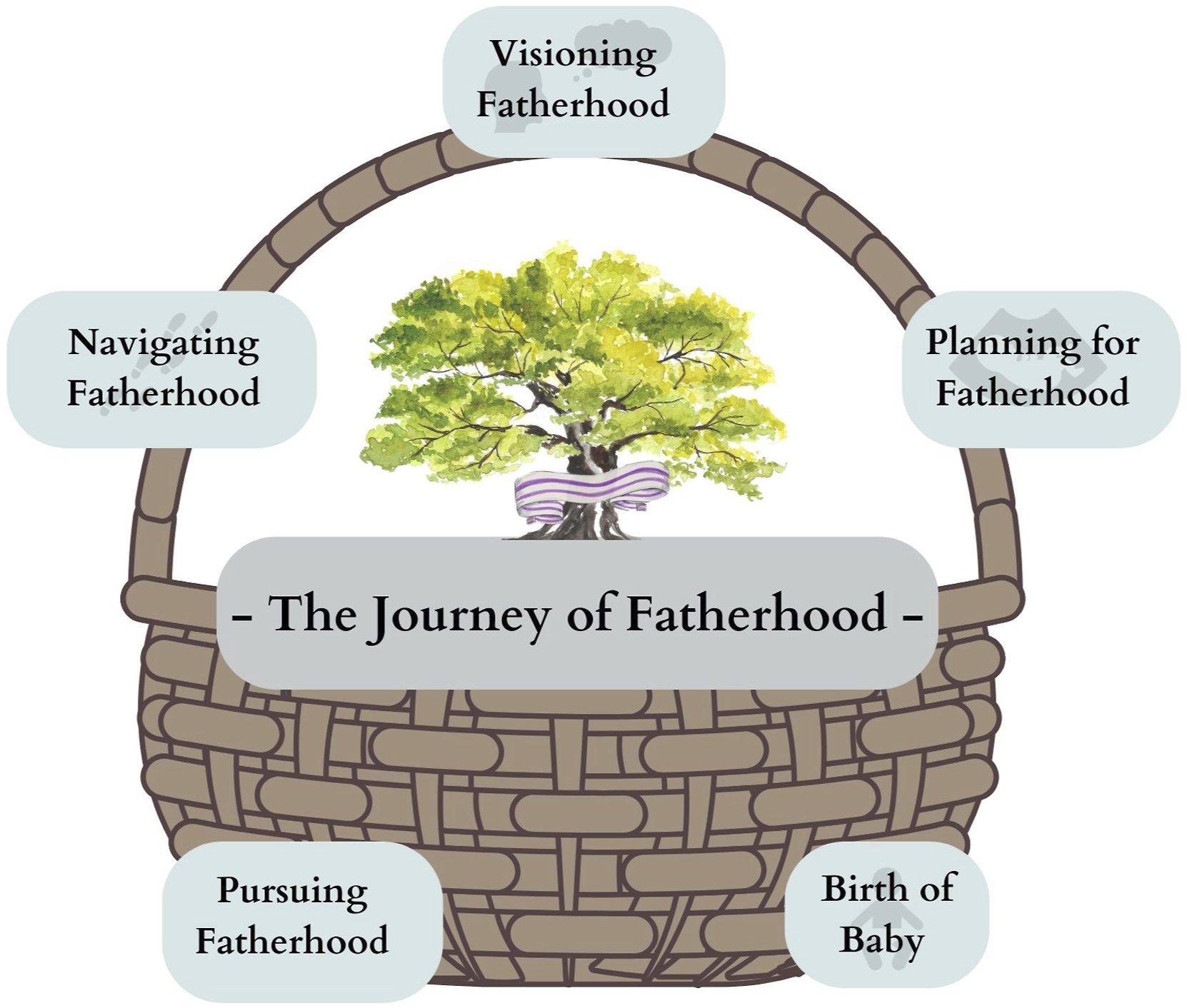
Visioning Fatherhood
During the first developmental task of becoming a parent, participants shared stories of experiences that helped them understand what being a father means to them, including Re-visioning Fatherhood and the Importance of Indigenous Identity.
Re-Visioning Fatherhood
For many participants, their own father’s involvement in their lives played a major role in their shaping aspirations to become a father. Few participants described wanting to role model their own father’s behavior. Some shared painful stories of fathers who were absent or abusive. Despite these difficult memories, some men expressed that becoming a father had provided an opportunity for their own fathers to correct their previously unhealthy parenting behaviors through involvement with their grandchildren. For example, one participant shared: Being a father, to me, I don’t know, it just means, it’s like my father gets a second chance at parenting. He’s still here, but he’s a deeply flawed man because he was raised by residential school survivors.
Furthermore, participants emphasized the necessity of re-visioning fatherhood because of challenges they experienced while they were being raised. Some recognized the necessity of not perpetuating negative parenting behaviors experienced in their own childhoods, and instead tap into the emotional intelligence they have developed since their childhood to help their own children grow and express themselves emotionally. For example, one participant shared: I can’t make the same mistakes as my father and I can build myself to become a better person. So I use that empathy and that emotional intelligence to become a better father than my father was. And so I kind of see it as an opportunity to redo what he did and to be kind of, in a way, a hero for my kids because I understand a lot of Indigenous children are just going through absolute strife currently, and I’ve lived it.
It was common for participants to ask parenting advice from other family members or peers from their home community if they did not have a strong father role model in their own lives. Alternative advice sources included relationships with other fathers, grandfathers, male coaches, mothers, uncles, men’s program facilitators, and Elders, and through the use of technology such as the internet, apps, and social media. Almost all participants mentioned at least one person they viewed as a positive role model of fatherhood, who helped them conceptualize their ideas of fatherhood. One participant shared that he searched for the meaning of being a father from an Elder who explained how fathers can be described using his Indigenous language: Many mentors that have showed me what Fatherhood looks like in our language. It’s what our Elders say … I have lent you life, I have given you life. That’s the role of a father, they’re responsible to help you through that cycle of life.
Importance of an Indigenous Identity
Participants were also attentive to their Indigenous identity as a factor in their vision for fatherhood. For example, one participant shared: Indigenous people and men in particular have been told for so long who to be, how to act, what to do and not to do, that they don’t always know how to navigate their own internal self-compass, their own spirit.
From this perspective, visioning fatherhood is framed by the dominant culture and Indigenous fatherhood is often limited to mainstream norms and expectations that suggest men are unemotional and uninvolved parents. Participants who grappled with how Euro-Western society portrays men emphasized the complexities of breaking negative cycles in their own parenting journey. For example, one participant shared how he actively challenges societal stereotypes of men who cry: That needs to open up and we need to let those walls down. We need to be actual humans and not just what we think society portrays us to be as a man. Cause heck I cry, I’m a man, I cry, I got feelings like all this stuff. So yeah, it really needs to change.
While many participants valued learning both Indigenous and Euro-Western approaches to parenting, they also recognized the impacts colonization has had on traditional approaches to parenting in an attempt to erase Indigeneity, and the importance of establishing healthy relationships within their families. Despite this disruption, participants emphasized cultural values and teachings as influential in laying the foundation of their aspirations of wanting to become a father.
Visioning fatherhood reflects a similar process of the basket maker preparing oneself and determining what materials to collect based on personal knowledge, available resources, and the environment. Many participants described how they value family and the importance of carrying on traditions they have gathered through observation and experience. Participants emphasized their readiness, stability, and choice, as part of this process, reflecting on their vision of what kind of father they want to be. This process involved participants beginning to lay the foundation of their journey to fatherhood by weaving together their lived experiences and skill sets, and reflecting on insights and knowledge gleaned from prior generations. Every basket has its unique design and style, much like every father has his strengths and weaknesses. Visioning fatherhood is a dynamic process of creation, nurturing, and adaptation, where each idea and aspiration contributes to the journey.
Planning for Fatherhood
Planning for Fatherhood refers to the developmental steps taken by men whose partners are pregnant. Many participants shared that they had intentionally planned to begin a family, prioritizing a Healthy Foundation and Preparing the Home for a baby, while some fathers shared that through pregnancy they recognized their need to Address Trauma Through Healing.
Healthy Foundation
Fathers who had purposefully planned to begin their families reflected on this decision with pride. They believe their planning for a family benefited their children and they felt better prepared to parent their newborns. Fathers shared stories of the substantial efforts they had taken to be financially and emotionally prepared, including obtaining meaningful employment, pursuing parenting education, and access to prenatal services to support their partner’s pregnancy. For example, one participant shared how prenatal classes helped him understand what to expect during his partner’s pregnancy: And luckily myself, I took the initiative to reach out to the reserve and find those programs to get us ready for it. So I’m very glad that they did offer that. It was prenatal classes. I think it was three, maybe five classes that we did. Five one hour classes on just different steps of pregnancy—birth and whatnot. And what to expect.
Some men had not engaged in prenatal classes prior to the arrival of their newborns, and felt unprepared for pregnancy and birth, wishing they knew more. One participant shared his perspective: “So in those times as males we need to know how to be there for our partners, what our partners need, what is expected of us because that can change your whole partner’s delivery, pregnancy, everything.”
Other fathers and their partners benefitted from the care of midwives, learning about their own culture’s approach to parenting like traditional roles, foods, and traditional medicines, along with caregiving skills like swaddling, diapering, and feeding. One father shared his experience of engaging in two different prenatal services that each offered a different approach, which he felt gave him a well-rounded understanding of what to expect. They [the Indigenous midwives] were very helpful and we also went to another place that was off-reserve to get another perspective for doing like, you know, the, like all the childhood early childhood care stuff. So we had an Indigenous perspective and also a non-Indigenous perspective and they were both just as helpful.
Preparing the Home
For many men, planning for fatherhood included the important task of preparing the home for the arrival of the newborn. Fathers felt that providing a safe environment and maintaining secure housing were essential to their infant’s health. Other fathers shared that their housing situation was a major issue that needed to be reconciled during pregnancy and before the infant was born. He expressed: When we found out that we were actually pregnant, the house that we were living in was not really like, suitable for a child. So like the first step for me was to get a place where it is suitable and baby can just, you know, eventually walk around and like, you know, put up baby gates, the doorknobs things and all those different stuff like that and make sure we had a crib and all those different things.
Similar to many other First Nations communities, the waitlist for housing can be a significant barrier for families having children. Oftentimes people can wait years to secure suitable housing or loans to build their own homes. One participant shared about the challenge he experienced trying to find housing to provide a healthy environment for his growing family. He shared: Housing’s needed on every reserve, I guess. On even every urban community for natives, right? … [With my] first baby, I didn’t have housing. I lived with my parents. I put my name on the list when I was 18 years old to rent our rental units we got in our community. And my name came up when I was 28. So it took me 10 years to get into here.
Addressing Trauma Through Healing
For four participants, the responsibility to address previous trauma and engage in healing was central to their positive transition to becoming a father. Healing from intergenerational and childhood trauma was important to stop the cycle of harm to future generations. Engaging with their culture was an important and effective strategy for many. One father summarized this journey saying, “as parents we will do the crying and healing, so our children don’t have to … and so I’ve learned a lot of ways to heal, good ways to heal through ceremony.”
Planning for fatherhood can be likened to the process of preparing the materials and choosing a basket design that suits the fathers’ needs, as they each hold a diverse collection of experiences, emotions, and responsibilities. Just as a basket can be woven from different materials, each father’s journey takes shape based on their unique circumstances, backgrounds, and values. The design of the basket not only represents foundational factors such as love and commitment, it also symbolizes cultural connection and the passing on of ancestral knowledge that can help the next generation along their journey. The various strands used to make the basket represent the father’s attributes: patience, support, and guidance. The items put into the basket in this phase might also include contemporary knowledge such as books on parenting, skills and approaches learned from attending parenting classes, or talking to other parents to help fill their baskets with wisdom. As the basket takes shape, the foundational structure of the base provides the support and space to prepare for the baby’s arrival. Alongside practical items, the process of making a basket can be reflective of the importance of emotional preparation for the journey ahead.
Birth of Baby
The Birth of a Baby category includes fathers’ experiences of participating in the birth of their baby, as well as caring for the newborn. Within this phase, fathers reported feeling Unprepared and Unsupported during the birthing process. New fathers had to Navigate the Health of Their Newborn and were often forced to Renegotiate Their Ideas of Being a Father, as they faced the realities of parenting.
Unprepared and Unsupported
Some fathers felt completely unprepared during the birth of their infants, noting the prenatal programming they had participated in had lacked a focus on the role of fathers. Other fathers shared that preparing for childbirth helped them feel confident in their role during birth and helped lessen the stress associated with the birthing process. One father emphasized the importance of a delivery plan in feeling prepared and capable during the birth of his infant, suggesting that programs focusing on father’s roles during birth and the early newborn period are helpful educational topics for new fathers. He shared: And then having a delivery plan. I think most males panic, what do I do? What do I do, what do I do? But if you have a plan where you’re going, what you’re doing, your bags are ready, everything is in place that, and you’re set and you can just take that stress off your partner so that she can just worry about bringing your child into this world is huge.
All the fathers spoke about how unpredictable and scary participating in the birthing process could be, but those who felt supported and prepared were able to combat that fear and uncertainty and support their partners during the birth of their newborns. This helped them feel more in control of the situation, and seemed to lead to more positive experiences.
Navigating the Health of Their Newborn
A few fathers spoke about health challenges their newborns faced in the early days following birth. Despite these challenges, the fathers invested their efforts in educating themselves so they were prepared to participate in the care of their newborns. One father shared how his preparation for parenting helped him bond with his daughter by providing skin-to-skin contact: … when I was bottle feeding her, I’d take my shirt off and I’d hold her close to my skin. I was like … I’m not just letting her mom get this. She’s going to be my little buddy. We’re going to have skin to skin contact. And I was like, I’ll want to be like, I want that emotional connection they talk about and the articles and the research.
Confident fathers, often a result of support and preparation, were able to navigate the health challenges their newborns faced by getting involved in their care and participating in activities that historically may have been provided by mothers and not fathers. Fathers without earlier preparation may not be as fortunate to have access to the resources necessary to help them problem solve how to care for unexpected events or illness.
Renegotiating Ideas of Being a Father
Men spoke about the need to reorient their ideas of what being a father meant to them once their newborns were born. While many men had been raised to believe societal stereotypes of fathers as unemotional and primary providers, they were challenged to reconceptualize what fatherhood meant to them with the birth of their child. One father shared how his previous understanding of the role of father being primarily to work and provide financially for his family was challenged by the birth of his baby, who brought more meaning to his life. Growing up you see the dad goes to work, makes the money, comes home at the end of the day and the wife does everything else. Right. Here’s your dinner, here’s your meals. I won’t bug you, where now becoming a dad myself, realizing all this. It’s not that, it is a bigger picture here. Being a father that’s hands on with your children and there for everything is I think more meaningful than the money at the end of the day because you can’t buy back what you missed. You don’t get to replace that stuff.
During this phase, fathers identified key learning they engaged in, including the importance of being prepared for the birth of their infant, being involved in the care of their newborns regardless of health challenges they encountered, and the need to renegotiate their previous ideas of a father’s role when faced with a strong and meaningful connection with their newborns. Parenting programs including these topics may be more likely to meet the informational needs of Indigenous fathers like those in this study.
In this part of the Journey of Fatherhood, the father’s readiness and the various aspects that are important to him are represented by the basket’s structure and the items in the basket. Many participants describe the birth of the baby to encompass balancing the load and adjustments. As fathers continue to fill the basket with new items to meet their baby’s needs holistically, it is important for fathers to maintain the basket by balancing their time with self-care and nurturing their relationships with their partners. Both work and family life stress can tip over or overfill the basket. As the father navigates his new responsibilities, he must carefully manage what goes into and comes out of the family basket.
Pursuing Fatherhood
This category references stories shared by fathers with children younger than 3 years of age, as they learn what being a father means in practice, and begin to grow into their new role. They recognize the need to put their Children First, prioritize taking a Holistic Approach to Parenting, and realize that parenting is a journey of Learning and Adjusting.
Children First
In pursuing their new role, fathers recognize they need to put their children first. One participant shared, “It’s pretty much everything really to me now. It’s what I base my life decisions on. It’s my child first and everything after … making myself grow and being a better father altogether.” Fathers who put their children first were intimately involved in their care and strived to be present in the moment. One father shared how he balances enjoyment in parenting along with its responsibilities. Knowing that it’s okay that you can have time and actually enjoy these little moments because they’re gone in a blink of an eye … that would have helped me big time then, and it, I think it helps any new father or parents in general is just an understanding: sit, relax, and enjoy the moments with your partner, your child or children.
Holistic Approach to Parenting
As fathers described their approach to parenting, it was clear that they valued a holistic approach, not one that focused only on their children’s physical wellness. As one father stated, “A father to me is someone that’s always there for them physically, mentally, emotionally, and spiritually.” Fathers shared how they kept their children physically well, including a healthy diet and physical activity. Recognizing family members’ challenges with diabetes, some purposefully tried to help their children avoid facing diabetes in the future: I didn’t have a lot of role models in my family that were active and taking care of themselves physically, right. I said, a lot of people in my family have diabetes talking to my kids about that, right? About you can see the choices that our elders made in their earlier years. Cause they’re all, a lot of my elders are overweight, obese, they can’t move, immobility. They got 101 health concerns and they’re only 65, 70. And again, I tell my daughters that’s the choices they made when they’re my age, when they’re 30, 40, 50 years old. If you can be active and make good choices now, you can be active when you’re that old, too.
Fathers demonstrated they valued their infant’s and toddler’s mental health by how they handled behavioral challenges and promoted adequate sleep. One father shared how he recognizes that success in life is a process requiring practice, and that he wants to impart this lesson of perseverance to his child: “So, yeah, it’s all about like it’s all about like the lessons and sometimes he has to trip before he can walk and sometimes he has to walk before he can run. So it’s all, it’s, it’s all a process.”
Meeting the emotional needs of their infants and toddlers was also important to fathers. Fathers showed this through being emotionally available to their children, helping them regulate their emotions, and showing love to their children. One father shared how being emotionally well was linked to his ability to love and be hopeful, and his desire to share this with his child: So that’s what being a father is to me, is being an emotionally strong person, but a very deeply loving person too. And then showing my kids that there’s hope in the world and that there’s considered to be very good thing to have love, not just for your own family, but for everybody else around me too. So that’s what being a father means to me.
For other fathers, meeting their children’s emotional needs meant interpreting what their child needed so they could respond appropriately: So, obviously like kids get lots of boo boos, right? So, and sometimes they just need a hug. And so really just being there to say like, “I love you like, you’re not in trouble. Like let’s, let’s figure out a solution.” Like sometimes I like just, and then, you know, offering hugs, Right. Just being, just actually being there, making physical contact.
Finally, nearly all fathers shared examples of how they value the spiritual health of their children and saw it as their role to help meet these needs. One father shared how he is prepared to answer any questions his children have about their culture: Opening that door for them to be curious, to have the bundles and the knowledge ready for them in case they have questions and want to learn more about Creator, creation story, and the sacredness of each and every one of us.
Fathers provided their children with the freedom to explore their spirituality without any pressure to do it in a certain way: “I feel it’s part of the steps needed in parenting, you know, letting your kids discover their truths their own way.” Another father said, “Well, as far as like spirituality, like he’s allowed to believe or be whoever he wants, that’s his, that’s up to him. And no matter what he wants to be or believe, like I won’t love him any less.” Still, another father shared how he integrates lessons of spirituality into his interactions with his children regularly: I’ve been trying to ask them what they’re grateful for, right … So that’s something we do like, and it’s always very short. It’s usually on the car ride to school. I go, Hey, what are you grateful for? I’m grateful for the moon, I’m grateful for the rain cause it helps grow plants. It’s like, perfect.
Learning and Adjusting
Parenting was an adjustment for fathers, emphasizing the need to constantly be open to learning new things. And you know there’s lots of, there’s lots of adjustment throughout the whole, the whole time just being a parent overall, and you know just learning to grow and learn yourself, and learn about your child, and learn with your child. It’s it’s a giant learning curve …
For some fathers, this meant a newfound recognition of their need to heal from previous trauma so they did not pass that trauma on to their own children: I’m on the other side looking in now, I can see clearly the dysfunction that was normalized. That’s not what I wanted for my children or nieces and nephews, and you know, the next generation.
Finally, engaging in self-care was important to many participants to help them be better parents. Self-care included things like taking time to be with friends, engaging with nature, and participating in activities they enjoyed prior to having children. One shared how this helped him have balance in his life: “Balance, balance, balance, balance. And then finding time for yourself, for your own self and your own needs and your own wants to learn, that’s okay.”
Just as a basket can expand to hold more items, a father’s capacity will grow over time. Fathers emphasize being open to learning and adapting, allowing the basket to grow as the child grows. The baskets structure represents foundational principles that guide parenting—love, patience, and support. The items inside the basket symbolize the various stages of a child’s life, from infancy to toddler, filled with joy, challenges, learning moments, and growth. Some fathers emphasized the discovery of new aspects of oneself, while learning how to be a nurturing parent, being involved in daily care tasks, and adjusting to new responsibilities through various stages. This part of the journey also fills one’s basket with items that include joyful moments, unexpected hurdles, and the development of a deep bond that ultimately shapes the father and child relationship. A well-made basket has some flexibility; similarly, a father adapts to the changing needs of his children. As they grow, the approach may shift, allowing for independence and while still providing support.
Navigating Fatherhood
In this final phase of the Journey of Fatherhood, parents speak about how they continue to navigate fatherhood beyond the first year, into toddlerhood, and as they continue to build their families. This phase consists of three subthemes: being a good Role Model, providing Discipline in healthy ways, and fathers Continue to Evolve as they learn new skills and lessons to be able to parent their children as they age.
Role Model
Fathers described being a healthy role model for their children, by demonstrating healthy lifestyles. They demonstrated this holistically, supporting their child’s physical wellness through healthy diet and activity, as well as by providing emotional and mental support to their children. One father shared how he values providing his children with the opportunity to participate in sports if they wish, where he finds joy in life: So, I play lacrosse and hockey and so, he’s been watching me play … So, I guess the parenting part of letting him fall in love with it, letting him do the sports that he wants to do and take his own joy into it, I guess that that’s what I like.
Discipline
In helping their children learn and develop healthy habits and boundaries, fathers felt that discipline was important in their role as parents. However, they took a thoughtful approach to discipline, including some seeking the advice of Elders, recognizing that they wanted to discipline in more constructive ways than how they had been as children. This father shared how teachings from an Elder helped shape his ideas on how to provide healthy and loving discipline: One of our Elders was sharing when we discipline our children, he says, “We don’t yell, we don’t yell at them, we don’t, you know, shame them.” He says, “We explain to them why we’re disappointed, and we keep acknowledging that we love them, we’re telling this because we love them.” And at the time, I mean, that was such a fresh wound for me, because all I heard was yelling and shaming … and I realized that I was doing that to my children, and so … next time I had an interaction with my son … I did just that. I just learned to listen, be patient, let them know I loved them. Um, you know I didn’t want conflict with them. But this is why, uh, I’m upset, or this is why I, you know, disapprove of what you’ve done, an action, and uh, that … was a game changer in our relationship.
Continue to Evolve
Finally, all fathers recognized that their journey continues to evolve, necessitating their life-long learning and growth. One father shared his own inspirations for personal growth and how he wants to instill this value in his children: You have to be the change that you wanna see in the world. And if I’m not gonna be that change, I have to spark that change for my son so that he doesn’t have to go through the, the things that I went through. And then when he has kids, he’ll have those skills instilled in him and then they will just get better.
Another father likened his own personal growth as a parent to the growth of his children—all of them learning to adapt and change together as they journey through life, and not dwelling on the past: “The kids are teaching me as much as I’m teaching them … I’m just gonna continue to evolve.” Parenting taught some fathers to accept that they do not always have the answers: “I think maybe understanding and showing other dads that it’s okay, like it’s okay to not be this ideal and it’s okay to fail. It’s okay to be frustrated. It’s okay to not know …”
In this final phase, fathers demonstrated significant personal growth. Some realized that they wanted to parent differently than they were parented and have worked hard to be good role models for their children. Many fathers believe their role is to guide, set boundaries, and discipline as necessary, but have thoughtfully approached this role recognizing that children need loving approaches to maintain closeness with their fathers while learning hard life lessons. Fathers recognize that parenting is a life-long journey requiring them to be flexible and constantly evolve as they learn and grow alongside their children.
Finally, the act of carrying a basket represents the responsibility of fatherhood. Many participants describe navigating parenthood as heavy at times, but with preparation, guidance, and support, they can manage it with confidence. As fathers navigate their journey, they learn to balance the contents of the basket, ensuring that each aspect of their child’s development is nurtured. Sometimes the basket may be full of worries and responsibilities, but it also carries love, laughter, milestones, and memories. Ultimately, the goal is to cultivate strong, resilient baskets that provide a safe and loving environment for children to thrive in and eventually carry their own baskets. Fatherhood is a dynamic process where each weave contributes to the function and wellness of both the father and his children.
Discussion
The Journey of Fatherhood encompasses the process by which Indigenous men transition to parenthood, including visioning becoming fathers, planning for fatherhood, experiencing the birth of their newborn, pursuing fatherhood, and finally navigating parenting as fathers grow and learn alongside their children. The insights shared by participants demonstrate a thoughtful and reflective approach to parenting, qualities not always articulated in research concerning fatherhood. Becoming a father challenged most men to reflect on their own upbringing and relationships with their fathers. For many, this was a healing process, as some reflected on absent fathers or negative relationships and interactions. This finding is consistent with the literature describing Indigenous fathers globally, in which men learning from previously negative relationships with their fathers are inspired to parent in more healthy ways (Ball, 2009; Daly et al., 2012; Edwards et al., 2014; Irvine & National Collaborating Centre for Indigenous Health, 2009; Leo, 2012; Waddell et al., 2021). Yet, the men who had these histories also spoke of their need to reconceptualize ideas of fatherhood. By learning how not to parent from their fathers, they reached out to those with whom they have positive relationships like family members, friends, and Elders, to better understand healthy approaches to parenting. In doing so, many men shared examples of striving to parent in healthy ways, by instilling important values, skills, and culture into their parenting.
Many fathers in this study emphasized taking a holistic approach to their parenting, especially attending to their children’s spiritual wellness. This finding is consistent with the literature in which Indigenous fathers see an important facet of their role as teaching their children about their culture and spirituality and embedding these lessons in their parenting (Ashbourne et al., 2011; Bia, 2011; Dorozio, 2019; Edwards et al., 2014; Elkington, 2017; Matthew et al., 2018; National Collaborating Centre for Indigenous Health & First Nations Health Authority, 2019; Oster et al., 2018). Less evident in the literature framed by Euro-Western ideals of parenting are fathers’ intentional ways of attending to their children’s emotional and mental health, such as those described by the fathers in this study. Literature of Māori and African American fathers does, however, highlight the attention of men on the emotional needs of their children. Māori fathers describe the love of their children as a motivating force that enables them to sacrifice time with their children to work and financially provide for them (Edwards et al., 2014). While focused on parenting older children, a study by Doyle et al. (2015) demonstrated that African American fathers also prioritize helping their children manage their emotions. These similarities are notable and important to consider, particularly as these studies take a decolonizing approach to understanding. In using a decolonizing approach, one can illuminate some of the influences of Euro-Western approaches on what we currently understand about fatherhood. Despite this, however, it is just as important we not oversimplify fatherhood as a common experience for racialized men, otherwise we risk losing the nuances in First Nations fathers’ understandings and approaches to parenting (Cochran, 1997).
In this study, men spoke to being thankful for the opportunity to be a parent, and found joy in their children, who helped them to slow down and be present in the moment rather than solely focusing on work and other responsibilities. It is important to recognize and celebrate the strength of Indigenous fathers who engage so thoughtfully on the privilege of being parents and the joy it brings them, yet this is not well articulated in the literature. This absence in the literature may also be influenced by Euro-Western conceptualizations of fathers that perpetuate stereotypes of fathers as unemotional and uninvolved parents. Furthermore, fathers spoke to how parenting caused them to recognize that life is a journey full of learning, and that they will continue to learn as they grow as parents alongside their children. Fathers were very open to learning, recognizing parenting as an evolving interweaving of past and present experiences, and a continuous opportunity for growth and healing throughout their lives. With this understanding, they spoke to the importance of imparting these life lessons on their children to encourage them to continue to be open to learning and growing throughout their lives. The concept of fathers learning how to care for their infants has previously been discussed in the literature (Ball, 2009, 2010, 2013; Daly et al., 2012; Plunket, 2021), but we have not located instances of fathers reflecting on their process of life-long learning in regard to their parenting in the literature. As such, this is an important finding to highlight, as many Indigenous fathers appear more than ready to engage in learning about their new parenting role, suggesting parenting programs and resources may be useful and welcomed by men, if they are designed in ways that meet their unique needs in engaging ways.
Lastly, among the participants in this study, becoming and being a father is a journey through which men learn about their responsibilities and roles woven together with cultural knowledge and life experiences. The making of a basket is an analogy that aids our understanding of how men transition to fatherhood. Basket making involves a weaving process that includes structure, reflection, and strength, much like men in this study who describe parenting as a process of learning to meet a child’s needs while developing a life-long relationship beginning with a healthy foundation that fosters a cycle of continuous growth and development. Basket weaving has been used by other scholars (Brant & Catharines, 2017; Humphrey et al., 2023; Isaac et al., 2024; Kimmerer, 2015; Weida, 2014) to frame knowledge within a cultural lens for the purpose of theorizing and framing research. By highlighting the Journey of Fatherhood using a basket analogy, this study fosters the unique ways that Indigenous men in Southern Ontario experience fatherhood, which differs from conventional Euro-Western parenting norms and expectations. The study provides insights for service providers and organizations who offer parenting support to better meet the needs of Indigenous men, addressing a significant gap in understanding.
Implications
The findings have several important implications for programming involving Indigenous fathers. First, it is clear that fathers think deeply about their parenting and want to have knowledge and skills beyond task-oriented parenting processes. While tasks are still important to learn, fathers should also be encouraged to participate in education that helps them to construct and fill their baskets, by supporting their conceptualization of their new role identity and providing opportunities to discuss their aspirations and dreams for parenting. Second, the openness of these fathers to learn alongside their children is notable, and has implications for parenting program planning. If parenting programs are better able to engage fathers and can address their needs in ways that are interesting and accessible to men, fathers evidently have the drive and interest to learn. Some ways parenting programs may do this is by incorporating culture, and the specific role of fathers in pregnancy and during birth. Incorporating Elders and Knowledge Holders in programming may also promote engagement, as men spoke to the importance of the knowledge they learned from these leaders in their parenting. Next, fathers spoke about fighting against stereotypes of being viewed as lazy, or that their only role as fathers is to be a financial provider. Instead, they spoke to prioritizing being present with their children and contributing holistically to their health and wellness. Fathers prioritized attending to their children’s spiritual health through incorporating culture and lessons about the environment and being grateful. Programs should prioritize incorporating traditional teachings and activities to aid men in supporting their children’s spiritual wellness, to facilitate this important facet of their role. To help fathers engage with their children while also contributing to their role as financial providers, programming should be made available outside of regular working hours. Finally, services can support fathers further by recognizing the financial struggles most parents experience and account for this in their programming by providing affordable programming and tangible necessities to attendees (food, diapers, etc.).
Strengths and Limitations
This study is enhanced by its community-led approach, built with Indigenous fathers and community organizations to meet a need identified by men. In line with our relational approach to research, interviews were led by a First Nations research assistant (YJW) who took time to build rapport with fathers prior to engaging in discussions with fathers. This helped to put participants at ease, and promoted deeper conversations about their experiences of parenting. Data analysis was an iterative and collaborative approach involving numerous fathers and members of the Indigenous community from our Steering Committee, and several cycles of analysis. In taking this approach and prioritizing the voices of Indigenous fathers, we have effectively captured the Journey of Fatherhood from the perspective of men. There are some limitations worth noted, including that the data reflects participants who identify as cis-gendered, heterosexual men and most also identify as First Nations, many from Six Nations. As such, the findings may not reflect the experiences of men from other First Nations, Métis, or Inuit cultures, or those who identify as non-binary, or as members of the Two-Spirit and LGBTQQIA+ community. Additionally, the journey has been presented chronologically, though it may not have always been experienced this way as fathers may enter the journey at different phases.
Future Research
Future research is needed to understand how the Journey of Fatherhood differs across other community groups and cultures across Canada, and to understand how best to address the needs of fathers in parenting programs in ways that align with local cultures. With this further understanding, Indigenous-led programming can adjust parenting support to meet the unique needs of the men and families they serve. Additionally, it is necessary to measure the impact of programming adapted to better address the needs of Indigenous men to determine whether these changes can be effective at engaging men in parenting programming and meeting their needs. The next two phases of the Fathers of the Next Generation project aim to investigate these impacts with the community-led design, implementation, and evaluation of a parenting program designed by and for Indigenous fathers. As part of our project, we have explored the parenting needs and experiences of Indigenous Two-Spirit and LGBTQQIA+ identifying parents and these findings will be published elsewhere.
Conclusion
This study provides an understanding of the unique Journey of Fatherhood taken by Indigenous men as they become parents. By using the basket metaphor, this paper helps illustrate the different components and responsibilities of fatherhood, and how making the journey can be joyful, memorable, and culturally inspired. Findings suggest that Indigenous fathers take a thoughtful and reflective approach to parenting, are open to life-long learning in their role as parents, and prioritize a holistic approach to meeting their children’s needs. These findings suggest parenting programs and resources are appropriate to support Indigenous men in their transition to parenting as well as their continuous learning, but they need to be designed such that they meet the unique needs of men in engaging ways. To further improve the involvement of men in parenting programs, care should be taken to incorporate local cultural knowledge and Indigenous ways of knowing and learning, using inclusive cultural learning strategies that provide the tools and skills to support Indigenous fathers and their families. Further research is necessary to better determine whether programs designed with these priorities lead to improved health and wellness for Indigenous fathers and their families.
Footnotes
Acknowledgments
The authors would like to acknowledge the fathers who shared their experiences as part of this project and members of the Fathers of the Next Generation Steering Committee (C. Bomberry, J. Dame, E. M. Ferron, B. Freeman, S. D. George, S. Hachey, S. Harris, B. Jacobs, K. Jacobs, D. Johnson, D. Miller, V. Miller, C. Neuert, W. Spring, J. E. Pace, R. VanEvery, M. L. Butt, and A. L. Wright).
Declaration of Conflicting Interests
The author(s) declared no potential conflicts of interest with respect to the research, authorship, and/or publication of this article.
Funding
The author(s) disclosed receipt of the following financial support for the research, authorship, and/or publication of this article: This work was supported by the Canadian Institutes of Health Research (grant number 179317).
