



Abstract
Ending familial co-residence, termed ‘moving on’ by participants, is an increasingly relevant life transition for people with a learning disability due to increasing life expectancy and policy developments. Nevertheless, there is an absence of research exploring this transition experience in a United Kingdom (UK) context. This constructivist grounded theory study therefore aimed to explore, conceptualise, and theorise the ‘moving on’ experiences of adults with a learning disability and their families. This article reports the experiences of five adults with a learning disability and nine family members in England, UK. Narrative interviews and creative storybook methods were used to collect data between April 2015 and May 2016. Constant comparative methods, theoretical sampling, and memo writing were used throughout data collection and analysis. Participants with a learning disability presented personal growth and greater life fulfilment over the course of the transition; they flourished. In parallel, family members relinquished their care responsibilities. Importantly, the iterative and reciprocal relationship between flourishing and relinquishing shows that ongoing family member involvement is crucial during and following relocation. Family members identified factors that potentially inhibit relinquishing: pressure to ‘let go’, different perceptions of independence between family members and service providers, inadequate future investment, and rapport with professional carers. These novel insights led to the generation of the first known mid-range theory concerning this transition, entitled ‘Moving on: flourishing and relinquishing’. Findings will guide future research in this field and facilitate the design of appropriate support for people with a learning disability and their families.
Keywords
• Successive policy shifts and trends promoting the economic, social, and political inclusion of people with a learning disability (LD) have highlighted the importance of independent and supported living. • Leaving the family home is an increasingly relevant life transition for adults living with a learning disability. • Existing evidence focuses on future planning in general, not the specific transition of leaving the family home.
• The first UK study exploring the end of familial co-residence for people with a LD and their families. • ‘Moving on’ is a significant life transition for people with a LD that demands a family-centred approach to support. • The social and political environment has the potential to inhibit the relinquishing of care responsibilities and flourishing.What Is Known About This Topic
What This Article Adds
Introduction
Approximately 153 million people across the globe live with a learning disability (LD) (GBD 2015 Disease and Injury Incidence and Prevalence Collaborators, 2016). In the United Kingdom, this number is estimated is to be 1.5 million (Mencap, 2020). While alternative terms were carefully considered, the term ‘learning disability’ was deemed most appropriate for use in this research, defined as “a significantly reduced ability to understand new or complex information, to learn new skills (impaired intelligence), with a reduced ability to cope independently (impaired social functioning) which started before adulthood, with a lasting effect on development” (DoH, 2001, p. 14). ‘Learning disability’ has long been the most common and preferred term in the United Kingdom (Cairns et al., 2014; Gates & Mafuba, 2016; Walmsley & Johnson, 2003) despite reliance on ‘intellectual disability’ in other countries. Advisory group members and participants with lived experiences of LD were consulted and expressed a preference for this term. Importantly, learning disability differs from learning difficulty, which is “a reduced intellectual ability for a specific form of learning such as dyslexia, dyspraxia and attention-deficit disorder” (PHE, 2023).
While people with a LD still face health inequalities and a lower life expectancy than that of the general population, recent trends suggest a change for the positive (Dolan et al., 2019; Emerson & Hatton, 2008; Falkingham et al., 2010; Lauer & McCallion, 2015). Successive policy shifts promoting the economic, social, and political inclusion of people with a LD (UNCRPD, 2005; WHO, 2010, 2018) have drawn attention to the subject of transition. In the United Kingdom, deinstitutionalisation prompted an emphasis on care in community settings, whilst more recently there has been a shift towards independent and supported living (DoH, 2001, 2009), with disabled people having “the same choice, freedom, dignity and control over their lives as non-disabled people” (Office for Disability Issues, 2008, p. 27). The right to independent living is recognised in international human rights law (Article 19 of the UNCRPD). Ensuring every person with a LD is able to live a fulfilling, valued, and healthy life is becoming a visible UK government priority (DoH, 2001, 2009; NHS England, 2015), and independent living is a key component of this. In England, there is a commitment to improve housing options and enable more people with a LD to live “healthy, safe and rewarding lives” (Transforming Care Programme, 2016, p. 4).
The number of people with a LD who have ended familial co-residence is unknown. A report by Mencap (2012) estimated that 38% of people with a LD live with family and friends. Of these, approximately 70% wished to live in alternative accommodation to achieve more independence, and 89% of their parents wanted them to gain more independence (Mencap, 2012).
Increasing life expectancy means that more people with a LD are reaching an age at which they are ready to leave home, and family carers are experiencing reduced capacity to provide care due to their ageing. This, alongside improvements in social policy, contributes towards a growing ambition to end familial co-residence, underlining the increasing relevance of leaving home as a life transition for this population. Literature exploring the lived experiences of people with n LD and their families when ‘moving on’ from co-residence is limited. The available evidence overwhelmingly focuses on planning for the future in general rather than the specific experience of ending co-residence and is briefly considered below.
Background
Fear and anxiety associated with making future plans for people with a LD is documented amongst family carers (Cairns et al., 2014; Davys & Haigh, 2007; Hubert, 2006; Mansell & Wilson, 2010). While there is extremely limited research exploring the insights of people with a LD themselves, research has captured their feelings of anxiety (Flynn & Saleem, 1986) and concern for ageing family members (Bowey & McGlaughlin, 2005) upon the end of their co-residence. Indicators of future planning vary and can include making a will (Davys & Haigh, 2007), verbal agreements with other family members (Gilbert et al., 2008; Taggart et al., 2012), and arranging new accommodation (Grey et al., 2015). However, the extent to which people with a LD and family carers plan for the future is reportedly poor (Bibby, 2013). Other families have only aspirational plans (Gilbert et al., 2008; Taggart et al., 2012). Family carers report feelings of denial, guilt, and helplessness about failing to make plans (Dillenburger & Mckerr, 2011). Others report the hope that their adult child will die before they do, to avoid distress (Bowey & McGlaughlin, 2007; Dillenburger & Mckerr, 2011; Taggart et al., 2012). Reported barriers to future planning include concern about inadequate service provision (Bowey & McGlaughlin, 2007; Cairns et al., 2012; Gilbert et al., 2008; Mansell & Wilson, 2010; Taggart et al., 2012) and a lack of information and support regarding when and how to plan (Bibby, 2013). Walker and Hutchinson (2018) recognised the inconsistent and impromptu nature of support available globally to help families living with a LD to plan for their future.
Notwithstanding the relative absence of evidence, some literature concerning the end of co-residence is available. One early study focused on relinquishing parental responsibility for people with a LD and recognised ending co-residence as one component of this. This qualitative study, conducted in Australia in the 1990s by Bigby (2000), introduced the concept of ‘moving on’ and shed a light on the processual nature of leaving home. Since then, it appears that there have been no further explorations of this life transition as a process and there is a particular paucity of literature concerning the end of familial co-residence beyond future planning. The absence of the perspective of people with a LD is striking, with parental perspectives dominating available literature. There is a persistent need to understand the views and experiences of people with a LD in research (Cairns et al., 2012; Grant & Ramcharan, 2001) and to consider the ‘family’ experience (Curryer et al., 2018).
This study aimed to address these gaps in the literature by exploring, conceptualising, and theorising the ‘moving on’ experiences of adults with a learning disability and their family members, in a UK context. Before reporting on our findings, we outline our approach to data collection.
Methods
Consistent with an interpretivist epistemological and relativist ontological position, this research drew upon the fluid and multiple realities of participants to interpret the experience of ‘moving on’ (Guba & Lincoln, 1989). Aligned with this position, a constructivist approach offered a guiding framework, and the following foundations were important: • A reciprocal relationship between families and myself to allow the co-construction of stories. • An effort to balance the sense of power between families and myself. • Maintaining a reflexive, transparent role as the researcher throughout the project (Mills et al., 2006).
Design
This study adopted a constructivist grounded theory (CGT) methodology (Charmaz, 2006). At present, no theory about the experience of ending familial co-residence for people with a LD and their family members is known to exist. Adopting a CGT approach enables theoretical insight to bridge this void. A primary feature of grounded theory research is its emergent design, based on continual interaction between data collection and analysis, enabling theory generation grounded in the exclusive experience of the phenomenon under inquiry (Rodwell, 1998). Consistent with CGT, this study led to the construction of theory, an interpretation, rather than discovery, and recognised the influence of my past and present interaction, perspectives, and practice (Charmaz, 2014).
Sampling and Recruitment
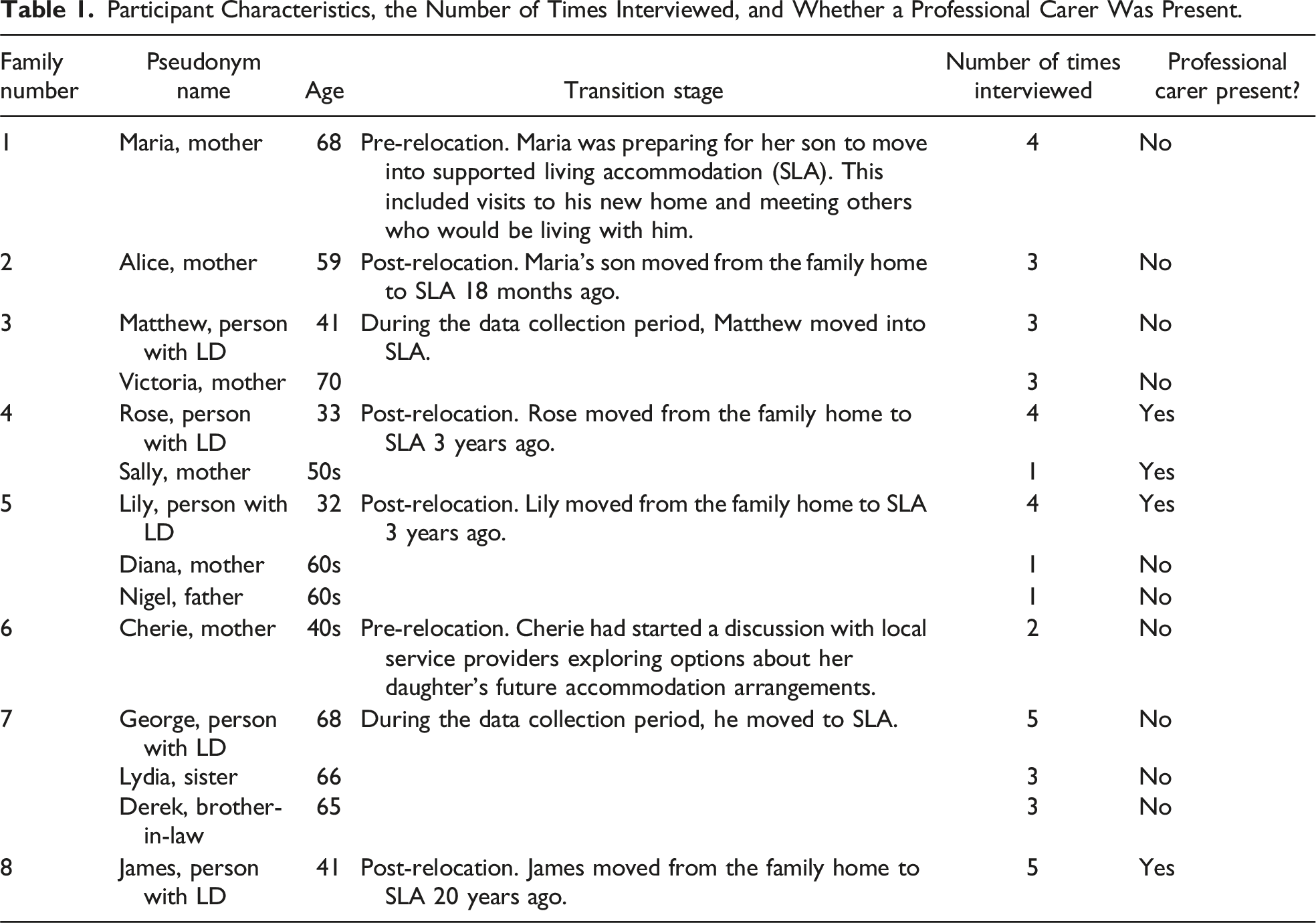
Participant Characteristics, the Number of Times Interviewed, and Whether a Professional Carer Was Present.
Data Collection
A total of 31 face-to-face narrative interviews took place between April 2015 and May 2016. Family members and people with a LD were interviewed together and separately to ensure each participant had the opportunity to discuss their experiences and that their ‘voice’ was heard. Conducting multiple interviews with each family encouraged rapport (Bigby, 2000), generated fluid data to capture ‘moving on’ as a process (Carter & Little, 2007; Morse & Richards, 2002), and allowed analytic categories to be woven back into data collection (Charmaz, 2014).
Alongside the narrative interviews, I gave participants the option to narrate their ‘moving on’ experiences in a storybook. Inspired by co-constructive family biography (Roach et al., 2014), the storybook activity was used as a conversation guide, point of reflection, and tool to enable participants to lead the interviews. Four participants (Maria, Lily, Rose, and James) completed the activity. Storybooks contained short narrative passages, illustrations, and photographs. The incorporation of both narrative and visual approaches is recommended when conducting research with people with a LD (Nind, 2008), and this flexibility encouraged participants to adopt a storytelling style that reflected their abilities and preferences.
Participants selected their preferred interview location: family home, the new home, or day centre. Professional carers were present during some interviews. Their involvement ranged from reassurance to supporting participants to verbalise their experiences. All participants and professional carers provided informed consent.
Data Handling and Analysis
All interviews were audio-recorded and transcribed. Consistent with CGT, the analysis process was iterative and included coding, memo writing, conceptualising data into categories and constant comparison techniques. I used Quirkos©, a qualitative data analysis software tool. I implemented three stages of coding: initial coding, focused coding, and theoretical coding (Charmaz, 2006), refining the large number of initial codes into a smaller number of focussed codes that were broader in scope. “Sequential comparisons” (Charmaz, 2014, p. 132) aided understanding of ‘moving on’ as a process. I approached subsequent interviews with emergent themes or categories from previous interviews in mind. Sharing and discussing these allowed participants to contribute to analysis.
Themes and Codes From Interview 3 With Victoria, Matthew’s Mother.
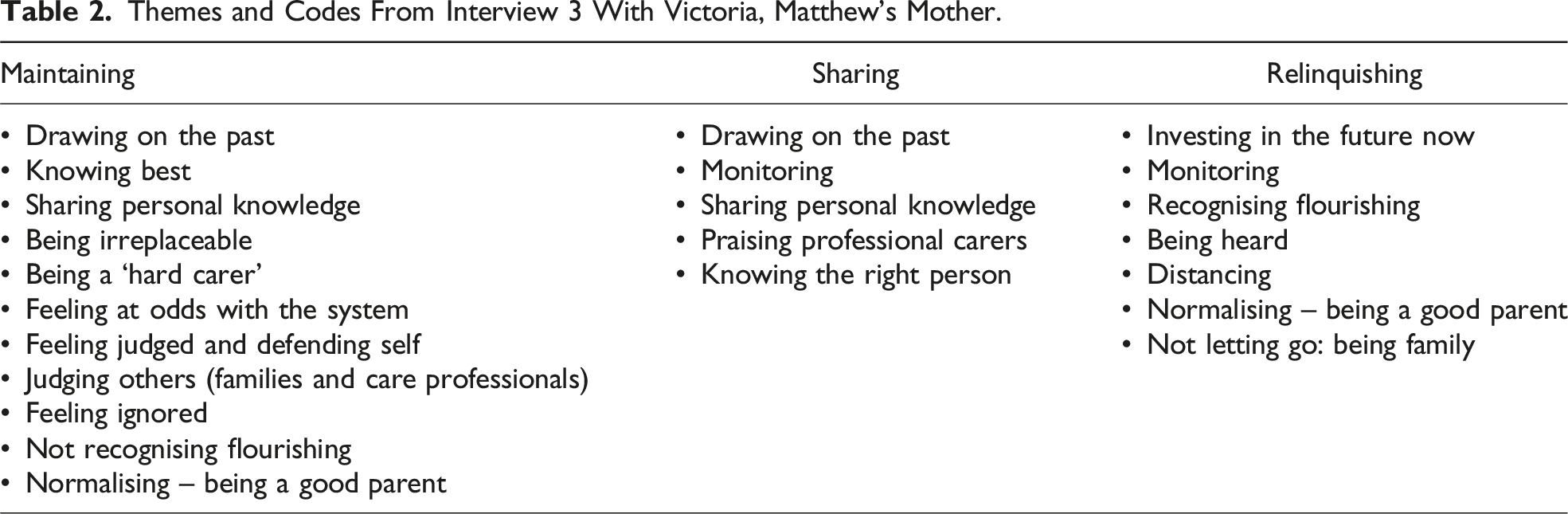
Once categories had been developed, transcripts were re-coded and cross-referenced with original codes. This was helpful in clarifying codes and categories and identifying relationships between these in order to craft over-arching focused codes and themes. To give an example, Figure 1 illustrates each of the focused codes from across the data set that were grouped within one theme, ‘living and sharing’. Focused codes within the ‘Living and Sharing’ theme.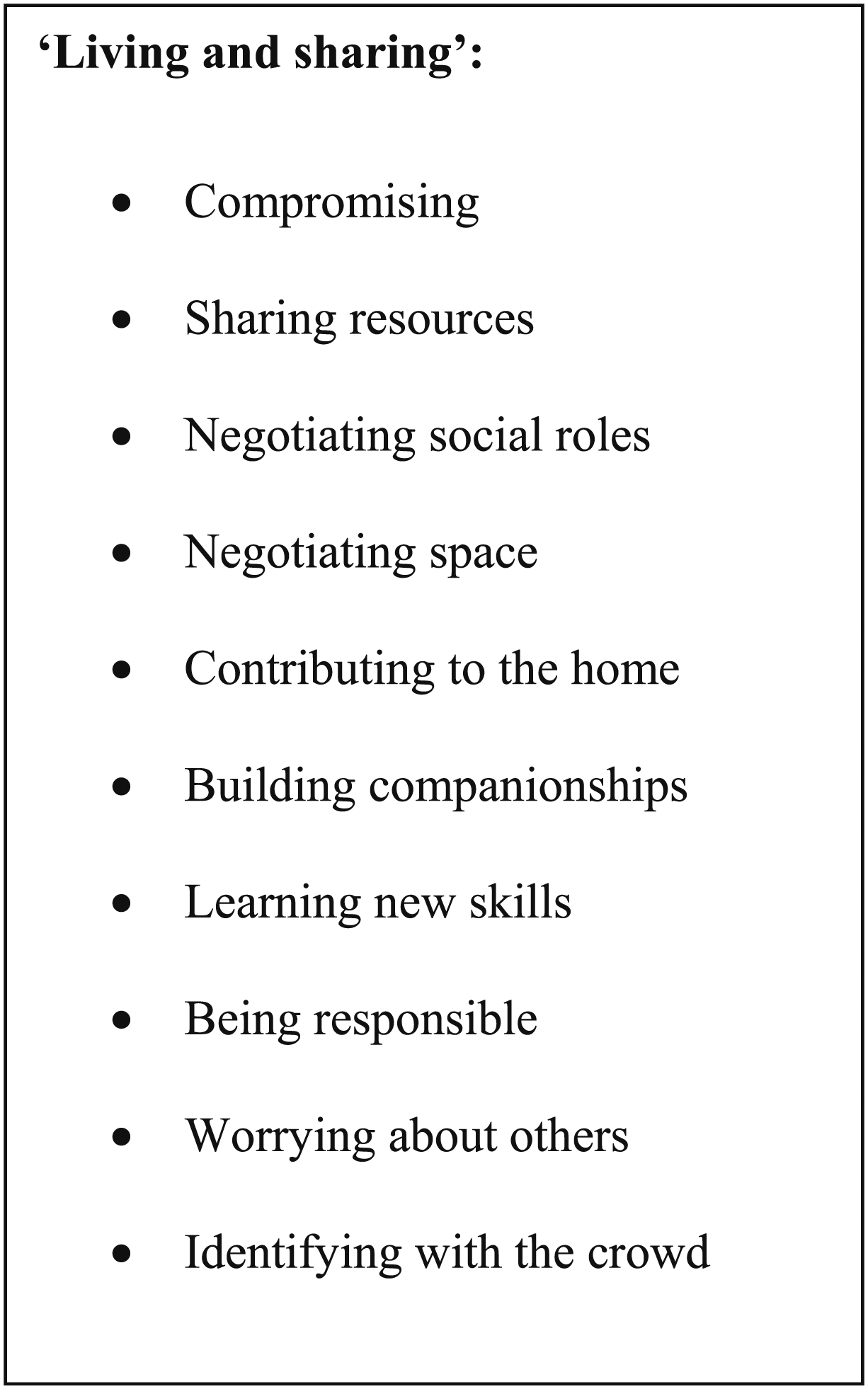
Diagramming
Diagramming helped to elevate the existing coding structure and clarify relationships between categories (Charmaz, 2014). It was useful when discussing data with the research team and also participants, prompting clarification in a creative, non-verbal format. Diagramming was also a comforting way of interacting with data, especially when working alone, an inevitable aspect of doctoral research.
Memo Writing
Memo writing was a crucial element to data collection and analysis, serving as a reminder that the interview in its entirety contributed to data interpretation. I added an extract to a reflective journal following each interview and throughout the analysis process. Consistent with Richards (2009) recommendation, memos encompassed field notes (who, what, and where), setting notes (context of interview), and interpretive notes (reflections and recognised assumptions). Analytical memos tended to occur simultaneous to constant comparison methods. Figures 2 and 3 contain extracts from the reflexive journal. Analytical memo extract from thesis (Taylor, 2017). Reflexive memo extract from thesis (Taylor, 2017).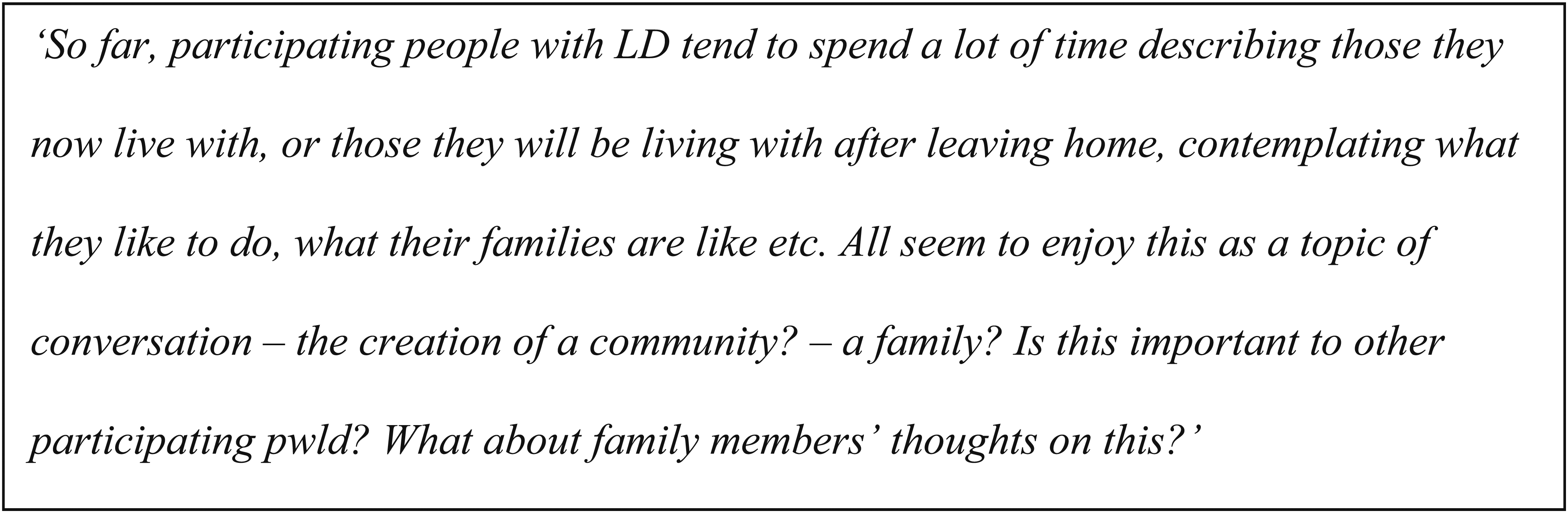
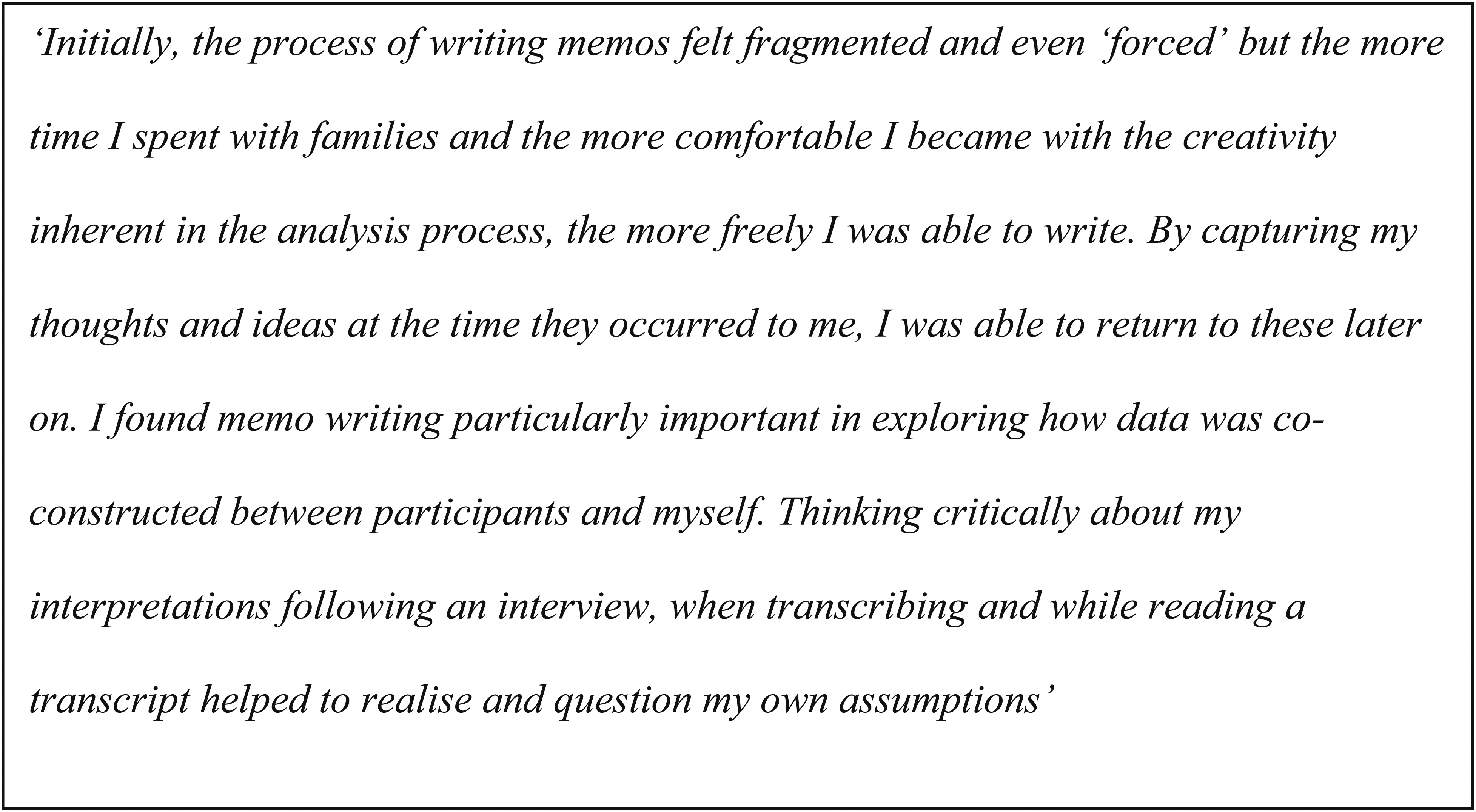
Incorporating Visual Data
Techniques to guide the analysis of visual data within grounded theory research are sparse. The analytical stages of CGT (Charmaz, 2014) were shaped to complement the visual data collected through the storybook activity. Inspired by Liebenberg et al. (2012), I generated memos for each single image and also entire storybooks based on the following questions: • What does the image tell us about who, when, and where? • What is the main message conveyed in the image? • How is the participant portrayed in the image? • How did the way the participant talked about the image tell us about what the image means to them? Direct quotes from the interview transcript were used here.
All memos were coded. Appendix A contains an example of visual analysis.
Ultimately, the stages of analysis reported here led to the construction of a mid-range theory which was refined and discussed with the research team (TR and JT) and participants until saturation was reached.
Advisory Group
A local LD support group acted as an advisory body. Members were predominantly family carers, but people with a LD also attended. Members contributed to the development of PIS, consent forms, and adverts and commented on anonymised data, preliminary findings, and dissemination formats. I maintained regular contact, meeting in person every two months and liaising via email in between meetings.
Reflexive Statement
Maintaining a reflexive stance was fundamental to adopting a CGT approach throughout this study. Key to this was drawing on my past experience working as a carer at a supported living accommodation organisation for adults with a LD. I was fortunate to spend time with the people living in the supported living accommodation and their family members. I found the gravity of family relationships in this context and the impact that ending co-residence had on these particularly striking. I was privileged to gain the trust of the people that I supported and to learn about their experiences. I therefore carried a sense of responsibility into this research and an aspiration to promote the voices of people living with a LD and their families. My experience gave me confidence to design and conduct research with participants in mind, promoting flexibility and inclusivity whenever possible. Each family’s distinct history, circumstances, and communicative needs meant that I could not be prescriptive. Doing so would have denied significant insights into their experiences. As a novice researcher, it can be daunting to embrace the researcher role. Yet, I learned that my commitment to this research allowed imaginative leaps to take shape and result in theoretical, but grounded, findings.
Quality
This study was evaluated against Charmaz’s quality criteria for CGT studies: credibility, resonance, usefulness, and originality (Charmaz, 2014).
The principal author (BT) spent a total of 15 months/120 hours in the field, and this nurtured good rapport with participants. Conducting multiple interviews with participants generated a large amount of data and allowed the necessary fluctuation between data collection and analysis. As a result, the proposed theoretical model is grounded in rich data. Constant comparison methods were used abundantly throughout analysis. In addition to this, codes, categories, and the theoretical model were discussed at length with participants, an advisory group, and a supervisory team, stimulating further continuous comparison and enhancing accuracy and credibility. Feedback reassured that the proposed theory made sense to people with lived experiences. One participant responded, “My experience was similar to this [the research findings]. I realise when I left home how much more I could do for myself and gained in confidence” (James, person with a learning disability). Memo writing helped to recognise and address researcher bias while also providing an audit trail for analysis from data to theory construction. The CGT coding processes developed by Charmaz were followed with diligence. Codes were grounded in participants’ experiences of ‘moving on’. Examples of analysis included in this article evidence the interpretation of findings, adding credibility.
Ethical Issues
The study was approved by The University of Sheffield Research Ethics Committee (reference 002206). Dewing’s (2007) process consent method was applied, acknowledging the situational and relational aspects of decision-making. A consent support tool (Palmer & Paterson, 2012) was used to obtain fully informed consent.
Results
These findings illuminate sociopolitical and cultural issues centred on having a learning disability in the context of ending familial co-residence. Figure 4 provides a diagrammatic representation of the mid-range theory presented across these findings. The theory is called ‘moving on: flourishing and relinquishing’. Visual representation of mid-range theory: ‘Moving on: flourishing and relinquishing’.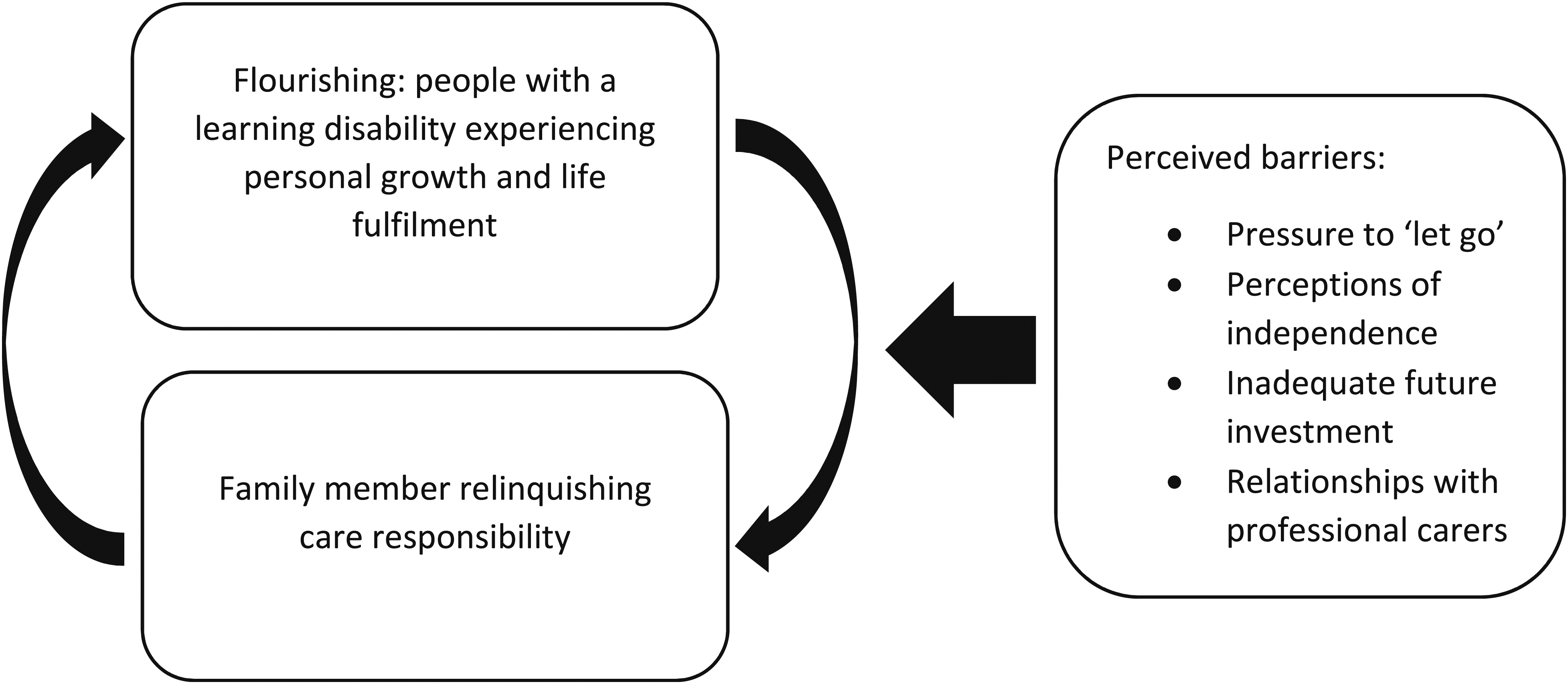
The following findings are presented in three sections, consistent with the three boxes in Figure 4. Section 1 will present data from participants with a LD about flourishing. Sections 2 and 3 will present data from participating family members about relinquishing responsibility and perceived barriers.
Section 1: Flourishing
Participants with a LD described living enriched lives following the end of familial co-residence by presenting personal growth and life fulfilment. We labelled this as flourishing. Flourishing does not imply that participants lived ‘perfect’ lives or experienced flawless transitions but draws attention to how people constructed meaning through exposure to unfamiliar places, people, and activities. The multiple properties of flourishing were shaped by each participant’s circumstances and experiences. Nevertheless, three key dimensions were identifiable: ‘establishing everyday life’, ‘living and sharing’, and ‘knowing and being known’. Participants presented themselves as flourishing by constructing meaning in relation to one, two, or three of these dimensions.
‘Establishing Everyday Life’
Sharing details about everyday life provided a platform from which participants could convey information about themselves and compare life before and after ‘moving on’. Through describing everyday life, people with a LD presented themselves as active members of the home and the community. Such descriptions included activities within the home (cooking, washing, and gardening) and activities outside of the home (attending social groups and pursuing hobbies).
When comparing life now to before ‘moving on’, James described himself as a more confident person, saying, “Before I couldn’t go out, I wouldn’t say boo to a goose or look after myself,” and designed a page in his storybook illustrating his ‘life now’. Figure 5 demonstrates the significance of these activities, both in the home and local community. Images from James’s storybook.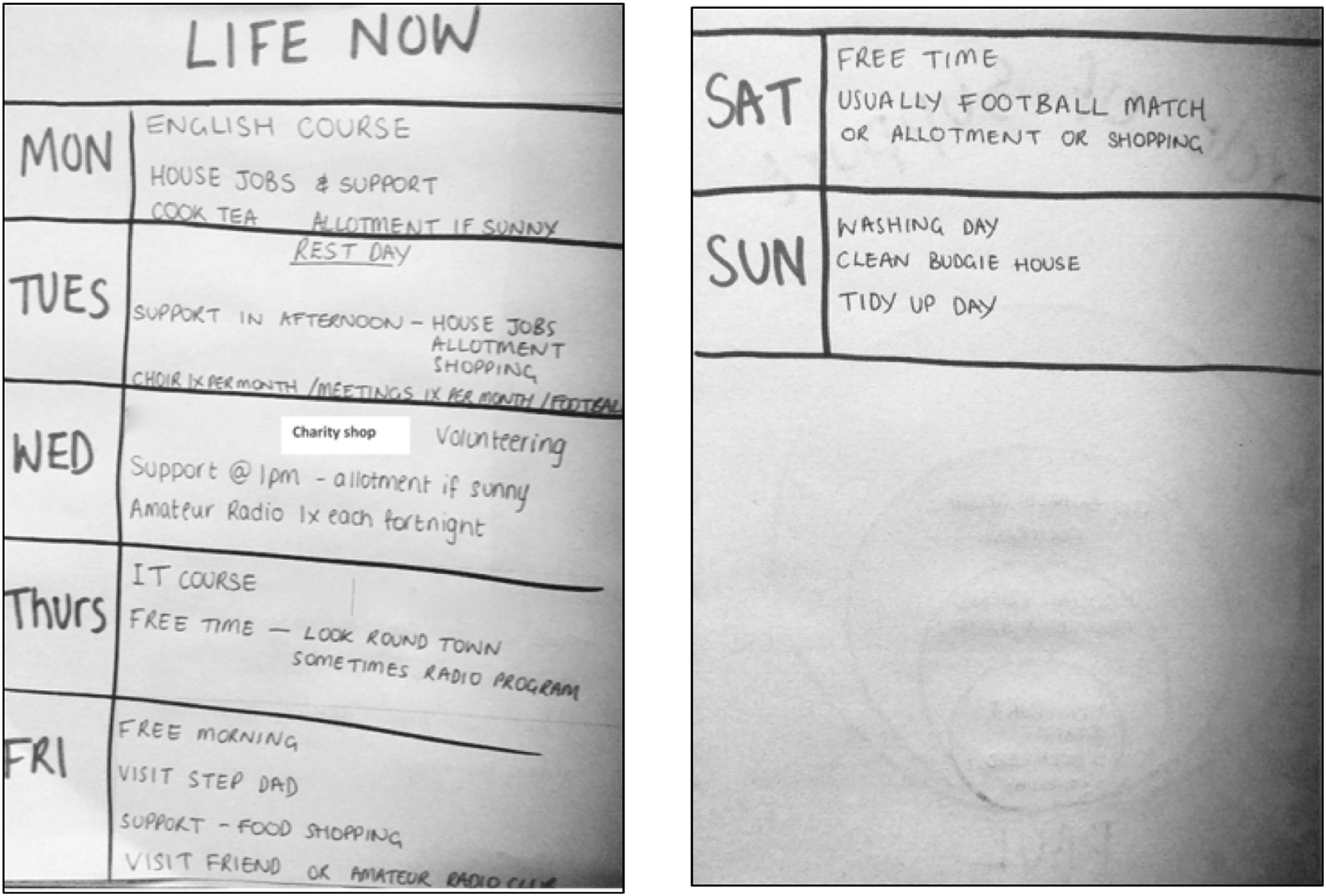
Conversations about everyday life provided an opportunity to demonstrate involvement in domestic tasks. In this way, everyday practices were entwined with implicit social norms associated with living independently. Establishing a routine, an everyday life, away from the family home enabled participants to flourish.
‘Living and Sharing’
Participants’ everyday lives were not lived in isolation. The term ‘living and sharing’ was adopted by two participants with a LD (Rose and Lily) to represent a more meaningful notion of co-residence. Participants presented their new household as a unit and made plans collectively. Sharing a home eliminated prior boundaries. Capturing this sentiment, Matthew said, “when you get to live with them you get to know them.” Rose paid tribute to her close relationships with the two women she lived with, referring to them (Lily and Sophie) as “other important people” (Figure 6). ‘Circle of support’ page in Rose’s storybook.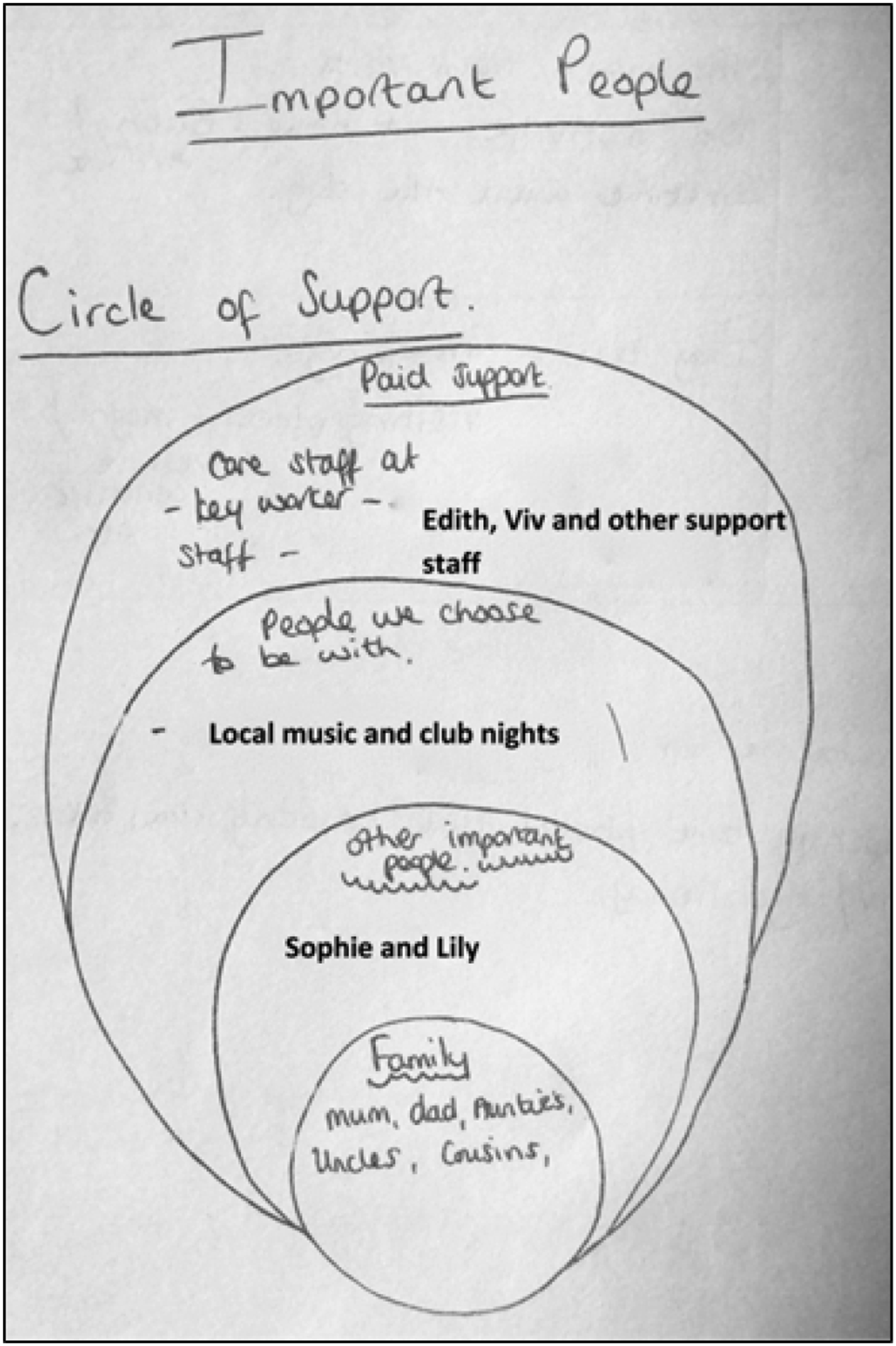
Through ‘living and sharing’, participants built relationships and a unity beyond ‘the family’ unit. Doing so enabled personal growth, an important part of what we have called flourishing.
‘Knowing and Being Known’
‘Knowing and being known’ was a valued aspect of living away from the family home. All people with a LD shared experiences of using local facilities: pubs, shops, and allotments. These experiences had the potential to foster a sense of inclusion and integration, synonymous with feeling valued and purposeful. The extract below captures the value attached to ‘knowing and being known’ shared by all participants with a LD: I hate it when I’m in [town 1] because I don’t know where I am because there’s no signs to tell you where the shops are or where the pubs are and the restaurants ... Can’t even breathe when I get there because I can hardly think where to go ... Do I want to be there? No. Do I want to be around in [town 2]? Yes … because I know a lot of people in [town 2] and shops. All of them think “where’s that Matthew? Where’s that nice bloke?”
1
(Matthew)
Unfamiliarity generated uncertainty and anxiety, whereas familiarity with local people and amenities instilled a sense of security and belonging. ‘Knowing and being known’ enabled participants to forge meaning beyond the walls of the new home.
Through each of these three dimensions, participants constructed what they believed to be personal growth and greater life fulfilment. To varying degrees, all presented themselves as flourishing following the end of familial co-residence.
Section 2: Relinquishing Care Responsibility
People with a LD constructed new meanings and flourished through exposure to unfamiliar places, people, and activities. Not exclusively, but primarily, family members played a crucial part in breaking continuity and enabling opportunities for people with a LD to construct new meanings. When reassured that the person with a LD was flourishing, family members relinquished care responsibilities and, in turn, this enabled further flourishing. This reciprocal relationship meant that without ongoing relinquishment, people with a LD could not continue to flourish. Likewise, flourishing for people with a LD is accompanied with a move towards greater relinquishment. Looking past the nuances of each story, this reciprocity between flourishing and relinquishing was evident for each participating family.
Lily’s parents perceived Lily to be flourishing prior to her leaving home by recognising personal growth and interpreted this as her being ready for them to relinquish responsibility: Nigel: She [Lily] was sat there one night … just the three of us sat here and there was this sigh. This deep sigh from her and she said “oohhh I’m going to go and live with Rose. I’m leaving you two.” So part of her was already moving out. Part of her was already engaged in the process ….. She was wanting more in her life and you know if you follow that thread through from then to now, that’s the person she’s become. (Nigel, Lily’s father)
Following a visit to her son’s soon-to-be home, Maria perceived that her son was not yet ready to leave home: When we’ve been to look at it at outside when they’ve been doing building work … he’s just wandered off. As if “I don’t want to look at that” ... I’ve not been like pushing it at him. I’ve not wanted to until I knew what his feelings are on it. (Maria, mother)
All participating family members experienced ‘moving on’ in the sense that their family member had moved, or was moving, into supported living accommodation (SLA) in which professional carers provided 24/7 support. They therefore primarily described relinquishing responsibility to the person with LD and professional carers. Diana felt that she had relinquished some responsibility for Lily but maintained responsibility for other care practices, such as her diet, something that she felt strongly about. Interviewer: Do you feel like your sense of responsibility for Lily is decreasing or is it the same as before [moving out]? Diana: We’ve certainly passed over a lot of day to day care but in total I still feel responsible for her. We’ve had issues recently about her feed and I really feel quite strongly that we’re still responsible. (Diana, Lily’s mother)
Alice observed her son’s behaviour during a return visit to the family home following relocation and deduced that she had relinquished sufficient responsibility for Thomas, her son, not to rely on her anymore: He was running about a lot and didn’t seem that comfortable here which I think is probably a good thing. Means that’s he looks on somewhere else as his home other than here ... He [Thomas] is confident enough to live without me. (Alice, Thomas’s mother)
Family members relinquished caring responsibility in response to verbal and behavioural signals that the person with a LD was flourishing. This included responsibility for practical, tangible caring tasks and some ‘invisible’ aspects of care, such as empowering independence.
Section 3: Barriers to Relinquishing Responsibility
This section considers how family members’ perceptions of service provision amid the current political discourse influenced the extent to which they relinquished responsibility. Participants identified four key barriers: pressure to ‘let go’, a blanket definition of independence, inadequate future investment, and relationships with professional carers.
Pressure to ‘Let Go’
Following the end of co-residence, it was important that family members were given time and space to observe and interact with the person with a LD to identify and respond to flourishing. However, all family members reported feeling pressured by service providers to ‘let go’. They felt that service providers discouraged their involvement. I’m sharing my experiences but in a lot of ways they don’t want it. They say bog off, we know better, which is really frustrating … We’ve had to have a bit of a bust up when I’ve said “no this is happening. Matthew still needs his mum unfortunately.” I’m quite happy him needing me for the first two years, whatever and gradually his need for me will be less. (Victoria, Matthew’s mother)
Furthermore, all family members differentiated between relinquishing their role as a carer and a family member, fiercely asserting that their familial relationship endured beyond the end of co-residence and could not be relinquished. Lydia made the point: He’s still my brother. Every day he’s still my brother. (Lydia, George’s sister)
All family members suggested that the current policy narrative surrounding this transition frowned upon the continuation of their presence as a mother, father, or sibling. In doing so, participants questioned the binary nature of family relationships following the end of familial co-residence for people with a LD: Somehow the system has persuaded itself that after the age of 18, parents don’t matter. (Nigel, Lily’s father)
Family members feared that they would be prevented from maintaining involvement as a family member, and this fear inspired a reluctance to continue relinquishing care responsibility.
A Blanket Definition of Independence
While participants recognised the well-intended principle of independence, they perceived that a blanket definition was applied in SLA and this was incompatible with their loved one’s support needs: She’s still got to be kept safe and choice is not always a good thing because if you gave Grace choice she would always choose unhealthy food ... Yeah you can have a choice but they’re both healthy. Banana or apple. … Everything that we do, we do for her best interests and all these politically correct things they’re not the right thing. (Cherie, Grace’s mother)
At times, family members believed that the policy narrative placing the onus on people with a LD to live independently, promoting independence and choice, failed to care for, and about, people with a LD. For this reason, family members feared for their loved one’s welfare, and this concern was a barrier to relinquishing.
Inadequate Investment in the Future
Family members hoped for their loved ones to flourish with foresight, to establish an enduring sense of ‘everyday life’, ‘living and sharing’, and ‘knowing and being known’. Yet, they frequently commented on what they saw to be the short-sightedness of support provision. Nearly all family members shared concerns about the longevity of current accommodation, anticipating a need for future relocation. Family members also highlighted the relative absence of interdependent relationships and meaningful structure, such as employment, for people with a LD compared to that assumed across a normative life course.
Victoria was hopeful that her son would build relationships and find purpose in his everyday life beyond the restrictions experienced due to his disability: They’re [Matthew’s brothers] all going to outgrow him. It’s sad. So it’s quite nice that he’s going to be going to a house whereby [names of other people living there] do the PlayStation … Because everybody else leaves him behind don’t they? …. Something else that has to be discussed and decisions made about, what he’s going to do during the day. It’s not just about finding a place to put your head. (Victoria, Matthew’s mother)
Family members interpreted an absence of cohesive and consistent service provision to support people with a LD through the remainder of their lives and that this would inhibit flourishing. In turn, this concern was a barrier to relinquishing care.
Relationships With Professional Carers
If the person with a LD was perceived to have established a close, trusting relationship with a professional carer, this facilitated relinquishing. She [professional carer] actually knows Matthew very well. And she’s sensitive, just got something … I’m looking for that. (Victoria, Matthew’s mother)
Needless to say, absence of such close, trusting relationships provided a barrier to relinquishing responsibility. There was concern that high staff turnovers and staff rotation left people with a LD vulnerable because replacement carers lacked rapport, limiting flourishing and therefore relinquishment of care responsibility. I skype Rose every night. … I rarely miss that because it’s my routine to help her communicate certain things on her mind … I do feel quite a responsibility around that still … I just feel, because staff do change in a week and there are one or two that I can rely on but I know the others aren’t going to remember … Until I can see some of that transitioning a little bit better I will keep that going. (Sally, Rose’s mother)
Family members’ perceptions of service provision amid the current political discourse shaped the extent to which they relinquished care. A blanket definition of independence, inadequate future investment, and absence of trusting relationships with professional carers were interpreted as potential barriers to flourishing and therefore inhibited relinquishment of responsibility. The perceived pressure to ‘let go’ meant that family members feared being cut out of their loved ones’ lives and this inhibited relinquishing responsibility.
Discussion
In this article, we illustrate that ‘moving on’ is a process experienced over time and as a family. The reciprocal relationship between flourishing and relinquishing forms the foundations of the mid-range theory, shown diagrammatically in Figure 4.
The finding that ‘moving on’ is a gradual process extends knowledge and builds on existing academic literature (inc. Bibby, 2013; Cairns et al., 2014; Davys & Haigh, 2007; Flynn & Saleem, 1986; Gilbert et al., 2008; Hubert, 2006; Mansell & Wilson, 2010; Taggart et al., 2012) and support resources (Mencap, 2017; Towers, 2013) that predominantly focus on the planning stages of ‘moving on’.
The three dimensions of flourishing resonate with existing learning disability research that associates hobbies and routine with a sense of belonging (Imrie, 2004) and also emphasises the importance of friends, family, and the local community (Bigby, 2000). Building skills, relationships, and embarking on new experiences are recognised components of independence (Chapman et al., 2013). This study extends knowledge by demonstrating the importance of the three dimensions of flourishing in the context of ‘moving on’.
These study findings join those that demonstrate the importance of invisible care practices and the relevance of these during care transitions (Grant, 2007; Iacono et al., 2016). Bigby (2000) drew attention to the gradual relinquishment of parental care and identified two dimensions: physical care practices and responsibility for overseeing an adult child’s well-being. The current findings build on this Australian study by situating the relinquishment of care in the context of ‘moving on’, recognising the reciprocal interaction between people with a LD and their families and providing insight from the United Kingdom.
The finding that family members relinquished care in response to flourishing improves understanding of the role of family over the course of ‘moving on’. This reciprocity supports research that questions the assumption that people with a LD and their family members carry competing agendas (Grant, 2007, 2010). In this way, the findings challenge perceptions of family life for people with a LD and assert that ‘moving on’ is experienced as a family, hence why family involvement is essential following the end of co-residence and why perceived pressure to let go acted as a barrier for participants.
Another identified barrier was disparity between family members’ understandings of independence and the definition underpinning supported living accommodation (SLA). Researchers have previously highlighted failings of the current LD policy agenda to acknowledge parental concerns regarding potential harm as a result of promoting independence (Almack et al., 2009) and also call for greater safeguarding (Fyson, 2009). This study supports the suggestion that learning disability needs to be understood as an ‘embedded reality’, shaping a person’s ability to make informed, autonomous decisions (Pilnick et al., 2011). The findings therefore add weight to the argument by Gill and Fazil (2013) that guidance is needed to promote the application of the Mental Capacity Act (Great Britain, 2005) when faced with everyday decisions, such as those faced in SLA.
The findings of this study reinforce existing reports of family carers’ lack of confidence in services to provide care beyond the physical, more measureable tasks (Cairns et al., 2014; Grant, 2007; Walker & Hutchinson, 2018). Family members’ perceptions resonate with existing international literature that recognises the tension between support service bureaucracy and the authentic promotion of autonomy (Petner-Arrey & Copeland, 2015) and space for staff to establish high-quality interpersonal relationships with people with a LD, considered an essential component of care (Hermsen et al., 2014).
Failure to invest in the future also acted as a barrier to relinquishing. This is previously noted in the literature (Pryce et al., 2015), specifically concerning socioemotional support (Baumbusch et al., 2017) and the longevity of current accommodation (Eley et al., 2009). This study recognises the impact of these concerns for the future on ‘moving on’.
Ultimately, this study shows that ‘moving on’ is a significant transition experience that should be viewed as part of the life course trajectory for people with a LD and their families, illuminating sociopolitical and cultural issues about disability. These findings therefore contribute to the challenging of assumptions about the construction of adulthood and disability, based on expectations of independence and autonomy inherent in Western societies (Hockey & James, 1993; Priestley, 2003).
Strengths, Limitations, Practice Implications, and Future Research Recommendations
This study provides previously undocumented insights into the end of co-residence for people with a LD and their families in a UK context, challenges constructions of adulthood and disability that underpin the ‘moving on’ transition, and offers insights to inform service developments. The involvement of people with a LD themselves contributes to the shift towards meaningful involvement of people with a LD in research (Nind, 2008).
Considering methodological limitations, the sample was not particularly diverse in terms of age or ethnicity. This study was conducted in a small locality of the United Kingdom, and the findings are therefore not necessarily applicable to other geographical areas or populations. It is worth noting that three people with a LD (James, Matthew and Alice‘s son) had periodically lived in the family home. These periods of time away from the family home were short-term and participants did not define these occasions as leaving home. One participant had ended familial co-residence over 20 years ago but expressed a strong interest in sharing their ‘moving on’ experience. The majority of participants defined their family as a dyad. This may reflect the ways in which participants had historically interacted with services. The impact of the presence of professional carers during some interviews is unknown. However, the insights gained would almost certainly not have been otherwise possible for those participants whose communication abilities were evidently stronger in the presence of professional carers (Lutz et al., 2016). The involvement of professional carers was therefore considered sensible, and this study joins others (Lutz et al., 2016; Walmsley & Johnson, 2003) in advocating a pragmatic approach to enabling people with a LD to participate in research.
On the basis of this research, a number of key implications for practice can be outlined. Service providers must: 1. Appreciate that sharing and relinquishing care practices can be difficult for family carers and takes time. 2. Provide professional development training for staff that includes reflection on their experiences of relational care and enhances the importance of this. 3. Adopt a holistic approach throughout the ‘moving on’ transition, including consistent monitoring and communication, and be mindful that often signals of flourishing are not communicated verbally.
Despite the centrality of person-centred planning in policy (DoH, 2001, 2009, UNCRPD, 2006), the absence of this term across findings is noteworthy. This questions the visibility of person-centred planning in practice, a concern that is shared in recent literature and points towards a need for clarification regarding implementation of policy in practice (Leoncio & Martin, 2021). Policy makers must also recognise the importance of and encourage staff training and development opportunities.
Future research should endeavour to gather the whole family perspective. The findings of this study warrant further research exploring the perspectives and ‘moving on’ experiences of professional carers and people with a LD who are understood to lack the capacity to consent. A longitudinal study capturing people’s experiences over time would be particularly helpful. Attitudes to learning disability are complex and vary across cultures. Of course, the proposed mid-range theory should be applied with sensitivity to each family’s unique circumstances. However, further research is required to deepen understanding of international experiences of families living with a LD and to evaluate the feasibility of this model in diverse cultural contexts. This study also draws attention to the need for future research to re-balance the focus from future planning to supporting people with a LD to continue flourishing in their own homes. This is particularly important in the midst of the prolonged and far-reaching impact of the COVID-19 pandemic on people with a LD (Flynn et al., 2021).
Conclusion
This is the first UK study exploring the experience of ‘moving on’ from the perspectives of people with a LD and their family members. ‘Moving on’ is a significant transition experience that should be viewed as part of the life course trajectory through which people with a LD can experience personal growth and life fulfilment. As people with a LD flourished, family members relinquished their care responsibilities, enabling further flourishing. Relinquishing itself depended on family members remaining sufficiently involved to share their knowledge and experiences and respond to flourishing. ‘Moving on’ must therefore be conceptualised as a process underpinned by the active involvement of family members and people with a LD. Family members in this study perceived numerous barriers to relinquishing responsibility within service provision amid the current policy narrative: pressure to ‘let go’, perceptions of independence, inadequate future investment, and relationships with professional carers. The study findings offer insights that can be used to inform service developments to better support people with a LD and their families before, during, and following the end of co-residence.
Supplemental Material
Supplemental Material - ‘Moving on’ for Adults With a Learning Disability and Their Families: A Constructivist Grounded Theory Study
Supplemental Material for ‘Moving on’ for Adults With a Learning Disability and Their Families: A Constructivist Grounded Theory Study by Bethany Taylor, Jill Thompson, and Tony Ryan in Qualitative Health Research
Footnotes
Acknowledgments
We would like to thank every person who generously shared their ‘moving on’ story and the organisations and support groups who supported the study.
Declaration of Conflicting Interests
The author(s) declared no potential conflicts of interest with respect to the research, authorship, and/or publication of this article.
Funding
The author(s) disclosed receipt of the following financial support for the research, authorship, and/or publication of this article: This work was supported by The University of Sheffield Faculty of Medicine Dentistry and Health PhD Scholarship.

Supplemental Material
Supplemental material for this article is available online.
Note
References
Supplementary Material
Please find the following supplemental material available below.
For Open Access articles published under a Creative Commons License, all supplemental material carries the same license as the article it is associated with.
For non-Open Access articles published, all supplemental material carries a non-exclusive license, and permission requests for re-use of supplemental material or any part of supplemental material shall be sent directly to the copyright owner as specified in the copyright notice associated with the article.
