




Abstract
Caregiving is recognised as a source of stress with potential for negative health impacts as well as positive outcomes and development of resilience. For young carers, children, and adolescents providing care for close family members, adaptation through resilience is crucial, yet work using a resilience approach is limited. This study explored protective factors and pathways to resilience in a sample of young carers, through application of the socioecological model in caring relationships. An in-depth qualitative approach was used, with in-person interviews facilitated by auto-driven photo elicitation. Deductive thematic analysis was applied, framed by three levels (individual, community, and society) of the socioecological model of resilience. Twelve participants (nine girls and three boys) aged 5–18 years, each providing care to a family member, were recruited using opportunity and volunteer sampling via carers’ centres in the southwest of England. Ten key themes were identified, four at the individual level: pre-empting challenges and planning, cognitive strategies, emotional strategies, and seeking solitude; three at the community level: family support, friendships, and pets and inanimate objects; and three at the society level: professional support, access to caregiver activities and community, and being outdoors. The location of themes at each level indicated relevance of the socioecological model to identification of protective factors in a young carer population. These findings have important applications for guidance to charities and organisations supporting young carers. Identification of factors that promote resilience offers support for the development of well-informed interventions, which harness these protective factors to develop resilience and improve health for young carers.
Keywords
It is widely acknowledged that over half a century has passed since the concept of resilience was first applied at an individual level and emerged from early research on children and young people in the context of stressful life experiences (Curtis & Cicchetti, 2003; Masten et al., 1990; McAslan, 2010). Resilience, now understood as a multilevel, multifaceted concept (Cicchetti, 2010; Turner-Cobb & Cheetham, 2016), is most usefully defined as “the capacity of a dynamic system to adapt successfully to disturbances that threaten system function, viability, or development” (Masten, 2014, p. 6). It is frequently seen as the antidote to stressful life events or challenges. As Windle and Bennett (2012) point out, resilience is not about extraordinary capabilities but reflects the ability to adapt and perform better than what might be expected given the situational circumstances. One important and under explored area in which the concept of adaptation through resilience is fundamental, is that of caregiving provided by children and adolescents for close relatives such as parents or siblings.
Caregiving at any stage in life is recognised as a potential source of stress. Evidence suggests that the role of informal carer can have a negative impact on health (Hawken et al., 2018). Windle and Bennett (2012) proposed a socioecological framework of resilience contextualised within caring relationships, based on Brofenbrenner’s (1994) Ecological Systems Theory. The resilience framework makes a distinction between and addresses the importance of different sources of resilience situated at three levels: individual, community, and society. This framework has been used to explore factors that facilitate and hinder resilience in older carer populations, focussing on strengths rather than pathology (Donellan et al., 2015). Yet, it is known that even when raised in challenging circumstances such as exposure to the day-to-day environment of parental chronic illness, children have been found to show remarkable resilience (Werner & Smith, 1982). A systematic review (Hawken et al., 2018) identified only one study that had used a resilience approach with young carers (Pakenham & Bursnall, 2006), those providing support as children and adolescents.
While being a caregiver at a young age may have detrimental impacts such as increased negative emotion (Dearden & Becker, 2004), risk for mental health issues (Cree, 2003), and social restrictions (Earley et al., 2007; Rose & Cohen, 2010; Thomas et al., 2003), many young carers also report benefits and positive outcomes relating to their caregiving situation indicating the development of resilience. These positive outcomes include feelings of gratification, satisfaction, pride, and confidence (Becker, 1995; Rose & Cohen, 2010), earlier and increased development of maturity, responsibility, and life skills including tolerance, independence, helpfulness, endurance, and sympathy (Ireland & Pakenham, 2010; Lloyd, 2013; Rose & Cohen, 2010; Thomas et al., 2003). Some of the earliest work on resilience identified protective factors that promote positive adjustment and provide a buffer between risk factors, stress, and poor adjustment outcomes (Rutter, 1979). In a critique of the earlier phase of resilience work, Luthar et al. (2000) pointed to the lack of consideration of context, advocating for more qualitative work and arguing that researchers have a duty to account for the voices of young children in order to understand their circumstances and lived experiences. Yet, as Shean (2015) later highlighted, “the voices of young people remain somewhat absent in resilience research” (p. 31). When applied to young carers, this absence is particularly notable.
The use of visual methodologies, particularly photographic methods, are well suited as an aid to facilitate discussion in carers, particularly with younger populations since using photos in research enables a child-centred approach (Mauthner, 1997), promoting autonomy, competence, and resilience (Carter et al., 2015). Photo elicitation, defined as “the insertion of a photograph by the researcher into a research interview to evoke information, feelings, and memories due to the photograph’s particular form of representation” (Shaw, 2021, p. 337), allows children to actively engage and portray moments in their lives that might be overlooked in traditional interviews (Jorgenson & Sullivan, 2009). This method has potential to address the power imbalance that can exist within research and can encourage a comfortable, safe, and open atmosphere (Mandleco, 2013). Used with young people to explore school preparation (Miller, 2016), early adolescent negative interactions (Pabian et al., 2018), and childhood grief (Stutey et al., 2016) and to understand the therapeutic benefits of attending summer camp for children and young people with cancer (Epstein et al., 2006), it is a relatively novel method as applied to young carers. It differs from the visual methodology of photovoice, which is typically used in the context of social change, in a community setting and often surrounding political issues with a focus on empowerment in vulnerable communities (Budig et al., 2018). Different forms of photo elicitation exist including researcher-driven, in which the researcher provides the photographs for discussion, and auto-driven, in which participants themselves take photographs for discussion based on a number of prompts or a single objective (Clark, 1999). Auto-driven photo elicitation is more useful for exploratory investigations where little to no previous literature exists to inform the photos, and therefore there is no basis for the provision of relevant and suitable photos.
The aim of the current study was to deductively explore potential protective factors in a sample of young carers under the age of 18 years, and we sought to identify and examine possible pathways to resilience, using auto-driven photo elicitation to facilitate discussion through interview. In order to give due consideration to context and a direct voice to young carers, this in-depth exploration of protective resilience factors utilised the individual-, community-, and society-level perspective of the socioecological framework of resilience for caring relationships (Windle & Bennett, 2012). The intention of this work was to provide information and understanding with the potential to inform interventions rather than taking a critical stance leading to social or political change.
Methods
Participants and Recruitment
Twelve participants (nine who identified as girls and three who identified as boys) aged 5–18 years took part in the study (note: information regarding cis/trans gender status was not collected). Each was providing care to a family member (mother, brother, or sister) including four carers providing care for two family members. Recruitment was enabled through opportunity and volunteer sampling via three carers’ centres in the southwest of England, and took place through carers’ centre events, advertisement within carers’ centres, and contact centre staff. Children with special educational needs were excluded due to the requirements of the study to engage with a camera and detailed instructions. Medical conditions of the cared-for family members included in the mothers were chronic pain, coeliac disease, fibromyalgia, multiple sclerosis, and mental/physical health difficulties and in the siblings were ADHD, autism, cerebral palsy, chronic pain, eczema, emotion regulation difficulties, epilepsy, and RETT syndrome.
Materials and Procedure
Instruction Question and Prompts Provided With Camera.
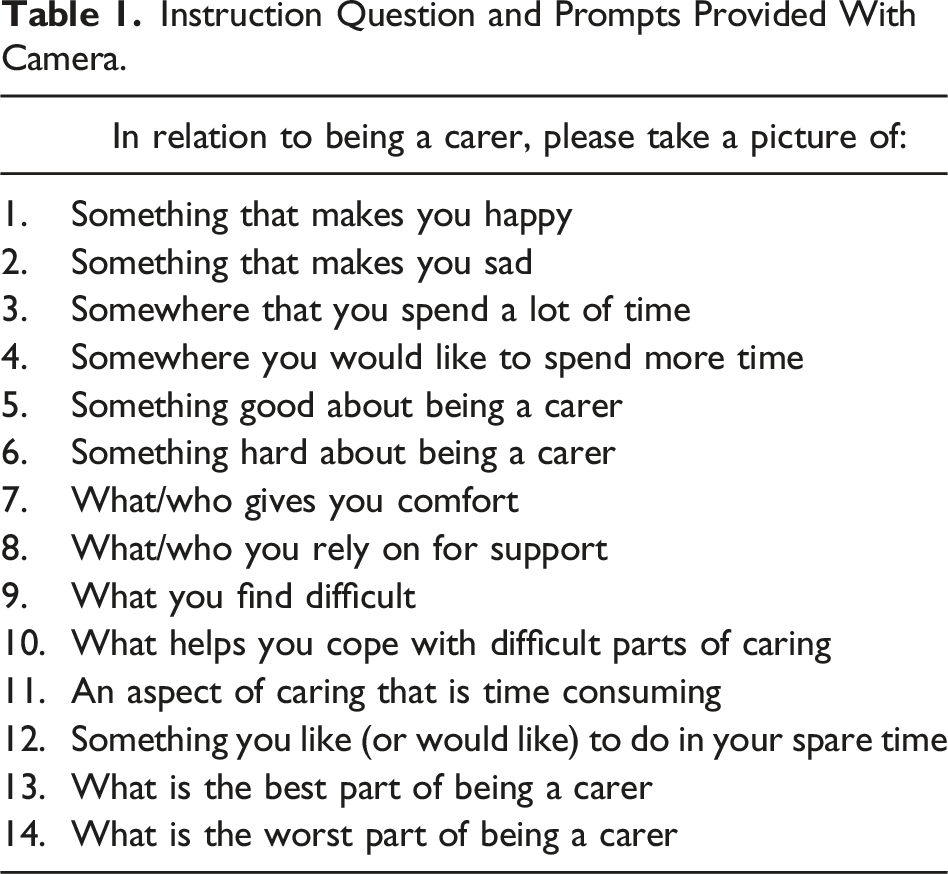
Cameras were collected by the researcher at a prearranged day/time convenient for the participant, and interviews were arranged for a date post photo development. Young carers took on average 3.5 weeks (range = 2–9 weeks) to take the photos; interview was arranged and conducted within 2 weeks of photo completion. A semi-structured interview schedule provided a framework for researcher and participant introductions to build rapport, basic demographic information (age, school year, and number of siblings), and caregiver context questions (person cared for, relationship, and heath condition). Questions around the photos used formed the basis for the main interview in which questions were designed to elicit responses about each photo taken (e.g. Why did you choose to take this photo? What is the story behind this photo? Can you remember how you felt when you took it?). Interviews began with young carers reviewing their photos and specifying any they did not wish to discuss or to be used beyond the interview. Order of discussion was determined by the young carer, and interviews ended with a debrief. Based on participant preference, the majority of interviews took place at the carer’s home, one took place at a carers’ centre, and one at the university. Interviews lasted between 21 and 105 minutes (M duration = 50 minutes). An Olympus Digital Voice Recorder (DM-670) was used, and NVivo was used for transcription. During interview, participants were addressed using their given names; after completion of the interview, participants were asked to choose a pseudonym for use in data recording.
Analysis
Sufficiency of sample size was determined on the basis of code saturation and information redundancy (Vasileiou et al., 2018). Interviews were transcribed and briefly coded sequentially. By the 10th interview, no new codes or information were identified. To confirm saturation and redundancy, two further interviews were conducted and briefly coded. Data were analysed using a deductive codebook approach to thematic analysis (Braun & Clarke, 2023). The photographs were a means to elicit verbal responses; only interview transcripts were considered data and analysed. Transcripts were manually coded, and themes were identified, reviewed, defined, and named, with reference to the three levels of protective factors within the socioecological framework of resilience as applied to caring relationships (Windle & Bennett, 2012).
Findings
Ten key themes were identified across the three levels of the socioecological model of resilience, with four key themes placed into the individual level and three each into community and society levels (Figure 1). Key themes within each level are described. Themes identified across the three levels of the socioecological model of resilience.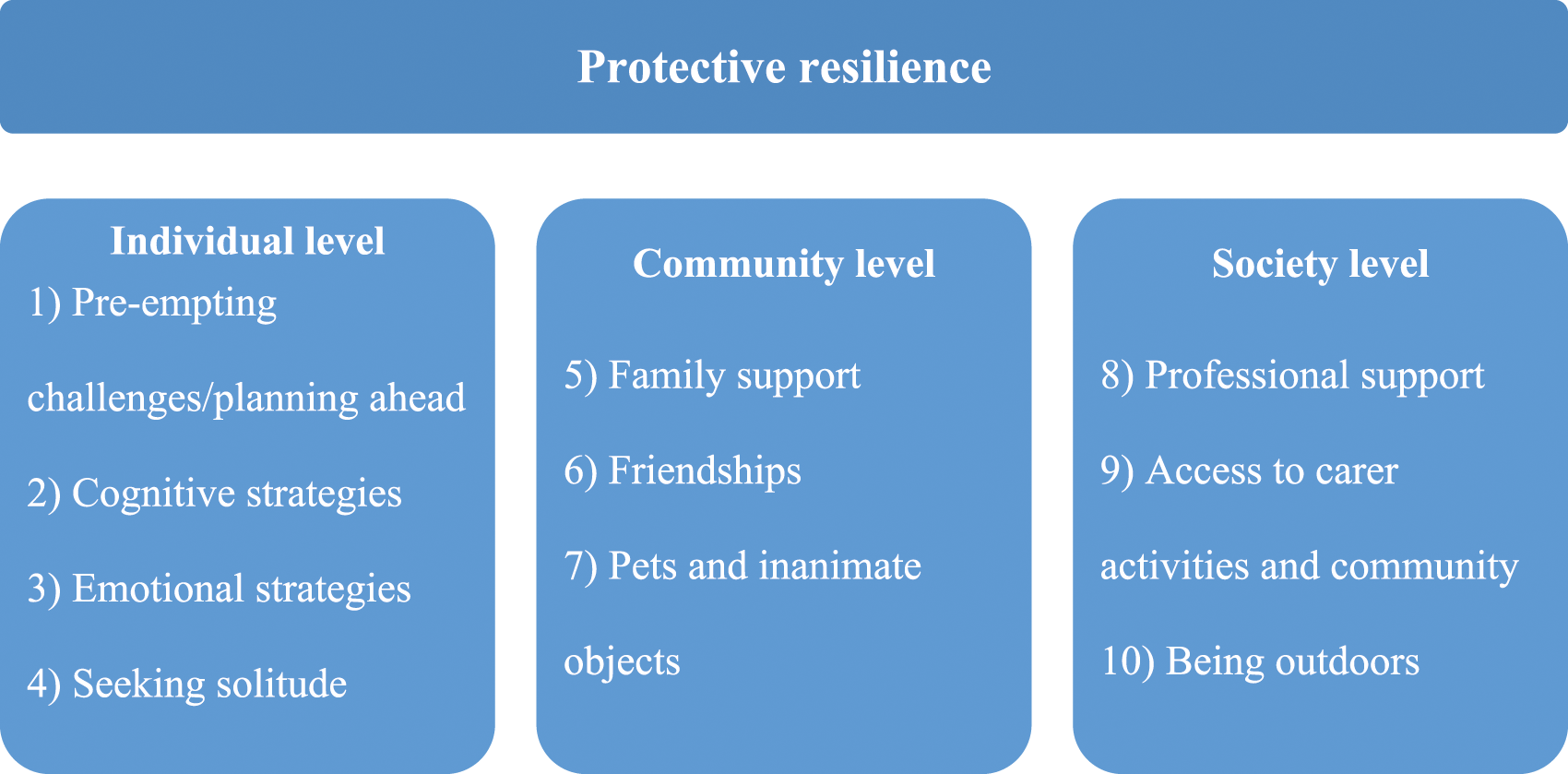
Key Individual-Level Themes
Pre-Empting Challenges and Planning Ahead
Thinking ahead was important to allow emergency plans to be put into place and to enable family life to run smoothly (e.g. calling ahead to restaurants to ensure accessibility and arranging family schedules around carer availability). This facilitated enjoyment of family days out or time away from home. As operationalised by one 14-year-old participant, thinking and planning ahead involved the creation of an ‘emergency pack’ (see photo 1 Supplemental Material). It contained essential items for her profoundly autistic brother and was carried at all times: So it’s all stuff like little creams or plasters just in case he bumps his head or something and needs it … it’s just a back up emergency pack … the majority of it’s always in my handbag anyway just in case.
This emphasises that planning for “just in case” was crucial to feel prepared for all potential events that may arise and for a sense of control and confidence. Sometimes being forearmed meant finding information about the condition of the person they were caring for. Another participant aged 9 years described the process she took to independently research her mother’s condition: I was just going on Google to find out … about fibromyalgia … I mainly find out in books and all different internet resources … it does give me a bit of relief because that then makes me feel ok knowing that this … might happen or … what like what will happen or might happen.
Awareness of potential future incidents allowed young carers to pre-empt challenges and feel prepared, reducing feelings of anxiety and enabling them to feel they were in the best possible position to manage effectively.
Cognitive Strategies
Young carers described cognitive strategies employed to navigate their experiences including benefit finding and acceptance. These strategies mainly centred on a desire to maintain a positive outlook and feel in control during difficulties.
Finding Benefits in Caregiving
Participants described a process of identifying benefits in their caregiving experience, giving a sense of personal certainty and meaning behind their role, which further promoted confidence. In addition to spending time with family and making a difference to the cared-for person, the knowledge and skills gained from caregiving was a significant benefit. One participant aged 17 years described how she felt in control of her current and future prospects through development of empathy, patience, and life skills which she perceived would help her in adulthood. She photographed saucepans on the kitchen stovetop (see photo 2 Supplemental Material) to illustrate that acquiring skills like cooking, cleaning, and organisation was a benefit that provided her with the confidence to eventually leave home: I’m good with money … I know what life consists of … bills and just taking care of yourself kind of thing, so like I think I’ll be one step ahead with that and then like with money as well, I think I’m quite good at not like wasting it …
She represented one of several young carers who identified the benefits to caregiving and attributed qualities such as gratitude, empathy, patience, and financial sense to their experiences. This allowed the development of meaning, confidence, and certainty within the caring role and to feel in control and cope with responsibilities.
Acceptance
Many participants used the process of acceptance when situations were deemed uncontrollable, despite planning ahead and seeking benefits. This is described by one 14-year-old participant who accepted that she received less family attention than her brother and she had learnt to accept when she might be unable to provide tangible or emotional support and instead needed to let others do so: She [mother] has to be there for my brother more and I understand that … I understand that he needs more attention than me, and I’m perfectly fine with that … my brother crying or just being in pain … [I] just feel really useless and … seeing something wrong with him that breaks my heart honestly, so it’s really hard to you know, just got to let other people do their stuff.
Other young carers discussed needing to accept circumstances external to the family and shared negative experiences of bullying and stigma. Another 14-year-old described how she chose not to disclose information about her caregiving to peers as she felt they failed to understand and showed no willingness to try to do so, saying “I just sort of just kind of take it on the chin and be ‘ok you don’t understand, I don’t really want to explain it to you so just think what you want to think I don’t really care.’” For this participant, who liked to maintain control, moving towards acceptance was challenging but necessary and represented the experience described by many of the young carers. She added that acceptance was a ‘normal’ part of caregiving that was important in order to be able to cope.
Emotional Strategies
Young carers described instances of becoming overwhelmed with emotions such as anger, anxiety, sadness, and grief in relation to their caregiving role, but also difficulties with friendships and school. Strategies to manage this included breathing techniques, technology, physical exertion, and creativity. One of the younger participants aged 8 years described how his mum encouraged him to keep breathing when he was upset, saying “… she [Mum] started telling me to breathe and I started and then after like five minutes of breathing I was like, I feel a bit better now.”
Technology also supported the management of emotions. Another participant aged 9 years mentioned that he found video games a helpful distraction from feelings surrounding his brother’s challenging behaviour, commenting “I like playing on my Xbox because it’s like you get distracted when you get like angry like your brother’s hitting you and all that you can just calm down and play on the x-box.”
Physical exertion allowed the expression of anger surrounding caregiving, bullying, and friendship difficulties. One 8-year-old participant reported that hitting his bean bag (see photo 3 Supplemental Material) was helpful to express emotions in an acceptable way: Sometimes when I get a bit mad at school … because I won’t be able to break the bean bags I start punching them … because when I’m angry I usually start getting too rough at school but with this I can get as rough as I want, because it won’t do anything to anyone, and it’s too strong to break.
Creative expression was also valued as a way to express, transform, and externalise emotions. One 14-year-old participant found that creativity provided a physical representation of her emotions, saying that “Music, drama and photography … that’s pretty much how I express … my feelings and get them out and … like when I’m sad or … angry maybe.” Many young carers described a need to manage their emotions by inhibiting, reducing the intensity, or expressing them; creative and physical means were important outlets, which also offered opportunities for social connection.
Seeking Solitude
Participants emphasised the importance of actively seeking solitude and socially withdrawing to manage their mood and energy. Seeking solitude was an instinctual reaction to challenging circumstances; retreating and being alone allowed time to process difficult emotions or situations. Bedrooms, including those shared with siblings, were a ‘safe haven’ or place of refuge for many young carers (see photo 4 Supplemental Material), as one 14-year-old young carer describes: If I get bad news or anything, I’m like straight away in my room … if there’s something bad happening with my brother or something, and I can’t help … I just go to my room and wait … it’s like my little comfort zone.
This younger teenager also described her bedroom as somewhere she could be without ‘nagging’. Other young carers relaxed with music, a film, or lying down, without the requirement to do anything else, as this 17-year-old adolescent carer portrays: I quite like just sitting down and listening to music by myself and … relaxing doing that … it just like, makes me feel like, I’m just here, I’ve got nothing to do kind of thing and it’s just nice to sort of sit there and listen to someone else.
Many participants emphasised the importance of connection with others, but also simultaneously valued the opportunity to withdraw. One young carer described it as “not isolated, but … away from people” providing quiet space to relax and escape daily life and obligations.
Key Themes at the Community Level
Young carers drew upon community factors relating to their immediate surroundings, in order to cope in a positive way. Primarily, themes centred on social support from numerous sources (family, friends, pets, and inanimate objects) and of differing types (emotional, practical, and direct/indirect).
Family Support
Parents and siblings were a key source of emotional support through encouragement, humour, recognition, and appreciation. Many young carers such as this 14-year-old expressed this as derived from a shared experience of caregiving: The person I rely on for support is probably mum, cos she knows everything, I literally tell her everything … she’s in the exact same boat as me, so it’s nice to just sit down, have a chat with her … and she’s like really good at supporting and everything, because she has been through a lot with like my brother.
Emotional support in the form of recognition and appreciation helped young carers feel noticed and valued. One 14-year-old participant described occasions when her brother showed gratitude such as when he made her a picture (see photo 5 Supplemental Material): Every now and again … I’ll just kind of turn up and there will be like a poster … obviously he’s grateful for stuff … just little pieces here and there just sort of make it all worthwhile and like oh ok it is good that I’m doing it … cos you kind of, see it and you’re like thank you, it’s like being noticed.
Practical and tangible support was typically provided by extended family and included support with paperwork, finances, and transport. One 17-year-old adolescent described the help she received to ensure correct benefits were in place after her mother’s hospital visit: My aunty helped with sorting my mums benefits out … so she’s getting the right amount of money through and then … they did … a card that’s linked to my mums account as well so like we’ve got one where we can go like food shopping and stuff.
These examples demonstrate the positive impact of family members on the lives of young carers through both emotional and practical support.
Friendships
Participants frequently referenced the importance of supportive friendships and the opportunities they provided to receive guidance, emotional support, and a chance to ‘switch off’ from caregiving. Being able to ‘just talk’ to friends was an important factor, particularly when caregiving was challenging. This 18-year-old young carer recognised that it was important to have friends who actively took the time to ask how she was: “I talk to friends mostly, cos they’re good with talking to … they know to … check up on me now and again which is really nice … it’s nice to have someone … that’s there for you.” Another participant (aged 14 years) emphasised emotional social support as a reciprocal process, one which can provide positive distraction but can also come at the cost of not tending to her own needs: I help my friends through their problems as well … if my friends feeling like depressed or something I’d help them which also like kind of takes my mind off my problems but it also like kind of makes them a bit worse because I’m thinking of my friends more than I’m thinking of me.
For some, connecting with friends in person was difficult due to the restrictions that caregiving placed upon them. In such circumstances, technology was used to access social support (see photo 6 Supplemental Material), as described by a 17-year-old participant who found that messaging friends made it easier to communicate and express how she was feeling: With close friends I can … send them like a message that I’m feeling crap and they’d be like…you can just talk about it, even if we were talking about something else, it’s like easy to go onto that topic because they understand about it all … I find it easier than telling someone if we’re together “I feel like crap.”
Meeting and making friends with other young carers was considered important, and close friendships developed based on shared experiences and understanding as described by this 14-year-old young carer: It’s like going to see people who are in like the same boat as you … when I try to talk to my friends about stuff they don’t really understand, but if you talk to people who go there [carers center] they understand because they’re basically going through the same thing, so that’s really good.
Overall, young carers valued friends who were emotionally supportive and understanding, with the ability to help them feel uplifted. Such qualities enabled carers to open up about their feelings in the face of concerns about stigma or bullying.
Pets and Inanimate Objects
For younger participants in particular, pets (considered family members) and inanimate objects were seen as vital sources of emotional support, providing comfort and a reliable presence. One participant recounted how her dog could be relied upon and knew when she was in need of some support (see photo 7 Supplemental Material). Similarly, a 9-year-old young carer described her cat, who slept on her bed, providing comfort in difficult times: She [cat] comforts me because I used to be really afraid of the dark and leaving mum downstairs on her own … but now my cat has … started to sleep on the bed with me … she’s a … comfort, it’s a bit like she’s my mum.
Treasured toys were a source of security for these younger participants, providing emotional support, comfort, reliability, and a sense of friendship. One had ‘a very special teddy’, and another (8 years old) had a cuddly toy who was sometimes a substitute for friends, making him feel he had someone to rely on: I usually don’t go to sleep without him [cuddly toy] … sometimes when I'm a bit upset I take him to school, so … when I’m upset then I’ve still got him … when I’m near him it makes me feel like that I’ve got my friend with me … I can’t keep my friends here [at home] but I can keep him here.
Despite pets and inanimate objects being unable to reciprocate in verbal communication, they were considered important sources of unconditional emotional support for young carers.
Key Themes at the Society Level
In addition to individual- and community-level themes, there were wider societal factors, beyond family and friends, that young carers drew upon. These included professional support, access to carer activities and community, and being in an outdoor environment.
Professional Support
Young carers often received emotional and practical support from professionals, and many emphasised the importance of being able to talk in a safe environment. For some, this support was via counselling, which enabled exploration of feelings around caregiving and other challenges. One 17-year-old participant sought emotional support for distress surrounding her caregiving: I started having counselling sessions in school … which did help … I used to get upset by it a lot … now I’m not crying about it all the time … it was just high emotions … whereas now I can just talk about it and … it’s easier … the counsellor herself she was just really friendly.
Professionals who were friendly, approachable, accessible, understanding, and reliable were deemed particularly valuable, such as schoolteachers. Another 14-year-old participant felt that teachers who provided alternative arrangements and understanding about lateness or incomplete homework enabled her to manage both her education and caregiving: I have like really nice … teachers that are there for me and … understand if I can’t get home or can’t get in … my mum called up the school and … talked to them about if I could have help with after school clubs because sometimes I can’t make them … they understand if I am late sometimes, or if I need homework a day later so that’s really good … my teacher understands that I can’t get places.
Formal carers of the cared-for person led to indirect support for young carers themselves, by providing respite. Many young carers had to be home at certain times to provide care, and this restricted time to socialise or attend after school clubs. This is articulated by one 18-year-old participant whose brother received practical support from a professional carer, giving her freedom to socialise: My brother got, support from one of those companies where people have carers … I remember saying that I just liked hanging out with my friend after school … but I couldn’t because I had to get a train back … I just wanted Friday nights after school to fester in town and … they got the whole company thing going … which I meant I could have a bit more time which was really cool.
These formal carer arrangements varied from one-off to short- and long-term provision of support. Essentially, the provision of tangible support, in addition to that provided by teachers, support workers, and counsellors, enabled young carers to take a break from caregiving or to diffuse the focus and distract from some of the pressure they were under.
Access to Carer Activities and Community
All young carers interviewed had access to activities and a community of carers through carers’ centres and reflected upon the benefit of being able to attend events such as arts courses, day trips, and residential camps (see photo 8 Supplemental Material). Most young carers acknowledged that it was important for them to take a break and step away from caregiving. Many believed this enabled them to successfully care and have ‘more to give’ on return. Appreciation was expressed for events hosted by carers’ centres, and there was a strong emphasis on fun, meeting new friends, and relaxing as explained by these younger participants (aged 9 years and 10 years, respectively): So young carers … they um just give you time to relax and they just set up places where you can have fun and you can take a bit of a break off of caring and get to meet new friends … that helps a lot.
Another of the younger participants (10 years of age) commented similarly that “You get a break from caring and you can meet up with other friends that you’ve probably never met before.”
Meeting with other young carers enabled participants to develop a sense of community belonging and of being ‘not alone’.
Despite the value in these experiences and need to have a break, there were also challenges due to the anxiety and worry of leaving those they cared for. One 14-year-old participant talked about meeting new people at a residential young carer’s festival, but like many participants, she found the tension of being away from home difficult to manage. This participant described herself as “very adventurous” but found it difficult to leave her mother, saying “… it’s quite scary ‘cos I don’t know what’s going to happen and can’t do anything.”
Overall, stepping away from the carer role and being part of a young carer community was important, although not without challenges. When away from family, practical support from friends and professionals also engendered feelings of emotional support as it helped young carers to manage their anxieties and made events more enjoyable.
Being Outdoors
Nearly all participants reflected on going outside of the family home to exercise and socialise. Many described feeling that home contained their caregiving and all the stress associated with it, in contrast to the outside representing freedom. One young carer reported how he felt that when outside “you’re basically free from everything in your house,” and many young carers expressed similar sentiments. Many young carers mentioned that being outdoors was somewhere they did not spend a lot of time but wanted to. For some, such as this 14-year-old young carer, being outdoors did not always require going far (see photo 9 Supplemental Material): My garden … I don’t spend much time there … I just want to get out there … in the garden more … I like being quite adventurous and out, I’m quite an outdoorsy person … the feeling of being free and being out there, which I like … that’s what I enjoy about going on some camps that I can just get to be outdoors and it’s fun.
Some young carers, such as this 17-year-old, articulated a contrast between the freedom of the outdoors and the restrictions of being inside: Somewhere I would like to spend more time … my garden … not just in my garden but like outside more generally … going out on my bike or just walking … being outside for a little … I think it’s just the fresh air because if I’m inside a lot I just get like uh … it’s just kind of free … even like, when it’s cold it’s like, kind of nice … compared to when you're inside.
Being outdoors and leaving the family home could cause anxiety and worry, but these feelings were generally considered manageable. Being outdoors enabled a sense of freedom often not obtainable indoors.
Discussion
The aim of this study was to deductively explore potential protective factors in a sample of young carers, through interviews using auto-driven photo elicitation. Analyses identified 10 key themes mapped onto the three levels of Windle and Bennett’s (2012) socioecological framework of resilience for caring relationships. Findings indicated the relevance of these dimensions of the model to a young carer sample.
Key Individual-Level Themes
Of the four themes identified relating to individual-level resilience, the first, pre-empting challenges and planning ahead, supports previous research in which task-focussed, active, and cognitive coping have been linked to resilience in adult carers (Dias et al., 2015; Garity, 1997). Second, benefit finding and acceptance were identified as cognitive strategies employed by young carers. This is consistent with earlier work reporting that young carers describe benefits to their role (Cassidy et al., 2014) and in which acceptance has been highlighted as a positive coping strategy in caregivers (Nguyen & Levkoff, 2020). Third, a number of emotional coping strategies were identified and associated with positive outcomes, supporting the argument that multiple coping strategies and protective factors may be necessary to mitigate risk and promote resilience (Pakenham, 2001; Southwick et al., 2014). The emotional coping literature in adult and elderly carers suggests that emotion-coping strategies are less effective than problem-focussed strategies (Pakenham, 2001) and associated with poorer adjustment outcomes (Figueiredo et al., 2014; Mausbach et al., 2013). However, there is evidence that emotion-focussed strategies (e.g. venting emotion and crying) can be helpful (Azman et al., 2017; Figueiredo et al., 2014). Young carers made decisions about the most appropriate ways to manage their emotions, which contrasts with findings in parental carers of autistic children, who were less able to regulate their emotions compared to parents of typically developing children (Ruiz-Robledillo & Moya-Albiol, 2013). The fourth theme, seeking solitude, directly contrasts with that found in the adult and older carer literature in which social withdrawal is frequently viewed as negative (Ekwall et al., 2004; Sawatzky & Fowler-Kerry, 2003) and limits access to social support (Beck, 2007; Pakenham & Bursnall, 2006). These findings emphasise the importance of context in resilience (Luthar et al., 2000).
Community-Level Themes
The three community-level themes identified relate to family, friends, and pets/inanimate objects. Social support, particularly instrumental and emotional support from friends and family, has been consistently reported as a protective factor to promote against stress in the broader caregiving context (e.g. Dias et al., 2015; Luthar et al., 2000; Wilks & Croom, 2008). Relationships, parental warmth, and a positive family atmosphere were all highlighted in interviews with our young carers. It is known that satisfaction with social support influences resilience (Dias et al., 2015), and young carers expressed varying levels of satisfaction with instrumental and emotional help from friends. Pets and inanimate objects were tremendously important to young carers, and although not yet explored in relation to carer resilience, evidence suggests that pets and companion animals can provide necessary relational bonds for resilience within a family context (Walsh, 2009).
Society-Level Themes
The first society-level theme identified that professional support, particularly practical support from counsellors, teachers, and social workers, provided freedom and respite or made tasks easier for the young carer. Sometimes, support intended for the person receiving care assisted the carer themselves, confirming both the direct and indirect nature of protective resilience (Werner & Smith, 1982). Access to activities and caregiving communities was identified as important, consistent with previous findings (Shier et al., 2013). Emotional social support from other informal caregivers can create a sense of community and collective experience, which positively impacts caregiver outcomes (Newman et al., 2019). Finally, the benefit of being outdoors was highlighted by young carers, consistent with research findings that indicate the physical and mental health benefits of being in nature (Mantler & Logan, 2015; Mutz & Müller, 2016).
Commonalities Across Themes
Across the framework of the three levels, in addition to direct and indirect social support particularly emotional and practical support, themes frequently tapped into distraction from and control over the caregiving situation. Many of the themes identified are theorised to effect cognitive, emotional, or physical distractions, often mentioned as enabled by family, friends, or activities at individual and community levels. A robust literature suggests distraction is associated with negative outcomes in adult carers (Figueiredo et al., 2014; Haley et al., 1996; Ruiz-Robledillo et al., 2014; Sander et al., 1997), but many young carers found distraction important to manage their role and emotions. Similarly, obtaining control over aspects of the situation that were controllable and accepting those that were not was evident in the stories of young carers across several themes at the individual level. Many showed a developmentally sophisticated appreciation for these coping strategies, confirming an increased development of maturity highlighted in previous work (Lloyd, 2013; Rose & Cohen, 2010).
Limitations, Future Research, and Application
Findings support the relevance of the socioecological model of resilience in young carers. The first to adopt an auto-driven photo elicitation method within this population, the current study is one of only a few to apply it within an informal carer population. Young carers and their parents reflected on the process of taking and discussing photos as a helpful and enjoyable experience, which allowed the young carers to acknowledge and take pride in their role. This demonstrates the importance of choosing methods that are accessible, appropriate, and beneficial to participants (Cappello, 2005). However, we acknowledge limitations in this work. Most notably, interviews were geographically confined and participants were predominantly girls and supported by carers’ organisations. Young carers who are isolated and not being provided with practical or emotional support are difficult to access and may have a very different experience of caregiving to those represented here. The findings of this study may be less generalisable to those not accessing support. The very limited research assessing resilience in young carers is based on evidence from adult and elderly carers or other vulnerable youth. Current findings enable future work to build on the experiences of young carers, giving them direct voice. This is important in the context of developmental stage and the very different challenges faced by young carers. The addition of multi-method and longitudinal approaches to further examine the resilience factors identified in this study would enable more robust and causal evidence. Furthermore, development of this work might utilise a different type of visual methodology such as photovoice in order to bring about empowerment and social change (Budig et al., 2018) to the experience of caregiving in younger populations.
Interventions at the carers’ centre from which we recruited for this study provided regular activities for young carers, including physical activities such as guided walks or cycling trips, social outing, and working towards an award or qualification. The main focus of interventions was consistent with the findings described in this study, to enhance opportunities for social support and connection whilst also providing a regular point of contact with young carers to determine if and when additional support might be required. Some carers’ centres provided transport or travel allowances to allow young carers to attend, reflecting their awareness of potential barriers to accessing interventions and the importance of practical support. Further guidance to inform these interventions could further enhance the value of the activities and help to evaluate their impact.
In conclusion, resilience factors identified through these themes can guide organisations supporting young carers. Identification of factors that promote resilience will support the development of well-informed interventions, which harness these protective factors and lead to more resilient health and well-being for young carers.
Supplemental Material
Supplemental Material - Through the Eyes of a Young Carer: A Photo Elicitation Study of Protective Resilience
Supplemental Material for Through the Eyes of a Young Carer: A Photo Elicitation Study of Protective Resilience by Tamsyn Hawken, Julie Barnett, and Julie M. Gamble-Turner in Qualitative Health Research
Footnotes
Acknowledgments
We are grateful to the staff at Bath and North East Somerset Carers’ Centre Wiltshire Young Carers and Bristol Carers Support Centre for facilitating access and recruitment for this project.
Declaration of Conflicting Interests
The author(s) declared no potential conflicts of interest with respect to the research, authorship, and/or publication of this article.
Funding
The author(s) disclosed receipt of the following financial support for the research, authorship, and/or publication of this article: The work was enabled through an ESRC-funded SWDTC studentship award to the first author.
Ethical Statement

Supplemental Material
Supplemental material for this article is available online.
References
Supplementary Material
Please find the following supplemental material available below.
For Open Access articles published under a Creative Commons License, all supplemental material carries the same license as the article it is associated with.
For non-Open Access articles published, all supplemental material carries a non-exclusive license, and permission requests for re-use of supplemental material or any part of supplemental material shall be sent directly to the copyright owner as specified in the copyright notice associated with the article.
