




Abstract
The aim of this study was to provide a cross-cultural exploration of how young adults with depression use metaphors to describe their illness experiences. Data were collected in semi-structured interviews, designed to capture rich and detailed descriptions of participants’ firsthand narrative experiences of depression and how they make sense of depression. Thirty-three participant interview data were analyzed, using a combination of deductive and inductive approaches. The analysis resulted in extracting five major themes with sub-themes, which detail the diversity and vividness of metaphorical expressions embedded in participants’ accounts and produce insights and a richer picture of the depression experience. Metaphors play a pivotal role in providing a rich resource that young adults rely on, to construct meaningful accounts about their illness. This highlights the importance of a metaphor-enriched perspective in research as well as in clinical practice, particularly in a multicultural health care setting.
Keywords
Depression is a common and serious mental health condition (Chowdhury, 2020; Lei et al., 2016; Malhi & Mann, 2018). This umbrella term covers a range of depressive disorders including disruptive mood regulation, major depressive disorder, and persistent depressive disorder (dysthymia) in the Diagnostic and Statistical Manual of Mental Disorders (3rd ed.; DSM-III; American Psychiatric Association, 1980). The World Health Organization’s recent global health report estimated that 4.4% of the world’s population was living with depression (World Health Organization, 2017).
Young adults have the highest prevalence of depression of any other age group in many developed nations (Ibrahim et al., 2013; James et al., 2018). In Singapore, the lifetime prevalence of living with depression is 9.2% among young adults between 18 and 35 years (Subramaniam et al., 2020). This renders depressive disorders of particular relevance for improved mental health assessments and treatment services for the young adult population. Although there is a high rate of depression among young persons, and depression remains the largest contributor to disability and disease burden (Abdin et al., 2020; James et al., 2018), relevant qualitative studies on young adults with depression are far and few. Hence, to further progress this field, qualitative research needs to focus on the views of young adults from more diverse multicultural populations such as in Singapore.
The terms “young adults” and “young people” are used interchangeably in this study, as they are in the literature (e.g., Erikson’s theory of development). According to Erikson’s stages of human development, a young adult is a person between 19 and 39 years. While there is broad variance in defined age range for young adults, considered together with a local definition (young people as aged 18–35), provided by the National Youth Council (2014), the present study focuses on the young adult population between the ages of 18 and 35.
Although there is evidence that health care providers tend to be sensitive to manifestations of depression in adults in treatment, limited research exists on how young people fare (Grob et al., 2020; Vanheusden et al., 2008). Researchers suggest that understanding how young adults make sense of their depression experiences can better inform clinical care strategies for early interventions (Doblyte & Jiménez-Mejías, 2017) but so far, research conducted in this regard is scarce despite considerable research documenting the symptomatology and treatment of depression in adults (Killick et al., 2016; Kokanovic et al., 2013). The treatment of young adults with depression is then hampered by the lack of understanding of how the individual experiences and attributes meaning to their depressive disorder. Prior research emphasizes the importance of the relationship between a patient and their illness, stating that there is a great difference between how the young individual perceives the illness and the medicalized conception of it (Kokanovic et al., 2013; Kuwabara et al., 2007). Patients typically understand their illness in terms of lived experience; illness narratives hence provide an empowering way for young people to bear witness to their own unique lived experiences of depression, and to convey to others who wish to truly understand (Acharya et al., 2018).
Several qualitative studies have explored the subjective experiences of young people with depression, and their firsthand accounts. These studies have provided important knowledge on how young people respond to depression and their experiences and views of seeking professional help (Danielsson et al., 2010; Gunasinghe et al., 2019; Vanheusden et al., 2008). However, with the exception of a few studies (Oliffe et al., 2010; Scholz et al., 2017; Wirback et al., 2018), the focus of attention has rarely been on how young adults themselves conceptualize or describe their depression experiences.
Yet, describing depression using everyday language can be a complex task. When one naturally attempts to articulate descriptions that other people can relate to, metaphors seem inevitable. The term “depression” itself, by tracing its roots of which lie in the Latin phrase “deprimere,” translates as “to press down” and is thus, metaphorical in origin (Shinebourne & Smith, 2010). Metaphor herein is defined as a figure of speech “in which a word or phrase is used to describe something, in a way that is different from its normal use, to show that the two things have the same qualities” (“Metaphor,” 2020), thereby making an implicit comparison between a familiar semantic concept and a complex abstract domain such as depression. Metaphors are a fundamental facet of human communication which allows us to interpret and evaluate our complex experiences in terms of more concrete and embodied representations from the world around us, and thus one of the linguistic tools used by individuals for framing their mental health problems (Landau et al., 2010).
Metaphor theorists (e.g., Lakoff & Johnson, 1980) found that people tend to characterize the experience of mental illness with their knowledge of relatively more accessible concepts—the human body, nature, or science—to fashion the metaphors they employ. Researchers discovered that depressive disorders are described with metaphors, which are based on shared bodily experiences or cultural knowledge (Gibbs, 2013; Kövecses, 2015). The most common images represent depression as darkness, descent, a weight, or a three-dimensional space such as a “pit” or a “bubble” (Charteris-Black, 2012; Kövecses, 2010; Solomon, 2015). These depression metaphors are found to be rather universal; although, investigations of culture and depression expression tend to conceptualize the Western perspective as the frame of reference (or norm). Research suggests these common metaphors are “culturally-shared” because they are highly indicative of widespread and recognized societal attitudes in Western contexts (Benczes & Ságvári, 2018; Kövecses, 2015). For instance, dominant sociocultural values (Western values) tend to distinguish “up” as associated with superiority, growth, and success while downward often implies decline, sickness, and a state of inferiority. Thus, the metaphorical embodiment of depressed feelings as sinking or falling may reflect this uniquely Western cultural worldview of being physically and functionally deficient (El Refaie, 2014).While these studies are helpful, research on depression metaphors in Asian populations tend to be overlooked in the literature of this field.
In the limited literature from Asia, metaphor researchers argue that there are cross-cultural commonalities in the experiences of depression (Parker et al., 2005; Pritzker et al., 2018). In Korea, research suggests disease and movement/traveling analogies are common expressions used to describe depression (Kirmayer, 2001). Conversely, there are reports of cultural variability in depression metaphors in other regions (Kirmayer & Gómez-Carrillo, 2019; Llewellyn-Beardsley et al., 2019). For example, a team of researchers in Japan found that depression is predominantly described as shaped by pressure, various meteorological phenomena including the wind, rain, clouds, and fog (Shinohara & Matsunaka, 2009). All of which speaks to a language of cultural diversity in one’s expression of depression which needs to be explored in rich detail. The language of young people in Singapore experiencing depression should therefore be analyzed for metaphors as a source of genuine insight into their understanding of the illness. These variations in lay interpretations and descriptions of their illness might have a significant bearing on the way in which others may respond to young people, and the choices they make about the management of their condition. Shared understandings of the depression condition can hence support a stronger therapeutic alliance, and facilitate progress in treatment and recovery.
Study Aims
As part of a larger study meant to explore illness perception in young adults, one of the striking features which emerged from firsthand narratives of depression experiences was the appreciable diversity of metaphorical expressions used to describe depression. A focus on metaphors seemed a worthwhile undertaking likely to produce additional insights and a richer embodiment of the participants’ conceptualization of depression. This article thus presents qualitative data from the interviews with young adults diagnosed with depression in Singapore, in which we aim to gain insights on the use of metaphors to describe depression.
Method
Study Sample
Singapore is a developed multi-ethnic country in Southeast Asia with a population of approximately 5.7 million in 2019. Singapore’s population comprises mainly Chinese (74.3%), Malays (13.4%), Indians (9%), and other ethnic communities (3.2%) (Department of Statistics Singapore, 2020). Data for the present study consisted of interviews with 33 outpatients with a formal diagnosis of depression ranging in age from 20 to 35 years (M = 26 years) from the state psychiatric hospital and largest provider of mental health services in the country. Eighteen participants were women and 15 were men. The participants came from a variety of backgrounds with regard to educational and employment status. Twenty-six participants graduated from vocational school, junior college, or higher levels of education, and seven with secondary school education or lower. The sample comprised seven students, and 18 with full-time or part-time jobs. Five participants were unemployed at the time of the interview. The duration of depressive disorders varied from 4 months to 16 years, with a median of 2 years.
Study Design
Data were collected over 1 year in a tertiary psychiatric hospital. Participants were included in the study if they were Singapore citizens or permanent residents, ages 18 to 35n, and receiving outpatient treatment at the tertiary psychiatric hospital. Participants diagnosed with substance-induced depressive disorder, depression with psychotic symptoms, bipolar disorder, or depressive disorder due to a general medical condition were excluded from the study. Women with post-natal depression were also excluded. Participants were recruited via two different methods: First, eligible patients (from the wards and outpatient clinics) were referred by their attending psychiatrist to the study team. Second, young adult patients were approached at the outpatient clinics by study team members with information flyers about the study aims, procedures, potential risks, and benefits of the research. Participation in the study was voluntary and consisted of a single interview to minimize participants’ exposure to harm (e.g., unnecessary and prolonged investigation). All interviews, except one, took place within the hospital. Ethics approval was received from the Institute of Mental Health, Institutional Research Review Committee, and the National Healthcare Group Domain Specific Review Board [2017/01174]. All participants provided informed written consent prior to their study participation.
Face-to-face interviews were selected as the optimal method for eliciting personal perspectives and were carried out by interviewers trained in qualitative data collection methods. The aim of the interview was to capture a rich and detailed description of participants’ firsthand experiences. The narratives gathered from the individual interviews were semi-structured. Participants were interviewed in English and matched with interviewers of similar gender, and ethnicity (Chinese, Indian, or Malay) to be sensitive to cultural meanings ascribed to depression.
Trained interviewers followed specific guidelines for terminating interviews and referring participants to acute care if required. Specifically, during the interview, if signs of distress (e.g., aggression, crying, irritability) were observed, interviewers would stop the interview and formally ask if the participant wished to continue, reschedule the interview, or withdraw from the study. If any participants disclosed suicidal ideation, interviews would be ceased immediately and the interviewer would engage with the participant only with the intent of directing them to professional mental health services. All interviewers were sensitive to participants’ vulnerabilities and were careful to ensure confidentiality and anonymity while clearly positioning the interview as an opportunity for others to better understand depression among young adults. Although an interview guide was used, the interviews focused on what was most important to the young adult about their depression. We invited the participants to discuss their experiences by posing questions including: What do you personally believe led you to being depressed? How has depression affected you? and How have you coped with depression? Follow-up prompts (e.g., Can you tell me more about it? What is an example of this?) were also used. Interviews were audio-recorded with the interviewee’s permission and transcribed verbatim. The interviews ranged from 33 to 120 minutes, and took 63 minutes on average.
Analysis
Transcribed interviews were uploaded to NVivo, a software program that allows for coding and comprehensive searches for specific words and phrases (NVivo, 2012). The basic criteria for defining a metaphor were as follows: (a) a word/phrase that has more than just literal meaning in the context relevant to the use of speech and (b) the literal meaning refers to a semantic concept (source) that is transferred to a second, often more abstract domain (target), in this case, depression (Schmitt & Grotkopp, 2017).
According to Todd and Harrison (2008), when the research aims are not purely for linguistics, a procedure for metaphor analysis using thematic induction can be useful. Considering that the overall framework of this study is hermeneutic rather than a research for linguistics, the interview data were thematically analyzed using a combination of inductive and deductive approaches, whereby data collection and analyses happened simultaneously and iteratively, and a constant comparison of new data with previously collected data took place throughout the study period (Charmaz, 2014; Fereday & Muir-Cochrane, 2006).
This involved a codebook generated by five members of the study team—Kumarasan Roystonn, Teh Wen Lin, Ellaisha Samari, Laxman Cetty, and Fiona Devi—which was regularly reviewed and improved as new insights into the data were gained until theoretical saturation was achieved. Key emergent themes and concepts were iteratively and extensively discussed and conceptualized with the team members (Creswell & Poth, 2016). Among the five coders involved, a high inter-rater agreement was achieved with Cohen’s kappa of 0.73. Metaphors were examined and clustered together according to conceptual similarities. The clusters were given a descriptive label that conveys the conceptual nature of the themes in each cluster. As the clusters of themes emerged, researchers repeatedly returned to the data to ensure that the connection with what the participant had actually said was maintained; and a table of themes was produced (see Supplemental Appendix A).
Results
Five major themes were identified: depression as affliction, depression as journey, depression as supernatural, depression as a force, and depression as the mind. To ensure a rich analysis, this article will elaborate on three of those themes in detail—“Depression as Affliction,” “Depression as Journey,” and “Depression as Supernatural”—which have been given due consideration as they are most frequently endorsed by the participants to describe their depression.
Depression as Affliction
One of the predominant themes emerging from the interviews with these young adults was that of depression as affliction, that is, that which causes distress, harm, or suffering. The most noticeable metaphors for affliction conveyed by the young adults relate to concepts of darkness, confinement, suffering, and disease. The analysis is organized into subsections of the categories in this theme.
Obscured darkness
Depression is vividly portrayed as obscured vision as these young adults describe being shrouded in darkness; designating a state of distress in the absence of light. For instance, a young Chinese woman, illustrated it as “it’s just darkness throughout, you can’t see anything.” The same participant shared this notion of obscuring vision with a conventional idiomatic expression: “You don’t see the light at the end of the tunnel . . . you just can’t.” Such expressions were common among most participants, and corresponded to a sense of hopelessness and attempts in vain to locate a glimmer of hope, possibly toward recovery, in that darkness that surrounds and envelopes them.
Trapped
The participants also expressed depression through metaphors of being trapped within a low space, confined and isolated. This inability to escape from a three-dimensional space is often characterized by a “pit,” “box,” or “bubble.” A young Indian woman shared that it is, “like in your own box, in your own bubble. Yeah, I would say a box.”
Similarly, a Malay participant, described her depression as follows: It feels like I was in a pit that’s like nowhere to get out you know? Like every time I keep digging, I keep digging deeper.
For some young adults, metaphors of darkness and confinement when combined helped to more vividly capture the despair they face in the struggle to escape the place of confinement. A young Malay woman, living with depression for over 7 years stated: It feels like you’re stuck in a box. And the box is see through . . . But it’s dimmed, it’s darker. And you see everybody else outside having fun . . .
Another Chinese participant captured her despair by describing her imprisoned state as: just stuck at the bottom of a very dark well . . . it’s just so dark . . . I see no way out.
For others, this also involved uninhibited recurrent negative thoughts and feelings in the confined space, and feeling shut off and isolated from all positive emotions. Overall, the young participants conveyed a strong desire to escape and described multiple attempts to remove themselves from their confined state. A young Chinese participant described her depression in this way: You feel like you have these emotions suffocating you in a box and you just cannot break free from it.
Similarly, another Indian woman utilized several metaphorical allusions to elaborate in detail as follows: It’s like you and a box . . . and the box is made of glass. Okay, you can see whatever is going on . . . but you feel like you’re stuck inside and all you have is just your emotions coming back at you. It’s like you know how the greenhouse works where, the sun goes in . . . the rays goes in but it doesn’t go back out? It feels like the same thing. It feels like your sadness, your anger just coming back, hitting you back. It’s like, it’s like light over a mirror. Just reflects back. So that’s how it feels like to be . . . having depression.
Suffering anguish
Participants also described being afflicted by a sense of moral and physical anguish in living with depression. This extract from one young adult encapsulates through vivid metaphors the distress and anguish accompanying his depression: It’s like a . . . it is like a fur coat, like it . . . let’s say it like keeps us warm from the cold but it’s also from a dead animal that kind of thing . . . when outside is very hot, but then you know your own body, you are feeling very cold so you need to put on this jacket and this jacket is like depression and like this jacket keeps you, keeps your body warm but at the same time you feel very hot because the outside weather is hot as well.
The Malay participant shared analogies of protective clothing, and the use of defense fortifications to illustrate a painful and difficult relationship with depression. Similarly, another Chinese participant suggested that he has become reliant on depression as a coping mechanism but developed an unhealthy attachment with it: It’s a . . . yea it is like a . . . a . . . what a . . . a barbed spike pole that we want to cling on to but it hurts us in the same time.
This is a particularly poignant portrayal of depression among the young adults, considering the distress and anguish it causes them in the process.
Chronic/fatal sickness
Disease metaphors were common among the participants interviewed. Depression is embodied in metaphors of familiar chronic disease. One of which is the common use of diabetes as an analogy of a non-stigmatizing chronic illness that requires medication to manage it throughout their lives (McMullen & Sigurdson, 2014). A Chinese young adult, portrayed his depression as follows: It’s like diabetes, it’s always there, you’ve got to take medication to suppress it.
Several young adults indicated that depression was comparable with a progressive disease, and one that also suggests a need for urgent and early intervention. These were often conceptualized as sudden, harmful deviations which may strike at any time and turn an otherwise normal functional state into one plagued with an incurable, degenerative disease. A young Indian woman put it across in this way: I like to compare between depression and cancer to my family. I tell them that cancer is basically, like, cancer cells which you already have in your body. It’s just that you have white blood cells that helps you to . . . you know . . . put it at ease, to not let it, like, overtake your life. So that’s why you’re cancer-free for now. Depression is almost the same thing. It’s like you already have these chemicals in your head. It’s just that you don’t have enough white blood cells (in terms of that) you don’t have enough blood cells to balance them out. So therefore, you have this depression, you have depression because you are chemically imbalanced. Just like cancer, you have more cancer cells than white blood cells . . . that kind of thing.
According to some others, depression was akin to contaminating the self with small amounts of toxicity which will lead to inevitable death. This image of poison conveyed a sense of imminent danger to one’s self, by the self. One Indian participant described her depression in this way: So it’s really like poison, it’s like poisoning yourself slowly . . . until you’re gone.
Depression as Journey
Metaphorical descriptions of movement were just as frequently observed among young people with depression. The second most frequent type identified in the interviews, it accounted for a little less than one half of all metaphorical expressions for depression used in the sample. These were often illustrated as moving on a downward path, a long grueling course, or a journey to the edge.
Going down
Metaphors of descent were common among the young adults interviewed. Many participants for instance, described depression as “sinking,” “crashing,” or “drowning.” One participant, a Malay woman, pictured it as “sinking into the ground more.” Similarly, a Chinese young adult described her depression as follows: But every time I come crashing harder and harder.
Depression as descent or going down were most strongly represented when participants conceptualized depression as a point of sinking. A Chinese participant, vividly describes her depression in the following extract: imagine like a wooden boat. For me, sometimes I see that my boat is sinking. And I’m trying to, for me I paste plaster on it. But the plaster will in the end eventually come out again . . . my is just a continuing sinking boat that I only apply plaster to but it’s not a proper thing.
The boat appears to take on a symbolic identity as the self, and depression as the notion of descent—being slowly submerged and sunk. The striking portrayal of depression represents a young person’s futile attempts to stay afloat and the inevitability of succumbing to depression with little chance of improvement or recovery; analogous to the image of Band-Aids used to offer only quick temporary relief, and not a permanent solution for recovery from depression.
Going the distance
Some young adults described it as analogous to a long distance race, an ordeal that is both arduous and draining, as described by a young Chinese man, who conceptualized depression as, “ . . . less of a sprint and rather a really long marathon.”
To the edge
To others, the movement involved a metaphorical journey which has brought them “to the edge” (of life). The desperation and despair extend to a struggle to survive, expressed through metaphors of, for instance, “hanging by a thread” or a “drowning world.” A young Indian man, described it as just that “you (are) just hanging by a very thin thread.” Relatedly, another Indian woman illustrated her endless attempts to stay afloat and avoid drowning: I’m stuck in this limbo . . . I always felt that I was in a limbo so I like to use this analogy of someone who is drowning. I feel like I don’t have enough strength to swim back to shore, to save myself but at the same time I’m not weak enough to let myself drown and die. So I’m always struggling and drowning in that limbo stage for a very, very long time—for as long as I can remember.
Depression as Supernatural
Another major finding was the conceptualization of depression as supernatural. To some young adults, depression personified traits of evil, hostility, and subjugation, while others characterized depression as a wild predatory animal. A number of participants, particularly those from Indian and Malay ethnic groups, also metaphorized depression as a religious or spiritual test for the individual. The subsections below present the two categories in this theme: “Monsters and predators” and “Divine punishment.”
Monsters and predators
A number of young people in our study portrayed themselves as becoming powerless in the hands of depression, a monstrous and evil entity. One example is seen in the following excerpt from a young Malay man: It’s like I’ll be asleep in my mind, I’ll be asleep but this person will be like . . . I call it “auto budak (young person),” like automated . . . like I’ve seen a ghost, like . . . wants to make me jump down from the building, wants to (make me) go out of the house not wearing anything . . .
Other young persons expressed it as an encounter with a demon, described as neither entirely a part of the self nor being wholly an “other.” For instance, an Indian participant, conveyed his confrontation with depression as almost like a demon, like a . . . As much as I wanted to be the perfect caricature of . . . to be that good guy, the good son who continued doing everything that I was supposed to do right, but then I couldn’t control this (demon).
The demons alluded to are dominant and evil, and behave in recognizably human ways; that which are real and tangible to the young individual, but invisible to everyone else. Sharing her otherworldly experience of depression, a Malay woman portrayed it as follows: I’m constantly fighting my demons so I’m very small and my demons are this big. And they’re loud and they’re strong so on bad days I was just tell my friends la like my demons are here today I don’t wanna talk to anyone. So that’s how I relate my bad thoughts and . . . they (are) too strong for me sometimes that I can’t even hear my own voice. Ya, I feel . . . I constantly believe all (these) bad things about me, like I keep bringing myself down constantly.
Depression was also characterized as a kind of wild and predatory animal. The following example was given by a female Chinese participant: It just creeps up on you and then it’s stuck there slowly eating you, and then you’re like “ok then when is it going to go away.”
Divine punishment
Interestingly, a number of Malay and Indian young adults described depression as a religious or spiritual ordeal, placed upon the individual as a consequence of their sins committed thus far. Depression is conceptualized as a divine punishment or a reminder given to the young person, as revealed in this excerpt from a young Malay man: . . . then God give you a test like to wake you up, like until to the point of time whereby he took . . . I don’t know, a purification process . . . to me, depression, it’s a wakeup call because let’s say you’ve not been doing good in life you know then suddenly, he’s testing you to . . . you know, to wake up, to change, something you need to do. Like let’s say you tend to go out clubbing, drinking and stuff like that . . . you know you don’t go home and you tend to do a lot of bad stuff and then God sometimes tests you with depression—cabaran (challenges).
Underlying this vision of the relation between metaphor and culture is the notion that diverse cultural scripts available to the young adults have a profound effect on the way in which they perceive and communicate their fundamental experiences of depression.
In this way, young adults in this study present a unique and compelling picture of how they may be using a range of religiously endorsed coping strategies and conceptual beliefs, alongside orthodox psychiatric help, but perhaps without sharing with mental health professionals, for fear of being misunderstood, or for example, being pigeonholed as superstitious.
Discussion
Results of this study indicate that young adults in a multiethnic population utilize metaphors to make sense of and describe their depression. Although there is an impressive degree of consensus among the participants when talking about depression metaphorically, our study findings also suggest the existence of other metaphorical frameworks intrinsic to their own distinct cultural norms.
Metaphors: Pronounced Collocates of Reference
The analysis revealed five major themes in which young adults describe and conceptualize depression. The first theme was, Depression as Affliction, which depicts how a young adult describes it as being in darkness, confinement, pain, or sickness. In Depression as Journey, young adults portray depression with reference to movement and changes in spatial orientations (“going down,” “going the distance,” or “to the edge”). In the theme Depression as Supernatural, depression appears as an embodied supernatural phenomenon, described as either non-human entities such as demons and wild creatures, or one of divine action. In the theme Depression as Force, young adults metaphorically describe it as external forces of pressure, meteorological agents, or machinery. Finally, the theme Depression as Mind reveals that young adults characterize depression as intrusive and recurring thoughts located in the brain or mind.
Conventional Metaphors of Depression
The young adults in this study used several types of metaphors (Depression as Affliction; Depression as Journey), common in the narrative discourse reported in previous research (Gibbs, 2013; Kövecses, 2010, 2015). These metaphors might speak to how we typically tend to use our basic understanding of physical locations, movement, forces, and objects as typical sources to embody abstract concepts such as depression (e.g., Fullagar & O’Brien, 2012). Our analysis of expressions of depression among a multiethnic population of young adults broadly reflect these conventional, almost universal metaphors reported previously in Western literature including metaphoric expressions of depression as downward, darkness, confinement, and chronic disease.
As Fullagar et al. (2019) suggested, these conventional metaphors are representative of contemporary attitudes toward particular areas of reality, as they tend to reflect the culturally shared model of modern society and its normative values and our findings tend to concur. Depression as “going downwards” is likely to reflect both the embodied experience and the dominant cultural values held by young adults in this study; being correlated not only with illness and morbidity, but also aligned with normative social values of low status, moral deficiency, and lack of individual agency and power (Angus, 2018; McMullen, 2008). Similarly, across most cultures, there is an almost universal experiential connection between the absence or presence of light and our subjective sense of well-being, resulting in a common tendency to understand and describe negative experiences and emotions in terms of darkness (McMullen & Conway, 2002).
One interesting finding is related to descriptions of being trapped in metaphorical containers. In a previous study with British men and women, although such metaphors were commonly found, the individuals with depression did not necessarily wish to emerge from the confined space and conveyed no desire to escape (Charteris-Black, 2012). It was reported that they felt a sense of security in the container, away from the frightening prospects of the alternative, being “outside.” In contrast, young adults in our study expressed repeated efforts to try and remove themselves from their confined state of isolation, and the distress they feel when negative emotions had uninhibited access to infiltrate and remained in the contained space, while being completely blocked off from all positive emotions. We hereby propose a unique conceptual model on the basis of these distinctive qualities observed for the confinement/container metaphor among young adults in this sample (see Figure 1).
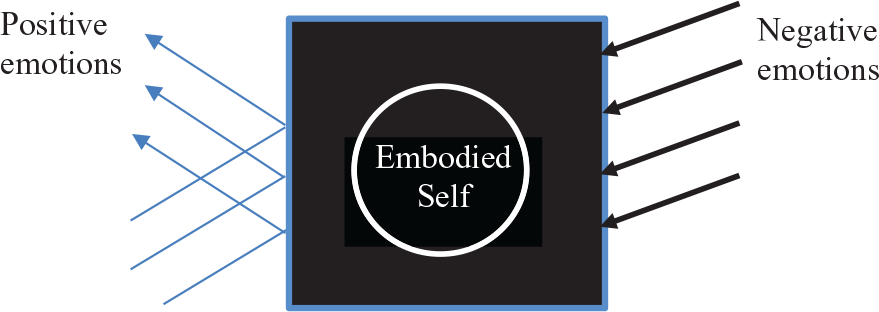
Depression: Isolated and trapped with negative emotions in a container.
As illustrated in Figure 1, the negative emotions that characterize depression are contained within the self, while the self is contained by depression that is also thought of as a container (e.g., hole, pit, box), but allowing only negative emotions to filter through and remain trapped within.
Culturally Variant Metaphors
Another notable finding in this study points to a culturally distinct metaphorical framework among young adults with depression. Our findings suggest young adults of Indian and Malay ethnicities tend to draw upon cultural, religious, spiritual, and personal understandings that offer other conceptual frameworks with which to understand and express their experience beyond conventional metaphors.
To fully appreciate the complexities of such metaphorical expressions is to recognize that this may be a product of a complex and dynamic interaction between personality, personal histories, religion, and prevailing sociocultural scripts. The influence of cultural resources in lay expressions of depression metaphors might also have a significant bearing on the choices these young adults may tend to make about the management of their condition and their help-seeking behaviors (Ahammed, 2010; Mallinson & Popay, 2007). Our findings thus lend support to calls for ethnic-specific mental health service provision (Loewenthal, 2006; Zane et al., 1994). The study findings raise questions about how local cultural scripts shape young adults’ experiences and expressions of depression metaphors, with clear implications for treatment and therapy. In clinical practice, such cultural understanding can help therapists become more aware of cultural variability, and recognize the degree to which young clients may be influenced by culture and its norms. There is thus utility in employing qualitative methodology in future studies, to further explore such cultural variants in metaphors of mental illness among young adults.
Strengths and Limitations
In terms of generalizability of our findings, we cannot exclude the possibility that the external validity of our study findings could be limited by the difference in severity and duration of depression experiences. The level of impairment was substantial in several of the participants, while others reported possible success in gaining remission and some improvements in their work and relationship function. Nevertheless, this was an adequate and diverse sample in terms of ethnicity, education, and employment. Although researcher bias is a known concern in similar qualitative research, we believe the use of reflexivity, triangulation of responses with team members, and continuation of subject recruitment until thematic saturation minimized the potential biases (Britten, 1995). Collectively, the rapport and quality of the experiences shared in the interviews as well as the achievement of thematic saturation suggest that our strengths lie in effectively capturing the breadth of experience available from this sample.
Conclusion
In summary, the results of the present study capture the abundance and vividness of metaphorical expressions embedded in participants’ accounts. The study highlights the power of metaphors as important and vital tools which allow the use of accessible, intense, and vivid imagery (or analogy) for young adults to communicate their experiences of depression. Textured with multiple layers of semantic and sensory information, metaphors can more accurately illustrate the quality of their depression experience than the basic adjectives afforded by language (Patten, 2015). There are implications for future research and clinical practice, with an urgent need to understand depression metaphors among young adults, and the ways in which to approach in a multicultural treatment setting (Tay, 2019). The study findings can further contribute to improving current risk assessments for depression, giving due consideration to metaphorical expressions and connecting young adults with timely treatment and care (Gilbody et al., 2006; Gulliver et al., 2010). Thus, understanding and acknowledging the role of metaphors in depression among young adults offers a valuable way forward.
Footnotes
Declaration of Conflicting Interests
The authors declared no potential conflicts of interest with respect to the research, authorship, and/or publication of this article.
Funding
The authors disclosed receipt of the following financial support for the research, authorship, and/or publication of this article: This work was supported by National Medical Research Council (NMRC/CG/M002/2017_IMH).
Supplemental Material

Data Availability
The data that support the findings of this study are available upon reasonable request.