




Abstract
The engagement of grandparents in family childcare has been on the rise worldwide in recent years (Zanasi et al., 2023). In the United Kingdom, for instance, researchers revealed that the number of grandparents who provide childcare for their grandchildren had risen dramatically in the 2010s, and nearly three million grandparents were offering very regular childcare in 2017 (International Longevity Centre, 2017). In China, when the increasingly competitive labor market compels parents to work for long hours, grandparental involvement has become a highly necessary option for families with young children (Dai, 2026). A recent study found that 78% of mothers in China receive grandparents’ childcare support for an extended period before their children start primary school, and the rate is among the highest in the world (Meng et al., 2022). Through comparative data, Ko and Hank (2014) concluded that the proportion of grandparents caring for grandchildren is much higher in China (58%) than in neighboring South Korea (8%).
Faced with plummeting birth rates, the Chinese governments have been experimenting various policy and service programs to encourage childbirth. However, childcare is expected to remain largely family oriented in social norms, and state support and public services for childcare are still underdeveloped (Liu & Dai, 2025). Many local governments in China then have identified training grandparents as an important policy strategy for childcare support and family well-being (Shan, 2023). In the past 2 decades, intensive training programs to grandparents as primary caregivers of grandchildren have been developed in various parts of China (e.g., Haining Government, 2012; Shan, 2023), and several textbooks for these programs have been released and promoted by the governments (e.g., Liao & Zhang, 2012).
Previous studies on the effectiveness of these policy and service programs in China have documented its positive impacts on mothers’ labor force participation and mixed effects on the well-being of the ageing population (e.g., Wang & Gonzales, 2019). How grandparental care associates with child development, on the other hand, is underexplored and the conceptual definitions and empirical conclusions are often inconsistent and unclear. Similarly, the global literature to date has also uncovered a wide variety of evidence for positive, negative, and sometimes no effects of grandparenting on child development (Masfety et al., 2019). One major reason for the inconsistency is often believed to be differences in the definitions and contexts of grandparenting (Yancura et al., 2020).
Amid the ongoing debates over research findings and service program practices, this study sets out to disentangle the associations between grandparental care and child development in the Chinese contexts, by focusing on grandparenting as primary family childcare and directing attention to household structures, living arrangements, and socioeconomic status. These efforts would not only clarify the mixed and perplexing findings in scholarly studies on grandparenting in China and global contexts, but also shed light on future policy planning and service program development in the fields of child development and wellbeing, family care, and social support to childcare.
Background: New Family Service Initiatives in China
Together with population ageing, China has entered an era of low fertility. Since the 1990s, the fertility rate in China has stayed below 2, and it dropped to the historic low of below 1 in 2023 during the COVID-19 pandemic. In order to rescue the drastically declining fertility rate in the country, the governments have experimented various policy and service programs, including lifting the One-Child Policy, expanding maternity and family leave, cash allowance to parents of newborns, and state investment in public childcare facilities (Dai, 2026). When these policy programs failed to achieve much success in outcomes, local governments in various parts of China started to search for alternative service approaches to organize childcare and encourage childbirth. One major program initiative has been to develop systematic workshops and curriculum to train grandparents as important family caregivers of young children (Shan, 2023).
In the early stage of this program approach, 1-day interactive workshop was designed and delivered by social workers, other service professionals, and academic researchers to educate participating grandparents to play a supportive role in family-based childcare. Sponsored by local governmental grants, such workshops were conducted in kindergartens and primary schools in cities (e.g., Beijing Emerald Primary School, 2018) and in village community centers in the countryside (e.g., Kunshan Government, 2021). The content of the workshops usually covered perspectives to understand the needs of grandchildren and their parents, strategies to develop healthy family relationships, and to-do lists for supportive caregivers of young children. According to the reports of local governments, these programs were welcomed by both grandparents and parents (Kunshan Government, 2021).
In the post-COVID economic downturn, competition in the labor market has become extremely fierce and it is a difficult task for parents of young children to achieve a balance between work and family care (Yang & Xie, 2024). In this changing context, the training programs for grandparents have also redefined their objectives as to educate grandparents to become efficient primary family caregivers of grandchildren. With state funding, professional education and service agencies are hired to develop extended workshops of 3–5 days, and recruit participants through all possible channels to reach the wider population of grandparents (Shan, 2023). Social workers in these agencies have actively participated in service development, promotion, and delivery.
The contents of the workshop series, named “Raising Children at a Silver Age,” now include basic knowledge of child developmental psychology, communication skills with young children, tactics of relationship building, and skills to encourage and supervise academic learning in childhood (Guangzhou city Zengcheng District, 2024). Together with cycles of workshop series, some textbooks have been released or reprinted for grandparents to review the contents of the workshops and to conduct future self-learning (e.g., Liao & Zhang, 2012). The local governments have recoganized the programs as well-received by multigenerational families, and achieving great success in supporting parents in the workplace and engaging ageing grandparents with the society (Guangzhou city Zengcheng District, 2024). There is little evidence or discussion, however, on how this service approach influences the development and well-being of children in these families. This study, based on regionally representative data, thus sets out to bridge the knowledge gaps in these new initiatives in service programs in China.
Literature Review
Linking Grandparenting to Child Development in Family System
There is little doubt that family care processes fundamentally shape the development and wellbeing of children, but usually the family system perspective puts emphasis on parental involvement, marital relationships, and sibling interactions (Cox & Paley, 1997). In an era of family welfare retrenchment, maternal labor force participation, and resourceful ageing, grandparenting and its effects on child development has gradually received more scholarly attention. Previous research has explored how grandparenting associates with children's cognitive abilities, academic achievements, health, and mental health, but the findings are often inconclusive.
While several studies in different national contexts discovered that grandparenting is negatively associated with cognitive and noncognitive abilities (Yang & Xie, 2024); Mollborn et al. (2011) argued that in the United States, grandparenting has positive effects on the cognitive abilities of children. There exists some evidence that receiving grandparental care could benefit children in test scores, school attendance, and educational attainments (e.g., Hong & Zeng, 2023); but the effects of grandparenting on children's mental health, social–emotional well-being, and internalizing and externalizing behavioral problems have generally been documented as negative (e.g., Masfety et al., 2019). Through a systematic review, Pulgaron et al. (2016) found that grandparenting is negatively associated with children's physical health; meanwhile, Sun and Yang (2021) pointed out that when grandparents provide partial and nonprimary care support, the negative impacts of grandparenting on children's physical health could be weakened or even disappear.
In the growing literature on the effects of grandparenting on child development, the term “grandparenting” often indicates quite different concepts, ranging from full-time primary care to sporadic and irregular care support provided by grandparents. The age of grandchildren who receive care may also range from newborns to high-school adolescents. The mixed and undifferentiated use of “grandparenting,” as some scholars have realized, leads to inconsistent and sometimes confusing research findings (Xu et al., 2023). In response to the program objectives of the recent service approach in China, this study defines our research scope of grandparenting as primary care—that is, grandparents as primary family caregivers of young children. We also limit the age of grandchildren to preschool because previous studies identified this group as most likely to receive intensive grandparental care in China (Wu, 2018). It was recently estimated that about 30% of children in China are primarily cared by their grandparents before they start primary school (Wu, 2018). Researchers also believed that grandparenting exerts a stronger effect on the wellbeing of children in this age group than that of older children (Hong & Zeng, 2023), but the specific impacts of grandparenting as primary care on preschool children's developmental outcomes have remained largely unclear.
Living Arrangements, Socioeconomic Status, and Household Structure
Family living arrangement is an important factor that further complicates the effects of grandparenting. In China, a preschool child primarily cared by grandparents could be a left-behind child in the countryside with absent parents, or an urban child living with parents or both parents and grandparents and receive parent–grandparent coparenting—a common family practice in major Chinese cities (Xu et al., 2023). It is theoretically and analytically problematic to place these distinctive scenarios under the same umbrella. As some scholars have cautioned, it is necessary to tease the effects of grandparenting out of the structural marginalization of left-behind children in the research on Chinese families (Li et al., 2019).
In the global literature, it has also been noticed that multigenerational grandparenting (children living with both parents and grandparents) and skipped-generational custodial grandparenting (children living without parents) may produce different outcomes for child development. Studies across different countries have consistently confirmed the adverse effects of custodial grandparenting on the development and wellbeing of children (Xu et al., 2022). Grandparenting in multigenerational families, on the other hand, has been found to exert mixed effects. Pittman (2007) discovered that children in multigenerational families might demonstrate higher levels of behavioral problems. In the Chinese contexts, however, Zhang and Wu (2021) revealed that multigenerational cohabitation is significantly and positively associated with adolescents’ academic performance. For our inquiries into grandparenting as primary care and child development, we therefore need to systematically control preschool children's living arrangements with parents and grandparents to investigate children's well-being when grandparents are primary caregivers.
In the discussion on grandparenting contexts, which contribute to the inconsistent findings in the literature, scholars have also debated how family socioeconomic status and household structures moderate the effects of grandparenting on children. Some researchers viewed grandparenting as additional support in childcare in resourceful families yet as surrounded by conflicts in disadvantaged families, and argued that grandparenting tends to benefit better-off children while harming their marginalized counterparts and deteriorate social stratification (Del Boca et al., 2018). More commonly, scholars framed grandparenting as an important protective mechanism for disadvantaged families when they face challenges and crises. Hamilton (2005), for example, revealed that the presence of grandparents in disadvantaged black families is associated with less deviant behavior and fewer depressive symptoms of children. In recent years, the protective role of grandparenting has been uncovered in disadvantaged household and family structures in a broader sense, including single-parent households, low-income families, and rural families (Yancura et al., 2020). In Chinese contexts, Zhang and Wu (2021) found that living with grandparents has positive effects on students’ academic performance in China, and students from low-income and single-parent families can benefit more from coresidence with grandparents.
It is consistent in the existing literature that socioeconomic status and household structure (e.g., single parenthood) need to be regarded as factors that moderate the association between grandparenting and the development of grandchildren, although it is not fully clear whether grandparenting protects marginalized families and children or reinforces social stratification and disparity. Research efforts are made in this study to navigate the roles of these moderators in our inquiries into the effects of grandparenting as primary care on the development of preschool children, and to imply for future planning of policy and service programs in China.
The Present Study
In sum, when grandparenting becomes globally prevalent and China adopts training grandparents as primary caregivers of young children as a major direction in family service development, research on the impacts of grandparenting on child development has remained limited and inconclusive. In this study, we thus aim to delineate the effects of grandparenting as primary care on early childhood development, when the important contexts of living arrangements are controlled. Furthermore, we inquire into whether and how the effects of grandparenting as primary care on early childhood development are moderated by household structures and family socioeconomic status. We propose the following hypotheses:
Method
Data From SEEDS
To explore family care patterns among preschool children and early childhood development, we employed data from the Survey of Early Education, Development, and Strengths (SEEDS), collected in the Hangzhou region of Zhejiang Province in 2023–2024. Through stratified randomized sampling, the survey sampled 8,650 preschool children from 52 kindergartens across all the different urban, suburban, and rural districts of the region, and was completed by one of their parents online. When asked about the primary caregiver of the child, most respondents answered either parents or grandparents. The number of children cared by “others” (n = 99) was too small for meaningful comparison. We hence dropped them, together with other cases with missing values for key variables of the study, from our analysis, reducing the final sample size for this study to 6,986.
Key Measurements
Grandparenting as Primary Care
In SEEDS, parents were asked the current primary caregiver of the focal child in the family, with 1 indicating that the focal child is primarily cared by grandparents, and 0 indicating otherwise.
Child Development
In SEEDS, early childhood development was measured by Ages and Stages Questionnaire Third Edition (ASQ-3) and ASQ: Social–Emotional, Second Edition (ASQ:SE-2), which are widely used screening tools designed for children aged between 0 and 72 months (Squires et al., 2015). ASQ-3 asks parents to report their observations of the development of their children in five different domains: Communication, Gross Motor, Fine Motor, Problem-Solving, and Personal-Social. ASQ:SE-2 uses 31–33 questions, based on children's different age groups, to measure parents’ observations of their children's social–emotional development—for some examples, whether the child seems friendly to strangers, whether the child smiles and laughs when playing games, whether the child enjoys singing and storytelling, and so on. Both ASQ-3 and ASQ:SE-2 have been translated into Chinese and validated in children in China (Bian et al., 2010; Shum et al., 2022). Cronbach standardized alpha for both measures has been consistently proved to be over 0.75 in previous studies.
Living Arrangements and Household Structures
In SEEDS, respondents reported the current living patterns in their families—whether parents (one or both) and grandparents (one or both) were living together with the focal child. Responses to these two questions provided information on the general living arrangements of children (coresidence with parents and/or grandparents), as well as their household structures (single-parent, both-parents, or skipped-parents).
Family Socioeconomic Status
Parents’ educational level, employment status, occupation, and family income were measured in SEEDS to indicate family socioeconomic status. As the rural/urban divide in the Chinese household registration system (hukou) impacts rural and urban residents in their access to essential resources, such as housing, education, healthcare, and pension plans, parents’ hukou status was also included to inform family socioeconomic status.
Estimation Strategies
We adopted OLS regressions in data analyses to understand the effects of grandparenting as primary care on child development of preschool children controlling children's living arrangements, as well as the moderating effects of household structures and family socioeconomic status in this relationship. Stata (version 17.0) was used to estimate all the regression models.
Results
Descriptive Results
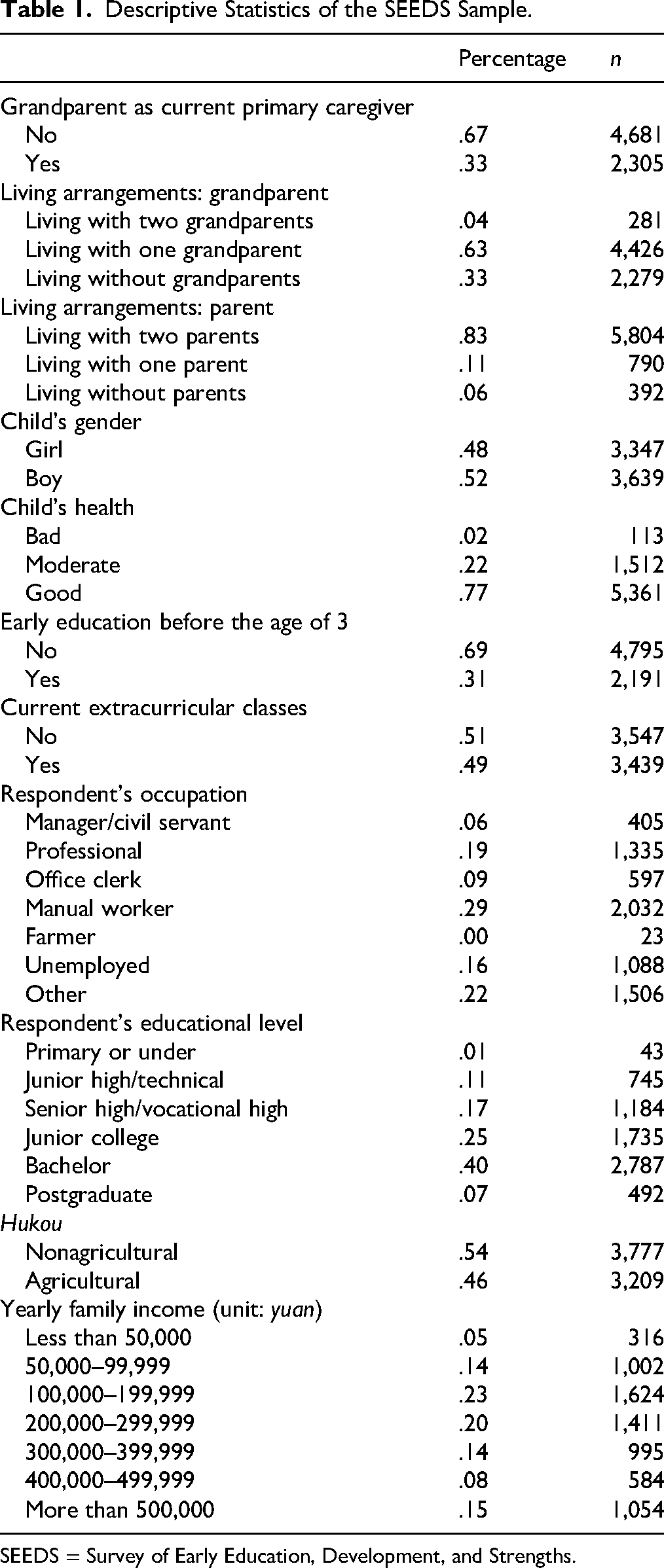
Raw ASQ-3 and ASQ:SE-2 scores were normalized within each age group to a mean of 0 and a standard deviation of 1, representing children's development compared with their counterparts in the same age group. After normalization in the sample, the z-score of ASQ-3 ranged from −7.98 to 1.32, and the z-score of ASQ:SE-2 ranged from −6.07 to 1.70. In our sample, 2,305 children (33%) were primarily cared by their grandparents and 4,681 (67%) by parents. The distribution reflected the previous estimation that around 30% of preschool children in China receive grandparenting as primary family care (Wu, 2018).
It was noteworthy that 11.3% of the children in the sample lived with one parent. Besides children with divorced or widowed parents, this group also included children whose parents had to live and work in different localities, due to the family-unfriendly labor market of China and unmanageable living costs in large cities for families (Hong & Zeng, 2023). In other words, some of these children could have married parents, but still lived in a single-parent household in everyday life. Meanwhile, 5.6% of the sampled children lived without parents (largely left-behind children in the countryside) and received skipped-generational grandparental care.
Social demographic information of the focal child was used as control variables, and the descriptive statistics of the variables could be found in Table 1.
Descriptive Statistics of the SEEDS Sample.
SEEDS = Survey of Early Education, Development, and Strengths.
Grandparenting as Primary Care for Preschool Children: Main Effects
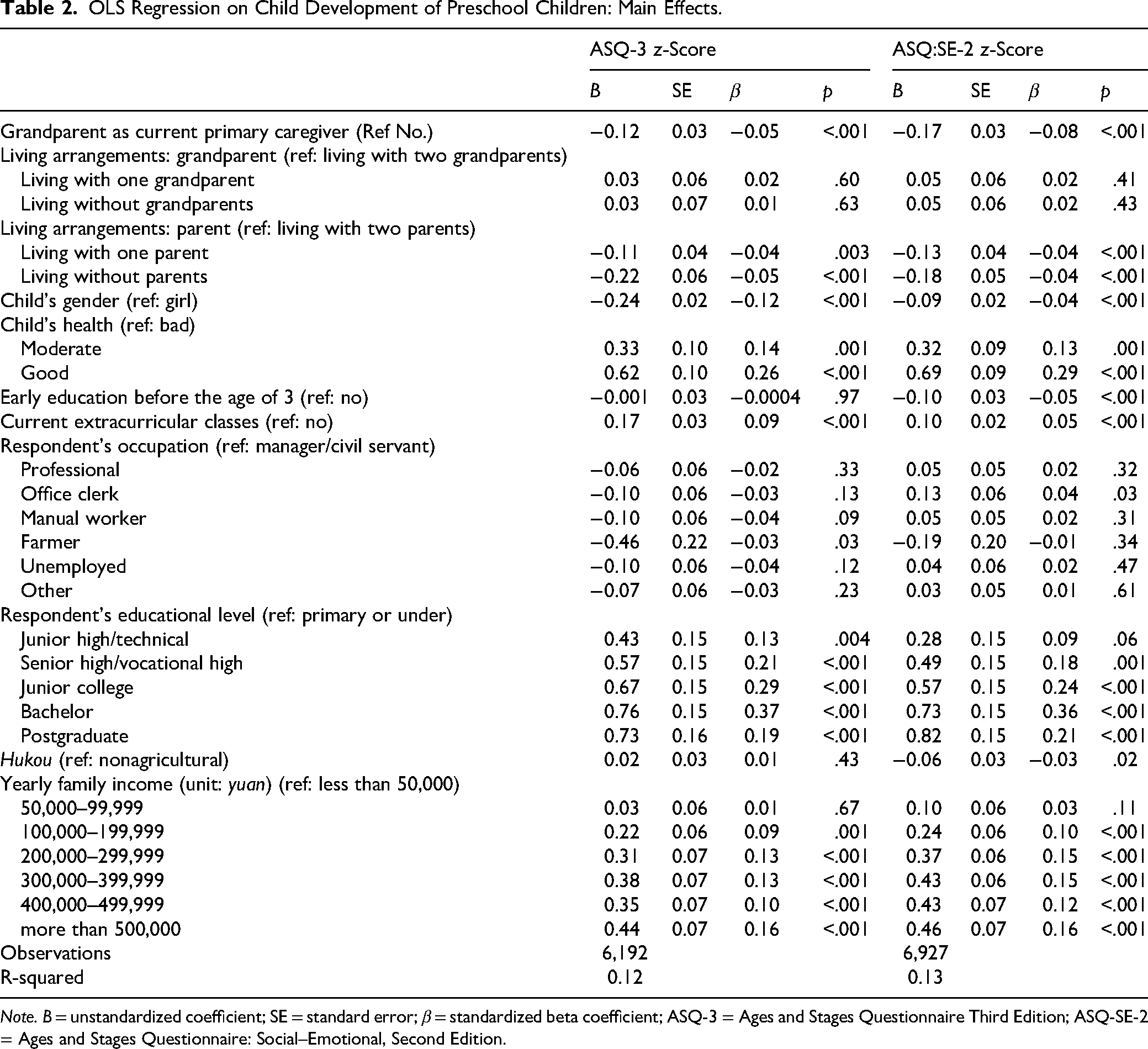
We first tested Hypothesis 1 and examined the association between grandparenting as primary care and early childhood development of preschool children in the sample, controlling children's living arrangements. Two models were built for the two outcome variables ASQ-3 z-score and ASQ:SE-2 z-score, respectively, indicating overall development and social–emotional development of preschool children. The results of the OLS regressions could be found in Table 2.
OLS Regression on Child Development of Preschool Children: Main Effects.
Note. B = unstandardized coefficient; SE = standard error; β = standardized beta coefficient; ASQ-3 = Ages and Stages Questionnaire Third Edition; ASQ-SE-2 = Ages and Stages Questionnaire: Social–Emotional, Second Edition.
After we carefully controlled family living arrangements, a major factor identified in the literature as the contexts of grandparenting, grandparenting as primary care had a significantly negative association with both overall (B = −0.12, p < .001) and social–emotional developments of preschool children (B = −0.17, p < .001). Hypothesis 1 of the study was supported, and the direction of the association of grandparenting as primary care with both overall and social–emotional developments of preschool children was negative, after children's living arrangements were controlled.
At the same time, living with two parents, compared with living with one parent or without parents, positively associated with child development. Living with grandparents, however, was nonsignificant. Preschool children whose parents had higher educational levels and in higher-income families were also more likely to achieve higher scores in overall and social–emotional developments.
Moderating Effects of Household Structure and Family Income
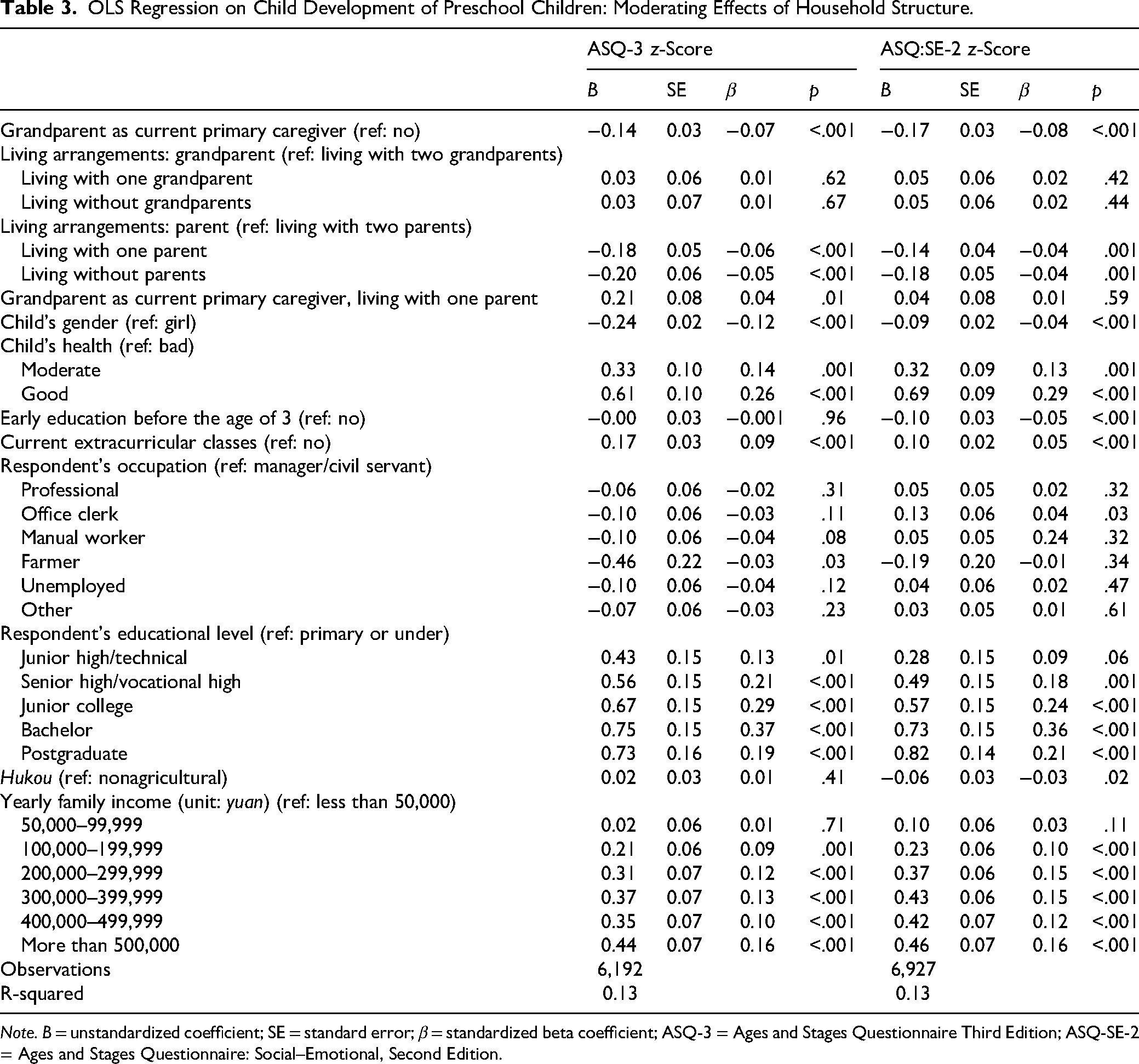
To test Hypothesis 2 and further understand how the negative effects of grandparenting as primary care varied for preschool children living in different household structures, we added an interaction term of grandparent as primary caregiver and living arrangements with parents into the two OLS regression models, with ASQ-3 and ASQ:SE-2 as the outcome variables respectively. The results of the models could be found in Table 3.
OLS Regression on Child Development of Preschool Children: Moderating Effects of Household Structure.
Note. B = unstandardized coefficient; SE = standard error; β = standardized beta coefficient; ASQ-3 = Ages and Stages Questionnaire Third Edition; ASQ-SE-2 = Ages and Stages Questionnaire: Social–Emotional, Second Edition.
As in the previous models without the interaction term, the negative effects of grandparenting as primary care on overall (B = −0.14, p < .001) and social–emotional developments (B = −0.17, p < .001) of preschool children remained when the interaction term was added. The interaction of grandparent as primary care and living without parents was dropped by the modelling because children who lived without parents yet not mainly cared by grandparents were few in the sample. It indicated that in the sample, children living without parents received skipped-generational custodial grandparental care, as discussed in the literature (e.g., Pittman, 2007), and contributed to the negative main effects of grandparenting as primary care. The interaction of grandparent as primary care and living with one parent, on the other hand, was significant for overall development of preschool children (B = 0.21, p = .01); but nonsignificant for their social–emotional development (B = 0.04, p = .59). This moderating effect was further illustrated in Figure 1.
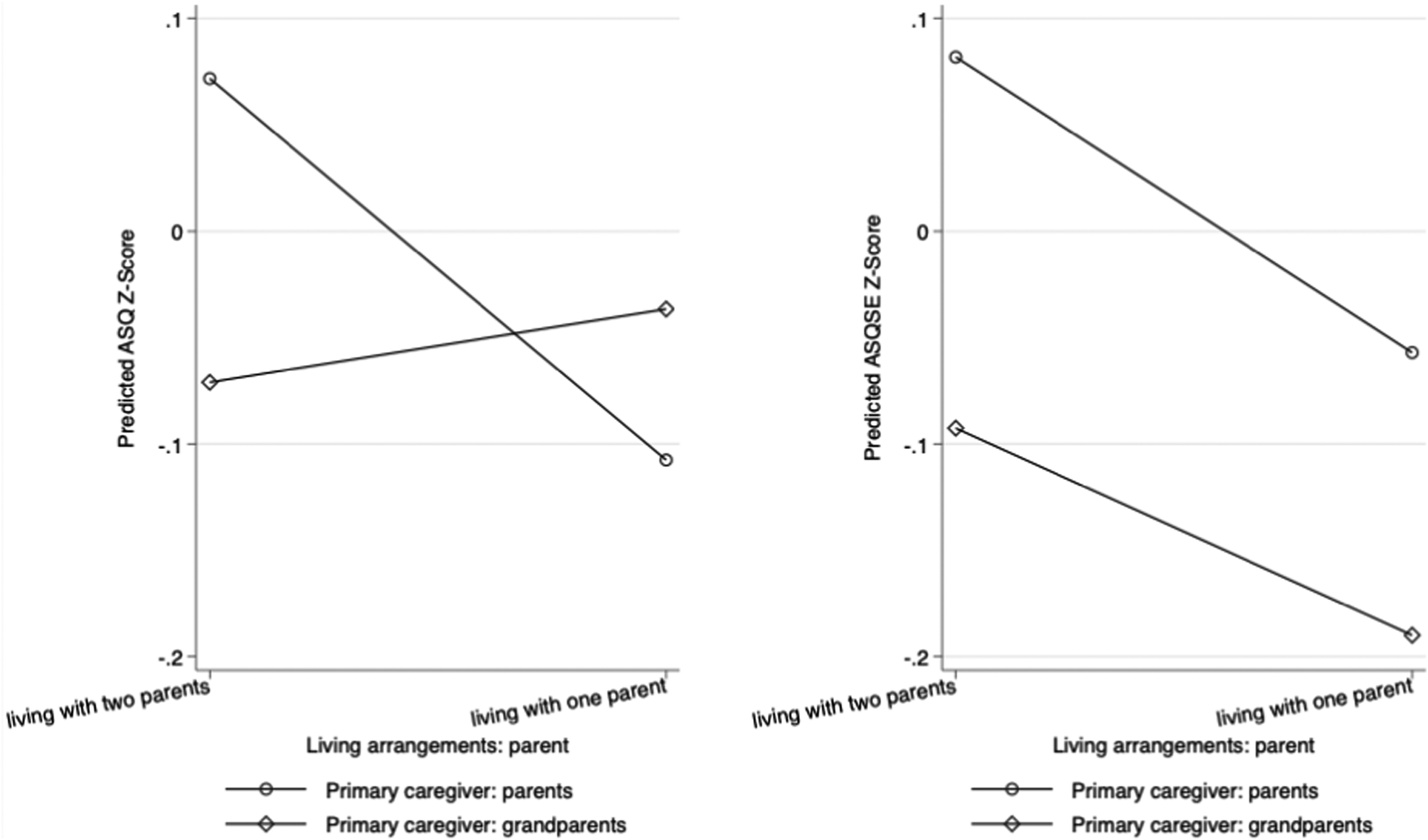
Primary caregiver and child development of preschool children by household structures.
We juxtaposed two panels with the predicted overall child development (ASQ-3 z-score) and the predicted social–emotional development (ASQ: SE-2 z-score) by living with one or two parents. The left panel showed an increased overall development for children living with one parent as compared with those living with two parents, when grandparenting was the primary family care; and a decreased overall development when parents were the primary caregivers. The right panel demonstrated that for social–emotional development, regardless of the primary caregiver, children living with one parent achieved a lower score than their counterparts living with two parents. The comparison manifested that grandparenting as primary care had some protective effects on overall development for preschool children living with one parent, but not on their social–emotional development.
Hypothesis 2 of the study was partially supported that the effects of grandparenting as primary care on overall development of preschool children was moderated by household structures—it had some positive effects on children living with one parent, but negative effects on children living with two parents. However, household structures did not moderate the effects of grandparenting as primary care on social–emotional development of preschool children—the effects remained negative for children living with one parent and both parents.
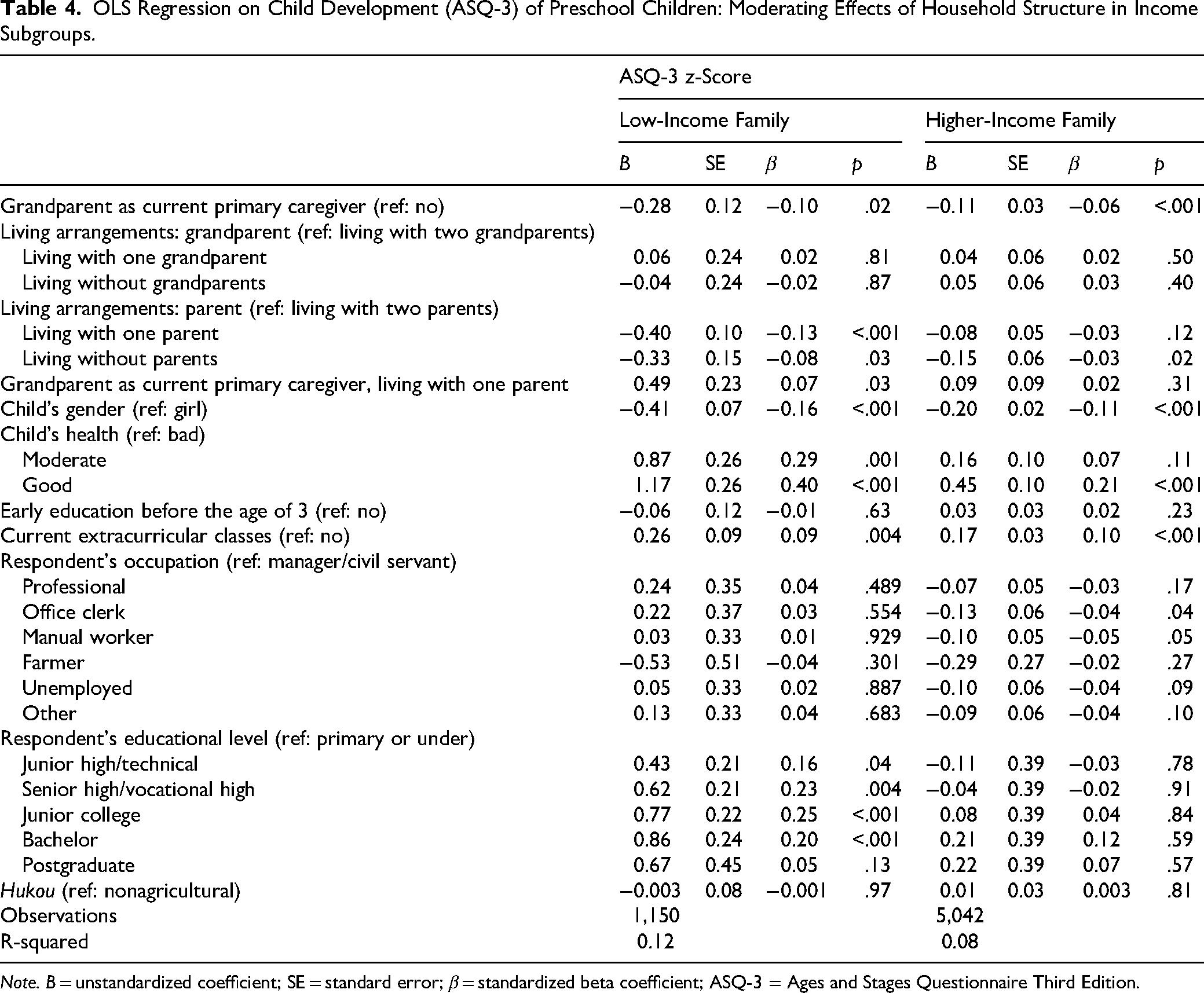
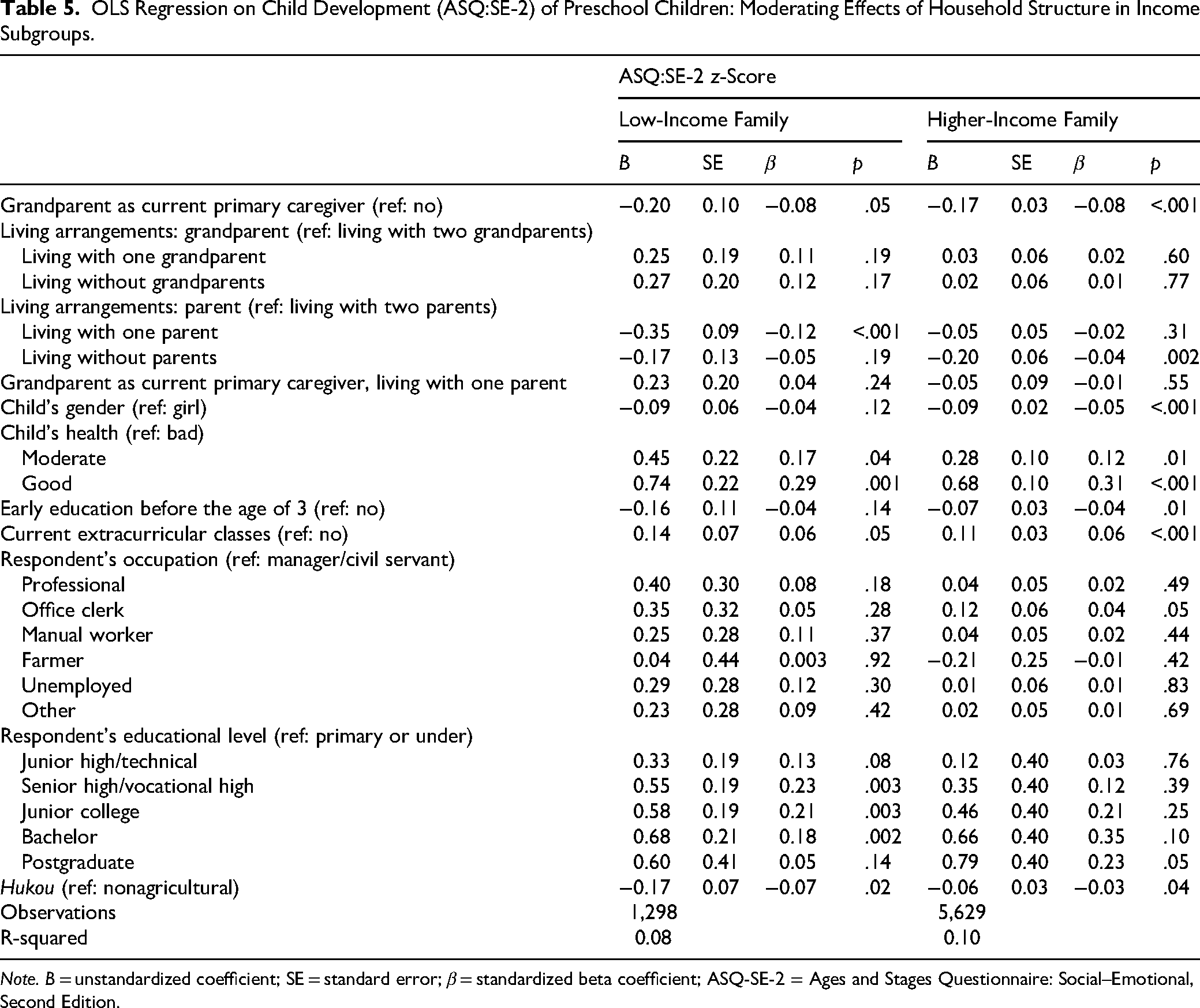
As the existing literature has suggested that protective effects of grandparenting are often more pronounced in financially disadvantaged families (e.g., Zhang & Wu, 2021), we further conducted subgroup analyses to investigate the buffering effects of grandparenting as primary care on preschool children living with one parent in families with different income levels, to test Hypothesis 3 of the study. The official estimation of the median household income in the Hangzhou region in 2024 was 215,000 yuan (Hangzhou Municipal Bureau of Statistics, 2025), which also roughly matched the distribution in the SEEDS sample. We used approximately 50% of median income, 100,000 yuan, as the cutting point for low-income families. The results of the subgroup analyses on ASQ-3 and ASQ:SE-2 were presented in Tables 4 and 5 respectively.
OLS Regression on Child Development (ASQ-3) of Preschool Children: Moderating Effects of Household Structure in Income Subgroups.
Note. B = unstandardized coefficient; SE = standard error; β = standardized beta coefficient; ASQ-3 = Ages and Stages Questionnaire Third Edition.
OLS Regression on Child Development (ASQ:SE-2) of Preschool Children: Moderating Effects of Household Structure in Income Subgroups.
Note. B = unstandardized coefficient; SE = standard error; β = standardized beta coefficient; ASQ-SE-2 = Ages and Stages Questionnaire: Social–Emotional, Second Edition.
The interaction term of grandparenting as primary care and living with one parent was significant on overall development of preschool children in low-income families (B = 0.49, p < .05), yet nonsignificant for their counterparts in higher-income families (B = 0.09, p = .31). As in the whole-group analyses, this interaction term had no significant effect on social–emotional development of preschool children in either low-income (B = 0.23, p = .24) or higher-income families (B = −0.05, p = .55). The significant moderating effect on overall child development in the two income groups was illustrated in Figure 2.
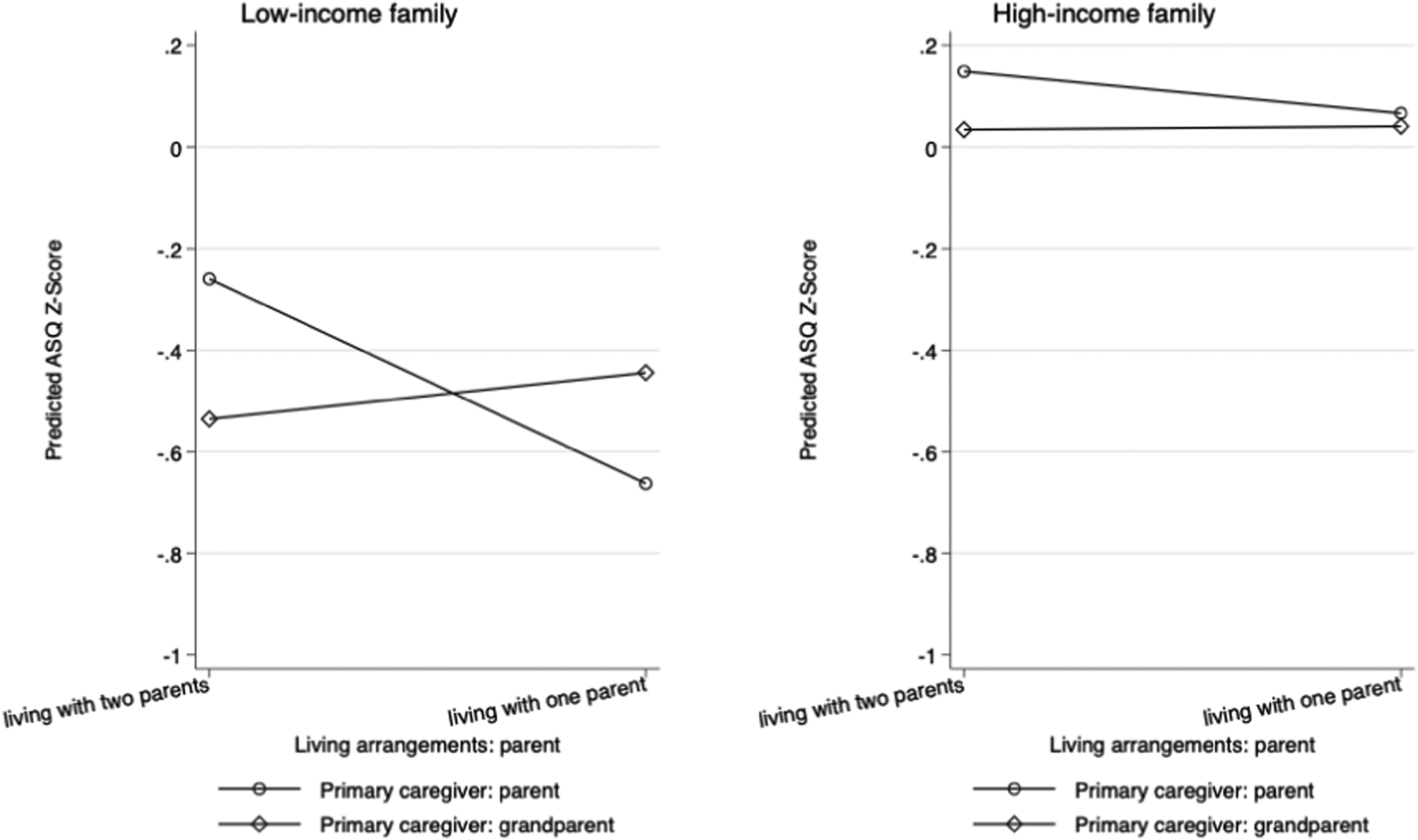
Primary caregiver and overall child development (ASQ-3) of preschool children by household structures and family income.
As shown in the left panel, a buffering effect of grandparenting as primary care on overall child development of preschool children living with one parent existed in low-income families. This buffering effect was similar to that discovered in the whole-group analyses. For preschool children in higher-income families, there was no difference in overall development for children living with one parent as compared with those living with two parents, when grandparenting was the primary family care. The results suggested that the protective effect for children living with one parent in the whole sample could largely be attributed to children in low-income families.
Hypothesis 3 of the study hence was only partially supported—the effects of grandparenting as primary care on early childhood overall development were moderated by household structures and family socioeconomic status, but the effects on early childhood social–emotional development were not. The protective effects of grandparenting as primary care on overall development for children living with one parent were significant only in low-income families.
Discussion and Applications to Practice
When grandparenting plays an increasingly important role in childcare arrangements in families globally and training grandparents as primary caregivers of young children becomes a major direction in family service development in China, research on the impacts of grandparenting on child development has remained limited and inconclusive, largely due to inconsistent conceptualization and vague contextualization. In this study, we examined the effects of grandparenting as primary care in early childhood, a prevalent practice in contemporary China, on preschool children's overall and social–emotional development, when the contexts of living arrangements were controlled. We further explored whether and how the effects were different for children living in different household structures and from different family socioeconomic status. We found that when important context factors such as living arrangements were controlled, grandparenting as primary care was significantly associated with lower scores of overall and social–emotional developments of preschool children. This result fundamentally challenged the growing social service programs in China that aim to train grandparents as efficient primary caregivers of young children.
As we analyzed preschool children living in different household structures and from different family socioeconomic status, we discovered that for preschool children living with one parent, grandparenting as primary care had a protective effect on their overall development, and this protective effect mainly existed in low-income families. This finding echoed the arguments from previous studies that grandparenting in single-parent families might compensate disadvantages and protect children from developmental delays and that the buffering effect could be more pronounced in low-income households (Adams et al., 2002). Instead of being additional family resources that reinforce social stratification among children, grandparenting as primary care was found more as a protecting mechanism for preschool children from marginalized families. This protective effect in Chinese families, however, only applied to overall development of preschool children, not to their social–emotional development in early childhood. Grandparenting as primary care in early childhood, as discovered in this study, could not buffer delays in social–emotional development of preschool children, even in truly disadvantaged families.
Findings of the study provide important implications for the recent family service developments in China. To solve the problem of childcare arrangements and encourage childbirth, Chinese governments have put much emphasis on grandparental training in social service planning and development. This study, which showed consistent negative association between grandparenting as primary care and development of preschool children, suggests more caution to adopt this direction. For the developmental needs and well-being of preschool children, parental involvement is vital and should be the focus of policy and service interventions. Building a family-friendly workplace, increasing employment and financial support to parents, and expanding reliable childcare services, for a few examples, are better policy and program options than training grandparents as primary caregivers. Social workers need to advocate for such policy directions in the public discussions over childcare arrangements and family care support, instead of fully complying with the current programs on grandparental trainings.
For family social workers working with multigenerational families in China, it is important to promote parental involvement and parent–child intimacy to enhance the well-being of young children, even when grandparental childcare support is available. Research findings on the effects of grandparenting as primary care on early childhood development ought to be shared in some sessions of parental education programs, to raise the awareness of the crucial role of parental involvement in the developments of preschool children. In skipped-generational families, it is still important for social workers to make use of new technologies to facilitate frequent communications and interactions between parents and children and to strengthen the parent–child ties and intimacy. Social workers may also consider mobilizing policy and social resources for the reunion of parents and children in living arrangements, which would benefit the developments of young children.
Meanwhile, as demonstrated in this study, grandparenting as primary care could be a protective mechanism for children living with one parent and in low-income families. Funding support and training to grandparents need to be directed to these disadvantaged families, together with other family welfare programs. As evidenced in the study, the protective role of grandparenting as primary care only existed in the overall development of preschool children. Targeted grandparental training should therefore focus on knowledge of overall childhood development and skills and strategies to promote the overall development of young children. Social services aimed at social–emotional development of young children, as well as parental support programs, need to be provided to these families to reduce disparities in child development and promote social equalities and justice.
This study suffered from many limitations. First, the SEEDS data were collected in the Hangzhou region in Zhejiang Province and could not be overgeneralized to all the other parts of China. In addition, the SEEDS data were cross-sectional in nature, and we could only conclude correlations among variables, instead of causal relationships. Limited by the SEEDS questionnaire, we relied on a single-item measurement to determine the primary caregiver of children, without information on actual hours spent on care, duration of care arrangements, specific care duties (such as reading, playing, and nighttime care), and specific grandparent–parent relationships (such as maternal or paternal grandparents). Lack of depth in the measurement of care arrangements affected the validity and implications of our findings. Moreover, important factors for child development, such as birth order among siblings, were not included in our analyses also due to the lack of relevant information in the data set. Longitudinal data that contain more information on family care and household structures are needed for future investigation of causal and more complex effects of grandparenting on child development.
Conclusion
By focusing on grandparenting as primary care for preschool children, this study concluded the negative association of this prevalent practice in China with overall and social–emotional child developments. A buffering effect of this practice on preschool children from disadvantaged families in overall development was also discovered, pointing to the importance to examine grandparenting in structural contexts. These findings have timely implications for China's policy and social service programs to train grandparents as primary caregivers to solve the childcare problem. As grandparenting has become increasingly prevalent globally, the lessons learned in China may also shed light on family and childcare policies and service programs in other parts of the world, and contribute to the building of a more functional and protective care system.
Footnotes

Ethics Statement
The procedure followed by this study was approved by the Ethics Panel of Social Sciences, The Chinese University of Hong Kong. Written informed consent was obtained from all participants.
Funding
The authors disclosed receipt of the following financial support for the research, authorship, and/or publication of this article: This study was funded by The Chinese University of Hong Kong under the International Research Collaboration Fund (Grant No. 19231103).
Declaration of Conflicting Interests
The authors declared no potential conflicts of interest with respect to the research, authorship, and/or publication of this article.
Data Availability Statement
The data that supported the findings of the current study are available upon request from the corresponding author. The data is not publicly available due to the protection of intellectual property.