




Abstract
Purpose
Spiritual fortitude is a vital internal resource that supports psychological resilience and a sense of purpose during challenging life experiences; however, no validated assessment instrument currently exists to measure this construct within the Turkish cultural context.
Method
The scale was administered to 877 adults from various regions of Türkiye. The factor structure was examined using exploratory factor analysis (n = 405) and confirmatory factor analysis (n = 235).
Results
The final 7-item scale demonstrated acceptable psychometric properties (χ2/df = 1.35; RMSE = 0.03; CFI = 0.99; α = 0.88; λ = 0.88; ω = 0.88; CR = 0.90). Criterion validity was supported by moderate positive correlations with resilience (r = .39), spiritual well-being (r = .25), and grit (r = .26).
Discussion
The findings indicate that the Turkish version of the Spiritual Fortitude Scale is a valid and reliable instrument for assessing spiritual fortitude. Future research is recommended to examine its applicability across diverse populations and applied settings.
Throughout life, many individuals face prolonged stressful circumstances such as chronic illnesses, natural disasters, economic hardships, and family-related problems. These challenges can adversely affect mental health (Regnoli et al., 2024), while spirituality is important in coping with such difficulties (Aslan & Kabakçı, 2025; Koenig & Carey, 2024).
Belief systems have shaped human life throughout history, guiding individuals on both personal and societal levels (Durkheim, 2016). Anthropological and sociological evidence demonstrates that throughout history people have initiated wars, migrated, endured oppression, and even sacrificed their lives for their beliefs (Eliade, 1959). In this context, religion and spirituality are considered to play an important role in individuals’ efforts to make sense of their life experiences and cope with difficulties (Aslan & Topuz, 2025). However, although the concepts of religion and spirituality are sometimes used interchangeably in the literature, it is emphasized that these two constructs are conceptually distinct (Hill et al., 2000). From this perspective, spirituality is regarded as a broader concept that may emerge within religious traditions but is not limited to them, encompassing individuals’ connections with themselves, others, nature, or a transcendent being (Delgado, 2005). In this respect, religion and spirituality are considered to provide individuals with a framework for interpreting life events and to support psychological processes such as coping with stress, emotional regulation, and psychological resilience, thereby strengthening individuals’ psychological adjustment (Graça & Brandão, 2024; Underwood & Vagnini, 2022). Recent research in psychology highlights the positive influence of spirituality on mental health (Garssen et al., 2021). For instance, individuals with a consistent belief system and regular spiritual practices tend to report lower levels of depression, anxiety, and loneliness (Koenig, 2012). This effect is associated with how spiritual orientation adds meaning to life and strengthens the sense of social connectedness (Etemadifar et al., 2016). Moreover, some studies reveal that spiritual practices such as worship, meditation, and prayer can trigger positive neurochemical changes in the brain (Newberg & Waldman, 2009). From a physical health perspective, spirituality is also considered a protective factor. For example, individuals who engage in regular worship tend to make healthier choices and resist chronic illnesses more (Levin, 2001). Those with a strong spiritual orientation often show more effective immune system functioning, lower secretion of stress hormones, and higher quality of life (Koenig, 2012).
In today's world, despite technological advancements and the rise of secularization, the significance of spirituality has not diminished; instead, it has become more visible in the face of global crises such as the pandemic. Studies conducted during COVID-19 indicate that individuals increasingly turned to spiritual practices such as prayer and meditation to cope with uncertainty (Bentzen, 2021). This tendency underscores humanity's inherent search for meaning and the role this search plays as a powerful defense mechanism against the stress and alienation of modern life.
Research in Türkiye similarly shows that religious beliefs significantly influence psychological well-being and life satisfaction (Aka, 2024). Therefore, spirituality should not be viewed solely as a means of personal peace or meaning-making but as a crucial resource that enhances an individual's capacity to withstand life's challenging conditions.
One of the spiritual resources that supports effective coping with challenging conditions is spiritual fortitude (SF). SF refers to a character trait that enables individuals to endure adversity and derive meaning from such experiences by possessing sufficient spiritual resources through their connections with God, others, and themselves (Van Tongeren et al., 2019). This trait also reflects a person's capacity to approach life events within a broader framework of meaning, guided by spirituality-based insight. The literature suggests that SF serves as a vital spiritual resource for coping with stress and functioning to reduce the adverse psychological effects individuals experience in stressful situations (Provencio & McElroy-Heltzel, 2025). To systematically examine this construct's psychological and spiritual functions, Van Tongeren et al. (2019) developed a measurement tool to assess SF. The present study aims to adapt this measurement tool to the Turkish cultural context. In doing so, it follows the methodological steps recommended for cross-cultural validation studies of religion- and spirituality-focused scales (Koenig & Al Zaben, 2021).
Spiritual Fortitude
SF is a psychological construct that describes individuals’ ability to demonstrate resilience in the face of prolonged and uncertain stressors by drawing upon religious or spiritual resources (Van Tongeren et al., 2019). Utilizing their internal spiritual resources enables individuals to find meaning and preserve their spiritual integrity when confronted with stressful or traumatic life events. This capacity can be considered a form of self-efficacy grounded in religious or spiritual skills (Bandura, 1982). When individuals believe they can restore inner balance during stressful or traumatic periods of life by relying on spiritual resources, this belief reflects the manifestation of self-efficacy in the spiritual domain. According to Bandura's self-efficacy theory, if individuals successfully apply these skills, such experiences enhance their spiritual self-efficacy. They may facilitate their ability to cope with future stressful situations.
At the core of SF lies individuals’ capacity to strengthen their spirituality, hold firmly to their religious values, and infuse their lives with renewed meaning while coping with adversity. This construct has gained increasing attention in psychology and is recognized for its significant role in individuals’ recovery processes following traumatic experiences (McElroy-Heltzel et al., 2018). Religious and non-religious traditions emphasize SF as a vital virtue in the face of hardship (Titus, 2006). Van Tongeren et al. (2019) define SF through three fundamental components: spiritual endurance, spiritual enterprise, and redemptive purpose. Spiritual endurance is an individual's capacity to withstand pain for extended periods by drawing on religious or spiritual resources. This endurance reflects the strength to overcome difficulties while preserving one's faith. Spiritual enterprise denotes the ability to maintain spiritual integrity and uphold high moral values despite challenges, encompassing the willingness to live according to one's beliefs. Finally, redemptive purpose describes the capacity to discover new meaning and purpose when facing adversity, reflecting the ability to transform traumatic experiences into meaningful processes. Together, these three components form the holistic structure of SF and reveal an individual's ability to approach challenges from a spiritual perspective (Van Tongeren et al., 2019).
Although SF shares similarities with certain concepts in the literature, it is clearly distinguished from them. One such concept is resilience, an individual's capacity to adapt in adversity (Luthar, 2005). Resilience has often been used to describe individuals who, despite experiencing stress or hardship, do not develop illness and can maintain functional capacity (Tusaie & Dyer, 2004). On the other hand, SF outlines a set of perspectives that can facilitate resilience, which is often assessed as a process, such as restoring well-being levels following exposure to a stressor. It emphasizes individuals’ capacity to draw upon spiritual resources to cope with difficulties and achieve personal growth (Van Tongeren et al., 2019). From this standpoint, while resilience is typically associated with internal resources, social support, and coping strategies, SF foregrounds explicitly the role of spiritual resources.
Similarly, SF differs from grit, which refers to the intense passion and perseverance demonstrated to achieve long-term goals despite various obstacles (Duckworth et al., 2007). Grit is closely related to self-regulation, self-discipline, and goal commitment (Duckworth & Quinn, 2009). It describes an individual's emotional, cognitive, and behavioral persistence in facing challenges and barriers to goal attainment (Sarıçam et al., 2016). While SF—similar to resilience—may sometimes foster grit, this relationship may not hold when specific goals are absent (Van Tongeren et al., 2019). From this perspective, grit and SF can be viewed as complementary constructs in individuals’ coping processes; however, grit is generally more closely associated with internal motivation and goal-directed focus, whereas SF emphasizes reliance on spiritual resources.
While SF shares many similarities with religious coping, it represents a broader construct. Religious coping refers to how individuals draw upon religious beliefs and practices to deal with stress, crises, or traumatic life events (Pargament, 1997). This approach involves using religious beliefs and spiritual resources to find meaning in adversity, foster hope, and provide emotional support (Ano & Vasconcelles, 2005). Religious coping is typically categorized as positive or negative. Positive religious coping emphasizes seeking emotional and spiritual support through trusting in God, praying, or engaging with religious communities. In contrast, negative religious coping involves perceiving difficulties as divine punishment or experiencing spiritual struggles (Pargament et al., 2000).
In contrast, SF is often understood as spiritual resilience or depth—a strength individuals can draw upon to endure and grow amid adversity (Van Tongeren et al., 2019). SF underscores the spiritual dimension of resilience and supports an individual's reconstruction through inner spiritual resources. Moreover, SF differs from posttraumatic growth as defined by Tedeschi and Calhoun (2004), which refers to a perceived sense of personal growth or benefit following a traumatic experience. While SF includes the capacity to find spiritual meaning or purpose in adversity, it does not necessarily reflect an overall perception of personal growth or recovery (Van Tongeren et al., 2019).
The Present Study
A review of the literature shows that SF has significant and positive psychological effects, particularly among individuals facing challenging life events such as severe stress, trauma, or loss (McElroy-Heltzel et al., 2018; Zhang et al., 2021). SF holds an important place among spiritual coping mechanisms in coping with the difficulties caused by crises such as natural disasters and pandemics (Zhang et al., 2022). However, the individual, social, and cultural variables associated with SF remain insufficiently understood. Given that SF may manifest differently across cultural contexts, examining the dynamics shaping this construct within culture-specific frameworks is essential. Identifying the variables comprehensively associated with SF is also of considerable importance.
The Turkish society, by virtue of its historical and cultural fabric, possesses strong spiritual values (Kasapoğlu & Ecevit, 2004). Religious practices rooted in Islamic belief, social solidarity, and strong family bonds can encourage individuals to draw upon spiritual resources during times of crisis (Aslan et al., 2025). Geographically and geopolitically, Türkiye has recently faced major natural disasters, wars, economic crises, and epidemics. During such periods, spiritual meaning-making and spiritual coping strategies have played an important role in strengthening social resilience (Kızılgeçit et al., 2025; Okan & Şahin, 2024). For instance, a study conducted during the COVID-19 pandemic in Türkiye found that spirituality enhanced resilience and reduced hopelessness (Gülerce & Maraj, 2021). The earthquakes that struck Kahramanmaraş on February 6, 2023—measuring 7.7 and 7.6 in magnitude—resulted in the loss of over 48,000 lives and severe damage to more than half a million buildings. Research with earthquake survivors revealed that they increasingly turned to spiritual elements to overcome the impact of the disaster and sought meaning in life through spirituality (Aslan et al., 2025). Similarly, a study with individuals affected by terrorist incidents in Türkiye found that posttraumatic growth was associated with spiritual elements (Özcan & Arslan, 2020).
Furthermore, in a cross-cultural study conducted in Japan, the United States, and Türkiye, Tedeschi et al. (2017) reported that posttraumatic growth scores were highest in Türkiye, with this outcome being strongly influenced by spiritual dimensions. These findings highlight the importance of examining SF within the Turkish cultural context. In this regard, adapting the Spiritual Fortitude Scale (SFS) may help address an important gap in the literature.
Based on all these considerations, SF is a highly important factor in coping with challenging life events in Turkish society. However, the absence of a measurement tool to assess individuals’ SF within this context represents a significant gap in the literature. Therefore, the present study aims to adapt the SFS, developed by Van Tongeren et al. (2019) and previously applied in Western societies, to the Turkish population. In doing so, the study seeks to provide important evidence regarding the scale's cross-cultural validity. Accordingly, the study addresses the following hypotheses:
H1 The Turkish version of the Spiritual Fortitude Scale is valid and reliable. H2 Spiritual fortitude has a positive and significant relationship with resilience, spiritual well-being, and grit.
Method
Study Procedure
We contacted the corresponding author of the original study via e-mail and obtained permission to examine the psychometric properties of the SFS in the Turkish sample. The translation of the scale items was carried out using the translation–back translation method. First, three translation experts fluent in English and Turkish independently translated the scale into Turkish. We compared all translations for each item and selected the most understandable and meaningful versions. Two additional Turkish language experts reviewed the translated version, and they confirmed that the items were appropriately rendered into Turkish. Subsequently, two psychology experts with doctoral degrees verified the theoretical suitability of the items. The Turkish form was then back-translated into English by another language expert. A comparison between the original and back-translated versions revealed no substantial differences. Following expert feedback, a pilot study was conducted with 15 participants, which indicated that none of the items were unclear. Finally, to determine linguistic equivalence, the Turkish and English versions of the scale were administered to 30 participants proficient in both languages 1 week apart, and the correlation coefficient was calculated. We completed the translation process and finalized the Turkish form of the scale.
In the second stage, exploratory factor analysis (EFA) was conducted to determine the factor structure. In the third stage, confirmatory factor analysis (CFA) was employed to validate this structure. In the fourth stage, criterion validity was assessed by examining the relationship between the SFS and other measurement tools. In the final stage, test–retest reliability was evaluated by administering the scale twice, with a 3-week interval. We prepared a form containing demographic information and the measurement instruments. Before completing the form, participants provided informed consent. They were also informed about their rights and assured that their responses would remain confidential.
Participants
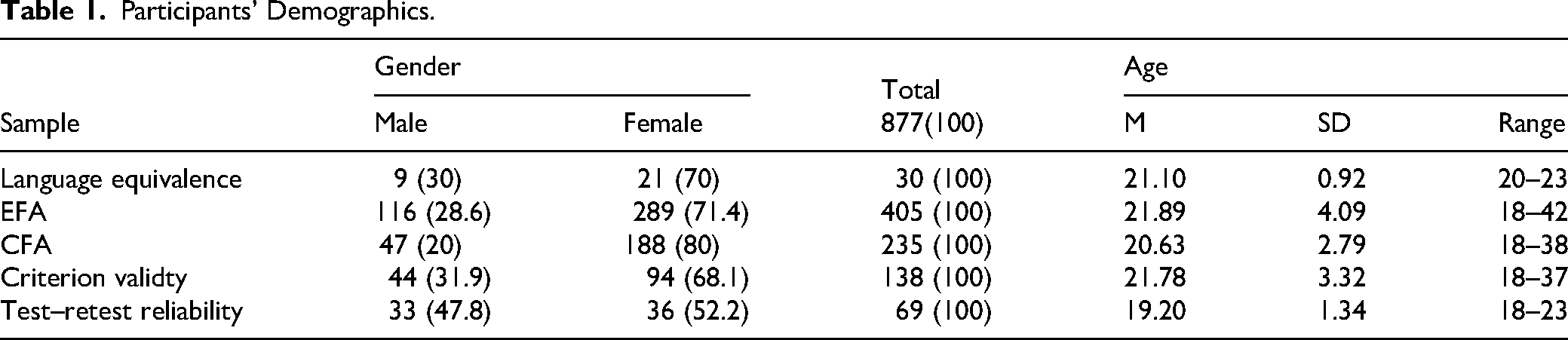
In this study, five different datasets consisting of a total of 877 adult participants from various regions of Türkiye were used. In the first stage, we collected data from 30 participants fluent in Turkish and English to assess linguistic validity. In the second stage, data were obtained from 405 participants for the EFA, while in the third stage, 235 participants took part in the CFA. In the fourth stage, data from 138 participants were used to examine criterion validity, and in the final stage, data from 69 participants were employed to conduct the test–retest reliability analysis. The demographic characteristics of the participants were evaluated according to age and gender variables (Table 1).
Participants’ Demographics.
Measures
Spiritual Fortitude Scale
The scale was developed by Van Tongeren et al. (2019) and adapted into Turkish in the present study. The original scale consists of nine items and three subdimensions: spiritual endurance, spiritual enterprise, and redemptive purpose (e.g., My faith helps me stand up for what is right during challenging times). Items are rated on a 5-point Likert scale ranging from 1 (Strongly Disagree) to 5 (Strongly Agree). In the original study, the internal consistency coefficient was α = 0.86, while in the present study it was α = 0.88.
Brief Resilience Scale
Developed by Smith et al. (2008), the scale was adapted into Turkish by Doğan (2015). It contains six items (e.g., I can pick myself up quickly after troubled times). Items are scored on a 5-point Likert scale ranging from 1 (Strongly Disagree) to 5 (Strongly Agree). In the Turkish adaptation, the Cronbach's alpha internal consistency coefficient was 0.83; in the present study, it was 0.84.
Spiritual Well-Being Scale
The scale was developed by Peterman et al. (2002) and adapted into Turkish by Aktürk et al. (2017). It comprises 12 items (e.g., I feel peaceful). Items are rated on a 5-point Likert scale ranging from 1 (Strongly Disagree) to 4 (Strongly Agree). In the adaptation study, the internal consistency coefficient (Cronbach's alpha) was 0.87; in the present study, it was 0.86.
Short Grit Scale
Developed by Duckworth and Quinn (2009), the scale was adapted into Turkish by Sarıçam et al. (2016). It includes eight items (e.g., Obstacles will not deter me). Items are rated on a 5-point Likert scale ranging from 1 (Strongly Disagree) to 5 (Strongly Agree). The Cronbach's alpha internal consistency coefficient was 0.82 in the adaptation study; in the present study, it was 0.84.
Data Analysis
In the first stage, the linguistic validity of the scale was examined, and the final version of the Turkish form was established. Subsequently, EFA was conducted to determine the factor structure, followed by CFA to test the accuracy of this structure. For criterion validity, Pearson correlation analysis was performed by examining the relationships between the scale and the measures of resilience, spiritual well-being, and grit. Reliability analyses of the SFS were then carried out. Within this scope, Cronbach's alpha, Guttman's lambda, McDonald's omega, composite reliability coefficients, and item–total correlation scores were calculated. Finally, a test–retest analysis was conducted with a 3-week interval. The AMOS software was used for the CFA, while all other analyses were performed using SPSS.
Ethics
Ethical approval for this study involving human participants was obtained from the Bursa Uludag University Social and Human Sciences Research Ethics Committee. The research protocol was reviewed and approved by the institutional ethics committee. The study was conducted in accordance with the ethical principles outlined in the 1964 Declaration of Helsinki and its subsequent amendments. All stages of the research were carried out in compliance with professional ethical standards.
Results
Results are presented in four stages: language validity, EFA, CFA and model fit evaluation, and reliability and validity assessment. All analyses were conducted using the procedures described in the Method section.
Language Equivalence
The translated scale form and the original form were administered to 30 adults within 1 week. The results indicated a high correlation between the two forms (r = .81, p < .000). This high correlation coefficient suggests that the Turkish version of the scale was translated with strong linguistic validity and that the items preserved their intended meaning. Furthermore, the findings demonstrate that conceptual consistency was achieved and that no loss of meaning occurred between the different language versions of the scale.
Exploratory Factor Analysis
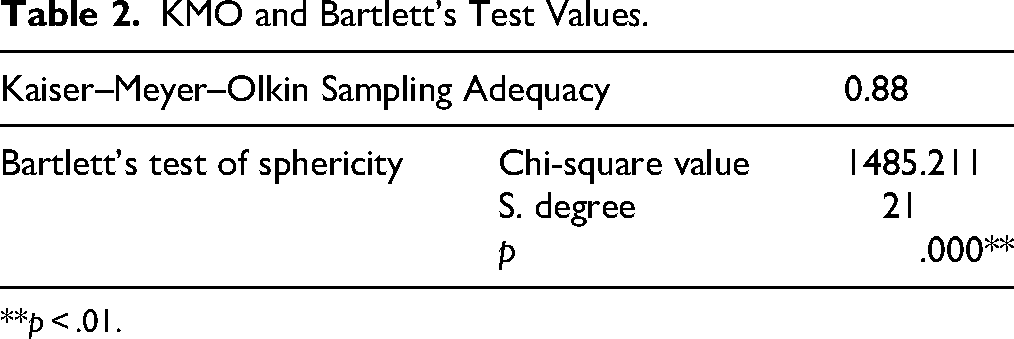
To determine the construct validity of the Turkish version of the SFS, an EFA was first conducted. The suitability of the data for EFA was assessed using the Bartlett's Test of Sphericity and the Kaiser–Meyer–Olkin (KMO) coefficient (Table 2). The KMO value for the Turkish SFS was calculated as .886. Generally, a KMO value between 0.80 and 0.90 is considered good (Pallant, 2016). Therefore, the value of 0.88 indicates that the dataset was appropriate for EFA and that the scale's factor structure could be reliably determined. Moreover, Bartlett's Test of Sphericity results showed a chi-square value of 1485.211, which was statistically significant. These results indicate significant correlations among the scale items and that the dataset met the assumptions for factor analysis.
KMO and Bartlett's Test Values.
**p < .01.
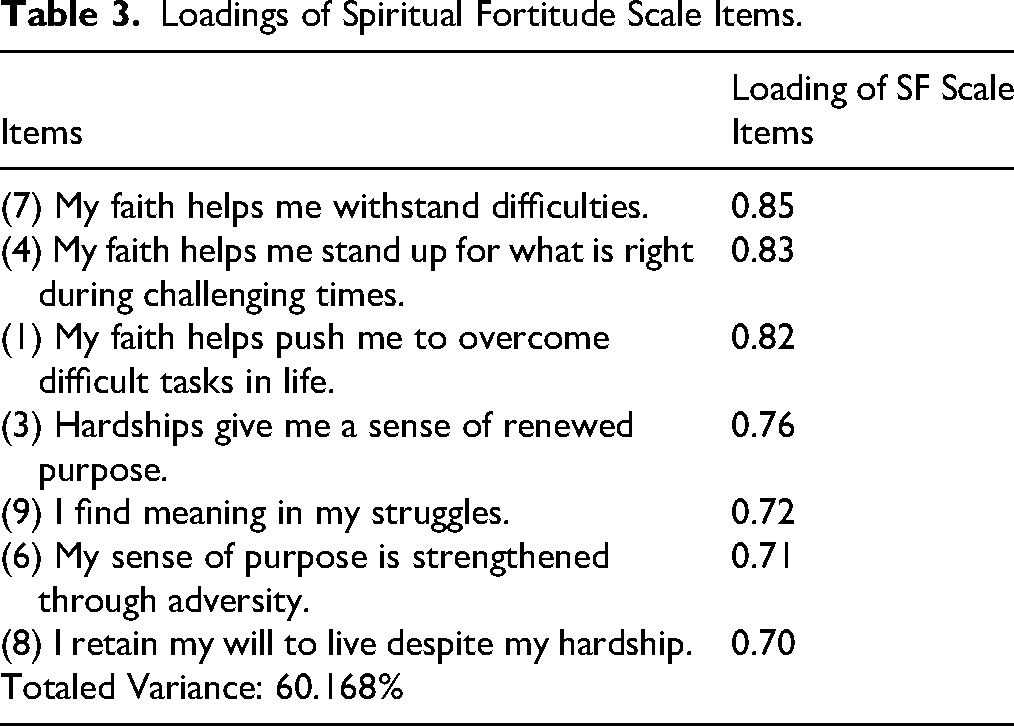
The results of the EFA revealed that, unlike the original form, the Turkish version of the SFS consisted of a single-factor structure with seven items, explaining 60.168% of the total variance. The factor loadings of the items ranged from 0.70 to 0.81 (Table 3). Based on these results, the variance explained by the SFS exceeds the threshold value recommended for social sciences (Leech et al., 2019).
Loadings of Spiritual Fortitude Scale Items.
Confirmatory Factor Analysis
The single-factor structure identified in the EFA was tested using CFA, and the 7-item single-factor structure of the Turkish SFS was confirmed (Figure 1). Examination of the item loadings indicated that each item had a relatively high factor loading, which strongly indicates that the items represent the scale effectively.
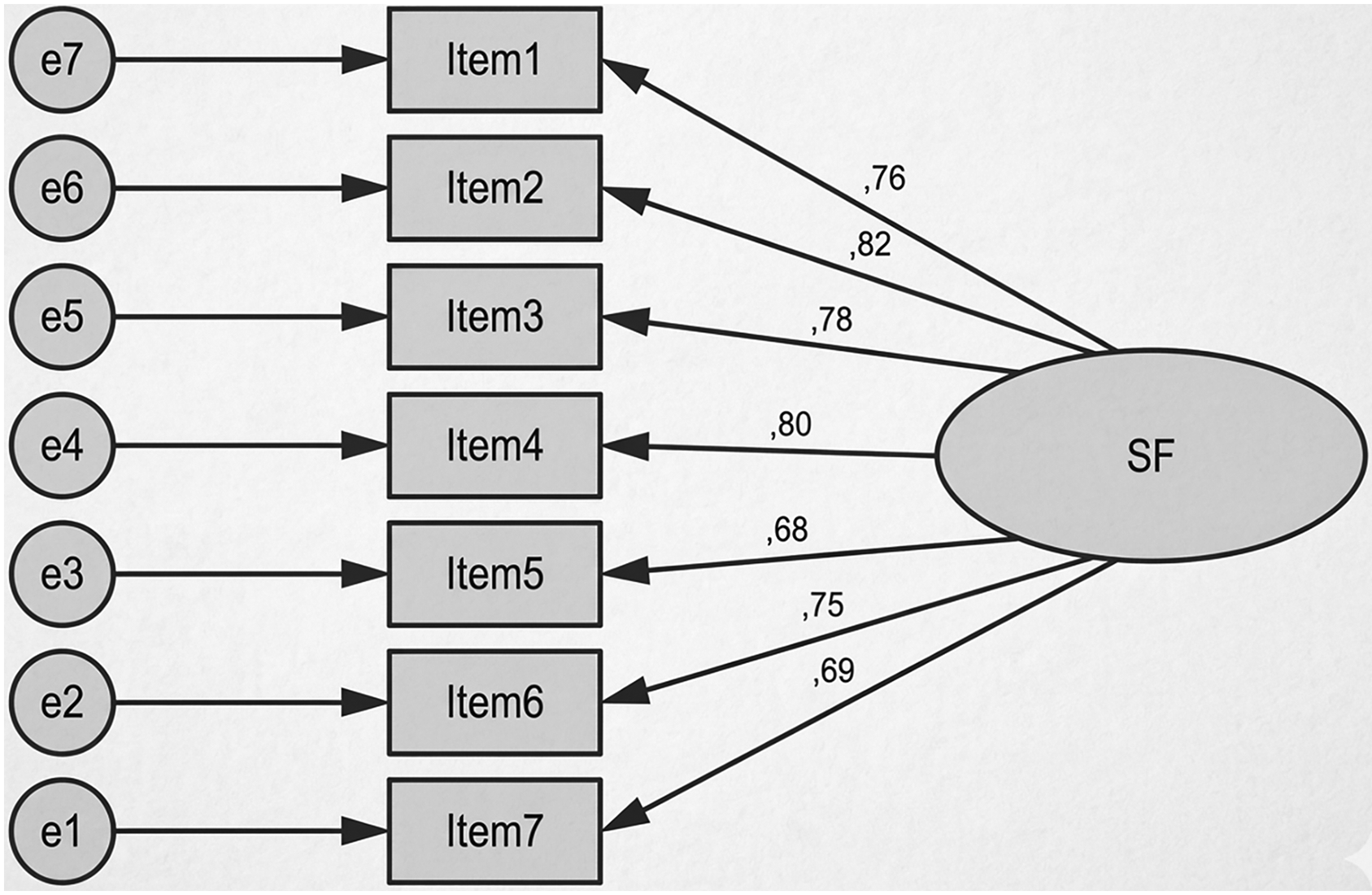
Confirmatory factor analysis path diagram of SFS.
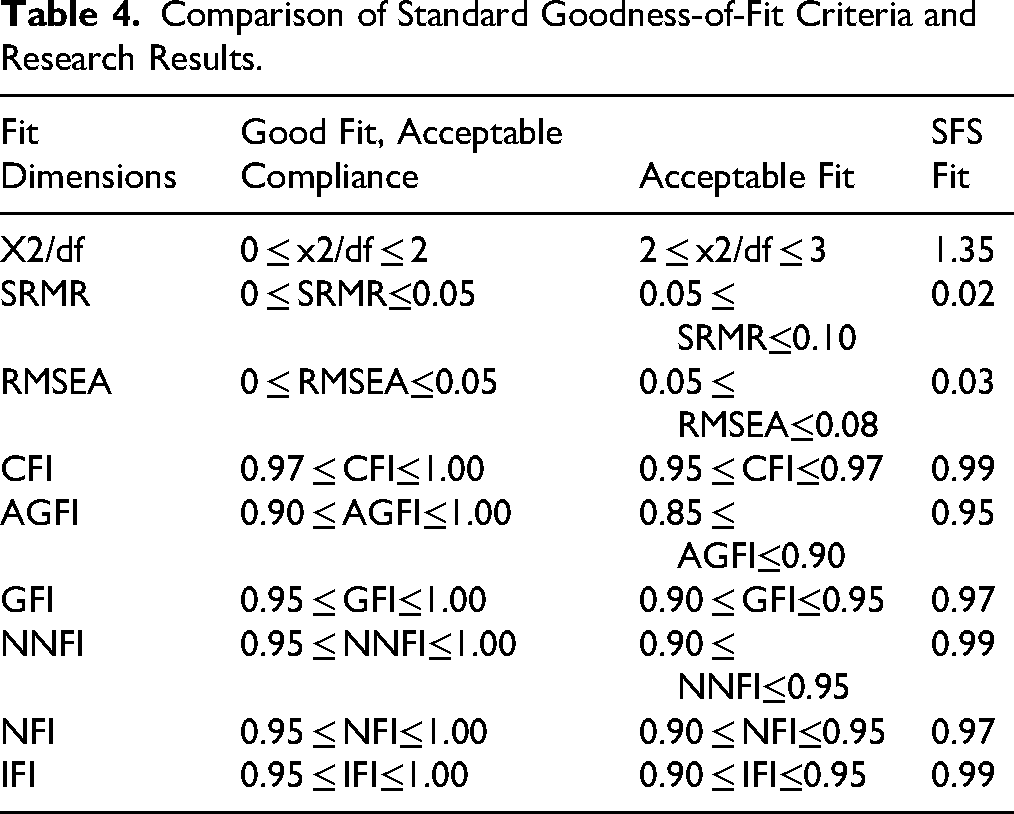
An examination of the fit indices obtained from the CFA (Table 4) revealed that all values were within the good fit range (Schermelleh-Engel et al., 2003). This finding indicates that the model aligns with the theoretical structure, that the observed variables are consistent with the proposed factor structure, demonstrates high validity and measurement power, and that the data statistically confirm the proposed structure.
Comparison of Standard Goodness-of-Fit Criteria and Research Results.
Convergent Validity
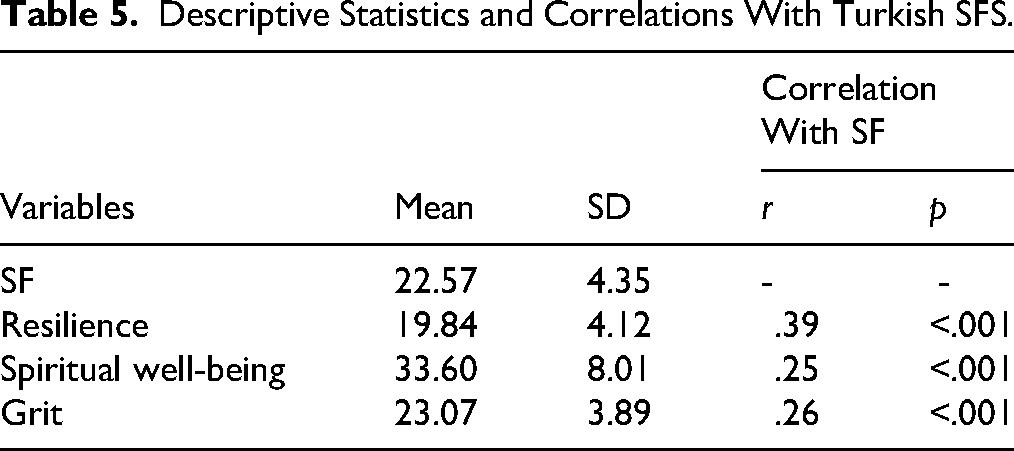
Pearson correlation coefficients were calculated to evaluate criterion validity between the Turkish SFS and the brief resilience scale, the spiritual well-being scale, and the grit scale (Table 5). The correlation coefficients were interpreted according to the threshold values proposed by Evans (1996): correlations below 0.20 were considered very weak, those between 0.20 and 0.39 as weak, between 0.40 and 0.59 as moderate, between 0.60 and 0.79 as strong, and above 0.80 as very strong. The Turkish SFS showed significant, weak positive correlations with resilience (r = .39, p < .001), spiritual well-being (r = .25, p < .001), and grit (r = .26, p < .001).
Descriptive Statistics and Correlations With Turkish SFS.
Reliability Analyses
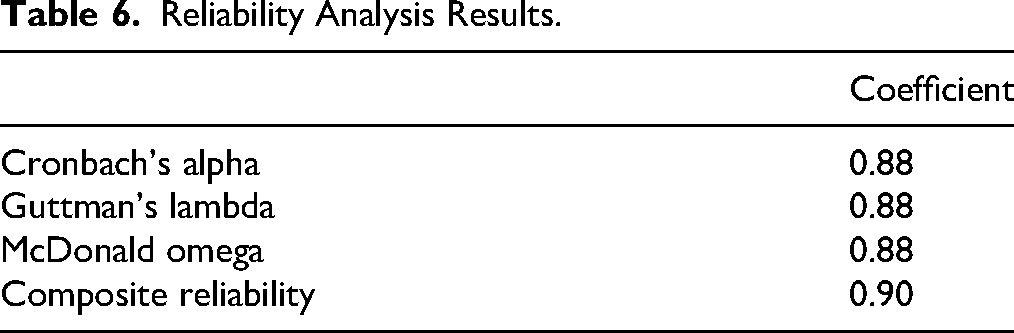
For the Turkish SFS, reliability analyses included Cronbach's alpha, Guttman's lambda, McDonald's omega, and composite reliability (Table 6). These results indicate that the scale is a reliable instrument for measurement purposes (Nunnally & Bernstein, 1994).
Reliability Analysis Results.
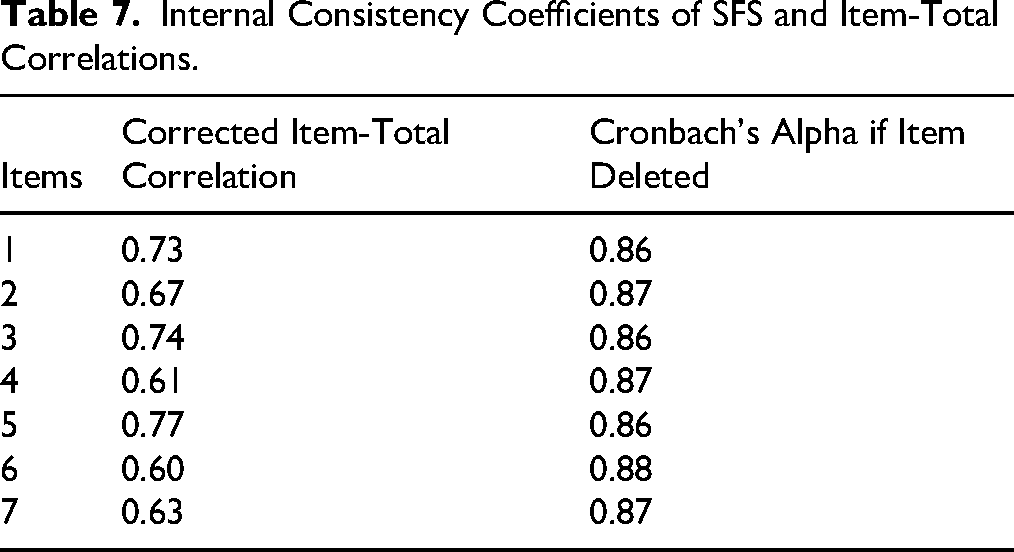
An examination of the item–total correlation coefficients of the SFS (Table 7) showed values ranging from .60 to .77. Furthermore, no item removal increased the Cronbach's alpha coefficient, and removing any item resulted in only minimal decreases in the value. These findings indicate that the SFS has a consistent structure.
Internal Consistency Coefficients of SFS and Item-Total Correlations.
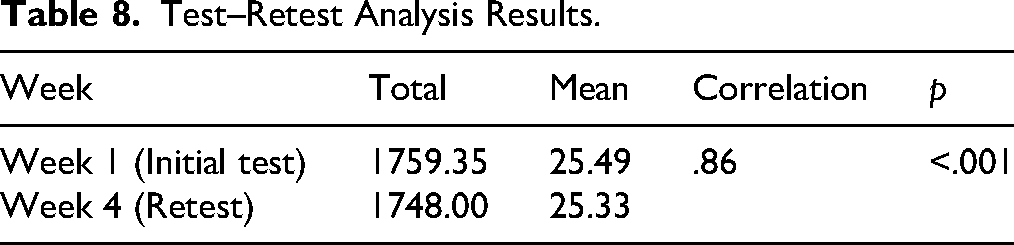
Finally, the reliability of the SFS was assessed through a test–retest analysis conducted with a 3-week interval (Table 8). In the first administration (Week 1), the scale yielded a total score of 1759.35 and a mean score of 25.49. In the second administration (Week 4), the total score was 1748.00, with a mean score of 25.33. The correlation coefficient for the total scores was calculated as 0.86. This result indicates that the test–retest reliability is relatively high and that the Turkish form of the SFS demonstrates strong temporal stability.
Test–Retest Analysis Results.
Discussion and Applications to Practice
This study aimed to examine the validity and reliability of the SFS, developed by Van Tongeren et al. (2019), in a Turkish sample. While the original scale consists of nine items organized under multiple dimensions, the results of the present study indicated that, within the Turkish cultural context, the SFS demonstrated a unidimensional structure consisting of seven items, explaining 60.168% of the total variance. This structure was confirmed through CFA, and all fit indices were found to be within a good range. The Turkish SFS showed weak but significant positive correlations with spiritual well-being (r = .25, p < .001), grit (r = .26, p < .001), and resilience (r = .39, p < .001).
An examination of the reliability analyses revealed that Cronbach's alpha (0.88), Guttman's lambda (0.88), McDonald's omega (0.88), and composite reliability (0.90) indicated high reliability. In addition, the item–total correlations for each item were consistent with the scale and contributed significantly to the total score. The high correlation from the test–retest analysis (r = .86, p < .001) provided further evidence of the scale's reliability. Based on all these findings, it can be concluded that the Turkish version of the SFS is a valid and reliable instrument.
SF, which refers to an individual's ability to draw on spiritual resources to overcome negative emotions in the face of stressors, enables people to transform pain and hardship into positive character development. At the same time, it protects individuals from the adverse effects of stress by preserving existing virtues and fostering the development of new ones. Moreover, SF encourages individuals to engage in meaningful actions not only for their own benefit but also for the well-being of others (Van Tongeren et al., 2019). In this regard, the SFS, developed within this framework, is an important tool for assessing these qualities.
SF is a construct that has been receiving increasing attention in religious/spiritual coping (Zhang et al., 2021). Indeed, a review of the literature shows that SF has been effective in coping with challenging life events such as Hurricane Matthew (McElroy-Heltzel et al., 2018), the Louisiana floods (Zhang et al., 2022), and the COVID-19 pandemic (Zhang et al., 2021). Furthermore, it can be stated that individuals with high SF are more adept at overcoming difficulties through their belief systems and can maintain their resilience throughout this process (Gall et al., 2009).
In Turkish society, which is historically rooted in a strong sense of spirituality and a deeply held belief system, individuals often draw upon religious and spiritual values such as patience, tawakkul (trust in God's plan), belief in destiny, gratitude, and solidarity when confronted with challenging life events (Aslan et al., 2025; Soykan, 2024). Accordingly, SF closely aligns with the faith- and spirituality-based understanding of resilience embedded in Turkish culture. However, the absence of an appropriate instrument to measure this important construct in a valid and reliable manner within Turkish samples underscores the significance and originality of the present study. Adapting the SFS into Turkish enables the assessment of individuals’ tendencies to draw upon spiritual resources to make sense of pain and hardship, develop inner strength, and establish a more holistic relationship with life. From a social work perspective in particular, the Turkish SFS provides a valuable assessment tool for evaluating spiritual coping and resilience among individuals exposed to chronic social risks such as poverty, migration, family violence, disasters, and collective trauma. In this respect, the adapted scale contributes not only to the field of psychological assessment but also to culturally sensitive social work practice and intervention planning, supporting strengths-based and holistic approaches. More broadly, the Turkish SFS facilitates a deeper understanding of both the universal and culture-specific dimensions of SF across research and applied settings.
This study was conducted with participants whose stress status during the research period was not clearly determined. We recommend that future studies focus on special and vulnerable sample groups who have experienced challenging life events, such as disaster survivors, veterans, refugees, war victims, individuals with disabilities, and their relatives.
Another limitation is that the findings cannot be generalized to different demographic groups. Since SF is a culturally shaped construct, individuals’ ways of experiencing pain, resilience, and meaning-making may vary across cultures. Therefore, testing the scale's validity in different age groups, socioeconomic levels, and cultural contexts is important for both external validity and cross-cultural awareness.
In addition, future research could investigate how cultural, spiritual, and psychological elements—such as patience, forgiveness, gratitude, tawakkul (trust in God), and divine justice—affect individuals’ SF levels and the contributions of these levels to psychological functioning. The Turkish version of the SFS is a valuable tool that can be used not only for research purposes but also in psychological counseling practices.
Through the SFS, evaluating the impact of counseling and psychoeducation programs that support spirituality and meaning-centered coping skills on individuals’ overall psychological well-being may facilitate the development of more systematic, culturally sensitive, and evidence-based interventions. In this way, it can provide mental health professionals with a strong assessment and intervention tool, particularly in areas such as coping with trauma, loss, and stress.
This study fills an important gap in the assessment of SF within Turkish society by providing a culturally adapted measurement tool. In a cultural context where religious and spiritual values play a strong role in coping with adversity, the Turkish version of the SFS offers a reliable and valid instrument for evaluating the extent to which individuals draw on spiritual resources when facing traumatic life experiences, crises, and stressful situations. The significance of the Turkish SFS is particularly noteworthy for the field of social work, as social workers are directly responsible for supporting the psychosocial well-being of individuals exposed to multifaceted and chronic risk factors such as poverty, domestic violence, migration, child protection issues, aging, disability, disasters, and collective trauma. In this context, spiritual coping, meaning-making, and the mobilization of inner strengths emerge as key protective resources that support resilience within social work practice. The Turkish SFS provides social workers with a strong empirical foundation for systematically assessing clients’ levels of SF, tailoring intervention plans to individual needs, and more effectively identifying relevant support resources. Beyond social work, the scale can also be used as a functional assessment tool in psychological counseling, clinical psychology, and psychiatry for evaluating trauma, loss, and existential distress. It may also be utilized by health professionals, including those in nursing, medicine, and palliative care, to strengthen holistic care approaches in the context of chronic illness and life-threatening conditions. In addition, within the fields of psychology of religion and spiritual counseling, the scale may contribute to the scientific examination of faith-based coping and spiritual crises. In this regard, the validated Turkish version of the SFS constitutes a comprehensive measurement tool that supports assessment and intervention processes across disciplines, with particular relevance to social work. Future research is encouraged to examine the validity of the scale across different age groups, social risk populations, and intervention settings, as well as to explore its role in meaning in life, overall well-being, and coping with traumatic experiences.
Footnotes
Acknowledgments
We thank the participants of this study and those who developed the measures we used in the study.

Ethical Approval
Since the study involved human participants, ethical approval was obtained from the Social and Human Sciences Research Ethics Committee of Bursa Uludag University in Türkiye. The study was conducted in accordance with the ethical principles outlined in the 1964 Declaration of Helsinki and its subsequent amendments. All stages of the research were carried out in accordance with professional ethical standards.
Author Contributions
O.A. and F.G. contributed to the writing of this manuscript. O.A. conducted the research, and F.G. supervised the study. All authors reviewed and approved the final version of the manuscript.
Funding
The authors received no financial support for the research, authorship, and/or publication of this article.
Declaration of Conflicting Interests
The authors declared no potential conflicts of interest with respect to the research, authorship, and/or publication of this article.
Data Availability
The dataset that allowed us to obtain the findings of this research will be provided upon request. For this, the first author of the study should be contacted. The e-mail address of the said author is olcanaslan95@gmail.com.