




Abstract
Violence Against Children in Low- and Middle-Income Countries and Malaysia
Globally, over one billion children experience some form of violence each year, with children in low- and middle-income countries (LMICs) experiencing disproportionately higher rates (Hillis et al., 2016). Child maltreatment is a form of violence against children (VAC) that involves “physical, sexual and psychological/emotional violence; and neglect of infants, children and adolescents by parents, caregivers and other authority figures” (WHO, 2016, p. 14). Caregivers have been identified as the main perpetrators of VAC, as the majority of child maltreatment incidents occur in home settings (Gilbert et al., 2012). UNICEF (2017) estimates that worldwide, roughly three in four children ages 2–4 years experience physical punishment or psychological aggression by their caregivers, with approximately six in 10 children being subjected to physical punishment. In Malaysia, an estimated two-thirds of children face violent discipline at home, especially boys and those ages four to five (Institute of Public Health, 2023).
Substantial evidence has demonstrated the short- and long-term adverse impacts of VAC on children's physical and mental health, social functioning, and education (Hughes et al., 2017). These adverse consequences include, but are not limited to, poor behavioral and cognitive outcomes, mental ill health, communicable and non-communicable diseases, poor school performance, and substance misuse (Fry et al., 2012, 2018; Vachon et al., 2015). Moreover, research suggests that preventing or interrupting the early development of violent behavior can curtail its perpetuation into adolescence and adulthood (Mikton & Butchart, 2009). The staggering economic costs associated with physical, emotional, and sexual abuse against children are estimated at USD seven trillion annually, equivalent to around 8% of global GDP (Pereznieto et al., 2014). In the Asia and Pacific region, these costs are estimated to be around 2% of GDP (Fry & Blight, 2016). Recognizing the consequences of VAC and the urgent need for prevention strategies, the World Health Organization and its partners published INSPIRE: Seven Strategies for Ending Violence Against Children in 2016. Among these strategies, parenting programs have been identified as a key evidence-based approach for preventing VAC in LMICs (Maternowska et al., 2024).
Parenting Interventions to Reduce Violence Against Children in Low- and Middle-Income Countries
Parenting interventions are “structured interventions directed at parents or other caregivers of the child that are designed to improve parent–child interaction and the overall quality of parenting that a child receives” (Backhaus et al., 2023, p. 3). Numerous studies have shown that parenting interventions can reduce VAC and child maltreatment in high-income countries and LMICs (e.g., Backhaus et al., 2023; Vlahovicova et al., 2017; Wang & Zhang, 2024). Given the higher risk of child maltreatment in LMICs, parenting interventions may be of greatest need in these regions (Janowski et al., 2020).
A recent systematic review of 131 randomized controlled trials (RCTs) of parenting interventions in 32 LMICs found moderate effects on reducing child maltreatment, harsh parenting, and parent mental health problems, while increasing positive parenting (Backhaus et al., 2023). Specifically, in East and Southeast Asia, a systematic review of 11 parenting programs aimed at preventing VAC demonstrated that these interventions increase positive parent–child interactions while reducing abusive or harsh parenting (McCoy et al., 2020). Nevertheless, this review included a limited number of studies, with none conducted in Malaysia, highlighting the need for more evidence on parenting interventions aimed at preventing VAC, particularly in Malaysia.
Theoretical Framework
Many of the parenting programs aimed at reducing VAC are developed using social learning approaches, where parents are taught new parenting skills with practical instructions on various practices, such as positive parent–child interactions and techniques for non-violent discipline (Kaehler et al., 2016). The rationale behind this approach lies in Patterson's coercion hypothesis (1982), which suggests that coercive cycles, characterized by negative interactions between children and their caregivers, reinforce caregivers’ punishment or discipline. This may stem from parental misconceptions that violent discipline is the only method that works for their children (Crouch & Behl, 2001). Consequently, parenting programs aim to break the coercive cycles of parent–child interactions and dysfunctional parenting skills through promoting parental sensitivity, changing attitudes, and teaching appropriate discipline and positive parenting techniques (McCoy et al., 2020).
Hybrid-Digital Parenting Interventions
There are barriers to the uptake of in-person interventions, particularly in LMICs, where resources and funding are limited (Stuer et al., 2019; Weisenmuller & Hilton, 2021). Local government and service providers may find in-person programs too expensive to deliver at scale in terms of personnel, costs, and resources (Britto et al., 2022). Particularly since the onset of the COVID-19 pandemic, digital and hybrid-digital parenting interventions have emerged as viable alternatives to in-person programs (Smith et al., 2023). Specifically, some studies suggest that hybrid-digital interventions, which combine digital delivery with face-to-face support, may be more effective (Day & Sanders, 2018). For example, a recent RCT in Malaysia tested a digital-assisted parenting intervention aimed at promoting adolescent mental health among mothers of adolescents ages 10–14 years (N = 24; Zulkefly et al., 2024). This intervention included 8 weekly self-directed online parenting sessions with personalized feedback and support provided by a facilitator. The results demonstrated significant reductions in physical control and improvements in parental self-efficacy at 1-month post-intervention. These findings suggest that hybrid-digital programs, which integrate human-led support with digital delivery, offer a promising avenue to maintaining effectiveness while reducing costs and improving access for parents who face barriers to in-person attendance (Thongseiratch et al., 2020). Consequently, such programs have the potential to enhance the scale-up of parenting interventions at national levels (Baerecke et al., 2024).
Parenting Interventions in Routine Service Delivery
There is a growing interest in expanding the reach of parenting interventions, a process often referred to as scale-up. This involves extending programs to reach more people and broader geographical regions, as well as integrating them into existing service systems (Shenderovich et al., 2020). However, translating evidence-based parenting interventions, which have been tested under controlled conditions in RCTs, to “real-world” settings often encounters several implementation challenges. These challenges include overburdened volunteers or staff, poor fidelity to the original program, lack of stakeholder buy-in, and resource constraints (Shenderovich et al., 2020, 2021).
Few interventions have been evaluated for their impact when implemented as part of routine services or outside the context of structured studies (Tomlinson et al., 2018). A notable example is the study by Lachman et al. (2024), which conducted a pre-post evaluation of a large-scale implementation of a Parenting for Lifelong Health (PLH) parenting program for caregivers and their adolescent girls in Tanzania (N = 27,319 dyads). This program, delivered in partnership with the local non-governmental organization Pact Tanzania, showed sustained effectiveness in reducing child maltreatment when implemented at scale under routine conditions. The study demonstrates that local implementing organizations can feasibly collect monitoring and evaluation data during routine service delivery, even though the data is often “flawed, uncertain, proximate, and sparse” (FUPS; Wolpert & Rutter, 2018). For instance, approximately 40,000 cases were excluded from the evaluation due to data quality issues such as missing timepoints/surveys or inconsistent participant IDs. This reflects the challenges of conducting research on programs delivered within routine services but also provides a valuable opportunity to evaluate their impacts. As one of the few studies to investigate the implementation and evaluation of parenting interventions in routine service delivery in LMICs, it underscores the need for further research in this context, including in Malaysia.
The Naungan Kasih Parenting Program in Malaysia
Lachman et al. (2023) conducted the first known study of a parenting intervention aimed at reducing VAC in Malaysia in 2019. This was a feasibility pilot study evaluating the Naungan Kasih Parenting Program, a social learning-based parenting intervention designed for caregivers of children from birth to 17 years of age (N = 74). Developed in collaboration with the Malaysian government's National Population and Family Development Board (LPPKN), Universiti Putra Malaysia, UNICEF Malaysia, the Malaysian Association of Social Workers, Maestral International, and PLH, the Naungan Kasih (Protection through Love) Parenting Program consisted of 6 weekly in-person sessions delivered by trained LPPKN staff. The study found significant reductions in overall child maltreatment, physical abuse, and emotional abuse. Additionally, there were reductions in attitudes supporting corporal punishment, parent sense of inefficacy, and child behavior problems post-intervention (Lachman et al., 2023). However, study findings also highlighted challenges related to the program's uptake and scalability. Participants expressed a need for flexibility in the delivery mode, suggesting that digital or hybrid approaches could be viable solutions (Axford et al., 2012). Furthermore, the authors recommended that future research develop more targeted parenting interventions for children ages 2–6 years, who may be at a higher risk of maltreatment in Malaysia (Lachman et al., 2023).
The present study built upon Lachman et al. (2023)'s feasibility pilot study and addressed the identified research gaps by investigating a hybrid adaptation of the Naungan Kasih Parenting Program, delivered to caregivers of children ages 2–6 years by civil society organizations (CSOs). The Naungan Kasih-Hybrid program examined in this study includes a PLH-developed parenting chatbot called Naungan Kasih-Text (NKText), WhatsApp support group sessions, and two in-person group sessions facilitated by CSO staff.
Objectives
The objective of this study was to use a pre-post design to assess the preliminary outcomes of the pilot Naungan Kasih-Hybrid program delivered by CSOs to caregivers of children ages 2–6 years in Malaysia, specifically in Selangor and Kuala Lumpur. The primary outcome of interest was child maltreatment, including both physical and emotional abuse, while secondary outcomes included positive parenting, playful parenting, parent mental health, and child externalizing behaviors.
This study sought to extend research on parenting interventions aimed at reducing VAC in Malaysia in several ways. First, it evaluated a hybrid-digital parenting intervention designed to broaden reach and address barriers associated with in-person programs, while assessing its preliminary impacts. Second, it is the first known investigation of parenting interventions delivered by local organizations as part of their routine services in Malaysia, an area that remains underexplored in LMICs. The findings could inform the real-world implementation and scale-up of such programs in Malaysia and potentially in other LMICs.
Research Question: What are the reported changes in child maltreatment and associated outcomes by caregivers of children ages two to six years who participate in a hybrid-digital parenting programme delivered by civil society organisations (CSOs) in Malaysia?
Method
Design
This study was a primary analysis of the pre- and post-intervention assessment data from the pilot Naungan Kasih-Hybrid program, delivered by CSOs to caregivers of children ages 2–6 years. Implementation, monitoring, and data collection were conducted by the CSOs, as part of their routine service delivery, with minimal support from the research team. The data were collected between January 14, 2024 and April 8, 2024 in two urban areas: the federal territory of Kuala Lumpur and the state of Selangor in Malaysia. The project was a collaboration between the University of Oxford, Universiti Putra Malaysia (UPM), the Malaysian Association of Social Workers (MASW), UNICEF Malaysia, PLH, the Global Parenting Initiative (GPI), and five CSOs.
Ethical approval for the Naungan Kasih-Hybrid program was granted by the University of Oxford (R88954/RE001) and UPM (JKEUPM-2023-1226). All participants provided written informed consent. Participation was voluntary, and participants could withdraw from the study at any time. Unique identifiers were assigned to each participant to maintain confidentiality and anonymity. No incentives were provided, except for certificates of program completion.
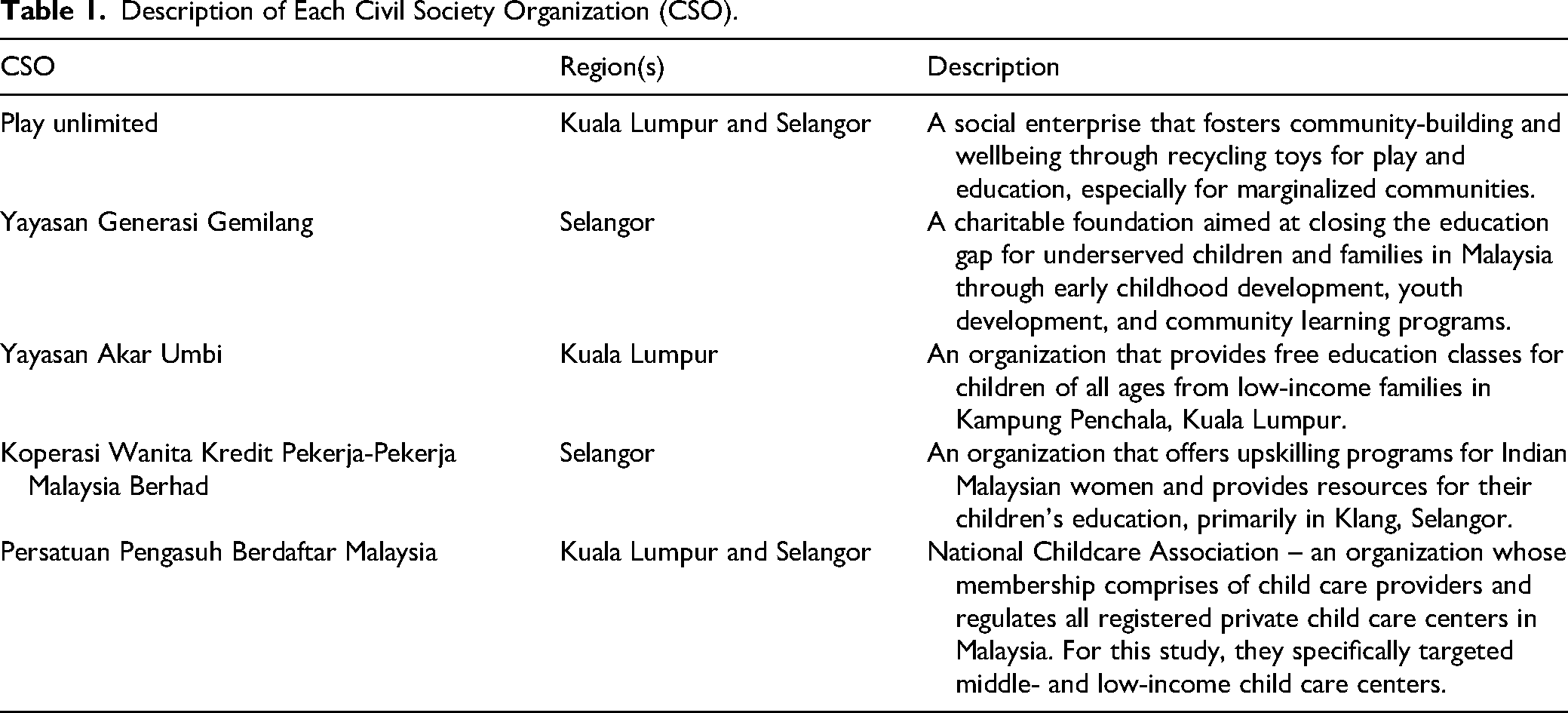
Five CSOs were selected by the project partner, MASW, to deliver the Naungan Kasih-Hybrid program. These five CSOs were selected through their existing partnerships with MASW and their access to families with children within the program's target age range. The organizations were Play Unlimited, Yayasan Generasi Gemilang, Yayasan Akar Umbi, Koperasi Wanita Kredit Pekerja-Pekerja Malaysia Berhad, and Persatuan Pengasuh Berdaftar Malaysia (see Table 1).
Description of Each Civil Society Organization (CSO).
Participants
Caregivers were recruited by the CSOs from communities in Kuala Lumpur and Selangor in January 2024 using an opportunity sampling approach (Alvi, 2016). CSOs distributed flyers through their existing networks of caregivers, including private preschools, and shared them on WhatsApp groups within the communities they served. Additionally, they promoted the program during organized in-person activities that involved the program's target groups. Interested parents then reached out to CSO staff and registered for the in-person onboarding session.
Parents were eligible if (1) they were 18 years or older, (2) they were responsible for a child ages between 2–6 years old, (3) they lived in the same household with the child for at least four nights a month, (4) they had access to a mobile phone compatible with WhatsApp, and (5) they provided consent to participate in the study. Parents or caregivers in this study included anyone who was responsible for a child's wellbeing, including non-biological parents such as aunts, uncles, cousins, siblings, or foster parents.
Sample Size
The initial target for the program delivery was a large-scale implementation targeting 500 caregivers. Due to delays and challenges with implementation, the reported sample size (N = 133) was based on the maximum possible recruitment and delivery capacity by the five CSOs by May 2024. Of note, caregivers could choose to participate in the program without being involved in the study (i.e., by providing consent and completing at least the pre-intervention assessments). The reported sample size reflects those who participated in the study.
Training of Facilitators
Facilitators were community service providers from each CSO. Twenty facilitators received a 3-day training workshop of approximately 24 h in January 2024, conducted by trainers from MASW. During this workshop, they were introduced to the Naungan Kasih-Hybrid program, NKText, and their roles. Facilitators were also introduced to FaciNK, a facilitator app that supports their program delivery and monitoring.
Intervention
The Naungan Kasih-Hybrid program, a hybrid-digital parenting program, consisted of a parenting chatbot (NKText) supported by six facilitator-led WhatsApp support groups and two in-person sessions. The total duration of the formal delivery of the intervention from the first in-person session (onboarding) to the second in-person session (closing) was 33 days. As NKText is a self-guided digital chatbot, facilitated WhatsApp support groups and in-person sessions were designed as engagement boosters, aiming to support participation and improve program outcomes through joint learning and practice (Cooper et al., 2024). Program components were in English and Malay (Bahasa Melayu), allowing parents to choose their preferred language.
Naungan Kasih-Text
NKText is a parenting support chatbot, grounded in social learning theory, adapted from the PLH ParentText chatbot for the Malaysian context. It delivers personalized, gamified, scheduled, and on-demand parenting content via texts, comics, audios, and videos through the WhatsApp platform (Cooper et al., 2024). NKText has different versions tailored to the developmental stages of children, and the version used in this study was for caregivers of children ages 2–6 years. Given that the study included preschool-aged children (4–6 years), new content was developed to target school readiness, learning through play, and child development outcomes (Cooper et al., 2024). A beta-version of NKText was pilot-tested in Malaysia with 82 caregivers in 2021, and exploratory results indicated improvements in positive parenting (Klapow et al., 2023).
NKText consists of six goals with 28 modules (see Table 2). Each module was designed to be completed in approximately 5 minutes. To further support skills acquisition and user engagement, NKText included components such as gamification, where participants could earn badges toward goals, and activities such as quizzes and home activity assignments. After completing the first goal, “Improve My Relationship with My Child,” the content was self-directed with participants prompted to choose their next goal. Although the chatbot included 28 days of structured content, participants could progress through the program at their own pace, with an additional 5 days allocated for catching up on any unfinished module.
Overview of NKText Content.
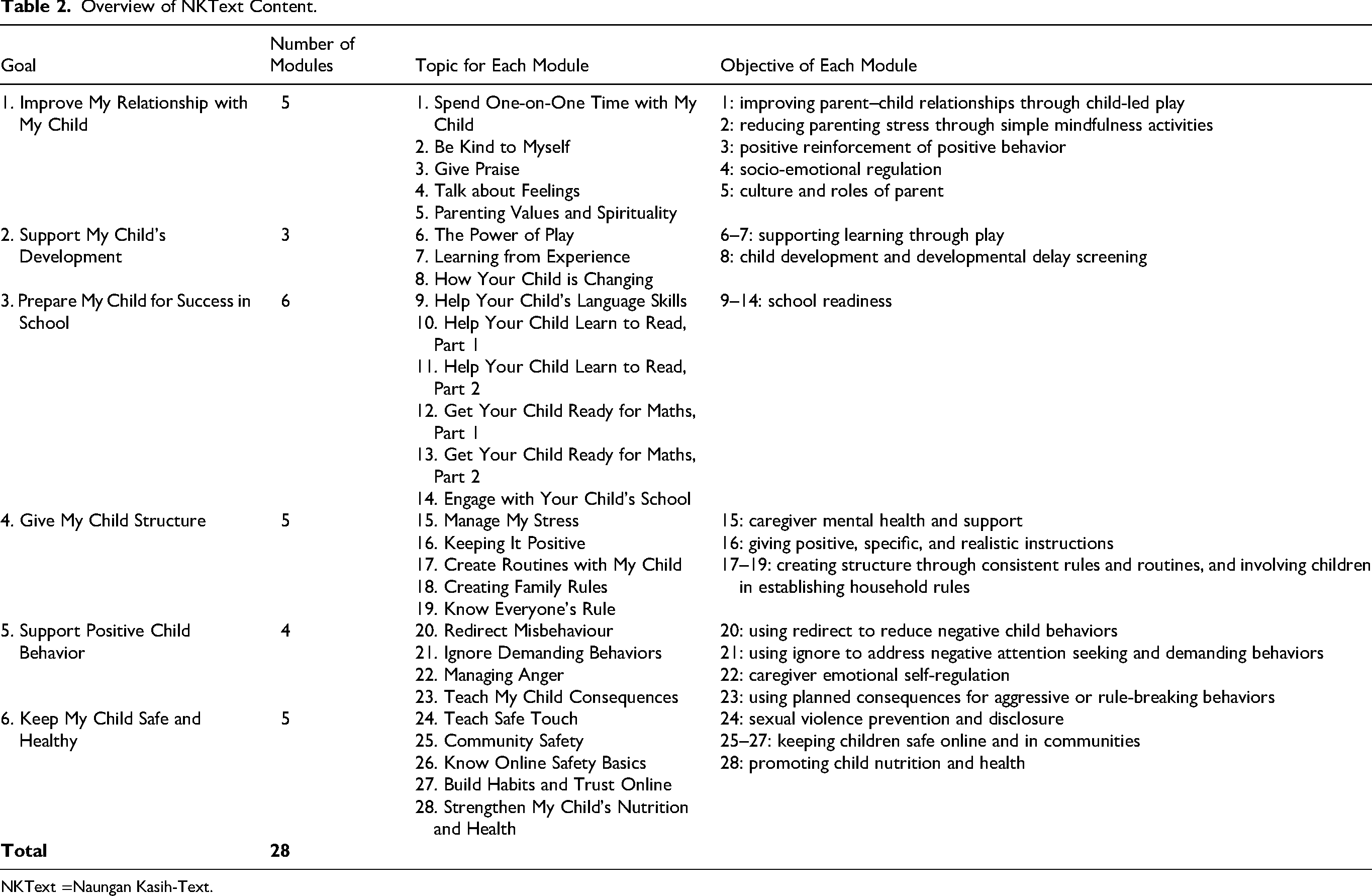
NKText =Naungan Kasih-Text.
Facilitated WhatsApp Support Groups
WhatsApp support groups were facilitated by trained facilitators from each CSO. Each week, the facilitators shared preformulated content from the FaciNK app in their WhatsApp groups. These groups provided participants with the opportunity to interact, exchange ideas about what they learned from NKText, share the challenges they experienced, and identify solutions to these challenges.
In-Person Sessions
Two in-person group-based sessions were delivered by facilitators from each CSO at community centers and private preschools. At the first in-person (onboarding) session, participants were introduced to and enrolled in NKText and joined WhatsApp support groups. At the second in-person session, participants reviewed and reflected on what they learned from the program. All participants received certificates of completion at the end of the session.
Data Collection Procedures
Outcome Data Collection
Data collection, led by each CSO, took place at two timepoints: baseline between January 14 to March2, 2024, and post-test between February 24 to April 8, 2024 (timing varied slightly among the five CSOs due to variance in scheduled delivery). Participants completed the baseline assessments during the first in-person (onboarding) session. At the start of the session, facilitators read out the consent form containing information about the study to the participants and addressed any questions or concerns. Participants who consented were then sent a link to their smartphones to digitally complete the consent form and the baseline assessment. Before completing the assessment, participants provided information about one child for the program (if they had multiple children ages between 2–6 years, they were asked to choose the oldest child). Following this, participants participated in the onboarding session.
At the second in-person (closing) session, participants completed the post-intervention assessments on their smartphones. For those unable to attend, facilitators followed up with WhatsApp messages that included a link to the online survey, encouraging them to complete the assessment. Both the baseline and post-intervention assessments were conducted using Open Data Kit (ODK; Get ODK Inc.) and took approximately 10 minutes or less to complete. The questionnaires for these assessments were translated from English to Bahasa (Melayu) by the research team at UPM.
Process Data Collection
NKText automatically collected participants’ engagement data with the chatbot, such as goals started, goals selected, number of goals completed, and modules started. Facilitators reported attendance at WhatsApp support groups and in-person sessions using the FaciNK app. However, due to inconsistencies in these attendance reports, the data were not included in the engagement outcomes reported in this study (see Study Limitations).
Measures
As the program was implemented as part of routine service delivery and initially aimed at large-scale implementation, abbreviated assessment measures were used to reduce the burden on both implementers and participants. This decision was informed by the time constraints and limited capacity of CSO staff to collect evaluation data. All measures were open-access and freely available. The “past two weeks” timeframe was selected to capture potential behavioral changes resulting from the program. Reliability analyses were conducted using Cronbach's Alpha (α) and Omega (ω) for measures with at least three items, and Pearson correlations for measures with two items.
Primary Outcome—Child Maltreatment
Child maltreatment, including physical and emotional abuse, was measured using a two-item abbreviated version of the International Society for the Prevention of Child Abuse and Neglect Child Abuse Screening Tool-Parent (Meinck et al., 2018). One item was selected from the physical abuse subscale (i.e., “In the last two weeks, how often did you discipline your child by slapping, spanking, or hitting with your hand?”) and another item was selected from the emotional abuse subscale (i.e., “In the last two weeks, how often did you shout, yell, or scream at your child in an aggressive manner?”). The Pearson correlation for the total child maltreatment scale was 0.56.
Secondary Outcomes
Program Engagement
Program engagement was measured by the number of goals completed on NKText, with this data automatically collected via the chatbot.
Demographic Information
Demographic information included caregiver age and gender, child age and gender, caregiver marital or relationship status, and education level.
Data Analysis
To make the best use of the available data, missing data were first handled at the item level. For outcome variables where most responses were available (at least 75% of items present), sum scores were calculated by weighting the available responses (Cooper et al., 2024). Final missing data for each outcome variable at baseline ranged from 1.5% to 8.3%, with 6.8% for the primary outcome, child maltreatment. There are no set guidelines for the threshold of missing data for a given sample size (Tabachnick & Fidell, 2019). However, data were not imputed due to the small sample size in this study. Given the limited data, it is likely that imputation would yield results similar to the original data, thus not significantly improving accuracy (Huang & Carriere, 2006). As a result, missing data for a given variable were excluded from the analyses of that variable. The tables in the Results Section show the number of observations (N) included in each analysis.
Data analysis was performed using R (Version 4.3.1). An alpha level of .05 was set and two-tailed tests were conducted for all analyses. The analysis framework was multilevel modeling (MLM). Specifically, MLM can accommodate incomplete data, meaning that if a participant did not complete the post-intervention assessment, their data could still be included in analysis. In contrast, repeated-measures ANOVA would typically discard data from such participants. MLM is robust in handling data from participants lost to follow-up. Due to the high attrition rate in this study and the lack of missing data imputations, a per protocol analysis was conducted instead of an intention-to-treat analysis, using only complete cases (i.e., those who completed both baseline and post-intervention assessments; Lindsay et al., 2011).
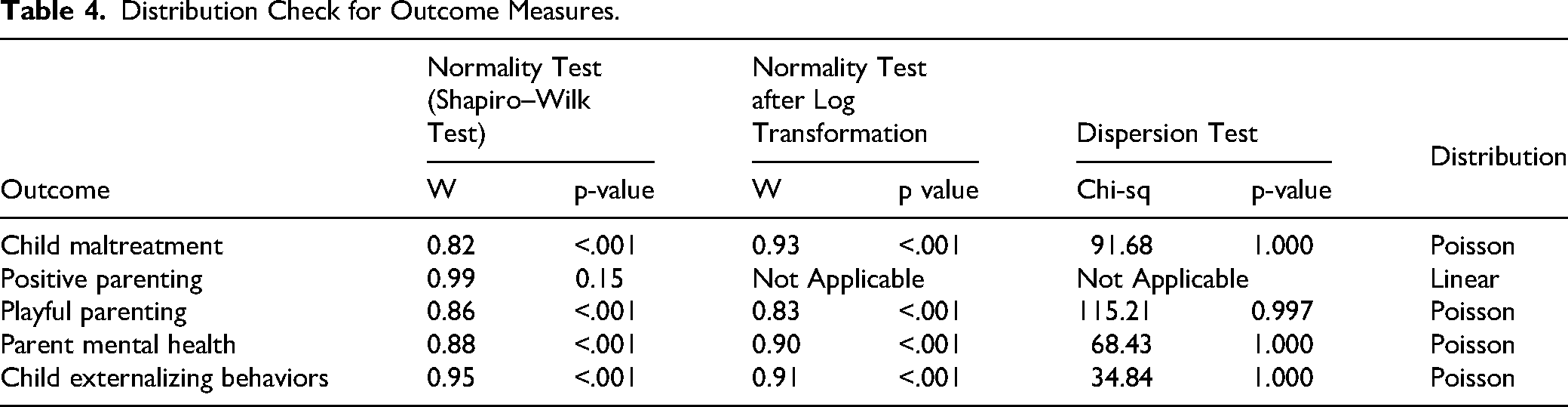
To address the non-normal distribution of certain outcome variables, particularly those measured in counts (e.g., child maltreatment), and to determine appropriate MLM, decisions followed a distribution test flowchart (see Figure 1). First, each outcome variable was tested for normality using the Shapiro–Wilk test (Razali & Wah, 2011). If a variable's distribution failed the normality test, it was tested for dispersion. Based on the distribution test results, MLMs were determined for each outcome variable (e.g., Poisson models for non-normally distributed but not overdispersed outcomes).
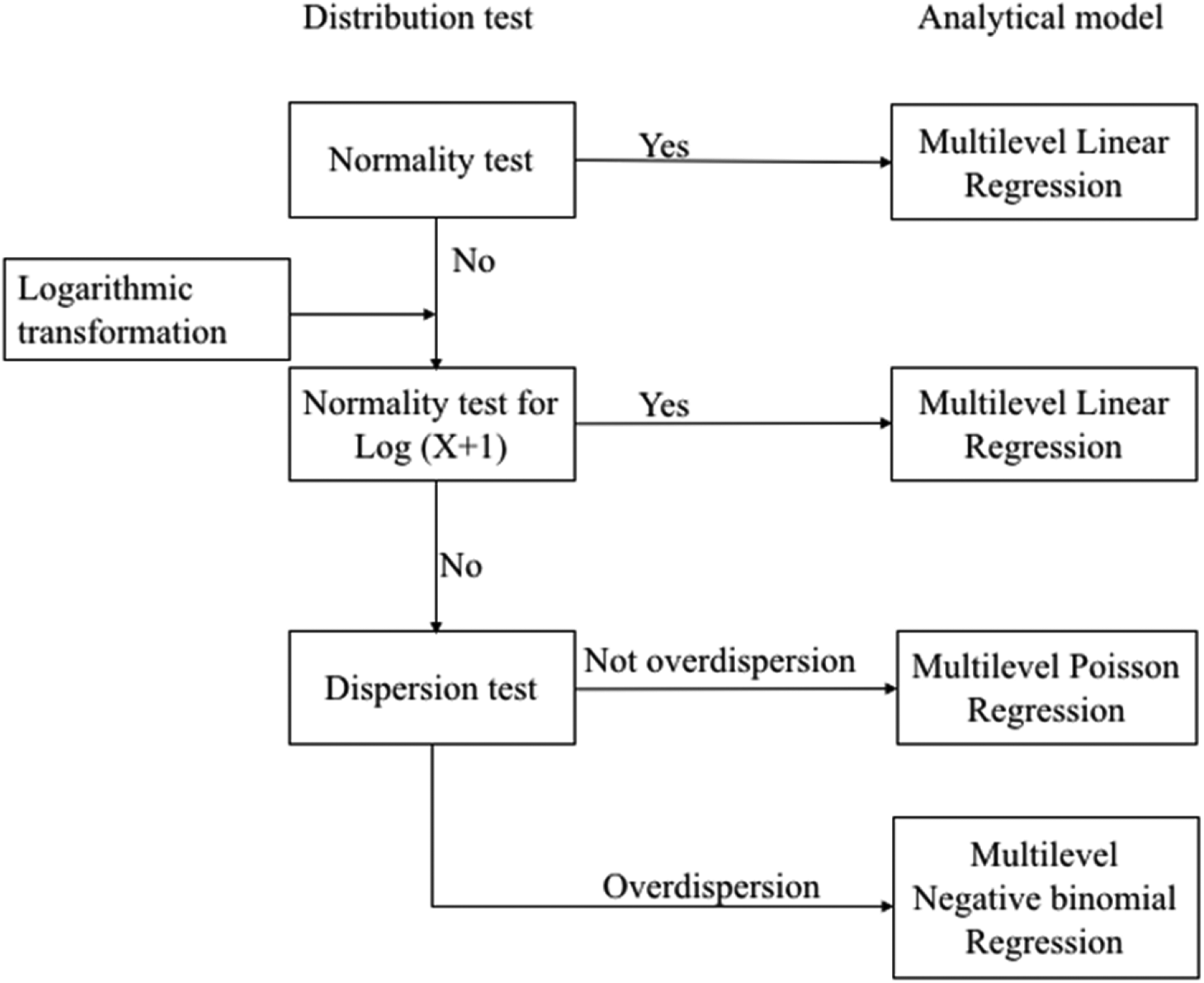
Flowchart for multilevel regression model selection based on outcome distribution and overdispersion checks. Note: The decision process is informed by Gelman and Hill (2007) and Hilbe (2011).
Results
Descriptive Statistics
Participant Characteristics
One hundred thirty-three participants completed baseline assessments, and 41 participants completed post-intervention assessments. Five participants only completed post-intervention assessments without baseline assessments. These participants were considered not enrolled in the study and were excluded from the analyses. Baseline demographic characteristics of the study participants (N = 133) are reported in Table 3.
Baseline Demographic Characteristics of Participants (N = 133).
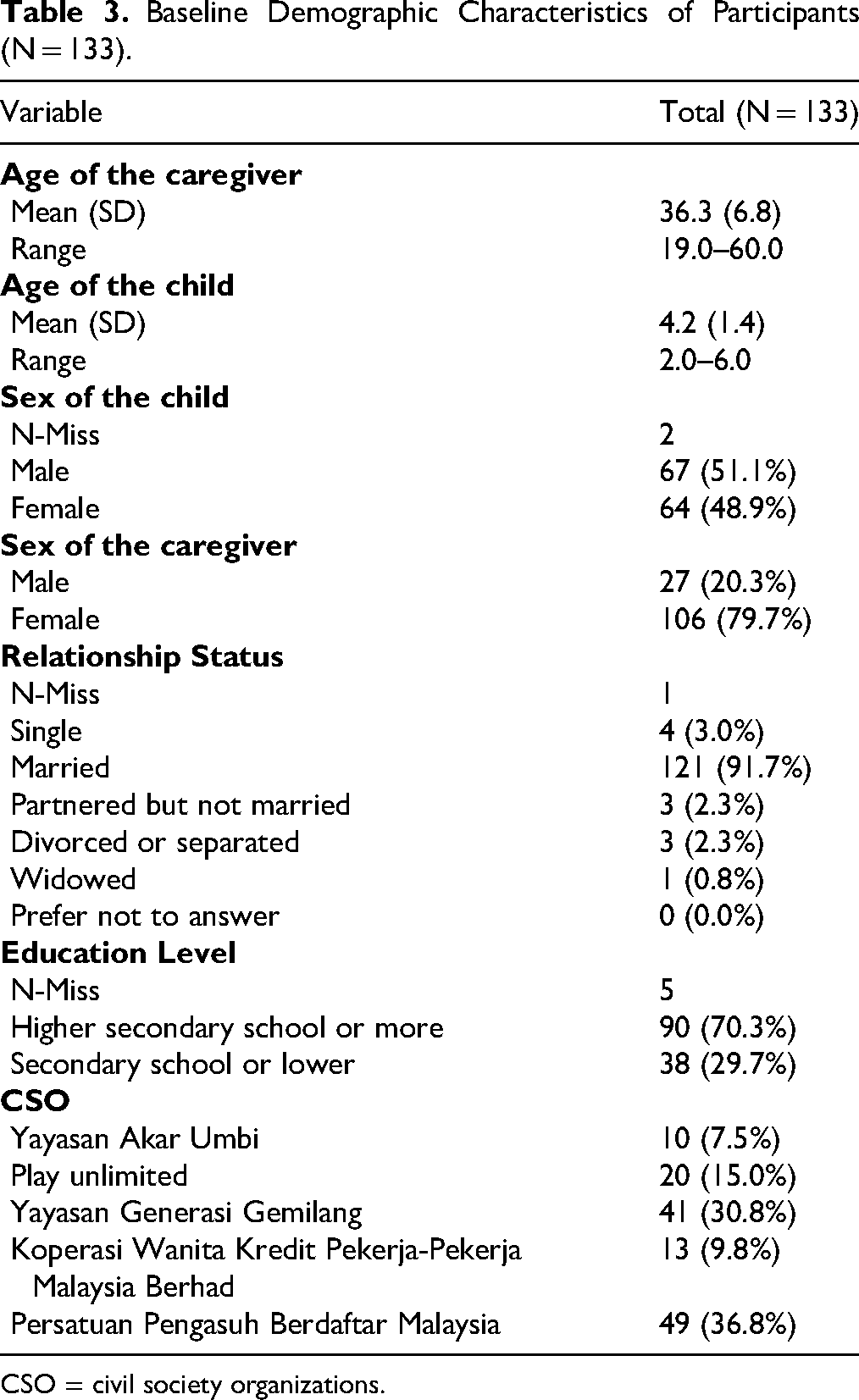
CSO = civil society organizations.
Study Retention and Program Engagement
The attrition rate was high at 73%, with 97 out of 133 participants completing only the baseline assessments. In terms of engagement, for the entire sample (N = 133), the average number of goals completed on NKText was 2.87 out of six total goals (SD = 2.74), which is 47.8%. Specifically, study completers (N = 36) completed an average of 4.56 out of six total goals (SD = 2.05) in NKText, which is 76%. Non-completers (N = 97) completed an average of 2.25 goals (SD = 2.71) or 45.2%
Pre-Post Changes in Outcomes
Thirty-six participants completed both baseline and post-test assessments and were considered complete cases for multilevel regression analyses.
Distribution Check
All outcome measures, except positive parenting, failed normality tests including normality tests after log transformations, but were not significant for overdispersion based on dispersion tests (Table 4). These outcomes were analyzed using multilevel Poisson regression models while positive parenting was analyzed using multilevel linear regression models.
Distribution Check for Outcome Measures.
Multilevel Regression Analyses
There were no significant changes in the primary outcome, child maltreatment, when comparing baseline and post-test responses (p = .698; IRR=0.95 [0.72,1.24]). For secondary outcomes, participants reported increased positive parenting (β=1.75 [0.19,3.32]) and reduced child externalizing behaviors (IRR=0.70 [0.53,0.93]) at post-test. There were no other significant differences between baseline and post-test for parent mental health and playful parenting (Table 5).
Multilevel Modeling Results Comparing Outcome Measures at Baseline and Post-test for Complete Cases.
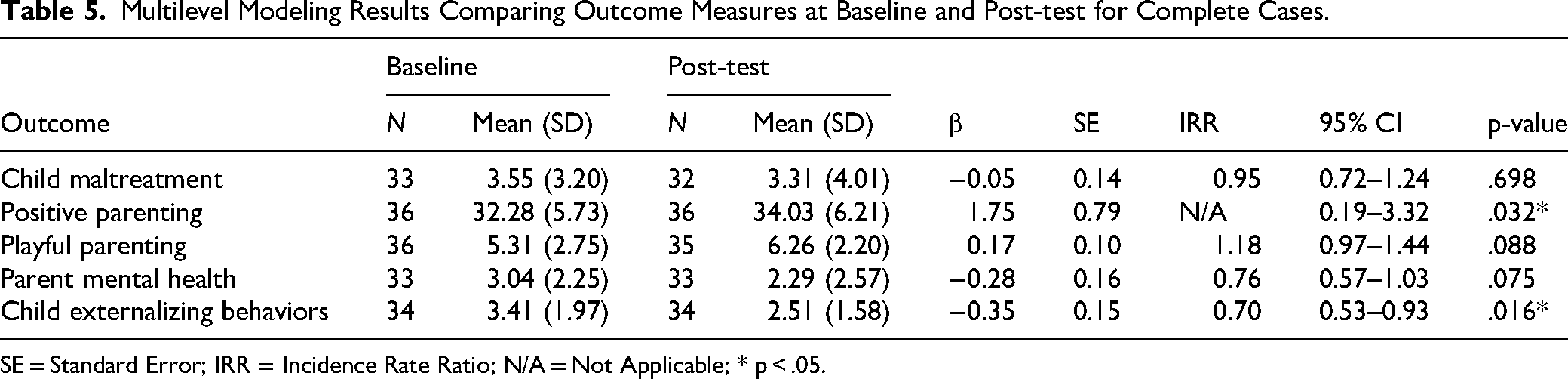
SE = Standard Error; IRR = Incidence Rate Ratio; N/A = Not Applicable; * p < .05.
Discussion and Applications to Practice
This study examined the pre-post changes in child maltreatment and associated outcomes among caregivers of children ages 2–6 years who participated in a hybrid-digital parenting program delivered by CSOs in Malaysia. It contributes to the scarce literature on the implementation and evaluation of parenting interventions delivered in routine service settings within LMICs, particularly in Southeast Asia. Notably, it is the first known study conducted in this context in Malaysia.
Results showed no significant pre-post changes in the primary outcome, child maltreatment, for those who completed the study. The lack of changes in child maltreatment contradicts previous findings from a feasibility pre-post pilot study of the in-person original version of the Naungan Kasih Parenting Program in Malaysia (Lachman et al., 2023) and a recent randomized factorial pilot trial of the Naungan Kasih-Hybrid Program in preschool systems in Malaysia, which found significant reductions in overall child maltreatment post-intervention (Cooper et al., 2024). Non-significant changes in child maltreatment may be due to the use of a two-item abbreviated scale in this study, which might have lacked the sensitivity to detect changes and may not have captured the diversity of harsh discipline parenting behaviors. The previous studies in Malaysia that found reductions in child maltreatment used 26 items (Lachman et al., 2023) and 9 items (Cooper et al., 2024) from the ICAST-T measure. However, given the already high attrition rate in this study, using the full scales might have further impacted participants’ engagement and retention rates. Further research should investigate how to balance reliable psychometric properties with the brevity of the ICAST-T measure to maintain participant retention while still capturing meaningful data on child maltreatment.
On the other hand, analyses revealed significant improvements in positive parenting and reductions in child externalizing behaviors. These findings are consistent with existing research, including the recent randomized factorial pilot trial of the Naungan Kasih-Hybrid Program in preschool systems in Malaysia (Cooper et al., 2024) and a meta-analysis of parenting interventions across 32 LMICs, which demonstrated increased positive parenting and reduced child disruptive behaviors (Backhaus et al., 2023). These results may be attributed to the program's greater focus on promoting positive parenting and addressing child behavior problems. The first goal for all participants starting NKText was “Improve My Relationship with My Child,” aimed at fostering positive parenting practices. Additionally, Goal 5 “Supporting Positive Child Behavior” was dedicated to helping parents manage and reduce child problem behaviors.
This study has several limitations, and its results should be interpreted with caution. The main limitation is the small sample size, which impacts the validity and reliability of the findings. The small sample size increases the probability of Type II errors, where significant results may appear insignificant due to insufficient power to detect effects, especially if the effects are small (Akobeng, 2016). It is possible that the observed findings in this study could be attributable to chance, given the small sample size, which may not adequately account for variability.
Additionally, the sample size in this study was restricted by a high attrition rate (73%), higher than previous studies on parenting interventions delivered in community settings (e.g., about 50%, Lindsay et al., 2011). This introduces attrition bias (Nunan et al., 2018), and the findings may be influenced by factors such as dropout reasons or non-random missing data, limiting the extent to which outcomes can be confidently attributed to intervention effects. Nevertheless, this study utilized the available data with the maximum possible recruitment numbers achieved by the CSOs within the given timeframe, reflecting the challenges of data collection in routine service settings.
Another major limitation of the study is the inability to draw causal inferences from the findings. Data were collected as part of routine service delivery using only pre-post surveys (a single-group design) and were not part of a RCT. The lack of a control group raises questions about the reliability of the findings and whether changes in outcomes post-intervention can be attributed to the intervention, increasing the likelihood of a Type I error. Future monitoring and evaluation in routine service settings, where RCTs may not be feasible, could consider quasi-experimental methods, such as including negative controls or comparing findings to historical controls, to investigate the causal impacts of interventions (Thyer, 2012).
Moreover, post-intervention assessments were conducted immediately at the end of the intervention (i.e., during closing sessions), with a recall period of “the past two weeks” that overlapped with the program delivery. Participants may have needed more time to integrate the new skills learned from the intervention into their daily behaviors. Certain outcomes, such as mental health, may exhibit sleeper effects (van Aar et al., 2017), requiring longer follow-up periods to observe changes in parent mental health resulting from changes in parenting (Wittkowski et al., 2016). Future programs in routine service settings could consider establishing ongoing monitoring and evaluation systems to allow for follow-ups at multiple timepoints. This would help better track changes over time and avoid regression to the mean. However, implementing such systems may be complex and costly in routine service settings, where time and resources are already limited.
Despite limitations, this study addresses the need for evidence on hybrid-digital parenting interventions delivered in routine service settings in LMICs. Findings suggest that interventions like the Naungan Kasih-Hybrid program can be impactful in promoting positive parenting and reducing child externalizing behaviors in Malaysia. The results demonstrate that digital-hybrid platforms, particularly chatbot-led interventions, can be feasibly delivered in routine services by locally trained facilitators. The study provides valuable insights for future research and the implementation and scale-up of parenting programs in similar contexts.
Although indicative changes from baseline to post-assessment were found, this study faced significant challenges with high attrition rates, underscoring the difficulties of conducting research in routine service settings. Data collected in these settings are often FUPS (Wolpert & Rutter, 2018). Unlike controlled research trials, this study operated under routine service delivery constraints. Implementation, monitoring, and data collection were managed by the CSOs. This reliance on secondary data collected by implementers limited the research team's control over data collection procedures and quality checks, resulting in challenges with data quality and participant retention. Despite these issues, the study provides a unique opportunity to leverage real-world data to inform the implementation and scale-up of parenting interventions in routine service contexts. The use of robust analysis methods—such as distribution checks and multilevel analyses—demonstrates an approach for handling FUPS data and serves as an example for other evaluations facing similar challenges.
The high attrition rate in this study highlights the need to address factors related to study completion. Providing incentives for participation or completion of post-test assessments is a well-documented strategy for improving retention rates (Brueton et al., 2014). For instance, a digital parenting intervention in Malaysia, which offered MYR10 (approximately GBP1.76) for survey completion at each timepoint, achieved an impressive retention rate of 81.8%. This evidence suggests that offering a small amount of monetary compensation could be a viable and feasible strategy to enhance participant retention in the monitoring and evaluation of programs in routine service settings, where resources are often constrained. Additionally, future research should conduct qualitative interviews with both completers and non-completers of the intervention, as well as facilitators, to explore in-depth the barriers and facilitators to engagement and completion. While examining these factors was beyond the scope of the present study, qualitative methods may offer valuable insights into the reasons for low retention rates and inform strategies to improve engagement and retention in parenting interventions.
In conclusion, this study provides valuable preliminary insights into the implementation and evaluation of a hybrid-digital parenting intervention delivered by CSOs to caregivers of children ages 2–6 years in Malaysia, an LMIC. Although the pre-post design could not establish causality, the study made the best use of the available data to assess the impacts of the parenting program delivered within routine service settings in Malaysia, marking the first known investigation of its kind in this context. While no significant changes were observed in child maltreatment or VAC, the study's primary outcome, the findings indicate improvements in positive parenting and reductions in child externalizing behaviors—both of which are associated with VAC—suggesting potential benefits of the intervention. Additionally, this study highlights the challenges of conducting research and retaining participants in routine service settings, as evidenced by the high attrition rate observed, particularly in a chatbot-led parenting intervention. Overall, this study informs future research and the dissemination of hybrid-digital parenting interventions in routine service settings, ultimately supporting the wellbeing of children and families globally, particularly in low-resource contexts.
Footnotes
Acknowledgements
We extend our heartfelt gratitude to Dr. Qing Han for her generous support and expertise on statistical methods, and Durgesh Rajandiran, Amy Bala and the five CSOs for their tireless efforts in gathering the data that made this paper possible. We also thank all our project partners, including the UPM and GPI teams. We are especially grateful to the parents who participated in this project and shared their valuable time. Ms. Senesathith thanks Dr. Mark Fransham, Professor Frances Gardner, Dr. Seema Vyas, Hal Cooper, for their guidance during the initial stages of this paper. Most importantly, Ms. Senesathith would like to express her deep gratitude to Professor Jamie Lachman for his invaluable time, mentorship, and ongoing guidance throughout the process.
ORCID iDs

Ethical Approval and Informed Consent
Ethical approval was granted by the University of Oxford (R88954/RE001) on September 21, 2023 and UPM (JKEUPM-2023-1226) on October 15, 2023. All participants provided written informed consent.
Funding
The author(s) disclosed receipt of the following financial support for the research, authorship, and/or publication of this article: This research is part of the Global Parenting Initiative, supported by the LEGO Foundation, the Oak Foundation, the World Childhood Foundation, The Human Safety Net, and the UK Research and Innovation Global Challenges Research Fund (ES/S008101/1). The funding organizations were not involved in the development or design of this study, nor did they participate in its implementation, data analysis, interpretation, or the dissemination of findings.
Declaration of Conflicting Interests
The authors declared the following potential conflicts of interest with respect to the research, authorship, and/or publication of this article: JL is the CEO of Parenting for Lifelong Health (PLH), a charitable organization based in the United Kingdom that developed the parenting program which is open access and licensed under a Creative Commons 4.0 Attribution Share-Alike license. JL, VS, DR, RJ, QH, FG, SV, HC, and FN have, at various times, served as investigators on research studies involving the program and have been employed on related funded projects. Conflict is avoided by declaring these potential conflicts of interest and by conducting and disseminating rigorous and impartial evaluation research on this parenting program. No profits will be made from this program.
Data Availability
The datasets generated and analyzed during this study are available from the corresponding author on request.