




Abstract
Keywords
During university years, students have to cope with many stressful demands, including pursuing academic excellence, preparing for their careers, and developing and maintaining new interpersonal relationships (Taylor et al., 2013). These demands may collectively threaten their well-being and increase the prevalence of mental health problems (Duffy et al., 2019; Li et al., 2021; Shek, 2025a, 2025b, 2025c). From an ecological perspective, university students’ development is shaped by multiple nested systems, including their immediate learning environments (Chai et al., 2022; Katz & Somers, 2017). Therefore, universities have become increasingly important settings for youth social work practice, where social workers and professionals deliver preventive and developmental interventions to support students’ psychosocial adjustment (Bessant & Emslie, 2014; Sprague Martinez et al., 2018). For example, researchers and social workers have paid growing attention to the well-being of university students based on positive youth development (PYD) principles in empowering university students (Chai & Shek, 2024; Shek et al., 2023). Accordingly, course-based programs based on the PYD framework have been designed and implemented in higher education institutions to help improve the leadership qualities and well-being of university students (e.g., Chai et al., 2022; Li & Shek, 2020).
Studies have supported the effectiveness of course-based programs that are mainly based on the face-to-face learning mode, in which all the course content and materials for learning are delivered in person directly to students (Greenhow et al., 2022). This learning mode can be regarded as a typical or traditional mode of instructional learning. On the other hand, online learning via virtual platforms and tools has emerged as an important alternative in the digital era (Yang & Ghislandi, 2024). Despite its widespread use in higher education, the effectiveness of online learning is still under debate (Nguyen, 2015), and its effects on student well-being have not been adequately examined. Grounded in ecological systems theory and strengths-based and empowerment perspectives, this study examined the effectiveness of a PYD-based leadership course delivered in both online and face-to-face formats for university students in Hong Kong. Building on Equivalency Theory (Simonson et al., 1999), we compared learning outcomes across the two delivery modes within the same course. This study is relevant to social workers who have used both face-to-face and online delivery modes in training programs for young people.
Course-Based Programs for the Holistic Development of University Students
In addition to academic demands, students encounter various challenges during their university years, including major life transitions, social stress, and economic burdens, which may lead to mental vulnerabilities (Bersia et al., 2024; Li et al., 2021). From a social work perspective, these challenges represent key targets for developmental and preventive social work with emerging adults. However, existing children and youth service systems focus more on children while overlooking university students (Bessant & Emslie, 2014; Curran & Wexler, 2017). According to ecological systems theories, these difficulties can be understood as arising from interactions across multiple levels of students’ environments, including family backgrounds, peer networks, institutional demands, and broader social and economic conditions (Chai & Shek, 2024). In view of this, educators and social workers have recognized the importance of helping university students manage these external risks and promoting their strengths to improve their overall holistic development (Li & Shek, 2020; Shek et al., 2022).
The PYD is a strengths-based perspective focusing on one's potential and capability, serving as promising theoretical guidance for practice design (Law & Shek, 2011; Lopez et al., 2015). Course-based programs grounded in PYD principles comprise an effective practice model that could benefit a wide range of students (Shek et al., 2023). A university in Hong Kong has designed and implemented a leadership course that utilizes PYD attributes to promote students’ well-being and holistic development. Within an ecological framework, such a credit-bearing subject can be viewed as a school- and community-level intervention embedded in the university context, providing a structured environment that supports students’ development and mitigates related developmental risks. Specifically, the PYD attributes include resilience, self-efficacy, self-determination, psychosocial competence (cognitive, emotional, social, behavioral, and moral), positive identity, spirituality, beliefs in the future, and prosocial norms. Evaluation studies have confirmed that when delivered in face-to-face settings, the course promotes PYD developmental outcomes and the well-being of students (e.g., Li & Shek, 2020). Furthermore, the course won a Silver Award for Ethical Leadership and a Gold Award for Nurturing Student Well-Being and Purpose in the QS Reimagine Education Awards in 2017 and 2021, respectively, endorsing its value to youth leadership and well-being development. However, the effects of the online version of this course have not been evaluated.
Effects of Online Learning Mode
Online learning presents an array of advantages, primarily in connection with easy access. Financially, online learning appears more accessible, as it spreads the costs of learning across a mass population that desires higher education and thus minimizes the fee burden on the individual learner (Nguyen, 2015). In addition, online learning is flexible and can be customized in ways that allow learners to enjoy many options regarding when, where, and how they want to learn (Alexander et al., 2012), particularly through recorded lecture content (Arifiati et al., 2020). These advantages make online learning uniquely suitable for students with special needs and for learning under unconventional circumstances (Greenhow et al., 2022). For example, during the COVID-19 pandemic, face-to-face teaching at Hong Kong universities was suspended on multiple occasions from 2020 to 2022. As a result, online learning became a critical alternative to traditional face-to-face learning during the pandemic period. In fact, in response to this global crisis, the move from the face-to-face learning mode to an online one was implemented by higher education institutions across the world (Ntsiful et al., 2023). For example, service learning turned into an online mode during the pandemic (Li et al., 2024; Lin et al., 2023).
Although online learning has been widely adopted by higher education institutions for various subjects, its effectiveness is still under debate (e.g., Alexander et al., 2012; Guo et al., 2023). Some scholars have offered support for its effectiveness and benefits. For example, Soffer and Nachmias (2018) found that online students benefited more in terms of grasping course content, communication with teachers, engagement, satisfaction, and learning outcomes than students enrolled in face-to-face sessions. Paechter and Maier (2010) observed that an online platform enabled introverted and passive students to engage in class activities by allowing quick textual responses from teachers. However, many scholars have questioned the effectiveness of the online learning mode (Mok et al., 2021; Nguyen, 2015). For example, Mok et al. (2021) found that only one-third of university students were satisfied with an online course, and 60% of online students considered online learning less effective than face-to-face learning. Typically, students complained about technical difficulties and insufficient interaction (Arifiati et al., 2020). Unsatisfactory internet connections may lead to online students’ procrastinating and consequently cause difficulties in understanding lectures (Alexander et al., 2012). Reduced teacher–student interactions in online communication also led to lower student learning satisfaction (Dumford & Miller, 2018). However, it is noteworthy that these evaluation studies were mainly based on the perceptions of the subjects instead of changes in their developmental outcomes. In social work interventions, social workers have also used online education programs. However, there are very few evaluation studies in this area (Dinh & Nguyen, 2020; Kurzman, 2019).
Comparisons Between Online and Face-to-Face Learning Modes
Equivalency theory (Simonson et al., 1999) posits that online courses should be designed based on the principle of the equivalency of learning experiences. This implies that online educators should tailor teaching materials and methods to the online learning environment to create learning experiences that are equivalent to traditional face-to-face education and ensure equivalent learning outcomes. The community of inquiry framework supplements equivalency theory by identifying three important components of online learning experiences (Swan et al., 2009) and provides insights into how to strategically address challenges in online teaching (see Table 1).
Challenges and Strategies for Online Teaching Based on the COI Framework.
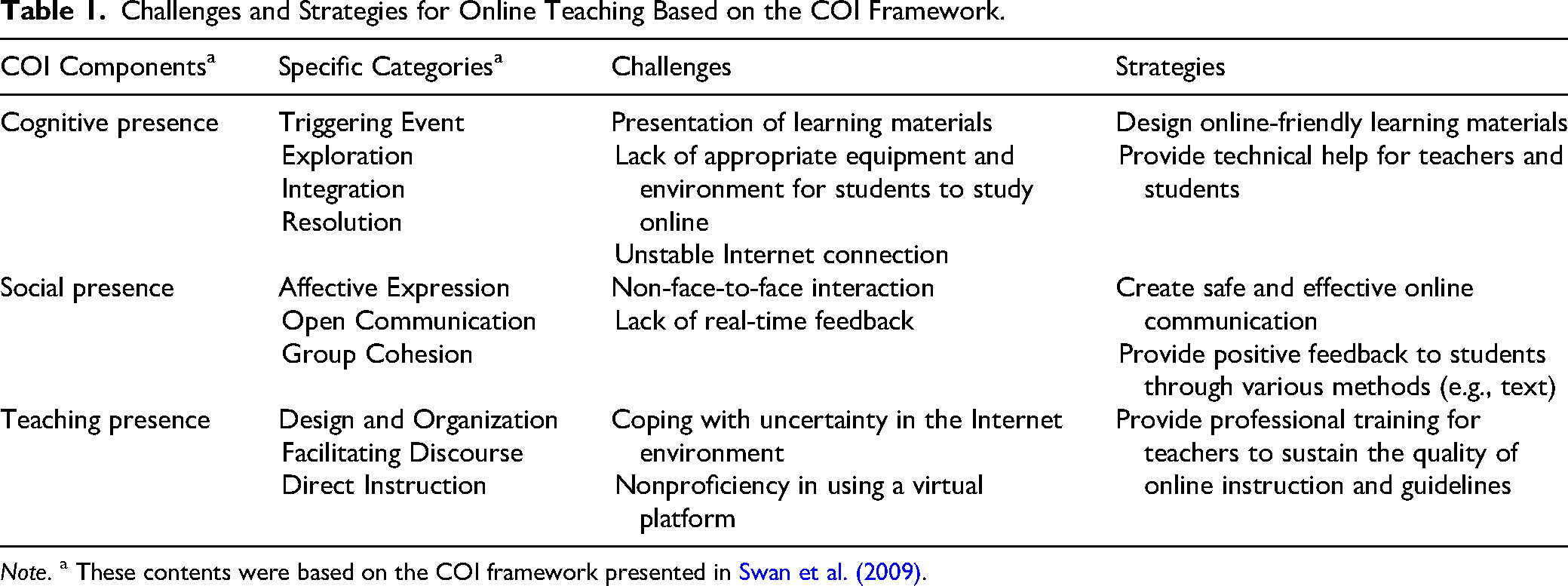
Note. a These contents were based on the COI framework presented in Swan et al. (2009).
The first component is cognitive presence, which refers to the learner's capability for ongoing reflection and discourse to establish and confirm their understanding of meaning (Swan et al., 2009). In the context of online learning, providing students with materials that facilitate the reflective thinking process would be helpful.
The second component is social presence, which refers to how learners develop affective expression, open communication, and group cohesion with others in online learning environments (Richardson & Swan, 2003; Swan et al., 2009). Research has shown that a higher frequency and duration of social presence significantly enhance student performance (Sharma et al., 2020). To promote social presence in online settings, it is important for educators to actively engage students in group activities and discussions to foster a supportive environment.
The third component is teaching presence, which refers to efforts to promote cognitive and social presence in multiple ways to reach personal, meaningful, and educationally valuable learning outcomes (Swan et al., 2009). Providing professional training for online teachers might be helpful in improving this component.
Although effective strategies can help address the challenges faced by online learning, it is also undeniable that some practical difficulties in online courses are not easy to overcome, especially for aspects related to social presence, which may lead to the finding that the course effect of face-to-face teaching is still considered relatively superior. For example, based on equivalency theory, Garratt-Reed et al. (2016) compared the learning outcomes of an introductory psychology course in two modes (online and face-to-face) and found no difference in students’ final grades, except for the group presentation. Paechter and Maier (2010) also found that university students preferred face-to-face education for better interpersonal communication. This indicates that the learning experiences of cognitive presence (e.g., knowledge acquisition) might be equivalent between the online mode and the traditional mode, but social presence (e.g., group work) in the online mode is less effective due to non-face-to-face interaction in the online platform, which further impedes the effects of teaching presence.
As a result, our study assumes that online teaching could also effectively improve students’ overall development, but the face-to-face mode is superior due to its advantages in social presence. Because related studies comparing the effects of online and face-to-face learning modes from the perspective of Equivalency Theory are still limited in education and social work contexts, further empirical investigations are needed.
Empirically, previous studies comparing the effects of face-to-face and online learning modes have yielded inconsistent results. Some supported the equivalency theory, showing that there was no significant difference between the outcomes of the two modes. For example, Driscoll et al. (2012) found that the satisfaction of students attending a sociology course did not differ significantly between online and face-to-face settings. However, observing that online platforms might encourage the use of quantitative reasoning skills, Dumford and Miller (2018) suggested that the effects of courses that integrated quantitative reasoning skills (e.g., business courses) were better in the online mode. Interestingly, Xu and Jaggars (2014) found that students studying applied professions (e.g., law and nursing) and social sciences (e.g., anthropology and psychology) displayed comparatively poor adaptation to online learning compared to students studying in other majors. This is possibly because these disciplines require hands-on practice and group discussion, which are difficult to conduct online.
“Tomorrow's Leaders” is an award-winning leadership program (one QS Reimagine Education Silver Award and one Gold Award, the University Grants Committee Teaching Award in Hong Kong) based on PYD attributes at a Hong Kong university (Chai et al., 2022; Li & Shek, 2020; Shek & Ma, 2014). It is a course-based program consisting of 13 three-hour lessons. Various teaching approaches, such as experiential learning activities, group discussion, and active self-reflection, were included in this course, encouraging students to discuss and collaborate with other classmates, which helps promote their positive development, especially interpersonal competence (e.g., interpersonal communication and conflict management). In this respect, face-to-face learning has the natural advantage of facilitating mutual communication and interpersonal relationships (Paechter & Maier, 2010). Moreover, social connections and a sense of belonging are important for university students, especially during difficult periods (e.g., returning to the classroom after a long period of lockdown). In the face-to-face mode, students are more likely to have strengthened social connections through in-person interactions with teachers and other students compared to students in the online mode (Avcı, 2023). Through face-to-face interactions, students and teachers exchange information and affection, which promotes mutual understanding and support that contribute to the well-being of university students (Lemyre et al., 2023). Based on these considerations, ensuring equivalent learning experiences between the online and face-to-face modes of the leadership course might be challenging because face-to-face learning has a natural advantage in social presence.
The Present Study
This study adopted a practice-based, quasi-experimental one-group pretest-posttest design to evaluate a leadership course named “Tomorrow's Leaders,” which was based on PYD principles and delivered to university students at a university in Hong Kong. Li and Shek (2020) previously evaluated the outcomes of this course on students’ PYD attributes, psychological well-being, and desired graduate attributes in the pre-COVID-19 period and reported significant positive changes among students who took the course in the face-to-face mode. Building on this work, the present study sought to investigate the changes in student outcomes when the course was delivered in the online mode (during COVID-19) and face-to-face mode (post-COVID-19), as well as the differences in changes between these two modes. Data were collected from cohorts enrolled between 2020 and 2024 during the pandemic and post-pandemic eras. Two research questions with nine corresponding hypotheses are proposed below.
Methods
Participants
The participants were students enrolled in the course “Tomorrow's Leaders” from the 2019/20 to 2023/24 academic years. They were invited to complete the evaluation before and after taking the course. Specifically, this study adopted a one-group pre-test and post-test design. Despite its limitations on vulnerability to external bias, it is still a useful tool in social work program evaluation (Thyer, 2002). This design has been applied in previous PYD program evaluations (Hewson et al., 2010; Joubert, 2021; Ma & Shek, 2019; Ma, Shek & Chen, 2019; Ma, Shek & Leung, 2019). In a review of social work education evaluation studies, Carpenter (2011) reported that around 75% of the studies adopted a one-group pretest-posttest design.
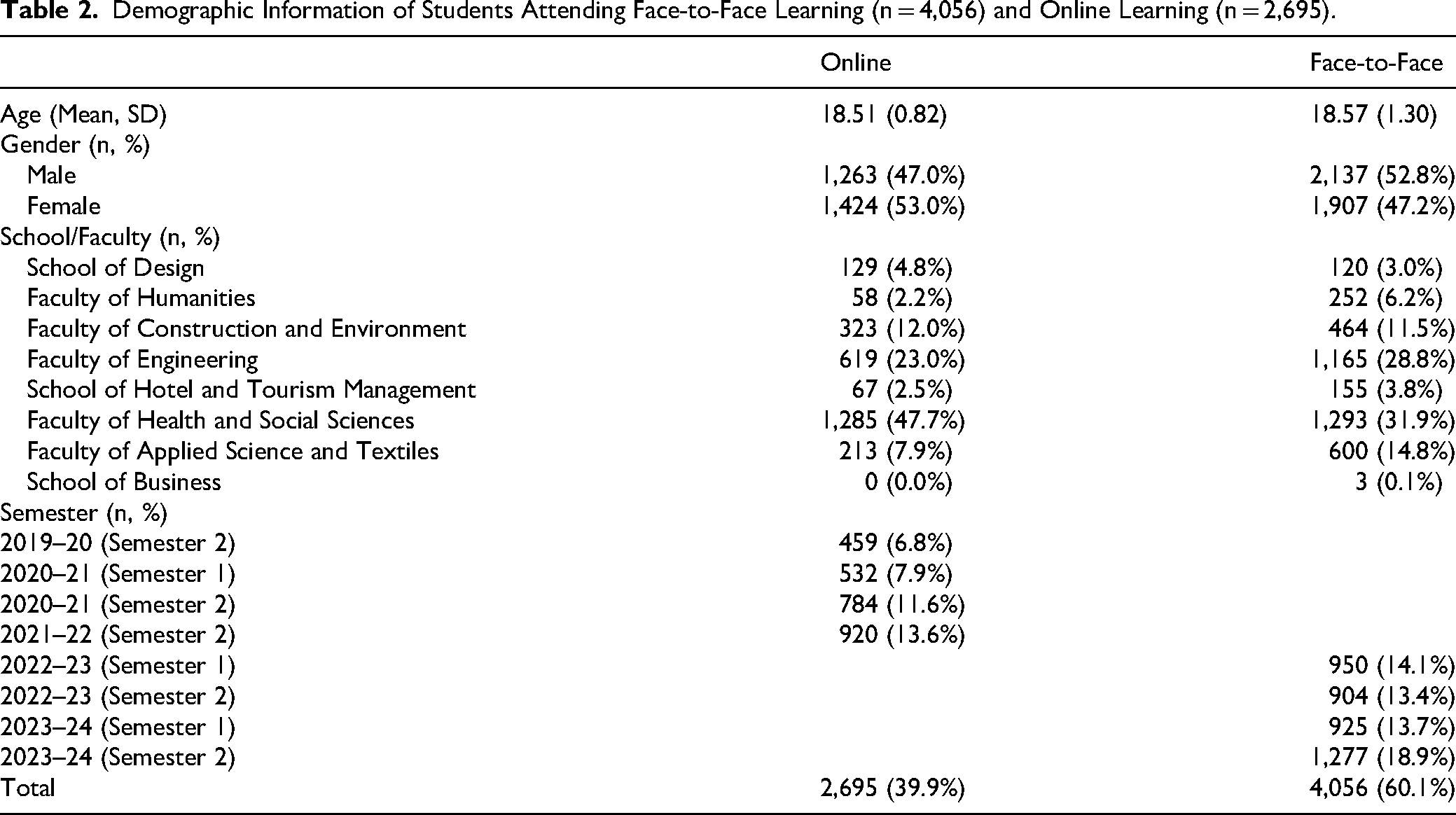
After matching data from the pre- and post-tests, a total of 6,751 completed student questionnaires were obtained, with 4,056 students receiving face-to-face instruction and 2,695 students receiving online instruction. Online cohorts primarily took the course between 2020 and 2022, when face-to-face teaching was suspended due to COVID-19, whereas face-to-face cohorts primarily took the course after the relaxation of pandemic-related restrictions (see Table 2). Students were pre-assigned to course sections by the university's student system rather than self-selecting the mode.
Demographic Information of Students Attending Face-to-Face Learning (n = 4,056) and Online Learning (n = 2,695).
In the face-to-face mode, all sessions and activities were conducted on campus in classrooms. In the online mode during COVID-19, the same syllabus, learning outcomes, and assessment tasks were delivered via the university's learning management system and videoconferencing platform. The original three-hour face-to-face lecture was adjusted into one-hour asynchronous pre-class self-regulated learning (e.g., e-learning modules, short videos, and readings) and a two-hour synchronous live lecture. To foster interaction and social presence online, instructors used strategies such as breakout-room discussions and online polls.
Procedures
Ethics approval was obtained from the Institutional Review Board of the university prior to the implementation of the study. A consent form was given to the participants before the pretest, and they were informed that their participation was completely voluntary and that they could withdraw from the study at any time without any consequences. They were also informed that their data would be anonymized and kept confidential. Prior to the first lecture, the students were invited to fill out an online pretest questionnaire. After all lectures were delivered, the students were invited to fill out an online posttest questionnaire.
Measures
Positive Youth Development Scale Attributes
To meet the study requirements, we selected the following 12 variables, measured by 34 items, from the Chinese Positive Youth Development Scale (CPYDS; Shek et al., 2007; Zhu et al., 2024): 1) self-determination (2 items, e.g., “I am confident about my decision”); 2) clear and positive identity (4 items, e.g., “I am a person with self-confidence”), 3) belief in the future (3 items, e.g., “I have the confidence to solve my future problems”), 4) prosocial norms (2 items, e.g., “I care about unfortunate people in society”), 5) resilience (3 items, e.g., “When I face difficulty, I will not give up easily”), 6) moral competence (3 items, e.g., “I will fulfill my promise”), 7) behavioral competence (2 items, e.g., “I can face criticism with an open mind”), 8) cognitive competence (4 items, e.g., “I know how to see things from different angles”), 9) emotional competence (3 items, e.g., “I can see the world from the perspectives of other people”), 10) social competence (3 items, e.g., “I know how to communicate with others”), 11) self-efficacy (2 items, e.g., “I can finish almost everything that I am determined to do”), and 12) spirituality (3 items, e.g., “My life is colorful and full of excitement”). A six-point Likert scale ranging from 1 (strongly disagree) to 6 (strongly agree) was used, with higher scores indicating better PYD outcomes. These measures were also used by Li and Shek (2020).
Psychological Well-Being
Students’ psychological well-being was measured by two variables: thriving and life satisfaction. Thriving was measured by five items based on the thriving scale developed by Lerner et al. (2003). The respondents rated five items, such as “I am capable of managing my own life.” Life satisfaction was measured using the Satisfaction with Life Scale (SWLS; Diener et al., 1985), designed to measure students’ well-being and quality of life. The respondents rated five items, such as, “In most ways, my life is close to my ideal.” All items were rated on a six-point Likert scale, ranging from 1 (strongly disagree) to 6 (strongly agree), with higher scores suggesting a higher level of psychological well-being.
Desired Graduate Qualities
Desired graduate qualities were measured by four attributes: problem-solving ability, critical thinking, life-long learning, and ethical leadership (Shek & Ma, 2014). A total of 15 items were used to measure students’ desired graduate qualities, with problem-solving ability accounting for three items (e.g., “I know how to effectively solve problems in my daily life”), critical thinking accounting for three items (e.g., “I know how to use critical thinking skills when solving problems”), life-long learning accounting for two items (e.g., “It's important to understand the development of oneself”), and ethical leadership accounting for seven items (e.g., “I will sacrifice myself for others”) (Shek & Ma, 2014). Items were rated using a six-point Likert scale ranging from 1 (strongly disagree) to 6 (strongly agree), with higher scores indicating that the students had better graduate qualities.
Data Analysis
To test Hypotheses 1a–1f (i.e., within-group changes in each mode), we conducted two repeated-measures multivariate analyses of variance (MANOVAs), one for the online group and one for the face-to-face group, with test (pretest vs. posttest) as the within-subjects factor and the set of outcome variables (PYD attributes, psychological well-being, and desired graduate attributes) as dependent variables. When the multivariate test was significant, follow-up univariate repeated-measures ANOVAs were performed for each outcome. The F statistics, p values, and effect sizes (ηp2) were used to indicate whether each hypothesis (H1a–H1f) was supported.
To test Hypotheses 2a–2c (differences in change between online and face-to-face modes), we conducted a series of two-way MANOVAs with test (pretest vs. posttest) as the within-subjects factor and mode (online vs. face-to-face) as the between-subjects factor. A significant test × mode interaction indicates that changes over time differed between the two modes. Significant multivariate interactions were followed by univariate analyses for individual outcomes; for these tests, we also report F statistics, p values, and ηp2. The outcomes with significant test × mode interactions are also displayed graphically (see Figure 1).
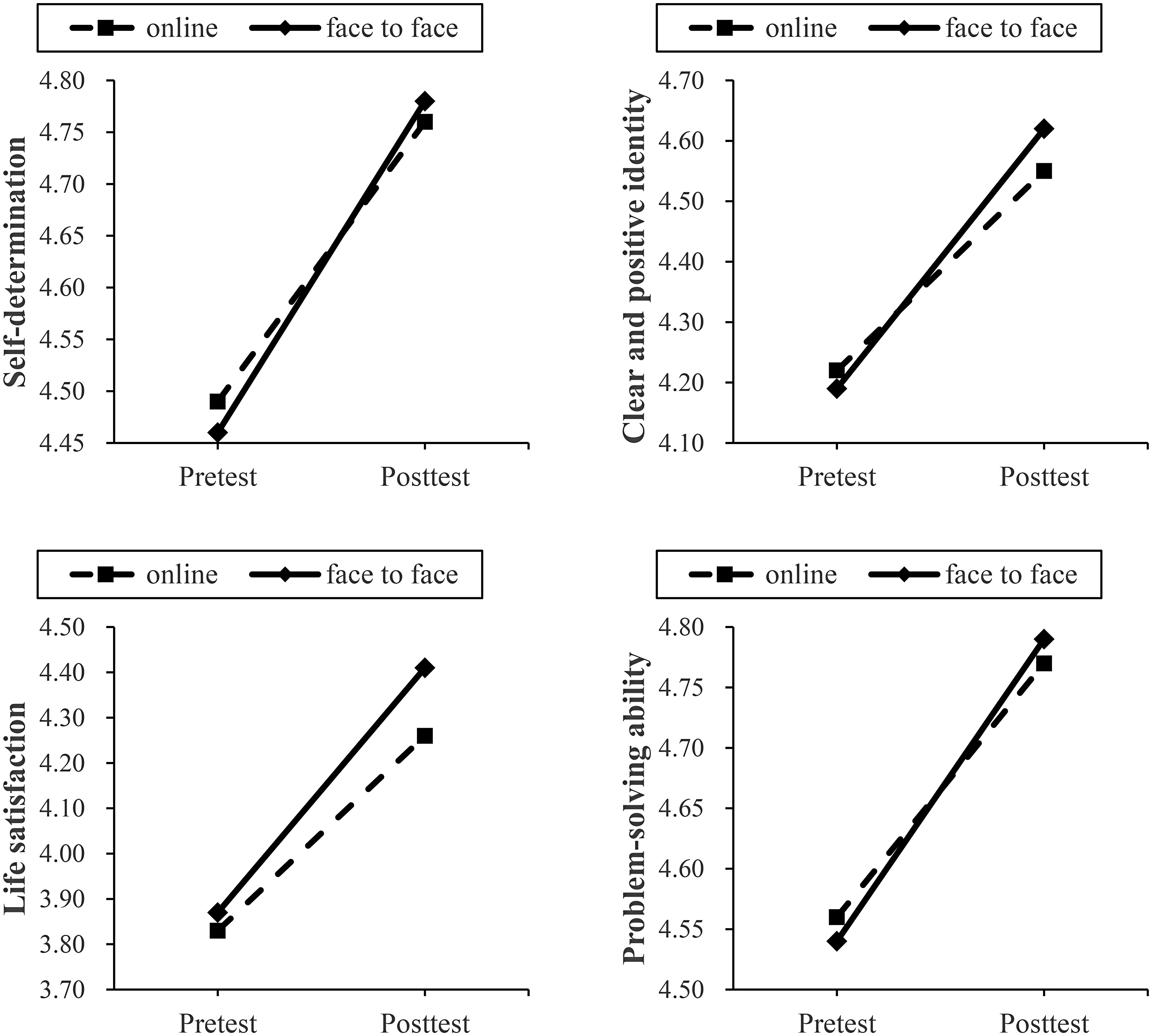
Significant interaction effects between test (pretest vs. posttest) and group (online vs. face-to-face).
Results
The basic demographic information about the participants is shown in Table 2. Among the face-to-face learning participants, 2,137 were male (52.8%), 1,907 were female (47.2%), and 12 students did not report their gender. The average age was 18.57 years (SD = 1.30). Of the online participants, 1,263 were male (47.0%), 1,424 were female (53.0%), and 8 students did not report their gender. The average age was 18.51 years (SD = 0.82).
Outcome Changes for All Students Across the Two Modes
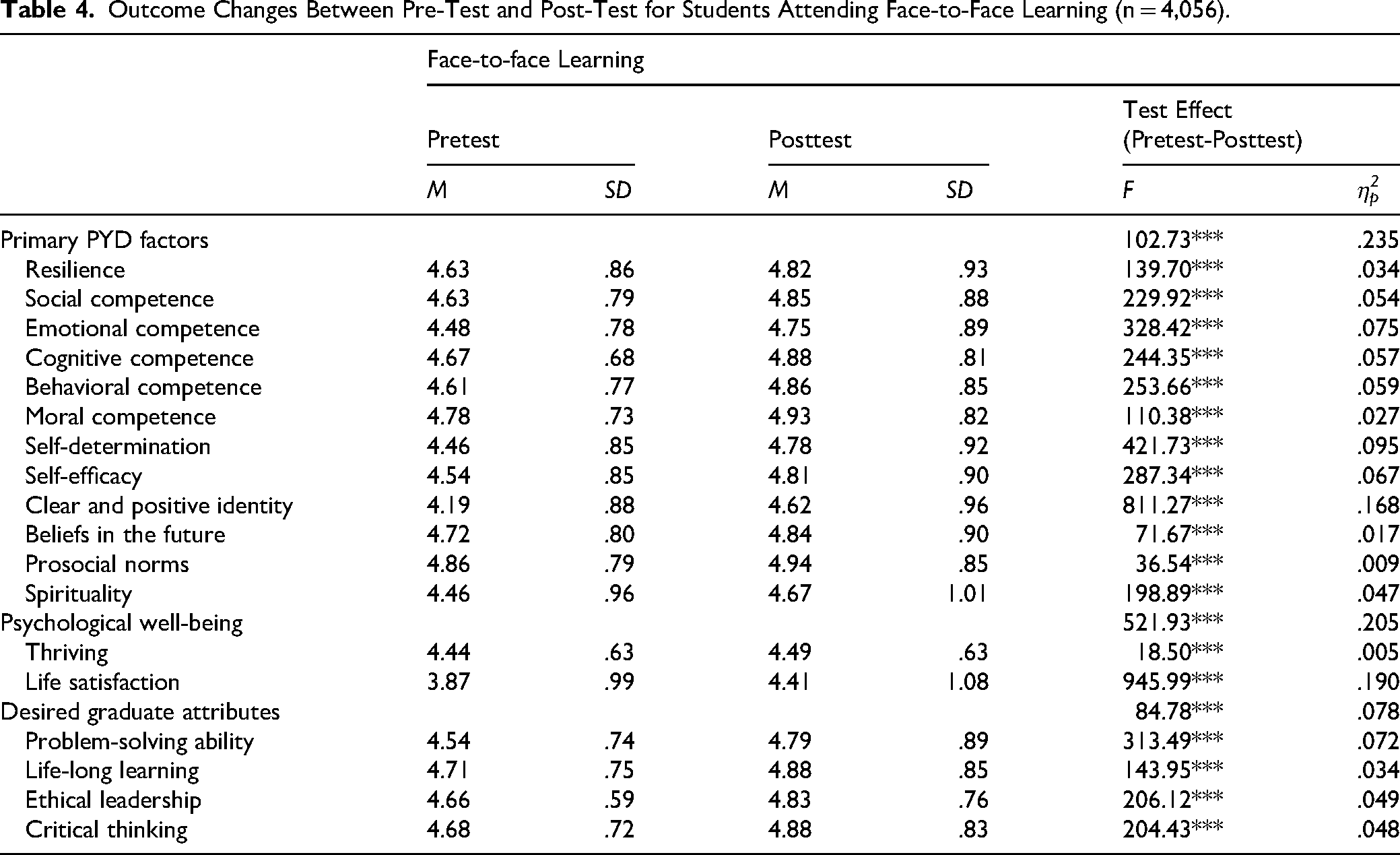
To test Hypotheses 1a–1f, repeated-measures MANOVAs were conducted separately for the online and face-to-face groups. Significant multivariate effects of the test were found for primary PYD factors, psychological well-being, and desired graduate attributes in online (F = 58.20–300.71, ps < .001, ηp2 = .087–.207) and face-to-face groups (F = 84.78–521.93, ps < .001, ηp2 = .078–.235). Follow-up univariate analyses showed significant positive pre-post improvements in all PYD attributes, psychological well-being indicators, and four desired graduate attributes across the two modes (ps < .001). Details can be found in Tables 3 and 4. These results indicate that taking the “Tomorrow's Leaders” course, regardless of learning mode, was associated with significant improvements across all outcome domains, providing support for Hypotheses 1a–1f.
Outcome Changes Between Pre-Test and Post-Test for Students Attending Online Learning (n = 2,695).
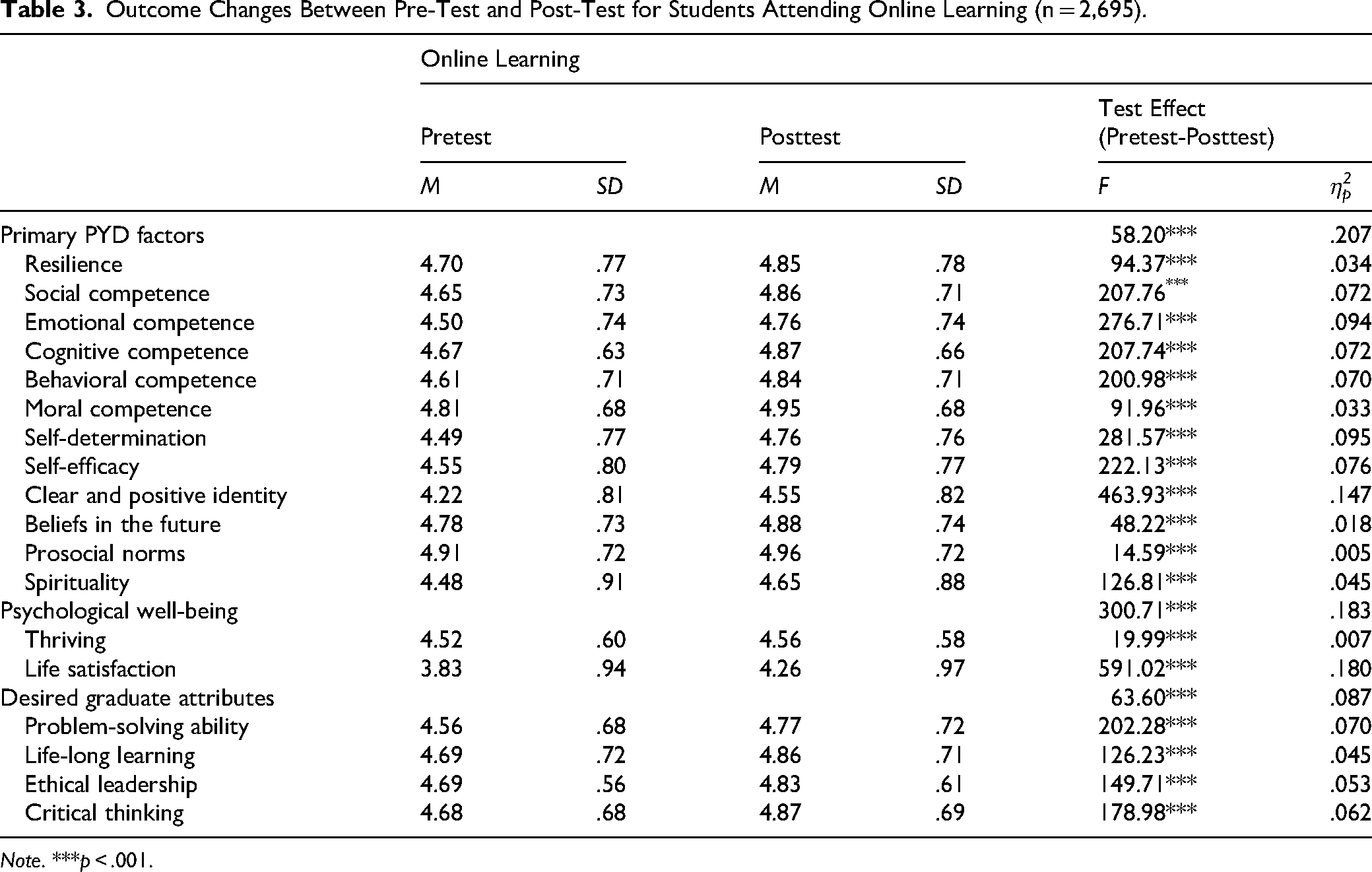
Note. ***p < .001.
Outcome Changes Between Pre-Test and Post-Test for Students Attending Face-to-Face Learning (n = 4,056).
Differences in Student Improvements Across the Two Modes
To test Hypotheses 2a–2c, two-way repeated-measures MANOVAs with test (pretest vs. posttest) and mode (online vs. face-to-face) were conducted. As Table 5 shows, significant test × mode interactions were observed at the multivariate level for primary PYD attributes (F = 3.64, p < .001, ηp2 = .006), psychological well-being (F = 9.77, p < .001, ηp2 = .003), and desired graduate attributes (F = 2.59, p < .05, ηp2 = .002). Univariate follow-up tests (see Table 5 and Figure 1) revealed significant time × mode interaction effects for self-determination (F = 5.82, p < .05, ηp2 = .001), clear and positive identity (F = 19.70, p < .001, ηp2 = .003), life satisfaction (F = 15.41, p < .001, ηp2 = .002), and problem-solving ability (F = 4.73, p < .05, ηp2 = .001). As Figure 1 presents, on these outcomes, students in the face-to-face group showed a larger pre-post increase than students in the online group, although the effect sizes were small. Overall, these findings provide partial support for Hypotheses 2a–2c and suggest that, under the specific pandemic and post-pandemic conditions of this study, face-to-face delivery was associated with greater improvements in certain PYD attributes, life satisfaction, and certain desired graduate attributes.
Outcome Changes Between Pre-Test and Post-Test for All Students in This Study (n = 6,751).
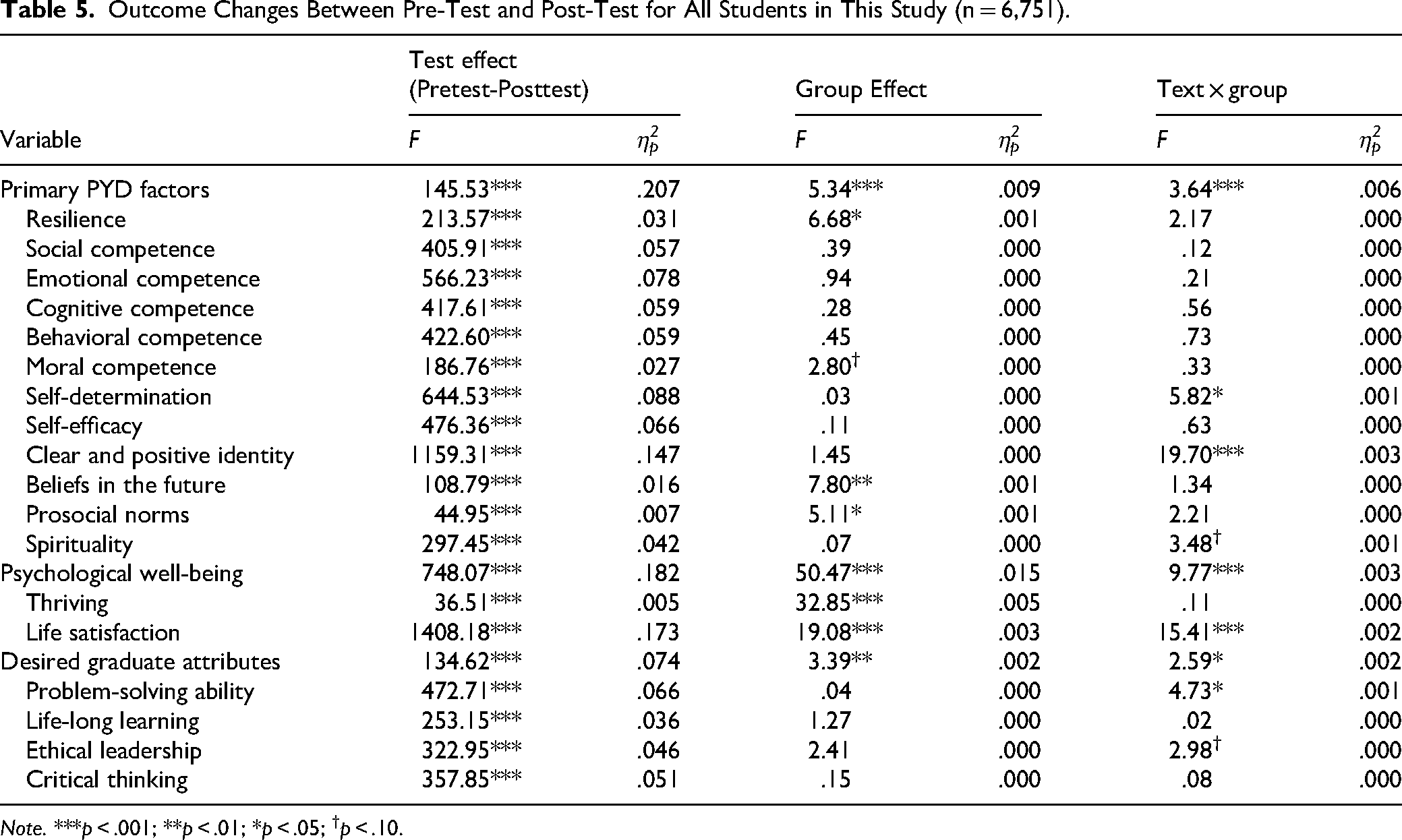
Note. ***p < .001; **p < .01; *p < .05; †p < .10.
Discussion and Applications to Practice
The present study found that university students who completed the PYD-based leadership course showed significant improvements in PYD attributes, psychological well-being, and desired graduate attributes in the online and face-to-face modes. This aligns with the findings of two previous studies that measured the effectiveness of this course (Li & Shek, 2020; Shek & Ma, 2014). At the same time, this study found that students in the face-to-face mode exhibited relatively larger improvements in certain outcomes, including self-determination, clear and positive identity, life satisfaction, and problem-solving ability. These findings extend previous evaluations of “Tomorrow's Leaders” by demonstrating that the course remains effective under different delivery modes and contextual conditions while also revealing modest but consistent advantages associated with face-to-face mode for certain outcomes. These findings are also novel in the social sciences (including social work) and education fields. The use of leadership and well-being promotion programs is important, particularly in the post-pandemic era, for promoting the resilience of students (Paine & Prochnow, 2022; Wang et al., 2025).
From a social work perspective, the findings provide further evidence that a course-based PYD program can function as a developmental and preventive intervention for emerging adults in higher education settings. By systematically targeting intrapersonal and interpersonal competencies, the course appears to enhance students’ psychosocial resources, leadership-related qualities, and graduate attributes that are relevant to their future roles as professionals and citizens. This supports the use of course-based interventions as a complement to traditional personal counseling models in university social work and student support services, allowing preventive services to reach a much larger proportion of students who might otherwise not seek help.
The findings for the online groups suggest that a structured online version of the course can still be associated with meaningful improvements in PYD attributes, psychological well-being, and desired graduate attributes, even under the challenging conditions of the COVID-19 pandemic. Specifically, improvements in self-determination, resilience, self-efficacy, and problem-solving ability are consistent with the notion that online formats may provide opportunities for students to practice self-regulation and autonomous learning. For example, Paechter and Maier (2010) found that college students who sought to gain self-regulation skills favored and benefited from online learning. Barak et al. (2016) found that through online learning, students became more aware of the importance of self-regulatory skills, such as planning and process monitoring. These findings are further supported by Han et al. (2023), who demonstrated that university students with stronger self-efficacy for self-regulation were less prone to procrastination, a factor that predicted their course performance in online learning. Other qualitative studies on how students navigate the online learning environment have triangulated data from different surveys. For example, in a study by Gelles et al. (2020), college students broadly agreed that they would not have developed self-regulatory skills had they not been forced to shift to online learning during the COVID-19 pandemic. However, given that the present study did not directly measure changes in self-regulatory processes, these possible mechanisms should be regarded as tentative and warrant further investigation in future research.
The comparatively larger improvements observed in the face-to-face cohorts in self-determination, clear and positive identity, life satisfaction, and problem-solving ability may reflect the added value of in-person social connection and group-based learning for these domains. This is possibly because students in online groups display lower levels of social presence, social interaction, and satisfaction than students in face-to-face groups (Bali & Liu, 2018). As noted previously, disciplines that call for hands-on demonstrations and mutual communication may be difficult to learn online (Xu & Jaggars, 2014). This challenge was relevant to this leadership course, especially in the context of topics such as interpersonal abilities (e.g., social competence and problem-solving ability). This aligns with findings from Wheeley et al. (2022), whose study on leadership education among university students demonstrated that meaningful face-to-face engagement, particularly through structured small-group discussions and contextual examples from instructors, enhanced students’ critical thinking and leadership competencies. These results suggest that while the internet provides students with a convenient platform to study, its disadvantages cannot be ignored. Overall, face-to-face sessions may enable richer non-verbal communication, spontaneous peer interaction, and a stronger sense of belonging in the classroom, which are important protective factors for student well-being and central mechanisms in group work and developmental social work. At the same time, these differences must be interpreted cautiously because the face-to-face and online groups were exposed to different historical and environmental conditions, with the online group taking the course during the COVID-19 pandemic and the face-to-face group returning to campus in the post-pandemic period.
Previous studies have revealed the difficulties of online courses during the COVID-19 pandemic. For example, Syahputri et al. (2020) found that during the COVID-19 pandemic, university students who attended online courses reported feeling fatigued and experienced physical pain (e.g., headaches), that nearly all the participants (98.6%) managed their time poorly, and that more than half (68.6%) felt isolated from their peers. Ferri et al. (2020) analyzed the challenges of online teaching during pandemic emergency situations through thematic analysis, explaining that technical difficulties, including the lack of an internet connection and/or digital devices, resulted in teachers and learners being unable to access the technology when needed. This suggests that students facing technical challenges and those who are less self-motivated and disciplined may be less suitable for online modes than others (Appana, 2008; Summers et al., 2005). Thus, to conduct online courses or deliver online social worker services, it is necessary to consider individual differences, as well as social-structural issues (e.g., the digital divide). These findings have important implications for online social work services for young people.
After COVID-19, although university students across the world returned to campus and started taking face-to-face courses, recent studies suggest that the long-term consequences of the pandemic on students’ well-being in the post-COVID era remain a concern (Bersia et al., 2024). In light of this, it is likely that returning to traditional classrooms and interacting with teachers and classmates fulfilled students’ need for social connectedness, which was missing during the pandemic. A crucial protective factor for students’ well-being (Avcı, 2023), social connectedness experienced during the face-to-face course possibly increased the effects of the course, including students’ psychological well-being and positive beliefs in themselves and the future. Asadullah (2024) conducted a study on adolescents in the post-COVID period and found that 59% of secondary- and 72% of primary-level students reported being happy about coming back to school, with a significant reduction in education-related worries and indices of negative emotions. University students may have experienced similar emotions, and fewer worries about quarantine or infection spread may have boosted students’ sense of self-determination. In contrast, online students taking the course during the COVID-19 pandemic may have been negatively affected by their limited interpersonal interactions (Cheung, 2021).
The findings yield several implications for social work practitioners and educators involved in designing and delivering PYD and leadership interventions in higher education. This study provides additional evidence of the effectiveness of the course-based PYD program in face-to-face and online formats. This suggests that other prevention and intervention initiatives could also be integrated into courses, thereby extending services to a greater number of students in need. Moreover, we found that while the online format of the program was effective, the traditional face-to-face course may have advantages in terms of improving students’ positive development. This implies that the online mode can be used to deliver social science courses and PYD programs as needed, but the traditional mode should be the first choice. More specifically, when the online mode is required, intentional efforts are critical to enhancing social presence—through regular synchronous sessions with active participation, breakout-room discussions, collaborative online projects, and timely individual feedback. These strategies may help compensate partially for the reduced opportunities for interpersonal interaction. The findings also have implications for social workers who design their programs during crisis periods, such as COVID-19, as well as for those who cannot receive face-to-face service. Social workers and professionals can draw on the above strategies when developing online group interventions, psychoeducational workshops, or credit-bearing subjects aimed at promoting youth development and mental health in university settings.
Despite its contributions, this study has several limitations. First, the quasi-experimental one-group pretest-posttest design limits causal inference and makes it difficult to disentangle the effects of the learning mode from historical and pandemic-related influences. For improved validity, it may be worthwhile to include a control group of students who do not take the leadership course. Second, although our results showed that online learning was effective for university students, these findings may not be applicable to students of other age groups (e.g., primary school students). Whether younger children may face more difficulties and negative effects (e.g., internet addiction and myopia) of online course-based programs remains to be explored. Third, our findings may have also been influenced by the cohort effect because the two groups of students took the course at different time points. The students in the face-to-face group took this course after the COVID-19 pandemic, whereas the students in the online learning group took it during the COVID-19 pandemic. The validity of our findings can be enhanced by comparing the two groups (face-to-face and online) simultaneously. Finally, all outcomes were self-reported, and no qualitative data were collected to illuminate the students’ subjective learning experiences or the processes underlying the change. Future social work research could address these limitations by employing more rigorous designs (e.g., randomized or matched comparison groups; concurrent online and face-to-face groups), incorporating qualitative methods such as interviews or focus groups, and examining specific mechanisms (e.g., changes in social connectedness, self-regulation, and perceived social presence) that may mediate the effects of course-based interventions on PYD and well-being.
Despite these limitations, the present study supports the argument that PYD-based leadership courses can serve as scalable, developmentally focused interventions within university education, offering social workers and higher education practitioners a feasible strategy to promote holistic development, strengthen leadership capacity, and support the well-being of emerging adults in both crisis and non-crisis contexts.
Footnotes
Acknowledgments
We are grateful to all the respondents for their participation in this study. We also thank Mr. Daiyi Chen and Ms. Xintong Zhang for their assistance with literature review and data checking.

Ethical Considerations
The study was approved by the ethics committee of The Hong Kong Polytechnic University (HSEARS20230907002).
Consent to Participate
A consent form was obtained from the participants before the study starts.
Consent for Publication
Informed consent for the publication of participant data was provided by all necessary parties.
Author Contributions
XL: Conceptualization, Data curation, Investigation, Formal analysis, Methodology, Writing – original draft, Writing – review & editing. ES: Formal analysis, Writing – original draft, Writing – review & editing. DS: Conceptualization, Funding acquisition, Supervision, Writing – review & editing. ZYC: Formal analysis, Writing – review & editing.
Funding
The authors disclosed receipt of the following financial support for the research, authorship, and/or publication of this article: This study was financially supported by the Li and Fung Endowed Professorship in Service Leadership Education, The Hong Kong Polytechnic University (ZZUE and W02 W).
Declaration of Conflicting Interests
The authors declared no potential conflicts of interest with respect to the research, authorship, and/or publication of this article.
Data Availability Statement
The datasets and study materials of the current study are available from the corresponding author upon reasonable request.