




Abstract
Keywords
The origins of animal-assisted interventions can be traced back to the USA, where scientific research into the connection between humans and animals and the use of animals in practice began (Turner et al., 2021).
Since then, dog-assisted intervention has experienced a steady increase in importance and recognition in therapeutic and educational practice. We will discuss the factors that make dogs particularly suitable as life partners for people and as support in educational and therapeutic contexts. An initial explanation is based on the assumption that humans and dogs have lived together for 35,000 years and that a form of mutual support and emotional symbiosis has developed as a result of living in a community. This is because dogs are able to understand and categorize the feelings of humans. At the same time, a domestic dog has developed an expressive behavior that enables it to express feelings to humans, which can be recognized, interpreted, and assigned by the interacting humans. Furthermore, a dog is able to establish and maintain relationships with people. In addition, a dog has a remarkable talent for grasping and recalling learning content. The arguments presented justify the use of dogs in animal-assisted intervention and speak in their favor. However, the use of animals is not a miracle cure that can generally bring about or even predict a positive outcome of the interventions carried out. The positive effect of such measures and interventions requires the existence of a constant, intensive partnership and a positive attitude in the relationship between caregiver and animal companion (Wohlfarth & Mutschler, 2021).
No further explanation is needed as to why people who are afraid of or even panic about dogs are not suitable for dog-assisted interventions. The same applies if there is an allergic reaction to dogs. Even then, such an intervention should be avoided. However, provided that the client meets the aforementioned criteria and is open to such forms of intervention, dog-assisted interventions can be carried out. In that case, dog-assisted intervention can be considered as a (complementary) measure in the treatment of various disorders. The spectrum of potential areas and forms of application for animal-assisted interventions with dogs is diverse. The effectiveness of using dogs in the treatment of autism spectrum disorders (ASDs) has been empirically proven. ASD is classified as a developmental disorder of the central nervous system. However, a clear etiology for ASD as a developmental disorder of the central nervous system has not yet been empirically proven. The core symptoms of autism manifest themselves in persistent deficits in social interaction and communication that occur in various contexts. In addition, there are restricted, repetitive behavioral patterns, interests, and activities that significantly impair the daily lives of those affected. The abnormalities persist from early childhood to adulthood and are evident in all life situations. An improvement in symptoms can be achieved through appropriate treatment measures, but complete remission can only be observed in some cases. Therapy for ASD should begin as early and intensively as possible after diagnosis and ideally start at preschool age. The therapy aims to develop appropriate behaviors and reduce inappropriate behavior patterns. Furthermore, key skills of social perception are promoted, as well as motivation, social-cognitive and communicative skills, self-management (self-control, emotional control, identity), and practical life skills (Kamp-Becker & Bölte, 2021).
Dog-assisted interventions target core symptoms of ASD, including deficits in social interaction, impairments in communication and language, and impairments in interpersonal social skills (e.g., nonverbal communication). Trained dogs can perform a variety of tasks for people with autism, depending on the form or area of use. In the context of dog-assisted therapy, targeted, structured, and planned therapeutic measures are carried out under the guidance of the therapist. Supporting and guiding the client with an autism spectrum diagnosis in building and intensifying the relationship with the person providing treatment (e.g., occupational therapist) and promoting the client's emotional bond with the professional is an essential function of trained dogs in therapeutic measures (Wohlfarth & Mutschler, 2021).
As assistance or service dogs, the animals actively perform tasks such as ensuring the safety of the person with an autism spectrum diagnosis and following specific training tailored to the individual needs of a person with a disability. In contrast to therapy dogs, assistance dogs live directly with or alongside the people for whom they have been trained (Wohlfarth & Mutschler, 2021).
The aim of dog-assisted interventions is to improve quality of life and provide support in coping with everyday life. As a complementary measure to conventional forms of therapy and treatment for ASDs, a dog-assisted intervention is experiencing increasing interest and relevance. Once an ASD has been diagnosed, it is essential to start treatment as early as possible. As part of the treatment of autism, especially in childhood and adolescence, special attention should be paid to supporting parent–child interaction and the entire living environment of the person affected. It is essential to focus on dog-assisted interventions in childhood and adolescence (Kamp-Becker & Bölte, 2021).
The investigation into the bond between humans and animals and its influence on human health only began to gain significant interest after 1960 (Turner et al., 2021).
Although their use is still relatively recent, dog-assisted interventions have already been the subject of extensive research activities, as evidenced by the extensive scientific literature on this topic. Nevertheless, further reviews are still needed on this topic. Some of the reviews already published may contain results that no longer reflect the current state of research. This may be due to the fact that animal- or dog-assisted interventions are still relatively new treatment options, and the need for further research still needs to be fully met. Further reviews and studies are needed to complete the research and disseminate the results to professionals and interested parties. In relation to the information presented, a number of questions arise that require further investigation. This literature review, based on the Preferred Reporting Items for Systematic reviews and Meta-Analyses (PRISMA) 2020 declaration and elaboration (Page et al., 2021) guidelines, aims to explore the impact, opportunities, and challenges of using autism assistance dogs and dog-assisted interventions with children and adolescents.
Method
This article is based on a bachelor's thesis. The guidelines of the PRISMA 2020 declaration and elaboration (Page et al., 2021) were used as a guide in the preparation of the bachelor thesis. The author has endeavored to follow these guidelines as far as possible. However, due to the framework conditions of a bachelor thesis, not all points of the PRISMA 2020 guidelines could be taken into account.
Eligibility Criteria
All publications reported on dog-assisted interventions for children and adolescents on the autism spectrum. This systematic literature search included publications that met the following criteria: (1) English-language articles and contributions (book contributions) that were accessible to the authors (i.e., those with open access, i.e., free access, or those accessible via the university library). (2) Original empirical research of relevance using quantitative and/or qualitative research methods. (3) Participants were children and adolescents (age >18 years) or, if applicable, parents/guardians/caregivers of children or adolescents (age >18 years) diagnosed with an ASD. (4) The publication had to include information on which recognized instruments were used to establish or verify the diagnosis of ASD (recognized instruments or testers: Diagnostic and Statistical Manual of Mental Disorders [DSM, DSM-IV, DSM-V], standard instruments such as the Autism Diagnostic Observation Schedule, the Autism Diagnostic Interview [ADI-R], and the Diagnostic Interview for Social Communication, clinicians, independently tested before the start of the study). (5) The intervention is an animal-assisted intervention with a dog or the use of an assistance dog.
Information Sources and Search Terms
The literature review was conducted using the search terms (autism spectrum disorder OR autism OR autistic disorder OR autistic spectrum disorder OR aspergers syndrome OR aspergers disorder OR developmental disorder OR developmental disabilities) AND (dog-assisted intervention* OR dog-assisted therap* OR canine-assisted intervention* OR canine-assisted therap* OR dog-assisted activit* OR dog therap* OR dog OR dogs) AND (child* OR adolescent*) on PsycINFO, PubMed, and ERIC.
The literature search was conducted from March 20, 2024 to May 4, 2024. Three databases (APA PsycINFO via Ovid, ERIC via ProQuest, and PubMed) were searched for English-language articles and contributions that met the previously defined inclusion and exclusion criteria. In addition, the references in the reviewed studies were searched for potentially relevant papers.
Filter options were used in the APA PsycINFO and PubMed databases to limit the number of possible hits at the same time. The results of the APA PsycINFO database were limited to freely accessible full texts by means of the filter entry (Nordhausen & Hirt, 2018). In the PubMed database, a full-text-only search was carried out. Since the ERIC database does not offer a filter option for a full-text search or a search for open-access publications, no filter entries were used. Further options for limiting the results were implemented in accordance with the inclusion and exclusion criteria. This includes limiting the search strategy to purely English-language search components and terms, as well as filtering for (freely accessible) full texts.
Selection Procedure
The author, as the sole expert, examined, evaluated, and selected the found literature regarding its suitability for the objective. The found, eligible publications were first identified by screening the abstracts and keywords. Articles and contributions whose abstracts and keywords met the inclusion criteria were then subjected to a full-text assessment and evaluation after the previous screening.
Screening and Assessment
The database search yielded 311 potential hits. After sorting out 23 duplicates and one non-English-language publication, 277 hits remained for further screening. A further 228 publications were excluded during the screening process, i.e., the review of title, abstract, and keywords. The identified database entries were excluded on the basis of various criteria: 138 publications were classified as not relevant to the topic and excluded. Articles that did not contain interventions that were supported by the use of dogs or that did not refer to the clientele of children and/or adolescents with an ASD were classified as not relevant to the topic and counted among the 138 excluded publications. A further 39 publications were excluded because they did not involve a dog-assisted intervention. This category included research that exclusively or also used other animal species, such as cats, or examined the effects, possibilities, challenges, and so on, of these other (nondog) or mixed (e.g., dogs and cats) animal groups. Another 27 articles focused on children and adolescents with ASDs, people with disabilities (e.g., Down syndrome), or other disorders (e.g., attention-deficit disorder). In six other publications, adults with ASDs were included in the study. In these cases, all participants who were 18 years old at the time of the study and thus of legal age were classified as adults by the author. If studies included both people under the age of 18 and people over the age of 18, these studies were also assigned to this category and excluded from the review. Fourteen of the surveys analyzed were studies aimed at a different target group.
The study population was categorized as deviant if it did not refer to individuals on the autism spectrum. Consequently, these studies were also classified as not relevant to the present study. Finally, four further articles were excluded because they were reviews. The exclusion of literature reviews in the present review is based on the premise that the results of the previously published reviews will be discussed, compared, and reviewed with the results of the present review in the discussion section of this paper.
The full-text analysis carried out resulted in a total of 49 articles. Of the 49 full texts analyzed, 11 met the defined inclusion and exclusion criteria. During the subsequent literature search of these eleven full texts as part of the open access search, two further publications were identified that met the criteria of this review, increasing the number of relevant publications to 13. In the course of analyzing the full texts found or searched, 38 articles and contributions were excluded because they did not meet the defined search criteria. Nine of the excluded publications had the potential to fulfill the inclusion criteria. However, as they were not accessible to the author, they could not be included in this review.
Figure 1 illustrates the process of obtaining the studies included in this review, which is roughly based on the PRISMA flowchart.
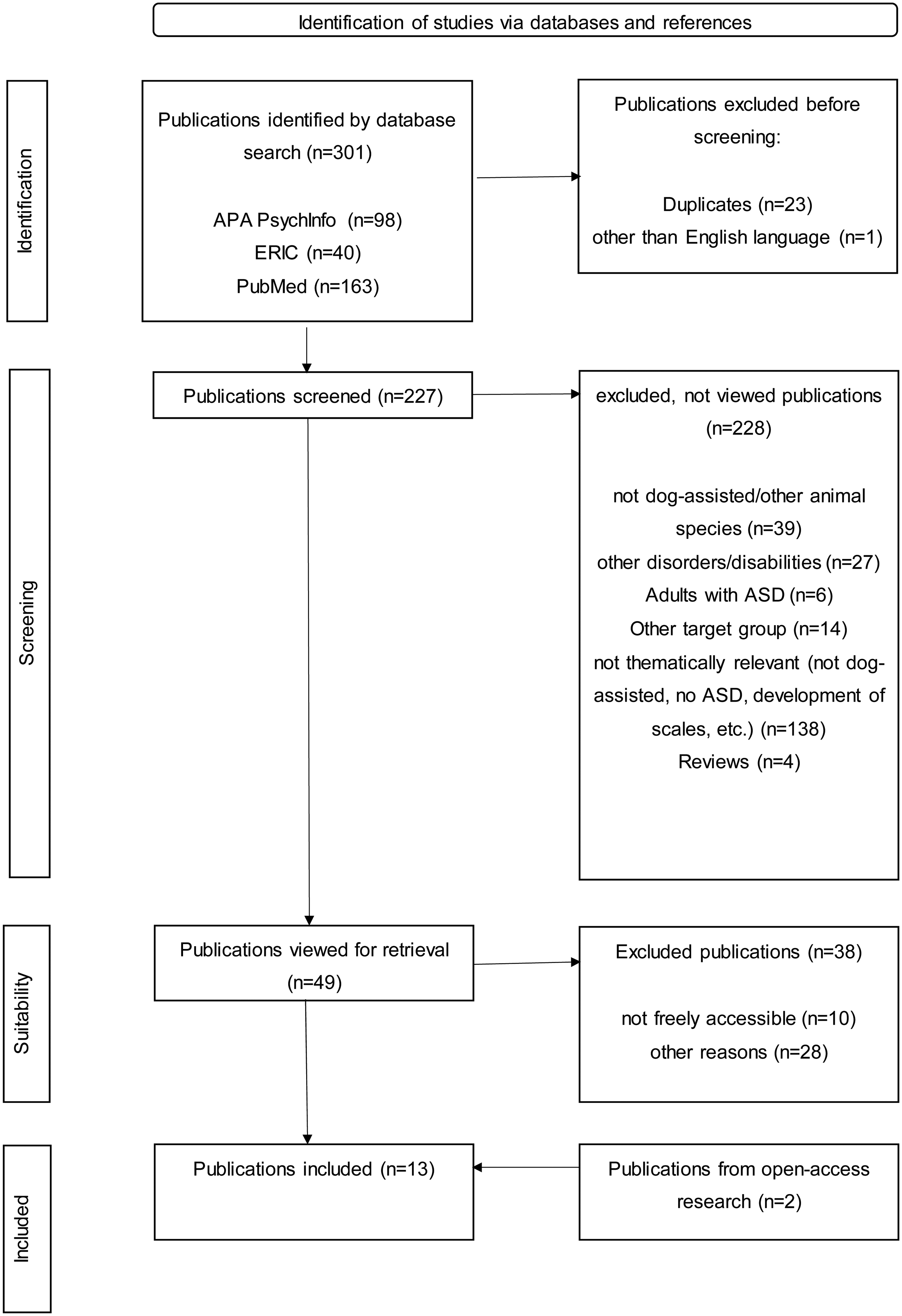
Preferred Reporting Items for Systematic reviews and Meta-Analyses (PRISMA) flow diagram.
Results
The systematic review identified 13 studies. These studies were analyzed based on various characteristics: the country in which the study was conducted, the study design and research method, the control group, if any, the sample size and characteristics of the participants, the dog breeds, and finally, the type of intervention, the objectives set, and the results obtained. Tables 1 and 2 list the study characteristics.
Characteristics of the Studies Included in This Systematic Literature Search: Country, Study Design Control Group, and Participants.
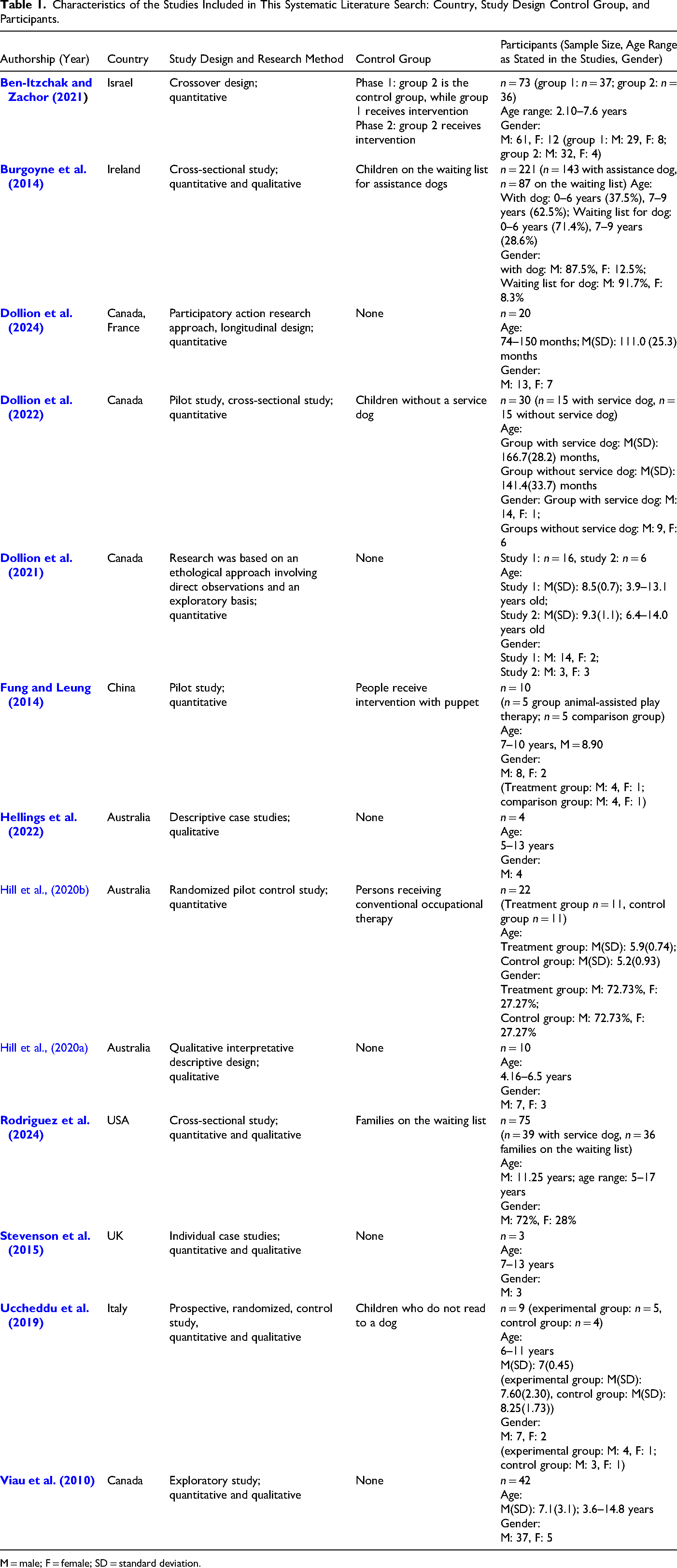
M = male; F = female; SD = standard deviation.
Characteristics of the Studies Included in This Systematic Literature Search: Dog Breed, Terminologies and Dog Training, Handlers, Intervention, Objectives, and Outcomes.
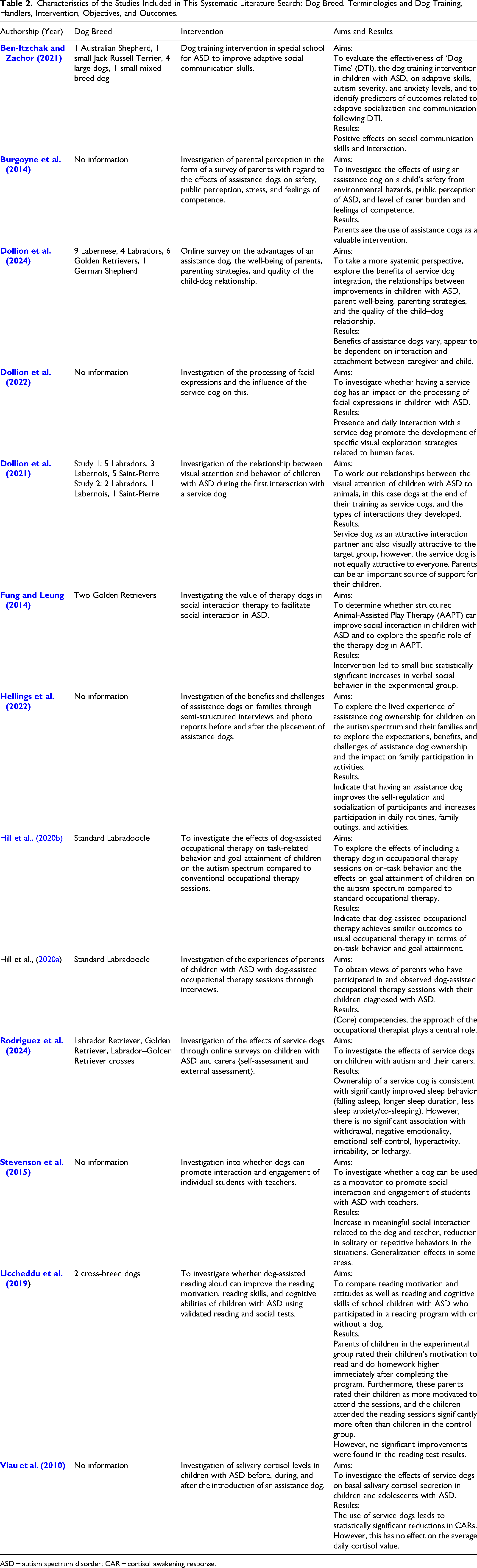
ASD = autism spectrum disorder; CAR = cortisol awakening response.
Countries
The published studies included in this review were conducted in a large number of countries. A large proportion of the studies were conducted either in Australia (Hellings et al., 2022; Hill et al., 2020a, 2020b) or in Canada (Dollion et al., 2021, 2022; Viau et al., 2010). One study included participants from both Canada and France (Dollion et al., 2024). The remaining six studies were conducted in China (Fung & Leung, 2014), Ireland (Burgoyne et al., 2014), Israel (Ben-Itzchak & Zachor, 2021), Italy (Uccheddu et al., 2019), the USA (Rodriguez et al., 2024), or the UK (Stevenson et al., 2015).
Study Design and Research Method
In terms of study design and research methods, the studies included in this review are heterogeneously structured. In the different studies, a variety of designs were chosen to investigate and explore the respective objectives: a crossover design (Ben-Itzchak & Zachor, 2021), two cross-sectional studies (Burgoyne et al., 2014; Rodriguez et al., 2024), two case studies, one of which is descriptive (Hellings et al., 2022) and the other observing three individual cases (Stevenson et al., 2015), two randomized control trials (Hill et al., 2020b; Uccheddu et al., 2019), one of which is a prospective randomized control trial (Uccheddu et al., 2019), one pilot study (Fung & Leung, 2014), one exploratory study (Viau et al., 2010), a study that combines a longitudinal design with a participatory action research approach (Dollion et al., 2024), a study that combines both a pilot and a cross-sectional study design (Dollion et al., 2022), a study based on an ethological approach that uses direct observations and includes an exploratory basis (Dollion et al., 2021), and finally a study that uses a qualitative interpretative, descriptive design (Hill, 2020a).
The research methods of the publications included in the review are divided into quantitative, qualitative, and those that combine both research methods in the study. Quantitative research methods can be found in the studies by Ben-Itzchak and Zachor (2021), Dollion et al. (2021, 2022, 2024), Fung & Leung (2014), and Hill et al. (2020). Qualitative research methods were used in the studies by Hellings et al. (2022) and Hill (2020a), Rodriguez et al. (2024), Uccheddu et al. (2019), Stevenson et al. (2015), Burgoyne et al. (2014), and Viau et al. (2010) used both quantitative and qualitative research methods in their studies.
Control Group
Including a control group in a study is an essential factor in increasing the validity of the results. This makes it possible to determine whether the treatment measures examined actually achieve the intended effect in the experimental group. The inclusion of a control group is a crucial criterion for the validity of research results since otherwise, it cannot be ruled out that the observed effects are due to other causes (Salomão, 2023).
As the studies included in this review investigate, among other things, the extent to which dog-assisted interventions and the use of service dogs affect different groups of people and contexts, an analysis of the studies with regard to the use of control and experimental groups is essential. Seven of the included studies work with control groups (Ben-Itzchak & Zachor, 2021; Burgoyne et al., 2014; Dollion et al., 2022; Fung & Leung, 2014; Hill et al., 2020b; Rodriguez et al., 2024; Uccheddu et al., 2019).
Three studies (Burgoyne et al., 2014; Hill et al., 2020b; Rodriguez et al., 2024) or the control groups of these three studies involved individuals or families who were on the waiting list of an organization that provides assistance or service dogs. In one study (Dollion et al., 2022), the control group was made up of people who did not have an assistance dog. In another study (Ben-Itzchak & Zachor, 2021), the participants in the intervention and control groups were exchanged during the course of the study. This implies that while group 1 receives the intervention in phase 1, the second group serves as a control group. In the second phase of the study, the control and intervention groups are exchanged so that the control group participates in the dog-assisted intervention.
In another study, a comparison group was formed in which the intervention was carried out with a doll instead of a dog (Fung & Leung, 2014). Another publication reports that the control group received occupational therapy sessions that were not accompanied by a therapy dog (Hill et al., 2020b). In addition, in another study, the control group was not provided with a dog when reading aloud (Uccheddu et al., 2019).
Participants
In this subsection, an analysis of the sample sizes of the respective studies is provided, along with an examination of further characteristics of the study participants. The characteristics examined include age and gender. More than half of the included studies have a remarkably small sample size, ranging from three to 42 participants (Dollion et al., 2021; 2022, 2024; Fung & Leung, 2014; Hellings et al., 2022; Hill et al., 2020a, 2020b; Stevenson et al., 2015; Uccheddu et al., 2019; Viau et al., 2010). Only three publications included a sample size of at least 73 participants (maximum 221) (Ben-Itzchak & Zachor, 2021; Burgoyne et al., 2014; Rodriguez et al., 2024). With regard to the indication of the gender of the participating children and adolescents, it can be seen that the majority of the participants were male. In the study by Dollion et al. (2021), the proportion of male participants is the lowest at 50%. Consequently, half of the studies included in this overview had no female participants at all. In contrast, the studies with the most male participants had a proportion of 100% (Hellings et al., 2022; Stevenson et al., 2015). There appears to be a significant underrepresentation of girls. However, it should be noted that more recent studies show a gender distribution of 3:1 to 2:1, although the respective sources should be considered. It is assumed that symptoms manifest differently in girls, are less noticeable and therefore recognized later or not at all (especially in mild variants), or are associated with less suffering and therefore do not require medical advice (Fischer, 2024). The stated rationale thus explains the low number of female participants mentioned in the studies.
The youngest participant was reported as being 0 years old (Burgoyne et al., 2014), and the oldest as being 17 years old (Rodriguez et al., 2024). Consequently, the age range of all studies included in this review extends from 0 to 17 years.
Dog Breed
Depending on the breed, different character traits are attributed to the animals. The targeted training of certain dog breeds with specific characteristics, such as therapy or assistance dogs, therefore seems a logical consequence. In this context, it seems of interest to mention the dog breeds examined in the respective studies. However, not all of the publications included in the analysis disclosed the breed of the dogs that supported the intervention. Nevertheless, different dog breeds were used in different studies. In five studies (Burgoyne et al., 2014; Dollion et al., 2022; Hellings et al., 2022; Stevenson et al., 2015; Viau et al., 2010), no information was provided about the breed of the dogs used in the intervention. The remaining eight publications (Ben-Itzchak & Zachor, 2021; Dollion et al., 2021, 2024; Fung & Leung, 2014; Hill et al., 2020a, 2020b; Rodriguez et al., 2024; Uccheddu et al., 2019) include information on the breeds of dogs used. In most cases, more than one dog breed and two or more dogs were included in the interventions (Ben-Itzchak & Zachor, 2021; Dollion et al., 2021, 2024; Rodriguez et al., 2024). In one study, two Golden Retrievers were used (Fung & Leung, 2014). In two other studies, a standard Labradoodle was used in each case (Hill et al., 2020a, 2020b). Furthermore, one publication (Uccheddu et al., 2019) stated that two mixed-breed dogs were used alternately during the dog-assisted intervention in the experimental group. In the overall view of the studies included in this review, either one or more dogs of one of the following dog breeds were used: Australian Shepherd, Jack Russell Terrier, large dogs (breed unspecified), mixed-breed dogs, small mixed-breed dogs, Labernese, Labrador Retriever, Golden Retriever, German Shepherd, Labernois, Saint-Pierre, Standard Labradoodle, and Labrador–Golden Retriever cross.
Intervention
The consideration of a large number of different publications allows a detailed analysis of various approaches in which the use of dogs plays a role. Some of the interventions analyzed included direct contact between the children and adolescents and the dogs. However, in most cases where a control group was included, there was only contact between the experimental groups and the dogs used (Ben-Itzchak & Zachor, 2021; Dollion et al., 2021; Fung & Leung, 2014; Hill et al., 2020a, 2020b; Stevenson et al., 2015; Uccheddu et al., 2019). The interventions analyzed included a dog training intervention in a school specializing in ASDs (Ben-Itzchak & Zachor, 2021), a study that examined the relationships between the visual attention of children diagnosed with ASD and their behavior during their first interaction with an assistance dog (Dollion et al., 2021), single sessions of social interaction therapy (Fung & Leung, 2014), dog-assisted occupational therapy sessions (Hill et al., 2020a, 2020b), dog-assisted sessions conducted in a special education school (Stevenson et al., 2015), or a reading program in which the experimental group read to a dog (Uccheddu et al., 2019). The remaining publications (Burgoyne et al., 2014; Dollion et al., 2022, 2024; Hellings et al., 2022; Rodriguez et al., 2024; Viau et al., 2010) did not include any studies in which children and adolescents had direct contact with dogs during the study. These studies primarily included surveys of parents (Burgoyne et al., 2014; Dollion et al., 2024; Hellings et al., 2022; Rodriguez et al., 2024) on the effects (Dollion et al., 2024; Rodriguez et al., 2024), benefits and challenges (Hellings et al., 2022) of having such a specially trained dog, or the value (Burgoyne et al., 2014) that assistance dogs can have for the family or their children on the autism spectrum. In another study (Viau et al., 2010), in addition to questionnaires, instruments were used by caregivers to collect saliva samples from children with ASDs. In this way, the effect of assistance dogs on cortisol secretion in the saliva of participating children and adolescents was examined (Viau et al., 2010). A final study examined the influence of a service dog living in the family on the processing or recognition of human emotions by children with ASD living in the family (Dollion et al., 2022). This study was conducted externally, without the help of the family's service dog.
Aims and Results
These studies were all devoted to the investigation of interventions with dogs and the use of assistance dogs. The target group of the studies consisted of children and/or adolescents diagnosed with ASD. Nevertheless, the objectives of each study varied considerably. The interventions were effective in terms of adaptive skills (Ben-Itzchak & Zachor, 2021), social interaction and engagement (Fung & Leung, 2014; Stevenson et al., 2015), increasing motivation (Uccheddu et al., 2019), effects on safety from environmental hazards, public perceptions regarding children with ASD, levels of stress, and caregivers’ sense of competence (Burgoyne et al., 2014). In addition, the benefits of service dog integration in improving ASD symptoms and the effects on caregivers and children on the autism spectrum were examined (Dollion et al., 2024; Rodriguez et al., 2024). In addition, the relationships between the behavior of assistance dogs and visual perception were examined (Dollion et al., 2021, 2022), as well as the general benefits and challenges (Hellings et al., 2022) and the impact of parents’ perception of occupational therapy sessions (Hill et al., 2020a, 2020b) and finally the impact on salivary cortisol levels (Viau et al., 2010). There is evidence in the scientific literature that the integration of an assistance dog is associated with various benefits for children and adolescents with ASD. The benefits of introducing a dog are related to the quality of the bond between the child and their caregiver. It also depends on the quality of the relationship or bond between the dog and the child. The use of dogs in the home of children with ASD can also lead to a significant improvement in parental well-being, depending on existing bonds and relationships. In particular, a reduction in parental stress and a decrease in parental anxiety can be observed as positive effects. In turn, parental well-being can influence the child's development on the autism spectrum, as changes in the quality of life of the parents can lead to an adjustment in their parenting style. However, the extent of this change in relation to parental well-being depends on the severity of the child's autism symptoms (Dollion et al., 2024).
One study examined the experiences of families that had adopted an autism service dog into their home and the expectations they had of this specially trained dog. It also reported on the benefits perceived by parents. Again, the researchers found that assistance dogs can lead to a reduction in the perceived stress of parents. Other findings in this publication suggest that in addition to possible psychological benefits such as improved self-regulation in children with ASD, the use of an assistance dog can also promote increased participation of the child in everyday activities and family outings. Assistance dogs can also contribute to improved social participation, socialization, and integration. They also support children in accessing the community and promote their communication skills. In addition to the highlighted benefits, this study also identified potential challenges for families. The integration of the assistance dog initially posed a challenge, as both the children and adolescents and the families generally needed time to get used to the dog. The initial training was not a one-time event for the families but required ongoing training sessions with the dog. Finally, the lack of public awareness and knowledge about service dogs for autism was seen as a challenge by the families interviewed (Hellings et al., 2022).
Another study, which also examined the use of assistance dogs in the households of families with children with ASD, presents results on the effects of such dogs on environmental hazards, such as road traffic hazards when children are no longer within reach of their caregivers. The authors also found effects on public awareness, perceived abilities, and caregiver strain. The results suggest that the parents surveyed considered the use of an assistance dog to be of great value to their family. The parents surveyed felt that their child was significantly better protected from environmental hazards when an assistance dog lived in the household. They also perceived the public's interactions with children and adolescents on the autism spectrum as more respectful and valuable. Compared to parents on a waiting list for an assistance dog assignment, parents whose children had already been assigned an assistance dog felt more competent about their child and their child's disorder. In this study, caregivers perceived the amount of care required by the dog, the devotion, and the obligations associated with owning such an animal as a burden (Burgoyne et al., 2014).
The study by Rodriguez et al. (2024) found no significant correlation between the presence of a dog in the care of children and adolescents on the autism spectrum and the overall stress level of the caregiver. However, a significant effect was found in relation to the presence of an assistance dog and the sleep behavior and habits of the participating children and adolescents. The results suggest an improvement in sleep quality, with significant effects observed in terms of earlier sleep onset, sleep duration, and sleep anxiety or sleep sharing. Significant effects on nighttime awakenings or daytime alertness were not observed. In a further analysis, no significant correlations were found between having an assistance dog and hyperactivity, irritability, lethargy, emotional self-control, withdrawal, negative emotions, or children and adolescents’ relationships with their peers (Rodriguez et al., 2024).
Another publication released results on the reduction of the cortisol awakening response (CAR) associated with the introduction of an assistance dog in children and adolescents with ASD. The results of the study suggest that the introduction of an assistance dog for children and adolescents with an autism spectrum diagnosis had a significant effect on CAR levels. A reduction in levels was observed during the deployment of the dogs. However, no effect was observed on cortisol levels during the day. In contrast to the study by Rodriguez et al. (2024), parents reported a decrease in problematic behavioral patterns in their children after the introduction of an assistance dog into the family. The effect of reduced problem behavior persisted even after the assistance dog left the family. No correlation was found between the decrease in problem behavior and CAR values or average cortisol levels (Viau et al., 2010). Another study showed that in addition to an improvement in adaptive social and communicative skills achieved through the dog training intervention, the children were able to maintain these improved skills in the second phase of the study. The results presented in this publication support the thesis that dog-assisted interventions can be considered an effective measure for teaching social communication skills (Ben-Itzchak & Zachor, 2021).
Other studies also show that dog-assisted interventions have a positive effect on communication skills. In their publication, Dollion et al. (2021) report that an assistance dog can be both visually attractive and an attractive interaction partner for children and adolescents with ASD. However, this finding cannot be generalized because the children showed different levels of interest in the service dogs and also differed in their interaction behavior and their behavior toward the dogs. According to this study, parents can be identified as the primary source of support and guidance during interactions. The findings obtained using eye tracking suggest that the visual attention of children on the autism spectrum is directly related to their interaction behavior (Dollion et al., 2021).
The results of another study included in the review suggest that the presence of the dog can lead to an increase in interaction, visual interest, meaningful expressions, and weighty social behavior in students with ASD. After the sessions, the students showed increased concentration and more meaningful engagement. According to the results of the study, there was also less individual play during the sessions. This study suggests that the integration of dogs as an aid in a school context can help to promote social motivation, interaction, and communication. This can have an impact on both school activities and social relationships within the school. The use of dogs as an aid has further positive influences. These are expressed, for example, in the fact that children are less socially withdrawn and interact more. They also show less repetitive behavior. In this study, the dog is seen as a “social lubricant” that can strengthen the working relationship. However, the results varied quite a bit in terms of individual students and their responses (Stevenson et al., 2015).
The research by Fung and Leung (2014) also shows a small but statistically significant increase in verbal interactions in the animal-assisted play therapy group. No such improvement was observed in the comparison group that received an identical intervention, with the only difference being that a doll was used instead of a dog in the therapy session. This indicates a potentially positive influence of the use of therapy dogs on the language skills of children and adolescents on the autism spectrum (Fung & Leung, 2014).
In comparison to other studies included in this systematic review (Hill et al., 2020b; Stevenson et al., 2015), this study distances itself from the description of the dog as a “social lubricant” and believes that this description is not entirely accurate. Instead, the critical role of the therapy dog as a “voice trigger” is described (Fung & Leung, 2014).
The results presented by suggest that the therapist's skills and the targeted use of the relationship between the participating adolescents and the therapy dog, which the therapist can use in difficult situations, serve to promote the children's engagement in therapy. The authors describe this aspect as a “social lubricant.” In their research results, the researchers suggest that the animal in the dog-assisted intervention can provide the participants with emotional security and a sense of connection, which forms a basis for a relationship between occupational therapists and children with ASD. However, it is postulated that the occupational therapist plays an essential role. The core competencies of the occupational therapist are emphasized in this study (2020a).
Another study that uses dog-assisted occupational therapy as an intervention for children on the autism spectrum concludes that there is a positive trend in the treatment group's work behavior. This means that there is an increase in verbal and nonverbal behavior that is used to accomplish a task and achieve the goal of that task. However, no significant increase in task-related behavior could be demonstrated in the comparison between the test and control groups. The results regarding task-related behavior and goal achievement suggest that goal-oriented occupational therapy can achieve positive results for children with ASD, both with and without the dog-assisted component. Both interventions show comparable results (Hill et al., 2020b).
In another dog-assisted study, researchers examined reading motivation and attitudes toward reading, as well as reading and cognitive abilities in children on the autism spectrum. The study found no significant differences, either in reading test scores or in cognitive ability. This applies to the individual groups, that is, between the individual children in the experimental and control groups, as well as to the groups themselves. However, a significant difference was found between the experimental and control groups in terms of the frequency of attendance at reading program sessions. In contrast to the children in the control group, the children in the experimental group attended 100% of the reading sessions. According to the parents, their children were significantly more motivated to do their homework and read after completing the program. Guiding children to a dog seems to have positive effects on the children themselves (Uccheddu et al., 2019). The results of the study, which have not yet been presented, relate to research into the facial processing of children diagnosed with ASD. The researchers found that there are differences in how children with ASD explore faces with and without an assistance dog. The researchers were able to demonstrate that children on the autism spectrum who have an assistance dog can recognize different facial expressions more efficiently and quickly. Furthermore, the attention they pay to individual facial features and the strategy for scanning faces varies depending on the facial expression shown. However, no significant differences in accuracy and reaction time could be detected. The results of this study suggest that the presence of an assistance dog in everyday life can be beneficial for families with children diagnosed with ASD. Daily interaction with the dog can promote specific visual exploration strategies related to the processing of human faces (Dollion et al., 2022).
Outcomes
The effects, possibilities, and challenges of interventions with dogs and the use of assistance dogs for autistic people must be considered in a differentiated way, depending on whether the dog is an assistance dog or a therapy dog. Therefore, the following section first considers the effects, possibilities, and challenges associated with the use of assistance dogs for autistic people, and then it relates to therapy dogs.
The acquisition of an assistance dog can relieve and support the respective environment. The assistance dog is an attractive interaction partner for children and adolescents with ASD (Dollion et al. 2021). The bond that can develop between a trained service dog for autism and children or adolescents with an ASD has been shown to have positive effects for both the person with ASD and those around them. It can be assumed that the quality of the relationship between the child and the service dog has a decisive influence on the parenting strategies of the parents. Various studies have provided significant evidence that, in addition to influencing parenting strategies that impact both parents and their children, the use of a trained dog can have a significant impact on children and adolescents on the autism spectrum. Researchers have demonstrated improvements in social communication skills, visual perception and processing of facial expressions, sleep behavior, and reduction of CARs, as well as an increase in motivation (Burgoyne et al., 2014; Dollion et al., 2022; Rodriguez et al., 2024; Viau et al., 2010). It was also found that parents can be an important source of support and guidance for children on the autism spectrum interacting with an animal and can also benefit from the use of assistance dogs themselves (Dollion et al., 2021).
Nevertheless, qualitative data suggest that assistance dogs can have a stress-reducing function for caregivers. In addition to reducing parental stress, they can also increase parents’ well-being and reduce anxiety about their children (Dollion et al., 2024).
This is by no means an exhaustive list of the effects that assistance dogs can have on autistic people. These are merely examples that summarize the most important effects. However, when considering using a trained dog, some factors should always be considered: the age of children and adolescents with ASD generally appears to be of non-negligible importance for treatment, which should be taken into account (Dollion et al., 2021). Despite the fact that interventions and measures with assistance dogs can have positive effects in a wide range of areas, it is essential to note that not all children and adolescents show the same level of interest in assistance dogs (Dollion et al., 2021). This means that the effects that assistance dogs can have on children and adolescents cannot be generalized to every person diagnosed with an ASD between the ages of 0 and 17 years.
The bond of the assistance dog is not limited to the child on the autism spectrum but can also extend to all other family members (Hellings et al., 2022). Not surprisingly, assistance dogs can also be beneficial for parents. Although quantitative research does not show any positive effects of assistance dog use on sleep or overall stress levels of caregivers, qualitative research supports that assistance dog use can lead to improved quality of life and reduced stress levels for caregivers. Several qualitative studies have confirmed this, in the opinion of caregivers (Rodriguez et al., 2024). Further relief for caregivers can be provided by publicly recognizing that they are dealing with children or adolescents with disabilities. This recognition that the dog is an assistance dog accompanying a child or adolescent with a disability is achieved, for example, by a label on the dog's harness. According to educators, this information leads to children with ASD being treated more respectfully and responsibly by the public (Burgoyne et al., 2014). However, the extent to which individuals (children and adolescents with ASD, parents, the environment, etc.) benefit from an assistance dog depends on the individual and the person (Burgoyne et al., 2014; Hellings et al., 2022; Rodriguez et al., 2024; Stevenson et al., 2015; Uccheddu et al., 2019; Viau et al., 2010).
In addition to the positive effects and opportunities that the use of assistance dogs can have for autistic people, keeping a dog can also be associated with challenges. In particular, the family system of children and adolescents on the autism spectrum can face challenges when an assistance dog is introduced into the family. After the introduction of an assistance dog for autistic people, a certain amount of adjustment to everyday life must be made. However, there is no guarantee that a trained dog will meet expectations and requirements. In addition, participation in public life is sometimes made more difficult by insufficient information about the privileges granted to an assistance dog (e.g., that it is allowed to attend events) (Hellings et al., 2022; Rodriguez et al., 2024).
The use of therapy dogs can have different effects on children and adolescents with ASD depending on the type of therapy or how the dog is used. The authors of the study by Fung and Leung (2014) praised the effect of the therapy dog on the speech abilities of the children in the experimental group as particularly promising. In the context of this study, the therapy dog proved to be a crucial factor, acting as a speech trigger through its presence during therapy sessions (Fung & Leung, 2014). In addition to the effects on verbal abilities, researchers have also identified positive influences on education, in particular, an increase in motivation, social behavior, skills, and cognitive abilities through the use of trained dogs (Ben-Itzchak & Zachor, 2021; Stevenson et al., 2015; Uccheddu et al., 2019). Only the study by Hill et al., (2020b) showed similar success in terms of task-related behavior and goal achievement in both conventional occupational therapy without dogs and dog-assisted occupational therapy. In this study, no significant differences were found between targeted occupational therapy with or without dogs (Hill et al., 2020b). Despite the fact that no significant differences were found in targeted occupational therapy, the use of dogs in occupational therapy and in a school context (secondary schools) can offer various opportunities for children on the autism spectrum.
The results suggest that dog-assisted occupational therapy can promote various aspects, such as children's motivation or self-regulation strategies. In addition to parents, teachers at special needs schools also spoke positively about the effect of the dog intervention on the participating students. However, the educators interviewed emphasized the importance of the core competencies of the therapeutic staff, including the ability to instill a sense of control, security, and self-confidence in the children. Regardless of whether or not the therapist worked with a therapy dog, the relationship between the parties involved was considered essential (2020a; Stevenson et al., 2015). Nevertheless, dogs can serve as a source of motivation and can also enable generalization effects of desired or newly learned behaviors (Stevenson et al., 2015).
Despite these consistently positive effects and possibilities, teachers at special schools also reported increased passivity and stereotypical behavior in individual children during the intervention with the dog (Stevenson et al., 2015).
Discussion
A systematic literature search was conducted and supplemented by an open literature search to examine the effects, opportunities, and challenges of dog-assisted interventions and the use of assistance dogs in children and adolescents with ASD. A total of 13 studies were identified and included in the literature search. The target group consisted of children and adolescents diagnosed with some form of ASD using standardized instruments or by professionals. The intervention had to include a dog-assisted component. This could be an intervention supported by one or more dogs during implementation or a study that examined the use of assistance dogs in the target group. The results of the included literature suggest that dog-assisted interventions are an effective intervention or complementary treatment option for children and adolescents with ASD. However, the limitations of the available studies must also be taken into account. From the results presented in this review, it is clear that children and adolescents diagnosed with ASD can benefit in many ways, from introducing an autism service dog into their home or participating in dog-assisted therapy. This finding is supported by the literature of Burgoyne et al. (2014), Rodriguez et al. (2024), Viau et al. (2010), Ben-Itzchak & Zachor (2021), Fung & Leung (2014), Hellings et al. (2022), Uccheddu et al. (2019), Stevenson et al. (2015), and Dollion et al. (2021, 2022, 2024). However, the benefits that adolescents can derive from such measures depend on various factors. In their research findings, Dollion et al. (2021) point out that the age of children and adolescents on the autism spectrum plays a significant role. It is also essential to know that not all children and adolescents show the same level of interest in assistance dogs (Dollion et al., 2021). Furthermore, it is essential to recognize that people can have different needs. The form of therapy or treatment must, therefore, be tailored to the individual needs and abilities of the child or adolescent in question. As service or companion dogs for individuals on the autism spectrum, dogs have been trained to meet the individual needs of people on the autism spectrum, and therapeutic interventions with dogs can also be adapted to the needs of the person in question (Wohlfarth & Mutschler, 2021). Compared to off-site therapeutic interventions, where the dogs are typically deployed outside the home, service dogs living in the family home present a different set of challenges and opportunities. Balancing the benefits, impacts, and opportunities of service dogs in the private domain against the challenges of integrating dogs for caregivers can create a field of tension. It is essential to educate parents and caregivers about the potential challenges and opportunities that using an assistance dog may present for the family, children, and others involved. Some studies (Hellings et al., 2022; Rodriguez et al., 2024) also address the challenges that may arise from participating in public life with a trained assistance dog. Here, too, there is a need for educational work.
The results of this review are compared below with the results of other reviews that address similar research questions. Although this systematic literature review includes only a limited selection of studies and therefore caution is advised when interpreting the available research results, this review seems to be broadly consistent with the results of other published systematic reviews with similar topics (Berry et al., 2013; Hill et al., 2019). A systematic review by Hill et al. (2019) examined the effects of dog-assisted interventions on the social behavior of children with ASD. The results suggest a positive influence on the social development of these children. In particular, a reduction in unwanted social behavior, positive effects on desired social behavior, and an improvement in verbal and nonverbal communication were observed (Hill et al., 2019). The aim of the review by Berry et al. (2013) was to critically and systematically review the literature on the effects of therapy and assistance dogs on children with ASDs and possible generalized effects on the well-being of these children's families. The results of the review were consistent with reports showing that dogs can act as social catalysts. They promote social interaction between people and expand social networks, especially for people with severe disabilities who are particularly vulnerable to social discrimination (Berry et al., 2013). Both of the above systematic reviews are partly based on the same studies as the present review (Fung & Leung, 2014; Stevenson et al., 2015; Viau et al., 2010). However, it should be noted that the existing reviews by Berry et al. (2013) and Hill et al. (2019) and this systematic literature review are only similar but have different research questions and inclusion criteria. In the overall view of the two reviews and the systematic literature research presented here, dog-assisted interventions, interaction with therapy dogs, and living with assistance dogs offer opportunities and can have positive effects on various areas. The present results show encouraging effects in relation to various aspects such as social communication skills, interaction, visual exploration strategies, self-regulation, socialization, improved sleep behavior, increased motivation (e.g., during homework), and the reduction of a stress-related hormonal parameter (cortisol). In addition to the already researched possibilities and positive effects that assistance dogs for autism or interventions supported by therapy dogs can have on (individual) children and adolescents with a diagnosed ASD, effects and advantages for the entire family system have also been identified (Berry et al., 2013; Hill et al., 2019).
Although the results of this systematic literature review and the reviews by Hill et al. (2019) and Berry et al. (2013) are positive and encouraging, these results must still be viewed with caution. In particular, it has been suggested that the presence of a dog can lead to an increase in unwanted stereotypical behaviors, such as handshaking. These behaviors are thought to decrease or increase arousal in children with ASD, depending on environmental conditions. Hypersensitivity or hyposensitivity to sensory stimuli is typical for individuals with autism. It should be noted that individuals on the autism spectrum respond to stimuli differently than children with typical development. Stimuli that are perceived as neutral by neurotypical individuals may elicit motivational or aversive responses in children and adolescents on the autism spectrum. However, it should be noted that the majority of animal-assisted intervention programs do not have a standardized methodology. Assisted interventions with dogs include individualized programs and can be individualized and tailored to the profile of each child or adolescent in other cases. In this way, the reasons for an increase in unwanted, stereotypical behavior can be determined on an individual basis so that measures can be adapted accordingly. Interventions must be tailored to the individual needs of the children. In particular, sensory difficulties and arousal levels must be taken into account (Berry et al., 2013).
Limitations can be identified in this overview as well as in the research studies used here. First of all, it seems that the publications included in this overview provide an overview of the current state of research on dog-assisted interventions and the effects, challenges, and opportunities of dog-assisted interventions for children and adolescents diagnosed with ASD. However, it must be taken into account that the selection of the databases searched, the filter options used in the databases, and the components, keywords, and synonyms included in the search strategy already limit the literature. The previously defined inclusion and exclusion criteria further limited the number of publications to be considered. The literature already found was filtered again using these criteria so that only the most relevant articles were included in the analysis in order to ensure the highest possible quality and relevance of the literature. By using an English-only search strategy and excluding articles and reports in languages other than English, publications in other languages were completely disregarded. It cannot be ruled out that relevant and interesting literature was erroneously excluded due to the filter options and restrictions used. The fact that only literature that was freely accessible to the authors, that is, literature that was available to the author either through the searched databases or the THWS library, was used in this review meant that a large number of publications were already excluded. The conclusion suggests that publications that would have met the topic and the inclusion and exclusion criteria could not be considered due to the lack of access to this literature. Although assessment of the records by a single reviewer allows for efficient use of resources and time, this form of study selection carries an increased risk and, thus, a relevant limitation. This increases the likelihood that relevant studies will be overlooked or incorrectly excluded (Läzer et al., 2010; Turney & Solis, 2022). In this context, the limitations of the present review should be noted: the author did not apply a systematic method for evaluating the quality of the included studies.
In the course of this review, a number of shortcomings were identified in relation to the individual studies. In addition to the lack of detailed descriptions of the participants and small sample sizes, information on the severity or form of the diagnosed autistic disorder in the participants was missing from numerous studies (Ben-Itzchak & Zachor, 2021; Dollion et al., 2022, 2024; Fung & Leung, 2014; Hellings et al., 2022; Rodriguez et al., 2024; Stevenson et al., 2015; Uccheddu et al., 2019; Viau et al., 2010). Only two of the studies that met the inclusion criteria provided information on the forms and, in one case, the severity of ASD in the participating children and adolescents (Rodriguez et al., 2024; Viau et al., 2010). In addition to missing information, some of the studies also show an underrepresentation of female participants with ASD (Ben-Itzchak & Zachor, 2021; Burgoyne et al., 2014; Viau et al., 2010). Although there is a clear imbalance, which is confirmed in all epidemiological studies, in the sense that males are significantly more likely to be affected (by ASD) than females (Kamp-Becker & Bölte, 2021), corresponding to an average ratio of 4–5 boys/men to one girl/woman (Kamp-Becker & Bölte, 2021), female participants are nevertheless hardly considered or not considered at all in some studies (Ben-Itzchak & Zachor, 2021; Burgoyne et al., 2014; Viau et al., 2010). Other deficiencies include missing data and information related to the intervention. Information about the dog breed is missing (Burgoyne et al., 2014; Dollion et al., 2022; Hellings et al., 2022; Stevenson et al., 2015; Viau et al., 2010), there is not enough information about the training of the dogs (Ben-Itzchak & Zachor, 2021; Burgoyne et al., 2014; Dollion et al., 2021, 2024; Fung & Leung, 2014; Hellings et al., 2022; Hill et al., 2020a, 2020b; Rodriguez et al., 2024; Stevenson et al., 2015; Uccheddu et al., 2019) and in some cases no information is provided about the dog handlers and their education and/or training (Burgoyne et al., 2014; Dollion et al., 2022, 2024; Rodriguez et al., 2024; Stevenson et al., 2015; Viau et al., 2010). Although there is a clear disparity, confirmed in all epidemiological studies, in the sense that the male sex is significantly more affected by ASD than the female sex (Kamp-Becker & Bölte, 2021), corresponding to an average ratio of 4–5 boys/men to one girl/woman (Kamp-Becker & Bölte, 2021), female participants are nevertheless rarely or not at all considered in some studies (Ben-Itzchak & Zachor, 2021; Burgoyne et al., 2014; Viau et al., 2010). Other shortcomings include a lack of data and information related to the intervention. Information about the dog breed is missing (Burgoyne et al., 2014; Dollion et al., 2022; Hellings et al., 2022; Stevenson et al., 2015; Viau et al., 2010), there is insufficient information about the training of the dogs (Ben-Itzchak & Zachor, 2021; Burgoyne et al., 2014; Dollion et al., 2021, 2024; Fung & Leung, 2014; Hellings et al., 2022; Hill et al., 2020a, 2020b; Rodriguez et al., 2024; Stevenson et al., 2015; Uccheddu et al., 2019) and in some cases no information is provided about the dog handlers and their training and education (Burgoyne et al., 2014; Dollion et al., 2022, 2024; Rodriguez et al., 2024; Stevenson et al., 2015; Viau et al., 2010). Although many publications stated that the dogs used were trained by foundations, nonprofit organizations, or other institutions, none of the publications described in detail what was required of the dogs or what such training included in terms of commands, obedience training, or similar. This also applies to the people who lead and guide the intervention. Here, too, information is sometimes missing. This includes the fact that no statements are made about the qualifications (possible training and/or further education in the animal-assisted field) of the people working with the dogs (Burgoyne et al., 2014; Dollion et al., 2021, 2022, 2024; Rodriguez et al., 2024; Stevenson et al., 2015; Viau et al., 2010). Furthermore, in some cases, no information was provided about the relationship between the dog and the human or the duration of the dog–human team's collaboration (Ben-Itzchak & Zachor, 2021; Burgoyne et al., 2014; Dollion et al., 2021, 2022, 2024; Fung & Leung, 2014; Hellings et al., 2022; Rodriguez et al., 2024; Stevenson et al., 2015; Uccheddu et al., 2019; Viau et al., 2010). The analysis of the studies showed that only two studies provided brief information about the duration of the collaboration between the therapist and the therapy dog, as well as about the joint completion of the training and the duration of the training (Hill et al., 2020a, 2020b). In addition, only these two studies showed that this intensive workshop was attended and completed jointly by the dog and the dog handler, which further topics were covered in this training, and which training sessions were conducted with the therapy dog (Hill et al., 2020a, 2020b). In addition to the shortcomings described above regarding the information presented in the studies, some of the studies included in this systematic review have methodological weaknesses. A large number of the studies considered here (Dollion et al., 2021, 2022, 2024; Fung & Leung, 2014; Hellings et al., 2022; Hill et al., 2020a, 2020b; Stevenson et al., 2015; Uccheddu et al., 2019; Viau et al., 2010) found that the small sample size is a major criticism of the method. In some cases, it includes only a maximum of 42 participants. Small samples are not representative and can lead to inaccurate results. Another methodological flaw concerns the use of control groups. It should be noted that only seven of the analyzed studies used control groups (Ben-Itzchak & Zachor, 2021; Burgoyne et al., 2014; Dollion et al., 2022; Fung & Leung, 2014; Hill et al., 2020b; Rodriguez et al., 2024; Uccheddu et al., 2019). Of these seven studies that used a control group, only three used randomization (Fung & Leung, 2014; Hill et al., 2020b; Uccheddu et al., 2019). In the study by Fung and Leung (2014), the 10 participants were first divided into five pairs. The pairs were formed on the basis of matching variables, namely gender, mental retardation, and verbal skills. The children and adolescents were randomly assigned to either the control group or the experimental group by drawing a number out of a hat. Uccheddu et al. (2019) divided the children into two groups based on demographic characteristics and the severity indicated in the diagnosis, which was randomized. Hill et al. (2020b) describe that randomization was carried out according to a centralized electronic allocation principle. As a result, the children and adolescents participating were randomized into two groups, either the group with dog-assisted occupational therapy or the group with conventional occupational therapy. Only Hill et al. (2020b) combined randomization with blinding with regard to the hypotheses and objectives of the study, which was carried out by two people who were not involved in the study. Randomization and the inclusion of a control group are crucial criteria for the validity of the research results. Only in this way can a causal relationship be established between the independent and dependent variables. Randomization should also prevent variables that are not included in the study from influencing the results. However, randomization can also reduce the influence of confounding variables and the probability of systematic distortions (Hasselbusch, 2022). It should be noted that the evidence base for their inclusion in routine treatment plans is not yet sufficient. This is due to the fact that only three controlled randomized trials could be identified in the course of this review.
In some cases, the studies examined have an inadequate conceptual basis and an unclear and inaccurate description of the methods and investigations used, as well as investigations into generalization processes. Only a small proportion of the studies analyzed here developed treatment manuals or used existing protocols to guide the implementation of interventions (Ben-Itzchak & Zachor, 2021; Fung & Leung, 2014; Hill et al., 2020b; Viau et al., 2010). This limits the meaningfulness of the research. Without a detailed description of the procedure and the units involved, studies cannot be replicated and verified. Only two of the studies included in the review report on an investigation of generalization processes (Dollion et al., 2022; Stevenson et al., 2015). These studies examined social behavior on the one hand and scanning strategies on the other. The other studies only documented behavior during the measures. Studying generalization in studies is crucial because it provides insight into the extent to which the results can be generalized to a broader population or other situations. Assessing generalization makes it possible to gauge the robustness and reliability of a study's findings, as well as their validity outside the specific context in which they were obtained. This is important because it is the only way to make informed decisions and ensure that research results are actually relevant and applicable. Furthermore, generalized statements serve as a basis for creating theories and enabling predictions (Mayring, 2007).
With regard to the method of this systematic literature review in general and specifically in this review, some strengths can be highlighted. This systematic literature review method makes it possible to identify, review, and evaluate relevant sources using a systematic approach. This systematic approach makes it possible to determine the current state of research and to prepare it for interested parties, such as professionals from the therapeutic context who work with dogs. Reviews, therefore, provide a comprehensive overview of the current state of research. The presented review of limitations of existing research and future research needs will enable further improvement of scientific work and research related to the use of dog-assisted interventions for children and adolescents on the autism spectrum (Läzer et al., 2010; Turney & Solis, 2022). A key strength of this review is the restriction of the inclusion criterion to only children and adolescents with a diagnosis of ASD or their caregivers. This diagnosis may only have been made by specially trained professionals or on the basis of specially developed guidelines. The study's restriction to individuals with a diagnosed disorder or their caregivers minimizes the risk of misdiagnosis, as studies that included children and adolescents with a probable ASD diagnosis, for example, were excluded. This contributes to the reliability of the studies. Focusing on children and adolescents with ASD and confirming this diagnosis leads to a homogenization of the target population sought in this review. Limiting the sample to a homogeneous sample facilitates both the comparison of the individual studies with each other and their interpretation. This is because a similar group of people (in this case, children and adolescents with ASD) is analyzed, who are similar in terms of diagnosis and the effects, possibilities, and challenges in relation to dog-assisted interventions for this target group. The inclusion criterion mentioned above, therefore, contributes significantly to the quality of this systematic literature review and enables more meaningful results.
In addition to the strengths of this systematic review and reviews in general, the available studies also have some strengths. Within the existing research landscape, individual studies can be identified that are characterized by specific methodological approaches or a particular focus on certain research questions or research areas. Some studies are the first of their kind to examine and provide answers to specific questions about the interaction of dog-assisted interventions and their influences on children and adolescents on the autism spectrum (Ben-Itzchak & Zachor, 2021; Burgoyne et al., 2014; Dollion et al., 2022, 2024; Hill et al., 2020b; Viau et al., 2010). The spectrum of knowledge is broadened by raising and investigating new research questions. This makes a significant contribution to research into dog-assisted interventions with children and/or adolescents diagnosed with ASD. Some of the studies considered in this systematic literature review had a considerable sample size, ranging from 73 to 221 participants (Ben-Itzchak & Zachor, 2021; Burgoyne et al., 2014; Rodriguez et al., 2024). Sufficient sample size in studies is necessary to ensure that the number of participants is representative, as this is the only way to minimize errors and biases. Insufficient sample size can lead to inaccurate and unrepresentative results. Another strength of some studies is the integration of control groups (Ben-Itzchak & Zachor, 2021; Burgoyne et al., 2014; Dollion et al., 2022; Fung & Leung, 2014; Hill et al., 2020b; Rodriguez et al., 2024; Uccheddu et al., 2019) and randomized assignments (Burgoyne et al., 2014; Hill et al., 2020b; Uccheddu et al., 2019) to control or experimental groups.
As already mentioned by the authors, there is a need for research in the field of dog-assisted interventions. The included publications also point out such a future need for research at the end of their articles and provide recommendations for such future studies. It is generally pointed out that the use of dog-assisted interventions in practice is still a relatively new area that has not been sufficiently researched, so there is a fundamental need for further research (2020a). The needs and recommendations for future research discussed in the available studies are addressed and presented below. Some of the results of the studies provided insights that were not further investigated because they were not within the thematic focus of the study. In this context, there is a need to investigate how the dog-assisted intervention is related to these presented but not further investigated results and to what extent it works (Ben-Itzchak & Zachor, 2021). The recommendations and requirements for future research expressed by the researchers in the publications are partly consistent with the limitations already discussed. There is an increased need for studies that include larger samples (Dollion et al., 2024; Fung & Leung, 2014; Hellings et al., 2022; Stevenson et al., 2015). This allows the significance of the study to be generalized, or at least its generalizability to be examined. Errors of the first and second kind, that is, failing to recognize an effect and supposedly recognizing an effect that does not actually exist, can thus be avoided or reduced, respectively. More meaningful conclusions are possible, and the effect can be analyzed in more detail. It is also recommended that future studies be conducted on a larger scale (Fung & Leung, 2014; Hill et al., 2020b; Stevenson et al., 2015; Uccheddu et al., 2019). This can be achieved by increasing the number of participants, widening the age range, extending the implementation period, incorporating longitudinal studies, forming control groups, randomizing groups, and blinding evaluators. In this way, possible distortions in the study and intervention results can be avoided or minimized as much as possible. Longitudinal studies could provide information on the financial, personal, and emotional aspects associated with assistance dog care. These include caregiver burden, parental stress, and overall quality of life (Fung & Leung, 2014; Hill et al., 2020b; Stevenson et al., 2015; Uccheddu et al., 2019). Furthermore, other factors could be investigated, such as the severity and form of ASD, the familial microsystem, and the environment of children and adolescents on the autism spectrum (Dollion et al., 2022; 2024; Rodriguez et al., 2024). The present recommendations aim to initiate future research activities that focus on the effects, possibilities, limitations, and challenges of dog-assisted interventions in relation to children and adolescents on the autism spectrum, as well as the significance of such interventions for caregivers and legal guardians. It is imperative to generalize these (newly) gained insights and thus establish a basis for recommendations for action and guidelines (Dollion et al., 2022; 2024; Rodriguez et al., 2024). Furthermore, there is a need for further research initiatives that more closely examine the well-being of the dogs used and the demands placed on them. This includes analyzing further findings regarding assistance and therapy dogs, as well as examining possible dog breeds in terms of differences in their suitability for children and adolescents diagnosed with ASD (Dollion et al., 2024; Hill et al., 2020b; Rodriguez et al., 2024). Accordingly, it is important to gain a deeper understanding of the mechanisms that can optimize the implementation of the measures. In this context, the factors that make up a successful dog therapy team must be investigated. It is crucial to clarify how the inclusion of a dog in interventions and research can be improved (Hill et al., 2020a; 2020b). Research into dog-assisted interventions to expand various aspects is certainly warranted. Factors such as the relationship with the dog and working with the dog, as well as the welfare of the dogs used, need to be investigated. The results of this review also underline this. Some researchers point out in their publications that the core competencies of the people working in therapy, the cooperation between humans and dogs, the well-being of the people, and the bond between caregivers and children or adolescents can have a significant influence on interventions and measures (Dollion et al., 2024; 2020a). With regard to the results obtained in the studies and the objectives pursued therein, further in-depth research and an expansion of the investigations are required in order to gain more precise insights. There is also a clear need to investigate the effects of generalization (Dollion et al., 2021, 2022; Fung & Leung, 2014; Hellings et al., 2022; Hill et al., 2020b; Stevenson et al., 2015; Viau et al., 2010). In summary, it is recommended that dog-assisted interventions, activities, and therapies should not be offered in isolation but in addition to already established, conventional interventions and therapies that have been proven to be effective. As a complementary measure, dog-assisted interventions or the use of assistance dogs in families can strengthen children and adolescents in their abilities and promote and support their needs. To ensure the best possible outcomes and the greatest possible benefit for clients and their well-being, people who provide dog-assisted interventions or therapies should have appropriate training. This is also a prerequisite for ensuring the welfare and protection of the dog used (2020a).
Practical Implications
The results of the studies presented in this literature review suggest that dog-assisted interventions and the implementation of autism assistance dogs in households with children diagnosed on the autism spectrum can have different positive effects. These findings have been confirmed in practice. The presence of therapy dogs leads to an improvement in social interaction and communication, for example, in a school context, among children and adolescents with autism. The emotional bonds that are formed with the dogs can promote empathy and emotion regulation. The presence and bond with the dog reduce the problem of children running away during an excursion. This means that family excursions can take place together with the children and adolescents. Furthermore, assistance dogs support people with autism in maintaining or learning independence, for example, by encouraging children to take responsibility for the dog themselves. They also increase safety in everyday life, for example, by preventing children from running away, thus protecting them from dangers such as road traffic. Assistance dogs also have an impact on caregivers, family systems, and people in public. Nevertheless, it must be emphasized that despite these positive effects, challenges do exist in practice that can negatively affect caregivers and mothers in particular. It can, therefore, be concluded that both positive effects of the use of assistance dogs or dog-assisted therapy and challenges in practice can be observed (Burgoyne et al., 2014; Hellings et al., 2022; 2020a; Stevenson et al., 2015).
Research Needs and Outlook
The included publications refer to future research needs, discuss limitations of their research that should be considered in the future, and make recommendations for such future studies. It is generally noted that the use of dog-assisted interventions is still a relatively new area in practice and has not been sufficiently researched, so there is a fundamental need for further research (2020a). The needs and recommendations for future research discussed in the available studies are addressed and presented below. The results of the studies sometimes provided insights that were not further examined because they were not thematically in the focus of the study. This still has to be examined (Ben-Itzchak & Zachor, 2021). Recommendations for future research partly coincide with the limitations already discussed by the author. There is an increased need for studies that include larger samples (Dollion et al., 2024; Fung & Leung, 2014; Hellings et al., 2022; Stevenson et al., 2015). This allows the study's significance to be generalized, or at least its generalizability to be examined. First- and second-type errors, that is, failing to recognize an effect and supposedly recognizing an effect that does not actually exist, can be avoided or reduced. More meaningful conclusions are possible, and the effect can be examined more closely. It is also recommended that future studies be conducted on a larger scale (Fung & Leung, 2014; Hill et al., 2020b; Stevenson et al., 2015; Uccheddu et al., 2019), this means a broader age range, a longer duration of implementation, the inclusion of longitudinal studies, the formation of control groups, random group assignment, and blinding the raters. Longitudinal studies could provide insights into financial, personal, and emotional aspects associated with the care of service dogs. This also includes the burden on caregivers, parental stress, and overall quality of life (Fung & Leung, 2014; Hill et al., 2020b; Stevenson et al., 2015; Uccheddu et al., 2019). Furthermore, other factors, such as the severity and form of ASD, as well as the overall family microsystem and the environment of children and adolescents on the autism spectrum (Dollion et al., 2022; 2024; Rodriguez et al., 2024) should be investigated. Such studies are necessary to create a basis for future guidelines (Dollion et al., 2022; 2024; Rodriguez et al., 2024).
On the other hand, the well-being of the deployed dogs and the requirements for handling them should be examined in more detail, such as the investigation of possible dog breeds in terms of differences in their suitability for children and adolescents with a diagnosed ASD (Dollion et al., 2024; Hill et al., 2020b; Rodriguez et al., 2024). Implementation research is needed, such as which factors make up a successful dog-therapist team or how dogs can be included in treatment packages (Hill et al., 2020a, 2020b). Factors such as the role of the relationship with the dog, as well as the well-being of the dogs used, need to be investigated. The core competencies of therapists, the cooperation between humans and dogs, the well-being of humans, and the bond between caregivers and children or adolescents can significantly influence the interventions (Dollion et al., 2024; 2020a). There is also a clear need for research into generalization effects (Dollion et al., 2021, 2022; Fung & Leung, 2014; Hellings et al., 2022; Hill et al., 2020b; Stevenson et al., 2015; Viau et al., 2010).
It is recommended that dog-assisted interventions, activities, and therapies should not be offered in isolation but rather as a supplement to established conventional and proven interventions. As a complementary measure, dog-assisted interventions or the use of assistance dogs in families, children, and adolescents can strengthen their abilities and promote and support their needs. To ensure optimal outcomes and the most significant possible benefit for the clients, as well as their well-being, individuals who offer dog-assisted interventions should have the appropriate training. This is also a prerequisite to ensure the well-being and protection of the dog used (2020a).
Footnotes
Appreciation of the Work
This work is based on a bachelor's thesis. The fact that the first author completed a bachelor's degree in social work shows that social workers are already able to produce high-quality literature reviews at the bachelor's level. Thus, the bachelor's degree in social work qualifies prospective social workers for a scientific and evidence-based approach.
Authors’ Note
This study was conducted by Jasmin C. E. Erbacher and supervised by Christoph Bördlein in partial fulfillment of the requirements for the bachelor's degree in social work at the Technical University of Applied Sciences Würzburg-Schweinfurt.
Declaration of Conflicting Interests
The authors declared no potential conflicts of interest with respect to the research, authorship, and/or publication of this article.
Funding
The authors received no financial support for the research, authorship, and/or publication of this article.
