




Abstract
The objective was to assess the effectiveness of psychosocial interventions in preventing gang membership and gang-related crime among children and young adults under the age of 30. We performed a systematic review and synthesized interventions targeting universal, selective, and indicated populations published between January 2000 and April 2023. We included 42 (seven randomized, 12 nonrandomized, 23 controlled interrupted time series) studies evaluating 33 unique psychosocial interventions. Synthesis without meta-analysis found a preventive effect of psychosocial interventions in middle schools on gang membership. Furthermore, meta-analysis found that focused deterrence strategies prevented gang-involved violence, and that psychosocial support during probation decreased crime recidivism. This systematic review found significant effects of four psychosocial interventions compared to control in reducing future criminality, especially gun violence, among children and young adults. The findings are discussed regarding policy implications and ethical considerations.
Organized crime groups, including street gangs, have a profound impact on global violent crime, significantly contributing to public safety concerns and the deterioration of community well-being. Countries like the United Kingdom, the United States, Sweden, and the Netherlands are witnessing significant increases in gang-related activities and memberships, which are directly associated with a rise in serious and violent crimes (Mallion & Wood, 2020; Roks & Densley, 2019; Rostami, 2017). Membership in street gangs is closely linked to higher rates of delinquent behavior (DeLisi et al., 2009; Krohn & Thornberry, 2008). This association significantly increases the probability of an individual's involvement in serious delinquency with greater frequency (Barnes et al., 2010; Curry et al., 2002; Thornberry et al., 2018). The activities of these gangs extend beyond committing crimes; they undermine social cohesion and quality of life (Lane & Meeker, 2000), instilling fear and victimization in communities and highlighting the urgent need for comprehensive measures to counteract the influence of gang culture effectively (Europol, 2024). Recognizing the severity of the issue, the World Health Organization (WHO, 2023) has identified youth violence, including gang involvement, as a critical global public health concern. There seems to be a lack of interventions to prevent gang-related crime among youth that have been rigorously evaluated with significant positive results, and it remains unclear which interventions do work. Systematic reviews of available studies can provide practitioners and policy makers with important guidance when implementing measures to deal with youth involvement in crime by summarizing the available evidence based on high-quality studies that meet scientific criteria. Next, we summarize available systematic reviews on interventions to prevent gang-related crime among youth.
Early attempts to systematically review gang-related interventions have had poor success. Fisher (Fisher, Gardner, et al., 2008; Fisher, Montgomery, et al., 2008) attempted to conduct Cochrane/Campbell systematic reviews of interventions to prevent gang membership and delinquency (searched April 2007). The authors, however, reported that no studies met their selection criteria in terms of program scope and the methodological strength of the evaluation design.
Hodgkinson and colleagues (Hodgkinson et al., 2009) reviewed the available evidence for the effectiveness of multifaceted interventions with more than one type of intervention (searched in January 2006), for example, community engagement in combination with multiagency involvement. The overall conclusion was that comprehensive interventions did not have a statistically significant effect on gang-related crime or antisocial behavior.
In a systematic review of street gang control strategy, evaluation studies were categorized as prevention, gang activity regulation, justice system-based intervention, comprehensive, and holistic (Wong et al., 2012) (searched 2011). Of the 38 included studies, only three were controlled but none produced significant results. In a more recent review, Wong et al. identified six prevention programs but only one study demonstrated significant effects (Wong et al., 2016) (searched August 2014).
In a Campbell review, Higginson and colleagues (Higginson et al., 2015) assessed the evidence on interventions that focus on increasing social capacity to reduce gang membership or rehabilitate gang members outside of the criminal justice system (searched September 2013). No studies were identified that used an experimental or quasi-experimental design.
The only intervention that has produced significant results in a systematic review is focused deterrence. The most recent review (Braga et al., 2018; Braga & Weisburd, 2012) covered research up until 2015 and summarized the results from 12 trials targeting criminally active gangs and nine targeting open-air drug markets. The results indicated a significant effect on criminally active gangs and borderline significant effects on open-air drug markets.
Given the increase in the number of controlled trials in general (Marshall et al., 2021; Ryan Bengtsson, in press) a 10-year gap of synthesized research can seriously bias conclusions about which interventions are effective. Furthermore, it is notable that few studies are conducted outside of North America. This review addresses a critical gap in research with the specific objective to assess the effectiveness of psychosocial interventions in preventing gang membership and gang-related crime among children and young adults.
Method
We performed a systematic review and synthesized studies that evaluated interventions targeting universal, selective, and indicated populations published between January 2000 and April 2023. In conducting the review we followed the PRISMA checklist (Page et al., 2021). A study protocol was registered in PROSPERO (PROSPERO, CRD42022360672) (Gerell et al., 2022).
Eligibility Criteria
Type of Literature and Country of Origin
Only peer-reviewed literature was accepted if written in English, Danish, Norwegian, or Swedish, from Europe, North America, Australia, and New Zealand. Studies from low- and middle-income countries were excluded.
Target Population
The target population should be adolescents and young adults under the age of 30. Studies were excluded if 30% or more of the included participants were 30 years of age or older. The studies included local criminal street gangs. An oft-cited definition in both American and European contexts is “… a durable, street-oriented youth group whose identity includes involvement in illegal activity” (Weerman et al., 2009). Street gangs can further be defined by five essential elements: they consist of three or more persons; typically, teenagers or young adults; they are more than temporary groups; they occupy public space; illegal activities are part of the groups’ identity; often, but not necessarily, they identify with a geographic area. Studies were excluded that dealt with mafia-style groups, clan-related groups, terrorist groups, or outlaw motorcycle gangs.
Interventions
Interventions were included if they were either explicitly stated to prevent gang membership and crime or included an outcome measure that was gang-related (eg, carrying a weapon). The intervention may target universal, selected, or indicated populations, as well as individual, family, or group interventions.
To be included, the intervention had to involve a psychosocial component. By the term psychosocial, we mean a range of approaches that address psychological, social, emotional, or behavioral aspects of an individual's well-being. These interventions can include counseling, therapy, skills training, and social services, typically targeting various aspects of mental health, interpersonal relationships, and social functioning. The goal is to enhance psychological resilience, improve coping skills, and promote overall quality of life (Committee on Developing Evidence-Based Standards for Psychosocial Interventions for Mental et al., 2015). Examples of interventions that were excluded are hotspot policing, surveillance cameras, community policing, and judicial reforms (e.g., curfew and restricted stay zones).
Outcome
For universal and selected prevention, the primary outcome was gang membership (e.g., gang identification, gang involvement, gang affiliation) or gang-related crime (e.g., handgun carrying, homicides, gun violence, shootings, assaults with a firearm). For indicated prevention, the main outcome was homicides and shootings. Secondary outcomes include drug crimes (e.g., drug and narcotics incidents, drug and disorder crimes) and recidivism officially reported by the police or the court (i.e., arrests or convictions).
Study Design
Studies included randomized controlled trials (RCT), nonrandomized studies on intervention effects (NRSI), and controlled interrupted time series (CITS). The latter is particularly useful when a randomized trial is not possible or is unethical. ITS is considered one of the strongest quasi-experimental research designs (Lopez Bernal et al., 2018; 2019; Penfold & Zhang, 2013; Shadish et al., 2001), especially when it includes a control (e.g., another city or district not receiving the intervention in focus). The comparison group in each study could be no intervention (e.g., waitlist control), treatment-as-usual, or another intervention.
Literature Search Strategy
A multidimensional systematic search strategy was formulated, focusing primarily on gangs, gang members, gang crime, and network crime. Several additional search blocks were added in areas described as “gang-related” by the project team. A smaller number of specific interventions known to the project team were also included in this search (for this information we refer to SBU, 2023 appendices or contact the corresponding author).
Throughout the project, many named interventions were identified. As a result, a new and modified search strategy was developed in April 2023, incorporating these interventions (for this information we refer to SBU, 2023 appendices or contact the corresponding author). In the modified search, some other limitations were made. The searches were conducted in the following seven databases:
Academic Search Premier (EBSCO), Criminal Justice Abstracts (EBSCO), ERIC (EBSCO), PsycInfo (EBSCO), Scopus, Social Services abstracts/Sociological abstracts (ProQuest), and SocIndex (EBSCO).
A citation search based on 48 studies deemed relevant after the initial literature search was performed in Scopus. The studies were: Boots et al. (2018); Braga (2001); (2008); (2008); (2009); (2014); (2016) ; Brantingham (2021); Buggs et al. (2022); Circo (2021); Clark-Moorman (2019); Cook et al. (2015); Corsaro et al. (2010); (2010); (2013); (2015); Densley (2017) ; Di Placido et al. (2006); Engel (2013); Esbensen et al. (2013); Fox et al. (2015); (2022); Gebo (2022); Grunwald (2017) ; Hawkins (2008); Jeffries (2019); Kitzman et al. (2019); Kochel (2022); Lane et al. (2007); Matthay et al. (2019); McGarrell (2010) ; (2013); Papachristos (2015) ; Park et al. (2021); Phalen (2020); Piehl (2003); Roman (2019); (2020); Saunders et al. (2015); (2017); Spooner et al. (2017); Tapia (2017); Thornberg (2018); Uchida (2019); Valdez et al. (2013); Wallace (2016); Weinrath et al. (2016); Williams et al. (2014).
To identify and manage duplicate publications, we used the EndNote reference system (https://endnote.com/). All studies were housed in Covidence, a web-based application for systematic reviews (https://app.covidence.org). Two authors working pairwise screened each final search result (title and abstract). If either of the two judged that the study met inclusion criteria, the full text was obtained for further review. The full-text article was then reviewed and assessed by two authors. If these two reviewers did not agree on study eligibility, the study was reviewed and discussed by the group of six PhD-level authors until a consensus was reached.
Risk of Bias Assessment and Data Extraction
The risk of bias for RCT and NRSI was assessed independently by pairs of authors using the revised Cochrane risk of bias tools. Discrepancies were resolved by consensus or a third reviewer. To our knowledge, there previously existed no checklists that explicitly assessed the risk of bias in studies using ITS. Based on the aspects assessed in RCT and NRSI, a checklist was constructed (for this information we refer to SBU, 2023 appendices or contact the corresponding author) and tried until deemed reliable (i.e., at least 70% agreement on single items and 100% on the difference between high and moderate/low risk of bias). Discrepancies were resolved by consensus or a third reviewer. Thereafter, data were extracted from the included publications. All recorded extracted data were checked by the authors in pairs and included first after consensus was reached. All decisions were documented.
Grading of Evidence
The certainty of the evidence for outcome measures was assessed according to the Grading of Recommendations Assessment, Development and Evaluation System (Alonso-Coello et al., 2016; Guyatt et al., 2008) with “high certainty” (⊕ÅÅÅ), “moderate certainty” (⊕ÅÅO), “low certainty” (⊕ÅOO), and “very low certainty of evidence” (ÅOOO). Included studies were preliminarily assumed to have the highest possible quality of evidence (⊕ÅÅÅ). Following the assessment of the risk of bias, imprecision, inconsistency, indirectness, and publication bias, points were deducted for failure to meet the demands within each criterion. The grading of evidence was done by consensus.
Statistical Procedure for Meta-Analysis
For the synthesis of quantitative results, meta-analysis was used if possible; otherwise, the results were compiled in a synthesis without meta-analysis (SWiM) (McKenzie & Brennan, 2023). The meta-analysis was performed by using the package meta in R version 4.3.0.
The effect measure to use for the meta-analysis was based on the most commonly used measure in the scientific studies to be included. In some cases, a given effect measure could be converted to another measure (e.g., if the relative risk was used this could be converted to an odds ratio) so that more studies could be combined. The following measures were used:
For focused deterrence, drug market interventions and mediation incidence rate ratio were used. For correctional care and universal prevention, odds ratio was used.
For a thorough discussion of useful effect measures to use in meta-analyses, see Wilson (2022).
In the meta-analysis, the studies are usually given different weights. Larger studies (which should give more certain results) are usually given more weight. However, the reliability of a study does not depend only on the size of the study. There are several other factors that can affect reliability. It can also be difficult for some studies to calculate exactly what weight they should be given. For the main analyses, the random effects model was used with weights based on the inverse variance method. However, as a sensitivity analysis, extra analyses have been carried out where all studies have been given equal weight. This was accomplished by giving all studies the same standard error. For this analysis, the focus is only on the point estimate of the effect since the confidence intervals are not relevant using hypothetical standard errors. Heterogeneity was studied by using the I2 measure.
Synthesis Without Meta-Analysis (SWiM)
Poolings were performed in accordance with guidelines for SWiM (McKenzie & Brennan, 2023) when there was heterogeneity among the included studies, while the interventions were sufficiently conceptually similar. Regarding universal and selective interventions, heterogeneity was observed in several aspects but was particularly noticeable regarding the reported outcome measures, in particular the type of outcome measures across the studies, and how they were defined, analyzed, and presented in the studies. Despite this heterogeneity, some studies were considered sufficiently similar for SWiM to be conducted. In these syntheses, relevant gang-related outcomes were considered. The outcomes that were considered sufficiently similar were grouped within the same outcome category. For each study, the effect was categorized as beneficial or harmful based on the direction of the effect. The direction of effect was assessed based on whether the studies reported results in favor of intervention, in favor of control, or uncertain results. GRADE was used to assess the certainty of the evidence for outcome measures.
Publication Bias
Studies reporting strong significant associations are more likely to be accepted for publication in scientific journals (Ioannidis et al., 2011). Therefore, studies that report nonsignificant results are more difficult to find and may be published only in the so-called “gray literature” (e.g., technical reports, working papers). If this is the case, conclusions may be biased. One way to analyze the publication bias possibility is by using a funnel plot of the distribution of effect sizes. As a rule of thumb, tests for funnel plot asymmetry should be used only when there are at least 10 studies available for inclusion in a meta-analysis (Higgins et al., 2021). Our data met this requirement in one case, focused deterrence.
Results
The literature search identified 18,488 articles for possible inclusion in the systematic review (Figure 1). Furthermore, 57 studies were eligible for quality assessment. After evaluation of the risk of bias, 42 studies remained with sufficient quality (moderate or low risk of bias) (Table 1). All identified studies were published in English. The 42 studies dealing with 33 branded interventions were grouped under three types: universal (five studies), selective (four studies), and indicated interventions (33 studies). The indicated interventions in turn consisted of focused deterrence (n = 13), drug market intervention (n = 5), outreach work and mediation between gangs (n = 5), and interventions within the correctional service (n = 7). In addition, we found three studies that were not like another study and thus were excluded from the synthesis (Koper et al., 2016; Matthay et al., 2019; Williams et al., 2014). Of the 42 studies, seven were RCTs, 12 were NRSIs, and 23 were CITS studies. Furthermore, 39 of the studies were conducted in the United States, two in Canada, and one in Scotland. The studies were published in 27 different journals between 2001 and 2023, with a majority published between 2010 and 2019. For information on characteristics of excluded studies with specified reasons, we refer to SBU (2023) appendices, or contact the corresponding author.
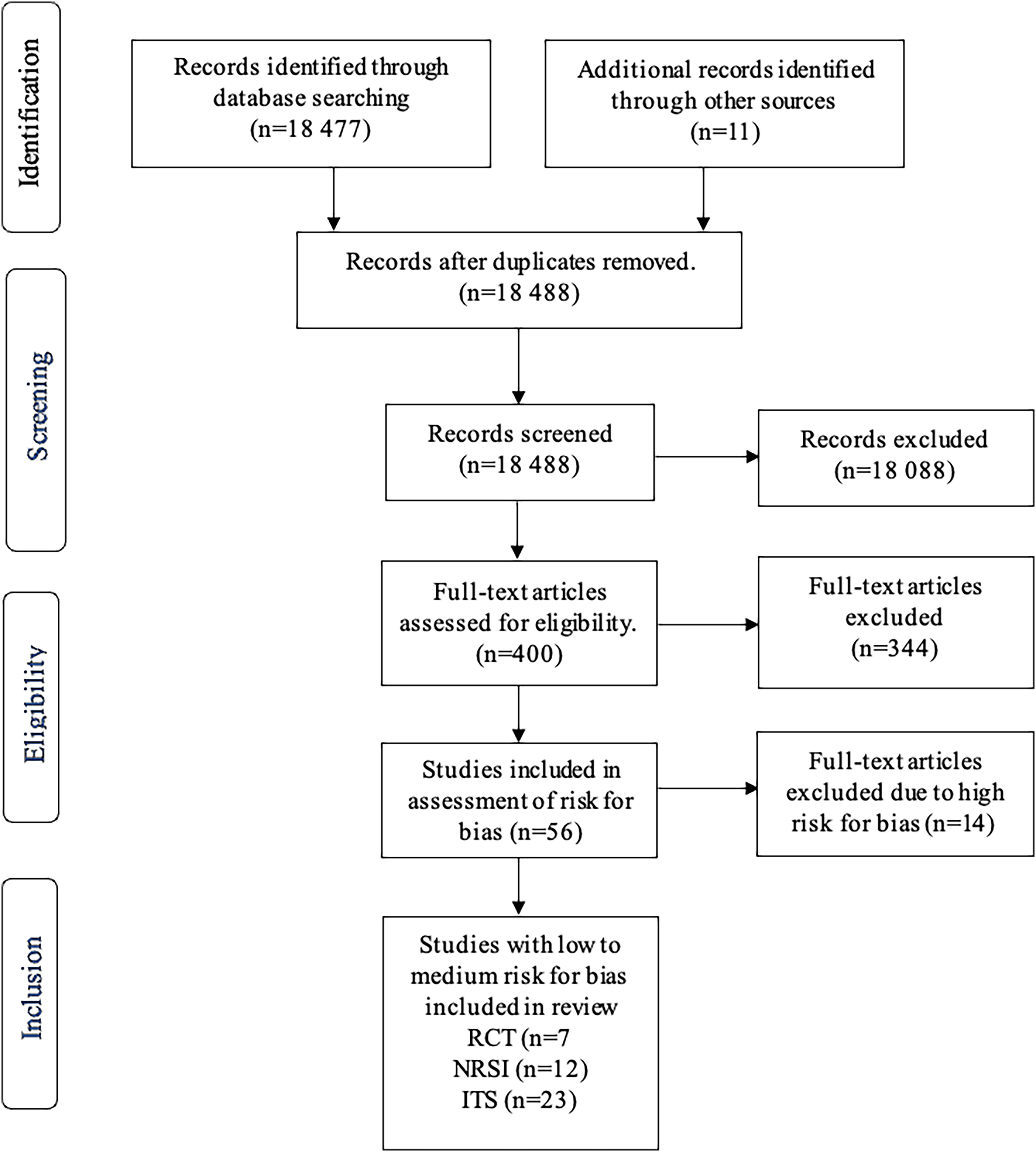
Flow chart of search results for RCT, NRSI, and ITS studies through the systematic review process.
Characteristics of Included Studies.
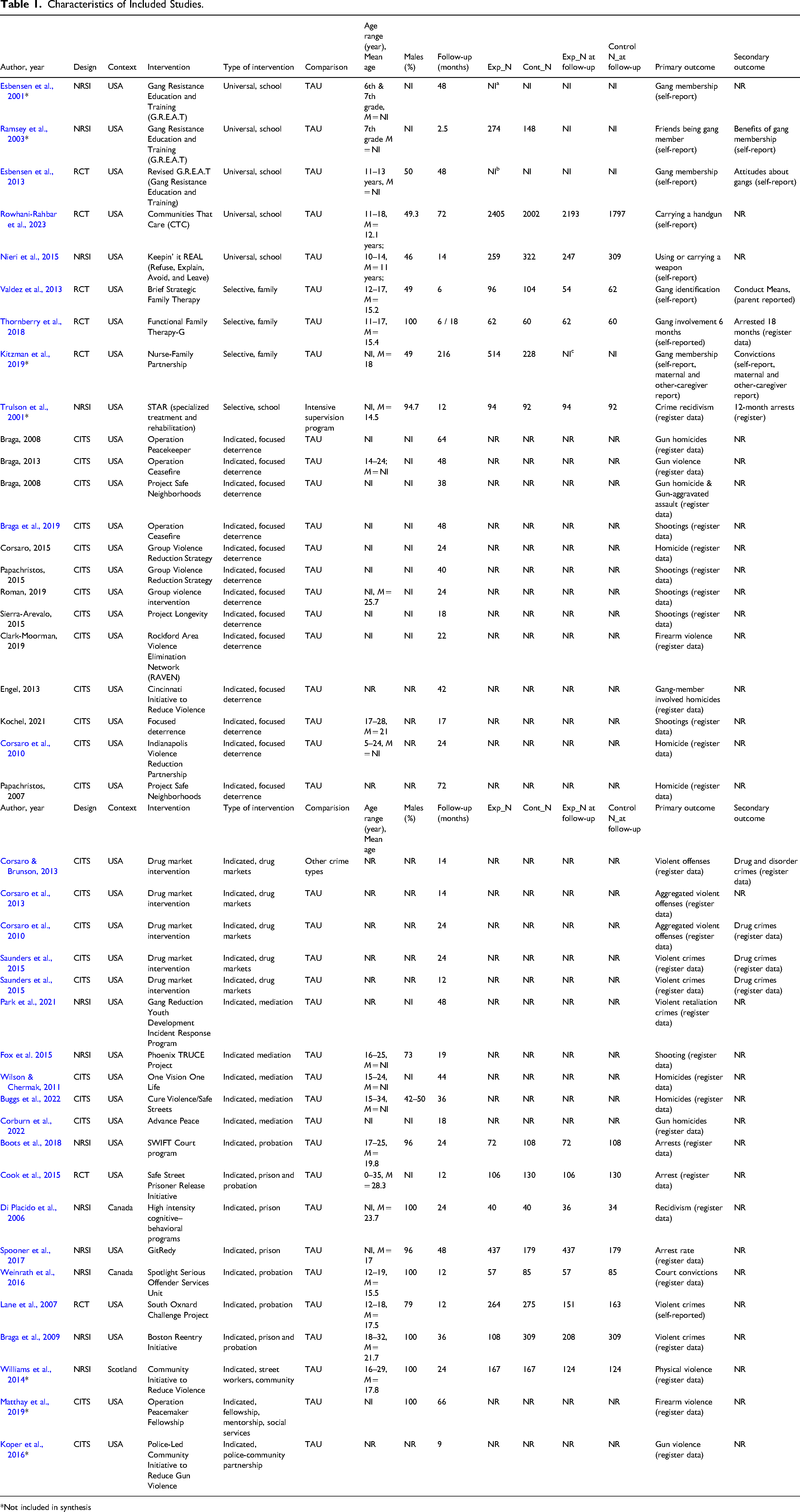
*Not included in synthesis
Synthesis on Universal Interventions
Five studies, two RCTs and three NRSI, evaluated universal school interventions. Three of these studies evaluated an intervention called Gang Resistance Education and Training (G.R.E.AT.), a school-based gang- and violence-prevention program with the goals of teaching youth to avoid gang membership, preventing violence and criminal activity, and assisting youth in developing positive relationships with law enforcement. Two of these described the original version of G.R.E.A.T. (Esbensen et al., 2001; Ramsey et al., 2003), while the third evaluated a major revised version of G.R.E.A.T. (Esbensen et al., 2013). Due to this, only the revised G.R.E.A.T. was considered relevant to include in a synthesis. The revised version of G.R.E.A.T. was evaluated in an RCT involving 3,820 students in 195 classes (31 schools) (Esbensen et al., 2013). Follow-up took place after 4 years and results were based on self-reported data on gang membership and violent offending.
Another school intervention was Communities That Care (CTC) that was evaluated in a cluster-randomized trial involving 24 small towns in the United States, with 12 serving as control (Rowhani-Rahbar et al., 2023). The participants in the study were 4,407 students who had been followed up annually from and including grade 6 through grade 12. School classes were included during grades 5 and 6, which means that the follow-up time varied slightly but was approximately 72 months. The results were based on data on the proportion of students who reported that they were carrying a firearm from grade 6 through grade 12.
The last school study is Keepin’ it REAL (Refuse, Explain, Avoid and Leave). The evaluation was an NRSI involving 581 students in grades 6–7 (Nieri et al., 2015). The comparison group was students who did not participate in Keepin’ it REAL. Results after 14 months are based on self-reported data on carrying or using a weapon in the past 30 days.
Since the school studies deal with different psychosocial interventions with different outcome measures and follow-up time, the results are presented as a Synthesis Without Meta-analysis (SWiM) (McKenzie & Brennan, 2023) (for this information, we refer to SBU, 2023 appendices or contact the corresponding author). Gang membership and carrying weapons were assessed as relevant outcomes. Carrying weapons is considered a typical gang attribute and measures gang membership. The studies included in the synthesis reported the preventive effects of all three school interventions. Note that the two RCTs (Esbensen et al., 2013; Rowhani-Rahbar et al., 2023) also had/ longer follow-up time (48 and 72 months) but presented the exact same effect size, OR = 0.76, while the NRSI with shorter follow-up (14 months) reported an effect of similar size, OR = 0.66 (Nieri et al., 2015).
The overall assessment is that the three school-based interventions (CTC, G.R.E.A.T., and Keepin’ it REAL) can reduce student gang membership, including carrying and use of weapons. The certainty of the evidence was assessed as low (⊕ÅOO) (Table 1), which means that it is possible that the results are correct but that new studies may change the conclusion. Deductions have been made due to the risk of bias (–1.5) and transferability (–0.5).
Synthesis on Selective Interventions
Four selective interventions were identified (Table 1). Two were in all respects but one was similar (Kitzman et al., 2019; Trulson et al., 2001) and two differed markedly (Kitzman et al., 2019; Trulson et al., 2001) and were excluded from synthesis. One study was an 18-year follow-up of an RCT comparing home visits from a nurse during prenatal and infancy periods, compared to treatment as usual (Kitzman et al., 2019). The other study (Trulson et al., 2001) evaluated STAR (Specialist Treatment And Rehabilitation) that applied the concept of boot camp within a school setting. The study, an NRSI, evaluated 182 students, using register data on criminal behavior. For more information on the characteristics of these two studies, see Table 1.
The two similar studies evaluated two family-based interventions: brief strategic therapy (Valdez et al., 2013) and functional family therapy-gang (Thornberry et al., 2018). Except for this difference, the two studies were in all respects similar: target group (antisocial teenagers with gang affiliation or high gang risk), research design (RCT), therapy focus (the family), follow-up time (6 months), control condition (TAU), outcome (self-reported gang involvement), and goal (prevent gang membership).
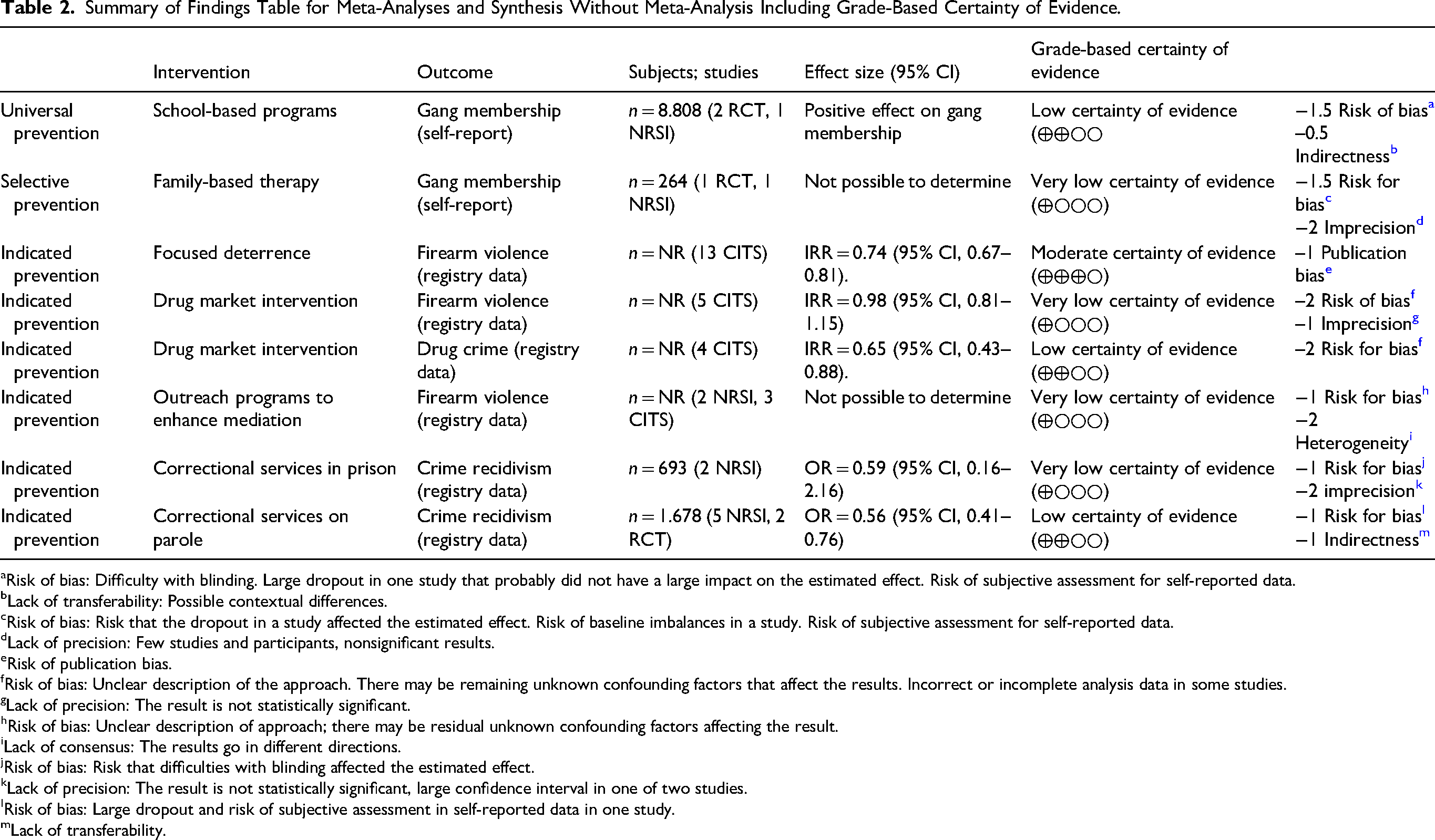
A SWiM indicated no significant effects of family-based therapy on gang involvement compared to control treatments (for this information, we refer to SBU, 2023 appendices or contact the corresponding author). The evidence was graded as having very low certainty (ÅOOO) due to imprecision and high risk of bias (Table 2).
Summary of Findings Table for Meta-Analyses and Synthesis Without Meta-Analysis Including Grade-Based Certainty of Evidence.
Risk of bias: Difficulty with blinding. Large dropout in one study that probably did not have a large impact on the estimated effect. Risk of subjective assessment for self-reported data.
Lack of transferability: Possible contextual differences.
Risk of bias: Risk that the dropout in a study affected the estimated effect. Risk of baseline imbalances in a study. Risk of subjective assessment for self-reported data.
Lack of precision: Few studies and participants, nonsignificant results.
Risk of publication bias.
Risk of bias: Unclear description of the approach. There may be remaining unknown confounding factors that affect the results. Incorrect or incomplete analysis data in some studies.
Lack of precision: The result is not statistically significant.
Risk of bias: Unclear description of approach; there may be residual unknown confounding factors affecting the result.
Lack of consensus: The results go in different directions.
Risk of bias: Risk that difficulties with blinding affected the estimated effect.
Lack of precision: The result is not statistically significant, large confidence interval in one of two studies.
Risk of bias: Large dropout and risk of subjective assessment in self-reported data in one study.
Lack of transferability.
Synthesis on Indicated Interventions
Focused Deterrence
Focused deterrence interventions are aimed at influencing the criminal behavior of individuals through the strategic application of enforcement and social service resources to facilitate desirable behaviors (Kennedy, 2006). A total of 13 studies (Table 1) evaluated focused deterrence, although divided over 10 named interventions. All 13 studies came from the United States with the primary outcome measure of gun violence, either fatal or nonfatal. The study design was controlled interrupted time series (CITS), with TAU as a comparator. The follow-up period varied between 17 and 72 months (M = 37 months).
The meta-analysis (Figure 2) showed a significant effect in favor of the intervention group, IRR = 0.74 (95% CI, 0.67–0.81). The combined result means that the intervention group had a 26% lower incidence of firearm violence during the follow-up period compared to the control group. A sensitivity analysis where all studies were given the same weight (i.e., all studies were assumed to have the same standard error) produced a similar result: IRR = 0.70 (for this information we refer to SBU, 2023 appendices or contact the corresponding author).
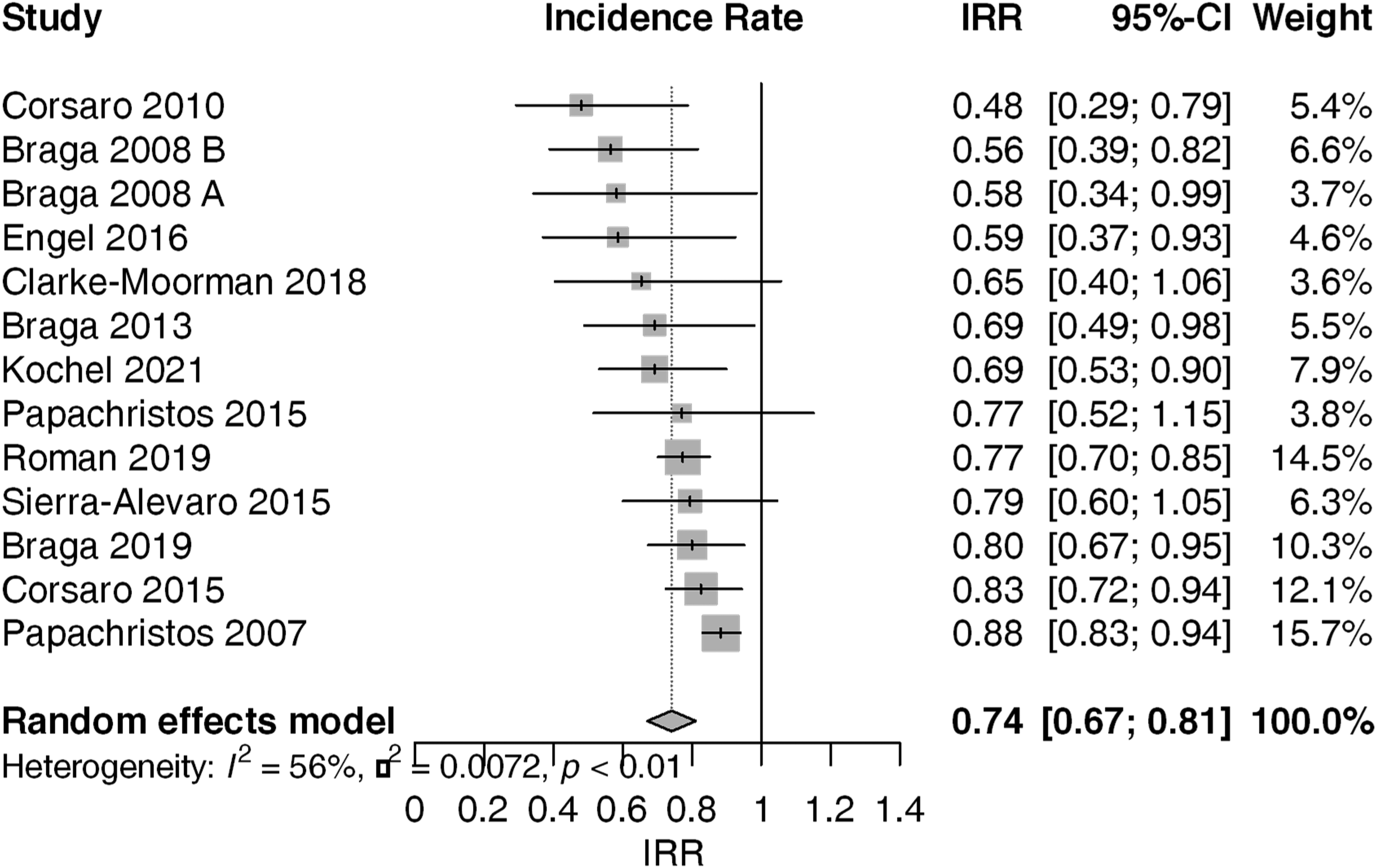
Effect (incidence risk rate) of focused deterrence on gun violence measured with officially reported data.
Since the follow-up period of the studies varied between 17 and 72 months, we investigated whether the length of the follow-up period was significantly related to the incidence rate. The studies are divided into a follow-up period of up to 2 years (on average, 21 months), or longer than 2 years (on average, 52 months). The subgroup analysis shows approximately the same results for follow-up times longer than 2 years (IRR = 0.77) and up to 2 years (IRR = 0.72) (for this information we refer to SBU, 2023 appendices or contact the corresponding author).
We also examined if there was a difference between studies with outcomes that specified homicides (n = 7) or firearm violence without specifying fatalities (n = 6). A subgroup analysis (for this information we refer to SBU, 2023 appendices or contact the corresponding author) reveals almost the same values for both outcome measures: IRR = 0.74 (homicides) and IRR = 0.75 (gun violence without death).
Using a funnel plot, the existence of publication bias was investigated (for this information we refer to SBU, 2023 appendices or contact the corresponding author). The results indicate a lack of small studies with nonsignificant results. Adjusting for the bias that may arise due to publication bias, using a trim-and-fill analysis (Shi & Lin, 2019), our result remains statistically significant, but the effect drops from IRR = 0.74 to IRR = 0.81. Although the statistical measures show some heterogeneity, the results consistently show that focused deterrence reduces gun violence. The evidence was graded as having moderate certainty (⊕ÅÅO) (Table 2).
Drug Market Intervention (DMI)
A second type of focused deterrence strategy focuses on reducing crime driven by street-level drug markets. DMI identifies street-level dealers and presents a deterrence-based message aimed at low-level drug-market offenders. This message was coupled with an offering of a broad array of services for the offenders (National Network for Safe Communities, 2015).
Five studies (Table 1) evaluated DMI (Corsaro & Brunson, 2013; Corsaro et al., 2013; Corsaro et al., 2010; Saunders et al., 2015; Saunders et al., 2017). All studies used CITS and compared the results against other cities or districts that did not implement DMI. The follow-up time varied between 12 and 25 months (M = 18 months). The primary outcome measure was firearm violence (five studies) and a secondary outcome measure was drug offenses (four studies). In both cases, the studies were based on registry data.
The methods used by the various studies differed markedly. This made it difficult to obtain comparable standard errors. We therefore chose to assign all studies the same weight. This made the confidence intervals uninterpretable because they were based on hypothetical standard errors. The meta-analysis (Figure 3) showed no statistically significant difference in firearm violence between the DMI and the control condition, IRR = 0.96 (95% CI, 0.84–1.09). A sensitivity analysis with the actual standard errors produced the same, IRR = 0.96 (for this information we refer to SBU, 2023 appendices or contact the corresponding author). The evidence was graded as having very low certainty (ÅOOO) because of the high risk for bias and imprecision (Table 2).
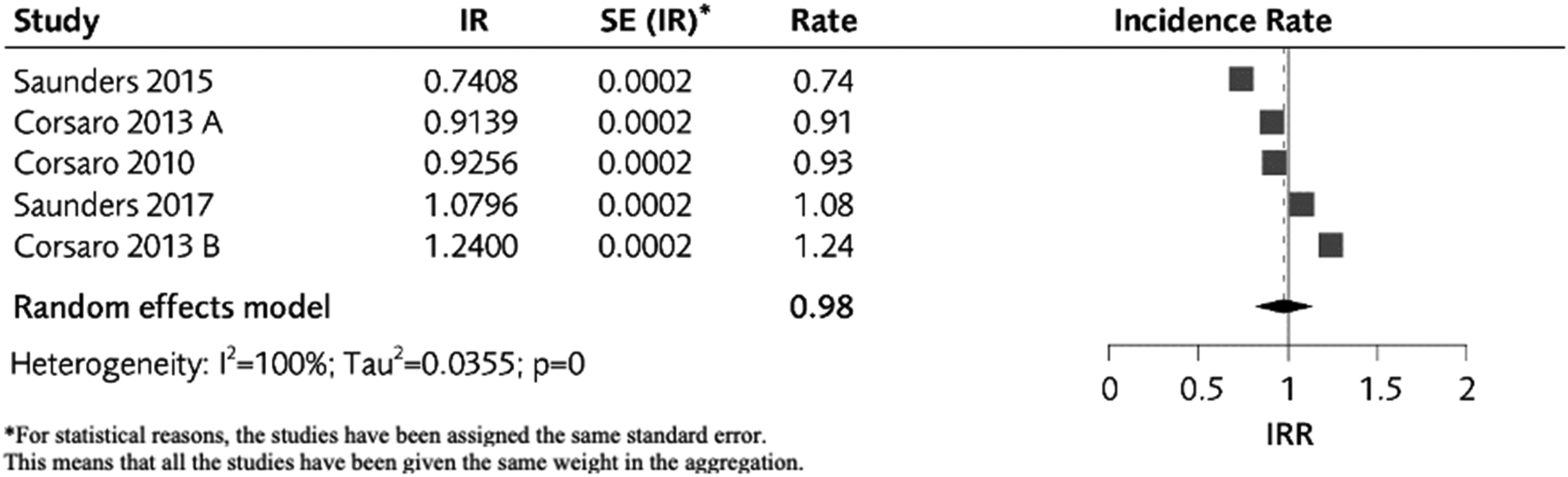
Effect (incidence risk rate) of drug market intervention on gun violence.
The meta-analysis reports a significant effect on the incidence of drug crime for DMI, IRR = 0.64 (95% CI, 0.40–0.87). After an average of 18 months, drug crime was 36% lower with DMI compared to the control option. A sensitivity analysis with the actual standard errors produced virtually the same, IRR = 0.64 (for this information we refer to SBU, 2023 appendices or contact the corresponding author). The overall assessment was that DMI can possibly reduce the number of drug crimes. The certainty of evidence was graded as low because of high risk for bias (⊕ÅOO) (Table 2) (Figure 4).
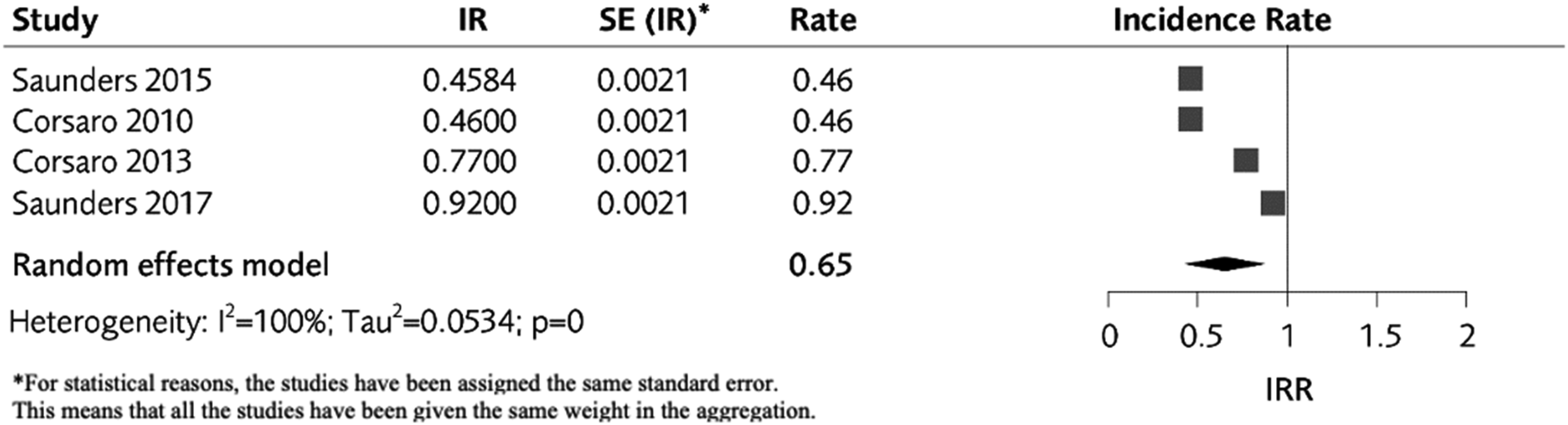
Effect (incidence risk rate) of drug market intervention on drug crime.
Outreach Programs to Enhance Mediation
Five studies evaluated outreach programs to identify conflicting gangs that were offered mediation to defuse a conflict that otherwise might escalate into violence. In addition, all five studies included social support for those in need. The study design in three cases was CITS (Buggs et al., 2022; Corburn et al., 2022; Wilson & Chermak, 2011) and in two cases was NRSI (Fox et al. 2015; Park et al., 2021). The follow-up period was between 18 and 48 months (M = 33). The comparison group in all cases consisted of standard treatment and the primary outcome measure was firearm violence. All five studies were difficult to interpret due to insufficient or contradictory statistical information.
The Safe Streets/Cure Violence evaluation included seven areas of mediation compared to one synthetic control (Buggs et al., 2022). The effect varied from a 21% decrease in gun violence to a 112% increase. Four areas had a decrease, and three areas had an increase. The conclusion was that this study showed heterogeneous results.
The Advance Peace evaluation covers three areas of mediation and a large area of control (Corburn et al., 2022). The results presented are contradictory. First, results are presented showing that firearm violence decreases by 18.2% for the four areas combined, while it increases by 8.7% for control areas. Results are then reported based on regression analysis where the reduction is greater in the entire area compared to just the intervention areas. However, the summary assessment is that the results point to a positive intervention effect.
The evaluation of One Vision (One Life) assessed the effect of mediation in three neighborhoods and one control neighborhood (Wilson & Chermak, 2011). The results pointed in different directions in the three areas of mediation, from a slight increase in fatal shootings to a slight decrease. However, none of the changes were statistically significant.
The Phoenix Truce evaluation showed a significant increase in gun violence in the mediated area compared to the three control areas (Fox et al. 2015). That result has been supplemented with a regression analysis that controlled for other factors and whose results showed a negative effect on mediation. The negative effect was about an 80% increase in shootings, which seems an unlikely treatment effect.
The GRYD IR evaluation reported a 14.2% reduction in gang violence in the area with mediation compared to the control area (Park et al., 2021). However, the authors did not present any information on whether the reduction was statistically significant or how large the confidence interval was for the reduction in gang violence.
Taken together, these five evaluations did not provide a consistent picture of the impact of outreach to mediate between gangs: two reduced gun violence, one increased gun violence, and for two had no clear effect at all. Considering the uncertainties in analysis, we refrained from a meta-analytic approach and concluded that it is not possible to determine what effect mediation has (ÅOOO) (Table 1).
Correctional Services
Seven studies dealt with correctional services for youth or young adults belonging to gangs or with a history of serious violent behavior (Table 1). All studies involved collaboration between correctional services and social services. Two of the studies offered social services only during enforcement in the correctional facility (Di Placido et al., 2006; Spooner et al., 2017), three only during probation (Boots et al., 2018; Lane et al., 2007; Weinrath et al., 2016), and two in both prison and probation (Braga et al., 2009; Cook et al., 2015). Regardless of format, the experiment interventions had a focus on psychosocial support (e.g., substance use treatment, education, health counseling, and housing).
Two of seven studies were RCT studies (Cook et al., 2015; Lane et al., 2007), and the other five were NRSI. Five studies came from the United States and two from Canada (Di Placido et al., 2006; Weinrath et al., 2016). All seven interventions involved collaboration between correctional services and social services, in five cases also with the police, and in four cases with healthcare. The mean age in the seven studies varied between 15.5 and 28.3 years (mean 20.4 years).
For all studies, the primary outcome measure was crime recidivism regardless of type based on registry data. Since the outcome was dichotomous on the individual level, the odds ratio was chosen as the outcome measure. In six of seven studies, the measure was arrests and in one case, conviction. All studies used TAU as a control option. The studies had different follow-up periods, between 12 and 48 months. To create comparability, we chose recidivism after approximately 12 months. Not all studies presented exactly that time, but it was possible to obtain a close estimate.
The two RCT studies and five NRSI studies are presented in Figure 5. All studies were judged to have a moderate risk of bias. The two RCT studies had the same average odds ratio (OR) as the five NRSI studies: 0.60. Overall, there was no clear pattern that could explain the variation in OR. Although the result varied from an odds ratio of 0.26–1.01, there was no significant heterogeneity, i2 = 43%, τ2 = 0.0815, p = .10. The assessment was therefore that the overall results for the studies with RCT design and NRSI design were equivalent. RCT studies are normally reported separately from NRSI studies but refer to Cuello-Garcia (Cuello-Garcia et al.); in this case, they were part of a joint synthesis. By analyzing the two types of studies together, the statistical power of the analysis increased.
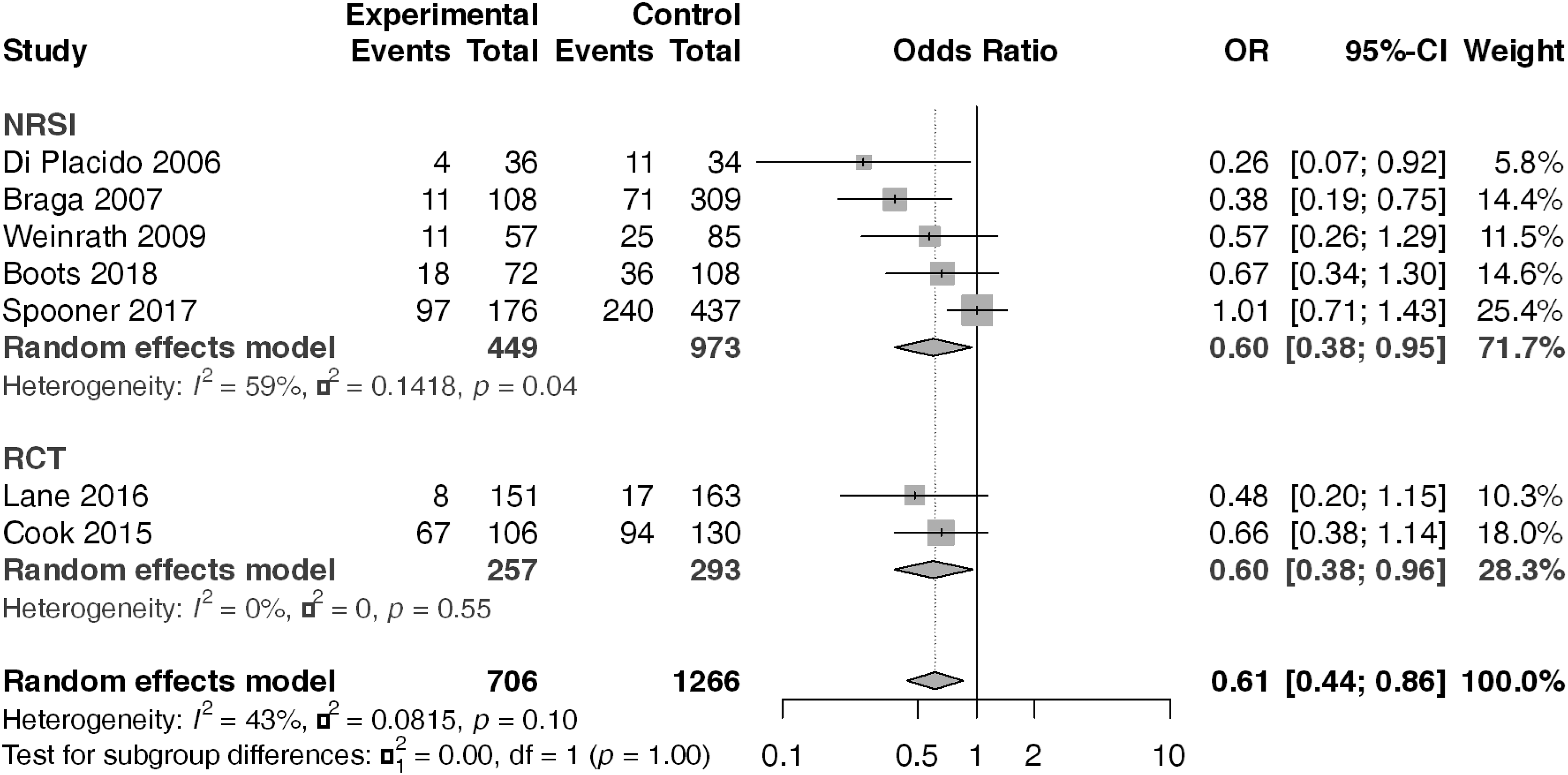
Effect (odds ratio) of multicomponent gang reentry programs on crime recidivism.
Two NRSI studies dealt solely with in-custody interventions (Di Placido et al., 2006; Spooner et al., 2017). The meta-analysis (Figure 6) did not result in a statistically significant difference, which means that it was not possible to determine whether incarceration alone influences criminal recidivism after release (ÅOOO) (Table 2).
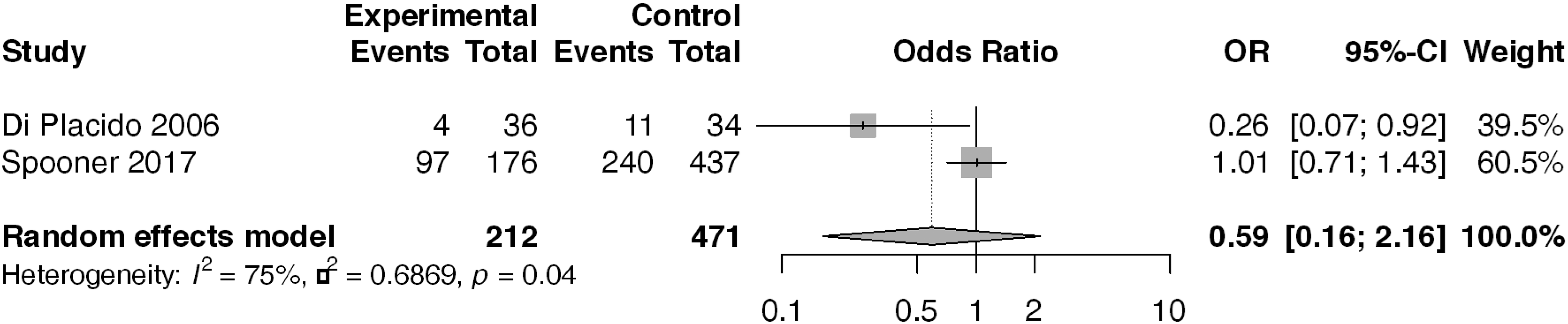
Effect (odds ratio) of correctional treatment of gang members in prison on crime recidivism.
Two RCT studies and three NRSI studies described the effect of psychosocial interventions during probation, or during probation and prison. Figure 7 reports the effects of the five studies included in three meta-analyses: first the two studies that combined prison and probation (Braga et al., 2009; Cook et al., 2015), second the three probation studies (Boots et al., 2018; Lane et al., 2007; Weinrath et al., 2016), and finally one that summarized the results of all five studies. The three meta-analyses found significant effects, respectively, OR = 0.59 (95% CI, 0.38–0.91), 0.52 (95% CI, 0.30–0.88), and 0.56 (95% CI, 0.41–0.76). The overall assessment was that psychosocial interventions during probation possibly can reduce the number of criminal recidivisms (⊕ÅOO) (Table 2).
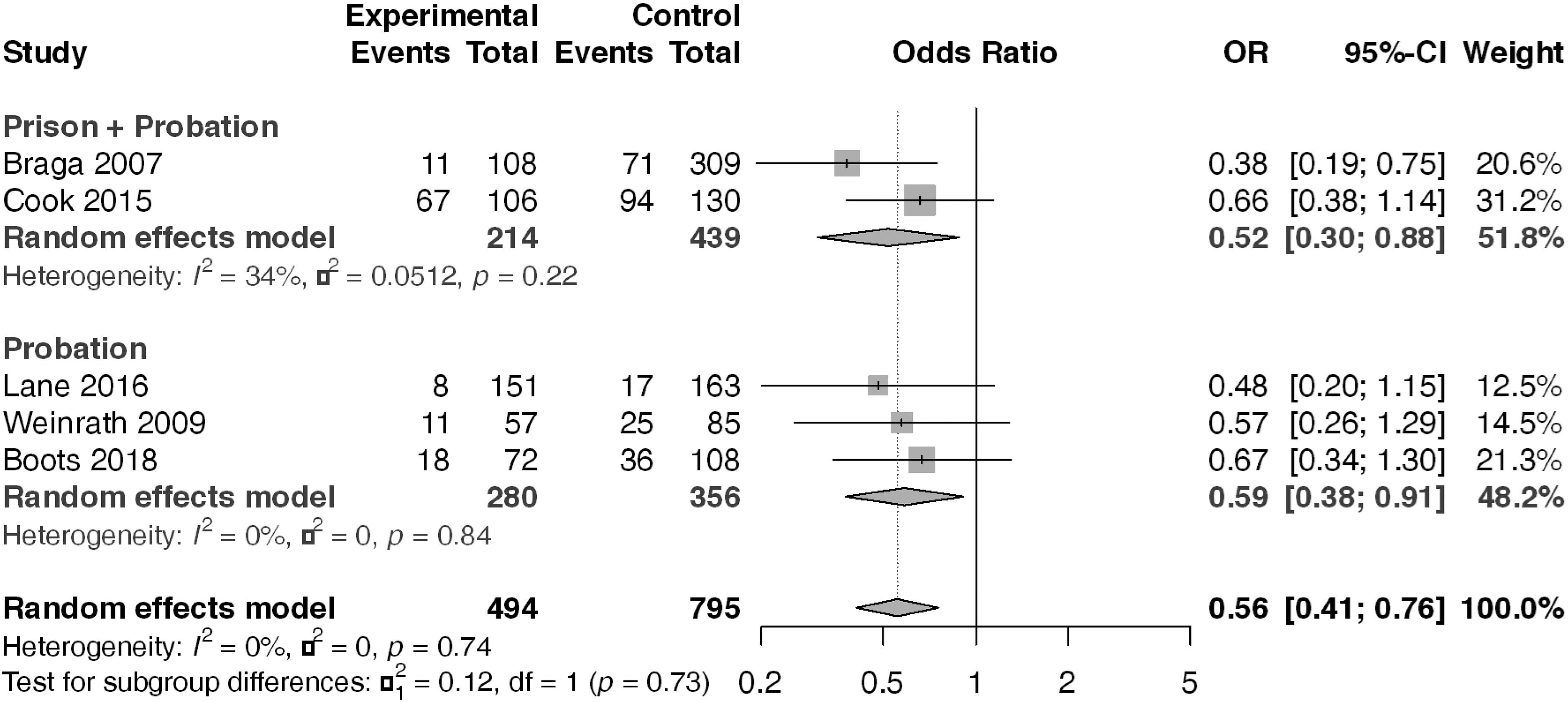
Effect (odds ratio) of multicomponent gang probation programs on crime recidivism.
Additional Single Study Results
Three single studies investigated the effects of various interventions on gun violence or physical violence (Table 1) (Koper et al., 2016; Matthay et al., 2019; Williams et al., 2014). The evidence across all studies was graded as having very low certainty (ÅOOO). We refrained from combining these effect sizes for meta-analysis due to substantial variation in intervention, follow-up time, design, and outcome measure.
Discussion and Applications to Practice
This systematic review identified four psychosocial interventions that prevent gang membership and gang-related crime, thus increasing the number of evidence-based interventions. Furthermore, two psychosocial interventions did not receive empirical support, which underlines the importance of controlled research to avoid ineffective or even harmful interventions (e.g., Petrosino et al., 2013; Welsh & Rocque, 2014).
The first of the effective interventions include universal interventions in middle school (G.R.E.A.T., Communities That Care, Keepin’ it REAL). The studies indicated that the three interventions decreased the risk of gang affiliation after 14, 48, and 72 months, respectively. It is worth noting that the two studies with the longest follow-up produced the same effect size (OR = 0.76), while the one with 14 months follow-up was somewhat stronger (OR = 0.66).
Of the four indicated interventions, three produced significant effects. The first, focused deterrence, based on 13 studies, reduced gun violence by 26% over an average of 37 months. This result parallels that of the meta-analyses of Braga and colleagues (Braga et al., 2018). Their review covered research up to 2015 with similar research questions as ours. Their meta-analysis demonstrated a significant effect of the intervention, but also with variation between different studies, like ours. It was not considered appropriate to compare ours and Braga and colleagues’ effect sizes because of different measures (Wilson, 2022).
The second indicated intervention is drug market intervention (DMI). Five studies have evaluated the effect of firearm violence, but without providing a statistically reliable result. This is consistent with a meta-analysis which showed that increased police efforts against drug markets lead to increased violence and more murders (Werb et al., 2011). One explanation for this paradoxical result is that removing leading people in the drug trade opens the way for other individuals and gangs to take over the void that has arisen. To maintain control against others who try to establish themselves requires violence. In the previously referenced review of focused deterrence (Braga et al., 2018), DMI had a weak effect bordering on being statistically significant (p < .046). The difference between this and our results might be because the previous review was based on a mixture of different types of crime (e.g., drug crimes, theft, assault, and homicide), while our review included only gun violence.
Although DMI did not affect gun violence, it reduced drug crime by 35% over an average of 18 months. According to Braga et al. (2018), research indicates no displacement and diffusion effects on criminal behavior to other locations. This is consistent with place-based interventions against crime more often leading to crime reductions in nontreated nearby locations rather than displacing crime there (Braga et al., 2019).
The third indicated intervention focused on correctional services for youth or young adults belonging to gangs or with a history of serious violent behavior. Five studies described the effect of psychosocial interventions during probation or during probation and prison. Three meta-analyses yielded the same result, indicating that psychosocial support during probation can reduce the number of criminal recidivisms by 44% during a follow-up time equaling 12 months. Two studies dealt solely with in-custody interventions. The meta-analysis did not result in a statistically significant difference.
The fourth indicated intervention is mediation offered to conflicting gangs. Taken together, the five evaluations did not provide a consistent picture of the impact of mediation between gangs with a follow-up time of at least 18 months: two reduced gun violence, one increased gun violence, and two reported no effect. Due to insufficient or contradictory statistical information, we refrained from a meta-analytic approach and concluded that it was not possible to determine the effect of mediation.
Gang affiliation, and the criminality by and against individuals in such groups, is challenging for many countries. This situation is reinforced by the lack of evidence-based interventions to prevent such negative outcomes. When young individuals are involved in gangs, the matter is morally pressing (UN, 1989), with high stakes involving significant physical and mental health consequences. In the absence of evidence, practitioners are faced with a situation where they risk implementing ineffective interventions or, in the worst case, interventions with negative effects (cf. the Scared Straight programs; Petrosino et al., 2013). The pressing nature of the problem, in combination with a legal obligation for the authorities to intervene and where the decision of how to act rests with the authorities, creates a situation where decisions must be made under great uncertainty.
When there is a lack of evidence, precautionary reasoning can be used. This kind of reasoning has been used to legitimize interventions with weak evidence that sometimes include infringements on people's liberty and rights (Ashworth & Zedner, 2014; Stacey et al., 2017). A sound application of the precautionary principle generally entails limiting, postponing, or refraining from implementing unproven interventions while awaiting assessment (Munthe, 2011). However, sometimes the pressing nature of the problem requires immediate action. In such cases, the interventions still need to be evaluated. There should also be a preparedness to act on the result of such evaluations, so that inefficient or, in the worst case, counterproductive interventions are abandoned. The assessment should also include potential social risks of the interventions, such as increased social tensions and distrust (Hardy, 2017).
From a policy perspective, this review imparts guidance. While some uncertainty regarding efficiency in, for instance, a European context remains, the available evidence provides reasons for cautious implementation with an appropriate evaluation process. If these measures turn out to be unsuitable or insufficient, other interventions can be considered. Any implementation of interventions for which evidence is lacking should be combined with a process of local evaluation (e.g., decide on the appropriate outcome measure, follow-up time, and responsible data collection) since the intervention may be turn out to be effective although no scientific study has yet demonstrated this. A particular aspect of importance is that the local evaluation includes all collaborative parties in the case of inter-agency collaboration (e.g., a collaborative gang intervention project between social service authorities, police, and prison and probation services).
There are further ethical considerations which may affect how, or even if, an intervention should be implemented. Interventions that target specific individuals or groups may thus treat them as, or signal to others that, these are criminals. When deciding which interventions to implement, a balance needs to be struck between targeting as many future criminals as possible, and minimizing targeting innocents so as to avoid undue burdens and intrusions of autonomy and privacy as well as unjustified stigma and loss of trust (Ferzan, 2014). There are also concerns about indirect discrimination if some groups are more burdened by the interventions than others, in particular groups that are, or have been, subject to injustices (Lippert-Rasmussen, 2022). Roman (Roman), for example, raises a concern regarding focused deterrence strategies and emphasizes that particular attention needs to be paid to how the burdens of the intervention are distributed and wonders whether “… GVI—a gang violence reduction intervention that relies on the heavy threat of punitive law enforcement action—has a place in cities today?”
Some interventions have, or could have, coercive elements. Standard requirements for when coercion is justified is that it should be necessary to prevent harm to others, that no less restrictive (but similarly effective) alternative is available, and that it should be proportional to the harm it seeks to prevent (Ashworth & Zedner, 2014). Since these interventions are, to a large extent, aimed at children, coercion may also be justified in the child's best interest but then a balance needs to be struck between the child's best interest, their autonomy, and parental authority.
Most results were graded as very low or low certainty of evidence. It stresses the importance of more controlled evaluations to reduce the risk of using interventions without significant effect. The two subgroup analyses of focused deterrence (short or long follow-up time and outcomes in the form of firearm violence with or without homicide) might guide the designing of new studies since they yield essentially the same outcome. If this result is correct, 21 months of follow-up is enough to secure a valid result on long-term effects, which decreases the timeframe of outcome research. The analysis also indicates that firearm violence without specification of outcome, and homicide, are equally valid as an outcome measure. Merging the two types of outcome research has the potential to produce more exact point estimates, thereby increasing statistical significance.
This review has some strengths and limitations. The strength of this review is that it has followed rigorous systematic review methods, including a comprehensive literature search, independent assessment of studies, assessment of risk of bias, and grading of evidence. The review also has limitations. The first deals with the complexity of identifying studies that include gang-related populations and avoiding the multitude of studies preventing juvenile delinquency in general. Our strategy was to include only those studies that either stated an aim of preventing gang crime or that included a typical gang-related outcome (e.g., carrying a gun). However, there might be other interventions against gang-related crime that our inclusion criteria missed.
A second limitation is the possibility of publication bias. Although we included seven databases and more than 18,000 references, it is still possible that there are unpublished trials that this review missed. This is supported by our analyses on focused deterrence, using a funnel plot. However, using trim and fill technique, the effect was somewhat lower but still statistically significant. We refrained from including “gray” literature such as dissertations and technical reports, because of the challenge to comprehensively identify all gray literature. We identified 20 studies in previous reviews that constitute gray literature (mainly technical reports). In most cases, 18 out of 20, the studies have also been published in peer-reviewed journals with a delay of one or more years. This indicates that time-lag bias is a larger problem than publication bias.
Third, a common challenge in intervention research is the lack of information on implementation quality. This also applies to the studies in this report. With flawed implementation, effective intervention risks appear ineffective. Another problem is the lack of description of the components of interventions; in which order they are given and with what dose. All indicated interventions studied here consist of several components but without a detailed description. Regarding the reliability of the reported results, 33 of 42 are based on criminal record data that is considered to have reasonably high reliability (eg, homicide, gun violence). The other nine studies concern universal and selective interventions and are based on self-report data of unknown reliability.
At last, of the 42 studies identified, 39 represented were from the United States. This raises the question of whether the results are valid for other nations and contexts. Although it is easy to find examples of seemingly important differences between the United States and other nations (e.g., the general level of gun violence), empirical differences do not necessarily tell us about transferability. One example of this is individual placement and support (IPS) that provides support for the competitive employment of patients with severe mental illness. A random-effects meta-regression, including 27 RCTs from different contexts, found that the efficacy of IPS was equal in Europe and the United States (Brinchmann et al., 2020).
Evidence from this review suggests that it is possible to reduce crime, but that the effect is limited. This suggests that the reviewed interventions do not contain all the components needed to create strong effects. Therefore, theory in combination with empirical research is needed to enhance our understanding of what drives change and what does not. For example, if there are components that can be excluded, it will save resources. This work is made difficult by the fact that necessary information on the components of experimental interventions and control conditions is often missing or vaguely described. It is important to document in a protocol or manual so that the content of the intervention can be used as intended. Also, many included studies lacked distinct descriptions of the comparison condition. Based on research examining common components across different intervention formats (van der Pol et al., 2019), intervention research should attempt to delineate components and methods most likely to affect outcome. Also, many of the reviewed studies lacked information on the scope and quality of program implementation as well as descriptions of the comparison condition. This reinforces the importance of increased transparency to allow analyses of how implementation and control characteristics may moderate client outcomes.
Footnotes
Author Note
This synthesis was registered on September 30, 2022, with the International Prospective Register of Systematic Reviews, CRD42,22360672, and reported according to the Preferred Reporting Items for Systematic Reviews and Meta-Analyses (PRISMA) guidelines.
This article is adapted from a systematic review carried out by the Swedish Agency for Health Technology Assessment and Assessment of Social Services which provided funding for the study (SBU, 2023).
Declaration of Conflicting Interests
The authors declared no potential conflicts of interest with respect to the research, authorship, and/or publication of this article.
Funding
The authors disclosed receipt of the following financial support for the research, authorship, and/or publication of this article: This work was supported by the Swedish Agency for Health Technology Assessment and Assessment of Social Services
