




Abstract
Social work is a global and a local profession defined as a field of practice as well as a field of research. The strive for professionalization in social work relies, in part, on building and sustaining a unique body of knowledge. This means that the composition of the knowledge base and the research capacity in the field of social work is imperative to the sustainment and advancement of the profession (Maynard et al., 2014). Developing and delivering interventions is a core component of social work practice (Karlsson et al., 2024) and can be provided at the community, group, or individual level.
In this article, we investigate the extent to which effectiveness and efficacy (for ease termed effectiveness studies in this article) research on behavioral, psychological, and social interventions aiming for measurable changes at the individual level have been published between 1990 and 2019. We focus on the body of research that has been undertaken in the Swedish context. We present and discuss our results in relation to social work research in Sweden and beyond. We ask the following questions:
How many effect studies have been published between 1990 and 2019 in Sweden and has there been a change in this production over time? Which areas of practice and what kind of interventions have been the object of investigation? What is the average effect of interventions studied within identified areas? To what extent were the identified effectiveness studies undertaken by scholars in the field of social work?
Social Work Research and Effectiveness Studies
Like any other discipline or profession, social work has had its share of paradigm shifts and debates over methodological preferences, the purpose of research, and the use of knowledge and evidence in social work practice (e.g., Denvall & Skillmark, 2021; James et al., 2019). Even if social work consists of a “millefleur” of subfields with many different methodological starting points, the basic denominator can be found in the notion that research should not only support but also transform social work practice at the community, group and/or individual level (cf. McLaughlin, 2012). The role of social work research and academization in the professionalization process has been of substantial interest in the field of social work for decades (e.g., Dellgran & Höjer, 2000, 2003, 2012; Semigina et al., 2017; Sirotkina & van Ewijk, 2023; Zimbalist, 1977). By exploring growth and change in the conduct of effectiveness studies, this article adds to this body of knowledge.
For a deeper understanding and contextualization of the background of this study, we draw on scholars that have focused on the areas that social work research has targeted. In the seminal work by Zimbalist (1977), based on so called “landmark studies” in the United States, six themes are deemed to constitute the core of social work research. The themes identified was research on the causes of poverty, measurement of the prevalence of poverty, the social survey movement, quantification and indexes in social work, evaluative research on social service effectiveness, and study of the multiproblem family.
In the Swedish context, Sunesson (2016) describes research in social work as being made up of five identifiable topics: poverty; family and children; the rise of social problems; social pedagogy; and the relationship between social workers and clients. Dominelli (2005) identifies four features of social work research: (1) a change orientation, (2) an egalitarian relationship between researcher and its study objects, (3) the importance of reaching accountability toward “clients” or service users for the products that are produced, and (4) a holistic engagement with the different aspects of the problems that are being investigated.
Dellgran and Höjer (2012) show that during the first three decades of social work as an academic discipline in Sweden—from 1980 to 2009—33% of the PhD dissertations published studied social problems and phenomena, 23% studied client groups, and almost 10% studied organizational and judicial aspects of social work. Thirty-four percent of all dissertations studied social work practice and methods used, from a range of different theoretical perspectives, using a range of methods. Among these, only a few dissertations were focused on the effectiveness of social work practice. In terms of subject areas Dellgran and Höjer (2012) find that social care (including research on disability and elderly) was the largest subject area in the field of social work. Other subject areas that were represented included child protection and social welfare benefits (Dellgran & Höjer, 2012). Olsson and Sundell (2016) investigated the extent to which PhD dissertations conducted across seven academic disciplines (including social work) between 1997 and 2012 in Sweden aimed to investigate the effectiveness of interventions and the methodological quality of the identified effectiveness studies. Olsson and Sundell (2016) found that of the 258 social work dissertations published during the period under review, 21 aimed to investigate intervention effectiveness (8%). Of these, three studies used a randomized controlled design. Maynard et al. (2014) studied social work dissertations in the United States between 1998 and 2008. They found methodological pluralism but a predominance of quantitative methods which differs from the results of both Dellgran and Höjer (2000) and Shek et al. (2007) which have found qualitative methods to be more prevalent in doctoral dissertations in both Sweden and Taiwan. Despite this predominance of quantitative methods in the American context, only 7% of the dissertations utilized an experimental design (Maynard et al., 2014). These results indicate that research investigating the effectiveness of social work interventions has not found its way into social work doctoral programs, at least not as indicated by research on the types of research contained within doctoral dissertations.
Rosen et al. (1999) distinguishes between three types of knowledge: descriptive, explanatory, and controlled in their analysis of published articles in thirteen social work journals from 1993 to mid-1997. The control category is used for research on the effectiveness of interventions. They show that 36% of the included studies aimed at producing descriptive knowledge, 49% pursued knowledge for explanation of events, and 15% of the articles devoted to the effectiveness of interventions in social work practice.
This literature review reflects the ambivalent relationship that social work has to its foundational knowledge base (Finne & Malmberg-Heimonen, 2023; Okpych & Yu, 2014).
The Swedish Context
Social work has been an academic discipline in Sweden since 1977. The first professor of social work was established at the University of Gothenburg in 1979 and in 2020 there were 170 full professors and associate professors active in the discipline of social work (Salonen & Panican, 2021). Today, there are approximately 40,000 social workers in the workforce with degrees in social work employed primarily in the public sector (85%) at the local, municipal level (Salonen & Panican, 2021).
The Swedish government has launched several initiatives, with the intent to support research that can provide knowledge for social work practice (Svensson et al., 2024). The National Center for Evaluation of Social Work (CUS), placed under the National Board of Health and Welfare, was founded in 1992. CUS was later replaced by the Institute for Development of Methods in Social Work (IMS). IMS was tasked to promote evidence-based practice and controlled research within the field. In early 2000, the National Board of Health and Welfare launched the National Support for Knowledge Development within the Social Services with the aim to support collaboration between academic departments of social work and the social service sector (Denvall et al., 2014; Tops & Sunesson, 2006). In addition, local and regional units for research and development have been developed throughout the country (Tengvald & Sundell, 2014). In 2017, the Research Council on Health, Working Life, and Welfare, launched a 10-year applied social welfare research program with the aim of enhancing the applied research base for the social service sector. The National Research School for Professional Social Workers (FYS) was part of this program and provides support to social workers who combine postgraduate research studies with direct practice work within the local municipal social services (Svensson et al., 2024). Furthermore, the recent governmental proposal for a new Social Services Act emphasizes the need for a knowledge-based social services based on scientific research and proven experience (SOU, 2020, p. 47).
One area highlighted in these government initatives was a need for research on the outcomes of social work interventions and practice. The development and delivery of social work interventions is as a core component of social work practice (O’Hare, 2020; Sunesson, 2016). Interventions are intentional change strategies designed to promote the healthy development or prevent the detrimental development of individuals, groups, or society as a whole and may be developed and provided within one of several disciplines or contexts (e.g., social work, public health; e.g., Fraser et al., 2009; Sundell & Olsson, 2017). The consequences that interventions have for clients is connected to questions of what works, for whom, and under which circumstances. Practitioners in social work, as well as other stakeholders (e.g., national and international authorities), have increasingly been calling for more research which aims to answer these types of questions (e.g., Bergmark et al., 2012; Swedish Research Council for Health, Working Life and Welfare [Forte], 2022). In this context, it is vital to note that effectiveness studies are merely one out of a variety of methodological points of departure in social work research; that is, participatory action research, qualitative research, and register studies play and have played a crucial role in supporting practice development in the field of social work (Elmersjö et al., 2022).
Method
This article presents the results of a retrospective analysis of information provided in the published literature and builds on the results presented in Sundell and Olsson (2021) published by the Swedish Research Council on Health, Working Life, and Welfare. This study is an expansion of previous research investigating the methodological quality of effectiveness research on behavioral, psychological, and social interventions (Sundell & Åhsberg, 2016) and is the fourth in a series of studies attempting to increase our understanding of the current standing of effectiveness research in social work and related disciplines (Sundell & Olsson, 2021; Olsson et al., 2023; Olsson & Sundell, 2023). Effectiveness studies are defined as studies using a comparison group (controlled research) with or without randomization in which the independent variable is an intervention delivered at the individual, group, or comunity level (e.g., indicated, selected, and universal) and included at least one behavioral, psychological, or social outcome measure at the individual level. Studies were included only when the outcome of the studied intervention on individuals was assessed in relation to a control group (i.e., randomized or nonrandomized controlled trial).
Three research assistants and two researchers (TO and KS) searched articles according to inclusion and exclusion criteria (see below). Following initial screening, potentially eligible articles were further reviewed by TO or KS to determine final inclusion. A total of nine experienced (PhD) researchers were involved in the data extraction, and each trial was coded independently by two researchers using a standardized checklist developed a priori. Coding agreement (Cohen's kappa) varied between moderate (0.41–0.60) and perfect (0.81–1) on individual items. When assessments differed, the coding was discussed among the two coders until consensus was reached. The ambition was to identify all effectiveness studies that had been carried out in Sweden over a 30-year period and as such, is a population study.
Search Strategy
Direct Contact
We conducted a bibliographic search of all 191 researchers that were previously identified as having published at least one effectiveness study during the period 1990 to 2014 (Sundell & Åhsberg, 2016). We then contacted these researchers directly and solicited information on any new publications or in-press studies of which they were aware.
Awarded Research Grants
We searched the six largest Swedish research funders: the Swedish Research Council for Health, Working Life and Welfare (Forte), the Swedish Research Council for Sustainable Development (Formas), the European Research Council (ERC), the Swedish Research Council (VR), the Swedish Innovation Agency (Vinnova), and the Swedish Crime Victim Authority (BRÅ), for grants awarded during the period 2015 to 2019 for effectiveness studies (search terms: evaluation, randomized).
Published Protocols
We searched for planned effectiveness studies registered at www.clinicaltrials.com (search terms: Swed*, random*, effect*, evaluat*, RCT) as well as studies registered with ISRCTN at www.isrctn.com (search terms: Sweden, mental and behavioral disorder) was conducted.
University Library Databases
The researchers and studies identified in the three steps above were then included in searches in the unified index EBSCO Discovery (Stockholm University library) (search terms: Swed*, random*, effect*, evaluat*, RCT).
Pooling
The studies identified in the search described in (Sundell & Åhsberg, 2016) and through the above described search (Sundell & Olsson, 2021) were then pooled and duplicates removed. If individual study results were reported in several publications, the first publication was used as the source for data extraction and coding.
Inclusion and Exclusion Criteria
Inclusion Criteria
Publications were included in the current study if they had the following characteristics:
The publication reported on a study which was an evaluation of a behavioral, psychological, or social intervention regardless of the context within which it was delivered. The publication reported on a study which was undertaken in Sweden and the principal investigator was employed by a Swedish university or organization. The publication reported on a study which was published in a scientific journal in either Swedish or English and had been subjected to peer review prior to publication. The publication was published between 1990 and 2019. The study design reported in the publication was an efficacy, effectiveness, or field experiment using a randomized or nonrandomized controlled design.
Exclusion Criteria
Studies were excluded from the current study if they had any of the following characteristics:
The study reported in the publication did not include an outcome measure at the client, patient, or user level (e.g., only included measures of professional behavior change). The study reported in the publication investigated an intervention designed to impact somatic health without including at least one behavioral, psychological, or social component. The study reported in the publication investigated and measured only pedagogical or didactical interventions (e.g., methods to teach children math skills).
Results
After duplicates and follow-up studies were excluded a total of 527 articles reporting an effectiveness study of a behavioral, psychological, or social intervention remained. Of these, 456 were randomized controlled trials and 71 were nonrandomized controlled trials. The articles were published between 1990 and 2019 in 248 peer-review journals. The interventions evaluated targeted universal (14%), selected (13%), and indicated (73%) groups. Although there was some overlap in age groups, the main populations included in the studies were adults (73%), children and youth (19%), and elderly (7%). The most common comparison groups were other named interventions (40%), treatment-as-usual (23%), and wait-list or no service (37%). The number of effectiveness studies increased during the period under review (Figure 1); during the 1990s a handful or articles were published annually, compared to one each week in 2019. Because of this uneven distribution, results are presented in age cohorts of 5 years, except for the first 10-year period 1990 to 1999.
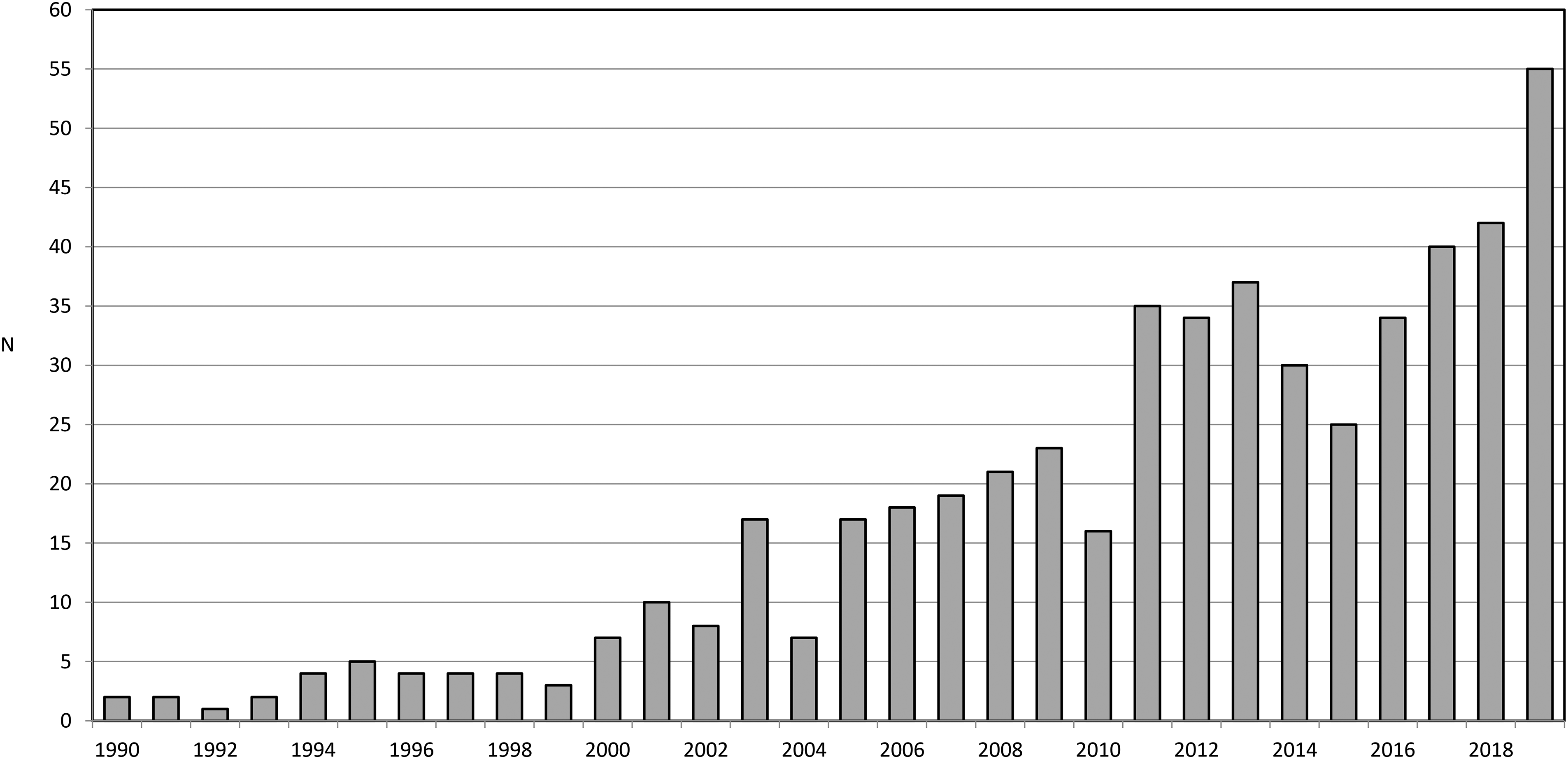
Swedish effectiveness research on behavioral, psychological, or social interventions published in peer-reviewed journals 1990–2019 (n = 527).
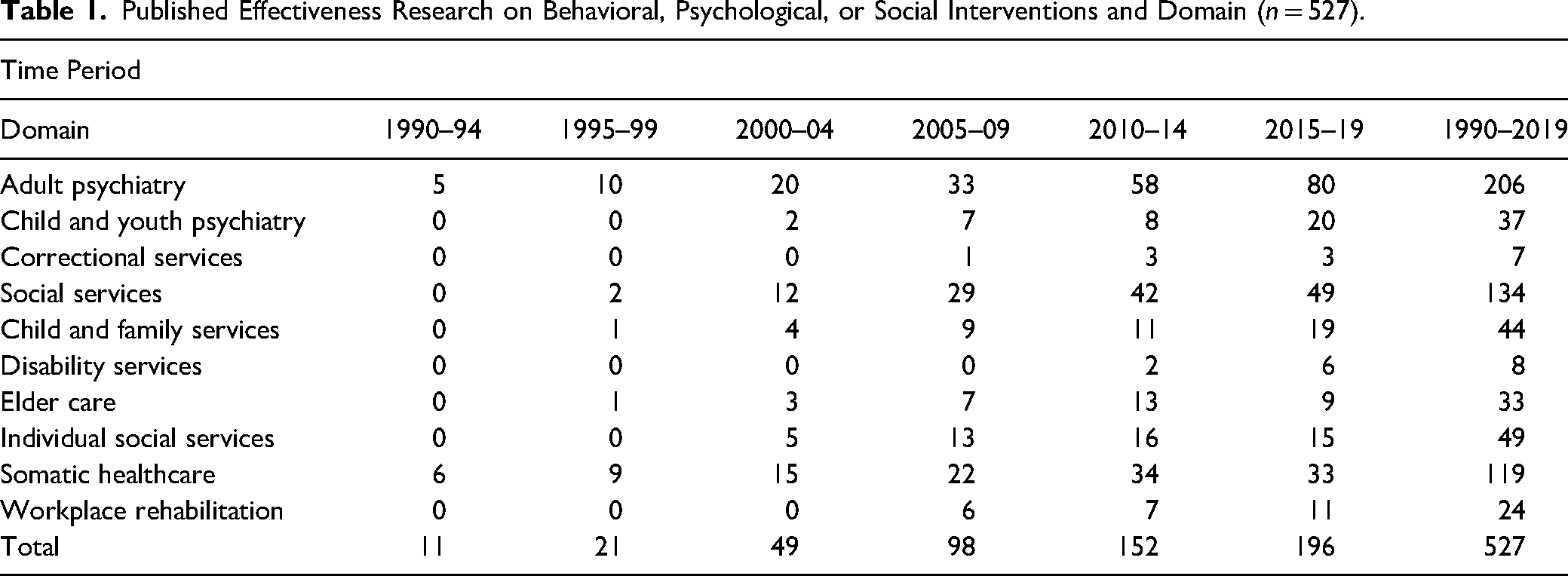
The 527 trials include prevention and treatment of adult mental health problems (39%), child and youth mental health problems (7%), correctional services (1%), somatic healthcare (23%), workplace rehabilitation (5%), and various types of social services (25%) (i.e., child and family services, disability services, elderly care, and individual social services; Table 1). In domains with at least 20 trials, all have a fairly linear trend of increased effectiveness trials. Adult psychiatry is by far the most investigated domain with 39% of all included studies. The second most frequent domain is social work with 25% of all included studies. The major target groups within this domain are individual social services (e.g., substance use treatment, social assistance), child and family services (e.g., parent management training, intervention for children with externalizing behavior), and elderly care (e.g., case-management).
Published Effectiveness Research on Behavioral, Psychological, or Social Interventions and Domain (n = 527).
The 527 trials included 427 different interventions in either the experimental or comparison group. In the latter, standard treatment (e.g., treatment-as-usual, TAU) is not considered an intervention as it is not specified. These 427 interventions consisted of both general interventions such as cognitive behavioral therapy (CBT) and treatment programs based on multiple components such as Treatment Foster Care Oregon (Olsson et al., 2023). Most of the included interventions have only been evaluated in a single study (377 interventions, 88%). The number of interventions studied varied between domains (Table 2). Most interventions were studied within the domains of adult psychiatry (163 evaluations) and somatic healthcare (109 evaluations).
Number of Studies Per Domain and the Most Frequently Evaluated Intervention Within Each Domain.
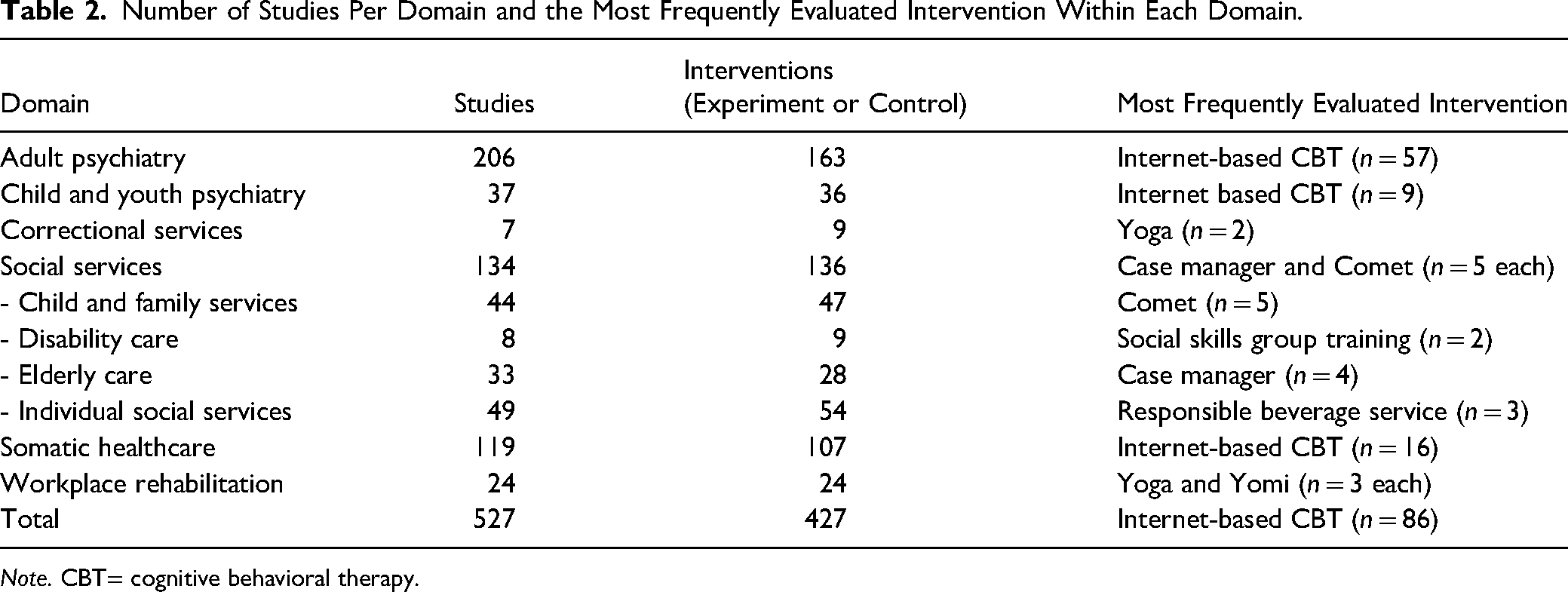
Note. CBT= cognitive behavioral therapy.
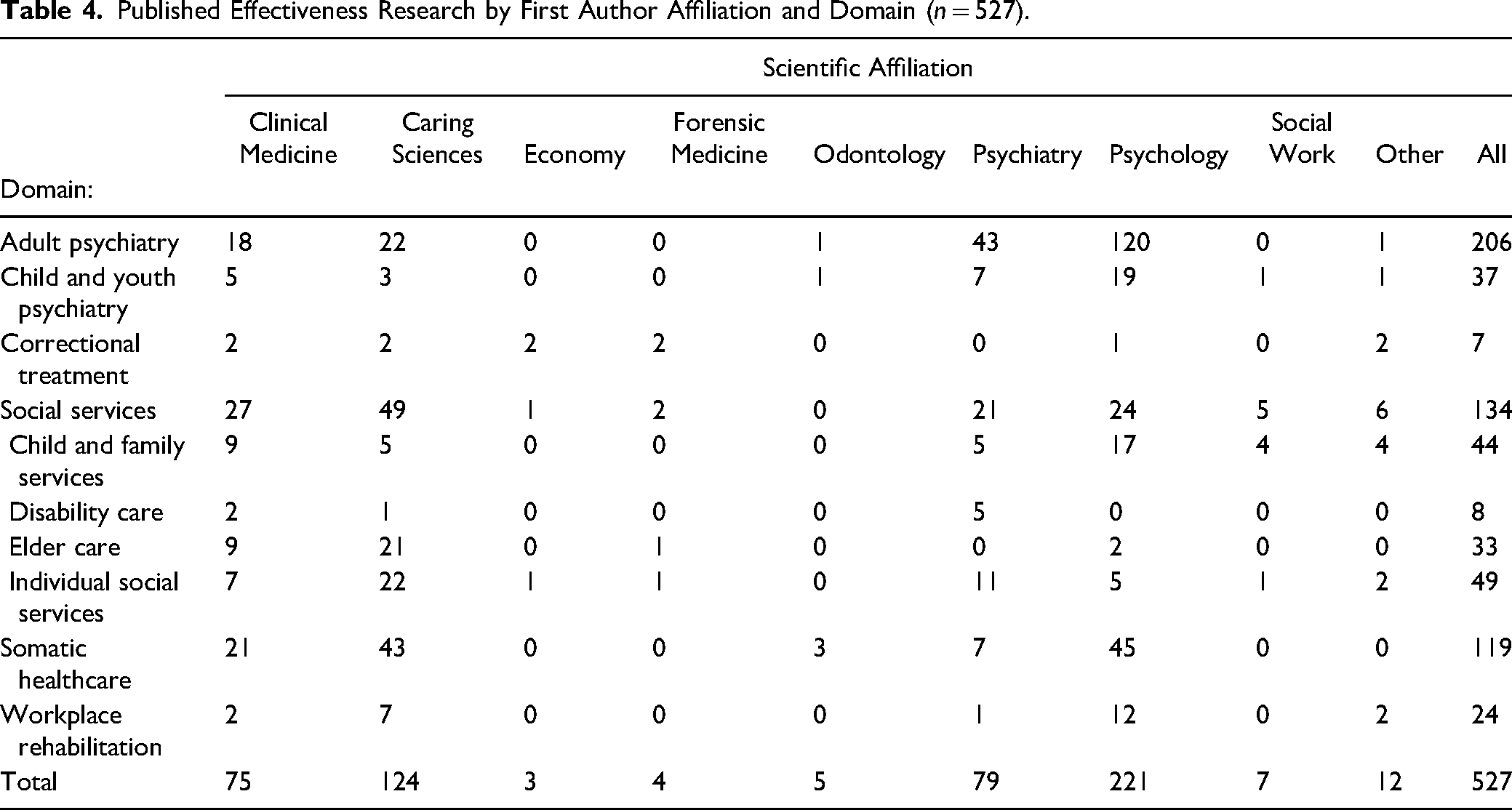
The most frequent scientific affiliation of the first authors were psychology (42%), followed by caring sciences (24%), psychiatry (15%), and clinical medicine (14%). Less frequent was social work, economics, criminology, and odontology (0.5%–1.3%). There is also a small group of six trials that were conducted by researchers affiliated by governmental agencies or a local authority (Table 3).
Published Effectiveness Research and Scientific Affiliation of First Author Over Time (n = 527).
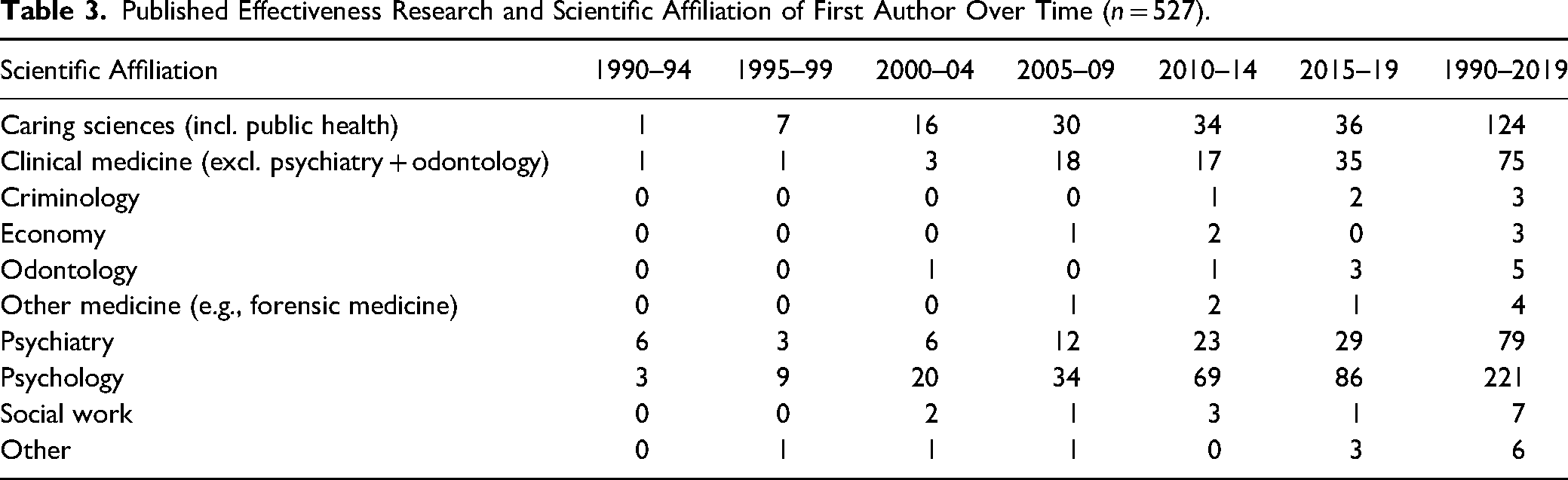
Table 4 presents the distribution of studies by first author scientific affiliation and domain. Of the 119 trials within somatic healthcare, 64 (54%) were conducted by a researcher affiliated to clinical medicine or caring sciences. Furthermore, of 243 trials within adult or child and youth psychiatry, 189 (78%) were conducted by researchers affiliated with psychiatry or psychology. However, of 134 trials of social work interventions, only 5 (4%) were conducted by a researcher affiliated with social work. This means that of the trials that delt with core social work practice, 129 (96%) were conducted by researchers in other scientific disciplines, primarily caring sciences, clinical medicine, psychiatry, and psychology.
Published Effectiveness Research by First Author Affiliation and Domain (n = 527).
The average effect size, measured with standardized mean difference, SMD (also known as Cohen's d) was .48 across all studies. According to Cohen (1988, 1992), d values of 0.2, 0.5, and 0.8 represent small, medium, and large effects, respectively. This means that the average effect is of medium size. The strongest average effects were within the domains of child and youth psychiatry and adult psychiatry, F(1,512) = 6,61, p < .0001 (based on the domains including at least 20 studies). Social service interventions produced on average an effect of .31, which is lower than the SMD within the two types of psychiatry (Table 5). Approximately half, 54%, of the trials, produced significant effects. Once again, the highest frequency of significant trials were within child and youth psychiatry and adult psychiatry, chi2(7) = 27.73, p < .0002.
Published Effectiveness Research and Number of Significant Results and Effect Sizes (SMD) (n = 527).
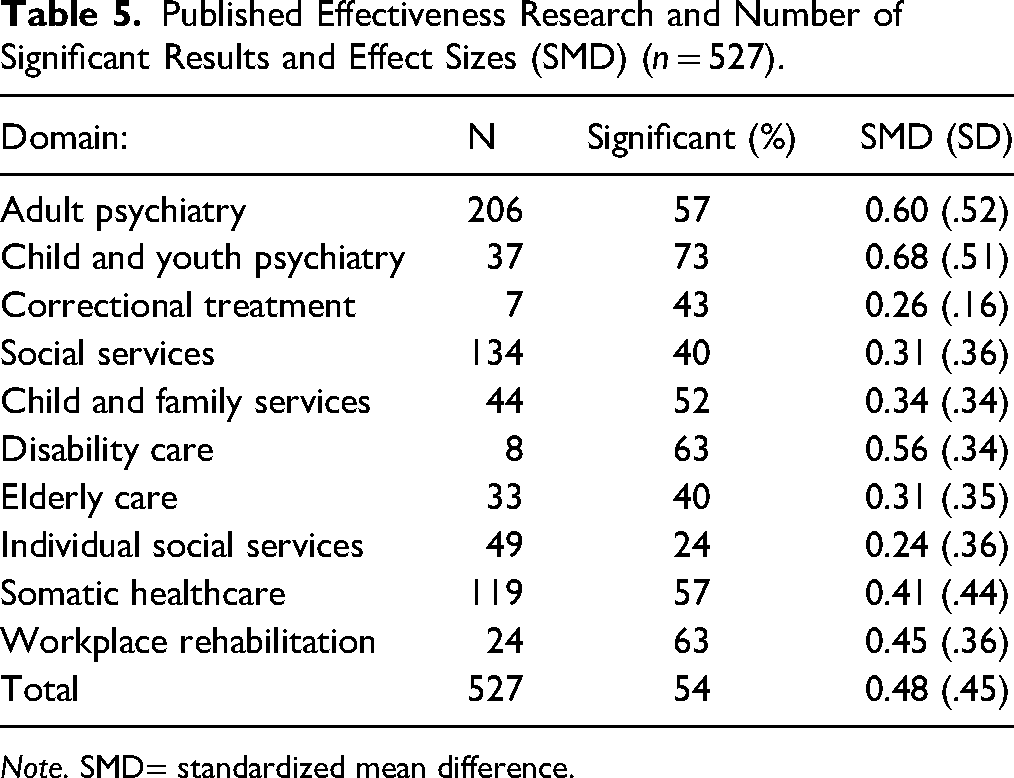
Note. SMD= standardized mean difference.
Discussion of Findings
Since the 1980s there has been a clear push from the Swedish government to increase the scientific base upon which the Swedish social services rest. This push has included stressing the need for knowledge on the effectiveness of social work interventions. The results presented here show that the number of published articles reporting effectiveness studies has increased over the past 30 years. This increase has accelerated over the past 10 years. However, only 25% of the effectiveness studies identified in this study focused on core social work practices and only in relation to limited number of target groups and practice areas, primarily interventions for child and elderly populations. These results are thus in line with previous studies of social work research investigating the extent of effectiveness studies in the peer-reviewed litterature as well as studies on PhD dissertations (e.g., Dellgran & Höjer, 2000, 2012; Maynard et al., 2014; Rosen et al., 1999; Shek et al., 2007; Olsson & Sundell, 2016; Thyer, 2015). The similarities relates to both the number of studies that are investigating the extent to which intervention effectiveness has been studied and reported (Maynard et al., 2014; Olsson & Sundell, 2016; Rosen et al., 1999) and in relation to which subject areas are being covered (Dellgran & Höjer, 2012). Based on the results of this study, effectiveness studies are rare or entirely lacking from a number of core social work practice domains. For instance, interventions targeting labor market programs, domestic violence, family support programs, preventive work, family court or migration policies and practices are scant. Further, the effect sizes found in this study show that the average effect of the studied interventions are of medium size. The strongest SMD as well as the highest frequency of significant trials were found in the domains of child and youth psychiatry and adult psychiatry. Finally, the results show that 95% of the effect studies that were conducted on core social work practices between 1990 and 2019 had a first author from either the field of psychology, health, clinical medicine, or psychiatry—not social work. The total number of publications from first authors working in the field of social work was seven during the same period. In this regard, it is important to highlight that departmental affiliation does not always coincide with the discipline within which a researcher is schooled. In this study we have focused on departmental affiliation as this is the information that is reported in the publications and as such the extent to which social workers are engaging in specific types of research may be obscured. At the same time, these results are in line with previous studies from the Swedish context investigating the types of research produced in doctoral work within social work and other disciplines (Olsson & Sundell, 2016). Overall, the results of this study speak to the notion that effectiveness studies still hold a relatively weak position in the academic field of social work in Sweden.
Limitations
Although this study has several strengths, including being based on the population of published effectiveness research over a 30-year period and the use of a standardized data extraction protocol. This study also has several limitations which we highlight here. First, as this is an exploratory analysis of effectiveness research conducted in Sweden over the past 30 years it includes a mix of different types of interventions, disciplines, and organizations. As such, publication bias may be unevenly distributed across the different categories of study included here. Second, although we conducted an extensive search for effectiveness research this is not a systemtic review and there might be studies that we have missed. Although we are confident that we have not missed many published studies, we cannot be sure and as such, there might be a minor proportion of studies that we have missed. It should be noted that despite this, any missed studies are likely missed at random and do not pose a systematic threat to the results reported here. In consideration of this, our abolute number of reported effectiveness studies may reflect an underreporting.
Third, our study relies on information reported in the publications. This information is incomplete, but we are unable to further assess the extent of the incomplete reporting contained in the publications included in this analysis. We do not however have any reason to believe that there is a systematic nonreporting of information in the publications included here.
Finally, it should be noted that our analysis includes research conducted in Sweden only. The extent to which these findings are generalizable to other contexts and settings is unknown.
Discussion and Applications to Practice
We will now discuss possible reasons for the weak position of effectiveness studies within social work research in the Swedish context. This will be done, through the concepts of Michie et al. (2011) competence—opportunity—motivation theory of behavior. This discussion should be interpreted as a tentative framework for an increased understanding of the role effectiveness studies in the field of social work research and practice in Sweden, as of today.
Our first assumption is that researchers commit to perform effectiveness studies only if they have competence to do so; social work researchers need to have the relevant skills and knowledge to conduct effectiveness research in order to be able to engage in effectiveness research. To execute a robust effectiveness study with high validity requires extensive know how; such as knowledge in design, measurement instruments, treatment adherence, recruitement and retention of subjects and advanced statistical analysis. It is unclear to what extent researchers in the Swedish context are sufficiently trained to be able to conduct effectiveness research. It is, for instance, to date unclear how PhD programs prepare future researchers to perform these kinds of studies. Courses for already established researchers who wish to perform effectiveness studies are also scarce, if at all existing.
Second, if researchers have the skills (i.e., competence), they also need the conditions to undertake effectiveness research. Effectiveness research requires extensive resources in terms of time and manpower. As all research that involves building long-term relationships with organizations outside of the academic setting, effectiveness research is highly resource intense. Effectiveness research also requires a technical infrastructure that needs to be invested in by the university (hard resources) or external funders (soft resources). It is not clear to what extent these resources are available for researchers in social work as of today. Research funding is thus a pressing issue where the funding provided from the state is often provided for 3- or 4-year long projects, which might discourage researchers from conducting effectiveness studies which would benefit from longer and more secure systems for funding. Another aspect is that effectivenss studies in the field of social work require close cooperation and consistency in interventions. This in turn requires stable partners in social work practice who can commit to long-term processes. In Sweden, social services is a local responsibility, which means that 290 locally elected political boards are responsible for the content and quality of interventions in social work. This means that neither stability nor long-term commitment can be guaranteed—as social work practice and resource allocation is constantly subjected to local political priorities. In addition, the practice environment is one of high turnover and unstable staffing (Turley et al., 2020, 2021; Wei et al., 2022). These circumstances have an impact on social work practice and the preconditions for conducting effectiveness studies of high quality.
Third, previous research has shown that many researchers in social work in Sweden are primarily motivated by a strive for structural and political change (Dellgran & Höjer, 2017), and less in enhancing knowledge of the effectiveness of social work interventions. At the same time, many scholars, stress the importance of research focusing on clients and the consequences of interventions (Dellgran & Höjer, 2017), which well corresponds to the rationale of effectiveness studies. In terms of motivation, the extent of effectiveness studies within social work must also be understood in relation to on-going and recurrent disputes regarding research, teaching, and social work practice (see e.g., Bergmark & Lundström, 2006; Dellgran, 2018; 2023; Hammersley, 2009; Meeuwisse & Jacobsson, 2020; Nilsson & Sunesson, 1988; Nykänen, 2017; Tengvald & Sundell, 2014). Some argue that it is all too simplistic to assume that research can be easily transferred to a complex social work practice, that is also affected and governed by politics, policy, and power over resources and so forth (Morén et al., 2015). It is also well documented that research results seldom have had a direct impact on practice (Nilsson & Sunesson, 1988; Petersén, 2017). But we have to assume that these difficulties apply to all types of research and not just research on intervention effectiveness.
The best available research evidence, which includes research on the effectiveness of interventions, is a cornerstone of evidence-based social work practice (EBP). An increased influence of EBP as manifested through different state intiatives (see above) has been discussed within academia as well as practice. From the academic perspective, EBP has been connected to risks of standardization, fear of professionals left with no or little room for discretion, and as a threat to academic freedom (Bergmark et al., 2012; Björk, 2016; Jacobsson & Meeuwisse, 2020). However, in a strive for change it is imperative for social work research, independent of methodological preferences. Previous research has shown that researchers in social work stress the importance of research focusing on clients and the consequences of interventions (Dellgran & Höjer, 2017). The future development and role of effectiveness studies in social work, has to be seen in light of the ambition of social work practice to be supported by an adequate body of knowledge in order to secure professional status (such as in medicine or law for example). It alse adhers to the queation on how theory can be made useful for social workers in a complex world where social workers seldom directly incorporate theory into descriptions of their everyday work (Sheppard, 1995).
Finally, we argue that the role of effectiveness studies in social work could if competence, opportunity, and motivation are in place become amore regular practice in the discipline of social work. This would be valuable since core social work values and a holistic understanding of people's living conditions play an essential role in the discipline. We argue that if effectiveness studies investigating core social work practices and activities remain in the hands of other disciplines, these essential components are at risk and could therby pose a risk for a more professionalized social work. These arguments also align with the recent European initiative to form a Special interest Group for Evidence into Practice within the European Social Work Research Association (McGlade et al., 2023). The statement from ESWRA calls for embracing a diversty of language, an inclusive approach to both individual and organization dimensions, and finding ways to a more nuanced debate regarding effectiveness studies in social work ahead.
Footnotes
Author Contributions
ARB was involved in writing original draft, review, and editing; KH in writing original draft review and editing; TMO in conceptualization, methodology, investigation, review and editing, and funding acquisition; and KS in conceptualization, methodology investigation, resources, data curation, review and editing, and funding acquisition.
Declaration of Conflicting Interests
The authors declared no potential conflicts of interest with respect to the research, authorship, and/or publication of this article.
Funding
The authors disclosed receipt of the following financial support for the research, authorship, and/or publication of this article: This study was funded by the Swedish Research Council for Health, Working Life and Welfare (Forte) Dnr: 2019-01737.
