




Abstract
The term “empowerment” has become more popular and has been used frequently both in the colloquial and scientific language in different disciplines. However, it is a complex concept, ambiguous and difficult to delimit. This imprecision gives it a certain flexibility so that it can be applied to a variety of situations and processes. Although it has mostly been used in reference to adults, in the last two decades it has been applied to young people, especially those who, for various reasons, may be considered vulnerable or at risk.
Despite the predominance of a diversity of criteria, approaches and the feeling that it is a complex and long-outdated task, in their contributions to youth empowerment, the authors agree that it is linked to the efficient growth of young people through the overcoming of certain situations by means of the acquisition of competences. However, it is more difficult to agree on the linked competencies and empirical evidence demonstrating the different levels and dimensions of empowerment (Peterson, 2014), possibly among other reasons, because delving too deeply into the implications of the term means taking sides politically and ideologically on the established social model. Despite this, the term appears closely linked to ideas such as self-esteem, self-efficacy, self-reliance, leadership, personal well-being, and participation. Rappaport (1981, 1987) expressed his disappointment that the term has been appropriated by conservatives and by those who want to use it from a therapeutic point of view detached from any political analysis or intention. In a similar vein, Bacqué and Biewener (2013) conclude that the internationalization of the concept of empowerment has led to its domestication and a tendency toward depoliticization. According to the authors, this has favored the predominance of the individual focus of the concept over the social, political, and transformative dimension it initially had and distances it from progressive community agendas, a vision that does not take into account justice and social change.
The purpose of this article is to review which variables of youth empowerment are prioritized, what strategies are used, and what evidence the projects provide to favor the empowerment of young people. We start from the assumption that the variables linked to the individual development of young people will be more present in these projects to the detriment of those variables more linked to social and political transformation.
Youth Empowerment
Rappaport (1984) defines empowerment as the process by which individuals, organizations, and communities gain control and command of their own lives. Zimmerman (2000), in a similar vein, identifies three levels of empowerment: the psychological, the organizational, and the community. In this sense, many of the studies focus on the psychological aspect of empowerment and identify its intrapersonal, interpersonal, and behavioral components (Le Bosse et al., 1998; Morton & Montgomery, 2012; O'Donoghue et al., 2002; Speer, 2000; Speer et al., 2001; Zimmerman & Rappaport, 1988; Zimmerman et al., 1992). Peterson (2014) contributes to this debate and points out that empowerment should be based on people's strengths and should not be primarily guided or directed by technical or professional people. It advocates a conception that promotes the abilities of people to fight against their difficulties both at the individual and community levels so that these people are actively involved in the search for possible solutions. Zimmerman et al. (2011) add that in the process of interacting with the environment, the resources themselves help the person to develop the necessary cognitive behavior and skills that allow them to critically understand this environment.
Among the contributions to the study of youth empowerment, it is worth highlighting the work of Jennings et al. (2006). The authors analyzed four theoretical models of youth empowerment and ended up proposing their model based on the critical social theory of youth empowerment through which it is desired to provide support to the contributions of young people to community development and socio-political change in building stronger and more equitable communities. This community perspective allows young people to draw conclusions about their empowerment process.
Youth Empowerment Projects
Traditional youth programs and theories emphasize the risks and focus on the prevention and reduction of unwanted behavior. In contrast, more constructive and positive views of young people have made an appearance, seeking not only to prevent adolescents from engaging in health-compromising behaviors but to build their abilities and competencies (Roth & Brooks-Gunn, 2003). They do this by offering supportive and empowering environments where activities create multiple opportunities for a range of skill-building and horizon-broadening experiences. It is in this framework that different programs focused on youth empowerment appear.
Youth empowerment programs focus on developing youth capacity, participation, and agency at the individual and community levels, and include young people in some or several parts of the program process (design, implementation, and/or evaluation) (Morton & Montgomery, 2012, p. 23). Thus, the programs that want to work on youth empowerment aim to use highly participatory, youth-driven processes to help young people strengthen positive attitudes, skills, and behaviors that improve functioning across a range of life domains (Jennings et al., 2006). This involves rethinking youth-adult relationships and turning them into more horizontal relationships, based on shared power in decision-making.
In this regard, many empowerment programs focus on providing supportive contexts where youth build assets, connect with local resources and adult role models, and engage in community change activities (Zimmerman et al., 2018). Jennings et al. (2006) set out 6 points that any youth empowerment program should take into account: (a) safe, comfortable surroundings; (b) significant participation and involvement; (c) equal power-sharing between adults and young people; (d) involvement in critical reflection on interpersonal and socio-political processes; (e) participation in socio-political processes that lead to change; and (f) the integration of empowerment at the individual and community levels. The inclusion of these points produces great benefits: an increase in self-esteem, safety, competencies, abilities, cooperativism, and appreciation of and respect for others. Similarly, youth empowerment literature has also emphasized the importance of adult education in helping technicians and volunteers to facilitate the development of young people's skills in empowerment processes, even more so when it comes to young people in situations of vulnerability or in residential care services (Silva et al., 2017).
There are different models within youth empowerment programs or projects. One which stands out is Positive Youth Development (PYD) which gained popularity in the 90s and “focuses on helping youth develop traits that correlate with satisfied and productive adulthood—and concomitantly protect against risky behaviors during adolescence” (Maloney, 2014, p. 10). PYD challenges traditional approaches to working with young people since they do not involve young people in using their power to change the systems that are the cause of their situation (Watts & Flanagan, 2007). This is why critical awareness takes over and can be considered a key aspect in the assessment of empowerment. Critical awareness includes the skills and knowledge to analyze power within society and its impact on oneself. However, there is no general agreement on a single model of PYD, and this means that programs with very different structures and content (e.g., a training project to work on the self-esteem of adolescent girls or an educational leisure project) may be included in the PYD.
Among others, we can also find the following models: the Youth Development and Empowerment Program Model (Batista et al., 2018; Bulanda & Johnson, 2016), the Transactional Partnering Model (Kim et al., 1998), Critical Youth Empowerment (Jennings et al., 2006), Tier PYD programs (Shek & Ma, 2006) and the Empowerment Education Model based on Freire (Mohajer & Earnest, 2009), Youth-led participatory action research (YPAR) (Ozer & Douglas, 2013; 2015), or Youth Empowerment Solutions (YES) (Zimmerman et al., 2018).
The Evaluation of Empowerment in Projects
The diversity of programs and models makes it difficult to evaluate youth empowerment projects. In this sense, there is a lack of instruments that clearly and concretely delimit the fundamental aspects to be considered when making an evaluation. Studies in the evaluation of youth empowerment projects have focused on analyzing the impact they have had on young people. Likewise, the participatory characteristics of youth empowerment projects make the application of random controlled experimental designs difficult (Bulanda & Johnson, 2016). There are few evaluations of empowerment programs made with experimental or quasi-experimental designs that provide evidence of the impact of these programs (Morton & Montgomery, 2012; Zimmerman et al., 2018). On the other hand, more qualitative evaluation approaches, such as participatory evaluation, can be very useful. Beyond the applied methodology, it is important to collect what type of impacts these youth empowerment programs have. Doing so will not only demonstrate the value and need for these programs but also to discover what elements the projects need to strengthen for the empowerment of young people. Let's see, then, what impact is evident in the young people involved in these projects.
Among the authors who have studied the impact of these programs, we highlight the study carried out by Morton and Montgomery (2012), reviewing the evidence of the impact of youth empowerment programs (YEPs) on adolescents. These types of programs include Youth Councils, Youth/Adolescent Centers, participation in committees, participation in governing bodies, group work, and research programs based on community participation. In fact, those structures make available regular opportunities for involvement in making decisions regarding programs. The study detected that the most important results of such programs are self-esteem and self-efficiency but reveals insufficient evidence of the impacts of YEPs. The study by Unroe et al. (2016) also highlights the correlation between self-esteem and empowerment within participating cohort groups in an after-school program. The same results are to be found in Wagaman (2011), who added social capital, the ability to solve problems, and the feeling of safety. Later, Wagaman himself (2016) adds critical awareness and community participation as significant predictors of empowerment. Nicholas et al. (2019) also contribute to this debate by relating meaningful socio-political learning experiences (interpersonal, educational, and civic engagement) to empowerment outcomes (political effectiveness, critical awareness, or participation). Also, Zimmerman et al. (2018) provide evidence of the effectiveness of an empowerment program, in this case, the Youth Empowerment Solutions (YESs) program, an active learning curriculum. Through a quantitative study with a modified randomized control group design, the results indicate that the program helps young people to assume leadership roles, think critically about their community, and engage in community change in partnership with supportive adults to contribute to healthy developmental outcomes.
There are found interesting contributions beyond experimental or quasi-experimental programs. In a two-year review of qualitative program evaluations, Bulanda (2008, cited in Bulanda & Johnson, 2016) found that program participants had increased feelings of self-determination and were able to identify experiences of autonomy and competence in participating in the program. The study by Funes and Robles (2016) collects data from 122 young people and concluded that the civic commitment of these young people in the form of participation in entities in the territory improved their empowerment and consequently the development of skills that reduce the risk of exclusion. From another perspective, the study of homeless young people by Buccieri and Molleson (2015) showed the relationship between empowerment and a sense of belonging. Also, the study by Law et al. (2019) concluded that the reinforcement of the strengths and capacities of young people themselves, and consequently their self-esteem, has a direct relationship with their processes of empowerment and socialization.
As can be seen, there is a range of studies on the impact that empowerment projects have had on young people. However, few studies have focused on the evaluation of the youth empowerment project itself. Some experiences have been detected in the field of social pedagogy. Yohalem et al. (2009) presented and discussed different resources and tools for evaluating the quality of youth programs. Among the instruments they present is the Quality Assurance System® Developed by Foundations, Inc. (QAS), which presents a proposal for a rubric that inspires the concept of a “Rubric for the evaluation of youth empowerment actions and projects” (HEBE Rubric; HEBE Project, 2019) an instrument designed within the framework of HEBE Project on empowerment (Ref.: EDU2017-83249-R). This is a useful tool for the analysis of youth empowerment projects; to plan, implement and analyze processes that seek to influence the empowerment of young people. The rubric contains indicators and scenarios that incorporate the three components of empowerment provided in Zimmerman's (1995) theory; the intrapersonal, the interactional, and the behavioral components. It facilitates the collection of evidence and the review of the strategies developed by projects through self-assessment undertaken by the educator or the educational team about the project developed.
The work presented here is part of a wider research project, HEBE Project on youth empowerment. Throughout three Spanish research projects (2010–2020), HEBE Project has provided new knowledge on youth empowerment. Among the contributions, a systematic review of the literature was carried out in order to develop the State of the Art on the subject (Úcar, 2016a), and to propose a pedagogical model of youth empowerment (Soler et al., 2017). Within the framework of this model, youth empowerment is defined as a: Process that increases the chances of a person being able to decide and act consistently on everything that affects their own lives, participate in decision-making, and intervene in a shared and responsible way in what affects the community of which this person forms a part. This requires two conditions: that the person acquires and develops a series of personal abilities (knowledge, attitudes, aptitudes, skills …) and that the environment facilitates the effective exercise of such abilities. (p. 22)
In the framework of the same project, the initial set of personal and community empowerment indicators (Soler et al., 2014) were adapted specifically for youth empowerment (Planas et al., 2016a; 2016b; Planas-Lladó & Úcar, 2022). Once adapted, a validation process was initiated in three phases: an academic validation through a literature review (Úcar et al., 2016a), a validation by experts in the field of youth work, and a validation of practice with young people (Llena-Berñe et al., 2017; Úcar et al., 2016b). The result of this validation is a set of nine dimensions and 27 indicators of youth empowerment (Planas et al., 2016a; Soler-Masó, 2020; Planas-Lladó & Úcar, 2022). This set of dimensions and indicators is the basis on which the HEBE Rubric was developed (Corbella Molina et al., 2021).
Based on this evaluation rubric we wonder about ¿Which dimensions of youth empowerment do the programs prioritize in their interventions? ¿Which strategies are used by programs to foster these dimensions of youth empowerment? Do programs utilize different strategies for different dimensions? Do programs with different goals (i.e., formal education, field education, specialized education, and socio-cultural animation) emphasize different dimensions of youth empowerment?
Methods
Data Collection
HEBE Rubric (HEBE Project, 2019) is the tool applied in this research. The tool is applied by educators to evaluate the youth empowerment project they are working on. The rubric collects quantitative and qualitative data. It's available online (http://rubrica.projectehebe.com.es) and consists of nine dimensions and 27 indicators of youth empowerment, as shown in Table 1.
Dimensions and Indicators of HEBE Rubric.
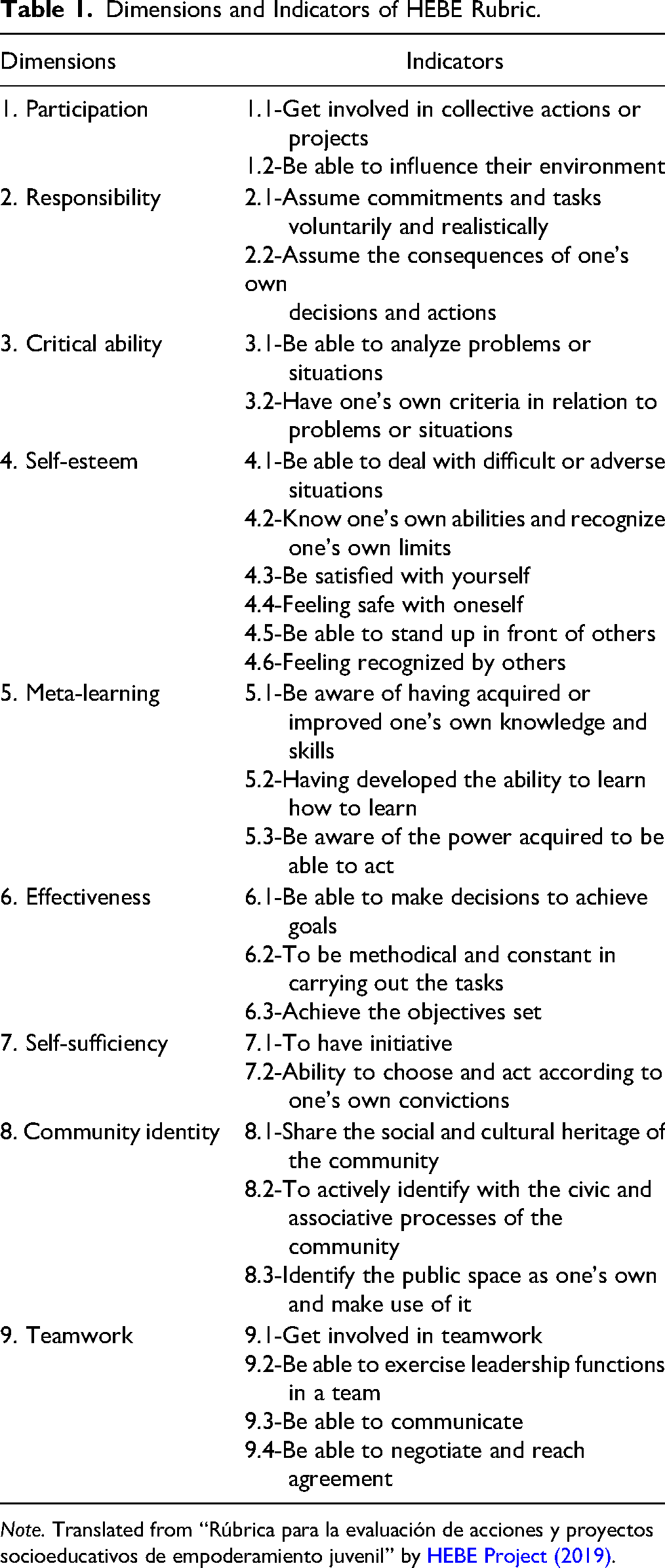
Note. Translated from “Rúbrica para la evaluación de acciones y proyectos socioeducativos de empoderamiento juvenil” by HEBE Project (2019).
Each indicator deploys in four scenarios graded from the lowest to highest grade to facilitate youth empowerment. Each scenario allows the choice of three options (−, = , +) according to a full identification with the scenario described ( = ); to an identification slightly below ( − ); or a little above ( + ). The four scenarios presented in each indicator are summative and cumulative, which is to say that each scenario always includes and exceeds the previous one, the two initial scenarios take into account internal elements of the project itself, and the last two take into account the context and the community where it is developed. It is recommended that the choice of scenario be accompanied by evidence, reflections, and proposals for its justification. For this reason, each indicator involves two information inputs: one to record the evidence that supports or illustrates the choice made, and the other to make a note of the reflections and proposals for improvement that are generated after having been situated in one of the scenarios.
Research Sample
HEBE Rubric was applied to twenty projects developed in Spain from four areas of intervention. The first is from the area of the school (formal education) which includes those professionals who work in secondary education centers (high schools) or in higher education (universities). The other three areas of analysis in this research are based on the classical classification in social education (field of non-formal education) and have been proposed by different authors (Froufe, 1997; Gómez, 2003): specialized education (projects that attend to people in a specific situation of risk or vulnerability, socio-cultural animation (free-time cultural and educational projects) and vocational training (projects where the main objective is preparation for employment The authors mentioned refer to the fourth area of intervention also from the field of social education: adult education. We have not considered this area because projects targeted towards adolescents or young people were of interest. This could be a controversial classification, but we were interested in a simple classification with a certain tradition and identification by the professionals themselves. The selection of projects was based on intentional sampling. Five projects were selected for each of the four areas specified. The selection criteria of the projects were: (a) The intention to work on youth empowerment, (b) The desire of the educator or the educational team to carry out a process of reflection on the project, and (c) The commitment to take the application of the task seriously.
The research team made the first exploration of possible projects to which the rubric could be applied. Once the first selection was made, the team contacted the project leaders to invite them to participate in the study and confirm the youth empowerment intention of the project. Given the suitability of the project and the acceptance of participation, each team decided who was the most appropriate person(s) to participate according to whom was leading and developing the project. The research group sent two electronic documents to them: (a) an explanatory guide to the application of the rubric, and (b) the rubric in an editable pdf format. A telephone number and contact email address were also provided in case of any doubts during the process of application for the instrument.
The rubric was applied to the 20 projects and was answered, on average, by three educators, meeting twice, for 3.5 h (see Table 2).
Characteristics of Rubric's Responses.
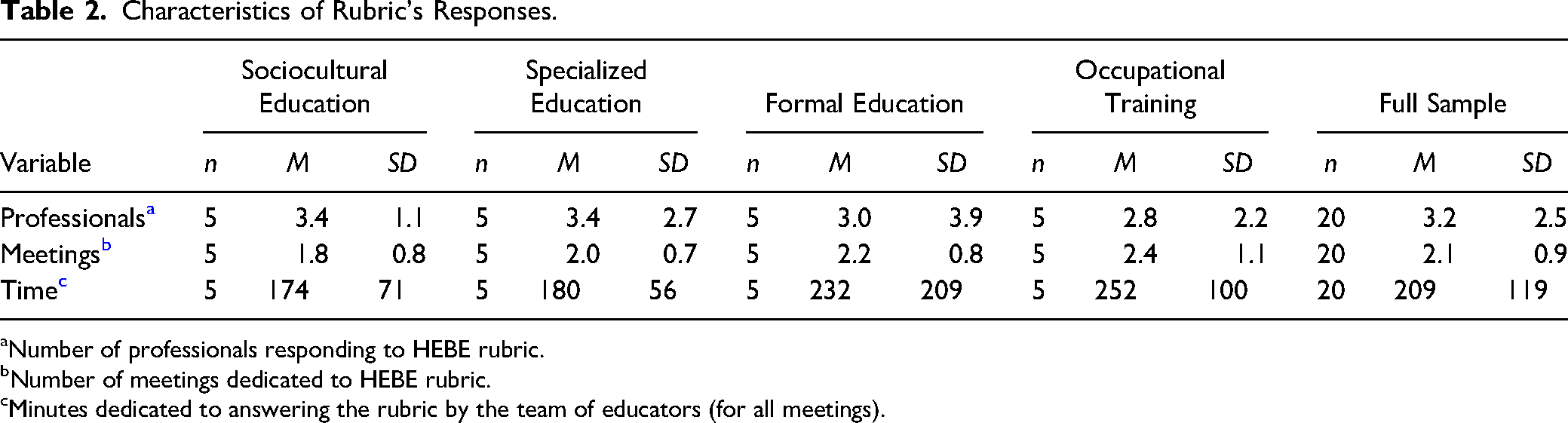
Number of professionals responding to HEBE rubric.
Number of meetings dedicated to HEBE rubric.
Minutes dedicated to answering the rubric by the team of educators (for all meetings).
Analysis
The results from the application of the rubrics were collected in a spreadsheet and the scores for the different scenarios were converted into a numerical scale from 1 to 12. In the event that the educator had not positioned the project in any scenario, the value of that indicator was considered lost. Thus, for each of the twenty projects evaluated, we obtained numerical values between 1 and 12 for each of the indicators that comprise the nine dimensions of empowerment. These quantitative results were exported to the SPSS statistical program for further analysis.
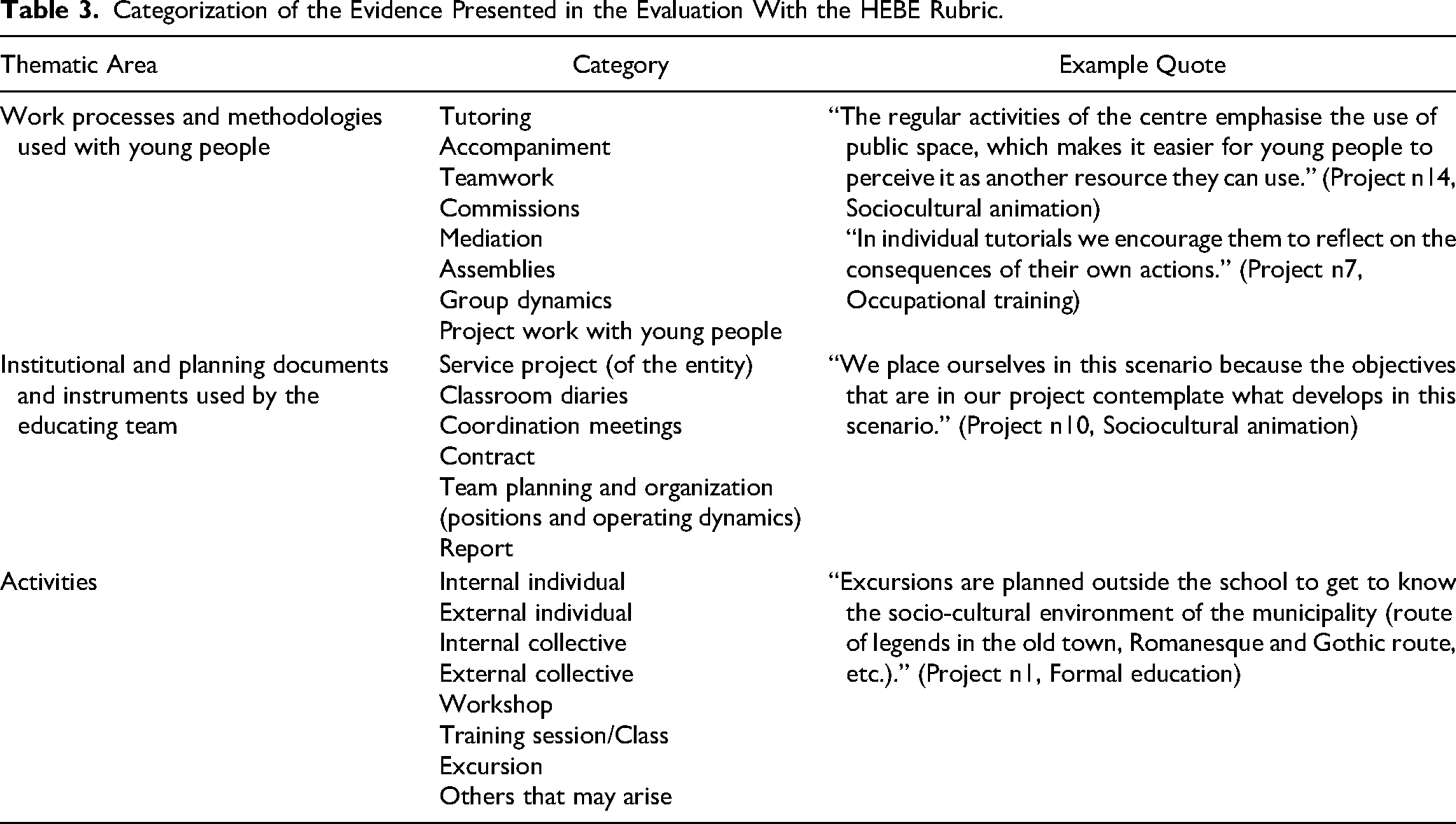
The rubric itself facilitates the collection, in the final section, of the evidence that each educational team took into consideration when evaluating each indicator. The analysis of these qualitative data was undertaken through a categorization of the main concepts that make up the discourse that is presented. Through individual open coding and subsequent debriefing, 22 categories were established and classified into three thematic blocks of analysis (see Table 3). The data were entered into the Atlas.ti programme.
Categorization of the Evidence Presented in the Evaluation With the HEBE Rubric.
Results
Quantitative Analysis of the Dimensions of Empowerment
This analysis collects the values of the numerical scales of the empowerment indicators and analyses: (a) the averages of the empowerment dimensions, establishing correlations between them, (b) the scores of each of the empowerment indicators and their correlations, and, (c) trends are noted according to the areas of action of projects based on the scores obtained in the dimensions and indicators of the rubric.
The nine dimensions of the concept of empowerment are included in the rubric using the 27 indicators that comprise them. Having reviewed the internal consistency of the group of indicators that comprise each dimension, through the reliability test of Cronbach's Alpha statistic, the overall index of each dimension was constructed through the average of its indicators. Cronbach's Alpha exceeds the .5 threshold for all sets of indicators, with the results obtained for Community Identity (.88) and Critical Capacity (.87) indicators being especially notable. Because the numerical value of each indicator ranges from 1 to 12, the overall index for each dimension is also presented as a cumulative and continuous scale between 1 and 12.
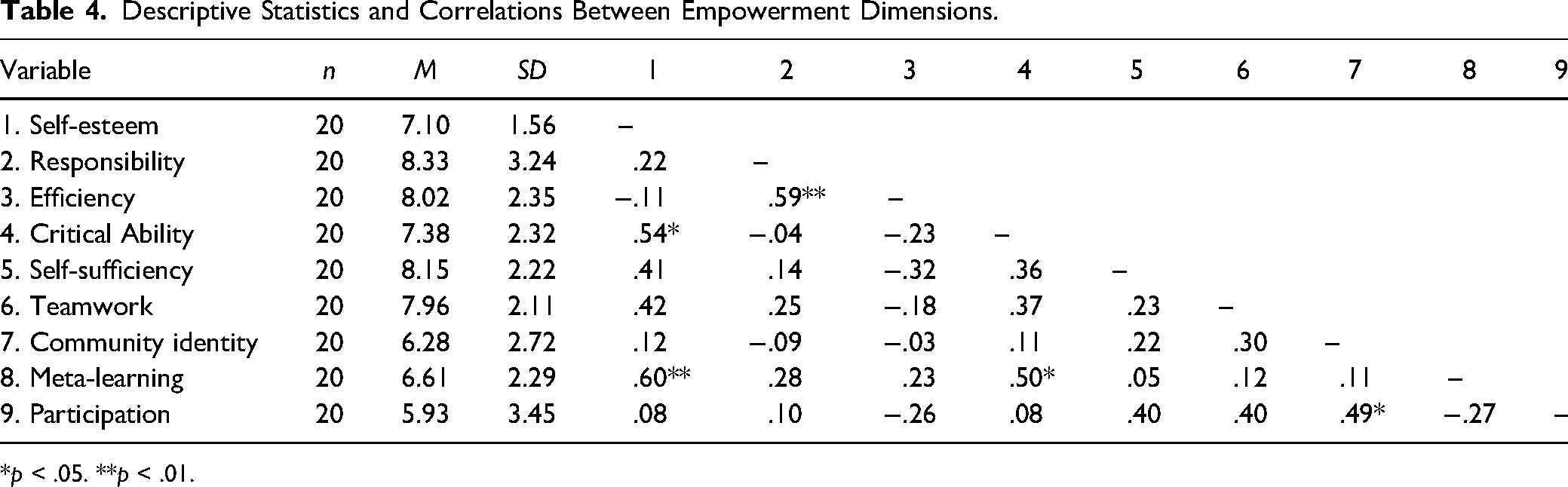
The average of each dimension and its standard deviation for all projects are shown in Table 4. The values of the dimensions range from 5.9 to 8.3, so the 20 projects are positioned around the numerical average of the scale (6). This average value also indicates that most projects are located between the two initial scenarios of the rubric that take into account internal elements of the project itself and the last two that take into account the context and the community where it was developed.
Descriptive Statistics and Correlations Between Empowerment Dimensions.
*p < .05. **p < .01.
The dimensions with the highest averages on the scale are Responsibility (8.3) and Self-sufficiency (8.2). In contrast, Participation (5.9) or Community Identity (6.3) shows lower overall averages. However, Responsibility and Participation are also the dimensions with a more pronounced standard deviation, that is, they are the ones that are worked on in the most diverse way among the projects analyzed.
Secondly, a bivariate correlation analysis was performed to check which dimensions are worked on in pairs. In this analysis, it has been verified that the correlations are positive between the dimensions paired in Table 4: if a project works on one dimension it is likely that it also works on the second in parallel. Specifically, Responsibility and Efficiency are worked on (.59); Participation and Community Identity (.49), Meta-Learning with both Critical Ability (.50) and Self-Esteem (.60), and the latter among them (.54), as shown in Table 4.
In the analysis of the indicators of empowerment, the trend observed in the nine dimensions is confirmed: the averages move between 5.4 (SD = 3.6) and 8.9 (SD = 3.2) on a scale of 1 to 12 and the highest scores are obtained by indicators that collect the more individual components of empowerment: “assuming commitments and tasks voluntarily and realistically” (Responsibility 1) and “being able to communicate” (Teamwork 3). On the other hand, the lowest scores are included in the indicators that refer to “sharing the social and cultural heritage of the community” (Community Identity 1) and “Getting involved in collective actions or projects” (Participation 1), that is to say, those that take into account the context and the community where the project takes place. The breadth, both in dimensions and indicators, between the maximum and minimum values, refers to the idea that projects with the intention of youth empowerment do not usually work with all the indicators and dimensions of empowerment at the same depth. It seems that each of the projects focuses on one or a few dimensions of the concepts of youth empowerment.
With the application of an analysis of bivariate correlations between the indicators (see Table 5) it is shown, moreover, how most of the indicators that are part of the same dimension are significantly related to each other (< .55). The relationship between Self-Esteem indicators that have weak correlations or are not significantly related to each other and those that do in relation to others is striking. It seems, then, that Self-Esteem is worked on less as an end in itself and more in relation to other variables that favor empowerment.
Descriptive Statistics and Correlations Between Empowerment Indicators.
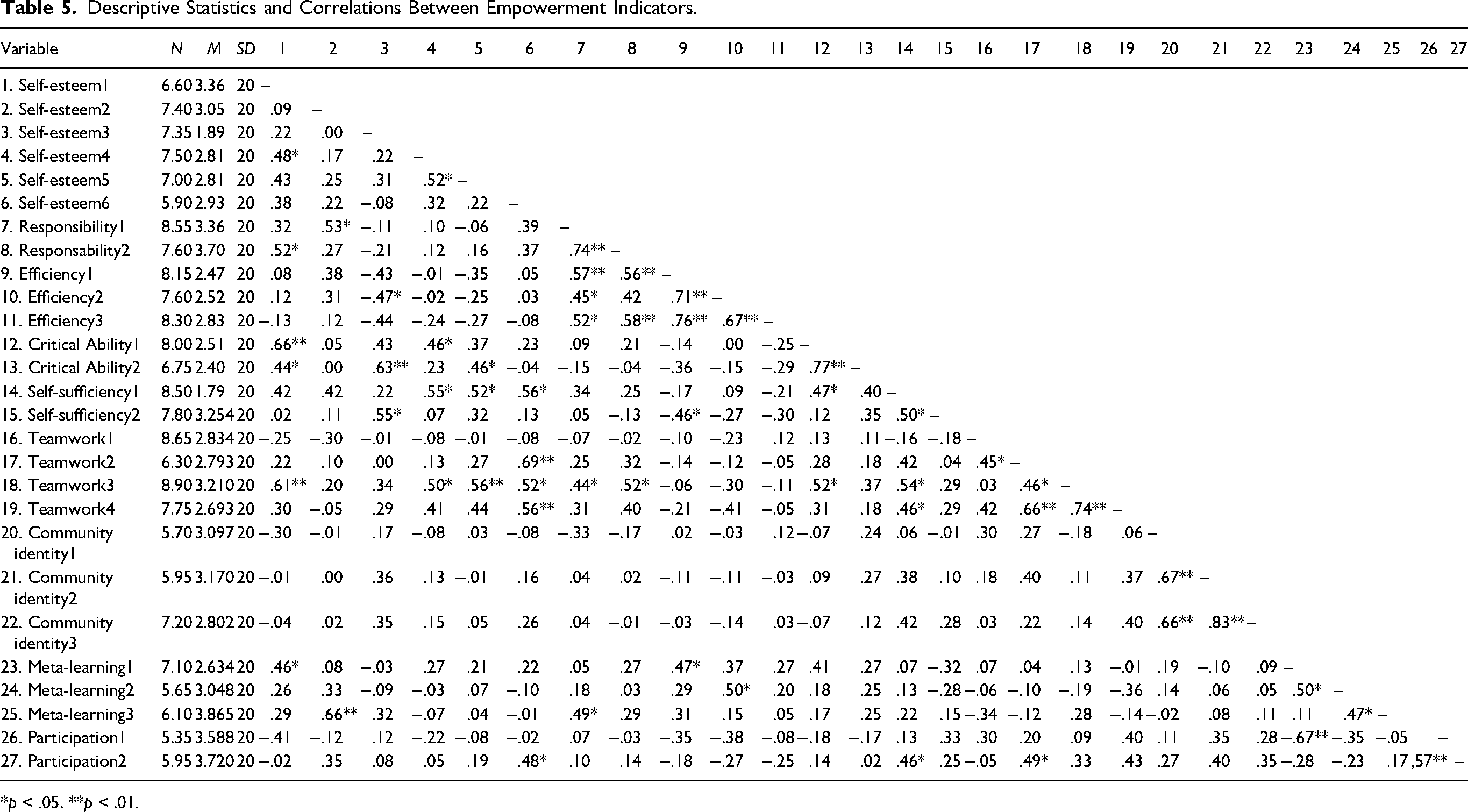
*p < .05. **p < .01.
The correlations reinforce one of the trends already exposed in the dimensions: The almost total correlation of all the indicators of Efficiency and Responsibility. The correlation analysis also provides information on the relationship between some of the indicators of Self-Esteem with those of Self-sufficiency, those of Critical Capacity, and those of Teamwork. In addition, the negative correlation (−.67) between the indicators Participation1, which is “getting involved in collective actions or projects” and Meta-learning 1, as “having awareness of having acquired or improved one's own knowledge and skills,” could suggest that the projects studied have difficulties in working on these two indicators at the same time. Projects often prioritize some dimensions, focusing on one or some of the indicators to the detriment of others. In this sense, it would be good to consider projects that seek a balance in working with the different indicators, or in the different dimensions, as they all contribute to facilitating youth empowerment.
Despite the limitations of the sample, the results point to some interesting trends according to the areas of action of the projects. In relation to the dimensions by areas, as it is shown in Table 6, occupational training projects are the ones that work the most or take into account Self-Esteem, Efficiency, Responsibility, and Meta-Learning for Empowerment. On the other hand, the dimensions related to the more community aspect of empowerment: Teamwork, Community Identity, or Participation are the least valued in projects in the field of occupational training. Other tendencies to emphasize are the consideration of the projects of sociocultural animation in the dimension of Teamwork and Participation, or how the Specialized Education projects value Critical Capacity, Self-sufficiency, and Community Identity projects over the rest.
Average Scores of the Dimensions, According to the Areas of Action of the Projects.
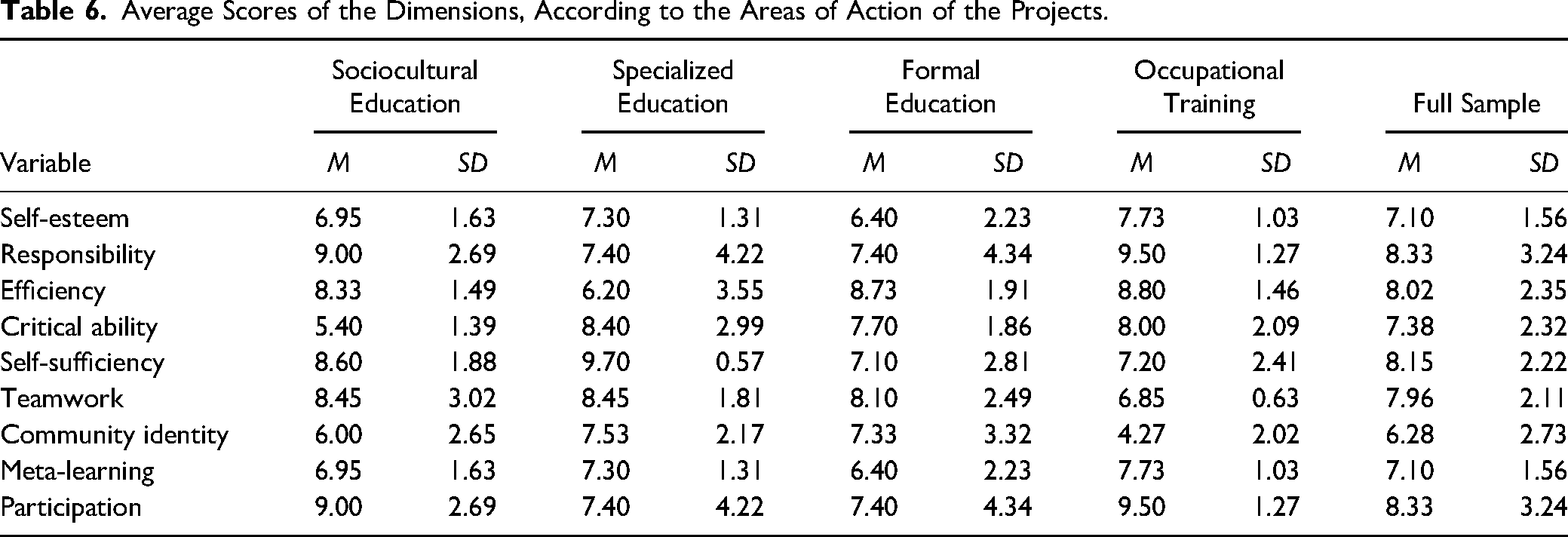
In relation to the indicators, if we look at the behaviors furthest from the averages, we observe how the projects in the field of occupational training are the ones that score highest in nine of the 27 indicators but obtain the lowest score in seven indicators. The low score is noticeable in the two indicators of Participation, the three indicators of Community Identity, and in two of the three indicators of Teamwork. However, they have the highest values in the Self-Esteem indicators (except for the last one) and the two for Responsibility. The projects in the field of sociocultural animation, on the other hand, are the ones that score higher in the Participation indicators. They also stand out in the last Teamwork and the third indicator of Efficiency, on the other hand, they are the ones that score lower in the other two indicators of Efficiency. Projects in the field of specialized education are located at the top of the scale in the indicators of Critical Capacity and Self-sufficiency and, although they do not score very high, they are the ones that score highest in two of the indicators of Community Identity. Finally, projects in the field of formal education stand out for approaching the average in most indicators, scoring above and prominently in the first indicator of Teamwork and in the second indicator of Effectiveness, and below in the second of Self-sufficiency. They also score low on three of the Self-Esteem indicators.
Review of Evidence
The results of the content analysis carried out on the evidence that the educational teams provided to justify the evaluation they made through the rubric, provide us with some interesting data (see Table 7). Firstly, there are two dimensions that collect 50% of the evidence that teams have been able to provide: Self-Esteem (32.65%) and Teamwork (17.4%). Somehow it seems easier for them to find evidence that supports their positioning in these dimensions. On the other hand, the Participation dimension has the least evidence to specify the evaluation carried out.
Frequency and Percentage of the Different Categories in the Analysis of the Evidence.
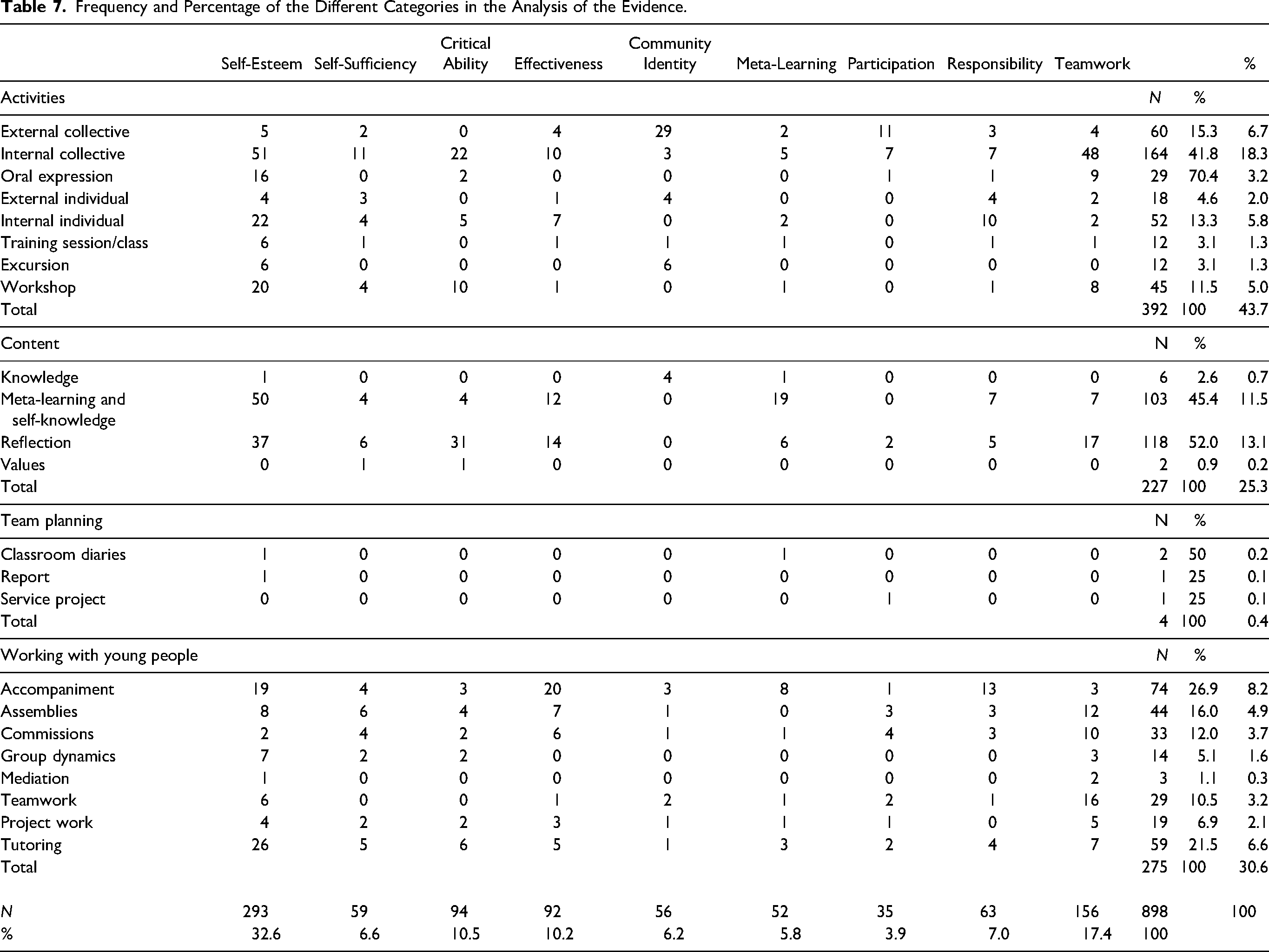
The evidence is mostly specified in activities aimed at young people (43.7%) and secondly in methodologies used to carry out the activities (30.6%). The content of the activities occupies a smaller presence in the evidence (25.3%) and the planning instruments are found last (0.4%), being used only anecdotally to support the position taken in the evaluation.
The data collected also show that in the evaluation of youth empowerment projects that educational teams have carried out, the majority of resource is to resort to collective activities in the internal format in the different projects or services (18.3%), much more than external activities (6.7%). In this sense, internal collective activities mostly support the dimension of self-esteem and teamwork.
The assessment also frequently uses activities with contents that invite reflection (13.1%) or that promote self-knowledge and invite meta-learning (11.5%). In the first case, the dimensions most worked on are self-esteem and Critical Capacity. In the second case, self-esteem stands out especially.
Youth empowerment through the projects analyzed is preferably worked on through internal activities that aim to promote reflection by young people and their self-knowledge. In terms of methodological strategies, the most common are accompaniment, tutorials, and assemblies.
Discussion and Applications to Practice
Unlike other proposals for the evaluation of youth empowerment, more focused on program impacts (Wagaman, 2011; Morton & Montgomery, 2012; Unroe et al., 2016; Nicholas et al., 2019; Law et al., 2019), the tool applied in this research seeks self-assessment by educators of the youth project itself. This evaluation is proposed to improve actions, highlight the value of these programs and identify the elements or processes that need to be fostered to improve the empowerment of young people. In this sense, evaluation is useful insofar as it helps in subsequent decision-making (Rossi & Freeman, 1989).
The evaluation of the projects has shown not only how the teams of educators recognize the nine dimensions of empowerment included in the rubric, but also that not all of them work with the same intensity. Specifically, educators have stated that the most favorable scenarios for working on youth empowerment are those of the dimensions of Responsibility and Self-sufficiency, coinciding with Bulanda (2008; cited in Bulanda & Johnson, 2016). It must be said, however, that many other studies (Morton & Montgomery, 2012; Wagaman, 2011; Law et al., 2019; Unroe et al., 2016) also highlight Self-Esteem. In our analysis, Self-Esteem is not one of the dimensions most valued by the team of educators, although the correlation of the indicators reveals how the indicators of this dimension would work mostly in relation to other indicators that favor empowerment.
In the literature, evaluations of PYD programs also highlight the importance of critical capacity (Nicholas et al., 2019; Wagaman, 2016), however in the review of the programs analyzed, critical awareness is one of the dimensions worst rated by teams of educators. Therefore, what is planned and developed in the projects from the perspective of the educators might not match the impacts hoped for from these programs.
The literature review on youth empowerment also recognizes the importance of community identity and participation. In this regard, Zimmerman et al. (2018) stated that these programs help young people take on leadership roles, think critically about their community, and become involved in their changes. Funes and Robles (2016) add the civic commitment of these young people in the form of participation in local entities and, similarly, also Buccieri and Molleson (2015) in terms of the sense of belonging.
On participation, some authors argue that projects should aim to use highly participatory and youth-led processes in order to help young people strengthen positive attitudes, skills, and behaviors (Jennings et al., 2006). However, the dimensions of participation and community identity are those that, according to the educators themselves, are less present in the programs they run. This indicates important possibilities for improvement of the community perspective, self-management, and relationship with the environment of the young person in terms of the development of these projects. According to the scenarios in the rubric, in a few cases, the work of participation indicators has a self-management approach. The evaluated projects are in levels of participation, proposed, identified, and implemented from the same project, moving away from a community perspective, self-management, and relationship with the environment of the young person. Also, in the dimension of teamwork, the tendency to work within the group itself and among the members of the project is evident, rather than working with other community agents. Therefore, with regard to the projects analyzed, we can conclude that educators work more on the individual perspective of empowerment than the community. The projects analyzed encourage the development of individual skills, such as youth agency (Morton & Montgomery, 2012), but there is a need for greater use of highly participatory, youth-driven processes (Jennings et al., 2006).
Projects more closely linked to the occupational training of young people also tend to work more on empowerment from an individual than a community point of view. Young people's self-esteem and responsibility are the most recognized dimensions of these projects. The results are not surprising for the fact that the main aim of this type of program is to improve the qualifications and professional skills of young people so as to enter the labor market. It is also not surprising that the projects that promote dimensions of empowerment of a more community nature are those related to the field of sociocultural animation and specialized education. In the case of sociocultural animation, the work of participation is often a means to an end in these programs. With regard to specialized education projects, the community approach to responding to social needs and problems is fundamental, especially those that affect groups at risk. The community approach and, therefore, the work of community identity and the rooting of the people in its territory becomes a preventive and at the same time reparative element. It is also significant to observe how the projects belonging to the field of specialized education have valued the promotion of self-sufficiency and critical capacity more. Many of the projects that work with groups at risk or in a situation of vulnerability aim to provide people with resources so that they can develop and decide on their own lives.
As Meneses et al. (2018) highlight, the success of the interventions proposed by professionals in intervention is closely linked to their ability to reflect on the teaching and learning practices they promote and, in particular, to the way in which they are based and evaluate them to try to develop them in the best possible way. In this sense, the need to provide useful tools and instruments to educators that facilitate their analysis and guidance in work and help them make decisions with more criteria and foundation is relevant. However, the study finds the difficulty of finding evidence that highlights and endorses the results of the actions of teams. The assessments that educators’ teams attribute to the dimensions of empowerment are not always accompanied by evidence that proves their foundation. It seems, then, that educational teams have difficulty justifying and accrediting the work they do. Núñez et al. (2014) reflect on the difficulty of providing evaluations that clearly show the results of intervention projects at the community level. The lack of foresight in data collection, the establishment of indicators, or the systematization of information could be factors that make it difficult to evaluate projects. Likewise, there is still a lack of evaluative culture in organizations that facilitates and encourages the processes of systematic information collection (Núñez & Úcar, 2018). This difficulty in providing evidence also indicates the limitation of valuing the action of educational teams and making informed and rigorous decisions based on evidence-based education. That's why places and time are needed for reflection on practice and actions that facilitate evaluation for subsequent decision-making, collaboration, participation, and empowerment of all stakeholders (Fetterman et al., 1996).
Regarding the limitations of the research carried out, it is necessary to refer to the number of projects analyzed, even more so if we consider them by field. Despite this limitation, the results have shown trends that will need to be confirmed in later studies with larger samples. Similarly, it would also be interesting to complement the data with studies that incorporate the voice of young people, and their recipients, because the inclusion of these young people in the process of evaluation of the project, although not without challenges, improves research and the very process of empowering participants (Walker, 2007).
The final data collected show the potential for analysis of the nine dimensions defined in the study of youth empowerment and the important educational work that, according to the educators themselves, is achieved in the projects analyzed. It has made it possible to identify those dimensions that have the most room for improvement and, at the same time, the possibilities of reinforcing the internal educational work that these projects carry out, whenever possible, with activities and strategies that facilitate contact, openness, and educational work with the community.
Footnotes
Declaration of Conflicting Interests
The authors declared no potential conflicts of interest with respect to the research, authorship, and/or publication of this article.
Funding
The authors disclosed receipt of the following financial support for the research, authorship, and/or publication of this article: This work was supported by the Spanish Ministry for Science and Innovation under grant no. MCIN/AEI/10.13039/501100011033. Project reference EDU2017-83249-R: HEBE PROJECT. Identifying enabling and limiting factors of youth empowerment: Spanish Ministry for Science and Innovation (grant no. EDU2017-83249-R).
