




Abstract
Purpose
This randomized controlled study evaluates the effects of coordinated follow-up within a family intervention project on parents’ participation in activation programs and employment. The trial has been registered on Clinicaltrials.gov (Identifier: NCT03102775).
Methods
Of 2634 families, 1429 families were randomized to be offered follow-up by a family coordinator, while 1205 families participated in ordinary follow-up without a family coordinator. An analysis of longitudinal administrative data was performed to estimate the effects of the intervention on parents’ participation in activation programs and employment by comparing the two follow-up methods.
Results
Based on fixed effects logistic models, the follow-up with a family coordinator is associated with non-significant effects on participation in activation programs (OR = 1.05, 95% CI [0.81, 1.37]) and employment (OR = 1.11, 95% CI [0.67, 1.82]).
Discussion
The results provide no significant evidence on the effectiveness of coordination efforts for disadvantaged families on activation and employment.
Keywords
Child and family poverty is a global concern and involves increased risks of antisocial behavior, poor health, low graduation rates, and intergenerational poverty (Van Ryzin, Fishbein, & Biglan, 2018). In both Europe and the United States (US), an increase in child poverty rates has led to comprehensive policy initiatives that aim to improve the economic and social well-being of disadvantaged families. The European Union has introduced several intervention areas—such as better access to affordable education, health, and housing services, and measures to encourage parents’ participation in the labor market—with emphasis on activation programs (Frazer & Marlier, 2017). In the US, A Roadmap to Reduce Child Poverty (National Academies of Sciences, Engineering, and Medicine, 2019) advocates several measures to increase parental employment, such as child care subsidies, increasing the federal minimum wage, and introducing activation programs for unemployed parents.
Improving employment outcomes for disadvantaged families can be challenging. As indicated by the Organization for Economic Cooperation and Development (OECD, 2015), disadvantaged groups with complex needs often receive services from multiple providers without adequate coordination among them. Efficient coordination requires shared accountability among the service providers and a clarity of professional roles, tasks, and goals (Reeves, Xyrichis, & Zwarenstein, 2018). This can be difficult to achieve because service providers represent different disciplines and practice fields, are employed by different agencies, and have different perceptions of their objectives and authority (Bruder et al., 2005; Bunger, 2010; Roberts, Akers, & Behl, 1996; Spratt, 2011). Nevertheless, several studies indicate the benefits of coordinating service provision for both families and professionals. From the perspective of a service provider, one of the primary benefits of coordination is the reduction in public spending due to reduced duplication of services and, therefore, a more efficient use of public resources (Øverbye et al., 2010). In addition, coordinating efforts enable clients to obtain access to the services they require (Bunger, 2010), which is assumed to improve client-level outcomes (Dunst & Bruder, 2002).
However, despite the value placed on service coordination, little is known about its effects on disadvantaged families (Fløtten & Grødem, 2014; Malmberg-Heimonen & Tøge, 2020). Using a randomized research design, this study evaluates the effects of follow-up with a family coordinator on parents’ participation in activation programs and employment as part of a family intervention project in Norway. Twenty-nine Labor and Welfare offices participated in the project, with each office employing two family coordinators. The Norwegian Labor and Welfare offices provide advice and guidance about their services, such as employment schemes and financial assistance, services from other agencies and offer follow-up meetings with a professional. In this study, we use the term coordinated follow-up to refer to follow-up meetings with a family coordinator. Parents who were offered follow-up with a family coordinator were included in the experimental group of the study, even if they did not accept the offer, while parents in ordinary follow-up were included in the control group (Malmberg-Heimonen et al., 2017). We track parents from October 2015 (12 months prior to implementation) to December 2018 (27 months after implementation), which enables us to assess these effects by investigating whether the trends in outcomes are diverging between the experimental and control groups. Based on the predefined aims of the Norwegian Family Intervention Project, this study examines two hypotheses. The first hypothesis is that coordinated follow-up increases parents’ participation in activation programs to a larger extent than ordinary follow-up. The second hypothesis is that coordinated follow-up increases parents’ employment rates, that is, that parents who receive coordinated follow-up will be employed more often than their counterparts in the control group.
Service Coordination within Family Intervention Projects
Family intervention projects that target families with severe support needs are widely deployed in the United Kingdom (UK) and the US (Duffee, Mendelsohn, Kuo, Legano, & Earls, 2017; Lloyd, Wollny, White, Gowland, & Purdon, 2011; Sweet & Appelbaum, 2004; White, Warrener, Reeves, & La Valle, 2008). Although family intervention projects vary in their focus, they include a few similar elements in common, such as a key worker, a holistic family approach, and coordination of services (Batty & Flint, 2012).
For example, in the UK, the Family Intervention Projects and the subsequent Troubled Families Program have various foci, including reduced antisocial behavior and lower homelessness, unemployment, child poverty, and youth crime rates. To respond to the need for redesigning ordinary service provision to cater to disadvantaged families, these projects apply a key worker approach (Ball, Batty, & Flint, 2016; Batty & Flint, 2012). A key worker has a wide range of responsibilities, such as engagement of the families with the project, assessment of the support needs of the family members, development of support plans, and actual provision of support. Support includes direct support, referrals to other services, and advocacy (Batty & Flint, 2012). A key worker is also responsible for coordinating the multi-sectorial delivery of services and acts as a central point for information exchange between the family and the service providers (White et al., 2008).
The effectiveness of the Family Intervention Projects is premised on the relationship between a family and key worker(s) (Batty & Flint, 2012; Parr, 2009; White et al., 2008). Frequent contact, unlimited duration of support, accessibility and responsiveness, focus on families’ strengths, and a non-judgmental attitude were identified as crucial in the development of constructive relationships with the families and facilitating families' engagement with other service providers (Parr, 2009).
Further, Family Intervention Projects have a full range of potential outcomes for parents and children (Batty, 2014; Batty & Flint, 2012). Lloyd et al. (2011) used a matched group design to evaluate the effects of Family Intervention Projects at baseline and at nine months after recruitment. The study found significant reductions in criminal and antisocial behavior in families in the intervention group compared to the control group, while the impacts on education and employment outcomes, family functioning, and health were modest. The study also suggested that there is a link between the duration of the family intervention and successful outcomes: the longer the family participated in the project, the more beneficial were the outcomes related to crime, antisocial behavior, family functioning, employment, and education (Lloyd et al., 2011). At the same time, the small sample size of the comparison families poses a serious limitation on the robustness of these results (Lloyd et al., 2011).
Utilizing a similar matched group design, Day et al. (2016) assessed the effects of the Troubled Families Program on the situation of families in multiple areas 12–18 months after recruitment. The analysis of survey data demonstrated significant positive impacts on attitudinal and behavioral outcomes, such as self-reported economic self-sufficiency and feelings of optimism regarding the future, when compared with a group of non-participating families (Day et al., 2016). However, the key finding was that the programs had limited effects on job readiness, parental employment, benefit receipt, and child-related outcomes. The process evaluation of the Troubled Families Program indicates that the effectiveness of the program might have been constrained by a large variation in how the family intervention was implemented at a local level (White & Day, 2016). The implementation of the key worker model was largely dependent on the local context (e.g., previously established multi-agency flora, relationship among agencies, and openness for new ways of working) and limited by the lack of a shared understanding of the role of key workers (Ball et al., 2016).
Just as in the UK, intervention programs in the US also differ in their focus areas. Certain programs provide training for parents to improve their parenting skills, while others provide support in accessing housing, employment, and health care services. Finally, a few intervention programs combine parental training and support (Euser, Alink, Stoltenborgh, Bakermans-Kranenburg, & van Ijzendoorn, 2015). Many of these programs include key workers and domestic visits as a strategy for providing services for parents and children in high-risk groups. Home visiting may be delivered by a number of health, social service, and child development professionals or paraprofessionals and includes a wide range of services, such as parenting education, social support for parents, child health and development services, referrals to social and health services, and direct provision of health care (Sweet & Appelbaum, 2004). The common factors across various home visiting programs are emphasis on developing strong relationships and trust with the families, whole-family involvement, coordination of community support services, and collaboration with families to support self-identified goals (Duffee et al., 2017).
Home visiting programs revealed mixed results regarding economic self-sufficiency as well as educational and employment outcomes. The meta-analysis by Sweet and Appelbaum (2004), which included experimental and quasi-experimental studies on 60 home visiting programs, revealed significant and positive program effects on mothers’ participation in education, but non-significant effects on mothers’ employment status, self-sufficiency, and reliance on public assistance when compared with mothers in the control group. Moreover, several long-term follow-up studies with a randomized controlled design (Kitzman et al., 2000; Olds et al., 2004, 2007) found statistically non-significant effects of the home visiting programs on mothers’ educational achievement, use of welfare benefits, and employment; however, the study by Olds et al. (2002) found beneficial effects of home visiting on mothers’ employment. Finally, applying a quasi-experimental design, the evaluation of the Nurse Family Partnership program by Flowers, Sainer, Stoneburner, and Thorland (2020) found significant and positive effects on mothers’ educational and employment outcomes as compared to mothers in the control group. However, it must be noted that the authors considered these effects to be modest.
The Norwegian Family Intervention Project
Based on insights from the UK family intervention projects described above, the Norwegian Family Intervention Project was developed in response to concerns regarding the increasing family and child poverty rates in Norway (Fløtten & Grødem, 2014). Both the Norwegian Social Services Act (Ministry of Labour and Social Affairs, 2009) and the Norwegian Government’s strategy for 2015–2017 (Norwegian Ministry of Children, Equality, and Social Inclusion, 2015) emphasize the need for coordinated and comprehensive welfare services for children, young people, and their families to reduce poverty. As part of this governmental strategy, the Norwegian Directorate of Labor and Welfare conducted the Norwegian Family Intervention Project that involved 29 Norwegian Labor and Welfare offices. All offices employed two family coordinators who supported families on four target areas—that is, parental employment, housing, finances, and social inclusion of the children.
A primary objective of the Norwegian Labor and Welfare Services is to include more people in work and work-oriented activities and reduce the number of people on benefits and social assistance (Ministry of Labor and Social Affairs, 2005). Thus, both social workers in ordinary service settings and family coordinators aim at increasing service users’ participation in activation programs and employment.However, ordinary follow-up work in the Norwegian Labor and Welfare offices is often characterized by heavy caseloads and a shortage of resources. This situation can limit social workers’ 1 capacity to perform time-consuming tasks, such as employment counseling (Langeland & Mølster Galaasen, 2014). Further, the lack of a holistic approach to service provision and the insufficient collaboration among service providers in areas such as employment, education, and health services is often a problem (Research Council of Norway, 2019).
Key differences between coordinated and ordinary follow-up.
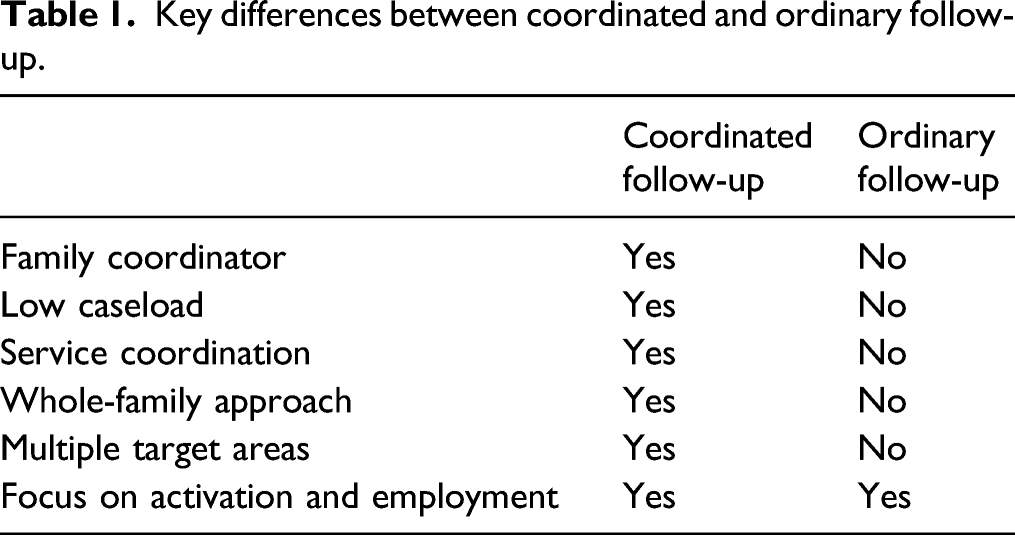
Within the coordinated follow-up method, we can differentiate between two models. While 14 of the 29 offices participating in the Norwegian Family Intervention Project developed their coordinated follow-up models locally, 15 offices implemented the model for Holistic Follow-up of Low-Income Families (HOLF), which is a coordinated follow-up model developed by the Norwegian Directorate of Labor and Welfare. The HOLF model includes a few intervention-specific tools, such as manuals and standardized follow-up forms, to further systematize follow-up work with families. Despite this difference among the coordinated follow-up models, the evaluations by Malmberg-Heimonen et al. (2019a) and by Malmberg-Heimonen and Tøge (2020) have shown that family coordinators using the HOLF model worked with families in similar ways as those using the local follow-up models.
Method
The Norwegian Directorate of Labor and Welfare commissioned an independent evaluation of the Norwegian Family Intervention Project from October 2016 to December 2018. The research protocol for the evaluation has been registered on Clinicaltrials.gov (Identifier: NCT03102775) and is published in a peer-reviewed journal (Malmberg-Heimonen et al., 2017).
The Norwegian Centre for Research Data (case no. 47483), the Norwegian Data Protection Authority (case no. 48510), and the Norwegian Directorate of Labor and Welfare (case no. 16/2598) granted permissions for the study. All participating families gave their consent to participate in the study and were allowed to withdraw at any time and for any reason.
The data are drawn from registries administered by the Norwegian Directorate of Labor and Welfare. The panel data consist of monthly observations of individual characteristics between October 2015 and December 2018.
Target Group and Recruitment
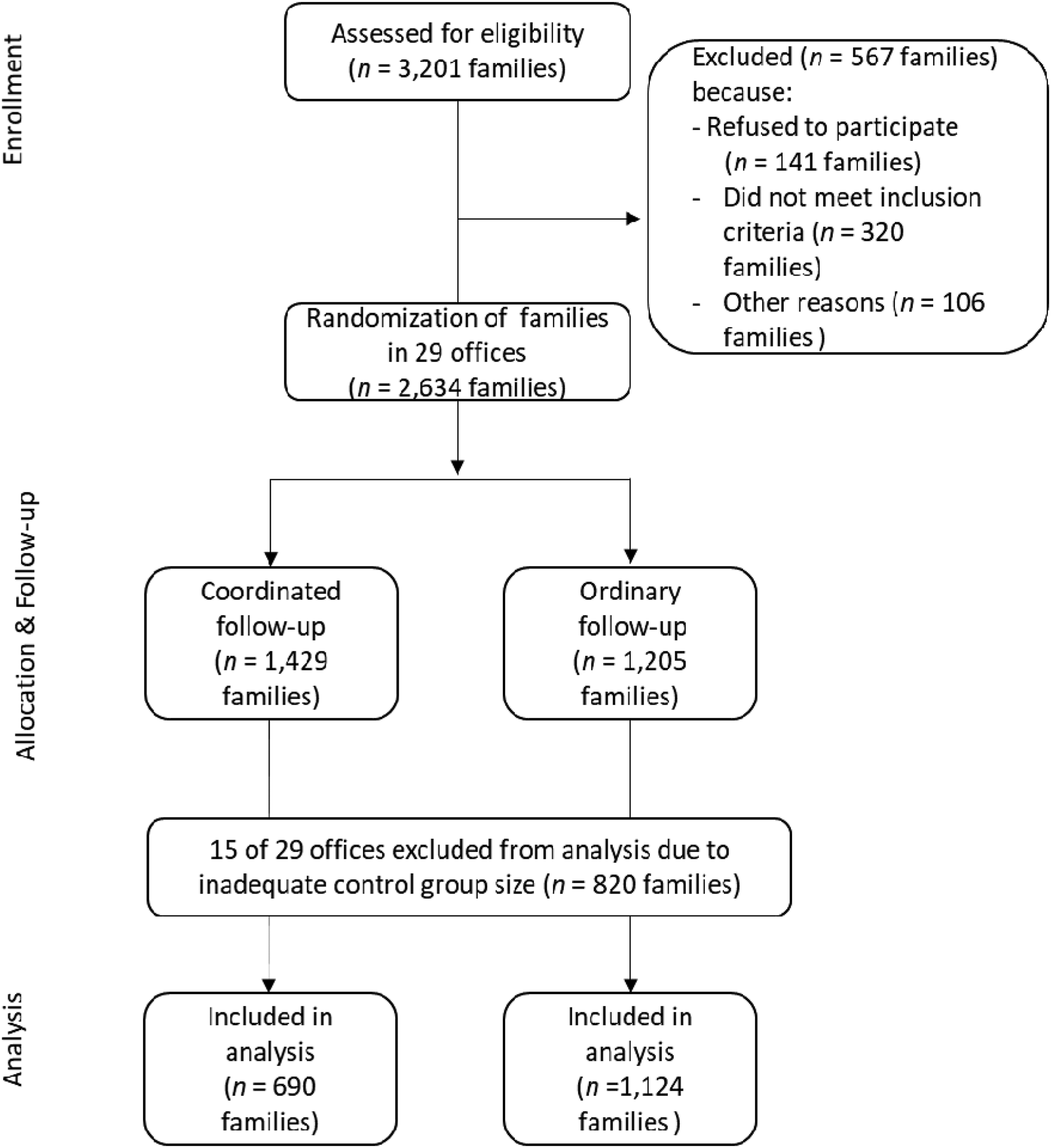
Figure 1 sets out the participant flow diagram at each stage of the study. Prior to the implementation of the coordinated follow-up models in October 2016, each of the 29 participating Labor and Welfare offices identified the target group for the project. Families were included in the project if they received social assistance benefits as the main source of income or in addition to other types of welfare support for at least six of the last 12 months prior to October 2016, and had up to four children under the age of 16 in the household. Participant flow diagram of the study.
However, families were excluded from participation if they were participating in other holistic family intervention projects, or one or both parents/caregivers were undergoing treatment because of heavy substance abuse and/or serious mental disorders, or the child or the children were temporarily placed in child-welfare institutions or living with relatives or other caregivers, or the family was under investigation by child-welfare authorities on account of suspected child maltreatment or because a placement to new caregivers was in process.
Based on these criteria, the family coordinators created family lists that included 2634 families. The family lists were used to recruit families to the project between October 2016 and May 2018. Family coordinators randomly selected families from the lists and invited them to participate in the project. They continued the recruitment process until each coordinator had 10–11 families that accepted the invitation. There was no time limit for the participation of families in the project (Malmberg-Heimonen et al., 2017). All families who were not randomized to be offered a family coordinator were taken care of by social workers in ordinary follow-up settings.
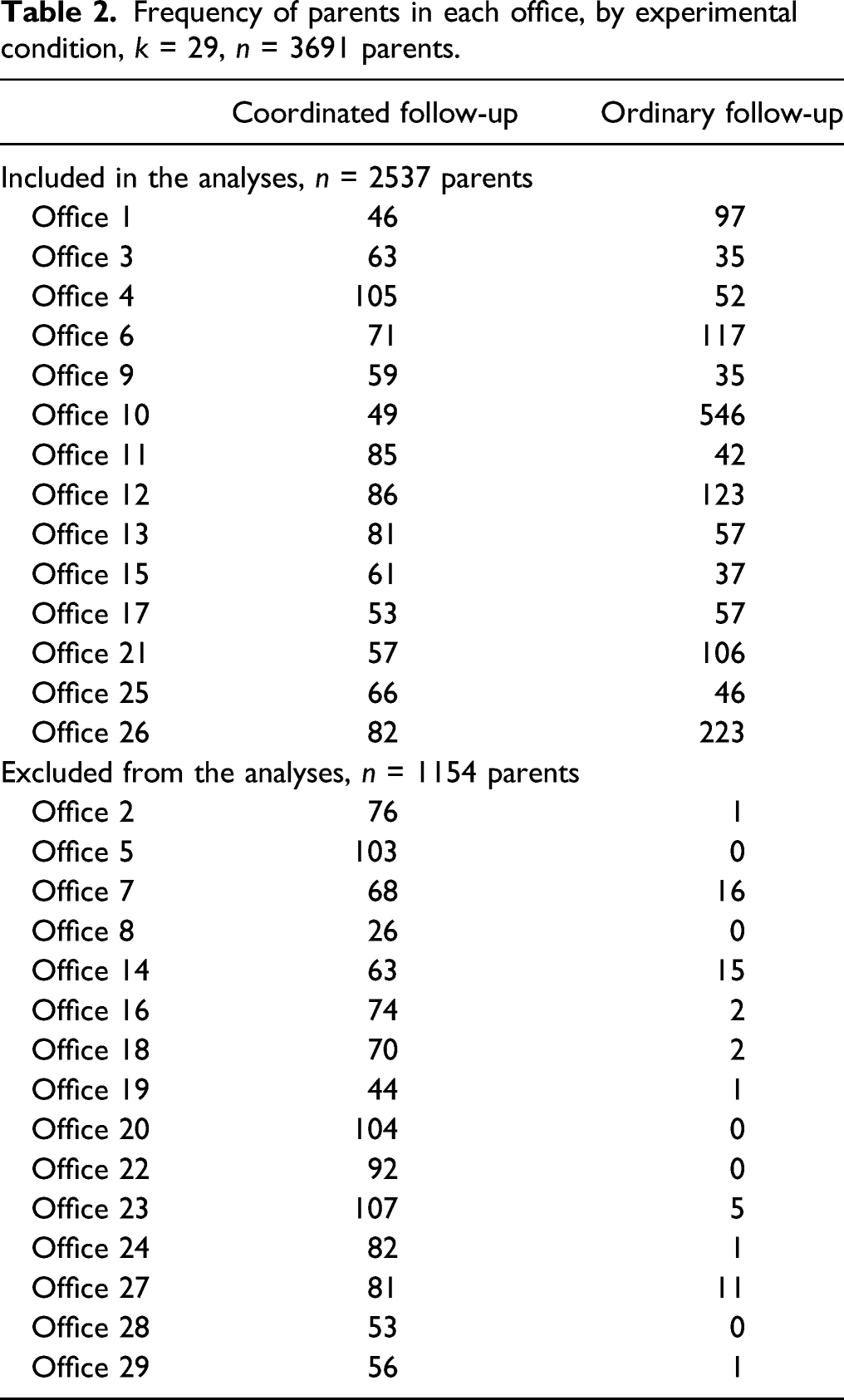
Frequency of parents in each office, by experimental condition, k = 29, n = 3691 parents.
Variables
We measured the effects of coordinated follow-up on two dependent variables: parents’ participation in activation programs and employment. Participation in activation programs was assessed as a dichotomous variable identifying parents who were registered as participants in an activation program in the observed month (0 = no; 1 = yes). The study includes a total of 28 different activation programs. Employment was assessed as a dichotomous variable identifying parents registered as employees in the State Register of Employers and Employees in the observed month (0 = no; 1 = yes). Using the definition of employment given by the International Labor Organization (International Labour Organization, 2013), this variable includes all parents who worked for at least one hour during the observed month.
Whether parents were offered follow-up with a family coordinator was measured by a dichotomous independent variable (0 = ordinary follow-up; 1 = coordinated follow-up), and whether the coordinated follow-up was with or without the HOLF model is identified by a categorical variable with three values (0 = ordinary follow-up, 1 = coordinated follow-up without the HOLF model, and 2 = coordinated follow-up with the HOLF model). We also included background variables in the analyses. Sex is assessed as 0 = male, 1 = female; year of birth is a continuous variable ranging from 1932 to 1999; married (0 = no; 1 = yes) refers to everybody with a spouse; number of children is a continuous variable and identifies the number of children below 18 years of age and living in the same household; immigrant background is a dichotomy that equals 1 if the individual has immigrated to Norway preceding the study (0 = Norwegian born; 1 = immigrant); and reduced work capacity is measured as a dichotomous variable identifying parents with reduced work capacity due to physical, mental, or social impairments in the observed month (0 = no; 1 = yes).
Analysis Plan
Parent characteristics at baseline and group comparison, n = 2537 parents.
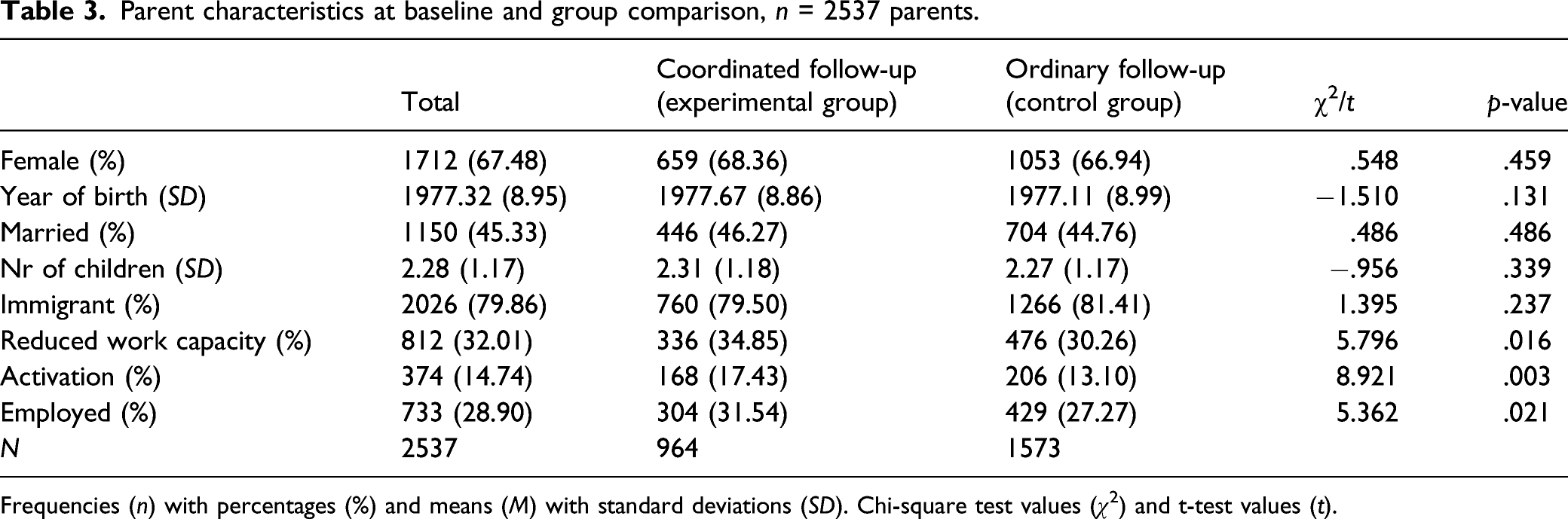
Frequencies (n) with percentages (%) and means (M) with standard deviations (SD). Chi-square test values (χ2) and t-test values (t).
Pairwise correlations between the study variables.
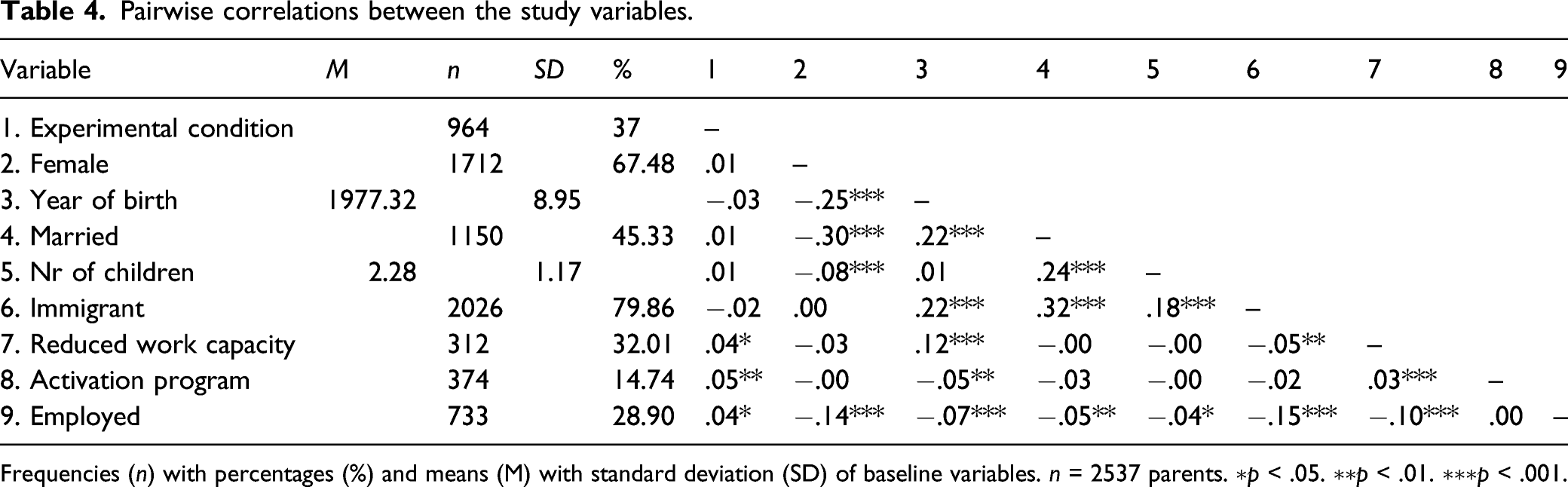
Frequencies (n) with percentages (%) and means (M) with standard deviation (SD) of baseline variables. n = 2537 parents. ∗p < .05. ∗∗p < .01. ∗∗∗p < .001.
Fixed effects logistic models estimating the effects of coordinated follow-up on parents’ participation in activation programs. n = 2537 parents.
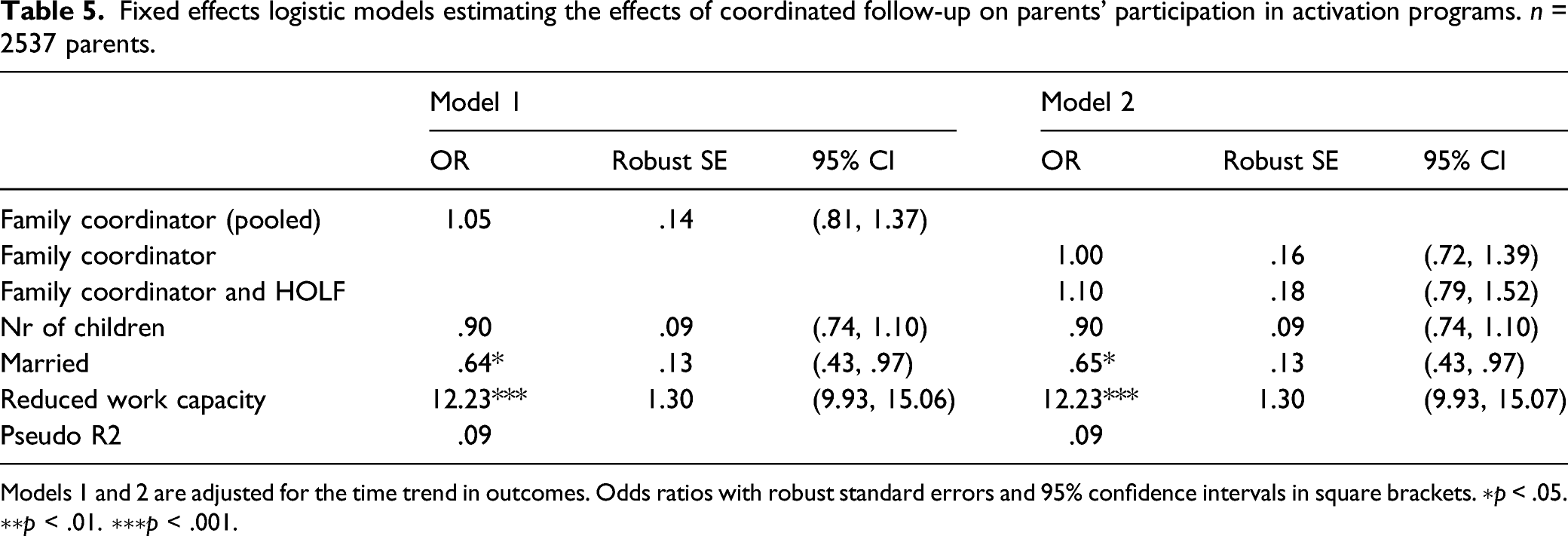
Models 1 and 2 are adjusted for the time trend in outcomes. Odds ratios with robust standard errors and 95% confidence intervals in square brackets. ∗p < .05. ∗∗p < .01. ∗∗∗p < .001.
Fixed effects logistic models estimating the effects of coordinated follow-up on parents’ participation in employment. n = 2537 parents.
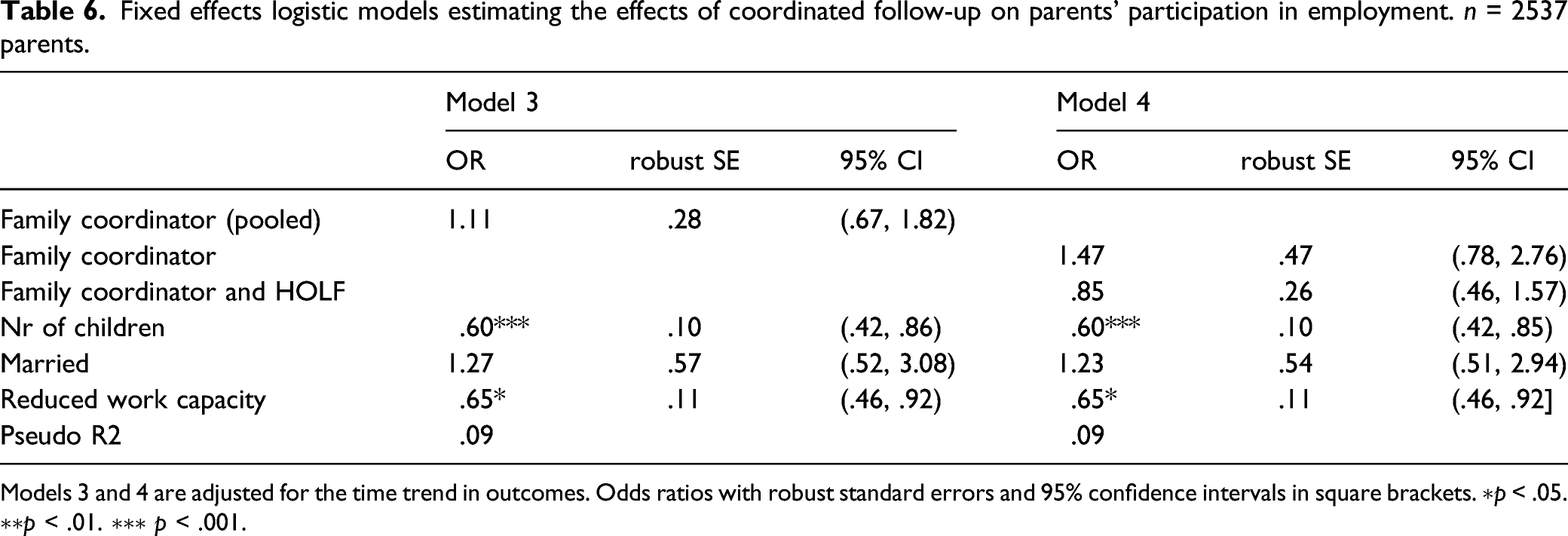
Models 3 and 4 are adjusted for the time trend in outcomes. Odds ratios with robust standard errors and 95% confidence intervals in square brackets. ∗p < .05. ∗∗p < .01. ∗∗∗ p < .001.
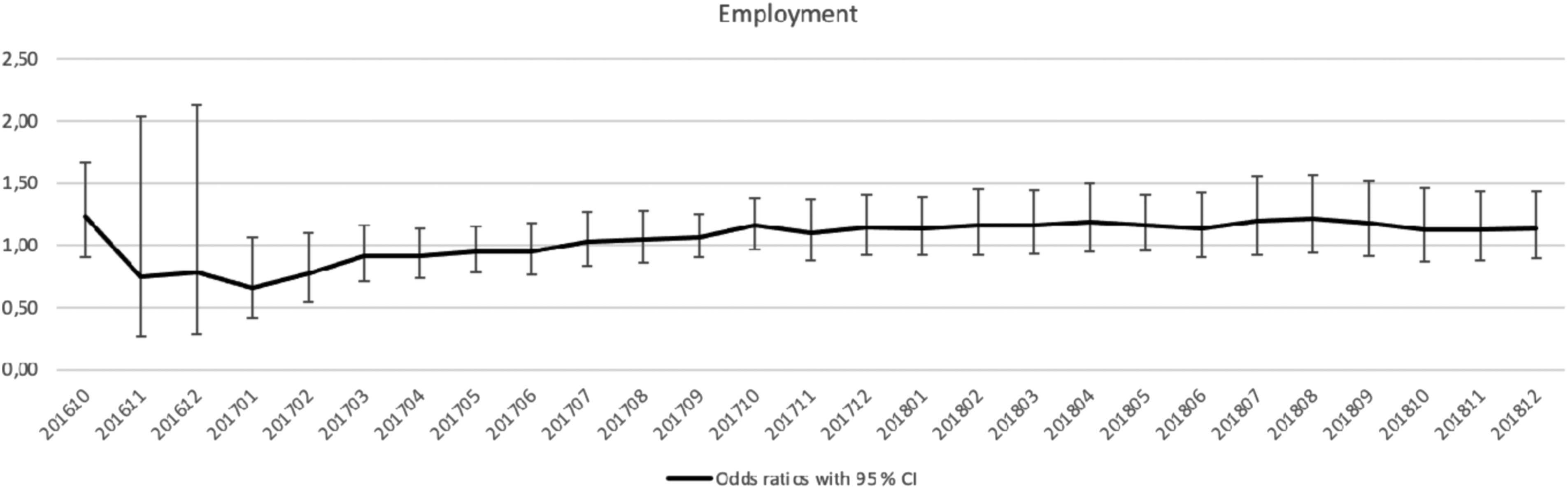
Second, to exploit the panel data structure with several time points and the variation between parents in the experimental and control groups, we estimated the pooled effects of the two coordinated follow-up models on participation in activation programs (see Figure 2) and employment (see Figure 3) for each month in the intervention period between October 2016 and December 2018. Data on parents are clustered within offices. Each of the cross-sectional models is controlled for the reported baseline imbalance and the baseline values of the dependent variables. Effects of coordinated follow-up on participation in activation programs. October 2016–December 2018. k = 14, n = 2537 parents. Effects of coordinated follow-up on employment. October 2016–December 2018. k = 14, n = 2537 parents.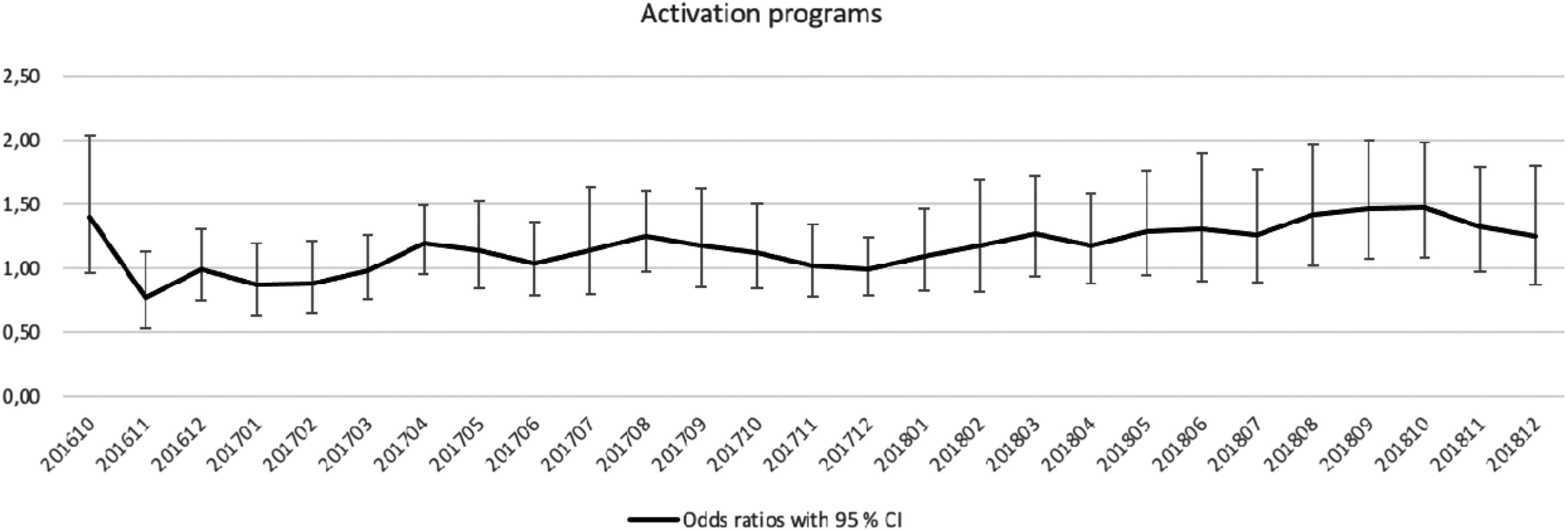
Further, in all logistic models and figures, effect sizes are reported by odds ratios (ORs) with 95% confidence intervals (CIs). The error terms in both repeated measures on parents and within clusters (offices) are likely to be correlated and the assumption of the independence of the error terms for regression analyses may be violated (Allison, 2009). In order to correct for the dependence of the error terms, we computed robust standard errors that are generally larger than conventional standard errors. The statistical analyses were performed using the clogit and logit commands in Stata/MP 16.0. The syntax for the analyses can be provided on request.
Results
Participant Characteristics at the Baseline, and Group Comparison
The baseline demographic and labor market–related variables are detailed in Table 3. Of all the parents, 67.48% (n = 1712) were female. On average, parents were born in 1977 (SD = 8.95) and were aged 39 years in 2016. Almost half of the parents, 45.33% (n = 1150) were married and had, on average, two or more children (SD = 1.17). Most of the parents—79.86% (n = 2026)—were foreign-born and had immigrated to Norway before the study was conducted. Further, in terms of work capacity, 32.01% (n = 812) of the parents had only partial capacity to work due to physical, mental, or social impairments. One-third of the parents—28.90% (n = 733)—were employed and 14.74% (n = 374) participated in an activation program in October 2016.
In a randomized control study, it is important to investigate whether baseline data are similar between the study groups. The comparison of parents in coordinated and ordinary follow-up group presented in Table 3 indicates no differences between the two groups in terms of the proportion of females, average age, marital status, average number of children, and immigrant background in October 2016. However, there are a few statistically significant differences between the two groups. The proportion of parents with reduced work capacity was significantly higher at baseline in the coordinated follow-up group than in the ordinary follow-up group—34.85% (n = 336) as opposed to 30.26% (n = 476). While 17.43% (n = 168) of the parents in the coordinated follow-up group participated in activation programs at baseline, the corresponding share was 13.10% (n = 206) in ordinary follow-up. Further, 31.54% (n = 304) of the parents in the coordinated follow-up group were employed at baseline, and this was true for 27.27% (n = 429) of the parents in ordinary follow-up. Taken together, parents who were offered follow-up by a family coordinator were more likely to have reduced work capacity (χ2 (1, n = 2537) = 5.796, p = 0.016) and participate in activation programs (χ2 (1, n = 2537) = 8.921, p = .003) and in employment (χ2(1, n = 2537) = 5.362, p = .021) than parents in ordinary follow-up at baseline. Consequently, we account for these baseline imbalances in the cross-sectional models.
Table 4 presents the bivariate correlations among all variables at baseline. The bivariate correlations between the study variables and the experimental condition correspond well with the findings in Table 3. Parents who were part of a coordinated follow-up were more likely to have reduced work capacity, participate in activation programs, and be employed than parents in ordinary follow-up in October 2016. Furthermore, participation in activation programs was negatively correlated with year of birth and positively correlated with reduced work capacity. In addition, employment was negatively correlated with all variables, except for the offer of follow-up with a family coordinator.
Effects of Service Coordination
The fixed effects models in Table 5 investigate whether a change in the follow-up settings, that is, introduction of family coordinators, cause a change in parents’ participation in activation programs. Model 1 reveals that follow-up with a family coordinator—that is, independent of the application of the HOLF model—has a weak and non-significant effect on parents’ participation in activation programs as compared to ordinary follow-up (OR = 1.05, 95% CI [0.81, 1.37]). Further, estimating the separate effects of the two coordinated follow-up models (coordinated follow-up with and without the HOLF model) does not alter the result. Model 2 demonstrates that the coordinated follow-up models with and without the HOLF model generated weak and non-significant effects on the same outcome (OR = 1.10, 95% CI [0.79, 1.52] and OR = 1.00, 95% CI [0.72, 1.39], respectively). In both Models 1 and 2, being married is significantly associated with a decrease in parents’ odds of participating in activation programs, while having reduced work capacity appears to have the opposite effect.
With regard to the employment effects of coordinated follow-up, we find additional non-significant effects of coordinated follow-up as compared to ordinary follow-up. In Model 3, the pooled effect of follow-up with a family coordinator on parents’ participation in employment is weak and non-significant in the sample (OR = 1.11, 95% CI [.67, 1.82]). Model 4 reveals that coordinated follow-up without the HOLF model appears to increase parents’ odds of being employed compared to ordinary follow-up. However, this effect is not statistically significant (OR = 1.47, 95% CI [.78, 2.76]). On the other hand, coordinated follow-up combined with the HOLF model appears to decrease parents’ odds of being employed compared to ordinary follow-up. However, this effect is not statistically significant either (OR = 0.85, 95% CI [.46, 1.57]). In both Models 3 and 4, the number of children and reduced capacity to work are significantly associated with a decrease in parents’ odds of being employed.
Further, the panel structure of the data allows us to compare the monthly effects of coordinated and ordinary follow-up on the outcomes of interest. The line graphs in Figures 2 and 3 illustrate the effects of coordinated follow-up on participation in activation programs (see Figure 2) and employment (see Figure 3) compared to ordinary follow-up between October 2016 and December 2018. In Figure 2, the line is close to 1 in the entire intervention period, thereby implying that the effects of coordinated follow-up are weak compared to those of ordinary follow-up. The effect estimates were statistically significant in the three months between August 2018 and October 2018 (OR = 1.41, 95% CI [1.02, 1.96]; OR = 1.46, 95% CI [1.07, 2.00] and OR =1.47, 95% CI [1.09, 1.98], respectively; results are not included in tables), which suggests beneficial effects on activation in the second half of the intervention period. Similarly, the line in Figure 3 is close to 1 in the entire period, thereby implying weak employment effects. None of these effect estimates are statistically significant (p < 0.05).
Discussion and Applications to Practice
Using a randomized research design with a 39-month follow-up, the aim of this study was to assess the effects of coordinated follow-up on participation in activation programs and employment among parents in low-income families in Norway. Although a key worker is a common element across family intervention projects and is assumed to improve client-level outcomes, there is a lack of knowledge regarding the effectiveness of the key worker approach (Fløtten & Grødem, 2014; Malmberg-Heimonen & Tøge, 2020; Newman et al., 2007).
We found that the effects of the coordinated follow-up models on parents’ participation in activation programs and employment did not differ significantly from the effects of ordinary follow-up. The introduction of family coordinators, independent of whether they applied the HOLF model, did not cause any statistically significant change in parents’ participation in activation programs and employment over time compared to those who continued to receive ordinary follow-up. Hence, we reject hypotheses 1 and 2, which propose that follow-up with a family coordinator leads to increased participation of parents in activation programs and employment, respectively. Yet, the assessment of effects on a monthly basis indicated favorable effects on activation in the second half of the intervention period. Parents who were taken care of by a family coordinator had significantly higher odds of participating in activation programs than parents receiving ordinary follow-up at the end of the study period. These effects were statistically significant, but as they only pertain to the last three months of the study, the results must be interpreted with caution.
Further, the findings reveal that neither the locally developed follow-up models nor the HOLF model that introduces manuals and follow-up forms to standardize and systematize the follow-up work with families have statistically significant effects on the study outcomes. The studies by Malmberg-Heimonen et al. (2019a) and by Malmberg-Heimonen and Tøge (2020) have demonstrated that family coordinators using the HOLF model worked with families in similar ways as those using the local follow-up models. Hence, this effect evaluation concludes that family coordinators also worked with similar results related to activation and employment when compared to social workers in the ordinary setup. It is also important to note that follow-up with a coordinator that used the HOLF model appears to decrease parents’ odds of participating in employment as opposed to ordinary follow-up, but this effect is statistically non-significant.
It must be noted that mixed findings have been previously found regarding the effects of family intervention and home visiting programs on employment outcomes. The current findings best align with studies that found non-significant program effects on parental employment in earlier family intervention projects in the UK and home visiting programs in the US (Day et al., 2016; Kitzman et al., 2000; Lloyd et al., 2011; Sweet & Appelbaum, 2004).
The reasons for the non-significant results might be complex. The Norwegian Labor and Welfare Services aims to move people from benefit dependency into activation and employment (Ministry of Labor and Social Affairs, 2005). One explanation is that ordinary follow-up settings already place a strong emphasis on activation and employment and, thus, the Norwegian Family Intervention Project was not able to improve these results.
Second, among others, Day et al. (2016) and Lloyd et al. (2011) noted that families with complex and multiple needs have to deal with other pressing problems, such as mental and physical health problems, before they can address the issue of employment. In the Norwegian Family Intervention Project, 80% of the parents have an immigrant background and probably lower levels of skills than Norwegian natives. Because immigrants might not feel ready to consider, or are not successful in accessing, job opportunities due to poor language proficiency, they probably ascribe higher priority to participation in education (e.g., language courses) or training, which can increase their future employability. The positive trend that we identified in activation, but not in employment, supports this assumption.
Third, there may also be lock-in effects, which means that the intense and close follow-up work with a family coordinator might dampen parents’ job search activities or make them more selective. However, only the follow-up with a coordinator who uses the HOLF model has adverse effect on employment. This possible lock-in mechanism is in contrast to the expectation that close follow-up with a family coordinator and supportive relationships generate positive changes for the families (Batty & Flint, 2012; Parr, 2009; White et al., 2008). Although follow-up with a family coordinator strengthened the working relationship with the parents (Gyüre et al., 2020; Malmberg-Heimonen et al., 2019b), this study did not find any evidence for improved activation and employment outcomes compared to ordinary follow-up settings. However, a future study should assess the effects of follow-up with a family coordinator on other target areas of the Norwegian Family Intervention Project—that is, the housing and financial situations of the families and the social inclusion of their children.
Fourth, the non-significant effects of the coordinated follow-up can be associated with the challenges of implementing a key worker model. Interviews with family coordinators revealed that they found it difficult to understand their role as coordinators and were not always able to clarify this with their colleagues at the Norwegian Labor and Welfare offices (Malmberg-Heimonen et al., 2019a). Thus, an inconsistent understanding of the role of coordinator and increased dependency on other caseworkers are factors that might have prolonged the already time-consuming processes of identifying relevant activation programs and jobs (Malmberg-Heimonen et al., 2019a). Similar to our findings, key workers in the Troubled Families Program found it difficult to introduce new ways of working with different service providers, particularly in terms of addressing the interlinked problems of family members (Ball et al., 2016).
A fifth explanation for the non-significant differences between the experimental and control groups in this study can be treatment contamination, which indicates that the ordinary follow-up settings were influenced by the follow-up methods of the family coordinators. This possibly led to an underestimation of the impacts of coordinated follow-up. In the Norwegian Family Intervention Project, contamination was a theoretical possibility rather than an actual one. The low caseloads that enable family coordinators to work with families in a close and comprehensive manner and coordinate services around family members is a feature that is absent in ordinary follow-up settings. This unique feature enables family coordinators to spend considerably more time and resources on the families as compared to the time and resources that social workers in ordinary settings have at their disposal.
Finally, following an intention-to-treat principle, parents who were offered follow-up with a family coordinator were included in the experimental group of the study, regardless of whether or not they accepted the offer. The actual effects of coordinated follow-up might be larger among those parents who accepted the offer and were assigned a family coordinator.
Overall, this evaluation suggests that follow-up with a family coordinator has no statistically different effects for disadvantaged families on activation and employment than ordinary follow-up settings. The significant and positive effects on activation in 3 of the 27 months in the second part of the intervention period indicate that this group might need a long-term follow-up to achieve the anticipated changes. Similarly, previous research on family intervention projects has revealed that there is a positive correlation between the duration of the family intervention and successful outcomes (Lloyd et al., 2011).
There are several limitations that we must bear in mind when interpreting the results of this study. First, a drawback of data administered by the Norwegian Directorate of Labor and Welfare is that these data are not created for research purposes but for record-keeping. Thus, certain variables that could have been important for the analyses, like education level, are unobserved. However, fixed effects models control for all time-constant individual characteristics—even unobserved ones—including education level. Second, since those parents who were undergoing treatment for substance abuse and/or serious mental disorders and parents who were under investigation by child-welfare authorities have not been included in the project, the generalizability of the results for low-income families can be questioned. However, we must bear in mind that only 10% of the families were excluded based on these criteria (Malmberg-Heimonen et al., 2017). Third, parents who participated in the coordinated follow-up were aware of their intervention assignment, which may have affected their behavior and triggered positive responses to the outcome measures. However, since parents in coordinated follow-up were as likely as parents in ordinary follow-up to be enrolled in activation programs and obtain a job, the lack of blinding does not appear to have led to an overestimation of the effects. Fourth, 15 of the 29 participating offices were excluded from the analyses due to an insufficient number of parents in the control group. However, the exclusion of the offices that had an inadequate control group size contributed to a more accurate estimation of the intervention effects.
To conclude, this study obtained no substantial evidence for the effectiveness of coordinated follow-up for the activation and employment of parents in low-income families in Norway. Although a coordinating person or team is often presented as a solution to challenges in service provision and is assumed to lead to improved outcomes for families with complex needs, this study suggests that service coordination is a necessary—but not sufficient—component in the strategy of strengthening parents’ labor market integration and reducing family and child poverty. Therefore, there is a definite need for further research on alternative means of effective service provision and exploring components that are beyond coordination. The findings of this study have a few practical implications. First, the complexity of the challenges faced by low-income families in this study might restrict the beneficial effects of coordination efforts. Hence, the coordinated follow-up models introduced by the Norwegian Family Intervention Project might be more suitable for families with less severe problems. Second, future family intervention projects must also aim to achieve less quantifiable and softer outcomes (e.g., job search skills, writing CVs, and building and utilizing a professional network) that will enable positive future changes in the families’ lives.
Footnotes
Declaration of Conflicting Interests
The authors declared no potential conflicts of interest with respect to the research, authorship, and/or publication of this article.
Funding
The author(s) disclosed receipt of the following financial support for the research, authorship, and/or publication of this article: This study was supported by the Norwegian Directorate of Labor and Welfare (grant number not available).
