



Abstract
Since 2010, 12 states and three cities in the United States have enacted Domestic Worker Bills of Rights (DW BoR), codifying minimum wage, overtime, anti-harassment protections, and more for many domestic workers (eg, private household childcare, home health, personal care, and housekeeping workers). We used repeated cross-sectional nationally representative 2006–2019 American Community Survey data and difference-in-differences methods to compare changes in domestic workers’ hours and earned income in eight states that enacted DW BoR versus 12 politically similar states that did not. Enacting DW BoR was associated with reductions in overtime and extremely long hours in Years 6–9 post-enactment, without negatively impacting earnings. Agency-employed domestic workers and home health, personal care, and childcare workers experienced larger reductions in hours than informally employed or housekeeping workers, respectively. Results suggest potential benefits and challenges of using legislation to improve domestic working conditions and are highly relevant to policy advocacy and enforcement efforts.
Introduction
Spurred by years of organizing, coalition-building, and legislative advocacy led by domestic workers, 12 states and three cities in the United States have enacted Domestic Worker Bills of Rights (DW BoR) since 2010.1,2 These bills primarily reversed historical exclusions of domestic workers from minimum wage, overtime, and harassment and discrimination protections (Table 1).2,3 Some DW BoR also codified new domestic worker-specific protections, such as written employment agreements, requirements for notice of termination and severance for workers who live with their employers (“live-in” workers), limits on deductions for food and lodging from workers’ wages, new infrastructure for enforcement (eg, task forces and partnerships with community-based organizations), and inclusion in state occupational health and safety law on workplace inspections. 2 These DW BoR generally include and apply to domestic workers (eg, child care, home health, personal care, and housekeeping workers) employed directly and often informally by private households as well as those employed by third-party agencies, with some exceptions by state and over time. 4
Selected Features of State Domestic Worker Bills of Rights Enacted Before 2019.
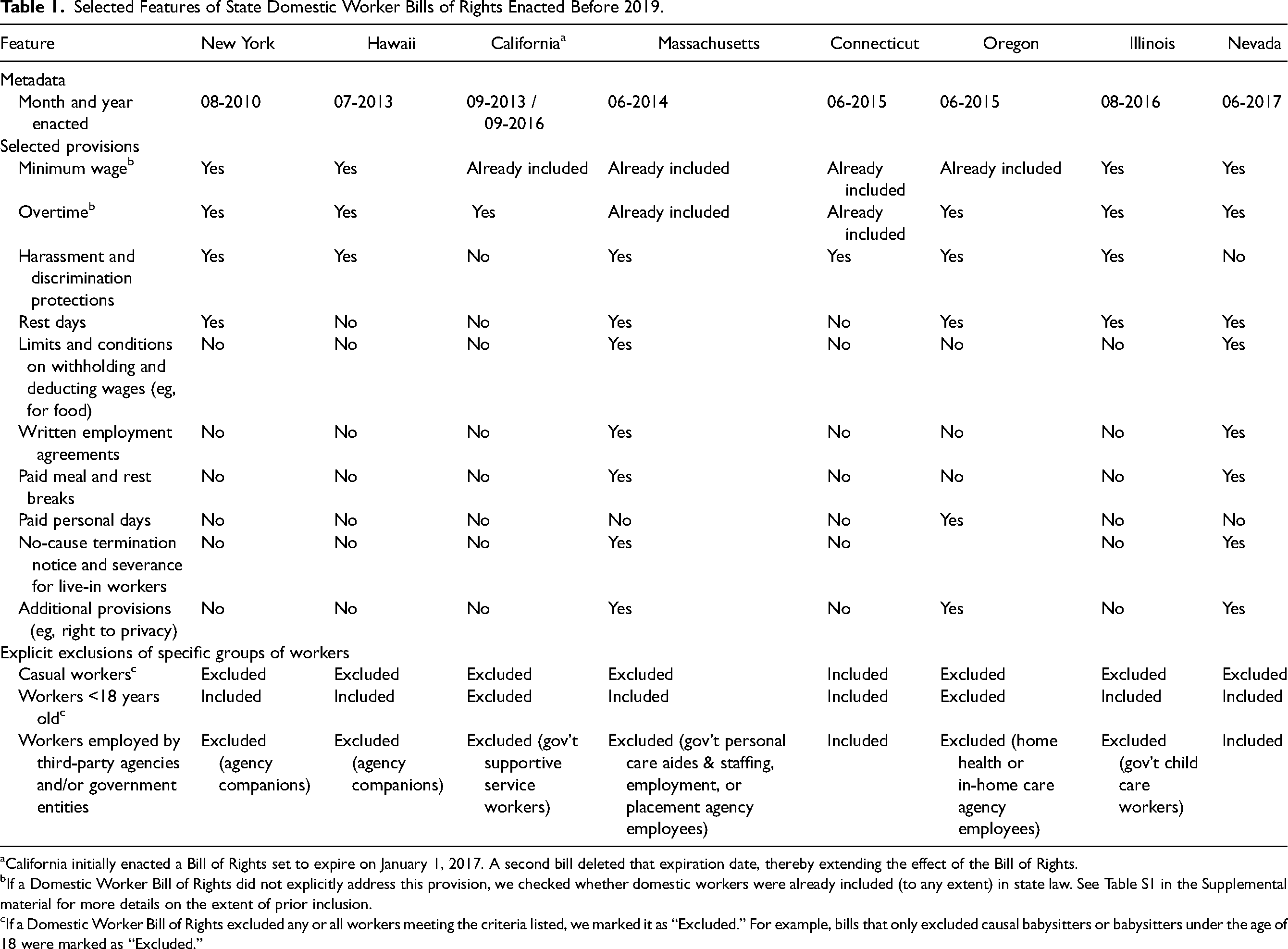
aCalifornia initially enacted a Bill of Rights set to expire on January 1, 2017. A second bill deleted that expiration date, thereby extending the effect of the Bill of Rights.
bIf a Domestic Worker Bill of Rights did not explicitly address this provision, we checked whether domestic workers were already included (to any extent) in state law. See Table S1 in the Supplemental material for more details on the extent of prior inclusion.
cIf a Domestic Worker Bill of Rights excluded any or all workers meeting the criteria listed, we marked it as “Excluded.” For example, bills that only excluded causal babysitters or babysitters under the age of 18 were marked as “Excluded.”
Despite the novelty of these legislative gains and their relevance to domestic workers’ working conditions and health, only one peer-reviewed study has quantitatively examined how enacting DW BoR has affected domestic workers, specifically, home care workers’ earnings. 4 One of many reasons DW BoR—and myriad other determinants of domestic workers’ well-being5–8—have received little attention from quantitative researchers is the lack of high-quality data collected among domestic workers and about their working conditions and, in particular, health. The prior study documented that only agency-employed home care workers—and not their informally employed counterparts—earned significantly more in states where both a DW BoR and a higher-than-federal minimum wage had been passed, compared to states that had passed neither. 4 These findings provide initial evidence of the impact of enacting these bills and indicate their effects may be heterogeneous by employment arrangement.
Additional quantitative examination of whether and, if so, how DW BoR have influenced domestic workers’ well-being on the job and beyond is urgently needed for multiple reasons. First, in the context of the US's historical and continued “no policy as policy” 9 p 293 approach to regulating DW (an outlier among high-income countries 9 ), additional evidence about the impact of previously enacted DW BoR could further inform advocacy for more state or local DW BoR and a proposed federal Domestic Worker Bill of Rights, 10 multi-sectoral enforcement efforts, and allocating sufficient funding for DW BoR implementation and enforcement. 11 Second, isolating any effects of enacting DW BoR on workers’ outcomes from other determinants (eg, state minimum wages) is a complex task. Further assessment of the impact of DW BoR using large, high-quality data sources and robust quasi-experimental methods will strengthen causal analyses and add to the sparse existing evidence.3,4,12–14 Finally, although the aforementioned study examined one important dimension along which DW BoR impact may vary—the formality of domestic workers’ employment arrangements 4 —additional sources of heterogeneity (eg, US citizenship status and primary occupation) may also shape the impact of these bills.12,15 Moreover, the strength of any effect of enacting DW BoR may depend on when a BoR was enacted and/or how much time has passed since enactment. 16 For example, there may be null or weak effects immediately after enactment (eg, before employers and workers were broadly made aware of their new responsibilities, rights, and enforcement options), stronger effects in subsequent years, and potential drops in effectiveness if initial financial and other investments in outreach and enforcement were not sustained.13,17,18
In this study, we used repeated cross-sectional data from the 2006–2019 American Community Survey (ACS)—the largest US household survey—to examine the impact of state-level DW BoR on domestic workers’ hours and earned income, both of which are documented determinants of health.19–25 We used difference-in-differences to address two research questions. First, what was the average effect on domestic workers’ hours and earned income of enacting DW BoR by states’ length of exposure to the BoR (ie, in each year post-enactment)? Second, how do these effects of enacting DW BoR differ among domestic workers who are (a) formally and informally employed, (b) home health and personal care workers, housekeeping workers, and childcare workers, and (c) US-born citizens, naturalized citizens, and non-citizens?
Methods
Data Source
Our team—consisting of a social epidemiologist and three staff members of a nationwide advocacy organization focused on raising domestic worker labor standards—was interested in examining the impact of DW BoR on a range of outcomes, including mental health, experiences of workplace discrimination and abuse, working hours, and earnings.4,5,7,26–28 Given the relatively small size of the domestic labor force (currently ∼1% of US employed persons 29 ) and the paucity of available data about domestic workers’ working conditions and health, we chose to analyze data from the ACS, the largest US household survey. 30 This decision simultaneously maximized empirical power to address our novel research questions, complemented the only other quantitative DW BoR analysis (which used Current Population Survey data 4 ), and limited our analysis to outcomes of working hours and earnings. See the Supplemental methods for further discussion of domestic work-related data limitations.
We analyzed repeated cross-sectional ACS 1-year estimates from 2006 to 2019. 31 Briefly, the ACS is a nationally representative survey of US households and, since 2006, 32 group quarters (eg, workers’ dormitories). One survey is sent to the 3–3.5 million randomly sampled addresses each year (ie, it does not follow the same individuals over time). 30 A resident at each address is instructed to respond to it (responses are required by law) with housing, social, and economic information about themselves and everyone living or staying at that address for >2 months. 30 Residents may respond via mail, phone, in-person interviews, or, since 2013, web-based surveys. We accessed ACS data through the Integrated Public Use Microdata Series (IPUMS), which harmonizes data over time. 31 This study was determined to be Not Human Subjects Research (IRB24-0085) by the Harvard T.H. Chan School of Public Health Institutional Review Board.
ACS 1-year estimates provide data collected between January and December of a given year, enabling examination of potentially subtle year-to-year fluctuations in workers’ hours and earnings. 30 Since the first DW BoR was enacted in New York in 2010, including data starting in 2006 allowed us to examine outcome trends for ≥4 years before each BoR was enacted. We excluded data from 2020 onwards to avoid the complexities of isolating the impacts of DW BoR amidst rapid social, economic, and public health change related to the COVID-19 pandemic and more.33–35
Identifying Domestic Workers
The ACS collects data about occupation (ie, what kind of work did the person do?) and industry (ie, what kind of business or industry did they work in?) for each person's current job. 32 Since neither the ACS nor other government surveys collect data on the location of work (ie, private homes vs elsewhere), to classify a person's job as domestic work, we relied on combinations of occupation and industry codes for which we could reasonably infer work was primarily located in private households—a defining feature of domestic work. Informed by prior operationalizations of domestic work using US government data,36–40 we classified a person's job as domestic work if they were currently employed (excluding unpaid family workers) in one of the occupation-industry combinations provided in Table 2.
Occupation and Industry Codes Used to Identify Domestic Workers: 1-Year American Community Survey Estimates, United States, 2006–2019.
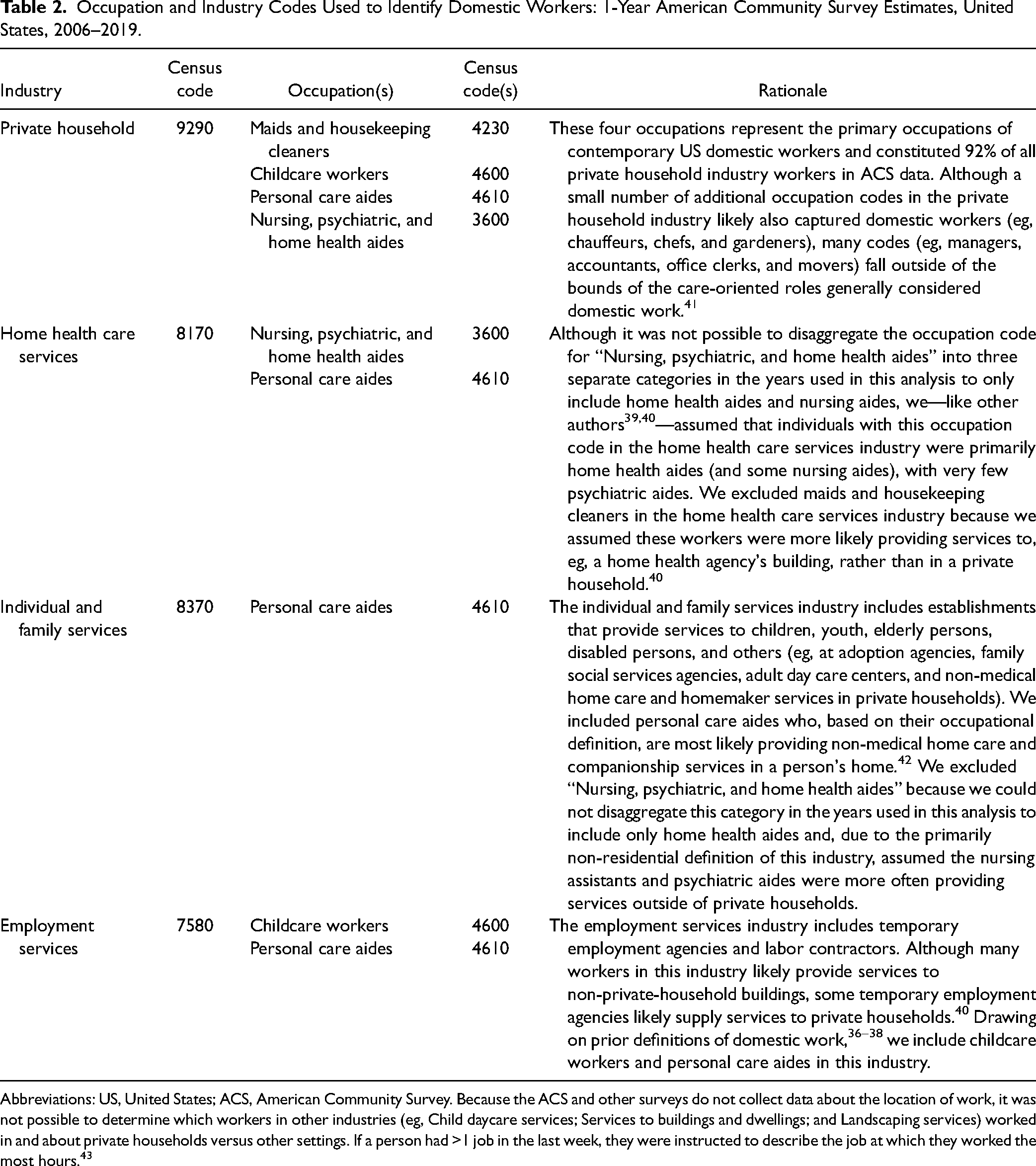
Abbreviations: US, United States; ACS, American Community Survey. Because the ACS and other surveys do not collect data about the location of work, it was not possible to determine which workers in other industries (eg, Child daycare services; Services to buildings and dwellings; and Landscaping services) worked in and about private households versus other settings. If a person had >1 job in the last week, they were instructed to describe the job at which they worked the most hours. 43
Study Population
Using this definition of domestic work, our study population consisted of non-casual adult domestic workers. We excluded the few 16- and 17-year-old domestic workers (n = 3,205; 1.4% of all 222,930 domestic workers) because they are sometimes explicitly excluded from DW BoR coverage (eg, California and Oregon) and/or not fully engaged in the labor force (eg, working only a few hours per week and possibly still attending school). We additionally excluded casual workers (ie, usually worked <6 h per week [n = 7,303; 3.3%]) 44 because all but one (Connecticut) of the eight pre-2019 state DW BoR explicitly excluded some or all domestic workers whose employment is on a casual basis. Finally, we excluded the few domestic workers (n = 2,360; 1.1%) with inconsistent data on their state of work and residence—used to classify workers as exposed to DW BoR, as described below—to obtain a US-wide final study population of 210,062 non-casual adult domestic workers. See the Supplemental material for more details on the study population.
Exposure to the DW BoR
We examined all state-level DW BoR that were enacted before 2019: New York, Hawaii, California, Massachusetts, Connecticut, Oregon, Illinois, and Nevada. This excluded state-level DW BoR enacted since 2019 (New Mexico, Virginia, New Jersey, and Rhode Island) and city-level DW BoR (Seattle, Philadelphia, and Washington, DC). We categorized workers as exposed to a DW BoR on the basis of their state of work since a state's DW BoR applies to domestic workers working for employers in that state, regardless of workers’ state of residence. For the few workers (n = 6,451 [2.9%]) who were not asked about their state of work because they reported not working last week, we used their state of residence since >95% of workers with data on their state of work and state of residence lived and worked in the same state.
Outcomes
Limited by the variables included in the ACS, we focused on three outcomes. The first was working overtime, defined as usually working >40 h per week in the past 12 months for live-out domestic workers and, because DW BoR often set a different threshold for live-in workers, >44 h per week for live-in domestic workers. 45 Second, we examined working long hours, defined as usually working ≥55 h per week in the past 12 months.19,20 We examined binary overtime and long hours because of the explicit links between DW BoR provisions and these outcomes (eg, entitlement to overtime pay and, in several cases, rest days for domestic workers working ≥40 h per week). We examined overtime and long hours separately because they have potentially distinct implications for well-being (eg, increasing hours may be associated with worsening health or, alternatively, only the most extreme hours may harm health). 20 Moreover, DW BoR enactment may have affected these outcomes differently. For example, DW BoR enactment may have led employers of domestic workers who typically worked minimal overtime (eg, 41–45 h/week) to restrict such overtime work and, thus, avoid paying newly mandated overtime rates without affecting domestic workers working the most extreme hours. In Supplemental models, we explored the impact of DW BoR enactment on continuous working hours (Supplemental methods).
Finally, we examined earned income, defined as the past 12-month pre-tax total wage/salary and/or self-employment income. Earned income was adjusted for inflation to 2019 dollars. For the analyses of earned income, we restricted the sample to individuals who reported positive earnings below the top one percentile (ie, >$0 and ≤$77,663), excluding an additional 2,278 domestic workers. 45 We used a logarithmic transformation of the earned income variable to address its skewed distribution (ie, many domestic workers reporting very low incomes).
Covariates
We included the following individual-level covariates in all adjusted models: sex, age, racialized group, education, US citizenship status, occupation, and employment arrangement. 44 Regarding employment arrangement, we used data on class of worker to classify a) private household employees and the self-employed with non-incorporated businesses as informally employed and b) private company and non-profit organization employees, government employees, and the self-employed with incorporated businesses as formally employed. 4
We also included three covariates that had different trajectories over time in all adjusted models: state- and (for the large cities and counties identified in IPUMS ACS data) local-level effective minimum wage (2019 dollars), enactment of state- and local-level earned sick leave policies, and enactment of state-paid family and medical leave policies.46–50 See the Supplemental material for more details on covariate construction.
Finally, in the models for earnings, we estimated the effect of enacting DW BoR on earned income overall (ie, adjusting for the aforementioned covariates only) and after controlling for one major pathway by which BoR might have impacted earnings: working time. We accomplished the latter by including two additional covariates: usual hours worked per week and weeks worked per year.
Statistical Analysis
Overall Approach
We used difference-in-differences (DiD) to estimate the effect of enacting DW BoR on overtime, long hours, and earned income. DiD is one of several methods designed to estimate the causal effects of policies in non-randomized settings. 51 In the simplest application with only two states, eg, DiD would compare changes in earnings after versus before enactment in the state that enacted a DW BoR (the first “difference”) to the changes in earnings in the state that did not (the second “difference”). The difference between these two differences would represent the average effect of the policy on domestic workers’ earnings in the DW BoR state. This approach relies on the key assumption that earnings in the two states would have remained parallel over time in the absence of the DW BoR (ie, parallel trends). In other words, changes in the non-BoR state must provide a good proxy for what would have happened in the BoR state, had it not enacted the policy. 51 When this assumption is met, DiD methods are not biased by time-invariant differences between states or time-varying factors with consistent trends in states that did and did not enact the policy of interest, thereby strengthening causal inference.
Like many other applications in the social and population health sciences, 16 our study involves staggered policy adoption across more than two states (ie, states enacted DW BoR at different times). We estimated the impact of enacting DW BoR in each year post-enactment by comparing the changes in domestic workers’ hours and earnings before versus after DW BoR enactment in states that enacted a pre-2019 DW BoR versus a subset of politically similar comparison states that did not. Then, to address our second research question, we examined whether these impacts differed when disaggregated by three key factors known to impact domestic working conditions: employment arrangement, primary domestic work occupation, and US citizenship status.9,44 We used the DiD estimator recently developed by Borusyak, Jaravel, and Spiess (BJS) to deal with the complexities of staggered policy adoption and heterogenous effects.16,52–54 More details on the BJS estimator are provided in the Supplemental methods.
We used Stata Version 18 for all analyses. 55 Our primary DiD models included state and year fixed effects, were weighted with ACS person weights, and clustered standard errors at the level treatment was assigned (ie, state). 56
Comparison States
Since the states that have enacted DW BoR to date have also enacted some of the most supportive and inclusive policies related to labor and work, immigration, and welfare—all of which are relevant to trends in workers’ hours and earnings—we expected that using all 43 states that did not enact a DW BoR before 2019 might not provide the best comparison group.57–60 Initial assessments of policy contexts and outcome trends supported this expectation.
Using state-level data on key policies (overall policy liberalism, state minimum wage, and immigration-related policy restrictiveness) from other sources46,57–60 and our prior knowledge, we selected the following states to serve as the comparison states: Colorado, Delaware, Washington DC, Maine, Maryland, Minnesota, Montana, New Jersey, Rhode Island, Vermont, Virginia, and Washington. Underscoring their similar policy trajectories, four of these comparison places have gone on to enact DW BoR since 2019 (Virginia, New Jersey, Rhode Island, and Washington, DC). 2 Restricting to DW BoR states and the 12 selected comparison states yielded a final analytic sample of 105,883 non-casual adult domestic workers for DiD models of overtime and long hours and 104,596 non-casual adult domestic workers for DiD models of earned income. See the Supplemental material for more details on comparison state selection.
Sensitivity Analyses
We performed several sensitivity analyses. First, using multiple strategies, we examined whether violations of the parallel trends assumption required by our DiD models may be driving results. Next, we assessed the implications of not adjusting for covariates, using only observed, unweighted (rather than ACS weighted) data, and using all 43 non-BoR states as the comparison group (rather than our 12 selected states). Finally, we tested whether the estimated BoR enactment effects from our primary models were specific to domestic workers, as one would expect. We did so by running identical models among similar workers that should not have been affected by the DW BoR: workers in the same occupations as domestic workers, but different (ie, non-domestic work) industries. This is called “placebo testing.” See the Supplemental material for more details on sensitivity analyses.
Results
In each year from 2006 to 2019, there were an estimated 1.3–2.0 million domestic workers employed in the US. Across all years, around 39% (n = 9,281,885) of domestic workers worked in one of the eight states that enacted a DW BoR by 2019 (NY, HI, CA, CT, OR, MA, NV, IL), 13% (n = 3,110,900) worked in the 12 selected comparison states (CO, DE, DC, ME, MD, MN, MT, NJ, RI, VT, VA, WA), and 48% (n = 11,614,485) worked in the remaining 31 states (Table 3). US domestic workers were overwhelmingly female (90.7%), racially diverse (41.8% non-Hispanic White, 29.4% Hispanic, 20.3% non-Hispanic Black, and 5.7% non-Hispanic Asian), often non-US citizens (22.4%), and predominantly home health or personal care aides (67.4%). Over 40% were informally employed, and, based on the limited data available in the ACS, 2% lived with their employers.
Weighted Characteristics of Non-Casual Adult Domestic Workers: 1-Year American Community Survey Estimates, United States, 2006–2019 (Observed n = 210,062; Weighted n = 24,007,270).
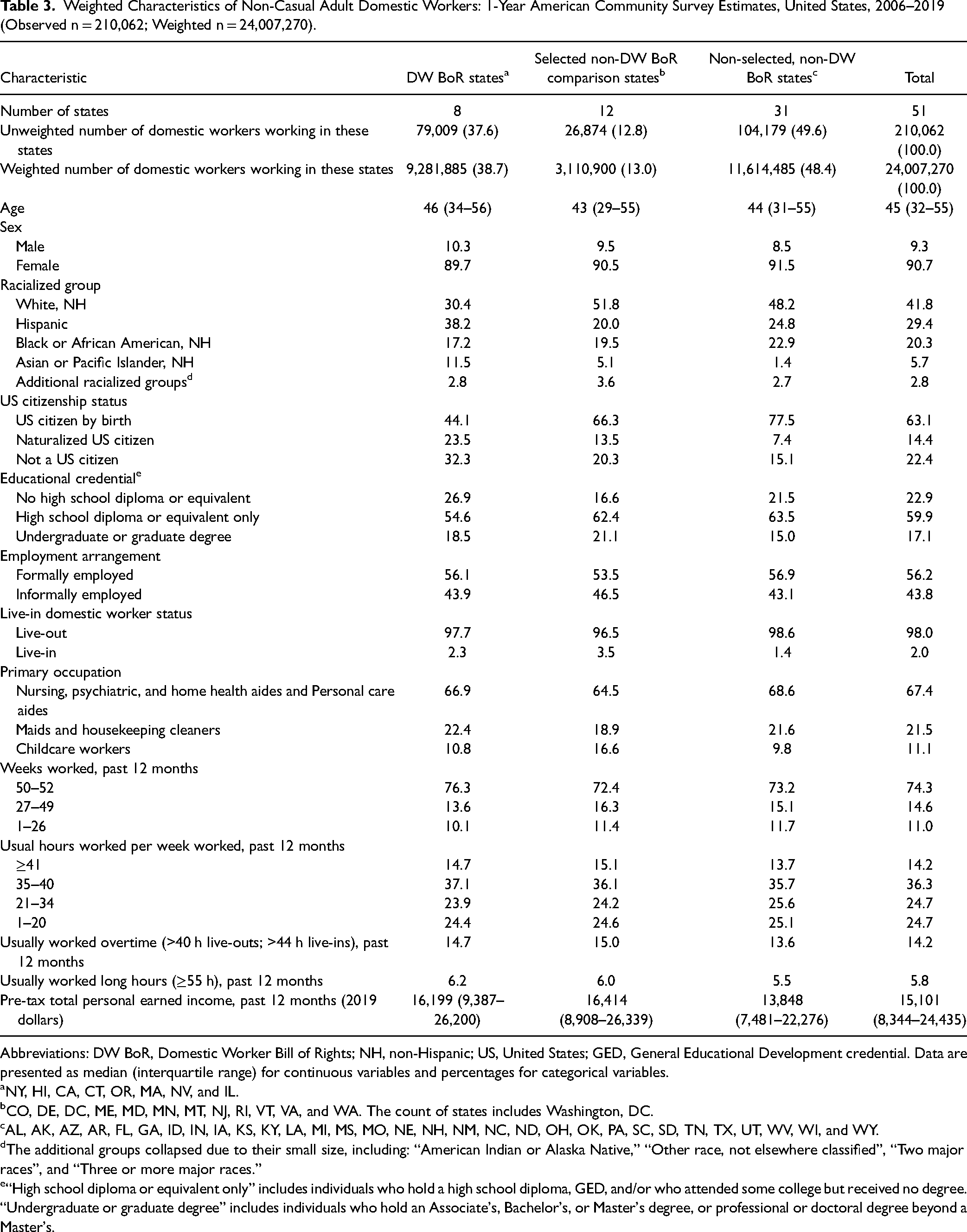
Abbreviations: DW BoR, Domestic Worker Bill of Rights; NH, non-Hispanic; US, United States; GED, General Educational Development credential. Data are presented as median (interquartile range) for continuous variables and percentages for categorical variables.
aNY, HI, CA, CT, OR, MA, NV, and IL.
bCO, DE, DC, ME, MD, MN, MT, NJ, RI, VT, VA, and WA. The count of states includes Washington, DC.
cAL, AK, AZ, AR, FL, GA, ID, IN, IA, KS, KY, LA, MI, MS, MO, NE, NH, NM, NC, ND, OH, OK, PA, SC, SD, TN, TX, UT, WV, WI, and WY.
dThe additional groups collapsed due to their small size, including: “American Indian or Alaska Native,” “Other race, not elsewhere classified”, “Two major races”, and “Three or more major races.”
e“High school diploma or equivalent only” includes individuals who hold a high school diploma, GED, and/or who attended some college but received no degree. “Undergraduate or graduate degree” includes individuals who hold an Associate's, Bachelor's, or Master's degree, or professional or doctoral degree beyond a Master's.
Although domestic workers in BoR states sometimes had distinct characteristics from domestic workers in the 12 comparison states (eg, the percent of non-US citizens was 32.3 in BoR states and 20.3 in non-BoR comparison states) (Table 3), these compositional differences were stable over time between groups and, therefore, not likely a source of violations of the parallel trends assumption. Moreover, trends in key policy measures (minimum wages, immigrant-related policies, and overall policy liberalism) were also similar between BoR states and comparison states. Meanwhile, the remaining non-BoR states showed divergent trends, justifying our exclusion of them from the set of comparison states. For example, external data on the inclusiveness of state and local immigrant-related policies showed BoR states and selected comparison states followed similar trajectories of increasingly immigrant-inclusive policies over time, while non-selected, non-BoR states became increasingly restrictive.
In weighted, adjusted staggered policy adoption DiD models with state and year fixed effects, enacting DW BoR was estimated to have produced significant decreases in the probability that domestic workers in BoR states worked overtime and long hours several years post-enactment (Figure 1). Of note, only California, Hawaii, and New York were observed for 6 years post-enactment before our study period ended in 2019, and only New York was observed for 7–9 years post-enactment. On average, it was estimated that enacting DW BoR produced a 2.7 percentage-point (pp) reduction in the probability of working overtime in Year 6 post-enactment (95% confidence interval [CI] [0.9, 4.6]). Similarly, in Year 7 post-enactment, there was an estimated 2.8 pp reduction (95% CI [0.7, 4.9]). In Year 8 post-enactment, there was an estimated 4.0 pp reduction (95% CI [1.7, 6.2]). In Year 9 post-enactment, there was an estimated 3.6 pp reduction (95% CI [−0.2, 7.4]). Similar patterns of results were observed for long hours: a 2.7 pp reduction in Year 7 (95% CI [1.0, 4.4]), a 3.8 pp reduction in Year 8 (95% CI [1.9, 5.6]), and a 2.8 pp reduction in Year 9 (95% CI [0.8, 4.8]). Given that—even before DW BoR enactment—a minority of domestic workers in BoR states reported overtime work (15%) and long hours (7%), these 2–4 percentage-point decreases are of considerable magnitude. They represent a 15%–20% decrease in the prevalence of overtime and a 37%–52% decrease in the prevalence of long hours for exposed domestic workers. Supplementary analyses of continuous working hours supported these primary results: the number of work hours declined significantly in Years 7–8 post-enactment among full-time workers (by about 1.5 h; a 4% decrease from the pre-BoR mean of 35.9 h). In supplemental analyses, there was no such consistent or substantive impact on the working hours of part-time workers.
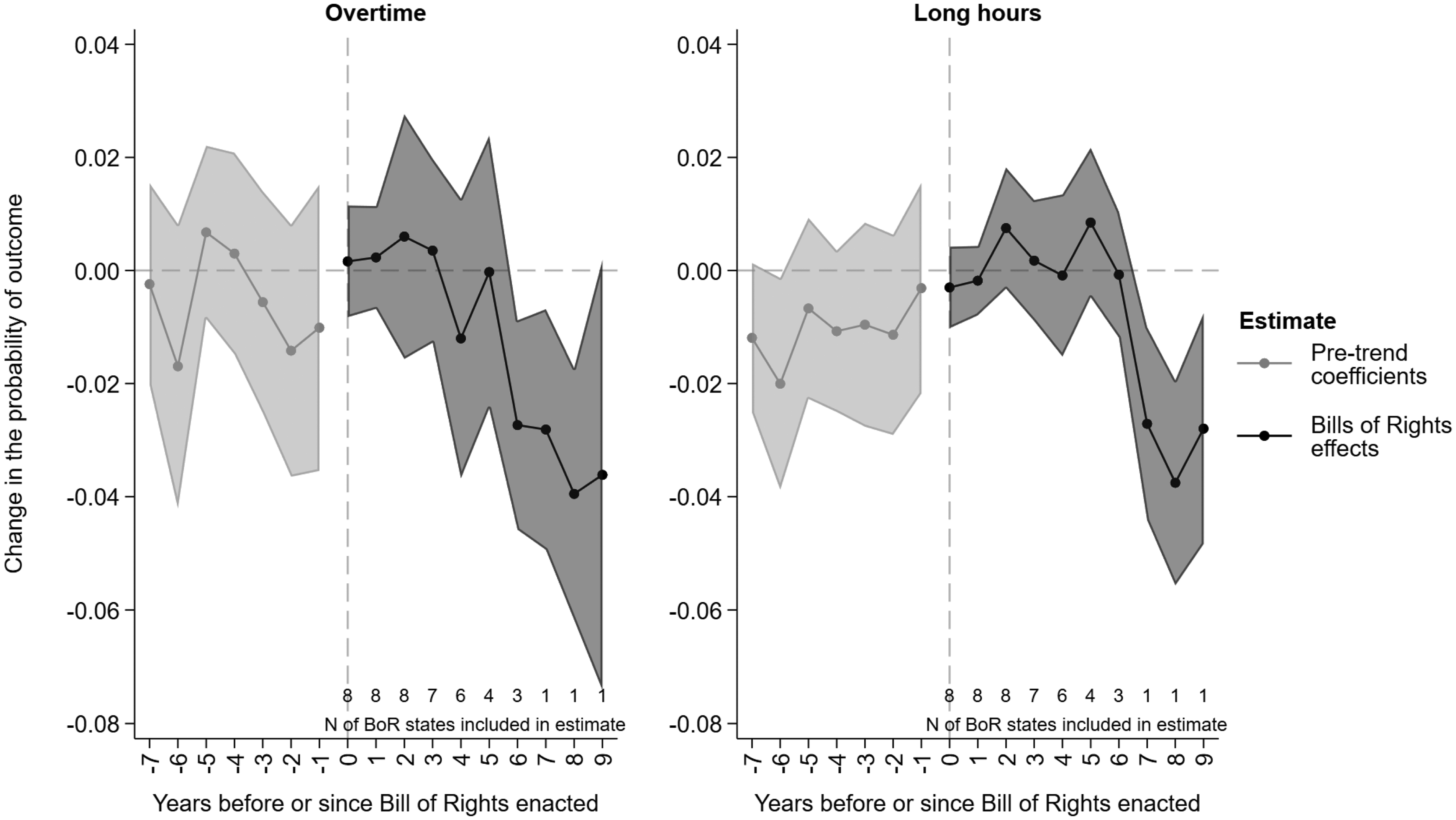
Estimates of the average effect of enacting Domestic Worker Bills of Rights on overtime and long hours by length of exposure: 1-year American Community Survey estimates, 20 states, 2006–2019 (observed n = 105,883, weighted n = 12,392,785). Each panel represents a separate model. Models were weighted using IPUMS ACS person weights, included state and year fixed effects, and adjusted for sex, age, racialized group, education, US citizenship status, occupation, employment arrangement, state- and local-level effective minimum wage, enactment of state- and local-level earned sick leave policies, and enactment of state paid family and medical leave policies. Ninety-five percent confidence intervals (ie, shaded areas around point estimates) are based on standard errors clustered at the state level. “N of BoR states included in estimate” refers to the number of Domestic Worker Bill of Rights states that—given the number of years between enactment and the end of the study period (2019)—contributed to each estimate. For example, only New York (enacted: 2010; 9 years of data post-enactment) was included in estimates for Years 7–9 post-enactment. Similarly, not all Domestic Worker Bill of Rights states have up to 7 years of pre-enactment data (eg, New York only contributes to pre-trend coefficients for years −1 to −4 before enactment). For ease of interpretation, we multiply estimates shown here by 100 and report them as percentage-point changes in probability in the results.
Year-specific pre-trend coefficients indicated no violations of the parallel trends assumptions in the ≤7 years leading up to the enactment of the DW BoR for overtime, and only one violation in Year 6 pre-enactment for long hours. Given the length of the study period (parallel trend violations are known to become more likely with longer periods 51 ), the trend of subsequent pre-trend coefficients toward zero, and that we were examining long hours alongside overtime—a similar outcome for which we did not observe parallel trend violations—we considered this a minor violation and proceeded with interpreting the estimates of DW BoR impact on long hours.
On average, domestic workers’ earned income was not discernibly affected by enacting DW BoR, despite these estimated reductions in overtime and long hours (Figure 2). DiD models that adjusted for the same individual characteristics and time-varying policy variables as the aforementioned models estimated small, statistically insignificant percent decreases in BoR state domestic workers’ logged earnings in the first few years post-enactment (eg, Year 2 post-enactment: −3.0, 95% CI [−8.7, 2.8]), with estimates nearing zero and becoming increasingly unstable in later years (eg, Year 6 post-enactment: −2.1, 95% CI [−10.7, 6.4]; Year 9 post-enactment: 0.5, 95% CI [−16.1, 17.2]). Additionally accounting for potential decreases in hours and weeks worked in DiD models for earned income brought estimates even closer to or, in latter years, above zero, with none being statistically significant. Numerical values of all results included in Figures 1 and 2 can be found in the Supplemental material.
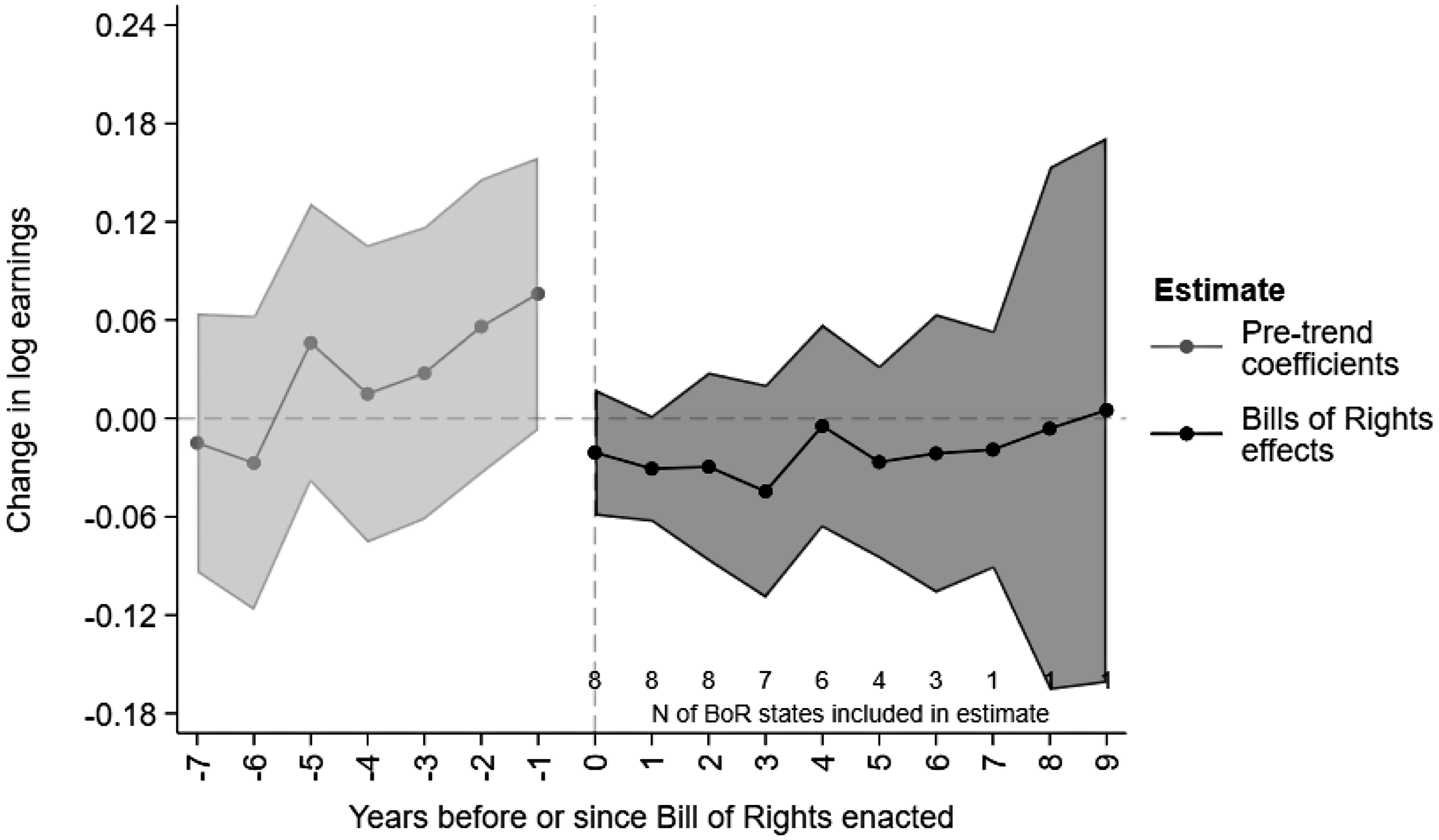
Estimates of the average effect of enacting Domestic Worker Bills of Rights on log earned income (2019 dollars) by length of exposure: 1-year American Community Survey estimates, 20 states, 2006–2019 (observed n = 104,596; weighted n = 12,250,417). Models were weighted using IPUMS ACS person weights, included state and year fixed effects, and adjusted for sex, age, racialized group, education, US citizenship status, occupation, employment arrangement, state- and local-level effective minimum wage, enactment of state- and local-level earned sick leave policies, and enactment of state paid family and medical leave policies. Ninety-five percent confidence intervals (ie, shaded areas around point estimates) are based on standard errors clustered at the state level. “N of BoR states included in estimate” refers to the number of Domestic Worker Bill of Rights states that—given the number of years between enactment and the end of the study period (2019)—contributed to each estimate. For example, only New York (enacted: 2010; 9 years of data post-enactment) was included in estimates for Years 7–9 post-enactment. Similarly, not all Domestic Worker Bill of Rights states have up to 7 years of pre-enactment data (eg, New York only contributes to pre-trend coefficients for years −1 to −4 before enactment). For ease of interpretation, we multiply estimates shown here by 100 and report them as percentage changes in logged earnings in the results.
Analyses of DW BoR effect heterogeneity by employment arrangement, occupation, and US citizenship status suggested that any DW BoR-related improvements in working conditions were disproportionately experienced by formally employed (ie, agency-employed) domestic workers, home health workers, personal care aides, and private household childcare workers. There was less discernible heterogeneity by US citizenship as measured in the ACS. For example, enacting DW BoR led to significant and increasingly large reductions in the probability of working overtime among formally employed workers in DW BoR states in Years 6–9 post-enactment (Figure 3). However, informally employed workers experienced a significant reduction only in Years 6 and 7 post-enactment, with estimates approaching zero thereafter. Patterns of results also diverged notably in Years 6–9 post-enactment by domestic workers’ occupation. Home health and personal care aides as well as private household childcare workers experienced significant overtime reductions in Years 6–9 and 6–8, respectively. Meanwhile, maids and housekeeping cleaners instead experienced some increases in the probability of working overtime during these years. Results indicated less notable DW BoR effect heterogeneity by US citizenship status, with US-born citizen, naturalized citizen, and non-citizen workers all variously experiencing overtime reductions of a similar magnitude (some of which were significant) during Years 6–9 post-enactment. Similarly, overlapping results were observed in supplementary analyses of continuous working hours.
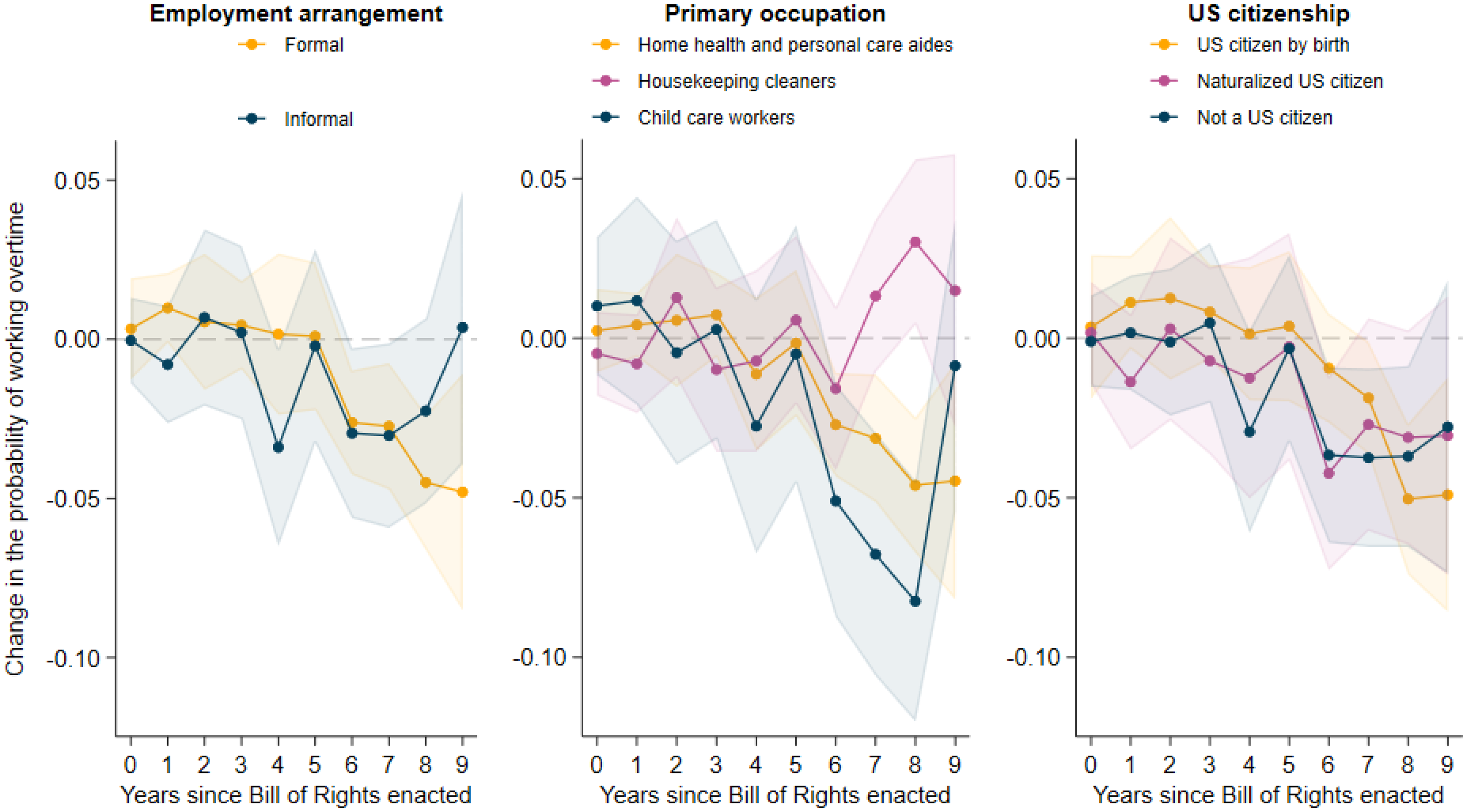
Estimates of the average effect of enacting Domestic Worker Bills of Rights on overtime by length of exposure and social group: 1-year American Community Survey estimates, 20 states, 2006–2019 (observed n = 105,883; weighted n = 12,392,785). Each panel represents a separate model. Models were weighted using IPUMS ACS person weights, included state and year fixed effects, and adjusted for sex, age, racialized group, education, US citizenship status, occupation, employment arrangement, state- and local-level effective minimum wage, enactment of state- and local-level earned sick leave policies, and enactment of state paid family and medical leave policies. 95 percent confidence intervals (ie, shaded areas around point estimates) are based on standard errors clustered at the state level. The first category for primary occupation includes “Nursing, psychiatric, and home health aides” and “Personal care aides.” For brevity and since, per Table 2, we assume people with the occupation code for “Nursing, psychiatric, and home health aides” included in our definition of domestic workers were primarily home health aides, we refer to this category as “Home health and personal care aides.” “N of BoR states included in estimate” refers to the number of Domestic Worker Bill of Rights states that—given the number of years between enactment and the end of the study period (2019)—contributed to each estimate. For example, only New York (enacted: 2010; 9 years of data post-enactment) was included in estimates for Years 7–9 post-enactment. Similarly, not all Domestic Worker Bill of Rights states have up to 7 years of pre-enactment data (eg, New York only contributes to pre-trend coefficients for years −1 to −4 before enactment).
Results were robust to alternative modeling choices and placebo testing. First, similar patterns of results were obtained from alternative staggered policy adoption DiD models that relied on a less stringent parallel trends assumptions—thereby providing further evidence that results from primary models were not driven by parallel trends assumption violations. Unweighted and/or unadjusted DiD models yielded similar patterns of results as weighted, adjusted models, with our primary (ie, weighted and adjusted) models estimating slightly more modest reductions than the alternative models. Weighted, adjusted models that used all 43 non-BoR states as the comparison group also produced similar patterns of results, but showed more evidence of parallel trend violations, as expected. Placebo tests in which we examined the impact of enacting DW BoR on similar, non-private-household workers suggested these workers did not experience any reductions in overtime and long hours, as expected. Tables and figures for all sensitivity analyses are located in the Supplemental material.
Finally, we explored potential enforcement-related mechanisms by which the strongest patterns of results—observed in Years 7–9 post-DW BoR enactment, when only New York State contributed to DW BoR effect estimates—may have arisen. To do so, we examined the effect of just New York State's DW BoR and one source of heterogeneity: residence in New York City, which has one of the strongest records of enforcement, versus the rest of New York State. In models comparing domestic workers in New York State (ie, excluding all other BoR states) to those in the subset of the comparison states in the same or neighboring census divisions as New York (DE, DC, ME, MD, NJ, RI, VT), estimated DW BoR effects on overtime indicated increasingly large reductions among New York City domestic workers from years 2 to 9 post-enactment (becoming and remaining statistically significant after Year 4), with smaller and frequently insignificant reductions among domestic workers in the rest of the state (Figure 4).
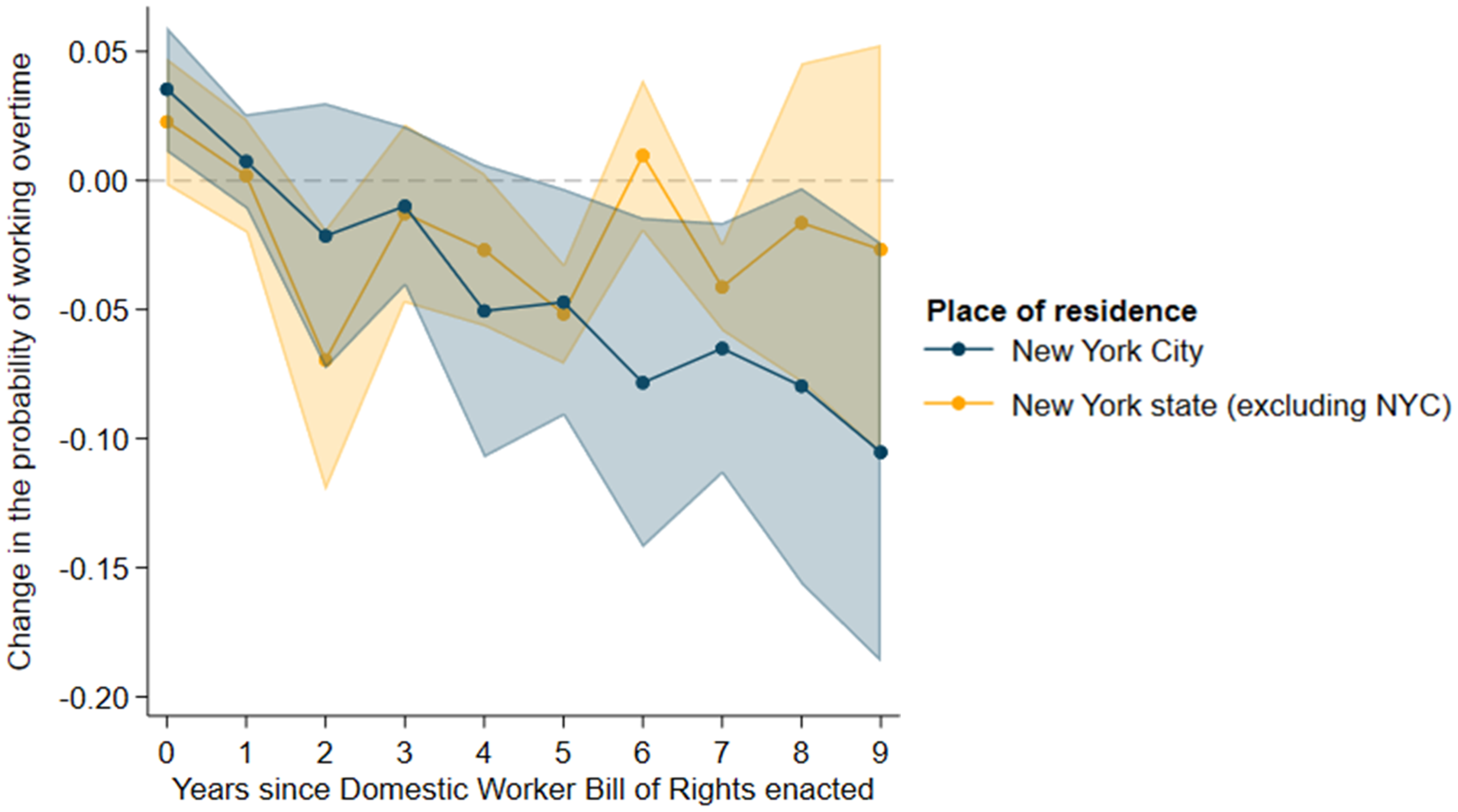
Estimates of the average effect of enacting New York’s Domestic Worker Bills of Rights on overtime by length of exposure and residence in New York City versus the rest of New York state. Model used 1-year American Community Survey data (2006–2019) on non-casual adult domestic workers who worked in New York state or one of the following states (ie, a subset of the 12 selected non-BoR states used in the primary models): Delaware, Washington DC, Maine, Maryland, New Jersey, Rhode Island, and Vermont. The model was weighted using IPUMS ACS person weights. Covariates included sex, age, racialized group, US citizenship status, education, employment arrangement, occupation, state- and local-level effective minimum wage, enactment of state- and local-level earned sick leave policies, and enactment of state paid family and medical leave policies. Standard errors are clustered by state. We used place of residence rather than place of work because the IPUMS ACS variable on metropolitan area of work was only made publicly available in the 2006–2011 ACS (ie, not 2012–2019).
Discussion
In this novel quasi-experimental study using nationally representative data from the largest US household survey, we found that enacting state-level DW BoR was associated with reductions in working overtime and extremely long working hours in Years 6–9 post-enactment. Despite these decreases in working hours, results suggested that, on average, domestic workers’ earnings were not negatively impacted. Formally employed (ie, agency-employed) workers and home health and personal care workers (who were most likely to be formally employed) experienced more consistent and/or larger reductions in working hours that resulted from DW BoR enactment, with less notable DW BoR effect heterogeneity by US citizenship status. A formal analysis regarding potential mediation of DW BoR income effects by working hours (ie, how the decline in hours worked associated with DW BoR enactment impacted income) could not be conducted because the methodological and applied literature on implementing causal mediation analysis within difference-in-differences models is in its infancy, with no consensus yet on how best to implement mediation analysis.
Our DiD study provides the most robust quantitative evidence to date on the impact of DW BoR on domestic workers. We compared domestic workers to other domestic workers, thereby avoiding the complexities of comparing domestic workers—with their distinct characteristics (eg, disproportionately women, immigrants, and people of color, singly and combined) and experiences at work and beyond (eg, isolation, societal disregard, and lack of regulation of the home as a workplace)—to other workers.27,61–63 DiD models such as ours are also not biased by time-invariant differences between states (eg, pre-existing differences in state law regarding the unionization and collective bargaining rights of independent home health and personal care workers paid through Medicaid 64 ) and nationwide changes at particular points in time (eg, 2015 federal expansion of minimum wage and overtime coverage to more agency-employed home health and personal care workers26,27,63). Beyond this, our models explicitly accounted for changing state and local minimum wages between BoR and non-BoR comparison states, as well as the enactment of earned sick leave and paid family and medical leave policies during the study period. Relatedly, our selection of 12 comparison states incorporated additional features of states’ changing policy contexts that likely affected trends in domestic workers’ hours and earnings (eg, immigration policy).
Our results are supported by multiple lines of literature. First, the only other quantitative analysis of DW BoR impacts suggests that any improvements resulting from DW BoR may be disproportionately experienced by formally employed workers, rather than informally employed workers—similar to our findings. 4 More broadly, this prior study documented higher earnings among home care workers in states with DW BoR and above-federal-level state minimum wages than in states without them 4 —seemingly contradicting our findings that domestic workers’ earnings were not discernibly impacted by enacting DW BoR. Our quasi-experimental pre-post DiD approach accounted for more non-BoR-related differences in workers’ earnings across states and over time than did this prior study's cross-sectional analysis, lending credence to our findings.
The most direct evidence supporting our combination of findings on overtime and long hours as well as earnings comes from the sole peer-reviewed quantitative study to examine a similar federal policy—called the Home Care Rule—on home health and personal care aides’ outcomes. 26 The Home Care Rule extended Fair Labor Standards Act minimum wage and overtime coverage to home care workers employed by third-party agencies and was enforced starting in November of 2015. 26 Using DiD, this prior study showed that the Home Care Rule reduced home care workers’ hours and increased the share of part-time work, but did not negatively impact wages, earnings, or employment. 26 Although this study did not examine overtime or long hours, it documented similarly sized effects on continuous work hours to those documented in our supplemental analyses—about 1 h (3%) among all workers compared to our 1.5 h (4%) among full-time workers. Moreover, a US government report on the Home Care Rule that also employed DiD methods documented reduced overtime without changes in earnings or wages. 27 This report documented a 14% reduction in overtime among home care workers (compared to similar occupations) post-implementation of the Home Care Rule—also similar in magnitude to our estimated 15%–20% decreases in the prevalence of overtime. Of note, our approach controls for effects of the Home Care Rule when estimating DW BoR impact on hours and earnings by accounting for nationwide changes at particular points in time.
Our findings that any impacts of enacting DW BoR may be delayed, relatively small in magnitude in most years, and—if present at all—concentrated in places with the longest and more robust histories of enforcement (ie, New York) are also supported by prior legal and sociological literature. Legal analyses published immediately following the passage of the first DW BoR in New York state warned of the limitations of legal reform alone for generating transformational change, citing the “very low floor of protections” that yielded “limited concrete benefits for the Black and immigrant women who labor as paid caregivers.” 3 p 405 Movement leaders reflecting on the successes of the BoR campaign also asked how workers’ newly enshrined rights would be effectively enforced. 1 A sociological study that analyzed interviews with domestic workers in New York City between 2013 and 2014 argued that New York's BoR had not been enough to provide meaningful improvements in working conditions partly because it is embedded in the context of exclusionary federal immigration law that “inhibited … the law's ability to work.” 12
Nonetheless, more recent investigations assessing successes and failures after the enactment of New York's DW BoR suggest progress has been made in more recent years, in keeping with our findings. According to extensive qualitative studies, DW BoR enforcement in New York has been concentrated and most successful in New York City, rather than at the state level.17,18 Moreover, DW BoR enforcement efforts in New York City can be characterized by the faltering of various pilot projects in 2010–2013, initial forays into enforcement from 2013 to 2015, heightened awareness and enforcement efforts in 2015–2017 (eg, creation of municipal labor standards enforcement office in 2015; establishment of a special unit focused on in-home care workers in 2016), and more extensive collaboration between domestic workers’ centers, advocacy organizations, and government agencies in 2017–2019.17,18 Thus, the timing and increasing magnitude of our estimated overtime reductions, along with their specificity to New York City (rather than the rest of New York state), align with existing literature regarding initial enforcement setbacks and later successes in the years since New York's DW BoR was enacted.
In combination with this supporting literature, a broader body of evidence establishes multiple adverse health consequences of working overtime and long hours among domestic workers and other workers, suggesting possible health implications of our findings that we were unable to assess due to the lack of health data in the ACS. For example, in a study analyzing data from the sole nationwide survey of informally employed US domestic workers, working long hours with no breaks was significantly associated with a higher risk of both work-related back injury and work-related illness. 7 Such deleterious associations are a considerable occupational health concern since many domestic workers regularly work overtime 45 and/or exceedingly long hours.6,8 Although the quantitative literature on working hours and health among domestic workers remains sparse due to data limitations, systematic reviews and meta-analyses among workers in other industries and occupations have further established that working ≥55 h/week (the cutoff used in our study) was associated with higher risk of heart disease,21,65 stroke,21,22 poor sleep, 23 and anxiety and depressive symptoms (particularly among women), 23 that women who worked long hours (using various definitions) were at higher risk of hypertension. 24 Thus, it is possible—though not demonstrated—that the reduction in long work hours among domestic workers in DW BoR states observed in this study, if sustained, could reduce rates of work-related injury, poor sleep and mental health, and adverse cardiovascular events. Future studies should leverage other sources of data with information on these and other health outcomes to explore possible links between DW BoR enactment and domestic workers’ health.
Policy Implications
Taken together, our results suggest that enacting DW BoR may have begun to reduce overtime and extremely long working hours—without increasing or, importantly, reducing earnings—several years post-enactment, in places with the most robust histories of enforcement and among more formally employed workers best positioned to translate these new rights into improved working conditions. These findings have multiple implications for policy and other actions to protect domestic workers. Writing in June 2025, we consider what is possible in the context of the second Trump administration's actions cutting Medicaid and other social safety net programs, undermining working conditions and workplace safety, and attacking immigrant workers and families.66,67 At the same time, reversing decades of exclusion of domestic workers from basic labor protections requires multi-pronged approaches and a longer-term vision towards a robust, just care economy.
First and foremost, enacting additional legislation at the local and state (and, ideally, federal) levels that reverses lingering historical exclusions of domestic workers from labor, employment, and occupational health protections and sets floors on key domestic working conditions is an important first step to address the precarious, hazardous conditions of domestic work. 11 Such legislation is particularly important given the current legal exclusions and practical challenges to unionization and collective bargaining for many domestic workers. 17 Most notably, a national DW BoR was re-introduced in the U.S. Congress in June 2025. 10 Although its passage in the current Congress is unlikely, this bill could reduce long work hours and otherwise improve domestic work job quality nationwide if passed. Recent enactment of pro-worker legislation at the sub-federal level (eg, Philadelphia's POWER Act, which strengthens enforcement of local labor laws 68 ) underscores the relative viability of advocacy for additional state and local DW BoR in the coming years. Our findings may also be relevant for policymaking internationally, since—as of 2020—around half of all domestic workers globally had no legal limit on their working hours and, separately, no minimum wage coverage, among other gaps in legal coverage. 29
Second, although we were only able to preliminarily explore the role of enforcement by way of inference (ie, related to the timeline of DW BoR impact and domestic workers’ characteristics and geographic location), our results suggest the need for strong enforcement of DW BoR by government agencies, in consultation with domestic worker-led organizations. For example, we found that informally employed domestic workers experienced less consistent and/or smaller reductions in working hours after DW BoR enactment than their agency-employed counterparts. Although home care agencies would also benefit from more rigorous enforcement (eg, conducting more regular, proactive audits 17 ), our findings and prior evidence underscore the importance of enacting specific strategies for enforcement in informal domestic work.4,69 Such strategies could include more systematic identification and registration of household employers of domestic workers (eg, via adding questions to state tax forms 13 ), expanding public investment in outreach and enforcement, increasing funding to workers centers (eg, via government labor enforcement agencies sharing fines collected from DW BoR enforcement actions), and coordinating pro bono immigration clinics at workers centers. These actions would support informal employer education, fund innovative, worker-informed awareness, compliance, and enforcement programs, help avoid case backlogs, and address some of the many barriers to enforcement (eg, fear of retaliation) among undocumented informal domestic workers.11,13,17
Finally, we argue that our results regarding the delayed and relatively small impacts of DW BoR on hours and earnings to date support conclusions drawn in other care scholarship and by movement leaders that DW BoR—even with enforcement—are likely not a panacea for centuries of care labor being exploited, rendered invisible, and legally excluded from protections by employers and governments.3,11,12,70 The harms threatened, realized, and planned by the current administration against immigrants, women, people of color, and workers (singly and combined) make this point painfully apparent. Thus, beyond DW BoR, multi-sectoral policy reform is needed to transform domestic work and address the interlocking systems that devalue care and those who disproportionately provide and receive it (eg, sexism, racism, nativism, ableism, and ageism).71–73 For example, creating a universal social insurance program for home care and long-term care provision, enacting a generous federal paid family leave policy, and expanding safety net programs and benefits for workers (eg, unemployment insurance) could simultaneously convert many low-wage, hazardous domestic work jobs into higher-quality jobs and increase access to high-quality, affordable care for care recipients and their loved ones.11,17,70 Furthermore, comprehensive immigration policy reform (eg, work authorization for undocumented immigrants) is needed to ensure the many currently undocumented domestic workers equitably benefit from any improvements in the domestic work sector and beyond.11,17 Although federal action along these lines is unlikely in the near future, recent progress at the state and local levels (eg, Washington state's first-of-its-kind social insurance program for long-term care 74 ) highlight possibilities for shorter-term social change.
Limitations
Although our study has many strengths, its limitations must also be considered when interpreting results. First, like other US government surveys, the ACS underrepresents undocumented immigrants75–77—a group that comprises a large share of domestic workers. 44 This underrepresentation may make DW BoR appear more effective than they truly were. Encouragingly, prior literature estimates that ACS underrepresentation of undocumented immigrants decreased over our study period (eg, from not accounting for 23% of undocumented Latina women in 2005 to 1% in 2018). 75 We estimated supplemental models that avoided using the earliest years of our ACS data and found similar patterns of results, suggesting the magnitude of bias resulting from undocumented immigrant underrepresentation may be minimal. Exploring the impact of DW BoR using survey data collected by advocacy organizations that better represent undocumented domestic workers—and directly assess related topics such as fear of employer retaliation and awareness of DW BoR—may help triangulate findings.
Relatedly, some non-citizen ACS respondents may have reported US citizenship status due to fear of disclosing their immigration status, leading to over-reporting of US citizenship status in the ACS. Comparisons of 2010 ACS data and administrative naturalization data document high rates of over-reporting of US citizenship in the ACS among recent immigrants (<5 years in the US) and certain other groups (Mexican men, older Mexican women). 78 For example, the estimated number of naturalized Mexican women who have lived in the US for <5 years was 17 times higher in the ACS than in administrative records. 78 ACS estimates of naturalized Central American/Caribbean women were 12 times higher. 78 Since the vast majority of immigrants in our sample entered the US <5 years ago (90% in BoR states and 85% in comparison states), over-reporting of citizenship by recent immigrants may have substantially flattened true differences in DW BoR impact between naturalized citizen and non-citizen domestic workers in our analysis of DW BoR effect heterogeneity by citizenship status.
Second, we were unable to assess domestic work-specific hours and earnings because the ACS only collects data on these variables over the past 12 months, across all jobs. Thus, domestic workers’ earnings and hours data may reflect both domestic and other work due to multiple job-holding and turnover.79–82 This outcome mismeasurement may make DW BoR appear less impactful on domestic work hours and earnings than they truly were (eg, if, after DW BoR enactment, domestic workers in BoR states worked more hours at second jobs to maximize income). Replications of our study using Current Population Survey data would allow investigators to isolate domestic work-specific hours worked, wages, and weekly earnings.
The ACS also made several changes to its 2019 questionnaire that may have affected our estimates for year nine post-enactment. The 2019 survey included revised questions about industry and occupation (eg, wording changes; revised examples) and class of worker (eg, in 2018, the ACS asked whether someone was “an employee of a PRIVATE FOR-PROFIT company or business, or of an individual, for wages, salary, or commissions?”; in 2019, it asked whether someone worked for a “for-profit company or organization” [emphasis in original]).83–85 These changes may have led to more misclassification of true domestic workers as non-domestic workers and more misclassification of truly informally employed workers as formally employed.83,84 Although the impact of these changes on our estimates is difficult to anticipate, they may have decreased the precision of our estimates and/or biased results towards the null. Any future studies analyzing multiple years of pre- and post-2019 ACS data should explicitly investigate and account for these (and later pandemic-related) survey changes. 32
Conclusion
Domestic Worker Bills of Rights reversed lingering exclusions of domestic workers from key labor and civil rights protections and codified new domestic work-specific protections. This study contributed to the exceedingly sparse quantitative literature examining DW BoR by investigating the impact of these novel legislative gains using nationally representative data and quasi-experimental methods. We found that enacting DW BoR led to reductions in overtime and extremely long working hours several years post-enactment, without negatively affecting earnings. Furthermore, we found the magnitude of these DW BoR reductions in hours varied by employment arrangement and occupation, with less notable variation by US citizenship status as measured in the ACS. Findings suggest that DW BoR may be an important tool for ensuring a floor on domestic workers’ working conditions if they are accompanied by robust, sustained investments in awareness and enforcement. Further research on the causal impacts of enacting DW BoR—including potential mediators (eg, enforcement and changes in hours worked) and potentially differential effects on additional, intersectionally defined social groups (eg, gender and racialized group)—is warranted and highly relevant to ongoing policy advocacy and enforcement efforts, especially in the context of the recent and expected growth of the domestic workforce. 41
Supplemental Material
sj-docx-1-new-10.1177_10482911251394344 - Supplemental material for Enacting Domestic Worker Bills of Rights: A Quasi-experimental Analysis of Impacts on Domestic Workers’ Working Hours and Earnings
Supplemental material, sj-docx-1-new-10.1177_10482911251394344 for Enacting Domestic Worker Bills of Rights: A Quasi-experimental Analysis of Impacts on Domestic Workers’ Working Hours and Earnings by Emily Wright, Paulina López González, Luis Nuñez and Kelly Gannon in NEW SOLUTIONS: A Journal of Environmental and Occupational Health Policy
Footnotes
Acknowledgments
The authors thank Mariana Viturro, Haeyoung Yoon, Dr. Rita Hamad, Dr. Nancy Krieger, and Dr. Daniel Schneider for feedback on study design; Rocío Ávila for support curating the features of the Domestic Worker Bills of Rights; Marrisa Senteno for providing resources related to bill of rights enforcement histories; and Dr. Jocelyn Chu for feedback on Dr. Wright's community-engaged research practices.
Data Availability Statement
All data analyzed for this manuscript are publicly available via IPUMS USA.
Declaration of Conflicting Interests
The authors declared the following potential conflicts of interest with respect to the research, authorship, and/or publication of this article: At the time this research was conducted and the manuscript was submitted for peer review, Paulina López González, Luis Nuñez, and Kelly Gannon were employed by the National Domestic Workers Alliance, an advocacy organization whose mission is related to the content of this article. Neither the organization nor its leadership had a role in the design of the study, the analysis and interpretation of the data, the preparation of the manuscript, or decisions about where and when to submit the manuscript.
Ethical Approval
This study was determined to be Not Human Subjects Research (IRB24-0085) by the Harvard T.H. Chan School of Public Health Institutional Review Board.
Funding
The authors received no financial support for the research, authorship, and/or publication of this article.

Supplemental Material
Supplemental material for this article is available online.
Author Biographies
At the time this research was conducted,
References
Supplementary Material
Please find the following supplemental material available below.
For Open Access articles published under a Creative Commons License, all supplemental material carries the same license as the article it is associated with.
For non-Open Access articles published, all supplemental material carries a non-exclusive license, and permission requests for re-use of supplemental material or any part of supplemental material shall be sent directly to the copyright owner as specified in the copyright notice associated with the article.
