




Abstract
Return to work (RTW) after injury requires strong stakeholder coordination. Seafaring work is associated with high injury rates, but seafarers’ RTW is understudied. As federally regulated workers, Canadian seafarers are protected by the Canadian Human Rights Act, which prohibits discrimination based on disability. Following a work-related injury or illness, seafarers are eligible for provincial workers’ compensation benefits and RTW; however, RTW is also subject to federal regulations, including the requirement to have a valid marine medical certificate (MMC). This complex regulatory landscape may negatively influence seafarer RTW. Drawing upon a sociolegal study, we find that MMC-related human rights complaints against the federal government highlight the legal challenges seafarers face in the RTW process. Interview findings suggest that to ensure a valid MMC and employment eligibility, injured seafarers might avoid filing compensation claims or RTW before recovery. We recommend the federal-provincial agencies adopt more efficient coordination policies to support seafarers’ RTW.
Introduction
Return to work (RTW) refers to a collaborative process involving employers, injured workers, and workers’ compensation boards, wherein all parties collaborate to integrate injured workers back into the workplace where they were injured. A typical RTW process encompasses 3 domains: first, implementing modified duties, including modified working hours/equipment, and/or modified workstations to allow injured workers to return to their pre-injury jobs or duties (see Figure 1). Secondly, RTW includes health interventions necessary to ensure that the worker is healing and can perform modified duties without further injuring themselves. Thirdly, the former 2 RTW domains should, ideally, be facilitated through service coordination between all stakeholders involved in the RTW process, including the employer, worker, union (where applicable), RTW specialist, healthcare providers, and the relevant compensation board. Service coordination can include any or all of the following: RTW planning and coordination, case management, early injury reporting, education, and training.1,2
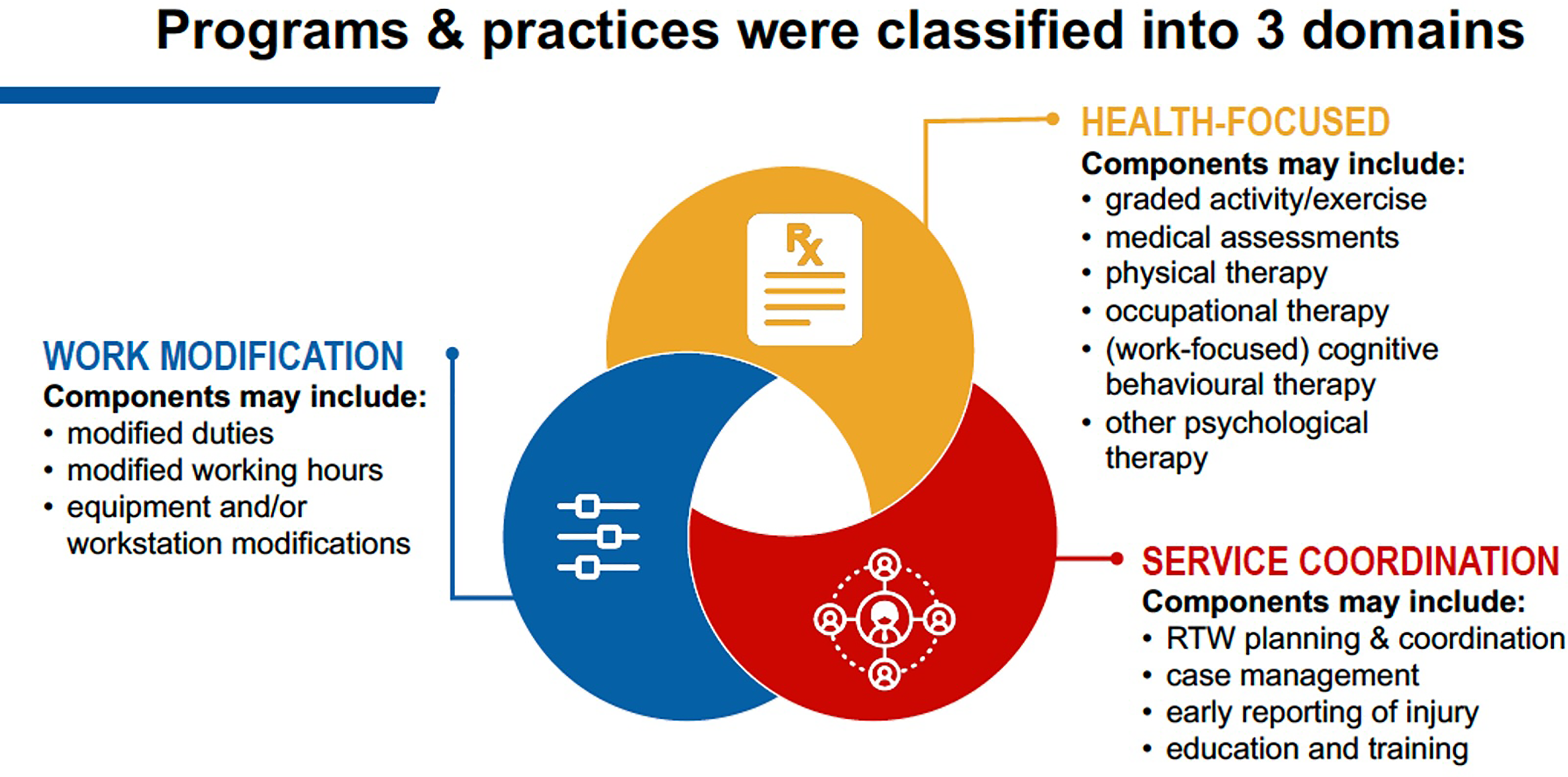
What Works in RTW?
From the point of view of the workers’ compensation boards, RTW is often considered successful when a worker returns to their pre-injury job within a reasonable amount of time following their injury, gradually easing back into their former or modified duties—without worsening their condition or reinjuring themselves. The Sherbrooke model of work disability prevention 3 reveals how the behaviors of insurers (including compensation and social insurance authorities), healthcare providers, employers, and workers can contribute to successful or negative RTW outcomes.
Effective RTW after injury or illness is vitally important to protecting the livelihoods and human rights of workers and to ensuring access to a skilled workforce. Central to the behavior and experiences of all workers and stakeholders in the RTW process is the regulatory framework these actors operate within, yet many are unaware of how deeply regulatory frameworks can shape their experiences and decisions. 4 For example, how quickly an injury is reported and how actively the insurer manages the claim will impact the duration of work disability and RTW success. 5 Furthermore, the likelihood of injury reporting and thus access to compensation and RTW supports, and the risk employers will challenge compensation claims can be influenced by multiple factors, including the nature of employment (standard or nonstandard) and the presence of an experience rating system within a workers’ compensation system, which ties an employer's workers’ compensation premiums to the costs related to injuries reported. 4 Similarly, regulatory mechanisms related to medical information processing can drastically impact the success of RTW and levels of temporary and permanent disability among injured workers. 6 Conversely, specific regulatory frameworks can benefit injured workers. There is strong evidence, for instance, that work disability duration can be significantly reduced by work accommodation, mainly when there is a high level of coordination between healthcare providers and employers in the workplace. 6
The Knowledge Gap: Seafarers’ RTW Experiences
Effective RTW is particularly challenging in hazardous sectors like seafaring that are associated with high levels of often complex mobility for work, working remotely for long hours, difficult working conditions, and regulatory complexity. 7 Seafaring is a large sector that plays a key role in global supply chains. There are an estimated 1.89 million seafarers globally, 8 including 28,000 seafarers across Canada. 9 Seafarers work on board various kinds of vessels, including cargo ships, ferries, and tugboats, and they engage in 24/7 work rotations ranging from days to weeks and even months at sea. They have high fatality and injury rates compared to other sectors. 10
The fatal accident rate among seafarers in the United Kingdom, for example, was 14.5 per 100,000 workers between 2003 and 2012, 21 times that in the general British workforce at the time and 4.7 times that in the construction industry (see Table 1). 2 In Canada, at 22 per 100,000 workers, the fatal accident rate among seafarers between 1996 and 2005 was higher than in the United Kingdom and 2.6 times higher than the Canadian average. 11 In the case of injury rates, Lefkowitz (2013) estimated the injury rate of global shipping to be 850 per 100,000 seafarers. 2 In Canada, taking the seafarers in British Columbia (BC) on Canada's Pacific coast as an example, the injury claim rate is about 490 per 100,000 seafarers (2011, 2016, 2021), 12 about half of the global rate 13 but more than 2 times the provincial average injury rate. 14 The seafaring sector is also vital to global supply chains and is experiencing shortages of skilled labor in some contexts, such as Canada, pointing to the importance of effective RTW programming. 15
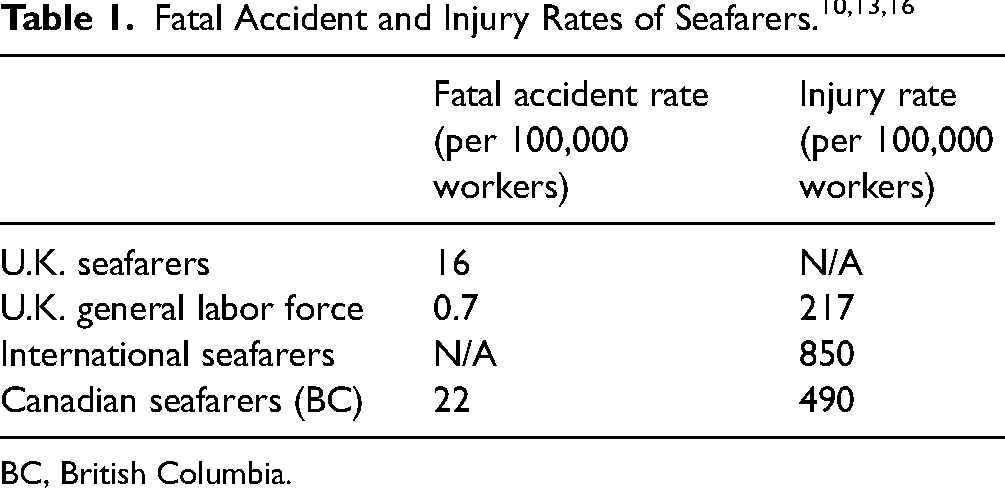
BC, British Columbia.
Unlike most other workers, the regulatory framework for seafarer OHS often includes multiple bodies, including international and national bodies and maritime safety and OHS bodies. Furthermore, seafarers do not have the same OHS rights as those in most land-based occupations. In Canada, for instance, while most workers have the right to participate in OHS management and to refuse dangerous work, in the case of seafarers, rights to participate in OHS management and refuse dangerous work are restricted when they engage in active voyages at sea and while at sea, where they are subject to managerial control and surveillance 24 h a day. 7 Many seafarers are mobile workers who work out-of-country and, in Canada, outside of their province of residence. Their mobility both contributes to injury risk and has the potential to constrain their access to workers’ compensation and RTW. For instance, recent studies suggest that mobile workers in Canada who are employed out-of-province tend to experience longer work disability durations than those employed within a single jurisdiction. 17
Compared to the land-based workers regulated by the workers’ compensation authorities of states and territories, an Australian study found seafarers’ RTW outcomes are less effective. 18 In Australia, seafarers’ occupational health and safety (OHS), workers’ compensation, and RTW are covered by a national scheme, Seacare. As required by the Seacare program, before returning to work at sea, a seafarer must be certified as medically fit for duties. Before the medical inspector issues a fitness certificate, the seafarer should not be required nor be asked to perform the full duties required of a seafarer. 19 In contrast, in Canada, there is no dedicated scheme for seafarers’ RTW, nor clear protection for seafarers from being asked to work at sea before revalidating their Marine Medical Certificates (MMCs).
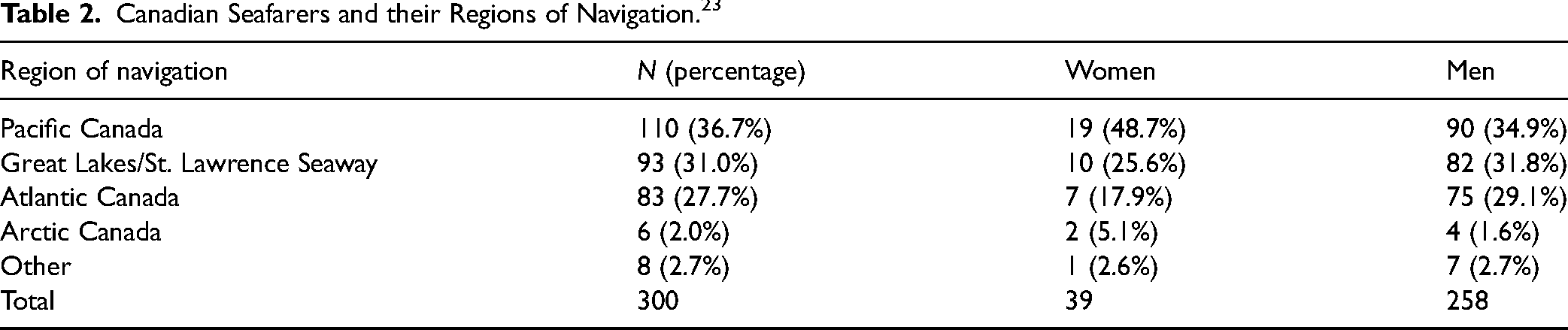
With a focus on seafarers employed in the Pacific coast province of BC, Canada, and the requirement for seafarers to have a valid MMC, the remainder of this article contributes to knowledge about legal challenges associated with seafarer RTW in the Canadian context and their implications for RTW regulatory effectiveness, defined as to what extent workers’ entitlements are supported through legislation and in the enforcement process. 20 We focus on seafarers employed in a selected province (BC) based upon 2 considerations: (1) provincial workers’ compensation RTW regulations vary from province to province; and (2) employers’ cooperation in facilitating timely and safe RTW 21 was not legally required under the BC Workers’ Compensation Act until January 1st, 2024. In addition, approximately 36.7% of Canadian seafarers navigate in the Pacific Region off the BC province (see Table 2); and Vancouver, BC, is Canada's largest domestic marine trade port and an important international port of the Pacific Rim. 22 Focusing on this province also allowed us to draw on interview findings from a related BC study not available from other Canadian provinces. These interviews and related findings are discussed in more detail elsewhere in this special issue. 12
Canadian Seafarers and their Regions of Navigation. 23
Our focus on legal challenges related to the MMC was inspired by observations by the first author while participating in meetings of the multistakeholder Canadian Marine Advisory Council. In those meetings, some employer representatives have argued that provincial workers’ compensation boards are not competent to decide a seafarer's fitness for work and to decide whether they can return safely to work with injury-related restrictions on their activities. In their view, only the revalidation of an injured seafarers’ MMC, issued by Transport Canada, a department of the federal government, can testify they are fit for work at sea. 24 In this context, these employers have asked Transport Canada to clarify whether employers can refuse a seafarer's early RTW arranged by provincial workers’ compensation boards if their MMC has not been revalidated postinjury by Transport Canada.
These discussions led us to ask the following question: in the complex regulatory federal-provincial landscape governing the RTW process and assessment of seafarers’ fitness to work, what are the legal challenges for injured/sick seafarers’ RTW and outcomes? The paper first examines the federal and provincial laws and policies on seafarer RTW. Secondly, we examine human rights and workers’ compensation case law and labor tribunal decisions involving injured seafarers who were denied an MMC. The paper also draws on findings from qualitative interviews conducted in 2023 to 2024 with a small sample of injured seafarers and key informants (KIs) in the BC province, Canada. After reviewing federal and provincial laws, and drawing upon case law, we discovered that federal and provincial policies and practices can clash in ways that may disadvantage injured and sick seafarers. In particular, the MMC requirement can be a barrier for injured/sick seafarers to RTW. The concluding section of the article explores the policy-related implications of our findings.
Through the interviews with seafarers and KIs, we have found that to maintain fitness to work at sea according to federal Marine Personnel Regulations and as reflected in their MMC, some seafarers may RTW at sea while they still suffer pain from injuries and need further treatment. If seafarers are off work for more than 30 days, employers may contact Transport Canada to challenge the validity of their MMCs, which can result in the need to requalify for their MMC. This can add administrative complexities to affected seafarers’ RTW process and increase the possibility they might lose their workers’ compensation benefits but not actually be able to RTW.
Methods
With a focus on the federal government's requirement for MMCs and regulation of RTW by the B.C. workers’ compensation board, WorkSafeBC, this paper draws on findings from legal doctrinal analysis and interviews with injured seafarers and KIs in BC, Canada, to explore key regulatory barriers for seafarers’ RTW and some of the strategies they use to address these challenges. The legal doctrinal analysis derives from a legal review conducted by the coauthors Medley and Shan between 2021 and 2022. Legal findings relied on searches of Federal Court and BC Workers’ Compensation Appeal Tribunal decisions using the databases of CanLii, Westlaw, and LexisNexis. Search terms, the results they yielded, and the pertinence of the results were carefully logged and reviewed by Medley and Shan in weekly team meetings between 2021 and 2022. Due to the limited cases available, they selected disputes related to the validity of MMCs and its impact on seafarers’ RTW. In 2 selected cases, Walsh v. Canada, and Houle v. Canada, seafarers submitted federal human rights complaints against the MMC limitations imposed by Transport Canada. Although these 2 seafarers were not victims of work-related injuries, the inclusion of these cases throws light on the potential role of human rights legislation in RTW. It highlights the key potential role played by the MMC requirement in BC seafarers’ RTW processes. For seafarers who fail their marine medical examination because of medication use, whether that medication was prescribed for work-related injuries or nonwork-related conditions, its use can affect their entitlement to benefits and RTW outcomes. a
Injured worker interviewees were recruited from participants in an online anonymous survey designed and carried out by Neis, Shan, and Small, which explored the RTW experiences of maritime workers, including seafarers, longshore workers, fishing and aquaculture workers, in BC. 12 Anonymous survey respondents were invited to express an interest in participating in an online semistructured interview. Five online interviews were conducted with injured seafarers between October and December 2023. Potential KIs were approached as individuals or through key organizations across all 4 maritime sectors about their interest in volunteering for a confidential, virtual interview. Between February and June 2024, interviews were conducted with 6 KIs who had experience working with injured seafarers during the RTW process. In some cases, the KI interviewees were also ex-seafarers with injury, and RTW experiences themselves.
KI and injured worker interviews were jointly conducted by at least 2 coauthors (Small and Neis or Shan). Interview audio recordings were transcribed and anonymized by an external professional transcription company with a signed confidentiality agreement with Memorial University. We draw on transcript data specifically linked to questions about the influence of the requirement for an MMC on RTW and access to compensation for seafarers recovering from injury/illness. Interview data provide additional information on how the combination of MMC and workers’ compensation policies can influence RTW options, as well as insights into seafarers’ and employers’ strategies for responding to the MMC-related challenges to their RTW.
Results
Findings From the Legal Review
According to the Canadian Human Rights Act (1985), all individuals should be protected against discrimination related to disability; employers have the duty to accommodate workers and to identify and change any rules and practices that may have a discriminatory impact. b Canadian seafarers, like other workers, are protected by the Canadian Human Rights Act but their rights are also affected by other federal statutes and regulations including the Marine Personnel Regulations of the Canada Shipping Act. The Marine Personnel Regulations require that no person shall be employed as a seafarer without a valid MMC issued by the federal Minister of Transport c as evidence of their fitness to work at sea. In addition, while the Canada Labour Code federally regulates seafarers’ OHS rights, workers’ compensation falls under provincial jurisdiction so that, in the event of an injury, provincial workers’ compensation policies and practices apply. This complex jurisdictional landscape opens many potential issues with regulatory effectiveness, that is, to what extent workers’ entitlements are supported through legislation and in the enforcement process 20 around seafarer RTW in Canada. For instance, when coupled with human rights protections, the MMC requirement could lead to seafarers with both work and non-work-related disabilities being denied an MMC by a marine medical officer, with some launching human rights claims of discrimination against the federal government. In addition, in the absence of federal–provincial coordination, the workers’ compensation commission in the province where the employer is based might decide whether a seafarer can RTW and thus eliminate or reduce their benefits, while a marine medical examiner might determine the seafarer is not fit for work and deny their application for an MMC, effectively barring them from returning. Other potential issues for regulatory effectiveness include the possibility that employers who wish to avoid the costs associated with accommodating those with disabilities might use the MMC requirement to avoid these costs and that workers who are concerned about the potential implications of reporting a work-related injury for their access to a valid MMC might avoid reporting an injury either to workers’ compensation or to the marine medical officer responsible for their MMC potentially putting themselves, other workers and the public at risk while at work.
The MMC
Transport Canada, a federal department, requires all seafarers working on passenger or non-passenger-carrying vessels over 60 gross tonnages, d , 25 to complete a physical examination to prove their fitness to work at sea. Based on physical examination results, Transport Canada will issue an MMC. MMCs are a requirement for all seafarers under international law because they were developed under the relevant International Labour Organization (ILO) conventions. Seafarers must possess a valid MMC under the Maritime Labour Convention, 2006, and the International Convention on the Standards of Training, Certification and Watchkeeping for Seafarers (STCW). 26 One hundred eight states have ratified the Maritime Labour Convention, 2006, and 174 nations are member states of the STCW Convention.18,26 In Canada, the marine medical assessments governing MMCs are determined and overseen by Marine Medical Examiners, who are designated by the federal minister of transport under s. 268 of the Marine Personnel Regulations, to perform marine medical examinations, per the guidelines regulating MMCs set out by the ILO. 26 Once issued, the MMC is valid for 2 years for those working in international waters, but since 2022, its validity has been extended to 5 years for seafarers working onboard Canadian-flagged vessels, after which a seafarer must undergo another examination to receive renewal. 27 Certificates specify the types of work that a seafarer is certified to perform (ie, if the seafarer is fit to work on the deck, engine, or catering areas of the vessel). Furthermore, certificates address whether a seafarer can perform necessary emergency duties aboard the vessel. 28
The examinations have physical and mental components and aim to ensure all crew on board passenger ships and nonpassenger carrying vessels over 60 gross tonnages can conduct maritime operations and respond in emergencies such as, for example, an onboard fire. 29 Workers not passing this examination may be deemed unfit to work at sea. An examination can result in 3 different outcomes for seafarers: (1) an MMC without limitations, meaning the seafarer is permitted to perform all duties; (2) an MMC with limitations, meaning the seafarer can work at sea but is limited to specific tasks and duties; and (3) withholding of the MMC, which means the seafarer is unable to work at sea.28,29 With an MMC with limitations, seafarers are allowed to work at sea with support. For example, if an officer has a limitation of “no watchkeeping alone,” he/she can still work at sea but will need another deckhand to conduct the watchkeeping duty together. This usually means shipowners incur additional personnel costs.
Guidelines regulating MMCs serve an administrative function in international law by creating universal standards for MMEs and administrative decision-makers. The preface to the ILO's guidelines on medical examinations for seafarers states that the overarching goal of the certificates is to ensure international conformity because of the global economy's increased reliance on shipping. 26 Within Canada, Transport Canada issued the Seafarer Medical Examinations: A Physician Guide (2013) for issuing an MMC, which was developed as a tool for marine medical examiners to standardize the medical examinations for seafarers. 28 The guide helps set the standards for medical fitness while also providing a guide in the event a seafarer wishes to appeal a marine medical examiner's decision to the Transportation Appeal Tribunal of Canada. 28 Failure to obtain an MMC or having an MMC with limitations has the potential to be a barrier to RTW after injury or illness. In this context, as we shall see, seafarers may find their livelihoods being determined by administrative decisions of Transport Canada or by the relevant provincial compensation agency that can appear arbitrary and even discriminatory in some cases.
Human Rights Complaints Against TC's Decision on MMC Limitations
If a worker feels that the withholding or limitation of their MMC is unjust, they can appeal to Transport Canada. If Transport Canada provides an unfavorable ruling, they can appeal in Federal Court, as was the case in both the Walsh v. Canada [Walsh] e and Houle v. Canada (AG) [Houle] f decisions. Both cases illustrate (1) the harsh consequences of a denied or restricted MMC for seafarers, and (2) the limits of the law in allowing these workers to effectively challenge Transport Canada's requirements and decisions regarding their MMCs.
In Walsh, Transport Canada denied Walsh a full MMC in August of 2010 due to public safety concerns related to his severe alcoholism. In 2012, Walsh provided evidence to Transport Canada's Senior Medical Officer that he had addressed his medical issues, his alcoholism specifically, and that he felt fit to hold a Certificate in the near future. In May of 2012, Walsh reapplied for a full MMC but was issued a restricted certificate the following month. The restricted certificate included a 2-year monitoring program requiring quarterly reports from his physician confirming his abstinence from alcohol. Further, the restricted certificate imposed a watchkeeping restriction, which barred Walsh from 95 percent of all deckhand jobs. 30 In response, Walsh filed a human rights complaint, arguing to the Canadian Human Rights Commission (the “Commission”) that Transport Canada had discriminated against him. The complaint was dismissed on the basis that (1) Walsh received no adverse differential treatment and (2) there was a bona fide safety justification for denying the MMC. Walsh was eventually granted a full certificate in October of 2012 but still applied for judicial review of the human rights decision. Upon judicial review, the Federal Court pointed to the analytical framework set out in the landmark Meiorin and Grismer cases:
In order for a respondent to establish that a discriminatory practice has a bona fide justification,
g
,
31
the respondent must prove on a balance of probabilities that its practice satisfies 3 criteria:
It adopted the standard for a purpose or goal that is rationally connected to the function being performed; It adopted the standard in good faith, in the belief that it is necessary for the fulfillment of the purpose or goal; and The standard is reasonably necessary to accomplish its purpose or goal, in the sense that the defendant cannot accommodate persons with the characteristics of the claimant without incurring undue hardship.
h
It was this third and final criterion that the Court found Transport Canada failed to satisfy. The Court found that, by not exploring alternatives to the watchkeeping restrictions, Transport Canada failed to meet its duty to accommodate Walsh to the point of undue hardship. Considering this finding, the matter was remitted back to the Commission to reconsider whether Walsh was discriminated against. In 2016, the Commission once again dismissed Walsh's claim, which resulted in a second appeal to the Federal Court in 2017, where an identical ruling—that Transport Canada failed to satisfy the third criterion established in the Meiorin and Grismer cases—was reached and the decision was once again remitted back to the Commission for further reconsideration.
In Houle, Transport Canada had issued Houle a restricted MMC when he applied for his 2-year renewal based on his diagnosis of residual schizophrenia. Houle felt that these limitations were unjust considering that, by taking prescribed medications and being regularly followed by his attending psychiatrist, he had been asymptomatic for over 25 years. Further, Houle argued he did not suffer from any specific work limitations and posed no danger to the safety of the ships on which he was called to work. Houle filed a human rights complaint in 2018, wherein he argued that Transport Canada discriminated against him on the grounds of disability by denying him a full MMC, thus preventing him from being able to perform the duties of a master of a vessel. Transport Canada justified its decision by arguing that accommodating Houle would have imposed undue hardship and threatened the safety of the ship's crew and environment. i The Commission denied Houle's complaint, so Houle appealed to the Federal Court, which ruled that Transport Canada failed to consider that Houle had been granted full provisional MMCs without limitations in 2012, 2014, and 2016, constituting an omission of substantial evidence. Further, the Court found that the Commission had relied on a psychiatrist expert who admitted he was not a specialist in occupational medicine. j Therefore, the matter was remitted back to the Commission for further reconsideration.
These decisions are important because they reveal the real consequences a limited MMC can entail for seafarers, especially for those who do not have access to any administrative or judicial remedies. Regardless, even if a worker can access a tribunal or a court, (1) the legal system moves very slowly, (2) there will likely be an extended period during which the worker is left to simply live with the employment consequences of a refused or restricted MMC before they can get a successful ruling either by the Commission or Federal Court, and (3) even a successful ruling at Federal Court does not mean justice for the seafarer (especially if their matter is remitted back to the Commission but denied once again as in Walsh's case).
RTW Policies and Practices in Selected Canadian Coastal Province
Workers’ compensation, including policies related to RTW, falls under provincial jurisdiction in Canada, even in the case of seafarers. This means seafarers’ access to compensation and RTW protections and supports is administered by relevant provincial compensation agencies. Taking the example of 3 Canadian coastal provinces, BC, Newfoundland and Labrador, and Nova Scotia, have different requirements for facilitating the RTW process. The most significant difference between provinces relates to the requirement for employers to reemploy injured workers. In BC, until January 1, 2024, there was no legal requirement under the Workers’ Compensation Act for employees to accommodate injured workers and participate in an RTW process, 31 whereas, in Newfoundland and Labrador and Nova Scotia, employers with more than 20 workers have been required, up to the point of undue hardship,32,33 to rehire employees for up to 2 years after the injury. k
As a group of federally regulated workers, the extent to which maritime employers will accommodate RTW requirements could thus vary from province to province. Under this new legal requirement, both BC employers and workers must cooperate in a timely and safe RTW process. BC employers who regularly employ 20 or more workers and have employed injured workers for at least 1 year before their injury now have an obligation to maintain the injured worker's employment. 34 The duty to maintain employment is an ongoing obligation until the second anniversary of the date when the worker was injured/disabled. 35 The employer's duty to maintain employment only applies, however, to workers’ claims with a date of injury on or after July 1st, 2023. This amendment fills an important gap for BC seafarers’ and other workers’ RTW rights following work-related injuries/disabilities. However, the extent to which this amendment will apply to seafarers, particularly those who work for employers with less than 20 employees and will improve RTW outcomes, requires careful examination in the future. BC workers and seafarers injured before July 1, 2023, have been completely excluded from this amendment, and their rights to RTW cannot be ensured through this amendment.
Workers’ compensation boards offer seafarers compensation benefits, including wage loss benefits, healthcare costs, permanent disability benefits, and vocational rehabilitation. 36 RTW aims to keep the worker active and engaged in the workplace, maintain workers’ income through the recovery, and reduce the workers’ compensation costs. 37 The RTW process may occur before the recovery of injured workers. For example, WorkSafeBC promoted a “Recover at Work” Starter Toolkit for Employers, in which employers are instructed to meet and discuss modified duties on the same day/next shift after the employee had been injured at work. 38 WorkSafeBC urges employers to facilitate early RTW since it can help employers reduce compensation premiums. 39 However, for workplaces at sea, it is not feasible to arrange an early RTW immediately after the occurrence of injury. Additionally, shipowners may challenge the validity of seafarers’ MMC after the injury, which will hinder the RTW process for seafarers.
This next section of the paper draws on case law and BC Workers’ Compensation Appeal Tribunal (WCAT) decisions, as well as interview findings, to explore how federal MMC requirements could interfere, under pre-2024 regulations, with RTW among BC seafarers and seafarer strategies for dealing with this potential threat to their employment and incomes.
The MMC Requirement and Access to Compensation and RTW Supports
The inability to obtain an MMC can prevent injured workers from participating in an RTW program and affect their eligibility for compensation while also barring them from employment. In one case,
l
a worker appealed the BC WCAT's decision to discontinue his long-term benefits past a specific date based on the family doctor's findings that the worker was not disabled and could RTW. The worker's representative pointed out that the worker could not RTW because he could not obtain an MMC due to the usage of pain medication. Therefore, he was unable to work and deserved additional disability benefits.
m
The pain medications at issue in this decision (Tylenol #3, tramadol, and zopiclone) are prohibited by Transport Canada. The Tribunal found no conclusive evidence that the medications were prescribed for his compensable shoulder injury at the time of benefit termination. Regardless of the Tribunal's decision and whether the medications were prescribed for his immediate injury or the various preexisting conditions suffered by the worker, this decision illustrates how the RTW requirements of the BC workers’ compensation organization and the eligibility requirements for an MMC can intersect: On March 22, 2011, according to a Board telephone memo, the case manager advised the OR2 program that once the worker was fit for total return to work, his wage loss entitlement would be concluded, regardless of whether he passed his marine medical examination, as the latter was not a Board requirement but rather something required by the employer.
n
This indicates a seafarer can simultaneously be deemed fit and suitable to RTW by the worker's compensation boards while being prevented from working onboard because Transport Canada does not consider them fit. While legally defensible, the related situation contributed to contestation within the workers’ compensation system. It limited the options of this seafarer to look at further appeals or turn to a human rights case. Timeliness and clarity within decision-making processes are critical in contexts where injured workers lose entitlement to their benefits and employment. 40
The compensation appeals decisions also include a case where an employer cited marine medical requirements to challenge the work-relatedness of a seafarer's injury, ultimately excluding them from the RTW process. In that 2014 case, o a deckhand challenged the WCAT's denial of compensation related to a shoulder injury he suffered on the job. One of the issues before the Tribunal was whether the worker sustained the injury out of and in the course of employment. The decision states that an RTW plan with “slight restrictions of heavy lifting for 1 week was recommended,” p but it does not appear that this was executed. The employer submitted excerpts from the “Physician's Guide for the Medical Examination of Seafarers,” which establishes the medical requirements a seafarer must satisfy to be deemed seaworthy. They cited these excerpts to support their argument that the ability to climb up and down a ladder is a requirement of a seafaring duty, q suggesting that the worker was not seaworthy. r In its decision, the Tribunal acknowledged that although it may be an “accustomed activity” for seafarers, this does not impact the overall decision regarding whether the worker's injury arose during their employment. s It is worth noting that the decision-maker did not understand how the employer's submission challenged the work-relatedness of the injury, which implies that the requirement may have been cited by the employer to undermine the deckhand's family doctor's and treating chiropractor's recommendations, which the employer argued held very little weight. t One of the family doctor's initial recommendations was for a gradual RTW and light duties for the deckhand. u
MMC and RTW Findings From Injured Seafarer and KI Interviews
In the interviews, injured seafarers reported different practices they have adopted to ensure the validity of their MMCs. Some seafarers decided to RTW earlier to avoid the hassle of revalidating their MMCs, while they still suffer pain from injuries and need further treatment. To ensure an MMC will be revalidated, “doctor shopping” may be adopted by injured seafarers. Injured seafarers and KI interviews clarified some issues related to the validity of MMCs after injury compensation and RTW. When asked whether their injury affected the validity of their MMC and capacity to RTW, one maritime worker (MW01, 2023) pointed out that since WorkSafeBC does not contact Transport Canada when a seafarer is off work, there is no direct channel through which Transport Canada can find out about injuries. He also indicated, however, that shipowners may report the injury and challenge the validity of the seafarers’ MMC. He said: Presently, if you are unable to work due to a medical condition for longer than 30 days, you are obligated to inform Transport Canada of that. (Company) has taken it upon themselves to notify Transport Canada, ‘Oh, employee John Smith has been off for more than 30 days
v
; his medical [certificates] is not valid.’ (MW01, 2023) It did not. It may affect it when I go to renew, but I will renew in February, February, I think. It depends on—it can be complicated, but it depends on the position I’m in and if I’m offshore, and I’m under my standards of certification training for watchkeepers certification. Right now, (I’m)working on the tugboats in (place). I’m under domestic certification so my marine medical is valid for 5 years. When I’m under international certification you need a valid marine medical every 2 years; and that's going to be renewed in February, March. And I will very likely do that although I don’t need it, but I’ve had—I’ve done that my whole life. I’ve got international certification. And it's only 180 bucks for the medical, and actually, the (company) will pay it back. And I don’t see any reason why I wouldn’t pass it, so I would go to that, right? (MW03, 2023) If I went over the 30 days, I would have to get another marine medical, which would have been a real pain in the butt because you—the system for that is I pay $300, myself, and then it gets reimbursed. […] If I had to do that I would have been, I would have been hooped. I would have had to borrow money from somebody like family or friends because then I would have had to go through that. And that would have delayed my return to work, etc., etc., etc. But just—and that's also what I said to my doctor, I go, ‘If I go back under the 30 days.’ This was all playing into my going back when I did because I said, ‘If I go over even in another—’ because we were at this point, we were just a couple of days shy of a month. I said, ‘If I take another week, 2 weeks off that my physio wants me to do, then that’ll trigger that, and then it’ll trigger that, it’ll trigger the delay.’ So that's why I went back when I did. (MW04, 2023) I don’t want to say too much about that just because some of the doctors here are pretty lenient on what they check. But I did let him know what happened. He more or less just asked me if I could do my job and my emergency duties. I said, ‘It'd be tough but I could do it.’ Again, in a way, I felt like I kind of had to stretch things a bit because it was coming down to either me not going to work or not having a paycheque. So, I had to pick one or the other. With a family, I kind of had to choose and suck it up and do what I have to do to get back to work. So, the doctor, he did sign off on my medical after he did his kind of test. But again, were his tests really to, like the best of what he could have tested? I don't know. I have had some tests done where ‘Oh, you're talking, you're breathing, you passed.’ (MW05, 2023)
MW05 also explained that it was getting harder to get a Marine Medical Examination appointment due to fewer examiners being available. I guess, for getting the medical, every kind of doctor is different. And now they're even few and far between now. I think the closest one we have now is an hour and a half drive away from me. So, they're slowly either not doing it or retiring now, for whatever reason, I don't know. But finding a doctor to do seafarer medical is definitely getting harder and harder. (MW05, 2023)
The interview findings show that the MMC requirement can be a barrier for injured seafarers when they need to return to their workplaces at sea. Due to the shortage of physicians in Canada following the pandemic, injured seafarers now confront additional hardships in revalidating their MMCs. To become a designated marine medical examiner, physicians must complete a training seminar Transport Canada provides. However, the number of designated marine medical examiners has declined. To address the shortage of designated marine medical examiners in Canada, Transport Canada allows seafarers to request a nondesignated marine medical examiner (physician or registered nurse) to perform the examination if the nearest examiner is located 200 km or more distance from their home. 42
Discussion and Policy Relevance
As a group of mobile workers working in hazardous environments and confronting challenging working conditions with limited control at work, seafarers’ RTW is essential for protecting their human right to fair employment opportunities and their right to RTW with workers’ compensation and employer support. Effective RTW is also critical to ensuring access to skilled workers in a sector experiencing labor shortages in Canada. The 3-pronged approach to understanding what works in RTW, outlined in Cullen et al, 1 describes work modification, health services, and service coordination as critical components of successful RTW. Findings from this legal, regulatory examination of RTW among BC seafarers indicate that, as a coastal province, until January 1st, 2024, there was no clear regulatory requirement for employers to accommodate workers’ right to early and safe RTW under the BC Workers’ Compensation Act, placing BC seafarers and other workers in a disadvantaged status compared to their counterparts in NS and NL. Furthermore, while important, the recent amendment still denies seafarers who are not employed for at least 12 months and all seafarers and other workers injured before July 1st, 2023, access to this protection. Future studies are required to assess its impact on practice in this and other sectors.
The complex federal-provincial jurisdictional landscape is also a potential threat to injured seafarer RTW. This relates mainly to issues with the lack of coordination between federal (and international) requirements for seafarers to hold a valid MMC, and provincial workers’ compensation policies around termination of eligibility for workers’ compensation benefits, such as wage loss, even though they may continue to receive vocational rehabilitation assistance. This is illustrated by the 2011 case cited above and a related WorkSafeBC memo in which the justification for ending wage loss benefits for seafarers was the belief that the MMC requirement was an employer requirement (as opposed to a federal regulatory requirement). Other cases outlined above highlight the MMC requirement can jeopardize RTW and the human rights of seafarers and limit their access to modified work. In the Seacare program in Australia, which provides explicit protection, injured seafarers should not be asked to return to full-time seafaring jobs before being declared medically fit by the Seacare medical inspector. However, Canadian seafarers are not covered by any similar type of protection, which makes them more vulnerable in the RTW process.
Findings from interviews highlight challenges for seafarers RTW associated with a requirement to report situations where workers are off work for more than thirty days to Transport Canada, declining access to Marine Medical Examiners, and the practice of requiring seafarers to pay for their examinations upfront and wait for reimbursement by the company. They also point to ways the administration of MMC and workers’ compensation requirements can encourage workers to RTW earlier than their healthcare advisors recommend and to “doctor shop” to access less stringent examinations.
Seafarers must meet physical and mental fitness standards based on international and Canadian guidelines for marine medical examinations. Such guidelines are important, not just for regulatory purposes but also due to the hazardous domestic and potentially international working environments they operate within and the potential need for them to engage in emergency response at sea. But like other workers, injured and sick seafarers also have fundamental human rights, including the right not to be discriminated against based on disability, and for those injured at work, share with other workers fundamental rights and expectations around RTW. In the current regulatory environment, there is a gap between the requirements for fitness to RTW and fitness to work at sea. This gap, combined with challenges with opportunities for work modification at sea, which are somewhat less feasible than in a land-based working environment, points to the need for relatively easy access to appropriate medical expertise and careful coordination in the design and support for both MMC and RTW requirements in the sector.
Below are the policy recommendations suggested by these results:
There needs to be better coordination between WorkSafeBC and Transport Canada, ideally guided by a commitment to safety and discrimination prevention based on disability. Coordination should also involve representatives from seafarer unions and employers, and relevant health service providers, including Marine Medical Examiners. Provincial workers’ compensation boards like WorkSafeBC need to understand the important role played by the MMC in injured seafarers’ RTW. An MMC does not indicate a worker's overall health, nor was it designed as a preventative tool to protect their health and safety. The MMC's predominant function is to create uniform standards to determine whether seafarers can meet the unique safety critical demand at sea and whether any seafarer's underlying condition could pose an unacceptable risk to ship operation.
28
Therefore, before obtaining a valid MMC, injured/sick seafarers should not be deemed as fit for work, and their compensation benefits should not be terminated. Early and safe RTW legal protections are now available for seafarers and other BC workers through WorkSafeBC. The coverage should be retroactive to before July 1st, 2023, to ensure those injured prior to that date and preparing to RTW have the same protections as those injured after this date. They should also be extended to include workers injured in workplaces with fewer employees, and who have been with an employer for less than a year. Employers should avoid using the MMC requirement to contest RTW requirements. These employer-led disputes may hinder seafarers’ ability to perform modified duties and can work against the effectiveness of RTW programs. Employers and regulators should adopt a balanced approach that supports work modification aligned with medical advice. Doctors assessing seafarers’ capacity to RTW need to consider their unique occupational needs when determining their readiness to RTW. This tailored medical approach will ensure that workers are given appropriate and timely support during their rehabilitation and RTW process and might reduce the risk of conflicts in medical opinion around RTW options and supports. The process of applying for and maintaining valid MMCs can impose financial burdens on seafarers, and this and uncertainties about the outcome of Marine Medical Examinations can encourage seafarers to RTW earlier than advised by their healthcare professionals. Transport Canada and employers should look for ways to alleviate these burdens. Rather than reimbursing seafarers afterwards, employers and/or WorkSafeBC should pay for these examinations when the examinations are done. Reducing these costs for unemployed seafarers could help ensure they are ready and able to go to work when jobs become available.
Conclusion
With a focus on BC, the Canadian Pacific Gateway, this is one of the first studies in Canada and globally on the legal challenges seafarers face in the RTW process following workplace injuries. While somewhat preliminary, the strengths of the study include the use of mixed methods, with some of the challenges identified in the legal review verified in the interviews. A key limitation of the study is the small number of relevant interviews. Considering that seafarers are essential workers maintaining international and domestic supply chains and taking into account research showing what works in RTW, seafarer RTW rights, opportunities, and challenges should receive more attention from Transport Canada and provincial workers’ compensation case managers, policymakers, and labor and law researchers.
Footnotes
Acknowledgments
The authors wish to thank the injured maritime workers, representatives from government agencies, unions employers, and other key informants who participated in this study. The authors would like to thank the anonymous reviewers and editors for their comments, which significantly improved the quality of this manuscript.
Declaration of Conflicting Interests
The authors declared no potential conflicts of interest with respect to the research, authorship, and/or publication of this article.
Ethical Approval and Informed Consent
The interview design, recruitment flyers, email text and phone script, as well as consent forms were approved by Memorial University's Interdisciplinary Committee on Ethics in Human Research (20210931-ME). The application was granted full ethics clearance on March 1, 2021 with subsequent amendment approvals between 2022 and 2024.
Funding
The authors disclosed receipt of the following financial support for the research, authorship, and/or publication of this article: This study was supported by the Social Sciences and Humanities Research Council of Canada (Grant No. 895-2018-4009), the Canadian Institutes of Health Research (Grant No. 159064), and Memorial University in conjunction with the Policy and Practice in Return to Work After a Work Injury: Challenging Circumstances and Innovative Solutions. Partnership grant headquartered at the University of Ottawa.
