




Abstract
California is home to a multibillion-dollar cannabis (marijuana) industry, but little is known about the occupational health and safety hazards faced by cannabis workers and even less of the stress, mental health, and coping mechanisms among these workers. Previous research has been based on long-term workers at legal businesses, but most California cannabis is produced and sold unlawfully. There are many seasonal workers whose experiences have not been studied. A qualitative study based on focus group discussions and key informant interviews was performed to understand cannabis workers’ experiences, knowledge, and perceptions of occupational hazards. Participants reported sources of stress including production pressure and isolation, and mental health outcomes such as depression and mental fatigue. They described primarily maladaptive coping mechanisms. Unique characteristics of the cannabis industry, including criminalization and isolated, remote farms, make interventions challenging. However, policy approaches that involve community organizations could promote worker health.
Keywords
Introduction
Medical cannabis use is legal in 38 U.S. states, and recreational adult cannabis use is legal in 22 U.S. states as of June 2023. 1 California's legal cannabis industry produces the eighth most valuable cash crop in the state, with a production wholesale value of $1 billion in 2022. 2 As of early 2023, it is estimated that the industry provides 83,593 full-time-equivalent jobs. 3 However, only approximately 20 percent of California cannabis is sold through legal channels. The parallel unlicensed industry generates an estimated $5.6 billion in revenues. 4 The number of jobs in the illegal cannabis industry is unknown. Undocumented and trafficked workers are employed by both licensed and unlicensed businesses to process cannabis during the outdoor harvest season.5–7 Cultivation and processing workers are exposed to numerous occupational hazards including respiratory and dermal exposures to plant materials and mold, ergonomic stressors, pesticides, electrical hazards, and solar as well as artificial ultraviolet (UV) radiation.5,8,9
Two of the most common but low-status and low-paid jobs in the cannabis industry are trimming and dispensary sales.10,11 Trimmers are seasonal workers, often undocumented immigrants, who work long hours for piece-rate pay (paid a fixed amount per unit produced, in this case per pound of trimmed cannabis) in isolated and substandard working and living conditions. 5 Dispensary salespersons (budtenders) and delivery drivers are exposed to the stressors associated with low-wage, public-facing work. 12 Theft and robbery at cannabis businesses are reported frequently. In addition to selling a valuable product, many businesses are forced to deal entirely in cash due to banking restrictions caused by the federally illegal status of cannabis.13,14 All cannabis workers experience an elevated risk of violence due to the valuable product and large amounts of cash on site. 13 Job stress is likely to be associated with all these hazards and is a significant occupational health risk. Jobs that require a level of mental and physical effort that is not fairly compensated are associated with elevated stress and negative health outcomes including depression and cardiovascular disease. 15 In addition to its direct impact on mental and physical health, job stress is also associated with alcohol and drug use. 16
Three previous cannabis worker health studies have included assessments of job stress. Two used a questionnaire-based approach: Walters et al. (2018) reported neutral to negative (stressor not present) Likert-scaled responses to four questions about stressors among Colorado cannabis workers. 17 A National Institute for Occupational Safety and Health Health Hazard Evaluation performed at a Minnesota cultivation and manufacturing facility indicated that most workers had positive perceptions of organizational support, safety climate, and other psychosocial work environment factors. 18 In a qualitative study by Trask et al. (2020) of cannabis industry training needs, several workers reported issues around law enforcement and criminalization as a source of stress. 19
Most previous occupational health and safety research on cannabis cultivation and processing, including studies assessing stress, have recruited participants from,9,17,19–22 or been performed at, 18 licensed cannabis businesses, without planned inclusion of seasonal or undocumented workers. In order to begin characterizing the occupational health hazards faced by immigrant and seasonal cannabis workers as well as low-wage non-seasonal workers, we performed a qualitative study based on focus group discussions (FGDs) and key informant interviews (KIIs) held via videoconference (Zoom) during the period of October 2021 to May 2022. Participants were prompted to describe their experiences, perceptions, attitudes, and knowledge of occupational health and safety topics. The resulting data were analyzed to reveal three main themes: physiological exposures and health effects, 5 sources of structural violence experienced by immigrant seasonal workers, 23 and job stress, mental health, and coping. This article presents a qualitative descriptive analysis of job stress, mental health, and coping.
Methods
Research and recruitment methods were previously described in detail by Beckman et al. (2023). 5 In summary, recruitment was performed using a peer-recruiting approach among seasonal trimmers and by circulating a flyer. Four FGDs totaling 32 participants and nine KIIs were performed using semistructured guides to prompt open-ended discussions of occupational health and safety topics. Three FGDs (October 2021, February 2022, April 2022) had participants who were seasonal immigrant workers recruited by a peer, and one (May 2022) had workers from a variety of job backgrounds recruited via flyer or word of mouth. The interviews were conducted using Zoom and lasted 90 min to 2 h. The sessions were not recorded in order to protect participant confidentiality. In each session, two trained study staff members transcribed much of the interview material and took notes when transcription was not feasible. They combined these transcriptions and notes to capture all responses. Participants were not asked for any information that could identify a person or business. Each participant completed an anonymous internet survey of sociodemographic data after participating in an FGD or KII. To acknowledge their time and effort, each FGD participant received an electronic gift card in the amount of US$50. Each key informant received an electronic gift card in the amount of US$100. The study protocol was determined to be exempt from review by the Institutional Review Boards of the University of California, Berkeley (protocol ID 2021-03-14183) and the University of California, Davis (protocol ID 1733384-1).
Deductive thematic analysis,
24
which was used to organize the session notes by semistructured guide topic, identified three main themes:
physiologic exposures and health effects, structural violence and wage theft, and stress- or mental health-related topics.
After identifying data relevant to the last of the three, descriptive qualitative methods
25
were used to present the concerns and experiences of workers through their own words and narratives. Instances where workers described stress- or mental health-related concerns were organized by topic, and the count of participants mentioning a subject was tallied to identify potential areas of concern.
Results
Summary participant characteristics are shown in Table 1. The majority of FGD participants (26, 81.3 percent) worked seasonal jobs—all had experience as trimmers with an additional six reporting seasonal cultivation work. Most FGD participants (24, 75 percent) had worked only in rural areas in Humboldt, Trinity, and Mendocino counties. As described previously, 5 the workers were 50 percent female. Most reported their race as Latino (18, 56.3 percent), and spoke Spanish at home (20, 62.5 percent). Most had some college education (24, 75 percent). Of the five participants with experience as budtenders, two reported their race as Black or African American, two as biracial, and one declined to state a race or ethnicity (data not shown). All participants had worked for multiple employers. Seasonal workers typically worked at several sites in one season and had worked for both licensed and unlicensed businesses. The KII participants were five cannabis workers, one cannabis worker health and safety consultant, one small-scale licensed farm owner, one manager of a medium-scale licensed farm, and one cannabis worker labor organizer.
Focus group discussion participant work history characteristics (N = 32 participants).
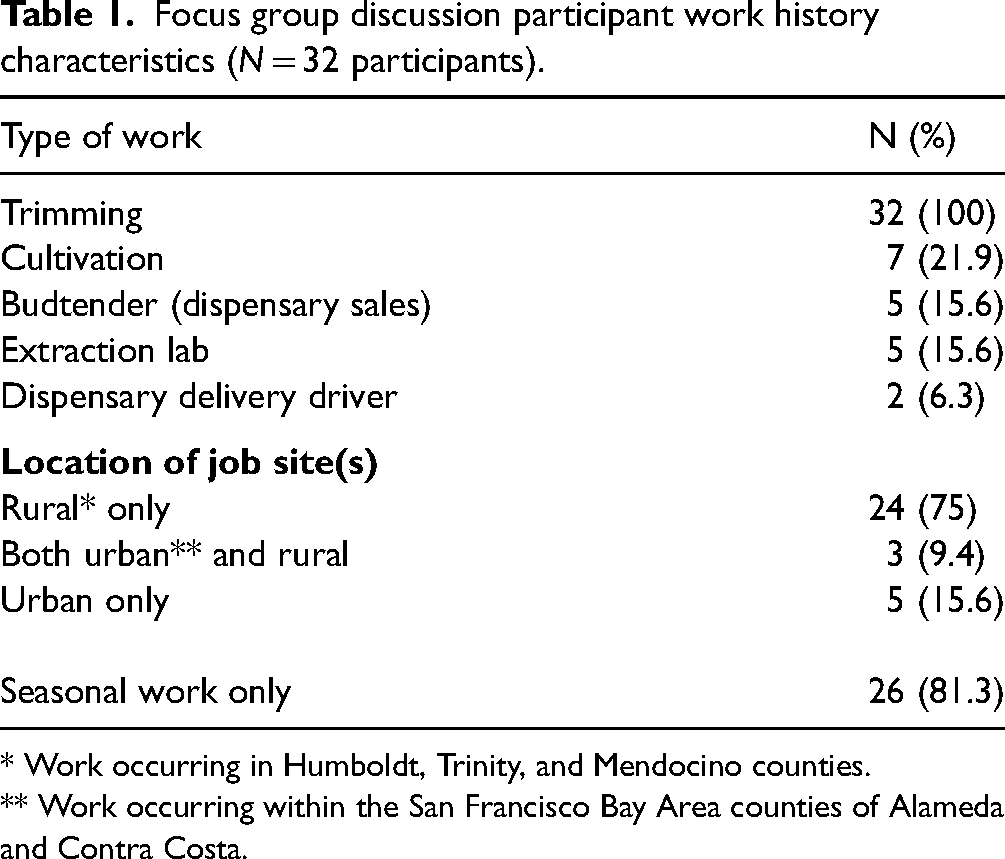
* Work occurring in Humboldt, Trinity, and Mendocino counties.
** Work occurring within the San Francisco Bay Area counties of Alameda and Contra Costa.
Table 2 provides an overview of the sources of stress and coping mechanisms described by workers. Focus group participants described firsthand experiences and related secondhand stories or what they believed to be common knowledge from the worker’s perspective. Not all participants responded to every prompt and not all themes arose in every FGD/KII. As a result, the counts do not correspond to the total number of participants. Counts are included to indicate which themes were mentioned the most frequently. Production pressure, boredom/monotony, and isolation were the most common sources of stress and substance use was the most frequently described coping method.
Counts of focus group discussion (FGD) and key informant interview (KII) participants who mentioned a source of stress or coping strategy.
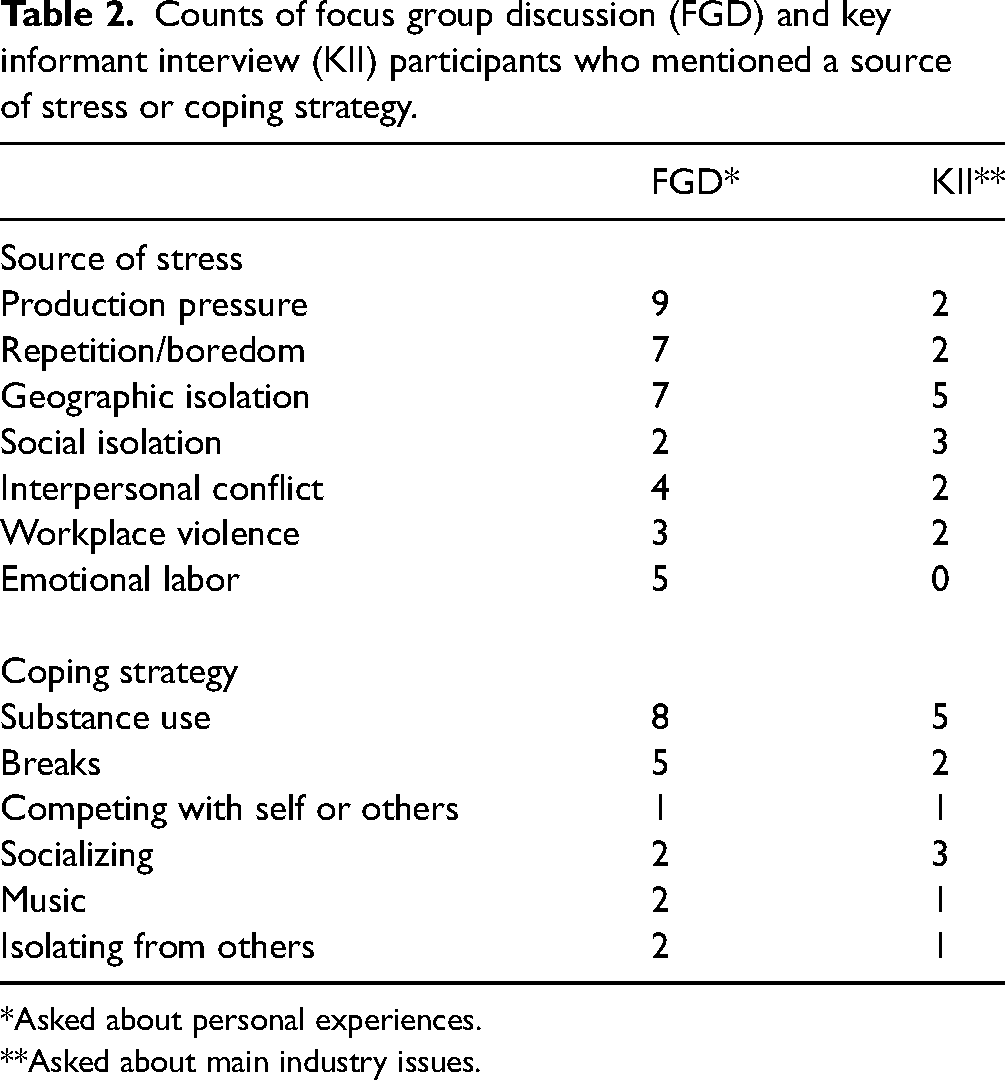
*Asked about personal experiences.
**Asked about main industry issues.
Stressors
Production pressure, shift length, and monotony
The most common sources of stress reported by seasonal trimmers were production pressure and boredom from performing the same task for long shifts many days in a row.
Trimming is an issue, you want to do as much as you can in one day, don’t want to stand up and move your body, just sitting and trimming for 12 h. (FGD, October 2021)
You never see the natural light because you finish working at midnight. The door is always closed so you don’t have a view, you just have the people who are working with you in that room. You can go crazy looking at the same person and doing the same thing. You start to forget if you’re working for two days or for two weeks. (KII, worker)
Isolation
Geographic and social isolation were described as major sources of stress and poor mental health by seasonal cannabis workers. Participants reported that geographic isolation causes a reliance on employers for transportation and an inability independently to access services or to leave the farm site.
This year I didn’t have a car, I had to depend on other people to get there and back to Bay Area. You feel safe when you have car [ability to leave work site at will] but some places you can’t drive your own car, you need a pickup or 4 × 4 [four-wheel drive vehicle] to get there. (FGD, February 2022)
I stopped doing what I did in Mexico to come here for more money, but you disappear when you get up there. My family knows what I am doing, but you aren’t paying attention to what is happening outside of your work. (FGD, October 2021)
Interpersonal interactions
Participants described both interpersonal conflicts with coworkers and between workers and owners/supervisors as a source of stress. Seasonal workers also experienced disputes or tensions between coworkers which were exacerbated by living on the work site, blurring the lines between work and “home” life.
Far away in the farm, people live and work there and there is no separation of two. So, drama, social relationships, toxic relationships can cause depression and breakdowns. Sometimes they just quit and leave. A lot of people crack under pressure and stress. (KII, worker)
Every weed club [dispensary], I was standing like 24/7 and employers would get mad at you for leaning. It hurts your feet. Standing, hearing sad stories, hearing people be mad, and you have to stand on your feet for eight hours … it's a mental thing. (FGD, May 2022)
Every dispensary worker participant reported feeling emotional distress and mental fatigue as a result of interactions with customers. They were tasked with selling the best strain of cannabis for each customer's needs because different cannabis strains are thought to provide different desirable effects. As a result, they often hear about traumatic life experiences and illnesses. They reported feeling responsible for providing a positive experience for the customer. Workers had not received training on interacting with customers who solicited these informal but quasi-therapeutic interactions.
You have people with different attitudes and you're a therapist and pharmacist to provide them with a strain that will benefit them the most. (FGD, May 2022)
Workplace violence
Exposure to workplace violence was reported by all participants to be a source of stress. Dispensary workers expressed dissatisfaction with security, and delivery drivers were discouraged from reporting car burglaries.
In Oakland, an owner got shot right in front of his store. People will do anything to get a little bit of money in their pocket. There's only one security guard in the location and they're not even armed. (FGD, May 2022)
Delivering, someone broke into my car and stole my Airpods and backpack. I called my job and asked, ‘Do you want me to call the cops?’ and they were just like ‘Put a towel over the broken glass and drive back’. (FGD, May 2022)
Mental health symptoms
Seasonal workers reported that mental health outcomes like depression and anxiety (described by participants using the colloquial terms “stress” or “[being] stressed” to refer to outcomes of stress) are inevitable during the harvest season. A common sentiment was that nobody could do this work without experiencing mental health problems due to the stress, isolation, and monotony.
Mentally, at the end of every season, most people are sick. They are stressed, they are paranoid, they are depressed. (KII, worker)
You don’t really have a life. It can be depressing, very isolated. Depression is the main thing, because of isolation, and you have to keep on going. (FGD, March 2022)
Now I have a shoulder problem. I feel pain after returning home after the work season from stress and sitting for long time. It gets worse every year. (FGD, February 2022)
Coping Strategies
Work rate
Most workers are required by law to have scheduled rest breaks, which can reduce repetition and may alleviate the boredom of long work shifts. However, seasonal workers did not have scheduled rest periods and they described being reluctant to take breaks due to reduced productivity. Some workers always took rest breaks during the shift, and a few took days off to relax, but most described frequently skipping breaks or even being reluctant to stop for meals.
You want to do as much as you can during the day, so you don’t want to stand up or do anything or waste any time. You are your own boss, so if you can handle it to get up it is OK but otherwise you are always sitting. You have to have real motivation to get up because time is money. (FGD, October 2021)
The thing about it is that the more you do, the more money you earn; so, repetition becomes a race. At least that's how I keep up with the repetitive work. (FGD, February 2022)
Mentally remembering that it is only a short period of time, think about the benefits. Money is the main good thing. (FGD, February 2022)
Socializing
There were several approaches to coping that involved socializing or distancing. Some workers preferred to share music or conversation with coworkers or friends, but others preferred quieter spaces to focus. Immigrant seasonal workers generally reported that it was safer to work and travel with friends or in pairs, especially for women, but some felt that living and working in proximity with the same group of people for long periods could become stressful.
With friends, you can chit chat and get out of your mind. (FGD, February 2022)
I am social distancing because of COVID, and also because of personality, because everyone puts on their own music and if you don’t separate you don’t get much done and you also get confused. (FGD, October 2021)
Substance use
A frequently reported method of coping with the mental and physical effects of work stress was substance use including alcohol, cannabis, and other drugs. Several participants said that they used cannabis during and after work or alcohol to relax after work. No one reported using other drugs but eight FGD and five KII participants stated that drug use is common among seasonal workers.
Most people use drugs to sleep or to party. They usually use cocaine, molly [MDMA], a lot of people smoke weed but they are used to smoking weed so it doesn't affect them. They just smoke it because it's free, but they don’t use it for something specific. The people want to work more, so they take drugs that will help with that. (KII, worker)
Some trimmers were said to use stimulants to increase productivity, but participants reported that stimulant use (methamphetamine and cocaine), was more common among owners or white/European seasonal workers than among Latino trimmers.
Drug consumption has become a huge problem. A lot of Europeans during COVID-19 stayed in California instead of going back home after the harvest season. After a year, I came back and the Europeans that had stayed were super skinny and paranoid [implied methamphetamine use]. (KII, worker)
Several dispensary workers used cannabis to relax after stressful interactions with customers for long shifts, and one had the opinion that cannabis workers become addicted to cannabis as a result. Some trimmers saw cannabis use as an unhealthy coping mechanism and attributed poor mental health and lower productivity to cannabis consumption.
You can smoke pot, but it’ll make you more anxious or paranoid so it's not the best idea. (FGD, February 2022)
Discussion
This analysis is the first to describe sources of stress, mental health, and coping among immigrant, seasonal, and low-wage cannabis workers. The qualitative study design allowed the authors to build rapport with participants and collect data focused on the perceptions and concerns of workers, including unexpected findings that may not have been revealed by focusing on gathering evidence for topics defined a priori in a structured survey.
Trimmers described working 10–12-h shifts, performing a skilled but detailed and highly repetitive task. They are paid piece-rate and health and safety controls required by law, such as rest breaks, are typically absent. For these reasons, participants took few breaks, short breaks or no breaks to maximize production. In other agricultural workplaces, piece-rate workers report being able to earn more than hourly workers, but at the expense of self-care like water and bathroom breaks. 28 Jobs with high demands and low control (including the ability to decide to take a break) predict a higher need for rest breaks. 29 While seasonal trimmers reported that they were able to choose to take breaks, the reality of lost piece-rate pay and lack of organizational support or requirements resulted in de facto low control over work tasks. The boredom or monotony experienced by trimmers is also a source of job stress and is associated with psychological distress and depression. 30
The extreme geographic isolation of many Northern California cannabis farms creates hazards to physical health and safety, 5 but many mentions of isolation were in reference to feeling unsafe or mentally distressed. Geographic and social isolation has been associated with poor mental health status and emotional distress in workers as well as in nonoccupational settings.31,32 Compared to many other migrant farmworkers, the isolation experienced by seasonal trimmers is likely to be relatively temporary, but social isolation experienced by other migrant farm workers separated from friends and family is associated with anxiety and depression. 33
Dispensary workers did not work extended shifts and are paid hourly rather than piece-rate, but often reported adverse mental health effects resulting from interpersonal interactions. Andrews et al (2008) found that retail workers are frequently required to perform emotional labor, regulating their emotions in order to present an affective display that most benefits the employer. 12 Previous research on emotional labor does not include any cannabis workers but the same findings are likely to apply to any retail environment. Research shows that workers lacking autonomy or organizational support are more likely to experience work-related stress, burnout, and depression as a result of performing emotional labor. 12 In some cases, dispensary workers have been denied chairs and then told not to lean on counters. These examples illustrate cannabis workers’ experiences of denial of autonomy and lack of support for independent decision-making about work practices. Workplace interpersonal conflict including bullying or abuse by supervisors or between coworkers is associated with adverse mental and physical health effects, and workers from minority groups such as undocumented workers have worse outcomes. 34
The burglary described above by a participant is not uncommon because most of the cannabis industry is cash-only. Robberies can involve shootings and can result in injuries as well as mental trauma.23,35,36 Workplace violence is the fifth most common cause of non-fatal work-related injuries in the United States, 37 and can lead to depressive and anxiety disorders as well as posttraumatic stress disorder even among survivors who are not injured. 38
The high demand and low control nature of retail cannabis work precluded most adaptive coping mechanisms. In addition, workers did not have access to methods for reducing stress like autonomy in task rotation to reduce time in direct customer contact. Among seasonal workers, organizational support for factors reducing worker stress like adherence to legally mandated rest breaks were reported to be absent. The use of cannabis, alcohol, and other drugs was commonly described as a coping mechanism for stress and pain, and as a productivity aid. However, none of the study participants reported using drugs other than cannabis and alcohol. Several said that drug use was more common among owners and white workers, particularly cocaine and methamphetamine. Participants’ concern over the potential health and legal risks associated with drugs other than cannabis may result in more mentions of substance use but cannot be interpreted to mean that it is, factually, the most common coping strategy among workers. In other studies, work overload and job insecurity are risk factors for self-reported use of these substances. 39
Strengths and Limitations
The design of this study resulted in a collection of valuable data related to the health of cannabis workers. The open-ended conversation format permitted the collection of nuanced and detailed narratives about cannabis worker health, and in particular, the experiences of undocumented seasonal workers who have been underrepresented in previous research. In addition, the peer recruiting method resulted in the inclusion of workers who had returned home after the harvest season and may choose not to return to cannabis work due to mental or physical health effects. This reduces the likelihood of a healthy worker survivor effect that could result in a bias toward collecting data from workers with positive industry experience.
However, the study is limited in that the data collected are not suited for more theory-based qualitative analyses (e.g., phenomenology) due to the small size and the choice to capture a broad overview of health and safety topics rather than delving into a few. In addition, semiquantitative or software-assisted analyses were not possible due to the choice not to record sessions in order to ensure confidentiality. Likewise, without recorded sessions it was not possible to assign participant identifiers and attribute each statement or theme to a given individual, preventing the development of a job-exposure matrix for specific stressors. Furthermore, most participants had worked multiple job types, and cross-tabulating tasks with stressors would require frequently interrupting conversations to clarify to which specific task the participant was referring. Further research using a structured survey approach would be valuable in identifying specific task-stress-coping patterns. In general, it was not possible to determine whether participants thought that the issues and problems they focused on were the most common, the most important, or the most prominent.
The study is further limited by the fact that in-person study promotion and recruiting were prevented by the COVID-19 pandemic. Peer recruiting was the most successful approach. As a result, most participants were immigrant seasonal trimmers with similar demographics. Our sample contained young, relatively well-educated, English-speaking immigrant seasonal workers as well as nonseasonal workers. Data are not available that would permit a determination of how representative this sample is of the population of California cannabis workers in the industry as a whole, licensed or unlicensed. There are no published data on California cannabis worker demographics; cannabis worker employment information is not collected by federal or state agencies, and California does not have a cannabis worker licensing or registration program. Data from other states’ worker licensing programs indicate that licensed cannabis workers in those states are primarily white and male.40,41 However, investigative journalism as well as the present study indicate that there is likely a high proportion of immigrants from Latin America in the seasonal cannabis workforce.6,7 The immigrant worker participants were English-speaking and relatively highly educated, in contrast to other farmworkers who are unlikely to speak English or have completed a high school education. 42 While it is likely that cannabis worker demographics will shift toward those of traditional row crop workers as the industry grows and more labor for lower pay is sought by employers, 23 participants in this study were able to describe in detail the hazards of seasonal cannabis work in Northern California.
Conclusions
Job stress was reported by every study participant, as well as mental health outcomes like depression; some seasonal trimmers expressed that mental health problems are an inevitable consequence of working in the industry. Workers were largely unable to adopt adaptive coping strategies, and substance use was a commonly reported coping mechanism. These findings highlight the importance of comprehensive plans for policy changes and outreach that address both physical and mental health.
Policy Recommendations
There are many structural factors of the cannabis industry that are not easily alterable to protect worker health. Trimming is by nature repetitive and is unlikely to be fully replaced by mechanization because humans produce a more precise and valuable product, and outdoor cannabis farms are likely to continue flourishing in regions that are too isolated and rugged for other crops. 43 Effective enforcement of occupational safety and health regulations and California Labor Code requirements would ameliorate many hazards and stressors. There are no cannabis industry-specific California Division of Occupational Safety and Health (Cal/OSHA) standards but many provisions of the General Industry Safety Orders subchapter, for example, the Repetitive Motion Injury standard apply to the work. 44 Employers’ responsibility under the General Duty Clause includes implementing controls for work stress, and guidance and educational materials for employers and workers are available from the United States Department of Labor—Occupational Safety and Health Administration (USDOL-OSHA). 45
While there are opportunities for regulatory enforcement to reduce sources of stress for cannabis workers and the approach may be feasible to address the hazards experienced by workers in the legal industry, the reality of the California cannabis industry is that 80 percent of production occurs illegally, 4 and much of it is on isolated farms in remote areas. The California Department of Cannabis Control employs sworn law enforcement officers who could trigger a Cal/OSHA inspection with a report of a serious violation or hazard, 46 but an illegal cannabis farm raided by law enforcement is unlikely to be available for subsequent inspections. Recent investigative reporting was unable to find evidence that DCC has reported occupational hazards to Cal/OSHA. 47 Other law enforcement agencies and community organizations have reported that cannabis workers are unwilling to report or testify against employers regarding safety or wage violations out of fear for their safety. 6 Furthermore, immigrant participants in the present study described law enforcement actions as one of their greatest work-related fears. 23 For these reasons, we focus on policy actions that could benefit the greatest number of workers, rather than regulatory solutions under the current paradigm.
At present, California cannabis businesses are subject to a patchwork of conflicting federal, state, and local regulations that create a prohibitive start-up cost for licensing and create barriers with ongoing expenses that are likely responsible for the large illegal market share in California. 4 Unifying the complex and costly licensing system, reducing the costs of required product testing for legal sales, and advancing effective licensing equity programs would enable more businesses to transition to the legal market, making available the relatively robust worker safety protections existing in California's Medicinal and Adult Use Cannabis Regulation and Safety Act (MAUCRSA).4,48,49 The licensing program requires one worker and one manager at licensed cannabis businesses with more than one employee to complete an authorized OSHA 30-h general industry safety course; the United Food and Commercial Workers union developed the first cannabis-specific course, which includes a module about workplace stress. 50 Becoming licensed also provides employers access to health and safety resources such as Cal/OSHA consultation services and small business assistance programs. All of this is important because the lack of health and safety training has been identified as a major concern in the industry, 51 and none of the participants in this study had received training. 5
Unionization is another key strategy for protecting worker health and safety, 52 and several unions have had success organizing licensed cannabis workplaces in California with union support for health and safety training.50,53 MAUCRSA contains a requirement for many cannabis businesses to enter into labor peace agreements, easing unionization efforts.
The California Department of Cannabis Control defines a labor peace agreement as follows
54
: “A labor peace agreement is an agreement between a commercial cannabis licensee or license applicant and a bona fide labor organization. Under a labor peace agreement, the labor organization and its members agree:
Not to engage in picketing, work stoppages, boycotts, or any other economic interference with the licensee's or applicant's business. In return, the licensee or applicant agrees:
Not to disrupt efforts by the labor organization to communicate with, and attempt to organize and represent, the licensee's or applicant's employees. To provide the labor organization access, at reasonable times, to areas in which the licensee's or applicant's employees work, for the purpose of meeting with employees to discuss their right to representation, employment rights under state law, and terms and conditions of employment. A labor peace agreement may not mandate a particular method of election or certification of the labor organization.”
Unfortunately, the unionization approach depends on licensing, and regulatory routes that require access to workers and work sites. It would be difficult or impossible to achieve at the many small and isolated clandestine farms operating in Northern California.
Decriminalizing or legalizing cannabis at the federal level would be a step toward advancing policies that will protect the health of cannabis workers by creating paths to the legalization of businesses and jobs. Federal legalization programs could include measures similar to the occupational safety and health training and labor peace agreement requirements present in MAUCRSA. Many states other than California have created cannabis worker licensing programs, 55 and a central licensing program could be established with a training requirement, used for direct outreach to workers, and leveraged for epidemiologic research on cannabis worker health. Previous federal legalization bills have included funding earmarked for worker health research, 44 and maintaining this provision in future legislative efforts will enable critically important research on the rapidly expanding cannabis workforce that is at present understudied. 51
Providing policy support for cannabis workplace safety training and accessibility of the benefits of unionization will likely improve health and safety in the industry, however, the burden of health and safety hazards on undocumented workers will not be alleviated. Like most agricultural producers, cannabis farms rely on precarious workers who are willing to accept lower pay and unsafe working conditions. Improving the health of immigrant cannabis workers would be better addressed with a community-based or agency-community collaborative approach. Since seasonal workers gather in cannabis-producing regions to find work, direct outreach could be performed by community organizations or peers. The Oregon organization UNETE has had some success in the difficult task of performing outreach to employees of unlicensed cannabis operations. It has, in a few cases, successfully helped them to file claims with the state for back wages. 56 Performing culturally informed work, for example, community-based participatory research 57 with cannabis workers and cannabis-producing communities will be essential to ensuring that their needs are being met and that interventions are desired, effective, and culturally appropriate. These collaborations can also inform methods to extend interventions to the most vulnerable workers, including undocumented workers and victims of labor trafficking who may be unwilling to interact with authorities.
A model success in worker health promotion in the face of acute hazards and a marginalized immigrant workforce is the heat-related illness prevention campaign administered by Cal/OSHA in a state-academic partnership with directed funding from the state legislature that resulted in the California effort. The three-year campaign to prevent heat illness among non-English-speaking outdoor workers used a social marketing approach that engaged a network of community organizations to conduct outreach and education with workers in their communities. In addition, the campaign included media outreach and enhanced enforcement efforts. Evidence from reports by workers, employers, and community-based organization representatives indicated that the campaign was successful in increasing the provision of water and shade on the job, as required by Cal/OSHA. 58 A similar effort designed for cannabis workers might be highly effective, especially because it would be accessible to workers who have unlicensed or uncooperative employers. However, one component of the heat campaign was enhanced Cal/OSHA enforcement. As indicated above, this may not be applicable to unlicensed cannabis operations. While this campaign did not include social media, 58 the materials could be easily adapted to that platform, which was reported as the preferred source of information by cannabis workers in this study.
More research on the safety and health of cannabis workers is needed to identify and quantify health hazards and inform successful occupational health interventions. While there are design limitations, this study provides important hypothesis-generating information for future research as well as first-hand perspectives on the everyday experiences of cannabis workers. In addition to the findings on stress and mental health, the present study identified social structural factors like discrimination and cannabis criminalization that affect immigrant cannabis workers 23 —all these sources of ill health must be considered in comprehensive research and policy actions.
Footnotes
Acknowledgments
The authors thank the participants, in particular the peer recruiters, for their time and effort. We thank Vania del Rivero and Anaisabel Chavez for their assistance in the preparation of the manuscript. In addition, we thank Jassy Grewal, MPA and Sara Miles of the United Food and Commercial Workers Western States Council for their assistance with recruitment. We would also like to acknowledge the contributions to the conception and design of the study of Chelsea Eastman Langer, PhD, MPH and Stephany Pizano, MPA.
Authors’ Contributions
MBS, XC, and SB participated in the conception and design of the work. MBS, XC, and SB participated in the acquisition, analysis, and interpretation of data and drafting and critical review and revision of the work. LR participated in the interpretation of data and drafting and critical review and revision of the work. All authors have given final approval of the version to be published and agree to be accountable for all aspects of the work.
Declaration of Conflicting Interests
The authors declared no potential conflicts of interest with respect to the research, authorship, and/or publication of this article.
Funding
Grant sponsor: California Department of Consumer Affairs, Bureau of Cannabis Control; Grant number: 65322.
Institution and Ethics Approval and Informed Consent
The work was performed at the University of California, Davis and University of California, Berkeley. Both institutional IRBs reviewed the protocol and determined it to be exempt from review. Participants provided verbal informed consent.
